Category Archives: The Rest: Everything Baseball
From Cuba to Japan, Opening Day to the World Series and the WBC
Ask the Reports: Saturday December 17th
Saturday December 17, 2011
Jonathan Hacohen: Posted every Weekend: Your top baseball questions from the past week are answered. E-mail all questions to mlbreports@gmail.com, message us on Twitter and post on our Facebook Wall!
Let’s get to your top questions of the week:

Which team is going to bite the bullet and sell the farm for Gio Gonzalez? There have been big demands from Beane thus far!! Wade
MLB reports: Great question Wade! I don’t think we have gone an Ask the Reports segment in the past few weeks (or any days for that matter lately) without discussing the status of Gio. Gonzalez has been linked to the Yankees for some time, but with the asking price being Montero and 2 other big time prospects, Brian Cashman has wisely declined. I could see the Nationals getting in on the Gio Derby if they are prepared to pay the price, or the Kansas City Royals perhaps. From a numbers standpoint, Gio would be best served heading to the National League. His stuff and abilities would translate well in the NL. Playing in the American League, specifically the East, would be asking for trouble. His home/road splits are undeniable. Gio would have a hard time succeeding in a hitter’s park. But at this point, smart money is on the Yankees and Red Sox still as the frontrunners. This is not the right move in my opinion, but the one that is most likely to happen. But don’t count out the Nationals…they are planning some big moves still preparing for the Harper/Strasburg show.
Do the Mets go after Theriot? Gio Gonzalez? Trade Murphy? What does your crystal ball say? Raul
MLB reports: The MLB reports crystal ball- you have been paying attention Raul. Well done. I don’t see the Mets going after Theriot or Gonzalez at this point. Daniel Murphy is likely to be moved, although I don’t see a big return. The Mets biggest needs right now are another bat in the outfield, catcher and starting pitcher. I can see them going after a Jason Varitek or Jesus Flores behind the plate. As far as an outfielder, the Mets will scrape by with a Rick Ankiel or J.D. Drew signing. Someone to hopefully hold down the fort at a reasonable salary. Joel Pineiro or Bartolo Colon could be potential targets. 2012 won’t be pretty…sorry my man. It will be a rebuild year for the Mets.
Jesus Montero next year…what will be his line? Not Shawn
MLB reports: The mystery of Montero. I am expecting a big year assuming he gets a full-time position. Which he should and likely will. The Yankees will go from one catching DH to another, as Montero will likely replace Jorge Posada at the DH spot. He will also see time at first base and behind the plate. Despite 5 seasons in the minors, Montero is still only 22-years of age, believe it or not. To be realistic, expect a .270 AVG with 15-18 home runs, 70 RBIs, 60 Runs, .320 OBP and .420 SLG. Most hitters do not adjust to the major league game overnight, especially 22-year-old catchers. Montero will put up good numbers, but he still needs time.
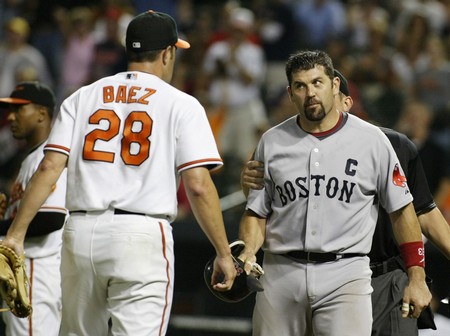
When is a team going to sign Danys Baez? Jason
MLB reports: When hell freezes over? At 34-years, Baez is coming off two very unspectacular season. 2010 brought a 5.48 ERA and 1.636 WHIP, while 2011 saw a 6.25 ERA and 1.556 WHIP. We are looking at a minor league deal with invite to spring training at best. Teams will look at Baez when all the other useable pitchers on the market are taken, or injuries start to appear at spring training. If I was Baez, I would go take a nice long vacation around the world and leave my cell phone at home. He should not expect a call until late January at best. The man has earned approximately $43 million already in his career. If he has one more season in him, it would be a miracle.

Yeah what’s up with da Yankees? Why aren’t they making any moves at all?? Drewskie
MLB reports: We were asking the same question last year, weren’t we Drewskie? There is a combination of reasons for the Yankees inactivity in recent years. A very high budget with little flexibility contracts-wise. Many good young players coming through the system and ready to take big league roster spots. Very few quality free agents with unrealistic contract expectations. 29 other MLB teams which have little talent that they wish to move, especially to New York (unless the price is high). Finally, while many players want to play in New York, some are shying away. With the media and fan glare well-known in Yankee stadium, it is not the environment for everyone. So at the end of the day, Brian Cashman is being smart in making sure not to make rash decisions and make moves just for the sake of it. Remember A.J. Burnett? Rafael Soriano? Sometimes the best moves that you make are the ones that you don’t end up making. The Yankees still have a high-octane offense and plenty of depth. One or two more starting pitchers and fears will be alleviated. Stay patient as the foundation is there. Some under-the-radar pieces will be added in the next month. Trust me. It just may not be the moves you expect. But anything that allows the core Yankees prospects to stay in the system is a good thing.
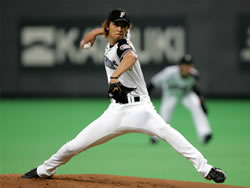
What do you make of the “sky-high” and “north” of $50 million reported bid for Yu know who? Clues that it may be Toronto? Thomas
MLB reports: Speculation has really gotten out of control on Yu Darvish. Many outlets are reporting that the Jays are the winners of the Darvish derby at an estimated $48 million. Despite this being the golden age of internet information, there is no confirmations at this point. Darvish’s Japanese squad has until Tuesday to accept the bid, which is still a mystery to the public at large. I could see the bid being as high as $70 million. While the Blue Jays are apparently strong contenders for Darvish, don’t count out the Nationals, Rangers, Yankees and others. This is a high-stakes poker game. Nobody is showing their cards or folding yet. I still see the Nationals winning the sweepstakes. So we won’t know until the very end. While spending $100 million+ between the post and contract is a risky move for an unknown MLB talent, in Darvish’s case it could make sense. Between Japanese media attention, stadium revenues and merchandising, the Darvish brand could bring a high revenue stream to a MLB team. It is not the route I would take, but as I crunch the numbers- I can see how the expenditure is justified. Darvish will be playing Major League Baseball come April. But as far as which city will be lucky enough to have him is still pure speculation at this point.

Last question: Why does life suck so much without baseball? Tim
MLB reports: Because baseball is life. All kidding aside though, is life that bad without baseball Tim? We have many outlets to get our fix. Pop in a DVD to watch some older games or even a baseball movie. Pick up a baseball book, there are countless good ones out there. We have daily MLB reports (wink) of free agent signings and trades. This baseball offseason has been one of the busiest ones in recent times. We had a new Collective Bargaining Agreement. The Astros were sold and relocated to the American League West. The Winter Meetings. Talk of an International Draft. Expanding the playoffs. Realignment. There is never a shortage of baseball topics and news to discuss. If you have access, there is winter ball. Point being that even without live MLB games, there is always something baseball to-do and to keep busy with. Twitter. Facebook. Websites like ours. You can always find a baseball outlet. Pitchers and Catchers report in 64 days. It is a quick offseason. Look at the season half-full instead of half-empty. The baseball season is never done. We just happen to be in the offseason stage- but it is still a key part of the overall baseball year. I feel your pain Tim though. Opening day will be here before you know it.

ARCHIVE: Click here for Past Issues of Ask the Reports
Please e-mail us at: MLBreports@gmail.com with any questions and feedback. You can follow us on Twitter and become a fan onFacebook . To subscribe to our website and have the daily Reports sent directly to your inbox , click here and follow the link at the top of our homepage.

 Jonathan Hacohen is the Lead Baseball Columnist & Editor for MLB reports: You can follow Jonathan on Twitter (@JHacohen)

What the Yankees Need to Win the 2012 World Series
Saturday December 17, 2011

Jeff P (Guest Writer – MLB reports): It was a long season for Yankee fans in 2011, with an abrupt ending to the season with a brutal series loss to the Detroit Tigers in the AL Divisional series. This is even after the Yankees receiving surprising seasons by Bartolo Colon, Freddy Garcia and the Yankees receiving production from its usual core players. However, in the 2011 season, there were noted declines of several Yankee players. Due to injuries and other factors, one of the biggest culprits was Alex Rodriguez. Limited to only 99 games on the season, A-Rod hit 16 homers, with a batting average in the .270 rang. A-Rod’s stats were some of the worst of his career and he was one the big reason the Yankees did not make it far into the 2011 playoffs.
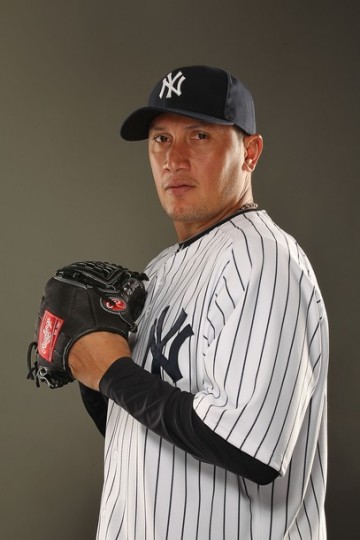 The Yankees have a long path to go to get to the World Series this coming year, especially given that their team remains at a standstill, unexpected to improve greatly from last year. It is not a positive sign that the Yankees rotation will most likely consist of C.C. Sabathia, Ivan Nova and Freddy Garcia, with a likely spring training knockdown competition between Hector Noesi, A.J. Burnett, Dellin Betances and Phil Hughes for the final two rotation spots.
Both Hughes and Burnett had horrific seasons this past year, while Noesi and Betances were both late season call-ups. Adding to the equation, Ivan Nova might enter a sophomore slump (always a possibility), while Freddy Garcia is unlikely to repeat his astonishing 2011 season.
The Yankees have very little margin for error going into 2012, which can ruin the chances of them not only winning the World Series, but even making the postseason. With the Los Angeles Angels of Anaheim now serious contenders, the Rays adding a nice hand to the rotation with Matt Moore and the Red Sox players starting to adjust to their new team, it will be a dogfight to the finish in the American League postseason race this upcoming season. The Yankees will have to play their cards right this year, and not sit back and assume that making the postseason is a given.
If the Yankees want some rings in 2012, here are several “must do” items for the team to succeed in 2012:
First of all, the Yankees must get rid of A.J. Burnett. For the last two years, Burnett had horrific seasons and should not be given another chance, despite his large contract. Without Burnett, the Yankees could consider trying a new arm in the rotation, such as Dellin Betances, who is clearly ready for a major league stint. The Yankees this offseason should trade Burnett to a team desperate for a starting pitcher (which should not be difficult given the shallow pool of available talent) and who are willing to give up a useable prospect, which would provide the Yankees with future depth.
Even though it is unlikely, the right thing to do with Joba Chamberlain is to give him a strong opportunity for a comeback season in 2012. I am not saying he should be in the rotation for the season, but he should definitely be given a strong look. Pitchers often improve after undergoing Tommy John surgery. Chamberlain left the rotation after the 2009 season, with a stint in the bullpen for the last two seasons. Up to the time of his injury, Chamberlain pitched well in the bullpen, mostly as the seventh inning option. The Yankees are considering Hector Noesi and other rookies for the starting rotation in 2012. So why not try Joba? Perhaps he will surprise all of us and fulfill the hype that accompanied him since being drafted in the 1st round by the Yankees in 2006.
Another option (although unlikely) is to place Adam Warren in the rotation. He is 24-years-old, and has a powerful fastball in the mid 90’s. His four-seamer can reach 97 mph and could leave major league batters clueless. He has a world of potential, and is ready for a major league stint sooner rather than later.
The Bronx Bombers roster is certainly not set and Brian Cashman needs to search the trade market before his squad will be able to compete for a World Series title. Other teams are considerably high on Eduardo Nunez and the Yankees would be well advised to find a deal involving Eduardo Nunez, Dellin Betances and one of their surplus catching prospects for Gio Gonzalez or similar available starter, who could help provide the Yankees with a balanced and deep rotation.
The Yankees also must keep Montero in New York. Montero had a great stint at the end of the season, and will hopefully continue to provide an offensive spark for the Yankees throughout the 2012 season. Montero is a great offensive force and would make the dangerous Yankees offense (Derek Jeter, Mark Teixeira, A-Rod, Nick Swisher, Robinson Cano, Russell Martin etc.) that much more powerful.
Lastly, the Yankees must monitor Manny Banuelos‘ status. Handled correctly, Banuelos could be this season’s Nova. To get through the regular season and then be a force in the 2012 postseason, the Yankees will need to make changes and several decisions as to their roster. But a successful offseason can minimize the risks and chances for failure in the coming season, by filling critical spots with the right players. The Yankees have many needs in their offseason to-do list in order to repeat their 2009 performance. If the Yankees play their cards right, the path to World Series #28 could be in sight.

***Today’s feature was prepared by Jeff P, Guest Writer to MLB reports. We highly encourage you to leave your comments and feedback at the bottom of the page and share in the discussion with our readers. You can also follow Jeff on Twitter.***
Please e-mail us at: MLBreports@gmail.com with any questions and feedback. You can follow us on Twitter and become a fan on Facebook . To subscribe to our website and have the daily Reports sent directly to your inbox , click here and follow the link at the top of our homepage.

Is It Time To Shorten the MLB season?
Thursday December 15th, 2011

Sam Evans: The MLB season right now is longer than it has ever been. With pitchers and catchers reporting February 19th this year, and the World Series ending in early November, it is outrageous to expect players to stay physically and mentally healthy for an entire season. Major League Baseball needs to look into how they can make the season more fan and player friendly. One solution to this issue is to shorten the season.
The Major League schedule is more demanding than any other league. Not every MLB player is like Roger Hornsby who once said, “People ask me what I do in winter when there’s no baseball. I’ll tell you what I do. Stare out the window & wait for spring.” The players have hinted that they would like a little longer offseason. I don’t blame them, as Major League players go through a tremendous grind to complete a season.
It must be especially hard for the foreign players to have to be away from their respective homes for such a long time. Even if it means that the fans have to watch less baseball, the reality is that players deserve more time off. They are away from their families longer than anyone should be. In college, you only play roughly 60 games. In high school, the average team plays about 40 games. Overseas, the young players play about the same as an American high school. To have to make the jump from 40 games a year to up to 211, must be extremely difficult- to almost impossible.
 However, shortening the season isn’t as easy of a task as it seems. Here is my multi-step proposal to fix the issue of the lengthy MLB season:
Players voluntary report to Spring Training: February 1st. This is for the Roger Hornsbys and Roy Halladays of the world. Having voluntary reports more than two weeks earlier than it is now would also provide injured players a trusted place to rehab. However, this timeline would also be optional for coaches, as they would also have the option to take time off if needed.
Spring Training: Starts February 20th. That date is about two weeks earlier than it was last year. Major League spring training would have teams playing only 20 games instead of 30. However, the games would be more spread out over the schedule, giving fans a chance to watch multiple teams every week. When I went to spring training in Arizona two years, I was disappointed that the players didn’t have enough time to just go enjoy themselves. Whether it’s in Arizona or Florida, the players should be able to have days off to rest their bodies and minds. Downtime is healthy, especially during the spring in preparing for the season.
Start of Regular Season: April 4th. This is the exact same date that the Cardinals and Marlins will face off on opening night this year. Players would get back to doing what they do best, playing baseball in the most competitive league in the world. Every year, the quality of players would get better. During the long offseason, players would have time to get faster, stronger, and better prepared for the following season.
All-Star Break: July 9th – July 18th. Here is where it gets really interesting. The current schedule allows players only about three days off in the middle of the season. With this schedule, players would be able to return to their families for a nice vacation. However, here is a twist that I want to propose as well: the trade deadline should moved up to July 20th. That way, the public would not lose interest in the game while the players are taking a break. The media would be filled with trade rumors, and once the break was over, the players could get back to playing baseball.
End of Regular Season: The season comes to a close on September 30th, which cuts off three games at the end.
Playoffs: The playoffs would start in October 2nd and end by October 26th at the latest. This would be following the same format as MLB currently uses with no more than one day needed for travel. Ideally, the World Series would end a week before Halloween. Baseball is a game that is supposed to be played under the sun, not in snow.
                Spring  Regular Season  Total
Current Sched:    30       162            192
Proposed Sched:   20       153            173
I completely understand that the current schedule exists in its current format because MLB needs to generate revenues. Teams would have a hard time letting go of the extra games and the revenues they bring in, as the players could balk at any pay reductions based on a proportional reduction in games to salaries. However, I think a lesser number of games would boost interest in the game. The first bowl of ice cream tastes much better than the fifth. That is something to keep in mind in keeping the game fresh and exciting.
The schedule that I proposed today would hopefully give more time off for players, while not drastically decreasing the amount of revenue that the current schedule brings in. Major League Baseball’s current schedule is just too long and unaccommodating for the players. As much as fans and revenues are keys to the success of our national pastime, it is the players who define the game. Shortening the season would lead to better rested, conditioned and happy players- which in turn would lead to better baseball overall. If it improves the game of baseball, I am all for it.
 ***Today’s feature was prepared by our Baseball Writer, Sam Evans. We highly encourage you to leave your comments and feedback at the bottom of the page and share in the discussion with our readers. You can also follow Sam on Twitter***
Please e-mail us at: MLBreports@gmail.com with any questions and feedback. You can follow us on Twitter and become a fan on Facebook . To subscribe to our website and have the daily Reports sent directly to your inbox , click here and follow the link at the top of our homepage.
Follow @mlbreports
Review of Routine Baseball: The Filthiest Baseball Threads in the Game
Tuesday December 13, 2011

MLB reports – Jonathan Hacohen: I will start off this review by admitting some very key points. While I write and review the game of baseball and everything surrounding it, I am also a fan of the game. You have to love this sport to be able to talk and write about it every day. I have no problem admitting it: I love baseball. But when you love the game to this degree, you start to lead a very baseball-centric life. Baseball apps on the smartphone. Baseball birthday cake. Libraries filled with baseball DVDs and books. Are you sensing a baseball theme in my life? That is the reality of a true blooded, 110% focused baseball fan. So what do baseball fans need more than anything else? Good baseball gear. From shirts to hats and everything in between, baseball fans require good apparel. That is where I got introduced to Routine Baseball.
 Part of the mandate of MLB reports is to uncover everything and anything in the world that is baseball. That was the purpose behind Technology Field, a section of our website devoted exclusively to technological advancements and products related to the game of baseball. When I first came across Routine Baseball, my immediate thought was to include its brand of baseball wear in Technology Field. We all know and love official MLB clothing that we find at the ballpark. Majestic jerseys and shirts, New Era Caps…those are brands and clothing items we know very well. I will admit that when I first arrive at a new ballpark, I made a direct line to their main souvenir shop to try on baseball gear. Will they have retro Jersey Ts? How much are the jackets? These are questions that are always answered before I even make it to my seat. But we can only wear team and player gear so often. That is where Routine Baseball is unique and part of a very fresh niche market. Hip and fun baseball clothing without the team logos and names. An advancement in the art of baseball fandom. Thus I had no choice but to see what the fuss was about it. Was I ready for filthy baseball threads? The answer was a definite yes.
The first point I noticed wearing and looking at the sample shirts that were sent over to the MLB reports office was the quality. I love the feel and construction of these shirts. Routine Baseball emphasized to me in our discussion that their products is 100% American Made. Taking a look at each product, there it is right on the label: “100% Filthy American Quality.” I am still of an age where filthy meant dirty and undesirable. But to the hipsters and urbanites, filthy is apparently good. Filthy means cool. I have owned hundreds of baseball tops during my lifetime. Routine Baseball definitely got it right in how they built a baseball shirt. You know that feeling when you buy a stiff top from a store that needs to be worn and washed dozens of times before it feels soft and fun to wear? Not with Routine Baseball clothing. These clothes are ready to wear right out of the wrapper. The best way I can describe them as the type of shirts that you keep at the top of your drawer and just grab and wear without ever thinking. They are soft, the right thickness and fit like a glove. I am very picky about clothing, especially baseball gear. Routine Baseball put a great detail of thought and work in the construction of these bad boys. Surely it costs a great deal more in labor by having their products produced in America. But it is definitely worth it. These are not shirts that you will wear twice and find holes. These are shirts that will be worn for a decade…if not more. You baseball rats know what I mean.
 So the first test was passed. Routine baseball shirts live up to my quality standards. Now for the designs. Routine Baseball is not pretending to be traditional or old-fashioned. The company is going for the urban modern look. I will admit that not all their designs are for everyone. But that is the beauty of having many different designs and logos. There should be something for everyone. The first shirt that I opened was actually my favorite of the bunch. “Paint the Corners” was the printed image in black on a grey top. Love it. Absolutely love it. The shirt had a baseball theme that hit home for me. I really enjoyed the slogan and how it was designed on the shirt. The logo was well designed to be smart, but not too complicated. I similarly enjoyed the RBI shirt – “Routine Baseball Inc”. A nice use of colors, yellow and white on a black top. The logo was clean and hip, with a clear baseball message across. The busiest logo was “Triple Crown Status”, with a lion wearing a crown and a baseball in his mouth. An interesting shirt, as it would not be my first choice of shirts in a store. But the blue print on the grey shirt gave it a nice look. I actually found the shirt worked very well with a pair of jeans and a blazer. I don’t find the same versatility in general baseball logo gear. That is yet another factor that makes Routine Baseball gear stand out from the crowd.
As a young fresh company, Routine Baseball hasn’t even hit their stride yet. The product lines include t-shirts, hoodies and hats, for both men and women. I expect in the coming months and years we will see a full-out explosion of filthy gear from Routine Baseball. Jerseys. Shades. Jackets. Shoes. The sky is the limit. At the end of the day, everyone only has a certain amount of money to spend on products and services. For the best bang for the buck, it is always wise to buy a well made good. They made cost a little more, but they will last far long than an inferior one. Routine Baseball gear is well worth the purchase. I can sum them up by saying their shirts are comfortable, fit well and look good. Wearing baseball gear is all about displaying the love of the game and standing out from the crowd. We are not talking about 1970s Pirates and 1980s Padres clothes (although some actually that type of look). Routine Baseball gear is clothing that you can wear almost anywhere and in any setting without being outcast as the novelty baseball fan. It is cool to love baseball again. Filthy baseball gear is the newest “must have” gear in the world of baseball fandom. With the holiday season around the corner, http://routinebaseball.com is a good stop location to get some cool threads to the baseball fan in your world. From one baseball fan to another: Filthy is the new cool.

Jonathan Hacohen is the Lead Baseball Columnist & Editor for MLB reports: You can follow Jonathan on Twitter (@JHacohen)
Please e-mail us at: MLBreports@gmail.com with any questions and feedback. You can follow us on Twitter and become a fan on Facebook . To subscribe to our website and have the daily Reports sent directly to your inbox , click here and follow the link at the top of our homepage.
A big thank you to Mike and Tony over at Routine Baseball for providing us with samples of their products for this review. They are very hands-on enterpreneurs and take full advantage of social media to be reached and heard. You can start off by checking their website: http://routinebaseball.com. They can be reached on Twitter (@RoutineBaseball) and Facebook.
Now for the promo stuff. A little something from the fine people at Routine Baseball.
Here is the story of how they came to exist:
Routine Baseball was started by two friends Tony Knapton and Michael DeGrave, Tony the CEO and Michael the CFO. It all started in 2009 when we were in college and started talking about baseball one night sitting around having a few beers. Tony walked out with his old raggedy state baseball t-shirt he had received many years earlier while participating in a state tournament, and I told him that it looked like an old bar rag (due to the stains and little holes on it) and that he should retire the baseball tee and throw on a new one to go out. Tony upset by the comment and most of all from the point of retiring his last piece of memory from that great state team, decided to retire the t-shirt. The idea was created later that night to bring baseball lovers such as ourselves a clothing line that would evolve baseball and fashion into one entity. With the knowledge each of us had of the game, and what we went to school for (Tony a Graphic Designer, and Michael Business) we knew this dream could eventually turn into a reality. This is how the idea of Routine Baseball was developed. However, a couple of beers earlier turned into many more and this grand idea turned quickly into a faded after thought and the idea was lost… along with a few brain cells.
Fast forward to Fall of 2011 and this is where the fun starts. One random night Tony had a couple of beers while watching a baseball game and out of no where the idea popped into his head and he then half drunkenly designed the logo (has been completely unchanged since) and 2 of the shirts THAT night and the call was made to Mikey that very next day. Then came the fun process of bank, lawyer, and ball player meetings and a month later (yes only a month) we launched Routine Baseball on November 1, 2011. Starting out with just 6 t-shirt designs at launch, in just one month we have added 16 more designs to our fall line, including a Women’s line and hats on the way as well. We have been in contact with many Minor and Major league players, and hopefully eventually we will become a household name. We have only scratched the surface of the baseball fashion industry and what we want to accomplish as a business, and we feel that Routine Baseball will take off-the-field baseball apparel to the next level. We try to combine our passions for baseball (obviously), music, art, and current fashion trends and blend them all together in our designs. Also, being a couple 20-something year old’s really plays to our advantage in how we interact with our followers and how we relate to them. They really enjoy the fact that we don’t come off as a strict-by-the-book company where certain topics might be off-limits. So jump on board with Routine Baseball because we are expecting a ride of a lifetime, and we want you to join in on the fun.

Ask the Reports: Sunday December 11th
Sunday December 11, 2011
Jonathan Hacohen: Posted every Weekend: Your top baseball questions from the past week are answered. E-mail all questions to mlbreports@gmail.com, message us on Twitter and post on our Facebook Wall!
Let’s get to your top questions of the week:
Q: Seriously, do you not think a large portion of pro athletes are using PHDs? It’s just a mistake when they get caught. Randy (via Twitter)
MLB reports: The Ryan Braun saga is upon us. The debate as to the use of performance enhancing drugs has been in play for too many years now. The names Mark McGwire, Rafael Palmeiro, Barry Bonds, Rogers Clemens, Sammy Sosa, Manny Ramirez…etc…etc… will forever live in PED infamy. Then Major League Baseball introduced drug testing, with HGH testing upon as well. After years of rumors and whispers, the sport was finally going to be clean. Now we have the news that Ryan Braun was tested positive for use of PEDs. I do not want to comment on Braun much until we have all the information. What we do know from reports is that Braun was found to have high levels of testosterone and determined to have resulted from artificial means. Braun is appealing the findings and more news will follow. Braun was named the 2011 NL MVP, which makes the situation that much more volatile. So do I think that a large amount of pro athletes use PHDs? I can speak of baseball and I would say in recent history, the answer is yes. I don’t want to unfairly label the sport and say “everyone was using them”, but many definitely were. With the introduction of proper testing and penalties, I think use has been curbed substantially. Looking at the numbers players put up in baseball in recent years compared to even ten years ago, there is a clear drop-off. Plus we are not seeing late 30s, early 40s players putting up astronomical numbers they way they were. So the sport is cleaning itself up in my estimation. But we have not seen the end of this topic. Far from it. As tests become better, the drug makers will become even more sophisticated in created betting masking agents to avoid detection. It is a nasty cycle. Just the mere fact that Ryan Braun could be considered using PEDs means this story lives on. Baseball will never fully clean likely. But it is certainly on a very good path. Hopefully, PED use eventually becomes almost non-existent in baseball one day.
Q: Can’t wait to see Mike Choice though. He crushed in single A last year. But offensively, we’ll (the A’s) be pretty slow in 2012. Pigaroo (via Twitter)
MLB reports: Agree and agree. I am very high on Michael Choice as well. There is nothing not to like. The 22-year-old Choice was a 1st round pick (10th overall) by the A’s in 2010. After a nice debut in his first professional season playing Low A-Ball in Vancouver in his draft year, Choice exploded last year playing High A-Ball in Stockton. The numbers were fantastic. 30 home runs, 82 RBIs, 79 Runs, .285 AVG, .376 OBP and .542 SLG. The future looks bright for Choice, as he likely to start 2012 in AA. But let’s keep some things in perspective. He is 22. He is still very raw, as shown by his 61/134 BB/K last year. Choice has a world of potential and is definitely a top prospect in baseball. But then so was Brandon Wood once upon a time. Dallas McPherson. Even looking in the A’s system, Chris Carter and Michael Taylor have developed much slower than expected. Choice has not even proven himself yet in AA, so there is still time for him to shine or fade. Prospects are almost impossible to predict, as many factors can affect their development. Health. Confidence. Ability. Work Ethic. Chances. If anyone area isn’t there, the rest of a person’s game can suffer. So while I am not devaluing the abilities of Michael Choice, I certainly want to see more from the kid before I hail him as the next A’s savior, as is being done in many circles. The Oakland A’s are clearly in a full-blown rebuild mode, as evidenced by their recent trade of Trevor Cahill and likely trade of ace Gio Gonzalez. Josh Willingham is likely to move on as well, as will Coco Crisp, David DeJesus and perhaps Hideki Matsui. The A’s will struggle in 2012 in all facets of the game, to score runs, not give up runs and win ball games. Remember the movie Major League? Sadly, you might be seeing the new Cleveland Indians, as the team owner threatens to move the team. A sad period for a once proud franchise, I certainly hope their stadium situation is resolved soon and the A’s go back to being a baseball powerhouse. Thank you for the questions!
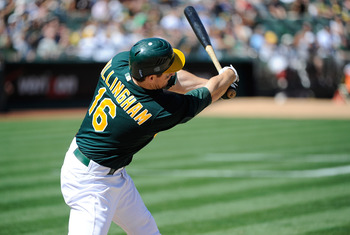
Q: Do you think Josh Willingham would be a good fit with the Tribe? He would cost about as much as D Lee last year with 2 more years. Martin (via Twitter)
MLB reports: Thank you Martin for the question. I definitely think Josh Willingham would be a great fit for the Indians. I think you are comparing his contract status to that of Derrek Lee, who is coming off a 1-year, $7.25 million contract. On your logic, do I think the Indians could sign The Hammer for 2-years and $14.5 million? I do not. Sorry my man. The Hammer is looking at a contract in the 3-year, $30 million range. Do I think that he is worth it? Yes…but it depends. At an affordable rate, I would take Willingham at 2-years with a vesting or option 3rd year. There are strikes against Willngham, no doubt. He will be 33-years-old come opening day. He has battled injuries the last 4-years, missing significant time in 2008 and 2010. The numbers have been consistent, but 2011 was actually a misleading year. While he hit 29 home runs with 98 RBIs, Willingham also hit a career low .246 with .332 OBP. Amazingly, Willingham actually hit better at home than on the road, a surprise given that Oakland is one of the premier pitcher’s parks. .260 AVG at home, .233 on the road. .350 OBP and .523 SLG at home, .315 OBP and .435 SLG on the road. Imagine then what Willingham could do in a better hitting park surrounded by a stronger lineup? With Willingham, beware of injuries and age. If you can live with those risks, then he should be a sure bat in the middle of a lineup for 1-2 more years, perhaps 3. But the decline is coming…so buyer beware.

Q: Ok guys, it’s time to announce locations (for the 2013 World Baseball Classic) so that we can make our plans. I went to Orlando in 2006 and the next series saw Netherlands beat the Dominican Republic – twice- in Puerto Rico.. Wow! So am I (and my family) going to Taiwan? Montreal? Mexico? Europe? If it’s Havana, I’m booking right away! King of America (via Website)
MLB reports: It is good to know that interest in the WBC is alive and well. I get asked often by non-baseball fans and casual supporters of the game whether the WBC will ever be a “big deal”…and the answer is: yes. Rarely a day goes by that I do not get a question or comment from a reader on the WBC. Aside from MLB Expansion, Realignment and Relocation, the WBC is the biggest topic that I deal with on a daily basis. The tournament is growing leaps and bounds, as 2012 will see the qualifying tournament for the first time. The field for the WBC has been expanded from 16 countries to 28. The number will even continue to grow in future years. I have been contacted by reps from different countries requesting information on applying for consideration. Baseball fans from all over the world, including Iceland, England, South Africa, Panama, Venezuela, Russia and Israel have contacted MLB reports to learn about the World Baseball Classic. Unfortunately we do not have named sites yet for the tournament. All we know is that the qualifiers will happen in the fall of 2012, with the tournament itself in the spring of 2013. Will baseball go with the usual venues or add new ones? That is the million dollar question. As there will be qualifiers and an actual tournament this time around, I can see more countries and venues having the opportunity to host games. Hopefully there will be an expansion of host countries this time around, so that more baseball fans around the world can enjoy the flavor of live WBC games. We will keep you up-to-date and will have a dedicated page coming soon on our site. MLB reports will continue to be your source for everything WBC.
Q: What are the chances of the Yankees getting Gio Gonzalez ? Dano (via Twitter)
MLB reports: Good luck in finding more frustrated people wondering the earth right now that Yankees and Red Sox fans. Once known for setting the tone in signing premium players, both teams have been unusually inactive this offseason. The Red Sox have suffered from their well-chronicled issues this past season, which came full steam with the change of their manager, GM and loss of their closer. The Yankees, by not making out of the first round of the playoffs this past season are also considered in their own form of crisis mode. While the Yanks are fairly set offensively, it is pitching (or the lack of) that has fans worried. The team has a strong pen, anchored by the ageless wonder Mariano Rivera. But the rotation is a series of question marks beyond ace C.C. Sabathia. Spots will likely go to Ivan Nova and Phil Hughes. Then you have A.J. Burnett and Freddy Garcia. Maybe Hector Noesi. The return of Bartolo Colon? Yankees would like to see another proven starter, perhaps two hurlers to be added to the roster. While Gio Gonzalez may be one of them, I would say likely no. I took a look at Gio two weeks ago. His numbers away from Oakland make me nervous, and likely other teams as well, including the Yankees. The A’s are reportedly asking for a truckload of top prospects and the Yankees will not likely bite. I still expect the Yankees to find another starting pitcher. But not at the risk of depleting their farm. Gio is a good pitcher, don’t get me wrong. But he is not the ace pitcher that the Yankees need. Hopefully though the Yankees don’t wait too long after the holidays and end up shopping in the bargain bins in January for starting pitching again. The team got very lucky with Garcia and Colon last year. I wouldn’t take the risk again in 2012 if I were them. With their huge payroll and superstar team, the Yankees need to solidify their rotation to have a chance at the World Series.
Last Q: I’ve been hoping that someone like Bud Selig or others at MLB Headquarters would read these expansion ideas that me and many other fans have. I’ve shared my expansion idea to other online forums but many people have told me that further expansion would water down the talent pool. Do you think the new international draft would fix that problem? Joe (via E-mail)
MLB reports: A great last question to end this week’s Ask the Reports. I have enjoyed corresponding with Joe this week and wanted to include his last question to me in this edition. I have enjoyed debating the merits of MLB expansion for years. Many…many…many fans have used the watered down talent argument to argue against expansion. I am sorry people, but I don’t buy that argument. Go watch some AA and AAA games. There is a TON of quality major league ready talent that is simply rotting in the minors in my opinion. Between the 30 MLB teams, each has more than 5 minor league affiliate teams stocked with talent. To bring 2 more MLB teams, for an even 32 teams, there would be no problem finding 25 players per squad. Between prospects, free agents and international talent, there would be no issues to stock two more teams. The issues surrounding international talent, including an international draft, is a topic for baseball as a whole. While a draft could help with expansion, it is only a minor point in the larger scheme of the issue. The signing and development of international players is an issue for all current MLB teams that needs to be addressed in the overall competitive balance and growth of baseball internationally and to bring more talent to North America. I am all in favor of MLB expansion. My hope is that we will see 2 more teams in the next 5 years, but we could be waiting as far as 2020 and beyond until it becomes a reality. As far as international players…this discussion is far from dead and will be a sensitive subject for years to come.

ARCHIVE: Click here for Past Issues of Ask the Reports
Please e-mail us at: MLBreports@gmail.com with any questions and feedback. You can follow us on Twitter and become a fan onFacebook . To subscribe to our website and have the daily Reports sent directly to your inbox , click here and follow the link at the top of our homepage.
Jonathan Hacohen is the Lead Baseball Columnist & Editor for MLB reports: You can follow Jonathan on Twitter (@JHacohen)

Ask the Reports: Saturday December 3rd
Saturday December 3, 2011

Jonathan Hacohen: Posted every Weekend: Your top baseball questions from the past week are answered. E-mail all questions to mlbreports@gmail.com, message us on Twitter and post on our Facebook Wall!
Let’s get to your top questions of the week:
Q: I just read your article about expansion. This is my most favorite topic in baseball. I have an idea. Tell me what you think of it.
American League
East
New York Yankees
Boston Red Sox
Toronto Blue Jays
Baltimore Orioles
North
Minnesota Twins
Chicago White Sox
Cleveland Indians
Detroit Tigers
South
Kansas City Royals
Houston Astros
Texas Rangers
Tampa Bay Rays
West
Los Angeles Angels
San Diego Padres
Portland Athletics
Seattle Mariners
National League
East
New York Mets
Philadelphia Phillies
Pittsburgh Pirates
Washington Nationals
North
Milwaukee Brewers
Chicago Cubs
Cincinnati Reds
St. Louis Cardinals
South
Charlotte Knights (Expansion Team)
Atlanta Braves
San Antonio Colts (Expansion Team)
Miami Marlins
West
Los Angeles Dodgers
San Francisco Giants
Arizona Diamondbacks
Colorado Rockies
-Joe (via e-mail)
MLB reports: Radical realignment and expansion Joe. Love it! I am a BIG fan of adding 2 new expansion teams to Major League Baseball. 32 teams, 16 teams per league, 4 divisions per league and 4 teams per division makes perfect sense to me. I am sold. Now the magical question is which cities would be included and how to realign the divisions. Under your proposal, San Antonio and Charlotte would get expansion teams, while the A’s would be relocated to Portland. All three cities are top contenders for MLB teams, so I have no issue with having Major League Baseball in those cities. For this scenario to work, the A’s would need to exhaust the option of moving to San Jose or any other city in California before being fully relocated. I don’t see the A’s in Portland personally. I see them staying in California. But stranger things have happened. Interesting that you did not relocate the Rays in your proposal. I see them having an equally high chance of being relocated as the A’s. So assuming that we accept your relocation and expansion plans, the last issue will be the alignment of the divisions. The AL South and NL South need work. If we are putting a team in San Antonio, let’s put them in the same division as the Rangers and Astros and make a nearly all-Texas division. The Rays and Marlins should also be in the same division. I agree with Charlotte and Atlanta together. Consider as well putting the Dodgers, Giants, Angels and Padres together in an-all California division. You have a great basis for changes though…well done! Thank you for the comment and giving us some food for thought. Please click here to read our previous report on MLB Expansion.

Q: Just want to say that I’m glad other “unknown talented” Countries are going to have an opportunity to participate. My mother is from Nicaragua so it’s awesome to know Nicaragua AT LEAST has an opportunity. Maybe in the near future, the WBC should consist of more than 16 teams….maybe a total of 24? Joshua (via e-mail)
MLB reports: Thank you for the question Joshua. You know we love talking about the World Baseball Classic! Please click here to see our previous report on the upcoming 2013 WBC. The initial 2006 and 2009 WBC editions consisted of 16 total countries. In 2013, there are changes to the tournament. 12 holdover countries are guaranteed to play in the tournament itself. Prior to the WBC, there will be a qualifying tournament between the remaining 4 holdover countries and 12 new countries introduced to the WBC. Thus the total amount of countries that have a chance to play in the WBC is 28. I think that the 16 country format works very well. What MLB officials will look to do is to continue to expand the amount of countries worldwide that will compete in the qualifying tournament. We could easily see in the next decade 24 new countries competing for WBC supremacy. I don’t see the tournament itself changing from the 16 team format, but definitely expect the field of 28 eligible countries to expand further. Another great question, thank you for sharing!

Q: A few months ago I called Pujols in Chicago! They have the $ and could use the leadership. Aaron (via Twitter)
MLB reports: I seem to recall you saying that. There were many pushes to start the offseason for Albert Pujols to join the Cubs. At the time I wrote them off as impossible. But with the Cubs new management team on board led by Theo Epstein, I am not quite as sure. I still see Pujols back with the Cardinals. He has spent his whole career in St. Louis and has roots now in Missouri. At similar or equal money, I see him staying. The more likely move for the Cubs is to pick up Prince Fielder. I think the fit is better overall from an age perspective for Chicago. But if there is any team that will be able to “woo” Pujols, it could very well be the Cubs. The Cardinals faithful would be devastated if Pujols was to leave. We shall see how this all plays out- but I give a 99.9% chance of Pujols staying put.
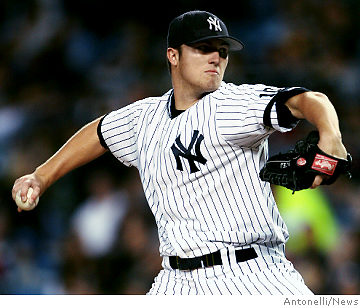
Q: I’ve run out of patience with (Phil) Hughes. David (via Twitter)
MLB reports: I won’t dispute you David…and many Yankees fans would agree. But not all has been bad about Phil Hughes. He had a strong 2009 season pitching almost exclusively out of the pen, followed by an 18 win season in 2010. Last year was an injury filled season for Hughes that never got on track. Hughes has battled injuries and inconsistencies throughout his career. The million dollar is whether Phil Hughes will ever be able to complete a full season healthy. The Yankees have to decide ultimately if he is best suited to the rotation or bullpen. While he has enjoyed success in both roles, his arm may not be ultimately be able to hold up the grind in the rotation. He is still young (25) and will not be a free agent until 2014. The former 1st round pick from 2004 presents a huge dilemma for the Yankees. Can he be counted to on to be a future ace? That is unclear at best. I am prepared to give Hughes until 2014 before passing final judgement. If it were up to me, the Yankees should carry 6 starters with the hope that Hughes could become a strong #2 and at worst, a viable reliever in the pen. Phil Hughes definitely deserves the opportunity to show his worth…just don’t count on him yet at this point.

Q: Hope the Halos did not give away a young arm w/big upside (Chatwood) for a backup catcher (Iannetta) John (via Twitter)
MLB reports: We get to end today’s Ask the Reports with my favorite topics: Angels’ catchers. The Angels made an interesting move this week, trading former 1st round pick hurler Tyler Chatwood to the Rockies for catcher Chris Iannetta. Looking at the numbers for Iannetta and Chatwood…it makes me wonder what the Angels were thinking in moving Mike Napoli before the 2011 season. Let’s compare Napoli and Iannetta. Napoli is a year and a half older…but about 100x the player. I will point to a very important piece of evidence: the home/road splits. Both played in great hitter’s parks (Texas and Colorado respectively). But on the road, we really get a true sense of each player. Napoli hit more home runs on the road (17 to 13), had a higher batting average (.332 to .307) and maintained a .414 OBP and .663 SLG. The point? Mike Napoli is an effective hitter, no matter where he plays. Had he received the same opportunity in Anaheim, the Angels would have ensured a top catcher for themselves and been able to keep Chatwood. Iannetta, while younger, pales at the plate compared to Napoli. In 2011, Iannetta hit a solid .301 at home, while only batting .172 on the road. Iannetta also hit 10 home runs at home, while only 4 on the road. On the road Iannetta drove in 16 RBIs (39 at home) and scored 15 runs (36 at home). OBP was .419 at home (.321 on road) and SLG was .557 at home (.266 on road). This is a small sample of one year, but Iannetta at home is another Mike Napoli…while on the road he becomes another Jeff Mathis. I am a support of Iannetta, but in Colorado. I am seeing another Vernon Wells blunder, of a hitter taken out of a hitters’ ballpark that cannot adjust to more difficult hitting conditions. Iannetta’s bat does not appear to be a good mix with Angel Stadium. In return for Iannetta, the Angels had to give up Chatwood, their 2nd round pick from 2008. With pitching being a premium in today’s game, it is sad that the Angels had to give up a strong viable arm that I projected as a likely #3 starter for a catcher that will likely not fill in well in their system. The team already tried that least year, when it chose Mathis over Napoli. What happened? Both catchers were not far off defensively, but Napoli became one of the best hitting catchers in baseball. The Angels hope they are getting the next Mike Napoli. In truth they should have kept the original. Now they will have Iannetta (Mathis clone) and Wells clogging up their batting order. While I am left to continue scratching my head in disbelief.
(Editor’s Note: Ironically just as this article was just published, the Angels just traded Jeff Mathis…to the Toronto Blue Jays for Brad Mills. The same Jays that the Angels traded Mike Napoli to almost a year earlier for Vernon Wells. The Jays would have been smart to hold onto Napoli and kept a prize hitting catcher for themselves who could also DH and play 1B. Now the Angels take the other half of the Angels catching tandem as their new backup catcher. Funny how everything comes full circle).
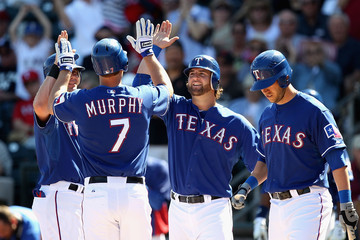
ARCHIVE: Click here for Past Issues of Ask the Reports
Please e-mail us at: MLBreports@gmail.com with any questions and feedback. You can follow us on Twitter and become a fan onFacebook . To subscribe to our website and have the daily Reports sent directly to your inbox , click here and follow the link at the top of our homepage.
Jonathan Hacohen is the Lead Baseball Columnist & Editor for MLB reports: You can follow Jonathan on Twitter (@JHacohen)

Preview of the 2011 MLB Rule 5 Draft: December 8th
Friday December 2, 2011

Rob Bland (Baseball Writer – MLB reports): With the MLB Winter Meetings just around the corner, we can all get excited about the draft that takes place there. The Rule 5 draft is a very important draft for teams, as they can find their diamond in the rough that may be undervalued by his current team. The Rule 5 Draft was created as a way for more players to have a chance at the big leagues, rather than spending more years in the minors. It forces a team to “protect” its minor leaguers by placing them on the 40-man roster.
The Rule 5 Draft is not simply for any minor leaguer, the players who are eligible must fall under certain criteria. The criteria are as follows:
If a player was signed at age 19 or older, and has been in the same organization for four years.
If a player was signed at age 18 or younger, and has been in the same organization for five years.
What this means that if an 18-year-old signs with a team, plays in the minor leagues for five years, and is not added to the 40-man roster, he will be put in a pool of eligible players for the Rule 5 draft. This forces teams to make a decision on their prospect and if he is ready to be added to the 40-man roster. The order of the draft is the same as the Amateur Draft that takes place in June, in reverse order of standings from the season prior.
Since many international players sign at the age of 16, they are eligible for the Rule 5 draft after their age-20 season. If not picked up on the team’s 40-man roster, an opposing team can take a big chance on a player in selecting him.
The draft is different from any other in that it costs the team $50,000 to select a player, which is paid to the team losing said player. Also, this player must be on the 25-man roster for the entirety of the season. If he is taken off the 25-man roster, he must then be offered back to his original club at half the price ($25,000).
There are two other phases of the Rule 5 Draft: AAA and AA. In the AAA phase, teams can select eligible players from AA and lower who fit the same criteria, and pay $12,000 for the selection. In the AA phase, players from A and lower are chosen at a cost of $4,000.
 While it is pretty rare for a Rule 5 draftee to become a superstar, it does happen- and there are plenty of players who become useful with their new teams. Some of the most notable players chose in the Rule 5 draft are Hall of Famer Roberto Clemente (the Rule 5 draft was drastically different in 1954), Toronto Blue Jays slugger Jose Bautista, Texas Rangers outfielder Josh Hamilton, and, in my opinion, the best Rule 5 selection of all, Johan Santana.
The Rule 5 Draft can take some interesting turns, and players are often offered back to their original team. Trades are made for other Rule 5 selections or money can be exchanged. Johan Santana was left off the Houston Astros 40-man roster before the 1999 Rule 5 Draft, and was selected by the Florida Marlins. The Marlins then trade Santana to the Minnesota Twins for cash and Jared Camp. After a lacklustre 2000 season, he went on to have a great career with the Twins, and has won 2 Cy Young Awards.
Bautista also represents an interesting case, as he was selected in the 2003 Rule 5 draft, and became the only Major League player in history to be on 5 ML rosters in one season. The Baltimore Orioles selected him in the Rule 5, was claimed off waivers by the Tampa Bay Devil Rays 2 months into the season, and then traded to the Kansas City Royals less than a month later. A month after that, he was traded to the New York Mets, who then flipped him to the Pittsburgh Pirates, who were his original team. He has since gone on to blossom into one of the finest hitters in all of baseball, leading the MLB in home runs in 2010 and 2011.
Josh Hamilton was selected in the 2006 Rule 5 draft by the Chicago Cubs, but was returned to the Cincinnati Reds before the season began. He was traded to the Texas Rangers after the 2007 seasons and won the 2010 American League MVP.
Other notable players taken in the Rule 5 Draft:
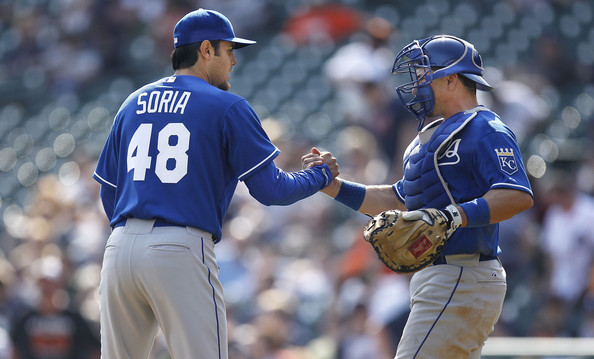
Bobby Bonilla, Jeff Nelson, Joakim Soria, Dan Uggla, Shane Victorino, Jayson Werth, Kelly Gruber and George Bell.
Most teams have between 15 and 30 eligible players, meaning that there are hundreds of players available. However, the Rue 5 draft has lasted no more than 21 picks in the last 9 years. Over this time, 40 or so players are selected in the AA and AAA phase combined per year.
Will a team strike gold and find the next MVP or CY Young in this year’s Rule 5 Draft? Probably not. But some teams may find some useful bullpen arms, or even a utility player or two that may stick around for a full season.
***Today’s feature was prepared by our Baseball Writer, Rob Bland. We highly encourage you to leave your comments and feedback at the bottom of the page and share in the discussion with our readers. You can also follow Rob on Twitter.***
Please e-mail us at: MLBreports@gmail.com with any questions and feedback. You can follow us on Twitter and become a fan onFacebook . To subscribe to our website and have the daily Reports sent directly to your inbox , click here and follow the link at the top of our homepage.

Is Expansion of Interleague Play a Good Idea?
Monday November 28, 2011
Sam Evans: When Major League baseball first instituted interleague play in 1997 it was supposed to draw fans back to the game. It worked, as attendances rose around baseball whenever teams from the other league were in town. Now, in the year 2011, MLB is searching for a new way to draw fans back to the game and level the playing field for teams at the same time.
This offseason, Major League Baseball decided to realign the Astros to the American League. With balance leagues of 15 teams each side, this means that there will be at least one interleague game on days when all thirty teams are playing (Friday, Saturday, Sunday, Opening Day, etc). MLB is trying to make the leagues and divisions more fair, but by doing so they are making interleague play less meaningful. In “Elmo Saves Christmas,” Elmo wishes that he could have Christmas every day. However, when Elmo’s wish comes true, he discovers Christmas is not as fun anymore. I am frightened that this will happen to baseball, and the result is that interleague play will not be as special.
For myself and many other baseball fans, the current interleague schedule is perfect. The summer months are a great time to go watch a team that you otherwise would not normally get to watch. I am afraid that with MLB’s new proposed schedule, the concept of separate leagues will lose almost all of their meaning outside of the postseason. The All-Star game will also not be as exciting because we would have already seen most of these players face each other throughout the year.
If I was Bud Selig, I would recognize that baseball needs to regain popularity among younger people. Baseball needs new ideas in marketing to become more popular around the world. If this new increased interleague schedule is destined to happen, then I would have only one interleague game on those required days and make it nationally televised. This would be similar to NBC’s Game of the Week which was televised and extremely popular from 1960 to 1990.
I think that interleague play over a whole season will have the opportunity to bring more fans to the game. However, I think there is more of a chance that it has little to no impact. Major League baseball needs to focus on getting people talking, to create a buzz. We have seen this idea work when fans are drawn to exciting players such as Strasburg and when fans see other people talking about the game.
If Major League Baseball ends up increasing the interleague games, they definitely shouldn’t have more than two interleague games per day, and they should advertise these games as much as possible. I didn’t find many problems with the current alignment, and I think it would have worked best if they had just stuck with the present schedule. Advances in the game can be great and revolutionize the sport. Increasing interleague play is not the answer in that regard. Expect more schedule and realignments changes to come until Major League Baseball gets it right.

 ***Today’s feature was prepared by our Baseball Writer, Sam Evans. We highly encourage you to leave your comments and feedback at the bottom of the page and share in the discussion with our readers. You can also follow Sam on Twitter***
Please e-mail us at: MLBreports@gmail.com with any questions and feedback. You can follow us on Twitter (@MLBreports) and become a fan on Facebook . To subscribe to our website and have the daily Reports sent directly to your inbox , click here and follow the link at the top of our homepage.

Ask the Reports: Sunday November 27th
Sunday November 27, 2011
Jonathan Hacohen: Posted every Weekend: Your top baseball questions from the past week are answered. E-mail all questions to mlbreports@gmail.com, message us on Twitter and post on our Facebook Wall!
Let’s get to your top questions of the week:
Q: I know this is off topic but with the Houston Astros moving to the AL West and constant interleague play, what exactly is the point of an American League and a National League, besides of course the DH?
MLB reports: The existence of the designated hitter is the key to separate the American League and National League. Without the DH, there is no difference between the leagues. Otherwise, having separate leagues would simply be a way to divide up the divisions and teams. With daily interleague games coming, the mystique of having separate leagues is starting to fall by the wayside. An idea that was thrown around was to have the DH in play in National League parks and no DH in American League parks during interleague play. That would create strong interest in the different styles of play in the different parks and peak strong interest in interleague play. But unfortunately, it appears that idea has been scrapped for now. Long term, baseball needs to decide if it will have a designated hitter or not. There are arguments on both sides. Traditionalists like myself would like to scrap the DH all together and introduce National League style baseball throughout baseball. With the in-game moves and decisions that must be included with the pitcher hitting, I prefer the NL game. But others see pitchers hitting as hurting the game with “automatic outs” and risking the health and safety of pitchers by having them hit in the NL. This argument will continue likely for decades until a resolution is agreed upon one way or the other. Until then, we will continue to have two different leagues in place. One has a designated hitter and one does not. With the increase in interleague play, the line separating the leagues has become even blurrier. Great question!
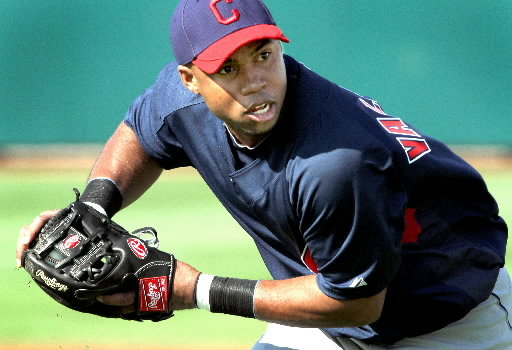 MLB reports: The newest member of the Toronto Blue Jays will be turning 26 this week (November 30th birthday)- so be sure to wish him a Happy Birthday! Born in Venezuela, Valbuena is a utility infielder at this point in his career, playing second, short and third. Coming up originally with the Mariners originally in 2008, Valbuena was traded in December 2008 as part of the Franklin Gutierrez swap. Since then, Valbuena has played parts of three seasons with the Indians. In 229 career games, Valbuena has 13 home runs, 57 rbis, 84 runs, .226 avg, .286 obp and .344 slg. Considering that he was designated for assignment, the Jays picked him up for cash considerations makes sense. He has shown little at the major league level thus far, but is young and known for a strong glove. Valbuena has shown steady improvement in the last three years in the minors, with a breakout season in AAA Columbus in 2011. Valbuena popped a strong 17 home runs in 113 games, with 75 rbis, 64 runs, hitting .302 with a .307 OBP and .476 SLG. If those numbers can be replicated to any degree at the major league level, the Jays may have a hidden gem uncovered. At worst, we could be seeing another Ramon Santiago type player or the Venezuelan John McDonald. The Jays need a backup infielder on the roster and Valbuena could be the answer. Or possibly their next starting second baseman for the next five seasons. Doubtful…but it could happen!
 MLB reports: Wow, that is a mountain of questions!!! Firstly, Yonder Alonso would look great on the Indians. In fact, he would look great in 29 other lineups. The kid is a future superstar, no doubt in my mind. It is just a question of finding him a permanent home. The Reds have tried him in left field, but do not see him as a long-term solution there. The team will either have to move him, or open up first by trading franchise star Joey Votto. At this point, it looks like Alonso will be the one to go. I am a big Matt LaPorta supporter, but long-term he does not appear to be the solution for the Indians. He can always move to the outfield or DH, but a change of scenery is likely the best option for him. LaPorta never lived up to the expectations of being traded for C.C. Sabathia and both the team and player need to move on. The Indians have prospects to move, although not as many after all their 2011 swaps including the Ubaldo Jimenez trade. I can’t see the team wanting to trade more parts, as they cannot deplete their farm. Given what other teams can offer for Alonso, mainly the Rays, I don’t see an Alonso move in the future of the Indians. It would be a nice acquisition, but not likely to happen. Nady on the other hand would be a nice low risk pickup. If healthy, he could bring the leadership and experience the team needs. Championship teams need strong extra parts and Xavier Nady would be a strong fit in that regard. As long as comes cheap and doesn’t expect to start, I would say that is a done deal. The team may look for one or two more strong bats for its lineups, but that would not stop a potential Nady signing.MLB reports: Poor Gio Gonzalez. Why the harsh words? In all seriousness, I see where you are going with the comparison. High walk, high strikeout pitcher. After a 3.23 ERA in 2010, Gio lowered it more to 3.12 in 2011. He has enjoyed near identical 1.31 WHIPs the last two seasons. He does not give up a ton of hits, but the walks are very high. He led the league with 91 walks after allowing 92 the year before. The home/road splits tell a big part of the story. This season, Gio went 10-5 at home, with a 2.70 ERA and 1.227 WHIP. On the road, Gio went 6-7 with a 3.62 ERA and 1.424 WHIP. Pitching in the Oakland ballpark clearly has a strong effect on his numbers. Similar splits are found in his 2010 numbers as well. Thus the conclusion is likely that taking Gio Gonzalez out of Oakland and putting him in a hitter’s ballpark (say Wrigley, Fenway or the Rogers Centre) and his numbers will likely balloon. Pitching in Oakland likely masks much of his warts. He just turned 26 in September so he still has time to develop. The next two seasons will tell the tale. He could become a superstar or the next Scott Kazmir. Until those walk totals start to drop, you could be on to something. The kid has a ton of talent, don’t get me wrong. But he is far from a sure thing. Until then, your comparison could be close. Thank you for the comment!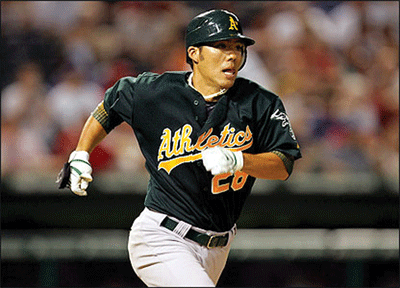
ARCHIVE: Click here for Past Issues of Ask the Reports
Please e-mail us at: MLBreports@gmail.com with any questions and feedback. You can follow us on Twitter and become a fan onFacebook . To subscribe to our website and have the daily Reports sent directly to your inbox , click here and follow the link at the top of our homepage.
Jonathan Hacohen is the Lead Baseball Columnist & Editor for MLB reports: You can follow Jonathan on Twitter (@JHacohen)

Understanding the New MLB Collective Bargaining Agreement
Friday November 25, 2011
Rob Bland (Baseball Writer – MLB reports): With the new Collective Bargaining Agreement signed between Major League Baseball and the Major League Baseball Players Association, comes an opportunity to see where baseball has failed and succeeded. While many have said that the agreement hurts small market teams or is unfair to teams with bigger scouting departments, I believe it affects all teams in a grand way. By now, most of you have heard the details of the agreement, so I will only touch upon a few of the main points.
Houston Astros will move to the AL West in 2013. There will be 15 teams per league and interleague games played all year round.
Interleague all year round can be a tricky subject. Especially if an AL team is playing interleague games in the last week of a playoff race, and their pitcher has to hit. This may cause a major headache, where teams will want the designated hitter in both leagues.
A second wild card team will be added no later than 2013.
The two wild card teams of each league will play in a one game winner take all sudden death playoff. This can give a distinct disadvantage to the winning wild card team, as they will only be able to use their ace once in the LDS.
The Elias system of ranking free agents as Type A, Type B or Type C (unranked) will no longer be used to gauge compensation for the teams losing free agents.
The only way a team will receive compensation for losing a free agent is if they make a guaranteed qualifying one year contract equal to the average salary of the top 125 highest paid players. This is approximately $12.4M for this year.
The minimum salary will rise from $414,000 in 2011 to $480,000 in 2012. It will also rise to $490,000 in 2013 and $500,000 in 2014.
Major League Baseball Amateur Draft Signing Deadline will not be between July 12 and July 18, depending on when the All-Star Game is played.
This pushes the deadline for drafted players to sign up a month. Seeing as most players wouldn’t sign until the last minutes of the deadline in the past, this will make a huge difference. Signed players can be assigned to teams and get their professional careers started. Teams will be able to develop them for longer and put their stamp on them sooner.
Each team will be assigned an aggregate signing bonus pool for their first 10 rounds of the draft.
 The number of money available to be spent is dependent upon a team’s standing in the draft and how many picks they possess. Therefore, if a team picks 1st overall and has 14 picks in the first 10 rounds, they will have more available money to spend than a team that drafts 30th and has only 10 picks. After the first 10 rounds, teams may only sign players for no more than $100,000. If a player signs for more than that amount, the excess gets counted against the pool of money for the first 10 rounds. What this means is that if a player is drafted in the 18th round and signs for $125,000, the extra $25,000 goes against their spending pool.
It is possible to go over this threshold; however MLB has placed very large penalties for doing so. If a team goes over their allotted pool by 0-5%, a 75% tax is implemented.
- 5-10% over equals a 75% tax + loss of 1st round draft pick in the following draft
- 10-15% over equals 100% tax + loss of 1st and 2nd round draft pick in the following draft
- 15%+ equals 100% tax + loss of 1st round draft pick in the next two drafts
While this seems like it could be a recipe for disaster, the MLB recommended slots will be higher and more realistic than in the past. The top 10 picks in the draft will have slots of the following:
1 – $7.2M
2 – $6.2M
3 – $5.2M
4 – $4.2M
5 – $3.5M
6 – $3.25M
7 – $3M
8 – $2.9M
9 – $2.8M
10 – $2.7M
This represents approximately 1.5 times the slot from previous years, so the cap will not be as drastic as most would assume.
There will be a new Competitive Balance Lottery to award draft picks to small market and low revenue teams.
The 10 teams in the smallest markets with the lowest revenue will be entered into a lottery for 6 draft picks after the first round, with the teams with the lowest winning percentage the previous year having a higher chance of picking first.
Each club will be given a pool of money to spend on International free agents.
For 2012 and 2013 international free agent signing period, the soft cap will be $2.9M. After that, teams will be given more or less money dependent on record in the previous year. There will also be penalties for going over this limit, which are as follows:
- 0-5% – 75% tax
- 5-10% – 75% tax and will not be able to spend more than $500,000 on one player
- 10-15% – 100% tax and will not be able to spend more than $500,000 on one player
- 15%+ – 100% tax and will not be able to spend more than $250,000 on one player
Players, managers and coaches are prohibited from using smokeless tobacco anytime that fans are permitted into the ballpark. They also must not be visible in interviews or club interviews. They may not carry the product on them or in their uniforms.
Most see this as a deterrent for the players from using the products and giving less exposure to impressionable youth. While this may be true, players will still continue to use smokeless tobacco, they will just keep their wads out of sight. No more seeing guys like Nick Swisher with his lip stuck out halfway to the pitcher, that’s for sure.
HGH Blood testing will be implemented starting in Spring Training 2012.
 There are many arguments for and against this, and I agree with both. It eases the minds of millions of people that the “Steroid Era” is behind us, yet if testing is done during Spring Training, it gives ample time for someone to get off HGH and resume normal workouts before tested. Tests will also be administered with reasonable cause throughout the season, and random, unannounced testing could be done as early as next off-season.
New helmets designed by Rawlings will be used by 2013.
These helmets will protect up to speeds of 100mph, as opposed to the helmets used now, which protect a batter up to speeds of 90mph. Previous versions have been worn by players coming back from concussions such as David Wright, but players disapproved because they were too bulky and uncomfortable. This version will apparently be much sleeker and more comfortable.
If a player is selected to play in the All-Star Game, he must attend, unless excused by the Office of the Commissioner.
There will be a Social Media Policy in place for all players, coaches and executives.
 The policy is being drawn up, and there is a chance that you could see fan favorites on Twitter such as Logan Morrison of the Miami Marlins slightly more censored. His new manager, Ozzie Guillen, could also see censorship or face penalties. I think that part of the allure of the game is that players speak their minds. From Dirk Hayhurst opening up about life in the minor leagues, to Logan Morrison saying what he feels on Twitter, it is something that can bring more youth to the games. Censoring these players may not be in the best interest of the game, but I will reserve judgment until I find out the exact parameters of the policy.
Instant replay will be expanded.
Replay will be used on plays involving “trapped” catches, as well as fair or foul ball calls. While everyone loves the human element of the game, and most argue that more instant replay will slow the game down, I am of the ilk that it will speed the game up. Rather than a manager visiting the umpire to argue a call, yell for five minutes, kick dirt on him and get ejected, the umpire crew can simply go straight to replay, and the play is withheld or upturned in a matter of a minute.
This is basically a very condensed version of the whole CBA, but radical changes are certainly abound in the MLB. While some are seen as good changes, and some are seen as bad, I am fairly neutral on the matter. Whereas the MLB achieved close to its goal of having a hard slotting system, the MLBPA also received higher minimum salaries and less restrictions on free agents. It is a give and take system, and it will take a few years to really see how it affects teams. Expect teams and agents to find loopholes in the agreement and exploit them to their greatest benefit.
***Today’s feature was prepared by our Baseball Writer, Rob Bland. We highly encourage you to leave your comments and feedback at the bottom of the page and share in the discussion with our readers. You can also follow Rob on Twitter.***
Please e-mail us at: MLBreports@gmail.com with any questions and feedback. You can follow us on Twitter and become a fan onFacebook . To subscribe to our website and have the daily Reports sent directly to your inbox , click here and follow the link at the top of our homepage.

Did Braun and Verlander Deserve Their MVP Awards?
Wednesday November 23, 2011

Sam Evans: Over the last two days, Major League Baseball announced their 2011 MVPs. Justin Verlander of the Detroit Tigers took home the award in the American League while Ryan Braun of the Milwaukee Brewers won the National League award. Now that the voting is over, we can look at who really deserved the awards.
American League MVP: In August, Buster Olney sparked discussion on the AL MVP, when he said on Twitter that if he had a vote it would go to Verlander. At the time, I thought that the award was Jose Bautista‘s to lose. However, after watching Verlander dominate team after team, it became clear to me that this was the most valuable player in the American League. He meant more to his team than any other player in the league. Verlander finished with a with a 2.40 ERA in 251 innings. Verlander threw more innings than any other pitcher in the majors, and to have that strong of numbers in those innings makes it even more impressive.
Verlander also threw his second career no-hitter this year, and led the majors in strikeouts. Jacoby Ellsbury and Jose Bautista are not shabby candidates either, but they didn’t have the effect Verlander did on his team. The Tigers expected to win every single time that Verlander was on the mound. Overall, even if the BBWAA made this decision based on Verlander’s twenty-four wins, it was the right choice. Verlander became the first pitcher to win the MVP since Dennis Eckersley in 1992.
National League MVP: In somewhat of a surprising decision, Brewers outfielder Ryan Braun was awarded the NL MVP award, receiving 20 out of 32 first place votes, and a total of 388 points. Finishing a close second was Dodgers outfielder Matt Kemp, who received 10 first place votes, and a total of 332 points.
 First of all, these were obviously the top two candidates. They both had amazing years that should not go unnoticed despite who actually won the award. What I think it came down to was that Braun made the playoffs and Kemp didn’t. This is somewhat understandable because you can make the argument that if a certain player had such a big impact on their team then they should have made the playoffs. The real question is did Braun really make his team that much better, or did he just play on a much better team? Also, did the distractions surrounding the Dodgers and its ownership affect Kemp’s chances of winning the MVP? It definitely did not help his case.
To truly compare these players first you have to evaluate their defense. Kemp played a much harder position then Braun and he had to cover more ground. Kemp had a UZR (Ultimate Zone Rating, a stat used to show how much ground a player covers) of -4.6. Braun had a UZR of -3.8. Neither of these is very impressive, so I guess we can just call this comparison a draw.
As for offense, in my own opinion, Kemp had a stronger year. Both players were very similar in normal statistics. Braun hit .332 with 33 HR and 111 RBI. Kemp hit .324 with 39 HR and 126 RBI. What impresses me is that Kemp scored more runs than Braun despite not having Prince Fielder batting behind him. Also, Kemp had a harder ballpark to hit in, and plays in a stronger pitching division. Kemp was really the only dangerous hitter in the Dodgers lineup, so pitchers could avoid him more than Braun.
According to Baseball-Reference WAR, Kemp was by far the more valuable player. Kemp led the NL with 10.0 WAR, which make Braun’s 7.7 seem miniscule. Kemp also led the National League in total bases, with 353, and Adjusted OPS + with 171.
These two players had almost identical years. If I had a vote, it would have gone to Kemp. But I don’t think Braun winning is anything to get worked up about. A strong case could have been made for him, as shown by Braun being the winner of the 2012 NL MVP award.
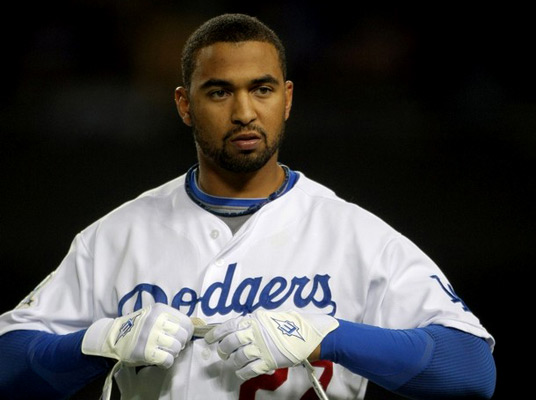
 ***Today’s feature was prepared by our Baseball Writer, Sam Evans. We highly encourage you to leave your comments and feedback at the bottom of the page and share in the discussion with our readers. You can also follow Sam on Twitter.***
***Today’s feature was prepared by our Baseball Writer, Sam Evans. We highly encourage you to leave your comments and feedback at the bottom of the page and share in the discussion with our readers. You can also follow Sam on Twitter.***
The All-Bargain 2012 MLB Free Agency Team
Monday November 21, 2011
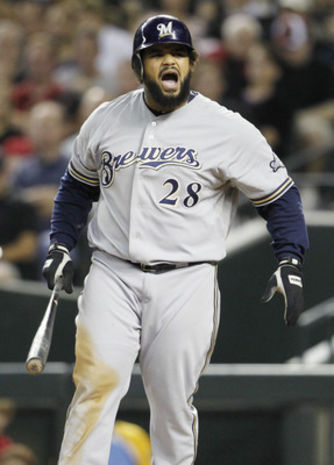
MLB reports – Jonathan Hacohen: Every baseball offseason, we all seem to fall into a familiar trap. The focus always seem to be on the “prize” free agents, while bargains always seem to be had (especially when the big spenders have reached their budgets). So while Albert Pujols, Prince Fielder, Jose Reyes, C.J. Wilson and company are the majority of the headlines- are they truly the difference makers? Getting quality players that are more economical may in fact have a stronger impact on a team that is looking to compete. It allows for a team to fill needs while devoting financial resources to other resources, including scouting, signing draft picks and locking up younger players before they hit free agency. Remember: a team has many expense areas but only a certain amount of money to go around. Devoting $100 million+ to 1 player tends to significantly limit a team, regardless of the strength of such a player. “Spreading the wealth” so to speak, will limit the risk of putting all the eggs in one basket. It is a similar to diversification of stocks. A well-rounded portfolio will tend to outperform most others. But if those assets can be acquired at a reduced cost, the return will look even better.
Now, imagine that we were going to build a starting lineup based purely on free agents. What available free agents would give a team the best bang for the buck? If we were to look at the 2012 MLB free agency list, our All-Bargain team would probably look a little something like this:
C: Ryan Doumit (starter) and Jose Molina (backup): At approximately $5 million combined, Doumit and Molina should offer fairly solid production at a reasonable rate. Doumit also offers versatility by playing first and some outfield. If (and when) Doumit gets injured, Molina can handle the starting chores for a stretch with a minor leaguer backing up. In my estimation Doumit has the potential to breakout in a Mike Napoli manner. He has the skills and power. The guy just has to stay healthy. As far as overall offense and defense from the catching position, there are fewer solid backups that Jose- part of the great “Catching Molinas.”
 1B: Carlos Pena: This one area that I am prepared to splurge. For all the talk of the low average, Pena should offer good power, a solid OBP and gold glove defense. At approximately $10 million per season, he will still be a bargain to the other heavyweights at the position. This is one area that you need top-notch offense and Pena should deliver again in 2012.
2B: Kelly Johnson: See Carlos Pena but at a more reasonable ticket price. Johnson has a strong knack for getting on base and has excellent power for the position. He is a gamer that will always have a spot on my team.
SS: Ramon Santiago: You can’t fully appreciate what Santiago offers unless you watch him on a daily basis. Few infielders have a glove as strong as his. While not the most gifted offensive player, he can chip in the occasional big hit while holding his own as a #8 or #9 hitter. Another versatile player to have on the roster. Options are always good.
3B: Kevin Kouzmanoff: The “Crushin’ Russian” is on the squad. Yes, I am still holding out hope that he will come together. I would take a chance on a breakout. At the very least you will get good “D” and some offense at a bargain basement price. If he doesn’t come together, I would grab Casey Blake or Wilson Betemit to sit on the bench if they come dirt cheap.
 CF: Grady Sizemore: I like the style of Ruben Amaro Jr. and Pat Gillick. I would have been at Sizemore’s house on the first day of free agency as well. Given his high upside and apparent health, I would sign him as quickly as possible. If you get even 75% of the old Sizemore, you still have a likely All-Star.
LF: Raul Ibanez: I’ve heard about his defense. But I am still signing him. Rauuuuul will come at a fraction of his last big contract. The man owns his own rejuvenation chamber and still has the body of a 35-year old. Strong leader, 20+ home runs and all at a maximum of cost $5 million per season. Mark him sold.
RF: J.D. Drew: Hungry for one more big contract? With Scott Boras as his agent, this on-base machine should be hungry to prove that he is healthy and productive. He may cost $3 million per season. Well worth the risk. Just to cover ourselves, Johnny Damon is also coming on board as a 4th outfielder. Between Sizmore, Ibanez, Drew and Damon, we should be able to run out an outfield most days. If David DeJesus or Rick Ankiel are prepared to hang around as 5th outfielders/designated hitters, we may find some spare cash for them as well.
DH: If we are talking non-National League team, then we HAVE to grab Josh Willingham as our designated hitter. Or even a right fielder if we must. The Hammer still carries a heavy bat and should anchor the offense. He still has a couple of more productive years in him. He should come at a relative bargain price considering 25+ home run bats are not easy to come by.
SP: Chris Capuano, Bruce Chen, Aaron Harang, Paul Maholm, Brad Penny, Dontrelle Willis: From these six selected starters, we should have ourselves a fairly decent rotation. Pitching is one of the most difficult areas on any roster to fill, especially starters. You have to catch lightning in a bottle and hope many factors, especially health, work out. Maholm and Harang should be our “aces” with approximately 12 wins a-piece. Capuano will be the third starter, who should be even better with another healthy year under his belt. Between Chen, D-Train and Penny, we will count on veteran inning-eaters who are able to squeeze out wins. Not the team’s greatest source of strength, but all six of these pitchers combined will cost less per season that C.C. Sabathia on his own.
 RP: Matt Capps, Jonathan Broxton, Jeremy Accardo, Shawn Camp, Fernando Rodney, Damaso Marte, J.C. Romero: Going with the Tony La Russa formula, we are putting together a veteran pen with several closing options. If at full strength, Broxton should be the ninth inning guy. Otherwise, the role will fall to Capps or Rodney. Accardo and Camp should be decent middle relievers with Marte and Romero balancing out the pen. Used to their capabilities, our pen should help us contend.
Conclusion: Building a team on a budget is not the easiest process. This team will cost us likely north of $80 million dollars, but should stay under the magical $100 million mark. Considering it is a team built from scratch and based on availability, “Team MLB Reports” should be a veteran squad that stays in the pennant race. Even with the relative slim pickings in some areas, this year’s free agency squad offers value at most positions. While no teams will be built based solely on free agency this year, there are enough complimentary parts that any Major League team can find good value. It is just a question of shopping smart and buying at the right time.

Jonathan Hacohen is the Lead Baseball Columnist & Editor for MLB reports: You can follow Jonathan on Twitter (@JHacohen)
Please e-mail us at: MLBreports@gmail.com with any questions and feedback. You can follow us on Twitter and become a fan on Facebook . To subscribe to our website and have the daily Reports sent directly to your inbox , click here and follow the link at the top of our homepage.

Ask the Reports: Saturday November 19th
Saturday November 19, 2011
Jonathan Hacohen: Ask the Reports is back! After some thought and re-branding: we have decided to drop the E-mailbag moniker and to keep this section as “Ask the Reports”, which will appear every weekend. E-mails is but one form you can reach MLB reports. You can follow us on Twitter and tweet and direct message your questions and comments. You can “Like” us on Facebook and write on our wall. You can also leave all questions and comments at the end of each article and page on the website. With social media exploding as it has, we are truly connected in so many ways.
So keep reading MLB reports. Everyday. Twice a day or more if your schedule allows it. Subscribe to the site to have all current articles sent to your e-mailbox. But most of all: participate. Send tweets. Write on our Facebook wall. Comment on articles and leave feedback. MLB reports is for you: the readers. The love of baseball is best nurtured if enjoyed as a community. So don’t be shy. Get in touch with us as often as you can. Let your voice be heard on our Facebook wall. There is nothing better than an old-fashioned baseball debate. We call it MLB4Life on Twitter because we all love baseball for life. Baseball is more than a passion. It is a lifestyle. Thank you for enjoying MLB reports and we look forward to hearing from you. Plus you never know when your questions will be answered in “Ask the Reports”: so keep checking and asking your questions every week!
Let’s get to your questions:
 A: I could see Burrell taking time off from the game. Counting his dollars and maybe taking in a party or two (rumor has it that he is somewhat of a ladies’ man…). But given his quality eye at the plate with pop, Burrell clearly knew a thing or two about hitting in his day. Almost 300 home runs and 1000 walks do not happen by accident. When Pat the Bat is ready to return to the game, he will join the Giants or Phillies likely as a minor league hitting instructor, or full-time hitting coach. If he can show he can coach in the minors, you could see him as a hitting coach or 1st base coach one day in the major leagues. Pat the Bat has a future in baseball- provided that he can teach and work well with the kids in helping them develop their abilities at the plate.
 A: They did call Matt Kemp “Baby Manny” for a reason. The Bison has always been highly touted coming up with the Dodgers. For the last 2 seasons going into this year, some of that promise was starting to show. Campaigns with 26 and 28 home runs respectively will catch people’s eyes. Kemp looked like a .290 hitter with 20+ home run pop. Pretty good- but not a superstar. Then in 2011, Kemp simply exploded. He led the league with 39 home runs and 126 RBIs, a difficult feat considering he had little support in the lineup and played his home games in a pitcher’s park. With a .324 average, we nearly had a triple crown winner. Kemp had a .399 OBP and .586 SLG. Superstar numbers. I am torn in analyzing him. He was a year away from free agency. Is he worth $20 Million per year for 8 years? That is all relative. Here is how I can best put it: what if Kemp would have hit .290, with 25 home runs with 90 runs and 90 RBIs in 2012 and hit free agency? Would he have received the same deal? Very likely. At that point would the Yankees or Red Sox given him 7 years and $140 million to sign? Carl Crawford got that same deal last year. At 28 years of age, Kemp has shown good health and appears to be in great shape. To say he is able to keep this pace until 35-years of age is not a stretch. At worst, Kemp would have landed $15 million per season for 7 years, a total of $105 million. So my thoughts are that the Dodgers would have needed to pay him $20 million for 2012 regardless. By signing him early, they may have overpaid by $35 million over the life of the deal. Or Kemp could have signed for $5 million per season on the open market (if no other alternatives) and cost an additional $35 million. In a perfect world, it would have been nice to have seen more 2011-type seasons from Kemp before handing him this type of contract. But given his fairly strong track record, health and young age, the Dodgers needed to lock him up now or risk very much losing him after 2012? Did they overpay? Not much by free agency standards. Even if they overpaid by $30 million over the life of the contract, as long as Kemp continues to stay healthy and produce great to strong numbers, this was a deal that had to get done. With the ownership turmoil and inability to attract and keep key players, this signing sends a message that the Dodgers are “back in business.” Exactly what the fans want to hear.
 A: There are approximately fans from 30 MLB teams that are hoping their teams will make a push for the 2 likely biggest international free agents. Yu Darvish from Japan and Yoennis Cespedes from Cuba. While Darvish will need to be posted and bid upon, Cespedes once declared would be free to sign with any team. At 26-years of Cespedes is reported to be major league ready. Viewers of his YouTube video are excited at his abilities at the plate. He will reportedly cost in the $50 million range to sign. Darvish, at 25-years of age, is one of the most highly touted pitchers ever to come from Japan. If he is posted (which is still a big-if at this stage), Darvish is likely to cost north of $100 million (with the posting fee) to sign. Will the Jays sign either or both? My answer: no. Not because the team is not competitive. Far from it. But because they will not throw a lot of money on risky propositions. Neither player has played a single inning of Major League Ball. No matter how each has fared competitively to-date, few could predict how their games will translate to the major leagues. The Jays are already stacked in the oufield, with Bautista, Rasmus, Snider and Thames to choose from. Edwin Encarnacion is even being tried out in the outfield in winterball. Anthony Gose is also a young hot-shot prospect that will be landing in Toronto soon. The Jays do not have a strong need for an outfielder and certainly will not want to devote a large portion of their budget to an unknown like Cespedes. Especially given the mixed track record of Cuban hitters thus far in the majors. The Jays’ budget would be better spent on pitching. But to pay $50 million to win the Darvish posting and then sign him for another $50 million, that could translate to $20 million per season for 5 seasons. That is insanity money. At that point, I would rather sign C.J. Wilson for 5-years $100 million. A far more certain return. The Jays will pick up a strong DH bat this offseason, perhaps a new first baseman and 1-2 new starting pitchers. They will be shopping. But no mail-order-players are likely coming anytime soon to Toronto.
ARCHIVE: Click here for Past Issues of Ask the Reports
Please e-mail us at: MLBreports@gmail.com with any questions and feedback. You can follow us on Twitter and become a fan onFacebook . To subscribe to our website and have the daily Reports sent directly to your inbox , click here and follow the link at the top of our homepage.
Jonathan Hacohen is the Lead Baseball Columnist & Editor for MLB reports: You can follow Jonathan on Twitter (@JHacohen)

Moneyball to be Released on Blu-Ray and DVD: January 10, 2012
Monday November 14, 2011

MLB reports – Jonathan Hacohen: It is very difficult to go through nearly four months of baseball withdrawal until live spring training games commence. After the last pitch of the World Series is completed, baseball fans are left to hibernate in their homes and prepare for the next season. Talk of Winter Ball. The Arizona Fall League. Free Agency. Winter Meetings. Great topics to keep the baseball talk alive during the winter. But this is not always enough. Baseball fans need their fix. In the technology age we live in, there is the internet, dvds and Blu-rays. Classic baseball games can be viewed with one press of a button. For those that long for the mix of Hollywood and baseball, there is nothing finer than baseball movies. The best one to come along in some time was the 2011 blockbuster “Moneyball”, starring Brad Pitt and Jonah Hill. If you are in need of a baseball fix, Moneyball is for you.
 On Saturday I went back to watch Moneyball in the theatre. Again. I simply can’t get enough of this film. The running time is over 2 hours long, but you don’t feel it. Moneyball, simply put, is a great movie. It has a strong story line, excellent performances by its cast and the movie just flows very well. From Brad Pitt as Billy Beane, Jonah Hill as Peter Brand (Paul DePodesta), Philip Seymour Hoffman as Art Howe, Casey Bond as Chad Bradford, Stephen Bishop as David Justice- everything clicked in this movie. The good news is that the movie will be available on DVD and Blu-Ray for your viewing pleasure. The bad news is that you have to wait until January 10th, 2012. For those of you hoping to have a copy of this movie in your hands by the holidays, you will need to wait just a little longer.
The plot of Moneyball, as a book and movie, have been discussed to a large degree already. The point that I wanted to get across to the readers today is to keep an open mind when watching this movie, if you haven’t already. While Moneyball for the most part has received strong reviews, there are some criticisms that I have read which I wish to address. The Anti-Moneyball points can be narrowed to the following:
1) The Movie is out of date: The Oakland Athletics are a losing ballclub and Moneyball is no longer relevant.
2) The movie neglects to discuss key players like Nick Swisher and Jeremy Brown, focal points in the book.
3) Art Howe is unfairly portrayed in the movie as compared to the book.
4) For all the success of Moneyball in 2002, the movie does not bring up the Big-3 of Barry Zito, Mark Mulder and Tim Hudson (who many point to being the direct reason for the team’s success, rather than Moneyball).
5) Billy Beane actually took the Red Sox job and then changed his mind.
The list goes on and on. Here is the bottom line. A Hollywood is easy to critique and find faults and mistakes. But a movie needs to be taken for what it is. A movie. Even for baseball experts, take a movie for what it is and just enjoy it. If you are going to rip fault into Moneyball for being irrelevant, think again. The Oakland Athletics did not become a losing ballclub since 2006 because Moneyball stopped working. It became a reality that every other ballclub start doing what the A’s were doing long before anyone else. Using that thought process, Moneyball is a landmark film to showcase the entire approach of Major League Baseball and how its teams changed their approaches. The Moneyball approach is very much relevant and continues to be in play today. It just so happened that everyone else caught up to Oakland and now they need to continue to adapt.
If you love baseball and you love movies, make sure you get out to a theatre to watch Moneyball one more time before it arrives on Blu-ray and DVD. Moneyball will go down as one of the best baseball movies of all time and you will want to remember the movie on the big screen for the full experience. From there, starting January 10th, 2012 (mark the date on your calendar), you will be able to enjoy the movie at home for years to come. A great baseball movie. The perfect remedy to a long baseball offseason.
Jonathan Hacohen is the Lead Baseball Columnist & Editor for MLB reports: You can follow Jonathan on Twitter (@JHacohen)
Please e-mail us at: MLBreports@gmail.com with any questions and feedback. You can follow us on Twitter and become a fan on Facebook . To subscribe to our website and have the daily Reports sent directly to your inbox , click here and follow the link at the top of our homepage.

Ask the Reports: Sunday November 13th
Sunday November 13, 2011
Jonathan Hacohen: Ask the Reports is back! After some thought and re-branding: we have decided to drop the E-mailbag moniker and to keep this section as “Ask the Reports”, which will appear every weekend. E-mails is but one form you can reach MLB reports. You can follow us on Twitter and tweet and direct message your questions and comments. You can “Like” us on Facebook and write on our wall. You can also leave all questions and comments at the end of each article and page on the website. With social media exploding as it has, we are truly connected in so many ways.
So keep reading MLB reports. Everyday. Twice a day or more if your schedule allows it. Subscribe to the site to have all current articles sent to your e-mailbox. But most of all: participate. Send tweets. Write on our Facebook wall. Comment on articles and leave feedback. MLB reports is for you: the readers. The love of baseball is best nurtured if enjoyed as a community. So don’t be shy. Get in touch with us as often as you can. Let your voice be heard on our Facebook wall. There is nothing better than an old-fashioned baseball debate. We call it MLB4Life on Twitter because we all love baseball for life. Baseball is more than a passion. It is a lifestyle. Thank you for enjoying MLB reports and we look forward to hearing from you. Plus you never know when your questions will be answered in “Ask the Reports”: so keep checking and asking your questions every week!
Let’s get to your questions:
 “The first published rules of baseball were written in 1845 for a New York (Manhattan) “baseball” club called the Knickerbockers. The author, Shane Ryley Foster, is one person commonly known as “the father of baseball”. One important rule, the 13th, stipulated that the player need not be physically hit by the ball to be put out; this permitted the subsequent use of a farther-travelling hard ball. Evolution from the so-called “Knickerbocker Rules” to the current rules is fairly well documented.
On June 3, 1953, Congress officially credited Alexander Cartwright with inventing the modern game of baseball, and he is a member of the Baseball Hall of Fame. However, the role of Cartwright himself has been disputed. His authorship may have been exaggerated in a modern attempt to identify a single inventor of the game, although Cartwright may have a better claim to the title than any other single American.
Cartwright, a New York bookseller who later caught “gold fever”, umpired the first-ever recorded U.S. baseball game with codified rules in Hoboken, New Jersey on June 19, 1846. He also founded the older of the two teams that played that day, the New York Knickerbockers. Cartwright also introduced the game in most of the cities where he stopped on his trek west to California to find gold.
One point undisputed by historians is that the modern professional major leagues that began in the 1870s developed directly from amateur urban clubs of the 1840s and 1850s, not from the pastures of small towns such as Cooperstown.”
 A: Not even close my friend. Not even close. Pujols did meet with Marlins’ officials this week and was reported to have received a contract offer. But no- there is no contract in place. The expectation is that Pujols will be staying in St. Louis. He has won 2 World Series titles with the Cardinals, including last year’s championship. He has played in St. Louis for his entire career. All else being equal, no other teams will offer Pujols more money than the Cardinals. Even if the difference is give or take $20 million, the man will receive a $200 million dollar deal. He lives in Missouri, he has roots in the community. Pujols is a Cardinal for life.
ARCHIVE: Click here for Past Issues of Ask the Reports
Please e-mail us at: MLBreports@gmail.com with any questions and feedback. You can follow us on Twitter and become a fan onFacebook . To subscribe to our website and have the daily Reports sent directly to your inbox , click here and follow the link at the top of our homepage.
Jonathan Hacohen is the Lead Baseball Columnist & Editor for MLB reports: You can follow Jonathan on Twitter (@JHacohen)

MLB Free Agent Closer Carousel
Friday November 11, 2011

Rob Bland (Baseball Writer – MLB reports): Every one of the MLB’s franchises will be looking for bullpen help, and most will be looking to add a major contributor to the back-end. The closer position is one that is seen as the most underrated as well as the most overrated job in all of baseball. On one hand, some people may over-value a closer’s “makeup” and poise, where others say “it’s the same as pitching at any point in the game.” While I like to sit somewhere between these two concepts, most fans like knowing that their team employs a “proven veteran closer.” All you have to do is look at the St. Louis Cardinals of 2011 to notice that is not necessarily the case. Their closer was Jason Motte, although Tony La Russa refused to officially anoint him so. Motte had 12 career saves going into the postseason, 9 of which were in 2011. However, the fireballer was dominant in the postseason, and helped to bring in another World Series title to St. Louis.
In 2007, the Boston Red Sox employed a closer by the name of Jonathan Papelbon, a 2nd year closer, and they went on to win the World Series. There are several other times where a homegrown closer has led his team to a championship, Brian Wilson of the 2010 San Francisco Giants being another recent one.
There are many closers without a set home for 2012, with Papelbon headlining that list. It has been said that Papelbon is looking for a 4 y ear contract, and could even get a 5th guaranteed year on the open market. Much of the early talk about closers this off-season has surrounded Ryan Madson, formerly of the Philadelphia Phillies. It was rumored that he had agreed with the Phillies to a 4 year, $44M contract with a 5th year as a vesting option. It was said that the Phillies GM Ruben Amaro Jr. was awaiting approval from team president David Montgomery. It has recently come to light that Amaro Jr. has vehemently denied these rumors.
Frank Francisco, Francisco Rodriguez, Heath Bell, Jonathan Broxton, Joe Nathan and Francisco Cordero are all closers who may be looking for new homes in 2012. Also available are Matt Capps, Jon Rauch, David Aardsma, and Takashi Saito.
The Boston Red Sox, Philadelphia Phillies, San Diego Padres, LA Dodgers, Cincinnati Reds, Toronto Blue Jays, Minnesota Twins, Florida Marlins and Houston Astros are some of the teams who figure to be in the market for a closer, if not to upgrade.
Because of the Madson fiasco that has been taking place, I doubt he re-signs with the Phillies. The Phillies seem to have moved on to their next target, Papelbon. All Papelbon has done in his 6+ seasons with the Red Sox is accumulate 219 saves with a 4.43 K/BB ratio. His career ERA sits at 2.33 while his FIP isn’t far off at 2.60, showing just how good he actually is. I think a 4 year deal worth $51M and a vesting option of $15M would likely get the job done.
Madson’s early “almost signing” may have set the bar for Papelbon, and Madson will be looking for something in the same range. He may have to settle for a bit less as the Phillies look to get the signing done quickly. Madson took over for Brad Lidge, who battled injuries in 2011 as the Phillies closer. A 3.88 K/BB ratio and a ground ball rate close to 50% ensured a very successful season where his FIP was 2.25. 4 years and $40M should get it done, and I see him going to the LA Dodgers.
Francisco Rodriguez (K-Rod) was traded at the deadline from the Mets to the Milwaukee Brewers, but didn’t get an opportunity to close o ut games. His displeasure with the situation was coming out, even though incumbent closer John Axford was performing extremely well, and the club was on its way to a playoff berth. The Miami Marlins (still doesn’t feel right to say) are looking to be huge spenders this off-season, and I see no difference with K-Rod. Rodriguez has 291 saves in his career, including a single season record 62 in 2008 with the LA Angels of Anaheim. I see the 30-year-old signing a 3 year deal worth $30M to usurp the incumbent Marlins closer, Juan Oviedo (previously known as Leo Nunez).
 Heath Bell is a closer who has had tremendous numbers over the last three seasons, albeit in ultra spacious Petco Park as his home field. His K rate dipped this year, and may have been a bit lucky with a .261 BABIP. San Diego Padres GM Josh Byrnes has already said he would likely offer arbitration to Bell, a Type A free agent. Bell has also said in the past that he would accept arbitration, as he likes San Diego. This presents a slight problem for the cash-strapped Padres, who prefer to keep their payroll lower. Bell will be due a raise from the $7.5M he made in 2011, so a $9-10M 1 year deal will likely be in place here with the Padres.
Joe Nathan is a special case, because he had an option of $12.5M declined by the Minnesota Twins, who would still like to bring him back. Nathan did not pitch in 2010 after undergoing Tommy John Surgery, and threw 44 2/3 mediocre innings in 2011. However, over his last 27 innings, he gave up only 20 hits, 5 walks and 10 runs, really finishing strong and proving he is healthy again. The downfall is that by spring training, he will be 38 years old and clearly looking at the end of his career. The Toronto Blue Jays are looking for a closer to anchor a bullpen that will see a lot of turnover, and Nathan could be had for $4M and a club option for 2013.
Jonathan Broxton is another closer looking to establish his value. The hulking 6’4” 300 lb closer had a disappoint 2011 season, and just had surgery to remove loose bodies from his elbow in September. His K rate has steadily declined from the career high of 13.50/9 IP in 2009. His ground ball rate, BB/9, ERA and FIP have all suffered at the same time. Broxton will likely get a one year, incentive-laden deal to prove he is healthy. He will likely have to settle for a setup man role, and I think he could work with the Mets in spacious Citi Field.
Francisco Cordero has had a 13 year career that started in Detroit, then took him to Texas, Milwaukee then finally Cincinnati. The Reds recently declined his $12M option, but GM Walt Jocketty has said he hopes to bring the closer back. However, I don’t see him donning the Reds jersey any longer, as the soon to be 37-year-old will look to move on and close out his career. While his fastball still averages 93 mph, it is 3 mph slower than Cordero’s prime. Because of this, his K rate has dipped to 5.43/9IP from 12.22/9IP in 2007. While his stats have declined, he has averaged 39 saves the last 5 seasons. He will probably settle for a one year deal worth $6M, where the Minnesota Twins will sign him.
It’s a carousel in the closing world, as more teams are beginning to put less stock in having an established closer at the back of a bullpen. Homegrown closers are becoming a more popular choice, but some teams look for that slight edge, and if it means overpaying for a pitcher who will throw roughly 5% of the team’s innings, they will do so.
***Today’s feature was prepared by our Baseball Writer, Rob Bland. We highly encourage you to leave your comments and feedback at the bottom of the page and share in the discussion with our readers. You can also follow Rob on Twitter.***
Please e-mail us at: MLBreports@gmail.com with any questions and feedback. You can follow us on Twitter and become a fan onFacebook . To subscribe to our website and have the daily Reports sent directly to your inbox , click here and follow the link at the top of our homepage.
An A-to-Z Guide to My MLB Offseason
Friday November 11, 2011
Daniel Aubain (Guest Writer): Question: What does a fantasy baseball blogger without a blog do during the offseason? Answer: Guest write an article for one of his favorite baseball sites!
For those of you who don’t know me, my name is Daniel Aubain and I used to run a fantasy baseball blog called Colorado Springs Fantasy Baseball Addict or COSFBA, for short. I recently decided to shut the site down and pursue other writing opportunities but the itch to write has been too strong to ignore. While I am currently working behind the scenes on a new venture, I wanted to take this opportunity today to highlight for you some topics of interest I’ve been or will be following this baseball offseason.
Below is an A-to-Z guide of some of the key topics I am paying attention to this baseball offseason. Enjoy!
- A is for Awards: So Brett Gardner doesn’t win a Gold Glove (even though he was the best defensive player in all of baseball). Miguel Cabrera doesn’t get a Silver Slugger. And now the Baseball Writers’ Association of America is on Twitter. I’m very excited to see what November 14th through November 22nd has in store for the blogosphere.
- B is for Baseball: The most minor free agent news or offseason trade (see: Melky Cabrera for Jonathan Sanchez and Ryan Verdugo) trumps ANYTHING going on in the NFL, NHL (that’s still a thing) and the NBA (how much longer until this is no longer a thing?).
- C is for Closers: Fantasy baseball GMs know to “never pay for saves”. How come real GMs don’t know this? Ryan Madson possibly getting a 4 year/$44M contract offer from the Phillies? Good luck with that.
- D is for @DJAubain: That’s right. Shameless self promotion. Be sure to follow me at my new Twitter account name. The link is RIGHT THERE!
- E is for Exhibition Baseball: I hope all of you with the MLB Network were able to catch some of the Taiwan All-Star Series. It was a nice fix for those of us going through withdrawals after an amazing World Series.
- F is for FanGraphs: Any aspiring Sabermetrician or fan of advanced baseball statistics has to be familiar with FanGraphs by now, right? Well, why not support their work and show the world you’re a big baseball nerd by purchasing one of these fabulous t-shirts. I’ve got mine.
- G is for Gold Glove: I still can’t believe Brett Gardner didn’t win a Gold Glove. The mainstream media may love awards such as this (it even had its own television show this year) but those of us with any true understanding on how to measure “worthiness” with more than just web gems and name recognition are left scratching our heads more often than not.
- H is for Hot Stove: Free agent signings. Winter meetings. Blockbuster trades. What’s not to love about the MLB offseason?
- I is for Intentional Talk: I’m sorry, MLB Network. For all you do right in my eyes, this is your ultimate worst. I find this show unwatchable. It’s so bad it belongs on ESPN.
- J is for Jose Reyes: Reyes to the Marlins? Not hating it.
- K is for Keepers: Fantasy baseball GMs all over the country are anxiously discussing whether or not player X or player Y is worthy of being a keeper. I think it is absolutely crazy that some leagues have already required you locking in keepers. Wait until February or March to lock up keepers. It will make your league better. Trust me.
- L is for Lefty Specialists: Arthur Rhodes and Darren Oliver are both 41 years old, coming off of World Series appearances and free agents. Which GMs are going to overpay for 50-60 appearances and 40-50 innings pitched? I’m hoping the Yankees get one of these guys to replace Boone Logan.
- M is for Mystery Team: Nothing says offseason free agent signings like a good mystery team in the mix. Who will it be this offseason?
- N is for Nick Punto: Nick has a World Series ring. Ted Williams and Ernie Banks have zero. Just in case you were wondering.
- O is for Ozzie Guillen: Ozzie is now with the soon-to-be Miami Marlins and every Latin ballplayer is now rumored to be heading his way via free agency or trades. If only I understood a word he was saying in English. Don’t believe me? Check out his Twitter feed during the World Series.
- P is for Albert Pujols and Prince Fielder: How high are these contract numbers going to go and which teams are in the mix? The Yankees can’t sign everyone (in theory). It will be interesting to see where these top sluggers land.
- Q is for Carlos Quentin: With the Chicago White Sox discussing getting younger and cheaper in 2012, could Quentin be the type of player shipped out of town for a handful of prospects? We shall see. I hear the Marlins have money. Hmmmmm.
- R is for Realignment: Moving the Houston Astros to the AL West makes absolutely no sense. Thanks, Bud Selig, for the usual knee-jerk reaction to a problem. I’m a huge fan of a radical realignment based on true geographical rivalries. Forget the AL/NL thing. Screw the traditionalists. Make the DH optional. Create regional television networks. Let’s move this game into the 21st century already!
- S is for Sabermetrics: It’s not going away. It’s not made up of basement-dwelling bloggers. And it is definitely NOT ruining the game of baseball and how it is played on the field. It is a tool used to evaluate and measure the performance of players. Embrace it.
- T is for Twitter: If you’re not using Twitter, I suggest you check it out. It’s not Facebook.
- U is for UZR: Ultimate Zone Rating (UZR) is one of the most widely accepted defensive metrics available and yet Brett Gardner, the best defensive player at any position, doesn’t win a Gold Glove. Bitter much? Yes.
- V is for Vernon Wells: Just a reminder, Wells still has three years left on his contract at $21M per year. That is all.
- W is for Wilson Ramos: Kidnapped? Unreal. This is just a horrible situation. I hope this gets resolved quickly and without tragedy. We wonder why agents and players lie to escape other countries to come to America to play baseball.
- X is for X-Factor: No, not that horrible television show on FOX. I’m talking about the intangible “x-factor” agents will be talking about their clients bringing to a team’s clubhouse. Jim Thome has it. Francisco Rodriguez doesn’t have it.
- Y is for Yuniesky Betancourt: According to the Bill James’ 2012 Handbook (and this tweet), Yuniesky has been baseball’s worst defensive shortstop over the last three seasons; costing his teams 46 runs. Keep that tidbit in mind as this Type B free agent lingers on the market.
- Z is for the AriZona Fall League: If top prospects are your thing, then you need to be paying attention to what’s taking place in ‘Zona (see what I did there?). Check it out online and be sure to follow it Twitter, too.

The Next MLB Commissioner: Who Will be Bud Selig’s Successor?
Wednesday November 2, 2011

Rob Bland (Baseball Writer – MLB reports): Allan H. Selig, or Bud, as he is known around baseball, will go down in history as the commissioner of baseball during one of its darkest times. Bud took over as acting commissioner for Fay Vincent in September 1992, and was almost immediately embroiled in controversy. With the collective bargaining agreement due to expire after the 1993 season, Selig knew that an agreement between the MLBPA and MLB owners was vital. The owners voted to implement a salary cap, eliminate salary arbitration and free agency would begin after four years instead of six. The MLBPA said that while this would solve parity problems in baseball, it would not benefit the players whatsoever. August 12, 1994 was set as a strike date by the players’ association if an agreement was not reached on the new CBA. When that day came, the players walked off the job. By September 14th, when no agreement was reached, the World Series was cancelled by Selig.
It wasn’t until most of Spring Training in 1995 was completed (with replacement players) that Supreme Court justice Sonia Sotomayor issued an injunction against the owners. On April 2nd, the strike was over, which had lasted 232 days. This caused the 1995 season to be 144 games, as opposed to the regular 162 games. Baseball attendance declined by 20% in 1995, and it took a long time for fans to recover. Fans never recovered in Montreal, where their payroll had to be slashed due to losses and eventually the MLB took ownership of the team. The team was eventually moved to Washington for the 2005 season.
In 1998, baseball fans flocked to the baseball stadiums to watch a race of historic proportions. Mark McGwire and Sammy Sosa were blasting balls into the stratosphere at alarming rates, and Roger Maris’ single season record of 61 home runs was being challenged. McGwire ended up with 70 and Sosa hit 66 as America and the rest of the world watched in awe as these two larger than life men hit prodigious home runs. Two expansion teams, the Tampa Bay Devil Rays and the Arizona Diamondbacks proceeded to join the MLB.
Home runs over the next few years continued to climb, as in 2001, when Barry Bonds then broke McGwire’s record with 73 home runs of his own. Steroids were allegedly running rampant in the MLB and there was no legitimate testing protocol. In 2005, Selig met with US Congress on the issue. Amphetamines were also on the table to be banned. By March 2006, Selig appointed Senator George Mitchell to investigate the usage of performance-enhancing drugs in the MLB. The Mitchell Report, a 409 page document, was released in December 2007 after a 21 month investigation. It released names of many high-profile baseball players who used PEDs.
Because of this report, stricter policing and testing of PEDs has been put in place, as well as very strict penalties if players are caught. Selig has taken flak over the years for not being more proactive in the matter, however, early in the “Steroid Era”, it would have been almost impossible to know how widespread steroid use was.
Selig brought in two expansion teams, brought the MLB out of a dark time after the strike, has improved MLB’s PED testing and punishment policies . Most importantly, there has been labor peace for 17 years.
Bud Selig never wanted to be the full-time commissioner, but he had been voted unanimously in 1998 when the acting commissioner title was changed to commissioner. In January of 2008, Selig wanted to retire, but after the owners begged him to stay, he signed a 3-year extension. His current contract is set to expire after the 2012 season, about a year from now. He has been adamant that this will be the end of his tenure as Commissioner of Major League Baseball. He will be 78 years old. Since there has not been a search party constructed to find his successor, it can only be assumed that a short list has already been created, or the owners plan to attempt Bud to stay. Many have been on record of saying that they wish he would stay as commissioner for life.
Major League Baseball must at least entertain the notion that Selig will not be returning as commissioner, and thus, must include these people on their list of candidates:
Andy MacPhail
 He has the lineage to succeed in this role. His father Lee was the GM and president of the Baltimore Orioles from 1958-1966. He then became president of the American League and is enshrined in the Hall of Fame. Andy’s grandfather, Larry, was a chief executive with the Cincinnati Reds, Brooklyn Dodgers and New York Yankees. It has been said he was one of the main driving forces of televising baseball games regularly as well as playing night games. Andy has 2 World Series rings as a GM with the Minnesota Twins, and was the president and CEO of the Chicago Cubs from 1994 to 2006, when he took a job as the President of Baseball Operations with the Baltimore Orioles. He recently stepped down from this role, and has been suggested as a man who could succeed as the commissioner. MacPhail understands the history of the MLB and the commissioner’s role, and has been involved in baseball in many different facets.
Tim Brosnan
Brosnan is currently serving as the Executive Vice President, Business of the MLB. He has been in this role since February of 2000. Tim’s roles with the MLB include licensing, broadcasting both domestically and internationally, and special events. Since the MLB is making every effort to grow globally, it should be noted that Brosnan began working in the Commissioner’s Office in 1991 as Vice President of International Business Affairs. His work internationally would include the many trips to Asia for teams, as well as directly working with the World Baseball Classic.
Derrick Hall
 Derrick joined the Diamondbacks in May 2005 after working in the front office of the Los Angeles Dodgers for many years. In September 2006, Derrick was named President of the Diamondbacks and later added the title of Chief Executive Officer in January 2009.
The Diamondbacks are very fortunate to have one of the most progressive and dynamic baseball leaders at their helm. Derrick developed the “Circle of Success” mission statement, the foundation for the management of the Diamondbacks. A true ambassador to the game, Derrick Hall is a tireless worker in promoting and developing baseball in Arizona. Derrick is often mentioned by many baseball commentators as a candidate to succeed Bud Selig as Commissioner.
Rob Manfred
Selig’s right hand man’s role is Executive Vice President, Labor Relations & Human Resources. His main roles are to keep the peace between MLB and MLBPA, as well as HR work with the Commissioner’s Office. 17 years of labor peace as a direct participant in two rounds of collective bargaining with the MLBPA make him a great candidate for the commissioner’s position. He has also represented teams in salary arbitration and has provided advice to teams on salary negotiations with players.
Sandy Alderson
The New York Mets GM could potentially leave his current post to fulfill this role next offseason. Alderson has a career path unlike any of the other men on this list due to the fact that he has worked not only as a general manager, but has spent significant time working with the commissioner. Billy Beane’s mentor first began working for the Oakland A’s in 1981, and was the GM from 1983 until 1997. He then worked in the Commissioner’s Office as the Executive Vice President, Baseball Operations for 7 years. Most recently, after being the CEO of the San Diego Padres from 2005 to 2009, he was a liaison for the commissioner to address the issues of corruption in baseball in the Dominican Republic. Alderson is also a chairman of MLB’s Playing Rules Committee.
While Selig has been most adamant that he will be retiring at the end of the 2012 season, I believe that, once again, he will be convinced to stay on as commissioner. It would be in the best interest of baseball if he were to stay on, with a protégé being in place to learn the ropes from him. With Selig at the helm, the MLB owners have been happy, the players’ union has been happy, and the best product is displayed on the field. Baseball has been more exciting than ever, and I think we all owe a big thanks to Mr. Selig for being a big part of that.
A big congratulation goes out to Tony La Russa. On October 31, 2011, he announced his retirement just days after managing the St. Louis Cardinals to a World Series title. La Russa will surely be a Hall of Famer after his 33 year managing career that saw him compile 2,728 wins with the Chicago White Sox, Oakland Athletics and St. Louis Cardinals. His teams reached the playoffs 14 times, and he won 3 AL pennants with the A’s, winning one World Series title. He also won 3 NL pennants with the Cards, winning two more World Series. Tony won 3 Manager of the Year Awards in the American League, as well as one in the National League. La Russa will go down as one of the greatest managers in the history of the MLB, and he went out on top. Congratulations, Tony, for a great career.
***Today’s feature was prepared by our Baseball Writer, Rob Bland. We highly encourage you to leave your comments and feedback at the bottom of the page and share in the discussion with our readers. You can also follow Rob on Twitter.***
Please e-mail us at: MLBreports@gmail.com with any questions and feedback. You can follow us on Twitter and become a fan onFacebook . To subscribe to our website and have the daily Reports sent directly to your inbox , click here and follow the link at the top of our homepage.

Cardinals Win the 2011 World Series and Freese Named MVP
Saturday October 29, 2011
MLB reports – Jonathan Hacohen: The game of the year turned out to be a non-starter at the end. Before game time I predicted a 5-1 Cardinals victory. I was close…they took it 6-2. The big reason for my vision was the fact the Cardinals had ace pitcher on the mound, Chris Carpenter. The Carp was solid on this night as he gave Tony La Russa as strong out of an outing as could have been expected on short rest. Carpenter went 6.0 innings, giving up 2 runs on 6 hits, 2 walks and striking out 5. With the Cards’ ace in the zone, the Rangers could not muster any runs after the 1st. Not only did the Rangers not score any runs, but the Cardinals bullpen was perfect for the final 3 innings, in not giving up any runs, hits or walks. Arthur Rhodes, Octavio Dotel, Lance Lynn and Jason Motte played as they did for most of these playoffs as the St. Louis Cardinals became the 2011 World Series champions.
 While Carpenter got his second World Series victory, Matt Harrison took his second loss. Harrison pitched decently, going 4.0 innings and giving up the 3 Cardinals winning runs. Ron Washington proceeded to bring in Scott Feldman, C.J. Wilson, Mike Adams (who gave up the 4th run), Mike Gonzalez and Alexi Ogando. The difference in this game hitting-wise was David Freese coming up big again with 2 RBIs and Allen Craig delivering the game winning run, a solo home run in the 3rd. Those two relatively unknowns coming into the playoffs delivered time and time again for La Russa in this postseason.
There are 4 main components to the Cardinals winning the World Series this year:
1) David Freese: World Series MVP was a man on fire in October and was the overwhelming choice for the award. Freese hit .397 in the postseason, 5 home runs and a record 21 RBIs. It seems that every time the team needed him, Freese came through. Considering that the third base was a question mark for the Cardinals coming into the season, Freese was exactly the player the team needed at the right time.
2) Chris Carpenter: Every big game, every time the needed a big performance, Carpenter was there. All Carp did this year was get the team into the playoffs, knock off Roy Halladay and the Phillies in the NLDS and win the final World Series game 7. Carpenter has been Mr. Steady for the team and fulfilling the role of ace in every sense of the word. Sure the Cards had other weapons to rely upon. But no Carpenter…no championship.
3) The Bullpen: Looking at the numbers, the Cardinals bullpen was obscene this postseason. Tony La Russa had so many weapons out there as his pen gelled at the right time. When a team can almost count on 3-4 shutdown innings every night, they stand a good chance of winning. Jason Motte blossomed into the closer that was envisioned for him and as he honed his control, he has been nearly untouchable. Dotel, Rhodes and the boys have been as strong a part of this team as any bullpen I have ever seen. The Cardinals caught lightning in a bottle with this group and rode them all the way to the World Series.
4) Tony La Russa: Say what you want about TLR: the man won the big one. Another World Series championship under his belt and second one in St. Louis. Considering how many critics blasted him during the season and the Cardinals seemed to be a non-factor going into September, credit needs to be given where it is deserved. Too often in sports we are quick to blast a manager for making a mistake, but not quick enough to throw praise where it is due. It is my feeling that in the aftermath of the past week, many critics were relentless on their criticism of La Russa after the bullpen phone fiasco in game 5. But even if there is blame to be laid there, the bottom line is game 5 was that the Cardinals bats went cold in that game and the team could not deliver a win. A manager can only do so much. His team needs to play well in front of him. Game 7 was about Carpenter and the bullpen, with some timely hits by Freese and Craig. But Tony La Russa helped guide this team, with bullpen selections, lineups and match ups and in-game decisions. TLR is a master chess player and in 2011, his smarts and wits played a big part in his team over taking the Braves for the Wild Card and beating the Phillies, Brewers and Rangers. Few, if any managers, are as prepared and knowledgeable as TLR. The Cardinals manager was one of the main building blocks of this particular World Series championship.
Where do we go from here? After stories and questions circulated all season long, we will finally find out who will be back in St. Louis come 2012. After winning their second World Series championship together, I am prepared to bet the farm (if I had a farm to bet) that Tony La Russa and Albert Pujols will be back together next year. With the foundation of the bullpen, Lance Berkman, Yadier Molina and Matt Holliday, combined with Carpenter and a returning Adam Wainwright, this team has the pieces to make a dynasty run. Pujols has the chance to create a legacy for himself. His time, his standing in history, all centre around St. Louis. Pujols and his manager have too much invented in this city and team to turn away. Both will be back in 2012 as the Cardinals are now the team to beat going into next year.
With the ending of game-7 of the World Series, the major league season has come to an end for another year. Heading into this offseason, we will have many topics, issues and news stories to cover. The MLB Winter Meetings. Winter Ball. Free agency. The Collective Bargaining Agreement. The future of Bud Selig. MLB Expansion and Realignment. Spring Training. Baseball never ends. The season, from spring training to the World Series is 8 months long. We are now coming to the hardest 4 months of a baseball fan’s life. With baseball news stories everyday, MLB reports will continue to bring you the latest news and analysis that you have come to expect all season long. MLB 4 Life. That is the name of the game. On this day, we congratulate Tony La Russa, David Freese and the St. Louis Cardinals on an exciting and well deserved World Series championship. This has been one of the most exciting postseasons and World Series of all time. Now…the countdown to Spring Training begins.
Jonathan Hacohen is the Lead Baseball Columnist & Editor for MLB reports
Please e-mail us at: MLBreports@gmail.com with any questions and feedback. You can follow us on Twitter and become a fan on Facebook . To subscribe to our website and have the daily Reports sent directly to your inbox , click here and follow the link at the top of our homepage.

Freese Sends Cardinals to Game 7 of the World Series
Friday October 28, 2011
MLB reports – Jonathan Hacohen: Much attention was thrown to Tony La Russa and “Bullpen Phone Gate” following Game 5 of the World Series. Despite the trend to make the Cardinals manager into the goat, the team lost on Monday night 4-2 by failing to execute the clutch and hit with runners in scoring position (1 for 12 in the game). With the Rangers leading the series 3-2, a Texas win on Thursday would have clinched the first ever World Series title. But the Cardinals and their improbable hero, David Freese had other ideas on this night. As a result, we are now headed to a Game 7 tonight (Friday). The World Series is down to a 1-game playoff, sudden death matchup, for all the marbles.
 Both starters in Game 6 enjoyed decent outings. Colby Lewis pitched 5 1/3 innings, giving up 4 runs (2 earned), with 3 hits, 3 walks and 4 strikeouts. Lewis did give up a 2-run home run to Lance Berkman in the first inning, his only serious blemish on the night. His counterpart, Jaime Garcia, lasted only 3 innings, giving up 2 earned runs, 5 hits, 2 walks while striking out 5. Clearly La Russa did not see enough in his starter to leave the fate of his team’s season on his shoulders. As a result, St. Louis began to trot out their bullpen while Texas followed suit shortly after.
The Rangers used 7 relievers on the night, while the Cardinals used 6. Both bullpens were shaky on the night, as the teams exchanged runs throughout the game. The Rangers actually held a 7-4 lead going into the 8th, but Derek Holland in his 2nd inning of work on the night gave up a solo home run to Allen Craig to cut the deficit to 7-5. From there, Mike Adams gave up a couple of hits in 1/3 inning pitched and gave way to closer Neftali Feliz. With the Rangers a sniff away from the World Series crown, Feliz gave up 2 more Cardinals runs to send the game into extra innings.
The teams exchanged 2 runs each in the 10th inning. The Rangers runs came off Cardinals closer Jason Motte, who was uncharacteristically pitching a 2nd inning in the game. Josh Hamilton, well rested after a couple of days off, launched a 2-run shot to give the Rangers the lead. But Texas quickly gave back the runs in the bottom of the inning courtesy of a Darren Oliver blown save. The game proceeded to the 11th inning. With Mark Lowe on in the bottom of the inning to face David Freese, the probable World Series MVP (if the Cards win it all tonight) launched a solo home run to win the game for St. Louis. One batter faced for Mark Lowe and the game was done. St. Louis comes back to take the heat off their manager and breathe new life into the squad as the series is now tied at 3-3.
Looking ahead to tonight’s starting pitchers, anything can happen at this point. St. Louis will likely go with Chris Carpenter on short rest. The Rangers can use a combination of different arms, with Matt Harrison possibly getting the nod. Game 7 will be an exciting game, if for no other reason then it being a one-game sudden death playoff. But if you didn’t get a chance to watch Game 6, try to locate a copy on tape. One of the most exciting World Series games of all time, this one will be talked about for years to come. No matter where you are tonight, do not miss out on tonight’s action. It will be the final game of the 2011 season and your last chance for live baseball until March. Game sevens also don’t come along very often. With two high-octane offenses ready to duke it out in St. Louis, I am counting down the minutes until game time. Let’s play ball!
Jonathan Hacohen is the Lead Baseball Columnist & Editor for MLB reports
Please e-mail us at: MLBreports@gmail.com with any questions and feedback. You can follow us on Twitter and become a fan on Facebook . To subscribe to our website and have the daily Reports sent directly to your inbox , click here and follow the link at the top of our homepage.

Rangers One Win Away: World Series Game Five Recap
Tuesday October 25, 2011
MLB reports – Sam Evans: The Rangers and Cardinals played a thrilling game on Monday night in Arlington. Let’s take a closer look at how the Cardinals took a 3-2 lead in the series.
Heading into this game, I don’t think anyone expected C.J. Wilson to do anything special. Instead, Wilson turned in 5 1/3 quality innings giving up only two runs. Luck was on his side as he walked five, and gave up four hits but overall it was a pretty decent start. If indeed Wilson does leave Texas after this season, he left the 51,000 Rangers fans at the game with a good feeling about him.
The Cardinals scored two runs in the second thanks to an error and a wild pitch. In the third, Mitch Moreland got a 2-0 sinker from Chris Carpenter, which he hit 446 feet to right field. So heading into the sixth, the Cards’ had a 2-1 lead.
I really enjoyed Ron Washington’s approach to pitching to Albert Pujols. He basically decided that he’d rather put Pujols on base then risk pitching to the best right-handed hitter in the last decade. It was still a risky decision with Matt Holliday and Lance Berkman hitting behind him. For the most part his decision paid off, as Pujols didn’t score on any of the three times he was walked.
In the bottom of the sixth, Adrian Beltre did what Texas signed him to do. He got a hanging curveball and went down on one knee to hit it out of the park to deep left-center field. Adrian Beltre is so much fun to watch. From his home run head rubs to his stellar play at third base, i wish FOX had a camera just focused in on him the whole game. At the time, this homer looked to be crucial as it tied the game up in what was shaping up to be a pitcher’s duel.
In the top of the seventh, Allen Craig tried to steal on Mike Napoli. Unfortunately, he had literally no jump on the pitcher, and Albert Pujols was the batter. Napoli threw him out and it wasn’t even close. So Ron Washington decided to put Pujols on base. Matt Holliday then singled to center, and took second on the throw, and after a Lance Berkman intentional walk the Cards’ had the bases loaded. Luckily for the Ranger’s, Alexi Ogando retired David Freese to end the inning and preserve the tie. As Jayson Stark pointed out on twitter, Ogando has faced 17 batters this series, and 11 have reached base. It will be interesting to see how Ron Washington uses Ogando in the upcoming games.
The Cardinals threatened later in the inning with runners on first and third and two outs. However, Carpenter got Mike Napoli to fly out to deep, deep center to end the inning. Carpenter turned in a very impressive start, especially considering he was facing one of the best lineups in the American League.
In the bottom of the eighth, Tony La Russa brought in Octavio Dotel to replace Chris Carpenter. Michael Young jumped on a slider and hit a double into center field. Then after a Beltre strikeout, Dotel intentionally walked Nelson Cruz. La Russa then brought in Marc Rzepczynski to face the lefty David Murphy. Murphy hit a grounder off Rzepczynski’s leg and despite a valiant effort by second basemen Rafael Furcal, Murphy beat the throw to load the bases.
With the bases loaded, one out, and the crowd chanting, ” NA-PO-LI,” Mike Napoli belted a 1-1 slider off the right-center field wall. I think it’s amazing that with all the crazy managing of the bullpen that La Russa does, he didn’t bring in a different pitcher. According to La Russa after the game, he actually called for Lance Lynn instead of Rzepczynski. I’m not quite sure I believe that. Sure the stadium was extremely deafening, but it looks like La Russa just messed up.
Then, things got even crazier. After Rzepczynski struck out Mitch Moreland, La Russa brought in Lance Lynn. After Lynn intentionally walked Ian Kinsler, the sixth intentional walk of the game, he was promptly pulled for Jason Motte who struck out Elvis Andrus to end the nightmare inning. It’s not very often that i try to compare my athletic abilities with players in the majors, because i have so much respect for their dedication and hard work. However, tonight I feel confident that i could have pitched just as well as Lance Lynn. So Tony, if you’re looking for your next superstar IWOOGY ( intentional walk one out guy) you know where to find me.
As expected, after the game La Russa also blamed this event on bullpen miscommunication. This instance was even less believable than the first, I think the 67-year-old La Russa might have just forgotten that Lynn had only been out there for that one batter.
It’s crazy how quick the media can change their opinion on Cardinals manager Tony La Russa. One day they make him look like a genius, and the next day they make a case for his retirement. Tony La Russa has been managing for 35 years, he has watched more baseball games in person than almost all of us. He is with his players everyday and unlike the outside world, knows what’s going through most of their heads. Maybe Lance Lynn had a bad burrito before the game so that’s why La Russa pulled him after only intentionally walking Kinsler. My point is who knows what his reasons are, let’s just appreciate that we can watch a manager who has the guts to make all these daring decisions.
The time when La Russa gets himself in trouble is when he talks to the media. After the game, La Russa talked about not only the bullpen communications issues, but that Pujols got the hit and run sign when Allen Craig was thrown out stealing in the top of the seventh.
Overall, La Russa only blew the pitching aspect of the game for the Cardinals. St. Louis’s real problem was the inability to drive in runners in scoring position. They were 1-12 with RISP this game, and they are 8 for 43 with RISP in the series. If they are Cardinals fans are wondering how they are losing the series, they can look right to the fact that their team hasn’t been able to hit in the clutch.
Game six is Wednesday at 8:05 PM ET in St.Louis. Arguably the series two most effective pitchers will battle it out. Jaime Garcia will start for the Cardinals against Colby Lewis for the Rangers.

Today’s feature was prepared by our Intern, Sam Evans. We highly encourage you to leave your comments and feedback at the bottom of the page and share in the discussion with our readers. You can also follow Sam on Twitter.
Please e-mail us at: MLBreports@gmail.com with any questions and feedback. You can follow us on Twitter and become a fan on Facebook . To subscribe to our website and have the daily Reports sent directly to your inbox , click here and follow the link at the top of our homepage.

Rangers Win Game 4: 2011 World Series Tied 2-2 and Preview of Game 5
Monday October 24, 2011

April Whitzman (Blue Jays and Prospects Writer – MLB reports): Already down 2-1 in the series, the Texas Rangers were craving a win against the St. Louis Cardinals on Sunday. Especially after being outscored 16-7 the game before. And, with Derek Holland on the mound – – that’s exactly what they got.
The scoring started early for Texas when Josh Hamilton doubled in Elvis Andrus, giving the Rangers the early 1-0 lead in the first.
From then on in, Edwin Jackson settled in, allowing only one hit after the first inning. It was not the hits that hurt him though, but rather the walks.
In the fifth inning, after Jackson walked David Murphy and Nelson Cruz, Jackson was replaced by Mitchell Boggs to face power-hitter Mike Napoli.
So what did Napoli do? You guessed it – hit a home run – a three-run shot and his second of the series. His monster shot gave the Rangers a 4-0 lead.
That would be how the game ende,d as the Cardinals were only able to manage two hits the entire game and only once had a runner past first base (Lance Berkman’s double in the second).
While Napoli was a key reason to the Rangers’ win, the player of the game was certainly Derek Holland who went 8 1/3 innings, allowing only two hits, while striking out seven and walking two.
Interestingly, the two batters he walked came in the ninth inning, before he was replaced by Neftali Feliz, who got Albert Pujols (who went 5-5 with three homers the game before) to fly out and Matt Holliday to strike out to end the game.
The dominance of the Rangers pitching on the mound this night allowed the bullpen to take it easy who had already been overworked from allowing 16 runs the game before.
On Monday, the Cardinals look to regain the lead as they sent their ace, Chris Carpenter to the mound. With that said – the Rangers are hoping C.J. Wilson will rebound from his loss in game 1 and get the win to give them their first lead of the series. Game time is 8:05 PM ET from Arlington. From there, the World Series shifts to St. Louis. The winner of tonight’s game will be only 1 game away from winning the 2011 World Series. Given Carpenter’s dominance as shown in this year’s playoffs, St. Louis appears to have the edge over Texas and a struggling Wilson. But as Holland showed last night, anything can happen in baseball on any given night. Tonight’s game promises to be a classic.
As always, I look forward to hearing from you. Comment below, email MLBreports@gmail.com and follow me on Twitter at @Alleycat17.
Please e-mail us at: MLBreports@gmail.com with any questions and feedback. You can follow us on Twitter (@MLBreports) and become a fan on Facebook . To subscribe to our website and have the daily Reports sent directly to your inbox , click here and follow the link at the top of our homepage
World Series Game Three Recap and Looking Back at the 2011 Home Run Leaders

St. Louis Cardinals at Texas Rangers: World Series Game Three
MLB Reports – Sam Evans: Game three of the World Series was a crucial game for both teams as they both tried to take an early lead in the series. The Cardinals got off to a hot start thanks to an Allen Craig homer off of Matt Harrison in the top of the first. Up until the top of the fourth, both pitchers looked pretty strong, and it appeared that this would be a low scoring ballgame. Then, in the fourth, everything went wrong for the Rangers. It all started with an Albert Pujols single, then David Freese drove in two with a opposite-field line drive double. Next, after Tony LaRussa made an interesting call to intentionally walk Yadier Molina to lad the bases, Jon Jay hit a slow grounder that brought Napoli into field it. Napoli took the right risk in throwing the ball home because the double play was out of the question with Jay’s speed. Unfortunately for the Rangers, Napoli rushed the throw and threw it to the backstop, allowing two runs to score on the play. Ryan Theriot singled, and before you know it the Cardinals lead had jumped to 5-0 just like that.
Neither pitcher lasted more than three innings in what became a slugfest between these two teams. In the bottom of the fourth, Michael Young  and who else, Nelson Cruz homered to bring the score to 5-3. However, the Cardinals offense could not be stopped despite whoever Ron Washington had on the mound. In the fifth they added three more runs, and four in the sixth thanks to an Albert Pujols three-run homer. Pujols wasn’t done as he homered in the seventh and ninth as well. Pujols finished 5 for 6 with 6 RBI, which might be the best single game performance from any player in the World Series. He tied Reggie Jackson and Babe Ruth for the most home runs in a World Series game. The reason Albert Pujols is such a great hitter is that there are literally no holes in his swing. He might have the most beautiful right-handed swing of all-time. After the game, Tony LaRussa had this to say, “There it is, the greatest night in World Series history. And we saw it.” Final score: Cardinals 16 Rangers 7. They play Sunday at 8:05 ET, with Derek Holland facing Edwin Jackson.
TOP FIVE REGULAR SEASON HOME RUN LEADERS IN EACH LEAGUE
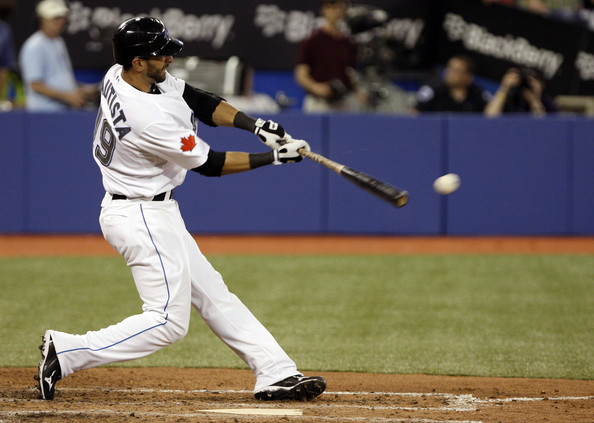
| Top Five RegUlar Season Home Run Leaders: American League | Player | Team | #Of Homers |
| Jose Bautista | TORONTO BLUE JAYS | 43 | |
| Curtis Granderson | NEW YORK YANKEES | 41 | |
| MARK TEXEIRA | NEW YORK YANKEES | 39 | |
| Mark Reynolds | BALTIMORE ORIOLES | 37 | |
| Adrian Beltre, Jacoby Ellsbury, Ian Kinsler | TEXAS RANGERS, BOSTON RED SOX, TEXAS RANGERS | 32 |
Out of all the players on this list only Bautista, Texiera, and Reynolds hit more than thirty home runs last year. Jose Bautista proved that his 2010 season wasn’t a fluke by having an even better 2011 season, hitting 43 homers. Curtis Granderson and Mark Teixera both took advantage of Yankee Stadium’s favorable dimensions. Despite a slow start, Mark Reynolds hit 37 for the Orioles, who got what they needed with a middle of the order bat. Adrian Beltre hit 32 for the Rangers and Jacoby Ellsbury hit a huge breakout year, hitting 32 as well. The player I want to talk about is Ian Kinsler. I don’t think the average baseball fan realizes how good Kinsler has been. Despite only sporting a .255 average, Kinsler played above-average defense and stole 30 bases. He was probably the most valuable player on the Rangers this year. How many people knew that Kinsler was in the 30-30 club in 2011, for the second time in his career? He also had a .355 OBP and 121 runs over the course of 155 games. I think Kinsler is the most underrated second basemen in the league, and he deserves some respect.
| TOP FIVE REGULAR SEASON HOME RUN LEADERS: NATIONAL LEAGUE | NAME | TEAM | # OF HOMERS |
| Matt Kemp | LOS ANGELES DODGERS | 39 | |
| Prince Fielder | MILWAUKEE BREWERS | 38 | |
| ALBERT PUJOLS | ST.LOUIS CARDINALS | 37 | |
| Dan Uggla | ATLANTA BRAVES | 36 | |
| Mike Stanton | FLORIDA MARLINS | 34 |
Matt Kemp is the National League MVP, in my opinion. Other than the 39 homers, he stole 40 bases and reached base at a .399 clip. Prince Fielder definitely played like it was his contract year, hitting 38 homers. There’s close to none chance that he will stay with the Brewers next year. Albert Pujols is the least surprising, he is just so consistent every single year. Dan Uggla made this list largely due to his late season surge in which he hit ten homers in the month of August. Mike Stanton might be a surprise to some, but some scouting reports show him having 70-80 power on the 20-80 scale. This was a very impressive season for him, slugging .537 as a 21 year old. Next year, he should work on his defense and batting average and he might be an MVP candidate.
Today’s feature was prepared by our Intern, Sam Evans. We highly encourage you to leave your comments and feedback at the bottom of the page and share in the discussion with our readers. You can also follow Sam on Twitter.
Please e-mail us at: MLBreports@gmail.com with any questions and feedback. You can follow us on Twitter and become a fan on Facebook . To subscribe to our website and have the daily Reports sent directly to your inbox , click here and follow the link at the top of our homepage.

Casey Bond: Toronto Premiere of Moneyball – Guest MLB Blog
Saturday October 22, 2011

MLB reports: Fans cannot get enough of Moneyball!!! The hit Hollywood blockbuster has become a darling of the critics and becoming one of the most popular baseball movies of all time. If you haven’t seen it already- what are you waiting for? Get to a movie theatre quickly! You will not be disappointed. One of the stars of Moneyball, actor Casey Bond has returned for a repeat Guest MLB Blog on the Reports. Busy promoting the movie and travelling the globe, we are very fortunate that Casey was able to take the time out of his busy schedule to prepare today’s piece. Looking back at the world premiere of the movie at the Toronto International Film Festival, Casey takes you today behind the scenes in today’s blog. For an inside look into Moneyball, MLB reports is proud to present former professional baseball player turned actor, Casey Bond:
___________________________________________________________________________________________________________
Casey Bond (Guest MLB Blogger): Well, where do I start? Right now I am fortunate enough to be in one of the top box office hits in theaters with Brad Pitt, Jonah Hill, and Philip Seymour Hoffman among others, and I get to portray a baseball player in the film all at the same time. I couldn’t have written a better story for myself.
Moneyball world premiered in Toronto at the TIFF (Toronto International Film Festival) in early September. I traveled up to Toronto with my girlfriend Sarah, in order to be a part of the World Premiere with a few of my castmates. There were people from all over just to come to the festival, and especially to see the turnout for Moneyball. Of course, we had two of the most well-known people on the planet in Brad Pitt and Angelina Jolie show up with us to the big event. It’s amazing how much people will let their voices sail across the open airwaves without a shred of holding back in the middle of a crowded public area. They received quite some noise when their black SUV pulled up behind us to arrive at the carpet.
As I was walking down the carpet myself, it was such a feeling of amazement and accomplishment, to be in that position where all eyes are fixated on you in wonder. It’s very similar to being a professional baseball player. All of the attention is on you for that moment. However, it’s also completely different, because the work you have done was a long time ago, and it’s just time to celebrate, answer questions, take pictures, sign autographs, and watch your finished work about a year after it was done. Honestly, just to say that, we were watching ourselves on the silver screen like it was today that it happened, but it’s actually watching yourself as you were in this character an entire year ago. Mind boggling if you really think about it. How much I personally have changed just in that year’s time. But now, everyone gets to see my character from a year ago, and we couldn’t have been more pleased with the standing ovation we received from everyone in attendance.
As the movie ended and the credits rolled, a spotlight shone upon our balcony, as all of us cast members sat together and watching it as a group for the first time. To have all of those people roaring in approval was worth everyone minute of hard work we put into that film. And, the beautiful thing, is that the work lasts forever…
That was only the beginning of the night. We proceeded to leave the theater, and gather as a group just outside of the balcony doors to congratulate one another on what seemed to be a successful film, and a success to come as it approached its release date. From the theater, we all climbed into our cars waiting out back, and headed toward an intimate dinner with all of the amazing people who were highly involved in the film.
As my girlfriend and I walked up the steps to the rooftop lounge area to talk to cast members, I was headed off by Brad Pitt who smacked me on the shoulder and said “you killed it man!” He then turned to my girlfriend and said “how about your boy? He killed it!” That statement has pretty much summed up the experience of being in Toronto for the World Premiere. It was an unreal experience, but completely attributed to all of the hard work I have put into my passions in life. Who wouldn’t be feeling good to get a comment like that from Mr. Pitt?
The excitement, dedication, and hard work every day has laid out a path that has some very interesting times ahead. I’m now excited for the U.S. Premiere in Oakland, and the U.S. release of the film. Needless to say, the film is off to a wonderful start!

Thank you Casey for preparing today’s MLB Guest Blog. Please feel free to contact Casey Bond on Twitter (@caseybond) or through his website (http://thecaseybond.com) and Facebook Fan Page for comments and questions.
**Some of the photographs in today’s feature are courtesy of Peter Hurley**
Please e-mail us at: MLBreports@gmail.com with any questions and feedback. You can follow us on Twitter (@MLBreports) and become a fan on Facebook . To subscribe to our website and have the daily Reports sent directly to your inbox , click here and follow the link at the top of our homepage.
Expanding the MLB Postseason: More Wild Card Teams Coming
Follow @mlbreports Friday October 21, 2011
MLB reports – Rob Bland: Expanding the playoffs has been a hot topic for many years now. While the move will not be as drastic as when the MLB added the first wild card team in each league, it has drawn the ire from a lot of critics. In 1994, MLB was to use the postseason system currently in place; however the season was cut short due to a player strike. It was then that the MLB went to three divisions in each league (East, Central, and West) as well as a wild card team (the best non-divisional winner record in the league). The American league Divisional winners would have been the New York Yankees, Chicago White Sox in the Central and Texas Rangers in the West (with a record of 52-61). Conversely, the Cleveland Indians would have been the wild card winners at 66-47. In the National League, the East would have been won by the Montreal Expos, who had the MLB’s best record of 74-40. The Central and West would have been won by the Cincinnati Reds and LA Dodgers, respectively, while the wild card winner would have been the Atlanta Braves.
However, due to the strike, which also shortened the following season, 1995 was the first year this system actually came into play. This season saw a shortened 144 game schedule. The NL East winners, Atlanta Braves had to go through the slugging Colorado Rockies; the first NL wild card team. They then faced the Reds, and the eventual World Series Champions Cleveland Indians. The Indians took a very peculiar path to the World Series. After leading the MLB with a 100-44 record, the Indians faced the Boston Red Sox, winners of the AL East, who had the 2nd best record in the American League. The Yankees were the wild card winners, who were defeated by the Seattle Mariners in the AL Division Series.
The current Collective Bargaining Agreement between the commissioner, Bud Selig, with the MLB and its players’ union expires in December of this year, and an extension of five years is expected to be reached any day. One of the main hold-ups to a deal is the addition of another wild card team. The 2nd best non-divisonal winner would get into the playoffs. This may not seem like much, where every other major sports league in North America has at least 3 “wild card” teams, but in baseball, tradition is always at the top of people’s minds. Adding a team to each league’s postseason picture could lengthen the MLB season, which is something that is a major concern to most people involved in the process.
One option that was bandied around was to have the two wild card teams face off in a best 2 out of 3 series. The advantage of this short series is that both teams that didn’t win their division would have to play extra games while the winners get a short break to recuperate their injured players. Also, the extra games give opportunities to more teams to earn extra postseason revenue, which benefits the league. However, the extra 2-4 days off that the other teams would have to endure could also cause a team to lose its momentum gained at the end of the season.
However, it is believed that the MLB will go to a one game sudden death playoff between the two wild card teams. In my opinion, the biggest advantage to this is that it gives the winner of the game a monumental disadvantage going into the second round. The wild card teams would be forced to pitch their ace in the playoff, and therefore would not be able to pitch until at least game 3 of the next round. This means the team’s best starter would only get one start in a best of 5 series. Not only would the team with the best record in the league have home-field advantage, but they would see their opponent’s best pitcher in only one game.
In the current state of the MLB postseason, ten wild card teams have made it to the World Series, out of a possible 34 teams going back to 1995, including 2011. Roughly 29% of wild card teams make it into the World Series. If you figure that 1 out of 4 teams in each league make it to the World Series, or 25%, then you have a better chance of making it as a wild card than as a divisional winner. Four World Series have been won by wild card teams. 25% of World Series have been won by a team that should have a distinct disadvantage, but obviously do not. It is due to this that MLB must make it a bigger hindrance for not winning your division. Playing an extra game, extra travel and burning your ace are ways to weaken a wild card team’s chance of making it to the World Series.
With the union and MLB reps meeting every day trying to hammer out the extension for the CBA, you should see the added teams in the playoffs in 2012 or 2013. It is widely expected that the deal will be reached in the middle of the World Series to take advantage or the added publicity it would gain. I am fairly certain that the new playoff format will come into effect for the 2012 season, and there will be a lot of teams looking to push the envelope and make an appearance.
World Series: Game 2 Recap
Game 2 was a bit of a surprise, as Jaime Garcia, whom many picked to implode in this guy, had a great start. Through 7 solid innings, he gave up only 3 hits and 1 walk to 7 strike outs. Colby Lewis was equally as impressive until the 7th inning, where he was able to strike Matt Holliday out to lead off the inning. David Freese then singled and Yadier Molina flew out. Nick Punto then hit a ground ball towards first base that went off of Michael Young’s glove and into right field, moving Freese to third. With runners on the corners and one out in the 7th, Alexi Ogando came in to face the hitter in the pitcher’s spot. That hitter: Allen Craig. The same hero of game 1 that hit a single to right field that scored the go ahead and eventual winning run. Craig promptly lined a ball to right field to score David Freese, breaking the dead lock.
What would a playoff game be without drama? Jason Motte came in the 9th to close out the 1-0 game. So far in the postseason, he had given up 1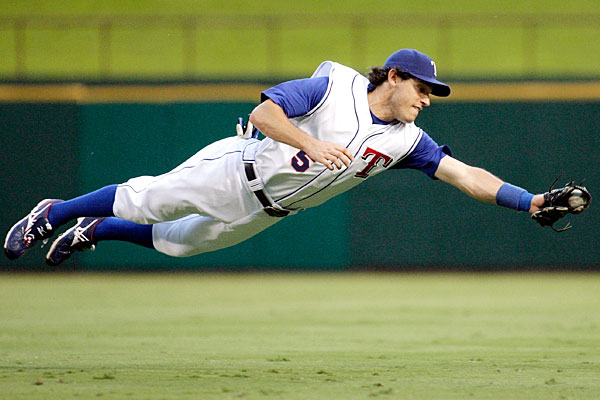 hit in 29 plate appearances. Ian Kinsler led off the inning with a bloop single off the end of the bat. Elvis Andrus came up to the plate and looked to get a sac bunt on the ground, but Kinsler decided to take matters in his own hands, and stole second base by the smallest of margins. Andrus then lifted a 2-2 pitch to center field for a single. While Kinsler was held at 3rd, Cardinals CF Jon Jay threw the ball wide of the cutoff man, which allowed Andrus to slide safely into 2nd base.
Manager Tony La Russa then yanked Motte for lefty Arthur Rhodes to face Josh Hamilton. On the first pitch, he hit a fly ball to right that scored Kinsler and advanced Andrus to third. Even more like La Russa, he brought in Lance Lynn to face Michael Young, who hit a 3-2 curveball deep enough to center to scored Andrus, and the Rangers lead the game 2-1.
Rangers closer Neftali Feliz took the mound in the bottom of the 9th and walked Yadier Molina on 5 pitches 97 mph or faster, hitting 100 on the radar gun with the first pitch. Nick Punto came to the plate, bunted two balls foul up around his eyes, then swung feebly to strike out. Feliz then struck out Skip Schumaker and induced a fly ball off the bat of Rafael Furcal to seal the victory.
With the series tied at one game apiece, an off day tomorrow and game 3 slated for Saturday night in Texas, this series is only going to get better. Keep checking MLB reports for your daily fix of updates on the World Series.
 Today’s feature was prepared by our Baseball Writer, Rob Bland. We highly encourage you to leave your comments and feedback at the bottom of the page and share in the discussion with our readers. You can also follow Rob on Twitter.
Please e-mail us at: MLBreports@gmail.com with any questions and feedback. You can follow us on Twitter and become a fan onFacebook . To subscribe to our website and have the daily Reports sent directly to your inbox , click here and follow the link at the top of our homepage.

Cardinals Win Game One of the 2011 World Series
Thursday October 20, 2011
MLB reports – Jonathan Hacohen: On a cold October night in St. Louis, Chris Carpenter and C.J. Wilson took the mound for their respective squads to battle in the long anticipated game one of the 2011 World Series. As the title of this article indicates, the Cardinals took game one. As the mastery and genius of Tony La Russa continued, here is a recap of last night’s action:
Texas Rangers at St. Louis Cardinals: World Series Game One
Despite the expectation for a high scoring affair, this game turned out to be very close. The two high-octane offenses of the Rangers and Cardinals were kept at bay by great pitching and mother nature. Bats seem to get cold in dreary weather for the most part. Chris Carpenter went 6.0 innings for the win. With his 8th postseason win, Carpenter passed the immortal Bob Gibson on the Cardinals all-time playoff win list. Impressive company indeed. Despite Carpenter getting frustrated with himself at times (and using choice language that came through on the broadcast), he enjoyed a great outing. Only 5 hits allowed, 1 walk and 4 strikeouts. His only blemish on the night was a 2-run shot given up to Mike Napoli. The home run at the time erased the 2-0 Cardinals lead at the time. But St. Louis was able to come back in the bottom of the 6th, with pinch hitter Allen Craig driving in the game winning run. From there, the Cardinals pen took over with 3 shutout innings. Relievers Fernando Salas, Marc Rzepczynski, Octavio Dotel, Arthur Rhodes and Jason Motte combined to give up 1 hit and 1 walk (both by Salas in 1/3 of an inning) and 3 strikeouts to preserve the win for Carpenter. Motte continued his incredible postseason run with his 5th playoff save, a 1-2-3 9th inning.
C.J. Wilson was good, but not great on the night. The Rangers ace has not come up big when his team needed him most, as he was fairly erratic on the night. His final line read 5 2/3 innings pitched, 4 hits allowed, 6 walks, 3 earned runs and 4 strikeouts. Alexi Ogando came into the 6th with 2 runners on and could not get the job done. Mike Gonzalez and Scott Feldman came in from the pen as well, but the damage was done as the Rangers could not come back against the mighty Cardinals bullpen. Questions arose after the game concerning Ron Washington’s use of his bench during the game. Specifically, his choices of having Craig Gentry and Esteban German pinch hit instead of Yorvit Torrealba and Mitch Moreland, who did not end up coming into the game. The bottom line for me is that Washington went with his feel and instincts. If the moves pay-off, he looks like a genius. In this case, they did not. But let’s give credit where its due. The Rangers are back on the big stage for a second straight year. The Rangers must be doing something very right to make it this far. Regardless of who would have batted in key situations, the Cardinals pen did its job tonight (as it has been doing all postseason long). Tonight’s game was more about what Tony La Russa did right, rather than what Ron Washington did wrong. But Washington will need to keep his chess playing skills sharp in this series if he hopes to have his team win the big prize.
The big heroes on this night for St. Louis were Lance Berkman (2 hits and 2 RBIs), Craig, Carpenter and Motte. Game 2 goes in St. Louis Thursday night, 8:05 PM ET. Colby Lewis and Jaime Garcia are set to faceoff. It will be interesting to see how Garcia responds after receiving an early hook from his manager in his last outing in the NLCS. This will be a pivotal game for the Rangers, as they do not want to go home to Texas down 2-0. The Cardinals started off the World Series on the right foot. Now it is just a question of whether the Cardinals bats and bullpen can keep the magic going for 3 more wins.
Jonathan Hacohen is the Lead Baseball Columnist & Editor for MLB reports
Please e-mail us at: MLBreports@gmail.com with any questions and feedback. You can follow us on Twitter and become a fan on Facebook . To subscribe to our website and have the daily Reports sent directly to your inbox , click here and follow the link at the top of our homepage.
The Cardinals Are Going to the World Series
Monday October 17, 2011
MLB reports – April Whitzman: The Cardinals heading into last night in Milwaukee were one win away from advancing to the World Series. Here is a recap of last night’s NLCS action:
St. Louis Cardinals at Milwaukee Brewers: NLCS Game Six
One ex-Blue Jays pitcher got the win in game number six of the NLCS last night. But it was not the one you would have expected.
Shaun Marcum was on the mound for the Brewers, hoping to bounce back from his previous start. Things unfortunately did not go as planned, as Marcum lasted only one inning. During his short stint, he allowed four earned runs on three hits, a walk, while striking out one. The biggest hit came in the form of a three-run home run, courtesy of David Freese.
Cardinals starter Edwin Jackson, however, did not fare much better. He lasted only two innings himself, also allowing four runs. Jackson actually allowed three home runs, including solo shots to Corey Hart, Rickie Weeks, and Jonathan Lucroy.
Heading into the third, the score was already 5-4 in favor of St. Louis. But the Cardinals weren’t even close to slowing down. They scored another four runs, thanks to an Albert Pujols home run, a Nick Punto sac fly which scored Matt Holliday, and an Allen Craig two-RBI single that scored David Freese and Yadier Molina.
The Brewers tried to overcome the deficit in the following inning, when Yuniesky Betancourt doubled in Jerry Hairston to make the score 9-5 in favour of the Cardinals.
The Cardinals would continue to add to their lead in the following inning. After two consecutive singles to start the inning, costly errors allowed Matt Holliday to score on Yadier Molina’s fielder’s choice. The errors also enabled Adron Chambers‘ sacrifice fly to score David Freese, his third run scored of the game.
Knowing how important the win was for the Brewers, they were not prepared to give up in this one. They scored another run in the bottom of the inning when Ryan Braun grounded out to score Carlos Gomez. The score was then 11-6 for the Cardinals.
But alas, the Brewers offense was a little too late- as the Cardinals went on to add another run. Albert Pujols hit another RBI single to score Daniel Descalso making it a 12-6 game.
Jason Motte came in for the ninth and got a 1-2-3 inning, as the Cardinals defeated the Brewers 12-6. St. Louis won the series 4-2, moving on to the World Series to face the Texas Rangers.
Ex- Blue Jay Marc Rzepczynski ended up earning the win, pitching 2 1/3 innings, more than any other pitcher in this game. He allowed one run on two hits, while walking one and striking out two.
Another Ex- Blue Jay, Octavio Dotel, also pitched in the game. He went 2/3 of an inning without allowing a base runner and struck out one.
After the game, David Freese was named MVP of the NLCS tournament, after going 3-4 with three runs and three RBIs in the game and batting .545 (12 for 22) in the NLCS overall, with three homers, three doubles, nine RBIs and seven runs scored.
Game number one of the World Series between the Texas Rangers and the St. Louis Cardinals commences on Wednesday night in St. Louis, with the National League enjoying home field advantage in this one (thanks to their All-Star game victory this year). If it is anything like the series we have been watching thus far, it is going to be an exciting conclusion to an unpredictable and entertaining 2011 MLB postseason.
 Today’s feature was prepared by our Blue Jays & Prospects Writer, April Whitzman. We highly encourage you to leave your comments and feedback at the bottom of the page and share in the discussion with our readers. You can also follow April on Twitter.
Please e-mail us at: MLBreports@gmail.com with any questions and feedback. You can follow us on Twitter and become a fan on Facebook . To subscribe to our website and have the daily Reports sent directly to your inbox , click here and follow the link at the top of our homepage.

The Texas Rangers are Heading Back to the World Series
Sunday October 16, 2011
MLB reports – Sam Evans: On Saturday night, Nelson Cruz and the Rangers advanced to the World Series, eliminating the Tigers from the playoffs. Let’s look at how the Rangers accomplished this feat:
Detroit Tigers at Texas Rangers: ALCS Game Six
The Tigers got off to an early lead with a Miguel Cabrera solo home run in the top of the first. Then in the top of the second, Jhonny Peralta homered to add another run to the Detroit lead. 17 of the Tigers 25 runs in this series came via the longball. If there was one thing that Derek Holland did wrong, it was leaving too many pitches up in the zone. Then, in the bottom of the third everything went wrong for Max Scherzer and the Tigers.
With one out, Elvis Andrus walked and Josh Hamilton followed him with a single. Then Michael Young jumped on the first pitch he saw and ripped it into left field, scoring Andrus and Hamilton. A quick visit to the mound did nothing for Scherzer who gave up a single then walked two straight batters before being replaced. Daniel Schlereth came into the game with the bases loaded and he allowed a 2 run single to David Murphy. Tigers manager Jim Leyland had a short leash with Schlereth, choosing to pull him and bring in the Tigers’ game four starter, Rick Porcello. Thanks to some clutch hitting from the Rangers and shabby defense by the Tigers, by the time this nightmare inning was done, the score was 9-2 Rangers. This set a Texas franchise record for most runs in one inning in the playoffs. Most of the Rangers hits in the third resulted from their hitters jumping on pitches early in the count.
Detroit scored two more runs in the fifth off an Austin Jackson home run. Still, the Texas offense seemed to be unstoppable for the Detroit pitchers. Nelson Cruz continued his hot streak by hitting his sixth home run of the ALCS in the 7th. This is equally impressive considering Cruz was only 1-15 in the ALDS. Neftali Feliz came in to get the final three outs in what turned out to be a clobbering, with the final score 15-5 Rangers. This obviously wasn’t an easy game for the Tigers and their fans to watch, as the big third inning proved to be the killer for the Tigers.
Congratulations to the Texas Rangers and their entire organization for advancing to their second consecutive World Series. They will face either the Cardinals or the Brewers starting Wednesday night.
Today’s feature was prepared by our Intern, Sam Evans. We highly encourage you to leave your comments and feedback at the bottom of the page and share in the discussion with our readers. You can also follow Sam on Twitter.
Please e-mail us at: MLBreports@gmail.com with any questions and feedback. You can follow us on Twitter and become a fan on Facebook . To subscribe to our website and have the daily Reports sent directly to your inbox , click here and follow the link at the top of our homepage.
MLB Playoffs: Improving and Revamping the System
Saturday October 15, 2011
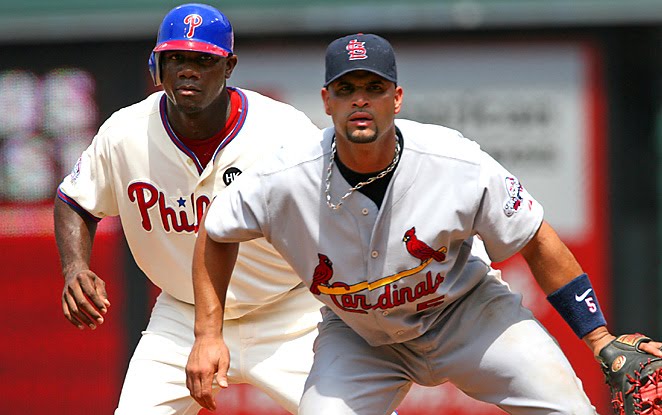
MLB reports – Jonathan Hacohen: I recently received a great e-mail from one of our readers. The e-mail was a well written commentary piece on improving the MLB Playoffs structure. So enthusiastic was I with the contents of the message, that I immediately suggested sharing the reader’s thoughts on our site. I got an enthusiastic thumbs back in response! Thus today on MLB reports, we are proud to present Guest Writer- Brian Corrigan, with his proposal to improve and revamp the MLB Playoffs:
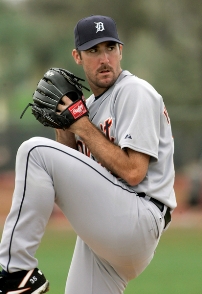
Brian Corrigan (Guest Writer – MLB reports): The classic pennant chase prior to 1969 made sense. It rewarded the team that performed consistently over a schedule of between 154 and 162 games. In a given year, it is possible that one or two teams with the best records in Major League Baseball will win 60% of their games. However, a team that wins 60% of their games, will routinely lose 3 out of 5 games several times in a season. And the difference between a team that wins 55% of its games and 60% is almost unnoticeable in any given stretch of games, until you play out the full season.
As the two top seeds in each league have now just been eliminated from the championship games, does baseball really want to go the path of hockey, basketball and football- allowing wild card teams an ever-increasing role in the postseason? Remember that those are sports where the best teams commonly win 67%+ of their games. In football, the top teams win 75%+ of their games. Baseball is a totally different creature. It requires longer sifting for the really great baseball teams to emerge, although those teams are almost inevitably bewitched by periods of seasonal funks.
Does baseball really want to go in this direction? Will games in April, May and June really count? Will fans wait until postseason to tune in? Will General Managers develop strategies to play on the cheap in the first half of the season, and then make the key acquisitions that will give them the best short-term shot at the postseason? Do we really want baseball to degenerate in this direction?
I’m a pragmatic person. I understand that baseball is business. Given the fact that postseason play is more lucrative, I can understand wanting to expand the number of postseason games. Ultimately, I’m not going to succeed in rolling back the clock, but I would like to propose a system that is much better than a 10 or 12 team playoff system.
If I could deliver a postseason schedule that:
1) Produced more games, and therefore higher revenues than the current system;
2) Would produce a higher number of expected games, while taking less elapsed time, solving the World Series in November problem;
3) Would do this even with the existing 8 team playoff structure;
4) Would encourage the use of the top 3 starting pitching rotations, that fans prefer; and
5) Decreases the probability that the series will come down to luck or streakiness…
Would I at least have your attention?
What I am proposing does all of this, as well as produce higher revenues for MLB teams and more excitement for the fans.
What I am proposing is essentially a best of 9 games “round robin” pennant series, where each of the 4 playoff teams in each league would potentially play each other 3 times – possibly more or less, with up to two tie-breaker games. The pennant would not be won until one team had secured the best record in the pennant series, getting at least 6 wins. Until a team took its fifth loss, it would still be playing meaningful games, until one team secured its sixth win.
Each 3-game set would consist of a first game, with the team that does not have home field advantage taking a day off, and then playing on the 3rd and 4th day against the team with the home field advantage. The fifth day would be off; thus, the use of a 3 pitcher starting rotation would be encouraged. One league would start one day later than the other, so that baseball games would played on each day.
Home field advantage would go to the team with the best seed (best regular season record).
 But isn’t there a possibility that some of the games wouldn’t count? Yes, however by giving the postseason teams a share of postseason revenues, there is always a motivation to win. At the point where two teams have been mathematically eliminated from the pennant series (this should not happen until every team has had a chance to play at least five games, and most likely more), then the two surviving teams would play the balance of the remaining 9- game tournament against each other, even if that means they play more than three times against one another. For example, if two teams have won their first 5 games, and the remaining teams have lost 5 games each, then the teams that have won five in a row should play their last games against each other. Effectively, this would create a best of five series for the surviving two teams, until one team gets its eighth win (allowing for a tenth game tie breaker if needbe).
To increase the probability that the two best teams would play in the final 3 games, I would propose the following schedule:
First 3 games: #1 seed plays #4 seed; #2 seed plays #3 seed
Second 3 games: winner of #1 vs. #4 plays loser of #2 vs #3 series; winner of #2 vs. #3 plays loser of #1 vs. #4.
Of the two teams that won the first series, they will go into the last series with no more than 4 losses (no more than 1 from the first series and 3 from the last series), meaning that at least the first game between those two teams will count for both clubs, since elimination could not yet have occurred for either one.
Taking this year’s National League Division series as an example: the Phillies won the first two of three against the Cards, and so would have played their next three games against the D-Backs who lost 2 of 3 to the Brewers. The Brewers would have played their next three vs. the Cards. The final 3 games would have been Phils vs. Brewers, Cards vs. D-Backs, at least until two of the teams had been eliminated.
In the event that only one team is eliminated, until a second team is eliminated, it is possible that 1 or 2 games will be played for the honor of baseball, or for a share of the postseason revenue. But once two teams are eliminated, they would step aside and allow the two surviving teams to play up to the balance of the remaining 9 games head-to-head.
The following represents a hypothetical pennant season:
First 3 games:
Phils win 2 out of 3 against the Cards
Brewers win 2 out of 3 against the D-Backs
Second 3 games:
D-Backs win 2 out of 3 against Phils
Cards win 2 out of 3 against Brewers
Game 7 with Resulting records in parenthesis
Brewers (4-3) beat Phils (3-4)
Cards (4-3) best D-backs (3-4)
Game 8
Brewers (5-3) beat Phils (3-5)
Cards (5-3) beat D-backs (3-5)
Phils and D-backs are eliminated; Brewers and Cards play the final 9th game against each other to resolve the pennant. Since the home field goes to the best regular season record in the 2nd and 3rd games of a 3 game set, the Cards would visit the Brewers for the 9th game.
Let’s say that Game 8 had gone differently, let’s say D-backs (4-4) beat Cards (4-4)
The Phils would play game 9 against the Brewers for honor and bragging rights.
If the Brewers win their 6th game, they clinch; otherwise, there will be a two-way tie for the pennant to be resolved by a tie breaker game. This system produces lots of wonderful and exciting and meaningful games for fans.
But isn’t there a chance of a tie in this system? Yes, and you could still get a 10th and 11th game tie-breaker in; and in less time than the current system. A three-way tie would pit the two worst regular season record teams against each other, and the winner would play the team with the best regular season record. This could happen if three teams went 5-4, and one team went 3-6 or if three teams went 6-3 and one team went 0-9. It should not happen that often, and if it does, it generates more games and more excitement for baseball.
Are you sure this will take less elapsed time? Yes, the current system must allow for a 5-game division series and a 7-game championship. That is 12 games in total. But you get fewer games because only two teams are playing in the last best of 7, and some teams may be eliminated after just 3 games. In this revised system, no one can get eliminated until after playing a minimum of 5 games. Even with a 3-way tie-breaker, you play less than 11 games in total vs. a schedule that must accommodate 12 games, as is the case in the current system (and 15 or more in the proposed new system). It works out that the 9th game would be scheduled for the day that the 5th league championship game is currently scheduled. Since it takes 3 more days to play out the 7 game LCS, there’s enough time to squeeze in up to two tie-breaker games, and still finish up at least 1 day before the current system. Given the rarity of the two game tie-breaker, the last tie-breaker game could be scheduled for a day before the World Series.
Can you really say that this series cuts down on the luck? It could come down to the tie breaker game? If you want to reduce the luck, use the regular season to determine the pennant winner. The more games played, the less luck involved. It will take some consistency to fight your way to that 10th game tie-breaker. The bottom line is really that baseball gets the increased revenue, without opening the door to more and more teams in the playoffs, the way the other sports have gone, thus diminishing the value of the regular season. In fact, with the suggested homefield advantage rules, the top seed gets 6 out of 9 games at home, and that makes the regular season count for more than the current system.
***Thank you to our Guest Writer, Brian Corrigan, for sharing his thoughts on the MLB playoffs today with us. Please feel free to leave any comments and/or questions that you have at the bottom of this article.***
Jonathan Hacohen is the Lead Baseball Columnist & Editor for MLB reports
Please e-mail us at: MLBreports@gmail.com with any questions and feedback. You can follow us on Twitter and become a fan on Facebook . To subscribe to our website and have the daily Reports sent directly to your inbox , click here and follow the link at the top of our homepage.

Tony La Russa Manages the Cards to One Win Away From the World Series
Saturday October 15, 2011
MLB reports – Jonathan Hacohen: Only one game on the schedule last night- but it was a big one. The Brewers and Cardinals headed into game five in St. Louis, deadlocked at 2-2. With the series set to shift to Milwaukee, this was a big game to take the lead in the NLCS. With two strong pitchers on the mound, this game could have been a pitching duel. It was far from it and the resulting game surprised many. Here is a recap of last night’s NLCS action:
Milwaukee Brewers at St. Louis Cardinals: NLCS Game Five
From the title of this article, many readers will take it that the Cardinals won last night. Indeed they did, a strong 7-1 victory over the Brewers to take a 3-2 NLCS series lead. This game came down to key factors in my estimation: the in-game managing by Tony La Russa and the sloppy play of the Brewers. When referring to La Russa, the talk of last night was the call to the bullpen in the 5th inning. With the Cardinals up 4-1, the Brewers were threatening with 2 on and 2 out. Ryan Braun headed to the plate and La Russa ran to the mound. Cardinals starter Jaime Garcia was stellar up to that point, with 4 2/3 IP, 1 ER, 7 hits, 0 BB and 5 strikeouts. But as noted by last night’s television commentators, Garcia was starting to get into trouble. With one Brewers run already in and the hits starting to pile up, La Russa appeared to be nervous that his starter was losing it. Few managers would take out his starter at that point, but then few managers are Tony La Russa. With his bullpen on fire in this postseason, La Russa was not going to take any chances. Octavio Dotel got the call and proceeded to strike out Ryan Braun to end the threat. From there, Lance Lynn, Marc Rzepczynski and Jason Motte came on to shut out the Brewers on 2 hits and 1 walk. Motte finished up the game for the save with Dotel taking the win.
But that is not the end of the story. Far from it. As much as this game is about the wizardry of La Russa managing his pitching staff (along with trusty pitching coach Dave Duncan at his side), game five was also about the Brewers throwing it away. Literally. To me, Milwaukee was a team intent on giving the game away. Four errors on the night is completely unacceptable, especially for a game of this magnitude. It is not like the team was not hitting, as the Brewers had 9 hits compared to the Cardinals 10. Interestingly enough the Cardinals had 20 LOB, compared to the Brewers 14. But the Cardinals drove runners in when in it counted. Here is my logic in a game that came down to inches. Zack Greinke gave up 5 runs, although only 2 of them were earned. Marco Estrada in the 8th was a complete train-wreck, giving up 2 runs on 1 hit an 2 walks. Estrada completely was not finding the zone and was lucky to escape with only the 2 runs allowed. Take out the Estrada inning and Greinke’s 3 unearned runs, and you are now left with a 2-1 Cardinals lead. Thus the Cardinals victory relied on La Russa’s management, strong bullpen and Brewers lack of execution and poor play. A game of inches.Jonathan Hacohen is the Lead Baseball Columnist & Editor for MLB reports
Please e-mail us at: MLBreports@gmail.com with any questions and feedback. You can follow us on Twitter and become a fan on Facebook . To subscribe to our website and have the daily Reports sent directly to your inbox , click here and follow the link at the top of our homepage.


You must be logged in to post a comment.