Blog Archives

Buck Showalter Is Spinning His Managerial Magic One More Time
Monday, September.17/2012
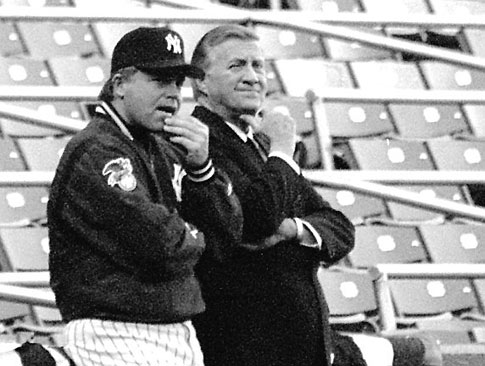
Showalter was never given a fair shake after the 1994 year. He had guided the Yankees to the best record in the AL during the 1994 Strike Shortened Season. After the 1995 ALDS loss to the Mariners, he was let go in favor of Joe Torre.
Chuck Booth (Lead Baseball Writer): Follow @chuckbooth3024
Buck Showalter has a knack of coming in when a franchise is down and rebuilding the team within 2-3 years after. He started with the struggling Yankees back in the early 90’s and almost brought them to the promise land a couple of times. The Players Strike cost him a chance in the 1994 season and he was on the back-end of a hot 1995 Seattle Mariners club, (who were left for dead and caught lightning in a bottle with the emergence of Randy Johnson.) Showalter was blamed for not being able to reach the stars on the club even though he was a master tactician with young players. Don Mattingly quickly retired and a new wave of young players were meshing with the old stars . The Yankees went onto hire Joe Torre, while Buck was left to view the club win 4 World Series in 5 years and make 6 out of 7 World Series Appearances overall. Showalter’s managerial record was 313-268 with the Yankees.
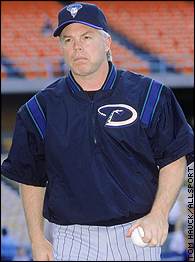
Joe Torre was a great manager, however I am of the belief that if Buck Showalter was given one more chance with the PinStripers, that he would have succeeded. So Showalter went to the Arizona DiamondBacks 2 years before the franchise was even playing so he could hit the ground running, From the get go, the D’Backs brass were willing to sign premier free-agents. In the second year of the club’s existence, Showalter took the team to a playoff appearance with a 100-62 record- and was was named NL Manager of the Year. He left the club after the 2000 season. Bob Brenly swept into the fray and reaped the benefits of all the hard work put forth by Showalter, by winning a World Series with the D’Backs in 2001. Showalter was left to watch from a distance yet again. Actually it was his two former teams in the World Series of 2001 as the D’backs ousted the Yankees in 7 games. Showalter left the Arizona franchise with a 250-236 record. Read the rest of this entry

Will The Cardinals Repeat?
Sunday September 2, 2012
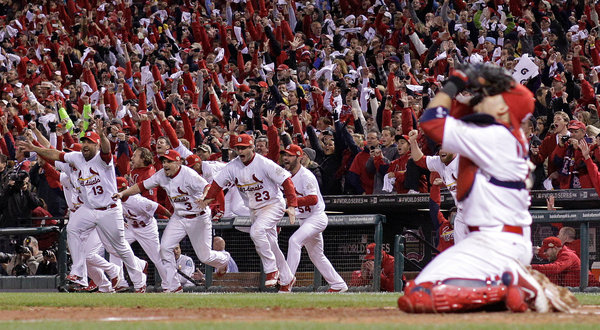
John Burns: The season for the reigning World Champions the St. Louis Cardinals has been one filled with surprises. With one of the biggest surprises being long time Cardinal Albert Pujols leaving the franchise to sign with the Los Angeles Angels. In an attempt to replace Pujols, the Cardinals re-signed veteran outfielder Carlos Beltran. Although Beltran is not Albert Pujols, he is having a very good season for St. Louis with 28 HRs and 86 RBI. Nobody expected Beltran to play this well and basically be matching Pujols numbers.
As of September 1st, the Cardinals have a 72-61 record and are in possession of the second NL Wild Card Spot. We all know the story of the Cardinals last year when they got hot and never looked back-until they were holding up the World Series trophy. They are in a very similar situation this year, (as they were last year) by being in the hunt for a Wild Card spot. This year’s Cardinals squad is not the same as the 2011 World Series team version. With Tony La Russa, Chris Carpenter, Lance Berkman, and Albert Pujols all gone or injured, the Cards have a different look. All three of those players played a major significance in the Cards winning the World Series in 2011.
Highlights courtesy of FOX and ESPN and MLB Reports is not the copyrights holder

Montreal Expos Drafting Record Part 2: The Pitchers
Wednesday June.27/2012
Note from Chuck Booth: I am attempting to bring the history for each of the 30 MLB Franchises into a 5 part series that will focus on 1. The teams history. 2. The hitters 3. The pitchers. 4. The Team’s Payroll going into in 2013 and 5. (The stadium articles will all be done next summer when I go to all of the parks in under a month again.) To follow all of the updates, be sure to check my author page with a list of all archived articles here.
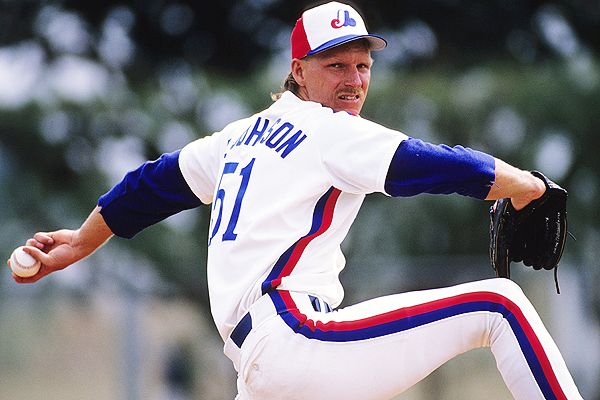
Drafted in 1985 by the Montreal Expos, Randy Johnson was erratic in his early days. After trading away Mark Langston to acquire the young fireballer, the Mariners worked him into the rotation and he developed into a Hall of Famer.
Chuck Booth (Baseball Writer and @chuckbooth3024 on twitter)- When looking back at some of the pitchers that the Montreal Expos have had in their organization, you don’t have go down the list very far to find Randy Johnson. He is the ‘crown jewel’ of the draft history record for the club. It is unfortunate the ‘The Big Unit’ was traded to the Seattle Mariners with Brian Holman and Gene Harris to the Mariners for rental player Mark Langston and a player to be named later. To be fair to the Montreal Expos, they were in serious contention for the pennant in 1989 and were trying to chase down the Chicago Cubs. Langston was one of the top Left Handed Aces in the Majors and he was available. Johnson was completely wild in the Minor Leagues and the Expos had a lot of veteran pitchers like Dennis Martinez and Bryn Smith that were on the back end of their careers. The time to try and win was now and they could not wait for Johnson to come around. The Expos did not succeed in capturing the pennant and Langston moved onto the California Angels as a free agent while Johnson blossomed into the premier left handed pitcher in his generation. Speaking of Martinez and Smith, they won 100 and 81 games respectively for the club. While they were not drafted by the Expos, they are 2nd and 3rd on the all-time win list.
Along with Smith and Dennis Martinez (who threw a perfect game as an Expo in 1991 and note: Bill Stoneman also threw two no-hitters for the franchise), you have to factor in the career of Pedro Martinez as an Expo for guys that were great pitchers during their prime. Pedro was acquired prior to the 1994 season from the Dodgers in exchange for the Expos departed ALL-Star second baseman Delino DeShields. Martinez went 11-5 in the strike shortened year and formed an impressive 1-2 ace combination with Ken Hill. Pedro went onto a 55-33 record and a 3.06 ERA for his 4 year Expos career. Pedro’s best year with the club was 1997 where he was the NL CY Young with a 17-8 record and a 1.90 ERA. Martinez finished the year with 305 strikeouts and a ridiculous 13 complete games. Pedro ended up signing with the Boston Red Sox before the 1998 season and he ultimately won a World Series with the Beantowners in 2004. In his post game celebration, Martinez mentioned the Expos franchise and their fans. Pedro shared his triumph as a testament to them. It was talent like this that Expos could never afford to resign and would lose outright- or have to trade for prospects based on their economic viability. I will get more into this in Part 3 of the Article Series on Friday.
For Part 1 of the Article Series, The Hitters: click here
For Part 3 of the Article Series, The Demise: click here
For Part 4 of the Article Series, The Washington Nationals Franchise 2005-2012: click here
For Part 5 of the Article Series, The Nats Best 25 Man Roster 2005-2012 click here

The Montreal Expos Draft And Signing Record Was Outstanding: Part 1-Hitters
Friday June.22/2012
Note from Chuck Booth: I am attempting to bring the history for each of the 30 MLB Franchises into a 5 part series that will focus on 1. The teams history. 2. The hitters 3. The pitchers. 4. The Team’s Payroll going into in 2013 and 5. (The stadium articles will all be done next summer when I go to all of the parks in under a month again.) To follow all of the updates, be sure to check my author page with a list of all archived articles here.
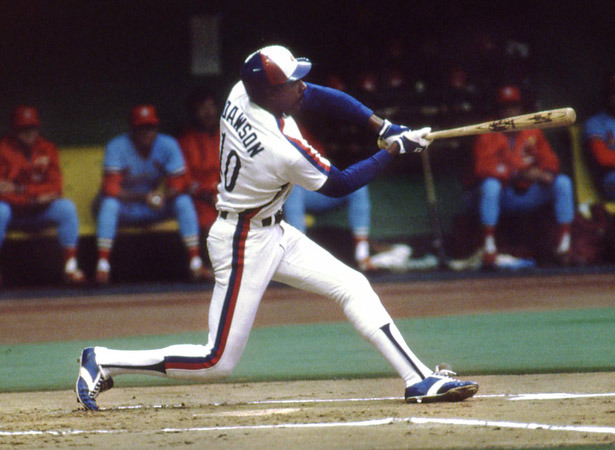
Andre Dawson and Tim Raines were perennial ALL-Stars and always had the Montreal Expos in contention every year they played for the Canadian Club.
Chuck Booth (Lead Baseball Writer and @chuckbooth3024 on twitter)-I recently saw a bunch of old Montreal Expos had a celebration dinner to honor the late Gary Carter at Olympic Stadium in Montreal. This brought me back to when I was a little kid watching the Expos on the French Channel in Canada. I followed this team before any other in MLB. I was a catcher in little league because of Gary Carter. My friends and I all would ask for Montreal Expos hats and jerseys for Christmas. I would later move on to like the Yankees when Don Mattingly, Dave Winfield and Rickey Henderson joined the club, but I always liked the Expos in the National League as my team. They were a consistent club from 1979-1995. They drafted extremely well and were above .500 for pretty much the entire time. At the end of this article today be sure to watch the documentary from youtube on the Expos Franchise that the Reports has linked for you.
It was unfortunate they had the 2 billion dollar monstrosity of what was Olympic Stadium as their home venue. It was a mistake from the beginning to build a baseball park so far away from the downtown core. The 1994 strike killed the franchises hopes to make their 1st World Series appearance. The team was leading the NL East with a 74-40 record and featured the outfield of Larry Walker, Marquis Grissom and Moises Alou. They had traded away their ALL-Star second basemen Delino DeShields prior to that year for some pitcher named Pedro Martinez. The economics of baseball were starting to catch up on the baseball club. When the lockout was lifted in 1995, gone were Walker, Grissom and great pitchers Ken Hill and John Wetteland. It began a constant cycle of Montreal grooming awesome talent, only to trade the players away before they had to pay them big money. The one constant of the team was an incredible draft record from 1985-2004. Today is part 1 of a 3 part article series in which we will look at the history of the Montreal Expos. I have listed 30 hitters drafted by the Expos Scouting Staff that went onto nice baseball careers. Next week I will look at the pitchers and the third week I will cover the dissection of the proud franchise before the move to Washington. Read the rest of this entry
Jack Morris: It Is Time To Elect This Winner Into The Baseball Hall Of Fame!
Like us on Facebook here
Follow @mlbreportsTuesday, January.08/2013

Jack Morris led the Major Leagues for Wins in the 80’s by posting a 162-119 Record (.577). He was a 5 Time ALL-Star and had 6 Top 10 Finishes for AL Cy Young. He also hurled 175 Complete Games. He won 20 Games 3 separate years, 16+ Wins in 10 Years and 15+ Wins in 12 of his 16 full years – and 18 seasons overall.
Chuck Booth (Lead Baseball Writer/Website Owner): Follow @chuckbooth3024
The debate for whether or not Jack Morris belongs in the Baseball Hall Of Fame has heated up to an ALL-Time high with the big vote going down tomorrow. 575 members of BBWAA fraternity will decide whether or not the big man from Minnesota will enter one of the hardest Hall Of Fame’s to enter in pro sports (if not the hardest). Morris will need a 75% (432 Minimum Votes) of them to write down his name on their ballot for enshrinement into Cooperstown. Last year, Morris received 66.7 % of the writers votes in his 13th year of eligibility. He will have his name on a 14th ballot this year. He has been trending up in recent years, so if he can improve with the same amount of 2011-2012 jump of (+13.2%), then he will make it in. If he fails to reach the Hall this year, 2014 would be his last year of eligibility for the BBWAA Vote. He could still make it via the Veterans Committee after that.
Jack Morris was a winner, a true throwback pitcher who came after hitters with reckless abandon. He pitched based on what the score was – and had no personal regard for his own personal statistics. It is this very reason why the debate has hit epic proportions on social media hubs, amongst bloggers, former players, analysts, broadcaster and statisticians. I intend to prove the case for the guy in a manner that will have some similarities to other pieces you may have read, yet promote a big look into the numbers that I have been bouncing around in my head for months. I even have had a #JackMorrisAwarenessWeek on Twitter and have been having feuds with people on the other side who don’t think he belongs in Cooperstown- while I have been Retweeted by his biggest supporters. Let the battle lines be drawn!

Looking Ahead to the 2013 Hall of Fame Ballot
Saturday February 4, 2012

Rob Bland: When Barry Larkin was elected into the Hall of Fame, it was obvious going in that he would likely be included. As it turned out, he was the only player voted in by the BBWAA in 2012. Larkin received 86.4% of the vote, a jump from 62.1% the year before, when he had the highest vote total of those who did not receive the requisite 75%.
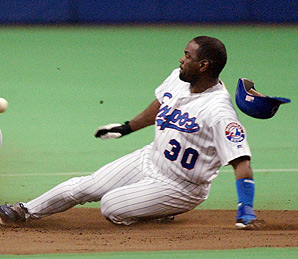 The 2013 class boasts 13 players who received less than 75% but more than 5% of the vote to remain on the ballot. There are also 32 new players on the list. Players must have played in at least 10 MLB seasons, and have been retired for 5 full seasons to be eligible for the ballot. Of returning players, the most notable are Jack Morris (66.7%), Jeff Bagwell (56%), Lee Smith (50.6%), Tim Raines (48.7%), Mark McGwire (19.5%) and Rafael Palmeiro (12.6%). It’s hard to imagine that two of the best home run hitters of all time (McGwire and Palmeiro) could garner less than a quarter of the vote, in McGwire’s 7th year on the ballot and Palmeiro’s 3rd respectively. However, due to steroid usage and their laughable performances in a congressional hearing, this is the case.
2013’s ballot gets a whole lot crazier when you add baseball’s all-time home run leader, and possibly best player in history, one of the most prolific strikeout pitchers of all time, the best slugging catcher of all time, and a guy who hit over 60 HR THREE times, and totalling 609 blasts.
Barry Bonds. Roger Clemens. Mike Piazza. Sammy Sosa. All four of these players have in some way or another been connected with steroids, whether it is pure speculation, or blatant proof. Knowing what we know about McGwire and Palmeiro’s statuses in the Hall of Fame voting, 2013 could prove to be the most heavily debated election year ever. Many believe that players who used steroids should never be elected in the Hall, and all records should have asterisks beside them. Many others believe they should let them in, and that because steroids and PED usage was so rampant in the “Steroid Era” that it doesn’t affect the way they vote.
Jack Morris’s case for the Hall has been so widely discussed that it bears not repeating. He was a good pitcher on some very good teams that scored a lot of runs. Bagwell put up tremendous numbers and has never been proven to be linked to PEDs but is kept out of the Hall because some suspect him of it. Raines is inching closer to being elected, and Lee Smith is nearing the end of his run on the ballot. Since I have already given my vote for 2012, and my opinion has not changed on any of those players, I won’t go into too much detail, other than the fact that I believe Morris will be elected in his 14th year.
Bonds and Clemens would have been first ballot Hall of Famers, no doubt about it. But because of this cloud of PED usage hanging over their heads, it could be a while, if at all.
Bonds’ CAREER OPS 1.051 is higher than every player in the MLB not named Jose Bautista in 2011 alone. His peak season in OPS+ was 268 in 2002. 268! Career OBP of .444. 514 stolen bases. He holds the record for most career home runs with 762. Bonds was a 7-time National League MVP, 14-time All-Star, 8-time Gold Glover, and 12-time Silver Slugger. Simply put, steroids or not, Bonds was a once-in-a-lifetime talent, and should be treated as such. He should be in the Hall, but may not be elected for many years due to his links to PEDs, his perjury charges, and his overall sour disposition when it came to dealing with the scrutiny of the media.
Clemens was one of the top 3 pitchers in a generation dominated by hitting, along with Pedro Martinez and Randy Johnson. He has the highest fWAR of any pitcher (by a landslide) with 145.5 Wins Above Replacement. His 8.56 K/9 ranks in the top 10 all time for starters with over 250 GS. At age 42, (albeit possibly aided by PED) he went 13-8, 1.87 ERA, 185K/62BB, and ERA+ of 226. Clemens won 7 Cy Young Awards while attending 11 All-Star Games and even winning the AL MVP Award in 1986. Clemens was always known for his military-style workouts and his bulldog mentality, but as with Bonds, his links to PEDs will taint his legacy.
Mike Piazza is another case where others have implicated him, and there has been no proof of his taking any PED. Highest career slugging of any catcher in history; .545. #1 in ISO; .237. 7th in fWAR; 66.7. 1st in HR; 427. If these stats don’t make Piazza look like the best offensive catcher in history, I don’t know what else to say. Maybe his .308 AVG and 140 wRC+, 9th and 1st all time for catchers, respectively, will convince you. A 12-time All-Star, Piazza also won the 1993 NL MVP award with the LA Dodgers. He also won 10 Silver Slugger Awards and was voted in the top 10 for the MVP 7 times. Piazza should be voted in the first ballot as well, but, like Bagwell, will likely wait many years even though there has not been a shred of credible evidence that he took a PED.
Between 1998 and 2001, Sammy Sosa hit 243 home runs. 60.75 home runs per year. In the history of the MLB, there have been eight seasons where a player has hit 60 HR. Sosa owns three of them. With 609 career home runs and an OPS of .878, it is no wonder Sosa was regarded as one of the best power hitters of his generation. Sosa played in 7 All-Star Games, won the NL MVP in 1998, and was voted in the top 10 six other times. He also won 6 Silver Slugger Awards. Sosa tested positive for PED use in a 2003 supposedly anonymous survey. Also, not helping his reputation as a cheater is that he was caught using a corked bat on June 3, 2003.
Curt Schilling needs to get a long hard look as well. He was able to amass only 216 wins, but his career 1.13 WHIP and 128 ERA+ are very good. Schilling also compiled over 3100 strikeouts while walking only 711 in 3261 innings. If Jack Morris gets into the Hall of Fame with much lesser career numbers, but gets in on the merits of his Game 7 victory in the 1991 World Series, Schilling should be elected in his first 3 years of eligibility. Before Game 6 of the ALCS in 2004, in which the Red Sox were down 3-2 to the Yankees, Schilling tore a tendon sheath in his ankle. Doctors built a wall of stitches in his ankle to hold the tendon in place so that he could still pitch in the game. Schilling went 7 innings, all the while blood oozed out of the wound through his sock. He gave up 4 hits, no walks, and struck out 4 batters, and gave up 1 run. The Red Sox won the game, and won the series the next night. The game will forever be known as the Bloody Sock Game. Schilling’s performance on one leg was one of the gutsiest events I have ever witnessed in this game.
There are so many other notable names of good to great baseball players, but none should have a real chance of being elected into the Hall of Fame this year…with most likely never getting in. These players include Craig Biggio, Jose Mesa, Roberto Hernandez, Kenny Lofton, David Wells, Shawn Green, Julio Franco, Sandy Alomar, and of course, Jaret Wright. Remember that guy?
2013’s ballot is littered with guys who SHOULD be in, but won’t be elected. Not now, and maybe not ever. Personally, I vote Bonds, Clemens, Piazza, Sosa and Schilling. Due to their PED connections, the first four won’t get in, and Schilling may take a few years to pay his dues through the process.

 ***Today’s feature was prepared by our Baseball Writer, Rob Bland. We highly encourage you to leave your comments and feedback at the bottom of the page and share in the discussion with our readers. You can also follow Blandy on Twitter***
Please e-mail us at: MLBreports@gmail.com with any questions and feedback. You can follow us on Twitter and become a fan onFacebook . To subscribe to our website and have the daily Reports sent directly to your inbox , click here and follow the link at the top of our homepage.

A Tribute to Jamie Moyer: Life Begins After 30
Saturday December 10, 2011

Doug Booth- Guest Baseball Writer: In May of 1993, Jamie Moyer had spent the previous year entirely in the Minor Leagues with the Detroit Tigers and wondered if his signing with Baltimore Orioles in the offseason was a mistake. At that point in his career Moyer had posted a career won-loss record of 34-54 (.405) with the Cubs, Rangers and Cardinals. He was a soft-tossing Left Handed Pitcher who struggled with giving up home runs. Jamie was called up May.30/1993 by the O’s and began to pitch himself into respectability the next 3 seasons with Baltimore-achieving a 25-22 record. Baltimore was a contending team in the American League and thought Moyer was not going to help them with a championship bid the following year so they released him after the 1995 season. Boston signed him for the 1996 season. Moyer started out in the bullpen 7-1 that year and was later traded to the Mariners for Darren Bragg. It would be a trade that would give Jamie a new lease on life.
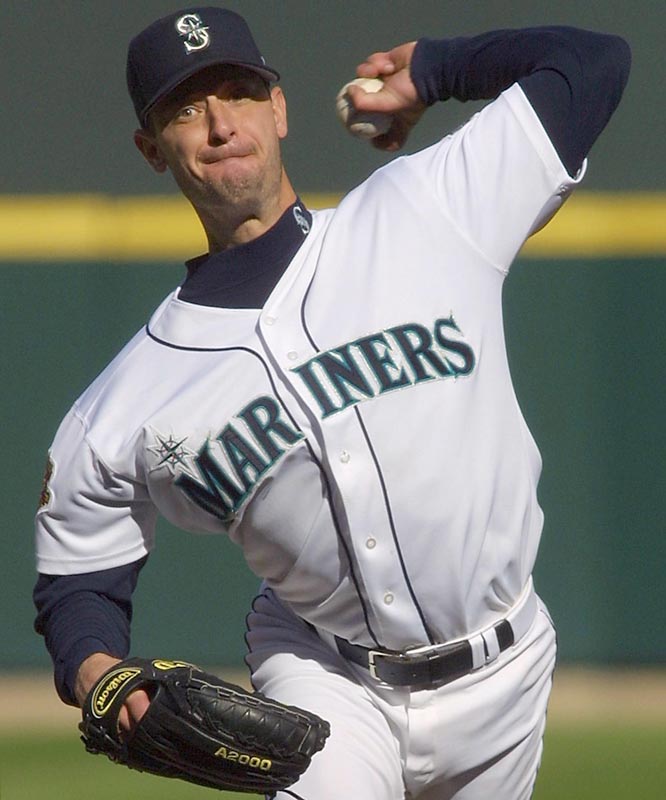 The Seattle Mariners were a powerhouse team back then with the likes of Ken Griffey Jr, Randy Johnson, Edgar Martinez, Jay Buhner and a young phenom SS in Alex Rodriguez. The team had plenty of offense and just enough defense to help Moyer go 6-2 the rest of the 1996 season-to help his record to 13-3 overall that year which led the Major Leagues for winning percentage (.813). Moyer was a perfect complimentary pitcher to Randy Johnson went it came to style contrast. Johnson threw in the mid-nineties and buttered up the opposition-and Moyer was the perfect change of pace with crafty off-speed tossing. In 1997, Jamie Moyer went 17-5 with a respectable 3.86 ERA, that was not bad considering the Mariners played at an offence friendly Kingdome for half of the time. The next three years Jamie still went 42-27, but his ERA had crept up to 5.49 in 2000, which was more than a run and a half higher during his Mariners career. Jamie Moyer had still proved his critics wrong with his career renaissance. He was turning 38 in that offseason. The Mariners had moved into Safeco Field despite losing star players of Ken Griffey, Randy Johnson and Alex Rodriguez in consecutive years. The team looked to be in transition. Jamie still wanted to pitch and began training harder than ever.
The 2001 season was historical for the Mariners from start to finish. Playing in front of capacity crowds at Safeco Field the Mariners played inspired baseball. Right in the middle of the team’s incredible year was Rookie of the Year and MVP Ichiro Suzuki. His injection of youth and helped the Mariners finish the season with a record tying 116 wins. In those wins, Jamie finished the year 20-6. It was Jamie’s first 20 win season. Jamie lowered his ERA all the way down to 3.43 that year-which was one of his best ERA’s of his career. The Mariners lost out in the ALCS to the Yankees but Jamie Moyer had pitched the best year of his career. Jamie finished 4th in Cy Young voting. Despite lowering his ERA to a career best 3.32 at that time, Jamie finished 14-8 in 2002. In 2003, and at the incredible age of 40, Jamie went 21-7 with a career single season best 3.27 ERA. Jamie was named to his only ALL-STAR appearance and finished in the top five of Cy Young voting once again.
In 2004, the Mariners had replaced Lou Piniella and had begun the downward spiral to the bottom of the AL WEST. Jamie was a gamer but sported a 7-13 record with an ERA of over 5 again. It looked like he was hanging on to his career by a thread again. Not even the comforts of Safeco Field were providing enough shelter for his game. Jamie had given up 44 home runs in 2004 which had led the American League. The team was not competitive in 2005 but Jamie bounced back with a 13-7 record and a 4.28 ERA. Jamie had worked several games with Catcher Pat Borders (1992 World Series MVP.) Each time the two 42 year olds would be the pitcher catcher tandem they set a record for the oldest pair. This exact tandem was the pitcher and catcher when I attended my first game in the United States at Safeco Field in June of 2005. In 2006, Jamie started the year 6-12 despite pitching well, (His ERA was back down to 4.39,) that is when the Philadelphia Phillies picked him up for the playoffs that year. Jamie left the Mariners as the franchise’s all-time winner at 145-87 (.625)
Over the next five years, Jamie continued to amaze the doubters by posting a 56-40 record (.583). At the age of 45, Jamie Moyer played the most pivotal of roles-with series saving performances in the 2008 playoffs en-route to the Phillies winning the World Series. It was a culmination of a career for the man. Jamie pitched okay in 2009, and saved some of his better performances for later in the season coming out of the bullpen-before suffering some torn muscles in his left arm that ended his season. 2010 saw Jamie post a respectable record of 9-9 before he was injured for the rest of the year just after the All-Star Break. Jamie tried to pitch in the Dominican Winter Leagues that fall but he tore up some more pitching muscles. Jamie Moyer needed Tommy John surgery at the age of 48. Jamie still plans on making a comeback in 2012 at the age of 49. Even if he doesn’t catch on with a team-his longevity and record is quite remarkable.
Jamie Moyer Key Stats
Started his career 34-54 before age 30 (.405) and then went 233-150 for the remainder of his career for a .608 winning percentage. His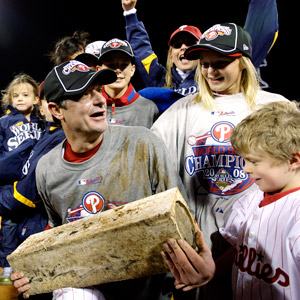 career record is currently 267-204 is still at a .567 winning percentage. His 233 wins after the age of 30 trail only #1 Phil Niekro (297 wins) and #2 Warren Spahn (273 wins) all time in MLB history but Jamie had a better winning percentage than both of them after age 30 at .608-to Spahn’s .594 and Niekro’s .540. Jamie was one of the top 2 winning pitchers from 2001-2010 decade with a record of 140-94 (.594), only Randy Johnson with 143 wins in the decade had more…rounding out that top 5 were: Roy Halladay with 139. Andy Pettitte had 138, Roy Oswalt and Tim Hudson had 138. Jamie also compiled a record of 103-70 (.595) after the age of 40. Jamie Moyer has thrown 4020 innings and struck out 2405 batters despite a fastball that ranged from 82-89 MPH in his career.
Will Jamie Moyer receive Baseball Hall of Fame consideration? He will garner some votes as his career is very similar to Tommy John. It is unfortunate the man could not achieve 300 wins in his career with such a slow start-but there is no denying that he should receive “The Most Unlikely to Have Such a Great Career Award.” He is a classy professional and is an even better human off the field, with running his Moyer Foundations all across the country. Jamie has touched countless people and is a great role model for all of those athletes who might feel like giving up. Kudos for having a great second half to your career Jamie Moyer!!

 *** Thank you to our Guest Baseball Writer- Doug Booth for joining us today on MLB reports. To learn more about “The Fastest 30 Ballgames” and Doug Booth, you can follow Doug on Twitter (@ChuckBooth3024) and click here for Doug’s website, fastestthirtyballgames.com***
Please e-mail us at: MLBreports@gmail.com with any questions and feedback. You can follow us on Twitter and become a fan on Facebook . To subscribe to our website and have the daily Reports sent directly to your inbox , click here and follow the link at the top of our homepage.


 MLB Reports

You must be logged in to post a comment.