Blog Archives
The First Five Games of The Streak
Tuesday April.10/2012

Douglas “Chuck” Booth at Citi April 9th
Chuck Booth (Lead Baseball Writer and @chuckbooth3024)- Well, I finally get a chance to breathe for one second. Too bad it was at the expense of the events that transpired yesterday. Contrary to popular belief, this world record streak is not a walk in the park. Traveling is a hard thing to do at the best of times. I will break down the trip synopsis game by game. I am breaking down the travel games at Parks day by day. Read the rest of this entry

Where Will C.J. Wilson Pitch in 2012?
Thursday November 3, 2011
Sam Evans: Seven years ago, it looked like C.J. Wilson might never pitch in the big leagues after missing the 2004 season due to injury. Fast forward to the 2011 offseason, and he is the most desired starting pitcher on the free agent market. He has been the Rangers best starter for the last two years. Now, Rangers fans have to wonder if he’ll be back in Texas in 2012.
C.J. Wilson was drafted out of Loyola Marymount University by the Texas Rangers in the fifth round of the 2001 Draft. The next couple years showed signs of promise for Wilson as he moved all the way up to Double-A, after just one year playing in the lower minors. Unfortunately, he needed Tommy John Surgery which kept him out for parts of the 2003 season, and all of the 2004 season. In 2005, he pitched in 48 innings for the Rangers but posted a 6.94 ERA. From 2006-2006, Wilson pitched out of the bullpen for the Rangers. He was never spectacular but he recorded 52 saves and gave the Rangers an above-average bullpen arm.
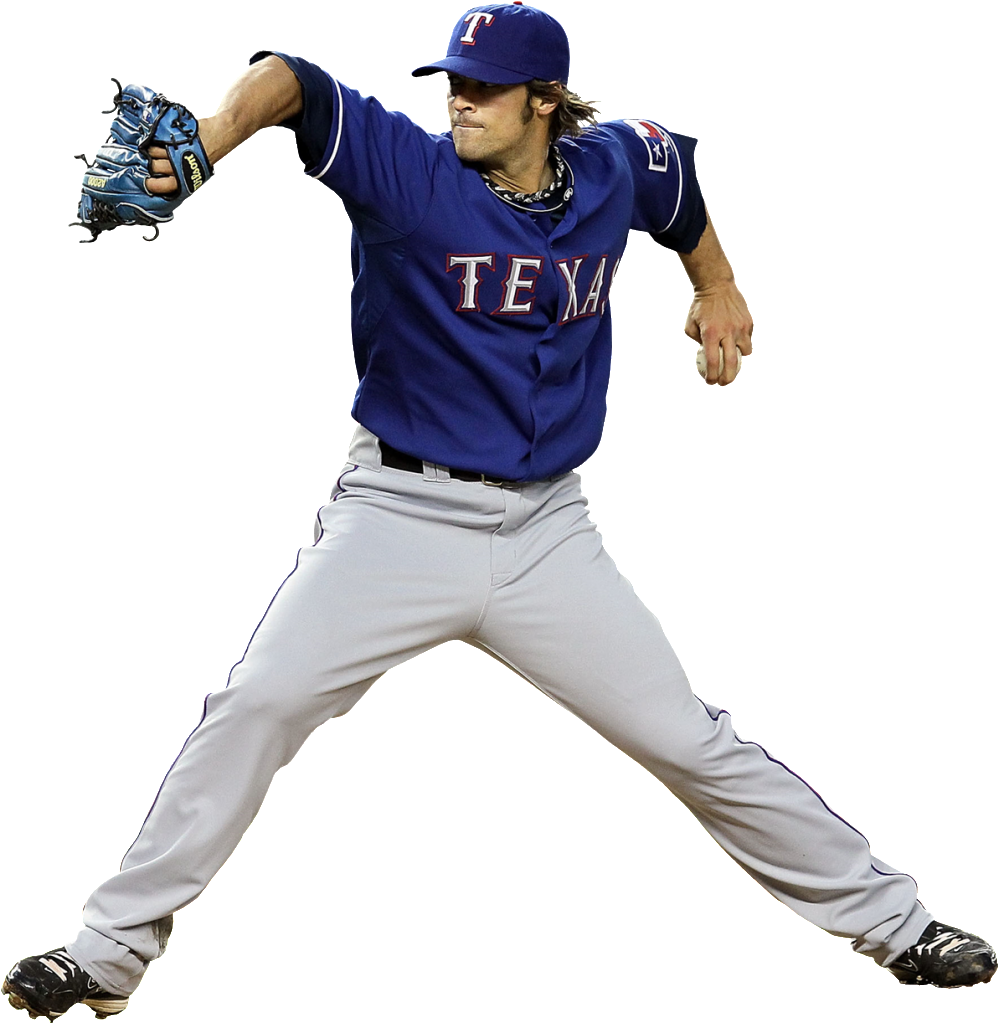 Before the 2010 season, Wilson, behind the support of pitching coach Mike Maddux, earned a role in the Rangers starting rotation. Everything took off from there as Wilson became the Rangers best starter and he has been their best pitcher the last two years. He has posted an ERA under 3.35 these last two years while throwing over 420 innings. He has been one of the best pitchers in baseball the last two years despite pitching half of his games at the hitter’s paradise also known as The Ballpark in Arlington.
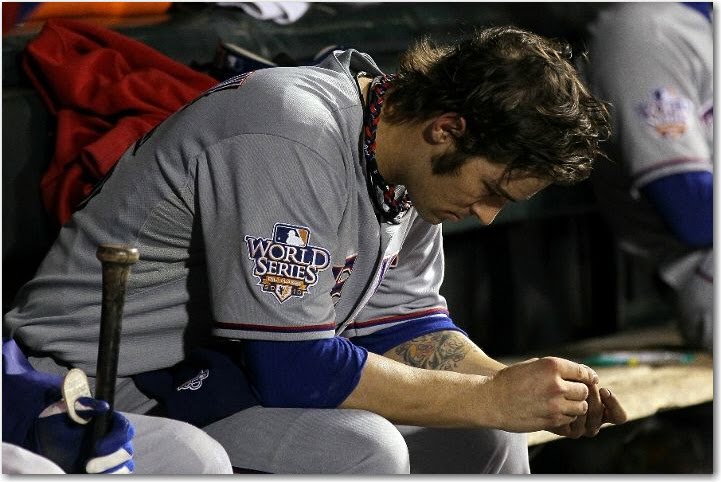 The main knock on Wilson is that he can’t win the big game. This is a real issue because most teams willing to shell out the big money for Wilson are likely playoff contenders. I think that part of this has just been bad luck for Wilson. Another factor might be that he has started 77 games over the last two years. I think this recent postseason Wilson was just exhausted from the regular season. I think that some teams will look at Wilson differently after his performances this postseason but it shouldn’t be a huge issue.
C.J. Wilson is currently a free agent and the best starter available.The Nationals are rumored to be interested and they scouted Wilson in September this year. I think that Washington might be a good fit for Wilson to mentor young studs Stephen Strasburg, Brad Peacock, and Jordan Zimmerman. However, I don’t know if the Nationals really can compete with the other teams on a financial basis.If they could come up with the money ( they do have one of the richest owners in baseball) then I’d expect them to compete with the other top bidders.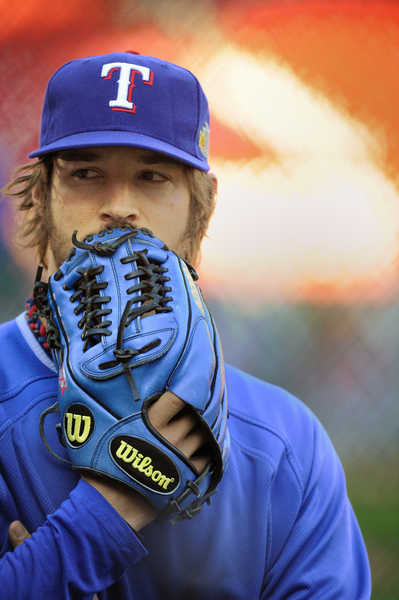
The Yankees don’t seem to be too interested in Wilson but they might look elsewhere for the front of the line starter. In October, it was reported that the Yankees prefer Yu Darvish to C.J. Wilson. I think this is crazy that they would value a 25-year-old who hasn’t thrown one MLB pitch over a 31-year-old who has been worth more WAR than any Yankees starter under 300 pounds. Yet, according to Joel Sherman, one Yankees decision-maker considers Wilson a #4 starter on a championship team.
Other dark horse candidates for the Wilson bidding include the Royals, Cubs, Marlins, Blue Jays and Red Sox. The most likely team to land Wilson is the Texas Rangers. C.J. has made it clear that he wants to pitch for the Rangers. Wilson was recently quoted saying that there is a “great chance” that he would be pitching for the Rangers next year.
As for how much money he’ll get, I don’t think Wilson will get a $100M deal- but $85 million isn’t out of the question. Wilson sounds like he shouldn’t take too long to make up his mind on who to sign with. The odds are that we will see C.J. Wilson back in a Rangers jersey not only next year, but for many years to come.
 ***Today’s feature was prepared by our Baseball Writer, Sam Evans. We highly encourage you to leave your comments and feedback at the bottom of the page and share in the discussion with our readers. You can also follow Sam on Twitter.***
Please e-mail us at: MLBreports@gmail.com with any questions and feedback. You can follow us on Twitter and become a fan on Facebook . To subscribe to our website and have the daily Reports sent directly to your inbox, click here and follow the link at the top of our homepage.

Sabathia and the Yankees: Did anyone ‘CC’ this coming?
Tuesday November 1, 2011

April Whitzman (Blue Jays and Prospects Writer – MLB reports): At the stroke of midnight, C.C. Sabathia wouldn’t have turned into a pumpkin, but the Yankees had the potential of not getting the fairy tale they wanted.
But, lo and behold, a fairy godmother appeared, in the form of a signed contract, which showed that C.C. Sabathia would accept a new deal and remain with the New York Yankees. The new deal also had the effect of adding 30 million dollars to his bottom line.
As such, Sabathia did not become a free agent. But at what cost?
Sabathia already had $92 million left on the old contract, or, in layman’s terms, about $23 million a year. Now, the new deal increases his salary to $25 million for 2016 and also gives the Yankees a $25 million option for 2017 with a $5 million buyout (depending on whether Sabathia can stay healthy in 2016).
Was the money worth it? At a quick glance it would appear that the money is well-spent for the Yankees. In fact, since signing a $161-million, seven-year deal with the Yankees in 2009, Sabathia has gone 59-23 with a 3.18 ERA during the regular season for the Yankees.
But that’s not the only reason that the money was well spent for the Yankees.
I f the Yankees would not have been able to convince Sabathia to stay, their rotation (as it stands now) would have consisted of A.J. Burnett, Phil Hughes, Ivan Nova and unless some offseason trading or signing occurs, likely David Phelps and Hector Noesi.
Had Sabathia not signed, the Yankees would have been even more likely to chase any and all free agent starting pitchers on the market, including C.J. Wilson of the Rangers, and Japanese phenom (who the Blue Jays and Rangers are currently rumored to be targeting), Yu Darvish.
Fortunately for the Yankees, Sabathia did agree to sign. But I would not assume that the Yankees have stopped their search for additional starting pitchers to beef up their rotation. Rather far from it. In order to get over the hump, the Yankees will need to acquire complimentary pieces to their existing ace pitcher.
But with that being said, can one even imagine what would have happened if Sabathia had not stayed in New York? And if perhaps some other team came and swept Sabathia off his feet during the upcoming free agency courting period?
If Sabathia had opted out of his contract and become a free agent, it would be interesting to review which teams could have been the right fit for the Yankees’ ace. Potential suitors could have included the Nationals, who already are developing a young up-and-coming team with a stellar rotation. It could have also been the Red Sox, as after the Tommy John surgery to John Lackey, also require more depth to their rotation. Finally, the Los Angeles Angels could have been a suitable destination, because as was saw last year with Vernon Wells, the Angels do not care about the price. Rather the team looks at the quality of the player (in effect, taking the player they want at any price). The Angels could have been a very strong suitor for Sabathia location-wise, given that CC is a California native.
Overall though, despite the fact that he was born in California, Sabathia admitted that his family has now made New York their home. Sabathia moved his family to New Jersey and is an active member of the local community. So much like the end of every fairy tale, CC of course, will live happily ever after. Then again, making $122 million over the next five years, with the potential for $147 million ver six years, certainly helps!

As always, I look forward to hearing from you. Comment below, email MLBreports@gmail.com and follow me on Twitter at @Alleycat17.
Please e-mail us at: MLBreports@gmail.com with any questions and feedback. You can follow us on Twitter (@MLBreports) and become a fan on Facebook . To subscribe to our website and have the daily Reports sent directly to your inbox , click here and follow the link at the top of our homepage

Adam Dunn and Alex Rios: The Future of the ChiSox Sluggers
Monday October 10, 2011
Peter Stein (Fantasy Baseball Analyst – MLB reports): There were perhaps no two bigger fantasy busts than Alexis Rios and Adam Dunn during the 2011 season. Although nobody was “screwed over” more than White Sox general manager Kenny Williams, many fantasy owners surely had a hard time overcoming the incompetency of these two players.
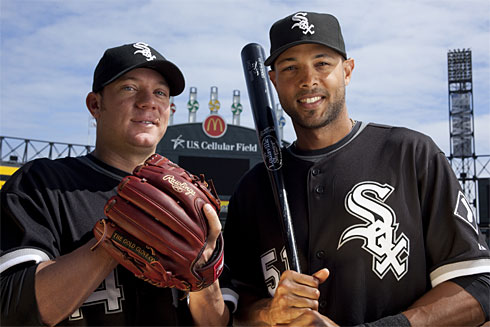 Although Dunn’s performance was unexpected by many, we have seen this from Alex Rios before. Rios reemerged on the scene in 2010 as one of the rare five category players: .284 avg, 21 HR, 89 RBI, and 34 SB. However, Rios really tailed off at the end of his 2010 season and looked a lot more like the player that the Toronto Blue Jays flat-out released a year prior. His 2011 numbers look eerie similar to 2009:
2009: .247, 17 HR, 63 RBI, 24 SB
2011: .227, 13 HR, 64 RBI, 11 SB
Oddly, 2008 and 2010 were different stories for Rios, as he amassed a total of 9.3 WAR in those two seasons. There is no doubt that Rios suffered from bad luck in 2011. He .237 BAPIP is 70 points below his career average. However, the fact remains that Rios is now on the wrong side of thirty. It is doubtful any team would make the same mistake Williams already has and taken on his salary, so chances are Rios will still be in Chicago. With his large contract and a new manager in town, I think it is safe to assume it will be his position to lose in 2012.
Rios’ inconsistencies throughout his career make him a difficult player to evaluate, but you have to think he will bounce back and be a good buy-low candidate. Whatever you do just do not overpay. His peripheral numbers indicate that his power is still there and that his batting average should improve perhaps to his career .270 range. We also cannot ignore his strong finish, batting .307, 5 HR and 12 RBI in his last 75 at-bats. It has been said that he “over thinks” and struggles with the mental side of the game, but his physical skills are undeniable.
The signs indicate that Rios will bounce back in 2012 for a rebuilding White Sox team. Therefore, target him as a backup or final outfield option for a cheap price. Pay for the player he was in 2011 and hope to get the 2008/2010 Rios in return. With his track record it is simply not safe to pay for him as a .280/20 HR/80 RBI/20 SB guy that he could very well be.
I think you have to take the same approach with the other White Sox enigma, Adam Dunn. Dunn was the model of consistent for the last 10 years, and he appeared to be in a great position to succeed in Chicago in 2011. However, his strikeout rate increased to a stagger 35.7 percent, and when he did manage to put the ball in play, his .240 BABIP left him with a .159 season average. Historically bad.
Dunn is also aging and was noticeably out of shape last year. Watching him play every day, he simply seemed over matched and had trouble recovering form an early season appendectomy. Dunn has to realize what is at stake here (his career) and hopefully he picked up something from Paul Konerko’s professionalism and approach to the game.
 The fact remains that with his contract, Dunn will get the chance to turn things around in 2012. If he has a repeat performance, then the White Sox might be forced to just cut ties and move on. Therefore, 2012 is truly do-or-die for Mr. Dunn. Thus, I expect him to put in the time in the off-season and bounce back next year. It is not to say that Dunn will put up the same numbers as he has in the past, but the home run total could still exceed thirty. U.S. Cellular Field is a notorious hitters park, and Dunn still has the ability to take advantage of its favorable dimensions.
The good news, fantasy owners and White Sox fans, Alex Rios and Adam Dunn cannot be any worse in 2012! The fact is they will both be giving an opportunity to bounce back in 2012 and try to prove the worth of their 14 million dollar per year contracts. Although, they will never come close to doing this, they can provide value for you next year. These are the types of guys that I love to target for cheap on my fantasy teams. Rios has bounced back before, and although his inconsistencies are mind bogglingly frustrating; it is not crazy to expect him to do so again. Bad luck, reflected by BAPIP, played a factor for both of these players. And with Dunn, if he does put in the offseason commitment, his track record is too long and strong to ignore. Therefore, expect both guys to bounce back. Just don’t put your self in the position where you are counting on it.
***Today’s feature was prepared by our Fantasy Baseball Analyst, Peter Stein. We highly encourage you to leave your comments and feedback at the bottom of the page and share in the discussion with our readers. You can also follow Peter on Twitter (@peterWstein).***
Please e-mail us at: MLBreports@gmail.com with any questions and feedback. You can follow us on Twitter (@MLBreports) and become a fan on Facebook . To subscribe to our website and have the daily Reports sent directly to your inbox , click here and follow the link at the top of our homepage.

The Curious Case of Carl Crawford
Thursday September 23, 2011
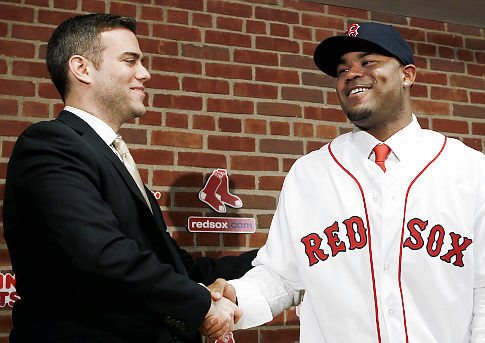
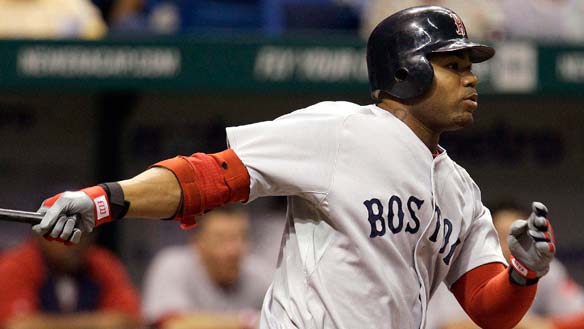
Rob Bland (Baseball Writer – MLB reports): When the 2010 season concluded, many people looked at the trio of Cliff Lee, Carl Crawford and Jayson Werth as easily the most sought after players. Lee has not disappointed in Philadelphia, where he will garner serious attention for the NL Cy Young Award. Werth and Crawford, however, have been pretty big disappointments after signing extremely lucrative contracts over 7 years. Werth received $126M, while Crawford made the biggest splash, inking a deal worth $142M. While Werth has been lucky to play in front of smaller crowds playing in Washington DC, Crawford has had to endure the masses of critics in Boston. This is on top of playing in the AL East, battling for the division title, while the team is in a free-fall where the Tampa Bay Rays are gaining ground in the AL Wild Card race.
 Crawford came to the Red Sox with HUGE expectations. Fans of the Red Sox expected him to not only repeat his career season from 2010, but exceed his statistics. In 2010 with the Rays, Crawford surpassed most of his best seasons in almost every statistical category. He hit .307 with 19 home runs and 90 RBI, while scoring 110 runs and stealing 47 bases. His on-base percentage was .356 and he slugged at a .495 clip, giving him an OPS of .851. In 2011, surrounded by all-star and MVP caliber players, he has struggled to gain any kind of consistency. He has limped into the end of September with a .255/.292/.401 slash line.
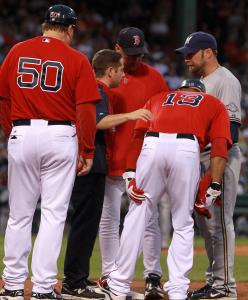
Crawford has only been able to steal 18 bases, which is by far his worst full season total in the MLB. On June 17th, Crawford sustained a grade 1 strain of his hamstring, and did not return to the lineup until July 18th. At the time, Crawford’s OBP of .275 and slugging percentage of .384 were near the bottom of the league. If Crawford had been hot until the injury, and simply fizzled out after he came back, we would have a simple answer.
Crawford has actually fared better since the injury, but I believe he has lost a step. Crawford relies on speed, and hamstrings often take a very long time to heal. His game is based on slapping balls through the infield and driving balls to the gaps, turning singles into doubles and doubles into triples. Many people thought that the Green Monster would be peppered with line drives off Crawford’s bat, as well as triples going into the deep right-center field gap. With Crawford’s hamstring issues, he doesn’t seem to be able to drive the ball as well as in recent years.
Another issue with Crawford seems to be that he has been slightly unlucky compared to other years. His BABIP over the course of his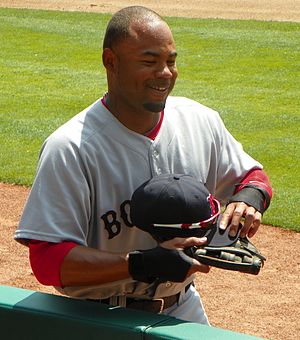 career is .329, while 2009 and 2010 it had been .342. This year, the stat sits at .300. Often, when seeing a dip in BABIP, you can look at a player’s line drive rate and see that the player is not hitting as many line drives. Crawford’s line drive rate is 17.8%, which is actually up from last year’s 16.5%. His fly ball and ground ball rates have also mostly gone unchanged. One thing I did notice was that his percentage of bunts for base hits is 0. Early in his career, Crawford would attempt to bunt upwards of 15 to 18 times per season. This year, Crawford has only attempted three bunts. This could be due to his hamstring not being 100% also.
Crawford’s dWAR, (or defensive Wins Above Replacement), which is a defensive stat that shows how a player is able to field balls inside and outside the zone of his position, has always been one of his strong points. For outfielders, he has been near the top of the league regularly over the last five years. This season, however, his dWAR is at -0.5, which negates entirely his limited offensive production.
With such close similarities in his batted ball rates, one would expect a slight drop in production due to his lower BABIP. However, with such a large gap in last year’s production to this year’s, despite a better overall line-up batting around him, one has to really think about what has happened to Crawford.
Crawford may be a multi, multi-millionaire that most of us would give up anything to be, but what most of us forget is that these MLB superstars are human. Hitting in front of 40,000 screaming, raving Red Sox lunatic fans surely cannot be an easy task. When playing in Tampa for the first 6 years of his career, he rarely faced hostility or scrutiny at home. The media has scrutinized every little move he has made this season, because he is under a microscope now. All this pressure and expectations after signing such a huge contract can take a toll on a player both psychologically and physically.
Here is a radical thought: Fenway’s odd dimensions have actually hurt Crawford offensively. Left fielders play shallower in Boston than in any other park, due to the Green Monster. This means that shallow flares, bloop pop ups and even live drive singles are taken out of the equation. While you can argue that this would then alter every other hitter’s stats, I think that the style of offense that Crawford plays, combined with bad luck, and a slight drop off in actual performance have been the main contributors to his poor statistics.
Look for Crawford to settle into the Boston atmosphere and return to his career averages in statistics in 2012. If he doesn’t, there will be many Sox fans clamouring to get rid of him at any cost.
***Today’s feature was prepared by Rob Bland. We highly encourage you to leave your comments and feedback at the bottom of the page and share in the discussion with our readers. You can also follow Rob on Twitter.***
Please e-mail us at: MLBreports@gmail.com with any questions and feedback. You can follow us on Twitter and become a fan onFacebook . To subscribe to our website and have the daily Reports sent directly to your inbox , click here and follow the link at the top of our homepage.

Jobless in 2012 – MLB Managers on the Hot Seat from 2011
Saturday September 10, 2011

Rob Bland (Baseball Writer – MLB reports): When a team has a disappointing season, the most likely candidate to lose his job is the manager. So far in the 2011 season, there has already been three managers who have either resigned or been fired. The Oakland Athletics fired Bob Geren on June 9th and replaced him with Bob Melvin. A week and a half later, Edwin Rodriguez resigned from his post as manager of the Florida Marlins. Jack McKeon became the oldest manager since Connie Mack at 80 years old. Yet another week later on June 26th, Jim Riggleman of the Washington Nationals resigned and was replaced by Davey Johnson two days later. With only a few weeks left in the regular season, who are the frontrunners to be replaced after the World Series?
With eight managers being new to their respective teams to start the 2011 season, one would think there can’t be too many jobs to lose. The first criteria I look at in order to predict who will not be returning his club is if the team was expected to contend for the playoffs, and fell short. Another thing I look at is the perception of the clubhouse, ie. if players get along, or if the manager is able to manage egos. Of course, the manager’s ability to create a lineup and manage a bullpen is taken into consideration. Other factors such as injuries and expectations of players are measured as well. The list that follows are my top 3 managers who could be canned after this season.
Mike Quade, Chicago Cubs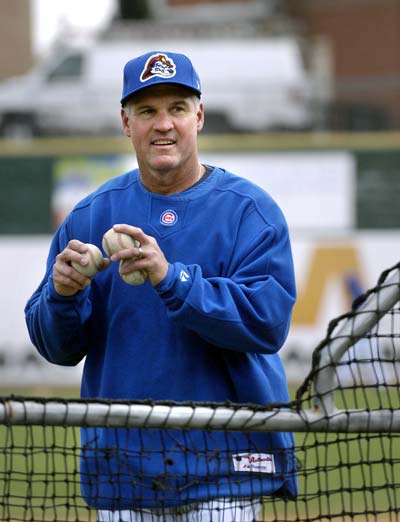
It is not oft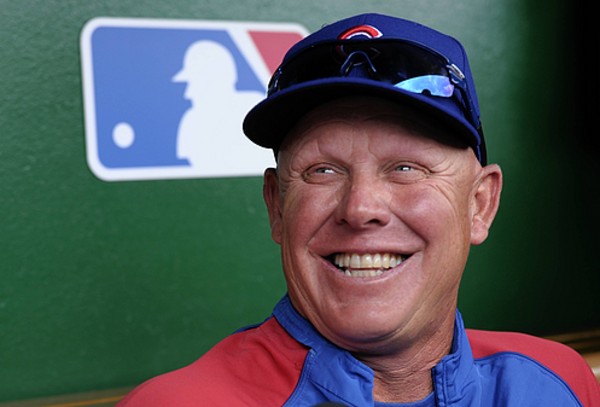 en that I would think a first year manager would be fired like this, but there are so many circumstances that make me believe he will be gone. First, there has been grumbling since day one in Chicago that Quade was hired over franchise icon Ryne Sandberg. The Cubs have been packed with talented players such as Carlos Zambrano, Aramis Ramirez, Alfonso Soriano, Geovany Soto, Ryan Dempster and Carlos Marmol. Add in Matt Garza and Starlin Castro, and you would think they could at least come close in the terrible NL Central. They are 22 games behind the streaking Milwaukee Brewers, and 21.5 behind Atlanta for the Wild Card. Their record is 62-81 with a 35-40 record at Wrigley Field.
Bud Black, San Diego Padres
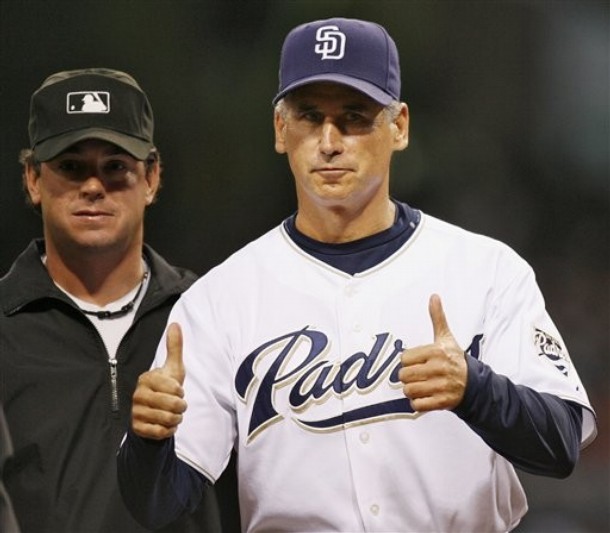 With 2011 being Black’s 5th season with the Padres, a 62-82 record and already 21 games behind Arizona for the NL West title, he could be on the way out. The Padres have yet to reach the postseason under Black, however they were involved in a 1-game playoff with Colorado for the Wild Card title in 2007 that many of us will never forget as one of the most exciting games we have ever witnessed. In 2010, the Padres held a 6.5 game lead over eventual World Series Champs San Francisco Giants on August 25th. After a 10 game losing streak, the Padres were still in contention, and were not officially eliminated from the playoffs until the final day of the regular season with a 90-72 record. Those were the only winnings seasons in Black’s tenure and his time in San Diego may be up.
Ron Gardenhire, Minnesota Twins
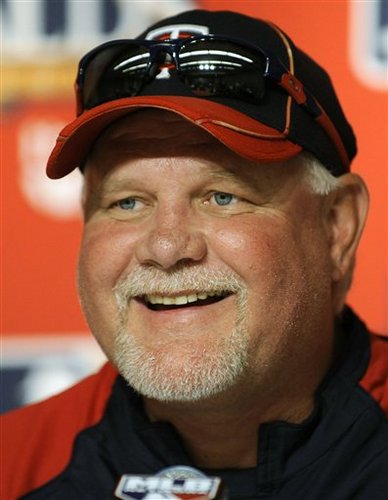
Is it really fair to say Gardenhire’s job is in jeopardy? Probably not, but it definitely is possible. Over his 10 year career with the Twins, he has amassed an 861-740 record and they have been in the playoffs 6 times. However, they have only won 6 games, 4 of which were in one series, in Gardenhire’s first season; 2002. The Twins have not won a playoff game since 2004, being swept in 2006, 2009 and 2010 in the American League Division Series. This year, Gardenhire has had to deal with crippling injuries of former AL MVP’s Justin Morneau and Joe Mauer. Statistically, the best hitter has been Michael Cuddyer, hitting .282 with 18 home runs and 64 RBI. The best pitcher has been Scott Baker who is 8-6 with a 3.21 ERA and 1.19 WHIP in 131 2/3 innings. Francisco Liriano has not been the same as he was before undergoing Tommy John surgery after the 2006 season, and aside from his no-hitter against the White Sox on May 3, he has been downright awful and is now on the 15-day disabled list. When the best players don’t perform, or are hurt, the manager is forced to do the best he can with what he is given. However a 59-84 record may just be the straw that broke the proverbial camel’s back for Gardenhire.
This year, with 3 mid-season changes already, and eight new managers at the beginning of the season, shouldn’t see too much activity. I do believe that with the Cubs’ search for a new general manager under way, Quade’s days are numbered in Chicago. I also believe that Black’s inability to get the always promising Padres to the next level will leave him without a job by November. Gardenhire has not proven to me that he can bring the Twins to the World Series, and that is what the job description entails. Has it ever happened where both Managers of the Year from their respective leagues gets fired the following year? It could happen if Black and Gardenhire are let go.
***Today’s feature was prepared by our Baseball Writer, Rob Bland. We highly encourage you to leave your comments and feedback at the bottom of the page and share in the discussion with our readers. You can also follow Rob on Twitter.***
Please e-mail us at: MLBreports@gmail.com with any questions and feedback. You can follow us on Twitter and become a fan onFacebook . To subscribe to our website and have the daily Reports sent directly to your inbox , click here and follow the link at the top of our homepage.
Strasburg-mania Back With a Vengeance
September 6, 2011
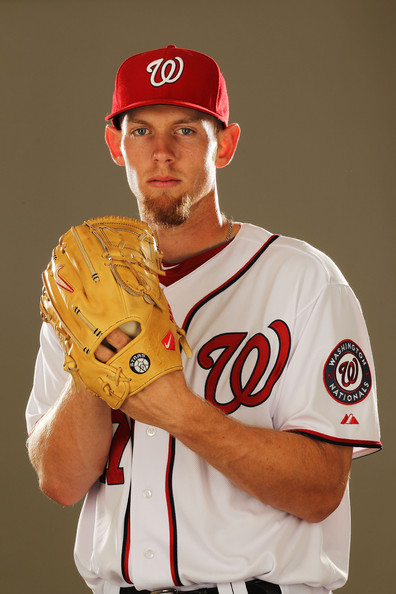
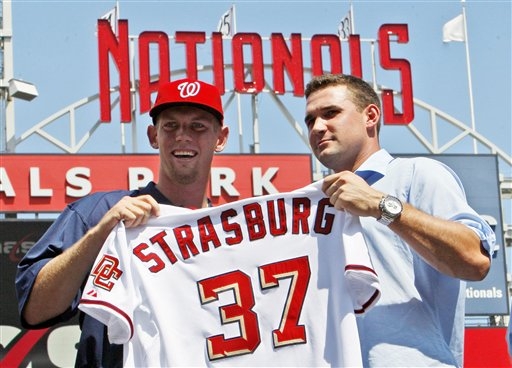
Rob Bland (Baseball Writer- MLB reports): The day so many people (namely the entire Washington Nationals organization) have been waiting for is finally upon us. Stephen Strasburg, ultra phenom, who I covered his rehab here last week at the Reports, started against the LA Dodgers. The hype that was produced was incredible, with every major US sporting website having a headline dedicated to Strasburg-mania. The twitter hashtag #MerryStrasmus has been coined and millions of people are tuning in to watch his first start since Tommy John Surgery.
 Strasburg is a big, strong kid who is known for his tremendous work ethic. It comes as no surprise that he was able to begin pitching less than a year after getting the surgery.
The weather today in Washington DC was wet and dreary, so manager Davey Johnson was close to pulling the plug on the start if the game was even delayed. The Nationals wanted to make sure Strasburg had enough time to warm up and be ready to pitch in the game. When the tarps were taken off the field around 6:45pm, Strasburg was in the middle of his warm-ups.
Dee Gordon led off the game with a double, but after that, Strasburg didn’t see any trouble the rest of the way. Matt Kemp grounded out softly in between fly balls by James Loney and Juan Rivera in the first inning. The second inning was vintage Strasburg, as he threw 3 fastballs between 95 and 97 mph with run and sink, then threw a change-up at 90 mph that Andre Ethier swung over for strike three. Aaron Miles was then disposed of with a 99 mph heater, and Rod Barajas hit a lazy fly ball to center field.
The fourth inning saw Strasburg get two more strikeouts and give up a single to Rivera. Gordon and Rivera’s hits ended up being the only two base runners against Strasburg. His outing ended in the 5th inning after a fly out, ground out and foul out.
Strasburg was dominant. His 4-seam fastball was 95-99 mph throughout his 56 pitch outing, 40 of which were strikes. His 2-seam fastball had great late life, sinking late and inducing ground balls. Only 6 breaking balls were thrown, and although they were pretty sharp and late breaking, it was clearly his 3rd best pitch. Breaking balls are usually the last pitch to come around after Tommy John surgery, because pitchers don’t start throwing it until later in their rehab.
Strasburg’s final line reads as follows:
5IP, 2H, 0R, 0ER, 0BB, 4K.
My pre-game prediction was:
5IP, 3H, 1R, 1ER, 1BB, 9K.
Aside from the strikeouts, I was pretty close. Strasburg is such a rare talent, that a rainy and cold Tuesday night game against a non-contender such as the Dodgers drew over 5,000 more fans than their average season attendance.
Strasburg-mania really hit Washington on a cold, damp Tuesday night. If he continues to pitch like this, the Nationals could be close to contending in 2012, but more likely in 2013 when Bryce Harper could be in the field on an everyday basis.
***Today’s feature was prepared by our Baseball Writer, Rob Bland. We highly encourage you to leave your comments and feedback at the bottom of the page and share in the discussion with our readers. You can also follow Rob on Twitter.***
Please e-mail us at: MLBreports@gmail.com with any questions and feedback. You can follow us on Twitter and become a fan on Facebook . To subscribe to our website and have the daily Reports sent directly to your inbox , click here and follow the link at the top of our homepage.

Strasburg-mania Returns to the Nationals September 6th
Saturday September 3, 2011
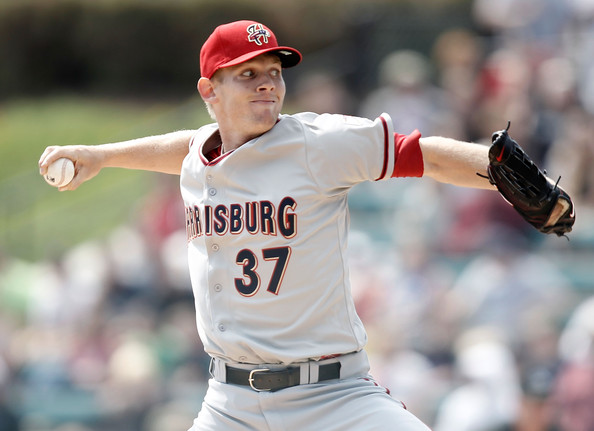
Rob Bland (Intern- MLB reports): Stephen Strasburg burst onto the MLB scene with the Washington Nationals in his first start on June 8, 2010 against the Pittsburgh Pirates. In his 7 inning gem, he struck out 14 batters with 0 walks, and only 4 hits allowed. Throughout the rest of the 2010 season, he relied on a fastball that averaged 97.3 mph. Strasburg also possesses a hard biting, 82 mph curveball and a 90 mph changeup. His 2010 season came to a grinding halt on August 21st that year, when he left a game against the Philadelphia Phillies in which he was dominating with elbow tightness. The Nationals’ front office and coaches all held their breath until after Strasburg’s MRI, which revealed a torn ulnar collateral ligament. Stephen Strasburg required Tommy John Surgery and would be on the shelf for a year.
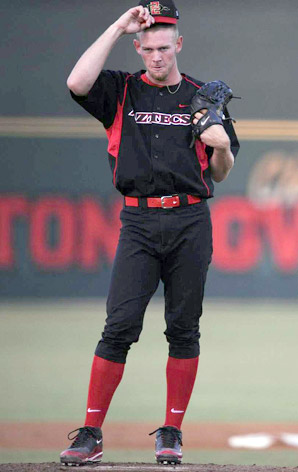
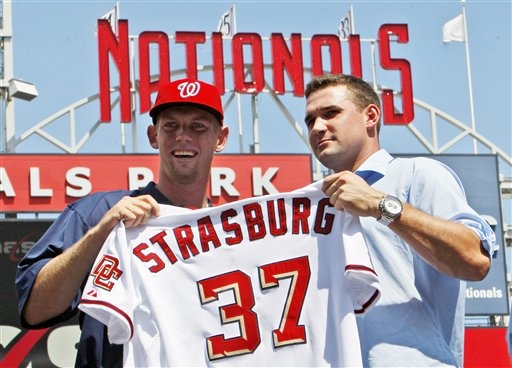 Strasburg had been previously dubbed as the best pitching prospect ever. Strasburg was drafted #1 overall out of San Diego State University in 2009 after what is arguably one of the best college careers for a pitcher of all time. Strasburg signed a $15.1 million dollar bonus just 77 seconds before the deadline that year. In the 2009 season leading up to the draft, Strasburg was pretty much unhittable. In 109 innings, he gave up only 59 hits and 19 walks, compared to 195 strikeouts.
Strasburg’s 2011 season has seen him start off with his rehab in Viera, Florida at the Nationals’ spring training facility. His first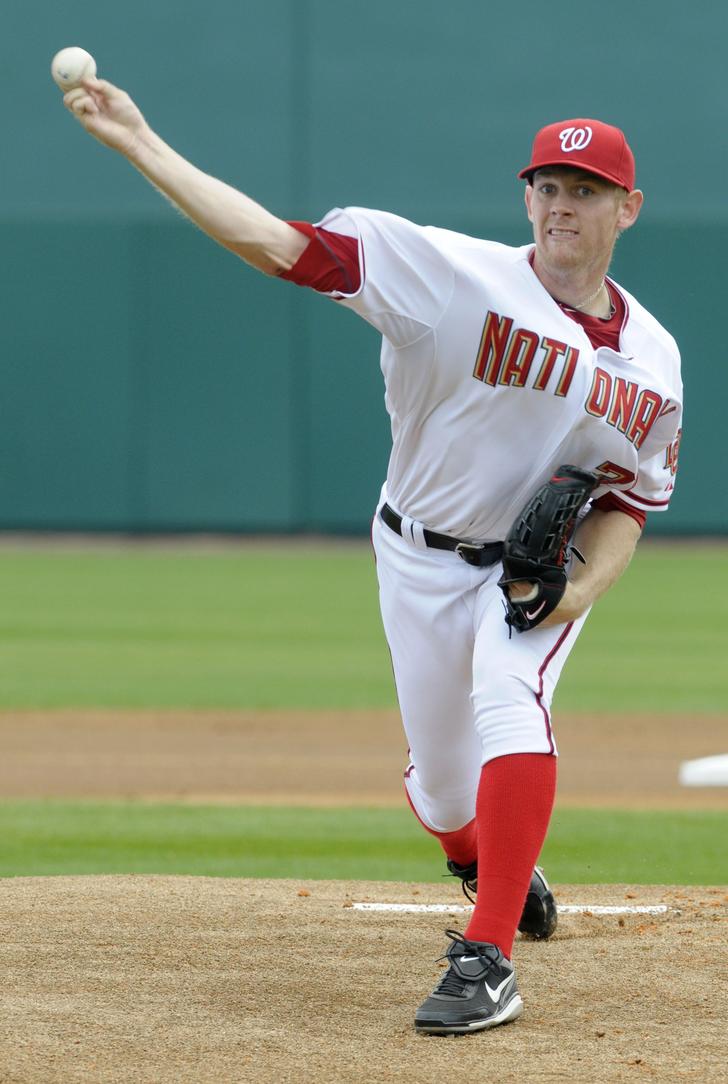 official appearance on his rehab stint was for the Hagerstown Suns of the South Atlantic League in Single-A. Strasburg pitched 1 2/3 innings as he was under a strict pitch limit, and gave up one run with 4 strikeouts. Every 5th day the phenom has taken the mound for Hagerstown, then Potomac in the Advanced A-ball Carolina League. He also pitched in AAA with the Syracuse Chiefs and for the Harrisburg Senators in AA. His last start was the most impressive of all. On September 1st, Strasburg toed the rubber for Harrisburg against the Portland Sea Dogs, Boston’s AA affiliate. Through 6 innings, he faced one batter over the minimum, with only one hit and 4 strikeouts. He also hit 99 mph on the radar gun a number of times.
Strasburg is expected to be called up to start on September 6th at home. He is actually tentatively scheduled to start 4 home games in the month, in part so that the Nationals can reap the benefits of increased gate revenue as well as being able to control game time starts in case of inclement weather.
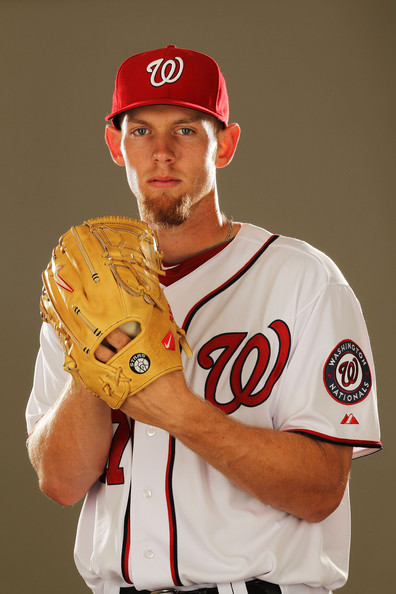 The fact that Strasburg took less than 12 months to be back on a mound is a testament to: a) the advances in the surgery, allowing for less rehab time; b) Strasburg’s work ethic; and c) Strasburg’s freakish body healing so quickly. Strasburg will surely be handled with kid gloves, as he has his entire professional career, never throwing over 100 pitches in a single start.
Strasburg seems to be healthy, and will be looking to be as dominant as his early career has shown. With ultra prospect Bryce Harper and young phenoms like Strasburg, Drew Storen and Ryan Zimmerman, including recently drafted Anthony Rendon and Matt Purke, the future actually looks bright for a franchise that has been hurting for a winner. With a growing fan base (and likely taking fans from the lowly Orioles), this young crop of players look to take the Nationals franchise from laughingstock to a true contender in the tough NL East.
Look for Strasburg’s first start of the season on September 6 against the LA Dodgers. Strasburg is a true rare talent that only comes around once a generation. So if you ever get a chance to see him live, I highly recommend you do so, because you could be a witness to history.
***Today’s feature was prepared by our Intern, Rob Bland. We highly encourage you to leave your comments and feedback at the bottom of the page and share in the discussion with our readers. You can also follow Rob on Twitter.***
Please e-mail us at: MLBreports@gmail.com with any questions and feedback. You can follow us on Twitter and become a fan onFacebook . To subscribe to our website and have the daily Reports sent directly to your inbox , click here and follow the link at the top of our homepage.

Adam Dunn: The Future of the White Sox Slugger
Wednesday August 31, 2011

MLB reports: Not every player can fit onto a particular MLB team. That is a baseball reality. In fact, there are very few, if any players that could produce the same statistics playing for any team. A player’s production is based on many factors, including home park, lineup, adaptability to particular cities and so on. When a team trades for a player or signs a free agent, the hope is that the new player will be able to meet or exceed previous production levels on a new team. Sometimes, the hope is that new environment will revitalize a stagnant player and breath new life into them. In the case of Adam Dunn, the Chicago White Sox signed him to a free agent contract last year. A large deal, 4 years for $56 million dollars. A fair deal in my estimation at the time. The White Sox by signing Dunn were hoping to land an established slugger to fit in the middle of their lineup. What they ended up with was quite different.
Take a look at Adam Dunn’s current production in comparison to his career numbers:
| BA | HR | RBI OBP | ||
|---|---|---|---|---|
| Regular Season | .163 | 11 | 40 .290 | |
| Career | .244 | 365 | 920 .374 |
 To say that Adam Dunn has been anything but a disaster since his arrival in Chicago would be an understatement. Prior to 2011, Dunn’s worst season produced an .819 OPS. That was in 2003, his 2nd full season in the majors that was cut short by injuries. Turn the clock and Adam Dunn sits with a .578 OPS this season with no likelihood of redemption. While some pointed to Dunn playing in a new league for the first time and starting off slow, a turnaround was expected at some point this season. Dunn has actually regressed to the point that he is benched by manager Ozzie Guillen at a frequent rate. A sad state of affairs for one of the game’s previously most consistent sluggers.
For a two-year stretch, from 2003-2008, Adam Dunn was a 40 home runs and 100 walks guy. In his last two seasons, Dunn played in a less than friendly hitters park in Washington and still hit 38 home runs per season. Moving to the White Sox, expectations were that playing in a hitter’s park with a deep lineup would produce possible MVP type numbers for the burly slugger. So what happened? Why the sharp regression?
Part of the issue has been the move to the American League. The adjustment has not worked for some hitters and we have seen NL hitters in the past that cannot play in the AL for whatever reason. Glenn Davis is one famous example that comes to mind, who moved from Houston to Baltimore and literally fell apart overnight. Dunn also is a full-time DH for the first time in his career. Some hitters never take as well to moving off the field and into a DH role, citing inactivity and removal from the full game experience as distractions from their hitting. Given though Dunn’s perceived weak fielding, at both first base and the outfield, a move to DH should have been a welcome change for him. Yet the move was another factor in his year-long slump.
The main culprit in my estimation is the fit, or lack of in Chicago. Perhaps it is the city, or the ballpark, teammates, media or his relationship with the manager. Whatever the reason, I ultimately believe that Adam Dunn and the White Sox simply do not mesh more than anything else. While a return to the field and/or the National League may help, first and foremost Dunn needs to get out of Chicago and start fresh.
 I think of Chone Figgins and his move from the Angels to the Mariners. Despite staying in the same division even, Figgins was never able to meet expectations in Seattle and regressed throughout his time with the Mariners. Had he stayed in Anaheim, the chances are higher that Figgins would have continued playing his game and not transformed into a shell of his former self. Carl Crawford in Boston and Jayson Werthin Washington are players that also signed big-ticket deals and also stayed in their respective divisions, yet faltered in the wake of big contract expectations. But the difference with Crawford and Werth is that they have shown some glimpses of life this season, while Dunn has shown none. I fully expect Crawford at least to be able to make the necessary adjustments and rebound by next season. In Dunn’s case, I do not see that happening without a trade.
Nick Swisher is a situation that I will point to as an example. From the moment Swisher was traded from the A’s to the White Sox, nothing went right. After suffering through the worst season of his career in Chicago, Swisher was traded to the Yankees for pennies on the dollar and blossomed in New York. The same will likely occur to Dunn. A move to the Yankees is a possibility, for a high-profile team that can afford to take on or part of most of Dunn’s salary. A trade for a bad contract is another one, with the Cubs for Zambrano or Giants for Zito as possibilities. Better yet, a move to the Angels could also be the answer. With Mike Trout ready to join an outfield of Peter Bourjos and Torii Hunter, the Angels may not have room for failed trade acquisition Vernon Wells. The White Sox could plug Wells into their outfield and Angels use Dunn to replace Bobby Abreu as DH. A long shot, but certainly a possibility.
No one can be sure if this season is an outlier or an indication of the beginning of the end for Adam Dunn. Based on his strong body of work until this year, I am willing to give him the benefit of the doubt that a rebound will occur. The White Sox might wait it out and give Dunn another shot next year. But then GM Kenny Williams has never been the patient type. After moving Swisher very quickly, I expect the White Sox to do the same with Dunn. This would be a classic buy-low situation for another MLB club. Expect many calls on Dunn in the offseason and a new team by 2012. Despite Dunn indications of having retirement thoughts due to his poor season, I cannot see him going down in this manner. Adam Dunn will be back. The only question is where.

Please e-mail us at: MLBreports@gmail.com with any questions and feedback. You can follow us on Twitter and become a fan on Facebook . To subscribe to our website and have the daily Reports sent directly to your inbox , click here and follow the link at the top of our homepage.

Top 10 Closers: MLB Saves Leaders
Thursday August 25, 2011

Rob Bland (Intern- MLB reports): Closers are a topic a lot of people ask about, but I never really got around to writing about. Mainly because, in my opinion, it is a position that is completely overrated. While it certainly helps to have a guy that can go in and slam the door and collect saves for over a decade a la Mariano Rivera, it isn’t necessary to have a “closer” to be a contending team. One need only to look at the top 20 leaders in saves in baseball to notice that the Texas Rangers’ closer Neftali Feliz sits 19th with 25 saves, and Philadelphia Phillies’ Ryan Madson is 20th with 23 saves. It also doesn’t guarantee success, as Heath Bell, Drew Storen, Leo Nunez, Joel Hanrahan are all in the top 10 in saves, while their teams are not in playoff contention.
Top 10 Saves Leaders in MLB as of today:
| Pitcher | Team | Saves | K/9 | BB/9 | ERA | FIP | WAR |
| Craig Kimbrel | Atlanta Braves | 40 | 14.56 | 3.53 | 1.70 | 1.20 | 3.1 |
| John Axford | Milwaukee Brewers | 37 | 10.86 | 3.32 | 2.26 | 2.36 | 1.7 |
| Jose Valverde | Detroit Tigers | 37 | 8.31 | 4.79 | 2.72 | 4.08 | 0.2 |
| Brian Wilson | San Francisco Giants | 35 | 8.72 | 5.20 | 3.19 | 3.40 | 0.7 |
| Heath Bell | San Diego Padres | 35 | 6.79 | 3.23 | 2.55 | 3.07 | 0.7 |
| Drew Storen | Washington Nationals | 34 | 8.03 | 2.19 | 2.77 | 3.48 | 0.6 |
| Mariano Rivera | New York Yankees | 33 | 8.45 | 0.92 | 2.20 | 2.23 | 1.8 |
| Leo Nunez | Florida Marlins | 33 | 8.31 | 2.88 | 4.63 | 4.02 | 0.1 |
| Joel Hanrahan | Pittsburgh Pirates | 32 | 7.85 | 2.04 | 1.73 | 2.17 | 1.8 |
| JJ Putz | Arizona Diamondbacks | 32 | 8.28 | 2.17 | 2.76 | 3.10 | 1.0 |
I look at this list and a few things come to mind:
1) Craig Kimbrel is absolutely filthy.
2) Mariano Rivera is still one of the very best.
3) Closers are more overrated than I originally expected.
4) A lot of saves does not equal success.
5) Craig Kimbrel. Wow.
Craig Kimbrel is having the best year ever for a rookie closer. It isn’t even September and he has 40 saves. Not only that, but he is striking out more than 14 batters per 9 innings. His FIP is a ridiculous 1.20, and his WAR is at 3.1, which is 1.3 higher than any other closer in the Major Leagues. His ground ball rate is 43.7% and has only given up 1 home run in 63 2/3 innings. If the Braves end up winning the Wild Card and have a lead late in games, the shutdown duo of Johnny Venters and Kimbrel should be able to save the game for the Braves in most instances.
 John Axford has had a strange way to becoming one of the premier closers in all of baseball. It took him many years to get there, but under the tutelage of Trevor Hoffman, the career saves leader, whom Axford took his job from, he has flourished. In 2010, Axford had 24 saves after taking over for Hoffman mid-season, and this year’s 37 so far are tied for 2nd in the big leagues. Axford gets over 50% ground balls, and keeps the ball in the yard, two main factors for his success.
Jose Valverde is one of the closers whom I find to be overrated. Part of his success can be attributed to a lucky .250 BABIP. He also walks close to 5 batters per 9 innings, which is extremely high, especially when he does not strike out a very high number of batters. Valverde may appear to be very good with 37 saves, but his 0.2 WAR suggests that he is basically a replacement level pitcher. Surely he is not worth the $7M he is being paid.
Brian Wilson is loved by many in the game. He is funny, has a strange personality, (which seems to be perfectly suited for the bullpen) and he has an outrageous beard. Since 2008, he has accumulated 162 saves, so he is very valuable at the back-end of the Giants’ bullpen. He keeps the ball on the ground, with a career 50% ground ball rate, but he walks a ton of batters (5.20/9IP). He gets a lot of save opportunities because the starting rotation is very good, and his team doesn’t score many runs, so there are a lot of close games.
Heath Bell has put up some ridiculous numbers over the last few years, but these numbers come with half of his games played in the cavernous PETCO Park. While his last two seasons had his K rate over 10, he sits at 6.79 for this season. His ground ball rate is also down 5% to 43. Although his ERA is a good 2.55, his xFIP is 3.89, and like Wilson, gets saves because of an anaemic offense that results in his team often being in close games.
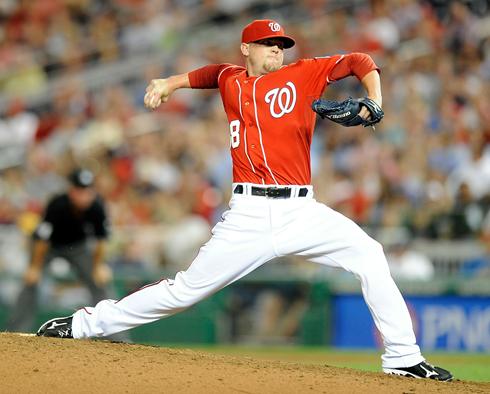 Drew Storen is another of the Washington Nationals’ young phenoms. He moved up the ranks, throwing only 53 2/3 innings in the minor leagues before making his debut in 2010. He has been a tad lucky as his BABIP is .241, but he gets a lot of ground balls, so the hits will even out. He also gives up a higher than average home run per fly ball rate at 11.1%. Storen doesn’t walk many, and as he matures, should probably strike out a higher number. When Washington starts winning more games, he will have even more opportunities for saves.
Mariano Rivera is up to his usual tricks. Even at 41 years old, he is carving up hitters with his signature cut fastball. Rivera has a ridiculous 9:1 K:BB ratio, as well as getting ground balls 47% of the time. His WAR sits at 1.8, tied for second best for closers. The only question is when will this guy ever slow down?
Leo Nunez of the Florida Marlins may be the most overrated closer in baseball. Nunez doesn’t get a lot of ground balls, nor does he strike out a ton, as he gives up a ton of fly balls (49%) and home runs (8 in 56 IP). Nunez’s ERA of 4.63 actually looks worse than his 4.02 FIP, so he has been a little unlucky, but still not very good.
Joel Hanrahan has found a home at the back-end up the Pirates’ bullpen, and is thriving there. While his K rate has dropped to 7.85/9 IP from almost 13 last year, he has walked less batters. Hanrahan has been able to induce ground balls on over half of his plate appearances, and only given up 1 home run in 57 1/3 innings. His stellar numbers have allowed him to tie Rivera for 2nd in closer’s WAR this year.
JJ Putz’s resurgence as a closer this year comes as no surprise to many. Last year as a setup man for Bobby Jenks with the Chicago White Sox, Putz’s K rate was just below 11/9IP, while he walked only 2.5 per 9 innings. He hasn’t put up the same strikeout numbers this year, but he is walking less batters. Putz’s WAR of 1.0 puts him towards the top of the list of closers.
Out of the top 30 relievers in WAR, only 9 are full-time closers. Francisco Rodriguez is among those pitchers, but since he does not close games since traded to the Milwaukee Brewers, he was not counted. Although this doesn’t mean that just ANYONE can close games and earn saves, it does show that many pitchers who have not been given the opportunity probably could get the job done.

***Today’s feature was prepared by our Intern, Rob Bland. We highly encourage you to leave your comments and feedback at the bottom of the page and share in the discussion with our readers. You can also follow Rob on Twitter.***
Please e-mail us at: MLBreports@gmail.com with any questions and feedback. You can follow us on Twitter and become a fan onFacebook . To subscribe to our website and have the daily Reports sent directly to your inbox , click here and follow the link at the top of our homepage.

2011 MLB Draft: Recap and Draftees who Didn’t Sign
Tuesday August 16, 2011

Rob Bland (Intern- MLB Reports): Amongst all the madness that was the Draft Signing Deadline, I first have to say congratulations to Jim Thome for hitting the 599th and 600th home runs of his illustrious career. He is only the eighth player in MLB history to reach that mark.
 There were many signings that went down to the wire last night, and most players in the early rounds signed. There were five Major League deals signed from this draft. The Washington Nationals gave pitcher Matt Purke a 4-year, $4.4M deal out of the third round. Second overall pick Danny Hultzen, the left-handed pitcher from Virginia University selected by the Seattle Mariners was given 5 years and a guarantee of $8.5M. It was previously reported that the Arizona Diamondbacks gave RHP and third overall pick Trevor Bauer a 4 year, $7M deal. High school pitcher Dylan Bundy was given five years and $6.225M from the Baltimore Orioles and Rice University’s Anthony Rendon was given four years and $7.2M as the most polished bat in the draft by the Washington Nationals. Top pick Gerrit Cole was given an $8M bonus by the Pittsburgh Pirates.
However, there were three players in the first two rounds who did not sign, which will result in the teams who selected them receiving a compensation pick in next year’s draft. First of those was RHP Tyler Beede. Known to be extremely tough to sign, the Toronto Blue Jays selected him 21st overall. Beede’s talent alone could have taken him into the top 10 picks, but his lofty demands as well as his desire to play for Vanderbilt University dropped him down to the Blue Jays. It was reported that the final offer The Blue Jays offered was in the $2.3M range, but Beede did not budge from his demands. In a tweet from his Twitter handle @TylerBeede, he said “g-d has plans for me and that is college first.” Beede will look to follow in the footsteps of recent first round pitchers from Vanderbilt; David Price and Jeremy Sowers. Beede was one of my picks that would come down to the wire, and I said that it would take close to $3M to sign him. The Blue Jays will now pick 22nd in the 2012 draft.
 North Carolina State University will get their coveted catching signee, as the San Diego Padres were unable to sign switch hitter Brett Austin. The first supplemental round pick, 54th overall, has plus speed for a catcher, being clocked at less than 6.9 seconds in a 60-yard dash. He has a quick release and routinely has a pop time (throwing the ball home to second as if a runner were stealing) under 2 seconds. He has quick feet and a quick bat, although he has more bat speed from the right side of the plate. With the Padres already locking up catcher Austin Hedges for $3M, they felt as though Austin was expendable, and did not offer a contract near his demands. The Padres will choose 55th in the 2012 draft.
When the New York Yankees selected college junior Sam Stafford in the second round, 88th overall, it was widely believed that the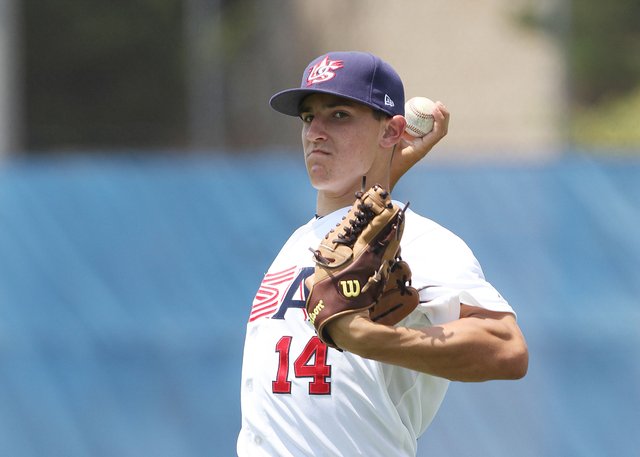 University of Texas Longhorns had lost their top two pitchers. Taylor Jungmann was selected 12th overall and signed with the Milwaukee Brewers for $2.525M. However, talks with the Yankees hit a snag over parts of his physical, and Stafford was never offered a contract around the slot value. Stafford was 6-2 with a 1.77 ERA in 81 1/3 innings this past season at UT. The left-handed pitcher has had consistency issues with fastball command, but pitches in the 90-93 mph range. His curveball and change-up are both works in progress and he shows flashes of plus potential in both. The Yankees will select 89th in the 2012 draft.
The biggest surprise to me was that the Pittsburgh Pirates were able to sign Josh Bell. It did not take a Major League contract, and only $5M to pull him away from the University of Texas. This was much less than originally predicted, and his huge demands seem to have just been posturing. The Pirates signed both of their top picks for a total of $13M, which in itself would have been the most money spent by one team in draft history.
Other notable signings were second round pick LHP Daniel Norris of the Toronto Blue Jays at $2.5M, 14th round pitcher Dillon Maples of the Chicago Cubs at $2.5M, and 6th round catcher Nicky Delmonico of the Baltimore Orioles at $1.525M.

***Today’s feature was prepared by our Intern, Rob Bland. We highly encourage you to leave your comments and feedback at the bottom of the page and share in the discussion with our readers. You can also follow Rob on Twitter.***
Please e-mail us at: MLBreports@gmail.com with any questions and feedback. You can follow us on Twitter and become a fan on Facebook . To subscribe to our website and have the daily Reports sent directly to your inbox , click here and follow the link at the top of our homepage.

MLB Draft Signing Deadline: Who Will Sign By August 15th
Friday August 12, 2011
Rob Bland (Intern- MLB Reports): With the August 15 deadline for all 2011 MLB draftees to sign, players and teams are getting down to the wire with negotiations. Only two of the top ten picks have been signed, right-handed pitcher Trevor Bauer, and second baseman Cory Spangenberg by the Arizona Diamondbacks and San Diego Padres, respectively. Of the 33 first round picks, 9 have signed, as well as 14 of the 27 picks in the supplemental first round. It is expected that most of the picks from the first round will go down to the last hour, if not minute. However, there is a lot of speculation about who will not sign, and the fans of each team are hoping and praying their team will get their guy. Some players come into the draft with lofty expectations and high estimates of signing bonus money. As a result, many of the lower budget franchises stay away from these players, and draft “safe” players, who will sign for a more reasonable price.
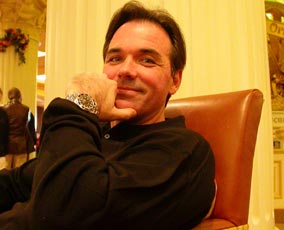 The Oakland Athletics’ GM Billy Beane was made famous through the book “Moneyball”, which portrayed the club as a bottom feeder organization financially. They had to pick lesser talents in order to sign all their draft picks. They shied away from the big “sexy” names on draft boards and targeted players with specific skill sets. Other teams who have done this in the past to varying degrees of success are the Pittsburgh Pirates, Toronto Blue Jays and Kansas City Royals. In the last couple of years, these organizations have turned their philosophies around, drafting tough to sign players with higher ceilings, and ending up signing most of them. Today will highlight a few of the players drafted who will be tougher than others to sign.
From this year’s draft, one of the players who was known to be extremely difficult to sign was Josh Bell. On talent alone, he was rated as an early first round pick, yet dropped to the second round to the Pittsburgh Pirates. He had sent a letter to Major League Baseball advising teams not to draft him on account that he wanted to attend the University of Texas. Some have said this was just a bargaining tool to simply add more leverage to his situation, while others think he will not sign under any circumstances. It has been predicted that it will take a minimum of $10M and a Major League contract in order to sign him. I feel that the Pirates are an extreme long shot to sign Bell, and he will attend U of T and be a Longhorn for the next three years.
High school right-handed pitcher Tyler Beede could have been a top 10 pick, with his 95 mph fastball and devastating change-up. Beede was widely known to be seeking a bonus upwards of $3-4M. The Toronto Blue Jays and their new management have made it a point to take the best player available when they it is their turn to select a player in the draft. So, when it came to their turn as the 21st selection, the Jays did not hesitate to choose Beede, who has said it will come down to money in the long run. I believe the Jays will sign him in the final minutes for close to $3M.
With the 5th overall pick, the Kansas City Royals had a tough decision to make. Outfielder Bubba Starling, a hometown kid from Kansas, was widely considered the top prep offensive talent in the draft was still on the board. Starling has a scholarship to the University of Nebraska to play both football and baseball. It is very likely that a bonus upwards of $8M will be what it takes for Starling to sign with KC on August 15. Expect this deal to get done.
 Gerrit Cole, the flame throwing right-handed pitcher from UCLA was taken by the Pirates first overall in the draft. Cole has reached 102 mph on radar guns and routinely hits triple digits. Cole has yet to sign, but is widely expected to join the Pirates. A Major League deal for 4 years and $8M or so is likely.
Rice University has been known to producing top talent, as witnessed by having eight first round picks in the last 11 years, most notably when Phil Humber and Jeff Niemann went 3rd and 4th overall in the 2004 draft. Another first rounder from Rice was Lance Berkman in 1997. So when one of the top three candidates for the first overall pick came down to an infielder from Rice, who just happened to win the Dick Howser Trophy, (essentially the Heisman Award for college baseball players), nobody was surprised. Anthony Rendon may not have above average speed or the best glove, but he has an above average arm and was considered by most to be the best hitter in the country. Rendon dropped to #6 to the Washington Nationals due to signability concerns but should sign for $4M plus.
Shortstops with ultra talent often get huge signing bonuses and Cleveland Indians’ first pick (8th overall), Francisco Lindor will be no exception. Lindor has the talent to warrant a $3M bonus, but should hold out for more. The Indians tend to shy away from this kind of pick, but the talent speaks for itself and I believe the Indians will go as high as $3.5M to sign the talented shortstop.
There has arguably not been a better high school pitcher in the last decade than flame throwing Dylan Bundy. The right-hander has reached 100 mph and has 2 plus secondary pitches. His high school pitching numbers are straight out of a video game. 71 innings, 2 earned runs. TWO! He also had 158 strikeouts to 5 walks. FIVE WALKS! Good for a 31.6:1 K:BB ratio. Oh, and the fact that he can also hit, as evidenced by his 11 home runs and 54 RBI in only 105 at-bats doesn’t hurt. The University of Texas commit could command a Major League contract and $6-8M. He should sign; my guess is $6.5M.
Here is the breakdown of the entire 2011 first round of picks, with players in bold having already signed:
1 Gerrit Cole RHP Pittsburgh Pirates
2 Danny Hultzen LHP Seattle Mariners
3 Trevor Bauer RHP Arizona Diamondbacks – ML deal 4/$7M
4 Dylan Bundy RHP Baltimore Orioles
5 Bubba Starling OF Kansas City Royals
6 Anthony Rendon 3B Washington Nationals
7 Archie Bradley RHP Arizona Diamondbacks
8 Francisco Lindor SS Cleveland Indians
9 Javier Baez SS Chicago Cubs
10 Cory Spangenberg 2B San Diego Padres – $1.86M
11 George Springer OF Houston Astros
12 Taylor Jungmann RHP Milwaukee Brewers
13 Brandon Nimmo OF New York Mets
14 Jose Fernandez RHP Florida Marlins
15 Jed Bradley LHP Milwaukee Brewers
16 Chris Reed LHP LA Dodgers
17 C.J. Cron Jr. 1B LA Angels – $1.467M
18 Sonny Gray RHP Oakland Athletics – $1.54M
19 Matt Barnes RHP Boston Red Sox
20 Tyler Anderson LHP Colorado Rockies
21 Tyler Beede RHP Toronto Blue Jays
22 Kolten Wong 2B St. Louis Cardinals – $1.3M
23 Alex Meyer RHP Washington Nationals
24 Taylor Guerrieri RHP Tampa Bay Rays
25 Joe Ross RHP San Diego Padres
26 Blake Swihart C Boston Red Sox
27 Robert Stephenson RHP Cincinnati Reds
28 Sean Gilmartin LHP Atlanta Braves – $1.13M
29 Joe Panik SS San Francisco Giants – $1.116M
30 Levi Michael SS Minnesota Twins
31 Mikie Mahtook OF Tampa Bay Rays
32 Jake Hager SS Tampa Bay Rays – $963K
33 Kevin Matthews LHP Texas Rangers – $936K
I think that although you can’t be sure about these kinds of things, my gut feeling is that every first rounder this year will actually sign by August 15th. I also predict that at least one signing will come minutes after the deadline, probably a Scott Boras client, and the league will allow the deal to pass.

***Today’s feature was prepared by our Intern, Rob Bland. We highly encourage you to leave your comments and feedback at the bottom of the page and share in the discussion with our readers. You can also follow Rob on Twitter.***
Please e-mail us at: MLBreports@gmail.com with any questions and feedback. You can follow us on Twitter and become a fan on Facebook . To subscribe to our website and have the daily Reports sent directly to your inbox , click here and follow the link at the top of our homepage.

E-MAILBAG: Ask the Reports, Wednesday August 10th
Thank you for reading the E-mailbag. Please send all your questions to mlbreports@gmail.com and please include your first name and City/Country.
We will be compiling a list of your questions from our e-mailbag and posting the responses on Wednesdays.
Wednesday August 10, 2011
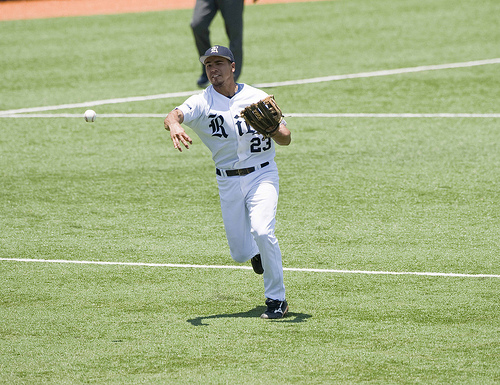
Q: Once Anthony Rendon signs with the Nationals, do you see him moving to 2B? What’s your best guess? From Flips, parts unknown.
MLB reports: The Rice product, drafted 6th overall by the Nationals this year is likely to sign with the Nationals by the August 15th deadline. In the unlikely event that he does not sign, then the Nationals would get a compensation pick next draft. But luckily for Washington, Rendon is expected to join the club this year. With Ryan Zimmerman entrenched at 3rd base, many people have speculated at which position Rendon will end up. I have heard 2nd base tossed around, but the smart money is 1st base. Adam La Roche is a temporary solution for the squad and not the long-term answer. The Nationals appear to be set up the middle with Danny Espinosa and Ian Desmond. Rendon’s bat has never been a question. To get him quickly into the lineup, expect the Nationals to move him to 1st base right away after being signed. The outfield is another option, but more of a last resort.
Q: Will this be the year that the Texas Rangers win the World Series? From Anne, Dallas.
 MLB reports: If the Rangers had been able to sign Cliff Lee, my answer would have been yes. But they did not and the Halladay-Lee combination will lead the Phillies to victory in the fall in my opinion. Don’t get me wrong, the Rangers have an excellent team. An offense led by Josh Hamilton, Nelson Cruz, Ian Kinsler, Michael Young and company. C.J. Wilson as the ace. The bullpen trio of Neftali Feliz, Mike Adams and Koji Uehara. The Rangers can do it all. But firstly, just to make it to the World Series the Rangers will need to pass the Yankees and Red Sox. Even then, the Phillies if they end up as their opponent will be tough to beat. The Phillies have a solid offense core of Ryan Howard, Chase Utley and Hunter Pence. The bullpen has been steady, led by closer Ryan Madson. But it is the starting pitching that will see the Phillies through. With all the roadblocks in the Rangers path, I see them as a strong contender but not necessarily the favorites to win the World Series this year.
Q: Why is it legal to bulldoze a catcher when he clearly has the ball, but not a fielder at any other base? From G Homan, Ohio.
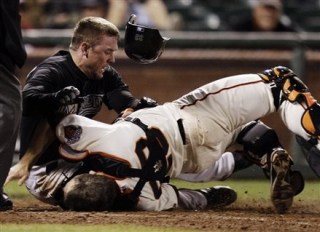 MLB reports: You will have to check the rule book on this one. It is just as legal to take out a catcher as it is an infielder during play, but it depends on the nature of the play. A baserunner cannot run outside of the baselines to purposely run over an infielder or a catcher. But in the course of running the bases, runners can collide with an infielder as they would a catcher. Now the runners cannot purposely injure a defensive player, like using the spikes or an elbow to the face. But to reach base safely, a strong slide or collision is a part of the game and can happen at second base the same way it can at home. Despite cries to change the rules after the Buster Posey injury, strong and aggressive base running remains a vital part of the game.
Q: Will the Phillies get an arm for their bullpen through waivers? From Miguel, Philadelphia.
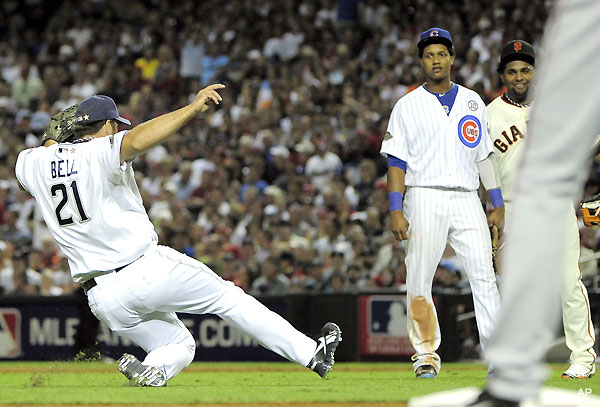 MLB reports: Last time I checked, your team was stacked fairly well at the back-end of their pitching staff. Ryan Madson as closer. Brad Lidge, Antonio Bastardo, Jose Contreras (when healthy) and Kyle Kendrick. I wouldn’t be too worried about the pen. Some people are calling for Heath Bell still to go to the Phillies. But with the waiver process in effect, I can’t see Bell falling to the Phillies before getting snapped up earlier on waivers. Another arm or two might out there, but nothing too special. The Phillies most likely go with what they got and that is still much above most other pens in baseball.
Q: If you look at the numbers, you will find out that Indianapolis, IN and San Antonio, TX are the most populous cities without a MLB team. I would think size of market would drive who gets the next teams. It is obvious that MLB is financially doing really well. I would keep two leagues, and give the expansion teams to the AL, since they are the league with only 14 teams.
American League:
West Midwest East Atlantic
LA Angels Rangers Indianapolis Yankees
Oakland A’s KC Royals Tigers Red Sox
San Antonio Twins Indians Orioles
Mariners White Sox Rays Blue Jays
National League:
West Midwest East Atlantic
Dodgers Colorado Rockies Chicago Cubs NY Mets
Padres Houston Astros Cincinnati Reds Phil Phillies
Giants St. Louis Cardinals Atlanta Braves Florida Marlins
Dbacks Brewers Pitt Pirates Wash Nationals
I tried to used a US map,and place teams in divisions according to how the line up East and West. From Tom, Orange CA.
MLB reports: Very interesting alignment Tom. Indianapolis and San Antonio have been two very popular destinations for our readers in selecting the next two expansion MLB cities. There has been resistance by Bud Selig to further expand baseball. However, as discussed in our previous articles on the subject, baseball needs to add two more teams to balance out the leagues to 16-teams a piece. Also realignment is in order to create better geographical rivalries and even out the number of teams per division. So far, the most that we have heard is that baseball is planning to realign by moving one NL team to the AL by 2013 (as the 2012 regular season schedule has already been prepared in draft format). The problem with the 15/15 split is that an interleague game would need to be played most days, which does not seem like a worthwhile proposition. Houston by most accounts is the team most likely to move. So while we appreciate your thoughts, the expansion and radical realignment ideas are unlikely to happen… yet. If and when they do, we would like to see more shifting of teams to create new excitement and rivalries in baseball. But the framework you have laid down is a very good start. Thank you for sending it in.

Thanks for the e-mails and keep them coming! mlbreports@gmail.com

E-MAILBAG ARCHIVE: Click here for the Archives of Ask the Reports
Please e-mail us at: MLBreports@gmail.com with any questions and feedback. You can follow us on Twitter and become a fan on Facebook . To subscribe to our website and have the daily Reports sent directly to your inbox , click here and follow the link at the top of our homepage.

August 15th Deadline to Sign MLB Draft Picks: 1 Week Away
Monday August 8, 2011
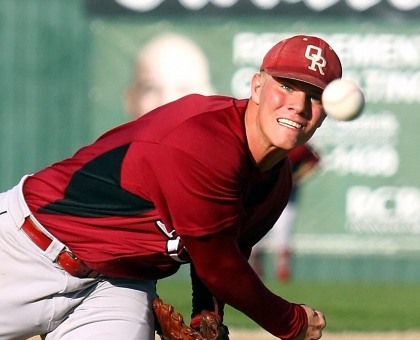
MLB reports: A popular topic on the Reports is the annual MLB Draft. Readers love to learn about baseball prospects and future stars. On June 6th, we summarized the first-round MLB selections and analyzed each player as selected by their respective club. With the excitement of the draft still in the air, the August 15th deadline to sign each drafted player is only 1 week away.
A quick recap of the draft rules for everyone. Players that were drafted by MLB teams this year must sign with their respective club by August 15th. If unsigned, the player will enter next year’s draft if eligible. In order to re-select the same player in a subsequent year, the team would need the permission of the previously drafted player.
Another twist to the draft is that if a team is not successful in signing a pick by August 15th, the team would receive a compensation pick in the following year’s draft. For a player drafted in the first or second round that goes unsigned, the team would receive the same slot pick the following year as compensation plus one. For a player not signed in the third round, a compensation pick would be given in a supplemental round between the third and fourth rounds. So for example, the National drafted Aaron Crow with the 9th overall pick, 1st round of the 2008 MLB draft. When Crow did not sign, the National received as compensation the 10th overall pick in the 2009 draft, used to draft current closer Drew Storen, in addition to their existing 1st round pick (1st overall, which was used to take phenom Stephen Strasburg). However, if a team is unable to sign the player taken with a compensatory pick, the team would not receive another compensation pick in following years. Thus a team gets one chance to make-up a pick, so they better be sure they draft a signable player.
The story of signing MLB draft picks does not usually boil down to who signed, but rather who did not sign. Draftees usually wait to the final hour to sign their contracts, minutes to the midnight deadline. Sizeable contracts are handed out at the deadline, as players and agents attempt to one-up one another. With the current MLB collective bargaining agreement set to expire on December 11, 2011, players and agents realize that future rookie contracts may be limited in a hard-cap, set-salary structure arrangement. Thus many players would be well advised to sign their first professional contracts this year, rather than face the risk of the unknown future salary structure of rookies.
The biggest contract given to a 1st round pick this year so far has been Trevor Bauer, who signed a 4-year, $7 million contract with the Diamondbacks. Other 2011 1st round picks to sign contracts already include Cory Spangenberg with the Padres, C.J. Cron with the Angels, Sonny Gray with the Athletics, Kolten Wong with the Cardinals, Sean Gilmarten with the Braves, Joe Panik with the Giants, Jake Hager with the Rays and Kevin Matthews with the Rangers. To keep up-to-date on the 2011 1st round and supplemental MLB Draft picks signings, please click onto MLB Trade Rumors, a great baseball site that is maintaining a draft pick signing page.
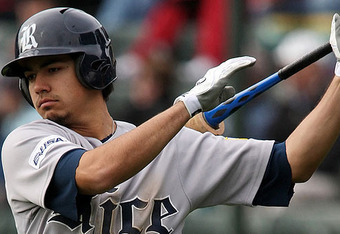
As August 15th continues to approach, fans will continue to ask if and when the Pirates will sign Gerrit Cole, the 1st overall selection in this year’s draft. Dylan Bundy of the Orioles, Bubba Starling of the Royals, Anthony Rendon of the Nationals and so forth also remain out there. For all the anxious people worrying as to which players will sign, let us help alleviate your concerns. The majority of the top picks will sign with their squads before the deadline and will get good contracts. We will continue to cover the signing deadline and file a report when the final numbers are in. The signing period is like a game of musical chairs with a great deal of money being thrown around with pre-arranged partners. It will be interesting to see which draft picks are left standing without a contract in hand when the bell strikes midnight next week.
Please e-mail us at: MLBreports@gmail.com with any questions and feedback. You can follow us on Twitter and become a fan on Facebook . To subscribe to our website and have the daily Reports sent directly to your inbox , click here and follow the link at the top of our homepage.

Final Results and Recap: 2011 MLB Home Run Derby and All-Star Futures Game
Tuesday July 12, 2011

Rob Bland (Intern Candidate for MLB Reports): The MLB Home Run Derby is one of the greatest events in comparison to the All-Star games of any sport. Fans flock in droves to watch the event, hoping to catch an amazing feat such as Josh Hamilton hitting 28 in the first round in 2008, only to come in 2nd place, and Bobby Abreu hitting 41 total home runs on his way to winning the title in 2005.
 When the teams were announced, the fans booed both Prince Fielder and Rickie Weeks. Fielder was chastised for his selection of Weeks, as most casual fans were not aware of the pure power that he possesses. Weeks was chosen over Justin Upton, who would have been great in front of his Arizona hometown crowd.
Early on this Derby lacked excitement, save for Robinson Cano’s first round, in which he had his father, former major leaguer, Jose Cano, pitching to him. Cano blasted a number of balls deep into the right center field bleachers, his longest being 472 ft. Jose Bautista was a bit of a disappointment, smashing only 4 home runs and ended up being eliminated in the first round of the derby. Other disappointments included the aforementioned Rickie Weeks and Matt Kemp, who hit 3 and 2 home runs, respectively.
There was some excitement at the end, as both David Ortiz and Fielder hit 5 home runs a piece to tie Matt Holliday, forcing a 3-player swing-off for 3rd and 4th place. In this swing-off, each player received 5 swings in which to hit as many home runs as possible. Holliday led off with 5, Ortiz hit 4, and Fielder hit a perfect 5, two of which were mammoth shots.
The second round started off with Ortiz, and he began to show his age. Ortiz was likely tired after the first round plus enduring the sudden death swing-off. Ortiz hit only 4 home runs in the second round, and his average distance was 426 ft. Then came the Robinson Cano Show again. Cano launched 12 home runs in the second round, averaging 436 ft. His swing was picture perfect, and it seemed as though any time he didn’t hit a home run, his dad would be upset with him. Robinson’s dad knows his son’s strengths, and was confident he could hit that many. That is likely why Cano was named Robinson by his father, after the late and great Jackie Robinson.
Gonzalez was also able to put on a show in the second round, consistently pounding the ball 430+ft. He put on a display, hitting the ball to the opposite field, and straightaway center field on his way to finishing with 11 in the round, and 20 total, tying him with Cano. Fielder was up next, and aside from his first swing, that he hit 474 ft, he was not able to do much else. He finished with 4 in the round, 9 in total. So, it came down to the Yankees and Red Sox again. Cano and Gonzalez square off in the finals.
Gonzalez immediately impressed, hitting 8 home runs in his first 3 outs. He cooled off and finished with 11 in the finals. With the most impressive rounds of the night, Cano hit 10 in his first 16 swings, needing only 1 more to tie Gonzalez. The crowd erupted as he hit a home run over 470 ft to tie it up. The very next swing was the one that did it, as he hit it out to right center field. Gonzalez had a record 11 home runs in the last round, and Cano was clutch in beating that.
What started off as a slow, uneventful night, wound up being a compelling night of watching the Yankees battle the Red Sox in a pure power slugfest. Robinson and his dad embracing by the mound. The American League beating the National League. All in all, this year’s edition of the Home Run Derby was nothing short of spectacular.

| Chase Field, Phoenix — AL 76 defeats NL 19 | ||||||
|---|---|---|---|---|---|---|
| Player | Team | Round 1 | Round 2 | Subtotal | Finals | Total |
| Robinson Cano | Yankees | 8 | 12 | 20 | 12 | 32 |
| Adrian Gonzalez | Red Sox | 9 | 11 | 20 | 11 | 31 |
| Prince Fielder | Brewers | 5 | 4 | 9 | – | 9 |
| David Ortiz | Red Sox | 5 | 4 | 9 | – | 9 |
| Matt Holliday | Cardinals | 5 | – | 5 | – | 5 |
| Jose Bautista | Blue Jays | 4 | – | 4 | – | 4 |
| Rickie Weeks | Brewers | 3 | – | 3 | – | 3 |
| Matt Kemp | Dodgers | 2 | – | 2 | – | 2 |

In a game showcasing most of baseball’s brightest shining up and coming stars, there were several players who stood out from the pack. Although Bryce Harper (WAS) stole the spotlight in both the pre-game and post-game festivities, he did not shine quite as bright during the game. He was 0 for 4 with 2 strikeouts and 2 ground outs to first. One of which was hit fairly hard but a nice play by Yonder Alonso got the out.
Aside from two big innings, a 4-run 6th inning by the World Team hitters off of Drew Pomeranz, and a 3-run 8th inning off of Kelvin Herrera by Team USA, this was a game largely dominated by flame-throwing pitchers.
 For the US Team, my standout hitters were Jason Kipnis, (CLE) who led off the bottom of the 1st with a home run over the right-centre field wall, and Grant Green (OAK). Green crushed a double off the top of the wall in straight-away center that I thought would have been gone in any other park. He also stroked another double, going 2 for 2 with 2 doubles, a run scored and RBI on his way to earning MVP of the game. On the mound, I was blown away by Matt Moore, Tampa Bay’s mega pitching prospect. He threw 11 pitches, 9 of which were strikes. His fastball was clocked consistently between 94 and 98 mph, and he was also throwing a devastating slider at 86 mph. Phillies prospect Jared Cosart was also very impressive. He racked up 2 strikeouts and a fly out on 10 pitches; 8 strikes. Sitting at 96 with the heater, he also displayed a plus change-up.
Jose Altuve (HOU) is a guy that doesn’t get much credit, because he stands at about 5’6”. However, the Venezuelan native has hit everywhere he has played. He was 2 for 3 with a single and a double, and I came away impressed with the diminutive infielder. Jurickson Profar (TEX) may have been the youngest player there, but he was not overmatched, as he stroked a triple off Drew Pomeranz and displayed his impressive speed. On the bump, Canadian James Paxton stood out to me. The University of Kentucky product threw 6 pitches; all fastballs, and induced 3 quick outs. He was between 94 and 96 and showed better control than I remember the last time I saw him. Henderson Alvarez (TOR) was also impressive, with a fastball that topped out at 98 mph, and getting Harper to ground out to first on a 95 mph sinker.
The US team jumped out to an early lead thanks to the leadoff home run by Kipnis in the first, and an RBI fielder’s choice by Wil Myers (KC) in the 2nd inning. Team USA then made it 3-0 in the 5th on Green’s first double, which scored Gary Brown after he singled and stole second. In the top of the 6th, Drew Pomeranz (CLE) struggled, and gave up 4 runs. Alfredo Silverio (LAD) homered to left, scoring Dayan Viciedo (CWS) who had singled 2 batters prior. A walk to Chih-Hisen Chiang (BOS) and a double to Sebastian Valle (PHI) spelled the end of the night for Pomeranz. With the score knotted at 3, Profar then hit his triple off Kyle Gibson (MIN), scoring Valle in the process.
Green led off the 8th with a double, and Tim Beckham (TB) drove him in with a double of his own to tie the game at 4. After an Austin Romine (NYY) single and a Nolan Arenado (COL) double to right field, the damage was done, and the US had a 6-4 lead. Jacob Turner (DET) and Matt Harvey (NYM) split duties to close out the game for the US Team.
The US has now taken a 7-6 lead in the all-time series. A good number of these players will be on Major League rosters by season’s end, so be sure to check in on the minor league squads of your favorite teams for updates.

| U.S. Futures 6, World Futures 4 | ||||||||||||
| July 10, 2011 | ||||||||||||
| 1 | 2 | 3 | 4 | 5 | 6 | 7 | 8 | 9 | R | H | E | |
| World Futures | 0 | 0 | 0 | 0 | 0 | 4 | 0 | 0 | 0 | 4 | 8 | 0 |
| U.S. Futures | 1 | 1 | 0 | 0 | 1 | 0 | 0 | 3 | x | 6 | 10 | 0 |
| World Futures | AB | R | H | RBI | BB | SO | LOB | AVG |
| Marte, CF | 3 | 0 | 1 | 0 | 0 | 0 | 0 | .333 |
| c-Fuentes, PH-CF | 2 | 0 | 0 | 0 | 0 | 0 | 1 | .000 |
| Altuve, 2B | 3 | 0 | 2 | 0 | 0 | 0 | 1 | .667 |
| Schoop, 2B | 1 | 0 | 1 | 0 | 0 | 0 | 0 | 1.000 |
| Alonso, 1B | 2 | 0 | 0 | 0 | 2 | 1 | 1 | .000 |
| Viciedo, DH | 3 | 1 | 1 | 0 | 0 | 1 | 4 | .333 |
| d-Martinez, F, PH-DH | 1 | 0 | 0 | 0 | 0 | 0 | 1 | .000 |
| Liddi, 3B | 3 | 0 | 0 | 0 | 0 | 1 | 3 | .000 |
| Marte, J, 3B | 1 | 0 | 0 | 0 | 0 | 1 | 0 | .000 |
| Silverio, RF | 4 | 1 | 1 | 2 | 0 | 1 | 0 | .250 |
| Chiang, LF | 3 | 1 | 0 | 0 | 1 | 1 | 0 | .000 |
| Rosario, W, C | 2 | 0 | 0 | 0 | 0 | 0 | 0 | .000 |
| a-Valle, PH-C | 2 | 1 | 1 | 1 | 0 | 0 | 0 | .500 |
| Lee, SS | 2 | 0 | 0 | 0 | 0 | 1 | 0 | .000 |
| b-Profar, PH-SS | 2 | 0 | 1 | 1 | 0 | 0 | 0 | .500 |
| Teheran, P | 0 | 0 | 0 | 0 | 0 | 0 | 0 | .000 |
| Hendriks, P | 0 | 0 | 0 | 0 | 0 | 0 | 0 | .000 |
| Paxton, P | 0 | 0 | 0 | 0 | 0 | 0 | 0 | .000 |
| Martinez, C, P | 0 | 0 | 0 | 0 | 0 | 0 | 0 | .000 |
| Perez, M, P | 0 | 0 | 0 | 0 | 0 | 0 | 0 | .000 |
| Alvarez, H, P | 0 | 0 | 0 | 0 | 0 | 0 | 0 | .000 |
| Vizcaino, P | 0 | 0 | 0 | 0 | 0 | 0 | 0 | .000 |
| Herrera, P | 0 | 0 | 0 | 0 | 0 | 0 | 0 | .000 |
| Marinez, P | 0 | 0 | 0 | 0 | 0 | 0 | 0 | .000 |
| Totals | 34 | 4 | 8 | 4 | 3 | 7 | 11 | .235 |
a-Doubled for Rosario, W in the 6th. b-Tripled for Lee in the 6th. c-Flied out for Marte in the 6th. d-Popped out for Viciedo in the 7th.
BATTING
2B: Altuve (1, Skaggs), Valle (1, Pomeranz).
3B: Profar (1, Gibson).
HR: Silverio (1, 6th inning off Pomeranz, 1 on, 2 out).
TB: Marte; Altuve 3; Schoop; Viciedo; Silverio 4; Valle 2; Profar 3.
RBI: Silverio 2 (2), Valle (1), Profar (1).
2-out RBI: Silverio 2; Valle; Profar.
Runners left in scoring position, 2 out: Liddi; Viciedo; Fuentes.
Team RISP: 1-for-5.
Team LOB: 6.
BASERUNNING
CS: Schoop (1, 2nd base by Gibson/Romine).
PO: Schoop (1st base by Gibson).
FIELDING
DP: 2 (Liddi-Altuve-Alonso, Lee-Altuve-Alonso).
| U.S. Futures | AB | R | H | RBI | BB | SO | LOB | AVG | |
| Kipnis, 2B | 2 | 1 | 1 | 1 | 0 | 0 | 0 | .500 | |
| a-Green, PH-2B | 2 | 1 | 2 | 1 | 0 | 0 | 0 | 1.000 | |
| Machado, SS | 2 | 0 | 0 | 0 | 0 | 0 | 0 | .000 | |
| b-Beckham, PH-SS | 2 | 1 | 1 | 1 | 0 | 1 | 1 | .500 | |
| Harper, LF | 4 | 0 | 0 | 0 | 0 | 2 | 1 | .000 | |
| Goldschmidt, 1B | 4 | 0 | 0 | 0 | 0 | 1 | 1 | .000 | |
| Mesoraco, C | 1 | 1 | 1 | 0 | 0 | 0 | 0 | 1.000 | |
| Romine, C | 2 | 1 | 2 | 1 | 0 | 0 | 0 | 1.000 | |
| Middlebrooks, 3B | 2 | 0 | 1 | 0 | 0 | 0 | 1 | .500 | |
| Arenado, 3B | 2 | 0 | 1 | 1 | 0 | 0 | 1 | .500 | |
| Darnell, DH | 3 | 0 | 0 | 0 | 1 | 1 | 3 | .000 | |
| Myers, RF | 3 | 0 | 0 | 1 | 0 | 1 | 2 | .000 | |
| Brown, G, CF | 2 | 1 | 1 | 0 | 0 | 0 | 1 | .500 | |
| Szczur, CF | 1 | 0 | 0 | 0 | 0 | 0 | 0 | .000 | |
| Skaggs, P | 0 | 0 | 0 | 0 | 0 | 0 | 0 | .000 | |
| Peacock, P | 0 | 0 | 0 | 0 | 0 | 0 | 0 | .000 | |
| Miller, S, P | 0 | 0 | 0 | 0 | 0 | 0 | 0 | .000 | |
| Moore, P | 0 | 0 | 0 | 0 | 0 | 0 | 0 | .000 | |
| Thornburg, P | 0 | 0 | 0 | 0 | 0 | 0 | 0 | .000 | |
| Pomeranz, P | 0 | 0 | 0 | 0 | 0 | 0 | 0 | .000 | |
| Gibson, P | 0 | 0 | 0 | 0 | 0 | 0 | 0 | .000 | |
| Cosart, P | 0 | 0 | 0 | 0 | 0 | 0 | 0 | .000 | |
| Turner, P | 0 | 0 | 0 | 0 | 0 | 0 | 0 | .000 | |
| Harvey, M, P | 0 | 0 | 0 | 0 | 0 | 0 | 0 | .000 | |
| Totals | 32 | 6 | 10 | 6 | 1 | 6 | 11 | .313 |
a-Doubled for Kipnis in the 5th. b-Struck out for Machado in the 5th.
BATTING
2B: Green 2 (2, Perez, M, Herrera), Beckham (1, Herrera), Arenado (1, Herrera).
HR: Kipnis (1, 1st inning off Teheran, 0 on, 0 out).
TB: Kipnis 4; Green 4; Beckham 2; Mesoraco; Romine 2; Middlebrooks; Arenado 2; Brown, G.
RBI: Kipnis (1), Myers (1), Green (1), Beckham (1), Romine (1), Arenado (1).
2-out RBI: Green; Romine; Arenado.
Runners left in scoring position, 2 out: Beckham; Darnell.
GIDP: Middlebrooks; Myers.
Team RISP: 4-for-10.
Team LOB: 4.
BASERUNNING
SB: Brown, G (1, 2nd base off Perez, M/Rosario, W).
FIELDING
Pickoffs: Gibson (Schoop at 1st base).
| World Futures | IP | H | R | ER | BB | SO | HR | ERA | |
| Teheran | 1.0 | 1 | 1 | 1 | 0 | 1 | 1 | 9.00 | |
| Hendriks | 1.0 | 2 | 1 | 1 | 0 | 0 | 0 | 9.00 | |
| Paxton | 1.0 | 0 | 0 | 0 | 0 | 0 | 0 | 0.00 | |
| Martinez, C | 1.0 | 0 | 0 | 0 | 0 | 1 | 0 | 0.00 | |
| Perez, M | 1.0 | 2 | 1 | 1 | 1 | 1 | 0 | 9.00 | |
| Alvarez, H (H, 1) | 1.0 | 1 | 0 | 0 | 0 | 0 | 0 | 0.00 | |
| Vizcaino (H, 1) | 1.0 | 0 | 0 | 0 | 0 | 1 | 0 | 0.00 | |
| Herrera (BS, 1)(L, 0-1) | 0.2 | 4 | 3 | 3 | 0 | 1 | 0 | 40.50 | |
| Marinez | 0.1 | 0 | 0 | 0 | 0 | 1 | 0 | 0.00 | |
| Totals | 8.0 | 10 | 6 | 6 | 1 | 6 | 1 | 6.75 |
| U.S. Futures | IP | H | R | ER | BB | SO | HR | ERA | |
| Skaggs | 1.0 | 1 | 0 | 0 | 1 | 1 | 0 | 0.00 | |
| Peacock (H, 1) | 1.0 | 0 | 0 | 0 | 0 | 1 | 0 | 0.00 | |
| Miller, S (H, 1) | 1.0 | 1 | 0 | 0 | 1 | 1 | 0 | 0.00 | |
| Moore (H, 1) | 1.0 | 0 | 0 | 0 | 0 | 1 | 0 | 0.00 | |
| Thornburg (H, 1) | 1.0 | 1 | 0 | 0 | 0 | 0 | 0 | 0.00 | |
| Pomeranz (BS, 1) | 0.2 | 3 | 4 | 4 | 1 | 1 | 1 | 54.00 | |
| Gibson | 1.1 | 2 | 0 | 0 | 0 | 0 | 0 | 0.00 | |
| Cosart (W, 1-0) | 1.0 | 0 | 0 | 0 | 0 | 2 | 0 | 0.00 | |
| Turner (H, 1) | 0.2 | 0 | 0 | 0 | 0 | 0 | 0 | 0.00 | |
| Harvey, M (S, 1) | 0.1 | 0 | 0 | 0 | 0 | 0 | 0 | 0.00 | |
| Totals | 9.0 | 8 | 4 | 4 | 3 | 7 | 1 | 4.00 |
Balk: Perez, M.
HBP: Mesoraco (by Martinez, C).
Pitches-strikes: Teheran 19-13, Hendriks 18-10, Paxton 6-4, Martinez, C 11-6, Perez, M 23-11, Alvarez, H 11-6, Vizcaino 6-5, Herrera 23-14, Marinez 11-8, Skaggs 17-11, Peacock 9-7, Miller, S 20-12, Moore 11-9, Thornburg 10-7, Pomeranz 23-14, Gibson 16-11, Cosart 10-8, Turner 9-6, Harvey, M 3-1.
Groundouts-flyouts: Teheran 1-1, Hendriks 2-1, Paxton 2-1, Martinez, C 1-0, Perez, M 1-0, Alvarez, H 2-1, Vizcaino 2-0, Herrera 0-1, Marinez 0-0, Skaggs 1-1, Peacock 1-0, Miller, S 2-0, Moore 2-0, Thornburg 2-1, Pomeranz 0-0, Gibson 0-2, Cosart 0-1, Turner 0-1, Harvey, M 1-0.
Batters faced: Teheran 4, Hendriks 5, Paxton 3, Martinez, C 3, Perez, M 5, Alvarez, H 4, Vizcaino 3, Herrera 6, Marinez 1, Skaggs 5, Peacock 3, Miller, S 5, Moore 3, Thornburg 4, Pomeranz 6, Gibson 5, Cosart 3, Turner 2, Harvey, M 1.
Inherited runners-scored: Marinez 1-0, Gibson 1-1.
Umpires: HP: Ben May. 1B: Will Little. 2B: Jimmy Volpi. 3B: Scott Mahoney.
Weather: 74 degrees, roof closed.
Wind: 1 mph, Varies.
T: 2:38.
***Thank you to Rob Bland for preparing today’s article on the 2011 Home Run Derby and All-Star Futures Game. You can follow Rob on Twitter.***
Please e-mail us at: MLBreports@gmail.com with any questions and feedback. You can follow us on Twitter and become a fan on Facebook . To subscribe to our website and have the daily Reports sent directly to your inbox, click here and follow the link at the top of our homepage.

Dillon Gee, Mets: The Toast of New York
Tuesday June 28, 2011
MLB reports: Our last feature was on Danny Espinosa, the Nationals rookie second baseman who is taking Washington by storm. For all the talk of Espinosa’s strong play, many readers wrote in to suggest that Dillon Gee should be at the top of the National League Rookie of the Year talk. For many MLB fans, the first question will be: Who the heck is Dillon Gee?
Dillon Kyle Gee was born and raised in Texas. The 25-year old right-handed pitcher went to high school and university in Texas. The New York Mets drafted the 6’1″ pitcher in the 21st round of the 2007 draft. That is where the story should begin and end. Most players chosen beyond the 2nd round have a very small chance of ever making it to AAA, let alone the majors. This is the not the case though for Dillon Gee, who as a 21st round selection has beaten the odds to make it to the show.
Before joining the Mets full-time this year, here is a snapshot look at Dillon Gee’s career numbers in the minors:
| Year | Tm | Lev | W | L | ERA | IP | H | BB | SO | WHIP |
|---|---|---|---|---|---|---|---|---|---|---|
| 2007 | Brooklyn | A- | 3 | 1 | 2.47 | 62.0 | 57 | 9 | 56 | 1.065 |
| 2008 | 2 Teams | A+-AA | 10 | 6 | 2.92 | 154.1 | 135 | 24 | 114 | 1.030 |
| 2008 | St. Lucie | A+ | 8 | 6 | 3.25 | 127.1 | 117 | 19 | 94 | 1.068 |
| 2008 | Binghamton | AA | 2 | 0 | 1.33 | 27.0 | 18 | 5 | 20 | 0.852 |
| 2009 | Buffalo | AAA | 1 | 3 | 4.10 | 48.1 | 47 | 16 | 42 | 1.303 |
| 2010 | Buffalo | AAA | 13 | 8 | 4.96 | 161.1 | 174 | 41 | 165 | 1.333 |
| 2011 | Buffalo | AAA | 1 | 1 | 4.63 | 11.2 | 7 | 5 | 8 | 1.029 |
| 5 Seasons | 28 | 19 | 3.78 | 437.2 | 420 | 95 | 385 | 1.177 | ||
| AAA (3 seasons) | AAA | 15 | 12 | 4.76 | 221.1 | 228 | 62 | 215 | 1.310 | |
| AA (1 season) | AA | 2 | 0 | 1.33 | 27.0 | 18 | 5 | 20 | 0.852 | |
| A- (1 season) | A- | 3 | 1 | 2.47 | 62.0 | 57 | 9 | 56 | 1.065 | |
| A+ (1 season) | A+ | 8 | 6 | 3.25 | 127.1 | 117 | 19 | 94 | 1.068 | |
Dillon Gee was good, but not great in his minor league career based on the above numbers. While he was stellar in the lower minors, Gee was not exactly “lights out” in AAA. In 221.1 innings pitched in Buffalo over parts of three seasons, Dillon Gee had a 4.76 ERA and 1.310 WHIP. By failing to dominate in AAA, one would have realistically expected Gee to require more seasoning before coming to New York or end up running the risk of getting lit up in the majors.
As you can see from Gee’s Mets numbers, quite the opposite has occurred:
| Year | Tm | W | L | ERA | G | GS | IP | H | HR | BB | SO | WHIP |
|---|---|---|---|---|---|---|---|---|---|---|---|---|
| 2010 | NYM | 2 | 2 | 2.18 | 5 | 5 | 33.0 | 25 | 2 | 15 | 17 | 1.212 |
| 2011 | NYM | 8 | 1 | 3.32 | 15 | 12 | 76.0 | 60 | 5 | 30 | 51 | 1.184 |
| 2 Seasons | 10 | 3 | 2.97 | 20 | 17 | 109.0 | 85 | 7 | 45 | 68 | 1.193 | |
| 162 Game Avg. | 18 | 6 | 2.97 | 37 | 31 | 200 | 156 | 13 | 83 | 125 | 1.193 | |
Dillon Gee’s numbers speak for themselves. 8-1 record, 3.32 ERA and 1.184 WHIP. While he walks a shade too many batters (30/51 BB/K), he gives up far fewer hits than innings pitched. Based on his minor league numbers, I do not expect him to keep up his current pace. The 2nd and 3rd times through the league, I expect NL batters will have a better book on Gee. As the amount of innings pitched increases as well in the hot summer months, Gee will likely wear down. In 2009, Gee missed most of the season due to a shoulder injury. The Mets will likely wear kid gloves with him to some extent and not over extend his arm or risk causing further injury.
 The New York Mets currently sit at 39-39, a .500 record with almost half a season completed. Not much was expected of a team with a great deal of scandal and turmoil surrounding it. One of the few bright spots though, in addition to the strong play and resurgent seasons by Jose Reyes and Carlos Beltran, has been the emergence of Dillon Gee. The patchwork pitching of the staff is nothing to write home about. Jonathon Niese, Mike Pelfrey, Chris Capuano and R.A. Dickey have combined with Gee to keep the Mets afloat and the team competitive in ball games. Chris Young fell early in the season and Johan Santana remains out following shoulder surgery. If not for the play of Dillon Gee, the Mets could have found themselves in the basement of the NL East. Instead, the team is in striking distance of the Braves for 2nd place in the division.
We should know by August if we have a possible Rookie of the Year in New York or another hot-shot prospect that had a couple of good months in Dillon Gee. With so much misery surrounding the Mets, it is a pleasure to see a bright hope emerge within its pitching staff. Dillon Gee this year evolved from an unknown minor leaguer that was considered a middle-of-the-road prospect to top starter status. Mets fans are hoping they have caught lightning in a bottle in Gee for the long-term success of its team. In the meantime, Gee will continue to pitch every fifth day in New York and give his team the best chance to succeed. That is really all the Mets can ask for at the end of the day.
Please e-mail us at: MLBreports@gmail.com with any questions and feedback. You can follow us on Twitter and become a fan on Facebook . To subscribe to our website and have the daily Reports sent directly to your inbox , click here and follow the link at the top of our homepage.
 *** As a special note, the Dillon Gee feature represents the 100th article in the history of MLB reports. We wanted to thank you, the readers, for all your support. We hope that you enjoy reading our articles as much as we enjoy writing them. At the end of the day, it all comes down to one love for all of us: Baseball. ***

Danny Espinosa,Washington Nationals: Hidden National Treasure
Monday June 27, 2011
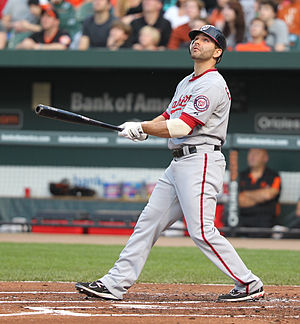
MLB reports: With the shortage of quality second basemen in baseball, teams are always on the prowl for the next Roberto Alomar or Ryan Sandberg. We often hear the names Dustin Ackley and Neil Walker thrown around. Sitting quietly in Washington though is one of the better all-around second basemen in the game. With each home run, the secret is starting to get out of the bag. The Nationals keep winning games and building towards the Bryce Harper and Stephen Strasburg era. But before the next can’t miss prospects make their mark, Washington already has a rookie assaulting the MLB record books. His name: Danny Espinosa.
The 24-year old Espinosa was born in California and selected by the Nationals in the 3rd round of the 2008 draft. He made his major league debut last year and retained rookie eligibility in 2011. The heir apparent to the shortstop position from once incumbent Christian Guzman, Espinosa moved to second for 2011, took a hold of the job and ran with it. Considering he had to learn a new position on the fly, Espinosa’s production is that much more impressive.
Here is a look at Espinosa’s numbers during his time in the minors:
| Year | Tm | Lev | AB | R | H | HR | RBI | SB | CS | BB | SO | BA | OBP | SLG |
|---|---|---|---|---|---|---|---|---|---|---|---|---|---|---|
| 2008 | Vermont | A- | 64 | 8 | 21 | 0 | 4 | 2 | 2 | 17 | 17 | .328 | .476 | .359 |
| 2009 | Potomac | A+ | 474 | 90 | 125 | 18 | 72 | 29 | 11 | 74 | 129 | .264 | .375 | .460 |
| 2010 | 2 Teams | AA-AAA | 481 | 80 | 129 | 22 | 69 | 25 | 11 | 41 | 116 | .268 | .337 | .464 |
| 2010 | Harrisburg | AA | 386 | 66 | 101 | 18 | 54 | 20 | 8 | 33 | 94 | .262 | .334 | .464 |
| 2010 | Syracuse | AAA | 95 | 14 | 28 | 4 | 15 | 5 | 3 | 8 | 22 | .295 | .349 | .463 |
| 3 Seasons | 1019 | 178 | 275 | 40 | 145 | 56 | 24 | 132 | 262 | .270 | .365 | .455 | ||
Now let’s take a look at what Danny Espinosa has produced in the majors:
| Year | AB | R | H | 2B | 3B | HR | RBI | SB | CS | BB | SO | BA | OBP | SLG |
|---|---|---|---|---|---|---|---|---|---|---|---|---|---|---|
| 2010 | 103 | 16 | 22 | 4 | 1 | 6 | 15 | 0 | 2 | 9 | 30 | .214 | .277 | .447 |
| 2011 | 277 | 39 | 67 | 12 | 4 | 14 | 47 | 9 | 2 | 22 | 70 | .242 | .323 | .466 |
| 2 Seasons | 380 | 55 | 89 | 16 | 5 | 20 | 62 | 9 | 4 | 31 | 100 | .234 | .311 | .461 |
| 162 Game Avg. | 581 | 84 | 136 | 24 | 8 | 31 | 95 | 14 | 6 | 47 | 153 | .234 | .311 | .461 |
In addition to have a top-rated glove defensively, Espinosa has produced quite well offensively in the majors. He is on pace for an outstanding 30+ home runs with close to 100 RBIs. Middle-of-the order type numbers are what we are projecting, not the standard second base type production. As with many rookies, Espinosa still has a difficult time making contact and his BB/K ratio will require substantial improvement for him to develop into a batting champion one day. But the numbers in the minors show a great deal of promise. The power has come at an early stage for Espinosa, it is the balance of his offensive game that needs to be rounded into form.
As with any young players, it is difficult and somewhat unfair to have comparisons to establish major league players, let alone ones of the Hall of Fame variety. But Danny Espinosa is showing some Ryan Sandberg type qualities at the plate at an early age with his strong power bat. Second basemen traditionally have strong gloves and any production offensively would be considered a bonus. Players of the Danny Espinosa variety do not come along very often. Washington currently sits with a 40-39 record, above .500 as we near the All-Star break. With the team playing explosive baseball (7-3 in last 10, 22-13 at home), the baseball world is starting to turn its attention to Washington. At the forefront is rookie Danny Espinosa. A possible All-Star come next month, expect to see Espinosa in many All-Star games to come. Come one October soon, we expect to see Espinosa, Harper and Strasburg competing for a World Series title. The word is out on Danny Espinosa, who will form a core for the next decade in building Washington into the next powerhouse team.

Please e-mail us at: MLBreports@gmail.com with any questions and feedback. You can follow us on Twitter and become a fan on Facebook . To subscribe to our website and have the daily Reports sent directly to your inbox , click here and follow the link at the top of our homepage.

A Tribute to Chad Cordero: Retired MLB Closer
Wednesday June 22, 2011

MLB reports: The man with the straightest brim in baseball, Chad Patrick Cordero formally announced his retirement from baseball on Monday, at the tender age of 29. Cordero originally suffered a torn labrum and missed most of the 2008 season. He was never able to return back to full health and form following the injury and his 2010 season with the Mariners will remain his last in the majors.
 Chad Cordero was originally drafted by the San Diego Padres in the 26th round of the 2000 draft, and later was a 1st round pick of the Montreal Expos, 20th overall, in 2003. Cordero was one of the rare college closers who graduated to the same role in the majors. He attended Cal State Fullerton and made it all the way to a College World Series title. Cordero made his major league debut the same year he was drafted and stayed with the Expos/Nationals organization for the majority of his career.
Here are Chad Cordero’s final major league numbers:
| Year | Tm | W | L | ERA | SV | BB | SO | WHIP |
|---|---|---|---|---|---|---|---|---|
| 2003 | MON | 1 | 0 | 1.64 | 1 | 3 | 12 | 0.636 |
| 2004 | MON | 7 | 3 | 2.94 | 14 | 43 | 83 | 1.343 |
| 2005 | WSN | 2 | 4 | 1.82 | 47 | 17 | 61 | 0.969 |
| 2006 | WSN | 7 | 4 | 3.19 | 29 | 22 | 69 | 1.105 |
| 2007 | WSN | 3 | 3 | 3.36 | 37 | 29 | 62 | 1.387 |
| 2008 | WSN | 0 | 0 | 2.08 | 0 | 3 | 5 | 2.077 |
| 2010 | SEA | 0 | 1 | 6.52 | 0 | 5 | 6 | 1.552 |
| 7 Seasons | 20 | 15 | 2.89 | 128 | 122 | 298 | 1.208 | |
| 162 Game Avg. | 4 | 3 | 2.89 | 28 | 26 | 65 | 1.208 | |
| WSN (6 yrs) | 20 | 14 | 2.78 | 128 | 117 | 292 | 1.198 | |
| SEA (1 yr) | 0 | 1 | 6.52 | 0 | 5 | 6 | 1.552 | |
| NL (6 yrs) | 20 | 14 | 2.78 | 128 | 117 | 292 | 1.198 | |
| AL (1 yr) | 0 | 1 | 6.52 | 0 | 5 | 6 | 1.552 | |
The year 2005 will always stand out as Cordero’s best, as he led the Majors with47 saves that year. Cordero was taken out of baseball in his prime and the game has lost one of its top relievers much too early. Cordero played with teamUSAin the inaugural edition of the World Baseball Classic in 2006. After departing from the Nationals in 2008, Cordero went on to play in the minors and majors for the Seattle Mariners. He also played in the minors for the New York Mets and Toronto Blue Jays organizations. Cordero was released by the Jays on May 17th and was last playing for the St. Paul Saints, an independent baseball team, before announcing his retirement on Monday.
In addition to his baseball injuries, Chad Cordero has also suffered from personal tragedy. In December 2010, Cordero and his wife lost an eleven-week old baby daughter. The cause was Sudden Infant Death Syndrome (SIDS). Cordero is quoted as saying, “I’m just using her as motivation, trying to find strength. Because I know, now, she’ll always be with me, no matter what.” From the time of his daughter’s passing, Cordero has been active in raising awareness for SIDS. It is very uplifting to hear that despite all the adversity suffered by Cordero, that he could still work so hard to try to continue his baseball career, while assisting with SIDS awareness. SIDS is a subject that must be very difficult for Cordero and his family to discuss and deal with, but he still fights on to continue the memory of his dear daughter.
A true fighter in every sense of the word, Chad Cordero gets our sympathies and respect. Cordero has faced many roadblocks and hills to climb and he has continued to see through all the hardships that life has handed to him. Still young, there is always a chance that Cordero could try to make a return to organized baseball. The torn labrum that he suffered though is not a “fixable” injury in the same category as Tommy John surgeries, which has become very common in baseball circles. It is unlikely that we will ever see the Chad Cordero of old on the mound and if he never returns to baseball, we will always remember him for the competitor he was on the mound. But given the circumstances surrounding his family, baseball and sports takes a back seat to the human element of life. We wish all the best to Chad Cordero and his family. For everyone that can go purchase a baseball hat today and leave the brim unfolded, wear your hat this week as a tribute to one of the best relievers in the game: Chad Cordero.
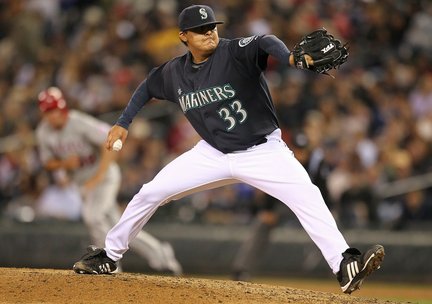
Please e-mail us at: MLBreports@gmail.com with any questions and feedback. You can follow us on Twitter and become a fan on Facebook . To subscribe to our website and have the daily Reports sent directly to your inbox , click here and follow the link at the top of our homepage.
***Note: The Wednesday E-mailbag is on hiatus this week so that we can bring you this tribute. The E-mailbag will return next week. Please feel free to continue to send all your baseball questions***

Analyzing the 2011 MLB Draft: 1st Round Steals and Misses
Tuesday June 7, 2011
MLB reports: Day one of the 2011 MLB Draft is now in the books and we are moving on to Round 2. The most hyped draft in recent memory did not disappoint, as the results of Round 1 featured many surprises and shockers. With the amount of mock drafts and industry experts covering the big event, you would think that the first round results would have been more predictable. But many teams took diverse routes in making their selections in the first round and now the second-guessing begins. While the analysis may look very different in 1-5 years from now, the day after the draft- we take a look at the highlights of the first round and our most noted steals and misses.
STEALS
6. Washington Nationals: Anthony Rendon, 3B, Rice
A team is simply not supposed to land the top hitter of the draft at the #6 slot but that is exactly what the Nationals did with Rendon. If not for injury concerns, Rendon would have gone as one of the first two picks. While Rendon does carry some risk, the Nationals loved his upside and had to make the selection. The best pick of the draft for the slot in my opinion.
12. Milwaukee Brewers: Taylor Jungmann, RHP, Texas
15. Milwaukee Brewers (for unsigned 2010 first rounder Dylan Covey): Jed Bradley, LHP, Georgia Tech
The Brewers really cleaned up by landing not one but two top-ten starting pitchers by drafting Jungmann and Bradley. Jungmann is the 6’6″ gunslinging Texas pitcher and Bradley is one of the top lefty pitchers. Just like that, in one round the Brewers began the process of restocking their farm system with top pitching prospects.
19. Boston Red Sox (from Tigers for Type-A Victor Martinez): Matt Barnes, RHP, UConn
26. Boston Red Sox (from Rangers for Type-A Adrian Beltre): Blake Swihart, C, Rio Rancho (N.M.) Cleveland HS
The mighty Red sox were at it again by landing a top-ten starting pitcher and the top catching prospect in the draft with the #19 and #26 picks. Barnes was considered to go high, considering his 6’4′, 205 lbs frame and fluid delivery. Then Swihart, whom the Red Sox were known to have targeted at #19, fell all the way to them at #26. A great day for a team that knows how to draft well, plain and simple.
24. Tampa Bay Rays (from Red Sox for Type-A Carl Crawford): Taylor Guerrieri, RHP, Columbia (S.C.) Spring Valley HS
31. Tampa Bay Rays (from Yankeesfor Type-A Rafael Soriano): Mikie Mahtook, OF, LSU
With ten top picks, the Rays were armed with the means to obtain prospects and they got two great ones in Guerrieri and Mahtook. Maturity issues dogged Guerrieri and based on talent alone, he should have gone in the top-12. Mahtook was seen as a possible Mets pick at #13, with a solid glove, bat and speed. Possibly the next Carl Crawford, the Rays showed that good scouting pays off even when you draft late. The Rays may have lost Crawford and Soriano to free agency but they will have the last laugh when both Guerrieri and Mahtook make the majors one day.
MISSES
13. New York Mets: Brandon Nimmo, OF Cheyenne East (Wyo.) HS
Nimmo was picked for the most part based on signability and cost. With the Mets in financial limbo, the team passed on many far superior talents to take Nimmo at #13. The kid is considered a project as he never played high school ball and should have been a 2nd round pick. For a team that desperately needs to rebuild its system, this pick will be a miss.
16. Los Angeles Dodgers: Chris Reed, LHP, Stanford
See Nimmo at #13. The Dodgers are in poor shape financially and like the Mets made their selection based on cost and signability. For another kid that was projected to be a 2nd round pick and also likely to be a reliever, this draft slot was too much of a reach. Overall a great opportunity for Reed, but a huge blow to the Dodgers farm system.
18. Oakland Athletics: Sonny Gray, RHP, Vanderbilt
Reports have Oakland viewing Gray as a starter, but I see the #18 pick likely as a future reliever. Based on his size (5’11”), there will be questions of durability and ability to succeed at the major league level. With so many quality prospects still available, the jury is definitely out on this pick.
29. San Francisco Giants: Joe Panik, SS, St. John’s
The media will have a field day with this pick as the Giants appear to have made a “Panik” move with the selection of Joe Panik in the first round. In desperate need of offense, the Giants opted to grab a shortstop late. With Josh Bell still on the board, a higher risk/reward pick may have been in order. Panik has a strong glove and decent bat, but does not project to have first round type talent.
30. Minnesota Twins: Levi Michael, SS, North Carolina
See Panik at #29. The Twins were in the same boat as the Giants when making their selection. However, the difference is that the Giants are open to spending on draft selections while the Twins tend to be more fiscally responsible (cheap). With the new ballpark in place, the Twins should have gone after a selection with higher upside. They played it safe with Michael, but the ceiling is not high enough to warrant the selection with Bell and Purke still available.
Previous Draft Articles by MLB reports:
The 2011 MLB Draft: Recap of the Results, 1st Round Picks and Future Stars
Updating the 2011 MLB Draft: Baseball Prospects and Draft Projections
The 2011 MLB Draft: The Report and Inside Scoops
Please e-mail us at: MLBreports@gmail.com with any questions and feedback. You can follow us on Twitter and become a fan on Facebook . To subscribe to our website and have the daily Reports sent directly to your inbox , click here and follow the link at the top of our homepage.

Ten Things About Mike Leake and His Jump to the Majors
Saturday June 4, 2011
On the Reports, we will be occasionally featuring an up-and-coming baseball writer that has come to our attention and share their work with you, the readers. Part of our mandate at MLB reports is to provide the best baseball coverage and analysis in the business. MLB reports ultimately is designed to expose our readers to the world of baseball and the stories, facts, insights and profiles behind it. In order to meet this goal, we would like to give exciting young writers the chance to showcase their talents and provide a fresh pool of ideas to our site. In today’s feature, we are excited to have the Hall of Very Good as our guest writer with their feature post on Mike Leake. Putting aside Leake’s legal troubles this year, the HOVG took a look at Mike Leake’s major league debut and his jump directly from college to the show. If you are a fan of statistics and baseball data, you will love this one. Enjoy!

Hall of Very Good (Guest Writer for MLB Reports): Heading into the 2010 season, many baseball analysts and writers seemed to be split as to which hotshot National League rookie will be taking home the Rookie of the Year award following this season.
And why wouldn’t they be?
In our nation’s capital, Stephen Strasburg has the makings of being every bit as impactful in his inaugural season for the Nationals as Fernando Valenzuela was when he made the Dodgers starting rotation in 1981 or “Doc” Gooden was three seasons later for the Mets.
Down in Atlanta, Jason Heyward became, with one swing of the bat, just the 104th Major Leaguer since 1895 to go yard in his first career plate appearance.
One guy who wasn’t in any discussions was Reds starting pitcher Mike Leake, and dude was on the cusp of doing something that neither Strasburg nor Heyward could accomplish…beginning his career on a Major League roster.
When he took the mound against the Chicago Cubs Sunday, the 22 year-old righty became the first starting pitcher to leapfrog the Minors since Jim Abbott did it in 1988 for the Angels.
Here is some more stuff you might not have known about skipping the Minors and starting your career in the show.
$2,900,000
After being selected eighth overall by Cincinnati in last year’s draft…Arizona State’s Mike Leake received a $2.9 million signing bonus. By comparison, the top pick, Stephen Strasburg, received a $7.5 million dollar bonus by putting his John Hancock on the dotted line for Washington.
2000
Do you remember where you were September 30, 2000? Maybe you were bumping around town listening to “Minority” by Green Day. Perhaps you were waiting in line to purchase tickets for “Remember the Titans.” Me? I was at the theatre enjoying “Best in Show”. True story. But if you were Xavier Nady of the Pittsburgh Pirates, you were making your Major League debut and, in turn, becoming the last guy to jump the Minors until Mike Leake accomplished the feat.
84
Since 1915, 84 players have made the jump to the Major Leagues without stopping over in the Minors. However, since 1965 (the last year of the “Bonus Baby”…more on that next) only 22 guys have made the leap.
57
Of the aforementioned 84 who made the jump straight to the Majors, 57 were deemed “Bonus Babies”. A “Bonus Baby” was the group of amateur baseball players who went straight to the Major Leagues between the years 1947-1965. In accordance with the Bonus Rule, any amateur player who had received more than $4,000 in bonuses, entered into a contract. These players’ teams were required to keep them on the 40-man roster for a full season, preventing the player from spending time in the Minors. Notable “Bonus Babies” include Hall of Famers Al Kaline, Harmon Killebrew, Sandy Koufax and Jim “Catfish” Hunter. In 1965…Major League Baseball instituted the draft.
39
It should be no surprise that the position that has the most players to skip the Minors is pitcher. On Sunday, Mike Leake became the 39th pitcher to make the jump and the first since Ariel Prieto did it in 1995 for the Oakland A’s.
12
And speaking of the A’s (intentional segue!)…when they sent pitcher Mike Morgan to the hill in 1978 for him to make his debut, it marked the first of 12 teams for the righty. And you guessed it, those 12 teams makes Morgan the most-traveled of all players that made the jump straight to the Majors.
8
While it is far too soon to determine if Mike Leake is more Mike Morgan than Sandy Koufax, one thing is certain…only eight of the players that skipped the Minors have found themselves in Cooperstown. The four “Bonus Babies” (Kaline, Killebrew, Koufax and Hunter), George Sisler, Mel Ott, Bob Feller and Dave Winfield.
7
Mike Leake became just the seventh member of the Cincinnati Reds to make the jump straight to the Majors. Other teams that have had a slew of players skip the Minors, the Pittsburgh leads all with nine call-ups…Baltimore has eight.
3
Over the last 50 years, Arizona State has produced the most players to make the jump from college to the pros…three (Eddie Bane, Bob Horner and Mike Leake). Of the three, third baseman Horner is also in an elite group among sluggers. In July 1986 (a full 16 months before Leake was born), Horner became just the eleventh player in Major League history to slug four home runs in a single game.
∞ (infinity)
In what was probably the worst pitching debut of any pitcher to have skipped the Minors, Jerry Walker failed to get an out in his inaugural outing. Walker, fittingly, walked the first two batters he faced back on July 6, 1957. The third, he greeted with a wild pitch and subsequently, he was then yanked. Unfortunately both batters he walked ended up circling the bases and left Walker with an ERA of infinity.
Mike Leake fared much better.
In six and two-thirds innings of work, the young righty gave up only one run on four hits good for a 1.35 ERA. He did channel Walker by walking seven, but he also struck out five. Leake also added two hits to become the first Reds pitcher to produce two hits in his debut since Benny Frey on Sept. 18, 1929.
***Thank you to the Hall of Very Good for preparing today’s feature article on Mike Leake and his jump directly to the Major Leagues. You can follow the Hall of Very Good on Twitter.***
Please e-mail us at: MLBreports@gmail.com with any questions and feedback. You can follow us on Twitter and become a fan on Facebook . To subscribe to our website and have the daily Reports sent directly to your inbox , click here and follow the link at the top of our homepage.

MLB 2011 DL: Injury Updates

MLB reports: To answer many of our readers inquiries, here is an update on some of the casualties and wounded in the world of baseball and when each player is expected to return from the disabled list:
Phil Hughes: Yankees
Hughes went on the 15 day disabled list in mid-April with a “dead arm” and has not returned since. On April 28th Hughes received a cortisone shot and reports have indicated that his shoulder has responded well. The timetable for Hughes to return to the mound is 6-8 weeks, which would put him sometime into July. Hughes has not started throwing yet but has visited specialists who have ruled out surgery at this point. With a dead arm type injury, it is not always easy to predict where the future lies. Justin Verlander went through such an episode in his career and has come back stronger than ever. The fear though is that the velocity will not return and surgery could be lurking in the background. Until Hughes begins throwing and regains his velocity, Yankees fans will continue to huddle in prayer and hope for Hughes to come back and reclaim his 2010 form this year.
Carlos Guillen: Tigers
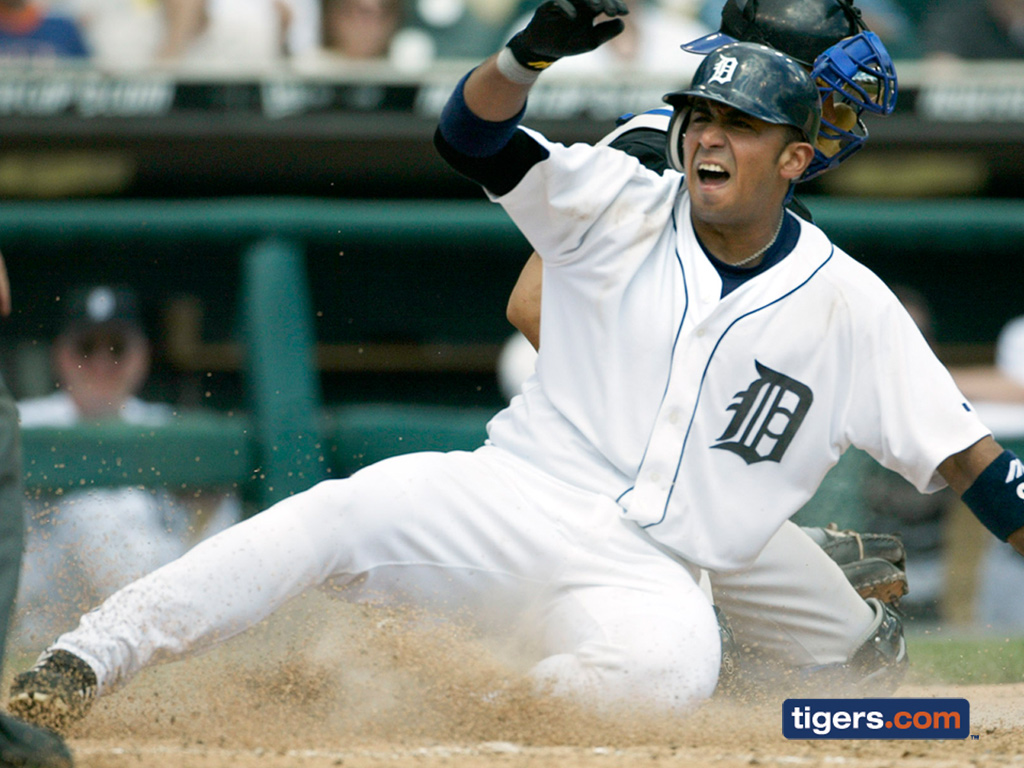 Guillen has been bothered by a sore left knee and out of action since mid-March and going on the 15 day DL. Reports have indicated that Guillen is taking ground balls, but no other baseball activities at this point. The original prognosis of mid-May does not appear likely, with an end of the month or early June return a possibility. With his wonky surgically repaired knee, Guillen will likely be a DH at best if and when he returns to the Tigers lineup. There is a possibility of a relapse here, so the Tigers are progressing forward without Guillen and any contributions this year will be considered a bonus.
Joe Mauer: Twins
The $184 million dollar man is off to a dreadful start in 2011, the first season of his monster contract. After having surgery on his knee in the off-season, Mauer has been bothered by leg weakness all season. Mauer has started hitting and throwing, but his return is up in the air. Once considered to be the greatest catcher in baseball, talk has already started about a position change in his future. After moving prospect Wilson Ramos, the Twins cannot be happy about the state of Mauer’s health. Like the other members of this list thus far, Mauer’s return date is unknown at this point. With the Twins off to a terrible start this season, there is much pressure to get Mauer into the lineup to get the team going. But considering the investment in the catcher, the team will likely be cautious and continue to bring him along slowly in the fear that further damage could result in rushing him. Expect Mauer back sometime in June likely, but his catching days appear to coming to an end in the near future unfortunately.
Josh Hamilton: Rangers
 After breaking a bone in his right arm from a home plate collision early in the season, Hamilton is nearing his return to the Rangers lineup. Hamilton is taking swings and should hopefully ready soon for a couple of minor league rehab appearances. I would expect Hamilton back in the Rangers lineup in the next two weeks if all goes well. The brittle Hamilton continues to endure bad luck in the health department, with the Rangers sorely needing a healthy Hamilton in order to contend in the AL West.
Chien-Ming Wang: Nationals
After 2 missed seasons, Wang continues to try to come back from a torn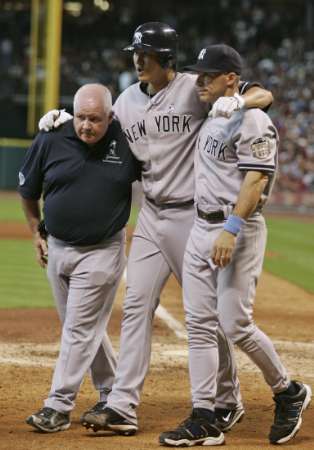 shoulder capsule and pitch once again in the majors. After breaking his right foot in 2008, Wang ended up injuring his shoulder and has not returned to pitch in a professional game since. Still rehabbing in the Nationals system, it appears unlikely that we will see Wang pitch again. Fans still hope that the former back-to-back 19 game winner can find health and pitch again, but after a prolonged absence, the window of opportunity continues to close further every week/month that goes by.
Johan Santana: Mets
 Another torn shoulder capsule survivor, Santana underwent his surgery last September. Reports have indicated a possible July return for Santana, which appear to be optimistic at best. With a similar injury to Wang, there is no guarantees of when Santana and what condition he will be in. Good news in that Santana is throwing off a mound and flat ground and reported no setbacks to date. But with these types of injuries, relapses are always a possibility. If the Mets flounder this year as expected, the smart advice is to rest Santana and bring him along slowly, with a 2012 return being the better bet. Only time will tell if Santana will return and reclaim his spot as one of the top starting pitchers in baseball. At this point, I would not be counting on it.
Chase Utley: Phillies
With injuries all around in baseball, few have been more anxious than the disappearance of Chase Utley. With the Phillies offense built around Utley and Howard, a long-term absence by the second baseman was seen as damaging by the Phillies faithful. Talk at the start of the season was a possible September return by Utley, based on the knee injury. Philadelphia got a great shot in the arm when Utley’s rehab progressed so well to the point that he is already DHing this week in minor league rehab games, with a possible return by the end of the month. Far ahead of schedule, the hope is that Utley is fully recovered and will be strong for the remainder of the season. Utley’s story is one of the few bright spots in our long list of injuries in this report.
Scott Rolen: Reds
Placed on the DL at the end of April with a strained shoulder, Rolen is no stranger to baseball injuries. But being the professional he is, Rolen also works very hard and keeps himself in strong game shape to attempt to avoid long-term absences. Rolen has been taking batting practice this week and has also been running the bases and participating in fielding drills. No timetable on his return at this point, but based on his advanced baseball activity, I would expect a return by the end of this month.
Please e-mail us at: MLBreports@gmail.com with any questions and feedback. You can follow us on Twitter and become a fan on Facebook . To subscribe to our website and have the daily Reports sent directly to your inbox , click here and follow the link at the top of our homepage.

Bryce Harper vs. Manny Machado: Friday Faceoff
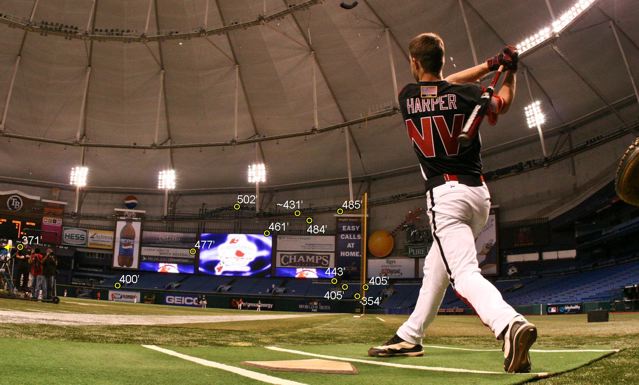
MLB reports: For even the most casual baseball fan, the name Bryce Harper should sound alarm bells. Considered by many experts to be the equivalent of the next Sidney Crosby in hockey, LeBron James in basketball and Peyton Manning in football, Harper is the next “big thing” in baseball.
A five-tool player in baseball is one that is able to hit for a high average, power, strong base running and speed, throwing well and fielding his position. From all accounts, Harper is all of the above…and more. If reports are accurate, Harper has Josh Hamilton type tools, which rarely comes around more than once in a lifetime.
Haper is all of 18 years of age, stands 6’3″ and weighs 225 lbs. A catcher in his days at the College of Southern Nevada JC, Harper has started in pro career as an outfielder. Drafted first overall in the 2010 draft by the Washington Nationals, Harper currently plays in the Class A South Atlantic league for the Hagerstown Suns. Harper was the 2010 Golden Spikes Award winner as the top amateur player in the nation.
Going into today’s action, here are Bryce Harper’s 2011 statistics:
BRYCE HARPER:
| 2011 Season | ||||||||||||||||||
| Team | League | AVG | G | AB | R | H | 2B | 3B | HR | RBI | TB | BB | SO | SB | CS | OBP | SLG | OPS |
| HAG | SAL | .323 | 19 | 62 | 14 | 20 | 5 | 0 | 5 | 18 | 40 | 11 | 17 | 4 | 2 | .425 | .645 | 1.070 |
In all the talk of Bryce Harper, a very talented shortstop by the name of Manuel (“Manny”) Machado seems to get lost in the shuffle. Machado was drafted 3rd overall in 2010 by the Orioles. At 18 years of age, Machado also stands 6’3″ but weighs 185 lbs. Machado signed early with the Orioles and made his professional debut with short season Aberdeen in 2010. Born in Florida, the Alex Rodriguez comparison whispers have already started with Machado.
19 games into the season, here are Machado’s 2011 statistics with the Delmarva Shorebirds of the Class A South Atlantic League:
MANNY MACHADO:
| 2011 Season | ||||||||||||||||||
| Team | League | AVG | G | AB | R | H | 2B | 3B | HR | RBI | TB | BB | SO | SB | CS | OBP | SLG | OPS |
| DEL | SAL | .315 | 19 | 73 | 16 | 23 | 6 | 2 | 3 | 15 | 42 | 13 | 11 | 1 | 1 | .420 | .575 | .996 |
With such close proximity between Washington and Baltimore, it is likely that Machado and Harper will be facing comparisons in the minds of fans of the Nationals and Orioles for years to come. While both are off to strong seasons in Class A, it appears that Harper has displayed the slightly stronger bat to-date. Harper has hit more home runs, although Machado has hit more triples and struck out less. Harper also stolen more bases and has the higher overall OPS.
One interesting difference I did find between the players are their home/road splits. Although from a small sample size, a little more difference begins to emerge between the players when viewed:
HARPER:
| Entire Season | AVG | G | AB | R | H | 2B | 3B | HR | RBI | BB | SO | SB | CS | OBP | SLG | OPS |
| vs Left | .318 | 22 | 1 | 7 | 2 | 0 | 0 | 5 | 3 | 7 | 2 | 1 | .400 | .409 | .809 | |
| vs Right | .325 | 40 | 13 | 13 | 3 | 0 | 5 | 13 | 8 | 10 | 2 | 1 | .438 | .775 | 1.213 | |
| Home Games | .381 | 7 | 21 | 9 | 8 | 2 | 0 | 2 | 9 | 5 | 5 | 2 | 0 | .500 | .762 | 1.262 |
| Away Games | .293 | 12 | 41 | 5 | 12 | 3 | 0 | 3 | 9 | 6 | 12 | 2 | 2 | .383 | .585 | .968 |
MACHADO:
| Entire Season | AVG | G | AB | R | H | 2B | 3B | HR | RBI | BB | SO | SB | CS | OBP | SLG | OPS |
| vs Left | .333 | 9 | 3 | 3 | 1 | 0 | 0 | 2 | 4 | 2 | 0 | 0 | .538 | .444 | .983 | |
| vs Right | .313 | 64 | 13 | 20 | 5 | 2 | 3 | 13 | 9 | 9 | 1 | 1 | .400 | .594 | .994 | |
| Home Games | .385 | 11 | 39 | 9 | 15 | 4 | 1 | 3 | 10 | 10 | 7 | 1 | 1 | .510 | .769 | 1.279 |
| Away Games | .235 | 8 | 34 | 7 | 8 | 2 | 1 | 0 | 5 | 3 | 4 | 0 | 0 | .308 | .353 | .661 |
While both players exhibit stronger bats at home, Machado’s numbers are drastically lower on the road. As a younger player, this is not abnormal and a sign that he is still developing as a hitter. On the other hand, Harper’s strong numbers on the road shows maturity beyond his years. With such dominance at home and on the road, it does not appear that Harper can be stopped anywhere. While AA is on the horizon for both players, I would suspect that Harper will reach the next level a little sooner.
The Verdict:
Playing the same number of games in the same league, Bryce Harper and Manny Machado have showcased that both are superstars in the making. Machado plays a more gruelling position (shortstop) and while both are known for their great gloves, Harper’s cannon in the outfield is the talk of the scouting world. As each continues to advance up the ranks to reach the major leagues, we will learn one day if each has what it takes to be a bona fide superstar. We have two very good ones in the making, but the reviews and reports on Harper are too hard to ignore. The baseball world loves this kid and for great reason: he really appears to be the real deal. While much attention will unfortunately be deflected from Manny Machado as he continues to build his resume, it may serve to help him in the long run. Playing in the shadow of a prospect like Harper, Machado can develop his skills without as much pressure and expectations from both the media and fans. While I fully expect to see each both succeed, Harper has the added requirement to develop while being thrust fully in the limelight. The smart money still lies on Harper and I fully expect that he will one of the next biggest superstars in baseball. But don’t count out Manny Machado, who together with Adam Jones, Matt Wieters and Nick Markakis should bring the Baltimore Orioles back to greatness.

Please e-mail us at: MLBreports@gmail.com with any questions and feedback. You can follow us on Twitter and become a fan on Facebook . To subscribe to our website and have the daily Reports sent directly to your inbox , click here and follow the link at the top of our homepage.

Ryan Tatusko: MLB Guest Blog
The players speak: MLB reports devotes this page to the players who will be writing blogs in their own words to you, the readers.
The inaugural MLB Guest Blog comes from Ryan Tatusko of the Washington Nationals. Ryan currently pitches for the AA Harrisburg Senators of the Eastern League.
April 21, 2011
Ryan Tatusko: This year was a different year for me in preparation for many reasons. For one, I was starting out with a new team that I really know nothing about. Furthermore, I am going to be a full-time starter this year. In the past, when I was with the Texas Rangers, I was would routinely ping-pong between the bullpen and the starting rotation based on where they, the organization, would need me. I would then usually stick in the rotation around the all-star game, but this year was different. The Nationals have told me that at this time they envision me as helping the ball club as a starting pitcher and that’s where they wanted to keep me.
 Heading into the season as a starter, I did not necessarily change the way I went about my off-season preparation or conditioning, but I did tweak a few things here and there. For instance, as part of my bullpen sessions, I wouldn’t throw them as frequently as I would when I started the season as a reliever. Instead, I would do fewer sessions with more pitchers. I also made sure that I would do more long distance cardio work to build my stamina for the upcoming year. My preparation for camp has never changed in the 4+ years that I have been going. The team you are with gives you a pretty set schedule as to what to do in terms of running, lifting, and throwing and as long as you follow it, you will be just fine and will be ready to go when camp starts.
Getting to camp this year was fun and exciting for me as I got the feeling that I was a fresh face all over again, the same feelings I got when I was first drafted by the Rangers came back. I was excited, maybe too excited. The first few games I played in I probably tried to do too much. But once I settled down and starting getting back to my game, I felt like I had very good success during spring training. I really wanted to work on throwing my change-up for strikes more in camp, as it seems to be a pitch that has been less effective for me as compared to my other pitches. By the time that I left Viera,FL I felt that I made immense strides with it and I was extremely happy with the way I was throwing it and with the confidence I was displaying.
Not understanding where you are going to be assigned is one of those things that can consume you if you are not careful. When you start to think about the potential moves that the organization could and should make, you start to drive yourself crazy and you get distracted from what you do on the mound. It’s one of those things you just got to try your best to block out and not think about as you go through your process and getting ready for the season. There is always a rhyme and a reason that people do things and although it might not be evidently clear at the first get go as to why; you eventually find out.
 I have since been assigned to AA Harrisburg to begin the year. I have made a few starts and although one particularly has not gone the way I would have liked it too, it is still very early on in the season. I see these starts as an opportunity for me to learn from my mistakes and to grow as a pitcher. There are numerous quotes and clichés out there that talk about having a short memory if you want to succeed at this game and they are all absolutely true. There is a fine line between learning and obsessing over particular starts. There is always something positive and negative to get out of taking the mound, but as a player you have to be careful and not let it consume you and over-think about the process. The really good pitchers out there learn and move on the quickest so that they can devote all their time to their next outing.
I am eager to get back on the mound quickly and progress through the season. I have never felt stronger mentally and physically and I can’t wait to see what the season has in store for me.
Thanks for reading.
Ryan
***A special thank you to Ryan Tatusko for his time and effort in preparing his guest MLB blog entry for MLB reports. Please follow Ryan on Twitter. In addition to being a talented pitcher, Ryan is a tremendous person and loves interacting with his fans. A friend of MLB reports, we look forward to reporting on Ryan throughout the season as he continues his journey to Washington. Good luck Ryan!***
To learn more about Ryan, please view our February profile of Ryan Tatusko.
Please e-mail us at: MLBreports@gmail.com with any questions and feedback. You can follow us on Twitter and become a fan on Facebook . To subscribe to our website and have the daily Reports sent directly to your inbox , click here and follow the link at the top of our homepage.
MLB Opening Day Preview: Schedule and Pitching Previews

MLB reports: With the 2011 MLB season about to commence, literally hours away at this moment- my thoughts continue to centre on the Holy Grail: Opening Day. This year, there are 12 teams playing on Thursday March 31st with the remaining teams playing the next day. For each MLB fan rooting for their respective team, there are 15 different opening day games that will be the focal point for them. Regardless of the city you live in or the team you root for, the first game of the year is the most exciting. It is time to shake the snow off your boots, grab your jersey and tickets and get ready for the start of baseball. For you, the diehards, I present the matchups and probable pitchers for each game.
In my brief analysis of each game, I have taken a slight twist in my analysis. I have decided not to crunch the numbers and take the stats route. To predict the outcomes of games, most stat-heads tend to look at historical opening day numbers for each team, head-to-head records, home/away records, day/night games, etc. This article contains none of the above. I am simply looking at the teams, taking a feel for each lineup and starting pitcher for each team, in performing my discussion. I was planning to post this article in a couple of days but with the enthusiasm of opening day on the horizon, I simply could not wait. Thus MLB fans, I present to you: The breakdown of the MLB Opening Day lineup. (Note: all game times are EST. Starting pitchers are subject to change, especially for injuries. Games may be delayed due to weather conditions)
Thursday March 31, 2011
1) Atlanta Braves at Washington Nationals:
1:05pm: Derek Lowe vs. Livian Hernandez
There will be 2 games to start the year on Thursday at 1:05pm and this will be the first game previewed. America’s team, the Braves vs. the Nationals in the Nation’s capital. The Nationals are a nice, young exciting team with a great deal of buzz surrounding the team. Unfortunately, neither of its 2 brightest stars-to-be, Strasburg and Harper will not be a part of the opening day lineup. The Braves have a strong, young team led by Heyward and Freeman. Derek Lowe is an experienced veteran who gets the opening day nod out of respect. Livian Hernandez, on the other hand, is the opening day starter by default. The Nationals fans will be likely going home disappointed on this day, as the Braves will be the victors in a high scoring opener.
2) Detroit Tigers at New York Yankees
1:05pm: Justin Verlander vs. C.C. Sabathia
 The next opening game of the year to start the year comes from new Yankee Stadium, as 2 historical teams matchup in what should be an excellent pitching matchup. Verlander and Sabathia are 2 of the strongest pitchers in the majors and should go toe-to-toe in this game. While I see the hitters having the advantage in this game while the pitchers break into the season in a strong hitting park, smart money is the Yankees taking the win in their home park.
3) Milwaukee Brewers at Cincinnati Reds
2:10pm: Yovanni Gallardo vs. Edinson Volquez
 This game is the one that will catch my attention the most on Thursday. Two of the most exciting offensive teams in the majors, each led by their young strikeout artists. Gallardo and Volquez are cut from the same mold: when on, both are untouchable. When both are having difficulties, they can be time bombs. In the Cincinnati bandbox, I am predicting a high scoring game and a Reds victory. I am a big Gallardo supporter, but I can’t see opening in Cincinnati working well for him.
4) L.A. Angels at Kansas City Royals
4:10pm: Jered Weaver vs. Luke Hochevar
On paper this matchup looks very easy to analyze and in reality, it is. Weaver is a stud hurler for the Angels, a team with strong defense and fairly balanced offense. The Royals have Cabrera and Francouer in the outfield and Hochevar as their “ace”. The Royals fans are fortunate to be opening the season at home. This will be the last of their fortunes on this day as Weaver and the Angels should easily have their way with a Royals team in their final year of rebuilding as respectability begins for them in 2012.
5) San Diego Padres at St. Louis Cardinals
4:15pm: Tim Stauffer vs. Chris Carpenter
The young and surprising Padres bring their smoke and mirror show to St. Louis to face the Cards and Chris Carpenter. With one of my hyped young hurlers Matt Latos on the shelf, Tim Stauffer gets the nod for the opener for the Padres. With Adrian Gonzalez in Boston, the Padres will find a difficult time to score runs this year. Stauffer, stellar in the bullpen and spot starts for the Padres in 2010, is now moved into the rotation full time this year. Carpenter, one of the best pitchers in the game, will prove to be stingy at home. Regardless of how many runs the Cardinals score on this day, 2 runs will be enough for the Cardinals to start their year with a win.
6) San Francisco Giants vs. L.A. Dodgers
8:00pm: Tim Lincecum vs. Clayton Kershaw
 This will be a premier matchup, as the World Series champions Giants face their arch-rivals, the Los Angeles Dodgers. Lincecum vs. Kershaw will be a pitching matchup for the ages. I see these pitchers battling all night, with the Dodgers emerging victorious. Opening night will be exciting for the Giants, but the hangover effect on the road leans to an advantage to L.A. on this night.
Friday April 1, 2011
7) Houston Astros at Philadelphia Phillies
1:05pm: Brett Myers vs. Roy Halladay
Day 2 of Opening Day finds Brett Myers coming back to his old stomping grounds to face Halladay and the Phillies. I don’t want to formally go on record and say that Halladay will throw a no-no in the opener…so….let’s just say, I have already said enough. The Phillies fans will be smelling blood and it should not take long for Myers to be shaken as the Phillies hitters have their way with him. Houston goes down quietly and quickly in this one.
8) Pittsburgh Pirates at Chicago Cubs
2:20pm: Kevin Correia vs. Ryan Dempster
Unless you are a Pirates or Cubs fans…I imagine that only the diehards will be watching this one. Kevin Correia in my estimation was a solid pickup for the Pirates and with decent run support will win at least 12 games in Pittsburgh. Dempster, as a steady pitcher for the Cubs will prove to be a worthy adversary. This game will boil down to which team gets the better pitching and my crystal balls sees a Pirates victory in this one.
9) Chicago White Sox at Cleveland Indians
3:05pm: Mark Buehrle vs. Fausto Carmona
In the seemingly never-ending Opening Day matchup between the Chisox and Indians, Buehrle and Carmona face off in Cleveland. As most White Sox fans will attest, Buehrle can be steady at the best of times and extremely frustrating in others. The Opening Day nod was given to Buehrle by Ozzie out of respect and years of service, which is well deserved and applauded. But with the hot hand of Fausto going into the opener, the Indians will squeak out a victory in the opener in one of the few bright moments that will likely shine in Cleveland’s otherwise rebuilding 2011 season.
10) Boston Red Sox at Texas Rangers
4:05pm: Jon Lester vs. C.J. Wilson
I would have loved to be at this game, as this game features the matchup of two of the best MLB offenses and dynamic left-handed pitchers. This game is being in played Texas, which tends to favor the hitters in the summer…but alas, this game is being played in April. The Red Sox will be buzzing with excitement with the additions of Gonzalez and Crawford, with the home return of Salty. After falling short in the World Series, I foresee the Rangers coming to the game focused and determined. Wilson will be on his game as the Rangers start 2011 with a hard fought victory over the Red Sox in a low scoring game.
11) Arizona Diamondbacks at Colorado Rockies
4:10pm: Ian Kennedy v. Ubaldo Jimenez
One word: Ubaldo. The man with what, a 0.70 ERA in the first half of last year? Ubaldo translates from Spanish to English to mean unhittable. The Rockies take this game in 2 hours or less.
12) Minnesota Twins at Toronto Blue Jays
7:07pm: Carl Pavano vs. Ricky Romero
My live Opening Day game is in Toronto, Canada as Pavano and the Twins take on Romero and the Jays. Both pitchers come into this game after difficult final outings in their last respective spring training games. I was impressed with the Pavano re-signing with the Twins, as there is an excellent fit for him with this team. Romero, while a young exciting pitcher, is still growing into his role as ace on an up-and-coming Toronto team. While game 2 of this series features the true exciting pitching matchup of Liriano and Drabek, the fans attending opening day will have to settle to watch a decent game which will feature a victorious Twins team.
13) Baltimore Orioles at Tampa Bay Rays
7:10pm: Mark Guthrie vs. David Price
David Price, who will prove to be a serious Cy-Young candidate this year, faces the Orioles at home. My preseason favorites to win the AL East, this game should be a cake walk for the Rays and Price. While the Orioles will have a .500 team this year, Opening Night will not be their night.
14) New York Mets at Florida Marlins
7:10pm: Mike Pelfrey vs. Josh Johnson
Josh Johnson, when healthy, is one of the top pitchers in baseball. Mike Pelfrey, pitching for the bottom-feeder Mets, is like a lamb being led to the slaughter. Playing their final opener in their current home park, the soon-to-be Miami Marlins will give the Mets the first of their likely 90+ losses of the year. Not even close.
15) Seattle Mariners at Oakland Athletics
10:05pm: Felix Hernandez at Trevor Cahill
The final game of the year features the “Moneyball” Oakland A’s hosting King Felix and the Mariners. The A’s will have an exciting young team that has some of the strongest pitching in the AL with an improved offense that should finish 2nd in the AL West, with the chance of a division win. The Mariners, a young team in rebuild mode, have the reigning AL Cy Young winner on the hill. Despite many bumps ahead in their season, I would never bet against King Felix. Opening Day ends with a Mariners victory and the season being completely underway.
As you, I cannot wait for the season to start. Spring training has been exciting and now it is time for the game and stats to count. While March has been about the hitters and pitchers to get their innings and at-bats in, Opening Day means that the games will be played the way they are meant to. It’s a long MLB season, with 162 games ahead for each of our teams. But with all the teams starting with a 0-0 record, everyone has an equal chance of success. With that in mind and knowing the matchups, let’s get ready for 3 more nights of sleep and then it will be time to play ball. Have a great season everyone; I have a feeling 2011 will be one of the best MLB seasons of all time.

Please e-mail us at: MLBreports@gmail.com with any questions and feedback. You can follow us on Twitter and become a fan on Facebook . To subscribe to our website and have the daily Reports sent directly to your inbox , click here and follow the link at the top of our homepage.
ON THE VERGE- RYAN TATUSKO, WASHINGTON NATIONALS

MLB reports: At MLB reports we will be running an occasional series titled “On the Verge” where we profile a prospect about to hit the MLB scene. In today’s feature, we profile Ryan Tatusko of the Washington Nationals.
Ryan was born March 27, 1985. Standing 6’5” and weighing a solid 200 lbs, 2010 represented a breakout year for the right-handed pitching Tatusko. He was drafted in the 18th round of the 2007 draft by the Texas Rangers out of Indiana State University (hometown Merrillville, Indiana). After the 3 ½ seasons climbing up the Rangers system, Tatusko was traded on July 30, 2010 with fellow pitcher Tanner Roark for shortstop Christian Guzman. At the time of the trade, Tatusko was pitching for AA Frisco, both starting and relieving. After being acquired by the Nationals, Tatusko finished 2010 exclusively as a starter for AA Harrisburg.
From 2007-2009, Tatusko did not have numbers that jumped out. ERAs each year of 4.13, 4.46 and 4.64, records of 3-7, 3-11 and 7-6, in addition to WHIPs of 1.347, 1.372 and 1.338. A young developing pitcher, but not one on the “radar” so to speak. In the 1st half of 2010 with Frisco, Tatusko pitched in 24 games, 13 as a starter. His record was 9-2 with a 2.97 ERA and 1.340 WHIP. Definitely solid numbers, but a breakout was still in order. That breakout occurred in the 2nd half of his 2010 season with Harrisburg, where Tatusko pitched in 6 games entirely as a starter, to a sparkling 3-1 record, 1.72 ERA and 1.173 WHIP. His SO/BB ratio with Frisco was 1.45 and ballooned to 2.77 with Harrisburg. When I review these numbers, I see a Kyle Drabek type pitcher at the beginning of 2010 and a Stephen Strasburg clone at the end.
Looking at Ryan’s final 2010 numbers combined in AA, we see a 12-3 record, with a 2.63 ERA and 1.295 WHIP. From an 18th round pick with a microscopic chance of advancement in professional baseball, Ryan is a pitcher likely ticketed for AAA to start 2011 and could end up with the big club sometime between the all-star break and September.
I have had a pleasure to chat with Ryan on a couple of occasions by e-mail and did some research on him as well. Tatusko has a strong curveball as well as good command of 3 other pitches- fastball, changeup and slider. The debate early in his career was whether he would remain a starter or be moved permanently to the bullpen. Young pitchers in the minors are often eased through both roles in the hopes that they will excel in one given spot. As a 4-pitch pitcher and coming off a strong finish in 2010, Tatusko will likely be a full-time starter for the foreseeable future. A student of the game, Tatusko keeps journals of his work and watches video in working on and perfecting his mechanics. A tireless student of the game, Tatusko has the will and ambition to succeed at the pro-level, which is often described as “90% mental and 10% physical”.
Running into growing pains and adversity early in his career was likely a very good thing for Ryan. Too often in the MLB we see hotshot prospects rushed to the majors, only to have their careers cut short by injuries or failed confidence. By building his time up in the minors the right way, Tatusko has been able to prove himself and rise up the prospects ladder. The Nationals going into 2011 are in an interesting situation pitching wise. They have a young highly touted closer in Storen, that is expected to close for the club for the next decade. The starting rotation however, is filled with questions marks and landmines. Livian Hernandez is currently tabbed as the opening day starter. Enough said. From there we see the other potential starters being Marquis, Zimmerman, Lannan and Maya. In the mix we have injured starters Strasburg and Wang who are not certain as to the roles they could play in 2011. As soon as an opening arises, Tatusko will be one of the first to be called up this year. If Ryan is able to grow in 2011 the way he did in 2010, his first stay in Washington could be permanent.
Ryan Tatusko is a man who eats, breathes, sleeps and bleeds professional baseball. Talking to him, I got the sense that this was a ballplayer with no sense of entitlement that has worked hard and earned everything that he has accomplished. Good luck to Ryan on the 2011 campaign and we all look forward to watching you as you continue your baseball journey to the show.

Please e-mail us at: MLBreports@gmail.com with any questions and feedback. You can follow us on Twitter and become a fan on Facebook . To subscribe to our website and have the daily Reports sent directly to your inbox , click here and follow the link at the top of our homepage.


 MLB Reports
You must be logged in to post a comment.