Blog Archives

Roy Oswalt Working Back to True Form

Wednesday June 27, 2012

Bryan Sheehan (MLB Writer): Fourteen months ago, Roy Oswalt took a leave from the Philadelphia Phillies to be with his family after a series of tornadoes ripped through Mississippi. He left the team, where he was one of the showcased “Four Aces,” with a 3-1 record and a 3.33 ERA and returned with a sore back. He spent a short time on the disabled list, but returned to start in eight more games before once again landing on the DL with “lower back inflammation.” It is unclear whether his back troubles arose during his leave of absence, but Oswalt continued to pitch because he didn’t “want to be labeled a quitter.” Ultimately, his injury became too much, and during his latter stint on the DL there was doubt that he’d ever pitch again. He did return, though, and finished the year with a 9-10 record and 3.69 ERA. After his team faltered (or imploded, depending on how you look at it) in the playoffs, Oswalt declared free agency; his career was not over after all.

At age 34, Oswalt has appeared in eight playoff series, one World Series and three NLCS. When he hit the market last offseason, Oswalt made it clear that he wanted to play for a winner. More specifically, he wanted to play for a team that would have a great chance of winning it all. Like Roger Clemens in 2006 and 2007, Oswalt told teams that he would continue to stay in shape but wait until midseason to sign with the team that he thought would do the best in the postseason. On May 29th, Oswalt picked the 31-19 Texas Rangers and began his road back to the MLB.

Read the rest of this entry

MLB Reports Monthly Power Rankings: June 2012

Monday June.4, 2012

Chuck Booth (Lead Baseball Writer and @chuckbooth3024 on twitter)-We are going to bring you monthly power rankings every month of the season.  There will be a few notes written for each team.  Please feel free to let us know your thoughts.  The Texas Rangers are the top ranked team yet once again, although teams are certainly gaining on the them in the last week.  Look out for Cincinnati Reds and New York Yankees to make their move towards the top this month.

June Power Rankings-Last Month Rank in Parenthesis

1. Texas-32-22 (1) The Rangers rode Josh Hamilton in the month of May-who enters today on pace for about 60 HRs and 170 RBI while hitting .354.  Nelson Cruz is starting to heat up and the duo of Adrian Beltre and Ian Kinsler are steady as as ever. Yu Darvish is 7-3 en route to the leading the group amongst Rookie of The Year Contention.  Joe Nathan is looking like his old self again out of the pen with an ERA under 2.

2. LA Dodgers 33-21 (5) Even with Matt Kemp out of the lineup again, the Dodgers are winning ball games with solid contributions from Andre Ethier and A.J Ellis on offense.  The pitching staff has been anchored by Clayton Kershaw and a fast 7-1 start by Chris CapuanoTed Lilly was 5-1 before a stint on the DL.  It is too bad because Lilly is 125-104 since 2004.

3. Tampa Bay 31-23 (2) Hideki Matsui homered in two of his first 3 games back with the Rays.  The team has had steady pitching to stay in contention.  Carlos Pena has really struggled in the last month and will need to pick it up.  Luke Scott with 35 RBI has good production numbers in spite of his .225 AVG. Fernando Rodney has converted 17 out of 18 saves to pace the club.

4. Cincinnati 30-23 (12) Joey Votto has hit .404 in the last 30 days and maybe the best all-around hitter in the National League right now.  Jay Bruce has 12 HRs and 34 RBI and is living up to his all-star potential.  Aroldis Chapman has 27 Strikeouts in just over 14 innings and has yet to yield a run while opponents are hitting a paltry .043 against him.

5. NY Yankees 29-24 (6) The Bronx Bombers have 6 players with 8 HRs or more, which is a good thing because with the exception of Derek Jeter, a lot of them are hitting under their career averages.  The return of Andy Pettitte has helped the rotation with the loss of Micheal Pineda.  Phil Hughes threw a complete game over the weekend and CC Sabathia is on pace for another 20 win season. Read the rest of this entry

MLB reports Monthly Power Rankings: May 2012

Tuesday May 8th, 2012

Chuck Booth (Lead Baseball Writer and @chuckbooth3024 on twitter)-We are going to bring you a monthly power rankings every month of the season.  There will be a few verses for each team.  Please feel free to let us know your thoughts.

May Power Rankings

  1. Texas (19-10)  Josh Hamilton is clubbing the ball at his 2010 like AL MVP clip.  Yu Darvish appears to be the real deal.  Mike Napoli hits 8th on most nights. Michael Young might be the most under-appreciated hitter in the last decade.  Ian Kinsler is on pace for 162 runs.  If Nelson Cruz starts hitting and or Nathan rounds into form, than this team may blitz by every one.
  2. Tampa Bay (19-10) The pitching staff is incredible right now.  David Price is asserting himself as one of the premier left-handed pitchers in baseball. Strong starts from Evan Longoria, Luke Scott and Carlos Pena have helped.  Joe Maddon may be the best ‘in-game manager’ of baseball now with Tony La Russa out of the Majors.
  3. Atlanta (18-12) The reason I have Atlanta rated so high is they are not even having a good year from Tim Hudson yet and Jair Jurrjens has been atrocious.  Still they sit near the top of the standings.  Chipper Jones has 21 RBI and Freddie Freeman has taken the next step so far with 26 RBI.  Last year the team had a lot of players with career worst years and they were only eliminated on the last day of the season.  This year may be different.
  4. St. Louis (18-11) You lose a franchise player like Albert Pujols and you spend half the money for Carlos Beltran and Rafael Furcal, who are finally hitting the numbers like the back of their bubble gum cards from 5 years ago.  Are we giving enough credit to Mark McGwire here? Lance Lynn has morphed into Chris Carpenter with his 6-0 start.
  5. LA Dodgers (19-10) Matt Kemp is the best player in baseball right now and may walk away with the triple crown this year.  Andre Ethier has matured into the RBI guy he needs to be.  Solid pitching by Clayton Kershaw, Chris Capuano and Ted Lilly have this team looking solid. Dodgers look good in the future when  the new ownership takes over. (more…)

Texas Rangers: Best Team in the Majors?

Tuesday May 1, 2012

Ryan Ritchey: Are the Texas Rangers the best team in baseball? In my eyes they are. They are the most balanced team I have seen in this short period of the season. Going out and getting Yu Darvish was a huge part of the winter for the Rangers. Darvish a Japanese phenom, has come over the United States and gone 4-0 in 5 starts. He has changed his windup 4 times since the first pitch on opening day. Starting with his hands going over his head, to now just pitching from the stretch the whole game.

Darvish isn’t the only stud pitcher on this team. Derek Holland can also throw over 200 innings for this Rangers team. With a team focused around pitching, they sure do get the job done. Add Hall of Fame pitcher Nolan Ryan watching every pitch from the first row the pitchers have to succeed. Rangers starters have combined for a 13-4 record, with Darvish and Colby Lewis going 7-0. The Rangers starting pitching is in my opinion what is going to get them a World Series championship this season. Read the rest of this entry

Who are the Top Five Second Basemen in Baseball?

Wednesday February 29th, 2012

Bryan Sheehan (MLB Reports Intern):

5. Chase Utley: Utley, thought of as the hands-down best second baseman just a few years ago, makes this list after coming off an injury that caused him to have arguably the worst season of his career. Chase has seen a downward trend offensively since 2009, and his history of downplaying and withholding information about injuries to get more playing time and avoid the DL has in fact hurt his play. Though an amazing show of his dedication to the game, Utley’s willingness to play hurt has limited his hitting, as evidenced by his total 109 RBIs over the last two seasons. Coming into 2012, though, Chase seems 100 percent healthy, and may bring some of his 30 plus-home run power back with him. Add this to the fact that his all-star caliber fielding hasn’t shown any decline, and Utley stacks up as a great player.

4. Brandon Phillips: Speaking of defense, how about the two-time defending NL Gold Glove winner, Brandon Phillips? A complete monster in the field, Phillips committed just six errors in 2011, boosting his fielding percentage to a great .992%. But the Gold Glove was not the only hardware Phillips brought home last year: his .300 average and 82 RBIs helped him win the NL Silver Slugger at second base. The biggest part of Phillips’ game may be his consistency, as he is the only player to have at least a .260 average, 15 home runs and 10 steals in each of the last six seasons. When looking at Brandon, it is pretty much assured that he will bring contact, gold-glove fielding and a bit of power and speed to the Reds in 2012. Read the rest of this entry

Wins Above Replacement (WAR): Analyzing MLB Statistics using Sabermetrics

Wednesday January 11th, 2012


Peter Stein (Fantasy Baseball Analyst – MLB reports): Although WAR (Wins Above Replacement) is not the best of the sabermetric stats for fantasy baseball purposes, it has certainly transformed the way in which we can truly understand a given major league baseball player’s contribution (or lack there of) to his team. WAR attempts to epitomize a player’s total value in one sole statistic, taking into account both the offensive and defensive aspects of the game. FanGraphs (the sabermetrics bible) aptly describes the essence of WAR: “If this player got injured and their team had to replace them with a minor leaguer or someone from their bench, how much value would the team be losing.” A player is measured in “Wins” for a season (i.e. 3.4), while an average full-time player is worth 2 wins and a replacement player represents 0 wins. Furthermore an average staring pitcher is worth 2.0 WAR, while 1.0 WAR represents a strong season for a relief pitcher.  

Here are the 2011 leaders in WAR:

Batting

  1. Jacoby Ellsbury – 9.4

  2. Matt Kemp – 8.7

  3. Jose Bautista – 8.3

  4. Dustin Pedroia – 8.0

  5. Ryan Braun – 7.8

  6. Ian Kinsler – 7.7

  7. Miguel Cabrera – 7.3

  8. Curtis Granderson 7.0

  9. Alex Gordon 6.9

  10. Joey Votto 6.9


Pitching

  1. Roy Halladay – 8.2

  2. C.C. Sabathia – 7.1

  3. Justin Verlander – 7.0

  4. Clayton Kershaw – 6.8

  5. Cliff Lee – 6.7

  6. Dan Haren

  7. C.J. Wilson – 6.4

  8. Jered Weaver – 5.9

  9. Doug Fister – 5.6

  10. Felix Hernandez – 5.6


The statistic actually defines a player’s value, something that MVP (Most Valuable Players) voters should perhaps consider come each October. For batters, the stat itself is calculated by taking into account two stats: wRAA (Weighted Runs Above Average) and UZR (Ultimate Zone Rating), which represent a batter’s offensive and defensive values, respectively. Pitching WAR replaces these two sabermetric stats with FIP (Fielding Independent Pitching), a stat that normalizes ERA for the “uncontrollable,” in conjunction with numbers of innings pitched. The Uncontrollable refers to what happens after the ball leaves the pitcher’s hand, because obviously pitchers have almost no control over the balls that are in play. They are ultimately at the mercy of their defense.

Fangraphs site the formula for FIP as the following:

FIP: ((13*HR)+(3*(BB+HBP-IBB))-(2*K))/IP + constant

If you are unfamiliar with Sabermetrics and WAR, this should feel like a mix between learning a foreign language and a calculus problem. However, don’t let this intimidate you. Spend some time on FanGraphs (It’s okay take it slowly) and it will change the way in which you think about the game of baseball. Please note that Baseball Reference has a slightly different formula/method to calculate WAR.

The beauty of WAR, however, is that it not only takes in account a player’s defensive skills (using UZR), but also the difficulty of the position. Therefore, someone like Dustin Pedroia at second base is significantly more valuable than a slugging Prince Fielder, at the first base position where power and production is demanded. Perhaps that is why Fielder is still fielding offers and has not landed a contract within his desired range. Not too shabby of statistic for a General Manager, huh? My hope is that this analysis paints the complexity of WAR and the many factors used to determine the number of wins that a player is ultimately worth to his team.

Let it be clear that by no means is WAR perfect. From a rather cynical standpoint, the very philosophy of WAR, which is calculated with so many components, professes that you cannot use one sole determinant to measure a player’s value. Furthermore, the positional adjustment numbers are the most arbitrary difficult to calculate. Can we really determine that a Center Fielder, due to difficulty to play the position itself, is worth 1.5 more wins than a first baseman? It is also difficult to determine the UZR for a first baseman, a position in which success is defined less by range and more by the ability to field throws. Paul Konerko certainly does not have great range, but he is universally regarded as one of the league’s top defensive first baseman, most likely saving Alexei Ramirez a handful of errors each season. Likewise, you cannot measure range for catchers, which use the fielding component of Stolen Base Runs Saved (rSB).  We also know that much of catcher’s true value is related to his ability to call a smart game (which cannot be measured by any given statistic).

However, from a fantasy perspective, we do not care about defense, and therefore wRAA is a more accurate indicator of offensive output. FIP can be used as well. For example, if a pitcher’s FIP indicates that his defense is frequently letting him down, and said pitcher joins a top rated defensive team; you have acquired knowledge about a player’s ability not represented by the generic stats out there. This is how you will earn surplus value and land the “surprises”, the “bounce-back” players, and avoid the “busts”.

I admit, when I first familiarized myself with FanGraphs, I felt like I was cheating in my fantasy baseball leagues. However, after joining more competitive leagues and with sabermetrics entering the mainstream, I have learned that this only provides a slight advantage. Just as it holds true for every other aspect of life, it is impossible to predict the future in the world of baseball. However, in a game of numbers- only the slightest advantage is needed to set your team apart from the competition.

WAR is a one of a kind stat. It helps us more thoroughly examine a player’s worth, especially when compared to their salary. Ultimately, the stat serves as a good building block to work back from to understand the intricacies and essence of sabermetrics.


***Today’s feature was prepared by our Fantasy Baseball Analyst, Peter Stein.  We highly encourage you to leave your comments and feedback at the bottom of the page and share in the discussion with our readers.  You can also follow Peter on Twitter (@peterWstein).***

 Please e-mail us at: MLBreports@gmail.com with any questions and feedback.  You can follow us on Twitter and become a fan onFacebook .  To subscribe to our website and have the daily Reports sent directly to your inbox , click here and follow the link at the top of our homepage.

MLB Book Review “All You Can Be: Dream It, Draw It, Become It!” by Curtis Granderson

Tuesday December 27, 2011

“All You Can Be”:  BY Curtis Granderson

(Triumph Books:  2009)

MLB reports – Virginia Califano (Guest Writer):  My adoration for Curtis Granderson began to develop ever since he suited up the pinstripes. Once he homered in Opening Day against the Red Sox in 2010, I was sold. And ever since then, he has given me more and more reasons to love him – especially after his MVP-worthy 2011 effort. What’s not to like about the guy? He’s a real professional – the epitome of what it means to be a Yankee. He was voted one of the friendliest players in baseball by his fellow ballplayers. He’s friendly, but maybe not if you’re an opposing pitcher. The guy can hit. Like, well. And he’s been known to flash the leather. And okay, maybe I have a little “thing” for him…I mean just look at him. He’s adorable. Gotta love that smile. And he’s so smart. I could listen to him talk or watch him play all day long…

I didn’t really think it was possible to admire Curtis Granderson any more than I did. But I came home yesterday to a package at my door from Brad, the young man behind The King Of Sports Blog of the FanVsFan Network. It was Curtis Granderson’s book, “All You Can Be: Learning & Growing Through Sports.” Brad thought I’d enjoy reviewing it. He was right.

Needless to say, my infatuation with Curtis Granderson has blossomed even further. “All You Can Be” gets two thumbs up from me.

“All You Can Be” is a children’s book written by Curtis Granderson that consists of Granderson’s lessons to the youth. He shares his personal experiences to give the children further reason to listen to his advice. Although I still consider myself a kid, I’m technically an adult, but I still enjoyed this book. I think “All You Can Be” is an inspirational book for people of all ages, even though it was targeted to the youth. The lessons Granderson shares and the values he wants to instill transcend the scope of time.

The book is creatively arranged so that each chapter is a different “inning” in the game of valuable lessons. Inning one is “Have Fun,” followed by, “Choose the Right Friends,” “Play with Passion,” “Be a Leader,” “Value Your Family,” “Be Yourself,” “Listen and Learn,” “Think Positive,” with the 9th inning as “Never Be Satisfied.” On each page front- and-back prior to the start of a new chapter, there is a selected piece of artwork from a talented student of a New York City Public School. These pieces represent the students’ interpretations of their corresponding chapters. A section entitled “Extra Innings: Dream Big!” consists of eight more honorable mention works of art. Placed within the text, Granderson includes personal photographs of his youth that complement the theme of the chapter.

Along with being beautifully arranged, Granderson’s “All You Can Be” is reader-friendly. The 48-page book is easy to read and moves very quickly. The font is big enough that my Grandma read it with ease (and she too enjoyed it). Granderson highlights key ideas throughout the text in red italic fonts. My favorite part was in the chapter “Be Yourself,” where Granderson recalls being self-conscious about his big “clown feet.” How could people have picked on Curtis Granderson in school? It didn’t bother him for long, though. It just created another lesson for him to share with us.

The ideas presented in this book are things kids should hear everywhere: follow the right people, never give up, be confident in yourself, etc. Then why is this book so special? I think it’s because Granderson shares his personal experiences with us. Kids might think, “Yeah, yeah, everyone says that stuff.” But when Curtis Granderson says it, and he proves that it worked for him, we’re all probably more apt to listen. Granderson stressed the fact that although we are all from different backgrounds and are raised in different environments, we all go through the same things in life. That’s why it is important to listen to people, because they’ve been through it, and can help you learn from their experiences. The values may be simple, but they are solid. And they are the values that got Granderson to where he is today – not only in the professional sense, but in the personal sense as well.

I love the fact that Curtis Granderson always wants to give back. I always thought he was nice, but after reading “All You Can Be,” I knew it was no façade. Curtis Granderson is a genuinely compassionate man with solid values, and his words in this book come from the heart. The stories he shares are ones I think we all can relate to. I know I wasn’t always as confident in myself as I am today, but as Granderson assured, through the love of those who care for me, I’ve grown to really believe in myself, just as he has. In a way, it’s somewhat comforting to know that even a guy as seemingly-perfect as Curtis Granderson has dealt with the same things as we have.

Even though this is a children’s book, I think everyone can learn from it. Granderson teaches the young generation what is important, and reminds us older people that adapting those simple ideas makes us grow to all we can think we be, and then keep on growing.

Curtis Granderson’s “All You Can Be” is a simple yet inspirational work. 

And thank you, Curtis my sweet, for all the great work you do both on and off the diamond.

Thank you to Guest Writer Virginia Califano for preparing today’s book review on MLB reports.  We highly encourage our readers to post at the bottom of the article any questions and/or comments that you may have for Virginia.  

You can also  find Virginia Califano on Twitter (@VirginiaC816).  Feel free to also check out:   http://pinstripepartisan.com or http://southernbelle.mlblogs.com


Please e-mail us at: MLBreports@gmail.com with any questions and feedback.  You can follow us on Twitter and become a fan on Facebook .  To subscribe to our website and have the daily Reports sent directly to your inbox , click here and follow the link at the top of our homepage.

Howard Megdal Interview: Author of The Baseball Talmud and Wilpon’s Folly

Sunday December 25, 2011

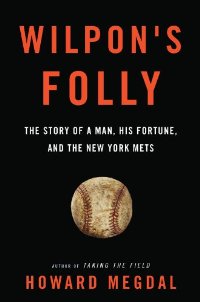
MLB reports – Jonathan Hacohen:  I had the opportunity this week to post on our site  my review of the Howard Megdal classic baseball book, “The Baseball Talmud”.  Today, MLB reports presents my interview with the baseball author himself, Howard Megdal.  We discuss many aspects of Howard’s life- from the process of writing “The Baseball Talmud” to a look to his recently released book “Wilpon’s Folly”.  I am looking to forward to getting my hands on his third book and learning Howard’s take on the Wilpon family and state of the Mets.  If “Wilpon’s Folly” is anything like his previous works, Howard will have another winner on his hands. 

Featured on MLB reports, I proudly present my interview with baseball author, Howard Megdal

__________________________________________________________________________________________________________

MLB reports:  Welcome back to MLB reports Howard.  Thank you for taking the time for us today to talk about your work.  It was a pleasure to read the Baseball Talmud, your first book which I recently reviewed on our site.  How long did it take you to research and write the book?

Howard Megdal:  Overall, it took over a year. But I’d been thinking about these questions since middle childhood.


MLB reports:  What would possess you to pick such an expansive topic for your first ever book?

Howard Megdal:  Well, it was a perfect marriage of my obsessions with baseball and Jewish culture. And I thought it was a book that needed to be out there, but wasn’t.


MLB reports:  Were you worried on being typecast as a “Jewish Baseball Writer” by writing the Baseball Talmud?

Howard Megdal:  Not at all. I knew I had many more books in me on various topics.


MLB reports:  Favorite Jewish baseball player growing up?

Howard Megdal:  That’s hard, because there was a bit of a dearth as I grew up. By high school, definitely Shawn Green.


MLB reports:  After the book was published, did you have any Jewish players approach you to discuss the book?

Howard Megdal:  Well, I’d spoken to many of them during the publishing. But one of the most rewarding experiences I had was when the family of Lefty Weinert came to a book signing to discuss his career.


MLB reports:  Can we expect a sequel or follow-up to The Baseball Talmud?

Howard Megdal:  An excellent question- I am certainly open to updating it.


MLB reports:  What did you expect The Baseball Talmud would be like when you originally conceived the book and how did it differ once you started to write it?

Howard Megdal:  To be honest, this one stayed true to my vision of it from the very start.


MLB reports:  With the release of Wilpon’s Folly- you are slowly becoming a Mets-only writer (after the release of Taking the Field). Fair assessment?

Howard Megdal:  No, I don’t think so. For the same reasons that I didn’t worry about becoming a Jewish-only writer after Baseball Talmud, I am sure topics will take me in many different directions.


MLB reports:  After Taking the Field, why write Wilpon’s Folly now?  Did you consider other baseball topics for your third book?

Howard Megdal:  Well, Bloomsbury approached me, because my reporting was addressing the topic in a broader way than most of the other coverage out there. And I agreed that people needed a broader context for what was happening, and what will happen.


MLB reports:  Tell us about Wilpon’s Folly- what kind of book is it and what should readers expect when reading it?

Howard Megdal:  It’s a story of huge sums being handled by flawed people, and the ramifications reaching far wider than anyone could have anticipated.


MLB reports:  Have the Mets contacted you in any way to discuss Wilpon’s Folly?

Howard Megdal:  Obviously, I spoke to them while writing the book. But no, all I’ve heard is through the New York Post.


MLB reports:  What do you think of the Wilpon family?

Howard Megdal:  I think they have suffered a public fall that no one should take any pleasure from, and I wonder how hard life is going to get for them.


MLB reports:  What is the future of the Mets organization?  Can the team win with the Wilpons at the helm?

Howard Megdal:  No, they very likely cannot. The future is bright under different ownership, since it is extremely difficult for a New York baseball team not to be immensely profitable. But as long as ownership needs to divert all funds to simple financial survival, a long-term plan is practically impossible.


MLB reports:  What is your schedule going to be looking like with the release of the new book?

Howard Megdal:  Same as before: five columns a week for Capital New York, regular writing for the LoHud Mets Blog, MLB Trade Rumors and other outlets. Freelance pieces whenever inspiration strikes. Spending time with my wife and young daughter. Busy, but good.


MLB reports:  What is the next project for Howard Megdal?  Can we expect a baseball book per year from you?

Howard Megdal:  An excellent question. Need to talk to my agent and settle on a next book.


MLB reports:  If you were to look into a crystal ball, where will you be in 5 years from now Howard?

Howard Megdal:  I hope I’ll be writing, enjoying time with my family, and living essentially as I do now. Wouldn’t want to change a thing.


MLB reports:  Last question:  final thoughts for your fans?

Howard Megdal:  Thank you so much. I am gratified that people enjoy reading what I write.


***A special thank you to Howard Megdal for his time and effort as part of being interviewed for this article.  You can follow Howard on Twitter and click here for Howard’s website.***


Jonathan Hacohen is the Lead Baseball Columnist & Editor for MLB reports:  You can follow Jonathan on Twitter (@JHacohen)


Please e-mail us at: MLBreports@gmail.com with any questions and feedback.  You can follow us on Twitter and become a fan on Facebook .  To subscribe to our website and have the daily Reports sent directly to your inbox , click here and follow the link at the top of our homepage.

“The Baseball Talmud” by Howard Megdal: MLB Book Review

Wednesday December 21, 2011

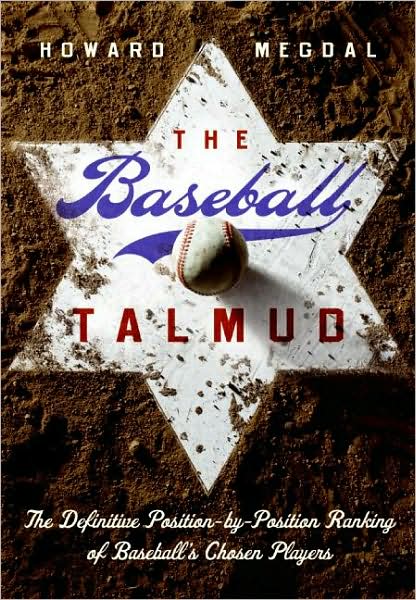
“THE BASEBALL TALMUD”:  BY HOWARD MEGDAL

(Harper:  2009)

MLB reports – Jonathan Hacohen:  Happy Hanukkah to one and all!  With today being the first day of Hanukkah, I thought that it would be very appropriate to include some Jewish baseball on MLB reports.  Luckily, I just completed a Jewish-centric baseball book and will be reviewing said book for you today.  One of our favorite baseball authors (are there any other kind), Howard Megdal, prepared one of the preeminent Jewish baseball books on the market today.  Howard’s first baseball book is titled:  “The Baseball Talmud”.

You will recall Megdal’s work from our review of his 2nd effort, “Taking the Field:  A Fan’s Quest to Run the Team He Loves.”  While “Taking the Field” was centered on Howard’s efforts to campaign to run and fix the New York Mets, “The Baseball Talmud” comes from a very different perspective.  “The Baseball Talmud” is essentially a baseball history piece.  While some players’ names would be familiar to the readers (depending on your age and baseball knowledge), reading “The Baseball Talmud” will prove to be an educational experience for most baseball fans who pick up to read this book.  The Talmud (in case you are not familiar with the term) is a collection of ancient rabbinic writings on Jewish law and tradition.  Commentary and interpretations are the key components of the Talmud.  Thus it is fitting that Megdal labelled his book “The Baseball Talmud”, as the book is an authoritative interpretation of Jewish baseball with commentary.  It is first and foremost a baseball history book- but from a Jewish perspective.

I ended up reading Megdal’s books out of order, as “Taking the Field” was released after “The Baseball Talmud”.  I was actually pleased about this result, as I came into “The Baseball Talmud” with a more intimate feeling and knowledge about Howard Megdal having completed “Taking the Field”.  Even without reading “The Baseball Talmud”, I knew that Megdal had a strong feeling and passion for Judaism and baseball.  It was evident from “Taking the Field”, as well as reading his articles and interviewing him in the past.  Megdal is very proud of being Jewish.  Thus his passion and knowledge of Judaism and baseball made him a perfect authority to write “The Baseball Talmud”.  Knowing Megdal’s background, experience and personality, made me appreciate reading “The Baseball Talmud” that much more.

In my estimation, Megdal pulled off one of the biggest literary miracles in “The Baseball Talmud” (again appropriate given the Hanukkah season).  While most baseball fans enjoy talking about the history of the game to great lengths, most would not at first glance be terribly excited to read a “baseball history” book.  Baseball books can range in different categories, from autobiographies, instructional, statistical and historical.  “The Baseball Talmud” fits mostly into the historical category, with a pinch of statistics spread throughout.  Make no mistake, there are many modern players included.  From Ryan Braun, Ian Kinsler, Kevin Youkilis, Steve Stone, etc., all the “big” name Jewish players that you know and love are discussed and analyzed.  But this book is far from a tribute to Sandy Koufax and Hank Greenberg.  While two of the biggest Jewish baseball players of all time, Megdal recaps most (if not all) Jewish players that have ever played the game.  Names like Conrad Cardinal, Ed Wineapple, Happy Foreman, Erskine Mayer, Mose Solomon and Jake Pitler are all part of the book.  Not only did I learn about how the many Jews who played the game of baseball, I learned a great deal about the history of the game of baseball as a whole.  The success of this book though is in Megdal’s writing.  “The Baseball Talmud” is very well written with a great deal of history and statistics.  But it is done in a very fun and light manner, with excellent analysis.  Howard Megdal is a storyteller.  One of the best baseball ones that I have ever read.  So if you are jumping into “The Baseball Talmud” expecting a straight history and statistics text, think again.  This book is built upon the baseball stories and commentary within it.

The book is divided into a clean and easy-to-read format.  After reviewing the top Jewish baseball players of all time, Megdal then proceeds to list his top Jewish players at each position.  The lists are very specific, including all three outfield positions and breaking down right-handed and left-handed starting pitchers and relievers.  My favorite section is the all-time Jewish baseball team assembled by Megdal at the end of the book and how his Jewish team would compare to other teams from different eras.  On a personal note, I did take a great deal away from this book given my Jewish heritage and background.  But regardless of my own religion and culture, I would recommend this book to any baseball fan.  Young or old.  Novice or expert.  To really appreciate the game, it is important to know about the different leagues and teams throughout the years.  Players had careers interrupted and shortened due to wars.  Before the age of free agency, player movement was very limited and outstanding players were blocked and often left in the minors or on the bench rather than being given an opportunity elsewhere.  Such key components of baseball are discussed in Megdal’s book.  But again, having Megdal use his superior storytelling abilities in describing the players and their circumstances makes the book a winner.  This was a fun read, that had me laughing out loud many times and thinking throughout.

For the baseball fan in your life that has everything, I strongly recommend running out to your local bookstore or jumping onto a site like amazon.com and purchasing “The Baseball Talmud”.  I can think of many past Hanukkah seasons that I would have enjoyed receiving this book as a gift. It would also make a great stocking stuffer for any baseball fan of any denomination.  While it may seem humorous to receive “The Baseball Talmud” on Christmas morning under a tree or in a stocking, it would be well appreciated by all devotees of the game.  Baseball fans are always looking for more information and “something different”.  Well folks, “The Baseball Talmud” is as about as unique as it gets in the baseball world.  I enjoyed reading several of the chapters to my own 6-year old son.  If we are going to teach our kids as parents about the game of baseball early, it is important to use the right materials!  So Happy Hanukkah, Merry Christmas and an overall Happy Holidays to everyone.  I look forward to hearing from everyone after you had a chance to read “The Baseball Talmud” to debate the rankings of the all-time best Jewish players.  Creating a forum for baseball discussion and analysis is what a good baseball book will do and makes “The Baseball Talmud” a clear winner.

***We highly encourage you to keep an eye out for our interview with Howard Megdal coming soon to MLB reports, as we discuss “The Baseball Talmud” and Howard’s newly released book “The Wilpon’s Folly:  The Story of a Man, His Fortune and the New York Mets”, available now for purchase.  We look forward to reading and reviewing “The Wilpon’s Folly” for you as well in the coming weeks.  Also check out “Taking the Field” and learn about Howard’s experiences in campaigning to become the GM of the New York Mets.  If you enjoy a good baseball read, you can never go wrong with a Howard Megdal book.***


Jonathan Hacohen is the Lead Baseball Columnist & Editor for MLB reports:  You can follow Jonathan on Twitter (@JHacohen)

Please e-mail us at: MLBreports@gmail.com with any questions and feedback.  You can follow us on Twitter and become a fan on Facebook .  To subscribe to our website and have the daily Reports sent directly to your inbox , click here and follow the link at the top of our homepage.

Albert Pujols and C.J. Wilson: 2012 Projections

Tuesday December 13, 2011

Peter Stein (Fantasy Baseball Analyst – MLB reports):  Unless you have been living under a rock for the past two weeks, you are probably well aware of the splash that the Angels made in the free agent market with the signings of Albert Pujols and C.J. Wilson. Certainly, the balance of power in the American League West has shifted to the Angels, who have set themselves up for a championship run. While Pujols and Wilson have a good chance to bring home a championship in Los Angeles, they will likely be on many winning fantasy rosters as well.

As I discussed a few weeks back, Pujols has been the best fantasy player in baseball after 10 Ruth-like seasons after he busted onto the scene in 2001. However, 2011 was an interesting year for Pujols, the first in which he did not produce a .300 average, hit 30 HR and drive in 100 runs. He missed this feat by just one RBI and one average point. Through the Cardinal’s first 54 games, Pujols batted .257 with 8 home runs and 28 RBI. However, in the final 108 games, which included the time missed with the wrist injury, he batted .322 with 29 home runs and 71 RBI’s. That is the Pujols that we have all been accustomed to over the last decade. Therefore, I do not think you need to be overly concerned about a significant A-Rod-esque drop off just yet. The back-end of Pujols’ contract will certainly get ugly for the Angels, but expect the usual slugger for the first few years. Now, the other factor on Pujols’ performance is the shift to a new team and new league. In terms of ballparks, Busch Stadium and Angels Stadium are very similar in degree of hitter friendliness. For the switch to the AL. below are his career interleague numbers, which add up to almost one full major league season:

143 GP 39 HR 121 RBI .348 AVG 1.071 OPS (1.037 career)

The stats show the Albert dominates against the American League, with numbers that even exceed his career averages. With a hitter as good as Pujols, it’s the American League pitchers who will be tasked with making adjustments and not Pujols. The Angels lineup is actually pretty similar to the Cardinals, and if people step up (Kendrys Morales), it has potential to be a lot better. Therefore, I expect the usual greatness from Pujols.

Projections: .312 39 HR 120 RBI 117 R 12 SB

C.J. Wilson enjoyed his finest season as a pro in 2011 with a 16-7 record and a 2.94 ERA. At age 31 and not as young as many expect, there is not too much room for actual skill development with Wilson. However, the major factors that impact pitchers results after a team change are in favor for Wilson. Let’s start with park factors and opposition. Wilson no longer has to pitch as many games in Texas, where he sported a career 3.89 ERA, compared to 3.26 on the road. The contrast was even starker in 2011, when he posted a 3.69 ERA at home and a 2.31 ERA on the road. Much of the reason for his success on the road were his regular matchups against the lowly Mariners and Athletics offenses, which he will continue have. Fortunate to have Pujols on his team now, he will still have to face his former talented Rangers teammates. Looking at the defense behind Wilson, it is pretty much a wash. The Elvis Andrus and Ian Kinsler double play combination was one of the best in baseball, but the Angels outfield is significantly better than the Rangers. Lastly, although the Angels made significant offensive upgrades, it is still safe to think the Rangers would provide more run support, potentially cutting into his win total.

The move to the Angels appears to make Wilson potentially more valuable in 2012. His FIP and XFIP indicate that his ERA range should have been closer to 3.20-3.30, so it might be tough to expect a sub-3 ERA in 2012. However, his recent success, coupled with his change of scenery (most importantly out of Texas), indicate that he should be one the game’s most valuable pitchers in 2012.

Projections: 208 IP, 16-9 WL, 3.28 ERA, and 180 K’s

***Today’s feature was prepared by our Fantasy Baseball Analyst, Peter Stein.  We highly encourage you to leave your comments and feedback at the bottom of the page and share in the discussion with our readers.  You can also follow Peter on Twitter (@peterWstein).***

Please e-mail us at: MLBreports@gmail.com with any questions and feedback.  You can follow us on Twitter (@MLBreports) and become a fan on Facebook .  To subscribe to our website and have the daily Reports sent directly to your inbox , click here and follow the link at the top of our homepage.