Blog Archives

MLB Draft Signing Deadline: Who Will Sign By August 15th
Friday August 12, 2011

Rob Bland (Intern- MLB Reports): With the August 15 deadline for all 2011 MLB draftees to sign, players and teams are getting down to the wire with negotiations. Only two of the top ten picks have been signed, right-handed pitcher Trevor Bauer, and second baseman Cory Spangenberg by the Arizona Diamondbacks and San Diego Padres, respectively. Of the 33 first round picks, 9 have signed, as well as 14 of the 27 picks in the supplemental first round. It is expected that most of the picks from the first round will go down to the last hour, if not minute. However, there is a lot of speculation about who will not sign, and the fans of each team are hoping and praying their team will get their guy. Some players come into the draft with lofty expectations and high estimates of signing bonus money. As a result, many of the lower budget franchises stay away from these players, and draft “safe” players, who will sign for a more reasonable price.
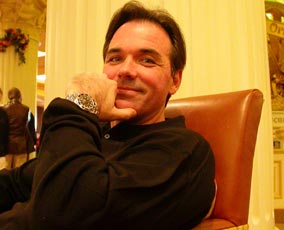 The Oakland Athletics’ GM Billy Beane was made famous through the book “Moneyball”, which portrayed the club as a bottom feeder organization financially. They had to pick lesser talents in order to sign all their draft picks. They shied away from the big “sexy” names on draft boards and targeted players with specific skill sets. Other teams who have done this in the past to varying degrees of success are the Pittsburgh Pirates, Toronto Blue Jays and Kansas City Royals. In the last couple of years, these organizations have turned their philosophies around, drafting tough to sign players with higher ceilings, and ending up signing most of them. Today will highlight a few of the players drafted who will be tougher than others to sign.
From this year’s draft, one of the players who was known to be extremely difficult to sign was Josh Bell. On talent alone, he was rated as an early first round pick, yet dropped to the second round to the Pittsburgh Pirates. He had sent a letter to Major League Baseball advising teams not to draft him on account that he wanted to attend the University of Texas. Some have said this was just a bargaining tool to simply add more leverage to his situation, while others think he will not sign under any circumstances. It has been predicted that it will take a minimum of $10M and a Major League contract in order to sign him. I feel that the Pirates are an extreme long shot to sign Bell, and he will attend U of T and be a Longhorn for the next three years.
High school right-handed pitcher Tyler Beede could have been a top 10 pick, with his 95 mph fastball and devastating change-up. Beede was widely known to be seeking a bonus upwards of $3-4M. The Toronto Blue Jays and their new management have made it a point to take the best player available when they it is their turn to select a player in the draft. So, when it came to their turn as the 21st selection, the Jays did not hesitate to choose Beede, who has said it will come down to money in the long run. I believe the Jays will sign him in the final minutes for close to $3M.
With the 5th overall pick, the Kansas City Royals had a tough decision to make. Outfielder Bubba Starling, a hometown kid from Kansas, was widely considered the top prep offensive talent in the draft was still on the board. Starling has a scholarship to the University of Nebraska to play both football and baseball. It is very likely that a bonus upwards of $8M will be what it takes for Starling to sign with KC on August 15. Expect this deal to get done.
 Gerrit Cole, the flame throwing right-handed pitcher from UCLA was taken by the Pirates first overall in the draft. Cole has reached 102 mph on radar guns and routinely hits triple digits. Cole has yet to sign, but is widely expected to join the Pirates. A Major League deal for 4 years and $8M or so is likely.
Rice University has been known to producing top talent, as witnessed by having eight first round picks in the last 11 years, most notably when Phil Humber and Jeff Niemann went 3rd and 4th overall in the 2004 draft. Another first rounder from Rice was Lance Berkman in 1997. So when one of the top three candidates for the first overall pick came down to an infielder from Rice, who just happened to win the Dick Howser Trophy, (essentially the Heisman Award for college baseball players), nobody was surprised. Anthony Rendon may not have above average speed or the best glove, but he has an above average arm and was considered by most to be the best hitter in the country. Rendon dropped to #6 to the Washington Nationals due to signability concerns but should sign for $4M plus.
Shortstops with ultra talent often get huge signing bonuses and Cleveland Indians’ first pick (8th overall), Francisco Lindor will be no exception. Lindor has the talent to warrant a $3M bonus, but should hold out for more. The Indians tend to shy away from this kind of pick, but the talent speaks for itself and I believe the Indians will go as high as $3.5M to sign the talented shortstop.
There has arguably not been a better high school pitcher in the last decade than flame throwing Dylan Bundy. The right-hander has reached 100 mph and has 2 plus secondary pitches. His high school pitching numbers are straight out of a video game. 71 innings, 2 earned runs. TWO! He also had 158 strikeouts to 5 walks. FIVE WALKS! Good for a 31.6:1 K:BB ratio. Oh, and the fact that he can also hit, as evidenced by his 11 home runs and 54 RBI in only 105 at-bats doesn’t hurt. The University of Texas commit could command a Major League contract and $6-8M. He should sign; my guess is $6.5M.
Here is the breakdown of the entire 2011 first round of picks, with players in bold having already signed:
1 Gerrit Cole RHP Pittsburgh Pirates
2 Danny Hultzen LHP Seattle Mariners
3 Trevor Bauer RHP Arizona Diamondbacks – ML deal 4/$7M
4 Dylan Bundy RHP Baltimore Orioles
5 Bubba Starling OF Kansas City Royals
6 Anthony Rendon 3B Washington Nationals
7 Archie Bradley RHP Arizona Diamondbacks
8 Francisco Lindor SS Cleveland Indians
9 Javier Baez SS Chicago Cubs
10 Cory Spangenberg 2B San Diego Padres – $1.86M
11 George Springer OF Houston Astros
12 Taylor Jungmann RHP Milwaukee Brewers
13 Brandon Nimmo OF New York Mets
14 Jose Fernandez RHP Florida Marlins
15 Jed Bradley LHP Milwaukee Brewers
16 Chris Reed LHP LA Dodgers
17 C.J. Cron Jr. 1B LA Angels – $1.467M
18 Sonny Gray RHP Oakland Athletics – $1.54M
19 Matt Barnes RHP Boston Red Sox
20 Tyler Anderson LHP Colorado Rockies
21 Tyler Beede RHP Toronto Blue Jays
22 Kolten Wong 2B St. Louis Cardinals – $1.3M
23 Alex Meyer RHP Washington Nationals
24 Taylor Guerrieri RHP Tampa Bay Rays
25 Joe Ross RHP San Diego Padres
26 Blake Swihart C Boston Red Sox
27 Robert Stephenson RHP Cincinnati Reds
28 Sean Gilmartin LHP Atlanta Braves – $1.13M
29 Joe Panik SS San Francisco Giants – $1.116M
30 Levi Michael SS Minnesota Twins
31 Mikie Mahtook OF Tampa Bay Rays
32 Jake Hager SS Tampa Bay Rays – $963K
33 Kevin Matthews LHP Texas Rangers – $936K
I think that although you can’t be sure about these kinds of things, my gut feeling is that every first rounder this year will actually sign by August 15th. I also predict that at least one signing will come minutes after the deadline, probably a Scott Boras client, and the league will allow the deal to pass.

***Today’s feature was prepared by our Intern, Rob Bland. We highly encourage you to leave your comments and feedback at the bottom of the page and share in the discussion with our readers. You can also follow Rob on Twitter.***
Please e-mail us at: MLBreports@gmail.com with any questions and feedback. You can follow us on Twitter and become a fan on Facebook . To subscribe to our website and have the daily Reports sent directly to your inbox , click here and follow the link at the top of our homepage.

Remembering Hideki Irabu: Japanese MLB Pitcher and Link to Donnie Moore
Sunday August 7, 2011
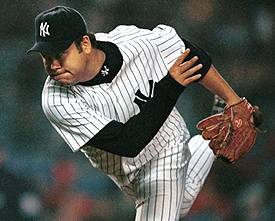
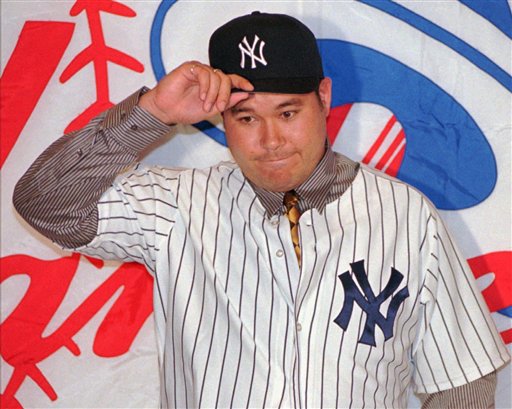
MLB reports: Hideki Irabu was born on May 5, 1969 in Hirara, Okinawa. Irabu played in Japan (Nippon Professional Baseball) from 1988-1996 and then again from 2003-2004. In North America, we will most remember Irabu as a member of the New York Yankees from 1997-1999. Irabu also played with the Montreal Expos from 2000-2001 and the Texas Rangers in 2002. The baseball world sadly lost Hideki Irabu on July 27, 2011, an apparent victim of suicide. A loss to the baseball world at the tender age of 42, Irabu was survived by a wife and two young children.
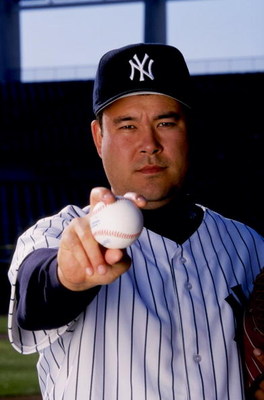 The story of Hideki Irabu is well-known in the baseball community. He had his contract purchased by the San Diego Padres from his Japanese club, the Chiba Lotte Marines. Irabu refused to sign with the San Diego Padres and stated his intention of only playing for the New York Yankees. The Yankees were able to swing a deal for Irabu’s services, for a package of players including Ruben Rivera and cash. Hideki Irabu ended up making his debut with the Yankees on July 10, 1997 and for his career pitched in 74 games for the Yankees over 3 seasons (64 starts). Irabu won back-to-back World Series rings in New York in 1998 and 1999. He was then traded to the Montreal Expos for Ted Lilly, Jake Westbrook and Christian Parker. A good haul for the Yankees considering the career spans of Lilly and Westbrook (had they stayed in New York). Irabu then signed with the Texas Rangers as a free agent and played out his last MLB season as a closer before returning to Japan to resume his NPB career. After a stint in independent baseball, Irabu apparently had the intention of returning to Major League Baseball, but alas a comeback was not in the cards. Reports have indicated that Irabu hung himself in his California home, with autopsy results to follow. Today we look at the career of Hideki Irabu and the road that led to his untimely passing this year.
When joining the New York Yankees in 1997, Hideki Irabu was labelled the “Japanese Nolan Ryan”. By the time he left New York, he was stuck with the moniker given to him by team owner George Steinbrenner “the fat toad”. Looking at Irabu’s MLB numbers, he unfortunately fell short of the Nolan Ryan comparisons:
| Year | Tm | W | L | ERA | SV | BB | SO | WHIP |
|---|---|---|---|---|---|---|---|---|
| 1997 | NYY | 5 | 4 | 7.09 | 0 | 20 | 56 | 1.669 |
| 1998 | NYY | 13 | 9 | 4.06 | 0 | 76 | 126 | 1.295 |
| 1999 | NYY | 11 | 7 | 4.84 | 0 | 46 | 133 | 1.335 |
| 2000 | MON | 2 | 5 | 7.24 | 0 | 14 | 42 | 1.665 |
| 2001 | MON | 0 | 2 | 4.86 | 0 | 3 | 18 | 1.500 |
| 2002 | TEX | 3 | 8 | 5.74 | 16 | 16 | 30 | 1.426 |
| 6 Seasons | 34 | 35 | 5.15 | 16 | 175 | 405 | 1.405 | |
| 162 Game Avg. | 11 | 12 | 5.15 | 5 | 58 | 134 | 1.405 | |
| NYY (3 yrs) | 29 | 20 | 4.80 | 0 | 142 | 315 | 1.362 | |
| MON (2 yrs) | 2 | 7 | 6.69 | 0 | 17 | 60 | 1.626 | |
| TEX (1 yr) | 3 | 8 | 5.74 | 16 | 16 | 30 | 1.426 | |
| AL (4 yrs) | 32 | 28 | 4.90 | 16 | 158 | 345 | 1.369 | |
| NL (2 yrs) | 2 | 7 | 6.69 | 0 | 17 | 60 | 1.626 | |
Injuries played a part in Irabu’s MLB career. Irabu had both knee and shoulder surgeries after leaving the Yankees and blood clots ultimately led to his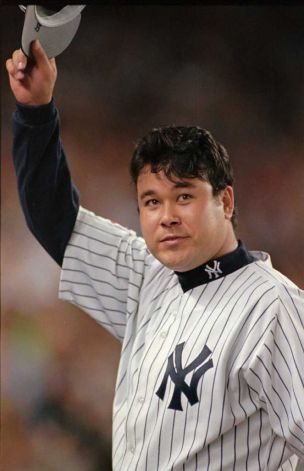 retirement from Major League Baseball following the 2002 season. Bouts of heavy drinking, depression and rage also factored into Irabu’s career. But despite all the distractions and factors that led to his unravelling in baseball, Irabu did show some glimpses of promise. In addition to the two world series titles he earned in New York (despite playing in only one career post season game in 1999, giving up 7 ER in 4.2 IP to the Red Sox in the ALCS), Irabu had his best numbers during his time with the Yankees. He earned both of his career shutouts in New York. His best statistical season was 1998, where he went 13-9 for the Yankees, with a 4.06 ERA and 1.295 WHIP. As a closer for the Rangers in 2002, Irabu earned 16 saves. That unfortunately went together with a 3-8 record, 5.74 ERA and 1.426 WHIP. For a proud young man who fought hard on and off the field, his major league career was taken from him much too early. Despite attempts at a comeback, we never did see Hideki Irabu in a MLB uniform again after the 2002 season.
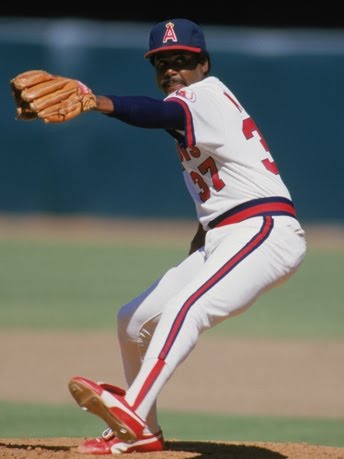 In our society, it is much too easy to write off the passing of another human being, especially a celebrity, without considering the person behind the name. Granted Irabu faced many demons in his life and career. But I think some people feel the need to label a player like Irabu an alcoholic and rageaholic and simply write him off when learning of his passing. That is a tragedy in my estimation. When I learned of Irabu’s passing, my immediate thoughts led to Donnie Moore. For those of you not familiar, Moore was the Angels pitcher that gave up the tying and winning runs to the Red Sox in game five of the 1986 ALCS. Many critics pointed to Moore as the reason that the Red Sox ended up beating the Angels and advancing to the World Series. Moore was a popular target of Angels fans the following seasons and ended up shooting his wife and taking his own life. A tragic story in itself, Moore like Irabu suffered from deep depression. But without analyzing and comparing both men too much, I believe that it was the name calling and the reputations of each men that contributed greatly to their respective passings. Victories and failures take place on baseball diamonds each and every day. Moore in the playoffs and Irabu in New York, suffered their failures on some of the biggest baseball stages that you can find. Had their losses been forgotten and each man allowed to continue fresh, they may have enjoyed longer and productive careers in baseball. They may have also been able to enjoy their personal lives to a greater extent and still been with us today. But the stigma of failure which was likely reminded to Moore and Irabu for most of their last days on this earth, was likely too much for each to bear.
Hideki Irabu, being of Japanese descent, was a very proud man. Respect and reputation are considered very important in Japanese circles and criticism is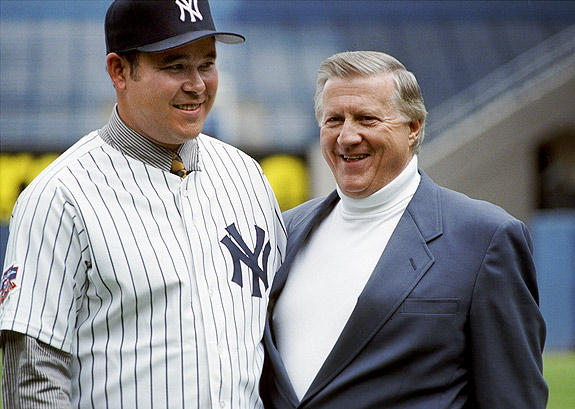 often not taken very well. Irabu, like Ichiro Suzuki after him, had a lifelong battle with the Japanese media. Being of mixed descent, Irabu rarely discussed his background which was a difficult subject for him. Before coming to North America, the Japanese media labelled him with very strong nicknames, including the “Shuwozenegga” and “Kurage”, which translates to jellyfish, for the sting of his pitches. From there, being called the Japanese Nolan Ryan came with a set of expectations that Irabu could never live up to. If that was not bad enough, the “fat toad” comment by George Steinbrenner stuck with him to his very last days. It was my understanding that Irabu through most of his MLB career could not be in any baseball cities, especially New York without hearing some reference to the toad comment. For a proud individual that did not take criticism well, such a nickname probably stuck within him like a dagger. By no means do I directly blame Steinbrenner for Irabu’s suicide. Far from it, as Steinbrenner lately expressed remorse for his comments and publicly apologized for his remarks. But the choice of media and select fans to continue to remind Irabu of the nickname most likely helped contribute to his passing. We cannot bring Hideki Irabu or Donnie Moore back. But we can learn from their passings and help other athletes avoid similar fates.
I link the taunting of Irabu and Moore before him in public and media outlets to bullying in schools. We have read stories of children and teenagers being harassed in schools and outlets like e-mails and Facebook to the point that they are driven to taking their own lives. Words do hurt and a bully can be charged criminally. For those people that went up to Hideki Irabu in a restaurant and called him a “fat toad”, or approached Donnie Moore in a shopping mall and called him a “choke” and “failure”, think about the result of those actions in retrospect. Since athletes are in the public eye, that leads to many people feeling a sense of entitlement to judge and criticize players as they see fit. Irabu by earning over $15 million over 6 seasons in Major League Baseball, was apparently fair game as a target to all forms of criticism that people chose to throw his way. I have no issue with judging an athlete’s numbers on the field. Analysis and discussion is what sports is all about. But once we start with the name calling and viciousness, I feel that a line needs to be drawn.
Donnie Moore and Hideki Irabu chose to become professional athletes and were in the public eye. That does mean that their wins and losses will be known to millions and discussed and analyzed by many. But sports can go to extreme levels. Homes vandalized. Children harassed. Even murders. Critics and extreme “fans’ can go to dangerous levels in criticizing athletes. While extreme situations, they do take place all too often. These instances stem from bullying, which is not acceptable in schools with children but allowable in public forums with public figures. We as members of society need to draw the line of what is acceptable in reviewing and criticizing athletes. Although they choose to be in the public light, they are still human beings with real feelings and emotions. Hopefully more people will remember that the next time they hurl disparaging remarks at an athlete, whether it be in a stadium, restaurant, radio talk show or newspaper. Words do hurt and in the case of Donnie Moore and Hideki Irabu, they can also kill.
Donnie Moore, if you weren’t aware, played professional baseball for 13 seasons for 5 different teams. He had a career 3.67 ERA. His best season was 1985, where he has a 8-8 record, 1.92 ERA, 31 saves and 1.087 WHIP. He followed up the following season with 21 saves. He was an all-star in 1985, finishing 6th in A.L. MVP voting and 7th in A.L. CY Young voting. Moore also pitched two perfect innings for the Braves in the 1982 NLCS. But most people don’t remember those numbers. When they hear the name Donnie Moore, they think of the 1986 ALCS defeat and suicide. Hideki Irabu has now met a similar fate. Many people do not remember that Irabu was the man responsible for the Japanese posting system. By refusing to sign with the Padres, MLB helped institute the current posting system for Japanese players to come to North America. If not for Irabu, the entire system of transferring NPB players to MLB could be much different today. Irabu won two World Series rings and enjoyed some success in North America. Before that, Irabu enjoyed great success in Japan on the baseball diamond. But when people reflect on his passing, the main words that are spoken now are “fat toad” and suicide. Even in death, Irabu and Moore continue to be criticized and bullied. That is the saddest reality of all.
Please e-mail us at: MLBreports@gmail.com with any questions and feedback. You can follow us on Twitter and become a fan on Facebook . To subscribe to our website and have the daily Reports sent directly to your inbox , click here and follow the link at the top of our homepage.
Summary of all Trades- 2011 MLB Trade Deadline Report and Analysis
Monday August 1, 2011
MLB reports: Another hectic MLB trade deadline is in the books. This year’s trade market was just as much about the trades that were not made as the ones that were. For all the speculation leading up to the deadline, star players like James Shields, B.J. Upton, Heath Bell and Carlos Quentin stay put. The trades that did go down included Ubaldo Jimenez, Mike Adams, Doug Fister, Colby Rasmus and much more. Here is a rundown of all the trades that took place in Major League Baseball as part of the non-waiver MLB Trade Deadline, which was 4:00p.m. on Sunday July 31st:
Michael Bourn and cash (Astros) for Jordan Schaefer, Brett Oberholtzer, Paul Clemens, Juan Abreu (Braves): The Braves get a solid leadoff hitter, center fielder and base stealer from the Astros for four average prospects. Without having to give up any of their top prospects and filled a huge hole in their lineup and outfield, top marks goes to the Braves.
Hunter Pence and cash (Astros) for Jonathan Singleton, Jarred Cosart, Josh Zeid and a player to be named later (Phillies): A win for the Phillies, as they get one of the top outfield bats in the game in Pence, who remains under team control going into next year. I like the return of Singleton, one of the top hitting prospects in the minors. But still, the Astros should have received a higher return for Pence who was the face of their franchise. A win for both squads but give the edge to the Phillies.
Mike Adams (Padres) for Joseph Wieland and Robert Erlin (Rangers): A win for both sides. The Rangers get one of the top relievers in baseball (Adams), who remains under team control after the season. For a team that is a World Series contender, Adams and Uehara give the Rangers a suddenly formidable pen. Wieland and Erlin were two top pitching prospects in the Rangers system and give the Padres much more depth. For a team that acquired what it needed most without giving up any of its top prospects, the Rangers can chalk this trade up to a huge win. The Padres did not do badly either, as Adams was a luxury they did not require and the Padres farm system all of a sudden became much stronger.
Brad Ziegler (A’s) for Brandon Allen and Jordan Norberto (Diamondbacks): A deal that works for both teams. Ziegler is a useful reliever that strengthens the Dbacks pen in a push for the NL West crown. Allen is a highly considered first base prospect who should slot well in Oakland plus Noberto is another arm in the A’s organization. It is too bad for the A’s that the Lars Anderson plus prospect for Rich Harden deal fell through with Boston, but Allen is a good runner-up prize.
Erik Bedard and Josh Fields (Mariners) for Trayvon Robinson (Dodgers) and Chih-Hsien Chiang, Tim Federowicz, Juan Rodriguez and Stephen Fife (Red Sox): Red Sox get Bedard and Fields (the reliever, not third baseman currently in Japan, Mariners get Robinson and Chiang, while Dodgers get Federowicz, Rodriguez and Fife. Confused? Good. This was one of those three-way deals that when all is said and done, you are left scratching your head. The key to this deal is Erik Bedard for the Red Sox. If he stays healthy, and that is a big if, the Red Sox might have a valuable addition to their starting rotation. Fields should also slot in well in the Red Sox pen. Both Robinson and Chiang are considered to be good prospects and should have a very good chance at cracking the Mariners’ outfield. The trade of Robinson came as somewhat of a surprise and the Dodgers have received a great deal of negative press on the deal. The team however was looking for a prospect catcher and believe they have found it in Federowicz and the additional parts in Rodriguez and Fife. The Mariners are the big winners in this deal, while the Red Sox play with fire and the Dodgers likely just got burnt.
Ubaldo Jimenez (Rockies) for Drew Pomeranz, Alex White, Joe Gardner and Matt McBride (Indians): What a difference a year makes. The Indians are going for it and have beefed up their rotation with the addition of Jimenez. When on his game, Ubaldo is one of the best in baseball. Further, Ubaldo continues to be under team control, so the Indians don’t simply acquire a summer rental here. The keys to this deal for the Rockies are Pomeranz and White. Considered to be the Indians two best pitching prospects, the Rockies add to their farm while losing their ace. While Pomeranz is considered highly in baseball circles, I would have expected to see the Rockies get more major league ready talent. Considering that they were supposed to get Jesus Montero and Ivan Nova from the Yankees or Yonder Alonso, Yasmani Grandal and/or Homer Bailey from the Reds, I give the Indians the edge on this deal. Ace pitchers do not grow on trees and the Indians got one without giving up any of their major league talent or some of their other finer prospects, including Nick Weglarz. Competing with the big boys, the Indians get the prize of the trade deadline and likely a division title as well.
Derek Lee (Orioles) for Aaron Baker (Pirates): The Pirates are going for it and while Lee is an aging first baseman, he is an upgrade offensively over incumbent Lyle Overbay. Baker is a Class A first baseman that is not considered a top prospect. This trade is a draw, as the Pirates beef up for their playoff run and the Orioles auction off an impending free agent to stock their system.
Orlando Cabrera (Indians) for Thomas Neal (Giants): This deal came out of left field, as the Indians are still contending and were expected to hold onto Cabrera. With many young infielders on their roster, the Indians were prepared to sacrifice their utility man for one of the Giants higher rated prospect bats. Speaking to Neal on several occasions, he is one of the nicer young men you will ever want to meet in the game. Considered a great tools player, both offensively and defensively, the Indians have added another piece to their offensive puzzle while sacrificing a veteran that was expandable. The Giants, with injury and offensive woes, took a chance on Cabrera, a good luck charm for each of his respective teams in the postseason. While Neal was a big price to pay, the Giants are in win-now mode. A draw, as both teams will away happy from this exchange.
Koji Uehara (Orioles) for Tommy Hunter and Chris Davis (Rangers): This is a good old-fashioned baseball trade. The Rangers pick up a veteran reliever, who is enjoying his finest campaign in the big leagues and could be a setup man or closer. The Orioles continue to stockpile prospects and add a starter and first baseman to their mix. Davis has one of the most explosive bats in the game when he gets hot and the Orioles could have their cleanup hitter for the next 5-7 years. Hunter should be a good #3 or #4 starter for the team. A draw as both teams achieve their respective goals in this deal.
Mike Cameron (Red Sox) for player to be named later or cash (Marlins): Cameron was not hitting in Boston but could be a valuable veteran presence in Florida. I like this move for the Marlins as Cameron is solid player and person, perfect for their clubhouse.
Felipe Lopez (Rays) for cash (Brewers): Lopez still has pop in his bat and could be useful for a playoff push. There was no room for the Rays on their roster and they will happily take the financial relief.
Jason Marquis (Nationals) for Zach Walters (Diamondbacks): I am a fan of what the Diamondbacks are doing in Arizona, but this trade doesn’t work for me. Marquis will pitch in Arizona, but I don’t see him being the effective starter the team needs to fight the Giants for a playoff berth. Walters is a prospect shortstop who could have been Stephen Drew‘s replacement one day when he left the team. Walters has a good offensive bat and was not worth the price of Marquis. Advantage Washington for adding another prospect to its growing farm while dumping a veteran pitcher that had no place on their roster.
Mike Aviles (Royals) for Yamaico Navarro and Kendal Volz (Red Sox): The Red Sox get some sort of infield insurance, which was unnecessary in my estimation with both Marco Scutaro and Jed Lowrie on the roster. If Lowrie is out beyond early August as projected, then this deal makes sense. Otherwise, to give up two decent prospects for a player who has struggled this season and is unlikely to hit much in Boston does not equate for me. Advantage Royals for dumping a player who did not fit on the team and continuing to stock their system.
Jerry Hairston Jr. (Nationals) for Erik Komatsu (Brewers): The Brewers get depth for their playoff run and the Nationals get a marginal prospect back. A draw.
Wil Nieves (Brewers) for cash (Braves): Yawn. An average catcher for cash.
Francisco Rodriguez and cash (Mets) for two players to be named later (Brewers): A good trade for both teams. The Brewers strengthen their pen with the addition of K-Rod, who could close or set up for the team and is a free agent at season’s end. The Mets get salary relief and likely two decent prospects back.
Colby Rasmus, P.J. Walters, Brian Tallet (Cardinals) for Edwin Jackson and Mark Teahen (White Sox) for Jason Frasor, Octavio Dotel, Marc Rzepczynski, Corey Patterson and Zach Stewart, three players to be named later or cash (Jays): The good news with this trade is that I will not have to struggle to spell Rzepczynski anymore. But in all seriousness, this was the first three-way deal of the deadline and probably the most interesting trade that went down. The White Sox shed the contract of Teahen (to the Jays) and acquire Frasor and Stewart. The Cardinals get Jackson for their rotation and Dotel/Rzepczynski for their bullpen, as well as three more PTBNL or cash from the Jays. The Jays get the biggest prize, Rasmus to play center and bat second, as well as Miller, Tallet and Walters for their pen. The Jays in our opinion win out, as they get a rare top prospect bat and only give up three middle relievers. The White Sox did well in getting salary relief, a prospect arm in Stewart and a useful bullpen arm in Frasor. The question marks surround the Cardinals, who give up the top player in the trade and might get left with very little more than adqueate playoff rentals as both Jackson and Dotel might not be with the team in 2012.
Nick Green and cash (Orioles) for Zach Phillips (Rangers): Marginal reliever for marginal shortstop. A push.
Ryan Langerhans (Mariners) for cash (Diamondbacks): A depth player at best, the Diamondbacks hope to get one or two big hits out of Langerhans in the push for a playoff berth. It looks like this was the best the Mariners could do in dumping another salary.
Doug Fister and David Pauley (Mariners) for Francisco Martinez, Casper Wells, Charlie Furbush and a PTBNL (Tigers): For a Tigers team that was considered early in the day to be in the hunt for Ubaldo Jimenez, this one is a bit of a let down. Fister will be a #4 or #5 starter for the Tigers, good but not great. Pauley was having an incredible season for the Mariners in their pen and should do well in Comerica. Wells will likely slot immediately into the Mariners outfield and the rest of the players are prospects to their stock their farm. While I’m not excited about what Detroit received, I am equally not impressed by what they gave up. Call this one a draw. Middle of the road players for players at this point.
Rafael Furcal (Dodgers) for Alex Castellanos and cash (Cardinals): With Dee Gordon in the minors and money woes being an issue, this trade for the Dodgers is about getting younger and saving money in the process. The Cardinals are pushing for a playoff spot and if healthy, Furcal should give the team a spark offensively. Personally, I would not trust Furcal based on his injury history. The Dodgers get back a marginal prospect in this swap. The fact that the Dodgers unloaded Furcal and got the Cardinals to pick up a large portion of his contract, I will label this trade a Dodgers win.
Juan Rivera (Jays) for player to be named later or cash (Dodgers): Considering the Dodgers just released Marcus Thames, I am not sure why they chose to acquire Rivera. They are very similar players, although I would give the edge to Thames for his better defense. A win for the Jays, dumping a player that had no role on their team and was not hitting very much.
Jonny Gomes and cash (Reds) for Bill Rhinehart and Christopher Manno (Nationals): Gomes should be a good bat for the Nationals but with the team out of the playoff picture, it is a little curious why the team would give up prospects at this point. Reds get the advantage as there was no room in their outfield for Gomes, they acquire two prospects and open up space for Yonder Alonso to play everyday.
Carlos Beltran (Mets) for Zack Wheeler (Giants): One of the best trades of the year that will benefit both teams. The Giants get the top bat they so badly needed after Buster Posey went down. Together with salary relief (the Mets will kick in about $4 million), the Mets get one of the top pitching prospects in the game. The Giants had to go for it and could not afford to waste their top pitching rotation without providing offense. With Beltran an impeding free agent, the Mets strengthen their rotation for years to come.
Jeff Keppinger (Astros) for Henry Sosa and Jason Stoffel (Giants): The Giants get more bench depth for the playoffs and the Astros get back decent prospects. Another boring but necessary trade for both. Consider a draw.
Ryan Ludwick (Padres) for a player to be named later (Pirates): The Pirates are looking to make a strong playoff run and former Indian Luckwick would fit well in their offense this year. It remains to be seen what the Pirates have to give up, but for a player in as strong demand as Ludwick, as long as it is not too much, give the edge to the Pirates. This one will hinge on the quality of the prospect going to the Padres.
Kosuke Fukudome and $3.9 million (Cubs) for Abner Abreu and Carlton Smith (Indians): This trade is all about the Indians going for it in a year when the AL Central is ripe for the taking. Fukudome, largely considered a disappointment in Chicago, is sent with cash to the Indians for their stretch run. Good to get on base with the occasional pop, the hope is that the change of scenery will do Fukudome good. The prospects the Cubs received back are marginal at best, as this trade was mostly about a salary dump. Credit to Chicago for ridding itself of one its huge mistake contracts, with more such contracts to go. The Indians hope they catch lightening in a bottle, but likely will get only decent production out of their latest Japanese import.
Wilson Betemit (Royals) for Antonio Cruz and Julio Rodriguez (Tigers): The first trade in the deadline dealings, the Tigers upgrade their third base situation over Brandon Inge. The Royals shed a contract and get two decent prospects. We will call this one a draw.
Please e-mail us at: MLBreports@gmail.com with any questions and feedback. You can follow us on Twitter and become a fan on Facebook . To subscribe to our website and have the daily Reports sent directly to your inbox , click here and follow the link at the top of our homepage.

Top 5 Closers Available at July 31 MLB Trade Deadline
Friday July 22, 2011
MLB reports: The MLB Non-Waiver Trade Deadline is rapidly approaching. With only nine days to go, MLB teams need to decide if they are buyers or sellers. Right up until July 31st deadline, the baseball world will be buzzing on potential deals. While transactions can occur after July 31st, the respective players will need to first pass through waivers, which makes trades more difficult to happen. Especially in the category of closers, who are sought after by almost every team. Whether to obtain a 9th inning stopper or upgrade their middle relief, the majority of MLB teams are currently on the prowl.
There are some contending teams would love to add a closer, including the Rangers and Cardinals. The host of other teams battling for a playoff spot are ready to take a current closer to pitch the 7th or 8th inning. To win today in baseball, you usually need 2-3 closer-type pitchers in your pen. The Brewers recently added Francisco Rodriguez to compliment John Axford. The New York Yankees signed Rafael Soriano to pitch in front of Mariano Rivera, although David Robertson has since grabbed the role. True closers will always be in demand and teams with playoff aspirations will always find room for these guys on their rosters.
As the line between buyers and sellers becomes less blurry, we take a look today at the top five closer candidates to be traded by the July 31st MLB Trade Deadline:
1) Heath Bell: San Diego Padres
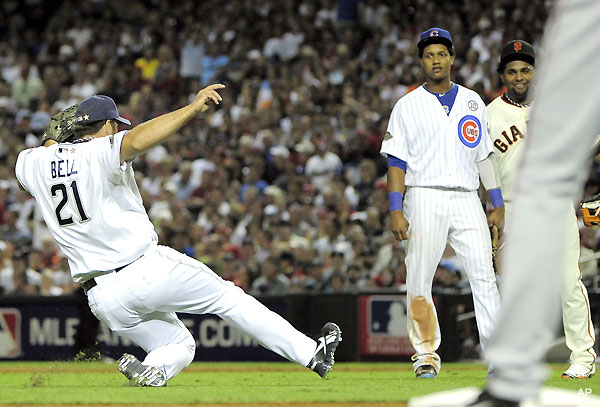
The Rolls Royce of available closers, the Padres are talking to teams on a daily, if not hourly basis on the availability of Heath Bell. Nearly every team has been linked to Bell in the past few days, from the Rangers, Cardinals, Phillies, Red Sox, Jays and Tigers. The prize of the closing market, expect the Padres to demand a king’s ransom for his services. At least two top prospects, with one being major league ready should get this deal done. With 28 saves and a 2.45 ERA, the 33-year old Bell is having another fantastic campaign before his impending free agency. The Rangers and Cardinals are most in need of a closer, with the Rangers the most likely destination based on availability of prospects. The Rangers have the superior farm system and could match up best with the Padres. The Phillies and Jays are the dark horses according to reports and need to decide if they are willing to pay the price.
2) Brandon League: Seattle Mariners
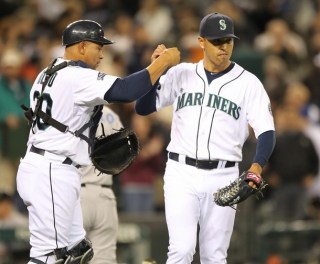 A first time All-Star in 2011, Brandon League has raised his stock this year and given the Mariners an interesting trade chip to work with at the deadline. League has chipped in 23 saves already this year, with a 3.35 ERA and 1.088 WHIP. With a team friendly contract and under team control for another season, League should draw much interest on the market. St. Louis seems like a logical choice, as the Cardinals will be looking for a long-term solution to their closing woes. I cannot see the Mariners dealing in their division and having to face League next year with the Rangers. A top prospect or two middle prospects should make this one happen. With the Mariners far out of contention and in complete rebuild mode, a top closer seems like a luxury that the Mariners cannot afford at the moment. The Mariners need offensive help and need it quickly, with League being one of many candidates likely to leave Seattle by July 31st to replenish the farm system.
3) Frank Francisco, Jon Rauch, Octavio Dotel, Jason Frasor: Toronto Blue Jays
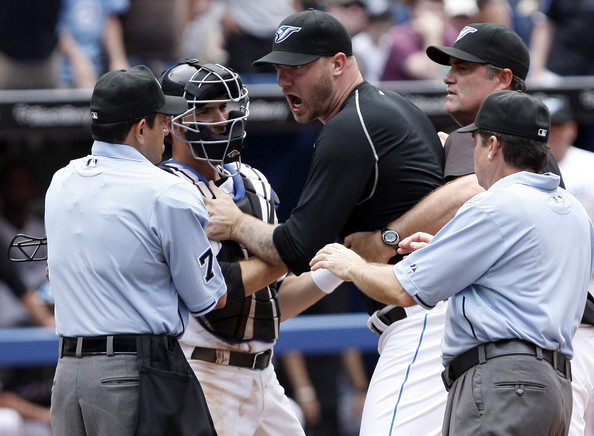 If Heath Bells is a Rolls Royce, the Blue Jays are running a used Ford dealership in their bullpen. Frank Francisco is like a used mustang with transmission problems, while Jon Rauch is a pickup truck without the V8 engine. The Jays have assembled a collection of the middle-of-the-road closers and setup men this year in their bullpen. Francisco will likely draw the most attention, despite his mostly awful numbers this year. At 31-years of age and throwing big time heat, Francisco still has potential. Rauch has served as the Jays closer for much of the year and could be in demand as well. Octavio Dotel, the eldest member of the pack, has bounced around during his major league career and could be a useful trade deadline pickup. The most effective reliever though for the Jays has been Jason Frasor and a smart team should consider him. While the Jays are unlikely to offer any true closers to contending teams, there are middle relief candidates to be had. Expect the Phillies to come calling and pickup one of the above.
4) Kevin Gregg: Baltimore Orioles
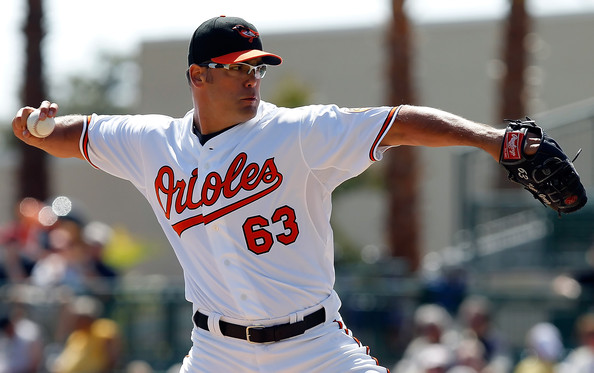 For those teams that like to play with fire, closers don’t get more dangerous than Kevin Gregg. A 4.00 ERA and unsightly 1.583 WHIP are not numbers that scream out lock-down closer. Gregg has shown though the ability to get hot at times during his career and will be considered by many teams over the next week. Signed through next year, the Orioles will look mainly for salary relief in shedding Gregg’s contract. Personally, I wouldn’t consider Gregg if I was running a team. But somehow he will likely move by July 31st.
5) Leo Nunez: Florida Marlins
 Another up-and-down closer in the Gregg mold, Leo Nunez is quietly having a very solid season for the Florida Marlins. Up to 27 saves, with a 3.22 ERA and 1.187 WHIP, Nunez might actually be the best affordable option on the closers market. The Rangers and Cardinals will sniffing around here, as will the Red Sox, Indians and Tigers. As the Marlins and Tigers have matched up well before in trades, I can see this swap happening. The Tigers have the ability to surrender a decent pitching prospect and can use Nunez down the stretch as Valverde insurance. With the Tigers in contention and the majority of their bullpen being fairly unstable for most of the year, Nunez might be a late inning option that the the Tigers can ill-afford to miss out on.
Send us your comments and opinions on available closers for the trade deadline. Other names thrown around have been Joakim Soria, Matt Capps, Joe Nathan, Andrew Bailey and Brian Fuentes. The trading of players, especially closers, is especially reliant on the competitiveness and status of a team in the standings. With so many teams still in their respective races, there are not as many top bullpen arms available at this point in the season. But come August, as more teams continue to drop out, expect to see even more trade activity. Exciting times, as the MLB pennant races continue to heat up, and baseball trade talk is on everyone’s lips.
Please e-mail us at: MLBreports@gmail.com with any questions and feedback. You can follow us on Twitter and become a fan on Facebook . To subscribe to our website and have the daily Reports sent directly to your inbox , click here and follow the link at the top of our homepage.

Ubaldo Jimenez to the Yankees? Rockies May Move Ace to the Bronx
Saturday July 16, 2011
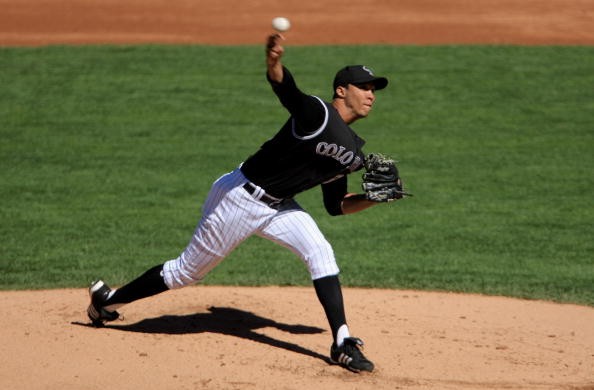
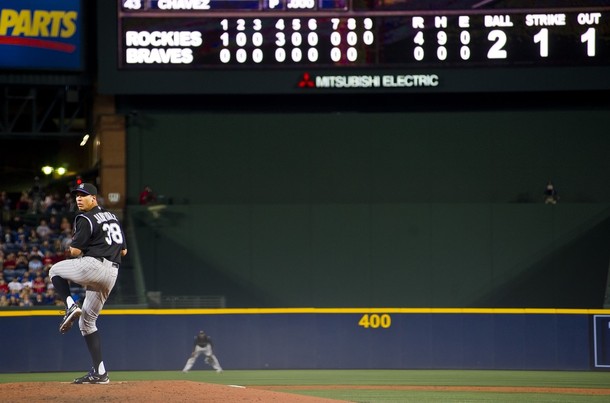
MLB reports: As an unbelievable as it may seem, there has been talk in baseball circles that the Rockies are taking calls on their ace pitcher, Ubaldo Jimenez. Start after start, game after game last year, Jimenez for the majority of 2010 was as unhittable as they come. Despite coming back down to earth in the 2nd half, Jimenez last year appeared in his first All-Star game and finished 3rd in the NL CY Young voting. He also pitched the very first no-hitter in Rockies history on April 17, 2010. With a young Rockies team that was expected to contend in 2011, the 27-year old Dominican Jimenez was expected to anchor the team. Now sitting with a 45-49 record, 8.5 games out of 1st in the NL West, the Rockies are on the fence as to whether they still have playoff aspirations this year. Further, the team’s brass needs to decide whether Jimenez is a part of those aspirations and future playoff runs. Media outlets have speculated that the Yankees are quietly making a run at Jimenez. There is a strong probability the trade could happen, but in my estimation, the Rockies would be making a colossal error if they do.
There is no denying the strength and ability of Ubaldo Jimenez. As the pitcher has slowly improved every year, especially noting his strong 2009 and 2010 campaigns, the hurler clearly has a world of potential. Taking a look at his numbers, the results speak for themselves:
| Year | W | L | ERA | IP | H | BB | SO | WHIP |
|---|---|---|---|---|---|---|---|---|
| 2006 | 0 | 0 | 3.52 | 7.2 | 5 | 3 | 3 | 1.043 |
| 2007 | 4 | 4 | 4.28 | 82.0 | 70 | 37 | 68 | 1.305 |
| 2008 | 12 | 12 | 3.99 | 198.2 | 182 | 103 | 172 | 1.435 |
| 2009 | 15 | 12 | 3.47 | 218.0 | 183 | 85 | 198 | 1.229 |
| 2010 | 19 | 8 | 2.88 | 221.2 | 164 | 92 | 214 | 1.155 |
| 2011 | 5 | 8 | 4.08 | 110.1 | 101 | 43 | 99 | 1.305 |
| 6 Seasons | 55 | 44 | 3.60 | 838.1 | 705 | 363 | 754 | 1.274 |
| 162 Game Avg. | 14 | 11 | 3.60 | 212 | 178 | 92 | 191 | 1.274 |
 With pitching at such a shortage, many baseball analysts are scratching their heads as to how the Rockies could possibly think about trading Jimenez. The San Francisco Giants proved last year that the World Series could be won almost exclusively on the strength of pitching. Tim Lincecum. Matt Cain. Madison Bumgarner. Jonathan Sanchez. The Giants had so many weapons to throw against its opponents every night and good young pitching at the end of day beats good hitting much of the time. The Rockies, ravaged by injuries and inconsistent performances, are unlikely to reach the postseason this year. But in the management of the team, the present and future must be considered. Look at Felix Hernandez on Seattle, Roy Halladay on the Phillies and Lincecum on the Giants. Every team that is trying to build a winner needs a stud pitcher at the top of its rotation. Jimenez is that guy for the Rockies and losing him on the roster will be a hole that will be difficult, to impossible to fill.
 So given the positives that Jimenez brings to the table, the issue remains how and why the Rockies could possibly consider moving him. There are a couple of main reasons in my estimation. Part of the equation is the performance of Jimenez this season. While he has been good, Jimenez for the most part has not been great. His record this year is far off from his most recent seasons, despite a strong rebound in his last few starts. Given his inconsistencies in 2011, the Rockies may be getting a little worried and looking to sell high before Jimenez starts to decline and/or injured. But given his strong resume to date, young age and rebound recently, I would like to think the Rockies are more intelligent than that. Players have their ups and downs, at all levels. It happens. Without a larger body of work for reference, it is almost impossible to reason that Jimenez is on his way down. His recent numbers tend to show otherwise. So while Jimenez may not be the same pitcher that we saw in early 2010, he is still the ace of the team.
So why the reports of trade talk with the Yankees? I will give you two words. Cliff Lee. The same Cliff Lee that was all set to be traded last year from the Mariners to the Yankees in a package including Jesus Montero. The deal was completed to the level that major media outlets were announcing the trade as fact. As the story goes on that one, the Mariners played the Yankees against the Rangers and took a package from Texas built around prospect Justin Smoak at the very last-minute. The Yankees were fuming to the level that they contacted the higher-ups in Seattle to complain about the conduct of their GM, Jack Zduriencik. The fallout was the Rangers making it to the World Series and the Yankees left at the altar without their prize. As a further dagger, Lee in his decision to sign with the Rangers or Yankees this past offseason, ended up going to the Phillies at the last-minute. Again, the mystery team coming at the last second out of the woods and the Yankees were left standing with egg on their face.
Do not underestimate the New York Yankees. They are the strongest and one of the proudest teams in baseball. The Yankees and their fans do not like to be left disappointed in the constant search for top talent. With Bartolo Colon and Freddy Garcia sitting in their rotation, the Yankees are clearly itching to make a move to bolster their rotation. While names like Jeremy Guthrie, Derek Lowe and Bronson Arroyo being thrown around, it starts to shed some light as to where the Jimenez talk is coming from. This is the Yankees and they do not like shopping at the Ford dealership. This is a team built on Mercedes and BMW’s. The problem is that the top cars, i.e. ace pitchers, are not readily available. After making runs at Felix Hernandez and Francisco Liriano, the Yankees are still in search of a strong #2 to compliment ace CC Sabathia. Considering that Sabathia can opt out of his contract during the coming offseason and possibly leave New York, the pressure is even greater to land a top starting pitcher. From all the names that have been tossed around, the one that makes the most sense is Ubaldo Jimenez.
When Jimenez is on his game, he is as Cliff Lee-like as you can get. Jimenez is a horse that has the potential to pitch a complete game shutout almost every game out. This is the type of numbers that the Yankees are looking for. Rather than waiting to what comes in free agency, the Yankees are trying to hedge their bets and make a run now. Any package for Jimenez will be built around uber-prospect Jesus Montero. Considering his strong bat, Montero could move from catcher to first base to replace the aging Todd Helton. The Rockies still have faith in their own young catcher, Chris Iannetta, who has taken longer to develop than expected. Montero would be great insurance and an almost guaranteed monster bat, in addition to the other prospects that would be headed to Colorado. A win-win for both teams if it happens, considering the bodies that would be moving as part of the trade. But still not quite if you consider the value of Jimenez to the Rockies.
 Other teams will sniffing around Jimenez as well. The Red Sox, Indians, Tigers, Angels and Rangers could all be considered in the mix. Jimenez would not come cheap and if the Rockies are smart, they will auction him off to the highest bidder. At the end of the day, this is a trade that the Yankees have to make. With little to no other options on the market, the Yankees have to overpay for Jimenez or risk failing to win a World Series despite the highest payroll in business. The Yankees lost out twice on Cliff Lee and need to do everything in their power to land an equivalent pitcher to their fold. While Ricky Romero or Jered Weaver would be nice acquisitions, realistically neither one will be made available by their respective teams. With Carlos Zambrano overpriced and inconsistent and Johan Santana a question mark for the season, at this point it is Jimenez or bust for the Yankees.
In considering this trade from a Rockies perspective, think how long the organization suffered from a pitching perspective. Despite always having strong hitting, the Rockies as an organization have been challenged to develop and maintain reliable pitching. Now that the Rockies have an ace in place, the team should be focusing on building around Jimenez rather than moving him. If the Rockies build their core of hitters and fail to have a deep and consistent starting rotation, the team will mean little come playoff time. The team will simply fall back into old habits and fail to adapt to the new Major League Baseball. With the steroid era past us, baseball is built around pitching and defense now for the most part. The Rockies, like every other team, needs good young pitching to contend. Jimenez has the potential to give them a high level of pitching for at least the next five years. If the Rockies feel they have a chance to contend during that time, they must hold onto him or risk setting themselves back even further.
Knowing that this is a trade that Yankees must make and the Rockies should pass on, the final question is whether this trade will happen. My heart says no, but my brain says yes. Despite all the reasons that the Rockies should hold onto Jimenez, it appears in my estimation that the Yankees will make an offer that Colorado cannot refuse. In fighting for World Series titles in New York, all necessary resources have to be acquired at any cost. Considering that the Yankees will include Montero and 2-3 more top prospects, the Rockies will have a hard time saying no. Perhaps the Yankees will include a couple of top pitching prospects in the package that will allow for a smoother transition for Colorado. But the reality is, that while prospects are intriguing and desirable, they are far from a sure thing. For every Derek Jeter that is drafted, developed and becomes a future Hall of Fame player, there are 1000’s of Todd Van Poppel clones that come highly touted and burn out just as quick. Ubaldo Jimenez has the experience and numbers that are proven. While I am always skeptical of pitching, based on injury risk (see Stephen Strasburg), the potential risk in this case by keeping Jimenez is worth the reward of the potential for future playoffs. This will be the one case where I advocate that a team hold onto their starting pitcher rather than cash in for prospects. But it is also the case where there is extreme speculation and rumors and I foresee the trade occurring. The Yankees are the Yankees for a reason. They usually get what they want. They want Ubaldo Jimenez and before July is done, he very well could be in pinstripes.
Please e-mail us at: MLBreports@gmail.com with any questions and feedback. You can follow us on Twitter and become a fan on Facebook . To subscribe to our website and have the daily Reports sent directly to your inbox , click here and follow the link at the top of our homepage.

Jim Riggleman Resigns from the Nationals: Treason in Washington
Friday, June 24, 2011

MLB reports: June has apparently become the month in baseball to fire your coach if you are a MLB General Manager, or to quit your team if you are a manager. Follow along the coaching carousel:
-
June 8th: Texas Rangers fire hitting coach Thad Bosley and replace him with Scott Coolbaugh
-
June 9th: Florida Marlins fire hitting coach John Mallee and replace him with Eduardo Perez
-
June 10th: Oakland Athletics fire manager Bob Geren and replace him with Bob Melvin
-
June 14th: Houston Astros fire pitching coach Brad Arnsberg and replace with him Doug Brocail
-
June 17th: Cleveland Indians fire hitting coach John Nunnally and replace him with Bruce Fields
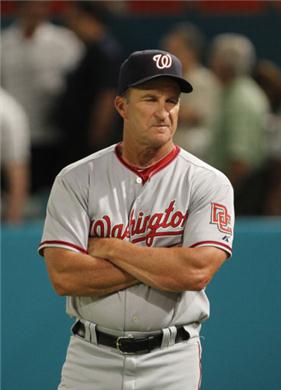 It looks like where there is smoke, there is fire. A lot of it apparently in the coaching ranks of baseball. Teams were getting nervous and to help jump-start their slumping players, several teams decided to change a coach rather than making wholesale roster moves, or let go of the manager and/or General Manager. On June 19th, the baseball world was stunned as manager Edwin Rodriguez of the Florida Marlins resigned and was replaced with 80-year old ex-Marlins manager Jack McKeon. Then yesterday, Jim Riggleman, manager of the Washington Nationals, got the same itch from the “quit bug” suffered by Rodriguez and announced that he was resigning his post. The captain jumped ship in Washington but unlike the Florida situation, Riggleman made his decision for all the wrong reasons. As a result, he may never coach again in baseball.
The inside story behind Riggleman leaving the Nationals was that he requested some sort of meeting from General Manager Mike Rizzo to discuss his long-term future in Washington. When Rizzo refused to discuss his contract status, Riggleman departed from the team and resigned his position as manager. Essentially Riggleman did not like the rules of the game, so in a childlike manner he took his ball and went home, so to speak.
“It’s been brewing for a while,” said Riggleman. “I know I’m not Casey Stengel, but I do feel like I know what I’m doing. It’s not a situation where I felt like I should continue on such a short leash.”
No Jim. You are certainly not Casey Stengel. Let’s take a look shall we, at Riggleman’s career managerial record:
| Year | Age | Tm | Lg | G | W | L | W-L% | Finish |
|---|---|---|---|---|---|---|---|---|
| 1992 | 39 | San Diego Padres | NL | 12 | 4 | 8 | .333 | 3 |
| 1993 | 40 | San Diego Padres | NL | 162 | 61 | 101 | .377 | 7 |
| 1994 | 41 | San Diego Padres | NL | 117 | 47 | 70 | .402 | 4 |
| 1995 | 42 | Chicago Cubs | NL | 144 | 73 | 71 | .507 | 3 |
| 1996 | 43 | Chicago Cubs | NL | 162 | 76 | 86 | .469 | 4 |
| 1997 | 44 | Chicago Cubs | NL | 162 | 68 | 94 | .420 | 5 |
| 1998 | 45 | Chicago Cubs | NL | 163 | 90 | 73 | .552 | 2 |
| 1999 | 46 | Chicago Cubs | NL | 162 | 67 | 95 | .414 | 6 |
| 2008 | 55 | Seattle Mariners | AL | 90 | 36 | 54 | .400 | 4 |
| 2009 | 56 | Washington Nationals | NL | 75 | 33 | 42 | .440 | 5 |
| 2010 | 57 | Washington Nationals | NL | 162 | 69 | 93 | .426 | 5 |
| 2011 | 58 | Washington Nationals | NL | 74 | 37 | 37 | .500 | 3 |
| San Diego Padres | 291 | 112 | 179 | .385 | ||||
| Chicago Cubs | 793 | 374 | 419 | .472 | ||||
| Seattle Mariners | 90 | 36 | 54 | .400 | ||||
| Washington Nationals | 311 | 139 | 172 | .447 | ||||
| 1485 | 661 | 824 | .445 |
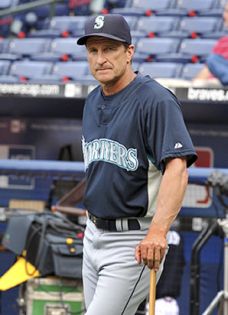 Jim Riggleman in his twelve-year managerial career has a record of 661-824, .445 winning percentage. During his three years in Washington, Riggleman finished with a 139-172 record. Riggleman’s best year was 1998 with the Cubs, where he had a 90-73 record and his team finished second in their division. He had a 73-71 record in 1995 with the Cubs and was floating at .500 this year, with a Nationals team sitting at 37-37. The man is clearly no baseball Houdini. While some may argue that Riggleman was not given much to work with at each of his stops for the most part, the man clearly was not able to get much out of his teams at most stops. A great manager should be able to turn out something out of nothing. But alas, this was not one of Riggleman’s gifts as a manager.
The reality of baseball is that coaches and managers get let go by teams all the time, as evidenced by the amount of activity among teams this month. Managers and coaches also quit sometimes. Rodriguez left his position in Florida, as did Riggleman in Washington. But when a coach leaves a team, the intention and circumstances behind the resignation are crucial. For it is the story behind the announcement that will ultimately dictate if and when said manager receives another crack at a big league post. Gonzalez left his position for the better of his team. The Marlins were floundering and in the interests of having his team recover, Gonzalez felt that a change was needed. While that should have been up to the team to decide, at least Gonzalez acted in what he felt was best for his team. His compassion and sentiments to the organization means that Gonzalez should continue coaching in baseball. In the case of Jim Riggleman, that door has been shut close in my opinion.
The Nationals were not happy to say the least with the news. “I was always taught that one of the cardinal rules of baseball was that no individual can put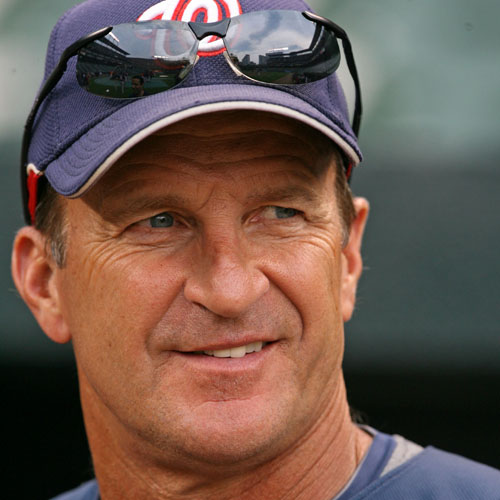 his interests before those of the team,” was the sentiments expressed by Mike Rizzo. The GM is right in this case. Many MLB managers are on one-year contracts like Jim Riggleman was in 2011. Some have a chance at long careers with their teams, while others are seen as more temporary solutions. In Riggleman’s case, he was likely more of the temporary variety. But players, coaches and managers are in this position all the time. Many veteran players sign for one-year deals, knowing full well that they will not be with a team beyond the period. The same goes for managers, who can often be brought in to manage a young team and eventually be replaced with a fresh voice as the team looks to grow and change direction. That is the rules of the game and Jim Riggleman is not better than the system. If a player was to leave his team mid-season due to contractual issues, he would be seen as selfish. Jim Riggleman as manager is no different. He let his organization, players and fans down, by jumping ship. He put his own financial and security needs ahead of those of the people around him. So Riggleman wanted a long-term contract? The best way to do it was to right the ship and lead the Nationals to their strongest possible record this year. Instead, Riggleman has likely blacklisted himself from the game and lost the chance to manage again.
 The 58-year old Riggleman does not have any excuses in my book. He was a bench coach for several years, including stints with the Dodgers and Mariners following his departure from the Cubs in 1999. He did not receive another managerial opportunity until 2008, where he was an interim manager with the Mariners. Again Riggleman received an interim managerial job with the Nationals the following year, but stayed on with the team until yesterday. Was he a lame-duck manager so to speak? Probably. But that had more to do with his managerial skills and overall record than anything else. Sure many people want job security, especially in baseball. But let’s keep this in perspective. There are only thirty MLB manager jobs out there. Period. Jim Riggleman had one but he threw it away. He wanted to be a long-term manager but yet was not prepared to do what it takes to get there. Nobody should be above the system. I would not expect the Nationals to give Riggleman a strong recommendation, or any sort of reference in that regard. Teams have long memories and will likely be very cautious with Riggleman, who is today seen as having acted as a “jilted lover.”
In looking to the future, it is interesting to read Riggleman’s take. “I’m not sure if I’ll get another opportunity,” Riggleman said. “But I’ll promise you I’ll never do a one-year deal again. I’m 58. I’m too old to be disrespected.” His comments show that he clearly does not get “it”. This is not a question of respect. There is no entitlement. The Nationals did not owe you a thing Jim. They named you manager by removing the interim label. You were working year-to-year. Your lifetime managerial record did not entitle you to more. You were very lucky to have a MLB manager’s position. Your actions were selfish and disrespectful. The truth is that the Nationals team and its fans are better off for this move. They did not want to have a manager in the dugout who did not want to be there. That would not benefit anyone and a fresh voice and style could prove to be beneficial in the long-term. There are rumors that team is looking at Davey Johnson for the position. Personally, I think that Bobby Valentine should be considered for the job. But no matter who the Nationals hire, the team will be heading in a new direction. Jim Riggleman has committed baseball treason. For that reason, it is time for him to walk the plank and plunge into the waters of baseball oblivion.

Please e-mail us at: MLBreports@gmail.com with any questions and feedback. You can follow us on Twitter and become a fan on Facebook . To subscribe to our website and have the daily Reports sent directly to your inbox , click here and follow the link at the top of our homepage.

A Tribute to Chad Cordero: Retired MLB Closer
Wednesday June 22, 2011

MLB reports: The man with the straightest brim in baseball, Chad Patrick Cordero formally announced his retirement from baseball on Monday, at the tender age of 29. Cordero originally suffered a torn labrum and missed most of the 2008 season. He was never able to return back to full health and form following the injury and his 2010 season with the Mariners will remain his last in the majors.
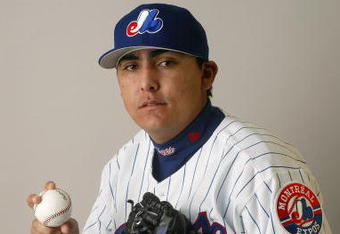 Chad Cordero was originally drafted by the San Diego Padres in the 26th round of the 2000 draft, and later was a 1st round pick of the Montreal Expos, 20th overall, in 2003. Cordero was one of the rare college closers who graduated to the same role in the majors. He attended Cal State Fullerton and made it all the way to a College World Series title. Cordero made his major league debut the same year he was drafted and stayed with the Expos/Nationals organization for the majority of his career.
Here are Chad Cordero’s final major league numbers:
| Year | Tm | W | L | ERA | SV | BB | SO | WHIP |
|---|---|---|---|---|---|---|---|---|
| 2003 | MON | 1 | 0 | 1.64 | 1 | 3 | 12 | 0.636 |
| 2004 | MON | 7 | 3 | 2.94 | 14 | 43 | 83 | 1.343 |
| 2005 | WSN | 2 | 4 | 1.82 | 47 | 17 | 61 | 0.969 |
| 2006 | WSN | 7 | 4 | 3.19 | 29 | 22 | 69 | 1.105 |
| 2007 | WSN | 3 | 3 | 3.36 | 37 | 29 | 62 | 1.387 |
| 2008 | WSN | 0 | 0 | 2.08 | 0 | 3 | 5 | 2.077 |
| 2010 | SEA | 0 | 1 | 6.52 | 0 | 5 | 6 | 1.552 |
| 7 Seasons | 20 | 15 | 2.89 | 128 | 122 | 298 | 1.208 | |
| 162 Game Avg. | 4 | 3 | 2.89 | 28 | 26 | 65 | 1.208 | |
| WSN (6 yrs) | 20 | 14 | 2.78 | 128 | 117 | 292 | 1.198 | |
| SEA (1 yr) | 0 | 1 | 6.52 | 0 | 5 | 6 | 1.552 | |
| NL (6 yrs) | 20 | 14 | 2.78 | 128 | 117 | 292 | 1.198 | |
| AL (1 yr) | 0 | 1 | 6.52 | 0 | 5 | 6 | 1.552 | |
The year 2005 will always stand out as Cordero’s best, as he led the Majors with47 saves that year. Cordero was taken out of baseball in his prime and the game has lost one of its top relievers much too early. Cordero played with teamUSAin the inaugural edition of the World Baseball Classic in 2006. After departing from the Nationals in 2008, Cordero went on to play in the minors and majors for the Seattle Mariners. He also played in the minors for the New York Mets and Toronto Blue Jays organizations. Cordero was released by the Jays on May 17th and was last playing for the St. Paul Saints, an independent baseball team, before announcing his retirement on Monday.
In addition to his baseball injuries, Chad Cordero has also suffered from personal tragedy. In December 2010, Cordero and his wife lost an eleven-week old baby daughter. The cause was Sudden Infant Death Syndrome (SIDS). Cordero is quoted as saying, “I’m just using her as motivation, trying to find strength. Because I know, now, she’ll always be with me, no matter what.” From the time of his daughter’s passing, Cordero has been active in raising awareness for SIDS. It is very uplifting to hear that despite all the adversity suffered by Cordero, that he could still work so hard to try to continue his baseball career, while assisting with SIDS awareness. SIDS is a subject that must be very difficult for Cordero and his family to discuss and deal with, but he still fights on to continue the memory of his dear daughter.
A true fighter in every sense of the word, Chad Cordero gets our sympathies and respect. Cordero has faced many roadblocks and hills to climb and he has continued to see through all the hardships that life has handed to him. Still young, there is always a chance that Cordero could try to make a return to organized baseball. The torn labrum that he suffered though is not a “fixable” injury in the same category as Tommy John surgeries, which has become very common in baseball circles. It is unlikely that we will ever see the Chad Cordero of old on the mound and if he never returns to baseball, we will always remember him for the competitor he was on the mound. But given the circumstances surrounding his family, baseball and sports takes a back seat to the human element of life. We wish all the best to Chad Cordero and his family. For everyone that can go purchase a baseball hat today and leave the brim unfolded, wear your hat this week as a tribute to one of the best relievers in the game: Chad Cordero.
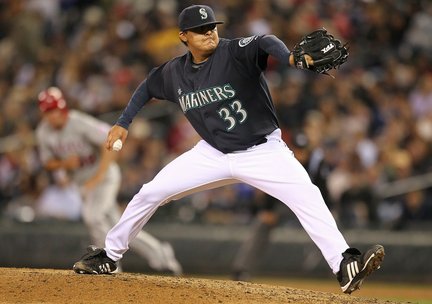
Please e-mail us at: MLBreports@gmail.com with any questions and feedback. You can follow us on Twitter and become a fan on Facebook . To subscribe to our website and have the daily Reports sent directly to your inbox , click here and follow the link at the top of our homepage.
***Note: The Wednesday E-mailbag is on hiatus this week so that we can bring you this tribute. The E-mailbag will return next week. Please feel free to continue to send all your baseball questions***

Athletics Fire Geren and Hire Melvin- The Beane Friday Faceoff
Friday, June 10, 2011
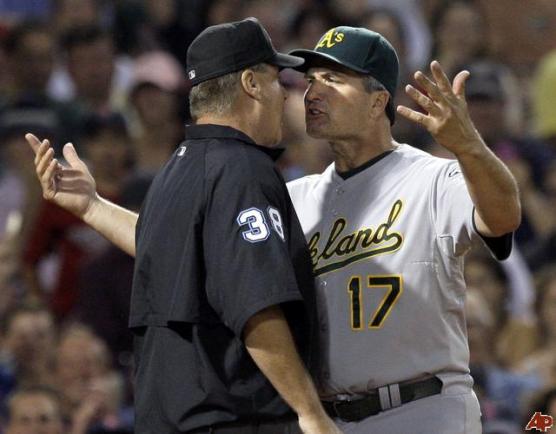
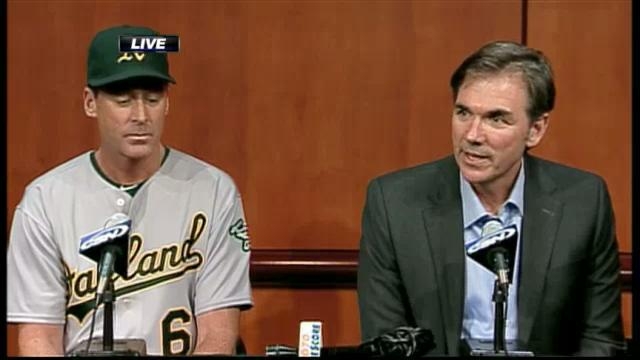
MLB reports: The Oakland Athletics record sits today at 27-37, fourth place in the AL West. So it should come as no surprise that after weeks of speculation, General Manager Billy Beane on Thursday came down with the verdict. Bob Geren is out. Bob Melvin is in. Two former catchers. Two guys named Bob, as part of the changing of the guard in Oakland.
I could be humorous and refer to the whispers that a manager in Oakland is essentially a puppet/pawn for Billy Beane. For anyone that read Moneyball, the idea is clear that Beane calls the shots and the manager complies with his moves. As long as Beane is talking to “Bob” on the telephone, it is irrelevant whether it is Geren or Melvin on the other line. But we will touch upon that shortly.
“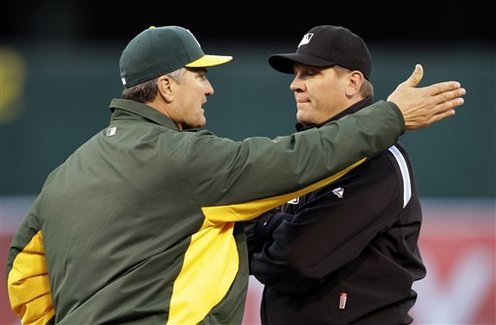 It felt like at this point a change was necessary,” was Beane’s immediate comments following the announcement. “It got to the point where the emphasis was on the status of the manager on a daily basis and no longer on the field. When that starts to happen, you need to shift the focus to what’s really important, which is performance. Bob Melvin will inherit some of the challenges that Bob had. Bob lost four starting pitchers in the space of three weeks. That was a tough body blow for the team. That was very difficult from Bob’s standpoint.” So begins the Oakland managerial career of Bob version 2.0.
The 49-year old Bob Geren completed his five seasons in Oakland with a 334-376 record, good for a .470 winning percentage. Despite his deep friendship with GM Billy Beane, the time was right to cut the cord as the highest the A’s finished under Geren was 2nd place in 2010, with a meager .500 record. Five years playing and five years managing in the majors represents the MLB career of Geren. The A’s tried taking a fresh approach by hiring him as their manager, but clearly he was not right fit for the role. Given his track record as manager, Geren may not find another managerial role very easily. But with his knowledge of the game, he will likely find a scouting or coaching role in the future. With Geren gone, Bob Melvin became the interim “man” in Oakland.
The 49-year old Bob Melvin (see a trend?) coached for seven years in the majors prior to joining Oakland. Two years in Seattle, five years in Arizona. In Seattle Melvin had a lifetime managerial record of 156-168 and in Arizona 337-340. The Diamondbacks originally had hired Wally Backman to manage the team before Melvin, but after legal issues came to light, Melvin got the job. Melvin enjoyed success in Arizona, including a 90-72 record in 2007 and 1st place in the division, together with being named NL Manager of the Year. Coupled with his 93-69 record in 2003 for the Mariners, Melvin apparently gets his teams firing on all cylinders when he first joins a squad. Nicknamed the “Mad Scientist”, Melvin is known to be a very-hands on manager who is not afraid to try anything and everything to pull out wins. After ten seasons of catching in the majors and seven managing, the A’s have themselves experience and a proven track record by hiring Bob Melvin.
By making this move, Billy Beane moved from inexperience to veteran leadership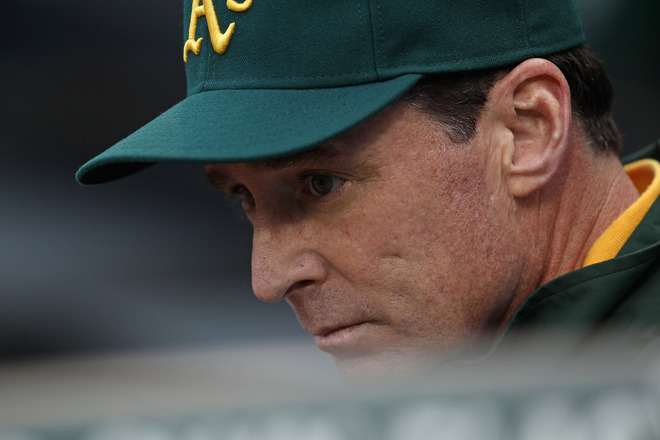 behind the bench. The million dollar question being asked by industry people today is whether Beane will finally let go of the reigns and give full autonomy to his “chef in the kitchen.” After years of watching Bob Melvin play and manage, it is hard to believe that he will agree to be Beane’s puppet. My gut feel is that this marriage will not last long, as Beane may let ease up for some time when the ball club starts winning, but he will take control again before long. Leopards do not change their spots and Beane is unlikely to change his approach in running the Athletics. Melvin surely went into this role with eyes wide open and realized the dangers of taking this job.
As the “interim” manager, Melvin will likely light the fire that is needed to get the A’s going in 2011. The A’s will almost definitely finish with a better record this season under Melvin as compared to Geren staying in the same role. With the “Moneyball” movie due out this fall, Beane had to save face and put a winning product on the field. Despite his assertions that the upcoming movie did not play a role in his decision to change managers, a genius GM played on the big screen by Brad Pitt would look much better to an audience if his team was successful at the same time. Beane did what he had to do to win today and gave his team to a proven winner in Bob Melvin. The danger will be retaining beyond this season. A good short-term move but one that will not work in the long run for the team. The Mad Scientist meets Mr. Moneyball. Let the show begin.
Please e-mail us at: MLBreports@gmail.com with any questions and feedback. You can follow us on Twitter and become a fan on Facebook . To subscribe to our website and have the daily Reports sent directly to your inbox , click here and follow the link at the top of our homepage.

Interview with Yusuf Carter: Oakland A’s Prospect

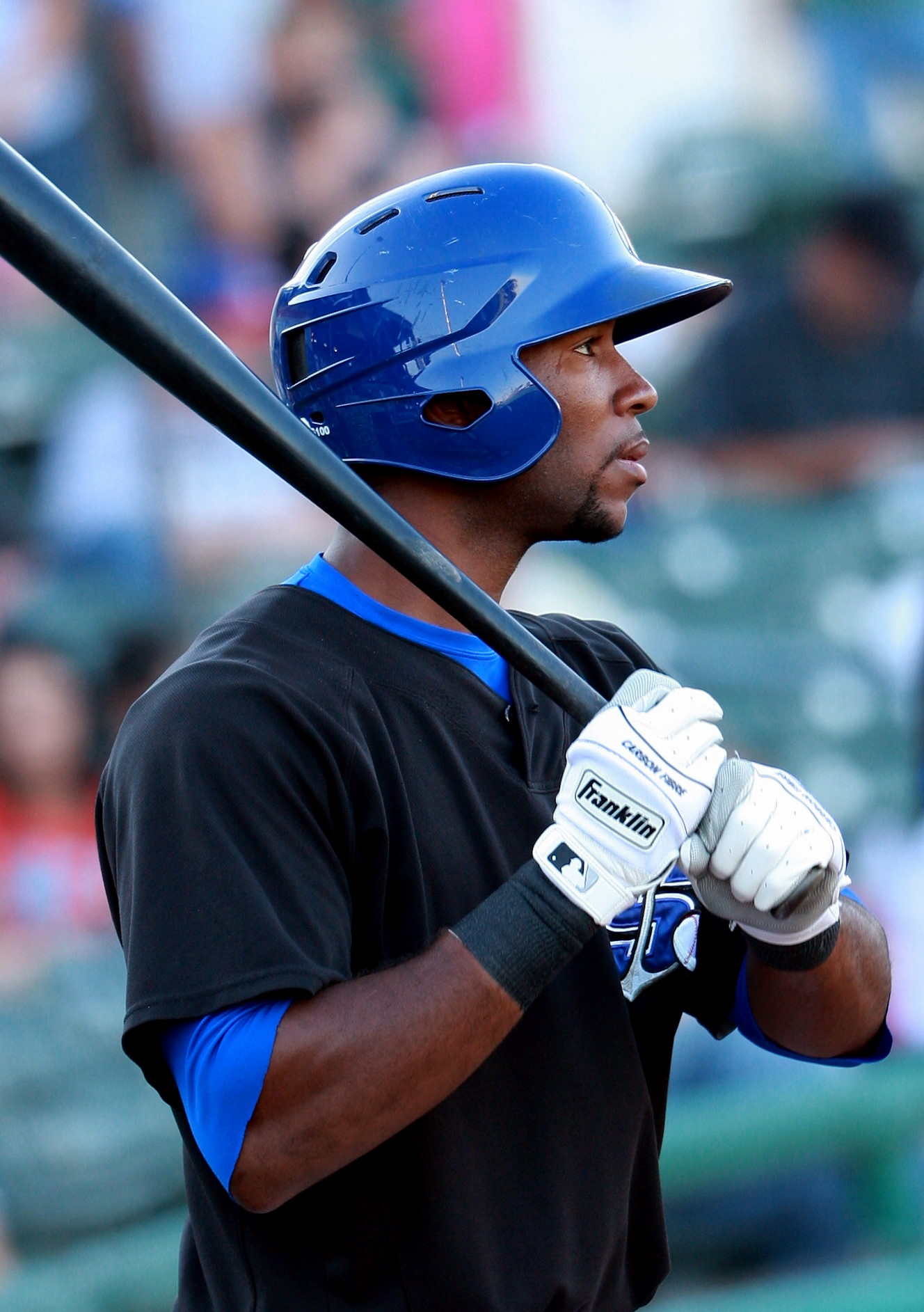
MLB reports: In our latest interview feature, we meet Oakland Athletics catching prospect, Yusuf Carter. Yusuf is 26-years-of-age and currently playing AA ball with the Midland RockHounds. Carter has the distinction of being drafted by three different major league teams, the Mariners, A’s and Cubs. Carter ultimately signed with the Cubs and played in their farm system before joining Oakland. The nephew of former major leaguer Joe Carter, Yusuf has graciously agreed to this interview with MLB reports. After speaking with him, I can fully say that you would be hard pressed to find a nicer, more down to earth player than Carter. A terrific human being and baseball player, Yusuf Carter is one of the lucky ones to play professional baseball and appreciates every minute. He is a hard worker, does not take anything for granted and is giving it his all to make it the major leagues. We proudly present: Yusuf Carter, of the Oakland Athletics.
MLB reports: Welcome to MLB reports Yusuf. It is a pleasure to have you join us.
Carter: The pleasure is all mine. Thank you for contacting me and having me on board.
MLB reports: Let’s start off with learning who was your favorite baseball player growing up. Which player did you most idolize and pattern your game after?
Carter: My favorite player growing up was definitely the kid, Ken Griffey Jr. I loved the way he brought style and swagger to the game of baseball! He was the best at hitting long home runs (and pimping them) and making highlight catches seemingly every night! Griffey probably had the most pure talent of any player I have ever seen and I hope that he makes the hall of fame one day.
MLB reports: To flip it around, which current MLB star do you most admire and why?
Carter: The player I most admire now is definitely Derek Jeter of the New York Yankees. I admire the way he goes about his business and plays the game. Jeter works very hard and plays the right way, every day. I am also impressed that Jeter has not let stardom get to his head and has remained humble despite his vast successes in baseball.
MLB reports: Reflecting on your career to-date, what are your proudest accomplishments on the baseball field?
Carter: Well looking at my career so far, I would have to say winning the Florida State League Championship in 2008 with the Daytona Cubs. It was the best feeling I ever had playing baseball. I hit a game-tying home run in a crucial game during the series and that was a pretty awesome feeling.
MLB reports: What are your goals going into the 2011 season?
Carter: My goals are to hit .400 with 50 home runs and 150 RBI’s! They say it is important to dream big, right?! (laughing) Realistically though, I am just going to go out and play hard  every day and give it my all! I want to look back after every game and know that I never took a night off and never gave away any at bats. As long as I play like that, I am sure that I can achieve at least half of my expected goals. That would be pretty good!
MLB reports: When you first found out you were drafted by three different teams in three years, what were your reactions? Did those reactions change over time? If you can comment on each team and why you chose to re-enter the draft that would be great. Please also tell the story of final signing with the Cubs and how you came to the A’s.
Carter: To be drafted at all is a pretty big deal. After it happened 3 years in a row, I was very happy that different organizations thought I was good enough to play for them and wanted me. That definitely gave me the confidence that I can make it all the way to the big leagues one day and made me work that much harder on every aspect of my game. But each situation was different for me. After considering all the factors, even when I got drafted early, I decided that I didn’t want to rush into signing and starting my career if the situation wasn’t the best fit for me at that particular stage. The best situation was when the Chicago Cubs drafted me in 2005, so I signed with the Cubs and started my baseball career. I played with the Cubs from 2005 -2008. I was picked up by the Oakland A’s in the winter of 2008 in the rule 5 draft and have been with the organization ever since.
MLB reports: Can you give an insight as to why you originally chose not to sign in the 2 previous times you were drafted before signing with the Cubs? Did you have any fear that you may not be drafted again or not have interest if you did not sign each time you chose not to sign?
 Carter: I was first drafted out of high school by the Mariners and the offer wasn’t very much. I knew it would be best for my career if I went to college and played more. That way I could gain more experience playing at a higher level, with the chance of increasing my value if I played well. The second time around, I was ironically drafted by the Oakland A’s. I was a draft-and-follow (before they got changed the system and got rid of it). The A’s wanted me to play another year of college ball and come to a decision once the year was over. I decided not to sign with them because they had just drafted a catcher in the 1st round that year and another catcher in the 2nd round. Kurt Suzuki and Landon Powell were both catchers that I knew of and as it turns out, are now the starting and #2 catchers for the A’s today. With such a backlog at the position, I thought I would have a better chance at advancing with a different organization. That’s when the Cubs drafted me and I felt it was a good situation for me and I signed. I definitely had a slight fear each time that I may not be drafted again by not signing. But I was also confident in my abilities and didn’t want to sell myself short just out of fear. I just wanted to play hard and do well and I felt everything would work itself out. Which it did.
MLB reports: What do you consider your greatest baseball skill(s)?
Carter: I would have to say that in my opinion and based on what most people say as well, my best skill would have to be my arm. I like throwing guys out anyway I can. Defense behind the plate attracted me to the position and throwing out would- e based runners is the best part of being a catcher.
MLB reports: What facets of your game do you most wish to improve upon?
Carter: I honestly need to improve on all areas! But I think as a catcher, I need to focus on improving my receiving skills so that I can handle all the different pitchers I work with on a daily basis much better. I have made already strong improvements from this spring to now in that area of my game. As a result, I am feeling a lot more confident as I work towards being a major league catcher one day. But my mindset is that I can always get better!
MLB reports: How do strikeouts and walks figure into your game? Do you see any of these items changing over time and to what degree?
Carter: They play a huge part in my game. When I feel good and comfortable in the box, I see the ball a lot better and I don’t chase many pitches out of the zone. That inevitably leads to more walks and better overall results at the plate. I don’t end up getting myself out as much. But if I’m not seeing the ball as well or I’m in a little funk, like most batters I tend to chase out of the zone and swing at pitches that I should have resisted! That ends up leading to fewer opportunities for success. My approach at the plate is something that I definitely see changing and an aspect of my game that I have to constantly stay on top of.
MLB reports: Long term what position do you see yourself playing? How do you see defense as part of your overall game?
Carter: I have always been a guy that can play multiple positions, which I consider a strength for me. By being versatile, I have more ways to stay in the line-up and gain experience in the field But I think that if I had a choice, I would choose catching at this point. I know that many people will call me crazy for choosing the most demanding position in the game! But in my view, I see catchers as an important part of the game. I have always thought that if I could master that position and be able to catch at the highest level, I would be very important to my team and organization. As a catcher, defense is the main part of my game which always needs to be sharp! I have to be able to do it all, including stopping easy runs from scoring by base runners advancing on balls thrown in the dirt or stealing, for example. So yes, defense is huge.
MLB reports: A little birdy told us that your uncle happens to be no other than…former MLB star and World Series hero Joe Carter. Is this true?
Carter: Yes, indeed (chuckle). You are correct. Joe is my father’s brother and my uncle. I definitely get my athletic genes from that side of the family. Just to look in comparison, I am probably the “smallest” guy in the bunch at 6’3″ when I am around my dad’s family, including my father, uncles and brothers. My dad is 6’7″ so I got some of his height luckily (chuckle).
MLB reports: What is your relationship like with Joe Carter? Must have been pretty amazing. What kind of influence was Uncle Joe on your baseball career and life?
Carter: Joe and I always have enjoyed a great relationship. He was one of the best uncles a nephew could ever asked for. He has helped me and been there for me in so many ways since I started playing baseball. Joe always gives me hitting advice if I needed it and just to talk baseball sometimes. He always helped get me back on track and improve my game. I had an advantage with Joe Carter as my uncle, as he always gave me good advice at each stage when I was trying to decide when and where to sign professionally. My agent happens to be also his agent that he has been with for 25 years, so I knew that he would have my best interests in mind.
MLB reports: What was it like growing up with Joe Carter as your uncle? I can only imagine the stories that you must have.
 Carter: Growing up with everyone knowing that Joe was my uncle was a good thing and a bad thing at times. It was cool because I had a famous uncle to brag about if I wanted! (chuckling) Although I usually didn’t tell people about Joe often. Having such a famous uncle got me a great deal of exposure and extra looks from scouts and teams. The only thing was that I just did not want to be known solely as his nephew though. I wanted to stand on my own and have people see that I could play and had talent as well. But it was always cool going to watch him play whenever he played in New York (my hometown) against the Mets or Yankees! I got to meet a lot of my favorite players after games waiting for him to come out. That was always a treat.
MLB reports: Any memories of your uncle that stick out?
Carter: A cool time that I remember is when Joe was a commentator for the Cubs back in 2003. That was my senior year in high school. He set it up so that I could take batting practice on the field with the Cubs! The team gave me a uniform and everything. I got the chance that day to meet Sosa, Alomar and a lot of guys from both teams . I didn’t hit any out of the park that day, but it was fun! Later, to top it off Joe brought me up to the press box with him and put me on tv with him for a bit! I’m just lucky to have someone of his stature in the game, that has been there and to look out for me. Joe knows what it takes to succeed in life and baseball and has always been there to give me advice and to help me out.
MLB reports: What have you most taken away from Joe Carter the baseball player?
Carter: One thing that I always noticed about him when he played is that he had a constant smile on his face and looked happy to be playing the game. I definitely try to do the same when I’m out there on the field. After all, let’s all never forget that it is still just a game! The more fun that you have out there, the better you will play overall.
MLB reports: I know that you must get this all the time, but we can’t talk about Joe Carter without me asking you: what are your memories from his famous walk-off home run in the World Series?
Carter: A lot of people ask me what I thought about his walk-off home run to win the World Series for the Blue Jays back in the 1990s. The truth is that I respond that I did not know anything about it until I was 12-years-old and started playing organized baseball! So I actually learned about “the home run” 4 years after it happened. Boy, I got a late start! (chuckle)
MLB reports: What were your experiences like growing up as a baseball late bloomer? Please give us an insight as to what your childhood was like and how that affected your playing career.
Carter: I would say my culture or childhood affected me the most as far as playing goes. I grew up in Brooklyn, New York, in a neighborhood where I was fortunate to have many friends of the same age. We were always involved in some type of sports every day. We would literally play all different sports throughout the day, every day. My childhood is definitely where my competitiveness on the field comes from. You never want to lose to another neighborhood at all, so I learned at a young age that you always have to give it your all in sports. That is how I continue to play the game to this day. I joined my first organized baseball team when I was 12 years old. That is a late start for most people but I was lucky to have the raw skills from playing in the streets. From there, I had to learn the game of baseball and the fundamentals that go with it. But I think growing up that way taught me to work hard and always play the game the right way.
MLB reports: How has your general interaction with fans been? As far as autograph requests, cheering, heckling etc. please share insights.
Carter: I always try to interact with the fans any chance I get. I have never been a guy that takes himself too seriously, so I don’t mind small talk or signing autographs for fans if I have time. I especially like to talk to the young kids at the game if I can. It is important to me to make sure that the kids get the most out of their time at the ballpark. In terms of fans cheering, I can take a joke that comes across as a good heckling. I’ll usually laugh in those situations and not get upset. As long as it is nothing personal or disrespectful, it doesn’t get to me.
MLB reports: If you were not playing baseball today, what do you think that you would be doing? When you aren’t playing baseball Yusuf, what do you do for downtime?
Carter: If I wasn’t playing baseball, I would try my luck in acting or something. I would be a bad guy or villain in my movies or the super cool hero! (chuckle) Either an actor or a music producer. I Love music, so that would be a fun role for me. On my free time when I am not playing baseball, I usually try to kick back and relax. Watch tv or catch a new movie that came out. I enjoy my downtime and try to let my mind and body relax and focus. Nothing that involves baseball! (laughing)
MLB reports: On a side note, have you ever met Billy Beane before? If you can give any scoops as to how interactions with Billy were and/or other members of the Oakland management that would be great to give fans the inside feel.
Carter: I don’t have much to share, sorry guys. I have seen him before but haven’t actually met him and interacted with him. But I would say it would be like any interaction with any management or boss. My rule is to always do the right things. Smile, don’t talk too much and laugh at their jokes! (laughing) If you do that, you should be fine!
MLB reports: If you had to look into a crystal ball, when do you see your expected time of arrival in the big leagues and what do you think you need to do most to get there?
Carter: If I had a crystal ball I would definitely try to speed up that process as much as possible! (grin) In my estimation, if I continue to sharpen my receiving skills and work hard on the other parts of my game as well, I think I can be there in the next 1-2 years. Until then, I will continue to work hard and bust my behind to make it happen!
MLB reports: Keep up the great work Yusuf. It was a pleasure meeting and speaking with you. We hope that we can do this again soon and good luck on the rest of the season.
Carter: Thank you for featuring me, you guys are awesome. I read MLB reports all the time and love your articles. This was fun!
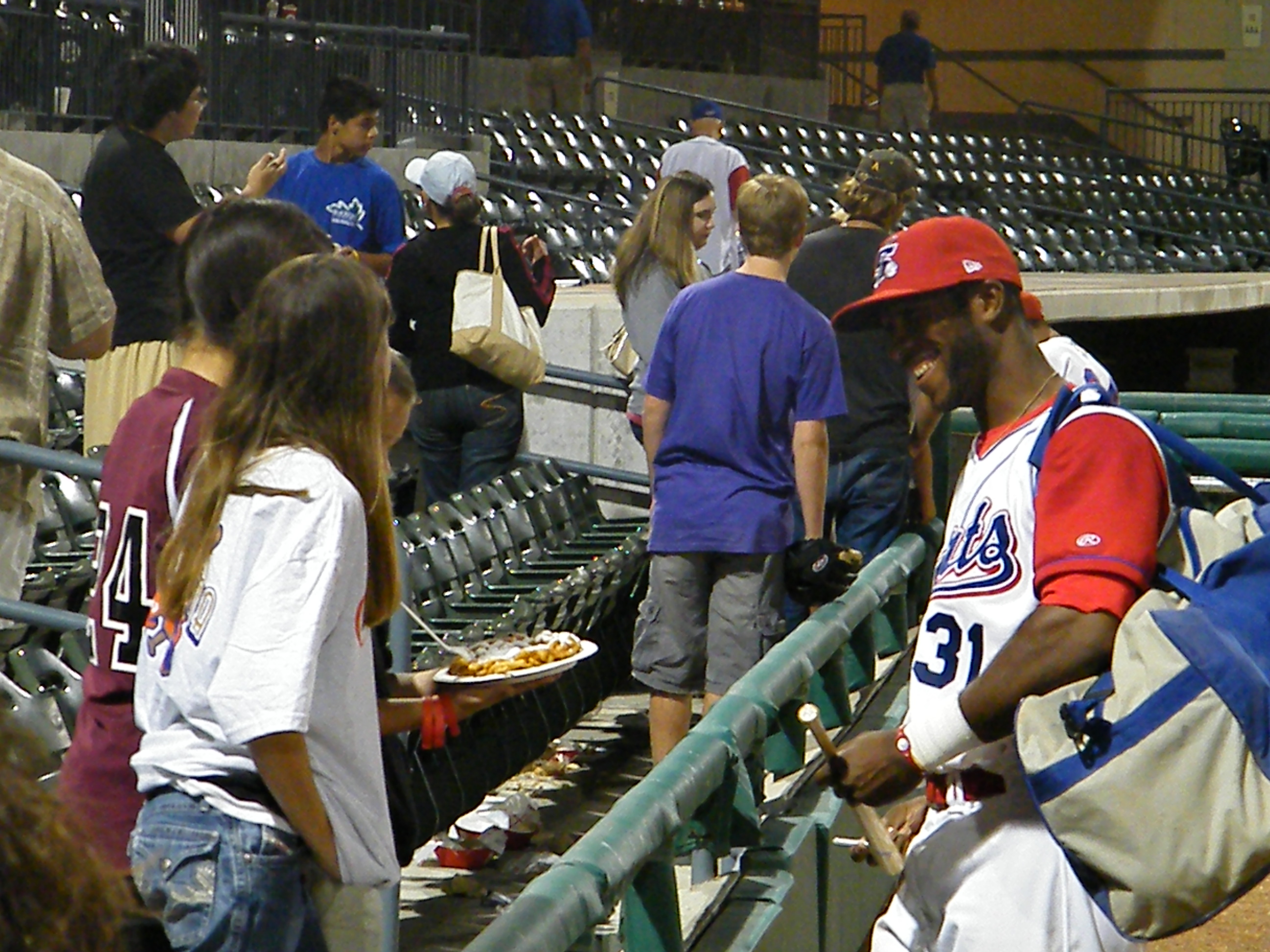
***A special thank you to Yusuf Carter for his time in speaking with MLB reports as part of this interview and providing several personal photos. We look forward to Yusuf writing a blog entry for our MLB Guest Blog this season, exclusively on MLB reports. You can also follow Yusuf Carter on twitter***
Please e-mail us at: MLBreports@gmail.com with any questions and feedback. You can follow us on Twitter and become a fan on Facebook . To subscribe to our website and have the daily Reports sent directly to your inbox , click here and follow the link at the top of our homepage.
MLB Opening Day Preview: Schedule and Pitching Previews
MLB reports: With the 2011 MLB season about to commence, literally hours away at this moment- my thoughts continue to centre on the Holy Grail: Opening Day. This year, there are 12 teams playing on Thursday March 31st with the remaining teams playing the next day. For each MLB fan rooting for their respective team, there are 15 different opening day games that will be the focal point for them. Regardless of the city you live in or the team you root for, the first game of the year is the most exciting. It is time to shake the snow off your boots, grab your jersey and tickets and get ready for the start of baseball. For you, the diehards, I present the matchups and probable pitchers for each game.
In my brief analysis of each game, I have taken a slight twist in my analysis. I have decided not to crunch the numbers and take the stats route. To predict the outcomes of games, most stat-heads tend to look at historical opening day numbers for each team, head-to-head records, home/away records, day/night games, etc. This article contains none of the above. I am simply looking at the teams, taking a feel for each lineup and starting pitcher for each team, in performing my discussion. I was planning to post this article in a couple of days but with the enthusiasm of opening day on the horizon, I simply could not wait. Thus MLB fans, I present to you: The breakdown of the MLB Opening Day lineup. (Note: all game times are EST. Starting pitchers are subject to change, especially for injuries. Games may be delayed due to weather conditions)
Thursday March 31, 2011
1) Atlanta Braves at Washington Nationals:
1:05pm: Derek Lowe vs. Livian Hernandez
There will be 2 games to start the year on Thursday at 1:05pm and this will be the first game previewed. America’s team, the Braves vs. the Nationals in the Nation’s capital. The Nationals are a nice, young exciting team with a great deal of buzz surrounding the team. Unfortunately, neither of its 2 brightest stars-to-be, Strasburg and Harper will not be a part of the opening day lineup. The Braves have a strong, young team led by Heyward and Freeman. Derek Lowe is an experienced veteran who gets the opening day nod out of respect. Livian Hernandez, on the other hand, is the opening day starter by default. The Nationals fans will be likely going home disappointed on this day, as the Braves will be the victors in a high scoring opener.
2) Detroit Tigers at New York Yankees
1:05pm: Justin Verlander vs. C.C. Sabathia
 The next opening game of the year to start the year comes from new Yankee Stadium, as 2 historical teams matchup in what should be an excellent pitching matchup. Verlander and Sabathia are 2 of the strongest pitchers in the majors and should go toe-to-toe in this game. While I see the hitters having the advantage in this game while the pitchers break into the season in a strong hitting park, smart money is the Yankees taking the win in their home park.
3) Milwaukee Brewers at Cincinnati Reds
2:10pm: Yovanni Gallardo vs. Edinson Volquez
 This game is the one that will catch my attention the most on Thursday. Two of the most exciting offensive teams in the majors, each led by their young strikeout artists. Gallardo and Volquez are cut from the same mold: when on, both are untouchable. When both are having difficulties, they can be time bombs. In the Cincinnati bandbox, I am predicting a high scoring game and a Reds victory. I am a big Gallardo supporter, but I can’t see opening in Cincinnati working well for him.
4) L.A. Angels at Kansas City Royals
4:10pm: Jered Weaver vs. Luke Hochevar
On paper this matchup looks very easy to analyze and in reality, it is. Weaver is a stud hurler for the Angels, a team with strong defense and fairly balanced offense. The Royals have Cabrera and Francouer in the outfield and Hochevar as their “ace”. The Royals fans are fortunate to be opening the season at home. This will be the last of their fortunes on this day as Weaver and the Angels should easily have their way with a Royals team in their final year of rebuilding as respectability begins for them in 2012.
5) San Diego Padres at St. Louis Cardinals
4:15pm: Tim Stauffer vs. Chris Carpenter
The young and surprising Padres bring their smoke and mirror show to St. Louis to face the Cards and Chris Carpenter. With one of my hyped young hurlers Matt Latos on the shelf, Tim Stauffer gets the nod for the opener for the Padres. With Adrian Gonzalez in Boston, the Padres will find a difficult time to score runs this year. Stauffer, stellar in the bullpen and spot starts for the Padres in 2010, is now moved into the rotation full time this year. Carpenter, one of the best pitchers in the game, will prove to be stingy at home. Regardless of how many runs the Cardinals score on this day, 2 runs will be enough for the Cardinals to start their year with a win.
6) San Francisco Giants vs. L.A. Dodgers
8:00pm: Tim Lincecum vs. Clayton Kershaw
 This will be a premier matchup, as the World Series champions Giants face their arch-rivals, the Los Angeles Dodgers. Lincecum vs. Kershaw will be a pitching matchup for the ages. I see these pitchers battling all night, with the Dodgers emerging victorious. Opening night will be exciting for the Giants, but the hangover effect on the road leans to an advantage to L.A. on this night.
Friday April 1, 2011
7) Houston Astros at Philadelphia Phillies
1:05pm: Brett Myers vs. Roy Halladay
Day 2 of Opening Day finds Brett Myers coming back to his old stomping grounds to face Halladay and the Phillies. I don’t want to formally go on record and say that Halladay will throw a no-no in the opener…so….let’s just say, I have already said enough. The Phillies fans will be smelling blood and it should not take long for Myers to be shaken as the Phillies hitters have their way with him. Houston goes down quietly and quickly in this one.
8) Pittsburgh Pirates at Chicago Cubs
2:20pm: Kevin Correia vs. Ryan Dempster
Unless you are a Pirates or Cubs fans…I imagine that only the diehards will be watching this one. Kevin Correia in my estimation was a solid pickup for the Pirates and with decent run support will win at least 12 games in Pittsburgh. Dempster, as a steady pitcher for the Cubs will prove to be a worthy adversary. This game will boil down to which team gets the better pitching and my crystal balls sees a Pirates victory in this one.
9) Chicago White Sox at Cleveland Indians
3:05pm: Mark Buehrle vs. Fausto Carmona
In the seemingly never-ending Opening Day matchup between the Chisox and Indians, Buehrle and Carmona face off in Cleveland. As most White Sox fans will attest, Buehrle can be steady at the best of times and extremely frustrating in others. The Opening Day nod was given to Buehrle by Ozzie out of respect and years of service, which is well deserved and applauded. But with the hot hand of Fausto going into the opener, the Indians will squeak out a victory in the opener in one of the few bright moments that will likely shine in Cleveland’s otherwise rebuilding 2011 season.
10) Boston Red Sox at Texas Rangers
4:05pm: Jon Lester vs. C.J. Wilson
 I would have loved to be at this game, as this game features the matchup of two of the best MLB offenses and dynamic left-handed pitchers. This game is being in played Texas, which tends to favor the hitters in the summer…but alas, this game is being played in April. The Red Sox will be buzzing with excitement with the additions of Gonzalez and Crawford, with the home return of Salty. After falling short in the World Series, I foresee the Rangers coming to the game focused and determined. Wilson will be on his game as the Rangers start 2011 with a hard fought victory over the Red Sox in a low scoring game.
11) Arizona Diamondbacks at Colorado Rockies
4:10pm: Ian Kennedy v. Ubaldo Jimenez
One word: Ubaldo. The man with what, a 0.70 ERA in the first half of last year? Ubaldo translates from Spanish to English to mean unhittable. The Rockies take this game in 2 hours or less.
12) Minnesota Twins at Toronto Blue Jays
7:07pm: Carl Pavano vs. Ricky Romero
My live Opening Day game is in Toronto, Canada as Pavano and the Twins take on Romero and the Jays. Both pitchers come into this game after difficult final outings in their last respective spring training games. I was impressed with the Pavano re-signing with the Twins, as there is an excellent fit for him with this team. Romero, while a young exciting pitcher, is still growing into his role as ace on an up-and-coming Toronto team. While game 2 of this series features the true exciting pitching matchup of Liriano and Drabek, the fans attending opening day will have to settle to watch a decent game which will feature a victorious Twins team.
13) Baltimore Orioles at Tampa Bay Rays
7:10pm: Mark Guthrie vs. David Price
David Price, who will prove to be a serious Cy-Young candidate this year, faces the Orioles at home. My preseason favorites to win the AL East, this game should be a cake walk for the Rays and Price. While the Orioles will have a .500 team this year, Opening Night will not be their night.
14) New York Mets at Florida Marlins
7:10pm: Mike Pelfrey vs. Josh Johnson
Josh Johnson, when healthy, is one of the top pitchers in baseball. Mike Pelfrey, pitching for the bottom-feeder Mets, is like a lamb being led to the slaughter. Playing their final opener in their current home park, the soon-to-be Miami Marlins will give the Mets the first of their likely 90+ losses of the year. Not even close.
15) Seattle Mariners at Oakland Athletics
10:05pm: Felix Hernandez at Trevor Cahill
The final game of the year features the “Moneyball” Oakland A’s hosting King Felix and the Mariners. The A’s will have an exciting young team that has some of the strongest pitching in the AL with an improved offense that should finish 2nd in the AL West, with the chance of a division win. The Mariners, a young team in rebuild mode, have the reigning AL Cy Young winner on the hill. Despite many bumps ahead in their season, I would never bet against King Felix. Opening Day ends with a Mariners victory and the season being completely underway.
As you, I cannot wait for the season to start. Spring training has been exciting and now it is time for the game and stats to count. While March has been about the hitters and pitchers to get their innings and at-bats in, Opening Day means that the games will be played the way they are meant to. It’s a long MLB season, with 162 games ahead for each of our teams. But with all the teams starting with a 0-0 record, everyone has an equal chance of success. With that in mind and knowing the matchups, let’s get ready for 3 more nights of sleep and then it will be time to play ball. Have a great season everyone; I have a feeling 2011 will be one of the best MLB seasons of all time.

Please e-mail us at: MLBreports@gmail.com with any questions and feedback. You can follow us on Twitter and become a fan on Facebook . To subscribe to our website and have the daily Reports sent directly to your inbox , click here and follow the link at the top of our homepage.
The Man Behind the #10 Jersey – Adam Jones, Baltimore Orioles

MLB reports: It is not every day that I have the opportunity to correspond with a Gold Glove winning major league all-star, but over the last couple of weeks I got to do just that with Adam Jones of the Baltimore Orioles. Getting to know Adam and hearing his thoughts on the game, his career, and team was fascinating to say the least. The story begins as follows.
Adam, one of the most fan friendly MLB stars on twitter, started to converse with me on my usual favorite topic, baseball. I was instantly drawn to his easy going personality and zest for life and the game. After some messages back and forth, I brought up my blog and the interview articles I prepare on MLB reports. Being the cool cat that he is, Adam suggested he would love to help out a young writer and agreed to be interviewed for this profile piece. After some research, back and forth emails, and analysis, here we are today.
We covered a range of topics on the career of #10, which I am about to jump into further. Discussing topics ranging from the baseball influences on his career, his greatest accomplishments, goals, and areas of improvement, Adam did not hold back in his answers. Considering Adam was both an All-Star and Gold Glove recipient in 2009, it was astounding to find that he did not have an ounce of attitude in his answers. This is a player that is still humble at the age of 25 and works towards improving every facet of his game. The combination of baseball skills, work ethic and positive outlook, I believe will translate into a limitless future for one of baseball’s young bright stars.
One of the first questions that I asked Adam was to name the baseball player he most idolized growing up and patterned his game after. Born and raised in San Diego, California, to no surprise Adam named Tony Gwynn. However, the reasons behind his response did perk my curiosity. Baseball was not a sport that Adam “followed too strongly until approximately the age of 12” and only then, Gwynn was more a player that Jones had heard of than followed. When asked to expand, Adam explained that “I’ve hit with TG [Gwynn] for a few off-seasons now since I’ve been drafted. We have a tight group that hits together at San Diego State University.” As far as the influence Gwynn had on his game, Adam indicated that “what I’ve learned is myself. I’m not the hitter that he [Gwynn] was and that’s not my mentality. We’ve just had discussions of thought processes and having the ability to take a step back and let the ball come to you.” When breaking down the comparisons between Jones and Gwynn as players, his response becomes even clearer.

Tony Gwynn, a 2007 Hall of Fame inductee, played in 15 All-Star games, was the recipient of 5 Gold Gloves and 7 Silver Slugger Awards. Gwynn also ended his career with a .338 lifetime average. Jones, at the age of 25, brings a different game to the table. Gwynn is a difficult, if not impossible, player to emulate and Jones is realistic in this regard. The Gold Glove and All-Star appearance are already there with the promise of more to come. Adam’s batting average has slowly risen every year of his career to a high of .284 in 2010. With the right approach and discipline, .300 + is well within his reach. Like Gwynn, Jones does a bit of everything, including hitting for power and stealing the occasional base. Similar to Gwynn, Jones’ on-base percentage is dependent more on base hits than walks. The more I compare the players, the standard that Gwynn set for his career is one that I feel that Adam can strive towards. The bottom line on Gwynn is that the man could just plain hit. Jones, working his way up the major league ladder, could follow in the Gwynn’s footsteps, even if Adam does not implicitly try to do so.
My follow-up question asked Adam to name the current MLB star that he most admired. Based on Adam’s statistics and game style, I would have bet the answer was going to be Torii Hunter. Guess what? I was right. But again, the reasons behind his answer threw me. According to Adam, “there aren’t enough good things to say about him [Hunter]. But my favorite attribute about him has nothing to do with baseball. That what he does for a living. It’s his character. He [Hunter] is a true leader on and off the field and is highly respected.” My correlation between Adam and Hunter centered on their similar statistics and abilities on the field, in contrast to Adams’ vision of Hunter as a person and leader. Hunter, a 4-time All-Star, 9-time Gold Glove winner and a Silver Slugger recipient, as a youngster in many ways mirrored the player that we see in Jones today. In his breakout year in 2001, Hunter had a batting line of 27 home runs, .261 average, 82 runs, 92 rbis, .306 obp and .479 slg. Jones, in his 2009 campaign had a line of 19 home runs, .277 average, 83 runs, 70 rbis, .335 obp and .442 slg. Although not entirely the same, as hitters Jones and Hunter showcased several similarities in those respective years. The following is Hunter’s average season in the major leagues: .275 batting average, 25 home runs, 89 runs, 95 rbis and 17 stolen bases. Considering what Adam has accomplished to-date, these numbers are surely attainable and possible for him to exceed.

Adam indicated that he knew Torii very well and some of his favorite characteristics of Hunter was that “he plays the game the way it’s supposed to be played”, “not a guy that makes any excuses.” Adam mentioned Hunters’ upbeat attitude, and that his’ “favorite thing is that he smiles all the time. He shows he is happy doing what he loves to do.” Hunter’s personality has definitely rubbed off on Adam in a positive manner and reflects in his attitude and demeanor on and off the field. If I had to include a caveat, however, it is the holes that Hunter has in his game that Adam would be well served to avoid in his own play. Although Hunter is a strong home run hitter and has the ability to score and drive in runs, he has traditionally not hit for a high average or been able to get on-base at a consistent clip. By working with Tony Gwynn, Jones should focus on raising his own level of base hits and batting average to compensate for a lack of walks. At this stage of his career, it will be interesting to see if Adam becomes a high average and/or home run hitter as he progresses.
With the above comparisons in mind, I asked Adam what he considered to be his greatest baseball skill(s) and aspects of his game he most wished to improve. Rather than name a specific on-field capacity, Adam named his “lack of fear” as his greatest trait. Adam believes that, “others should be a better evaluator of my skills. I just play.” This answer fit well within his stated areas of improvement, whereby Adam indicates, “I really want to improve on everything. I need to steal more bases or be more aggressive. I need to play better defense. To get better judgment at the plate. The best part about baseball is that there is always something to improve on.” A star player that believes he can improve in every area of the game. How refreshing. When I pinpointed particular areas in his game, Adam responds by mentioning that he’s, “never been a high home run guy or walks or stolen bases. I’ve always played my game and that’s got me to where I’m at now. Adjustments are needed to be made in order to stay at this level so I am constantly trying to improve on something.” Whereas Gwynn, known as “Mr. Padre” and “Captain Video” for dedicating enormous amounts of time to studying video and his approach at the plate, Adam indicates the danger in thinking too much. While he does video, it can often lead into over-thinking and therefore Adam tries to avoid “thinking about hitting when in the batter’s box.” Let the instincts take over. An interesting and old-school mentality as a player, rather than trying to work on specific components, Adam works hard at improving all aspects of his game.

I was curious as to what Jones considers his greatest accomplishment to-date in baseball and what goals he had for the 2011 season. His 2009 Gold Glove ranks as the top accomplishment, because as Adam says, “it was decided by my peers.” For the upcoming season, Adam is focusing on, “playing harder than I have. For me in sports, I feel that if I play every day, the numbers take care of themselves.” I didn’t get the sense that Adam is the type that checks the box score every day to break down and categorize his own statistics. This is a player that is driven to play as hard as he can every day and simply focuses on helping his team win. Plain and simple.
Playing under Buck Showalter should only serve to further Adam’s approach to the game and lead to big things for him and the Orioles as the year approaches. Showalter, a 2-time MLB Manager of the Year, has a career 916-856 record in 12 seasons. Dissecting the numbers even further, in his 2nd year as a manager at each of his three stops, Showalter attained 88 wins with the Yankees, 100 wins with the Diamondbacks and 89 wins with the Rangers. Going into year two with the Orioles, Showalter will work to bring the same strong attitude and success to Baltimore as he has achieved in each of his previous stops.

As far as what Showalter brings as a manager, Adam indicated that, “accountability was number one. We held ourselves responsible for how we played. I believe what he (Showalter) wants is for you to give your best effort and play the game.” By having a similar mentality with his manager, I envision Jones growing into a leader on this young Orioles team. In his humble response, Adam considers that, “when it comes to the young guys, I’m still a young guy myself. But I always try and associate myself with my teammates in the clubhouse or the field. I want them to know that I got their backs.” That being said, Adam throws in a caution. “I want to be a leader, of course. But I’m not going to force the issue with that. You never want to cross the veterans on the teams and I try and show it (my leadership) with my play. This season we have added veterans that have won and been leaders of their respective squads. I think we have the possibility to have multiple leaders.” A very healthy attitude for a budding superstar growing as both a player and leader on his team. The Orioles bolstered their lineup for the 2011 season with the additions of Vlad Guerrero, Derrek Lee, J.J. Hardy and Mark Reynolds, in addition to Justin Duchscherer and Kevin Gregg joining the pitching staff. A veteran team almost overnight, Jones will have many experienced players to learn from in Baltimore as he continues his rise to the top of the MLB ladder.
Reflecting on the 2010 season, Jones felt that the Orioles as a team, “all tried to do everything possible and we couldn’t do it. We have to play as a team and have the faith in the guy behind you to get the job done.” With all the additions to the team and a new season ahead, Jones states, “I want to play baseball with them all. I am excited to get in the locker room and see my (new) team.” Considering the Orioles teams of the past that Jones has played for, it has been quite the journey for the 37th overall pick in the 2003 draft. Originally drafted as a shortstop by the Seattle Mariners, Adam was traded on February 8, 2008 to Baltimore as part of a package for then top of the rotation starting pitcher Erik Bedard. “My first reaction when I found out I was traded to Baltimore was ‘dang,’ I’m going east.” But then I thought to myself that I was going to have the opportunity to go and show that I can play this game at a high level.” For a team and player on the rise, the marriage between the Baltimore Orioles and Adam Jones couldn’t be a better fit.
With many bright years ahead of him, Adam took the time to reflect on what he would most want to be remembered for when it was time to hang up his spikes. “When its over and done, I want people to know that I played my behind off and loved the game that has treated myself and so many people well.” When you think of Adam Jones, do not look for the next “Tony Gwynn” or “Torii Hunter”. Consider Adam Jones as himself, the player that he his and the player that he is striving to become. Adam works hard and has a strong understanding of his strengths and areas he needs to improve. Behind the #10 jersey there is no hype, attitude or ego – just the baseball player we will always know as “Adam Jones”.

***A special thank you to Adam Jones of the Baltimore Orioles for his time and effort as part of being interviewed for this article. A thank you as well to Peter Stein, my editor in helping to prepare this piece.***
Please e-mail us at: MLBreports@gmail.com with any questions and feedback. You can follow us on Twitter and become a fan on Facebook . To subscribe to our website and have the daily Reports sent directly to your inbox , click here and follow the link at the top of our homepage.
MILTON BRADLEY – “I can fix him”

MLB reports: Milton Bradley. The name just rolls off the tongue, doesn’t it?
The board game references are endless and I’m sure Milton has heard and seem them all. For me, if I had to draw a comparison, having Milton Bradley on a team is like playing operation. You have to hold the tweezers gently and play very carefully. Once false move and watch out, ZAP! Game over. Over the years, since 2000 to be exact, 8- count them 8, major league teams have played the baseball version of operation by employing Milton Bradley on their respective teams. The history is well-known by all MLB fans, but here is a recap for those of you new to the game:
Team 1 – Montreal Expos 2000-2001: Drafted Milton and traded him to the Indians for Zach Day.
Team 2 – Cleveland Indians 2001-2003: Bradley’s longest tenured team (NO joke). Bradley had an altercation with then Indians’ manager Eric Wedge in spring training of 2004, Bradley is then subsequently traded to the Dodgers for Franklin Gutierrez and Adrian Brown.
Team 3- Los Angeles Dodgers 2004-2005: Bradley and then teammate, future hall of famer Jeff Kent trade barbs in the media, essentially Bradley accused Kent of a lack of leadership and not knowing how to deal with black people. With all due respect to Kent, dealing with Bradley and Bonds is a difficult task regardless of race, gender or ethnicity. Bradley is later traded with Antonio Perez to the Oakland Athletics for Andre (gulp) Ethier. Definitely not one of Billy Bean’s finer moments. Sorry Billy.
Team 4- Oakland Athletics 2006-2007: Oakland represented Milton’s last team run beyond 1 year, but just barely. On June 21, 2007 Bradley was designated for assignment by the A’s and was traded subsequently with cash to the San Diego Padres for the infamous Adrian Brown. Quite the distinction of twice being traded for one another.
Team 5- San Diego Padres 2007: Bradley in September of 2007 had his famous run-in with an umpire which caused his manager at the time Bud Black to restrain him and Bradley ended up tearing his ACL in the process. Bradley ends up leaving Padres as free agent and signing with Rangers.
Team 6- Texas Rangers 2008: While with the Rangers, Bradley had his most celebrated season in the majors, leading the AL with a 1.036 OPS. Despite a lofty season capped by an all-star appearance, Bradley has one known incident where he sought out Royals broadcaster Ryan Lefebvre to “discuss” comments Lefebvre made about Bradley during that tame. At the end of the season, Bradley signs with the Cubs as a free agent for a whopping 3 years, $30 million.
Team 7 – Chicago Cub 2009: The Milton Bradley era in Chicago lasted a grand total of 1 year in Chicago, with Bradley fighting with everyone that was anyone that year and making his heavily criticized contract seem well, very ….very…..very bad. The tables started to really turn on Milton in June of that year, first from a suspension relating to an umpire bumping and later Sweet Lou blowing up at Bradley and sending him home during a game. The Bradley Cubs era unofficially came to an end on September 20, 2009 when the Cubs suspended Bradley for the rest of the season for disparaging remarks made by Bradley about the Cubs and city of Chicago. Lovely exit. Officially on December 18, 2009, Bradley was traded to the Mariners for Carlos Silva in a “your junk” for “my trash” deal.
Team 8- Seattle Mariners 2010 -?: The Mariners acquired Bradley in the hopes of rejuvenating a stagnant offence and instantly inserted Bradley as their cleanup hitter. The low-pressure stage of Seattle was to have a calming effect on Bradley with many experts expecting a comeback season, yours truly included by drafting Milton in the 15th round of my fantasy draft that year. In May 2010 Bradley removed himself from a game and took a two-week leave of absence for “personal reasons” which have not been explained to-date to my knowledge. The rest of the year was a fairly meek one for Bradley, with neither his bat or his team ever getting on track. As of the new year, Bradley was arrested on January 18, 2011 for allegedly uttering criminal threats to a female patron in his home.
Given his track record of incidents and altercations, my question is: how can so many teams and related executives have continued to give this man so many chances and employ him in baseball? It appears that Bradley wore out his welcome in almost every city he played in and lasted only 1-2 years at a time at most stops. The lifetime statistics are good- .272 average, .366 obp, .443 slg, but not great. Bradley though was never a particular strong home run hitter, did not drive in or score many runs and did not steal many bases. He did a lot of things, but none exceptionally well. A constant malcontent and injury prone player, team after team acquired him only to be left with egg on their faces.
Then again I ask, why the fascination with Bradley? How did he manage to have a career that lasted this long? Simple. Everyone wants to be considered a genius, to have a breakthrough. Imagine the person that is able to motivate, settle down Bradley and extract all the talent out of him and turn out the results that were expected of him. That executive would succeed where all else have failed and that is saying a lot. One by one some great minds in baseball set out to achieve this result and one by one, each failed. The closest achieved result was in Texas, where the Rangers led by Ron Washington were able to get an all-star year out of Bradley where he kept his nose clean for the most part and produced. Did the Rangers lock him up that offseason. No. They thanked their stars for getting the results they did and left the relationship on a high note. The result? Bradley I read in reports contacted the Cubs during that offseason and expressed his desire to play for Chicago. The Cubs were apparently so moved by his sincerity and gesture that they chose to sign Bradley over other available similar free agents Raul Ibanez and Adam Dunn. Yikes.
When news spread of the Cubs signing of Bradley to his monster contract, people in the industry were floored. The common theme that arose was “nothing good can come of this” and sure enough, nothing did.
As we are now in the year 2011 and Bradley has paid his bail and is now back resting at home, the reality is that this is a baseball player at the end of his rope. He has now played and been blacklisted on 26% of the MLB teams and the other 74% have taken note. We have entered a new era of major league baseball, one where speed, defence and youth has a higher premium than it did compared to recent years. Older, slower, defensively inclined players have been pushed aside for younger, cheaper talent. As we stand today, Manny Ramirez, Vlad Guerrero and Johnny Damon are still looking for work. I’m sure the Mariners have a team of lawyers working as we speak trying to find a way to void Bradley’s contract. If unsuccessful, we will probably see a release of him as the final footnote to his career. If Vlad can still be unemployed given his strong showing last year the Rangers, teams will equally have no issue leaving Bradley dangling on the waiver wire.
In my era we have seen Joey/Albert Belle, Carl Everett, Manny Ramirez and now Milton Bradley sideshows in baseball. Train wrecks that people criticize but can’t stop watching. I believe executives are getting smarter and more sophisticated in judging character and personality before drafting and promoting players. As we stand in the new MLB, we will see fewer, if any, Milton Bradleys in baseball. Baseball executives will choose not to play “operation” with their teams and their own baseball careers. Happy trails Milton Bradley. The game will continue, just with a different player in your place.
Please e-mail us at: MLBreports@gmail.com with any questions and feedback. You can follow us on Twitter and become a fan on Facebook . To subscribe to our website and have the daily Reports sent directly to your inbox , click here and follow the link at the top of our homepage.


 MLB Reports
You must be logged in to post a comment.