Blog Archives

Is This the End of the Line for Raul Ibanez?
Monday January 2, 2012
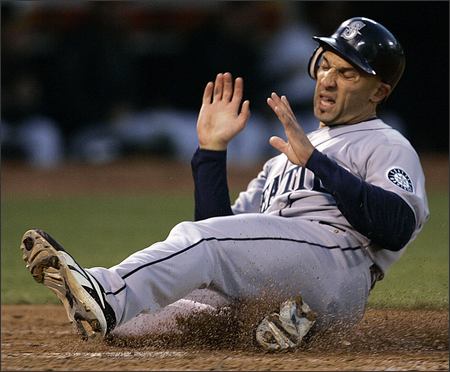
Doug Booth- Baseball Writer: If Raul Ibanez has indeed swung his last bat in the majors, he should hold his head up high considering the last decade he put together. I have long respected Ibanez for foraging a decent career out after being one of the dozens of left fielders to fail the trio of Buhner/Griffey (and insert Miscellaneous Left Fielder) that played alongside these Seattle Mariners All-Stars from 1992-2000. When Jose Bautista made his improbable 54 home run statement season in 2010 with the Toronto Blue Jays, people often wondered how a player could come from out of nowhere like this. I quickly thought of Raul Ibanez.
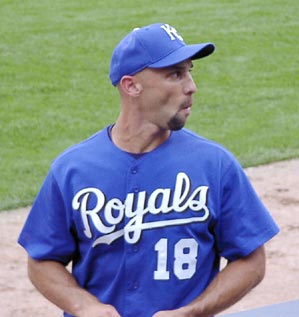 Ibanez was drafted by the Seattle Mariners in the Amateur Draft of 1992. By the age of 24, Raul found himself in the Majors with the Seattle Mariners. But lackluster results mixed with trips up and down from the Minor Leagues forced him to sign as a free agent with the Kansas City Royals before the 2001 season. Ibanez was called up from Omaha that year and hit .280 with 13 HR’S and 54 RBI in 104 games. The next year was Raul’s first full season in the Majors and he hit .294 with 24 HR’s and 103 RBI with the Royals. Mariners fans were now sad to see that management let their draft pick go and flourish with another ball club. Raul spent 2 more productive seasons in Kansas City before rejoining the Seattle Mariners.
Raul Ibanez was planning on being a full time DH, replacing the just retired Edgar Martinez. It was a great idea by the Mariners who saw Ibanez become hurt in the 2004 season, but saw potential with his inspired play. Raul’s first 2 seasons as a DH were decent with .304 16 HR’S and 62 RBI’s in 2004- and .280 20 HR’s and 89 RBI’s in 2005. But after the 2005 fall they signed newly World Series winning DH Carl Everett for the 2006 season. This meant Raul would have to go back to playing the outfield. While he wasn’t the slickest of fielders, he was aided by defensive minded Center Fielder Jeremy Reed. Raul did work hard and steadily improved on his defense every year. However it was his offense that started to fully thrive. The Mariners had Ichiro Suzuki cracking out 225 hits a year out of the leadoff spot, setting the table for the middle of the order. Raul had his best offensive season in 2006, hitting .289 with 33 HR’S and 123 RBI. This is no small feat considering Ibanez played half of his games at pitcher friendly Safeco Field. Raul played 2 more seasons with Mariners, registering consecutive 100 RBI seasons and 3 straight overall. Ibanez had turned himself into an annual offensive threat. Ibanez’s 338 RBI between the years 2006-2008 were one of the higher totals amongst Major Leaguers. This landed him a 3-Year $33 Million contract with the Philadelphia Phillies.
The Philadelphia Phillies fans were treated to a hot Raul Ibanez streak out of the gate in the 2009 season, where he hit .309 with 22 HR’S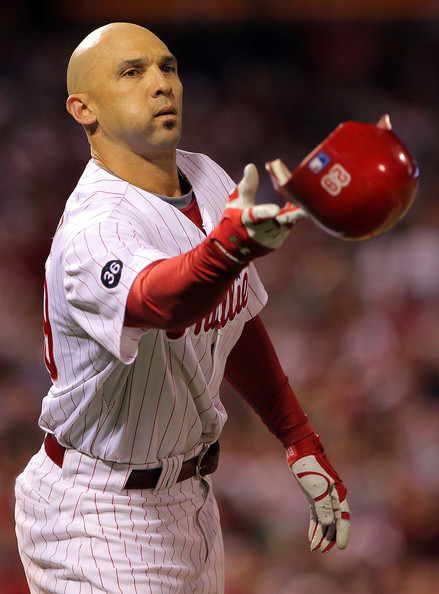 and 60 RBI in just 64 games before the All-Star Break. Raul was invited for his 1st and only All-Star Appearance that year despite hitting 22 HR’s and 70 RBI for the Mariners before the break in the 2006 season. There was even serious talk that Ibanez was an early season NL MVP favorite-this was all occurring while Ibanez had just celebrated his 37th birthday. This was one of the things that you had to love about this guy. He had stretches during the season where he could deliver MVP caliber baseball and win several games for his team single-handed. Ibanez was also in the middle of a pennant race for a change. Ibanez slowed down a little bit towards the end of the 2009 season but still hit .272 with 34 HR’S and 93 RBI. Raul set career highs in HR’S, Slugging % and extra base hits with 69 in 2009. Raul went onto hit 2 HR’S and drive in 13 RBI in 15 post season games that resulted in a World Series loss to the New York Yankees.
In 2010 and 2011 Raul saw his numbers decline, however he was still productive enough to warrant his contract as an above average Left Fielder statistically. In 3 seasons with Philadelphia, Raul earned his keep by slugging 70 HR’S and 260 RBI. Most of the Philadelphia brass would have taken this production in a heartbeat following the 2008 season in which the team said ‘so long’ to offensively declining threat Pat Burrell. This may be the end for Raul Ibanez, but he was still one of the most prolific RBI men in the years from 2002-2011. Showing remarkable consistency, Raul hit.284 with 225 HR’S and 942 RBI for those 10 seasons with 598 of the RBI’S coming in the last 6 years. Included in these years Raul also had 4-100 RBI seasons. Not bad for a guy who was drafted in the 36th round. I hope a National League team decides to pick him up for some pinch hitting duties for the 2012 campaign. The only question that remains is in this regard-would the Philadelphia Phillies fans cheer or boo him if he returned to Citizens Bank Ballpark as an opposing player? I firmly believe that they would cheer for him because he is as blue collar as they come.

 *** Thank you to our Baseball Writer- Doug Booth for preparing today’s feature on MLB reports. To learn more about “The Fastest 30 Ballgames” and Doug Booth, you can follow Doug on Twitter (@ChuckBooth3024) and click here for Doug’s website, fastestthirtyballgames.com***
Please e-mail us at: MLBreports@gmail.com with any questions and feedback. You can follow us on Twitter and become a fan on Facebook . To subscribe to our website and have the daily Reports sent directly to your inbox , click here and follow the link at the top of our homepage.

A Great DH Can Mean Winning the AL Pennant
Wednesday December 28, 2011

Doug Booth- Guest Baseball Writer:
Watching the 2011 season, something really resonated with me while watching the American League: ‘Where have all the great designated hitters in MLB gone?’ It seemed only a few years ago that every team had a bopper capable of hitting .300 with 30 HR’S and 100 RBI’s. Upon further investigation, I found out some interesting facts. First, let us look at the top-3 DH’s this past 2011 season. Michael Young of the Rangers hit .338, 11 HR’S and 106 RBI, which was the best performance by any DH, in helping to win the Rangers a 2nd straight ALCS Pennant. A close second would go to Victor Martinez, who spent 112 games at DH and hit .330 with 12 HR’S and 103 RBI. The 3rd best DH was David Ortiz, who hit .309 with 29 HR’s and 96 RBI. The rest of the DH’s were average to below average.
The Yankees struggled with Posada and a rotation of Andruw Jones/Jesus Montero, although they hit about 30 HR’s combined. The Blue Jays never had a set DH, but received decent production from Encarnacion and Lind. The Baltimore Orioles had Vlad Guerrero, who had his worst year ever, as did the Angels’ Bobby Abreu and the Rays’ Johnny Damon. The Seattle Mariners had washed up Jack Cust and the likes of Willy Mo Pena by the end of the year. Oakland has steady Hideki Matsui, but not even a decent second half had him anywhere near his career average totals. Kansas City has been placing Billy Butler back onto the field, so his DH role was limited this season. Adam Dunn soon became a four letter word in Chicago’s South side. Aging and injury prone players Grady Sizemore and Travis Hafner saw the most amount of work for the Cleveland Indians at DH, so yet again these players were far from being in their most productive years.
So what is the underlying theme here? If you have a great DH, you may just make the playoffs and win it all. Young, Martinez, Ortiz had their teams in contention all year for the playoffs. The Tampa Bay Rays were the 4th team in the playoff chase and managed to overcome the position thanks to superior pitching. One could definitely say that Michael Young vs. Bobby Abreu is worth a definite amount of wins at that position, considering what they each produced in the AL West.
I am going to go through the last 20 years of ALCS Pennant Winners as part of my study. 80% of the time (the team with a great DH) was in the World Series:
1992 TORONTO-Dave Winfield .290 26 HR’S 108 RBI
1993 TORONTO-Paul Molitor .332 22 HR’S 111 RBI
1994 WORLD SERIES CANCELLED
1995 CLEVELAND-Eddie Murray .323 21 HR’S 82 RBI
1996 NEW YORK-Cecil Fielder 39 HR’S 117 RBI (Acquired at deadline by NYY)
1997 CLEVELAND-David Justice .329 33 HR’S 101 RBI
1998 NEW YORK-Darryl Strawberry 24 HR’S 57 RBI (295 AB IN 101 GAMES)
1999 NEW YORK-Chili Davis/Darryl Strawberry (not the greatest year-but in middle of NYY dynasty of 6 ALCS IN 7 YRS)
2000 NEW YORK-David Justice .286 41 HR’S 118 RBI
2001 NEW YORK-David Justice (not the greatest year but it was a solid NYY team. Edgar Martinez led SEA to a 116-46 record and were prohibitive favorites but lost to the Yankees-Martinez year was .306 23 HR’s AND 106 RBI
2002 ANAHEIM-Brad Fullmer (hit .289 with 60 XBH in 130 games and a slugging % of .531)
2003 NEW YORK-Jason Giambi 41 HR’S 107 RBI
2004 BOSTON-David Ortiz .301 41 HR’S 139 RBI
2005 CHICAGO-Carl Everett 23 HR’S 87 RBI in 135 games
2006 Detroit Tigers-Dmitri Young (They did not have a definite DH after Young’s injury so this year so was the worst out of the 20 years.)
2007 BOSTON-David Ortiz-.305 35 HR’S 117 RBI
2008 TAMPA BAY-Cliff Floyd/Wille Aybar 22 HR’S 72 RBI combined (Again great pitching carried TB.)
2009 NEW YORK-Hideki Matsui .274 28 HR 90 RBI IN 456 AB
2010 TEXAS-Vlad Guerrero .300 29 HR’S 115 RBI
2011 TEXAS-Michael Young .338 11 HR’S 106 RBI
In 2006, half of the league possessed great DH’s: Ortiz .287 54 HR 137 RBI, Hafner .308 42 HR’S 117 RBI, Giambi 37 HR’S 113 RBI, Thome .288 42 HR’S 109 RBI, and Thomas hit 39 HR’S 114 RBI. This group is far more productive than the 2011 bunch. Given this Information, why wouldn’t more teams elect for permanent DH slots just to gain an edge over their competition? The Seattle Mariners had an incredible run from 1994-2004 with Edgar Martinez as a permanent DH. The Boston Red Sox have won 2 World Series titles and are perennial playoff contenders with David Ortiz as their DH. The Yankees have not been the same since Hideki Matsui has left the club as their DH. This leads me to the Toronto Blue Jays pitching an offer to Prince Fielder and making Adam Lind a permanent DH.
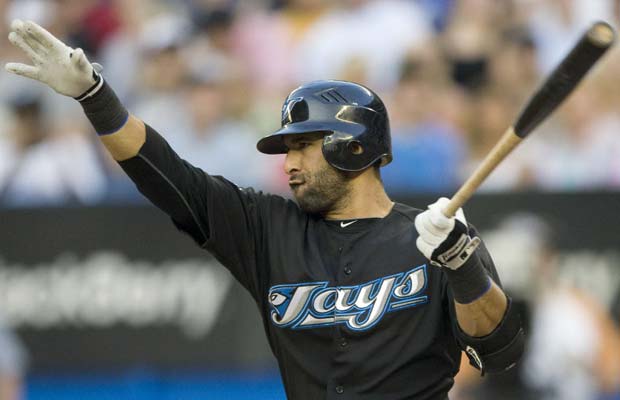 With a signing of Fielder, the Jays could move Adam Lind to just a DH. Could you dare envision a lineup of: Escobar SS, Rasmus CF, Bautista RF, Fielder 1B, Lawrie 3B, Lind DH, Arencibia C, Johnson 2B, and your pick of Thames or Snyder? This would free up your club to make a trade as well. If you are the Jays, and offered Yu Darvish the posting bid of over $50 million and another $60-75 million in salary, why wouldn’t you offer Fielder a 7 year deal in the $140-150 Million range? With Fielder signed, I think his presence would potentially alter the attendance by 8,000-10,000 fans per game to justify his salary (not to mention merchandise and television ratings). With a 3-4-5 lineup of Bautista, Fielder and Lawrie, I could see 120 HR’S and 350 RBI combined each year. The best aspect of these guys is that they are patient. If you add Adam Lind as the #6 hitter with 30 HR 100 RBI capability, then it will become lookout time for the rest of the league.
The Angels signing of Albert Pujols should not cause concern about his production. Even into his early 40’s, Pujols should be able to hit well given his dedication to personal fitness. The question is: why wait to move him to DH right now with the amount of 1st baseman they already possess with Trumbo and maybe a return from Morales? It is my belief that aging players should be shipped off to the National League when they can’t post impressive offensive numbers. A good example of this are recent NL pinch hitters Jason Giambi and Matt Stairs making a living off pinch such roles after failing as DH’s late into their careers. If the AL teams persist in signing aging players past their prime for the DH role, then I believe they will struggle. Vlad Guerrero and Johnny Damon would be perfect for an NL team at this stage of their respective careers considering this rationale.
So whatever players are ultimately signed by each team from this point forward or already have signed, whichever AL teams have the best Designated Hitters in the league for the 2012 season will likely have the best shot at winning the AL Pennant.
*** Thank you to our Guest Baseball Writer- Doug Booth for joining us today on MLB reports. To learn more about “The Fastest 30 Ballgames” and Doug Booth, you can follow Doug on Twitter (@ChuckBooth3024) and click here for Doug’s website, fastestthirtyballgames.com***
Please e-mail us at: MLBreports@gmail.com with any questions and feedback. You can follow us on Twitter and become a fan on Facebook . To subscribe to our website and have the daily Reports sent directly to your inbox , click here and follow the link at the top of our homepage.

Preview of the 2011 MLB Rule 5 Draft: December 8th
Friday December 2, 2011

Rob Bland (Baseball Writer – MLB reports): With the MLB Winter Meetings just around the corner, we can all get excited about the draft that takes place there. The Rule 5 draft is a very important draft for teams, as they can find their diamond in the rough that may be undervalued by his current team. The Rule 5 Draft was created as a way for more players to have a chance at the big leagues, rather than spending more years in the minors. It forces a team to “protect” its minor leaguers by placing them on the 40-man roster.
The Rule 5 Draft is not simply for any minor leaguer, the players who are eligible must fall under certain criteria. The criteria are as follows:
If a player was signed at age 19 or older, and has been in the same organization for four years.
If a player was signed at age 18 or younger, and has been in the same organization for five years.
What this means that if an 18-year-old signs with a team, plays in the minor leagues for five years, and is not added to the 40-man roster, he will be put in a pool of eligible players for the Rule 5 draft. This forces teams to make a decision on their prospect and if he is ready to be added to the 40-man roster. The order of the draft is the same as the Amateur Draft that takes place in June, in reverse order of standings from the season prior.
Since many international players sign at the age of 16, they are eligible for the Rule 5 draft after their age-20 season. If not picked up on the team’s 40-man roster, an opposing team can take a big chance on a player in selecting him.
The draft is different from any other in that it costs the team $50,000 to select a player, which is paid to the team losing said player. Also, this player must be on the 25-man roster for the entirety of the season. If he is taken off the 25-man roster, he must then be offered back to his original club at half the price ($25,000).
There are two other phases of the Rule 5 Draft: AAA and AA. In the AAA phase, teams can select eligible players from AA and lower who fit the same criteria, and pay $12,000 for the selection. In the AA phase, players from A and lower are chosen at a cost of $4,000.
 While it is pretty rare for a Rule 5 draftee to become a superstar, it does happen- and there are plenty of players who become useful with their new teams. Some of the most notable players chose in the Rule 5 draft are Hall of Famer Roberto Clemente (the Rule 5 draft was drastically different in 1954), Toronto Blue Jays slugger Jose Bautista, Texas Rangers outfielder Josh Hamilton, and, in my opinion, the best Rule 5 selection of all, Johan Santana.
The Rule 5 Draft can take some interesting turns, and players are often offered back to their original team. Trades are made for other Rule 5 selections or money can be exchanged. Johan Santana was left off the Houston Astros 40-man roster before the 1999 Rule 5 Draft, and was selected by the Florida Marlins. The Marlins then trade Santana to the Minnesota Twins for cash and Jared Camp. After a lacklustre 2000 season, he went on to have a great career with the Twins, and has won 2 Cy Young Awards.
Bautista also represents an interesting case, as he was selected in the 2003 Rule 5 draft, and became the only Major League player in history to be on 5 ML rosters in one season. The Baltimore Orioles selected him in the Rule 5, was claimed off waivers by the Tampa Bay Devil Rays 2 months into the season, and then traded to the Kansas City Royals less than a month later. A month after that, he was traded to the New York Mets, who then flipped him to the Pittsburgh Pirates, who were his original team. He has since gone on to blossom into one of the finest hitters in all of baseball, leading the MLB in home runs in 2010 and 2011.
Josh Hamilton was selected in the 2006 Rule 5 draft by the Chicago Cubs, but was returned to the Cincinnati Reds before the season began. He was traded to the Texas Rangers after the 2007 seasons and won the 2010 American League MVP.
Other notable players taken in the Rule 5 Draft:
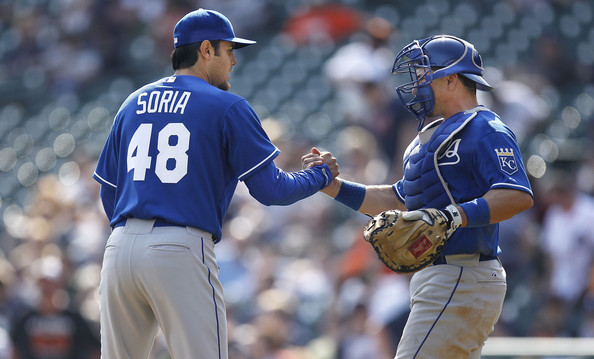
Bobby Bonilla, Jeff Nelson, Joakim Soria, Dan Uggla, Shane Victorino, Jayson Werth, Kelly Gruber and George Bell.
Most teams have between 15 and 30 eligible players, meaning that there are hundreds of players available. However, the Rue 5 draft has lasted no more than 21 picks in the last 9 years. Over this time, 40 or so players are selected in the AA and AAA phase combined per year.
Will a team strike gold and find the next MVP or CY Young in this year’s Rule 5 Draft? Probably not. But some teams may find some useful bullpen arms, or even a utility player or two that may stick around for a full season.
***Today’s feature was prepared by our Baseball Writer, Rob Bland. We highly encourage you to leave your comments and feedback at the bottom of the page and share in the discussion with our readers. You can also follow Rob on Twitter.***
Please e-mail us at: MLBreports@gmail.com with any questions and feedback. You can follow us on Twitter and become a fan onFacebook . To subscribe to our website and have the daily Reports sent directly to your inbox , click here and follow the link at the top of our homepage.


 MLB Reports

You must be logged in to post a comment.