Blog Archives

Evaluating Strikeout Pitchers For Your 2012 Fantasy Baseball Team
Tuesday October 18, 2011

Peter Stein (Fantasy Baseball Analyst – MLB reports): Depending on the type of fantasy league, high strikeout pitchers hold varying degrees of value. In 5 X 5 Roto League’s, strikeouts are crucial as they represent one of the five pitching categories. Furthermore, strikeout ratios are indicative of a pitcher’s future success. Needless to say, the more a pitcher misses the bat of a hitter, the more primed he is to retire batters. As I touched upon this subject a few weeks ago in my piece about the value of setup men, today, I shift the focus to starting pitchers who look to finish atop the strikeout rankings in 2012.
 In 2011, the 25-year-old right-hander busted onto the scene with a 7-3 record, 3.68 ERA, and 1.21 WHIP in 141.2 innings. However, the real value he provided was the 169 strikeouts, a 10.74 K/9 ratio that ranked him first among starting pitchers. Undoubtedly, Beachy will be a highly valued player entering the 2012 season, yet I still think many owners still undervalue him. Many owners will be impressed, but not wowed by his ERA and WHIP numbers, which are right on par with Jamie Garcia’s 3.56 ERA and 1.32 WHIP. However, Garcia struck out just 156 batters in 194 innings. If pitchers are not contributing to the strikeout category, he needs to be VERY good in the others, and it will be difficult for a player to do so with out the ability to miss bats. This helps explains Garcia jump in ERA from 2.70 in 2010 to 3.56 in 2011.
Beachy’s strikeout ratio indicates that his rookie season was no fluke. He has the ability to miss bats and therefore should not see a regression in his numbers. He was consistent throughout the year and actually struck out more batters as the season progressed. Furthermore, his .300 BAPIP indicates that he was not a product of good fortune. He is the real deal and has potential to provide terrific value in all give pitching categories and looks to be among the elite in strikeouts. Beachy’s more well-known teammate, Tommy Hanson, it also a pitcher who is among the games best strikeout pitchers – improving his rate in each of his three seasons in the major leagues.
Here are some lesser-known players that had a strikeout ratio higher than that of C.C. Sabathia, Felix Hernandez and David Price:
Brandon Morrow (10.19 K/9)
Cory Luebke (9.92 K/9)
Anibal Sanchez 9.26 K/9)
Jonathan Sanchez (9.06 K/9)
Matt Garza (8.95 K/9)
Gio Gonzalez (8.78 K/9)
Although these pitchers are by no means fantasy aces, their fantasy value is often hidden and undiscovered by owners. They are often lumped into the same category as players with similar ERA and WHIP numbers (e.g. Mark Buehrle). However, their potential for strikeouts can give an owner valuable extra points. While no means must-start players, if you use the Garza, Gonzalez’s, Morrows, etc in favorable matchups, don’t be surprised to see them produce ‘five category’ Lincecum-like starts. Just don’t start them against the better half of the league’s top offensive teams. It is all about finding the edges, and strikeouts are a category that many owners are first to ignore. Therefore, I strongly suggest you fill your tougher innings with such players that can help you finish at the top of this category. If a player is putting up strong ERA and WHIP numbers without the strikes, it is more likely to be a fluke. Therefore, to be safe and to finish atop the K category, target the players who show the best ability to make major league hitters swing and miss.

***Today’s feature was prepared by our Fantasy Baseball Analyst, Peter Stein. We highly encourage you to leave your comments and feedback at the bottom of the page and share in the discussion with our readers. You can also follow Peter on Twitter (@peterWstein).***
Please e-mail us at: MLBreports@gmail.com with any questions and feedback. You can follow us on Twitter (@MLBreports) and become a fan on Facebook . To subscribe to our website and have the daily Reports sent directly to your inbox , click here and follow the link at the top of our homepage.

Fantasy Baseball Report: Value of Elite Setup Men: Romo, Alburquerque, Adams and More
Monday September 19, 2011

MLB reports: We welcome the newest member of the MLB reports team, Peter Stein. For all you fantasy baseball fanatics, Peter will be featuring weekly reports for you! In his debut, Peter discusses the value of elite setup men and how they can benefit your fantasy team:
Peter Stein (Fantasy Baseball Analyst – MLB reports): Playing in a standard 15-team, daily league, auction, 5 X 5 Roto league this year, I learned many valuable lessons in fantasy baseball. However, one strategy and way of thinking in particular proved to be the most valuable and has had my team in cruise control and on the way to first place since the middle of July. (Disclaimer: Although this article is most applicable to daily roto leagues, the basic concept can be extended to all formats of fantasy baseball).
While most relievers who do not contribute saves largely go unnoticed, the game’s top setup men can provide the highest of quality innings (ERA, WHIP, and K) and as a result are extremely undervalued by fantasy players across all boards.
 It is common for owners to spend half of their budget on two or three top of the line starting pitchers with the idea that they can rely on these aces to carry their team in the pitching categories. However, said owner will still have over 50% of their innings to relegate –often to a variety of run of the mill starters or high-risk high reward types of players. If you play your matchups right, it is true that there are many starters who can provide quality innings for you. For example, on my team, outside of Felix Hernandez, for starting pitchers, I relied heavily on starting pitchers ranked outside of the first tier, such as Colby Lewis (95 innings), Derek Lowe (63 innings), John Danks (54 innings), Javier Vazquez (61 innings), Gavin Floyd (41 innings) Erik Bedard (39 innings), and Ryan Dempster (37 innings) in my effort to reach the 1,250 innings limit.
I managed to get tremendous value out of these players based on matchups (a whole different discussion), but you have to be careful with guys like this. Each of these guy’s season totals are very unimpressive, and if used incorrectly can ruin your team. Danks, Lowe, Floyd and especially Vazquez and Dempster each had epically bad stretches this year. Personally, I have only used Vazquez for 61 innings, but it has come with a 1.45 ERA and 0.85 WHIP. If I threw Javy out there for every inning this year I would have to swallow an unimpressive 3.95 ERA and 1.25 WHIP.
But back to the topic at hand (Vazquez will actually be the focus of next week’s article), the point is that you simply cannot receive 200 quality innings from these guys. You need to look elsewhere and this is where the game’s elite setup men become so valuable. Three or four setup men, used in conjunction with each other, can contribute the same value as one ace – without having to deal with the stress of matchups!
To prove my examples, and draw from my team, lets take a look at Sergio Romo and Al Alburquerque, Mike Adams, three player s who cost me $1 each. For frame of reference, the game’s elite pitchers, such as Felix Hernandez and Tin Lincecum, went for $45 and $43 respectively.
In 40 innings pitched, Sergio Romo contributed an ERA of 1.40 a WHIP of 0.64, a whopping 62 strikeouts, and a useful 3 wins and 1 save. Although, he pitches approximately twenty percent of the innings of Felix or Lincecum, he provides value that is actually significantly better than both of these starters. Now lets add Alburquerque’s 39.2 innings, which come with a league best 14.1 k/9 ratio, a 2.04 ERA and 6 wins. Talk about some quality innings and a sure way to boost strikeouts. A guy like Al can allow you to use a low strikeout starter who contributes to ERA and WHIP – perhaps a Mark Buehrle. Albuquerque is owned in just 1.0% of ESPN fantasy leagues, but if started all year he provides 6 absurd starts that are really uncharacteristic of ANY starter in the league.
Do you see what I’m on to?
 Mike Adams, perhaps the most well-known of the trio entering 2011 (for save potential), in 68.2 innings has contributed 4 wins, 2 saves, and ridiculously low ERA (1.44) and WHIP (0.70 totals).
I morphed these three players into one. This three-headed monster (costing me $3 dollars), contributed 192 strikeouts in 150 innings, a WHIP of 0.87, an ERA of 1.63, 13 wins and 3 saves. Lets see how this imaginary player, lets call him Sergal Adamquerque, stands up to next to King Felix:
Felix Hernandez Romo/Alburquerque/Adams
IP 230 150
W 14 12
K’S 220 192
ERA 3.32 1.63
WHIP 1.19 0.87
Saves 0 3
Do you see the point here? The combination of these relievers, for $3, provides more value than Felix Hernandez who cost $45! I use Felix as an example is because is one of the elite pitcher’s in the game, and I myself spent $45 on him in my draft. However, this was not $45 poorly spent. It is impossible to rely solely on relievers to fill your league’s innings limits. You must have an anchor on your staff, such as King Felix. I also received great support from two other aces, Zack Greinke (88 innings) and Cliff Lee(45 innings), but was able to trade them for help in the hitting department. However, the point is, not even Felix, Lee, or Greinke can give you the value in strikeouts, WHIP, and ERA as these elite setup men. Used in combination with one another, these guys can create your very own “ace,” one that is inexpensive and allows you to budget your dollars to bolster your offense.
With that said, it is true that it is difficult to predict wins with reliever, but remember Felix Hernandez will likely end up with a total of 15 wins in 200 innings. These relievers only need three or four wins in 50 innings to provide similar value in that department. However, you could also get surplus value here. In 2010 Tyler Clippard won 11 games in 90 innings. There is always the chance that these studly setup men take the reign as closer. I drafted my Sergio Santos for $1, partly due to my lack of faith in Matt Thornton, but also because in 2010 he averaged over a strikeout per inning with good ERA and WHIP. Now as a closer in 2011, with a 12.86 k/9 ration, he figures to be a hot commodity in 2012 drafts.
You might think I am drawing form a small samples size. Although I have focused on a few players, the list truly goes on: David Robertson, Koji Uehara, Jonny Venters, Greg Holland, Chris Sale, Glen Perkins, Aaron Crow, Daniel Bard, Tyler Clippard, and Antonio Bastardo are all examples of players who provide just as much value (or more) per inning as the game’s elite starting pitchers.
It is true that the list of the very elite reliever sis short, but there a long list of players who are still extremely useful. To really prove my point, lets look at a reliever who is the third or fourth option on his own team, only owned in 1.5% of leagues, yet still provides tremendous value: Jesse Crain. The little known and used Crain could have provided your team (to date) with 63 strikeouts in 67 innings, 8 wins, and a stellar WHIP (1.19) and ERA (2.29). You really don’t need to dig that deep to find value from relief pitchers.
The Takeaways:
 Relievers do not need to get saves to provide value and as such do not overpay for closers who don’t contribute positively to the ERA, WHIP, and K categories. If you are going to splurge on a closer, it better be someone like Craig Kimbrel, but there is still risk when you pay big bucks for a top closer. Joakim Soria, usually a given to contribute in ERA and WHIP, actually provided negative value for fantasy owners this year in these categories. His 28 saves are not worth the $20 dollars I spent expecting his usual elite numbers.
Next year go ahead and spend the money on the elite pitcher or two to anchor your staff. However, do not waste the dollars and overpay for innings from unproven or middle of the road starting pitchers. These innings can be much more effectively filled with a plethora of setup men from around the league. Draft a sure closer or two, and if you invest wisely in the elite setup men, you will be sure to own another closer or two down the road. Investing in these types of relievers in the draft and on the waivers will save you money – money that can be used on your offense and s on elite starting pitching. You can now dedicate your bench spots to these relievers, shuffling them in and out of your lineup along side an ace or two, and you will get value per inning on the same scale as Felix, Lincecum and other elite starting pitchers. It will require you to not only to target such players in the draft, but you will also have to be a hawk on the waiver wire. Just think of a combination of three of four of these players as one Felix Hernandez, but for 10% of the price.
Clearly, this strategy is most effective in larger leagues and league that allow you to make daily roster changes. However, I hope this article demonstrates how setup relievers have potential to add value in all fantasy leagues, although they are largely ignored or overshadowed by closers.
***Today’s feature was prepared by our Fantasy Baseball Analyst, Peter Stein. We highly encourage you to leave your comments and feedback at the bottom of the page and share in the discussion with our readers. You can also follow Peter on Twitter (@peterWstein).***
Please e-mail us at: MLBreports@gmail.com with any questions and feedback. You can follow us on Twitter (@MLBreports) and become a fan on Facebook . To subscribe to our website and have the daily Reports sent directly to your inbox , click here and follow the link at the top of our homepage.

James Shields to the Reds for Alonso and Grandal: July 31st MLB Trade Deadline Rumor

Saturday July 23, 2011
MLB reports: We are now only eight days away from the MLB non-waiver trade deadline and the rumors continue to fly fast and furious. Along with the Carlos Beltran and Heath Bell sweepstakes, the names Ubaldo Jimenez, Josh Willingham, Brandon League, Hunter Pence and Hiroki Kuroda have been tossed around as possible candidates to be moved next week. Another big time name has recently been thrown into the mix that we will be looking at today. James Shields, “big game James”, one of the top starting pitchers on the Tampa Bay Rays may very well be playing for a new team very soon. The Cincinnati Reds are apparently calling and with big prospect bats sitting on the farm, the Reds may very well have the necessary bait to haul in one of the biggest fishes on the trade market.
The 29-year old James Shields was drafted by the Rays in the 16th round of the 2000 MLB draft. Shields made his major league debut in 2006. Here is a quick rundown of his lifetime statistics:
| Year | W | L | ERA | IP | H | BB | SO | WHIP |
|---|---|---|---|---|---|---|---|---|
| 2006 | 6 | 8 | 4.84 | 124.2 | 141 | 38 | 104 | 1.436 |
| 2007 | 12 | 8 | 3.85 | 215.0 | 202 | 36 | 184 | 1.107 |
| 2008 | 14 | 8 | 3.56 | 215.0 | 208 | 40 | 160 | 1.153 |
| 2009 | 11 | 12 | 4.14 | 219.2 | 239 | 52 | 167 | 1.325 |
| 2010 | 13 | 15 | 5.18 | 203.1 | 246 | 51 | 187 | 1.461 |
| 2011 | 9 | 8 | 2.53 | 156.1 | 118 | 40 | 151 | 1.011 |
| 6 Seasons | 65 | 59 | 4.02 | 1134.0 | 1154 | 257 | 953 | 1.244 |
| 162 Game Avg. | 13 | 12 | 4.02 | 224 | 227 | 51 | 188 | 1.244 |
A definite innings-eater, James pitched almost 1000 innings over his first five seasons, making him one of the most consistent and reliable pitchers in the game. A lack of run support has definitely hurt Shields over the years, as he had the numbers to obtain more wins had the Rays offense been able to support him better. I have watched too many instances of Shields pitching complete or near complete game losses, despite only giving up 2-3 runs per game. 2009 and 2010 were not kind to James in some ways, as some analysts viewed Shields as having hit his peak and starting to decline. Going into 2011, nobody knew what James Shields the Rays would be getting. The steady ace that the team enjoyed for the majority of his career or the 2010 inconsistent version. Looking at Shields at the halfway mark of the season, he is enjoying by far his greatest season in the majors. A sparkling 2.53 ERA and 1.011 WHIP, Shields has been everything that the Rays could have expected more. But with success comes many questions, with the most pertinent being what the Rays should do with James.
 The whispers and talk has been growing by the day that the Rays may be looking to move Shields by July 31st. The Reds have been the team most linked to the Rays, given their desire to bolster their rotation and the deep farm of prospects they can offer the Rays. The Reds are sitting on some of the top prospects in the game that are currently blocked at the major league level. Yonder Alonso, 1B/OF is considered one of the best hitters not at the major league level. Alonso would represent the centerpiece of a potential Shields deal. Born in Cuba and having attended the University of Miami, Alonso is often compared to his friend Alex Rodriguez, based on his combination of power and patience at the plate. Not bad company at all. The 24-year old Alonso was drafted 7th overall in the 2008 draft by the Reds and has quickly advanced in their system. Currently in AAA, Alonso sits at a .297 AVG, .871 OPS, with 12 home runs and 46/59 BB/K. The Rays, desperately in need of bats, currently have Casey Kotchman manning first. Alonso would be a perfect fit in taking over the first base job for the next decade. He is a special hitter that does not come along very often. While a pitcher of Shields stature is not easy to replace, the Rays would be filling a huge void in their lineup by adding Alonso. Dealing from strength to fill a need is smart baseball management and the reason why we are discussing the trade of Shields today.
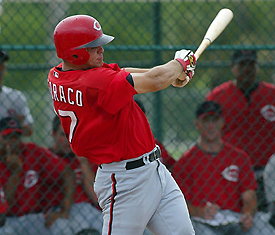
In addition to acquiring Yonder Alonso, the Rays would be adding a number one catcher to their system in either Yasmani Grandal or Devin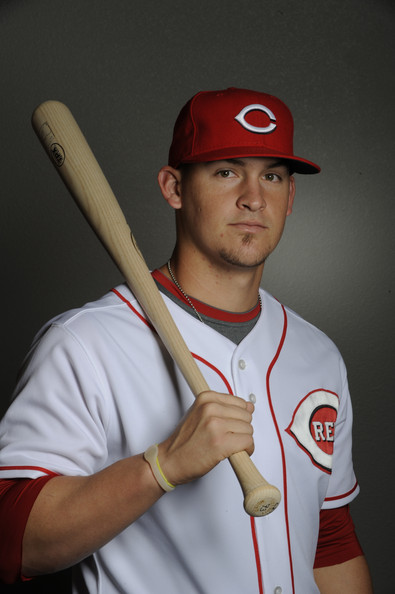 Mesoraco. I have seen both names thrown around, but my gut is that the Rays will end up receiving Grandal. Mesoraco was featured by us back in June. The likely Reds catcher of the future, Mesoraco is expected to get the call either this year or next at the latest to replace incumbent Ramon Hernandez. With a solid backup in Ryan Hanigan, the Reds have an abundance of catchers, a strength considering that few major league teams have potential superstar backstops playing in their lower levels. The 22-year old Grandal was born in Cuba and played in Miami, similar to Alonso. Drafted 12th overall in the 2010 MLB draft, Grandal recently got the call to AA. Mesoraco on the other hand, is 23-years of age and was drafted 15th overall by the Reds in the 2007 MLB draft. Mesoraco is back for his second tour of duty in AAA, hitting a solid .309 and .895 OPS, with 10 home runs and 54 RBIs. After battling injuries in his career, Mesoraco hit a combined 26 home runs over 3 levels last season and has not slowed down since. The Rays would be thrilled to receive Mesoraco in a Shields trade, but Grandal is considered by many to actually be the more talented backstop. A win-win either way for Tampa Bay.
But why trade Shields and especially, why now? Many Rays fans are asking themselves those questions right now. On the surface, Shields and the Rays look like a perfect fit. He is young and still in the prime of his career. Shields has proven to be healthy and durable since joining the Rays. He is signed through this year, with team friendly options through 2014 at $7, $9 and $12 million per year respectively from 2012-14. In baseball they say you can never have too much pitching. If that is the case, then some feel the Rays should consider stockpiling their pitchers and building their team from strength. But that is a narrow view of major league teams and how they operate. Let’s take a look at our five top reasons for the Rays to trade James Shields right now:
1) Sell at the Peak
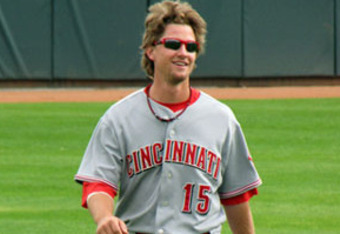 You never know what the future will bring, so sometimes it is important to live in the moment. Shields, while a steady and consistent pitcher, is currently pitching at the highest level of his career. The Rays will need to determine if he has truly broken out or merely playing above his head. The value for Shields may never get higher than it is today. As well, teams contending for the playoffs may be willing to pay more at the deadline than the offseason for Shields. The Rays, if feeling especially lucky, could request the addition of either Mike Leake or Travis Wood to the trade mix from the Reds.
2) Numbers Game: Rotation Log Jam
The Rays have been known for acquiring, developing and stockpiling pitchers in their system. This past offseason was no different, as the Rays traded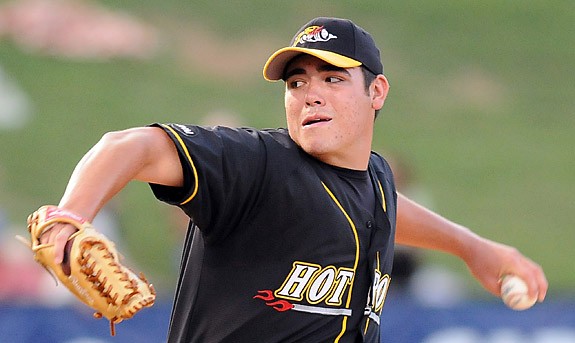 away top starter Matt Garza to the Cubs for a package of prospects, including Christopher Archer and Sam Fuld. With Jeremy Hellickson ready, willing and able to join the big club, the Rays needed to clear room for their next future star pitcher. Hellickson, combined with David Price, Wade Davis and Jeff Niemann form a formidable one through four punch in the rotation. Based on their age and salaries, none of these starters will likely be going anywhere soon. While Alex Cobb has been brought in for temporary measure to the majors, Matt Moore just got the call to join AAA Durham in anticipation of joining the Rays rotation soon. Moore, one of the top-five pitching prospects in baseball, will not likely be kept on the farm too long given his dominance over minor league hitters to-date. That is how the baseball system works. Prospects are developed and either traded for veterans or take over for departed veterans from major league teams. As the Rays have no intention of trading Moore, a spot will have to open up for him. Unfortunately for James Shields, he is the veteran most likely to go. From there, it will only be a matter of time before Archer is ready to join the big club and the cycle will continue.
3) Dollars and Cents
 It is no secret that the Rays are on a very tight budget. Low attendance figures, despite continued recent major league success including a World Series appearance in 2008, has meant that the Rays cannot afford to hang onto high priced veterans. Shown the door in recent years were Carlos Pena, Matt Garza and Rafael Soriano, among others for financial considerations. While James may have what is considered a team friendly contract, paying him close to $10 million or so per year for each of the next three seasons does not work for the Rays budget. Moore, combined with Alonso and Grandal, would fill three positions for the Rays at a combined salary that will be a fraction of what Shields makes. In other words, Shields is a luxury that the Rays cannot afford and can fill quite adequately within at a cheaper cost. While we do not like to think about the economics of the game, it can drive roster decisions on the same level as talent and ability.
4) Innings- Wear and Tear
James Shields is starting to enter a zone that many MLB teams dread. The 200-innings per season for over five seasons club. While an informal group,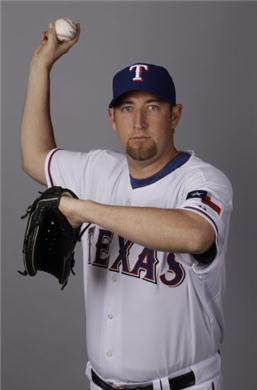 there has been much talk in baseball circles that most pitchers after their first 1000 innings pitched have a high risk of injuries and decline. Pitchers like Brandon Webb and to a lesser extent Ben Sheets, are shown as examples of modern pitchers that have arm/shoulder problems after pitching many major league innings over a span of 5+ years. While Shields has not shown any risks yet of developing injuries, his numbers going into this season were of concern for the Rays. So while Shields is having a Cy Young caliber season, the Rays may be fearful that he will be susceptible to injuries or declining performance very soon.
5) Pitchers Need Run Support
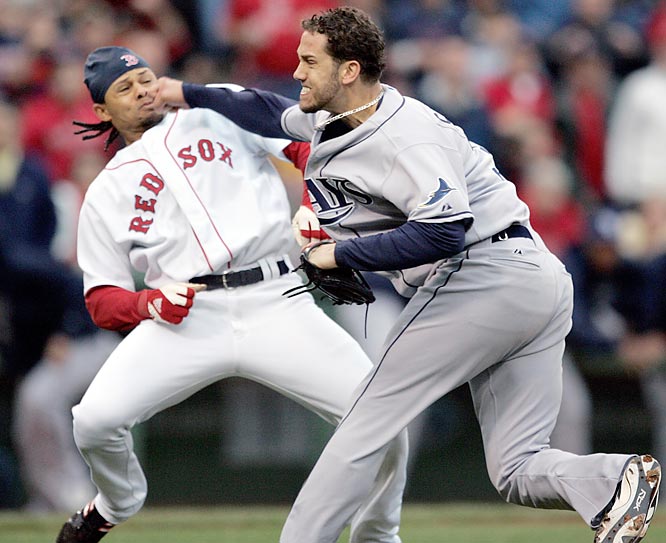
 In the same way a fast car needs a powerful engine and reliable tires, a major league team needs both offense and strong pitching. The current build of the Rays is starting to mirror the San Francisco Giants. Great young pitching but not enough hitting. The Rays can stockpile as much pitching as they like, but if they cannot score runs they will have a difficult time making the playoffs, let alone win a World Series title. Yonder Alonso and Yasmani Grandal are two superstar bats in the making that the Rays desperately need and do not have in their own system. The expression goes that teams “develop pitching and buy bats.” In this case, the Rays will be taking to buying the bats that they themselves cannot produce. With a starting lineup of nine hitters, that Rays will be instantly filling over 20% of their lineup by way of this trade. The hit the rotation by losing Shields would be absorbed by the addition of Matt Moore to the major league club. But the boost to the team’s offense as a result of the addition of Alonso and Grandal is invaluable.
Verdict: The bottom line is that the Tampa Bay Rays are in a quandary. James Shields is the heart and soul of their pitching staff, the go-to guy who has earned his nickname of “big game.” But as the most expensive starter on the staff, with the team’s top prospect almost ready to receive the call to the show and the team desperately needing good young hitting, the Rays have no choice but to consider moving Shields at the trade deadline. As the team is still in contention, management will have to be careful of not sending a message that they are throwing in the towel on the season. But to get the biggest reward, the team will have to pay a big price. It will be difficult in the short-term to accept the trade of James Shields from Tampa Bay. But considering the hitting that the Reds would be sending to the Rays, this is a deal that the Rays cannot afford to miss out on. Keep an eye on Tampa Bay as the team will continue to improve, get younger at a competitive payroll come deadline day and still remain in contention. If this is truly James Shield’s last week in a Rays uniform, please be sure to catch his last start live or on television from Oakland this coming Wednesday July 27th. With Desmond Jennings and Dane De La Rosa just recalled by the Rays from AAA, the cycle of player and prospect replenishment has already begun again in Tampa Bay.
Please e-mail us at: MLBreports@gmail.com with any questions and feedback. You can follow us on Twitter and become a fan on Facebook . To subscribe to our website and have the daily Reports sent directly to your inbox , click here and follow the link at the top of our homepage.

Ubaldo Jimenez to the Yankees? Rockies May Move Ace to the Bronx
Saturday July 16, 2011
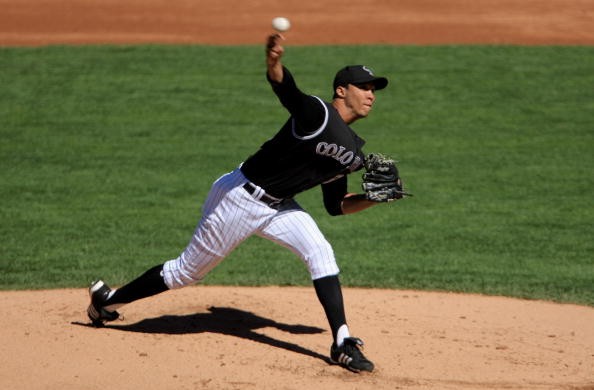
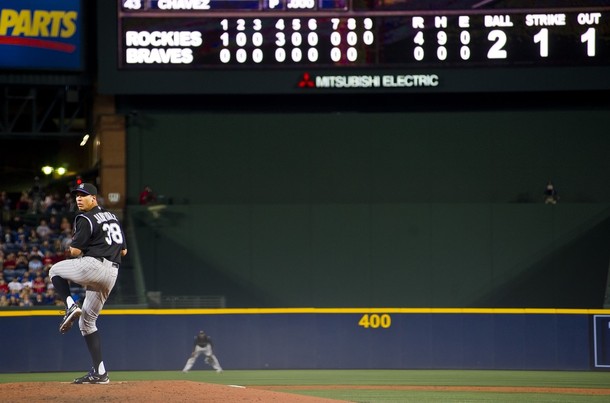
MLB reports: As an unbelievable as it may seem, there has been talk in baseball circles that the Rockies are taking calls on their ace pitcher, Ubaldo Jimenez. Start after start, game after game last year, Jimenez for the majority of 2010 was as unhittable as they come. Despite coming back down to earth in the 2nd half, Jimenez last year appeared in his first All-Star game and finished 3rd in the NL CY Young voting. He also pitched the very first no-hitter in Rockies history on April 17, 2010. With a young Rockies team that was expected to contend in 2011, the 27-year old Dominican Jimenez was expected to anchor the team. Now sitting with a 45-49 record, 8.5 games out of 1st in the NL West, the Rockies are on the fence as to whether they still have playoff aspirations this year. Further, the team’s brass needs to decide whether Jimenez is a part of those aspirations and future playoff runs. Media outlets have speculated that the Yankees are quietly making a run at Jimenez. There is a strong probability the trade could happen, but in my estimation, the Rockies would be making a colossal error if they do.
There is no denying the strength and ability of Ubaldo Jimenez. As the pitcher has slowly improved every year, especially noting his strong 2009 and 2010 campaigns, the hurler clearly has a world of potential. Taking a look at his numbers, the results speak for themselves:
| Year | W | L | ERA | IP | H | BB | SO | WHIP |
|---|---|---|---|---|---|---|---|---|
| 2006 | 0 | 0 | 3.52 | 7.2 | 5 | 3 | 3 | 1.043 |
| 2007 | 4 | 4 | 4.28 | 82.0 | 70 | 37 | 68 | 1.305 |
| 2008 | 12 | 12 | 3.99 | 198.2 | 182 | 103 | 172 | 1.435 |
| 2009 | 15 | 12 | 3.47 | 218.0 | 183 | 85 | 198 | 1.229 |
| 2010 | 19 | 8 | 2.88 | 221.2 | 164 | 92 | 214 | 1.155 |
| 2011 | 5 | 8 | 4.08 | 110.1 | 101 | 43 | 99 | 1.305 |
| 6 Seasons | 55 | 44 | 3.60 | 838.1 | 705 | 363 | 754 | 1.274 |
| 162 Game Avg. | 14 | 11 | 3.60 | 212 | 178 | 92 | 191 | 1.274 |
 With pitching at such a shortage, many baseball analysts are scratching their heads as to how the Rockies could possibly think about trading Jimenez. The San Francisco Giants proved last year that the World Series could be won almost exclusively on the strength of pitching. Tim Lincecum. Matt Cain. Madison Bumgarner. Jonathan Sanchez. The Giants had so many weapons to throw against its opponents every night and good young pitching at the end of day beats good hitting much of the time. The Rockies, ravaged by injuries and inconsistent performances, are unlikely to reach the postseason this year. But in the management of the team, the present and future must be considered. Look at Felix Hernandez on Seattle, Roy Halladay on the Phillies and Lincecum on the Giants. Every team that is trying to build a winner needs a stud pitcher at the top of its rotation. Jimenez is that guy for the Rockies and losing him on the roster will be a hole that will be difficult, to impossible to fill.
 So given the positives that Jimenez brings to the table, the issue remains how and why the Rockies could possibly consider moving him. There are a couple of main reasons in my estimation. Part of the equation is the performance of Jimenez this season. While he has been good, Jimenez for the most part has not been great. His record this year is far off from his most recent seasons, despite a strong rebound in his last few starts. Given his inconsistencies in 2011, the Rockies may be getting a little worried and looking to sell high before Jimenez starts to decline and/or injured. But given his strong resume to date, young age and rebound recently, I would like to think the Rockies are more intelligent than that. Players have their ups and downs, at all levels. It happens. Without a larger body of work for reference, it is almost impossible to reason that Jimenez is on his way down. His recent numbers tend to show otherwise. So while Jimenez may not be the same pitcher that we saw in early 2010, he is still the ace of the team.
So why the reports of trade talk with the Yankees? I will give you two words. Cliff Lee. The same Cliff Lee that was all set to be traded last year from the Mariners to the Yankees in a package including Jesus Montero. The deal was completed to the level that major media outlets were announcing the trade as fact. As the story goes on that one, the Mariners played the Yankees against the Rangers and took a package from Texas built around prospect Justin Smoak at the very last-minute. The Yankees were fuming to the level that they contacted the higher-ups in Seattle to complain about the conduct of their GM, Jack Zduriencik. The fallout was the Rangers making it to the World Series and the Yankees left at the altar without their prize. As a further dagger, Lee in his decision to sign with the Rangers or Yankees this past offseason, ended up going to the Phillies at the last-minute. Again, the mystery team coming at the last second out of the woods and the Yankees were left standing with egg on their face.
Do not underestimate the New York Yankees. They are the strongest and one of the proudest teams in baseball. The Yankees and their fans do not like to be left disappointed in the constant search for top talent. With Bartolo Colon and Freddy Garcia sitting in their rotation, the Yankees are clearly itching to make a move to bolster their rotation. While names like Jeremy Guthrie, Derek Lowe and Bronson Arroyo being thrown around, it starts to shed some light as to where the Jimenez talk is coming from. This is the Yankees and they do not like shopping at the Ford dealership. This is a team built on Mercedes and BMW’s. The problem is that the top cars, i.e. ace pitchers, are not readily available. After making runs at Felix Hernandez and Francisco Liriano, the Yankees are still in search of a strong #2 to compliment ace CC Sabathia. Considering that Sabathia can opt out of his contract during the coming offseason and possibly leave New York, the pressure is even greater to land a top starting pitcher. From all the names that have been tossed around, the one that makes the most sense is Ubaldo Jimenez.
When Jimenez is on his game, he is as Cliff Lee-like as you can get. Jimenez is a horse that has the potential to pitch a complete game shutout almost every game out. This is the type of numbers that the Yankees are looking for. Rather than waiting to what comes in free agency, the Yankees are trying to hedge their bets and make a run now. Any package for Jimenez will be built around uber-prospect Jesus Montero. Considering his strong bat, Montero could move from catcher to first base to replace the aging Todd Helton. The Rockies still have faith in their own young catcher, Chris Iannetta, who has taken longer to develop than expected. Montero would be great insurance and an almost guaranteed monster bat, in addition to the other prospects that would be headed to Colorado. A win-win for both teams if it happens, considering the bodies that would be moving as part of the trade. But still not quite if you consider the value of Jimenez to the Rockies.
 Other teams will sniffing around Jimenez as well. The Red Sox, Indians, Tigers, Angels and Rangers could all be considered in the mix. Jimenez would not come cheap and if the Rockies are smart, they will auction him off to the highest bidder. At the end of the day, this is a trade that the Yankees have to make. With little to no other options on the market, the Yankees have to overpay for Jimenez or risk failing to win a World Series despite the highest payroll in business. The Yankees lost out twice on Cliff Lee and need to do everything in their power to land an equivalent pitcher to their fold. While Ricky Romero or Jered Weaver would be nice acquisitions, realistically neither one will be made available by their respective teams. With Carlos Zambrano overpriced and inconsistent and Johan Santana a question mark for the season, at this point it is Jimenez or bust for the Yankees.
In considering this trade from a Rockies perspective, think how long the organization suffered from a pitching perspective. Despite always having strong hitting, the Rockies as an organization have been challenged to develop and maintain reliable pitching. Now that the Rockies have an ace in place, the team should be focusing on building around Jimenez rather than moving him. If the Rockies build their core of hitters and fail to have a deep and consistent starting rotation, the team will mean little come playoff time. The team will simply fall back into old habits and fail to adapt to the new Major League Baseball. With the steroid era past us, baseball is built around pitching and defense now for the most part. The Rockies, like every other team, needs good young pitching to contend. Jimenez has the potential to give them a high level of pitching for at least the next five years. If the Rockies feel they have a chance to contend during that time, they must hold onto him or risk setting themselves back even further.
Knowing that this is a trade that Yankees must make and the Rockies should pass on, the final question is whether this trade will happen. My heart says no, but my brain says yes. Despite all the reasons that the Rockies should hold onto Jimenez, it appears in my estimation that the Yankees will make an offer that Colorado cannot refuse. In fighting for World Series titles in New York, all necessary resources have to be acquired at any cost. Considering that the Yankees will include Montero and 2-3 more top prospects, the Rockies will have a hard time saying no. Perhaps the Yankees will include a couple of top pitching prospects in the package that will allow for a smoother transition for Colorado. But the reality is, that while prospects are intriguing and desirable, they are far from a sure thing. For every Derek Jeter that is drafted, developed and becomes a future Hall of Fame player, there are 1000’s of Todd Van Poppel clones that come highly touted and burn out just as quick. Ubaldo Jimenez has the experience and numbers that are proven. While I am always skeptical of pitching, based on injury risk (see Stephen Strasburg), the potential risk in this case by keeping Jimenez is worth the reward of the potential for future playoffs. This will be the one case where I advocate that a team hold onto their starting pitcher rather than cash in for prospects. But it is also the case where there is extreme speculation and rumors and I foresee the trade occurring. The Yankees are the Yankees for a reason. They usually get what they want. They want Ubaldo Jimenez and before July is done, he very well could be in pinstripes.
Please e-mail us at: MLBreports@gmail.com with any questions and feedback. You can follow us on Twitter and become a fan on Facebook . To subscribe to our website and have the daily Reports sent directly to your inbox , click here and follow the link at the top of our homepage.

2011 MLB All-Star Game Recap: National League Defeats the American League for 2nd Year in a Row
Wednesday July 13, 2011

 Rob Bland (Intern Candidate for MLB Reports): This year’s edition of the Midsummer Classic, the 2011 MLB All-Star Game, had a record-setting vote-getter. Jose Bautista of the Toronto Blue Jays received over 7.4 million votes in fan voting. This game was said to have lost some of its lustre due to the amount of players who elected not to participate. A total of eight players that were voted in by fans or chosen by coaches dropped out due to injury, timing or just plain wanting to rest. For the American League, David Price (TB), Derek Jeter (NYY), Mariano Rivera (NYY), Alex Rodriguez (NYY) and Jon Lester (BOS) all withdrew due to various ailments and injuries. Chipper Jones (ATL), Jose Reyes (NYM), and Placido Polanco (PHI) were the players who bowed out in the National League. One of Major League Baseball’s rules pertaining to eligibility for pitchers is that they must not start on the Sunday prior to the game. Due to this rule, CC Sabathia (NYY), James Shields (TB), Justin Verlander (DET), Felix Hernandez (SEA), Cole Hamels (PHI), and Matt Cain (SF) were ruled ineligible and unable to participate in the game.
Surely not having Price, Sabathia, Shields, Verlander, Hernandez and Rivera hurt the AL. Although he has had an impressive start to the season, CJ Wilson (TEX) probably should not have been pitching when he gave up the 3-run home run to Prince Fielder (MIL). It easily could have been one of those more accomplished aces as mentioned. However, that is the way it turned out, as the National League took advantage early and defeated the American League by a score of 5-1. The MVP of the game was Fielder, because of his huge home run that put the NL on top early and as it turned out, for good.
My pick for MVP was Roy Halladay (PHI), as he started for the National League and was dominant as only the Doc can be. He faced the minimum six batters over two innings, including Curtis Granderson (NYY), Adrian Gonzalez (BOS) and Jose Bautista (TOR); all potential MVP candidates. Halladay managed to throw only 19 pitches as part of his historical pitching performance.
In the 2nd inning, the defensive play of the game occurred when Brian McCann (ATL) hit a towering flyball in foul territory that Bautista caught as he slid into the wall. Aside from being one of the top home run hitters in baseall, Bautista is also an accomplished fielder who is capable of winning a gold glove at either third base or right field.
The scoring in the game started in the top of the 4th inning, when Adrian Gonzalez blasted a Cliff Lee (PHI) cutter over the right center field wall for a solo blast. The AL followed with three straight singles, the last of which was off Tyler Clippard (WAS). Hunter Pence fielded the ball and threw a laser to the plate to catch Bautista who tried to score from second for the third out. In the bottom of the inning, Carlos Beltran (NYM) and Matt Kemp (LAD) hit singles to set up Fielder`s massive bomb.
Jordan Walden (LAA), another player who probably didn`t deserve to play as much as the other big name starters, began to light up the radar gun last night, hitting 100 mph on his first four fastballs. Starlin Castro (CHC) came in to pinch run at first base after Troy Tulowitzki (COL) hit a leadoff single. Castro proceeded to immediately steal second and third base. He then set up another play at the plate, where Walden bare handed a weak ground ball by Rickie Weeks (MIL) and threw Castro out. Weeks stole second and came around to score when Andre Ethier (LAD) hit a single to right field, making the score 4-1.
The scoring continued in the bottom of the seventh inning when Pablo Sandoval (SF) hit a ground rule double over the wall in the left field corner. This scored Hunter Pence (HOU) after his leadoff single and a passed ball that allowed him to move to second base, and eventually score.
 Fan favorite Brian Wilson (SF) came in the top of the nineth inning with runners on second and third. A fly out and ground out later, and the game was in the books. Make the final score 5-1, as the National League wins for the All-Star Game for the second year in a row and secures home field advantage for its league in the up coming World Series in the fall.
This year`s All-Star Festivities were enjoyed by so many fans, and continually impressed me. I have had a great time covering the 2011 All-Star Game, everything from the Futures Game, Home Run Derby and of course, the All-Star Game itself. With Major League Baseball now entering the dog days of summer and the secon half of the season, it is time to speculate on trades and the calling up of prospects. Pure heaven for this baseball writer!
***EDITOR’S NOTE: With Chase Field still buzzing, the trade market has already begun. The Milwaukee Brewers announced right after the game taht they had acquired closer Francisco Rodriguez and cash considerations from the New York Mets for two players to be named later. With the Brewers acquiring Zack Greinke and Shaun Marcum in the offseason, clearly Milwaukee is going for it. Will be interesting to see if Brewers allow K-Rod’s $17.5 million option to vest for 2012, which is based on number of games finished in 2011. If K-Rod finishes 55 games, the option will vest. As he has already finsihed 34 this season, so the option could vest depending on how the Brewers use K-Rod and how close they remain to a playoff berth. It will be interesting to see what prospects go from Milwaukee to New York. Long-term this deal could hurt Milwaukee depending on which top prospects they give up. But in the short-term, this deal will make the Brewers’ fanbase happy and their slugging free agent to be, Prince Fielder, may have more thinking to do before selecting his new team for 2012. The ground work has been set with respect to the trade market. Now we will see if the K-Rod deal has indeed open the trading floodgates for the rest of baseball. ***
| 1 | 2 | 3 | 4 | 5 | 6 | 7 | 8 | 9 | R | H | E | |
| American | 0 | 0 | 0 | 1 | 0 | 0 | 0 | 0 | 0 | 1 | 6 | 0 |
| National | 0 | 0 | 0 | 3 | 1 | 0 | 1 | 0 | – | 5 | 9 | 2 |
W: T. Clippard
L: C. Wilson
S: B. Wilson
|
National All-Stars |
||||||||||
|---|---|---|---|---|---|---|---|---|---|---|
| Hitters | AB | R | H | RBI | BB | SO | #P | AVG | OBP | SLG |
| R Weeks 2B | 3 | 1 | 0 | 0 | 0 | 1 | 12 | .000 | .000 | .000 |
|
B Phillips 2B
|
1 | 0 | 0 | 0 | 0 | 0 | 3 | .000 | .000 | .000 |
| C Beltran DH | 2 | 1 | 1 | 0 | 0 | 1 | 7 | .500 | .500 | .500 |
|
a-A Ethier PH-DH
|
1 | 0 | 1 | 1 | 0 | 0 | 8 | 1.000 | 1.000 | 1.000 |
|
b-G Sanchez PH-DH
|
1 | 0 | 0 | 0 | 0 | 0 | 3 | .000 | .000 | .000 |
| M Kemp CF | 2 | 1 | 1 | 0 | 1 | 0 | 15 | .500 | .667 | .500 |
|
A McCutchen CF
|
1 | 0 | 0 | 0 | 0 | 0 | 3 | .000 | .000 | .000 |
| P Fielder 1B | 2 | 1 | 1 | 3 | 0 | 0 | 6 | .500 | .500 | 2.000 |
|
J Votto 1B
|
2 | 0 | 0 | 0 | 0 | 1 | 9 | .000 | .000 | .000 |
| B McCann C | 2 | 0 | 0 | 0 | 0 | 0 | 8 | .000 | .000 | .000 |
|
Y Molina C
|
1 | 0 | 1 | 0 | 0 | 0 | 1 | 1.000 | 1.000 | 2.000 |
|
c-J Bruce PH-RF
|
1 | 0 | 0 | 0 | 0 | 1 | 6 | .000 | .000 | .000 |
| L Berkman RF | 1 | 0 | 1 | 0 | 0 | 0 | 3 | 1.000 | 1.000 | 1.000 |
|
J Upton RF
|
2 | 0 | 0 | 0 | 0 | 0 | 3 | .000 | .000 | .000 |
|
M Montero C
|
0 | 0 | 0 | 0 | 0 | 0 | 0 | .000 | .000 | .000 |
| M Holliday LF | 1 | 0 | 0 | 0 | 0 | 1 | 7 | .000 | .000 | .000 |
|
H Pence LF
|
2 | 1 | 1 | 0 | 0 | 1 | 10 | .500 | .500 | .500 |
| T Tulowitzki SS | 2 | 0 | 1 | 0 | 0 | 0 | 5 | .500 | .500 | .500 |
|
S Castro PR-SS
|
1 | 0 | 0 | 0 | 0 | 1 | 3 | .000 | .000 | .000 |
| S Rolen 3B | 2 | 0 | 0 | 0 | 0 | 2 | 8 | .000 | .000 | .000 |
|
P Sandoval 3B
|
1 | 0 | 1 | 1 | 0 | 0 | 6 | 1.000 | 1.000 | 2.000 |
| Totals | 31 | 5 | 9 | 5 | 1 | 9 | 126 | |||
| a-singled to right for C Beltran in the 5th b-popped out to second for A Ethier in the 7th c-struck out looking for Y Molina in the 8th |
||||||||||
| BATTING 2B: Y Molina (1, C Perez); P Sandoval (1, B League) HR: P Fielder (1, 4th inning off C Wilson 2 on, 0 Out) RBI: P Fielder 3 (3), A Ethier (1), P Sandoval (1) 2-out RBI: A Ethier All-Stars RISP: 3-8 (P Fielder 1-1, J Upton 0-1, S Rolen 0-1, B Phillips 0-1, R Weeks 0-1, A Ethier 1-1, G Sanchez 0-1, P Sandoval 1-1) Team LOB: 3 |
||||||||||
| BASERUNNING SB: S Castro 2 (2, 2nd base off J Walden/A Avila, 3rd base off J Walden/A Avila); R Weeks (1, 2nd base off J Walden/A Avila) CS: L Berkman (1, 2nd base by D Robertson/A Avila) |
||||||||||
| FIELDING E: S Castro (1, throw); J Bruce (1, throw) Outfield Assist: H Pence (J Bautista at Home). |
||||||||||
|
National All-Stars |
||||||||||
|---|---|---|---|---|---|---|---|---|---|---|
| Pitchers | IP | H | R | ER | BB | SO | HR | PC-ST | ERA | |
| R Halladay | 2.0 | 0 | 0 | 0 | 0 | 1 | 0 | 19-14 | 0.00 | |
| C Lee | 1.2 | 3 | 1 | 1 | 0 | 0 | 1 | 25-16 | 5.40 | |
T Clippard |
0.1 | 1 | 0 | 0 | 0 | 0 | 0 | 3-3 | 0.00 | |
| C Kershaw (H) |
1.0 | 0 | 0 | 0 | 0 | 1 | 0 | 8-6 | 0.00 | |
| J Jurrjens (H) |
1.2 | 1 | 0 | 0 | 0 | 1 | 0 | 23-15 | 0.00 | |
| C Kimbrel (H) |
0.1 | 0 | 0 | 0 | 1 | 0 | 0 | 14-8 | 0.00 | |
| J Venters | 0.2 | 0 | 0 | 0 | 0 | 1 | 0 | 4-4 | 0.00 | |
| H Bell | 0.1 | 0 | 0 | 0 | 0 | 0 | 0 | 5-2 | 0.00 | |
| J Hanrahan | 0.1 | 1 | 0 | 0 | 0 | 1 | 0 | 14-9 | 0.00 | |
| B Wilson (S) |
0.2 | 0 | 0 | 0 | 0 | 0 | 0 | 7-5 | 0.00 | |
| Totals | 9.0 | 6 | 1 | 1 | 1 | 5 | 1 | 122-82 | ||
| PITCHING First-pitch strikes/Batters faced: R Halladay 4/6; C Lee 4/8; T Clippard 1/1; C Kershaw 1/3; J Jurrjens 5/6; C Kimbrel 0/2; J Venters 2/2; H Bell 0/1; J Hanrahan 1/3; B Wilson 2/2 Called strikes-Swinging strikes-Foul balls-In Play strikes: R Halladay 4-3-2-5; C Lee 4-1-3-8; T Clippard 1-1-0-1; C Kershaw 1-1-2-2; J Jurrjens 3-5-3-4; C Kimbrel 1-2-4-1; J Venters 1-2-0-1; H Bell 1-0-0-1; J Hanrahan 1-2-4-2; B Wilson 1-1-1-2 Ground Balls-Fly Balls: R Halladay 3-2; C Lee 4-1; T Clippard 0-0; C Kershaw 2-0; J Jurrjens 2-2; C Kimbrel 1-0; J Venters 1-0; H Bell 0-1; J Hanrahan 0-0; B Wilson 1-1 Game Scores: R Halladay 57 |
||||||||||
|
American All-Stars |
||||||||||
|---|---|---|---|---|---|---|---|---|---|---|
| Hitters | AB | R | H | RBI | BB | SO | #P | AVG | OBP | SLG |
| C Granderson CF | 2 | 0 | 0 | 0 | 0 | 0 | 3 | .000 | .000 | .000 |
|
J Ellsbury CF
|
2 | 0 | 0 | 0 | 0 | 2 | 8 | .000 | .000 | .000 |
| A Cabrera SS | 2 | 0 | 0 | 0 | 0 | 1 | 6 | .000 | .000 | .000 |
|
J Peralta SS
|
2 | 0 | 0 | 0 | 0 | 0 | 8 | .000 | .000 | .000 |
| A Gonzalez 1B | 2 | 1 | 1 | 1 | 0 | 0 | 6 | .500 | .500 | 2.000 |
|
M Cabrera 1B
|
1 | 0 | 0 | 0 | 0 | 0 | 5 | .000 | .000 | .000 |
|
M Young 3B
|
1 | 0 | 0 | 0 | 0 | 1 | 5 | .000 | .000 | .000 |
| J Bautista RF | 2 | 0 | 1 | 0 | 0 | 0 | 5 | .500 | .500 | .500 |
|
C Quentin RF
|
2 | 0 | 0 | 0 | 0 | 0 | 8 | .000 | .000 | .000 |
| J Hamilton LF | 2 | 0 | 1 | 0 | 0 | 0 | 4 | .500 | .500 | .500 |
|
M Joyce LF
|
2 | 0 | 1 | 0 | 0 | 0 | 7 | .500 | .500 | .500 |
| A Beltre 3B | 2 | 0 | 1 | 0 | 0 | 0 | 10 | .500 | .500 | .500 |
|
K Youkilis 3B
|
1 | 0 | 1 | 0 | 0 | 0 | 4 | 1.000 | 1.000 | 1.000 |
|
M Cuddyer 1B
|
1 | 0 | 0 | 0 | 0 | 0 | 1 | .000 | .000 | .000 |
| D Ortiz DH | 2 | 0 | 0 | 0 | 0 | 1 | 10 | .000 | .000 | .000 |
|
a-P Konerko PH-DH
|
1 | 0 | 0 | 0 | 1 | 0 | 13 | .000 | .500 | .000 |
| R Cano 2B | 2 | 0 | 0 | 0 | 0 | 0 | 4 | .000 | .000 | .000 |
|
H Kendrick 2B
|
1 | 0 | 0 | 0 | 0 | 0 | 7 | .000 | .000 | .000 |
| A Avila C | 2 | 0 | 0 | 0 | 0 | 0 | 7 | .000 | .000 | .000 |
|
M Wieters C
|
1 | 0 | 0 | 0 | 0 | 0 | 1 | .000 | .000 | .000 |
| Totals | 33 | 1 | 6 | 1 | 1 | 5 | 122 | |||
| a-walked for D Ortiz in the 7th | ||||||||||
| BATTING HR: A Gonzalez (1, 4th inning off C Lee 0 on, 2 Out) RBI: A Gonzalez (1) 2-out RBI: A Gonzalez All-Stars RISP: 2-5 (M Joyce 1-1, A Beltre 1-1, H Kendrick 0-1, M Cuddyer 0-1, P Konerko 0-1) Team LOB: 6 |
||||||||||
| FIELDING DP: 1 (A Avila-R Cano). PB: M Wieters. Outfield Assist: J Bautista (A Ethier at 2nd base). |
||||||||||
|
American All-Stars |
||||||||||
|---|---|---|---|---|---|---|---|---|---|---|
| Pitchers | IP | H | R | ER | BB | SO | HR | PC-ST | ERA | |
| J Weaver | 1.0 | 0 | 0 | 0 | 1 | 1 | 0 | 14-8 | 0.00 | |
| D Robertson | 1.0 | 1 | 0 | 0 | 0 | 1 | 0 | 14-7 | 0.00 | |
| M Pineda | 1.0 | 0 | 0 | 0 | 0 | 2 | 0 | 10-8 | 0.00 | |
| C Wilson (L) |
1.0 | 3 | 3 | 3 | 0 | 1 | 1 | 22-14 | 27.00 | |
| J Walden | 1.0 | 2 | 1 | 1 | 0 | 1 | 0 | 20-13 | 9.00 | |
| C Perez | 1.0 | 1 | 0 | 0 | 0 | 1 | 0 | 15-9 | 0.00 | |
| B League | 1.0 | 2 | 1 | 1 | 0 | 1 | 0 | 19-13 | 9.00 | |
| A Ogando | 0.2 | 0 | 0 | 0 | 0 | 0 | 0 | 6-5 | 0.00 | |
| G Gonzalez | 0.1 | 0 | 0 | 0 | 0 | 1 | 0 | 6-3 | 0.00 | |
| Totals | 8.0 | 9 | 5 | 5 | 1 | 9 | 1 | 126-80 | ||
| PITCHING First-pitch strikes/Batters faced: J Weaver 4/4; D Robertson 1/3; M Pineda 3/3; C Wilson 3/6; J Walden 2/4; C Perez 2/4; B League 3/5; A Ogando 2/2; G Gonzalez 1/1 Called strikes-Swinging strikes-Foul balls-In Play strikes: J Weaver 3-3-0-2; D Robertson 2-1-3-1; M Pineda 3-3-1-1; C Wilson 4-2-4-4; J Walden 2-3-5-3; C Perez 2-2-2-3; B League 1-4-4-4; A Ogando 2-0-1-2; G Gonzalez 2-1-0-0 Ground Balls-Fly Balls: J Weaver 1-1; D Robertson 0-1; M Pineda 0-1; C Wilson 0-2; J Walden 1-0; C Perez 0-2; B League 0-2; A Ogando 2-0; G Gonzalez 0-0 Game Scores: J Weaver 53 |
||||||||||

***Thank you to Rob Bland for preparing today’s article on the All-Star Game. You can follow Rob on Twitter.***
Please e-mail us at: MLBreports@gmail.com with any questions and feedback. You can follow us on Twitter and become a fan on Facebook . To subscribe to our website and have the daily Reports sent directly to your inbox, click here and follow the link at the top of our homepage.

Devin Mesoraco: Catcher Cincinnati Reds, On the Verge of Getting the Call
Saturday June 11, 2011

MLB reports: With catching at an all-time premium in baseball, few teams are lucky to have one, let alone two solid catchers in its system. The Cincinnati Reds have an abundance of riches at the position, with two serviceable catchers on its major league roster and two of the brightest catching prospects in its lower levels. For all the talk of the New York Yankees and Montero, Sanchez and all of its up-and-coming catching prospects, a look to the future catching superstars of Major League Baseball points to Cincinnati.
Top catching prospect Devin Mesoraco stands 6’1″ and weighs a very solid 220 lbs. Only 22-years of age, Mesoraco was drafted in the 1st round of the 2007 MLB draft (15th overall). Catchers typically take longer to develop and Mesoraco has been slowed in his development by the injury bug. But despite missing many games over his short career, his bat has never slowed in the process. Last year at the tender age of 21, Mesoraco played through three levels and rose all the way to AAA. This year, in his first full turn at AAA, Mesoraco has been simply outstanding. With a .323 AVG, .407 OBP, .542 SLG, 8 home runs and 25/39 BB/K, Mesoraco has shown the MLB reports favorite hitting combination: power and patience. A lifetime .270 hitter in the minors with an .802 OPS, Mesoraco has only gotten stronger and better as he has risen through the Reds system. But not far behind him, there is another strong Reds catching prospect waiting in the wings by the name of Yasmani Grandal, as well as two existing roadblocks in Ramon Hernandez and Ryan Hanigan.
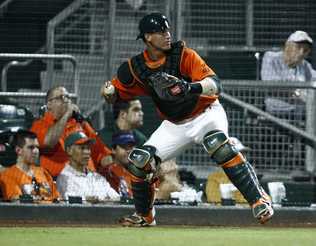 Grandal is also 22-years of age. Born in Havana Cuba, he was originally drafted by the Boston Red Sox in the 27th round of the 2007 draft. After failing to sign, Grandal became the next catching 1st round pick of the Reds, being drafted 12th overall in the 2010 draft. Missing out on three years compared to Mesoraco, Grandal played eight games last year in rookie ball and currently plays high A ball in Bakersfield. With 9 home runs this year in 50 games played, combined with a .279 AVG, .878 OPS and 37/50 BB/K ratio, Grandal is proving himself to be every bit the hitter that Mesoraco is. A promotion is due shortly to AA and very soon the Reds will face a dilemma in choosing their catcher of the future. A great problem to have if you are the Cincinnati Reds, who are the envy of Major League Baseball in their ability to draft and develop talent. Grandal is also a switch-hitter to boot, which will make the Reds catching choice even that much more difficult.
Given that Mesoraco has the most experience and has played at the higher levels, he will be given the first crack at the Reds catching job. His first roadblock is veteran Ramon Hernandez, the Reds incumbent starting catcher. Hernandez at 35 should be starting to near the end of his career, having played 13 seasons for 4 different major league teams. Hernandez suffered through injuries in both the ’09 and ’10 seasons, but still received a 1-year, $3 million contract for 2011 from the Reds. Hernandez has rewarded the Reds thus far with a strong season. Hernandez on the year has hit .310, with 7 home runs and an .898 OPS. But despite his strong play, Hernandez is injury prone and has otherwise started to show a declining bat over the last couple of seasons, despite playing in a hitter’s park in Cinci. Expect an injury or slump by Hernandez to open the door for Mesoraco to get his chance sometime this year.
 Ryan Hanigan, the Reds backup catcher, was signed in the offseason to a 3-year, $4 million contract. Some observers questioned the move, given the up-and-coming catchers in the Reds system. But the Reds were smart to lock-in a highly considered backup catcher to mentor their young prospects and help groom them to be possibly the next Johnny Bench. Hanigan at the age of 30, has played parts of 5 seasons for the Reds. Last year was by far his strongest campaign, with a .300 AVG and .834 OPS. For his major league career, Hanigan has a 98/77 BB/K- thus exhibiting one of the best batting eyes I have ever seen for a catcher. Despite his slow start this season, with a .248 AVG and .673 OPS, Hanigan plays strong defense and does enough offensively to ensure that he will remain as the Reds backup catcher for the foreseeable future.
With Hanigan as the backup and Hernandez playing out the string this season, we can expect to see Mesoraco make his major league debut this year. Given that he is only 22, the world should not be expected of him yet. As mentioned earlier, catchers take a lot longer to develop into complete major league players compared to other positional player. One only has to look to Baltimore, where Matt Wieters came slowly out of the gate until he started to find his way in the big leagues. While watching Buster Posey‘s run last year with the Giants was exciting, he is definitely the exception to the rule. Scouts and analysts that I have spoken to are divided on Mesoraco and Grandal. From the people that I have spoken to, there was nearly a 50/50 split on which prospect would become the future #1 catcher in Cincinnati.
A similar situation has already developed for the Reds with the blocked path for Yonder Alonso, one of the top Reds prospects still in the minors. Alonso, a first baseman by trade, has been attempting to shift to the outfield in the hopes of eventually joining the Reds. The reports that I have received are that his defense has been graded at far below average and the Reds are not comfortable calling him up as a result. With Joey Votto entrenched at first, Alonso will only make the big leagues at this point by injury or trade. With 8 home runs already on the season in AAA, to compliment his .327 AVG and .911 OPS, the 24-year old Cuban born Alonso has a major league bat. His fellow countryman Grandal may face a similar conflict in a couple of seasons. With such a strong farm system, the Reds are building themselves for a dynasty run for several years to come. The likely quarterback of the pitching staff in the near future will be Devin Mesoraco, who will also hit in the heart of a deep lineup in a great ballpark. The sky is the limit for this great prospect who is on the verge of joining the big leagues. We look forward to watching his debut very soon and hope that Mesoraco will have a long and productive career at the most demanding position in the game.

Please e-mail us at: MLBreports@gmail.com with any questions and feedback. You can follow us on Twitter and become a fan on Facebook . To subscribe to our website and have the daily Reports sent directly to your inbox , click here and follow the link at the top of our homepage.
Wilpon Sells Minority Share in Mets to Einhorn, Not Seinfeld
Thursday May 26, 2011

MLB reports: The seemingly never-ending circus that is the New York Mets took another turn today, as the team announced that it has sold a minority stake in the ball club to hedge fund manager, David Einhorn. The amount of interest sold in the team is not yet known, but the price tag on the purchase has been set at $200,000,000.00. A nice chunk of change for a team that has indicated it would be losing up to $70 million this year alone. The money according to owner Fred Wilpon would be used towards the payment of debts and expenses of the team. In essence, a short-term attempt to stop the bleeding.
The 42-year-old Einhorn is an interesting choice as a partial owner of the team. 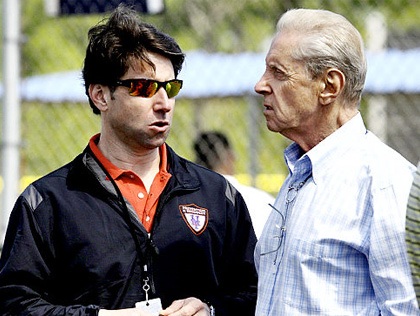 Growing up in New Jersey, Einhorn was a Mets fan and has come home so to speak. Ironically, Einhorn moved to Milwaukee as a kid and actually grew up next door to Bud Selig. With the deal apparently a commissioner rubber stamp away from approval by MLB, the connection between the new owner and the MLB commissioner should mean a quick process. Knowing Selig well should integrate Einhorn quickly into the “old boys club” so to speak as a partial owner of a major league baseball team. Knowing the city and growing up a fan of the Mets, the hope is that Einhorn can use his financial knowledge and passion for the team to build a financially viable contender.
As a limited partner, it is unclear if Einhorn will have any say or control over the team. Fred Wilpon has indicated that the investment is limited and does not include any control stake in the team. But with a team valued at approximately $747 million by Forbes, we can assume that Einhorn purchased approximately 20-25% in the Mets. If Wilpon continues to falter financially, one would assume that Einhorn would have first right to purchase an additional interest in the team. If Einhorn does become a great stakeholder in the team, the issue will become if he will do everything that it takes to make the Mets a winner, or keep a strong eye on the bottom line. Einhorn made his money by being a strong manager of money as the President of the investment firm Greenhouse Capital, Inc. The long-term implications of the sale are not yet known, but this could be a start of a bright road for the Mets depending on Einhorn’s intentions.
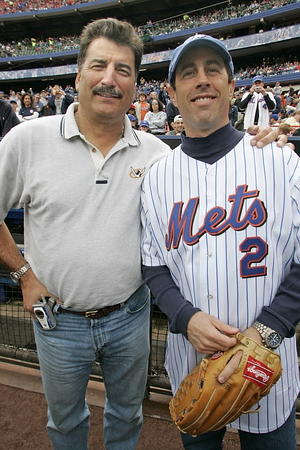
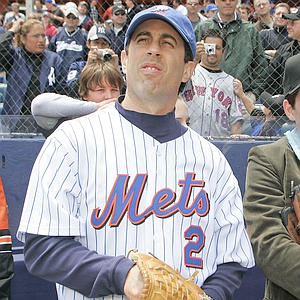 So what is the connection to Jerry Seinfeld you ask? Before the Einhorn announcement, Seinfeld was my choice to become the new minority owner of the Mets. With a net worth close to $800 million, Seinfeld has the money and credibility to join the sports ownership business. A life-long Mets fan, as evidenced by his hit television sitcom, Seinfeld would have become the perfect fit. A celebrity in the ranks to take the spotlight away from the troubles of the Mets and allow the fans to get excited about its ball team again. However, from all accounts that I have read, Seinfeld does not have any interest to purchase a sports team. A deeply private person by nature, Seinfeld does not want to consistently be before the press and the responsibilities that go along with becoming an owner in the Mets. Sports ownership is also not always the best financial investment and that appears to have factored into Seinfeld’s decision as well.
Finally, Fred Wilpon is a person that enjoys the spotlight and more than likely would not have enjoyed the attention being shifted away from him to the celebrity Seinfeld. However, given the scandals and turmoil that has plagued the Mets recently, having Jerry Seinfeld as a partner may have been the best cure for Wilpon. But as it stands today, it appears that the Mets have a new minority owner in David Einhorn. Hopefully the new owner brings luck and fortune to a team that desperately can use any help that it can get.
Please e-mail us at: MLBreports@gmail.com with any questions and feedback. You can follow us on Twitter and become a fan on Facebook . To subscribe to our website and have the daily Reports sent directly to your inbox , click here and follow the link at the top of our homepage.


 MLB Reports
You must be logged in to post a comment.