Blog Archives

Michael Choice Has Tremendous Power: A’s Prospect is On the Verge

Sunday May 27th, 2012

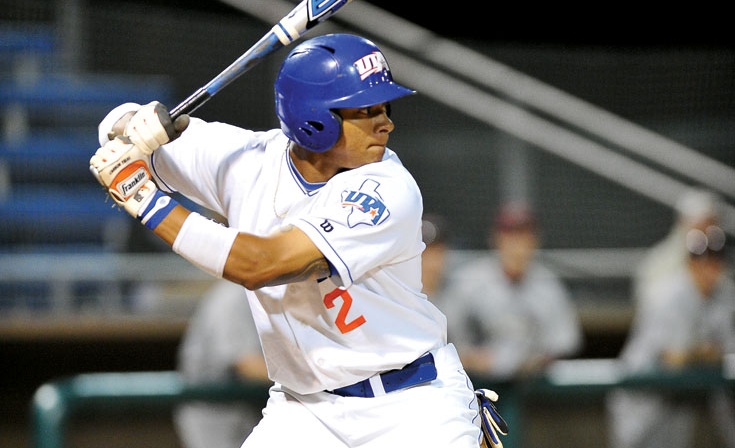
Sam Evans: Oakland Athletics prospect Michael Choice was drafted by the A’s 10th overall in the 2010 MLB Amateur draft. Looking back at the pick, most of the players drafted before Choice have risen quicker through their respective systems, but Choice still looks like a nice selection by Billy Beane and his scouting department. Michael Choice has 70 grade power, so even though his tools are raw, it’s hard not to like a future All-Star.

Michael Choice was born in 1989 in Forth Worth, Texas. Being a young Texan outfielder with power projection, it must be pretty difficult to go unnoticed out high school. Nonetheless, Choice was under the radar coming out of high school and he eventually ended up at the University of Texas-Arlington. At Texas-Arlington, Choice began to turn some heads. In three college seasons, or 175 games, Choice hit thirty-four homers and had a batting average over .375 in all three years.  His junior year at Texas-Arlington, in 2010, Choice drew seventy-six walks and he only struck out fifty-four times.

Coming into the draft, Choice was considered by most as a top fifteen prospect, so the A’s selecting him at #10 didn’t surprise many. The player that went before Choice, Karsten Whitson did not sign. The player that went after Choice, Deck McGuire, is a little overrated in my opinion, but he has reached Double-A already in the Toronto organization. Read the rest of this entry

Fantasy Baseball Report: Week of May 14th

Monday May 14th, 2012

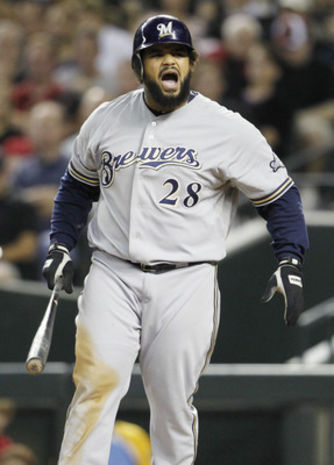
Peter Stein (Fantasy Baseball Analyst – MLB reports): I think we can learn a lot from Albert Pujols, Adam Dunn, and Prince Fiedler, namely that it is not an easy transition to switch leagues in the middle a career. Adam Dunn, who also reported to the White Sox rather overweight in 2011, was completely overmatched last season and put up one of the worst statistical seasons in major league history. However, in 2012 he has already matched his home run total from last season and he is actually on pace for a career year with .993 OPS (career .879). Dunn is performing like the guy who blasted 38 home runs or more eight consecutive seasons.  


Like Dunn, Pujols is struggling in his first season in the major leagues. One must figure that in addition adapting to the new surrounding and pitchers, the mental aspect has to be taking a toll on Pujols. Although I expect him to recover, it will certainly be too late in the minds of fantasy owners who took as one of the first two overall picks. I now see him as a nice buy-low candidate for 2013, in the same mold of Dunn. Although Prince Fielder is not struggling to the same degree, his .746 OPS in 2012 is well below his career .926 average. He and Pujols could still both finish the season with 30 plus homers, but it seems unlikely that they will produce at the level they were accustomed to in the NL. Look for them to both get hot at the end of the season and not struggle through the whole year like Dunn. And since Dunn looked to be one his way out of baseball and has recovered nicely, I think we can expect the same delayed results for the struggling first baseman in Detroit and Los Angeles. Read the rest of this entry

The Truth Behind Jason Hammel’s Amazing Start

Monday May 14th, 2012

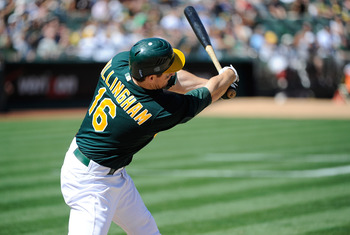
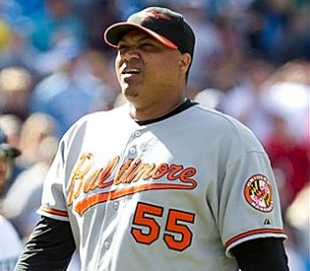
Sam Evans:When MLB Reports first wrote about the Rockies/Orioles trade that sent Rockies’ pitcher’s Matt Lindstrom and Jason Hammel to Baltimore in exchange for Jeremy Guthrie, the Orioles seemed like early candidates to come out ahead in this trade. It’s still too early to tell, but because of Hammel’s hot start, the Orioles look like they got a bargain deal. Hammel has been so impressive because of his new pitch and his superb strikeout-to-walk ratios. The Orioles are currently on top of the A.L. East with a 22-13 record, and they owe a lot of the credit for their success to Jason Hammel. Still, there are multiple reasons why they can’t expect Hammel to keep this up.

Coming up in the Tampa Bay Devil Rays system, Jason Hammel was considered a fairly decent pitching prospect. He stands six feet and six inches tall, and weighs roughly 215 pounds. However, when Hammel reached the majors in 2006, just four years since being drafted out of high school, he struggled mightily. In 2008, Hammel’s last year with the Rays, he had a 5.25 FIP. Eventually, the Rays decided that their younger pitching prospects deserved a spot in their rotation more than Hammel. As a result, Hammel was traded before the 2009 season to the Rockies for Aneury Rodriguez. In Colorado, Hammel improved as a pitcher, but he was never considered above-average. Read the rest of this entry

Week 4 – MLB 2012 Season: Fantasy Baseball Report

Monday April 30th, 2012

Peter Stein (Fantasy Baseball Analyst – MLB reports): This offseason, I told myself (and others) to stay away from names like Matt Kemp and Josh Hamilton. It wasn’t even a question. There was no way Kemp could repeat his 2011 season (and his .380 BAPIP). But he appears to be on his way to surpassing last year and making a hard push towards the triple crown. Josh Hamilton, who I also intentionally stayed away from, simply cannot be counted on to play 150 games. Hamilton has had a Kemp-like start to the season and is also single-handedly carrying fantasy teams throughout the first month of the season. However, he did leave Sunday’s game with back tightness (out Monday as well) and this could be a start of a trend that we have seen in seasons past. 

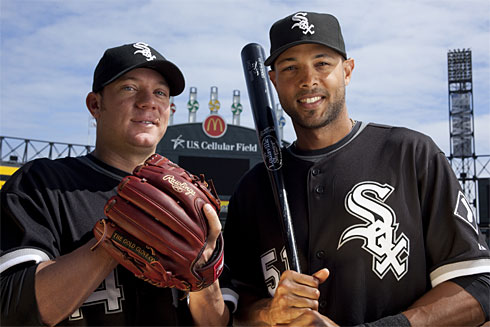
On the pitching side, Jake Peavy was another guy who fell in the same category as Hamilton, having only made 39 starts in his 2.5 seasons with the White Sox. Furthermore, the results were poor in those starts as he transitioned from a pitcher friendly park in baseball’s weakest hitting division to the American League.  But even more of an afterthought in addition to the health concerns, was Peavy’s transition from the NL West and the most pitcher friendly park to the hitting friendly confines of U.S. Cellular Field. However, Peavy looks like the Peavy of old and is pitching like a number one type pitcher again.  But will that last? Are you prepared to take that gamble? Read the rest of this entry

Week 3 – MLB 2012 Season: Sell High and Buy Low Candidates in Fantasy Baseball

Monday April 23rd, 2012

Peter Stein (Fantasy Baseball Analyst – MLB reports): The name of the game in fantasy baseball is sell high and buy low. This is the best method to improve your team. But it takes careful consideration and analysis to determine who is legit and who is fluking. As we are approximately 16 games through the season, remember that you are playing for a 162 games of stats and thus we are only 10% through the 2012 season. Trust the preseason predictions, and make an upgrade whenever possible. Therefore, in this week’s fantasy focus, I highlight which guys to target and which guys to sell.


Sell High:


Josh Hamilton is currently playing t-ball (.418/7/17/1). We have seen Hamilton go on stretches like this before, but we know his expected 162 game season still places him outside of the top-ten. Furthermore, we simply cannot expect a full 162 games out of Hamilton. Perhaps he was undervalued heading into this year, and he is playing for a contract, but his hot start has the potential to net you a safer option in one of the buy low candidates listed below.


David Freese I talked about last week, because he will not keep up his current pace (.333/3/15) and has plenty of name recognition after last October. Furthermore, he is prone to prolonged absences due to injury and offers nothing in the stolen base category.  He is certainly an above average fantasy third baseman, but you might as well try to capitalize at his peak value. Read the rest of this entry

It is Amazing How People Overreact to a Small Statistical Sample Size

Tuesday April 17th, 2012

Peter Stein (Fantasy Baseball Analyst – MLB reports): The opening of the 2012 baseball season remains interesting and unpredictable. Although we are dealing with such a small sample size and people tend to overreact (approximately 10 games), there a lot of early season performances to that deserved to be examined a little closer.


Before we go making Matt Kemp comparisons, Chris Young is clearly benefiting from a new approach at the plate. Young has always displayed the ability to hit for great power and speed, but just lacked in the average department. However, he made significant mechanical adjustments in the offseason and his new approach has been successful since the spring, when he batted .400. His .405/5/13/2 stat line is clearly unsustainable, but lets not forget he is only 28 years of age and might finally be figuring out how to consistently put it together. What might be most telling of his improvement is his 4:5 strikeout to walk total after 10 games, from a guy who has throughout his career averaged a ratio of 3.3:7.4. This could be the year that the average is .270-280 to accompany his 30/30 potential, making him a top-level talent. Read the rest of this entry

Spring Training is Almost Finished: Final Roster Decisions for Your 2012 Fantasy Baseball Team

Monday April 2nd, 2012


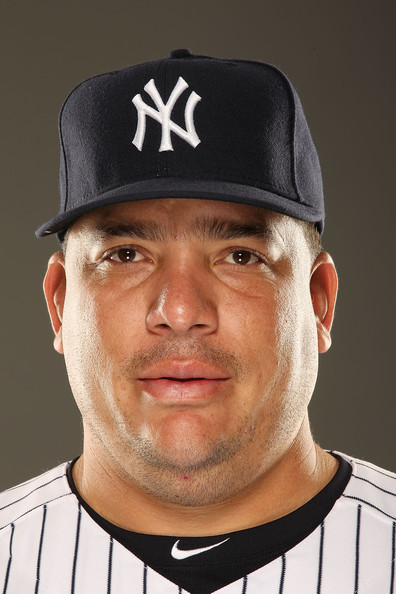
Peter Stein (Fantasy Baseball Analyst – MLB reports): The 2012 fantasy baseball season kicked off this past week with the Oakland Athletics and Seattle Mariners two game set in Japan. What can we learn from this series? Even in a hitter friendly park, neither of these teams can really hit. They will both struggle to score runs all year. Therefore, Bartolo Colon will have a lot of value pitching in the friendly confines of the Oakland Coliseum. Colon needs to be owned in all leagues, because he proved he still has something left in the tank last year. He is a must start option anytime he faces the Mariners and in most instances he pitches at home. The same is true with teammate Brandon McCarthy, who could perform to a near ace level this season. However, he does have an injury past, which also goes without saying with the old and portly Bartolo Colon. I also think this short series spoke volumes about the potential of Dustin Ackley, who can quickly emerge as a top ten option at second base.


With only two regular season games to reflect upon, let’s take a closer look at the end of spring training and its fantasy relevance. Henry Rodriguez is most likely available in your league, and the 100mph flamethrower will have the opportunity to close games as Drew Storen begins the season the disabled list. In 10 spring training innings, Rodriguez has allowed just four hits, but more importantly struck out nine batters compared to only two walks. The strike zone was the problem in 2011, when he still posted respectable numbers. But he seems to have found better control of the plate. He could be deadly and Zumaya-like. He should provide great value for strikeouts, and is great insurance for Storen owners, as I would not even be surprised to see him assume the closer role at some point during the 2012 season. Read the rest of this entry

2012 Fantasy Rankings: Who Ranks Higher – Moore or Hellickson?

Sunday March 25th, 2012

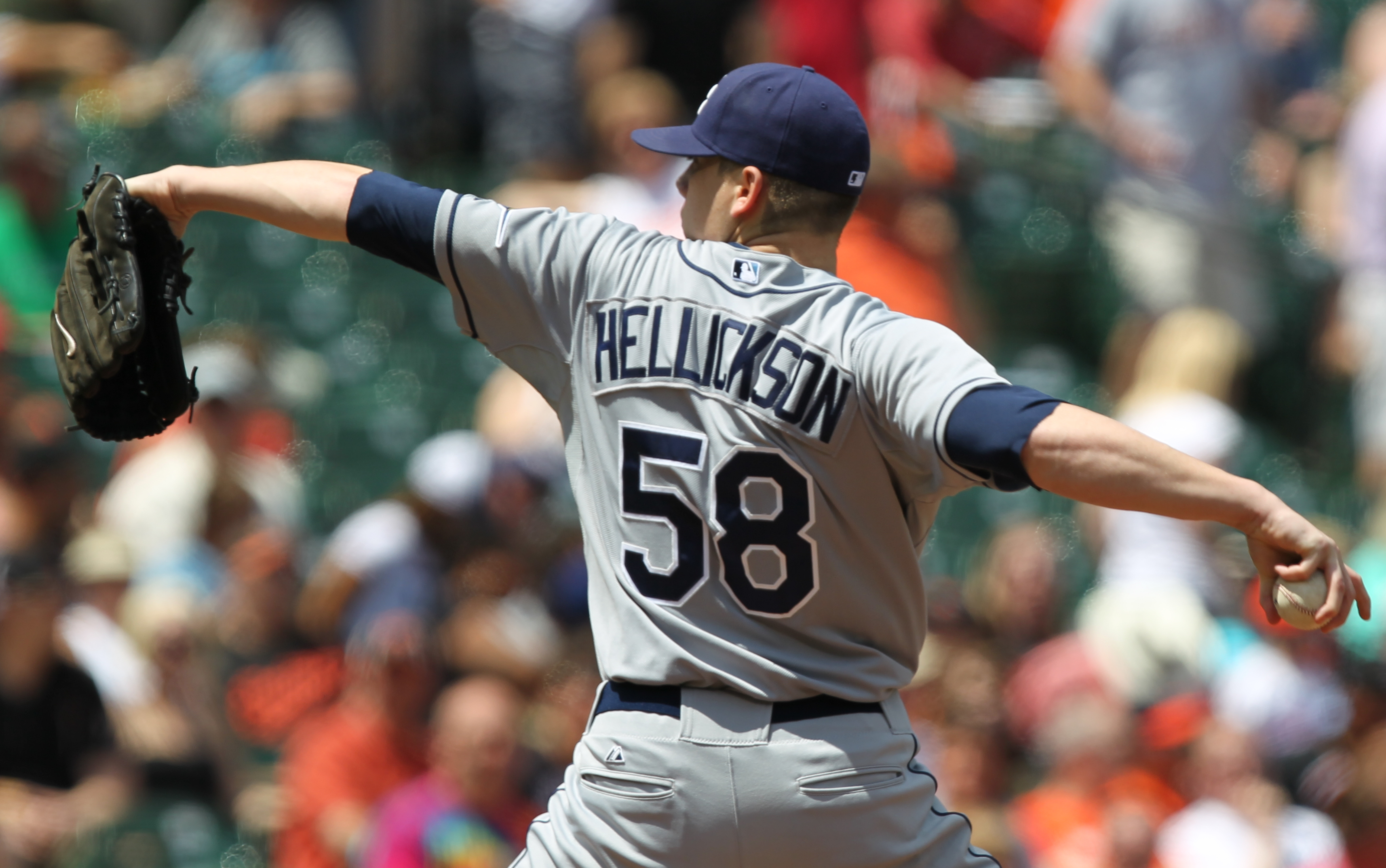
Sam Evans: The Tampa Bay Rays front office has assembled one of the most talented and youthful rotations in the Major Leagues. Matt Moore is the best pitching prospect in baseball and is ready to make an impact in the majors this year. Jeremy Hellickson was the 2011 A.L. Rookie of the Year and he will look to build on his success in 2012. So my question is, if you play fantasy baseball, which Rays pitcher should you draft first? Read the rest of this entry

AL East: Value Picks, Up-and-Coming Players and Red Flags in Fantasy Baseball

Tuesday March 20th, 2012


Peter Stein (Fantasy Baseball Analyst – MLB reports): We saved the best for last in our sixth and final installment to prepare for your fantasy drafts. The Al East is by far the most talented and exciting division in Major League Baseball. At times there were fourth place teams, such as the Blue Jays and Rays, that would most certainly finish in first place in other divisions. However, what makes the AL East most fantasy-relevant is the changing of the tides and cycle of talent. Just as the A-Rod’s, Ortiz’s, Jeter’s, and Crawford’s are aging and not to playing up to their price or draft pick, the entire division, from top to bottom, has young talent that appear primed to outperform their projected draft value.


Instead of your run of the mill position-by-position rankings, I identify players who fall into the following three categories: value picks, buyer beware, and up-and-coming. The traditional rankings often do a disservice and give owners too close-minded of an approach, particularly in the ROTO format. An owner cannot have a clear-cut strategy and ranking system, as one must adapt to the circumstances on draft day. Remember that you are often building a team for five categories, and you cannot predict which categories you will need to target to offset weaknesses as the draft progresses. Therefore, the key to success is to understand which player’s are over and undervalued, by looking at determinants such as performance trends, offseason movement, and skill development. We are all aware of the fantasy studs, but the way to build a winning roster is to identify players who provide sneaky good value. (more…)

AL Central: Value Picks, Up-and-Coming Players and Red Flags in Fantasy Baseball

Tuesday March 13th, 2012


Peter Stein (Fantasy Baseball Analyst – MLB reports): Prince Fielder teams up with Miguel Cabrera and Justin Verlander, as the Detroit Tigers are the home of the Al Central’s three biggest fantasy stars. While the rest of the teams in the division are “rebuilding” (I don’t really know what the White Sox are doing), there are many promising youngsters and other players to target as value picks in the AL central on your draft day.

Read the rest of this entry

AL West: Value Picks, Up-and-Coming Players and Red Flags in Fantasy Baseball

Friday March 9th, 2012


Peter Stein (Fantasy Baseball Analyst – MLB reports): While the Angels and Rangers should battle for first place and eclipse 90 wins each, the Mariners and Athletics will most likely lose ninety games apiece. Despite this dichotomy, from a fantasy perspective, the American League West might the most intriguing division in MLB. The Angels and Rangers are loaded with fantasy studs, although many come at a risk, while there a number of undervalued and up and coming players on M’s and A’s roster that need to be targeted in fantasy leagues in 2012.

VALUE PICKS:

Colby Lewis is easily one of the most undervalued pitchers in baseball. Most people are quick to credit his 2010 return to the major leagues as a fluke. Although a slight drop in velocity last year, his 2011 numbers were very similar to 2010. He is a safe bet for a dozen wins an ERA around 4 and strikeout rate around 8K/9. He is not going to blow hitters away, but he is an attractive start against division foes Oakland and Seattle and should be available for a relatively cheap price. Read the rest of this entry

NL East: Value Picks, Up-and-Coming Players and Red Flags in Fantasy Baseball

Wednesday February 29th, 2012


Peter Stein (Fantasy Baseball Analyst – MLB reports): The National League East is filled with many big name fantasy players, particularly the Philadelphia Phillies with their starting rotation and hitters like Howard, Utley, Rollins, Victorino, and Pence. However, this division is intriguing, because teams like the Braves have a plethora of up-and-coming players. Furthermore, scattered throughout the rest of the division are players who have potential to provide sneaky good value. Read the rest of this entry

NL Central: Value Picks, Up-and-Coming Players and Red Flags in Fantasy Baseball

Tuesday February 21st, 2012


Peter Stein (Fantasy Baseball Analyst – MLB reports): The NL Central loses a lot of its offensive firepower in 2012 with the departure of Albert Pujols and Prince Fielder. Not to mention Ryan Braun’s suspension, which makes him a tough player to value come draft day. I still struggle to put a price on Braun in my league, because if his value falls too low than he can be had at a price that will be very keeper friendly in 2013. However, despite the loss of some top dollar talent, the six-team NL Central division is loaded with prospects and potential sleeper picks. At the same time there are a number of newcomers and other players who I have identified having inflated values. Read the rest of this entry

NL West: Value Picks, Up-and-Coming Players and Red Flags in Fantasy Baseball

Tuesday February 14th, 2012


Peter Stein (Fantasy Baseball Analyst – MLB reports): As part of a six series installment to prepare for fantasy drafts, I examine the National League West from a strictly fantasy perspective. Instead of your run of the mill position-by-position rankings, I identify players who fall into the following three categories: value pick, buyer beware, and up-and-coming. The traditional rankings often do a disservice and give owners too close-minded of an approach, particularly in the ROTO format. An owner cannot have a clear-cut strategy and ranking system, as one must adapt to the circumstances on draft day. Remember that you are often building a team for five categories, and you cannot predict which categories you will need to target to offset weaknesses as the draft progresses. Therefore, the key to success is to understand which player’s are over and undervalued, by looking at determinants such as: performance trends, offseason movement, and skill development. We are all aware of the fantasy studs, but the way to build a winning roster is to identify players who provide sneaky good value. Read the rest of this entry

MLB Third Basemen in 2012: Fantasy Strategies

Wednesday February 8th, 2012


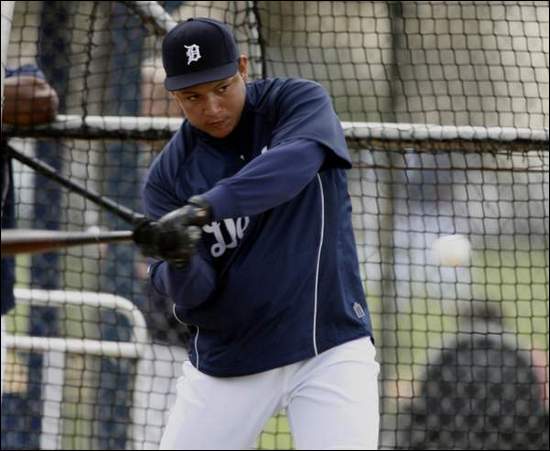
Peter Stein (Fantasy Baseball Analyst – MLB reports): Third base is one of my favorite positions in fantasy baseball, mainly due to the fact that most owners do not have a wise approach in this area come draft day. Third base is clearly one of the shallowest positions in baseball and contains a plethora of high-risk players. However, third base is also the home of some of the games top players, most notably Miguel Cabrera– who looks to regain eligibility in 2012 after the Tigers’ acquisition of Prince Fielder.

Clearly, Cabrera changes the dynamics of the position. He was already my top rated first baseman, so eligibility at third base, along with Fielder’s production, makes him even that much more valuable. Just be sure you understand your league’s eligibility rules, but it appears that Cabrera will at least be playing third base a couple times a week. After Cabrera, Jose Bautista is the clear number two, followed by Evan Longoria, Adrian Beltre, Ryan Zimmerman, and David Wright. Read the rest of this entry

Assessing the Value of Baseball’s 5th Starter

Tuesday January 31st, 2012


Peter Stein (Fantasy Baseball Analyst – MLB reports): People often downplay the value of a fifth starter. For one, they are frequently skipped over, and they are also often prospects or just a temporary solution. However, security at the fifth spot in the rotation can have a huge impact on a team’s success. What I look for from a fifth starter is a guy who can give me 6 innings a game and yield an ERA near 4.50. After all, a start consisting of 6 innings and 3 runs qualifies as a quality start. An ideal fifth starter will eat innings and keep the team in the game.

One of the reasons I am optimistic of the New York Yankees chances in 2012 is due their recently added starting pitching depth. Clearly their weakness in 2011, the Yanks now has a rotation that is seven-deep, with Burnet and Garcia looking to be the odd men out. However, with Burnett’s struggles and Garcia’s durability issues, this is the right place for them to start the 2012 season. Burnett in particular will benefit form less pressure and chances are injuries will present an opportunity for both of these veterans to step up. The best-case scenario for the Yankees is that they don’t need these two and that the top five (Sabathia, Pineda, Kuroda, Nova, and Hughes) thrive. What makes the Yankees so dangerous is that it’s even hard to identify their fifth starter, as Kuroda, Nova, and Hughes are more of the number three type. Given Kuroda’s advanced age, I expect him to hold down the fifth spot with great consistency.

For rebuilding teams, it is understandable if the number 4 and 5 pitching slots rotate like revolving door. This allows prospects to get a chance to shine and the organization has the opportunity to see who is for real. But for a team that wants to be a true competitor, like the Yankees, it is essential that the fifth spot is locked down and that there is insurance within the organization.

People will often overlook the value of a fifth starter because they argue that they will not be needed come playoffs. However, a team better have an adequate fifth starter to position themselves to not only be in the postseason but also be in the strongest and healthiest form during October. Looking deeper into the subject, what really makes a quality fifth starter and pitching depth important for a team? First and foremost, it allows for a bullpen that can be fresher and also more strategically used. Nothing masks weaknesses in the bullpen like strong starting pitching. Furthermore, in the instances where a fifth starter is skipped, a quality arm can be added to the bullpen.

In fantasy baseball, the same concept about the fifth starter (or depth in general) is just as relevant. Even with three aces on your staff, you will need to find innings elsewhere. That’s why it is important to have several options and strong depth, allowing you to pick and choose wise starts based on matchups, ballparks, etc. True for major league and fantasy teams, the back-end starters won’t win you a championship alone. However, they are essential for the team to thrive and realize the value provided by the top of the rotation studs.


***Today’s feature was prepared by our Fantasy Baseball Analyst, Peter Stein.  We highly encourage you to leave your comments and feedback at the bottom of the page and share in the discussion with our readers.  You can also follow Peter on Twitter (@peterWstein).***

 Please e-mail us at: MLBreports@gmail.com with any questions and feedback.  You can follow us on Twitter and become a fan onFacebook .  To subscribe to our website and have the daily Reports sent directly to your inbox , click here and follow the link at the top of our homepage.

Why Triples Matter: Stocking Your Fantasy Team with Three-Baggers

Tuesday January 24th, 2012


Peter Stein (Fantasy Baseball Analyst – MLB reports): Many baseball fans are fascinated by triples, but it is certainly not a stat that people in standard Roto 5X5 fantasy baseball leagues pay any mind to. From an offensive standpoint, you are solely concerned with average, home runs, RBIs, and runs. Certainly triples contribute to a player’s offensive output, but by no means are they an asset to target in fantasy baseball. In reality, triples are often the product of a fortuitous bounce or carom and reflect more about a defensive player than the actual hitter. Nonetheless, triples are a rare occurrence and have a unique ability to excite the crowd and rally a team.

So, in fantasy baseball should we care about triples at all? On the surface the answer is no… but on a deeper level, it is actually yes. By no means is it wise to build a roster full of the league’s triples leaders. But a closer look at this stat can tell us a lot about a player.

In fantasy baseball and particularly in 5×5 Roto leagues, the goal is to find a player who can do it all: hit for average and power, produce and score runs, and steal bases. Not surprisingly, the league’s triples leaders are also at the top of the stolen bases leaderboard. It is the rare occurrence when you see a player like Curtis Granderson, who in 2011 showed his power with 41 home runs, as well as his speed with 10 triples and 25 stolen bases. The Granderson/Braun/Kemp/Ellsbury types of players are few and far between and are also on many championship rosters.

Before we go any further, let’s think about what it takes to hit a triple – namely a combination of power and speed. Triples are most commonly doubles, that are normally a double for a slower player.  Therefore, if we look at a player like Brett Gardner with 19 doubles, 8 triples, and 9 home runs in 2011, it appears that his triple output has more to do with his speed and less about his power. For someone like Granderson with the 41 home runs and 26 doubles, it appears to be an equal combination of both. Let’s look for more examples of those types of players.

Take Michael Bourn: 61 steals, 10 triples and 2 home runs in 2011. Clearly, his double-digit triple output reflects his speed and surely not his power. When I scroll down the leaderboard and see Starlin Castro, (9 triples in 2011), light bulbs instantly begin to flash. Castro’s high triple out cannot be credited to speed alone (22 steals) because he still slugged 10 home runs and 36 doubles. At 21 years of age, Castro already has an amazing blend of power and speed, which is reflected by his ability to produce a three-base hit. By looking at Castro’s triples, we can tell that he posses this coveted five-category ability. You can only expect both his power and speed to increase and in my opinion, he has the ability to put up some Soriano-like home run/sb totals.  Castro’s potential is most likely maxed out at 30/30, but this is due to the fact that he hits for average (.304 lifetime in 1137 at-bats) and is not likely to sacrifice for power. He could easily steal 40 bases and hit 30 home runs in the prime of his career.

The key is to look at the triple total for the young players who have yet to fully develop their power and speed. Triples can be a helpful future indicator of a player’s power and speed. For example, in his first full season in 2008, Adam Jones finished with 9 home runs, 7 triples and 10 stolen bases. The seven triples stand out, and although he possess great speed, the ten stolen bases indicate that he most likely did not rely solely on speed. His 9 home runs and 21 doubles demonstrate this his power also contributed to his seven three-baggers. The signs point to a player who has both speed and power. Sure enough, Adam Jones jumped to 19 home runs in 2009 and hit 25 home run with 12 stolen bases in 2011.

Triples shouldn’t even really be a concern for fantasy baseball owners, but can serve as a research aid of sorts. Look at the triples leaders and try to find the players who are not doing it on speed alone and have above average double and home run totals. If they are young and yet to reach their prime, all signs point to a player who has the ability to combine power and speed and develop into the coveted 5-category player.


***Today’s feature was prepared by our Fantasy Baseball Analyst, Peter Stein.  We highly encourage you to leave your comments and feedback at the bottom of the page and share in the discussion with our readers.  You can also follow Peter on Twitter (@peterWstein).***

 Please e-mail us at: MLBreports@gmail.com with any questions and feedback.  You can follow us on Twitter and become a fan onFacebook .  To subscribe to our website and have the daily Reports sent directly to your inbox , click here and follow the link at the top of our homepage.

Batting Average and Earned Run Average: Are They Still Useful Baseball Stats?

Wednesday January 18th, 2012


Peter Stein (Fantasy Baseball Analyst – MLB reports): Just as baseball cards have become outdated, so too are the statistics that many of us memorized on the backs of those same cards as kids. The statistics that I am referring to are the generic stats used to measure a player’s success, particularly batting average for hitters and earned run average (ERA) for pitchers. Sabermetrics has taught us that there are better methods to more measure a player’s worth or success on the diamond. Far too often, numbers like ERA or batting average are skewed and do not accurately depict a player’s true level of skill.

However, batting average and ERA are statistics that are fixtures in the game, particularly in fantasy baseball. They are used to define players and probably will continue to do so. For those of us in standard 5X5 Roto Leagues, batting average and ERA account for two essential categories.

In 500 at bats, the difference between a .250 and .300 hitter is 25 hits. With six months in a season (approximately 24 weeks), that comes to about 1 hit per week. I repeat, one hit per week! I think I first heard this statistic from Major League I. Remember the old catcher with the bad knees, Jake Taylor?

If you have ever watched baseball, you know how much luck can play a factor. A guy can hit the ball on the screws four times- yet make four outs… but just as easily, getting three hits without hitting the ball out of the infield. Likewise, a pitcher’s ERA can be entirely skewed based on circumstances beyond their control. Therefore, I introduce to you two sabermetric statistics that are key in determining a player’s “true” batting average and ERA.

According to Fangraphs, Fielding Independent Pitching (FIP) “measures what a player’s ERA should have looked like over a give time period, assuming that performance on balls in play and timing were league average.”

The equation for FIP: ((13*HR)+(3*(BB+HBP-IBB))-(2*K))/IP + constant

XFIP takes it even a step further by replacing a pitcher’s homerun rate with the league average (10.6% HR/FB), since this statistic is subject to high volatility.

Considering the above, Fielding Independent Pitching and Expected Fielding Independent Pitching are great determinants for what a pitcher’s ERA should be. It can tell you if a player is overachieving or perhaps pitching better than their ERA might indicate. This is the key to fantasy baseball. Target the guys who have FIP’s lower than their actual ERA and sell high on the pitcher who’s FIP is much higher than their actual ERA. By no means is the stat perfect, but it certainly gives you insight into a player’s performance and is a better indicator of future success than ERA alone.

For batters, the key statistic in determining batting average is Batting Average on Balls in Play (BABIP), which according to Fangraphs “While typically around 30% of all balls in play fall for hits, there are three main variables that can affect BABIP rates for individual players: defense, luck, and changes in talent level.”

The average BABIP for players is between .290 and .310, although some hitters can maintain a much higher level. For example, Ichiro Suzuki has maintained a career BABIP of .351, well above the league average. Therefore, you can look at a player’s BABIP to see how well they are actually doing at the plate. Buy low on a guy whose BAPIP is thirty points lower than his career total. Chances are his batting average is suffering and he is a good buy-low candidate. The lower BAPIP indicates that has a victim of bad luck. Likewise, the guy who is sporting a .400 BAPIP simply cannot maintain that level and will see a major regression to the mean. In this case: sell, sell, sell!

A perfect BAPIP example is Austin Jackson, who exploded onto the fantasy scene as a rookie in 2010. With a .293 batting average and good speed, he was an attractive young player with a rising stock. However, his.293 batting average in 2010 coincided with a .396 BABIP. We know Jackson is not Ichiro (.351 BAPIP) and therefore we had to expect a major regression in 2011. Sure enough, his BAPIP dropped to .340 (still well above the league average) and as result, he finished the season with a .249 average. Therefore, I would not touch Jackson with a ten-foot pole in most leagues, at least not until he can cut down his strikeout rates and put the ball in play on a more consistent basis. Although he has proven he can produce a hit more often than most when he makes contact, he simply does not make enough contact at this point in his career to be a .300 hitter.

The young guns are generally the guys who are most difficult to read. With the veterans, you at least have their career BAPIP to use as a reference. However, do not be afraid to look at the minor league stats, which usually prove to be solid enough indicators. At the same time, never take too much stock in minor league numbers and make a hitter prove himself at the major league level.

Overall, stats like FIP and BAPIP are really just cheats for your fantasy baseball league. Batting average and ERA are statistics that are so deep-rooted that they will most likely be used forever to define a player’s success and as a result, will continue to be used in fantasy baseball. However, do not look at ERA and batting average to value a player and trying to predict their future ERA and batting average. FIP and BAPIP give you a more accurate story and are better indicators for future success- by at least attempting to eliminate the many variables that exist in the wonderful game of baseball.

***Today’s feature was prepared by our Fantasy Baseball Analyst, Peter Stein.  We highly encourage you to leave your comments and feedback at the bottom of the page and share in the discussion with our readers.  You can also follow Peter on Twitter (@peterWstein).***

 Please e-mail us at: MLBreports@gmail.com with any questions and feedback.  You can follow us on Twitter and become a fan onFacebook .  To subscribe to our website and have the daily Reports sent directly to your inbox , click here and follow the link at the top of our homepage.

Wins Above Replacement (WAR): Analyzing MLB Statistics using Sabermetrics

Wednesday January 11th, 2012


Peter Stein (Fantasy Baseball Analyst – MLB reports): Although WAR (Wins Above Replacement) is not the best of the sabermetric stats for fantasy baseball purposes, it has certainly transformed the way in which we can truly understand a given major league baseball player’s contribution (or lack there of) to his team. WAR attempts to epitomize a player’s total value in one sole statistic, taking into account both the offensive and defensive aspects of the game. FanGraphs (the sabermetrics bible) aptly describes the essence of WAR: “If this player got injured and their team had to replace them with a minor leaguer or someone from their bench, how much value would the team be losing.” A player is measured in “Wins” for a season (i.e. 3.4), while an average full-time player is worth 2 wins and a replacement player represents 0 wins. Furthermore an average staring pitcher is worth 2.0 WAR, while 1.0 WAR represents a strong season for a relief pitcher.  

Here are the 2011 leaders in WAR:

Batting

  1. Jacoby Ellsbury – 9.4

  2. Matt Kemp – 8.7

  3. Jose Bautista – 8.3

  4. Dustin Pedroia – 8.0

  5. Ryan Braun – 7.8

  6. Ian Kinsler – 7.7

  7. Miguel Cabrera – 7.3

  8. Curtis Granderson 7.0

  9. Alex Gordon 6.9

  10. Joey Votto 6.9


Pitching

  1. Roy Halladay – 8.2

  2. C.C. Sabathia – 7.1

  3. Justin Verlander – 7.0

  4. Clayton Kershaw – 6.8

  5. Cliff Lee – 6.7

  6. Dan Haren

  7. C.J. Wilson – 6.4

  8. Jered Weaver – 5.9

  9. Doug Fister – 5.6

  10. Felix Hernandez – 5.6


The statistic actually defines a player’s value, something that MVP (Most Valuable Players) voters should perhaps consider come each October. For batters, the stat itself is calculated by taking into account two stats: wRAA (Weighted Runs Above Average) and UZR (Ultimate Zone Rating), which represent a batter’s offensive and defensive values, respectively. Pitching WAR replaces these two sabermetric stats with FIP (Fielding Independent Pitching), a stat that normalizes ERA for the “uncontrollable,” in conjunction with numbers of innings pitched. The Uncontrollable refers to what happens after the ball leaves the pitcher’s hand, because obviously pitchers have almost no control over the balls that are in play. They are ultimately at the mercy of their defense.

Fangraphs site the formula for FIP as the following:

FIP: ((13*HR)+(3*(BB+HBP-IBB))-(2*K))/IP + constant

If you are unfamiliar with Sabermetrics and WAR, this should feel like a mix between learning a foreign language and a calculus problem. However, don’t let this intimidate you. Spend some time on FanGraphs (It’s okay take it slowly) and it will change the way in which you think about the game of baseball. Please note that Baseball Reference has a slightly different formula/method to calculate WAR.

The beauty of WAR, however, is that it not only takes in account a player’s defensive skills (using UZR), but also the difficulty of the position. Therefore, someone like Dustin Pedroia at second base is significantly more valuable than a slugging Prince Fielder, at the first base position where power and production is demanded. Perhaps that is why Fielder is still fielding offers and has not landed a contract within his desired range. Not too shabby of statistic for a General Manager, huh? My hope is that this analysis paints the complexity of WAR and the many factors used to determine the number of wins that a player is ultimately worth to his team.

Let it be clear that by no means is WAR perfect. From a rather cynical standpoint, the very philosophy of WAR, which is calculated with so many components, professes that you cannot use one sole determinant to measure a player’s value. Furthermore, the positional adjustment numbers are the most arbitrary difficult to calculate. Can we really determine that a Center Fielder, due to difficulty to play the position itself, is worth 1.5 more wins than a first baseman? It is also difficult to determine the UZR for a first baseman, a position in which success is defined less by range and more by the ability to field throws. Paul Konerko certainly does not have great range, but he is universally regarded as one of the league’s top defensive first baseman, most likely saving Alexei Ramirez a handful of errors each season. Likewise, you cannot measure range for catchers, which use the fielding component of Stolen Base Runs Saved (rSB).  We also know that much of catcher’s true value is related to his ability to call a smart game (which cannot be measured by any given statistic).

However, from a fantasy perspective, we do not care about defense, and therefore wRAA is a more accurate indicator of offensive output. FIP can be used as well. For example, if a pitcher’s FIP indicates that his defense is frequently letting him down, and said pitcher joins a top rated defensive team; you have acquired knowledge about a player’s ability not represented by the generic stats out there. This is how you will earn surplus value and land the “surprises”, the “bounce-back” players, and avoid the “busts”.

I admit, when I first familiarized myself with FanGraphs, I felt like I was cheating in my fantasy baseball leagues. However, after joining more competitive leagues and with sabermetrics entering the mainstream, I have learned that this only provides a slight advantage. Just as it holds true for every other aspect of life, it is impossible to predict the future in the world of baseball. However, in a game of numbers- only the slightest advantage is needed to set your team apart from the competition.

WAR is a one of a kind stat. It helps us more thoroughly examine a player’s worth, especially when compared to their salary. Ultimately, the stat serves as a good building block to work back from to understand the intricacies and essence of sabermetrics.


***Today’s feature was prepared by our Fantasy Baseball Analyst, Peter Stein.  We highly encourage you to leave your comments and feedback at the bottom of the page and share in the discussion with our readers.  You can also follow Peter on Twitter (@peterWstein).***

 Please e-mail us at: MLBreports@gmail.com with any questions and feedback.  You can follow us on Twitter and become a fan onFacebook .  To subscribe to our website and have the daily Reports sent directly to your inbox , click here and follow the link at the top of our homepage.

The Future of Gio Gonzalez and Mark Buehrle in the NL

Wednesday January 4th, 2012


Peter Stein (Fantasy Baseball Analyst – MLB reports):  Aside from their pitching style and repertoire, Mark Buehrle and Gio Gonzalez have a lot in common. They are both left-handed and have also made the shift to the National League during this 2011 offseason. However, their connection dates back even further.

The Chicago White Sox selected Gonzalez in the first round of the 2004 draft. The following season, the White Sox earned a World Championship, thanks in large part to Mark Buehrle’s regular and postseason contributions. Buehrle, a 36th round pick of the White Sox in 1999, continued to be a model of consistency and success, winning at least 10 games and throwing at least 200 innings for 11 consecutive seasons for the White Sox.  Forever a legend in the White Sox community, Buehrle joined his second major league franchise this offseason with the Miami Marlins. The move is one I saw coming when Ozzie Guillen became the manager of the Marlins. Clearly the left-hander is comfortable with Guillen, and the National League is truly where Buehrle belongs at this point of his career. He has amassed a 24-6 win loss record with a 3.32 ERA in 39 Interleague starts. However, before we look at his 2012 value, I must continue with the Buehrle-Gonzalez narrative.

Ironically for the White Sox, it was a 36th round pick and not the first round pick that became the face of the franchise. Such is baseball and is an example of what makes the game so interesting.  In fact, Gonzalez has never even pitched an inning for the White Sox. He was traded in 2005 along with Aaron Rowand to the Phillies for Jim Thome. Remarkably, The White Sox reacquired him along with Gavin Floyd for Freddy Garcia in December 2006 and still never got him into a major league game while a part of their organization.

It should be noted that 2008 marked a breakout year for White Sox left-hander John Danks (12-9 win loss record). Gavin Floyd also flourished that year, winning 17 games.  Going into that season, there did not appear to be room for Gonzalez in the White Sox rotation. Particularly with Buehrle in place and Floyd/Danks set to emerge (as they did), the White Sox felt that it did not make sense to try to add a third left-hander to the starting staff. Obviously high on the team’s radar, the White Sox had to make a tough decision and trade Gonzalez…again. In a regrettable move, Kenny Williams sent Gonzalez, Ryan Sweeney, and Fautino De Los Santos to the Oakland Athletics for one miserable season of Nick Swisher. As a member of the A’s, Gonzalez came into his own, finishing 2011 with a 16-12 record and a 3.12 ERA with 197 K’s in 202 innings.

Now- going into 2012, both Gonzalez and Buehrle land in the National League for the next stage of their respective careers.

Looking at Gonzalez, his value remains high in 2012. Although he leaves the friendly pitching confines of Oakland, he is going to another pitching friendly park in Washington. His 2011 XFIP indicates that his ERA should have been closer to 4, rather than an even 3.00. Therefore, I expect Gonzalez’s ERA to hover right in the middle of those two numbers. He has an incredible ability to miss bats, but the walk rate, which he has yet to show any improvement at any level, prevents him from being a fantasy ace. With 4 walks per 9 innings, he is prone to give up high run totals and also have trouble pitching deep into games. He does do a great job of keeping the ball on the ground. But the only way for Gonzalez to really improve upon his 2011 campaign is if he can cut down on the free passes. His control is simply not that good, but he is also a player that can be categorized as effectively wild. I simply do not see any signs of Gonzalez improving his walk rate, especially as he his mainly a fastball/curveball pitcher.

In a sharp contrast, Mark Buehrle relies on command and mastery of the strike zone to retire batters. He has really shown no signs of true decline and he will still only be 33 years of age in 2012. He is not much different that the pitcher he was in 2004. He strikes out enough batters to be effective and has a stellar career 2.05 BB rate. He strikes out about half as many batters as Gonzalez, but also walks half as many. The two pitchers do have similar groundball rates. However, the change of scenery may have a much bigger impact on Buehrle than it does for Gonzalez. As I have mentioned, the Interleague numbers speak for themselves and Buehrle is finally leaving the hitter friendly confines of U.S. Cellular Park. He will surely benefit from facing the National League lineups most nights and is in a better position to succeed in Miami in 2012.

Overall, Mark Buehrle is the guy to keep an eye on during draft day in 2012. Most people view him as an aging soft throwing left-hander with a falling stock. However, he has potential to put up above average numbers for perhaps a below average price. Now while I say to keep an eye on Buehrle, it is not to say he will outperform Gio Gonzalez. Gonzalez is clearly the better fantasy option, but he will likely come at a higher cost. This is a 26-year-old pitcher who has posted 3.23 and 3.12 ERA in his last two seasons, respectively. However, do not expect him to necessarily improve upon these numbers due to some of the luck he experienced in 2011 and his inability to improve his walk rate. He will most likely be valued as an ace in many fantasy circles, when he is truly more of a number three-type starter. Buehrle, who will be off many people’s radars, could produce as a cheap yet quality four/five type of pitcher.


2012 Predictions:

Mark Buehrle: 206 IP, 14-9 W/L, 3.69 ERA, 120 Ks

Gio Gonzalez: 208 IP, 14-12 W/L, 3.43 ERA, 206 K


***Today’s feature was prepared by our Fantasy Baseball Analyst, Peter Stein.  We highly encourage you to leave your comments and feedback at the bottom of the page and share in the discussion with our readers.  You can also follow Peter on Twitter (@peterWstein).***


 Please e-mail us at: MLBreports@gmail.com with any questions and feedback.  You can follow us on Twitter and become a fan onFacebook .  To subscribe to our website and have the daily Reports sent directly to your inbox , click here and follow the link at the top of our homepage.

Albert Pujols and C.J. Wilson: 2012 Projections

Tuesday December 13, 2011
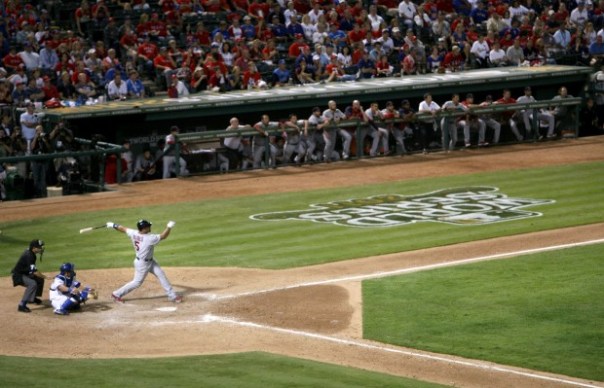
Peter Stein (Fantasy Baseball Analyst – MLB reports):  Unless you have been living under a rock for the past two weeks, you are probably well aware of the splash that the Angels made in the free agent market with the signings of Albert Pujols and C.J. Wilson. Certainly, the balance of power in the American League West has shifted to the Angels, who have set themselves up for a championship run. While Pujols and Wilson have a good chance to bring home a championship in Los Angeles, they will likely be on many winning fantasy rosters as well.

As I discussed a few weeks back, Pujols has been the best fantasy player in baseball after 10 Ruth-like seasons after he busted onto the scene in 2001. However, 2011 was an interesting year for Pujols, the first in which he did not produce a .300 average, hit 30 HR and drive in 100 runs. He missed this feat by just one RBI and one average point. Through the Cardinal’s first 54 games, Pujols batted .257 with 8 home runs and 28 RBI. However, in the final 108 games, which included the time missed with the wrist injury, he batted .322 with 29 home runs and 71 RBI’s. That is the Pujols that we have all been accustomed to over the last decade. Therefore, I do not think you need to be overly concerned about a significant A-Rod-esque drop off just yet. The back-end of Pujols’ contract will certainly get ugly for the Angels, but expect the usual slugger for the first few years. Now, the other factor on Pujols’ performance is the shift to a new team and new league. In terms of ballparks, Busch Stadium and Angels Stadium are very similar in degree of hitter friendliness. For the switch to the AL. below are his career interleague numbers, which add up to almost one full major league season:

143 GP 39 HR 121 RBI .348 AVG 1.071 OPS (1.037 career)

The stats show the Albert dominates against the American League, with numbers that even exceed his career averages. With a hitter as good as Pujols, it’s the American League pitchers who will be tasked with making adjustments and not Pujols. The Angels lineup is actually pretty similar to the Cardinals, and if people step up (Kendrys Morales), it has potential to be a lot better. Therefore, I expect the usual greatness from Pujols.

Projections: .312 39 HR 120 RBI 117 R 12 SB

C.J. Wilson enjoyed his finest season as a pro in 2011 with a 16-7 record and a 2.94 ERA. At age 31 and not as young as many expect, there is not too much room for actual skill development with Wilson. However, the major factors that impact pitchers results after a team change are in favor for Wilson. Let’s start with park factors and opposition. Wilson no longer has to pitch as many games in Texas, where he sported a career 3.89 ERA, compared to 3.26 on the road. The contrast was even starker in 2011, when he posted a 3.69 ERA at home and a 2.31 ERA on the road. Much of the reason for his success on the road were his regular matchups against the lowly Mariners and Athletics offenses, which he will continue have. Fortunate to have Pujols on his team now, he will still have to face his former talented Rangers teammates. Looking at the defense behind Wilson, it is pretty much a wash. The Elvis Andrus and Ian Kinsler double play combination was one of the best in baseball, but the Angels outfield is significantly better than the Rangers. Lastly, although the Angels made significant offensive upgrades, it is still safe to think the Rangers would provide more run support, potentially cutting into his win total.

The move to the Angels appears to make Wilson potentially more valuable in 2012. His FIP and XFIP indicate that his ERA range should have been closer to 3.20-3.30, so it might be tough to expect a sub-3 ERA in 2012. However, his recent success, coupled with his change of scenery (most importantly out of Texas), indicate that he should be one the game’s most valuable pitchers in 2012.

Projections: 208 IP, 16-9 WL, 3.28 ERA, and 180 K’s

***Today’s feature was prepared by our Fantasy Baseball Analyst, Peter Stein.  We highly encourage you to leave your comments and feedback at the bottom of the page and share in the discussion with our readers.  You can also follow Peter on Twitter (@peterWstein).***
Please e-mail us at: MLBreports@gmail.com with any questions and feedback.  You can follow us on Twitter (@MLBreports) and become a fan on Facebook .  To subscribe to our website and have the daily Reports sent directly to your inbox , click here and follow the link at the top of our homepage.