Blog Archives

Passing of the Torch as The Greatest Player in The MLB: From Pujols to Hamilton
Wednesday June.6, 2012
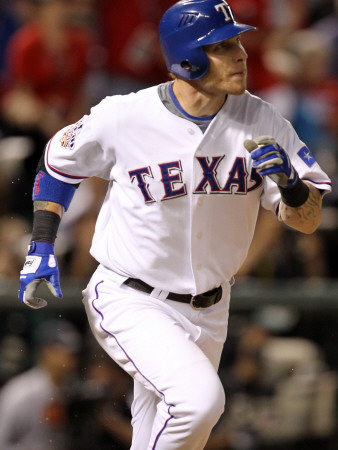
Josh Hamilton is on pace for 64 HRs and 177 RBI in 2012 with a .345 AVG. He has taken over as the best player in MLB from Albert Pujols -Photo Courtesy of http://www.real-fans.com
Chuck Booth (Lead Baseball Writer and @chuckbooth3024 on twitter)- While watching Josh Hamilton this year, I started thinking about the best players in the MLB over the last 33 years. I am talking the best player of the game at any point of time. I tracked back to 1979 for this article. I may expand further back in follow up articles. I did rank defense highly when I came up with the players. I did agonize over Mike Schmidt, Jim Rice, Wade Boggs and Cal Ripken for some of the years given in specific time frames. These gentlemen were given every consideration. In the end, we are talking about the best player in the game though and it is always subject to debate and personal opinion. The criteria had to involve leading the league in several different offensive and/or defensive categories, followed by routinely being in the top 7 in MVP balloting(if not taking home the honor), All-Star Appearances for every year I listed them for and most of them won silver sluggers and/or Gold Gloves as well.
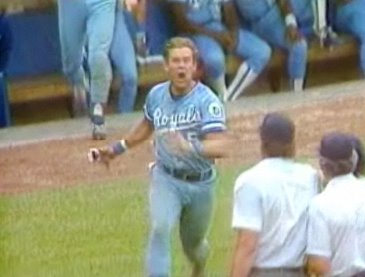
George Brett won batting titles in 3 different decades and flirted with .400 in 1980 while hitting .390 for the year. -Photo courtesy of lanius.wordpress.com
George Brett 1979-1983-George Brett was the best hitter in the game from 1979-1983. He hit for a .320 average and slugged his way to having the Royals as perennial contenders. He led the league in triples (20) and hits in 1979. In 1980, he hit .390 with a .454 OBP, 664 SLG and a 1.118 OBP which led the league. In 1983, Brett led the league in slugging an OPS once again. Brett won the MVP in 1980 and was the runner-up in 1979. In 1985, George Brett would lead the Royals to a World Series. He later won a batting title at age 37 with a .329 average. This was the toughest time frame to judge from 1979-1983. Mike Schmidt was an incredible force at third base with huge power and Jim Rice also put up mammoth numbers, but in the end I chose George Brett because he was more consistent out of 3. Read the rest of this entry

Don Mattingly has managed The Dodgers to the ‘Best Record in the MLB’
Wednesday, May.30/2012
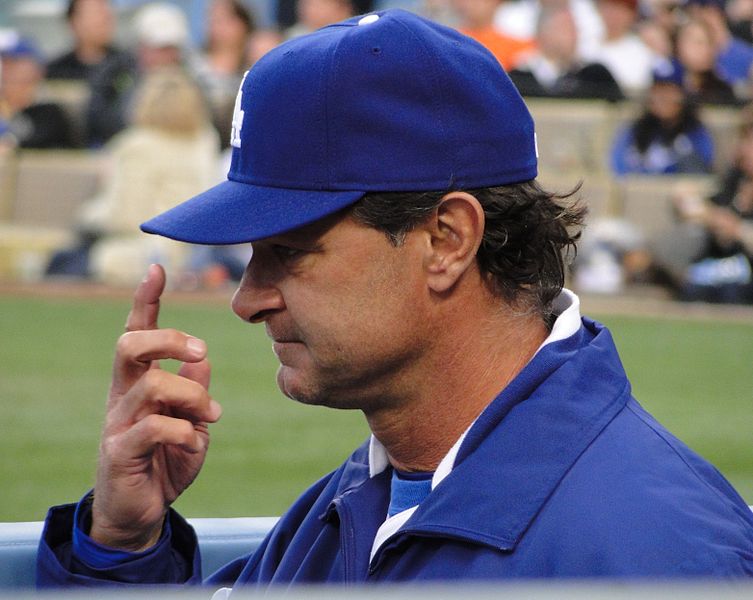
Chuck Booth (Lead Baseball Writer and @chuckbooth3024 on twitter)-At first glance at the LA Dodgers you will see a team that leads the Major League with a 32-17 record heading into action tonight. Matt Kemp has missed the last two weeks of action and yet the team still continues to put up wins. Before his injury, Kemp was playing like an MVP candidate and Andre Ethier has racked up 43 RBI to the lead the National League. Clayton Kershaw has been his usual dominant self. Key pitching contributions from Chris Capuano (7-1) and Ted Lilly (5-1) have paced the club in the pitching department, where they rank 2nd in a lot of categories amongst pitching staffs in the NL and the Majors.
Don Mattingly has battled several injuries, a team of platoon players, a lowered payroll due to the impending ownership changes en route to this record. It is clear why the Dodgers are winning ball games, Mattingly is making good managerial decision at the key times. When you look at how the current club is configured, you would see there is great baseball pedigree in the stable. There are 4 sons of ex major league ball players on the roster: Scott Van Slyke (son of Andy), Tony Gwynn Jr. (son of Tony Sr.), Dee Gordon (son of Tom) and Jerry Hairston Jr (son of Jerry Sr.) These guys are hardly trailblazing their way to Cooperstown anytime soon, however they play good fundamental baseball having grown up in Major League clubhouses. (On a side note, I would pay good money to see a father son game with these boys versus their fathers.) Read the rest of this entry

Chuck Booth’s Game and Streak Updates for MLB Parks 6-10
Follow me-@chuckbooth3024 on twitter
Follow my streak all the through to the bitter end. Schedule is this link:
https://mlbreports.com/gwr-tracker/ or at my official website for all updates!
Tuesday April 17, 2012

Chuck Booth and Lori Martini are interviewed by Sports NY
Chuck Booth (Lead Baseball Writer and @chuckbooth3024 on twitter)- “In what technically is Park #1 on Day #1 of the streak after a retro-active option I capitalized on, this game is the 6th write-up. So let us go back to April.5th First. I watched the New York Mets Season Opener with Lori Martini and we were both interviewed by Sports Net New York and were featured on Mets Weekly Episode 2 on SNY.tv . This episode aired on Sunday April.15th. After the incredible adrenaline rush of being on camera for an extended interview, the Mets won the season opener on a well-pitched effort by Johan Santana of the Mets. Directly after the game, Lori and I were taken to Don Peppe’s in Queens by her friend Mike. This place serves great Italian platters and was featured on the hit TV Series “Entourage.” A nice meal with some great new friends then saw me make the trip to Boston. I had to take a Greyhound Bus to Boston(for only $15) because that airport was the only one in the radius that Southwest could fly to Phoenix in time for the opener.”

An Interview with Dodger Stadium Expert Josh Robbins
Tuesday April.10/2012

Chuck Booth (Lead Baseball Writer and @chuckbooth3024 on twitter)- I recently had a chance to talk with Josh Robbins about Dodger Stadium. Josh is the Land Record World Record Holder for visiting all 30 MLB Parks in 26 days during the summer of 2008. Here is what we talked about.”
CB: “Welcome to the MLB Reports Experts Interview Josh. Please tell us about yourself and then give us a bit of background information on your life as Yankees Fan?”
JR: “I am a Videographer/Journalist and Baseball Historian living in Gilbert, Arizona. In 2010, I earned a Master’s Degree in Sport Management from CSU-Long Beach. My first baseball game was July 23, 1983 at Yankee Stadium. Don Mattingly was my favorite player growing up and I saw the 1998 Yankees clinch the World Championship in person at Qualcomm Stadium in San Diego, CA.”

CB: “Josh, you attended 30 Major League Baseball games in 26 calendar days during June and July 2008. In fact we were the same game where you set your record. You own the land record for the quickest time. Looking back 4 years later, how much does this accomplishment mean to you?”
JR: The trip was a combination of all my greatest passions in life: baseball, traveling, and videography. It was the ultimate adventure combining the spirit of travel, the love of baseball, and sharing the time with friends and family members. While preparing to achieve a personal goal, an effort to share my passion for baseball emerged. Unexpectedly, I raised $2200 for the Jim Thorpe Little League in Hawthorne, California and donated the proceeds to the organization before the start of the pursuit.”
CB: “As part of that trip, what was it like being interviewed and featured on a segment of ‘This Week on Baseball?”

JR: “For the past dozen years, I have worked as a Videographer for several different television and production companies. So, I am very comfortable around reporters, cameras, and questions. I was very surprised to hear from TWIB after initially emailing them about Thirty26. It was a great experience having them cover an entire day of my road trip in New York.”
CB: “You have been to all of the ballparks Josh, how do the Dodgers fans compare to the rest of the country? It is my belief that this stadium is the loudest in MLB when the fans are rabid, what do you think?”

JR: “I enjoy watching baseball in Chavez Ravine but I would have to respectfully disagree. The most passionate and loudest fans are in the Northeast. New York, Boston, and Philadelphia crowds are into every pitch where LA fans tend to sit back and wait for the action to happen.”
CB:”The Dodgers have had recent ownership problems with the McCourts. How has this impacted the attendance?”
JR: “The attendance has declined in each of the past few seasons. Last season was the first time in the 21st century the LA Dodgers failed to draw 3 million fans. The new ownership group must restore trust with the fan base and create a more positive environment at the ballpark and community.”
CB: “What is your favorite method of transportation to and from Dodger Stadium?”
JR: “Unfortunately, there is no commuter friendly method to attend Dodger Stadium. An overwhelming majority of people drive to the stadium with limited alternatives. On a few occasions, I attempted to commute by Metro from Torrance/Redondo Beach. This system proved to be very inefficient due to the excessive changing of trains (green/blue/red/gold lines) and 1 mile walk from the nearest Metro stop to the stadium.”
CB: “What advice would you give for somebody experiencing Dodger Stadium for the very first time.”
JR: “I would tell people to give yourself enough to arrive at the game and enjoy the Southern California climate (bring sleeves for night games). If you drive, park outside the stadium on the street and save the $15-$20 for parking.”
CB: “What is the food like at Dodger Stadium? What is your favorite ballpark food there?”

JR: “My favorite food is a helmet cup filled with soft vanilla ice cream topped with colored sprinkles. However, Dodger Dogs are known for their size and taste.”
CB: “Finally, What is your favorite all time game that you have been in attendance in Dodger Stadium?”
JR: “There have been many memorable games over the 7 years living in the Los Angeles area but one ending was unforgettable. Game 2 of 2008 NLDS when Matt Holiday dropped the last out of the game and the Dodgers rallied to win.”
http://www.baseball-reference.com/boxes/LAN/LAN200910080.shtml
 *** A big thank you goes out to our Dodger Stadium Expert Josh Robbins for participating in the expert article Series. Josh Robbins is a Video-Journalist and Baseball Historian living in Gilbert, Arizona. In 2010, he earned a Master’s Degree in Sport Management from CSU-Long Beach. From June 16 to July 11, 2008, he watched a game in all 30 MLB stadiums in a world record 26 days by car. Please email Josh at robbinsjosh@hotmail.com and to read more about Josh’s record baseball journey click here . Also read Josh 1st guest article at the Reports and a new Pitching grading system here ***
* **Thank you to our Baseball Writer- Chuck Booth for preparing today’s feature on MLB reports. To learn more about “The Fastest 30 Ballgames” and Chuck Booth, you can follow Chuck on Twitter (@ChuckBooth3024) and you can also follow Chuck’s website for his Guinness Book of World Record Bid to see all 30 MLB Park in 23 days click here or on the 30 MLB Parks in 23 days GWR tracker at the Reports click here. To Purchase or read about “The Fastest 30 Ballgames Book, ” please click here ***
Please e-mail us at: mlbreports@me.com with any questions and feedback. You can follow us on Twitter and become a fan on Facebook. To subscribe to our website and have the Daily Reports sent directly to your inbox, click here and follow the link at the top of our homepage.

He was Known As “The Kid”: A Tribute to the Life and Career of Gary Carter
Monday, February 27, 2012
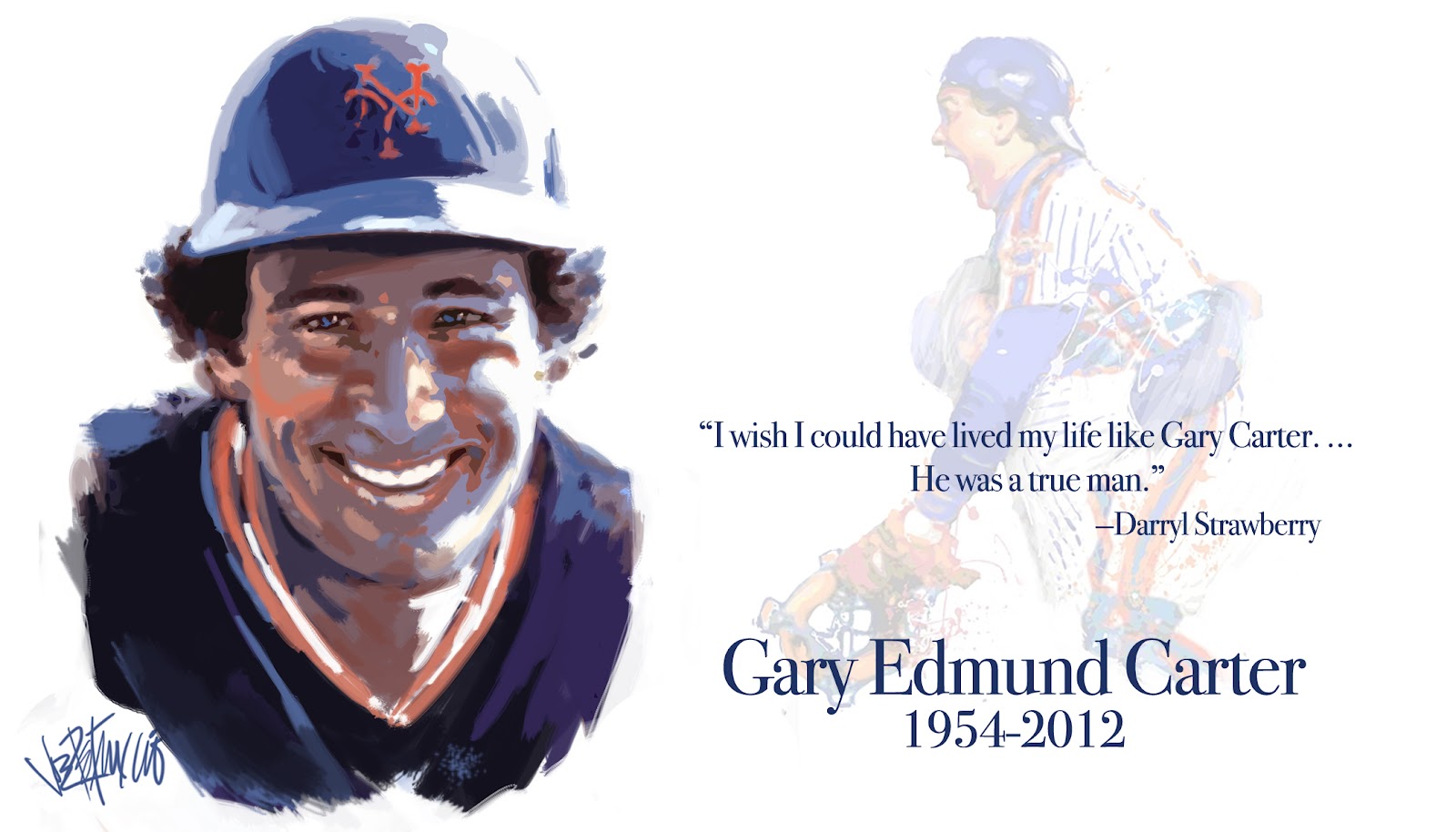
Douglas ‘Chuck’ Booth (Baseball Writer)- I was born in 1976. I have two older brothers that were born in 1975 and 1974. Another brother was born in 1978. My dad had all of us at the baseball park to watch his men’s league windmill team play baseball for every weekend of the summer. By the time I was 4, I also tagged along to my brother’s T-Ball baseball practices. My dad would let me play with the older kids because he knew I loved the game enough to become good at it. While my other brothers liked baseball, I loved it. So as they played cars and watched cartoons, I was happy to be watching baseball with my dad on our old 12’ black and white television screen that you had to pound on with a clenched fist once a day in order for it to focus right. My dad and I would watch the Montreal Expos on the French Channel in Canada. We always muted the sound, opting for a Bob Seger Record instead, but we would watch the game with laser focus. My dad had been a huge Thurman Munson and Yankees fan, so when Munson died in a plane crash, it hurt him a great deal . My dad’s love waned from the Yankees for a bit after. He started to like baseball on TV when I began asking to watch it. He and I sat on the couch and watched Gary Carter play. The Expos were an exciting team at the turn of the 80’s decade with the likes of Gary Carter, Andre Dawson and Tim Raines. I can remember seeing how involved Carter was in orchestrating the leadership of his team. Read the rest of this entry

Forget Strikeouts: Hit ’Em Where They Ain’t!
Monday January 23, 2012
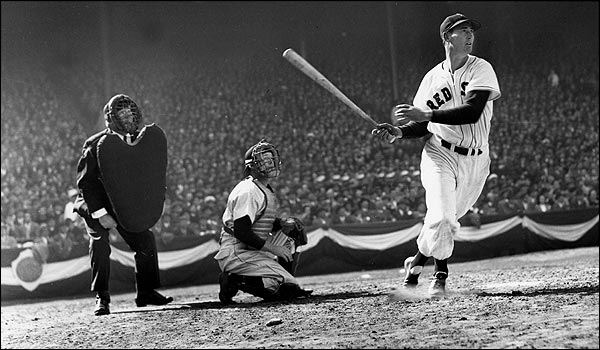
Douglas “Chuck” Booth- Baseball Writer: Back in the turn of the 20th century, baseball was a different game. Players had second jobs to supplement their baseball salaries, teams carried few pitchers and they used the same baseball for as much of the game as they could. There was a player named Willie Keeler who coined the phrase: “Hit ’em where they ain’t!” It was a slang term for hitting the baseball where outfielders were not located. This term would hold up for baseball players until Babe Ruth graced the baseball world with the retort, “I like to him them over the fence because the fielders are definitely not there.” Strikeouts were a different situation back then as opposed to the modern-day game.
Old time baseball players were ashamed of strikeouts. To them, you had done nothing to help your team in advancing the offence. While I never played baseball at a higher level than age 19, I came from this very philosophy and this was twenty years ago. My teammates and I all took turns throwing temper tantrums over striking out in Little League Baseball. Some kids even resorted to crying. The coaches of the teams all preached young men to cut down their strikeouts in favor of just making some contact. For the longest time I believed that the Major League Players thought along these lines. Media articles and sports broadcasters still interview retired players about striking out. All of them say that it bothered them a great deal. So what happened to change the philosophy? Was it Money Ball? How about Sabermetrics? I think that these both had a role in the ever rising strikeout totals the current players are experiencing each and every year. There are other factors like hard throwing relief pitchers and teams spending more money to keep aging veterans who have lost plate coverage, thus increasing their k rates.
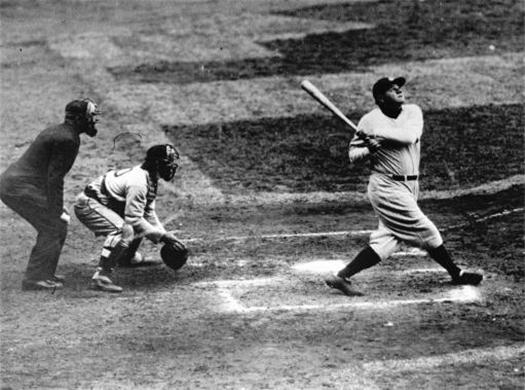
 In the 1990’s we also experienced the steroid era, where the bandbox stadiums were built and MLB went with the advertising campaign, “chicks dig the long ball!” It all had led to the increased strikeout total. To see just how far the epidemic had come, let’s go back 85 years; in 1927 Babe Ruth led the Major Leagues with 89 strikeouts. Oh yeah, he also hit .356 with 60 HRs and drove in 164 RBIs in 540 ABs. Lou Gehrig finished in 2nd that year with 84 strikeouts- but he hit .373 with 47 HRs and a whopping 175 RBIs in 580 ABs. Both men walked over 100 times each and slugged over .750. Yes pitching was not as tough as it is today. But these guys played in the dead ball era with humongous baseball stadiums.
Fast forward to 1961. 10 players had over 100 strikeouts that year. Much like 1927, the New York Yankees had two players leading the charge in offense with Roger Maris and Mickey Mantle. Despite hitting a record 61 HRs that season, Roger Maris had a keen eye for the plate in only striking out 67 times. There was a shift starting with the other players in league. A player by the name of Jake Wood stuck out a league leading 141 times. Amongst the other players to top the 100 strikeouts mark were Hall of Famers Mickey Mantle and Harmon Killebrew. It was a change in contrast to the power hitters of the league striking out on a more frequent basis. Players like Joe Dimaggio (369 SO, 361 HRs), Ted Williams (760 SO and 521 HRs) and Stan Musial (696 SO and 475 HRs) were standing out on the pier as players who adopted the contact concept. But they were becoming a rare breed of player.
In 1986, the number of players with 100 strikeouts escalated to 40. Yes there were an increase in the number of teams due to expansion. However, the rate of the players striking out 100 times a year far outweighed those added teams. There were definitely a few exceptions to the rule. Don Mattingly only struck out 444 times in 7721 Plate Appearances during his career. Wade Boggs only struck out only 745 times in nearly 11000 Plate Appearances. It should be noted the Boggs walked 1412 times and routinely fouled off pitches with two strikes deliberately to wear down opposing pitchers; otherwise his whiffs would have been much lower. The best of this era was Tony Gwynn, who only struck out 434 times in 10200 Plate Appearances. All 3 of these players were part of a baseball decade in which the 1-2 hitters were purely average contact hitters who did not strikeout very much and stole bases, while playing hit and run ball. Your power hitters belonged in the 3-4-5 slots and that was the only place to have an acceptable amount of high strikeout totals. The 6-8 hitters were also average contact hitters with speed.
In 2011, 80 players finished with over 100 strikeouts. There is one thing though that has remained constant. The home runs are still up way higher from the rate of the 1980’s. Now steroid testing has slowed down the balls leaving the yard from 10-15 years back, but more players still hit 30 homers a year than in the 25 years before the steroid era. You might want to also throw in the decreasing strike zone the umpires seem to implement each progressive season. Do not count on the umpires calling more strikes either, as it easier to pinpoint the botched strike calls now more than ever with technology. Umpires are simply not willing for the most part to give much leniency to the pitchers. Higher counts in ABs as a result will reflect in both more strikeouts and walks.
The baseball world has come to this. It is now acceptable for players (including the management and front office backing of the idea), to carry high strikeout totals and low batting averages- if the on base percentage/power numbers are still there. Leadoff hitters are not even immune to striking out on a regular basis. It is a mentality that has changed the game forever. So the next time you are wondering why all of the baseball games seem to last forever now: remember that more strikeouts equals more pitches seen. Which means the length of time each game lasts will be affected.
*** Thank you to our Baseball Writer- Doug Booth for preparing today’s feature on MLB reports. To learn more about “The Fastest 30 Ballgames” and Doug Booth, you can follow Doug on Twitter (@ChuckBooth3024) and click here for Doug’s website, fastestthirtyballgames.com***
Please e-mail us at: MLBreports@gmail.com with any questions and feedback. You can follow us on Twitter and become a fan on Facebook . To subscribe to our website and have the daily Reports sent directly to your inbox , click here and follow the link at the top of our homepage.

How the Baseball Hall of Fame Voting Should Work
Monday January 9th, 2012

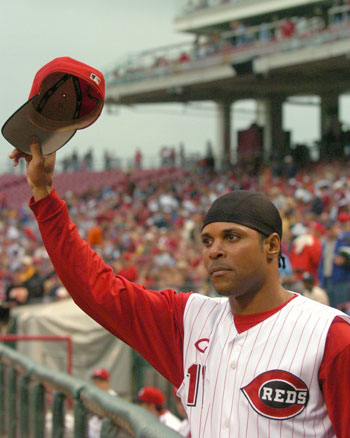
Daniel Aubain (Guest Writer @DJAubain): When it comes to the National Baseball Hall of Fame and Museum, there seems to be two schools of thought on which players are deserving of induction; those who see it as an inclusive process, and those who see it as an exclusive process.
I’ll let you know right off the bat which group I fall into…the inclusives. Just look at the official name of the place again. The National Baseball Hall of Fame and Museum. AND MUSEUM. Their website lists “Preserving History”, “Honoring Excellence” and “Connecting Generations” as what can only be described as the core values or mission statement of the Hall itself.
A lot of people want to point to Section 5 of the BBWAA Election Rules which states, “Voting shall be based upon the player’s record, playing ability, integrity, sportsmanship, character, and contributions to the team(s) on which the player played”, as an instant ban for not only proven PEDs users but also those suspected to probably have used (but no proof was ever discovered).
Give me a break. Let’s stop talking about a player’s “character” and “integrity”, as the Hall’s first inductee was Ty Cobb. Or that we’ve left the voting to a group, the writers, of whom only 77.5% felt Jackie Robinson was Hall worthy. You know, THE Jackie Robinson who has an award named after him, an entire day dedicated to celebrating his career accomplishments and the only player to have his uniform number unilaterally retired by all teams. In fact, there has NEVER been a unanimous selection into Cooperstown. Not Babe Ruth. Not Cal Ripken. Not Hank Aaron. How is that possible?
This is the same group of individuals who regularly use the phrase, “[Player X] is not a first-ballot Hall of Famer.” What the heck does that even mean? Either a player is “hall worthy” or he isn’t. It shouldn’t have to take an internet-based campaign by so-dubbed “statheads” to convince baseball writers that a player like Bert Blyleven belongs in the Hall.
Baseball has well-defined “eras” such as the “Deadball Era”, “Expansion Era” and now the “Steroid Era”. Players should be judged against the players they played against rather than against the greatest of all time. There are no Babe Ruths and Cy Youngs playing these days and there probably never will be again. They set the standards for players of their respective eras because they accomplished things no one had ever done prior to them. So for that, I refuse to weigh whether a player’s accomplishments of the 1980s, 1990s and 2000s compares to a player of the 1940s, 1950s and such.
Okay. So now that you know my opinion of what the Hall should be, here is my 2012 Hall of Fame ballot. But first, section 4.B of the BBWAA Election Rules states, “Electors may vote for as few as zero (0) and as many as ten (10) eligible candidates deemed worthy of election.” As such, I will be using all 10 of my votes today and will rank them in order of worthiness, in my eyes. I found this chart on Baseball-Reference.com to be very helpful in weighing my decisions.
- Jeff Bagwell
- Barry Larkin
- Edgar Martinez
- Tim Raines
- Larry Walker
- Alan Trammel
- Dale Murphy
- Rafael Palmeiro
- Mark McGwire
- Don Mattingly
I don’t think I need to go into the individual numbers of each player’s career accomplishments. But as you can tell, I am NOT keeping out PED users (proven or suspected) or a “DH-only” player. I’m voting with my eyes for the first nine players on my ballot and the last one with my heart. I’m okay living in a world where the “Hall of the Elite” exists.
I’m okay if we celebrate players who had human flaws just like you and me (Pete Rose, Joe Jackson, Palmeiro, McGwire, Barry Bonds, etc.) After all, it’s not like any of these guys ever killed a man. Right, Ty Cobb? Right?
Thanks to the great folks at MLB reports for allowing me the opportunity to share my voice with their audience. I truly appreciate it. Be sure to follow me on Twitter for updates on what the future has in store for me and all other guest posting articles I’ll be doing this offseason.
Please e-mail us at: MLBreports@gmail.com with any questions and feedback. You can follow us on Twitter and become a fan onFacebook . To subscribe to our website and have the daily Reports sent directly to your inbox , click here and follow the link at the top of our homepage.
Follow @mlbreports
Time to Elect Don Mattingly into Cooperstown
Monday December 5, 2011
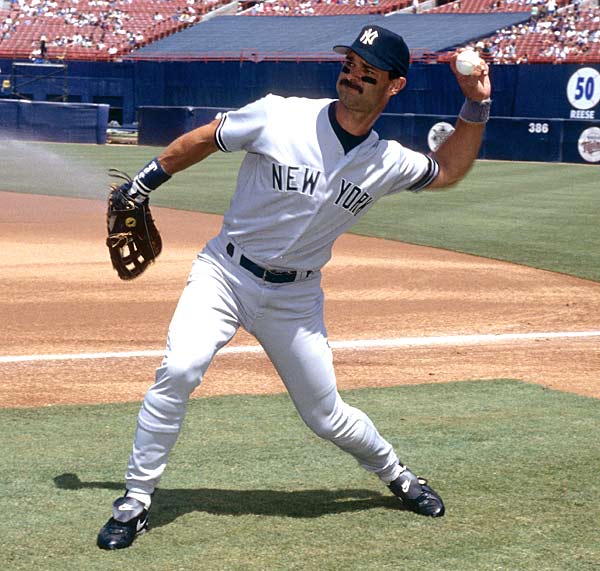
Doug Booth- Guest Baseball Writer: Okay, it is time for me to make my argument for my favorite player of all time to be inducted into Baseball’s Hall of Fame. There will be several people that will say that Don Mattingly’s career stats of: H-2154, HR-222, RBI-1099, AVG-.307 and 9 Gold Gloves are not enough in just 14 seasons. I am not counting his 7 game-stint in 1982 with this. As a rookie in 1983, Don only .hit .283 with 4 HR’S and 32 RBI’s. In Donnie’s first year as a full time first baseman, he led the AL with a .343 AVG-with 23 HR’S and 110 RBI’s, also leading the league in hits with 207 and 2B’s with 48.
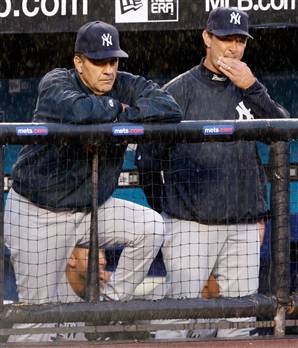 They say that if you have a shortened career-(and Mattingly’s back injury in the late eighties certainly robbed him of a definite Hall of Fame Career,) then you better have an incredible stretch as the best player in baseball. It is my belief that Don Mattingly was the best all-around player from 1984-1989, with apologies to Rickey Henderson, Wade Boggs, Tony Gwynn and Dale Murphy, Don’s incredible consistency during this 6 year stretch included these numbers. A .327 AVG with 160 HR’s and a staggering 682 RBI’s with 257 doubles and 1219 hits. Nobody had more RBI’s and extra base hits in that time frame. Only Wade Boggs had more hits. The 6 year AVG breaks down to an AVG of .327 with H-204, 2B-43, HR-27 and RBI-114. What is most impressive is that Mattingly only averaged 33 strikeouts a season/or about 1/23 Plate appearances in this stretch.
During this stretch-Mattingly was also an All-star for 6 straight seasons-and was a Gold Glover for 5 years straight from 85-89. Donnie led the league in doubles three times, (84-86), hits twice, (84-86), total bases twice, (85-86), AVG in ’86, slugging and OBP in 1986. Don’s 145 RBI’s in 1985 were the most RBI’s by a left hander since the 1960’s. The same could be said for his 388 total bases in 1986. Other dominant stretches included his 1987 power streaks, in which he hit a record-6 grand slams(since equaled by Travis Hafner,) and also is still tied for homering in a record-tying 8 straight games (and should be the official leader because only Don hit 10 HR’S in that stretch of 8 games.) Mattingly is a silver slugger three times over (84-86), and The Sporting News Player of the Year for the seasons of (84-86). Don was the AL MVP in 1985, and finished 2nd in 1986 to Roger Clemens, but for hitting he was listed as #1. His 1984 and 1987 seasons also garnered serious MVP considerations. All impressive for a man who was not considered a power hitting prospect.
Back injuries slowed Mattingly down from 1990-1995, where he lost most of his power, but he was a .290 contact hitter who would still drive in about 80-85 RBI’S per year. If he could have kept playing healthy, instead of retiring at the age of 34, he would have had nearly 3000 hits, and probably would have hit 600-700 2B, and 300 HR’s-with about 1600 RBI’S. He probably would have finished up career with an AVG. that was near .300. You could probably add 3-5 more Gold Gloves as well. Instead, he finished with 2154 hits. His .307 career average will be one of the higher averages never to be in the Hall of Fame if he is not voted in. Don’s average season is still .307 with 20 HR’S, 97 RBI’S, with close to 200 hits and 40 doubles.
Another fact that gets overlooked was Don’s strikeout ratio to plate appearances. Mattingly only struck out 444 times in 7721 PA’s, or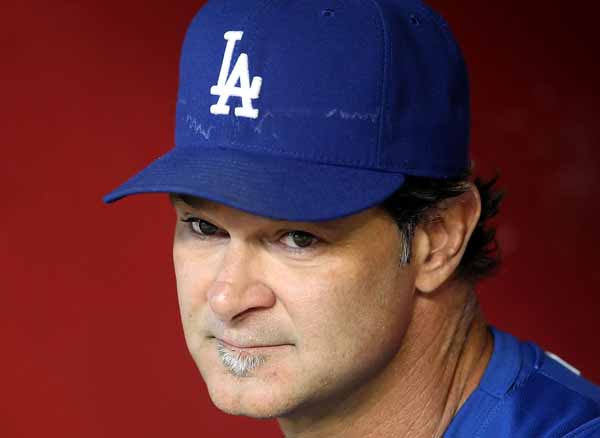 once every 19 times. This stat is unbelievable for a modern age hitter-and 444 Strikeouts is only 2 less doubles than the man hit in his career with 442. Only Tony Gwynn has had a better ratio for striking out in the last 50 years. You add the 9 Gold Gloves-(2nd all-time for a 1B), and this man should be gaining more consideration for the hall.
Other comparisons in numbers for players already in the Hall, would be Jim Rice and Kirby Puckett, Puckett for average and power, while Rice has similar offensive numbers for his 162 game AVG. Rice had a few more HR’s and RBI’s while Mattingly had a better AVG. and had more hits/doubles for an average season. Both played 14 seasons.
For all of those kids watching Donnie Baseball play live, or on TV, we saw a guy that exemplified a professional hitter. Amongst fielding 1st baseman that I have seen, no one has ever been better. His swing was pure poetry in motion, even when he older, it must have drove pitchers crazy that they could not strike him out. I am only sad that Don Mattingly has missed out on all of the Yankees championship seasons.
At least his fans can always recall his last at bat in the 1995 playoffs where he crushed a homer in a 5th game loss to the Mariners in the ALDS. It was a great career shortened by back injuries. If defensive prowess is deemed a lot more lucrative for a Hall of Fame bid, once again they have to consider ‘Donnie Baseball.’

*** Thank you to Doug Booth for joining us today on MLB reports. To learn more about “The Fastest 30 Ballgames” and Doug Booth, you can follow Doug on Twitter (@ChuckBooth3024) and click here for Doug’s website, fastestthirtyballgames.com***
Please e-mail us at: MLBreports@gmail.com with any questions and feedback. You can follow us on Twitter and become a fan on Facebook . To subscribe to our website and have the daily Reports sent directly to your inbox , click here and follow the link at the top of our homepage.


 MLB Reports


You must be logged in to post a comment.