Blog Archives

Sully Baseball Daily Podcast – November 27, 2016
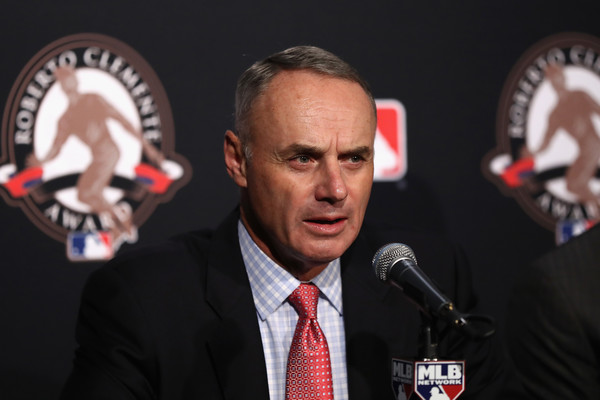
Elsa/Getty Images North America
It is time for The Sunday Request.
@sullybaseball #sundayrequest according to multiple sources a lockout is a possibility. What needs to happen to stop our worst nightmare?
— Tim Floor (@Tim_DutchSoxFan) November 25, 2016
//platform.twitter.com/widgets.js
What will stop a Lockout over the CBA? The answer is common sense.
It is a learn from past mistakes episode of The Sully Baseball Daily Podcast.

Ask the Reports: ATR Answers Your Baseball Questions – April 1st, 2012
Sunday April 1st, 2012

Let’s get to your top questions of the week:
Q: My question this week in about a prospect in the Diamondbacks system. Was reading an article about Trevor Bauer and his 10 different pitches along with his unique training program. What I want to know is how MLB Reports see his future. Will he be a number one starter on their staff one day and where will he end up when he retires? Larry
MLB reports: First question this week goes to our #1 fan, Larry! Happy April Fool’s Day by the way! No tricks today from us. Just baseball talk! Watching this kid pitch, it is hard not to get excited about him. Trevor Bauer comes with a lot of hype as a top-3 pick from last year’s MLB draft. He will definitely see time in Arizona this year, with a full rotation spot in 2012 possibly happening. Will Bauer be a #1 starter? Will he retire as a Dback? Very difficult questions, because of the complexity of the circumstances. Injuries. Performance. Financial expectations. So much goes into the equation. But if you are asking me to check the crystal ball (which I think you are), here is what I see: Yes, Bauer will become a #1 starter one day. We love his mechanics too much for him not to develop. As long as he stays healthy, works hard and keeps his nose clean. Which we all hope he does! But I cannot see him retiring as a Dback. In this day and age, it is very rare for a player to stay on the same team for his whole career. The law of baseball probability says that if Bauer becomes a stud, he will go one day to a major contender, like the Yankees or Red Sox. Even if for some reason Bauer does play the majority of his career in Arizona, he will at some point make a team change. Maybe his skills will diminish. Or a conflict with the manager. The bottom line, he will be in Arizona for the next 5+ years likely at least. So let’s enjoy his time there for now. Thanks for writing! Read the rest of this entry

Should MLB Rosters be Expanded to 26?
Tuesday February 7th, 2012
Sam Evans: With all the changes that MLB made this offseason in the new CBA, they have proven that preserving the history of the game is not important as some think. We are entering a new era of baseball, and we shouldn’t have to stick to the old rules. One of the old rules is the requirement that a major league roster can be no larger than 25 men. This rule was first firmly instituted in 1968 and hasn’t changed ever since. Now, in an era in which relievers rarely throw more than an inning, it’s time for baseball to change this rule. Read the rest of this entry

Understanding the New MLB Collective Bargaining Agreement
Friday November 25, 2011

Rob Bland (Baseball Writer – MLB reports): With the new Collective Bargaining Agreement signed between Major League Baseball and the Major League Baseball Players Association, comes an opportunity to see where baseball has failed and succeeded. While many have said that the agreement hurts small market teams or is unfair to teams with bigger scouting departments, I believe it affects all teams in a grand way. By now, most of you have heard the details of the agreement, so I will only touch upon a few of the main points.
Houston Astros will move to the AL West in 2013. There will be 15 teams per league and interleague games played all year round.
Interleague all year round can be a tricky subject. Especially if an AL team is playing interleague games in the last week of a playoff race, and their pitcher has to hit. This may cause a major headache, where teams will want the designated hitter in both leagues.
A second wild card team will be added no later than 2013.
The two wild card teams of each league will play in a one game winner take all sudden death playoff. This can give a distinct disadvantage to the winning wild card team, as they will only be able to use their ace once in the LDS.
The Elias system of ranking free agents as Type A, Type B or Type C (unranked) will no longer be used to gauge compensation for the teams losing free agents.
The only way a team will receive compensation for losing a free agent is if they make a guaranteed qualifying one year contract equal to the average salary of the top 125 highest paid players. This is approximately $12.4M for this year.
The minimum salary will rise from $414,000 in 2011 to $480,000 in 2012. It will also rise to $490,000 in 2013 and $500,000 in 2014.
Major League Baseball Amateur Draft Signing Deadline will not be between July 12 and July 18, depending on when the All-Star Game is played.
This pushes the deadline for drafted players to sign up a month. Seeing as most players wouldn’t sign until the last minutes of the deadline in the past, this will make a huge difference. Signed players can be assigned to teams and get their professional careers started. Teams will be able to develop them for longer and put their stamp on them sooner.
Each team will be assigned an aggregate signing bonus pool for their first 10 rounds of the draft.
 The number of money available to be spent is dependent upon a team’s standing in the draft and how many picks they possess. Therefore, if a team picks 1st overall and has 14 picks in the first 10 rounds, they will have more available money to spend than a team that drafts 30th and has only 10 picks. After the first 10 rounds, teams may only sign players for no more than $100,000. If a player signs for more than that amount, the excess gets counted against the pool of money for the first 10 rounds. What this means is that if a player is drafted in the 18th round and signs for $125,000, the extra $25,000 goes against their spending pool.
It is possible to go over this threshold; however MLB has placed very large penalties for doing so. If a team goes over their allotted pool by 0-5%, a 75% tax is implemented.
- 5-10% over equals a 75% tax + loss of 1st round draft pick in the following draft
- 10-15% over equals 100% tax + loss of 1st and 2nd round draft pick in the following draft
- 15%+ equals 100% tax + loss of 1st round draft pick in the next two drafts
While this seems like it could be a recipe for disaster, the MLB recommended slots will be higher and more realistic than in the past. The top 10 picks in the draft will have slots of the following:
1 – $7.2M
2 – $6.2M
3 – $5.2M
4 – $4.2M
5 – $3.5M
6 – $3.25M
7 – $3M
8 – $2.9M
9 – $2.8M
10 – $2.7M
This represents approximately 1.5 times the slot from previous years, so the cap will not be as drastic as most would assume.
There will be a new Competitive Balance Lottery to award draft picks to small market and low revenue teams.
The 10 teams in the smallest markets with the lowest revenue will be entered into a lottery for 6 draft picks after the first round, with the teams with the lowest winning percentage the previous year having a higher chance of picking first.
Each club will be given a pool of money to spend on International free agents.
For 2012 and 2013 international free agent signing period, the soft cap will be $2.9M. After that, teams will be given more or less money dependent on record in the previous year. There will also be penalties for going over this limit, which are as follows:
- 0-5% – 75% tax
- 5-10% – 75% tax and will not be able to spend more than $500,000 on one player
- 10-15% – 100% tax and will not be able to spend more than $500,000 on one player
- 15%+ – 100% tax and will not be able to spend more than $250,000 on one player
Players, managers and coaches are prohibited from using smokeless tobacco anytime that fans are permitted into the ballpark. They also must not be visible in interviews or club interviews. They may not carry the product on them or in their uniforms.
Most see this as a deterrent for the players from using the products and giving less exposure to impressionable youth. While this may be true, players will still continue to use smokeless tobacco, they will just keep their wads out of sight. No more seeing guys like Nick Swisher with his lip stuck out halfway to the pitcher, that’s for sure.
HGH Blood testing will be implemented starting in Spring Training 2012.
 There are many arguments for and against this, and I agree with both. It eases the minds of millions of people that the “Steroid Era” is behind us, yet if testing is done during Spring Training, it gives ample time for someone to get off HGH and resume normal workouts before tested. Tests will also be administered with reasonable cause throughout the season, and random, unannounced testing could be done as early as next off-season.
New helmets designed by Rawlings will be used by 2013.
These helmets will protect up to speeds of 100mph, as opposed to the helmets used now, which protect a batter up to speeds of 90mph. Previous versions have been worn by players coming back from concussions such as David Wright, but players disapproved because they were too bulky and uncomfortable. This version will apparently be much sleeker and more comfortable.
If a player is selected to play in the All-Star Game, he must attend, unless excused by the Office of the Commissioner.
There will be a Social Media Policy in place for all players, coaches and executives.
 The policy is being drawn up, and there is a chance that you could see fan favorites on Twitter such as Logan Morrison of the Miami Marlins slightly more censored. His new manager, Ozzie Guillen, could also see censorship or face penalties. I think that part of the allure of the game is that players speak their minds. From Dirk Hayhurst opening up about life in the minor leagues, to Logan Morrison saying what he feels on Twitter, it is something that can bring more youth to the games. Censoring these players may not be in the best interest of the game, but I will reserve judgment until I find out the exact parameters of the policy.
Instant replay will be expanded.
Replay will be used on plays involving “trapped” catches, as well as fair or foul ball calls. While everyone loves the human element of the game, and most argue that more instant replay will slow the game down, I am of the ilk that it will speed the game up. Rather than a manager visiting the umpire to argue a call, yell for five minutes, kick dirt on him and get ejected, the umpire crew can simply go straight to replay, and the play is withheld or upturned in a matter of a minute.
This is basically a very condensed version of the whole CBA, but radical changes are certainly abound in the MLB. While some are seen as good changes, and some are seen as bad, I am fairly neutral on the matter. Whereas the MLB achieved close to its goal of having a hard slotting system, the MLBPA also received higher minimum salaries and less restrictions on free agents. It is a give and take system, and it will take a few years to really see how it affects teams. Expect teams and agents to find loopholes in the agreement and exploit them to their greatest benefit.

***Today’s feature was prepared by our Baseball Writer, Rob Bland. We highly encourage you to leave your comments and feedback at the bottom of the page and share in the discussion with our readers. You can also follow Rob on Twitter.***
Please e-mail us at: MLBreports@gmail.com with any questions and feedback. You can follow us on Twitter and become a fan onFacebook . To subscribe to our website and have the daily Reports sent directly to your inbox , click here and follow the link at the top of our homepage.
Expanding the MLB Postseason: More Wild Card Teams Coming
Follow @mlbreports Friday October 21, 2011
MLB reports – Rob Bland: Expanding the playoffs has been a hot topic for many years now. While the move will not be as drastic as when the MLB added the first wild card team in each league, it has drawn the ire from a lot of critics. In 1994, MLB was to use the postseason system currently in place; however the season was cut short due to a player strike. It was then that the MLB went to three divisions in each league (East, Central, and West) as well as a wild card team (the best non-divisional winner record in the league). The American league Divisional winners would have been the New York Yankees, Chicago White Sox in the Central and Texas Rangers in the West (with a record of 52-61). Conversely, the Cleveland Indians would have been the wild card winners at 66-47. In the National League, the East would have been won by the Montreal Expos, who had the MLB’s best record of 74-40. The Central and West would have been won by the Cincinnati Reds and LA Dodgers, respectively, while the wild card winner would have been the Atlanta Braves.
However, due to the strike, which also shortened the following season, 1995 was the first year this system actually came into play. This season saw a shortened 144 game schedule. The NL East winners, Atlanta Braves had to go through the slugging Colorado Rockies; the first NL wild card team. They then faced the Reds, and the eventual World Series Champions Cleveland Indians. The Indians took a very peculiar path to the World Series. After leading the MLB with a 100-44 record, the Indians faced the Boston Red Sox, winners of the AL East, who had the 2nd best record in the American League. The Yankees were the wild card winners, who were defeated by the Seattle Mariners in the AL Division Series.
 The current Collective Bargaining Agreement between the commissioner, Bud Selig, with the MLB and its players’ union expires in December of this year, and an extension of five years is expected to be reached any day. One of the main hold-ups to a deal is the addition of another wild card team. The 2nd best non-divisonal winner would get into the playoffs. This may not seem like much, where every other major sports league in North America has at least 3 “wild card” teams, but in baseball, tradition is always at the top of people’s minds. Adding a team to each league’s postseason picture could lengthen the MLB season, which is something that is a major concern to most people involved in the process.
One option that was bandied around was to have the two wild card teams face off in a best 2 out of 3 series. The advantage of this short series is that both teams that didn’t win their division would have to play extra games while the winners get a short break to recuperate their injured players. Also, the extra games give opportunities to more teams to earn extra postseason revenue, which benefits the league. However, the extra 2-4 days off that the other teams would have to endure could also cause a team to lose its momentum gained at the end of the season.
However, it is believed that the MLB will go to a one game sudden death playoff between the two wild card teams. In my opinion, the biggest advantage to this is that it gives the winner of the game a monumental disadvantage going into the second round. The wild card teams would be forced to pitch their ace in the playoff, and therefore would not be able to pitch until at least game 3 of the next round. This means the team’s best starter would only get one start in a best of 5 series. Not only would the team with the best record in the league have home-field advantage, but they would see their opponent’s best pitcher in only one game.
In the current state of the MLB postseason, ten wild card teams have made it to the World Series, out of a possible 34 teams going back to 1995, including 2011. Roughly 29% of wild card teams make it into the World Series. If you figure that 1 out of 4 teams in each league make it to the World Series, or 25%, then you have a better chance of making it as a wild card than as a divisional winner. Four World Series have been won by wild card teams. 25% of World Series have been won by a team that should have a distinct disadvantage, but obviously do not. It is due to this that MLB must make it a bigger hindrance for not winning your division. Playing an extra game, extra travel and burning your ace are ways to weaken a wild card team’s chance of making it to the World Series.
With the union and MLB reps meeting every day trying to hammer out the extension for the CBA, you should see the added teams in the playoffs in 2012 or 2013. It is widely expected that the deal will be reached in the middle of the World Series to take advantage or the added publicity it would gain. I am fairly certain that the new playoff format will come into effect for the 2012 season, and there will be a lot of teams looking to push the envelope and make an appearance.

World Series: Game 2 Recap
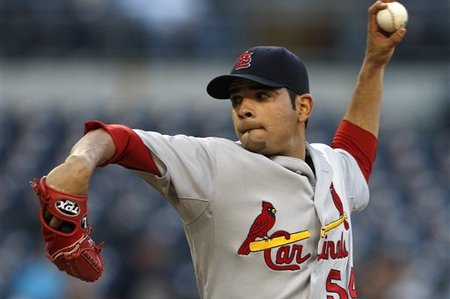 Game 2 was a bit of a surprise, as Jaime Garcia, whom many picked to implode in this guy, had a great start. Through 7 solid innings, he gave up only 3 hits and 1 walk to 7 strike outs. Colby Lewis was equally as impressive until the 7th inning, where he was able to strike Matt Holliday out to lead off the inning. David Freese then singled and Yadier Molina flew out. Nick Punto then hit a ground ball towards first base that went off of Michael Young’s glove and into right field, moving Freese to third. With runners on the corners and one out in the 7th, Alexi Ogando came in to face the hitter in the pitcher’s spot. That hitter: Allen Craig. The same hero of game 1 that hit a single to right field that scored the go ahead and eventual winning run. Craig promptly lined a ball to right field to score David Freese, breaking the dead lock.
What would a playoff game be without drama? Jason Motte came in the 9th to close out the 1-0 game. So far in the postseason, he had given up 1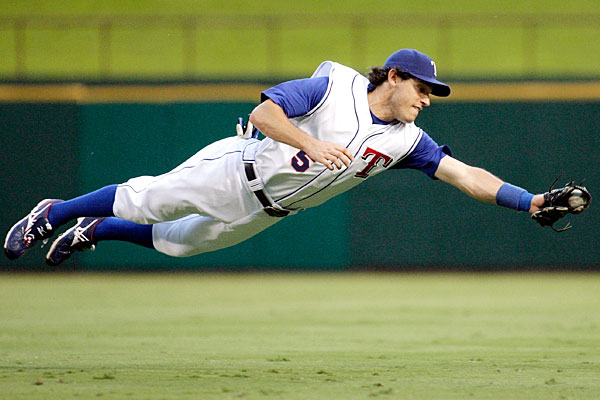 hit in 29 plate appearances. Ian Kinsler led off the inning with a bloop single off the end of the bat. Elvis Andrus came up to the plate and looked to get a sac bunt on the ground, but Kinsler decided to take matters in his own hands, and stole second base by the smallest of margins. Andrus then lifted a 2-2 pitch to center field for a single. While Kinsler was held at 3rd, Cardinals CF Jon Jay threw the ball wide of the cutoff man, which allowed Andrus to slide safely into 2nd base.
Manager Tony La Russa then yanked Motte for lefty Arthur Rhodes to face Josh Hamilton. On the first pitch, he hit a fly ball to right that scored Kinsler and advanced Andrus to third. Even more like La Russa, he brought in Lance Lynn to face Michael Young, who hit a 3-2 curveball deep enough to center to scored Andrus, and the Rangers lead the game 2-1.
Rangers closer Neftali Feliz took the mound in the bottom of the 9th and walked Yadier Molina on 5 pitches 97 mph or faster, hitting 100 on the radar gun with the first pitch. Nick Punto came to the plate, bunted two balls foul up around his eyes, then swung feebly to strike out. Feliz then struck out Skip Schumaker and induced a fly ball off the bat of Rafael Furcal to seal the victory.
With the series tied at one game apiece, an off day tomorrow and game 3 slated for Saturday night in Texas, this series is only going to get better. Keep checking MLB reports for your daily fix of updates on the World Series.
 Today’s feature was prepared by our Baseball Writer, Rob Bland. We highly encourage you to leave your comments and feedback at the bottom of the page and share in the discussion with our readers. You can also follow Rob on Twitter.
Please e-mail us at: MLBreports@gmail.com with any questions and feedback. You can follow us on Twitter and become a fan onFacebook . To subscribe to our website and have the daily Reports sent directly to your inbox , click here and follow the link at the top of our homepage.


 MLB Reports
You must be logged in to post a comment.