Blog Archives

Enough With The Early Round Champagne Celebrations MLB!
Saturday, October.13/2012
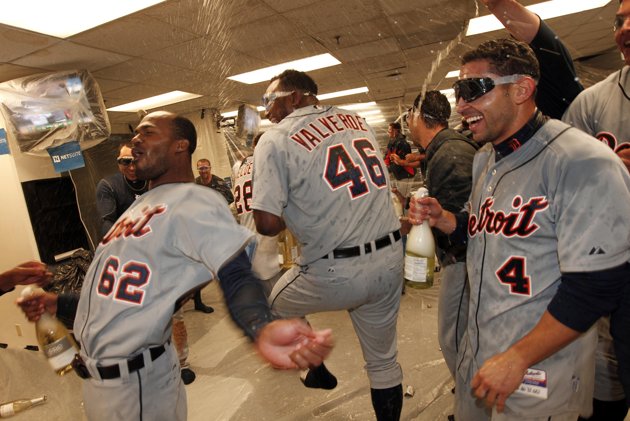
This celebration of the Tigers was the final straw to me writing this article. The Tigers should count their lucky stars they won a weak division and that they drew the Athletics in the ALDS. Since when did these excessive celebrations for early round wins of the playoffs begin?
Chuck Booth (Lead Baseball Writer): Follow @chuckbooth3024
I am 36 years old. In no way would I consider myself 100% a traditionalist when it comes to Major League Baseball. I like the 2 Wild Card Slots, I like the Designated Hitter, as for Interleague play, I wish they had more of it so I could see every team waddle through Seattle every so often. This doesn’t mean that I don’t agree with some ‘old school’ philosophies and certain underwritten rules about the game. One thing that has really set me off in watching the end of the season and the playoffs is the excessive Champagne Celebrations of the clubs once they win any series or clinch any playoff spot? I mean come on fellas, you are celebrating like you have won everything in the game and we are not even into the League Championships Series.
I am out of line in thinking that this isn’t a new trend? I don’t remember this many corks being popped off in previous years. I have no problem with a team celebrating divisional and the World Series crowns with a party. This has been a time-long tradition in the Major Leagues back to the start of the games existence. Where I first starting seeing this epidemic fly was when the Braves clinched a playoff spot and then went hog-wild in their dressing room after the game. I was surprised at their actions but almost dismissed it. I understood that after last years collapse, plus the added pressure of trying to make the playoffs for Chipper’s last chance, that maybe they were just blowing off some steam. If I were a player, I would be happy to be in the playoffs, however If I made it in via Wild Card, I would not carry on with an alcohol bender! I would be made I still lost the division. Read the rest of this entry

Miguel Cabrera: Baseball Royalty is Ready to Take the AL Triple Crown and a Spot in Cooperstown
Tuesday September 25, 2012
Alex Mednick: 1967 was the year that boxer Muhammad Ali was stripped of his boxing world championship because he refused to join the U.S. Army. There were 475,000 US Troops in Vietnam. The Beatles had just come out with Sargeant Pepper’s Lonely Hearts Club Band and the Woodstock music festival was still 2 years away. Never had a man stepped foot on the moon, a gallon of gas cost $0.33 and Federal Minimum Wage was $1.40 per hour. It was also the last time that any professional ballplayer was awarded the triple crown: Carl Yastrzemski.
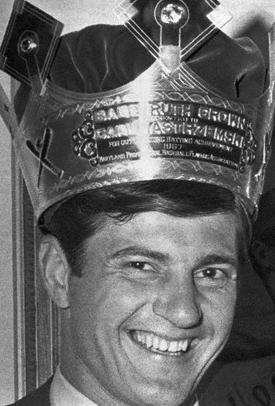
Carl Yastrzemski was the last major league baseball player to ever win the triple crown, 45 years ago in 1967.
Here we are, in present day 2012, and 29-year-old phenom Miguel Cabrera is vying to be the first man to hit for the triple crown since 1967…after almost a half century. Back in 1998 when Sammy Sosa and Mark McGwire reignited national interest in our pastime, they were pursuing Roger Maris’ single season record for most home runs. Without deducting any valor from the record which I believe still belongs to Mr. Maris, the triple crown does not only take home run power into consideration; rather the triple crown validates a hitter based upon the three most important (Sabremetrician’s may disagree) measures of a hitters overall productivity. Read the rest of this entry

The Aftermath Of The Stephen Strasburg(less) Nationals sweep in the NLDS Oct 2012
Thursday, September.06/2012

Stephen Strasburg is eligible for Arbitration after the 2013 season. He originally signed a 4 Year/14 Million Dollar Entry Level Deal after he was drafted in 2009. The salary hit for the Nats in 2013 places him tied for 3rd on the team with Mike Morse. He will be Unrestricted Free Agent in 2017, will he remain a National?
Chuck Booth (Lead Baseball Writer): Follow @chuckbooth3024
The Nationals are my favorite National League team. It is my firm belief that you are allowed 1 team in each League to cheer for. The Yankees are my team in the American League. The love for the Nationals goes back to when they were the Montreal Expos. It was a lean time for a lot of us fans until the last few years have given us hope. So before I go on about the contracts and payroll for 2013 tomorrow, I officially am going on record in saying that shutting Strasburg down is completely wrong. I don’t care about ramifications of the pitcher throwing his arm out. You never know when injuries are going to occur. The Babying method never worked for Strasburg the first time, or for Joba Chamberlain and Phil Hughes for that matter. This all stems back to the over using of Kerry Wood and Mark Prior by Dusty Baker in the 2003 year. Innings limits were soon introduced in every franchise to protect the players and managers from going after a championship and maybe shortening their career. It also has a lot to do with teams not being able to insure players any more.
Insurance companies (like Lloyd’s of London) realize that they will pay out teams at a less than profitable rate for Major League Baseball players based on how much these guys make now, so they will not cover any baseball player anymore. So Washington is freely shutting him down because they think it is the best thing to do for the player and the club. They think by preserving him from any injury at all, that this will prolong his shelf life and thus make the baseball team more profitable in the long run. This is a major role of the dice and could end up setting the fan base back with a sour taste in their mouth for generations. If Washington wins the World Series, this would be the only scenario where the question would not be brought up again. Anything short of this and it is going to start an epic debate. Read the rest of this entry
The Philadelphia Phillies Franchise Part 2 of 4: The Hitters
Friday August.24/2012
Note from Chuck Booth: I am attempting to bring the history for each of the 30 MLB Franchises into a 5 part series that will focus on 1. The teams history. 2. The hitters 3. The pitchers. 4. The Teams Payroll going into 2013 and 5.The Ball Park that they play in. (The stadium articles will all be done next summer when I go to all of the parks in under a month again.) Be sure to check my author page with a list of all of my archived articles here.

Chuck Booth (Lead Baseball Writer): Follow @chuckbooth3024–The Phillies have had an incredible run in the last decade of baseball. Most of that time has been spent at Citizens Bank Ball Park which is a very hitter-friendly park. The management was smart enough to draft a whole bunch of offensive talent like Ryan Howard, Chase Utley, Pat Burrell, Scott Rolen, Jimmy Rollins and even J.D Drew(who never signed in 1997 with the Phillies and went back into the 1998 draft.) They also traded Scott Rolen for Placido Polanco. These guys have all taken advantage of the new baseball cathedral. Ryan Howard leads all active players in HRs per AB in the Major Leagues with hitting a HR per just a little over 13 AB. There is still a long way to go to chase down Michael Jack Schmidt. His 548 Career HRs and 1595 RBI lead the ALL-Time totals on the Phillies by quite a big margin.
Criteria for being put on this list was quite simple. You had to be a player of significance on the Franchise. Great watermarks are: 1000 hits, 100 HRs, 1000 games, if you led the league in any category for a few seasons or batted .285 or higher for the duration of your time. This is what I was looking for to include the players on the list. It has taken me a lengthy period of time to siphon through 130 years of baseball to bring you this list. From Ed Delahanty and Billy Hamilton, to Richie Ashburn and Dick Allen, to Mike Schmidt and Greg Luzinki, to Von Hayes, to John Kruk and Lenny Dykstra, to Bobby Abreu and Scott Rolen-to finally get us to the gentlemen aforementioned in the first paragraph. I want this study to be as interactive as I can with the readers. If you feel that there is someone worthy of being included in the list for hitters, please feel free to comment or send me an email to booth7629@gmail.com. I would be glad to edit this post and add to it. After all, if you are reading this, chances are you are a Phillies fan, I am just a baseball historian.
For Part 1 of The 4 Part Phillies Article Series: The Franchise- click here
For Part 3 of The 4 Part Phillies Article Series: The Pitchers- click here
For Part 4 of the Phillies Article Series: Team Payroll and Contractual Statuses click here
Ryan Howard Highlight reel

The Washington Nationals Franchise 2005-2012: (Part 4 of The Expos/Nats Series)
Friday, July.20/2012
Note from Chuck Booth: I am attempting to bring the history for each of the 30 MLB Franchises into a 5 part series that will focus on 1. The teams history. 2. The hitters 3. The pitchers. 4. The Team’s Payroll going into in 2013 and 5. (The stadium articles will all be done next summer when I go to all of the parks in under a month again.) To follow all of the updates, be sure to check my author page with a list of all archived articles here.
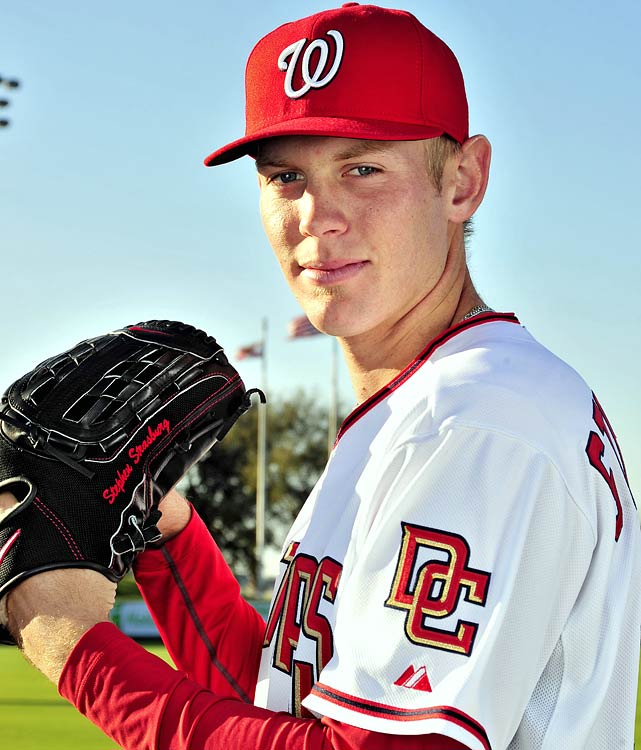
Stephen Strasburg is the new face of the Washington Nationals. Will Bryce Harper and he be able to bring a World Series to Washington?
Chuck Booth (Lead Baseball Writer and @chuckbooth3024 on twitter)– At the beginning of 2005, MLB returned to Washington for the first time since 1971. So how was this time going to be any different from the first two times in DC? The Minnesota Twins first moved from the old Washington in 1961 and the Texas Rangers moved in 1971 from Washington a decade later. The Washington Nationals (or Senators in the early 20’s where the won a World Series in 1924. The first and only WS the city of Washington has seen) had hall of fame players such as: Goose Goslin, Sam Rice and Joe Cronin to accompany the great Walter Johnston. By the time the team moved to Minnesota before the start of the 1961 season, the club had young phenoms Harmon Killebrew and Bob Allison seen as their nucleus of a young Washington team before moving.
Washington’s second go around (in the American League this time) lasted from 1961-1971. The Washington fans were granted an AL Expansion team by MLB-to hold ontotheir anti-trust exemption status. The Los Angeles Angels were their expansion cousins. These AL Washington teams were awful and only were saved by Frank Howard and his 6 foot 7 frame smashing home runs for the years of 1965-1971 as their first baseman/outfielder. The team only managed one winning season in a decade and that was under the managerial guide of Ted Williams. Bob Short had acquired the team with 9.4 Million Dollars that was all borrowed after the previous owner had died in 1967. Short promptly named himself the General Manager. Finances caught up to him and he eventually traded away some of the best talent before selling the club to the city of Arlington after the 1971 season. Washington would be without baseball for 33 years until the Expos moved back into RFK Stadium and changed their name to the Nationals in 2005.
For Part 1 of the Article Series, The Expos Hitters: click here
For Part 2 of the Article Series, The Expos Pitchers: click here
For Part 3 of the Article Series, The Demise of the Montreal Expos: click here
For Part 5 of the Article Series, 2005-2012 Nats Best 25 Man Roster click here

Top 10 Stat of the Week ( Career HRs With One Team )
Sunday June.24/2012
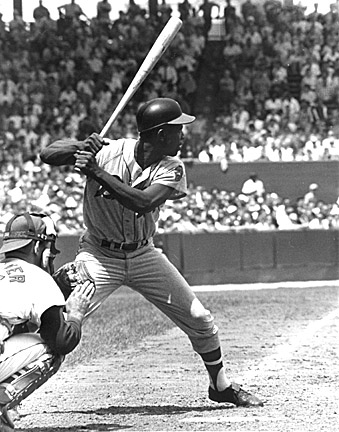
‘Hammering’ Hank passed the legendary Babe Ruth as the ALL-Time HR leader in 1974. Some still feel that he is the ALL-Time HR leader with the admitted steroid use from Leader Barry Bonds. –Photo courtesy of goldenagebaseballcards
Chuck Booth (Lead Baseball Writer and @chuckbooth3024 on twitter)- Seemingly gone are the days where most of the MLB players stick with one team for their whole careers. As of right now there are not too many superstars that have spent their entire careers with one organization. Derek Jeter and Mariano Rivera are 1st ballot Hall of Famers. Chipper Jones should make the BBHOF. Todd Helton is close to retiring but I am not sure the voters will see him worthy. There are some promising chances that Ryan Braun and David Wright might play their entire careers with their current clubs, however with Braun’s PED fiasco last year I just don’t see him entering Cooperstown. Wright must re-sign with the ownership hemorrhaging, this will prove hard for the Wilpons funds thanks to Bernie Madoff. When it comes to starting pitching, the list is shrunken that much further. Justin Verlander is the active win leader with a player only having played for one team. He has 114 wins with the Tigers, anybody above him on the active ALL-Time Wins list has pitched for multiple teams already. The next active leader for one team pitched for is Ervin Santana with 91 wins for the Angels franchise. Felix Hernandez has 90 wins for the Mariners. Tim Lincecum, Cole Hamels and Matt Cain have played their entire careers for the same team so far and have CY Young titles amongst them, but have a long way to go in establishing Hall of Fame Careers.
That brings me to my next stat. There are 9 players in history who have hit 500 HRs or more for one team. All of them are in the Hall of Fame except for Barry Bonds (who becomes eligible next year.) I am not sure the writers will cast a vote for him because of his steroid use. When I got the idea for this article, it came to be because I was amazed that Paul Konerko has hit over 400 HRs with the Chicago White Sox. Again at age 36, Konerko has a look at 500 HRs with the Chicago team. Right now he can end the season with about 410-420 HRs. Provided he can play 3-4 years more and have productive seasons, he may reach the milestone. Chipper Jones is the only other active MLB Player to have 400 HRs with one team. Larry is slowing down though and will most likely retire after this year. Read the rest of this entry

Passing of the Torch as The Greatest Player in The MLB: From Pujols to Hamilton
Wednesday June.6, 2012
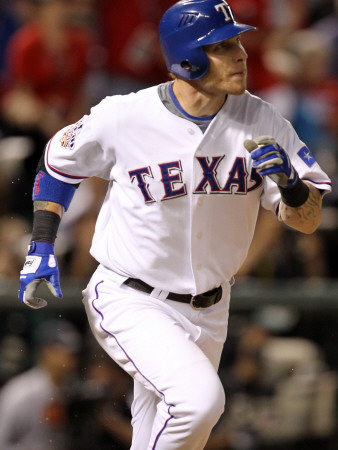
Josh Hamilton is on pace for 64 HRs and 177 RBI in 2012 with a .345 AVG. He has taken over as the best player in MLB from Albert Pujols -Photo Courtesy of http://www.real-fans.com
Chuck Booth (Lead Baseball Writer and @chuckbooth3024 on twitter)- While watching Josh Hamilton this year, I started thinking about the best players in the MLB over the last 33 years. I am talking the best player of the game at any point of time. I tracked back to 1979 for this article. I may expand further back in follow up articles. I did rank defense highly when I came up with the players. I did agonize over Mike Schmidt, Jim Rice, Wade Boggs and Cal Ripken for some of the years given in specific time frames. These gentlemen were given every consideration. In the end, we are talking about the best player in the game though and it is always subject to debate and personal opinion. The criteria had to involve leading the league in several different offensive and/or defensive categories, followed by routinely being in the top 7 in MVP balloting(if not taking home the honor), All-Star Appearances for every year I listed them for and most of them won silver sluggers and/or Gold Gloves as well.
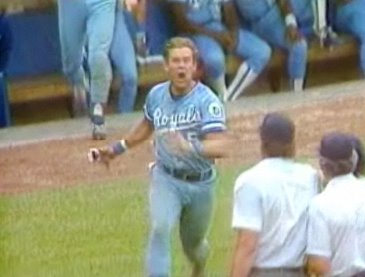
George Brett won batting titles in 3 different decades and flirted with .400 in 1980 while hitting .390 for the year. -Photo courtesy of lanius.wordpress.com
George Brett 1979-1983-George Brett was the best hitter in the game from 1979-1983. He hit for a .320 average and slugged his way to having the Royals as perennial contenders. He led the league in triples (20) and hits in 1979. In 1980, he hit .390 with a .454 OBP, 664 SLG and a 1.118 OBP which led the league. In 1983, Brett led the league in slugging an OPS once again. Brett won the MVP in 1980 and was the runner-up in 1979. In 1985, George Brett would lead the Royals to a World Series. He later won a batting title at age 37 with a .329 average. This was the toughest time frame to judge from 1979-1983. Mike Schmidt was an incredible force at third base with huge power and Jim Rice also put up mammoth numbers, but in the end I chose George Brett because he was more consistent out of 3. Read the rest of this entry

Century Old Fenway Park is Fine the Way it is
Monday May 14, 2012
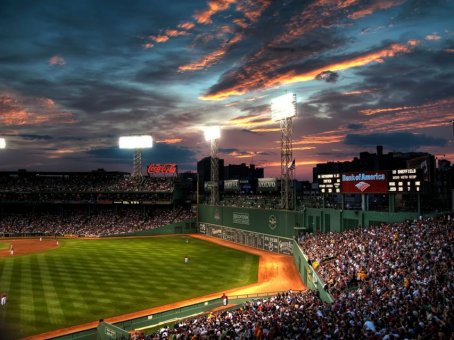
Bryan Sheehan (MLB Writer): Fenway Park is baseball. The stadium itself represents the long history of Major League Baseball, spanning a century in age. Its iconic look, as well as the legends that have called it home, make the park one of the most valuable relics of all time. The impression of roughly 8,000 Red Sox games has given Fenway a rich past, with such legends as Babe Ruth and Ted Williams once calling the park home. Six World Series Championships have been brought back to the city by the Red Sox in triumph, Fenway surviving to see every one of them. Some of its features, such as The Big Green Monster and The Lone Red Seat, have legends as large as the crowd (over 130 million), that have passed through the gates in a one hundred year old history.
Fenway has also been home to the biggest rivalry in perhaps the entire history of sports. The Red Sox have been in a never-ending battle with their A.L. East neighbor, the New York Yankees, for over 100 years. Their rich history once found common ground on the diamonds they played in, as Yankee Stadium stood for 85 years from 1923 to 2008. Now, with the recent Centennial Celebration in Boston and New Yankee Stadium serving as a modern homage to the past, there is some question of when, or if, the Red Sox will follow suit and create a new shrine. Read the rest of this entry

“Extra Innings” – By Bruce E. Spitzer: Baseball Book Review
Friday May 11th, 2012
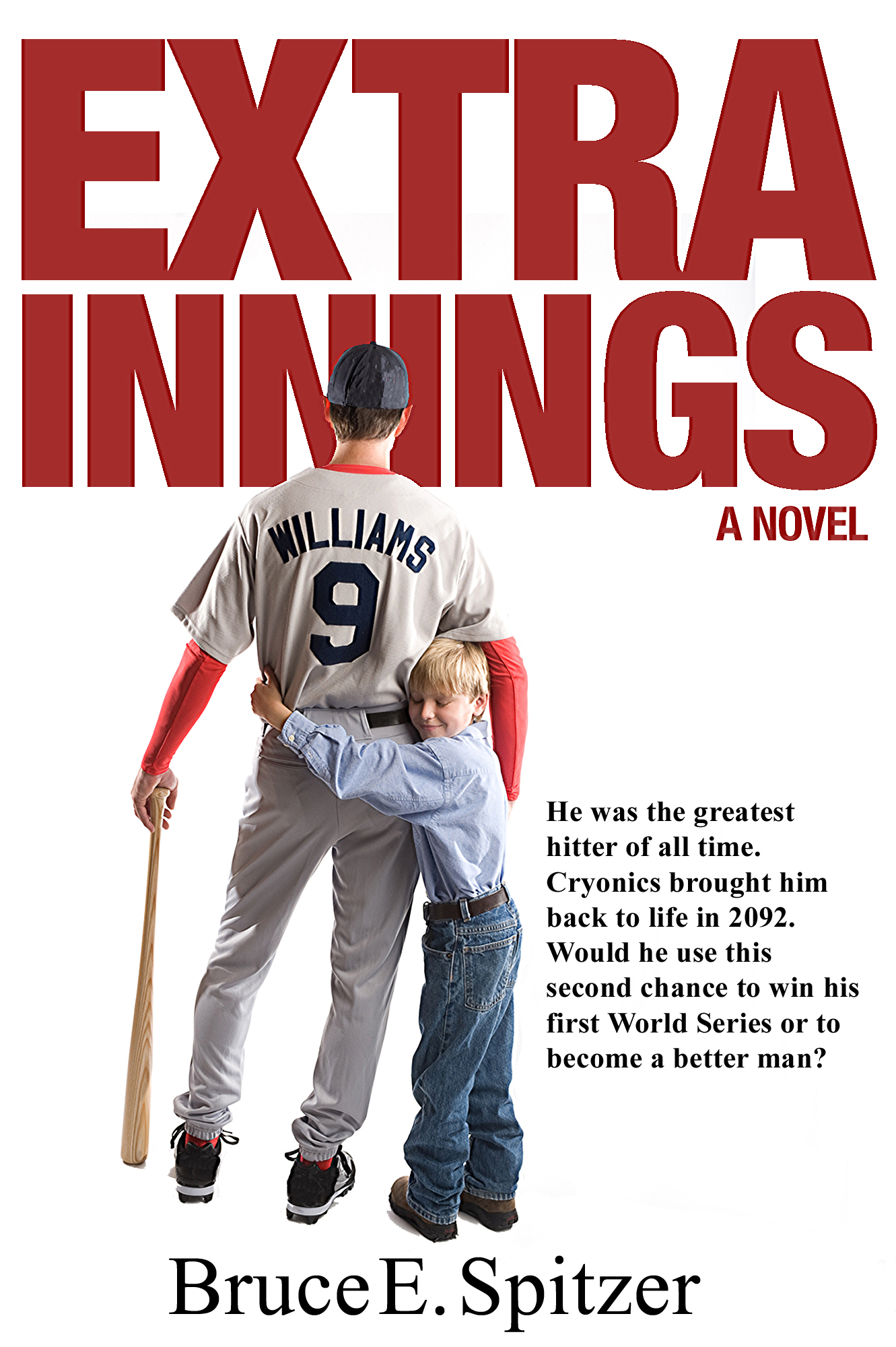
“EXTRA INNINGS” – BY BRUCE E. SPITZER
(Bear Hill Media: 2012)
MLB reports – Jonathan Hacohen: We are full swing into the baseball book season. Stopping by my local bookstore (yes…they still have those as e-books have not yet completely taken over), I went straight to the baseball book section. I was amazed at how many new titles were out. With so much to choose from, picking a new title to read can be overwhelming. Let’s face it- we all have busy lives. There is a strong time commitment required to complete any book from beginning to end. If taken too long to read, the stories and messages can often be lost. Thus the special story that you choose must be worthy of your time. To pick the book, read it from beginning to end and walk away having gained wisdom and enjoyment from it. That is why we encourage reading books here on MLB reports and work to find you the latest and greatest titles. Today’s book is revolutionary in the world of baseball and one that completely blew me away. Extra Innings, a novel by first time author Bruce Spitzer. Imagine science was able to bring Ted Williams back to life in the year 2092. Do I have your attention? I knew I would.
Here is a brief introduction to Extra Innings, courtesy of extrainningsthenovel.com:
In the year 2092, Ted Williams, the greatest baseball hitter of all time, is brought back to life through the science of cryonics.
Once again playing for the Red Sox, Williams finds himself trapped in a world he hardly recognizes: the corruption of the game he loves with über-juiced batters and robot pitchers; difficult love affairs clashing with his old desires; and a military conflict of the future in which he must harness the fighter pilot skills he used in his first life.
Dr. Elizabeth Miles is the cryonicist who brings him back to life, initiating a dramatic sequence of medical achievements. She and her young son Johnnie are a constant reminder of what Williams lacked in his first trip around the bases, never devoting much time to love and family. But old habits die hard.
With enemies and allies both on the field and off, Williams must make sense of it all and play on against a machine that he detests, pressure to take the “giddyup” he abhors, unrelenting media mania, and a dystopian world he can’t ignore.
The narrative resonates with the consequences of the major issues we face in our world today—the steroids debate in sports, global warming, corporate greed, technology run rampant, and the moral ambiguity of war.
Extra Innings is alternately poignant and humorous, heartbreaking and joyous. Thought-provoking throughout, it’s a rollicking ride that looks at second chances and redemption, the ability to triumph over adversity, and the search for meaning in this life and the next.
Flawed in his first life, Williams must decide in the second what’s more important, the chance to win his first World Series, or the chance to be a better man?
I enjoyed Extra Innings on many levels. It is a book that made me think, feel and learn all at the same time. Too many of today’s baseball fans grew up having never watched Ted Williams play. Sure, they heard some stories and remember some of the tributes to the baseball great later in life. But not many fans I meet have actually watched Ted Williams play. This is where Extra Innings shines. To be able to imagine a future world where Ted Williams returns, we have to remember and think about Ted Williams in his previous life. The life that many of us missed. Spitzer likely picked Williams for several reasons. Living and growing in Boston, he would have an automatic passion for the Red Sox and Williams. A logical choice. But Williams presents an interesting contrast from days gone by to what the future would be like. Williams was a “man’s-man”. A throwback. Playing the game hard. Giving it all on the baseball field. Serving in the army. They don’t build many like Williams anymore. From a baseball standpoint, Extra Innings gives the requisite baseball education and information that I always crave in a baseball book. Read the rest of this entry

An Interview with Tropicana Field Expert Kurt Smith
Tuesday April 24, 2012
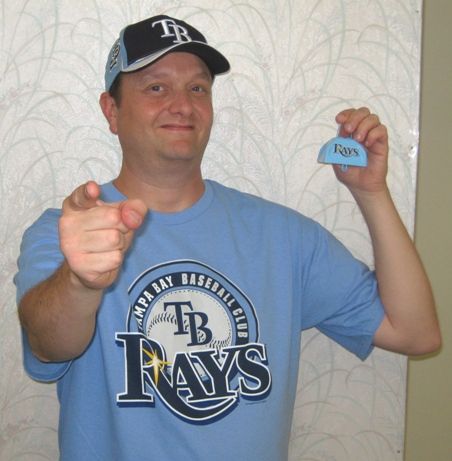
Chuck Booth- (Lead Baseball Writer and @chuckbooth3024 on twitter)- Today’s expert is Kurt Smith. Kurt will be the interview subject of the following parks: Citizens Bank Ball Park, Turner Field and today’s featured expert Article of Tropicana Field Kurt is highly respected in the ball park chaser community for his BallparkEGuides. After you are done reading this article I implore you trust in Kurt to deliver up tips and suggestive idea’s on how to make your stadium visits affordable and pleasurable. I had a chance to ask some questions of the man recently.

CB: “Welcome to the MLB Reports Experts Interview Kurt. Please tell us about yourself and then give us a bit of background information on your life as a Rays Fan?”
KS: “Well I’m not a Rays fan per se, but wouldn’t they be a fun team to root for? They consistently come out on top or near the top in a division that includes behemoth spenders like the Yankees and Red Sox; and last year’s finale was one of the most exciting regular season games in history. It’s too bad this team has so much trouble getting people to come out and see them, because they really are an exciting team to watch. And I love the cowbells. It’s great to hear the ringing in a dome when an opposing batter has two strikes on him.”
CB: “As one of the ballpark experts who takes it to the extreme, how do you rank Tropicana Field versus the rest of the Ballparks?”
KS: “Tropicana Field isn’t a great venue; of all the ballparks I’ve visited I’d put it at or near the bottom. I don’t like indoor baseball, and I really dislike artificial turf, probably like most fans. The Trop is the only non-retractable dome left in baseball now that the Metrodome is gone, so you’re inside regardless. It may be okay to have the air conditioning and protection from thunderstorms in July or August, but who wants to go indoors to see baseball on a beautiful April Florida day? The timing of Tropicana Field’s construction couldn’t have been worse. A dome seemed like a great idea at the time, but just a couple of years after it opened Camden Yards debuted and completely turned ballpark construction upside down. Suddenly indoor baseball on artificial turf couldn’t be less cool.
If the Tampa Bay area’s government had listened when baseball told them not to build a stadium, they would probably have a retractable dome today.But the Rays signed a lease, so for the moment they’re stuck with it. And it’s not all bad. The humidity of Florida summers is nothing to sneeze at, so the air conditioning can be pretty nice. And at least you know you’re going to see a game whatever Mother Nature says, which is of great benefit to a road tripper.”
CB: “Despite the Rays being one of the best franchises over the last 5 years, the team still does not draw well. Why do you think that is Kurt?”

KS : “Here are the reasons that I’ve heard, all of which I think have some merit:
1 – Location. The ballpark is in St. Petersburg, and it’s not all that close or easily accessible from Tampa, where much of the fan base is or should be. It’s also in Florida, where there are a lot of New York transplants, so Yankees games draw well but the team has had a hard time establishing its own fan base.
2 – Entertainment Competition. Tampa Bay is not far from beaches or from Orlando, so there isn’t much elbow room for promotional people to convince residents to come to a ballgame rather than go to Universal Studios. The venue doesn’t help; on a beautiful day most people might rather go to a theme park in Orlando or a beach than go indoors for a game.
3 – Venue. I don’t know if I necessarily buy this one; a good team usually draws no matter where they play. But the Trop isn’t on the bucket list of most ballpark trippers, so that doesn’t help matters any. People get enthused about a game at Wrigley Field or Camden Yards, they don’t get enthused about a game at Tropicana Field.
4 – Weather. The indoor venue notwithstanding, perhaps people just don’t want to go somewhere and be outside for at least a short time in a climate where they may be dealing with hurricane-level thunderstorms or oppressive heat.”
CB: “The Rays seem to have a lot of gimmicks to promote a family atmosphere what have you seen Tropicana Field do in order to boost attendance?”
KS: “It is to the Rays’ great credit that they’ve made the Trop more entertaining for families and adults. The Rays tank is an especially popular attraction. You can reach into this tank in right center field and pet the slimy rays that are swimming around in it—all while watching the game go on. The concourse areas of Tropicana Field are like nothing you’ve seen in baseball—comic book style murals of baseball history, picnic areas and tons of interactive games for kids. On my last trip there, the Jumbotron showed a hilarious video of a cat “mixing” on a turntable.There’s also several party areas, like the Everglades BBQ in the batter’s eye in center field, the Center Field Street Brewhouse (with drink specials before games!), and several lounge areas where people can enjoy a “Blue Storm” drink. Baseball buffs should get a kick out of the Ted Williams Museum and Hitters Hall of Fame, too. Unfortunately the Rays can’t do fireworks, but they do get some big name acts to play after games.
CB: “What is your favorite method of transportation to and from Tropicana Field?”
KS: “Well if I lived close enough, I’d ride a bicycle, because there’s a lot of nice bicycle paths in the area and a place to lock up your cycle at the ballpark. But as it is, the only way most people get to Tropicana Field is by car, and it’s right off the interstate and easy to find. So I’ll just add that I’d find some people to carpool with, because the Rays offer free parking to the first 100 cars with four or more people in them. Free parking is always a great deal.
There is a new service for Tampa area fans called the “No Excuses Tour”. It takes riders to the game from a couple of local taverns, and I think the price is very reasonable. I believe they serve beer on the bus but the bus doesn’t have a bathroom, so there’s some kinks to be worked out there, but it’s a great idea.”
CB: “Tell me something about the surrounding area of the Ballpark?”

KS: “Well, I haven’t heard any horror stories, but some people say it’s not a great neighborhood. You’re not far from the downtown pier and its attractions, so that’s a possible post-game hangout area. I would say that you’re better off staying east of the ballpark towards the pier, and perhaps it’s not so nice west and south of the ballpark.
The popular pre-and post-game venue is Ferg’s, an indoor-outdoor tavern that is converted from a warehouse. They have game day specials on beer, and I haven’t tried the wings but I’m told they’re very good. If you’re the type that likes a drink or a snack before or after the game, Ferg’s is as good as anything here. They are walking distance from the ballpark and have cheaper parking, too.”
CB: “What advice would you give for somebody experiencing Tropicana Field for the very first time?”
KS: “Don’t pay more than you have to for a seat. If you can live with anything in the upper level you can get tickets there dirt cheap directly from the Rays, and it’s usually not a problem to improve your lie during the game. Wander around and see all of the party areas and make sure you check out that big ballplayer sticking out of the wall. Get yourself a cowbell so you can distract the opposing hitters when they get two strikes on them. If you’re a history buff you’ll want to see the Ted Williams Museum.
And don’t complain about seeing baseball indoors, because it’s a mighty good thing during July and August in St. Petersburg.”

CB: “How is the food at Tropicana Field? What is your favorite ballpark food there?”
KS: “Tropicana Field has everything from soup to nuts in the food department, like most ballparks these days. The nice thing is that there’s a lot of brand names, for better or worse, at least with Papa John’s, Outback Steakhouse and Checkers you know what you’re getting. They have a deli with great Boar’s Head sandwiches, and they even have a gluten-free stand, great for celiacs like my wife. The hot dogs are from Kayem, the same purveyor of the Fenway Frank in Boston, although the dogs here are different.
When I’m in the Trop I go for a Cuban sandwich at the East-West Delicatessen near the main entrance; the Cuban is not something you find at a lot of ballparks. It’s a hot pressed sandwich of ham, pork, Genoa salami, Swiss cheese, pickles and yellow mustard. I don’t know that it’s the go-to item at the Trop, but it would be my first choice. Gooey cheese is always a winner.”
CB: “What is your favorite all time game that you have been in attendance for at Tropicana Field?”
KS: “Well unfortunately I wasn’t there for September 28, 2011, when the Rays came back from a 7-0 deficit to defeat the Yankees in 12 innings and take the wild card spot right out from under the Red Sox.
So I’ll just go with my first game there in 2002…the then-Devil Rays pulled off a 5-4 victory over the Orioles, and I was with a group of friends sitting down the right field line making jokes about seeing the relief pitchers from behind.
Despite being indoors on a gorgeous April day, a good time was had by all.”
CB: “Thank you very much Kurt.”

***Thank you to our Tropicana Field Expert- Kurt Smith for participating in today’s article. to learn more about Kurt Smith and his website click here***
 ***Thank you to our Lead Baseball Writer- Chuck Booth for preparing today’s feature on MLB reports. To learn more about “The Fastest 30 Ballgames” and Chuck Booth, you can follow Chuck on Twitter (@ChuckBooth3024) and you can also follow Chuck’s website for his Guinness Book of World Record Bid to see all 30 MLB Park in 23 days click here or on the 30 MLB Parks in 23 days GWR tracker at the Reports click here. To Purchase or read about “The Fastest 30 Ballgames Book, ” please click here ***
Please e-mail us at: mlbreports@me.com with any questions and feedback. You can follow us on Twitter and become a fan on Facebook. To subscribe to our website and have the Daily Reports sent directly to your inbox, click here and follow the link at the top of our homepage.

Forget Strikeouts: Hit ’Em Where They Ain’t!
Monday January 23, 2012
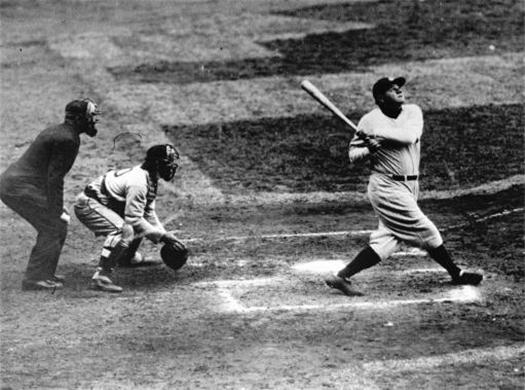
Douglas “Chuck” Booth- Baseball Writer: Back in the turn of the 20th century, baseball was a different game. Players had second jobs to supplement their baseball salaries, teams carried few pitchers and they used the same baseball for as much of the game as they could. There was a player named Willie Keeler who coined the phrase: “Hit ’em where they ain’t!” It was a slang term for hitting the baseball where outfielders were not located. This term would hold up for baseball players until Babe Ruth graced the baseball world with the retort, “I like to him them over the fence because the fielders are definitely not there.” Strikeouts were a different situation back then as opposed to the modern-day game.
Old time baseball players were ashamed of strikeouts. To them, you had done nothing to help your team in advancing the offence. While I never played baseball at a higher level than age 19, I came from this very philosophy and this was twenty years ago. My teammates and I all took turns throwing temper tantrums over striking out in Little League Baseball. Some kids even resorted to crying. The coaches of the teams all preached young men to cut down their strikeouts in favor of just making some contact. For the longest time I believed that the Major League Players thought along these lines. Media articles and sports broadcasters still interview retired players about striking out. All of them say that it bothered them a great deal. So what happened to change the philosophy? Was it Money Ball? How about Sabermetrics? I think that these both had a role in the ever rising strikeout totals the current players are experiencing each and every year. There are other factors like hard throwing relief pitchers and teams spending more money to keep aging veterans who have lost plate coverage, thus increasing their k rates.
 In the 1990’s we also experienced the steroid era, where the bandbox stadiums were built and MLB went with the advertising campaign, “chicks dig the long ball!” It all had led to the increased strikeout total. To see just how far the epidemic had come, let’s go back 85 years; in 1927 Babe Ruth led the Major Leagues with 89 strikeouts. Oh yeah, he also hit .356 with 60 HRs and drove in 164 RBIs in 540 ABs. Lou Gehrig finished in 2nd that year with 84 strikeouts- but he hit .373 with 47 HRs and a whopping 175 RBIs in 580 ABs. Both men walked over 100 times each and slugged over .750. Yes pitching was not as tough as it is today. But these guys played in the dead ball era with humongous baseball stadiums.
Fast forward to 1961. 10 players had over 100 strikeouts that year. Much like 1927, the New York Yankees had two players leading the charge in offense with Roger Maris and Mickey Mantle. Despite hitting a record 61 HRs that season, Roger Maris had a keen eye for the plate in only striking out 67 times. There was a shift starting with the other players in league. A player by the name of Jake Wood stuck out a league leading 141 times. Amongst the other players to top the 100 strikeouts mark were Hall of Famers Mickey Mantle and Harmon Killebrew. It was a change in contrast to the power hitters of the league striking out on a more frequent basis. Players like Joe Dimaggio (369 SO, 361 HRs), Ted Williams (760 SO and 521 HRs) and Stan Musial (696 SO and 475 HRs) were standing out on the pier as players who adopted the contact concept. But they were becoming a rare breed of player.
In 1986, the number of players with 100 strikeouts escalated to 40. Yes there were an increase in the number of teams due to expansion. However, the rate of the players striking out 100 times a year far outweighed those added teams. There were definitely a few exceptions to the rule. Don Mattingly only struck out 444 times in 7721 Plate Appearances during his career. Wade Boggs only struck out only 745 times in nearly 11000 Plate Appearances. It should be noted the Boggs walked 1412 times and routinely fouled off pitches with two strikes deliberately to wear down opposing pitchers; otherwise his whiffs would have been much lower. The best of this era was Tony Gwynn, who only struck out 434 times in 10200 Plate Appearances. All 3 of these players were part of a baseball decade in which the 1-2 hitters were purely average contact hitters who did not strikeout very much and stole bases, while playing hit and run ball. Your power hitters belonged in the 3-4-5 slots and that was the only place to have an acceptable amount of high strikeout totals. The 6-8 hitters were also average contact hitters with speed.
In 2011, 80 players finished with over 100 strikeouts. There is one thing though that has remained constant. The home runs are still up way higher from the rate of the 1980’s. Now steroid testing has slowed down the balls leaving the yard from 10-15 years back, but more players still hit 30 homers a year than in the 25 years before the steroid era. You might want to also throw in the decreasing strike zone the umpires seem to implement each progressive season. Do not count on the umpires calling more strikes either, as it easier to pinpoint the botched strike calls now more than ever with technology. Umpires are simply not willing for the most part to give much leniency to the pitchers. Higher counts in ABs as a result will reflect in both more strikeouts and walks.
The baseball world has come to this. It is now acceptable for players (including the management and front office backing of the idea), to carry high strikeout totals and low batting averages- if the on base percentage/power numbers are still there. Leadoff hitters are not even immune to striking out on a regular basis. It is a mentality that has changed the game forever. So the next time you are wondering why all of the baseball games seem to last forever now: remember that more strikeouts equals more pitches seen. Which means the length of time each game lasts will be affected.
*** Thank you to our Baseball Writer- Doug Booth for preparing today’s feature on MLB reports. To learn more about “The Fastest 30 Ballgames” and Doug Booth, you can follow Doug on Twitter (@ChuckBooth3024) and click here for Doug’s website, fastestthirtyballgames.com***
Please e-mail us at: MLBreports@gmail.com with any questions and feedback. You can follow us on Twitter and become a fan on Facebook . To subscribe to our website and have the daily Reports sent directly to your inbox , click here and follow the link at the top of our homepage.
Interview with Bruce Spitzer: Author of Extra Innings
Friday November 25, 2011
Jonathan Hacohen: Q&A with Bruce Spitzer, author of the novel Extra Innings about Ted Williams returning to life through cryonics, to be released this spring.
Q. In Extra Innings, cryonics and science bring Ted Williams back to life in 2092. What was your inspiration for the concept of the book?
A. I never saw him play but always admired the man. I have friends who knew him well and every one of them has a story about his larger-than-life persona—good fodder for a book. Then one night five years ago I was watching a Red Sox game on TV and Don Orsillo and Jerry Remy were talking about Ted Williams. In between innings I was channel surfing a bit (who doesn’t?) and landed on something like the Discovery Channel, maybe the History Channel. The program was about mummies and a belief in life after death. I connected the dots: the real-life cryonic preservation of the late Ted Williams and the human desire for life after death and began to imagine what it would be like if indeed Ted was successfully reanimated one day. Thus Extra Innings the novel was born.
Q: Why Ted Williams, and why the year 2092, any particular relevance?
A: If you’re going to fictionalize an account of a famous person I can’t think of many better than Ted Williams who in real life (or death), as most people know, was cryonically preserved when he passed away in 2002. For a novelist, he was a wellspring of source material. I did a lot of research so that when I placed him in a particular situation I would know how he would react—even his verbal patterns, in particular, his famous cussing. The year 2092 was chosen to set the novel in because it is far enough in the future to believe that science may make cryonic reanimation possible, but not too far out to make verisimilitude difficult.
Q: You chose to write about baseball as your first novel. Why baseball in particular? What is your baseball background?
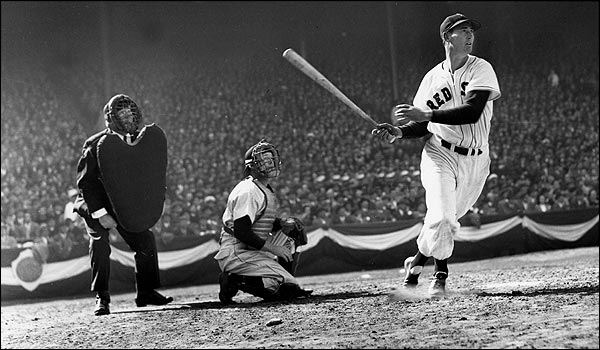 A: I played the game only as a boy but, obviously, you need to know something about it to write a baseball book. As an undergrad I did play-by-play on the radio and took a sports reporting track for a while. I’ve been a writer my entire professional life and have been published in newspapers, magazines and online. But Extra Innings is my first foray into fiction. So, after developing “the hook” for the story in my mind, it seemed like it was a mountain I was ready to climb. I have a journalism degree and use it every day. I’ve also been a PR executive for a long time. Quite a few novelists have worked in PR and advertising, which, historically, require good writing skills. The PR types include Danielle Steele and Kurt Vonnegut; and James Patterson is a former copywriter and ad exec. Far be it from me to compare myself to these authors, but as a writer and PR person, you must master the skill of quality research, which was invaluable in writing Extra Innings.
Q: Your novel has been five years in the making. Please describe the process of creating this book from beginning to end.
A: The first draft took a year to write and I rewrote and revised for another four years. I rise at 4 a.m. each day and write for 2 ½ hours before going off to work at the job I love in Boston where I write and edit other stuff. I also work on fiction for at least a few hours on one day each weekend. So, it is basically a six-day-a-week passion, but because I do it so early in the morning I still have time left for my family, career, friends and other interests.
Q: Would it be fair to say that this book falls mainly into the categories of baseball and science fiction. How would you describe the genre of the Extra Innings?
A: The novel is general fiction, and commercial fiction, but it has elements of speculative fiction (a subset of sci-fi), a sports novel (of course), and a military thriller (mirroring the “first life” of Ted Williams).
Q: Will a traditional baseball fan enjoy this book? Most baseball readers tend to enjoy reading about the history of the game, its players and statistics. For those baseball readers, how will they feel about this book?
A: I believe baseball fans (and not just Red Sox fans) will revel in it. As a baseball reader myself, it was a joy to research and write—what fun to re-imagine a new life for the greatest hitter of all time and see him play baseball again. However, EI is more that just a baseball book. It’s a story about second chances and redemption. For all of his success on the field in his real life, Williams was flawed in many ways off of the field. In his second life he is compelled to answer the question, what’s more important, a chance to win his first World Series or a chance to be a better man? In addition there are numerous subplots to draw-in a variety of readers. The narrative resonates with the consequences of the major issues we face in our world today—the steroids debate in sports, global warming and flooding, corporate greed, technology run rampant, and the moral ambiguity of war. One of my female beta readers even said, “This is a love story disguised as a baseball book.”
Q: Did you consult with any baseball officials in writing the Extra Innings?
A: There was a lot of research done at such disparate places as the Boston Athenaeum; the New England Sports Museum; the National Baseball Hall of Fame and Museum in Cooperstown (who put up with me traipsing in on the morning after induction weekend); The MIT Media Lab and its Personal Robots Group; and the Smithsonian National Air and Space Museum, Steven F. Udvar-Hazy Center (to check out the fighter plane Ted pilots). The authors who provided terrific background material included Leigh Montville (Ted Williams: The biography of an American Hero); Bill Nowlin (Ted Williams at War); the late David Halberstam (The Teammates); John Underwood (It’s Only Me: The Ted Williams We Hardly Knew); and, of course, Ted Williams the author (The Science of Hitting and My Turn at Bat—The Story of My Life), both with John Underwood.
Q: Can you tell us more about your research process studying Ted Williams? Did you have a focus on the player only or the game during his era?
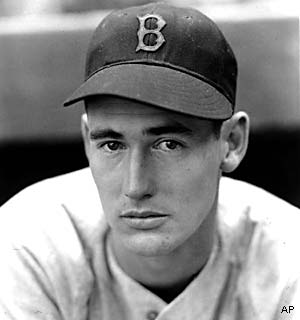 A: All of the above. There are situations I put him in that draw specifically on his baseball (and military) history. It was an important part of the plot and resulted in enjoyable twists in the story as he tries to harness some of his old skills and memory while trying to adapt to a new baseball paradigm and a dystopian future-world in general.
Q: With the book now at completion, looking back, would you have done anything different?
A: Not too much. I had an outline in my head and pretty much followed that map. I actually wrote the ending first, which, for some reason, many authors do, probably because it gives you a target to shoot for. There were a few surprises along the way—things that I hadn’t anticipated. For example, after starting the novel it dawned on me that the first person in the world brought back from the dead is going to know if there is life after death, having nothing at all to do with cryonics. That is, knowing if there is an afterlife and if God exists. People are going to want to know what you know!, particularly religious folks. As the only person who knows, Ted Williams is presented with numerous challenges in the novel.
Q: When is the book set for release? How did you pick the release date?
A: Extra Innings will be released to coincide with the beginning of baseball season this spring, which, in New England, should be interesting because we will be celebrating the 100th birthday of Fenway Park. Fenway plays a central role in the novel 80 years from today.
Q: What is your planned schedule in promoting the Extra Innings?
A: We’re working on that now. When the schedule is set you’ll see it announced at http://www.extrainningsthenovel.com/ and on Twitter@BruceSpitzer1.
Q: Where will the novel be available?
A: You will be able to order Extra Innings as a traditional book or an ebook at Amazon and Barnes & Noble online and other select distributors, and it will also be made available in select independent bookstores. Check out http://ExtraInningsTheNovel.com for a list sometime after the New Year.
Q: Can readers contact you?
A: Yes! That would be great. The email address is Bruce@BruceSpitzer.com.
Q: Will we see another baseball book in the future from Bruce Spitzer?
A: Never say never. But the next book is not about baseball. However, I can tell you that it is another high-concept novel.
Q: If Ted Williams were alive today, what would he think of the current game of baseball? Do you believe that he would want to play Major League Baseball in 2012?
A: Oh yeah, I think he’d want to play today. Any player would if he still had the skills. I’ve talked to enough ex-players to know that most everyone misses it. The question is, how would he like playing in the year 2092?
MLB reports: A big thank you to Bruce Spitzer for taking the time to speak with us today on Extra Innings. Personally, I can’t wait to read this baseball thriller! Extra Innings will be available this coming spring. Keep an eye out for our review of Extra Innings, coming soon.
About the author:  Bruce E. Spitzer has been a writer and editor his entire professional life. Spitzer’s writing has won awards from the New England Press Association, the International Association of Business Communicators, and the Publicity Club of Boston. His writing has appeared in newspapers, magazines and online. He is a public relations executive and writes the “Dollars and Sense” business column for the MetroWest Daily News, and is also the editor of a business trade journal, Massachusetts Banker Magazine. Spitzer is a graduate of Boston University and Rutgers and lives in the Boston area with his wife and young son. Extra Innings is his first novel.
 Jonathan Hacohen is the Lead Baseball Columnist & Editor for MLB reports: You can follow Jonathan on Twitter (@JHacohen)
Please e-mail us at: MLBreports@gmail.com with any questions and feedback. You can follow us on Twitter and become a fan on Facebook . To subscribe to our website and have the daily Reports sent directly to your inbox , click here and follow the link at the top of our homepage.


 MLB Reports

You must be logged in to post a comment.