Blog Archives

2012 Trade Deadline Update #2 7/23: Ichiro in Pinstripes, Anibal and Omar to the Tigers?
Monday July 23rd, 2012
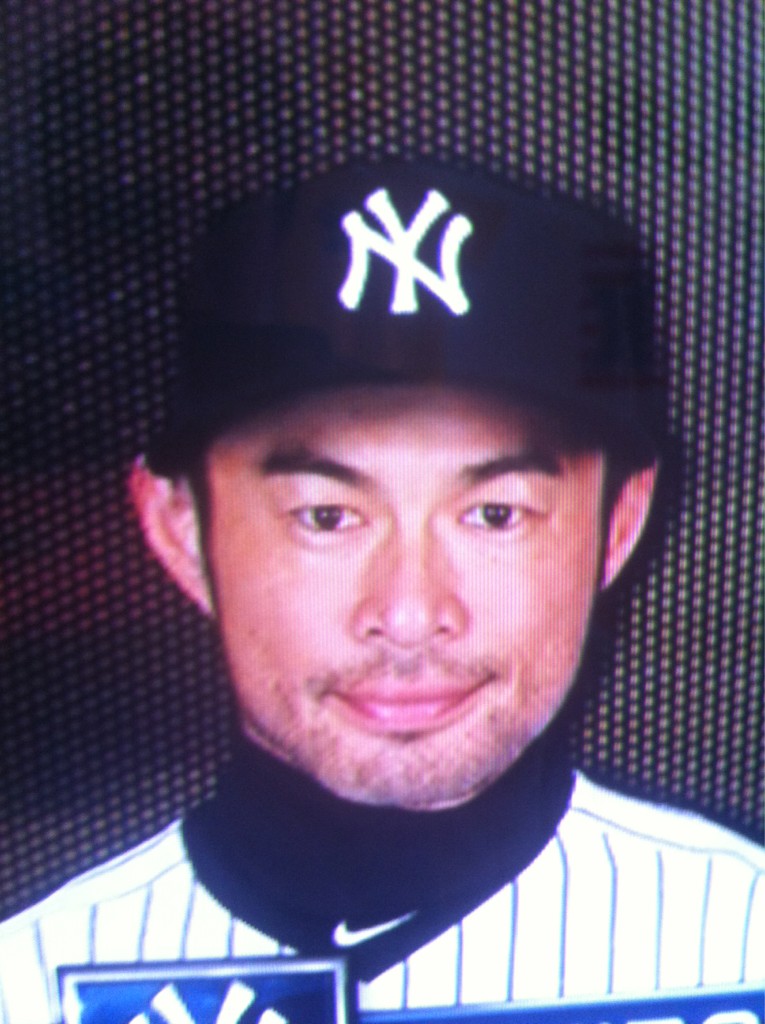
Bernie Olshansky: Over the past few hours, a couple of big trades have gone down. Here’s my take on them:
Ichiro to the Yankees
Wow. What a day. At about seven p.m. EDT, the Mariners and Yankees announced a swap that involved Ichiro for two minor league pitchers and cash. Sure I expected some blockbuster trades, but this? Ichiro was an icon for the Mariners. He broke the all-time hits in a season record for the Mariners and helped them win 116 games in 2001. Ichiro was an excellent player to say the least. He hit .322 over his 12 seasons with the Mariners and will most likely enter the Hall of Fame. But, over the past two years, he’s lost a little bit of luster. He’s slowed down a bit due to his age, and has stopped hitting over .300. Last year he hit .272 and had less than 200 hits for the first time in his career. This season, he’s hit an even worse .261. The Mariners have struggled over the past years and were definitely in need of a move. They acquired Jesus Montero from the Yankees this offseason in a trade for Michael Pineda, but Montero hasn’t exactly caught fire. Read the rest of this entry

Stolen Bases: Fantasy Baseball Strategies to Increasing Steals
Thursday November 17, 2011

Peter Stein (Fantasy Baseball Analyst – MLB reports): Of the five categories in standard 5X5 roto leagues, it is SB’s that fantasy owners most commonly have the incorrect approach. In this article I will highlight players to target and avoid in the stolen base department, as well as discuss basic fantasy strategy.
There are certainly several one trick ponies, such as Brett Gardner, Michael Bourn, and Coco Crisp, who provide elite production in this department. However, there are a couple of things you must consider. These types of players, who will hopefully hit for average and contribute to runs, will hurt your team’s HR and RBI performance. Therefore, be sure that you have excess value dispersed throughout the rest of your lineup to compensate. Secondly, you are heavily relying one on player for your production in this category, and as a result an injury can leave your team devastated. Thus, it is essential, particularly in the early rounds, that you find players who do everything, including steal bases. Even 5-10 steals that a player contributes above the position average will give you a significant edge.
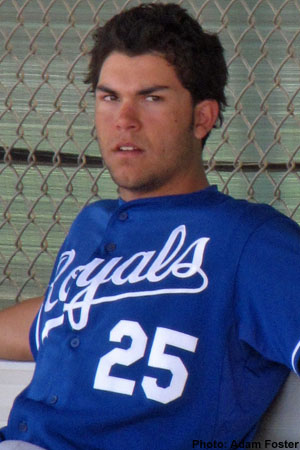 A player to target next year, Eric Hosmer, quietly stole 11 bases in 2011. The young left-hander batted .313 with 11 HR and 44 RBI’s in the second half last season. While his still progressing power production puts him the second tier of first baseman, his double-digit stolen base potential makes him intriguing and perhaps underrated. Still, this guy finished the season with 19 home runs and 78 RBI’s in 128 games played. Since there are a slew of first baseman that finished with 30 home runs and 100 RBI, they will likely be targeted before Homer. Therefore, I like Hosmer as a guy who might just as well approach these power numbers but also steal 15 bases. For this same reason, I like Joey Votto over any other first baseman not named Albert Pujols or Miguel Cabrera. While, Adrian and Gonzalez and Prince Fielder might put up higher power numbers and similar batting averages, Joey Votto’s 10 stolen bases will make him significantly more valuable. Albert Pujols is also good for ten stolen bases as well. Only Miguel Cabrera out produces Votto enough in the other four categories to excuse his lack of stolen bases.
Now extend this approach to each position. Dustin Pedroia and his 25-30 stolen bases is more valuable than Robinson Cano and his 5-10 stolen bases, despite the fact Cano finished with 7 more home runs and 25 RBI’s. A player I like at this position if you can afford to take the hit in HR’s and RBI’s is Jemile Weeks, who finished with 22 stolen bases in just 97 games. He will get to play full-time in Oakland, and as long as he is hitting above .290, can be valuable to your roster as a good source of steals. On the decline is Brandon Phillips who has dropped from 25 to 16 to 14 stolen bases the last three seasons. This makes him no longer elite, especially when Ian Kinsler is doing 30/30. An interesting group of players, Kelly Johnson, Danny Espinosa, and Ben Zobrist each his 20 home runs and stole over 15 bases. However, they each struggled with average. Again, take not of your team’s strengths. If you own Votto and a couple of other average anchors, these types of players can be good sources of power and stolen bases at the second base position.
Instead of continuing on and telling you the elite base stealers position by position (you can easily look this up), I will give you my 2012 sleepers and busts.
Stolen Base Sleepers:
Don’t forget that Brett Lawrie’s one-quarter of a season not only put him on pace to hit 36 home runs and 100 RBI’s, but also projected him to finish with 28 stolen bases.
Peter Bourjos made noise at the end of the season and once stole 50 bases in the minor leagues. For the speedy outfielder, it was al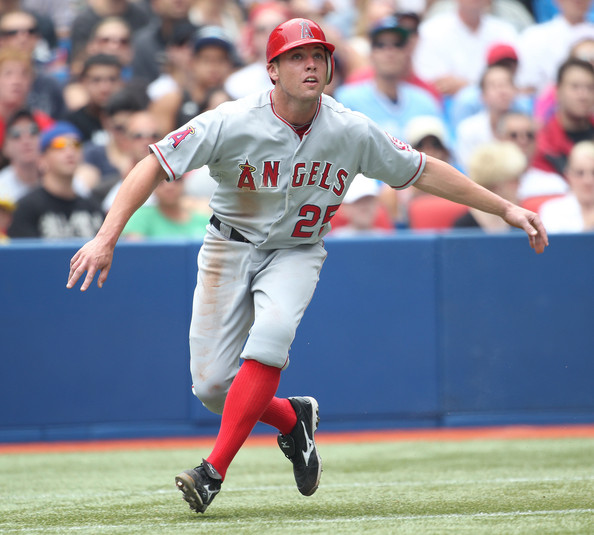 l about getting on base after a 2010 debut in which he batted .204 in 51 games. However, he greatly improved his contact ability, although still needs to improve walk rate, and batted .271 and stole 21 bases for the Angels. He also hit 12 home runs, and has the potential for a productive .280 15 HR 30 SB stat line in 2012.
After stealing 19 bases in 2011, I expect Shane Victorino to reach the 30 mark once again in 2012. It’s not that he didn’t run when he was on base, but his lower than usual BABIP and high than usual ISO (measures true power) simply meant he was not on first base as often as he normally is. With Rollins likely out of Philadelphia, I expect Victorino to ne at the top of the lineup and as aggressive as ever on the base paths.
Keep you eye Cameron Maybin, who stole 40 bases in 137 games for the Padres. As long as he has the chance to play semi-regularly, he is elite in the stolen base category. Furthermore, he appears to be approaching double-digit home run output as well, although he is only a career .255 hitter.
Monitor where Coco Crisp ends up in 2012. I loved him at Oakland in 2011 because he was one of the better hitters on the team (sadly) and at times batted third, but also batted lead off and in the second spot. In addition to leading the American League in steals, he had decent contributions in other categories (8 HR and 54 RBI) compared to some of the other stolen base leaders.
Dexter Fowler is a name to remember because he is simply one of the fastest players in baseball. However, he only stole 12 and 13 bases during the last two years, respectively. He was also caught an alarming 25 times. If he can learn to run on the base paths, he can be elite in this category. It is possible for major leaguers to learn the art of stealing bases. Look at Adam Jones, who was 12/16 on the base paths in 2011 after a 7/14 2010. I expect Jones, who is approaching a contract season, to come closer to 20 steals in 2012.
Speedsters to avoid? Juan Pierre. He really contributes in no other categories and is getting slower, getting caught 17 times in 44 chances in 2011. Furthermore, I do not expect any team to give him the 639 at bats that the White Sox foolishly provided him. Sadly, Ichiro Suzuki is clearly on the decline and appears to be a shell of his former elite self. The same is true with Bobby Abreu.

***Today’s feature was prepared by our Fantasy Baseball Analyst, Peter Stein. We highly encourage you to leave your comments and feedback at the bottom of the page and share in the discussion with our readers. You can also follow Peter on Twitter (@peterWstein).***
Please e-mail us at: MLBreports@gmail.com with any questions and feedback. You can follow us on Twitter (@MLBreports) and become a fan on Facebook . To subscribe to our website and have the daily Reports sent directly to your inbox , click here and follow the link at the top of our homepage.

How to Value and Manage Catchers on Your MLB Fantasy Team
Monday October 3, 2011
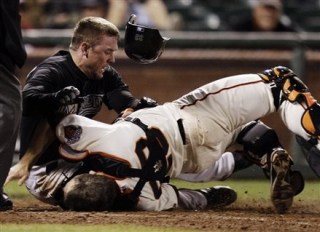
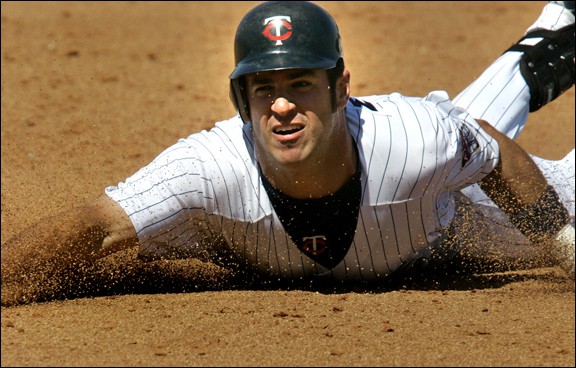
Peter Stein (Fantasy Baseball Analyst – MLB reports): The catching position is one that is often the most mismanaged by fantasy owners. A very thin position, it is difficult to find value from catchers in the deeper leagues. Furthermore, you take a big risk dedicating a high pick or significant auction money at a very injury prone position, as 2011 owners Joe Mauer and Buster Posey owners know all too well. Even a healthy catcher will sit for a significant amount of games each year due to the wear and tear of the position.
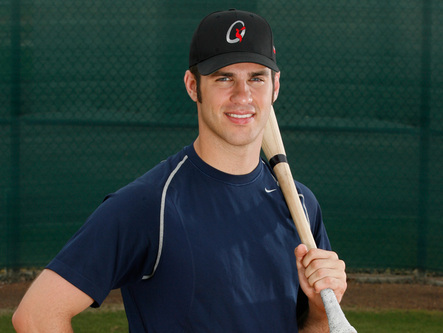 For these reasons, I generally advise to not overpay for a player at this position. But with that said, for the right price, the top batch of catchers can provide you significant value. However, too many times before we have seen significant year yo year decline from players at this position. You simply should not rely on production at this position. Spend your bucks elsewhere. Based on matchups and playing time, it is possible to scrap together value for next to nothing.
For example, Chris Iannetta and his .238 average, 51 runs, 14 HR, and 55 RBI, disappointed many fantasy owners in 2011. But a closer look at the numbers shows the true value he provides. We all know the effect that Coors Field has on hitters, but for Iannetta it is staggering. His 2011 home numbers look like this: .301 batting average, 10 HR, 39 RBI and 3 SB.
If you were to only start Iannetta at home in 2011, you would great numbers all across the board for half of the season. You are essentially getting 50% of Brian McCann for way less than 50% of the price. The discrepancy in his splits is dramatic that it makes him so easy to use as an owner. Only start him at home and never think about starting him on the road!
Now, for the days that Iannetta is on the road, there are plenty of options in the bottom half of the rankings that would be available on the waiver wire. Let’s pick someone like Miguel Olivo. His 19 HR and 62 RBI provide great production from the thin catching position, but his .224 average leaves a lot to be desired. However, an owner is much better equipped to muster this average if the number of at bats are cut in half. If you combine this morph of Olivo and Iannetta, you are looking at these types of numbers:
.260-.270, 20 HR, 70 RBI, 6 SB.
These numbers are essentially right on par with Brian McCann’s 2011 line (.270, 24HR, 71RBI, 3SB). McCann is a consensus top five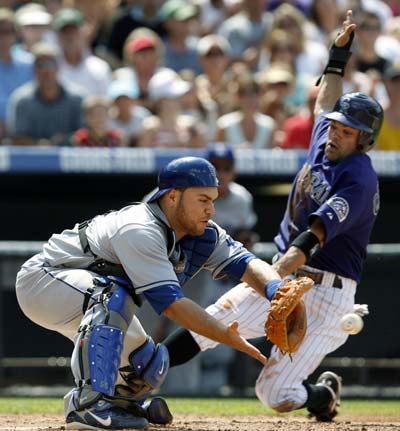 catcher, while Iannetta and Olivo are viewed outside of the top-15. You are essentially creating McCann for a lot cheaper and inherent risk that comes with investing money in the catching position. Furthermore, there are more options out there if you think Olivo’s average is too much of a killer. It all depends on your team’s needs and what categories you are chasing. If you are more concerned about average, guys like Nick Hundley and Jonathan Lucroy might be more attractive options. Looking for power and RBI production? Names such as J.P. Arencibia, Russell Martin, Geovany Soto, Kurt Suzuki (there are even more) are all useful under the right circumstances.
For example, look at Geovany Soto’s numbers against left-handed pitching in 2011: .296 average, 7 HR and 15 RBI in just 98 at-bats. This is in stark contrast to his .207 average and 10 home runs in 323 at-bats against right-handed pitching.
The point is that it’s easy to piece together production at this position. There are several players who contribute in the HR and RBI categories and you can get the most out of them by maximizing their strengths based on matchups and ballparks.
***Today’s feature was prepared by our Fantasy Baseball Analyst, Peter Stein. We highly encourage you to leave your comments and feedback at the bottom of the page and share in the discussion with our readers. You can also follow Peter on Twitter (@peterWstein).***
Please e-mail us at: MLBreports@gmail.com with any questions and feedback. You can follow us on Twitter (@MLBreports) and become a fan on Facebook . To subscribe to our website and have the daily Reports sent directly to your inbox , click here and follow the link at the top of our homepage.

Ichiro Suzuki: What Happened in 2011 to the Mariners Superstar and Looking to 2013
Friday September 16, 2011
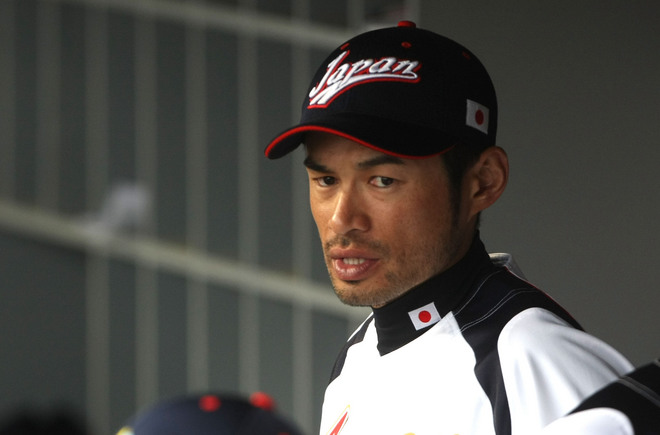
Sam Evans (Intern – MLB reports): When Ichiro Suzuki came into the league in 2001, people did not know what to expect from him. He exceeded any and all expectations, becoming the second MLB player all-time to win rookie of the year and MVP in the same season. The next eight years seemed easy for Ichiro; the highlight moment coming when he set the all-time hits record in a single season record in 2004 with 262. Not to mention, he became the first player in MLB history to have 200 hits in ten straight years.
Going into 2011, few analysts considered Ichiro’s production tailing off drastically. Sure, he was 37 years old, but he might be in better shape than any other player in the majors. In April of this year, Ichiro batted .328 and stole ten bases. However, in May and June he batted .210 and .282 respectively. This season has turned out to be Ichiro’s worst year in the majors by a large margin. From 2001 to 2010, he never hit below .303. In 2011, he’s hitting .272 with 5 HR and 72 RBI.
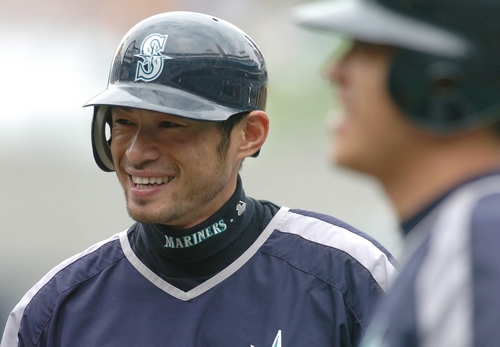 Ichiro’s production relies on his ability to get on base and create havoc on the base paths. Last year Ichiro had 53 infield hits, while this year he only has 32. Even though Ichiro’s 32 infield hits currently leads the majors, it is still the lowest total Ichiro has ever had in his career. It is not like these are cheap hits either, as former Detroit Third Basemen Brandon Inge commented to the New York Times on August 22,2009, “I wish you could put a camera at third base to see how he hits the ball and see the way it deceives you. You can call some guys’ infield hits cheap, but not his. He has an amazing technique.”
One of the arguments that has been set out in attempting to explain Ichiro’s decline this year has been that he is getting slower and slower. I disagree with this statement. He is on pace to steal 43 bases, which is right around his career average. In the field, Ichiro may have gotten a tad slower, but I think that is due to his taking bad angles to the ball, rather than a decline in his abilities. However, while not attempting to insult Ichiro as a player, it is apparent though that his intensity is a definitely a lot lower this year. This leads to the following conclusion in my opinion; Ichiro Suzuki is a human being. He is playing for a Mariners team that has not reached the playoffs since 2001. He has consistently been playing about 150 games a year, not including spring training. It seems like no matter how good of a season Ichiro has, the players and team around him are disappointing. After all, we are talking about the Mariners. A player can only take so much losing at a certain point, even the great Ichiro.
One factor explaining Ichiro’s off-year is bad luck. This is his first year with a BABIP under .300 (Ichiro’s career average is .352), and according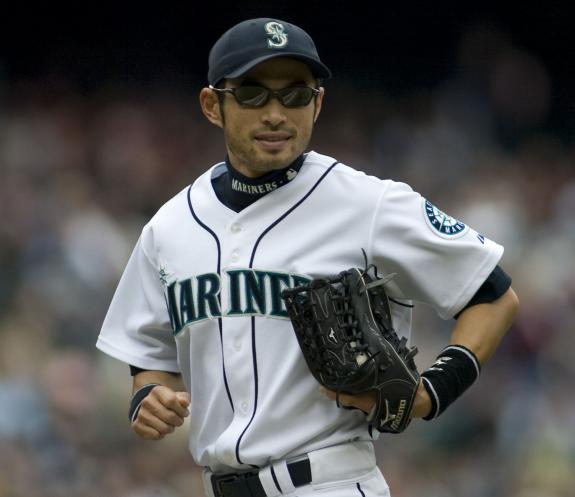 to Baseball Info Solutions, he has lost more hits than any other big leaguer on “good fielding plays.” No matter how you read the stats, the bottom line is that Ichiro has had a pretty bad year by his standards. He has played below-average defense, and at times looked lazy in the field. His On-Base-Percentage is at a career low .312, and he would need an incredible 30 hits in his last 13 games to reach 200 again. To make everything worse, Ichiro turns 38 in October.
Next year, will be interesting one for Ichiro Suzuki. It is his contract year and the Mariners are starting to acquire some legitimate pieces around him. A playoff year is probably out of the question, but a .500 year is very possible. Personally, I think he will bounce back and hit over .300 with another 200 hit season. With a better surrounding cast, I see glimpses of the old Ichiro returning. I don’t think he’ll ever return to the level he was on in 2004, but as long as he stays interested in the game, I think he will be an above-average right fielder for the next five years.
Without a doubt, Ichiro is a first ballot Hall-of-famer. He is the only player to have ten straight seasons of 200 or more hits. He also holds the all time record for hits in a single season with 262. Ichiro’s contract runs out at the end of 2012. The main question I believe is whether he will want to keep playing in North America. His friends and family are back in Japan, where he is a fashion icon. If Ichiro does continue to play baseball, I would be shocked if it were for a team outside of Seattle. When his career is finally over, most people will remember Ichiro for helping break the barrier between professional baseball in Japan and MLB. Overall, I expect most will remember Ichiro as being the greatest Japanese baseball player of all time.
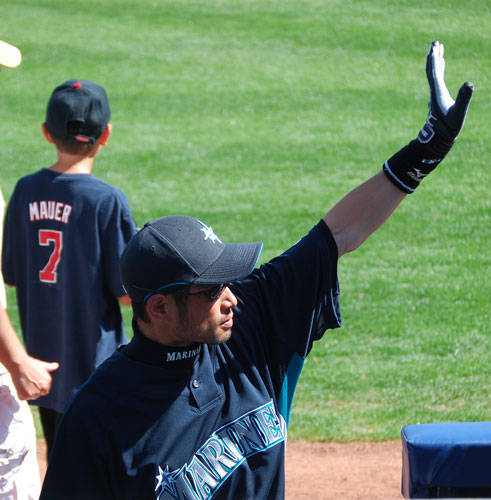
***Today’s feature was prepared by our Intern, Sam Evans. We highly encourage you to leave your comments and feedback at the bottom of the page and share in the discussion with our readers. You can also follow Sam on Twitter.***
Please e-mail us at: MLBreports@gmail.com with any questions and feedback. You can follow us on Twitter and become a fan on Facebook . To subscribe to our website and have the daily Reports sent directly to your inbox , click here and follow the link at the top of our homepage.

Remembering Hideki Irabu: Japanese MLB Pitcher and Link to Donnie Moore
Sunday August 7, 2011
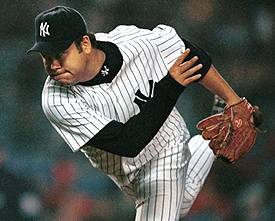
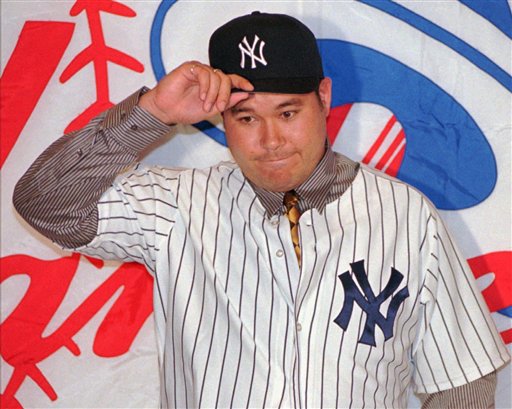
MLB reports: Hideki Irabu was born on May 5, 1969 in Hirara, Okinawa. Irabu played in Japan (Nippon Professional Baseball) from 1988-1996 and then again from 2003-2004. In North America, we will most remember Irabu as a member of the New York Yankees from 1997-1999. Irabu also played with the Montreal Expos from 2000-2001 and the Texas Rangers in 2002. The baseball world sadly lost Hideki Irabu on July 27, 2011, an apparent victim of suicide. A loss to the baseball world at the tender age of 42, Irabu was survived by a wife and two young children.
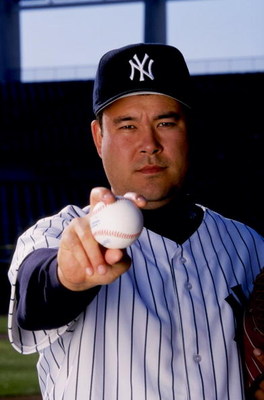 The story of Hideki Irabu is well-known in the baseball community. He had his contract purchased by the San Diego Padres from his Japanese club, the Chiba Lotte Marines. Irabu refused to sign with the San Diego Padres and stated his intention of only playing for the New York Yankees. The Yankees were able to swing a deal for Irabu’s services, for a package of players including Ruben Rivera and cash. Hideki Irabu ended up making his debut with the Yankees on July 10, 1997 and for his career pitched in 74 games for the Yankees over 3 seasons (64 starts). Irabu won back-to-back World Series rings in New York in 1998 and 1999. He was then traded to the Montreal Expos for Ted Lilly, Jake Westbrook and Christian Parker. A good haul for the Yankees considering the career spans of Lilly and Westbrook (had they stayed in New York). Irabu then signed with the Texas Rangers as a free agent and played out his last MLB season as a closer before returning to Japan to resume his NPB career. After a stint in independent baseball, Irabu apparently had the intention of returning to Major League Baseball, but alas a comeback was not in the cards. Reports have indicated that Irabu hung himself in his California home, with autopsy results to follow. Today we look at the career of Hideki Irabu and the road that led to his untimely passing this year.
When joining the New York Yankees in 1997, Hideki Irabu was labelled the “Japanese Nolan Ryan”. By the time he left New York, he was stuck with the moniker given to him by team owner George Steinbrenner “the fat toad”. Looking at Irabu’s MLB numbers, he unfortunately fell short of the Nolan Ryan comparisons:
| Year | Tm | W | L | ERA | SV | BB | SO | WHIP |
|---|---|---|---|---|---|---|---|---|
| 1997 | NYY | 5 | 4 | 7.09 | 0 | 20 | 56 | 1.669 |
| 1998 | NYY | 13 | 9 | 4.06 | 0 | 76 | 126 | 1.295 |
| 1999 | NYY | 11 | 7 | 4.84 | 0 | 46 | 133 | 1.335 |
| 2000 | MON | 2 | 5 | 7.24 | 0 | 14 | 42 | 1.665 |
| 2001 | MON | 0 | 2 | 4.86 | 0 | 3 | 18 | 1.500 |
| 2002 | TEX | 3 | 8 | 5.74 | 16 | 16 | 30 | 1.426 |
| 6 Seasons | 34 | 35 | 5.15 | 16 | 175 | 405 | 1.405 | |
| 162 Game Avg. | 11 | 12 | 5.15 | 5 | 58 | 134 | 1.405 | |
| NYY (3 yrs) | 29 | 20 | 4.80 | 0 | 142 | 315 | 1.362 | |
| MON (2 yrs) | 2 | 7 | 6.69 | 0 | 17 | 60 | 1.626 | |
| TEX (1 yr) | 3 | 8 | 5.74 | 16 | 16 | 30 | 1.426 | |
| AL (4 yrs) | 32 | 28 | 4.90 | 16 | 158 | 345 | 1.369 | |
| NL (2 yrs) | 2 | 7 | 6.69 | 0 | 17 | 60 | 1.626 | |
Injuries played a part in Irabu’s MLB career. Irabu had both knee and shoulder surgeries after leaving the Yankees and blood clots ultimately led to his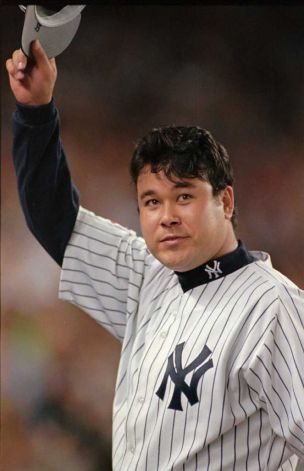 retirement from Major League Baseball following the 2002 season. Bouts of heavy drinking, depression and rage also factored into Irabu’s career. But despite all the distractions and factors that led to his unravelling in baseball, Irabu did show some glimpses of promise. In addition to the two world series titles he earned in New York (despite playing in only one career post season game in 1999, giving up 7 ER in 4.2 IP to the Red Sox in the ALCS), Irabu had his best numbers during his time with the Yankees. He earned both of his career shutouts in New York. His best statistical season was 1998, where he went 13-9 for the Yankees, with a 4.06 ERA and 1.295 WHIP. As a closer for the Rangers in 2002, Irabu earned 16 saves. That unfortunately went together with a 3-8 record, 5.74 ERA and 1.426 WHIP. For a proud young man who fought hard on and off the field, his major league career was taken from him much too early. Despite attempts at a comeback, we never did see Hideki Irabu in a MLB uniform again after the 2002 season.
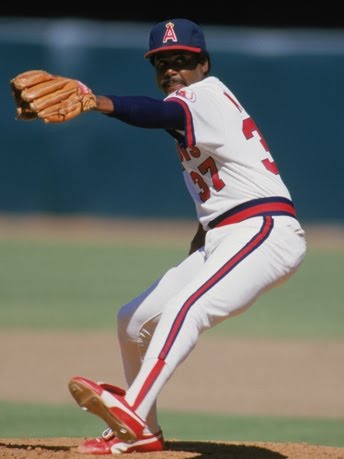 In our society, it is much too easy to write off the passing of another human being, especially a celebrity, without considering the person behind the name. Granted Irabu faced many demons in his life and career. But I think some people feel the need to label a player like Irabu an alcoholic and rageaholic and simply write him off when learning of his passing. That is a tragedy in my estimation. When I learned of Irabu’s passing, my immediate thoughts led to Donnie Moore. For those of you not familiar, Moore was the Angels pitcher that gave up the tying and winning runs to the Red Sox in game five of the 1986 ALCS. Many critics pointed to Moore as the reason that the Red Sox ended up beating the Angels and advancing to the World Series. Moore was a popular target of Angels fans the following seasons and ended up shooting his wife and taking his own life. A tragic story in itself, Moore like Irabu suffered from deep depression. But without analyzing and comparing both men too much, I believe that it was the name calling and the reputations of each men that contributed greatly to their respective passings. Victories and failures take place on baseball diamonds each and every day. Moore in the playoffs and Irabu in New York, suffered their failures on some of the biggest baseball stages that you can find. Had their losses been forgotten and each man allowed to continue fresh, they may have enjoyed longer and productive careers in baseball. They may have also been able to enjoy their personal lives to a greater extent and still been with us today. But the stigma of failure which was likely reminded to Moore and Irabu for most of their last days on this earth, was likely too much for each to bear.
Hideki Irabu, being of Japanese descent, was a very proud man. Respect and reputation are considered very important in Japanese circles and criticism is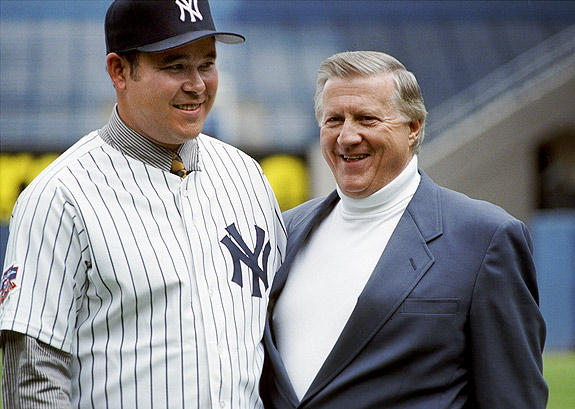 often not taken very well. Irabu, like Ichiro Suzuki after him, had a lifelong battle with the Japanese media. Being of mixed descent, Irabu rarely discussed his background which was a difficult subject for him. Before coming to North America, the Japanese media labelled him with very strong nicknames, including the “Shuwozenegga” and “Kurage”, which translates to jellyfish, for the sting of his pitches. From there, being called the Japanese Nolan Ryan came with a set of expectations that Irabu could never live up to. If that was not bad enough, the “fat toad” comment by George Steinbrenner stuck with him to his very last days. It was my understanding that Irabu through most of his MLB career could not be in any baseball cities, especially New York without hearing some reference to the toad comment. For a proud individual that did not take criticism well, such a nickname probably stuck within him like a dagger. By no means do I directly blame Steinbrenner for Irabu’s suicide. Far from it, as Steinbrenner lately expressed remorse for his comments and publicly apologized for his remarks. But the choice of media and select fans to continue to remind Irabu of the nickname most likely helped contribute to his passing. We cannot bring Hideki Irabu or Donnie Moore back. But we can learn from their passings and help other athletes avoid similar fates.
I link the taunting of Irabu and Moore before him in public and media outlets to bullying in schools. We have read stories of children and teenagers being harassed in schools and outlets like e-mails and Facebook to the point that they are driven to taking their own lives. Words do hurt and a bully can be charged criminally. For those people that went up to Hideki Irabu in a restaurant and called him a “fat toad”, or approached Donnie Moore in a shopping mall and called him a “choke” and “failure”, think about the result of those actions in retrospect. Since athletes are in the public eye, that leads to many people feeling a sense of entitlement to judge and criticize players as they see fit. Irabu by earning over $15 million over 6 seasons in Major League Baseball, was apparently fair game as a target to all forms of criticism that people chose to throw his way. I have no issue with judging an athlete’s numbers on the field. Analysis and discussion is what sports is all about. But once we start with the name calling and viciousness, I feel that a line needs to be drawn.
Donnie Moore and Hideki Irabu chose to become professional athletes and were in the public eye. That does mean that their wins and losses will be known to millions and discussed and analyzed by many. But sports can go to extreme levels. Homes vandalized. Children harassed. Even murders. Critics and extreme “fans’ can go to dangerous levels in criticizing athletes. While extreme situations, they do take place all too often. These instances stem from bullying, which is not acceptable in schools with children but allowable in public forums with public figures. We as members of society need to draw the line of what is acceptable in reviewing and criticizing athletes. Although they choose to be in the public light, they are still human beings with real feelings and emotions. Hopefully more people will remember that the next time they hurl disparaging remarks at an athlete, whether it be in a stadium, restaurant, radio talk show or newspaper. Words do hurt and in the case of Donnie Moore and Hideki Irabu, they can also kill.
Donnie Moore, if you weren’t aware, played professional baseball for 13 seasons for 5 different teams. He had a career 3.67 ERA. His best season was 1985, where he has a 8-8 record, 1.92 ERA, 31 saves and 1.087 WHIP. He followed up the following season with 21 saves. He was an all-star in 1985, finishing 6th in A.L. MVP voting and 7th in A.L. CY Young voting. Moore also pitched two perfect innings for the Braves in the 1982 NLCS. But most people don’t remember those numbers. When they hear the name Donnie Moore, they think of the 1986 ALCS defeat and suicide. Hideki Irabu has now met a similar fate. Many people do not remember that Irabu was the man responsible for the Japanese posting system. By refusing to sign with the Padres, MLB helped institute the current posting system for Japanese players to come to North America. If not for Irabu, the entire system of transferring NPB players to MLB could be much different today. Irabu won two World Series rings and enjoyed some success in North America. Before that, Irabu enjoyed great success in Japan on the baseball diamond. But when people reflect on his passing, the main words that are spoken now are “fat toad” and suicide. Even in death, Irabu and Moore continue to be criticized and bullied. That is the saddest reality of all.
Please e-mail us at: MLBreports@gmail.com with any questions and feedback. You can follow us on Twitter and become a fan on Facebook . To subscribe to our website and have the daily Reports sent directly to your inbox , click here and follow the link at the top of our homepage.


 MLB Reports
You must be logged in to post a comment.