Blog Archives

Stolen Bases: Fantasy Baseball Strategies to Increasing Steals
Thursday November 17, 2011

Peter Stein (Fantasy Baseball Analyst – MLB reports): Of the five categories in standard 5X5 roto leagues, it is SB’s that fantasy owners most commonly have the incorrect approach. In this article I will highlight players to target and avoid in the stolen base department, as well as discuss basic fantasy strategy.
There are certainly several one trick ponies, such as Brett Gardner, Michael Bourn, and Coco Crisp, who provide elite production in this department. However, there are a couple of things you must consider. These types of players, who will hopefully hit for average and contribute to runs, will hurt your team’s HR and RBI performance. Therefore, be sure that you have excess value dispersed throughout the rest of your lineup to compensate. Secondly, you are heavily relying one on player for your production in this category, and as a result an injury can leave your team devastated. Thus, it is essential, particularly in the early rounds, that you find players who do everything, including steal bases. Even 5-10 steals that a player contributes above the position average will give you a significant edge.
 A player to target next year, Eric Hosmer, quietly stole 11 bases in 2011. The young left-hander batted .313 with 11 HR and 44 RBI’s in the second half last season. While his still progressing power production puts him the second tier of first baseman, his double-digit stolen base potential makes him intriguing and perhaps underrated. Still, this guy finished the season with 19 home runs and 78 RBI’s in 128 games played. Since there are a slew of first baseman that finished with 30 home runs and 100 RBI, they will likely be targeted before Homer. Therefore, I like Hosmer as a guy who might just as well approach these power numbers but also steal 15 bases. For this same reason, I like Joey Votto over any other first baseman not named Albert Pujols or Miguel Cabrera. While, Adrian and Gonzalez and Prince Fielder might put up higher power numbers and similar batting averages, Joey Votto’s 10 stolen bases will make him significantly more valuable. Albert Pujols is also good for ten stolen bases as well. Only Miguel Cabrera out produces Votto enough in the other four categories to excuse his lack of stolen bases.
Now extend this approach to each position. Dustin Pedroia and his 25-30 stolen bases is more valuable than Robinson Cano and his 5-10 stolen bases, despite the fact Cano finished with 7 more home runs and 25 RBI’s. A player I like at this position if you can afford to take the hit in HR’s and RBI’s is Jemile Weeks, who finished with 22 stolen bases in just 97 games. He will get to play full-time in Oakland, and as long as he is hitting above .290, can be valuable to your roster as a good source of steals. On the decline is Brandon Phillips who has dropped from 25 to 16 to 14 stolen bases the last three seasons. This makes him no longer elite, especially when Ian Kinsler is doing 30/30. An interesting group of players, Kelly Johnson, Danny Espinosa, and Ben Zobrist each his 20 home runs and stole over 15 bases. However, they each struggled with average. Again, take not of your team’s strengths. If you own Votto and a couple of other average anchors, these types of players can be good sources of power and stolen bases at the second base position.
Instead of continuing on and telling you the elite base stealers position by position (you can easily look this up), I will give you my 2012 sleepers and busts.
Stolen Base Sleepers:
Don’t forget that Brett Lawrie’s one-quarter of a season not only put him on pace to hit 36 home runs and 100 RBI’s, but also projected him to finish with 28 stolen bases.
Peter Bourjos made noise at the end of the season and once stole 50 bases in the minor leagues. For the speedy outfielder, it was al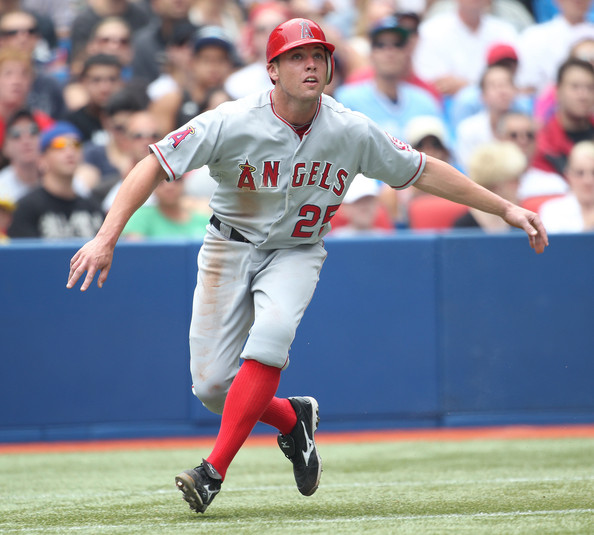 l about getting on base after a 2010 debut in which he batted .204 in 51 games. However, he greatly improved his contact ability, although still needs to improve walk rate, and batted .271 and stole 21 bases for the Angels. He also hit 12 home runs, and has the potential for a productive .280 15 HR 30 SB stat line in 2012.
After stealing 19 bases in 2011, I expect Shane Victorino to reach the 30 mark once again in 2012. It’s not that he didn’t run when he was on base, but his lower than usual BABIP and high than usual ISO (measures true power) simply meant he was not on first base as often as he normally is. With Rollins likely out of Philadelphia, I expect Victorino to ne at the top of the lineup and as aggressive as ever on the base paths.
Keep you eye Cameron Maybin, who stole 40 bases in 137 games for the Padres. As long as he has the chance to play semi-regularly, he is elite in the stolen base category. Furthermore, he appears to be approaching double-digit home run output as well, although he is only a career .255 hitter.
Monitor where Coco Crisp ends up in 2012. I loved him at Oakland in 2011 because he was one of the better hitters on the team (sadly) and at times batted third, but also batted lead off and in the second spot. In addition to leading the American League in steals, he had decent contributions in other categories (8 HR and 54 RBI) compared to some of the other stolen base leaders.
Dexter Fowler is a name to remember because he is simply one of the fastest players in baseball. However, he only stole 12 and 13 bases during the last two years, respectively. He was also caught an alarming 25 times. If he can learn to run on the base paths, he can be elite in this category. It is possible for major leaguers to learn the art of stealing bases. Look at Adam Jones, who was 12/16 on the base paths in 2011 after a 7/14 2010. I expect Jones, who is approaching a contract season, to come closer to 20 steals in 2012.
Speedsters to avoid? Juan Pierre. He really contributes in no other categories and is getting slower, getting caught 17 times in 44 chances in 2011. Furthermore, I do not expect any team to give him the 639 at bats that the White Sox foolishly provided him. Sadly, Ichiro Suzuki is clearly on the decline and appears to be a shell of his former elite self. The same is true with Bobby Abreu.

***Today’s feature was prepared by our Fantasy Baseball Analyst, Peter Stein. We highly encourage you to leave your comments and feedback at the bottom of the page and share in the discussion with our readers. You can also follow Peter on Twitter (@peterWstein).***
Please e-mail us at: MLBreports@gmail.com with any questions and feedback. You can follow us on Twitter (@MLBreports) and become a fan on Facebook . To subscribe to our website and have the daily Reports sent directly to your inbox , click here and follow the link at the top of our homepage.

Miami Marlins and Toronto Blue Jays: Something ‘Fishy’ About New Logos?
Tuesday September 27, 2011
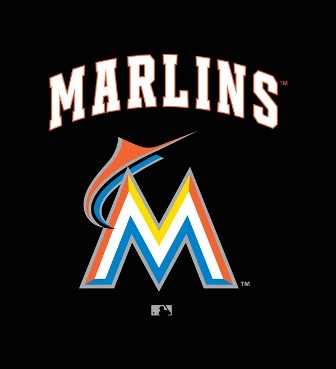
April Whitzman (Blue Jays Writer – MLB reports): It has been said that a logo symbolizes a company’s identity and provides an image of an organization second to none. Recognizing this, I have decided to analyze two recently leaked and rumored new MLB logos, belonging to the recently renamed Miami Marlins and the Toronto Blue Jays.
Miami Marlins
Let’s start by analyzing the logo of the Florida Marlins… er the Miami Marlins. With a new home in Miami for 2012, the organization felt that there was no better way to start a new identity in their new home, than with a new logo.
The change in logo, in my opinion, is a good move. Now in my seventh (and final) year of university studying towards a degree in public relations and marketing, I have been taught time and time again that a logo contributes greatly to the visibility and credibility of a business. The two factors that will help an organization most flourish and attain success.
Eliminated long ago from making the playoffs, the Marlins are attempting to start over with a new ballpark, manager (Ozzie Guillen) and powerful logo. But that being said, is the logo doing everything it is set out to do?
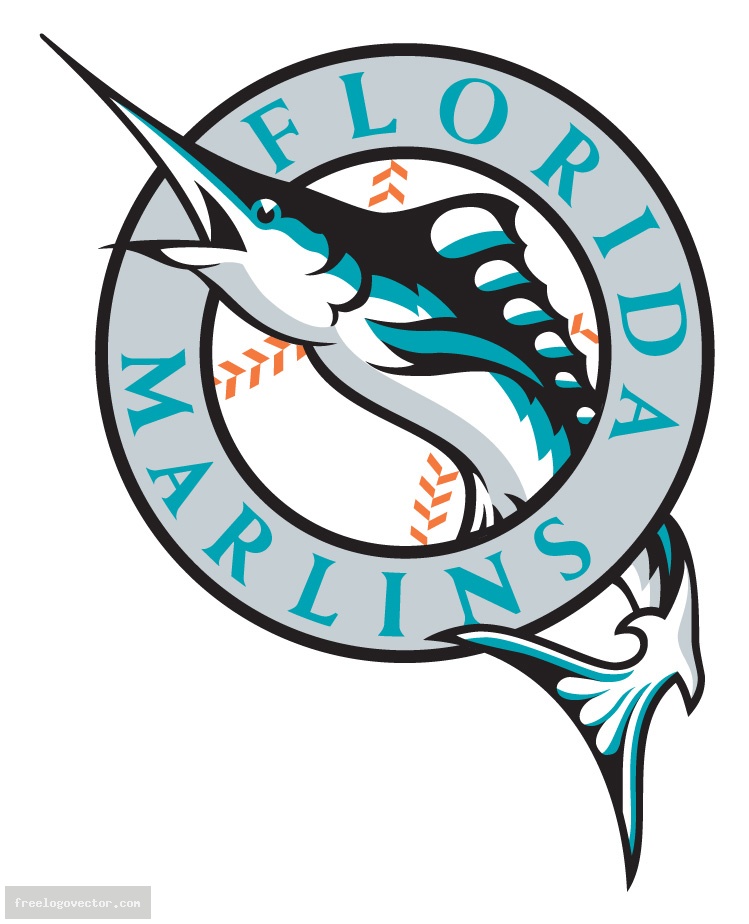 Let’s begin by analyzing the colors used. There is no denying that color plays an important role in catching the eyes of viewers and is an integral part of an organization’s identity. Recognizing this, upon comparing the new logo with their existing one, one can see that the Marlins have used the same colors of turquoise/blue, orange, white, and black, but have also added the color yellow to the mix.
The colors used in a logo are important in terms of how the organization will be perceived psychologically. Keeping this in mind, what is the team trying to indicate with the added brightness? If one thinks about items that are yellow – the sun, a caution sign, a taxi cab, these are all things that are either associated with joy, energy, or are used to grab attention in order to make people take notice.
Is that what the Marlins are trying to say? Is the team trying to give a warning to the National League that this new Miami team is born again and ready to become the centre of attention of the baseball world?
In their last two years, the Marlins have not been a serious contender. It is evident that with a new logo, the team is attempting to erase all negative sentiments associated with the team of the past in the minds of the fans. But is getting rid of their reputable fish the way to do it?
Even with the added colour, the new logo seems to not be as energetic as many had envisioned, and in my personal opinion, the logo is very lifeless. A good logo is intended to help an organization stand out from the crowd and scream out their presence. I am not sure if the new Marlins logo does either successfully.
Many have echoed my sentiments of disapproval of the logo, believing there should be more consistency with the team. Some have even recommended keeping the ‘F’ style logo with the same background and colors and merely changing the ‘F’ to ‘M’ (for Miami).
Toronto Blue Jays
One of the first things I was taught during my public relation classes was that a logo immediately becomes an important extension of a brand’s message. For this reason, a logo must communicate that message in every possible way. This could be done through the image itself, through the shape, or through the colors, as long as the message remains consistent.
There is no doubt that the new Toronto Blue Jays’ logo does exactly this. Interestingly, the Blue Jays’ organization went for a different approach than that of the Marlins. Instead of pursuing a completely new perspective, the Jays chose instead to revisit a logo that was once an integral part of the team. Comparing the new logo to the one that was predominant when the team first started in 1977, one can see a lot of similarities.
This, in my opinion, was a great decision. Not only does the organization constantly hear comments from fans to bring back the retro bird, but also to move back to the logo that is associated with the team’s period of greatest success. That logo was predominant during the early 90’s when the Blue Jays’ won back-to-back World Series. So why not bring it back?
There are a few things that I remember clearly from my first marketing class: Know your customer and own your branding. The Toronto Blue Jays’ marketing initiative should be a complete success, as it is evident that by listening to their fans and introducing a new logo which incorporates the retro feel, the Jays are aware of what makes their core customers happy. In return, the organization recognizes that they will be able to sell new shirts, new hats, and new memorabilia with the new logo. Thus, Jays’ decision makers are bringing in additional revenues to the organization, which could become the difference in signing key players in the future.
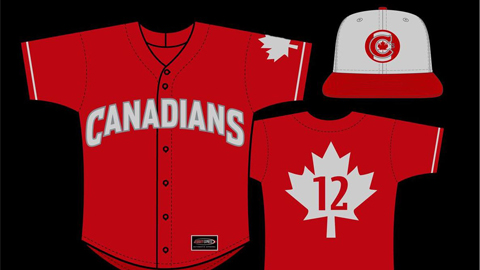
Additionally, comparing the new logo to the most recent version, one can also see more emphasis placed on the color red through the symbolic image of the maple leaf. This to me not only accentuates the pride of being Canada’s only baseball team, but also represents the team’s message through the color red- which is known to denote energy, strength, power, determination and passion.
With new young and energetic players such as Brett Lawrie, Eric Thames, J.P. Arencibia and Colby Rasmus and the Blue Jays’ motto of ‘hustle and heart; the focus of the red in the logo only accentuates the team’s message. With many speculating that the team will also be unleashing new red uniforms in 2012, this realization only becomes stronger.
Overall
While logos can have a great impact and be a strong influence in expressing a team’s message and identity, logos in themselves are meaningless without strong teams behind them. If the Marlins want to portray a message of ‘watch out’ with their new yellow-and-fishless logo, and if the Blue Jays want to portray an image of determination and passion with their retro bird and red-pride logo, both teams still require strong teams that match their key messages.
It is evident that the Miami Marlins are realizing the importance of matching their new logo and new stadium with a new team, as evidenced from the upcoming trade that brings Chicago White Sox’ Manager, Ozzie Guillen, to the Marlins. In addition, however, the Marlins are still in dire need of new pitching and more offense that will make the team truly feel ‘new’ in the minds of their fans.
Conversely, the Blue Jays also need pitching (both a dominant starter and a lights-out closer) and a productive first baseman. I would recommend that the Blue Jays not just try to sign a power first baseman (such as Prince Fielder or Albert Pujols) solely based on his numbers. One thing that every public relations professional realizes is that one’s key message must be consistent. Thus the Blue Jays must find players that fit within the team’s notions of energy, determination and passion.
At this present time, neither logos have been confirmed by either organization. It is evident that while both teams have a lot of potential in their logos, they just have to ensure that their respective key messages are constant within every aspect of their organizations. If the Marlins and Jays utilize this approach, with their logos, rosters and throughout their organizations, there is no doubt that both teams will find success in the future by starting new today.
As always, I look forward to hearing from you. Comment below, email MLBreports@gmail.com and follow me on Twitter at @Alleycat17.

Please e-mail us at: MLBreports@gmail.com with any questions and feedback. You can follow us on Twitter (@MLBreports) and become a fan on Facebook . To subscribe to our website and have the daily Reports sent directly to your inbox , click here and follow the link at the top of our homepage

MLB Expansion or Realignment: Should Canada get Another Baseball Team?
Thursday September 8, 2011
April Whitzman (Blue Jays Writer- MLB reports): Should Canada get another Major League Team? It’s been a question that has been discussed ever since the Montreal Expos got relocated to Washington at the end of the 2004 season. However, with the increased popularity of the Toronto Blue Jays nation-wide and the success of sports in large Canadian cities such as Vancouver and Montreal, it is a debate that is getting considerable attention. Here are my thoughts on the possibility of either MLB adding a new team to Canada or on having one relocated north.
VANCOUVER
Let’s start with the possibility of whether Vancouver could support a Major League Baseball team. To begin, it should be considered that baseball interest has increased significantly in the city ever since the Vancouver Canadians became a Low-A affiliate of the Toronto Blue Jays. The Vancouver discussion has since shifted venue with the newly-renovated B.C Place Stadium. With over $600 million in upgrades and retrofitting, it is presently one of the most impressive structures in North America.
Let’s also take into account the size of Vancouver; with a surrounding area population of nearly three million, it is one of the biggest cities in the USA or Canada not to have a team. Not only that, but there is history of baseball in Vancouver. In fact, BC Place Stadium hosted annual exhibition games for the Seattle Mariners back in the nineties when the Pacific Northwest Club had not yet moved into Safeco Field, and attendance was very acceptable. In fact, the exhibition games against the Toronto Blue Jays drew approximately 40,000 fans per game.
Prior to being relocated to Sacramento, Vancouver also had an AAA-affiliate team that played out of Nat Bailey Stadium for Major League teams including the then California Angels, Oakland Athletics, Milwaukee Brewers, and Los Angeles Dodgers. Once again, Vancouver residents proved that baseball was important to them by having very good attendance at the games.
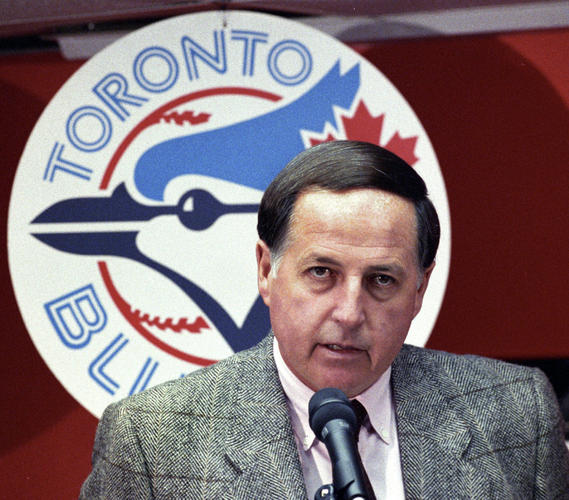 While I am still optimistic regarding the fact that a team in Vancouver would work, Andrew Forsyth, the Vancouver Canadians’ Beat Writer for JaysProspects.com, discussed a realistic angle, stating: “An MLB Team in Vancouver? That’s a tough sell. Vancouver is a dedicated hockey town, and baseball, be it the Blue Jays, Mariners or Canadians, rarely gets coverage in the local media. Thus, they will have a hard time drawing a crowd as long as the Canucks are on the ice. Plus, with Scotia Bank Field at Nat Bailey Stadium only holding a crowd of 5,100, the team would have to go to the retro-fitted BC Place which is already home to the BC Lions and the Vancouver Whitecaps. Although Vancouver is a city that does well hosting multiple sports teams, they are a fair-weather fan base with a minority of dedicated Baseball fans. Thus, the hardest sell of all is that Vancouver fans don’t react well to teams that don’t make the playoffs, so if a team were to come, they’d need to be immediately strong.”
Thus, taking all of this into consideration, the question is asked again – Is there a future for MLB in Vancouver? As Forsyth states, it is definitely a tough sell. But, I believe that due to the increased publicity of Vancouver as a land of sports (thanks in part to the 2010 Winter Olympics), it is evident that fans in Vancouver would love a MLB team in their city… they’d just need to win!
MONTREAL
On a personal note, I should admit that the only time I have seen my father cry was during the Montreal Expos final home game. While I was only 17 at the time, I remember it perfectly like it was yesterday. It was September 29, 2004, and the Expos lost 9-1 to the Florida Marlins – definitely not the way the wanted to end their career in Canada. 31,395 fans were in the stands, including myself, and of course, my weeping father. While they lost their last home game, the Expos finished their season with a win, defeating the New York Mets by a score of 8-1 on October 3rd. That was it, after 36 seasons, 2,753 wins, 2,942 losses, 2,786 home games, 2 inadequate ball parks, and 108,858,412 fans who saw only one single postseason appearance. The Montreal Expos were no more.
Still people ask: could they come back?
This question is asked even more on a regular basis now that the NHL has brought back the Winnipeg Jets and that their fan base has doubled. But could the same occur for the Montreal Expos? Personally, I think that it is a harder sell for Montreal than Vancouver, as there are many improvements they would need in order for this unlikely dream to become a reality.
For starters, the reincarnated Expos franchise would absolutely need a new stadium. While I loved the park as a kid, Olympic Stadium is simply not a good place to play baseball. This new stadium should also need a retractable roof. While Montreal has always been against having a retractable roof, they need it due to the weather in the early and late parts of baseball season. And by having it retractable, the new team could play outdoor baseball – and still not have any weather-related postponements at home, just like its Canadian counterpart, the Toronto Blue Jays.
Similar to Vancouver, another aspect that must occur is that the team will need to be successful. Montreal is tired of having losing teams and if the Blue Jays are any indication, fans only go to the games if there are top-tier players (Jose Bautista, Brett Lawrie, etc) playing. Lastly, if Montreal does receive a team, there is one final thing that must occur – the team needs to be called the Montreal Expos. As comparable to the new Winnipeg Jets, fans need the history behind the franchise. Keeping the name is the only way this can be done. (Of course, signing Montreal native and current New York Yankee catcher Russell Martin could also be a great addition to the team).
Many blame the downfall of the Expos on the fans and on the fact that most of the population is French, resulting in a barrier between the players and fans. However, I still place most of the responsibility on the 1994 strike-suspended season which stopped the Expos season, which was on pace to win 105 games that year. This disenchanted the fan base, and within two years the team parted with Marquis Grissom, Larry Walker, Delino DeShields and John Wetteland, and the foundation began to crumble. Thus, I do not think the fans are to blame, but rather the lost season which ended up being the team’s downfall. As in Winnipeg, I believe that only the fans would be able to bring baseball back to the city.
Another issue, however, is the competition that would arise between the Montreal Expos and the Toronto Blue Jays. No, I am not referring to the rivalry that used to occur every Canada Day (July 1st) between the two teams, but instead, to the competition that would occur on network television and within the media. There is no doubt that competing television interests put the Expos in direct competition with the Jays in the 80s and 90s and set Montreal on a downhill slide. With Rogers Sportsnet already taking precedence of the Blue Jays and growing a larger fan base by the minute, my guess that media and broadcasting would definitely be a slippery slope if the Expos were to return as well.
While Forsyth gave me his thoughts on the addition of an MLB team in Vancouver, I was also curious to hear his thoughts regarding Montreal as well. To this, he stated, “Montreal is even more of a hockey town than Vancouver, so once again, if a pro team were to re-enter the province, my guess is that priority would be placed on getting the Nordiques to return to Quebec. It’s tough. Canadians love their hockey.”
While Quebec does love its hockey, it is apparent that many miss the peanuts and crackerjacks in their province. They have since tried to fill the void in their lives with a successful independent Can-Am league ballclub that is only a few hours away (in Quebec City) from Olympic Stadium. Despite the team’s success, I still agree with Gilles Taillon, Baseball Quebec’s administration director, as he stated: “For MLB to come back to Montreal, it would have to go through the Minor League route first.” As opposed to Vancouver, Montreal presently does not have a minor-league team to gauge MLB interest in the province. With strong rumors that Ottawa could be receiving an AAA team in the near future, Montreal should make bids and efforts to gain a team as well. If that team is successful and fans prove there is dedication, there is always possibility that Major League Baseball could arrive in Montreal in the future.
FINAL THOUGHTS
There are many questions that arise if in fact a team did move north to Canada; the first of which, is deciding which league it would join. Many speculate that the new team would join the National League, where the Expos once reigned. Despite the fact that the first Canadian team played in the NL and has historical rivalries there, the American League might be a better fit. The NL already has two extra teams, thus, by adding a team to the AL, it would represent one more step in leveling the playing field. Specifically, and certainly if a team were to move to Vancouver, I would move the team to the AL West. This would not only enable strong competition with the Seattle Mariners (only about 150 miles from Vancouver), but would bring in a perfect rivalry with the Toronto Blue Jays, as they have British Columbia native, Brett Lawrie.
Another option, however, is to relocate a team to a Canadian city. The first team that comes to mind is the Tampa Bay Rays, as both their field, and their fan base are diminishing despite productive seasons and exciting players. In the case of such a relocation, I would not keep the newly moved team in the AL East, but rather I would move the team to the AL West for the reasons explained above. If a team needs to be re-added to the AL East, my thoughts would be to add the Detroit Tigers to the division (who should have never left the east in the first place in my opinion, based on its rivalries with the Jays, Orioles, Yankees and Red Sox).
Overall, these are just my personal thoughts, which only touch the surface of whether Canada should get another Major League team. That being said, I would love to hear your opinions! So be sure to email your comments to MLBreports@gmail.com or to post them at the bottom of this article and add me to Twitter at @Alleycat17. Looking forward to hearing from you!
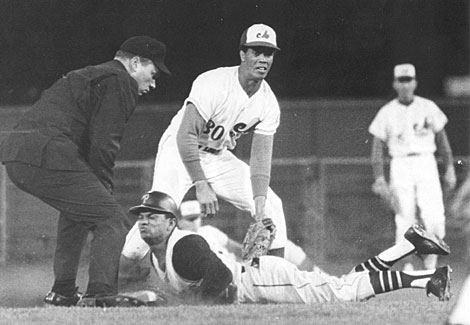

On the Verge: Brett Lawrie Call Up by Jays is Imminent
Thursday August 4, 2011

Rob Bland (Intern- MLB Reports): The Brett Lawrie rollercoaster started December 6th, 2010. Lawrie was sent to Toronto in exchange for Toronto’s incumbent ace, Shaun Marcum. Toronto GM Alex Anthopoulos immediately said that Lawrie would be working out at third base, switching from second base. This would be Lawrie’s third major position change in 3 years. He was drafted out of Langley, BC by the Milwaukee Brewers in the 1st round (16th overall) of the 2008 MLB draft. That year, Toronto held the 17th pick, and it was said that they coveted him greatly. They instead had to settle for college first baseman and current AAA prospect, David Cooper.
 Lawrie hit .293 in spring training this year, while playing decent enough third base to warrant a discussion of keeping him on the roster. However, Anthopoulos deemed he was not ready to play in the Major Leagues, and the fans in Toronto grumbled as the Blue Jays consistently put Edwin Encarnacion at third base to start the year. Lawrie started off hot in AAA Las Vegas, and played good defense. This still wasn’t enough, as the Jays asked him to be more patient and change his approach. Lawrie did just that, and by May 31st, was hitting over .350 with power and walking more often than he had in the past. When the Jays were on the brink of calling him up (see our Report from June 2nd), Lawrie was hit by an errant pitch on the back of his left hand. Blue Jays fans collectively held their breath, and Lawrie declared it was a bruise. Two days later when swelling subsided, it was found out that Lawrie had a non-displaced fracture.
When he finally returned to Las Vegas in the middle of July, Lawrie came right back to where he left off. He is now hitting .352 with 18 home runs and 61 RBI. More importantly, he has 26 walks and is playing much improved defense. Now, the Jays’ faithful are continuing to call for him. Anthopoulos and manager John Farrell have repeatedly said “he’s close” and that they want to get him everyday at bats before rosters expand in September.
Now, when Lawrie gets the inevitable call (my guess being Friday, August 5th, before the beginning of a road series in Baltimore), where will he play? The Jays have Jose Bautista, one of the top three players in baseball at third base. Well, the plan that Anthopoulos has set out is that Bautista would shift back to his preferred right field, creating a logjam of young and talented outfielders. Travis Snider is 23 years old and he will play every day at one of the corner positions. Colby Rasmus is 24 years old and will be in center for the foreseeable future. That leaves Eric Thames, also 24, the corner outfielder who came out of seemingly nowhere to win the love and admiration of many fans, on the bench. You could say that Thames can just DH because he isn’t the best fielder of the bunch (although more than adequate and constantly improving), but where does Edwin Encarnacion play then? Encarnacion is one of the hottest hitters in all of baseball since the beginning of July. He has 9 doubles, 4 home runs, and 14 RBI with 12 walks in 25 games over that span. Thames most likely gets optioned to AAA to get every day at bats until rosters expand in September. Here is how that lineup stacks up.
Yunel Escobar – SS
Colby Rasmus – CF
Jose Bautista – RF
Adam Lind – 1B
Edwin Encarnacion – DH
Travis Snider – LF
Brett Lawrie – 3B
J.P. Arencibia – C
Aaron Hill – 2B
 If one of these players is traded, then there won’t be a problem. The only other option barring a trade, is something that Anthopoulos has stated adamantly will not happen. Moving Lawrie to second base and sitting former Silver Slugger Aaron Hill on the bench. This could possibly be the best option available for both the short-term and long-term. With Hill underperforming (ranked 20th out of 21 qualified 2nd baseman in WAR), and his $8M option for 2012 likely to be declined, Lawrie could slot into that spot for a very long time. Anthopoulos has preached having talent and skill “in the middle of the diamond” and second base is a spot that sorely needs some stability after Hill’s last two years. The only thing that could stop this movement is if Anthopoulos sees Hill, who is a good defender, as a guy who can turn his career back around. If Hill were placed in the 9 hole, and changed his approach, he could be a very serviceable player there. One idea that has been bandied around is that the Jays decline the option on Hill, and sign him to a much smaller deal to bring him back as the second baseman.
I honestly believe that Anthopoulos has the wheels turning, and with Encarnacion being so hot, many teams would love to take him on to make a push for the playoffs. If Encarnacion is not in the picture, there is a spot for Thames as a full-time player. He and Snider would probably split time between left field and DH, with Bautista in right, and Lawrie at third.
What gets lost in all of this, is that the Opening Day center fielder, might become a 5th outfielder. Rajai Davis has 33 stolen bases, and is playing better in a part-time role since Rasmus joined the team. He will be reserved to being a pinch runner, and possibly a late inning defensive replacement for Thames.
The odd man out for this year seems to be Thames, even though the Blue Jays see him as a valuable asset for the long-term. Whether that means for him to be on the field, or using him as a trade chip remains to be seen. Lawrie will likely end up playing third base every day, proving why the Jays gave up Marcum for an unproven “troubled” prospect.

***Today’s feature was prepared by our Intern, Rob Bland. We highly encourge you to leave your comments and feedback at the bottom of the page and share in the discussion with our readers. You can also follow Rob on Twitter.***
Please e-mail us at: MLBreports@gmail.com with any questions and feedback. You can follow us on Twitter and become a fan on Facebook . To subscribe to our website and have the daily Reports sent directly to your inbox , click here and follow the link at the top of our homepage.

Brett Lawrie: On the Verge of Joining the Toronto Blue Jays
Thursday June 2, 2011
MLB reports: There is often a misconception in baseball that news and events from north of the border is often ignored. Around the Rogers Centre, there has been a strong buzz for weeks anticipating the arrival of the Blue Jays top prospect. At the tender age of 21, Brett Lawrie, the third baseman of the future for the Jays is about to arrive. But news of Lawrie’s impending promotion has spread beyond the media in Toronto and Las Vegas, the Jays AAA affiliate. The MLB community is talking, from Seattle to Washington, and Milwaukee to Florida. Everyone wants to know the same thing: When is Brett Lawrie getting the call?
Brett Lawrie was originally drafted by the Milwaukee Brewers of the first round of the 2008 draft, going 16th overall. The team picking next? Ironically enough, the Toronto Blue Jays. With the 17th pick, the Jays went with first baseman David Cooper. The Jays had their eye on Lawrie and were all set to draft the British Columbia native Lawrie. But with Milwaukee having Canadians Doug Melvin and Gord Ash in its front office, the Brewers with a strong scouting presence in Canada were all over Lawrie. Milwaukee in 2008 made Lawrie the highest drafted Canadian born position player in major league history and fourth overall, behind Jeff Francis, Adam Loewen and Philippe Aumont. But the Jays never lost their interest in Lawrie and on December 6, 2010, Lawrie was finally coming home.
Last winter, Lawrie was moved from Milwaukee to Toronto in a straight exchange for Jays ace hurler, Shaun Marcum. Coming off arm issues and a missed 2009 season, Marcum bounced back during the 2010 season with 13 wins and almost 200 innings pitched. Now due for arbitration, the Jays capitalized on Marcum’s success to land the player they coveted for some time. Lawrie immediately moved from 2nd to 3rd and became the Jays third baseman of the future. But at 21-years of age, Lawrie was still in need of more experience and seasoning. After a fairly solid AA campaign in Huntsville, Lawrie was expected to repeat AA with the Blue Jays and slowly move to AAA near the end of the year. But that all changed come spring training.
After a solid spring campaign, there was a buzz around baseball that Lawrie almost made the Blue Jays team in time for opening day. But with Edwin Encarnacion on the roster, the Jays decided that the major league roster had its stop-gap solution until Lawrie was ready. Given his strong spring though, the Jays organization reasoned that Lawrie was ready for increased competition and designated him to AAA Las Vegas to start the campaign. Looking at the numbers, Lawrie has flourished. Going into today, Lawrie has a .354 AVG, .415 OBP, .677 SLG, 15 home runs, 19 doubles, 49 RBIs, 51 runs, and has been successful on 11/12 stolen base chances. All of this accomplished in only 52 games played. Granted, Las Vegas is known as a hitters park and the 51s play in the Pacific Coast League, a notorious slugging league. Lawrie though has earned his shot and this was week was all set to get the call. Media outlets reported that Lawrie, together with Adam Lind would be joining the Jays on Friday. But this past Tuesday night, Lawrie was hit on the hand and everything changed.
The Blue Jays and the collective baseball world held its breath as Lawrie’s left hand was x-rayed. The results came back negative and fortunately only a bruise. However, with a deep hand bruise, Lawrie’s promotion has temporarily been placed on hold. As with all good things in life, the best things come to those that wait. While surely disappointed at his misfortune, at this point Lawrie just has to come back and prove health in order to make his long-awaited major league debut.
Fantasy baseball players especially have been contacting me to find out my predictions as to how Lawrie will fare when he finally joins the Jays. My response has been that he will play at third base when given the call and likely stay there for the next decade or so. But fans of the game have a way of getting excited about MLB prospects, which is great for the game but creates some unrealistic expectations some times on the players. Looking at Lawrie’s stats, I noticed that he had 47/118 BB/K in 2010 and this year sits at 18/40 BB/K. Lawrie with a career .294 AVG in the minors clearly has a strong bat. Now he just has to develop his batting eye. Coming to the majors, he might be a little slow out of the gate as he gets his feet wet. A .250-.260 AVG is a realistic prediction at this stage of his career, but may not be enough to satisfy the demands of his loyal followers. People may expect the world from Lawrie with all the hype surrounding him, but let’s remember that he is still only 21 and maturing as baseball player and person. Coupled together with his defensive shift from 2nd to 3rd, it has been a season of adjustments for him. But Lawrie has shown the superstar potential and earned the call to the big leagues.
We will follow this story for you as it develops and continue the Reports as Lawrie is likely to join the Blue Jays next week. After landing in Toronto, the future for Brett Lawrie is wide open. He could be here to stay or may need to bounce a little between Toronto and Las Vegas before he establishes himself. Look no farther than another one time can’t miss Toronto prospect, Travis Snider. For the last two seasons, Snider made the team out of spring training with high expectations, only to land back in Las Vegas to work on his game. The baseball world looks forward to the arrival of Brett Lawrie and the next “can’t miss” prospect. After all the talk and hype, the moment of truth is almost upon us.
Please e-mail us at: MLBreports@gmail.com with any questions and feedback. You can follow us on Twitter and become a fan on Facebook . To subscribe to our website and have the daily Reports sent directly to your inbox , click here and follow the link at the top of our homepage.


 MLB Reports
You must be logged in to post a comment.