Blog Archives

How to Value and Manage Catchers on Your MLB Fantasy Team
Monday October 3, 2011
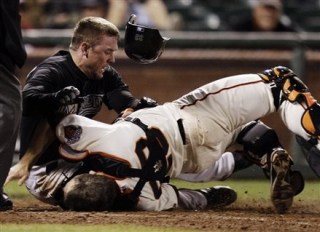
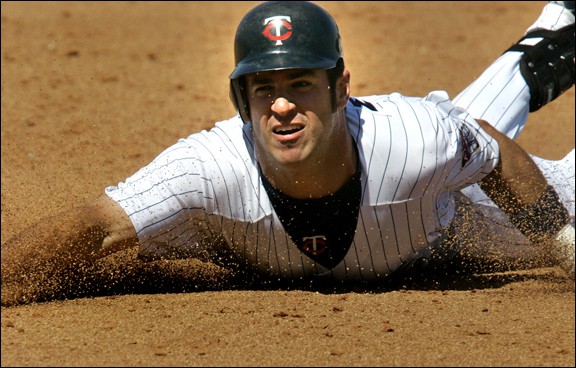
Peter Stein (Fantasy Baseball Analyst – MLB reports): The catching position is one that is often the most mismanaged by fantasy owners. A very thin position, it is difficult to find value from catchers in the deeper leagues. Furthermore, you take a big risk dedicating a high pick or significant auction money at a very injury prone position, as 2011 owners Joe Mauer and Buster Posey owners know all too well. Even a healthy catcher will sit for a significant amount of games each year due to the wear and tear of the position.
 For these reasons, I generally advise to not overpay for a player at this position. But with that said, for the right price, the top batch of catchers can provide you significant value. However, too many times before we have seen significant year yo year decline from players at this position. You simply should not rely on production at this position. Spend your bucks elsewhere. Based on matchups and playing time, it is possible to scrap together value for next to nothing.
For example, Chris Iannetta and his .238 average, 51 runs, 14 HR, and 55 RBI, disappointed many fantasy owners in 2011. But a closer look at the numbers shows the true value he provides. We all know the effect that Coors Field has on hitters, but for Iannetta it is staggering. His 2011 home numbers look like this: .301 batting average, 10 HR, 39 RBI and 3 SB.
If you were to only start Iannetta at home in 2011, you would great numbers all across the board for half of the season. You are essentially getting 50% of Brian McCann for way less than 50% of the price. The discrepancy in his splits is dramatic that it makes him so easy to use as an owner. Only start him at home and never think about starting him on the road!
Now, for the days that Iannetta is on the road, there are plenty of options in the bottom half of the rankings that would be available on the waiver wire. Let’s pick someone like Miguel Olivo. His 19 HR and 62 RBI provide great production from the thin catching position, but his .224 average leaves a lot to be desired. However, an owner is much better equipped to muster this average if the number of at bats are cut in half. If you combine this morph of Olivo and Iannetta, you are looking at these types of numbers:
.260-.270, 20 HR, 70 RBI, 6 SB.
These numbers are essentially right on par with Brian McCann’s 2011 line (.270, 24HR, 71RBI, 3SB). McCann is a consensus top five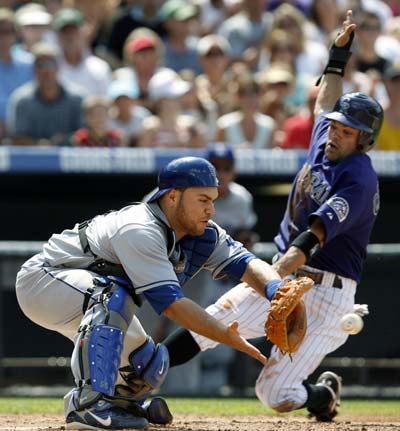 catcher, while Iannetta and Olivo are viewed outside of the top-15. You are essentially creating McCann for a lot cheaper and inherent risk that comes with investing money in the catching position. Furthermore, there are more options out there if you think Olivo’s average is too much of a killer. It all depends on your team’s needs and what categories you are chasing. If you are more concerned about average, guys like Nick Hundley and Jonathan Lucroy might be more attractive options. Looking for power and RBI production? Names such as J.P. Arencibia, Russell Martin, Geovany Soto, Kurt Suzuki (there are even more) are all useful under the right circumstances.
For example, look at Geovany Soto’s numbers against left-handed pitching in 2011: .296 average, 7 HR and 15 RBI in just 98 at-bats. This is in stark contrast to his .207 average and 10 home runs in 323 at-bats against right-handed pitching.
The point is that it’s easy to piece together production at this position. There are several players who contribute in the HR and RBI categories and you can get the most out of them by maximizing their strengths based on matchups and ballparks.
***Today’s feature was prepared by our Fantasy Baseball Analyst, Peter Stein. We highly encourage you to leave your comments and feedback at the bottom of the page and share in the discussion with our readers. You can also follow Peter on Twitter (@peterWstein).***
Please e-mail us at: MLBreports@gmail.com with any questions and feedback. You can follow us on Twitter (@MLBreports) and become a fan on Facebook . To subscribe to our website and have the daily Reports sent directly to your inbox , click here and follow the link at the top of our homepage.

Miami Marlins and Toronto Blue Jays: Something ‘Fishy’ About New Logos?
Tuesday September 27, 2011
April Whitzman (Blue Jays Writer – MLB reports): It has been said that a logo symbolizes a company’s identity and provides an image of an organization second to none. Recognizing this, I have decided to analyze two recently leaked and rumored new MLB logos, belonging to the recently renamed Miami Marlins and the Toronto Blue Jays.
Miami Marlins
Let’s start by analyzing the logo of the Florida Marlins… er the Miami Marlins. With a new home in Miami for 2012, the organization felt that there was no better way to start a new identity in their new home, than with a new logo.
The change in logo, in my opinion, is a good move. Now in my seventh (and final) year of university studying towards a degree in public relations and marketing, I have been taught time and time again that a logo contributes greatly to the visibility and credibility of a business. The two factors that will help an organization most flourish and attain success.
Eliminated long ago from making the playoffs, the Marlins are attempting to start over with a new ballpark, manager (Ozzie Guillen) and powerful logo. But that being said, is the logo doing everything it is set out to do?
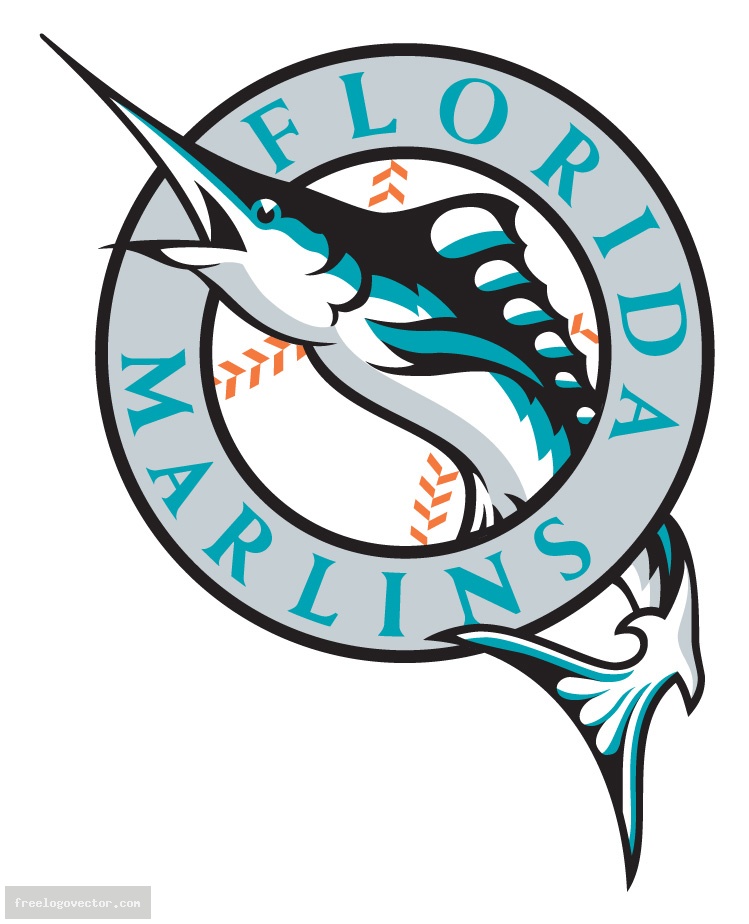 Let’s begin by analyzing the colors used. There is no denying that color plays an important role in catching the eyes of viewers and is an integral part of an organization’s identity. Recognizing this, upon comparing the new logo with their existing one, one can see that the Marlins have used the same colors of turquoise/blue, orange, white, and black, but have also added the color yellow to the mix.
The colors used in a logo are important in terms of how the organization will be perceived psychologically. Keeping this in mind, what is the team trying to indicate with the added brightness? If one thinks about items that are yellow – the sun, a caution sign, a taxi cab, these are all things that are either associated with joy, energy, or are used to grab attention in order to make people take notice.
Is that what the Marlins are trying to say? Is the team trying to give a warning to the National League that this new Miami team is born again and ready to become the centre of attention of the baseball world?
In their last two years, the Marlins have not been a serious contender. It is evident that with a new logo, the team is attempting to erase all negative sentiments associated with the team of the past in the minds of the fans. But is getting rid of their reputable fish the way to do it?
Even with the added colour, the new logo seems to not be as energetic as many had envisioned, and in my personal opinion, the logo is very lifeless. A good logo is intended to help an organization stand out from the crowd and scream out their presence. I am not sure if the new Marlins logo does either successfully.
Many have echoed my sentiments of disapproval of the logo, believing there should be more consistency with the team. Some have even recommended keeping the ‘F’ style logo with the same background and colors and merely changing the ‘F’ to ‘M’ (for Miami).
Toronto Blue Jays
One of the first things I was taught during my public relation classes was that a logo immediately becomes an important extension of a brand’s message. For this reason, a logo must communicate that message in every possible way. This could be done through the image itself, through the shape, or through the colors, as long as the message remains consistent.
There is no doubt that the new Toronto Blue Jays’ logo does exactly this. Interestingly, the Blue Jays’ organization went for a different approach than that of the Marlins. Instead of pursuing a completely new perspective, the Jays chose instead to revisit a logo that was once an integral part of the team. Comparing the new logo to the one that was predominant when the team first started in 1977, one can see a lot of similarities.
This, in my opinion, was a great decision. Not only does the organization constantly hear comments from fans to bring back the retro bird, but also to move back to the logo that is associated with the team’s period of greatest success. That logo was predominant during the early 90’s when the Blue Jays’ won back-to-back World Series. So why not bring it back?
There are a few things that I remember clearly from my first marketing class: Know your customer and own your branding. The Toronto Blue Jays’ marketing initiative should be a complete success, as it is evident that by listening to their fans and introducing a new logo which incorporates the retro feel, the Jays are aware of what makes their core customers happy. In return, the organization recognizes that they will be able to sell new shirts, new hats, and new memorabilia with the new logo. Thus, Jays’ decision makers are bringing in additional revenues to the organization, which could become the difference in signing key players in the future.
Additionally, comparing the new logo to the most recent version, one can also see more emphasis placed on the color red through the symbolic image of the maple leaf. This to me not only accentuates the pride of being Canada’s only baseball team, but also represents the team’s message through the color red- which is known to denote energy, strength, power, determination and passion.
With new young and energetic players such as Brett Lawrie, Eric Thames, J.P. Arencibia and Colby Rasmus and the Blue Jays’ motto of ‘hustle and heart; the focus of the red in the logo only accentuates the team’s message. With many speculating that the team will also be unleashing new red uniforms in 2012, this realization only becomes stronger.
Overall
While logos can have a great impact and be a strong influence in expressing a team’s message and identity, logos in themselves are meaningless without strong teams behind them. If the Marlins want to portray a message of ‘watch out’ with their new yellow-and-fishless logo, and if the Blue Jays want to portray an image of determination and passion with their retro bird and red-pride logo, both teams still require strong teams that match their key messages.
It is evident that the Miami Marlins are realizing the importance of matching their new logo and new stadium with a new team, as evidenced from the upcoming trade that brings Chicago White Sox’ Manager, Ozzie Guillen, to the Marlins. In addition, however, the Marlins are still in dire need of new pitching and more offense that will make the team truly feel ‘new’ in the minds of their fans.
Conversely, the Blue Jays also need pitching (both a dominant starter and a lights-out closer) and a productive first baseman. I would recommend that the Blue Jays not just try to sign a power first baseman (such as Prince Fielder or Albert Pujols) solely based on his numbers. One thing that every public relations professional realizes is that one’s key message must be consistent. Thus the Blue Jays must find players that fit within the team’s notions of energy, determination and passion.
At this present time, neither logos have been confirmed by either organization. It is evident that while both teams have a lot of potential in their logos, they just have to ensure that their respective key messages are constant within every aspect of their organizations. If the Marlins and Jays utilize this approach, with their logos, rosters and throughout their organizations, there is no doubt that both teams will find success in the future by starting new today.
As always, I look forward to hearing from you. Comment below, email MLBreports@gmail.com and follow me on Twitter at @Alleycat17.

Please e-mail us at: MLBreports@gmail.com with any questions and feedback. You can follow us on Twitter (@MLBreports) and become a fan on Facebook . To subscribe to our website and have the daily Reports sent directly to your inbox , click here and follow the link at the top of our homepage

J.P. Arencibia vs. Travis d’Arnaud: Who is the Jays Catcher of the Future?
Saturday September 24, 2011
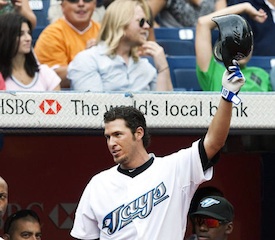
April Whitzman (Blue Jays Writer – MLB reports): Two weeks ago, I posted that the toughest question Blue Jays’ fans are dealing with right now is figuring out whose comeback, whether that of Dustin McGowan or Adam Loewen, is more impressive. Today I pose a question that some would say is equally hard to answer: who is the Toronto Blue Jays’ catcher of the future – J.P. Arencibia or Travis d’Arnaud?
What they have in common:
Interesting, while many people do not realize this, both catchers share their origin in common – the 2007 MLB first-year player draft. In fact, Arencibia was drafted 21st overall by the Blue Jays out of the University of Tennessee. As the 37th pick overall, the Philadelphia Phillies went with Travis d’Arnaud, out of Lakewood High School. At the time it was believed that the Jays were interested in d’Arnaud’s potential and would pick him with the 38th pick and move Arencibia to first base. Yet the Phillies chose the young star from Florida one slot before, forcing the Jays to choose left-handed pitcher, Brett Cecil. That said, a persistent GM, Alex Anthopoulos, would get his player; as the Blue Jays acquired Travis d’Arnaud two years later in the well-known Roy Halladay trade.
How they differ:
Defense
It is difficult to compare these players, as Arencibia has already made the jump to the majors while d’Arnaud just finished his season in AA New Hampshire. Arencibia has more professional experience having been drafted out of college, while d’Arnaud came out of high school. Here is a graph to compare how each player performed during their time at AA New Hampshire:

JP received the promotion from Dunedin to New Hampshire half-way through the season; his stats have been doubled to receive a more accurate comparison.
Both players are pretty evenly matched. Nevertheless, d’Arnaud has the slight advantage on errors committed, fielding percentage, and passed balls. Meanwhile, Arencibia has a higher caught-stealing percentage.
Despite one player being in the majors and the other in the minors in 2011, an interesting comparison can be depicted if we compare both catchers’ stats for this season:

With each player in their fourth year of professional baseball, these stats show how close their defensive game truly is. Having committed the same amount of errors, the same fielding percentage and only one passed ball being the difference between them, the biggest distinction is that d’Arnaud has the slight advantage throwing out base runners.
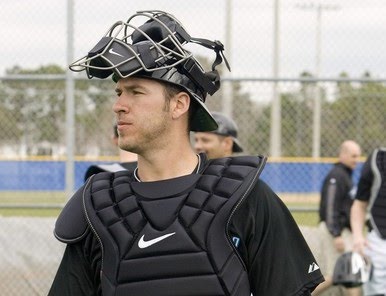 Don Wakamatsu, a former catcher himself, and now the Toronto Blue Jays bench coach has admitted that he has seen a drastic improvement in Arencibia’s defensive abilities. Wakamatsu credits the improvement to a significant amount of practice and hard work. He stated: “Arencibia has done a phenomenal job trying to understand how to get the most out of our pitching staff.”
Defensively, Arencibia has a good arm, but he struggles at times with blocking pitches in the dirt. In his minor league career, Arencibia threw out close to 30% of base stealers, though charged with 60 passed balls in 357 lifetime games.
In regards to his defense, Arencibia stated, “Defense is obviously first, and I know that, and whatever comes with the bat is secondary.” He continued: “I feel like my biggest thing is getting that pitcher through that game and I feel like I’m starting to get a real good understanding of my staff and giving us opportunities to win.” Since making these comments, Arencibia has improved his defense considerably in the second half of the season. For example, in the eighth inning of Friday night’s game against Tampa Bay, JP was able to throw out Rays outfielder B.J. Upton.
Comparatively, Travis d’Arnaud’s defensive skills are stronger. He has a great game-calling abilities and he has a strong arm. While his career caught-stealing rates have suffered due to inexperience, he has also improved his game by working on his footwork behind the plate. At 22 years old, d’Arnaud is already one of the better defensive catchers in the minors and he has plenty of time to develop into a premier defender in the big leagues. This was proven when he was named the Catcher’s Captain Award recipient for 2011 by Baseball America. The award is given to the catcher who displays strong defensive qualities, including leadership and dedication.
Offense
There is no denying that both players are also solid offensively. In 409 games in the minors, JP hit .275 with 121 doubles, 83 HR and 290 RBI. That said, he has also proven what he can do at the plate at the major league level as well. There is not a Blue Jays fan who does not remember J.P. Arencibia’s major league debut last year against the Tampa Bay Rays, as he launched the first pitch he saw over the left field wall for a home run. He later singled and doubled and capped the day with a home run to right field. That game showcased Arencebia’s talents and his ability to hit the ball for power.
Offense is where Arencibia and d’Arnaud differ most. Essentially, while JP hits for power but not average, d’Arnaud is a more complete player at the plate, as he hits for average and power. This year with the Fisher Cats, d’Arnaud was named the Eastern League MVP after hitting .313 with 20 homers and 77 RBIs. Here is how their 2011 numbers compare:

Prior to the 2011 campaign, many fans and analysts alike were not sold on d’Arnaud as anything more than a defense-first catcher.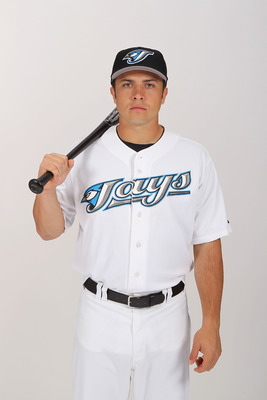 However, as his numbers this season have indicated, Travis experienced a bit of a learning curve early on in his career, as he made the jump from high school to the minor leagues. With his bat coming around this season, the offensive edge at this stage goes to d’Arnaud. It is evident that both players (as can be seen from the table above) need to work on the amount of times they strikeout, but other than that, both look solid at the plate and behind it.
Overall
Although both J.P. Arencibia and Travis d’Arnaud came from the same draft class in 2007, it appears that d’Arnaud has the greater upside. In essence, Arencibia has received the call to the majors quicker because he was able to develop in college before jumping to the professional ranks. As displayed through various charts, d’Arnaud appears to be more efficient both with his glove and bat. His numbers indicate that he could make the jump to the MLB as early as next year. In a recent interview with Fisher Cats beat reporter, Dave Gershman, d’Arnaud showed that he has the confidence to make it to the big leagues, as he stated: “Hopefully one day I can get up to Toronto, and play like I’m playing now. And who knows what will happen? Maybe I’ll be a good player.”
At the same time one cannot discredit J.P. Arencibia, as despite his quick progression to the MLB, he is still learning at the age of 25. Arencibia recently stated as much when he admitted, “On both sides of the plate I’ve been maturing and making adjustments in different things,” Arencibia says. “But it’s still a work in progress. You’re always trying to get better.” With catchers requiring the most seasoning from all the positions, Arencebia can still be considered to be at this stage ahead of the curve.
Whoever is chosen as the lead catcher, one thing is certain: the Blue Jays are blessed with two young catchers – both at the plate – and behind it! If the team’s worst problem is having two number one catchers on its roster within the next two years, then that is a great dilemma to have. It is very possible that one of the above (likely Arencibia) will be moved when both catchers have proven themselves at the major league level. Until then, with injuries and slumps being a reality of the game, the Jays will enjoy their abundance of talent behind the dish and lets the cards play themselves out.
As always, I look forward to hearing from you. Comment below, email MLBreports@gmail.com and follow me on Twitter at @Alleycat17.
Please e-mail us at: MLBreports@gmail.com with any questions and feedback. You can follow us on Twitter (@MLBreports) and become a fan on Facebook . To subscribe to our website and have the daily Reports sent directly to your inbox , click here and follow the link at the top of our homepage.

On the Verge: Brett Lawrie Call Up by Jays is Imminent
Thursday August 4, 2011

Rob Bland (Intern- MLB Reports): The Brett Lawrie rollercoaster started December 6th, 2010. Lawrie was sent to Toronto in exchange for Toronto’s incumbent ace, Shaun Marcum. Toronto GM Alex Anthopoulos immediately said that Lawrie would be working out at third base, switching from second base. This would be Lawrie’s third major position change in 3 years. He was drafted out of Langley, BC by the Milwaukee Brewers in the 1st round (16th overall) of the 2008 MLB draft. That year, Toronto held the 17th pick, and it was said that they coveted him greatly. They instead had to settle for college first baseman and current AAA prospect, David Cooper.
 Lawrie hit .293 in spring training this year, while playing decent enough third base to warrant a discussion of keeping him on the roster. However, Anthopoulos deemed he was not ready to play in the Major Leagues, and the fans in Toronto grumbled as the Blue Jays consistently put Edwin Encarnacion at third base to start the year. Lawrie started off hot in AAA Las Vegas, and played good defense. This still wasn’t enough, as the Jays asked him to be more patient and change his approach. Lawrie did just that, and by May 31st, was hitting over .350 with power and walking more often than he had in the past. When the Jays were on the brink of calling him up (see our Report from June 2nd), Lawrie was hit by an errant pitch on the back of his left hand. Blue Jays fans collectively held their breath, and Lawrie declared it was a bruise. Two days later when swelling subsided, it was found out that Lawrie had a non-displaced fracture.
When he finally returned to Las Vegas in the middle of July, Lawrie came right back to where he left off. He is now hitting .352 with 18 home runs and 61 RBI. More importantly, he has 26 walks and is playing much improved defense. Now, the Jays’ faithful are continuing to call for him. Anthopoulos and manager John Farrell have repeatedly said “he’s close” and that they want to get him everyday at bats before rosters expand in September.
Now, when Lawrie gets the inevitable call (my guess being Friday, August 5th, before the beginning of a road series in Baltimore), where will he play? The Jays have Jose Bautista, one of the top three players in baseball at third base. Well, the plan that Anthopoulos has set out is that Bautista would shift back to his preferred right field, creating a logjam of young and talented outfielders. Travis Snider is 23 years old and he will play every day at one of the corner positions. Colby Rasmus is 24 years old and will be in center for the foreseeable future. That leaves Eric Thames, also 24, the corner outfielder who came out of seemingly nowhere to win the love and admiration of many fans, on the bench. You could say that Thames can just DH because he isn’t the best fielder of the bunch (although more than adequate and constantly improving), but where does Edwin Encarnacion play then? Encarnacion is one of the hottest hitters in all of baseball since the beginning of July. He has 9 doubles, 4 home runs, and 14 RBI with 12 walks in 25 games over that span. Thames most likely gets optioned to AAA to get every day at bats until rosters expand in September. Here is how that lineup stacks up.
Yunel Escobar – SS
Colby Rasmus – CF
Jose Bautista – RF
Adam Lind – 1B
Edwin Encarnacion – DH
Travis Snider – LF
Brett Lawrie – 3B
J.P. Arencibia – C
Aaron Hill – 2B
 If one of these players is traded, then there won’t be a problem. The only other option barring a trade, is something that Anthopoulos has stated adamantly will not happen. Moving Lawrie to second base and sitting former Silver Slugger Aaron Hill on the bench. This could possibly be the best option available for both the short-term and long-term. With Hill underperforming (ranked 20th out of 21 qualified 2nd baseman in WAR), and his $8M option for 2012 likely to be declined, Lawrie could slot into that spot for a very long time. Anthopoulos has preached having talent and skill “in the middle of the diamond” and second base is a spot that sorely needs some stability after Hill’s last two years. The only thing that could stop this movement is if Anthopoulos sees Hill, who is a good defender, as a guy who can turn his career back around. If Hill were placed in the 9 hole, and changed his approach, he could be a very serviceable player there. One idea that has been bandied around is that the Jays decline the option on Hill, and sign him to a much smaller deal to bring him back as the second baseman.
I honestly believe that Anthopoulos has the wheels turning, and with Encarnacion being so hot, many teams would love to take him on to make a push for the playoffs. If Encarnacion is not in the picture, there is a spot for Thames as a full-time player. He and Snider would probably split time between left field and DH, with Bautista in right, and Lawrie at third.
What gets lost in all of this, is that the Opening Day center fielder, might become a 5th outfielder. Rajai Davis has 33 stolen bases, and is playing better in a part-time role since Rasmus joined the team. He will be reserved to being a pinch runner, and possibly a late inning defensive replacement for Thames.
The odd man out for this year seems to be Thames, even though the Blue Jays see him as a valuable asset for the long-term. Whether that means for him to be on the field, or using him as a trade chip remains to be seen. Lawrie will likely end up playing third base every day, proving why the Jays gave up Marcum for an unproven “troubled” prospect.

***Today’s feature was prepared by our Intern, Rob Bland. We highly encourge you to leave your comments and feedback at the bottom of the page and share in the discussion with our readers. You can also follow Rob on Twitter.***
Please e-mail us at: MLBreports@gmail.com with any questions and feedback. You can follow us on Twitter and become a fan on Facebook . To subscribe to our website and have the daily Reports sent directly to your inbox , click here and follow the link at the top of our homepage.


 MLB Reports
You must be logged in to post a comment.