Category Archives: MLB Player Profiles
Get the Lowdown on all your Favorite MLB Superstars

A Tribute to Chad Cordero: Retired MLB Closer
Wednesday June 22, 2011

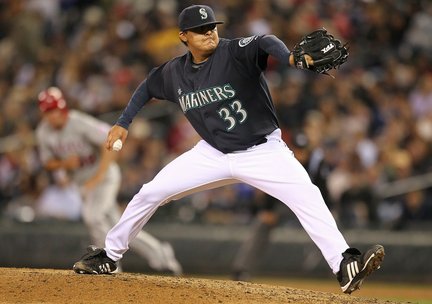
MLB reports: The man with the straightest brim in baseball, Chad Patrick Cordero formally announced his retirement from baseball on Monday, at the tender age of 29. Cordero originally suffered a torn labrum and missed most of the 2008 season. He was never able to return back to full health and form following the injury and his 2010 season with the Mariners will remain his last in the majors.
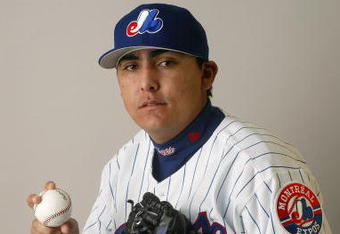 Chad Cordero was originally drafted by the San Diego Padres in the 26th round of the 2000 draft, and later was a 1st round pick of the Montreal Expos, 20th overall, in 2003. Cordero was one of the rare college closers who graduated to the same role in the majors. He attended Cal State Fullerton and made it all the way to a College World Series title. Cordero made his major league debut the same year he was drafted and stayed with the Expos/Nationals organization for the majority of his career.
Here are Chad Cordero’s final major league numbers:
| Year | Tm | W | L | ERA | SV | BB | SO | WHIP |
|---|---|---|---|---|---|---|---|---|
| 2003 | MON | 1 | 0 | 1.64 | 1 | 3 | 12 | 0.636 |
| 2004 | MON | 7 | 3 | 2.94 | 14 | 43 | 83 | 1.343 |
| 2005 | WSN | 2 | 4 | 1.82 | 47 | 17 | 61 | 0.969 |
| 2006 | WSN | 7 | 4 | 3.19 | 29 | 22 | 69 | 1.105 |
| 2007 | WSN | 3 | 3 | 3.36 | 37 | 29 | 62 | 1.387 |
| 2008 | WSN | 0 | 0 | 2.08 | 0 | 3 | 5 | 2.077 |
| 2010 | SEA | 0 | 1 | 6.52 | 0 | 5 | 6 | 1.552 |
| 7 Seasons | 20 | 15 | 2.89 | 128 | 122 | 298 | 1.208 | |
| 162 Game Avg. | 4 | 3 | 2.89 | 28 | 26 | 65 | 1.208 | |
| WSN (6 yrs) | 20 | 14 | 2.78 | 128 | 117 | 292 | 1.198 | |
| SEA (1 yr) | 0 | 1 | 6.52 | 0 | 5 | 6 | 1.552 | |
| NL (6 yrs) | 20 | 14 | 2.78 | 128 | 117 | 292 | 1.198 | |
| AL (1 yr) | 0 | 1 | 6.52 | 0 | 5 | 6 | 1.552 | |
The year 2005 will always stand out as Cordero’s best, as he led the Majors with47 saves that year. Cordero was taken out of baseball in his prime and the game has lost one of its top relievers much too early. Cordero played with teamUSAin the inaugural edition of the World Baseball Classic in 2006. After departing from the Nationals in 2008, Cordero went on to play in the minors and majors for the Seattle Mariners. He also played in the minors for the New York Mets and Toronto Blue Jays organizations. Cordero was released by the Jays on May 17th and was last playing for the St. Paul Saints, an independent baseball team, before announcing his retirement on Monday.
In addition to his baseball injuries, Chad Cordero has also suffered from personal tragedy. In December 2010, Cordero and his wife lost an eleven-week old baby daughter. The cause was Sudden Infant Death Syndrome (SIDS). Cordero is quoted as saying, “I’m just using her as motivation, trying to find strength. Because I know, now, she’ll always be with me, no matter what.” From the time of his daughter’s passing, Cordero has been active in raising awareness for SIDS. It is very uplifting to hear that despite all the adversity suffered by Cordero, that he could still work so hard to try to continue his baseball career, while assisting with SIDS awareness. SIDS is a subject that must be very difficult for Cordero and his family to discuss and deal with, but he still fights on to continue the memory of his dear daughter.
A true fighter in every sense of the word, Chad Cordero gets our sympathies and respect. Cordero has faced many roadblocks and hills to climb and he has continued to see through all the hardships that life has handed to him. Still young, there is always a chance that Cordero could try to make a return to organized baseball. The torn labrum that he suffered though is not a “fixable” injury in the same category as Tommy John surgeries, which has become very common in baseball circles. It is unlikely that we will ever see the Chad Cordero of old on the mound and if he never returns to baseball, we will always remember him for the competitor he was on the mound. But given the circumstances surrounding his family, baseball and sports takes a back seat to the human element of life. We wish all the best to Chad Cordero and his family. For everyone that can go purchase a baseball hat today and leave the brim unfolded, wear your hat this week as a tribute to one of the best relievers in the game: Chad Cordero.
Please e-mail us at: MLBreports@gmail.com with any questions and feedback. You can follow us on Twitter and become a fan on Facebook . To subscribe to our website and have the daily Reports sent directly to your inbox , click here and follow the link at the top of our homepage.
***Note: The Wednesday E-mailbag is on hiatus this week so that we can bring you this tribute. The E-mailbag will return next week. Please feel free to continue to send all your baseball questions***

Scott Kazmir: Where Will He Land? The Future of Kaz
Sunday, June 19, 2011
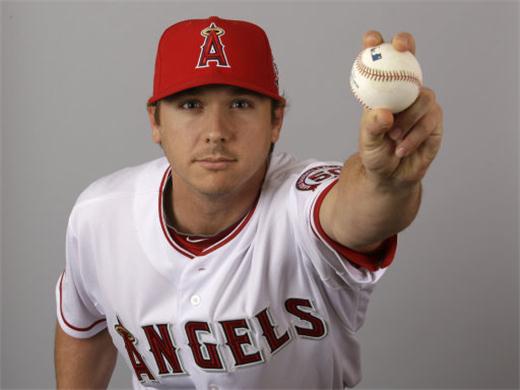
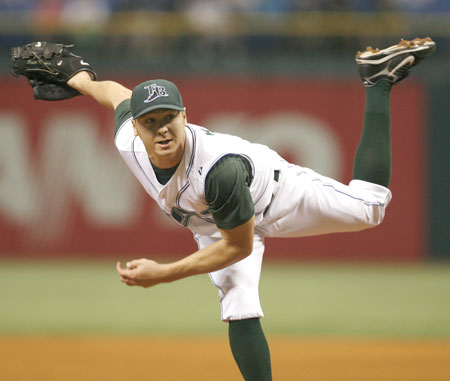
MLB reports: Things did not go as planned for Scott Kazmir. A first round pick of the New York Mets (fifteenth overall) in the 2002 draft, Scott Kazmir has gone from can’t miss prospect to baseball outcast. Only twenty-seven years old, Kazmir now sits at home awaiting to find out if he still has a baseball future. The Texas Native was traded to the Tampa Bay Rays during the 2004 season in a package for mediocre starter Victor Zambrano. Considered a steal of a deal at the time for the Rays, Kazmir played in Tampa Bay until the 2009 season when he was moved to the Angels. Despite $14.5 million in guaranteed money still due to him, the Angels saw enough after a poor 2010 season and atrocious start to the 2011 campaign. Now the rumor mill has Kazmir possibly headed back to the Mets, the team that originally gave up on him early, in order to restore his flailing career.
The debate on Kazmir is whether he is suffering from injuries, physical or mental concerns. Kazmir had shoulder and hamstring issues in 2010 and spent time on the disabled list. In 2011, Kazmir lost a great deal of velocity and control, despite reportedly being injury-free. Looking at Kazmir’s numbers in Tampa Bay in 2009 and Anaheim in 2010 and 2011, the trend of decline was becoming obvious. If you remove Kazmir’s six games played in Anaheim after the trade in 2009, we have been viewing a pitcher in a free fall since his twenty-fifth birthday. Now as Kazmir ponders his future, the baseball world is left to wonder what happened and where Kazmir will play next.
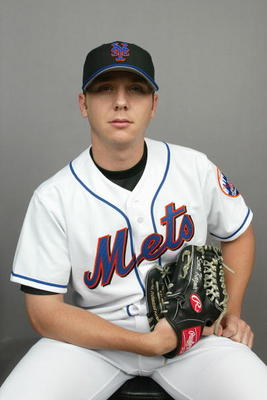 I look at Kazmir’s health record and consider his elbow issues of 2007 and 2008. Aside from the 2005 and 2007 seasons, Kazmir has never successfully completed a full season in the majors injury-free. Even though he may not be considered injured today, the number of injuries that he has suffered throughout his career have apparently finally taken a toll. Having suffered elbow and shoulder injuries at such a young age, it is difficult to ascertain if his arm and body will ever fully recover. Based on his poor showing of the last two years, the mental strain of his failed performances have likely compounded the issues further. Wherever he lands in the future, our reports are indicating that we will likely never see the All-Star Kazmir from 2006 and 2008. Even though he is only twenty-seven, the future looks bleak for Scott Kazmir.
Over the coming days we will learn more about the teams interested in signing Scott Kazmir. The two New York teams have jumped to the forefront of the race. Other teams that make sense include the Boston Red Sox, who love their scrap heap former top prospect pitchers, the St. Louis Cardinals and Texas Rangers, who have been linked to Kazmir for some time. Analysts have been speculating for the last two days that the Mets are the top destination. Our projection though is Texas landing Kazmir. Born and raised in Texas, Kazmir would likely prefer a homecoming, combined with playing for the contending Rangers and its top pitching coach, Mike Maddux.
Sometimes a player performing poorly requires a change of scenery for a rebound. Playing in a new city for a new team can reinvigorate some players. But such is not the case for all. Especially with pitchers, we have recently seen some very highly considered hurlers seemingly decline overnight. Dontrelle Willis. Rick Ankiel. Two former top prospects turned horror shows. Is Scott Kazmir next? The chance for rebound is there, but it appears to be slim at best. The Angels, long considered a team highly skilled in developing pitchers, flushed a great deal of money in writing off Kazmir. From everything I have read, I can’t see that they are wrong. While the Mets were blasted ever since trading Kazmir, the reality is that the Rays only got four very good seasons out of him. The next Nolan Ryan may in fact have become the next Victor Zambrano. Ironic how life works out sometimes.
Please e-mail us at: MLBreports@gmail.com with any questions and feedback. You can follow us on Twitter and become a fan on Facebook . To subscribe to our website and have the daily Reports sent directly to your inbox , click here and follow the link at the top of our homepage.

Top Home Run Hitters: The MLB Leaderboard
Sunday June 12, 2011

MLB reports: Another week goes by and we find that there are more changes on the MLB Home Run Leaderboard. Jose Bautista finally has some competition and the proven long ball hitters of seasons past have finally made the list. Let’s take a look at the home run leaders in Major League Baseball as of today:
Tie 1st: Jose Bautista, Toronto Blue Jays: 20
 Jose Bautista hit #20 on May 28th. Since then, he has remained stuck on 20 while the rest of baseball starts to catch up. For a man in a home run draught, he still has 58/35 BB/K on the season, with a .338 AVG, .490 OBP and .692 SLG. As Bautista works to recapture his early season form, Adam Lind has come back to the Jays as a man on a mission. Lind is hitting .327 on the season with 11 home runs of his own, a beneficiary of the protection that Bautista can afford him in the lineup. Realistically speaking, Bautista was never going to hit 80 home runs this season. But he remains on pace for 50+ and Bautista may still match or exceed his 54 long balls from last year.
Tie 1st: Curtis Granderson, New York Yankees: 20
There is a 2nd sherif in town and his name is Curtis Granderson. One of three Yankees on our list, Granderson has enjoyed a rejuvenation at age 30. Granderson is close to matching his 24 home runs from last year and well on his way to exceeding his career high of 30 home runs from 2009. Granderson’s 27/65 BB/K ratio tell me that he has not necessarily changed his free swinging ways at the plate and a “market correction” may be in order here. But despite his .267 AVG, Granderson has not shown any slow downs in the power department. 2011 has been Curtis Granderson’s coming out party and if Bautista isn’t careful, we may have another home run king on the season very soon.
Tie 3rd: Matt Kemp, Los Angeles Dodgers: 19
Matt Kemp (“The Bison”) at the age of 26, has finally started to cement his place in the book of baseball superstardom. With 19 home runs on the year, to go along with his incredible .331 AVG, .408 OBP and .632 SLG, Kemp has gone from prospect to star seemingly overnight. After hitting 26 and 28 home runs over the last two seasons respectively, Kemp is on pace to hit 40-50 home runs this year. Hitting in the heart of the Dodgers lineup with Andre Ethier, Kemp has been the heart and soul of the team this year. As he matures as a person and leader, so has his game developed on the field. The sky is the limit for this young superstar, who has future MVP written all over him.
Tie 3rd: Mark Teixeira, New York Yankees: 19
The last two spots on our top-five list should come as no surprise, starting with Yankee slugger Mark Teixeira. With 39 home runs in 2009 and 43 in 2005, Teixeira has showcased his home run strengths in previous years. A consistent 30+ home run threat, Teixeira is on his way to setting a career high in the category, showing his enjoyment playing in Yankee Stadium with its short porch. Teixeira, with his smooth swing, home run park and protection in the lineup, has all the factors in his favor. By season’s end, I expect him to remain near the top of this list and could very well finish at the #1 position.
5th: Prince Fielder, Milwaukee Brewers: 18
The final spot goes to Prince Fielder, the impending free agent slugging first baseman for the Milwaukee Brewers. Prince has literally done it all this season. He has shown a great eye, with 36/31 BB/K in 2011, to go along with his .300 AVG, .410 OBP and .614 SLG. The man hit 50 home runs in 2007 and 46 in 2009. With a BIG payday ahead (rumored to be in the $200 million range), Fielder is showcasing his skills this year. At 27-years of age, Prince will be able to write his own ticket when picking his next home. He has certainly ensured to give himself the best chance to make the big bucks in the future by his strong play in the present. Fielder’s agent? None other than Scott Boras. Expect Fielder to continue to explode on the field all season with teammate Ryan Braun as the Brewers make one more giant push with its hulking first baseman steering the ship.
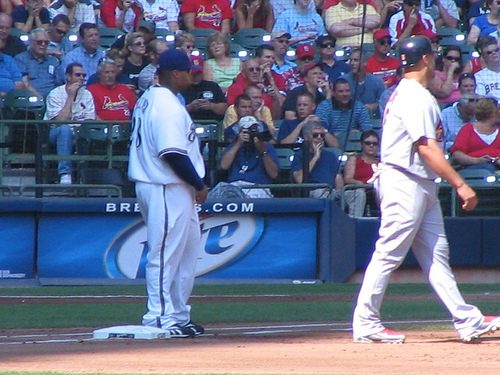
After looking at such an impressive top-five list, the rest of the sluggers represent the who’s-who of baseball. Bruce, Braun, Quentin, Pujols, Cabrera, A-Rod…yes, they are all here. Mike Stanton with 16 home runs has come together quickly in his 2nd season to become one of the top home run hitters in the game. As we discussed several times to start the season, the cream always rises to the top as the months go by. As we sit at almost the halfway mark of the season, the proven home run sluggers have proven just that.
The Best of the Rest:
Jay Bruce, Cincinnati Reds: 17
Carlos Quentin, Chicago White Sox: 17
Lance Berkman, St. Louis Cardinals: 16
Paul Konerko, Chicago White Sox: 16
David Ortiz, Boston Red Sox: 16
Mike Stanton, Florida Marlins: 16
Nelson Cruz, Texas Rangers: 15
Ryan Braun, Milwaukee Brewers: 14
Albert Pujols, St. Louis Cardinals: 14
Miguel Cabrera, Detroit Tigers: 13
Ryan Howard, Philadelphia Phillies: 13
Alex Rodriguez, New York Yankees: 13

Please e-mail us at: MLBreports@gmail.com with any questions and feedback. You can follow us on Twitter and become a fan on Facebook . To subscribe to our website and have the daily Reports sent directly to your inbox , click here and follow the link at the top of our homepage.

Ten Things About Mike Leake and His Jump to the Majors
Saturday June 4, 2011
On the Reports, we will be occasionally featuring an up-and-coming baseball writer that has come to our attention and share their work with you, the readers. Part of our mandate at MLB reports is to provide the best baseball coverage and analysis in the business. MLB reports ultimately is designed to expose our readers to the world of baseball and the stories, facts, insights and profiles behind it. In order to meet this goal, we would like to give exciting young writers the chance to showcase their talents and provide a fresh pool of ideas to our site. In today’s feature, we are excited to have the Hall of Very Good as our guest writer with their feature post on Mike Leake. Putting aside Leake’s legal troubles this year, the HOVG took a look at Mike Leake’s major league debut and his jump directly from college to the show. If you are a fan of statistics and baseball data, you will love this one. Enjoy!

Hall of Very Good (Guest Writer for MLB Reports): Heading into the 2010 season, many baseball analysts and writers seemed to be split as to which hotshot National League rookie will be taking home the Rookie of the Year award following this season.
And why wouldn’t they be?
In our nation’s capital, Stephen Strasburg has the makings of being every bit as impactful in his inaugural season for the Nationals as Fernando Valenzuela was when he made the Dodgers starting rotation in 1981 or “Doc” Gooden was three seasons later for the Mets.
Down in Atlanta, Jason Heyward became, with one swing of the bat, just the 104th Major Leaguer since 1895 to go yard in his first career plate appearance.
One guy who wasn’t in any discussions was Reds starting pitcher Mike Leake, and dude was on the cusp of doing something that neither Strasburg nor Heyward could accomplish…beginning his career on a Major League roster.
When he took the mound against the Chicago Cubs Sunday, the 22 year-old righty became the first starting pitcher to leapfrog the Minors since Jim Abbott did it in 1988 for the Angels.
Here is some more stuff you might not have known about skipping the Minors and starting your career in the show.
$2,900,000
After being selected eighth overall by Cincinnati in last year’s draft…Arizona State’s Mike Leake received a $2.9 million signing bonus. By comparison, the top pick, Stephen Strasburg, received a $7.5 million dollar bonus by putting his John Hancock on the dotted line for Washington.
2000
Do you remember where you were September 30, 2000? Maybe you were bumping around town listening to “Minority” by Green Day. Perhaps you were waiting in line to purchase tickets for “Remember the Titans.” Me? I was at the theatre enjoying “Best in Show”. True story. But if you were Xavier Nady of the Pittsburgh Pirates, you were making your Major League debut and, in turn, becoming the last guy to jump the Minors until Mike Leake accomplished the feat.
84
Since 1915, 84 players have made the jump to the Major Leagues without stopping over in the Minors. However, since 1965 (the last year of the “Bonus Baby”…more on that next) only 22 guys have made the leap.
57
Of the aforementioned 84 who made the jump straight to the Majors, 57 were deemed “Bonus Babies”. A “Bonus Baby” was the group of amateur baseball players who went straight to the Major Leagues between the years 1947-1965. In accordance with the Bonus Rule, any amateur player who had received more than $4,000 in bonuses, entered into a contract. These players’ teams were required to keep them on the 40-man roster for a full season, preventing the player from spending time in the Minors. Notable “Bonus Babies” include Hall of Famers Al Kaline, Harmon Killebrew, Sandy Koufax and Jim “Catfish” Hunter. In 1965…Major League Baseball instituted the draft.
39
It should be no surprise that the position that has the most players to skip the Minors is pitcher. On Sunday, Mike Leake became the 39th pitcher to make the jump and the first since Ariel Prieto did it in 1995 for the Oakland A’s.
12
And speaking of the A’s (intentional segue!)…when they sent pitcher Mike Morgan to the hill in 1978 for him to make his debut, it marked the first of 12 teams for the righty. And you guessed it, those 12 teams makes Morgan the most-traveled of all players that made the jump straight to the Majors.
8
While it is far too soon to determine if Mike Leake is more Mike Morgan than Sandy Koufax, one thing is certain…only eight of the players that skipped the Minors have found themselves in Cooperstown. The four “Bonus Babies” (Kaline, Killebrew, Koufax and Hunter), George Sisler, Mel Ott, Bob Feller and Dave Winfield.
7
Mike Leake became just the seventh member of the Cincinnati Reds to make the jump straight to the Majors. Other teams that have had a slew of players skip the Minors, the Pittsburgh leads all with nine call-ups…Baltimore has eight.
3
Over the last 50 years, Arizona State has produced the most players to make the jump from college to the pros…three (Eddie Bane, Bob Horner and Mike Leake). Of the three, third baseman Horner is also in an elite group among sluggers. In July 1986 (a full 16 months before Leake was born), Horner became just the eleventh player in Major League history to slug four home runs in a single game.
∞ (infinity)
In what was probably the worst pitching debut of any pitcher to have skipped the Minors, Jerry Walker failed to get an out in his inaugural outing. Walker, fittingly, walked the first two batters he faced back on July 6, 1957. The third, he greeted with a wild pitch and subsequently, he was then yanked. Unfortunately both batters he walked ended up circling the bases and left Walker with an ERA of infinity.
Mike Leake fared much better.
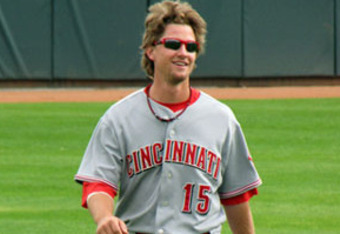
In six and two-thirds innings of work, the young righty gave up only one run on four hits good for a 1.35 ERA. He did channel Walker by walking seven, but he also struck out five. Leake also added two hits to become the first Reds pitcher to produce two hits in his debut since Benny Frey on Sept. 18, 1929.
***Thank you to the Hall of Very Good for preparing today’s feature article on Mike Leake and his jump directly to the Major Leagues. You can follow the Hall of Very Good on Twitter.***
Please e-mail us at: MLBreports@gmail.com with any questions and feedback. You can follow us on Twitter and become a fan on Facebook . To subscribe to our website and have the daily Reports sent directly to your inbox , click here and follow the link at the top of our homepage.

Revisiting: Brett Wallace, Matt Holliday, Michael Taylor, Anthony Gose: 4 Players, 4 Teams, 3 Trades
Tuesday May 31, 2011
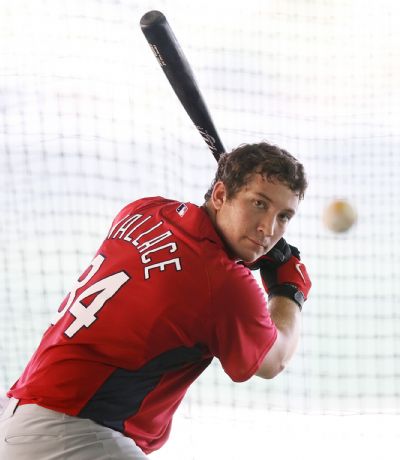
MLB reports: Brett Wallace has experienced a baseball odyssey like few others ever have. Drafted twice, traded three times and playing in 4 different baseball organizations before his 25th birthday. The man with the golden bat, Wallace has been coveted by many MLB teams yet somehow managed to move in three separate transactions over his short career. Usually in these scenarios, we would consider the player to be more of a role type player and not likely to be a superstar in the making. But considering the players and transactions involved, it is clear that Wallace has been in demand all along. Now finally entrenched in Houston and playing every day in the big leagues, Wallace is finally fulfilling his early promise and making a name for himself as a future All-Star and possibly batting champion in the National League.
Wallace first hit our radars in 2005 when the Toronto Blue Jays drafted him in the 42nd round. Unable to sign him, Wallace went on to start playing college ball for Arizona State University. From there, Wallace blossomed into a 1st round pick, 13th overall for the St. Louis Cardinals in 2008. Playing in the Cardinals minor league system at third base, Wallace was touted as the next Cards superstar hitter in the making. With Pujols entrenched at 1st base and up-and-coming slugger Colby Rasmus also in the picture, the Cardinals appeared to be set offensively for years to come.
The plan was changed on July 24, 2009, where the Cardinals making a playoff push, traded Wallace to the Oakland Athletics with Shane Peterson and Clayton Mortensen for slugging outfielder Matt Holliday. The plan worked as the Cardinals were able to make the playoffs and proceeded to sign Holliday to a long-term deal as protection in the lineup for their main superstar, Albert Pujols. Wallace, played out the season in the A’s organization and the debate started as to whether his long-term future was at third or first base.
Part of the mystery Wallace was solved as Toronto finally landed its prized target on December 15, 2009. As part of the Roy Halladay swap, the Jays acquired outfielder Michael Taylor from Philadelphia. One quick transaction later, Alex Anthopoulos and Billy Beane followed through on a Taylor for Wallace trade. Wallace was moved permanently to first base with an eye towards joining the Blue Jays as their new first baseman by 2011. Or so we all thought. As Alex Anthopoulos started to show the baseball world, he was not afraid to make multiple trades to get the players he wanted.
The Houston Astros in mid-2010 finally started their fire sale. Franchise player Lance Berkman was traded to the New York Yankees and ace pitcher Roy Oswalt was moved to Philadelphia. As part of the Oswalt trade, the Astros received young speedster outfielder Anthony Gose. The Gose acquisition actually led to two further moves. The Jays apparently were keen on Gose for sometime and were unsuccessful in originally prying him away from the Phillies in the Halladay deal. The Astros with this knowledge, were able to trade away Berkman knowing that his replacement would come from Toronto if Gose would be a part of the equation. Trade #3 was then consummated and Wallace found a home in Houston.
Sitting 1/3 of the way into the 2011 season, it is time to look at all four players involved in the three Wallace transactions and get a glimpse as to how each is performing. In the process, it is interesting to note which teams ended up benefitting from being a part of each Wallace trade. Let’s look deeper into the numbers of Brett Wallace and the Astros, Michael Taylor and the Athletics, Anthony Gose and the Jays, and Matt Holliday and the Cardinals.
Brett Wallace – Astros
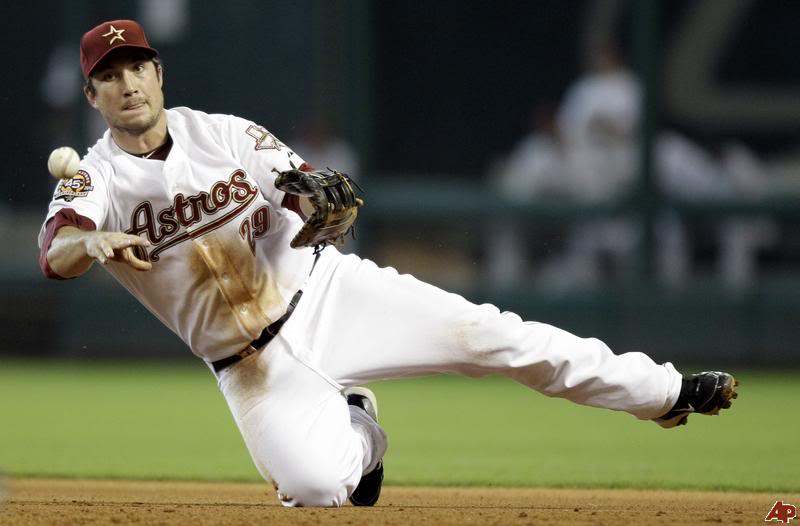
So far, so good for the young Astros slugger. Having made the team out of spring training, Wallace currently has a .308 AVG, .379 OBP, .442 SLG, 19/39 BB/K, 3 home runs, 22 runs and 16 RBIs. For a young team in need of offense, the Astros could not ask more from Wallace. For a kid that always known to be able to hit, the numbers back up the hype. Having watched him play this year live, I can attest that he plays a fairly solid first base defensively as well. With the Astros now having their future cleanup hitter getting his feet wet in the majors, they look to have benefitted as a team by acquiring Wallace.
Matt Holliday – Cardinals
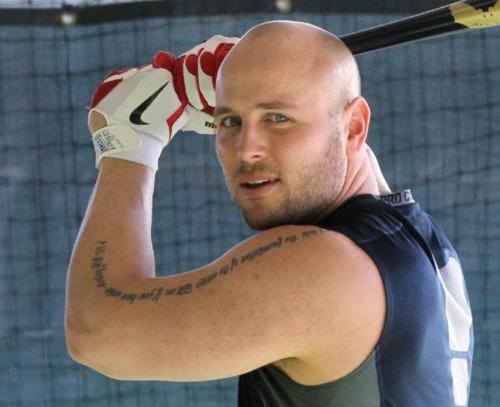 Despite paying a heavy price to acquire Holliday in the first place, one cannot argue with the results. A contending team that has made the playoffs with him on its roster, the Cardinals have been a better team with Matt Holliday. Since joining the Cardinals, Holliday has since 2009 had an OPS each year of 1.023, .922 and .981. Holliday hit 13 home runs in 63 games in 2009 and 28 home runs last year. As Pujols protection, the Cardinals were able to sign Holliday to a long-term contract and bring stability to its lineup and clubhouse. If the Cardinals had not traded for Holliday, he would have not as likely signed with the team as a free agent as his time playing in St. Louis played a large role in his decision to sign. The other components of the trade, Peterson and Mortensen turned into expandable spare parts, role players at best. While the Cardinals could have used Wallace’s bat, there was no room for him at first base and his glove did not project to allow him to stay at third. The trade turned into a good win for the Cardinals, as strong of a return as the team could have ever expected.
Anthony Gose- Blue Jays
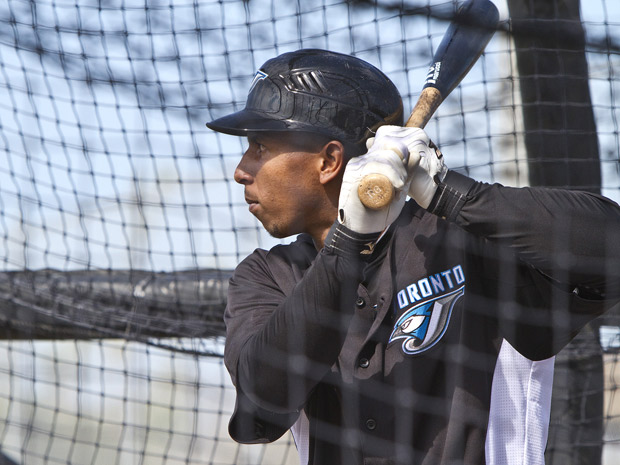 Once we get past Wallace and Holliday, the return on the last 2 Wallace trades still remain relatively unknown. We start with Anthony Gose of the Jays. Seen as a strong defensive player and future stolen base champion, the Jays acquired a player known more for tools over the refined and polished bat of Wallace. So far in 2011, the 20-year old Gose at the advanced AA level has held his own, with a .272 AVG, .375 OBP, .391 SLG, 4 home runs, 22 RBIs, 33 runs, 27/41 BB/K ratio. Having stolen 76 bases in 2009 in the minors, speed is clearly a big part of Gose’s game. On the season, Gose already been successful 22/27 times on stolen base attempts. With Adam Lind entrenched as the new first baseman for the Jays, the team appeared to have indicated by trading Wallace that there was no room for Wallace and that the potential of Gose had a higher value to the team. With the Jays offense being up and down all year, I think the bat of Wallace rotating through first and DH would have been very useful for the team. Time will tell on this swap, but at the moment all the Jays have is potential and hype in Anthony Gose while the Astros have defined production from Wallace. Until proven otherwise, the Astros have the advantage over the Jays in the last Wallace swap.
Michael Taylor- Athletics
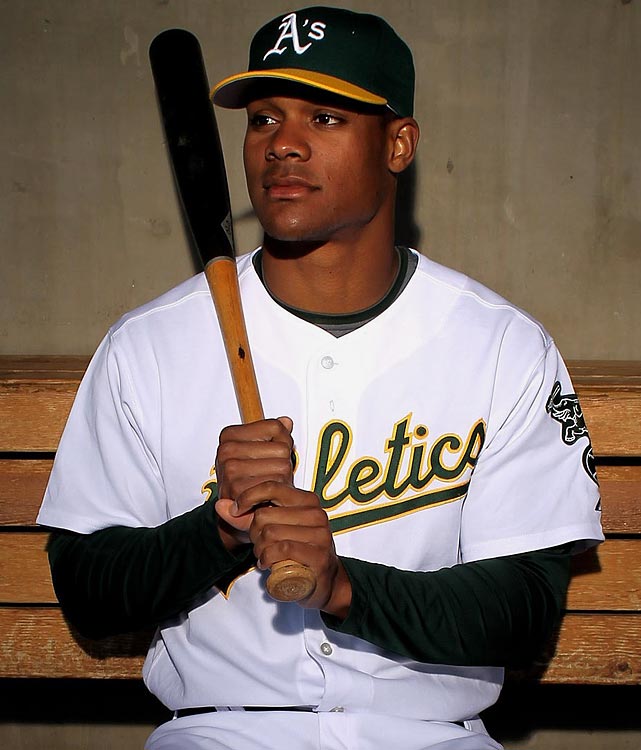 The last player to be reviewed is Michael Taylor of the A’s. A highly considered outfielder once upon a time in the Phillies system, some analysts rated Taylor higher than current Phillies prospect Domonic Brown. Since joining the A’s organization, Taylor has been sidelined by injuries and has not been able to fully get himself on track. In 2010, Taylor hit .272 in AAA with 6 home runs and 16 stolen bases in 127 games played. This year, Taylor has only played 15 games with 1 home run, but has hit .333 with a .795 OPS. The potential is still there for Taylor but at 25 and in his second full season at AAA for Oakland, Taylor will have to produce to justify the A’s swap of Wallace for him. Considering that the Athletics have one of the worst offenses in baseball and could desperately use Wallace’s bat in their lineup, it is clear that the A’s came up with the shortest end of the stick, so to speak, among all the teams involved in the Wallace swaps. Considering the price that the A’s paid to get Holliday originally, including Carlos Gonzalez and Houston Street, losing Wallace and having Taylor stuck in AAA makes all of their trades look even worse. I still hold out h0pe for Taylor, but another lost year could result in a required change of scenery for him.
It will be interesting to catch up with Wallace, Gose, Holliday and Taylor in another year and then five years from now and see the stage of each player’s career at that time. Wallace and Holliday should still be proven commodities. It will be Gose and Taylor as the wild cards that will either blossom or fail as prospects. The future is bright and still unknown for both of these players. Until then, we will continue to enjoy watching Brett Wallace as he continues to develop as a player in Houston.
Please e-mail us at: MLBreports@gmail.com with any questions and feedback. You can follow us on Twitter and become a fan on Facebook . To subscribe to our website and have the daily Reports sent directly to your inbox , click here and follow the link at the top of our homepage.

Buster Posey Out for the Season: Time for a Rule Change?
Monday May 30, 2011
On the Reports, we will be occasionally featuring an up-and-coming baseball writer that has come to our attention and share their work with you, the readers. Part of our mandate at MLB reports is to provide the best baseball coverage and analysis in the business. MLB reports ultimately is designed to expose our readers to the world of baseball and the stories, facts, insights and profiles behind it. In order to meet this goal, we would like to give exciting young writers the chance to showcase their talents and provide a fresh pool of ideas to our site. In today’s feature, we are excited to have Brian Lozier as our guest writer with his post on the Buster Posey injury. Brian’s topic was to look at the Posey injury and whether a rule change is required in baseball. Enjoy!
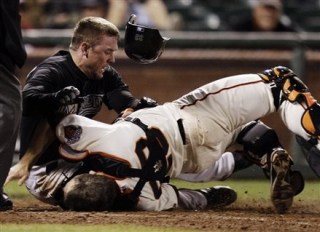
Brian Lozier (Guest Writer for MLB Reports): Injuries are another way of saying “Unfortunate event”. Things that are literally out of the hands of the people involved. There is nothing there to prevent injuries, slow them or make what unfolded heal any faster. Nothing can change an injury after it occurs, so people try to take measures into their own hands and prevent future occurences from happening. But at what cost to the game do we try to prevent injuries from taking place?
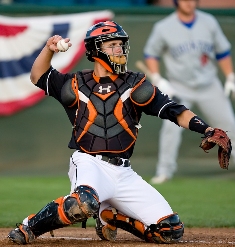 In the extra-inning thriller staged in AT&T Park in San Francisco this past Wednesday, former Rookie of the Year winning catcher Buster Posey suffered a broken leg and is out for the rest of the season and possibly the start of 2012 as well. A future All-Star candidate, Posey was run over by Scott Cousins of the Marlins, who scored the go-ahead run in the 12th inning. Posey, becoming an everyday catcher last season after being called up in May, played the role of protector of home plate on the play. Posey took his destiny and the future of his team in his hands by doing all that he could to fight for his team to pull out the win. The resulting cost though to the Giants organization was devastating.
After an MRI came back showing a broken fibula and three torn ligaments, Posey’s agent, Jeff Barry reached out to Joe Torre and the MLB head office with a plead for a change of the rules in order to stop collisions at the plate. Barry stated that “You leave players vulnerable. I can tell you MLB is less than it was before [Posey’s Injury]”. Barry went on to compare the incident to a helmet to helmet collision in the NFL. “If you go helmet to helmet in the NFL, it’s a $100,000 fine. In baseball, you have a situation in which baserunners are slamming into fielders. It’s brutal. Borderline shocking. It just stinks for baseball.”
I can understand an agent’s view to wanting to keep players safe. I can see the importance of Major League Baseball taking measure to stop “senseless” injuries and preventing side-liners and career-ending plays. However, I have to draw the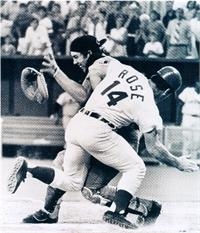 line when people ask to remove excitement from this great game. Train wrecks have been a part of baseball since the sport came into existence. The most famous of which might have been the 1970 All-Star Game and the Pete Rose collision at the plate. Or perhaps the collision to end game 6 of the 2003 World Series. I will let you be the judge.
Understanding one’s role and doing what it takes to win is a major part of being a Big-Leaguer. The speedster on each squad knows that it’s his job to steal bases. Consequence: Possible broken fingers. Outfielders on the other hand, are expected to catch balls on the fly. They might break a rib as a result, but it’s a part of their role. Pitchers go out knowing they could take a ball to the face or throw out an arm every time they step out onto a mound. But it’s what they do and is necessary for their respective teams to win. The above logic is no different when it is applied to the catcher. A catcher defensively at the end of the day must first and foremost, stop the baserunner. No question, no doubt.
What would happen if the rule changed and home plate collisions were a thing of the past? No one knows for certain, but it’s almost safe to say it would turn home plate into another first base. This would result in every close play into a force out situation. This would be a nightmare for teams when facing a contact pitcher. The result would be raising concern in places where most teams whole have a sigh of relief. Imagine stopping the notion of a deep sac fly to score a winning run. Or worse, stopping the suicide squeeze. Baseball would almost become a game without a soul.
I admire Jeff Barry for standing up for his client, I really do. In fact, more agents need to stand up for their players. I just wish it wasn’t at the expense of the game and the intensity of the sport that fans deserve. Why would anybody want to agree to this rule change? By abandoning home plate collisions, proponents of the rule change would be removing chance, excitement and thrill to the game of baseball. The clash of the titans at home plate during a game shows heart and guts to win a game which could possibly lead to a future World Series ring. Although not a perfect system which can result in the occasional injury, baseball needs to be played in the way it was meant to be. My baseball includes home plate collisions. It has been a part of the dynamic of baseball for all these years up to and including today and should continue to have a place in the sport for years to come.
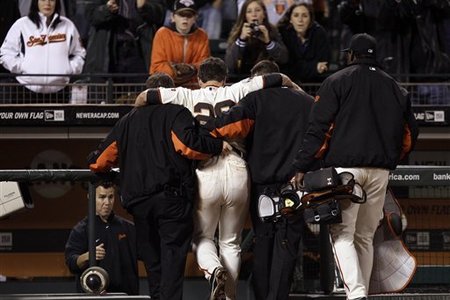
***Thank you to Brian Lozier for preparing today’s article on Buster Posey and rule changes in baseball. You can follow Brian on Twitter.***
Please e-mail us at: MLBreports@gmail.com with any questions and feedback. You can follow us on Twitter and become a fan on Facebook . To subscribe to our website and have the daily Reports sent directly to your inbox , click here and follow the link at the top of our homepage.

Where Are They Now: From Retired MLB Players to Minor League Managers and Coaches
Sunday May 29, 2011
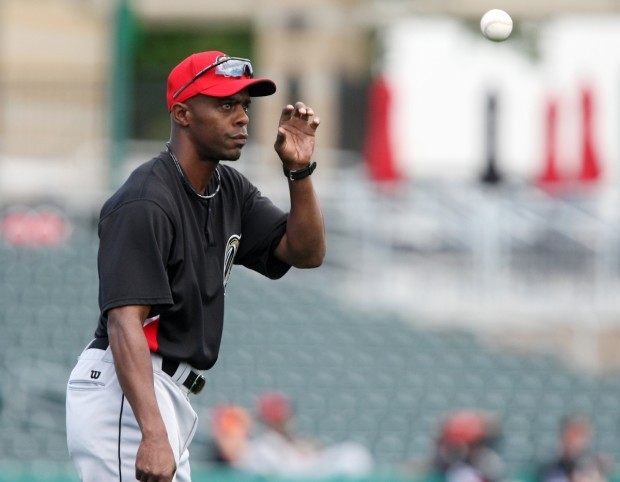
MLB reports: Having attended many baseball games in my lifetime, I was reflecting the other day on life after retirement for baseball players. Getting to watch players for upwards of 20 years, one day each and every one departs the game eventually. Once their playing careers are over and the players hang up their spikes for the last time, fans often ask: what happens to them? This is a question I find myself asking time and time again. Some players turn into broadcasters and scouts. Some retire and live on secluded islands, never to be seen again. Some are lucky enough to find jobs in the major league level, from front office positions to on-field coaching assignments. However, many that wish to stay in the game end up going back to the minors and starting over.
Looking at the list of minor league managers and coaches, familiar names from days gone by get triggered. What I did notice though was a reoccurring theme. With the exception of few, you are unlikely to find too many hall-of-famers and superstar players in the grass-roots levels. The best coaches and managers, occurring to many industry people that I have spoken with, are within the role players and grinders that studied the game well and fought for their playing careers. Ex-catchers are often labelled as strong future managers and coaches for their knowledge of the game. A superstar often gets by on talent and skill, but their results on the field do not always translate well in the dugout. To be a good manager or coach, you have to know the game inside and out and be able to teach, motivate and get the most results out of your players and team. Grinders, catchers, utility players, bottom-end starters and middle relievers are the ones that had to fight for every day, week, month and season to be kept on a major league roster. Being able to squeeze maximum results out of limited ability often as a player will lead to success as a future coach or manager. Or so the theory goes.
Take some of today’s active big league managers. From Mike Scoscia, to Bud Black, John Farrell, Joe Girardi, and Ozzie Guillen among others, we see a list of managers that had long-lasting playing careers but were never hall-of-fame material. The above list of managers got by as players on smarts, craftiness, effort and getting the most out of their abilities. The same characteristics these men had as players, they are now forging for their respective teams as big league managers. While superstar players turned into managers have and will continue to exist, like Pete Rose and Ryne Sandberg for example, they are the exception rather than the norm. Part of the reason could be that role type players just make better managers. Other reasons could be that superstars with their lifetime playing career incomes do not have the desire to take on manager and coaching roles with little financial reward. Superstars are also less likely to take the busses and go back to the minors to work their way back to the majors. The end result though is that in most cases, it will take a certain breed of ex-players to manage and coach in the minors after their playing careers are finished.
As of the 2011 season, I have prepared a list of ex-MLB players who can be found coaching and managing in the minors. I have based this list on the better known players for reference sake. Each person on the list has their organization, level and position noted. If nothing else, this list will serve as a wonderful walk down memory lane to remember some of our favorite players from the past and find where they are managing or coaching currently.
Our noted coaches and managers in the minors are as follows: (Note SS= Short Season, Rookie= Rookie level)
Paul Abbott – SS Pitching Coach (Red Sox)
Edgardo Alfonzo – Rookie Coach (Astros)
Wally Backman – AA Manager (Mets)
Damon Berryhill – Rookie Manager (Dodgers)
Willie Blair – Low A Pitching Coach (Padres)
Ricky Bones – AAA Pitching Coach (Mets)
D.J. Boston – Rookie Coach (Braves)
Jeff Branson – AAA Coach (Pirates)
Jerry Browne – AAA Coach (Nationals)
Tom Browning – Rookie Pitching Coach (Reds)
Tom Brunansky – AA Coach (Twins)
Steve Buechele – AA Manager (Rangers)
Dave Burba – SS Pitching Coach (Rockies)
Brett Butler – AAA Manager (Diamondbacks)
Frank Castillo – Rookie Pitching Coach (Cubs)
Phil Clark – High A Coach (Indians)
Gregg Colbrunn – Low A Coach (Yankees)
Scott Coolbaugh – AAA Coach (Rangers)
Brian Daubach – Low A Manager (Nationals)
Chili Davis – AAA Coach (Red Sox)
Storm Davis – Low A Pitching Coach (Rangers)
Steve Decker – AAA Manager (Giants)
Delino DeShields – Low A Manager (Reds)
Rich Donnelly – SS Manager (Mets)
Doug Drabek – High A Pitching Coach (Diamondbacks)
Mariano Duncan – AA Coach (Cubs)
Leon Durham – AAA Coach (Tigers)
Sal Fasano – AA Manager (Jays)
Jeff Fassero – Low A Pitching Coach (Cubs)
Tom Filer – AAA Pitching Coach (Pirates)
Tony Fossas – Low A Pitching Coach (Reds)
Rich Gedman – SS Coach (Red Sox)
Jim Gott – Rookie Pitching Coach (Angels)
Tommy Gregg – AAA Coach (Royals)
Ken Griffey Sr. – High A Manager (Reds)
Brian Harper – AA Manager (Cubs)
Jeff Harris – Low A Pitching Coach (Indians)
Lenny Harris – Low A Coach (Dodgers)
Ron Hassey – High A Manager (Marlins)
Greg Hibbard – SS Pitching Coach (Indians)
Bobby Jones – AAA Manager (Rangers)
Kevin Jordan – Rookie Coach (Phillies)
Pat Kelly – Rookie Manager (Reds)
Terry Kennedy – AAA Manager (Padres)
Steve Kline – Low A Pitching Coach (Giants)
Randy Knorr – AAA Manager (Nationals)
Tim Laker – AAA Coach (White Sox)
Les Lancaster – Rookie Pitching Coach (Phillies)
Tom Lawless – AA Manager (Astros)
Matt LeCroy – High A Manager (Nationals)
Craig Lefferts – High A Pitching Coach (Athletics)
Doug Linton- AAA Pitching Coach (Rockies)
Nelson Liriano – Rookie Manager (Royals)
Dennis Martinez – High A Pitching Coach (Cardinals)
Joe McEwing – AAA Manager (White Sox)
Bob Milacki – AA Pitching Coach (Phillies)
Mickey Morandini – SS Manager (Phillies)
Phil Nevin – AAA Manager (Tigers)
Greg Norton – AAA Manager (Marlins)
Lance Painter – AA Pitching Coach (Mariners)
Phil Plantier – High A Coach (Padres)
Ariel Prieto – Rookie Pitching Coach (Athletics)
Tom Prince – Rookie Manager (Pirates)
Mike Redmond – Low A Manager (Jays)
Jody Reed – Rookie Manager (Dodgers)
Pete Rose Jr. – Rookie Manager (White Sox)
Luis Salazar – High A Manager (Braves)
Ryne Sandberg – AAA Manager (Phillies)
Dick Schofield – Rookie Coach (Angels)
Kelly Stinnett – Rookie Manager (Diamondbacks)
Franklin Stubbs – AA Coach (Dodgers)
Tim Teufel – AAA Manager (Mets)
Bobby Thigpen – High A Pitching Coach (White Sox)
Randy Tomlin – AA Pitching Coach (Nationals)
John Valentin – AAA Coach (Dodgers)
Frank Viola – SS Pitching Coach (Mets)
Matt Walbeck – Low A Manager (Braves)
Pete Walker – AA Pitching Coach (Jays)
Turner Ward – AA Manager (Diamondbacks)
U.L. Washington – Rookie Coach (Red Sox)
Trevor Wilson – Low A Pitching Coach (Angels)
Vance Wilson – Low A Manager (Royals)
Shawn Wooten – Low A Manager (Padres)
From the above list, it will be interesting to see which of these ex-players end up graduating to the big leagues and in what capacity. Many will find that the road to the show as a player was actually easier than the path as a manager or coach. We fondly remember many of these individuals for their contributions to the game of baseball on the field. We look forward to finding out which of them will be able to find similar success in the dugout.
Please e-mail us at: MLBreports@gmail.com with any questions and feedback. You can follow us on Twitter and become a fan on Facebook . To subscribe to our website and have the daily Reports sent directly to your inbox , click here and follow the link at the top of our homepage.

Interview with Frank Gailey: Jays Prospect
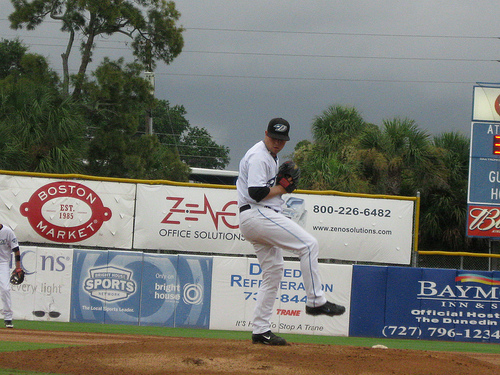
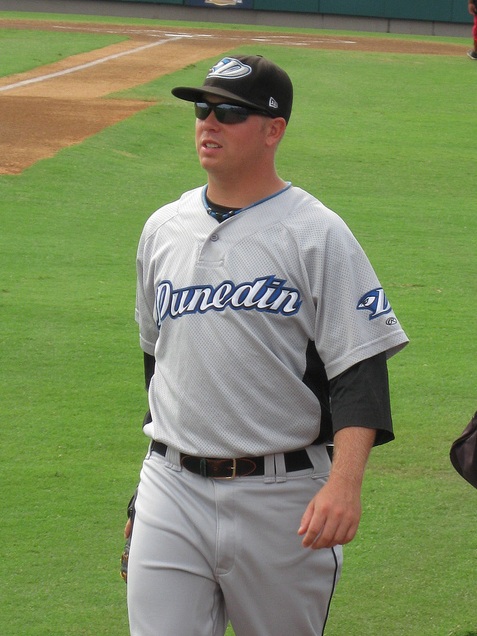
MLB reports: In our most recent interview, we sat down with Toronto Blue Jays prospect, Frank Gailey. The organization’s 2010 Reliever of the Year, Frank is one of the up-and-coming Jays prospects that should be on everyone’s radar. A 23rd round pick of the Jays back in 2007, Frank simply put has been dominant on the mound from the moment he put on a Jays uniform. As Gailey has steadily and methodically risen up the organizational ladder, baseball insiders feel that its time for the Jays to move Gaily aggressively up the ranks to see what he can do. Back for a second tour of duty with Dunedin High A, Gailey after 15 games this season has exploded, with a miniscule 1.21 ERA, 0.851 WHIP, 6/17 BB/K. Considering the man has a 2.07 ERA in 5 career seasons with a 1.005 WHIP, Frank deserves to be on the fast track. With nothing left to prove in Dunedin, Gailey will hopefully be seeing the bright lights of Las Vegas AAA this season. With left-handed relievers furiously in demand through major league baseball, expect to see Frank Gailey up in Toronto one day soon. Now, without further adieu, MLB reports presents: Frank Gailey.
MLB reports: Thank you for taking time out of your schedule to speak with us Frank. It is much appreciated.
Frank Gailey: Thank you for having me and for the opportunity.
MLB reports: Starting off Frank, to get some background on the type of player that you are- we need to ask who was your favorite baseball player growing up, that you most idolized and patterned your game after? Athletes tend to mirror the players that they looked up to growing up from my experiences.
 Frank Gailey: I would have to say that Tom Glavine was the one pitcher that I looked at most and enjoyed watching. He is the type of pitcher that uses all approaches when on the mound. I believe as a left-handed pitcher now in the minors, I now know that I can’t just throw a fastball anywhere and expect to be successful. I need to locate every pitch in and outside the plate. Change speeds and be smarter than the hitter.
MLB reports: Which current MLB star do you most admire and why?
Frank Gailey: To be honest I admire all of them that had a dream like mine and fought through any set backs in their careers and made it. One day, I wish I hope to be in their shoes.
MLB reports: Reflecting on your career to-date, what are your proudest accomplishments on the baseball field?
 Frank Gailey: I would have to say that all the accomplishments in my career on the field are amazing and I will never forget the teammates and coaches that were there for me. However, the proudest moment was when I got the call that I was drafted by the Blue Jays. To me that showed that all my hard work and dedication to my dream of one day being a big leaguer is paying off.
MLB reports: What are your goals going into the 2011 season?
Frank Gailey: I would have to say that my goals for this season are to be stronger and stay healthy while having a good season. I believe if I do that, then I would be able to help my team be successful.
MLB reports: When you first found out you were drafted by the Jays, what were your first reactions? Did those reactions change over time? If you can comment on the team itself and your draft position in the 23rd round that would help.
Frank Gailey: To be honest, I heard I was drafted and I was pumped. I didn’t really care whom it was that drafted me, as I just wanted an opportunity to compete at a higher level. But now being with the Jays for some time, I enjoy everyone associated with the Jays organization because they are there to help make me grow better as a player and person.
MLB reports: What do you consider your greatest baseball skill(s)?
Frank Gailey: To me my greatest skills are my competitive nature and ability to stay calm and throw strikes with multiple pitches.
MLB reports: What facets of your game do you most wish to improve upon?
Frank Gailey: The part of my game that I wish to improve on the most is to be completely dominant against left-handed hitters.
MLB reports: How do strikeouts and walks/control figure into your game? Do you see any of these items changing over time and to what degree?
 Frank Gailey: To me strikeouts will come if you just throw quality strikes. I don’t get on the mound to strike guys out, but rather to make one quality pitch at a time. Personally I hate walking guys because it a free pass. They did not have to do anything to get on base and I didn’t give my defense a chance to do their job. I don’t see this mind-set changing because it fits my game plan.
MLB reports: Long term do you see yourself staying in the bullpen? Do you envision yourself as a closer in the big leagues one day?
Frank Gailey: If I had to guess I would say yes to the fact that I would be staying in the bullpen. I don’t see myself as a closer but pretty much everything else. But I am ready for any role asked of me by the team.
MLB reports: If you had to look into a crystal ball, when do you see your expected time of arrival in the big leagues and what do you think you need to do most to get there?
Frank Gailey: There is no way I can even guess an answer to something like that. The only things I can do to help my chances are to compete and be the steady guy that the team can rely upon in the bullpen.
MLB reports: Thank you very much for your time and appearing on MLB reports. It has been a pleasure speaking with you and good luck on the season
Frank Gailey: Thank you for having me and thank you to the fans for all of their support.

***A special thank you to Frank Gailey for his time and effort as part of being interviewed for this article. You can follow Frank on Twitter.***
Please e-mail us at: MLBreports@gmail.com with any questions and feedback. You can follow us on Twitter and become a fan on Facebook . To subscribe to our website and have the daily Reports sent directly to your inbox , click here and follow the link at the top of our homepage.

Jose Bautista Toronto Blue Jays: MLB Home Run Leader, The Inside Report
Tuesday May 17, 2011
MLB reports: Today’s article is as much about admission of guilt as it is about profiling Toronto Blue Jay’s home run king and the greatest slugger in the game going, Jose Bautista. Yes, in order to fully analyze Bautista, it is time for this writer to come clean. When you talk and review as much baseball as I do, the one thing that you never like to do is admit is that you are wrong. There are times where circumstances happen beyond one’s control and predicted results can change and take different forms. That’s fine. In the case of Jose Bautista, I am finally prepared today to admit that I was wrong. Not once. Not twice. But three or more times. For all the “experts” that say they saw the Jose Bautista of today emerging, my hat is off to them. If they are being truthful, which in most cases I would have a hard time believing. For in my estimation, Jose Bautista was the one player that literally appeared out of nowhere. From the abyss of the unknown to bona fide superstar overnight. Let’s trail the story of Jose Bautista and how the slugger has managed to shape a doubter into a baseball believer. It took time, but I am finally prepared to state that Jose Bautista here is to stay.
I recall clearly being in Pittsburgh during the 2007 season. I had visited the city the year before to attend the home run derby and all-star game. Loving the park, the city and Fatheads (which if you haven’t been is one of the best American restaurants/pubs ever), I decided another trip to watch weekend baseball was in order. Being a fan of baseball merchandise and memorabilia, I made sure to go through the souvenir shops at the park before each game. I left with a Ryan Doumit jersey t-shirt (which I still own and wear proudly) but did not pick up any memorabilia on that trip. One piece of merchandise that I saw that weekend does stick out in my brain though. In the game used bat barrel, I recall going through the lumber that there were a couple of Jose Bautista un-cracked game used bats. To make matters worse, the bats were a whopping $30 each. I distinctly recall laughing at the sight of the bats and indicating something along the lines of that “…the store would need to pay me to take these away.” Clearly I did not see a value to the Bautista bats that day or attach any future value to them. A sign of things to come.
 Fast forward a year later and the Blue Jays and Pittsburgh Pirates consummated a swap. A good old fashioned baseball trade. August of 2008, Jose Bautista gets traded to my hometown Toronto Blue Jays for a player to be named later, turning out to be Robinson Diaz. My thoughts at the time on the trade went along the lines of, “…I can’t believe the Jays gave up Diaz, a young catching prospect for a non-hitting utility guy. Wow, the Pirates won this deal hands-down.” For the balance of 2008 and the majority 2009, Bautista did nothing to change my opinion. Bautista hit few home runs and his average was barely above the Mendoza-line. It was actually unbearable at points watching him in his first full season as a Jay, as Bautista did receive 336 at bats in 2009 but mostly due to injuries. A very late season surge barely made up for a season worth of failures. To say that I was not sold on the player at this point would be an understatement. Expecting little to nothing of him going into the 2010 season, Bautista was about to change the baseball landscape and his image in the game forever. The player that I once considered inferior as a prospect to Robinson Diaz was about to become the “Bautista Bomb.”
Jose Bautista’s 2010 season is in the record books and truly one for the ages. A relative unknown quantity going into the year, all Bautista did was finish as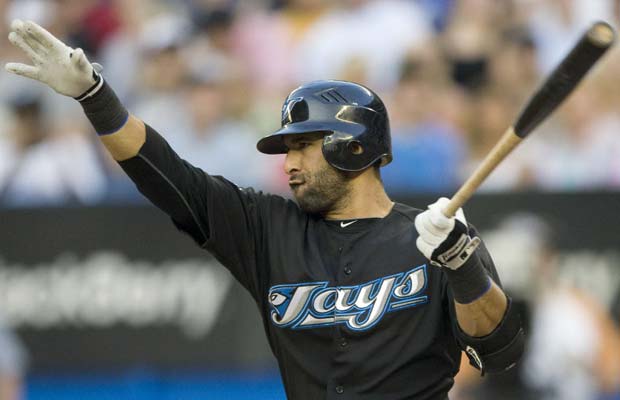 the MLB home run leader and champion in 2010, with 54 home runs playing in all but one of the Blue Jays games that year. Add to the total 109 runs scored, 124 runs driven in, 100 walks, .260 average and .995 OPS and Jose Bautista, once a 20th round pick in 2000 for the Pirates was all of a sudden a star. It’s not like the Pirates were alone in their assessment of the player. Bautista along the way also had cups of coffees with the Rays, Orioles and Royals. Despite the many scouts and executives in baseball that analyze the game and review its players, in the age of video and statistics none were able to predict the slugging beast that Bautista would become. J.P. Ricciardi, the general manager of the Blue Jays who acquired Jose Bautista, will have the Bautista/Diaz swap on his resume as the greatest baseball transaction of his career. Ricciardi himself, now a New York Mets executive, admits that he never expected Bautista to develop the way he did. While Ricciardi knew that Bautista had power in his bat having watched him on many occasions at spring training as the Jays and Pirates faced-off, the Bautista of 2010 was never on his radar.
Listening to industry insiders, Bautista in late 2009 made an adjustment to his approach at the plate and instead of being late going after the ball, Bautista was moving his hands quicker and starting his swing earlier. Apparently the slight adjustment in his batting approach created all the difference in the world. Credit then manager Cito Gaston, a former hitting coach, with one of his last and greatest teachings. The big question going into 2011 was whether Jose Bautista was for real and could continue his success at the plate. The next related issue was to determine Bautista’s value and future salary going into the offseason. Bautista was arbitration eligible and due for a huge raise.
Going into the offseason that year, the Jays and Bautista were set to face-off in arbitration. The 2010/2011 offseason saw a vast amount of speculation surrounding Jose Bautista’s contract and what the Jays were going to pay him. As Bautista was eligible for free agency the next year, fans and commentators debated the winter months whether the Jays should sign Bautista to a long-term contract, let an arbitrator decide or use a one-year contract as a determination whether the production would continue and sign a long-term deal the next year. As memories tend to get hazy over time, I will help remind everyone the thoughts that were prevalent at the time. It was clear that if the Jays were to sign Bautista to a one-year contract, they would risk losing him to free agency the next year as another monster season was likely to bring the potential of multiple bidders and exorbitant contract offers. Considering that Jayson Werth had signed that offseason with the Washington Nationals for seven years and $126 million, anything was possible. Although unlikely, there was always the risk. Arbitration was also seen as a risky proposition as feelings and relationships tend to get strained in such a process whereby teams do everything they can to devalue a player when going before an arbitrator. Jays GM Alex Anthopoulos made it clear in the offseason that he was breaking rank in Toronto and adopting a Rays type policy of not negotiating with players once arbitration amounts were submitted both the team and player in the arbitration process. The Blue Jays, who had not gone to arbitration with a player since 1997, appeared to be headed to a showdown with Jose Bautista as both team and player had submitted their numbers by the deadline without an agreement. However further events were about to unfold to change the dynamic of the team that few saw coming with the likely effect of stabilizing the Jays for the next few seasons as a result.
On January 22, 2011, I remember vividly at 6:30p.m. driving in my car and listening to sports radio as the announcer broke the news that Mike 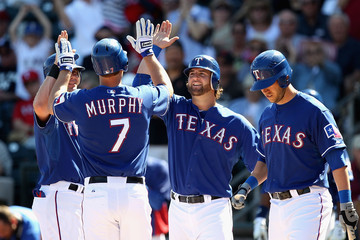 Napoli had been traded to the Toronto Blue Jays. Long being a Napoli supporter, to say that I was overjoyed at the news was an understatement. Power hitting catchers do not grow on trees and with the Jays need for an additional power bat in the lineup, Napoli was a welcome addition. The only question was the price the Jays had paid. The news at the time was that the Jays were trading an outfielder but his identity was not known at the time. I was sure that Bautista was the outfielder in question. Going into arbitration, I determined that Bautista was worth at most three years and $24 million. Given that Bautista was unproven and coming off only one strong campaign, there was too much risk in investing any additional dollars in the player. It made sense to me that the Jays would trade Bautista while his value was at his highest for a known commodity in Napoli. The next news update literally made me fall out of my chair. The outfielder traded to the Angels was not Bautista but rather Vernon Wells. Somehow Anthopoulos was able to unload Wells and his albatross of a contract onto the Angels and spin a productive player in Napoli in return, along with spare part outfielder Juan Rivera. Hailed as a genius, Anthopoulos created payroll flexibility for the young and up-and-coming Jays while removing a player seen as declining, both in the field and at the plate. The Wells contract, signed by the aforementioned Ricciardi which was blasted for years by critics as one of the worst ever was now gone. It did not even occur to me when I first heard that Napoli was coming to Toronto that Wells was headed the other way. The Wells contract was probably the most unmovable contract in sports and to hear those words simply astounded me, Jays analysts and the baseball community at large. While the Angels were criticized for overspending and taking on a weak asset in Wells, hope was abound in Toronto and the future appeared to be bright after so many dismal and hopeless seasons before. I predicted that Rivera, a free agent the next year would have a campaign that would likely mirror the numbers that Wells would put up in Anaheim. With the outfielders numbers a wash and Napoli on board, the trade was overwhelmingly hailed as a victory for the Jays.
 The Jays ended up a couple of days later flipping Mike Napoli to the Texas Rangers for reliever Frank Francisco. The move was questioned and debated throughout baseball circles, in attempting to determine flipping a power bat for a power arm. The jury is still out on the move and we will learn in the future whether Anthopoulos over-played his cards. Jose Bautista on the other hand, had his arbitration hearing postponed at the last-minute in February as the team and player attempted to hammer out a new contract. The numbers that I was hearing were a one year contract in the $10-$12 million dollar range. That was the expectation as spring training approached. On February 17, 2011, the Blue Jays announced that they had signed Jose Bautista to a five-year, $64 million contract. At an average of almost $13 million per season for five seasons, the prevailing though in baseball was that the Jays had overpaid and taken on a significant risk. Considering that they were fortunate enough to move Wells and his monster deal, the discussion was that the Jays had made a mistake by committing too much money and too many years to a player that could end up blowing up their face. I will admit that when I heard the Bautista signing announcement, I hated it. I saw the Bautista deal as the second coming off the Wells signing and commented that the lustre certainly was removed from Anthopoulos as GM fairly quickly. One of the biggest questions going into the 2011 season was whether Bautista could repeat anything close to his numbers and be able to justify his large new salary. While I read predictions of 20-30 home runs at most, the baseball community saw a decline and correction of Bautista’s numbers as he was to fall back to reality. I cannot recall reading in February and March of any “expert” that predicted Bautista could approach anything close to his 2010 numbers. I will admit that I was firmly in this camp and predicted a season of 30 home runs and .250 average at best. Boy was I going to be wrong yet again on this one, as Jose Bautista going to teach the baseball world what he was really made of.
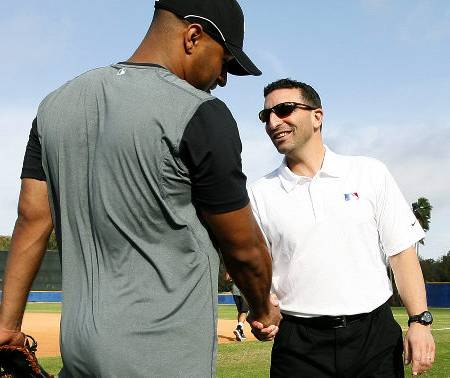 One report from spring training really stuck out to me. Listening to news from around the Blue Jays camp, it was evident that there was no talk of Vernon Wells. Management was not discussing the former Jays gold glove outfielder and team leader and none of the players were indicating that a void existed based on his departure. That said to me a lot about the lack of value that Wells would have brought to the Jays had he remained. The attitude around the Jays was positive. A young squad, the team and its fans saw hope and optimism about with its young pitching and core developing hitters emerging. Names like Drabek, Arencenbia, Lind, Lawrie, Snider and Romero were being tossed around as the Jays were going back to basics and having fun again. At the center of it all as was the Jays developing leader and main power bat, Jose Bautista. For the Jays to contend, Bautista would need to anchor the lineup and produce at a level close to his 2010 numbers. While few saw that happening, it was clear that the ghost of Vernon Wells was gone from the team and the Toronto Blue Jays had a fresh new attitude. But to say that anyone predicted that Jose Bautista was going to be the second coming of Albert Pujols or Babe Ruth in Toronto would be foolish. Questions continued to circle around the Jays and Bautista going into the season that were only going to be answered once opening day was under way.
Throughout spring training, Bautista was playing third base as the team discussed playing an outfield of Rivera, Lind and newly acquired speedster Rajai Davis. I was not a big fan of the move as I enjoyed watching Bautista play the outfield and with a cannon for an arm, I felt that he would best serve his team defensively in the outfield. Despite being an adaptable fielder, it was my opinion that to have Bautista play at his peak, he needed to stay at one position and preferably at his most natural spot. With the future of Brett Lawrie almost upon Toronto, I did not see the value of keeping Bautista at third. Encarnacion, the incumbent third baseman was seen as somewhat defensively challenged to say the least. Thus with few options in-house, the defensive alignment of the Jays was unknown as March was drawing to an end. At the end of the month, the team out of nowhere announced that Bautista would indeed be the team’s right fielder on opening day, with Encarnacion moving to third. Some how, some way, the team did listen to me and I was actually right about something when it came to Jose Bautista. With his rightful position in place, now all Bautista had to do was hit.
Hit he did. Over and over and over again. Despite missing some games this season due to a personal leave (birth of baby daughter) and a sore neck, Jose Bautista in 2011 has become the talk of baseball. Going into today’s action, Bautista has a .370 average with a major league leading 16 home runs (3 of which were hit on Sunday against the Twins in Minnesota), 35 runs scored, 27 runs batted in, 35/19 BB/SO ratio, .516 OBP and .849 SLG. Imagine that Bautista has produced this season with little or no protection in the lineup. Adam Lind was hot for a stretch of games but has since been out for some time with back issues. I heard one baseball commentator compare what Jose Bautista is currently doing to Barry Bonds in his Giants peak years. Bonds, like Bautista, had little protection in the lineup. Without an all-star lineup like the Yankees around him, Bautista is vulnerable to be pitched around in the Jays lineup as their main and in some nights only true offensive threat. Currently Bautista is getting maybe one or two good pitches to hit a game, which somehow Bautista is able to take advantage of and still hit them for home runs. With a good eye at the plate and discipline, Bautista takes his fair share of walks and is not a Vladimir Guerrero type hitter who takes balls out of the dirt and knock them out of the park for home runs. The pace that Jose Bautista is currently on is rare and not often seen in the game. We are witnessing what I can describe as “baseball magic” and people are finally taking notice. No longer an afterthought or question mark, Jose Bautista is being recognized as the real deal and perhaps the greatest slugger currently in the game.
It is time to give the man his respect and due for his hard work and accomplishments. While I will admit that I did not see Jose Bautista emerging, I can admit that I have been wrong almost every step of the way when it has come to this man’s career. Baseball evaluations and predictions have never been an exact science. For every Dan Uggla and Joakim Soria that I saw emerging, I have been left disappointed by the Phil Nevins and Todd Zeiles of this world. I am happy to have been wrong on Jose Bautista and have been amazed at the player that he has become. I was probably one of his biggest critics in the early part of his career and after some convincing, I have finally emerged as a believer. I do not know Jose Bautista the person, although from all accounts and what I have seen he appears to be very personable and an extremely hard work on and off the field. My feelings on the player have always centered on his hard numbers, statistics that he produced which to me always told the story. Well if numbers never lie, then clearly the next big thing has emerged in baseball and his name is Jose Bautista. As the Bautista bombs continue to launch throughout baseball, expect the player to get fewer and fewer pitches to hit as the season progresses. Incredibly Bautista has only been walked intentionally twice this year and twice all of last year. Barry Bonds in comparison, walked 232 times in his peak year of 2004, with 120 of the walks being intentional. While not coming close to those figures, Bautista might exceed 150 walks this year and approach 175 by seasons end. That is the sign of a great batting eye and a respected batter around the league. Pitchers and teams are taking notice and despite doing all they can to limit him, Bautista continues to show a combination of power and patience at league leading levels. I am finally ready to state that Jose Bautista is the real deal and is here to stay. I think the rest of baseball finally agrees as well.
Thank you for reading my feature on the top home run hitter in baseball, Jose Bautista. Please contact me if you have any questions and suggestions for future topics. The E-mailbag will be posted Wednesday so please be sure to get all your MLB and fantasy baseball questions in by e-mailing me at: mlbreports@gmail.com.
Please e-mail us at: MLBreports@gmail.com with any questions and feedback. You can follow us on Twitter and become a fan on Facebook . To subscribe to our website and have the daily Reports sent directly to your inbox , click here and follow the link at the top of our homepage.

Back Stiffness or Sitting Out, The Posada-Gate Report
Sunday May 15, 2011
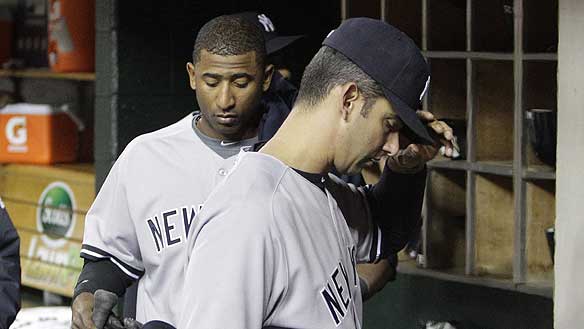
MLB reports: A big tilt was scheduled for last night, Yankees vs. Red Sox. Always a classic between two of the biggest rivalries in baseball and all of sports. While both teams have taken time to get out of the gate, signs were starting to appear that each was starting to come around and getting ready for a dog battle for the AL East crown with the Rays all summer long. One minor sidenote was the lineups, which was shaken up by Yankees manager Joe Girardi. Struggling DH Jorge Posada, normally batting somewhere in the middle to lower-end of the Yankees lineup, was dropped to the #9 slot. Considering that Jorge was batting .165 and struggling all season for the Yankees, most baseball fans and analysts would not have given the move a second thought. In fact, most would have applauded Girardi for making the necessary move to most help his ball club and perhaps ignite his stagnant DH. But something happened along the way that resulted in Posada missing yesterday’s matchup. As the mystery of the missing Posada is unfolding, tongues cannot stop wagging and the baseball world has its focus on New York to attempt to solve “Posada Gate”.
From the news and people that I have spoken with, it is clear that Jorge Posada came to manager Joe Girardi before the game and asked to be taken out of the lineup. Girardi accommodated Posada in his request and changed the lineup. Somewhere along the way Posada made mention of “feeling disrespected by the Yankees” as well. The issue becomes blurry as it does not appear that Posada indicated at the time of his removal that he had any sort of injury and the comments on being disrespected is being directed to being placed in the #9 slot in the Yankees batting order. During the game last night, damage control was in full effect. Posada’s wife, out of all people, tweeted during the game that her husband was suffering from back stiffness and that was the reason for him missing the game. The “back stiffness” account was confirmed by Posada’s agent as of this morning and by Posada himself last night after the game. But something seems awry and not sitting right with me. Let’s dig deeper to see if we can get to the bottom of this.
Brian Cashman, the Yankees General Manager, informed the media that Posada had removed himself from the game and did not make it known that any injury was behind the decision. From reading Cashman’s comments, I had the distinct impression that the Yankees were not impressed with Posada’s actions. Having Posada indicate that he felt disrespected was the kick in the teeth, the igniter of this Yankees fire. I cannot understand what Posada was thinking in making such a statement, but it is clear that both player and team need to work towards finding a quick resolution to Posada Gate. The team does not need such a distraction coming from one of its elder players and possible future hall of famer. But in order for such a resolution to arrive, both team and player need to come clean, apologize and move forward.
Lets be clear from one end. The New York Yankees do not owe Jorge Posada a single thing. In 2007, the Yankees granted the then 35-year-old Posada a 4-year, $52.4 million contract. On the open market, coming off back-to-back 20+ home run, 90+ RBI seasons, Posada would have been lucky to obtain a 2-year, $20 million deal. The Yankees were essentially bidding against themselves and out of loyalty and reward for Posada’s years of service to the team, compensated him with one last big score. The team knew full well that Posada would not be able to play out the contract as a catcher and would like move to 1B or DH at some point, making him less valuable from a financial standpoint. But the team gave Posada his due and he happily accepted the contract.
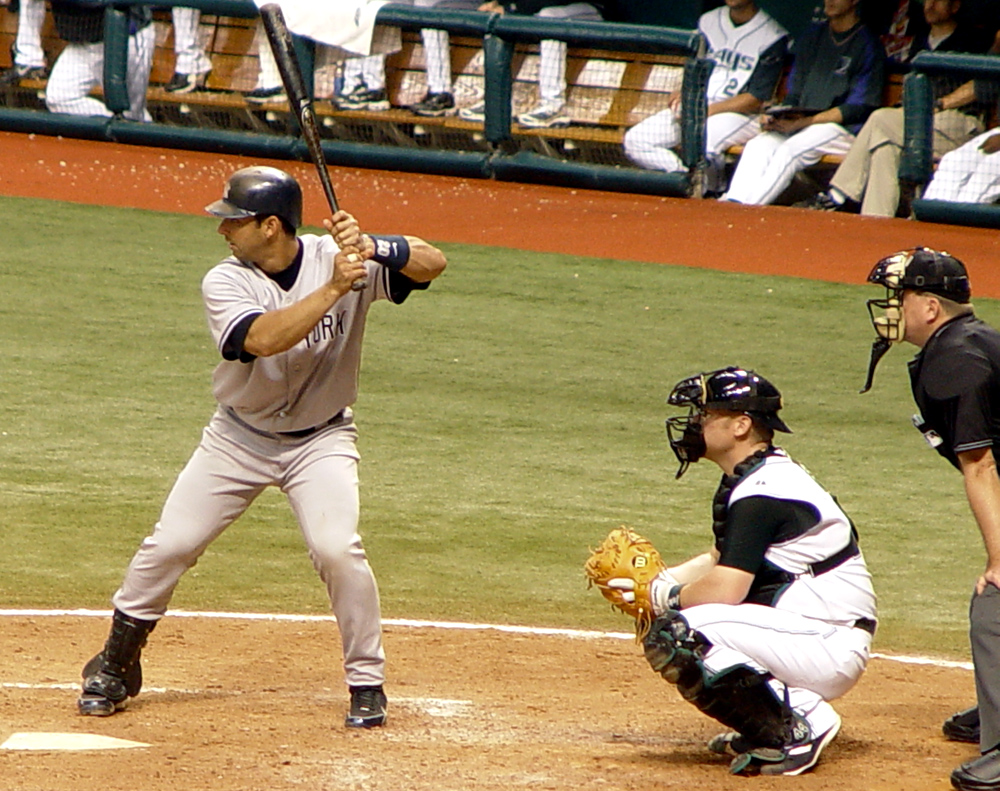 Taking a look at the situation following Posada’s signing, the value has not been there. Posada was injured for much of 2008, limited to 51 games. In 2009, Posada at 37 had his last big season, with 22 home runs, .285 AVG and .885 OPS. But as we recall, Posada and teammate A.J. Burnett were having issues, as A.J. was insistent that Molina catch his games rather than Posada, based on Posada’s eroding skills behind the plate. While much of the blame was directed at Burnett, Posada did little to calm the waters. The Yankees stood behind Posada then, even considering that his defense was no longer acceptable at the major league level. Going into 2010, Posada remained the Yankees catcher and played 83 games behind the plate. Finishing the season with a .248 AVG, the Yankees were in a bind. They had one more year to go with Posada with a monster contract. Despite needing to make a change sooner, the Yankees showed Posada loyalty by sticking behind him up to that point. But with the highest payroll in the game and team performance and team results coming first, the Yankees made the right move. Former all-star catcher Russell Martin was signed as a free agent after being let go by the Dodgers. The Yankees were able to outbid the Jays and Red Sox for his services and have been handsomely rewarded with Martin’s strong play behind the plate and with the bat. Beating out the Red Sox, with the second-worst hitting catching tandem in baseball, makes the signing that much sweeter. With also three of the top catching prospects in the game sitting in their farm system, the Yankees clearly had options. Jorge Posada, based on his declining numbers and skills, was not one of them.
So here is where we sit today. Jorge Posada got his big contract. The team stuck with him through injuries and poor play, despite the fact that it was not the best decision from a baseball standpoint. Going into 2011, the Yankees said “no more” and moved Posada to DH full-time. To be able to save wear and tear and focus on offense, experts agreed the move was best for the team and player. Posada offered little resistance, although he did indicate in the media several times that the adjustment was difficult and one that he did not necessarily enjoy. But sitting in the middle of May, hitting .165, Jorge Posada was not in a position to make demands or question his manager’s authority. Posada should be embarrassed with his statistics and working towards improving himself, rather than blaming others. My feel for the situation, is taking a look at the lineup card Posada did remove himself from the lineup out of pride. But where is the pride when he collects his giant paychecks every 2 weeks and does little to show for it? That is the problem with baseball and sports. When a player does well and is underpaid, he demands higher compensation out of “fairness”. But when a player is making a lot of money and does not perform, the player does not return the money despite the fact that the team is not receiving its value. “Respect” seems to go one way but not the other and that is not right.
The Yankees are justified in being upset with Posada, as they have shown him respect to-date as shown above. When Posada removed himself from the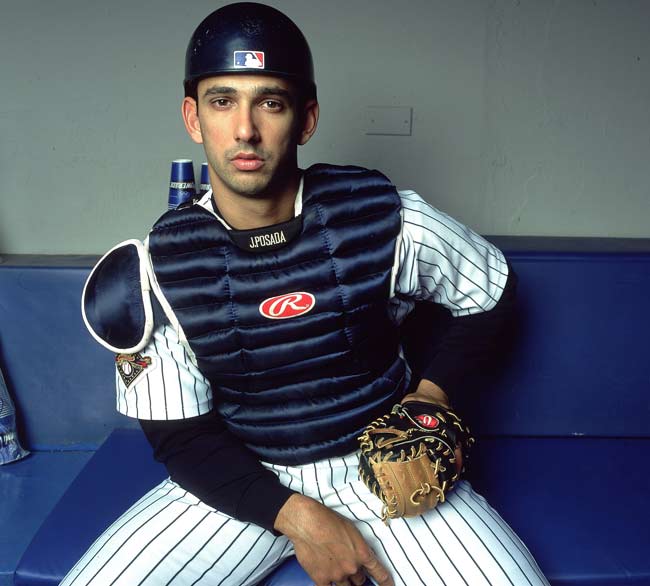 game, the team justifiably took it as a slap in the face and called the player out for his treason. Coming to his senses and realizing I believe the mistake of his ways, Posada is now trying to justify the situation by claiming “back stiffness” caused his decision to not play yesterday. But why would he conveniently forget to tell his manager this piece of information? If the team was aware of Posada’s injury, Cashman would have responded differently to the media. Posada looks to me like a kid caught with his hand in the cookie jar and is now trying to get himself out. The truth would have been best but now with the injury claim, Posada has made himself and his team look terrible and guilty. Nobody wins in these situations.
The Yankees, don’t get me wrong, are not without fault. I do not agree with how Cashman spoke to the media. If Cashman spoke to Posada about the situation, both the player and team should have issued a joint statement after the fact. But airing one’s dirty laundry in the media is not the proper method to use. While the team is justified in being upset over Posada’s actions, it should have dealt with the matter privately and in-house. Now the cat is out of the bag and difficult to hide and clear away.
I have seen this situation time and time again with teams and veteran players. The issue is not as much the Yankees and Jorge Posada, but teams giving big money and long-term deals to older players. It rarely works and often blows up in everyone’s faces. Think to Frank Thomas, Raul Ibanez, Milton Bradley, Aaron Rowand, Barry Zito…how many of these big contracts to older players ended up working out. What kills me is that the teams pay $10s of millions of dollars and its the teams that are seen as disrespecting the players by sitting them, moving them around in the lineup or releasing them. That is not fair in my estimation. If the players are cashing their cheques, there comes a point where they need to shut up, play and do as the team tells them. But this notion is getting lost in baseball and is being lost in the Jorge Posada story today.
Where Posada Gates goes from here, few of us know. The likely scenario is that the player will stick to the injury story, the team will grumble under its breath and the relationship will continue smoothly for the rest of the year. Posada’s agent surely told him that he did not have a leg to stand on and to keep his reputation and contract in check, sticking to the injury story would be best for his image. After all, if Posada did come out and state that he sat yesterday because he was upset for being dropped in the lineup, he would branded and blasted in the New York media. But truthfully, I would have respected him more if he had come clean rather than rely on the childish cover-up attempt after the fact. At the end of the day, the deed is done and we all need to move forward. Both player and team need to say their respective stories, make peace and move forward. But based on the Yankees loyalty shown to Posada, let’s remember the full story before we jump to conclusions.
Jorge Posada will be a free agent at season’s end. The Yankees have already indicated that he is not in their plans and that they will be moving forward come to 2012. I do not know of many teams that are looking for ex-catchers in their 40s hitting .165 as their lineup targets. Baseball is evolving like we have never seen before. Teams are going away from 40-something DHs and keeping the spot open for younger players to rotate throughout games to keep everyone healthy. With the steroid era at an end and team salaries at an all-time high, baseball is becoming more than ever a young man’s sport. While many players used to hang around till their 40s to pad their career numbers, players like Mike Piazza, Sammy Sosa and Jermaine Dye essentially had mandatory retirement thrust upon them by a lack of interest. Jorge Posada is one of the lucky ones. He is getting to play to his 40th birthday and earning a maximum career salary. While many players in their mid-30s need to play on minor league deals and incentive structures, Posada is getting full and unconditional pay. Posada had to realize this year that he could no longer play in the field and is looking towards the future and realizing that he soon may not be able to play at all. Rather than blaming the team, it is time to look in the mirror and to think how much he has left in the tank. For a team that has given him so much money, opportunities and shown so much faith in him until this year, it is time for him to pay the Yankees back. I hope to see everyone take the high road on this one at the end of the day. It is better for the player, the team and the game. Posada Gate was interesting and provided all of us with good conversation piece. Now let’s be done with it and turn our attention to the only thing that should matter: baseball action on the field.
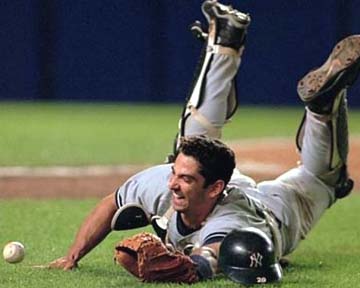
Please e-mail us at: MLBreports@gmail.com with any questions and feedback. You can follow us on Twitter and become a fan on Facebook . To subscribe to our website and have the daily Reports sent directly to your inbox , click here and follow the link at the top of our homepage.

MLB 2011 DL: Injury Updates

MLB reports: To answer many of our readers inquiries, here is an update on some of the casualties and wounded in the world of baseball and when each player is expected to return from the disabled list:
Phil Hughes: Yankees
Hughes went on the 15 day disabled list in mid-April with a “dead arm” and has not returned since. On April 28th Hughes received a cortisone shot and reports have indicated that his shoulder has responded well. The timetable for Hughes to return to the mound is 6-8 weeks, which would put him sometime into July. Hughes has not started throwing yet but has visited specialists who have ruled out surgery at this point. With a dead arm type injury, it is not always easy to predict where the future lies. Justin Verlander went through such an episode in his career and has come back stronger than ever. The fear though is that the velocity will not return and surgery could be lurking in the background. Until Hughes begins throwing and regains his velocity, Yankees fans will continue to huddle in prayer and hope for Hughes to come back and reclaim his 2010 form this year.
Carlos Guillen: Tigers
 Guillen has been bothered by a sore left knee and out of action since mid-March and going on the 15 day DL. Reports have indicated that Guillen is taking ground balls, but no other baseball activities at this point. The original prognosis of mid-May does not appear likely, with an end of the month or early June return a possibility. With his wonky surgically repaired knee, Guillen will likely be a DH at best if and when he returns to the Tigers lineup. There is a possibility of a relapse here, so the Tigers are progressing forward without Guillen and any contributions this year will be considered a bonus.
Joe Mauer: Twins
The $184 million dollar man is off to a dreadful start in 2011, the first season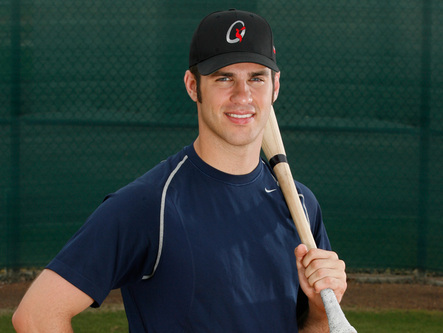 of his monster contract. After having surgery on his knee in the off-season, Mauer has been bothered by leg weakness all season. Mauer has started hitting and throwing, but his return is up in the air. Once considered to be the greatest catcher in baseball, talk has already started about a position change in his future. After moving prospect Wilson Ramos, the Twins cannot be happy about the state of Mauer’s health. Like the other members of this list thus far, Mauer’s return date is unknown at this point. With the Twins off to a terrible start this season, there is much pressure to get Mauer into the lineup to get the team going. But considering the investment in the catcher, the team will likely be cautious and continue to bring him along slowly in the fear that further damage could result in rushing him. Expect Mauer back sometime in June likely, but his catching days appear to coming to an end in the near future unfortunately.
Josh Hamilton: Rangers
 After breaking a bone in his right arm from a home plate collision early in the season, Hamilton is nearing his return to the Rangers lineup. Hamilton is taking swings and should hopefully ready soon for a couple of minor league rehab appearances. I would expect Hamilton back in the Rangers lineup in the next two weeks if all goes well. The brittle Hamilton continues to endure bad luck in the health department, with the Rangers sorely needing a healthy Hamilton in order to contend in the AL West.
Chien-Ming Wang: Nationals
After 2 missed seasons, Wang continues to try to come back from a torn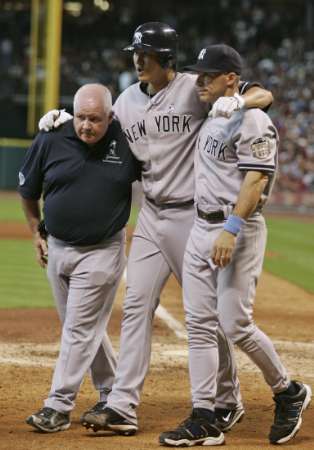 shoulder capsule and pitch once again in the majors. After breaking his right foot in 2008, Wang ended up injuring his shoulder and has not returned to pitch in a professional game since. Still rehabbing in the Nationals system, it appears unlikely that we will see Wang pitch again. Fans still hope that the former back-to-back 19 game winner can find health and pitch again, but after a prolonged absence, the window of opportunity continues to close further every week/month that goes by.
Johan Santana: Mets
 Another torn shoulder capsule survivor, Santana underwent his surgery last September. Reports have indicated a possible July return for Santana, which appear to be optimistic at best. With a similar injury to Wang, there is no guarantees of when Santana and what condition he will be in. Good news in that Santana is throwing off a mound and flat ground and reported no setbacks to date. But with these types of injuries, relapses are always a possibility. If the Mets flounder this year as expected, the smart advice is to rest Santana and bring him along slowly, with a 2012 return being the better bet. Only time will tell if Santana will return and reclaim his spot as one of the top starting pitchers in baseball. At this point, I would not be counting on it.
Chase Utley: Phillies
With injuries all around in baseball, few have been more anxious than the disappearance of Chase Utley. With the Phillies offense built around Utley and Howard, a long-term absence by the second baseman was seen as damaging by the Phillies faithful. Talk at the start of the season was a possible September return by Utley, based on the knee injury. Philadelphia got a great shot in the arm when Utley’s rehab progressed so well to the point that he is already DHing this week in minor league rehab games, with a possible return by the end of the month. Far ahead of schedule, the hope is that Utley is fully recovered and will be strong for the remainder of the season. Utley’s story is one of the few bright spots in our long list of injuries in this report.
Scott Rolen: Reds
Placed on the DL at the end of April with a strained shoulder, Rolen is no stranger to baseball injuries. But being the professional he is, Rolen also works very hard and keeps himself in strong game shape to attempt to avoid long-term absences. Rolen has been taking batting practice this week and has also been running the bases and participating in fielding drills. No timetable on his return at this point, but based on his advanced baseball activity, I would expect a return by the end of this month.
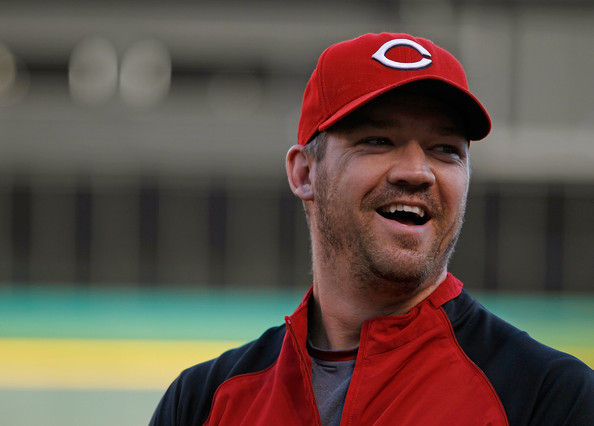
Please e-mail us at: MLBreports@gmail.com with any questions and feedback. You can follow us on Twitter and become a fan on Facebook . To subscribe to our website and have the daily Reports sent directly to your inbox , click here and follow the link at the top of our homepage.

MLB Top Home Run Hitters 2011: Updated
MLB reports: Here at MLB reports, we consistently get fan requests for features on the top home run hitters in the game. We recently ran a feature looking at the top power hitters and appreciate the feedback and responses. As a bonus, for all those of you that dig the long ball, here is a look at the current MLB leader board and analysis on each of the top long ball threats. Some surprises to this point for sure.
T1) Curtis Granderson, Yankees: 11
For all the talk of the Tigers winning the Granderson trade in obtaining Austin Jackson, Granderson has really made the Yankees look good this year. At 30 years of age and healthy this season, Granderson has really enjoyed his second year with the Bronx Bombers. He has hit 11 home runs, to go together with his .283 AVG, .359 OBP and .646 SLG. Add in 2 triples for good measure as Granderson has done it all for the Yankees in 2011. Hitting higher in the order, Granderson will continue to have increased chances of scoring and driving in runs. With a career high of 30 long balls recently in 2009, Granderson is on pace for a new personal best this year. With his lineup and ballpark, the chances are very good if he stays healthy.
T1) Alfonso Soriano, Cubs: 11
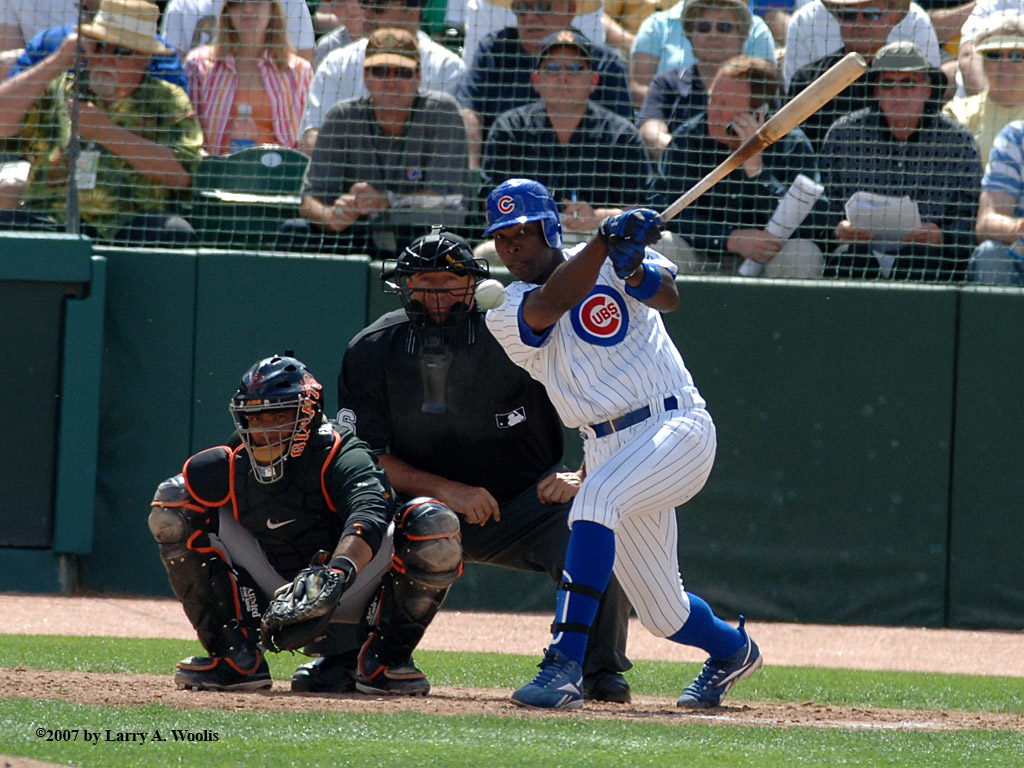
Left for dead by many experts, Soriano has come out of seemingly nowhere to rejuvenate his career… power-wise. On pace for 50+ home runs, Soriano is hitting long balls, driving in and scoring runs at a high pace. However note the key red flag: 4 walks to-date with a .273 OBP. These kinds of numbers are simply unacceptable and with 31 strike outs, Soriano better find some plate discipline soon if he hopes to continue to receive regular at-bats. At his late age, Soriano is slowly morphing into an all other nothing home run hitter and his free swinging ways is actually hurting more than helping the Cubs this season.
T2) Lance Berkman, Cardinals: 10

At the age of 36, Lance Berkman has reclaimed his spot as one of the top hitters in the game for the Cardinals. Healthy and playing like the Puma of old, Berkman has a 1.191 OPS to go together with his 17/16 BB/K ratio. To say that he is paying outstanding baseball would be an understatement. I really liked this signing at the time and playing with Pujols and Holliday has done wonders for Berkman’s bat. With LaRussa as his manager and strong team along for the ride, I see 40+ home runs in the Big Puma’s future…provided he remains healthy of course.
T2) Ryan Braun, Brewers: 10
The Hebrew Hammer just doesn’t let up. The 27-year-old Braun already has 138 career home runs and continues to pile them on. With Prince Fielder protecting him in the lineup, Braun will just continue to be Braun in 2011. Mark him down for 30+ home runs and don’t think twice.
T2) Jose Bautista: 10
As time goes by, Bautista’s numbers slowly but surely are silencing many of his critics. Despite missing games this season with a neck strain and personal leave, Bautista has managed 10 home runs in 88 at bats. Combined with his 30/17 BB/K ratio, .352 AVG, .521 OBP and .773 SLG and you have one of the best, if not the best player currently in the game. Bautista has also produced with Adam Lind and very little else for support in the lineup. The Toronto slugger is proving that he is not a one-hit wonder and here to stay on the MLB home run leader board.
Thank you for reading my feature on the top home run hitters in baseball. Please contact me if you have any questions and suggestions for future topics. The E-mailbag will be posted Wednesday so please be sure to get all your MLB and fantasy baseball questions in by e-mailing me at: mlbreports@gmail.com
Please e-mail us at: MLBreports@gmail.com with any questions and feedback. You can follow us on Twitter and become a fan on Facebook . To subscribe to our website and have the daily Reports sent directly to your inbox , click here and follow the link at the top of our homepage.
You can follow us on Twitter @MLBreports, on Facebook at http://facebook.com/mlbreports and please subscribe for free to our site by clicking on the link at the top of our homepage, to receive e-mails on our daily articles: http://mlbreports.com

MLB Pitchers and Walks: Flirting with Trouble
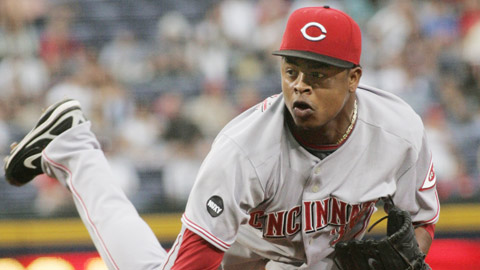
MLB reports: Walks can make you and walks can break you. That is our motto here at MLB reports. If there is one stat that I use more than others to measure a player’s performance, its BB…base on balls…walks. Recently, I featured an article on patient hitters and looked at the hitters that were the MLB leaders in walks. As part of this post, I reviewed how walks could potentially improve every facet of a hitter’s game and why a good batting eye is a high indicator of future success. Based on the response to that article, today we will look at the flip side, the MLB pitchers leader board in walks allowed.
In my opinion, there is not many things that are more frustrating about pitchers than those who give up a lot of walks. Pitchers that walk hitters tend to get themselves in all sorts of trouble and create pressure on themselves as well as their team. Defenses become on guard to avoid runners advancing and scoring, especially the catcher. A stolen base, sacrifice and passed ball is all take to turn a walk into a run. Pitchers that give up walks are often young hard-throwers who have not yet learned to command the ball. They are throwers who need to develop into pitchers. A veteran pitchers who throws soft and has no command will rarely survive in baseball (unless he has a lethal knuckleball, ala Tim Wakefield). Regardless of strike outs, walks in baseball often lead to pitchers beating themselves. I often tell young hurlers to trust in their stuff and led the hitters beat them. By walking hitters, a pitcher will simply beat himself in the long run. Looking at the MLB top 5 list of walks allowed, it is a who’s who list of potential, some success and plenty of frustration.
1) Edinson Volquez, Reds: 28
The man traded for Josh Hamilton has one of the best power arms in baseball. After undergoing Tommy John surgery (apparently a must-have these days to become a top pitcher for some reason), Volquez came back strong last year to reclaim his spot on the Reds pitching staff. With a 28/38 BB/K ratio this year 38 1/3 IP, Volquez despite his 3-1 record is showing why he has unsightly 5.63 ERA. With almost a hit allowed per inning, Volquez is playing with fire every game and needs to curb the walks to ultimately find long-term success. Check out Volquez’s breakout year in 2008. 17-6 record with a 3.21 ERA. Sparkling numbers on the surface. His 93/206 BB/K ratio that year shows that when Volquez wasn’t striking guys out, he was loading them up on base. In a hitter’s park like Cincinnati, numbers like that simply will not do. Volquez has a lifetime 4.47 ERA and 1.49 WHIP. At 27 years of age, he should be entering his prime year. But Volquez is sitting on top of our leader board for a reason: he walks the most hitters compared to any other pitcher in baseball. That is a high feat and one that he should not be proud of. A top pitcher can walk maybe 50 hitters a year at most to stay successful. By walking 93 in 2008, Volquez showed that even in a breakout year he never completely figured it out. Luck can only be on a person’s side so long and if Volquez does not transition better to being a pitcher, the sub-4.00 ERA and 1.50 WHIP will result unfulfilled potential and mediocrity. The best pitchers in my opinion have figured out that sacrificing strikeouts for ground ball outs can be just as effective and less taxing on their arms and walk rates. This realization has not occurred yet to Volquez, but that will end up being the difference from becoming the next Pedro Martinez or Ramon Martinez, to a certain degree.

2) Jonathan Sanchez, Giants: 26
The poster child for walks, Jonathan Sanchez is victim #2 on our list to high walk totals. After becoming a full-time starter in 2008, Sanchez had his breakout year last year with the Giants. 13-9 record with a 3.07 ERA and 1.23 WHIP are solid numbers. His 96/205 BB/K ratio though left a lot to be desired. Almost a mirror image of Volquez from 2008 if you compare the numbers. This year, Sanchez sits at 2-2 with a 3.45 ERA, 1.45 WHIP and 26/47 BB/K ratio in 38 IP. The best starting pitchers keep their WHIPs down below 1.20 and at most sit at 1.25. Anything from 1.30 and above is considered a high WHIP, with 1.50 being unacceptable. Despite his success in 2010, Sanchez still has a 1.38 career WHIP. When people ask me why trade rumors consistently persist around Sanchez despite being 28 and in his prime, I simply point to the walk rate. Granted he has unbelievable stuff and is literally untouchable when he is on (as all of the pitchers on this list are). But one good outing for every three bad outings don’t cut it. Sanchez throws hard and can successfully strikeout over 200 batters per season if he chooses to. But with his high walk rate, he will likely suffer the same fate as Volquez. Men on base can translate into runs allowed, which is unhealthy for a team’s won-loss record and a pitcher’s ERA. Until Sanchez can cut down on those walks, I will continue to simply see him as a middle-of-the-road pitcher with unfulfilled potential. If he can cut his walk rate in half, I could see 20 wins in his future.

3) Kyle Drabek, Jays: 25
Another Tommy John surgery survivor, Drabek is the 2nd of 3 pitchers on this list that lead baseball in walks allowed and had the procedure in their careers. Is there a correlation? We will need to find out one day in another post perhaps. I could see there being a link between the motion that pitchers use to high walk rates and leading to Tommy John surgery. An interesting little sidenote. But I digress. Drabek is the only rookie on this list, as all the other pitchers have experience in the majors. None of the players on the list are vets yet, although Liriano and Volquez are starting to get there. In his first full major league campaign, Drabek has a 2-2 record in 2011 with a 4.50 ERA, unsightly 1.63 WHIP and 25/28 BB/K ratio. With almost a hit allowed per inning as well, Drabek is loading up the bases far too often in getting burnt. In my estimation, I see Drabek differing from the first two players as follows. Volquez is wild and needs to learn control. Sanchez is occasionally wild but often tries to be too perfect in making his pitches and misses his spots. Drabek quite often is trying be perfect and misses his spots, but otherwise has good control. Drabek, like Sanchez, simply need to trust their stuff and just go after the hitters. With nearly un-hittable stuff, Drabek and Sanchez would find they will beat hitters more often than not. But a walk every inning a half will not cut it in the majors. Not if Drabek is to fulfill his potential and become the Jays ace one day. The comparisons between father and son will always continue for Drabek until he makes his own way in the world and I will take a brief look at Doug’s numbers. The elder Drabek never walked more than 69 hitters in a season and finished with a career WHIP of 1.243, with 155 wins and 3.73 ERA. He also finished with 1594 career strikeouts, with a season high 177 in his final season in Pittsburgh in 1992. Kyle has the potential to succeed his dad, as son as better stuff than his dad and the potential for far more punch outs than his dad ever did. If Drabek Jr. will figure that out one day, the Jays will have their ace for the next decade guaranteed.
T4) Francisco Liriano, Twins: 24
The fourth member of our list of frustration, Liriano proved this week how utterly frustrating he can be. Consider this: Liriano this week threw a no-hitter against the White Sox. Perhaps a no-hitter by the records, but the rest of his numbers were by no means special. Liriano threw almost as many balls as strikes, finishing with 6 walks and only 2 strike outs. These numbers translate to little or no control, but somehow not giving up a hit in otherwise poor pitching performance. The no-hitter actually is in line with Liriano’s start to the season. 2-4 record, 6.61 ERA, 1.56 WHIP, 24/20 BB/K ratio in 2011. Not only is Liriano now not striking guys out, but he is walking hitters at an astronomical rate. Liriano had one incredible partial season: In 2006 he had a 2.16 ERA, 1.00 WHIP, 32/144 BB/SO ratio in 121 IP. Superstar numbers and an ace in the making. Since then, health issues and poor performance have plagued the hurler for the most part. The 3rd Tommy John survivor on our list, Liriano appears to have the same Volquez type control issues. Last season I thought that we had seen a rebound from Liriano. 14-10 record, 3.62 ERA, 1.26 WHIP and 58/201 BB/SO ratio. Maybe not ace numbers, but very solid pitching numbers. Believe it or not, Liriano is on pace for approximately 150 walks this season. Just when he looked like he might be coming around, Liriano regresses. Then he goes out and throws a no-hitter and nobody knows what to think. But I will tell you this much, walking hitters is a disaster…while walks and few strike outs means a complete implosion. I suspect that there may be more to this story than meets the eye, as Liriano may be having health issues that is leading to his poor numbers. Otherwise, at 27 years of age, Liriano may be continuing his hurler mode rather than becoming a fine-tuned pitcher as is preached by the Twins organization. The potential is there, but until we know his health situation is better, all bets are off.
T4) Charlie Morton, Pirates: 24
The last member of our group may not be a Tommy John survivor, but he is a 27 something year old pitcher (only Drabek is the youngster at 23). Morton is also not on his original team, as he has been traded together with all the members of our list except Sanchez. It is not a coincidence in my estimation that young hurlers with control issues would be moved by a major league team. Liriano, Volquez and Morton were all seen as expandable by their respective teams in order to obtain needed talent. Sanchez has been mentioned in trade whispers for years now and Drabek was moved, but only because the Jays demanded him in the Halladay swap. Morton was moved in the McLouth deal, with the Braves moving an extra arm and the Pirates stocking up on much-needed pitching talent. After previous frustrating campaigns, Morton appears to finally be coming around this year. His 2011 record sits at 4-1 with a sparkling 3.13 ERA. He is allowed less than a hit per inning, which is promising. His 24/24 BB/K ratio means that Morton is striking out as many batters as he is walking. The 1.41 WHIP is the issue with Morton, as it is with all the hurlers on this list. Morton has a career 1.57 WHIP, so he is improving in the category. Once he is able to put it together, Morton is able to get major league hitters out. He may not have the stuff of the other members of this list, but he apparently knows how to get major league hitters out. While not an ace, developing into a solid #2 or #3 starter could be in his future. If Morton could limit his walks to approximately 50 in a season, I would love to see what he could do over the course of that year. I see potential and improvements to warrant hope. For a pitcher that used to give up over a hit per inning, those numbers are vastly improved. Time will tell if the rest of his numbers will fall in line.
With young hurlers that have little control, teams do not often know what they are ultimately going to have. In the time that it takes for a pitcher to learn control, the issue becomes whether a pitcher will be able to get major league hitters out by going for ground ball outs and fly outs while reducing walk totals. Roy Halladay is the poster child for high strike outs and low walks. With ERAs in the low 2.00s, WHIPs in the low 1.00s, 20 wins consistently, Halladay is everything that a pitcher strives to be. But then take a pitchers like Andy Sonnanstine. One of my faves on the Rays, Sonnanstine rarely walks hitters. But without striking out many hitters either, Sonnanstine unfortunately does not have the stuff to get major league hitters out on a consistent basis and gets hit hard often. As a result, Sonnanstine is constantly shuttling between the rotation, bullpen and minors. If you take Sonnanstine’s control and the stuff of any of the pitchers on this list, you would have Roy Halladay. Perhaps a touch oversimplified, but you get my message. For pitchers like Jonathan Sanchez and Kyle Drabek, my advice is just go after and trust your stuff, good things will happen. For Edinson Volquez and Francisco Liriano, I think a change in mechanics and approach is in order. I see too much wildness with little change in the future. If these pitchers do not change their walking ways, the potential that each has will never be fulfilled and talent will end up being wasted. With the emphasis in baseball on strike outs, pitchers like Volquez and Liriano fall into the trap in concentrating on punch outs and disregarding the finer points of the game. The emphasis is on pitching, not throwing: I hope these guys understand that one day. Unfulfilled potential at the end of the day is just failure in my book. Remember that the next time when you watch these hurlers flirting with trouble in their next starts.

Please e-mail us at: MLBreports@gmail.com with any questions and feedback. You can follow us on Twitter and become a fan on Facebook . To subscribe to our website and have the daily Reports sent directly to your inbox , click here and follow the link at the top of our homepage.

Andre Ethier: Chasing Joe DiMaggio and #56
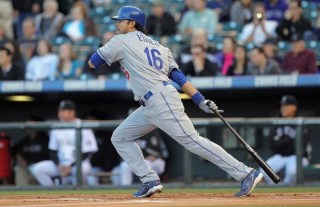
MLB reports: In the history of baseball, 53 players have been able to achieve a streak of 30+ consecutive games with at least one hit. Andre Ethier, the 29-year-old outfielder for the Los Angeles Dodgers is ironically sitting as of today on a 29 game hitting streak. Ethier missed yesterday’s game with elbow inflammation and his team has a day off today. On Friday, assuming reports are correct that Ethier will play, he will attempt to become player #54 of this exclusive major league club.
The current members of the 30+ consecutive games hitting streak club are as follows:
| Hitting Streaks: Players With At Least 1 Hit in At Least 30 Consecutive Games | |||||
| Rank | Year | Name | Team | League | Games |
|
1. |
1941 |
Joe DiMaggio (AL Record) |
New York |
AL | 56 |
|
2. |
1896-1897 |
Willie Keeler (NL Record) |
Baltimore |
NL | 45 |
|
3. |
1978 |
Cincinnati |
NL | 44 | |
|
4. |
1894 |
Bill Dahlen |
Chicago |
NL | 42 |
|
5. |
1922 |
George Sisler |
St. Louis |
AL | 41 |
|
6. |
1911 |
Ty Cobb |
Detroit |
AL | 40 |
|
7. |
1987 |
Paul Molitor |
Milwaukee |
AL | 39 |
|
8. |
2005-2006 | Philadelphia | NL | 38 | |
|
9. |
1945 |
Tommy Holmes |
Boston |
NL | 37 |
| 10. | 1896-1897 | Gene DeMontreville | Washington | NL | 36 |
|
11. |
1895 |
Fred Clarke |
Louisville |
NL | 35 |
|
|
1917 |
Ty Cobb |
Detroit |
AL | 35 |
| 1924-1925 | George Sisler | St. Louis | AL | 35 | |
|
|
2002 |
Florida |
NL | 35 | |
| 2006 | Chase Utley | Philadelphia | NL | 35 | |
|
16. |
1938 |
George McQuinn |
St. Louis |
AL | 34 |
|
|
1949 |
Dom DiMaggio |
Boston |
AL | 34 |
|
|
1987 |
Benito Santiago |
San Diego |
NL | 34 |
|
19. |
1893 |
George Davis |
New York |
NL | 33 |
|
|
1907 |
Hal Chase |
New York |
AL | 33 |
|
|
1922 |
Rogers Hornsby |
St. Louis |
NL | 33 |
|
|
1933 |
Heinie Manush |
Washington |
AL | 33 |
| 23. | 1922-1923 | Harry Heilmann | Detroit | AL | 32 |
| 1996-1997 | Hal Morris | Cincinnati | NL | 32 | |
| 25. | 1885-1886 | Jimmy Wolf | Louisville | AA | 31 |
| 1899 |
Ed Delahanty |
Philadelphia |
NL | 31 | |
|
|
1906 |
Nap Lajoie |
Cleveland |
AL | 31 |
|
|
1924 |
Sam Rice |
Washington |
AL | 31 |
| 1965-1966 | Vada Pinson | Cincinnati | NL | 31 | |
|
|
1969 |
Willie Davis |
Los Angeles |
NL | 31 |
|
|
1970 |
Rico Carty |
Atlanta |
NL | 31 |
| 1975-1976 | Ron LeFlore | Detroit | AL | 31 | |
|
|
1980 |
Ken Landreaux |
Minnesota |
AL | 31 |
|
|
1999 |
Montreal |
NL | 31 | |
|
35. |
1876 |
Cal McVey |
Chicago |
NL | 30 |
| 1895-1896 | Dusty Miller | Cincinnati | NL | 30 | |
|
|
1898 |
Elmer Smith |
Cincinnati |
NL | 30 |
|
|
1912 |
Tris Speaker |
Boston |
AL | 30 |
| 1922-1923 | Charlie Grimm | Chicago | NL | 30 | |
| 1927-1928 | Lance Richbourg | Boston | NL | 30 | |
| 1929-1930 | Sam Rice | Washington | AL | 30 | |
|
|
1934 |
Goose Goslin |
Detroit |
AL | 30 |
|
|
1950 |
Stan Musial |
St. Louis |
NL | 30 |
|
|
1980 |
George Brett |
Kansas City |
AL | 30 |
|
|
1989 |
Jerome Walton |
Chicago |
NL | 30 |
|
|
1997 |
Sandy Alomar, Jr. |
Cleveland |
AL | 30 |
|
|
1997 |
Boston |
AL | 30 | |
|
|
1998 |
Baltimore |
AL | 30 | |
|
|
1999 |
Arizona |
NL | 30 | |
|
|
2003 |
St. Louis |
NL | 30 | |
|
2006 |
Houston |
NL | 30 | ||
|
|
2007 |
New York |
NL |
30 |
|
| 2009 | Ryan Zimmerman | Washington | NL | 30 | |
|
Rank |
Yearn |
Name |
Team | League | Games |
| 30+ Game Hitting Streaks | Hitting Streaks Records | |||||
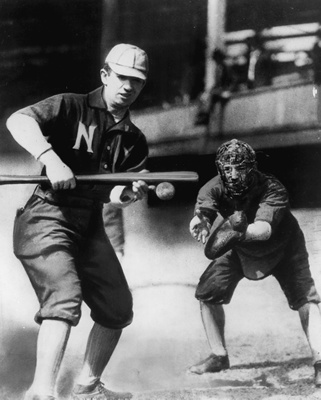 Quite the list of the who’s who in baseball. Pete Rose at 44 and Paul Molitor at 39 are two of the most recent players in recent memory that attempted to break “the record”. One of the most, if not the most holy records in all of sports, is Joe DiMaggio’s 56 game hitting streak in 1941. Many players have tried but few have come close to DiMaggio’s magic number. Consider that six players EVER have hit for 40+ consecutive games and only two have achieved the feat since 1922. Pete Rose with a 44 game streak back in 1978 and DiMaggio with the record 56 games in 1941. That’s it. It’s not like DiMaggio has the record by a short margin either. Sitting at #2 is Willie Keeler with 45 games between 1896-1897. A full 11 game difference. To put the record in another context: Keeler has the record for 44 years until DiMaggio breaks it. Now DiMaggio has been the holder for 69 years and counting. The consecutive games hitting streak record is one that does not fall very often. Given the pace of DiMaggio’s record, we may never see anyone break it. Ever.
Pete Rose and Paul Molitor were two of the recent athletes that were approaching “the streak”. Jimmy Rollins had a 38 game streak between 2005-2006. 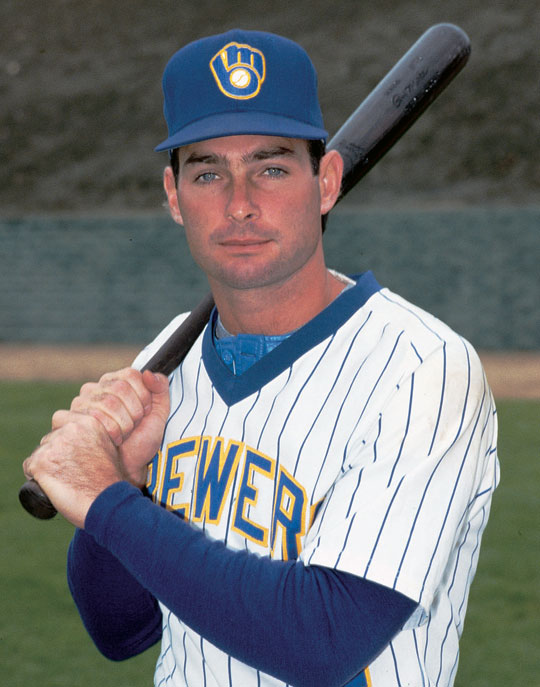 From there, Luis Castillo and Chase Utley had 35 games each respectively and Benito Santiago had a 34 game streak back in 1987 (the juiced ball year, as often described by baseball experts). If you throw out 1987, you would be left with very few modern-day players at the top of the game hitting streaks leaderboard. 23 out of the top 30 streaks occurred before 1970 and the majority were in the early 1900s. For all the talk of steroids and “cheaters” shattering hitting records, I do not see any of the accused or suspected hitters from recent times on the list. Barry Bonds as a prime example of a hitter that was considered with a near perfect batting eye in his hey-day…not on the list. But aside from Bonds, think of Ichiro Suzuki competing for batting titles year-in and year-out. Not on the list. John Olerud batting close to .400 for much of 1993…not on the list. From there, let’s point to some of the greatest hitters of all time. Stan Musial had a 30 game streak in 1950. Ty Cobb had a 40 game streak as well as a 35 gamer back in the day. But…no Ruth. No Williams. No Mantle. No Ripken. No Puckett. No Rickey. For all the accomplishments of so many of these great hitters, hitting the consecutive games leaderboard was not in the cards. This really starts to put into perspective the difficulty of achieving Dimaggio’s record and how amazing his accomplishment really was back in 1941.
Fast forward to 2011: Andre Ethier going into Friday’s action is at 29 games. He is just over halfway the mark to beating DiMaggio’s record. I have long been an admirer of Ethier’s capabilities on the baseball field and it does not come as a surprise to me that he would reach this point. Ethier has a .295 lifetime AVG with a .367 OBP. This man knows how to get base hits and to take walks, as he has a great eye at the plate. A couple of years with 160+ hits is nothing to sneeze at. With Matt Kemp hitting behind him and still under 30 years of age, the sky is the limit for Ethier. The talent and tools have always been there and now it is just a matter of putting it together.
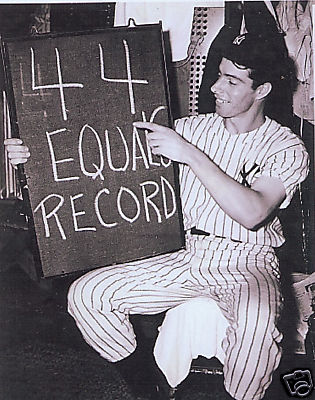 With a hit on Friday, Ethier will become only the 54th baseball player EVER to reach at least 30 consecutive games. If his streak was to end at that point, a pat on the back will be well deserved for a job well done. In my estimation, anything beyond 30 games will be gravy and good luck to Ethier to try to climb as high up the leaderboard as he can. But as far as breaking DiMaggio’s record? Forget it. Don’t write me off as being pessimistic or anti-Ethier. Far from it. I want to paint a realistic picture of what the record means and the hill that Ethier would have to climb. As already discussed, throughout the history of time, the MLB record books show that few players in our generation have come even remotely close to making a dent in this record book…and for good reason. As time goes by and the years continue, it will become even more impossible for a hitter to break DiMaggio’s record. I could shoot out a million reasons, but let me give you my top factors behind Ethier being unable to surpass DiMaggio:
1) Injuries: Ethier would need to keep perfect health or close to it, in order to hit in 28 more consecutive games. Consider that Ethier missed Wednesday’s game with elbow inflammation. While being fairly durable for most of his career, like most players, Ethier will miss the occasional game to rest his broken down body during a long baseball season. Few players can play as many consecutive games as Cal Ripken and few would want to. When Ethier misses a game, the streak stays intact. But if he ever has to come out of a game after receiving an at-bat, the streak would be broken. Considering the ailments that he could suffer during a game (including the current elbow issue), the chances of being able to play nine innings in every game and produce at least a hit per game is nearly impossible.
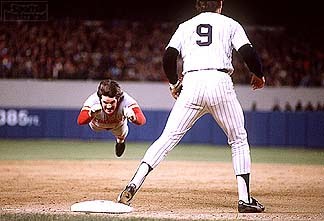 2) Lineup protection: Right now the Dodgers offense is based on Kemp, Ethier and hope. With very little solid hitters surrounding him in the lineup, there is a strong chance that teams will be tempted to pitch around both Kemp and Ethier throughout some games. We are not looking at a Yankees type lineup where nearly every hitter is an all-star. Loney, Barajas, Carroll, Uribe and Gwynn are not names that will strike fear into the heart of any opposing pitcher. With so many opportunities to be pitched around, Ethier will have some games where he will be lucky to see maybe a handful of fastballs. As the streak would lengthen and with games on the line near the 8th and 9th inning, I would not count on Ethier receiving quality pitches. If Ethier walks an entire game, the streak remains alive until the next day. But if Ethier is out at least once or has a sacrifice fly with no hit, the streak would die. Unless some of his teammates have rebirths at the plate, the odds are against Ethier having enough pitches to hit every game in order to keep his streak alive.
3) Schedule: Take the month of May alone. The Dodgers have games coming up against the Giants, Brewers and Marlins, plus the Phillies in early June. Ethier may be going up against Lincecum, Cain, Greinke, Johnson, Halladay and Lee. Some of the best pitchers in baseball, who tend to be very stingy with hits allowed. Not only are the above named pitchers great, but they are also very proud. Lincecum and Johnson would have no issue bringing their “A” game and shutting down Ethier for a night. We are talking powerful pitchers with big egos, which is not the best combination for a hitter attempting to keep a hitting streak alive. Friday brings Jon Niese and the Mets, which would be considered a good matchup for Ethier. But not all games are created equally and with a tough schedule ahead and little lineup protection, the odds are against long-term success.
4) Relief Pitching: Once upon a time when starting pitchers used to stay out for 150+ pitches per game and pitch complete games, hitters like Ethier had easier chances for a consecutive games hitting streak. Check again the timing on the above leaderboard and you will see since the dawn of specialized pitchers, the number of hitters that have achieved 30+ consecutive games hitting streaks is miniscule. This is neither an accident or fluke. We are in an era where starting pitchers go 5-6 innings per start on average, with specialized 7th and 9th inning relievers, right-handed and left-handed specialists and of course, the closer. Take Kansas City, that can throw Collins, Crowe, Jeffress in the middle innings of a game and then turn the ball over to Soria. The Braves have Kimbrel and Venters. The Reds with Chapman and Cordero. Keep in mind Ethier bats left. All opponents will have no problem in throwing out a left-handed specialist in the late innings to get Ethier out in a tight game. Check out the splits this year: In 84 at-bats against right-handed pitchers, Ethier has a .429 batting average. Contrast that to 35 at-bats against lefties and he is hitting to the tune of .229. The lefty-on-lefty matchup will likely be Ethier’s downfall as he is susceptible to more frequent outs against lefties. The game as it is set up today allows for fresh, hard-throwing pitchers to enter games in strategic times to neutralize hitters. Chapman and his 105 mph fastball could end up making or break this streak for Ethier.
5) Pressure and Luck: With the turmoil surrounding the Dodgers team ownership, fans and media are clamouring for any feel good story to grab and hold onto. Ethier is already starting to face a huge amount of pressure in this day and age of internet and instant access (yours truly included) to information and reports for fans. As the streak continues, the amount of attention faced by Ethier will be mind-boggling and while professionals are supposed to block out distractions, the reality is that baseball players are human like you and I, not machines. Ethier cannot help but think about the streak as it is brought to his attention and mental can make physical. If the pressure gets to Ethier in some form, the streak is unlikely to stand a chance. Combined with luck and chance, Ethier has the odds naturally against him. Strong contact and well-timed hits can turn into outs based on the defenses that oppose the Dodgers on any given night. For Ethier to sustain a hitting streak approach DiMaggio’s, he would need lady luck on his shoulders in addition to hard work and strong effort. They say that some people can be lucky for some of the time. But nobody can be lucky all the time. Ethier will need the luck with skill to thrive and the fortunes say that luck has to run out on at least one night during Ethier’s run.
My sincere congratulations to Andre Ethier for what he has accomplished to-date. I will be watching every Dodgers game and Ethier at-bat with interest to see how far he gets. Nobody would cheer for him louder than me if he could come close to Joe DiMaggio. While wishful thinking is hopeful that there is a chance, logic and reason dictate that this is likely, if not impossible to happen. Baseball today is not built the way it used to be and while there are exceptions to the rules, the law of averages tends to win out every time. I cannot even begin to fathom that Andre Ethier would be able to accomplish what Williams and Ruth never could. In our lifetime we have seen home run records shatter, baseball crown a new all-time hits king, no-hitters thrown on almost a monthly basis (including 2 by Halladay last year alone, the second in the playoffs nonetheless)…heck, even the saves record fell. But the legend of Joe DiMaggio and #56 continue to live in the records. Together with Cy Young and 511 wins, Cal Ripken with 2632 consecutive games played and Pete Rose with 4256 career hits are all records that are virtually impossible to break. Until Andre Ethier reaches 40+ consecutive games with hits, let’s leave the legend of Joe DiMaggio apart from the equation. Ethier is on a nice run but has ways to go before coming close to greatness. Good luck Andre: all the best from MLB reports!
Please e-mail us at: MLBreports@gmail.com with any questions and feedback. You can follow us on Twitter and become a fan on Facebook . To subscribe to our website and have the daily Reports sent directly to your inbox , click here and follow the link at the top of our homepage.

Pujols and Fielder: Where They Will Land in 2012
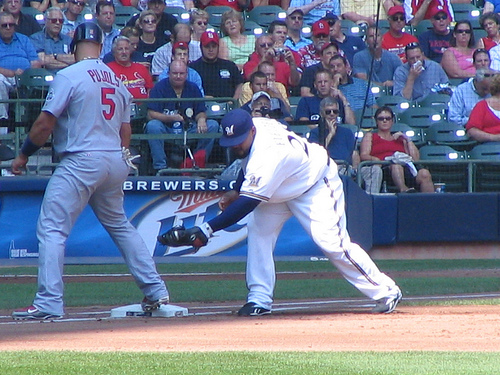
MLB reports: There are two seasons in baseball: the season in itself with games and statistics to analyze and the offseason, with players moves and signings to report and speculate. I rarely like to combine the two seasons, as fans spend several winter months running through rumors in the winter and are ready for actual baseball come March. I am often told by fans that the MLB season is meant for playing baseball, not running through free agency analysis. Yet, I cannot even begin to count the amount of daily requests I receive asking me on where Albert Pujols and Prince Fielder will sign in 2012. We may not want to discuss it in May, but the truth is that two of the biggest (literally) sluggers that the game has ever seen will be entering free agency at the same time this year. In the back of our minds, we are all curious where each will play. Today, I will help shed some light on the future of Pujols and Fielder.
As I look into the magic crystal ball, the top contending teams for the services of Pujols and Fielder are as follows:
St. Louis Cardinals
I have said from day one that Pujols is not going anywhere and I am sticking to my guns. Pujols leaving St. Louis is like the Babe leaving Boston, franchise crippling (for many…many years at least). The Cardinals, MLB, the fans of St. Louis and even the President of the United States will likely have a say in directing Pujols to re-sign with his current employers. Pujols will get a huge payday, don’t get me wrong, but he does not seem to be the type to take the largest contract offer on the table. Plus with Tony LaRussa at the helm, there will many forces at play to keep Sir Albert (aka “The Great Pujols”) in St. Louis. In the event that the Cardinals lose out on their franchise player, logic dictates that they will make a run at Fielder. I cannot see a fit here, as location and money does not seem to work for Prince. I see the bright lights of the big city ahead for Fielder and with a stable of teams gunning for him, he will be a difficult player to sign.
New York Yankees
Any talk of free agency signings begin and end with the Yankees. They are always a threat to make a run for the top hired guns and often get their way. The Mark Teixeira signing came out of left field and after losing out on Cliff Lee last year, the Yankees are hungry to add more big names to their roster. The top target of the Yankees would be Pujols, but I cannot see him fitting in New York. With a gold glover entrenched at first, Pujols is not and will not sign to be a DH for the balance of his career. The money might be right, but the position and environment does not suit Sir Albert. On the other hand, Prince is a logical candidate for New York. To become the biggest name in baseball, Prince would love to perform on its biggest stage and there is none bigger than New York. Like his dad before him, Prince would look great in pinstripes. Given the strained relationship between father and son, I could see Prince having an added incentive to perform better than his dad did with the Yankees. I am not sure how Prince will take to being a DH but with age, weight and injuries all becoming a risk, I could see Prince getting off the field as a huge bonus for his career. Posada is on the last year of his contract (and leg of his career) and a DH spot is about to open up in New York. But if Prince is determined to keep his glove, then all bets are off.
Kansas City Royals
This team probably comes as a shock to you. Before you start with the angry messages, think about some factors. I had considered this team in the past, but a limited budget and winning prospects left me with many doubts. But after reading some articles on the subject, I began to be swayed. Pujols went to school in the area. Pujols met his wife in Kansas City. Everyone supposedly wants to come home…and perhaps Pujols is the same. The move to the Royals would not be far from his current location. The Royals are a team on the rise with the best farm system in baseball. The signing of Pujols could instantly bring the team to respectability. Even though top prospect Eric Hosmer plays first and Billy Butler is the DH, positions can be realigned for Pujols. The signing of Pujols could be the missing link that the Royals need and I can see this signing as a real possibility. I will give the Royals a 10% chance at best at signing Pujols, but that is 10% better than most teams. As far as Fielder goes, don’t even think about it, Pujols and the Royals are a one-time match only.
San Francisco Giants
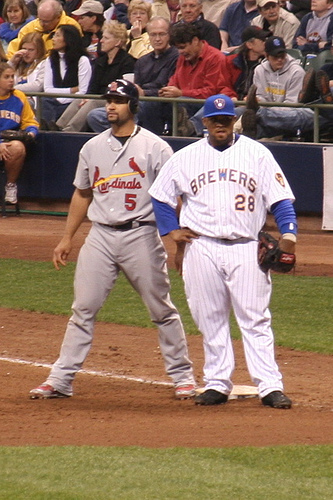 The World Series champs have several factors going for them. Money in the bank. Great attendance numbers and incredible pitching. Somehow the Giants won it all in 2010 with weak hitting but if they hope to get back to the fall classic, they will need better hitting. They don’t come better or bigger than Pujols or Fielder. Both players are solid fits for the Giants. Signing with the Giants allows either player to stay in the NL. The ballpark should not be a factor as Pujols and Fielder could launch home runs in San Diego if required. The requirement for offense means the Giants will push heavily to sign one of these guys. Since I see Pujols back in St. Louis, I will not give him much of a chance of signing here. But that being said, it is one of the only credible possibilities. Prince is more likely than Pujols to jump to San Francisco and enjoy the weather and admiration of becoming the next Barry Bonds, sans the steroids. Again unlikely, but one of the only true landing spots for either slugger.
Toronto Blue Jays
Surprised? You shouldn’t be. The Blue Jays have money in the bank and a team on the rise. They shed the huge Vernon Wells contract and despite paying Jose Bautista a king’s ransom, still have room in the budget for the right superstar. Possibly. Let’s not even discuss Pujols here. It is not going to happen as I cannot see a fit for him in terms of market and team. But Prince Fielder is another story. Cecil made his professional debut with the Jays and Prince knows the city well. I remember Prince as a youngster coming to Toronto and hitting home runs at BP when Cecil was with the Tigers. The Jays have a first baseman in Adam Lind that can rotate first and DH with Prince. Together with Jose Bautista, the Jays would have two of the biggest boppers in the game in their lineup. The Rogers Centre, being the launching pad that it is, could see over fifty home runs for Fielder. All the chips could be in place for a Toronto signing in Prince’s future. The issues that I see are that Toronto is not a large enough market, may not hand out the biggest contract, Canadian taxes/visa issues in the minds of players and strength of team on the field. The Jays would be an underdog to sign Fielder, but one of few teams that has the resources and the incentives to lure him away from Milwaukee.
One team that is missing from the discussion is the Milwaukee Brewers, Fielder’s current team. They have been omitted for good reason. The team does not have the finances to sign Prince and does not appear to have the resources to sign either slugger to a long-term contract. With Braun, Weeks, Greinke all locked up, the Brewers are tapped out from the mega-dollars that both sluggers seek. Other teams like the Cubs, Angels and Orioles have the money but do not have the market and/or lineups that Pujols and Fielder will be seeking. The Mets and Dodgers are having ownership issues that will likely limit or eliminate their ability during the next free agency period. So with that being said, the truth is that anything can happen. As we saw last year with Cliff Lee, who went to the Phillies and Mark Teixeira signing with the Yankees before, a mystery team can always emerge. But based on my evaluation and analysis, if you needed a final prediction from me: Pujols to Cardinals, Fielder to Yankees. Final answer.
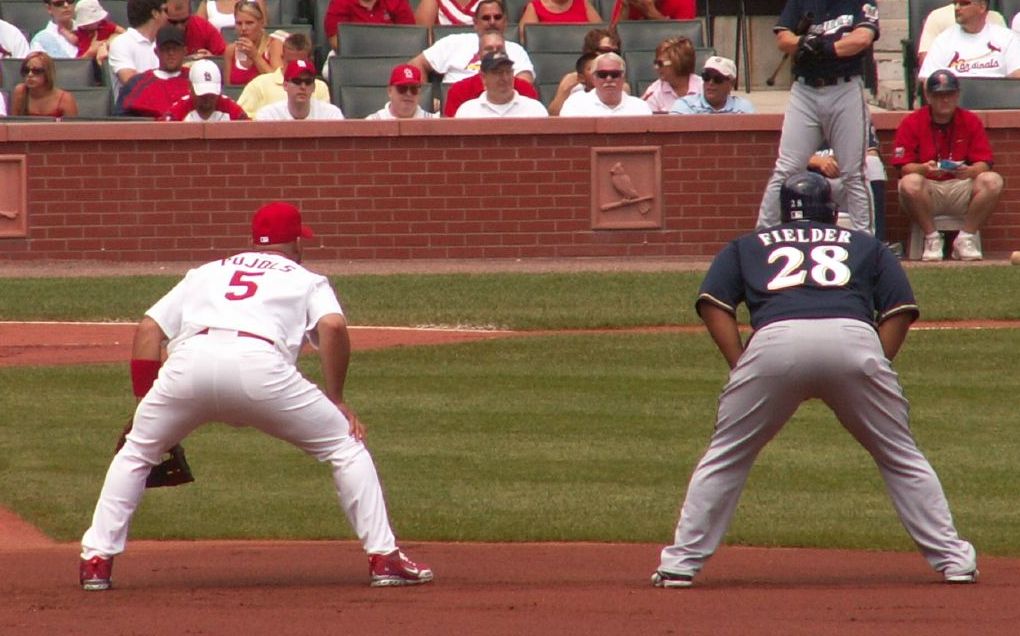
Please e-mail us at: MLBreports@gmail.com with any questions and feedback. You can follow us on Twitter and become a fan on Facebook . To subscribe to our website and have the daily Reports sent directly to your inbox , click here and follow the link at the top of our homepage.

Patient Hitters: The Leaders in Walks

MLB reports: As many of you know from my past articles and tweets, the one quality I look for the most in hitters is patience: the ability to take walks. The art of the base on balls was exemplified somewhat in the “moneyball” Oakland approach and has been adopted by the Red Sox team in particular, among others. People often ask me why I value hitters that take walks so highly. Very simply, walks in my mind lead often to the overall development of every facet of a hitters game. A hitter that has good judgement of the strike zone and take walks should get on base at a high rate. A hitter that takes many walks is more likely to judge better pitches to hit, which should increase their number of hits and home runs correspondingly. When I used to play fantasy baseball, I often looked for batters with high walk totals in filling out my rosters. These hitters would win championships for me, as they do often for baseball teams in real life.
Patient hitters have a high value in baseball, this has become a fact of life. Putting this theory to the test, let’s take a look at which batters sit among the leader board in walks as of today. It will be interesting to see which of these players are considered top players, historically and coming into their own as of today. Has the number of walks taken this year helped each player in other statistical categories? Are each of these players better hitters for having many walks? The results may surprise you.
1st: Jose Bautista, Toronto Blue Jays (19)
 Last year 100 walks went hand-in-hand with a league leading 54 home runs. This year, Bautista leads the league with 19 walks and 8 home runs. For a man who hit .260 last year, the high walk has remained while the average has jumped to a league leading .364. Interesting to note, none of Batista’s walks have been intentional. Bautista for me is the poster boy of how patience and power are inter-twined. You almost cannot have one without the other. For anyone that doubts the value of walks, go look up Bautista’s stats again…they will astound you.
T-2nd: Bobby Abreu, Los Angeles Angels of Anaheim (18)
Bobby Abreu, along with Youkilis, Adam Dunn and Swisher, is a resident in the patience club. With 1,360 career walks, Abreu always brings on-base capabilities for any team he plays for. Long seen as having declining power, Abreu still hit a decent 20 home runs last year. Combined with his 87 walks, Abreu managed a .352 OBP despite a .255 AVG. This year, with a puny one home run and .244 AVG, Abreu is sitting at an unacceptable .329 SLG. But with a .388 OBP, the 37-year-old Abreu still has some value. In his prime, Abreu showed that 100+ walks and a .300+ AVG could lead to 40+ home runs in a season. But Abreu, the elder of the list, only has walks to show for any value left in his tank and is likely dependant on those walks for still receiving any playing time at all. The end is near, but the walks continue.
T-2nd: Joey Votto, Cincinatti Reds (18)
As a rookie, I read that Dusty Baker told Joey Votto that he should becoming more free-swinging and less patient to develop as a hitter. Fortunately for Votto and all Reds fans, the Canadian ignored the advice and continued to grow as a hitter….his way. Last year Votto had 91 walks, which translated to 37 home runs and a league leading .400 OBP and .600 SLG. Hitting .324 along the way, Votto was intentionally walked eight times. Votto fits the bill perfectly- a hitter that picks his spots, waits for the right pitches to hit and avoids the bad ones to get on base. This year, votto has 18 walks to only 11 strike outs. The knock on some patient hitters is that they take too many called third strikes and often hit for low averages. As part of the core of this top list, Votto is able to not only hit many home runs but keep his average steady to high in the process. Many experts see Votto as having surpassed Albert Pujols as the king of the NL. Based on his numbers-to-date, I have a hard time arguing. Votto’s bread and butter has been his eye at the plate. The 2010 MVP and runner-up 2008 ROY can thank his walks for much of his success in baseball.
4th: Jonny Gomes, Cincinatti Reds (17)
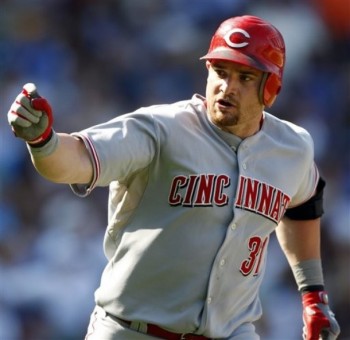 The fourth member of our list is the only real head scratcher in the bunch. While all the other listed hitters are known “walkers”, Gomes has basically come out of nowhere to join the group this year. With a career high of 61 walks in 2006 being far and away his highest season total, few people envisioned Jonny Gomes learning true patience at the age of 30. Perhaps spending time with Votto has helped his transition. But then, his .211 AVG would seem to indicate that he might not be fully paying attention in emulating Votto. At a season total of six home runs, Gomes is on pace to set a career high of 35 home runs. But looking at the full numbers, Gomes is the outlier. Hitting in the standard Nick Swisher mold, Gomes has compensated base hits for walks. With his 18 walks has come 23 strikeouts…which shows that he is missing as many pitches as he is taking. It is not a bad thing that Gomes is taking many walks, but unfortunately he is swinging for the fences and striking out at a Rob Deer frequency with too few base hits. Gomes may continue the walks, but without a steadier number of base hits to match, he may not be as productive as one may think.
T-5th: Daric Barton, Oakland Athletics (16)
Seemingly playing forever, the 25-year-old is entering his 5th season in the bigs. With a .368 career OBP and 110 walks last year (leading the AL), Barton is patience personified. The only knock on Barton has been his low batting average and power. 2011 has done nothing to calm those fears, as Barton is hitting .205 with zero home runs. Along with Gomes, Barton is sacrificing base hits for walks, but not seeing the tangible results that should come along with them. Well…at least Gomes is hitting home runs, I really can’t see what value Barton has other than walks. With ten home runs, Barton is slowly becoming another Travis Buck. As Barton continues to keep first base warm for Chris Carter, I am sad to see that his patience at the plate never translated to greater things for him offensively. Judging on his 17/20 BB/K ratio, Barton clearly is either not patient enough or judging the right pitches to hit. Based on this slow start, it appears the one-time A’s prospect has graduated into a full-fledged suspect.
T-5th: Miguel Cabrera, Detroit Tigers (16)
 One of my favorite hitters in the game, I always wondered what levels he could reach if he could take more walks. Always known for a solid average and home run bat, the answer to my question started to be answered last year. Cabrera set a career high with 89 walks last year and had correspondingly a career high 38 home runs. This year, with a 17/12 BB/K ratio, Cabrera has already five home runs, to go with his .338 AVG, .458 OBP and .610 SLG. These are really…really…really good numbers. Finishing second last year in MVP, the re-born Cabrera has become everything I could have imagined as a hitter. Together with Bautista in the AL and Joey Votto in NL, we are looking at three of the most complete hitters in the game. Taking many walks, hitting many home runs, hitting for a high average and not striking out a ton. Patience at the plate, waiting for the right pitches to hit and taking advantage of those pitches. Hitting perfection.
T-5th: Kevin Youkilis, Boston Red Sox (16)
No conversation on walks is complete without including the Greek God of Walks himself, Kevin Youkilis. A .292 career hitter with a lifetime .394 OBP and .497 SLG, Youk fit the mold of the perfect hitter as I discussed above. But something has happened to Youk in 2011. Despite his high walks and decent number of home runs (4), his average sits at .222. Considering that Youk has hit .300+ the last three seasons, I do not expect a huge regression at the age of 32. As long as he stays healthy, Youk should be at .290, .390 and 25 home runs. That’s just how steady Youk is. But given his career low average this year, I actually suspect there may be an injury concern. I do not see Youk turning into Jonny Gomes overnight. Everything seems to even out in the long run and over the course of the season, the real Youk should emerge. Walks will always be there, but the rest of the game should follow as well. But even if he remains slumping, as Bobby Abreu and Daric Barton have shown, at least taking walks brings some contribution to the table. But unlike those two, at least Youk can still swing a power stick. Walks truly begin and end with Youk.
Thank you for reading today’s feature on walks and the hitters who take them. While we all have theories on the subject, think of all the best all around hitters of all time and take a look at their walk totals. While there may have been many home run kings with low averages or hit kings with poor power, take a look at the best all around hitters and see how many times they walked. Then tell me what you think about the value of the combination of power and patience and if you now subscribe to this theory. I certainly hope that you do.

Please e-mail us at: MLBreports@gmail.com with any questions and feedback. You can follow us on Twitter and become a fan on Facebook . To subscribe to our website and have the daily Reports sent directly to your inbox , click here and follow the link at the top of our homepage.

Top Home Run Hitters: MLB 2011

MLB reports: For pure fun today, I wanted to scan the major league baseball leaderboard and evaluate the top home run hitters of 2011. While this list can change at a moment’s notice, looking at the board with over three weeks into the season is always fun. At least my idea of fun. I originally planned to make a top ten list, but that was going to prove to be futile. Six hitters sit at the top of the list with seven home runs a piece and eight hitters tied for second with six home runs each. Let’s take a close look at the top fourteen then and see which hitters are likely to remain on the list and which have caught lightning in a bottle for a few games.
First Place – Seven Home Runs
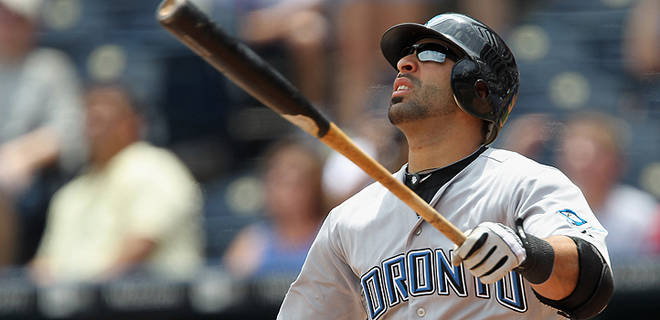 Jose Bautista: Toronto Blue Jays
After 54 home runs last year, is anyone still waiting for a slowdown? With 19 walks already, .359 AVG and 1.256 OPS, Bautista continues to build on the momentum of last year. Living up to his large contract extension signed in the off-season, it appears that the new Jose Bautista is here to stay. At 30 years of age, Bautista is showing that he has enough juice in his bat to approach another 50 home runs this year.
Adrian Beltre: Texas Rangers
Another big contract signing entering 2011, Beltre has made good on the promise of his bat hitting in Arlington. Inconsistent throughout his career, analysts have often said that if healthy and playing in a hitters park, the sky is the limit. Beltre hit 48 home runs back in 2004 playing for the Dodgers and have never approached those numbers since. At 32 and playing in one of the best hitters park in a stacked lineup, big numbers could come his way. I see somewhat of a regression, but 30-35 home runs is a safe bet at this point.
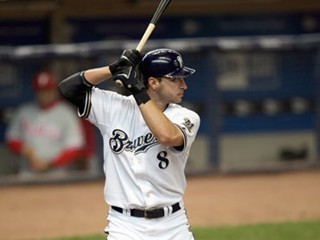 Ryan Braun: Milwaukee Brewers
The Hebrew Hammer has 128 career home runs in four seasons going into 2011. He has Prince Fielder in the lineup with him. At 27, Braun is this generation’s Ralph Kiner and Hank Greenberg. No slowdowns ahead for this Brewer as he shoots for his first 40+ home run season. The 2007 NL Rookie of the Year is a future MVP and his time could come this year.
Curtis Granderson: New York Yankees
The only surprise in the top home run hitters category, Granderson has always shown glimpses of brilliance but injuries and slumps have slowed his path. The 20/20/20/20 season in 2007 was impressive, as was the career high 30 home runs that Granderson hit in 2009 for the Tigers. Even though he missed 26 games last year to injury, he still was able to amass 24 home runs. Now healthy and with the short porch in Yankee stadium, Granderson has a good chance at equaling and besting his career best power numbers. Given the Yankees lineup as well, I would not count him out. Granderson is unlikely to remain among the league leaders in bombs, but a solid 30+ home run season is definitely in order.
Albert Pujols: St. Louis Cardinals
Coming into this season, the Great Pujols hit a Ruthian 408 home runs in 10 seasons. Truly our generation’s Babe Ruth, Pujols has to be considered one of the best home run hitters of all time. With an .806 OPS, Pujols hasn’t even begun to heat up. Pujols has Holliday and a resurging Lance Berkman for protection and going into his first free agency year, expect legendary numbers by seasons end. This is Albert Pujols we are talking about…I do not have to say anything else.
 Troy Tulowitzki: Colorado Rockies
Still only 26 years old, Tulowitzki is working towards becoming the best player in baseball. Missing significant time in 2008 and 2010, Tulo still has 99 career home runs going into today. Playing in the home run haven called Colorado, all Tulo has to do is to stay healthy to succeed. As this is an odd year, history is shown that he will likely play close to a full season. His career high of 32 home runs is well within reach and I can see a 40+ home run season this year. The talent and circumstances are all there…all he needs is health.
Second Place: Six Home Runs
Lance Berkman: St. Louis Cardinals
Going into the second tier of top home run hitters, we find some resurgent players, surprises and expected studs. Berkman was an uncertainty coming into season. The 35-year-old Big Puma has seen 40+ home run seasons in his career. 2010 was an injury shortened season and after getting traded to the Yankees and faltering in New York, critics began to write him off. I was a big fan of his move to St. Louis, back to the NL Central and the opportunity to play with Pujols and Holliday. Defense aside, Berkman’s 9 walks and league leading .725 SLG show that the Puma is back. With the occasional days off and prime spot in the lineup, 35 home runs is my predicted total for this superstar.
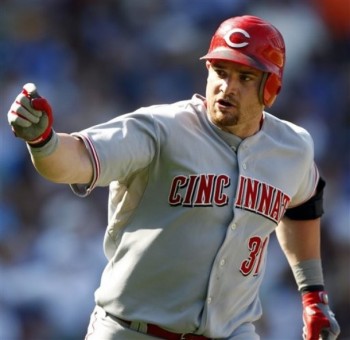 Jonny Gomes: Cincinnati Reds
The man has seem to been around forever but is actually only 30 years old. Gomes has seen several 20+ home run seasons in his career, including 18 in 2010 playing in a career high 148 games. With 18 walks, Gomes has disguised his poor .212 avg this season with a .386 OBP and .530 SLG. The owner of a lifetime .332 OBP and .463 SLG, Gomes will get a fair amount of playing time this year. While he is not the second coming of Adam Dunn, Gomes has clearly found a home in Cincinnati. His lower average and 19 strikeouts concern me at this point as he will need to become a steadier hitter to continue to receive steady playing time. Part of the surprises of this list, expect a return to form in order for Gomes. Despite lofty totals, I cannot foresee a 30 home run season coming, even though he plays in that ballpark. He is too streaky and Dusty Baker is not patient enough to stick with him.
Howie Kendrick: Los Angeles Angels of Anaheim
Not one of my favorite players to cover, I have always soured on Kendrick for his inability to take walks. With a career high of 10 home runs (twice), low stolen bases totals and inability to consistently get on base, I have rarely seen the upside of Kendrick at the plate. This season, apparently as light switch has gone off inside his head or bat, as Kendrick is well on his way to shattering his previous power numbers and already has 10 walks on the season (last year he set a career high of 28). Does a leopard change its spots…or does a Kendrick learn patience? I will believe it when I see it. I have watched Kendrick for too long to be sold on what I have seen thus far. if he is still able to keep up this approach going into July, maybe I will cut him some slack. Until then, I expect to see Kendrick off this list by mid-June at the latest. A nice run, but a run is all this is at the end of the day in my opinion.
 Russell Martin: New York Yankees
The second Yankee on our list has found a new home and new lease on life in the Bronx. Martin had a career high 19 home runs in 2007 playing for the Dodgers, earning a Silver Slugger award that year. With an OPS of 1.099, Martin is the early favorite for Comeback Player of the Year. Playing nearly every game this season and enjoying a healthy hip, Martin apparently has renewed drive and focus that was previously lacking in Los Angeles. At 28 years old and continuing our trend of young superstars on the list, all Martin really has to do is stay healthy this year. In the loaded Yankees lineup and with the short porch, Martin has a chance at 25 home runs this year.
Jorge Posada: New York Yankees
Yankee #3 is on the downside of his career, or so we are led to believe. The 39-year-old Posada is a full-time DH for the full-time in his career. While his .153 AVG and .711 OPS, his 6 home runs (of his 9 total hits) is outstanding. Too many factors are against Posada staying on the leaderboard. Health is always a concern and despite no longer playing the field, any tweaks at this point could send the elderly Posada to the DL. Further, his numbers are showing that when he is not hitting home runs, he is simply not hitting or getting on base. As Posada continues his best Rob Deer impersonation, I don’t foresee great things ahead for the future hall of famer, nearing the end of an outstanding career.
 Carlos Quentin: Chicago White Sox
Both Chicago teams are represented, with the powerful Quentin starting off for the White Sox. The likely pick for MVP had he stayed healthy in 2008, Quentin has a laundry list of injuries and ailments his entire career. But when healthy, Quentin is always a home run threat. With a 1.023 OPS and having Rios, Dunn, Konerko, Ramirez and Beckham in the lineup for protection, Quentin looks to best his career high of 36 home runs in 2008. I am sitting on the fence on this one. The potential is there, but so are the injuries. Expect at least a couple of trips to the disabled list but assuming reasonable health, I will take 30+ home runs for Carlos. The Adam Dunn factor cannot be discounted, as he will prove to be great protection for Quentin all season long.
 Alfonso Soriano: Chicago Cubs
A 20+ home run hitter for nine straight seasons, Soriano was written off for dead by many experts, yours truly included. 2009 was a dismal season for Soriano and although he had a steady return last year, at the age of 35 and with knee issues, little was expected from the talented Dominican. Despite his .513 SLG this season, there are several reasons to expect a continuing decline for Soriano. His BB/K rate this year is an abysmal 3/21, as his .244 AVG and .272 OBP. If you ask me, I see Soriano slowly decaying into the next Yuniesky Betancourt. Soriano is still a lock for another 20+ home run year but with the rest of his game on such a rapid decline, don’t expect much else. If the Cubs have any other options, I expect Soriano to see more time on the bench or even a trade in order. But at his salary, I cannot foresee any team taking a chance.
Mark Teixeira: New York Yankees
The last player on our list and Yankee #4, Teixeira clearly did not get the memo that we are in April and not August. A notorious slow starter, Teixeira is already up to twelve walks, .402 OBP and .621 SLG. For the 31-year-old Teixeira who has 281 career home runs, his career high of 43 home runs in 2005 could be broken. Considering that Teixeira has the ability to hit 10-12 home runs per month in the summer, I see a clear breakout year for this superstar first baseman. The Yankees went out and got him for a reason. In addition to his gold glove defense, I am smelling a possible silver slugger and MVP award in 2011.
What is the future of this list? Hard to tell without a crystal ball, as so many factors can arise. Injuries, playing time, lineup position…things can change. But a trend is clear from the early season home run leaders. Most are in the 27-30 year-old age bracket and are proven home run hitters in their careers. I expect most of the above hitters to remain on the list, with some surprises to fade away and new players to emerge. Other superstars, like Joey Votto and Adrian Gonzalez will join this list very soon. But even in the short span of three weeks into the season, it is clear that even with only a few games played, the home run hitting cream is already rising to the top.

Please e-mail us at: MLBreports@gmail.com with any questions and feedback. You can follow us on Twitter and become a fan on Facebook . To subscribe to our website and have the daily Reports sent directly to your inbox , click here and follow the link at the top of our homepage.

The Legend of Sam Fuld: A Star is Born in Tampa Bay

MLB reports: How often does a 29 year-old outfielder with 155 career at-bats in the majors going into a season garner the hype that Sam Fuld has received this year? How about one with 24 career home runs in 6 minor league seasons? Probably not many. With all the attention surrounding Sam Fuld, MLB reports decides to look deeper into the player behind the hype.
Samuel Babson (Sam) Fuld was born on November 20, 1981. Growing up in Durham, New Hampshire, Fuld was a Red Sox fan. Ironic considering that Fuld joined the Rays in 2011 and got his start in Tampa Bay playing alongside childhood idols, Johnny Damon and Manny Ramirez. Fuld is 5’10” and weighs 185 pounds, hardly an imposing baseball specimen. Over the course of his 6 minor league seasons, Fuld was a gritty on-base machine in the Cubs system. Fuld was actually drafted twice by the Cubs, in 24th round of the 2003 draft and 10th round in 2004. Fuld’s time in the minors showcased the type of player we could expect to see one day if given the opportunity.
 In his 6 seasons in the minors, Fuld hit a combined .285. Very impressive on its own. Consider though that he has a career 302/254 BB/K ratio in the minors and you now have the prototypical “moneyball” player. Fuld has a career .372 OBP in the minors, combined with 106 stolen bases. This is a player that hit 10 triples in 84 games for AAA Iowa in 2009 and 9 more in 2010. Fuld can clearly hit, get on base and run. With 404 runs scored in the minors, Fuld finds a way to generate offense. So why have we not heard of Fuld before this year? Why did the story start so late? The usual story I believe of scouting and stereotypes over numbers and production. As Sam Fuld is showing this year, talented players will eventually produce even when “experts” discount them over the course of their entire careers. All they need is a chance.
The biggest hindrances for Fuld I believe are two-fold. Firstly, his lack of height and stature probably frightened coaches and scouts alike. Big players are seen as having more “tools” and “talent”, which players like Pedroia are starting to change. Secondly, with few home runs in the minors, 218 RBIs and .405 career minor SLG, the Cubs were not prepared to give Fuld a full chance knowing that he would be unlikely to hit for much power in the bigs. Fuld got three cups of coffees with the Cubs, in 2007, 2009 and 2010. He received 6, 97 and 28 at-bats per year respectively. Despite a .252 average, Fuld had a .368 OBP during his time with the Cubs. Fuld also had 23 walks compared to 18 strikeouts. Fuld clearly was able to play his game in Chicago. But one home run and .344 SLG has a way of disappointing a team in a hurry. It is somewhat of a chicken and egg debate, as Fuld’s sample size in Chicago is a small one and with more playing time, perhaps he could have showcased greater numbers. Not known for developing young hitters, the fit in Chicago was not there and Fuld was never going to get an opportunity in Chicago. A change of scenery was in order.
On January 7, 2011, Fuld was essentially a throw-in as part of the blockbuster swap between the Cubs and Tampa Bay Rays. The Cubs sent uber-prospect pitcher Chris Archer, outfielder Brandon Guyer, catcher Robinson Chirinos, shortstop Hak-Ju Lee and Fuld to the Rays for top starting pitcher Matt Garza, outfielder Fernando Perez and pitcher Zachary Rosscup. Out of options and on a new team, Fuld had a new lease on life. Just one problem remained: The Rays were loaded with hitters in key positions blocking Fuld. With Upton, Zobrist, Joyce and newly acquired Manny Ramirez in the outfield, rotating as the DH with Johnny Damon, and Dan Johnson/Casey Kotchman battling for the first base job, Fuld would need an injury or opportunity to crack the Rays line-up. The stars were going to need to truly align for Fuld and heading into spring training, there was no talk that I can recollect of Fuld becoming the Rays saviour. Sitting in the third week of April, the situation in Tampa Bay could not have unfolded better for Fuld’s career. With the opportunity and off-the-charts production, the Legend of Sam Fuld was born.
First Manny Ramirez retired one week into the season. A player that I expected to be a distraction for the team all season barely completed his time out of spring training before calling it a career. With another apparent failed substance test, Ramirez chose to go home rather than face the music before MLB officials. With Ramirez out of the way, it was time to focus on sorting out the Rays lineup. Going into today’s action, Joyce and Damon have been fairly steady the Rays in 2011. Dan Johnson, Jaso and Zobrist have been very slow out of the gate with averages under .200 each respectively. Upton has also been unable to get his bat going again this year and Longoria played only two games before missing most of the season from an oblique injury and due back sometime in May. Starting the season with a 1-8 record, the Rays needed an ignitor to get the season going. With little offense and the season slipping away, the Rays needed to do something fast. The solution: Sam Fuld.
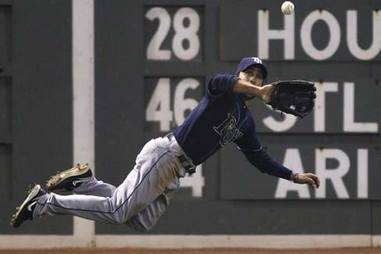 In 18 games thus far, Fuld has only one home run for the Rays. Funny, but nobody has noticed. Ironically, Fuld hit said home run on April 11th, when he almost hit for the cycle. Almost…as with a home run, triple and double, Fuld hit a second double rather than a single to complete the cycle. That is simply the type of player that Fuld is: heart and hustle (hey, isn’t that the motto for the 2011 Blue Jays?) Fuld is hitting .366 on the season, with a whopping .395 OBP and .549 SLG. Fuld leads the American League with nine stolen bases and while he has only walked four times…he is simply too busy getting base hits. Two triples, six doubles, eleven runs and eight RBIs, Fuld helped the Rays 8-1 surge back to third place in the AL East with a 9-11 record. Last night, in a dramatic 11th inning loss to Toronto, Fuld went 3-5 (including a triple) with three runs scored, one RBI and two stolen bases to boot. It appears that the Rays have found their leadoff hitter for the foreseeable future, as the Legend of Sam Fuld continues to unfold.
We haven’t even touched upon Sam Fuld, the outfielder. The best way to describe Fuld is if Aaron Rowand and Reed Johnson combined into one super defensive player. If not for the gold-glove calibre play of B.J. Upton, Fuld would be manning center for the Rays. With leaping catches off walls and showing great arm strength, the legend of Fuld’s glove is being well documented. Some people around baseball are already saying that Fuld could play for the Rays just based on his defensive abilities. But with his showing of hitting abilities, patience and speed, Fuld is showing the types of tools that superstars are built on. It is only a shame that he had to wait so long to get his chance to shine. But as the old expression goes: better late than never.
So what does the future hold for Sam Fuld? Looking into my crystal ball, I am seeing a great deal of haze. I remember Kevin Maas and Chris Shelton fans asking me the same type of question back in the day. The response is always the same: once the league has the book on Fuld and he has to face the same teams for the second, third and fourth times around, let’s see we he can do. Can he hit only breaking balls? Will Fuld be able to adjust when teams start to exploit his hitting weaknesses? Only time will tell. Sam Fuld is a great feel-good story. The Legend could continue for the foreseeable future, perhaps for this entire year and beyond. For a fan of the game that has seen too many bright stars burn out, I remain on the fence. While I want to see Fuld succeed, there is something about 2 for 30 stretches at the plate that have a way of lowering a player’s confidence and image. I will give Fuld the benefit of the doubt, but would like to see what he can do over this entire season before casting my vote. In the meantime, just like everyone else, I will continue to watch in awe of the player that has simply become known as: The Legend of Sam Fuld.

Please e-mail us at: MLBreports@gmail.com with any questions and feedback. You can follow us on Twitter and become a fan on Facebook . To subscribe to our website and have the daily Reports sent directly to your inbox , click here and follow the link at the top of our homepage.

Ryan Tatusko: MLB Guest Blog
The players speak: MLB reports devotes this page to the players who will be writing blogs in their own words to you, the readers.
The inaugural MLB Guest Blog comes from Ryan Tatusko of the Washington Nationals. Ryan currently pitches for the AA Harrisburg Senators of the Eastern League.
April 21, 2011
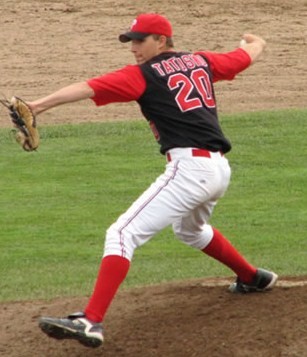
Ryan Tatusko: This year was a different year for me in preparation for many reasons. For one, I was starting out with a new team that I really know nothing about. Furthermore, I am going to be a full-time starter this year. In the past, when I was with the Texas Rangers, I was would routinely ping-pong between the bullpen and the starting rotation based on where they, the organization, would need me. I would then usually stick in the rotation around the all-star game, but this year was different. The Nationals have told me that at this time they envision me as helping the ball club as a starting pitcher and that’s where they wanted to keep me.
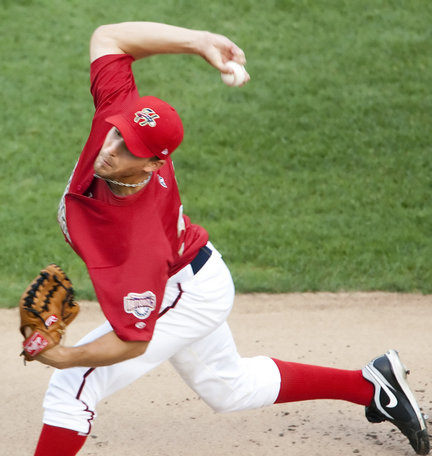 Heading into the season as a starter, I did not necessarily change the way I went about my off-season preparation or conditioning, but I did tweak a few things here and there. For instance, as part of my bullpen sessions, I wouldn’t throw them as frequently as I would when I started the season as a reliever. Instead, I would do fewer sessions with more pitchers. I also made sure that I would do more long distance cardio work to build my stamina for the upcoming year. My preparation for camp has never changed in the 4+ years that I have been going. The team you are with gives you a pretty set schedule as to what to do in terms of running, lifting, and throwing and as long as you follow it, you will be just fine and will be ready to go when camp starts.
Getting to camp this year was fun and exciting for me as I got the feeling that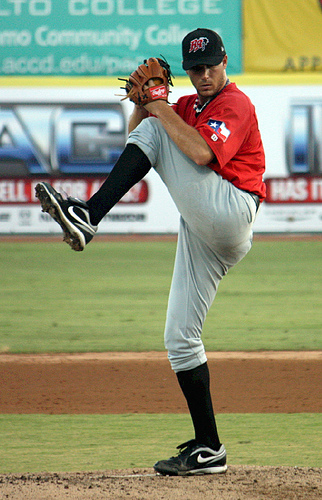 I was a fresh face all over again, the same feelings I got when I was first drafted by the Rangers came back. I was excited, maybe too excited. The first few games I played in I probably tried to do too much. But once I settled down and starting getting back to my game, I felt like I had very good success during spring training. I really wanted to work on throwing my change-up for strikes more in camp, as it seems to be a pitch that has been less effective for me as compared to my other pitches. By the time that I left Viera,FL I felt that I made immense strides with it and I was extremely happy with the way I was throwing it and with the confidence I was displaying.
Not understanding where you are going to be assigned is one of those things that can consume you if you are not careful. When you start to think about the potential moves that the organization could and should make, you start to drive yourself crazy and you get distracted from what you do on the mound. It’s one of those things you just got to try your best to block out and not think about as you go through your process and getting ready for the season. There is always a rhyme and a reason that people do things and although it might not be evidently clear at the first get go as to why; you eventually find out.
 I have since been assigned to AA Harrisburg to begin the year. I have made a few starts and although one particularly has not gone the way I would have liked it too, it is still very early on in the season. I see these starts as an opportunity for me to learn from my mistakes and to grow as a pitcher. There are numerous quotes and clichés out there that talk about having a short memory if you want to succeed at this game and they are all absolutely true. There is a fine line between learning and obsessing over particular starts. There is always something positive and negative to get out of taking the mound, but as a player you have to be careful and not let it consume you and over-think about the process. The really good pitchers out there learn and move on the quickest so that they can devote all their time to their next outing.
I am eager to get back on the mound quickly and progress through the season. I have never felt stronger mentally and physically and I can’t wait to see what the season has in store for me.
Thanks for reading.
Ryan
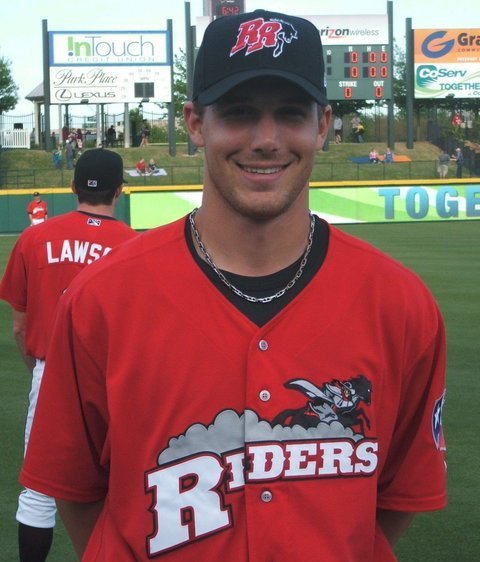
***A special thank you to Ryan Tatusko for his time and effort in preparing his guest MLB blog entry for MLB reports. Please follow Ryan on Twitter. In addition to being a talented pitcher, Ryan is a tremendous person and loves interacting with his fans. A friend of MLB reports, we look forward to reporting on Ryan throughout the season as he continues his journey to Washington. Good luck Ryan!***
To learn more about Ryan, please view our February profile of Ryan Tatusko.
Please e-mail us at: MLBreports@gmail.com with any questions and feedback. You can follow us on Twitter and become a fan on Facebook . To subscribe to our website and have the daily Reports sent directly to your inbox , click here and follow the link at the top of our homepage.
ALEX GORDON REINVENTED: KANSAS CITY ROYALS
MLB reports: In 2005, B.J. (Bossman Jr.) Upton went first overall in the MLB draft to the then Tampa Bay Devil Rays (now shortened to “The Rays”). The Kansas City Royals, with the second pick nabbed University of Nebraska sensation Alex Gordon. After being named college player of the year and minor league player of the year, Gordon made his long anticipated major league debut on April 2, 2007. The then 23 year old Gordon was the then star prospect for the Royals. Comparisons to George Brett were prevalent and after unlimited success through collegiate ball and the minors, a quick adjustment was expected for Gordon. A player with his skills and natural ability simply could not fail. Or so many of the experts in baseball thought. The next four years began a stream of injuries, hardships, trips to the minors and position changes for Alex Gordon. A difficult road indeed.
 I was fortunate to watch many of Alex Gordon’s games in 2007. The rookie third baseman ended up playing almost a full season that year and finished with six hundred plate appearances. Fifteen home runs and sixty RBIs were seen as decent, but a .247 average and 41/137 BB/K ratio indicated that Gordon was still very much inexperienced and required seasoning. In my estimation, Gordon simply needed some seasoning and getting further experience in baseball would help me grow into stardom. I saw some very bad habits back in that rookie year, including impatience at the plate and instances of a lack of confidence in himself as he suffered through various slumps that year. But in no means could any expert envision what would transpire over the next three years.
As the Royals continued to lose and fall in the standings, so did Alex Gordon’s stock. After playing in 134 games in 2008, Gordon only played partial seasons in 2009 and 2010. Injuries continued to mount and when Gordon was not in the minors or the DL, he was struggling in the majors. Gordon actually fell to a .215 average in 2010 with a .671 OPS. Stories continued to mount that as he was approaching the age of twenty-seven, his time in Kansas City was done and a change of scenery was needed. To further cause insult to injury, Gordon’s defense at third base was considered so below average that the Royals moved him to the outfield in 2010. Now an outfielder learning a new position and hoping to get his career on track, few people knew what to expect from Gordon in 2011. But there were signs of a rebound coming.
The top factors behind an Alex Gordon breakthrough that I predicted for the 2011 season:
1) 27 years old: This is the age when most players seem “to get it” and there was no reason why Gordon would be different. After a great deal of exposure to the majors, I saw confidence more than anything else as the issue. As long as Gordon was healthy, as long as he believed in himself, there was no reason for him not to produce.
2) Talent: Talent does not disappear and as a former College and Minor League Player of the Year, Gordon obviously has an abundance of skills. When I read that Gordon was rated as the purest collegiate hitter in his class and George Brett is drooling over signing him, you know that the player is something special. Many players have heart. Many players have drive. But few, if any players, have the talent that Alex Gordon has. You can’t teach talent like his and as long as he was still young and playing, I was prepared to give Gordon the benefit of the doubt.
3) Pressure is Off: Gordon might have been one of the players that had too much expectations placed on him too soon and the goals set for him were almost too high that no player could reach them. Being expected to turn around the entire Royals ball club and become the next George Brett is a lot of pressure. I believe that the pressure got to Gordon and he cracked. Now, going into 2011, switching to the outfield and not being expected to be the foundation of the Royals, Gordon was going to be able to simply go out and play his game. His way.
4) The next wave: Going in line with the third point, the Royals have many prospects on the way. Fans of the Royals and prospects know the names Moustakas, Hosmer and Myers, the big three expected to land in Kansas City over the next two years. The media and fans have been clamouring for these prospects, which has created hope in Kansas City. From a team that was playing the last few years with little optimism, 2011 was promising to be the start of something very special for the Royals. Never discount the effect of winning or the hope of winning. It certainly has a way of uplifting players.
5) The vets: With the addition of Jeff Francis, Jeff Francouer and Melky Cabrera, the Royals added role players who would be strong in the clubhouse and held mold a young, up-and-coming ball club. One of the players most likely to benefit was Alex Gordon, who requires mentorship and assistance to build his career. Rather than getting lost in the shuffle, Gordon could be re-invented and re-born into a major league star.
I wrote several pieces and conversed with many fans during the offseason touting the return of Alex Gordon. The above factors being key in my mind, I saw Alex Gordon as the ultimate low risk, high reward player. For all the talk that the Royals might trade Gordon, I could not foresee that any MLB could offer a sufficient return to the Royals to cut loose a player of his potential. I was relieved to see that Gordon played full-time in spring training and would be in the Royals lineup every day starting opening day. The results: Gordon, 12 games into the season going into today’s action, is hitting .345 and has a .907 OPS. Leading the league in hits with 19 and 7 doubles, clearly Alex Gordon is finally starting to arrive. His Royals, with a 7-0 win over the Mariners today now stand at an imposing 10-4 record. Gordon, now the #3 hitter in the lineup, had a 3-4 day with 3 runs and 2 RBIs. To say that Gordon is starting to meet his potential is an understatement. Royals fans and Gordon supporters are excited, as everything seems to finally be going right.
 Further, with a bullpen of Soria, Crow, Collins and Jeffress, the Royals pitching in the late innings has been lock-down and the team overall has received the pitching and hitting necessary to excel. But while the Royals and Gordon may be on a current high, warning signs are there for both. From a hitting standpoint, pulling Gordon and Butler aside, the Royals seem to be scoring runs with smoke and mirrors. I see little hitting for this team until the big-three hitting prospects arrive in the next two years. From Gordon’s standpoint, despite his newly rediscovered hitting stroke, has an alarming 3/11 BB/K rate. But striking out at a high clip with few walks, I am worried that Gordon is still continuing his free swinging ways and has not learned patience at the plate. So when pitchers will find his weaknesses and exploit them, the base hits he gets right now will become outs. I am by no means predicting doom and gloom for Gordon and the Royals, just showcasing potential red flags. But given his strong start, as long as Gordon continues his adjustments and has confidence in himself, he should be strong by the time Moustakas/Hosmer/Myers arrive.
For those that were ready to put Alex Gordon in the Hall of Fame back in 2007, that prediction may never come to fruition. Although it seems like he has been around forever, Gordon is still only 27. With a strong work ethic, confidence and health, Gordon could very well play for another decade in the majors. It is time to put the George Brett comparisons to bed. Alex Gordon is his own person and player. From the results so far from 2011, he is a pretty darn good one. The hope and promise continue to be there for Gordon. Here’s hoping 2011 will be the year that he finally arrives.
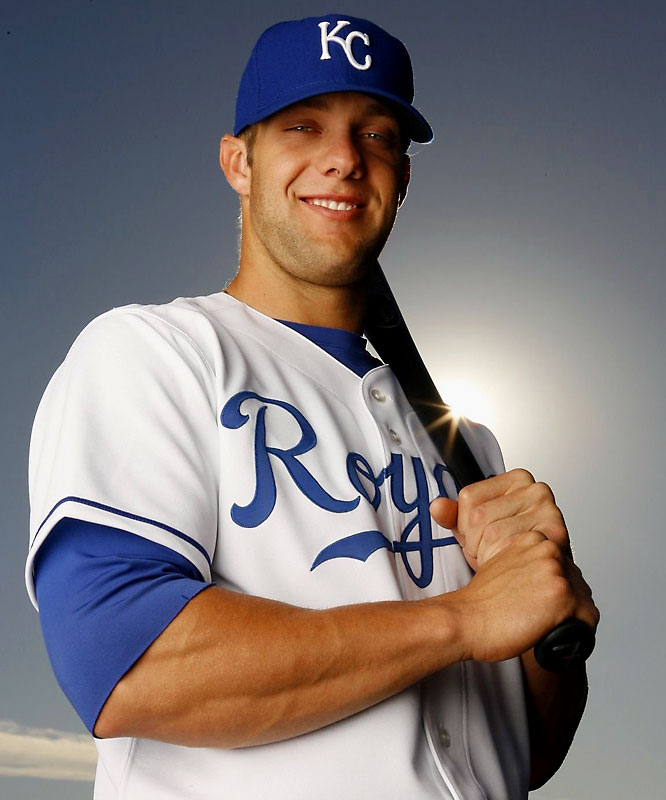
Please e-mail us at: MLBreports@gmail.com with any questions and feedback. You can follow us on Twitter and become a fan on Facebook . To subscribe to our website and have the daily Reports sent directly to your inbox , click here and follow the link at the top of our homepage.
A TRIBUTE TO GREGG ZAUN
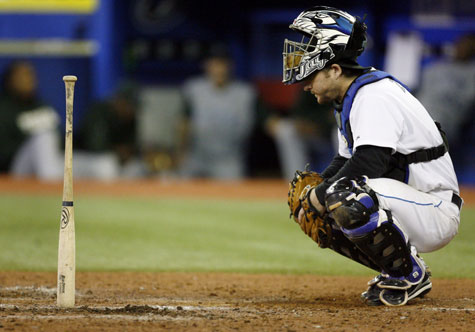
MLB reports: On March 7, 2011, after sixteen seasons in baseball, Gregg Zaun decided to hang up his spikes for a final time. In spring training with the San Diego Padres, his tenth major league team, Zaun decided that he was not ready to continue in the game. Zaun seemed like a great fit for the Padres, a young team on the rise that could use his mentorship to guide its up and coming pitching staff. But being a man of integrity, Zaun apparently knew that his time had come. After a final farewell to the baseball field, Gregg Zaun joined Sportsnet in Ontario to become a full-time member of the Toronto Blue Jays broadcasting team. After broadcasting with Sportsnet for the last couple of years as a commentator for the playoffs, reports indicated that Zaun would one day become a broadcaster once his career was done. While being highly capable to continue in the game as a scout, coach or future manager, broadcasting has become the fit for Zaun as he starts the new phase of his career.
 A nephew of Rick Dempsey, catching apparently ran in the family as Zaunn started his career with Dempsey’s Baltimore Orioles and rejoined the team for a brief stint in 2009. A 17th round pick in 1989, Zaun, a catcher by trade, made his major league debut in 1995 and lasted briefly on the Orioles until moving on to Florida. As a member of the Marlins, Zaun won his only World Series ring in 1997. After two and a half season in Florida, Zaun bounced to the Rangers, Royals, Astros and Rockies over the next several years. While the Gregg Zaun we have come to know and love is cool, collected, knowledgeable and intelligent, the younger Zaun of yesteryear was perhaps not as “together”. Reports I have read indicate that Zaun in his early his career perhaps took his role for granted, apparently having a sense of entitlement based on his famous uncle before him. Being 5’10” and weighing 170 pounds, Gregg Zaun is not the picturesque baseball player that we would necessarily come to expect. In the age of behemoth 6’3″+ catchers and ball players, a player of Zaun’s stature needs to show hustle and heart in order to have longevity in the game. After several cups of coffee around baseball, the maturation and stability of Zaun finally occurred in 2004.
Gregg Zaun became a member of the Toronto Blue Jays in ’04 and proceeded to spend the best five-year period of his career in Toronto. Zaun transformed himself into a leader on the ball club and became a fan favorite in the city. In 2005, Zaun played in a career high 133 games and had 434 at bats. Career highs of 162 total bases, 61 runs and 61 RBIs were set, but most telling were his 73 walks taken. Zaun, in addition to an outstanding defensive catcher was becoming an offensive catalyst as well. In 2006, despite playing in only 99 games, hit a career high of 12 home runs. Despite reports of Zaun being unhappy about sharing playing time near the twilight of his Jays playing days, Zaun showed up every day without a hiccup and was a team player right until the end of the 2008 season. Obviously Zaun’s time in Toronto was special for both him and his fans, given that Zaun continued to broadcast for the Jays in the off seasons following his departure from the team. A definite sign of things to come.
 Over the last two seasons of his career, Zaun played out the string with the Orioles, Rays and Brewers. As the Rays were contending in 2009, Zaun became a stretch-run acquisition. Playing fairly well, Zaun earned a contract with the Brewers going into 2010. Unfortunately injuries cut Zaun’s last MLB season short, to a miniscule 28 games. The thinking around baseball was that despite being 40 years old on opening day 2011, Zaun still had enough gas left in the tank that he would continue playing with his new team, the San Diego Padres. However, as Zaun realized that he would not be able to achieve his personal goals, rather than take up a roster spot for a youngster he decided to call it a career. While the sport lost one of its last true gamers on the field, it gained it substantially back on its television screen.
When J.P. Ricciardi was let go as the general manager of the Blue Jays, not coincidentally Buck Martinez (the former Jays broadcaster that was fired by Ricciardi as Jays manager) returned to the team as its new play-by-play man. Who did Buck replace? Jamie Campbell, who was reassigned to the position of in-game analyst during commercials for the regular season and playoffs. Campbell, who worked with Zaun for five seasons and gave him his first start in broadcasting, is now Zaun’s full-time broadcasting partner . It was a breath of fresh air to have Zaun return to the Jays as a broadcaster. With a new studio set up directly inside the Rogers Centre during the 2011 to boot, fans get to witness the brilliance of Zaun’s work up close and personal during every Jays home game.
The reality of sports is that a player’s time always has to come to an end. Baseball is no different. Whether a young hot-shot prospect like Brien Taylor is a first overall pick that never makes it to the majors, or a Jamie Moyer/Julio Franco type that almost plays into their fifties. Gregg Zaun could have easily gone either way in the game. A World Series ring in his third season in the majors. Having a famous uncle who was a major league catcher for a whopping 24 seasons. Zaun from all accounts came into the game with a sense of entitlement and if his first few seasons had followed suit, Zaun could have burnt out quickly. Without the proportions of a typical star major league player, arrogant/unmotivated type players tend to not last long in the show. But something did click with Zaun and lasted within him to allow him to have a long and productive major league career. Unfortunately for the Gregg Zaun fans out there, that same maturity allowed Zaun to walk away from the game, even though he could have hung on for another season or two. Apparently his time was done and now Gregg Zaun is ready to continue the rest of his career.
I have really enjoyed reading and listening to Gregg Zaun’s analysis and thoughts on the game. In addition to being an analyst on Blue Jays broadcasts, Gregg can be found on twitter under the handle, appropriately enough @greggzaun. In my opinion the game of baseball needs more Gregg Zauns in its ranks. A winner with pure hustle and determination, the Gregg Zaun that I know embodies everything that is pure and great about baseball. The future is unlimited for Gregg Zaun. MLB reports wishes Gregg all the best as he starts the second phase of his career and get ready, you will be watching Gregg on ESPN or the MLB Network before you know it. Remember, you heard it here first.

Please e-mail us at: MLBreports@gmail.com with any questions and feedback. You can follow us on Twitter and become a fan on Facebook . To subscribe to our website and have the daily Reports sent directly to your inbox , click here and follow the link at the top of our homepage.
THE MYSTERY OF GEOVANY SOTO

MLB reports: Rewind to the 2010 season. If I told you there was a 27 year old catcher that hit .280 with 17 home runs in only 105 games that year, I bet that you would be impressed. Add in 62 walks, a .393 OBP and .497 SLG and I would fathom that you would be very high on this player. The same player that in 2008 hit 23 long balls in 141 games and managed a .285 average, with a .364 OBP and .504 SLG. Again, very impressive for a catcher, as top hitting catchers are hard to find in baseball. Yet this same player, who was an 11th round pick in 2001, was the same player that hit .218 in 2009, with 11 home runs in 102 games, with a measly .321 OBP and .381 SLG. Fast forward to 2011 and this player is hitting an embarrassing .189 with 1 home run. Confused? Many baseball experts are. Welcome to the mystery that is Geovany Soto, catcher for the Chicago Cubs.
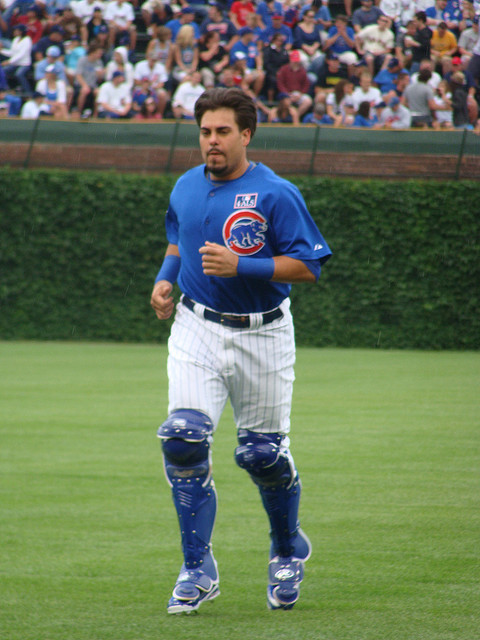 In 2006 and 2007, Soto had barely a sip of coffee in his brief appearances in the show. Having showcased some good pop though in 2007, Soto was handed the job in the 2008 season and ran with it. At the conclusion of that season, the sky was the limit for Soto. Entering the 2009 season, Soto was selected to play for his native Puerto Rico in the 2nd edition of the World Baseball Classic. However, the discovery of marijuana use during the WBC tainted Soto’s reputation and results for that baseball season. The mystery surrounding Soto was whether he had suffered a mere relapse or was already hitting a decline. Reports indicated immaturity and laziness on his part and Soto’s play and results on the field were indicative of his reputation. Much like Russell Martin was due for a change of scenery in leaving the Dodgers this past offseason, experts questioned whether Soto still had a future as a Cub going into 2010. A rebound was in order.
2010 turned out to be a bounce-back year for Soto, despite reports of a hurt shoulder and various ailments that caused him to miss over 50 games in the season. Having alternated good and bad seasons, 2011 represents Soto’s chance at redemption by showing consistency in consecutive outstanding seasons. That would be the hope if one is a Soto and/or Cubs fan. However, as his slow start has indicated, the future of Soto remains unsettled to this day. How Geovany Soto performs remains a mystery to us all, let alone what the next few years have in store for the stocky catcher. If I had to look into a crystal ball though, I would predict big things still for the Cubs backstop.
For all the doubts surrounding Geovany Soto, I propose that the potential is there and has never left this underrated talent. 2009 was a strange year for Soto that never seemed to get untracked. The marijuana story created a distraction for Soto as part of the WBC and then in the MLB regular season. Embarrassed I am sure for the negative exposure in his native country, Soto ended up having one of those years that just need to be written off. After all, Tim Lincecum faced similar charges and scandal this past offseason and his reputation seems to have recovered more than ok. As long as Soto is healthy, the opportunities should still be there for him and all Soto has to do is work hard and play the game the right way. The Cubs are a team in desperate need of leadership, both on and off the field. Geovany Soto can finally make the Cubs “his team” and help the team rise as a result.
As long as Albert Pujols is hitting .150 (already up to over .200 with a strong game tonight), Soto can be allowed a slow start to the 2011 season. Having shown that he can produce in the past, there is no reason why Soto should not succeed this year. Hitting in the middle of the lineup in the cozy confines of Wrigley, Soto is of the right age and experience tha a monster season should be coming. I truly believe that Geovany Soto has all the talent in the world and that we are just scratching the surface as to what he can do. Why he has taken step backs and where he is headed may be a mystery, but there is no doubt that the potential and promise is still there. In my opinion, any so called “baseball expert” that can write off a catcher with power and patience like Soto is foolish. Jason Varitek is a name that often comes to my mind when I think of Geovany Soto. Their style of play, bats and hustle are cut from the same cloth. The Cubs would be thrilled if Soto could grow into the captain of their team one day. With a breakthrough year this year, I think the Soto that was expected will emerge that will dominate and likely erase all the negative images of his past. If all goes according to plan, by the all-star break can erase the mystery portion of his life and create a positive image and results for himself. Gut feel, I can see this coming together for him soon.
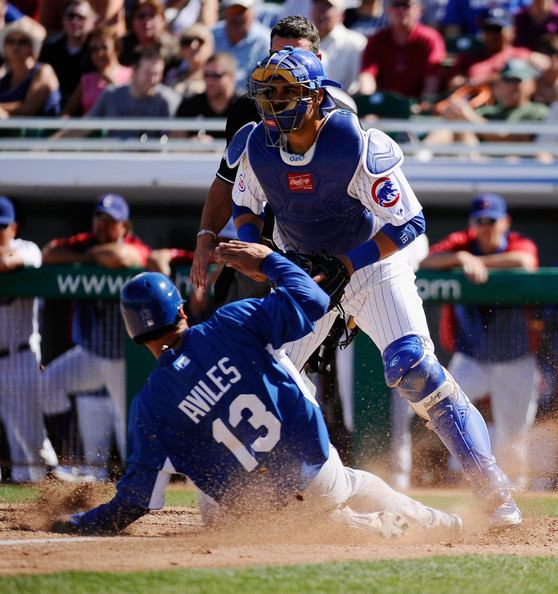
Please e-mail us at: MLBreports@gmail.com with any questions and feedback. You can follow us on Twitter and become a fan on Facebook . To subscribe to our website and have the daily Reports sent directly to your inbox , click here and follow the link at the top of our homepage.
RUSSELL MARTIN- THE INSIDE STORY
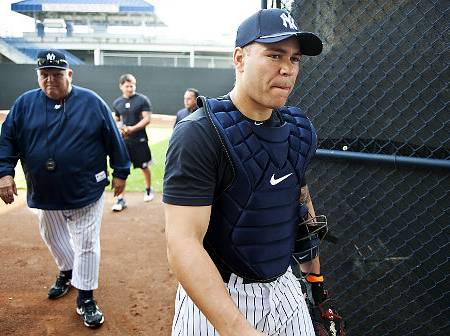
MLB reports: Imagine living the life of Russell Martin. The starting catcher for the New York Yankees. Nine games into the 2011 season, having a .300 batting average, three home runs, eight RBIs, two stolen bases and a .977 OPS. At the tender age of twenty-eight years older, with two all-star game appearances, a gold glove and silver slugger award under this belt, the world should be at Martin’s feet. Any person that had not followed baseball for the last couple of years and saw these statistics would be in awe of Martin. The second coming of Munson or Berra they may ask? Certainly would seem so, as Martin’s star appears to have been rekindled to its peak levels from 2006 and 2007. However the road for Martin from baseball obscurity to stardom, to bottoming out and a rebirth is a rocky and fascinating one to say the least. I present to you an inside look into Russell Martin, catcher for the New York Yankees.
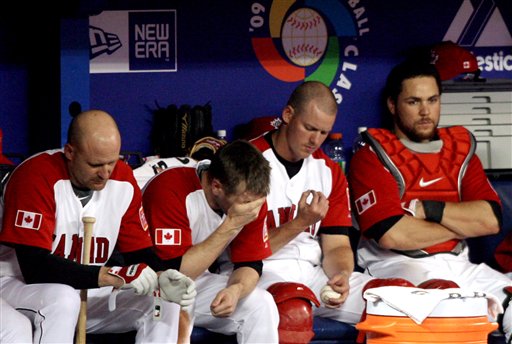 My first real exposure to Russell Martin was in March 2006. As Major League Baseball was gearing up for it’s ever World Baseball Classic (“WBC”), all of the countries involved finalizing and tweaking their rosters in anticipation of the inaugural event. Residing in Toronto, I was reading a great deal of information and stories on the Canadian contingent. News travelled that the expected starting catcher for Canada, a relatively unknown 17th round draft pick in 2002 for the Los Angeles Dodgers by name of Russell Martin had declined his roster spot at the last minute. Reports indicated that Martin felt that going into spring training he had a strong chance of winning a spot on the Dodgers roster and did not want to hurt his chances by camp and auditioning for his spot in front of the Dodgers’ brass. Dioner Navarro, the catching incumbent, was seen as a declining player and the chance to unseat him was too great for Martin to pass up. Max St. Pierre and Pete LaForest were the catching tandem for Canada in 2006 that came within a hair of advancing to the second round (only the runs allowed to South Africa in a blowout win sealed their fate). Martin ended up making his major league debut on May 5, 2006 and took a stranglehold of the starting catching position for the next five years in LA.
While Canadian fans were clearly disappointed with his decision, Martin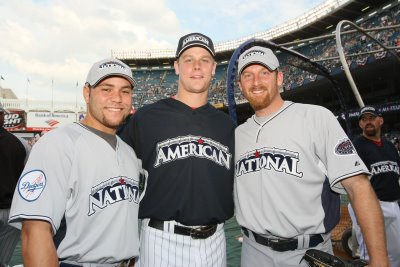 obviously made the right choice for his career. While representing one’s country in international play is an honor and somewhat of an obligation, fighting for one’s livelihood and paycheque when it is unsettled takes the ultimate priority. In the 2009 edition of the WBC, Martin kept his word to play for his country and finally suited up for Canada for the first round in Toronto in front of his hometown crowd. After almost upsetting the United States in game one, Martin and his Canadian teammates went down fairly quietly in another WBC first round exit. But with his Dodgers catching role firmly secure, it was a thrill to watch Martin play in the 2009 WBC and perform at a high level. Having attended all the first round games in Toronto personally, my scouting report is that Martin played an excellent series. He showed tremendous hustle and heart, playing solid defense behind the plate and grinding out at-bats. Russell Martin left a tremendous impression on me during that series has lasted with me to this date.
 Before getting into Martin’s playing career with the Dodgers, I wanted to share several interesting inside perspectives on Russell Martin, the person. Born in Ontario, Martin grew up in Quebec and lived for a period in France. Coming from talented bloodlines, his mother is an actress and singer while his father is a saxophone player. Martin’s full name is actually Russell Nathan Jeans on Coltrane Martin Junior. His father named him after the famous jazz musician John Coltrane. Martin for the 2009 season changed the name on the back of his jersey from “Martin” to “J. Martin”. Hailed as a classy move, Martin was paying homage to his mother as an inspiration and force in his life. From honoring his mother and country, to playing with heart and inspiration to win both a gold glove and silver slugger in 2007, Martin appeared to have everything on his side. That is where the move from Los Angeles to New York is a confusing and unsettled story, even to-date.
From all accounts, Russell Martin, the baseball player, was on top of the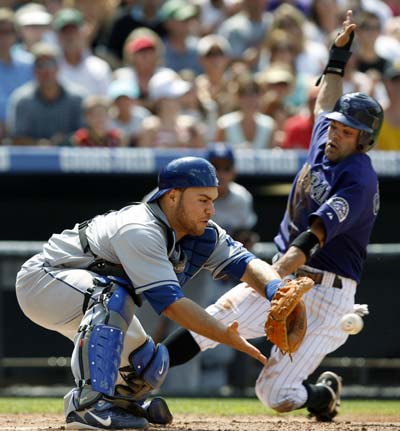 world in 2006 and 2007. From earning the starting catching job on the Dodgers to become one of the top two-way catchers in the game in 2007, Martin appeared to be able to do no wrong. 2008 appeared to be a blip for Martin, as his OPS dropped from .843 to .781. Going into the 2009 season, Martin was seen at 26 to be a player just coming into his own and due for a huge rebound. Looking back at 2009 and 2010, everything that had gone so right for Martin quickly soured. Somehow in the span of two years Martin became a scapegoat and noted malcontent in Los Angeles. From a gold glove catcher, Martin began to be known through baseball circles as lazy and unmotivated behind the plate. While previously seen as a growing leader on his team, Martin and the other younger stars on the Dodgers were labeled as disrespectful and cancerous in the clubhouse. While playing nearly full seasons and being durable from 2007-2009, Martin tore the labrum in right hip in 2010 and cast a doubt over his future in the game. From a catcher that was walk ninety times in 2008 and steal twenty-one and eighteen bases respectively in 2007 and 2008, the Russell Martin of the last two seasons appeared to have little pop or spark in his game. At 5’10” and 230 lbs, Martin went from a stocky and agile catcher to an out-of-shape player on the decline. All at the tender age of twenty-eight. Clearly a change was in order.
 The Dodgers, not always known for protecting their prized prospects well, had traded away highly regarded up-and-coming catcher Carlos Santana to the Cleveland Indians for the seasoned veteran third baseman Casey Blake. The logic at the time? The Indians gave the Dodgers the choice of absorbing salary or giving up a top prospect. The Dodgers chose to sacrifice Santana and save a couple of dollars. Having had the loss of Santana still fresh in fans’ minds, the Dodgers chose not to tender Martin a contract after the 2010 season in the fear that his hip had not recovered and to save approximately six million dollars in salary. Now a free agent in the last offseason, Martin had the choice of signing with any team of his liking.
The top noted suitors for Martin’s services all lied in the AL East: The Boston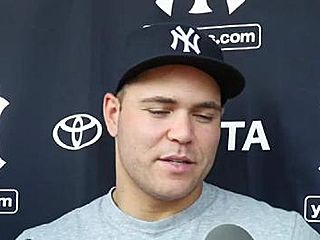 Red Sox, the Toronto Blue Jays and the New York Yankees. Reports had indicated that other suitors were calling on Martin but looking at him at third base rather than catcher. After being drafted at the hot corner and moved to catcher early in his career, some teams apparently were nervous about Martin’s abilities behind the plate. The three finalist teams for Martin were apparently comfortable enough the former gold glover still had abilities to catch in the majors and all offered him apparently deals in the one year, four million dollar range. Toronto was Martin’s hometown but had a strong up-and-coming catcher themselves by the name of J.P. Arencebia. Sensing apparently the roadblock in Toronto, Martin from all accounts narrowed his choice to his best opportunity at a full-time catching gig and to win, the Red Sox and the Yankees. A tough decision I’m sure, the lure of the big apple and pinstripes was too much for Martin to turn down. With Jorge Posada newly installed as the designated hitter and the Yankees have catching prospects themselves that were not seen as ready, Martin finally with the Yankees in December, 2010. The baseball world had no idea what to expect from Martin and anticipated his debut in the Bronx in 2011.
Off to a solid start to the year, all reports have been solid thus far on Martin. Showing a strong presence behind the plate and with the Yankee sluggers protecting him in the lineup, his bat has been reborn. I see Martin’s keys to success as keeping quiet, playing hard and going back to the basics that led to his successes back in 2006 and 2007. In an environment filled with hundreds of reporters, Martin will need to be careful of what he says in New York. It was one thing to be a confident rookie in Los Angeles, as that type of attitude quickly became seen as cocky and arrogant in later years and would be no different in New York. As long as Martin plays hard and lets the Yankee veterans police the clubhouse, we could see Martin reinvigorate himself back to being one of the top catchers in the game. With a track record like Martin’s, it is difficult to predict where Martin will be in the next year or two, let alone ten years. But given what has been seen so far, I am confident to say that I see good things happening for him. It has been a wild ride for Russell Martin; let’s hope for his sake that consistency becomes his new calling card.

Please e-mail us at: MLBreports@gmail.com with any questions and feedback. You can follow us on Twitter and become a fan on Facebook . To subscribe to our website and have the daily Reports sent directly to your inbox , click here and follow the link at the top of our homepage.
Manny Ramirez: The End of a Nightmare

MLB reports: As a fan, analyst and writer of baseball, I rarely take pleasure in the misery of others. Some of my readers would point to Vernon Wells and my “Vernon Watch” in what I commonly refer to as a showcase of blundery. But Vernon is the exception to the rule. For the most part, players are athletes that train hard, play with heart and hustle and give it their all on the playing field. With the career of Manny Ramirez unceremoniously coming to a halt yesterday, there is an overwhelming sense of relief and enjoyment around baseball circles today. For a man who could hit baseballs like flew other, one of the greatest hitters in MLB history will go down in the baseball archives as a laughingstock and side-show act. A shame when one looks at the statistics and career of Manny Ramirez. But for a man who got one too many chances, the punishment fits the crime. Today we say goodbye to a distraction and one less black eye for the glorious game of baseball.
The first questions most MLB fans asked me yesterday was whether Manny deserves to go into the hall of fame? My answer is simple. In my opinion, if I had a vote, a definite yes. Regardless of what Manny took or didn’t take, his statistics speak for themselves. There have been many drug cheats and cheaters of all kind in baseball over the years. The bottom line is that not many match to Manny’s outstanding numbers. But alas I do not have a vote to-date and from what the baseball writers have shown in recent voting history with McGwire and Palmeiro, Ramirez won’t so much as get as much a sniff of the hall. I can see the arguments for keeping Ramirez out of the hall. Based on his second failed drug test and choice to retire and run over facing the music cements a legacy of being a quitter and a coward. Manny gave up on the Red Sox and the Dodgers and got run out-of-town in each instance. A first failed drug test blamed on some sort of hormone substances. With a second failed test, Manny decided to take his glove and go home, rather than face the music. I cannot see fans, let alone baseball writers forgiving him for this decision. But again fitting for a man who has made a career of bad decisions and turning his back on the game one too many times.
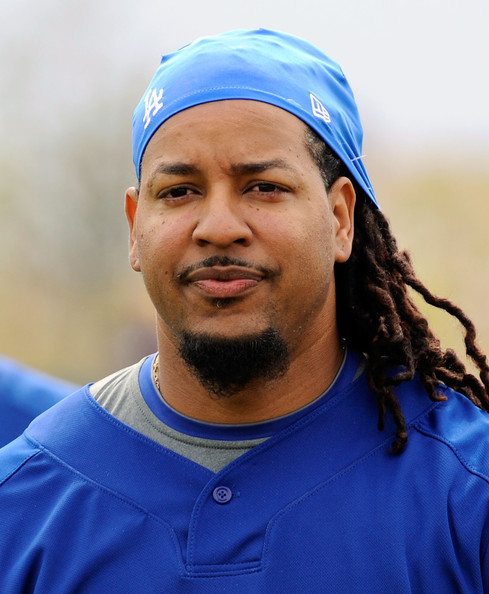 Where does the future now lie for Manny Ramirez? Many ex-players have the option of going into scouting, managing, broadcasting, writing….the field is wide open. Mark McGwire, got a job as the hitting coach for the St. Louis Cardinals, but as part of the requirement McGwire had to go on national television and give his apology. Sort of. But McGwire always had the eye of the public for his strong image and was somewhat cut some slack by the public. Manny, with his quirky and aloof personality has a better chance of becoming President of the United States than a baseball coach, manager or broadcaster. Seen as a liability, Manny is now headed into a self-imposed baseball exile, joining the likes of Sammy Sosa, Rafael Palmeiro and Barry Bonds as the baseball steroids/ped’s outcasts. I could envision a day where Manny will write a tell-all book, explaining his side of “the story” while outing ex-friends and teammates in the process. Manny just seems to be one of those guys, concerned more about himself and the almighty dollar than anything else.
When we all think to Manny Ramirez in ten years time, we will think of an idiot. That will be the image in our minds. Not the young rookie sensation on the Indians, World Series champ for the Red Sox, dreadlocks #99 igniter on the Dodgers or a two-bit player on the White Sox and Rays. The man who chose to instantly retire rather than face his due punishment. When faced with his first suspension last year, Manny did not speak to the media the entire balance of the season. He is that kind of guy. I did not imagine for the life of me in the offseason that any team would take a chance on him. In my estimation, Manny was best served going away gracefully at the end of 2010 rather than being one last thorn in the side of an undeserving team. When the Rays signed Manny, I said publicly that this could only end bad and that he would not last the season. Rather than being dumped in August, Manny barely survived a week into 2011. A 1-17 start at the plate will be the final blemish on an otherwise exceptional statistical career. But as hall of fame voters are now showing, votes go beyond the numbers. Manny Ramirez in the twilight of his career has been essentially a nightmare for all those involved with him. Staring today, the nightmare is over. Baseball does not need or want the Manny Ramirez’s of this world and my hope is that after this latest horror show, baseball will not see another Manny for a long time. Baseball is built on hustle, teamwork, determination and heart. Four words that were not in Manny’s vocabulary and for that transgression, we finally say goodbye to Manny for the last time.
Please e-mail us at: MLBreports@gmail.com with any questions and feedback. You can follow us on Twitter and become a fan on Facebook . To subscribe to our website and have the daily Reports sent directly to your inbox , click here and follow the link at the top of our homepage.
TRAVIS SNIDER – FROM PROSPECT TO SUPERSTAR

MLB reports: What a difference a year makes. 2010 was a season where essentially nothing went right for Travis Snider. From batting at the bottom of the Jays lineup all year to frequent trips to the disabled list and the minors, the then twenty-two year outfielder was beginning to lose the lustre from his prospect star status. Rumors of immaturity and attitude haunted the young man, as well as frequent disagreements with then Blue Jays manager Cito Gaston. Now healthy and part of the newly constructed Toronto team, Travis Snider is ready to take his game to the next level.
 In my estimation, no Toronto player will benefit greater from the hiring of John Farrell as manager than Snider. The previous regime under Gaston was not seen as “rookie friendly” to say the least. While Snider got off to a quick start last year, he quickly started to fade early on. In whatever approach Gaston was trying to preach to the kid, clearly it was not working. From there, spending time in the minors and on the DL has a way of shattering a young player’s confidence. Remember, Snider a year ago was one of the top hitting prospects in baseball and the future face of the franchise. Watching his approach at the plate, Snider appeared to be overly aggressive to me. A common symptom of being a young hitter, few hitters can go up to the plate and wait for their pitch in the manner that Jason Heyward does. But after two years of less than 300 hundred at-bats and lifetime MLB avg of .255, clearly a change was needed to Snider’s game. That change has arrived and I saw it last night.
I was expecting to see Snider hitting 8th last night but was pleasantly surprised to see him in the 7th spot. Although not a huge difference, Farrell had Snider hitting between Encarnacion and Rivera, two veteran hitters who would be able to give him protection in the lineup. The higher slot in the lineup to me translates to a vote of confidence for the kid. After some solid games, I expect Snider to move up to #6 and even as high as 5th as the season progresses. He has that much talent and hopefully the Jays let him showcase his abilities. However, the biggest change I saw in Snider was his stance and approach at the plate. Snider finished the night 0-2 with 2 BB and 2 runs scored. The tone of the night for him was set in his first at-bat, when Travis was able to reach first on an error. Snider gave a nice little fist pump after reaching base- showing his heart and desire to play the game the right way. Although not getting credit for a hit, Travis did show great hustle and determination in that at-bat. The rest of the night for me centered around his new stance. The “superstar” stance as I call it.
Dwayne Murphy has clearly invested a great deal of time in working with Snider. His mechanics and approach at the plate are much better in 2011. Last year, Snider looked extremely lost at the plate to me. Last night, Snider showcased his new approach which clearly is starting to work for him. Snider is taking more pitches and seeing the ball much better. Both walks he took last night were hard-fought and well-earned. It appeared to me that Travis watching video of Nick Swisher in the off-season and starting to follow his approach at the plate. Snider has a nice fluid stroke and in opening his stance, he is able to see pitches better and wait for the right ones. I expect to see Snider’s walk rate spike and his home run totals proportionately. My sense is that Farrell and Murphy have much faith in the kid and he will be rewarding them with a solid breakout season in 2011.
I won’t sit and blame Cito Gaston for all of Travis Snider’s woes in 2010. Snider has to take responsibility for his own actions and results in the process. But clearly the relationship between manager and player did not work in that case and a change was needed. John Farrell has vast experience working with young players, from being a farm director with the Indians to being the pitching coach in Boston. Farrell to win over Snider will need to play him day-in and day-out. The greatest mistake that a young player can make is to press too hard early on, afraid that any mistakes could lead to a demotion to the bench or minors. If Snider is allowed to play through mistakes and slumps, the law of probability will result in success coming through the flip side. The Travis Snider that I saw on opening night was excited to be a part of the team. He did not press at the plate and did the little things necessary to contribute to his team’s success. Watch out for Travis Snider, the next superstar and franchise of the Toronto Blue Jays.

MLB REPORTS FROM FRIDAY APRIL 1ST:
1) The Toronto Blue Jays got off to a fast start on the season, crushing the Twins 13-3 in the Rogers Centre. Ricky Romero had an impressive opening day, pitching 6.1 innings, giving up 7 hits, 1 ER and 7 SO. The key telling stat of the night was 0 walks given up by the young lefty. Carl Pavano, on the other hand, gave up 7 runs in 4 innings of work. Looking like the Pavano from the Yankees days, the night was simply brutal for the veteran. Bautista and Lind had huge games for the Jays but the star of the night was the #9 hitting catcher J.P. Arencebia, going 3-4 with 5 rbis, 2 hr’s and a triple to boot. For one day at least, the Jays look like the team to beat in the East.
2) The Phillies squeaked out a close one in Philadelphia in their opener, with Halladay and Myers facing in a strong pitching duel. Halladay was stellar in the 5-4 Phillies win, with 6 IP, 7 hits, 1 ER, o BB and 6 SO. Roy is just scary good and its only the start of the season. In the “closer implosion” series, Brandon Lyon in 1/3 of an inning gave up 6 hits and 3 ER. Perhaps trading Lidstrom was not the brightest move for the Astros. Baez finished with the save in this one but only because of the late 9th inning magic by the Phillies bats. Madson pitching a clean 8th with 2 SO is still the closer at this point. Rollins and Howard both had 2 hits in the win for the Phillies.
3) The Pirates played their hearts out in a 6-3 win over the Cubs in Wrigley. Kevin Correia pitched 6 solid innings, 2 ER, 1 BB and 3 SO. Dempster on the other hand, gave up 6 ER in his 6.2 IP. Meek and Hanrahan were lock down in the 8th and 9th for the Pirates, with 2 SO each in their respective innings of work. For all the closer debates in Pittsburgh, that is a great situation to have. But if opening day is an indication, Hanrahan is definitely the closer for now. Any sign of falter though and Meek becomes the new Matt Capps for Pittsburgh. Neil Walker at 2B and batting second had the game of his life, with a grand slam home run and walk. McCutchen also homered and looked solid. Castro had 3 hits in the lone bright spot for the Cubs on this day.
4) The White Sox beat the Indians in a barn burner in Cleveland, 15-10. Mark Buehrle had a typical outing, 6 IP, 4 ER, 1 BB and 0 SO. Fausto Carmona got destroyed to the tune of 10 ER in 3.0 IP to get the worst start line of any pitcher on opening day. Many players had nice stats lines in a blowout game on this day, with Santana pacing the Indians in the cleanup spot with 3 hits and a home run. Dunn and Quentin were the beasts for the White Sox, each with a home run, Dunn with 4 ribbies and Quentin with 5.
5) The Rangers won their opener, 9-5 against the Red Sox. C.J. Wilson solidified his ace status with the win, giving up 2 ER in 6.2 IP and 6 SO. Jon Lester did not have it on this day, giving up 5 ER in 5.1 IP. The Rangers had 3 bombs, with Mike Napoli (see my article on him earlier in the offseason) leading the way with 2 hits, 3 rbis and a walk. Crawford was hitless in his Red Sox debut and Adrian Gonzalez had 2 hits and 3 rbis.
6) The Diamondbacks won a wild one in Coors, beating the Rockies 7-6. Ubaldo was off tonight, giving up 5 ER in 6.0 IP. Not what Rockies fans expected from their ace. J.J. Putz had a clean save in the win, 1.0 IP and 2 SO. Upton and Montero had nice games for the winners with a home run apiece.
7) In the upset of the night, the Orioles stunned the Rays 4-1 in Tampa. David Price, despite giving up only 5 hits and 1 BB in 7.0 IP with 7 SO gave up all 4 runs. Guthrie shut out the Rays during his 8.0 IP, giving up only 3 hits and 1 BB. With only 5 hits on the night, the Orioles were able to beat David Price even when he was on his game…signs that the AL East will be as tough as many expect in 2011.
8) The New York Mets began their dismissal season with a 6-2 loss to the Marlins. Josh Johnson was unhittable early on and finished with 6.0 IP, 2 ER, 3 hits and 2 BB allowed. The stars of the night for the Marlins were Logan Morrison and John Buck, both with a home run (Buck with the grand slam). Gaby Sanchez also had 2 hits for the strong Marlins opening game.
9) In the final opening game of the season, King Felix had the season’s only complete game to-date in the Mariners 6-2 win. Felix gave up 2 ER, 5 hits and 0 BB in 108 pitches thrown, with 5 SO. The AL West has been put on notice. Willingham in the cleanup spot had a home run for the A’s while the light-hitting Chone Figgins countered with a jack of his own for the M’s. With every team getting a game into the record books, opening day is now complete!
Please e-mail us at: MLBreports@gmail.com with any questions and feedback. You can follow us on Twitter and become a fan on Facebook . To subscribe to our website and have the daily Reports sent directly to your inbox , click here and follow the link at the top of our homepage.
At the Crossroads: Ryan Doumit, Pittsburgh Pirates

MLB reports: On paper, taking a look at Ryan Doumit (“Dough-Mitt”), there are two sides of the coin. Heads, you find a switch-hitter turning 30 this year. A 2008 career season consisting of 15 home runs, 71 runs, 69 rbis, .357 obp and .501 slg. A catcher by trade, Doumit who stands 6’1”, also plays the outfield and first base. Despite an injury plagued 2010 season, he still managed 13 home runs in 124 games played last year. Tails, you find a baseball player that may be labelled as a catcher but often branded as a defensive liability without a home. Injury prone, 2010 represented the most games Doumit has ever played in a major league season. Bouncing between the minors and stints on the DL, Doumit next closest seasons were 116 games in 2008 and then 83 in 2007. The power, while seen in small spurts through his sweet swing, has never materialized into the 20+ home runs projected for him. Now cast as an outfielder/ back-up first baseman, the future is unclear for Ryan Doumit. After signing a significant contract with the Pirates, the team has now spent two unsuccessful seasons trying to unload him. There is even talk of a possible release on the horizon for Doumit. But is the negativity surrounding this once bright star justified? Let me put it simply: no. I am not ready to write off Ryan Doumit and quite frankly, neither should anyone else.
 For those of you that read me regularly, you will know that I tend to be biased towards high walks and obp type hitters. Analyzing Doumit’s number of walks since 2007:22, 23, 20 and 41, it would seem surprising on the surface that I would invoke any type of support of him as a hitter. Doumit does not have a great reputation as a catcher, lacking the natural instincts for blocking balls in the dirt, throwing out runners etc. Believe, I have it heard it all and read it all when it comes to Doumit the player. My discussion on Doumit falls into the “moneyball” vs. scouts debate. The numbers vs. tools argument. Having watched Doumit countless times on television and numerous times in person, I will state that the tools override the numbers in this case. Doumit is a big strapping switch-hitter with the power for 30+ home runs in my estimation. In the right line-up and ballpark, we could see a whole new player. Further watching Ryan behind the plate, it always appeared to me that pitchers were very comfortable with him behind the plate and that he had a strong presence of controlling his team and game like a general. The multi-positional abilities I believe have hurt Ryan in the long run and created a utility player tag on him that is unjustified. Thus goes the game of baseball and very often the careers of many players. But hope is not lost yet.
This spring has already been a rough one for Doumit. Low batting totals in only 10 games played thus far, Doumit has been sidelined for much of the spring with a strained oblique. If I was viewing Doumit as a team, I would see a buy low and high reward candidate. All of the lost games over the years means that Doumit has a lot of miles left, whether in the outfield or behind the plate. I cannot see the Pirates at this point releasing Doumit for nothing. Proven health and production this year would lead to an inevitable trade, likely by the all-star break. Top teams are always in the need of reinforcements and as players continue to drop like flies this spring (Brandon Morrow just announced to start the year on the DL as I write this article), the demand will be there for Doumit. Why the faith in a player that has not proven much to-date? Again, simple answer: tools. The ability is there and when healthy, we have seen the production. But we cannot fault Doumit because of injuries alone as he does play on a team that often resembles a AA team on many of its off-nights. I have never personally seen Ryan Doumit every take a game off, night off or going through the motions during an at-bat. Playing on a sub .500 team for as long as he has though, one imagine that it would start to take a toll on the confidence of any player, Doumit included. The Pirates are rebuilding on an upswing, with talented players such as Alvarez, Sanchez and Meek ready to lead the team in the coming years. I do not see the rebirth of the team occurring on Doumit’s clock, but that does not mean that opportunities should not exist for Doumit. A fresh start and a defined role and purpose would make all the difference in the world. Hopefully this will happen soon.
 2011 represents a crossroads year for Ryan Doumit. A talented player once expected to be the centerpiece of his franchise, Doumit is a man without a position and seemingly chance this year. Given the opportunity to perform, I believe that Doumit will put up the numbers. McCutchen is healthy and playing strong and as long as he is in the line-up, Doumit will hopefully see some good pitches to hit. Rounding back into form, Doumit I expect will be on a new team and line-up by May or June at the latest this year. Motivated by the move, I expect Doumit to flex the baseball tools we know that he has and start to live up to the expectations that are starting to fade for him. Never count out a talent like Doumit. The Pirates gave up on Jose Bautista back in 2008 and at age 30 he did pretty well for himself. Good luck to Ryan Doumit on this upcoming year, I am looking forward to his march back to baseball stardom in 2011.

Please e-mail us at: MLBreports@gmail.com with any questions and feedback. You can follow us on Twitter and become a fan on Facebook . To subscribe to our website and have the daily Reports sent directly to your inbox , click here and follow the link at the top of our homepage.
The End of an Era: Ariel Pestano

MLB reports: You may not know the name, but you will recognize the player. Ariel Pestano (Valdes) was considered one of Cuba’s greatest catchers of all time. In actuality, likely one of THE best catchers ever. Pestano, known in his country at “the veteran”, has been a Cuban baseball staple for the past 10 years. Debuting with the Cuban national team in 1999, Pestano played in the Olympics and both the 1996 and 1999 World Baseball Classic for Cuba. By retiring in 1999 after the last WBC, baseball has lost a legend and a throwback to an era that is slowly disappearing. In an age of generic players and cookie-cutter approaches, Pestano was one-of-a-kind.
 I was first introduced to Ariel Pestano in the 1996 WBC and could not wait to see him again by the 1999 edition of the Classic. In comparative terms, it is hard to point to a past or present major league catcher that mirrors Pestano. I find it difficult to looking at his Cuban numbers and calculating the value of his play. Offensively and defensively, the man could do it all. But rather than judge him by numbers in a league unknown to me, I place my consideration in what I saw with my own eyes. If the WBC editions were any indication, Pestano could play ball. A patient hitter with pop, I could see him hitting 20 bombs in the major leagues if given the opportunity. A cannon for an arm, he knew how to keep runners honest and distract hitters from getting good hacks at the plate. But his true value was in his leadership. Pestano was like a general on the field, leading his team to war. Pestano was not afraid to get into the face of an opposing player or teammate if he felt that his team was being disrespected or not playing to its capacity. His approach made for great television viewing, no doubt, but his teammates were better for having him behind them.
A big problem in baseball viewership and fandom today is the reliance on the fantasy aspect of baseball, mainly statistics. I love researching OPS and WHIP as much as the next baseball junkie, but real baseball has value outside of the “moneyball” approach. I recall a pitcher on the Cuban team in one WBC game in 2006 giving up repeated hits. At one point Pestano literally ran to the mound and was about to clobber his starting pitcher. I could not understand what he was saying, but you could not put a pin between the pitcher and catcher. Pestano was literally in the pitcher’s face reading him the riot act. While many critics would call such a move “unprofessional”, “bush-league” and “showing up your pitcher”, I actually enjoyed the accountability and passion that Pestano was demanding from his teammate that day. Those types of moments do not show up in box scores the next day, but live on with a team forever.
 If you have never seen Ariel Pestano play a professional baseball game, download a World Baseball Classic game on your computer involving Cuba from either 2006 or 2009 and watch the man behind the plate. Chances are that you have never seen a player like this before and will never see one again. Pudge Rodriguez has had his moments through the years, but has simmered down. But in truth, he never had the intensity and life/death mentality that Pestano displayed on the baseball field. Taking aside the armed guards with machine guns in the dugout, I have always found Cuban teams to play with heart and pride. I recall a Cuban pitcher one game running out to the field to yell at an outfielder after misplaying a ball. When a pitcher in any inning/situation gives up even 1-2 infield hits in a game, chances are the Cuban bullpen will be up and running. I don’t recall ever watching a Cuban game where the bullpen wasn’t going with at least one pitcher for nearly the entire game. This is how seriously Cuba takes it baseball and this mentality was embodied fully in Ariel Pestano.
My WBC Cuban heroes, Pestano and Lazo are unlikely to ever defect and join the MLB. Both recently retired and based on their respective ages and devotion to Cuba- defection is unlikely, if not impossible. Pestano retired to apparently work and train his son, who like his dad is a catcher. The best of luck to you Ariel, thank you for the memories.

Please e-mail us at: MLBreports@gmail.com with any questions and feedback. You can follow us on Twitter and become a fan on Facebook . To subscribe to our website and have the daily Reports sent directly to your inbox , click here and follow the link at the top of our homepage.
The Man Behind the #10 Jersey – Adam Jones, Baltimore Orioles

MLB reports: It is not every day that I have the opportunity to correspond with a Gold Glove winning major league all-star, but over the last couple of weeks I got to do just that with Adam Jones of the Baltimore Orioles. Getting to know Adam and hearing his thoughts on the game, his career, and team was fascinating to say the least. The story begins as follows.
Adam, one of the most fan friendly MLB stars on twitter, started to converse with me on my usual favorite topic, baseball. I was instantly drawn to his easy going personality and zest for life and the game. After some messages back and forth, I brought up my blog and the interview articles I prepare on MLB reports. Being the cool cat that he is, Adam suggested he would love to help out a young writer and agreed to be interviewed for this profile piece. After some research, back and forth emails, and analysis, here we are today.
We covered a range of topics on the career of #10, which I am about to jump into further. Discussing topics ranging from the baseball influences on his career, his greatest accomplishments, goals, and areas of improvement, Adam did not hold back in his answers. Considering Adam was both an All-Star and Gold Glove recipient in 2009, it was astounding to find that he did not have an ounce of attitude in his answers. This is a player that is still humble at the age of 25 and works towards improving every facet of his game. The combination of baseball skills, work ethic and positive outlook, I believe will translate into a limitless future for one of baseball’s young bright stars.
One of the first questions that I asked Adam was to name the baseball player he most idolized growing up and patterned his game after. Born and raised in San Diego, California, to no surprise Adam named Tony Gwynn. However, the reasons behind his response did perk my curiosity. Baseball was not a sport that Adam “followed too strongly until approximately the age of 12” and only then, Gwynn was more a player that Jones had heard of than followed. When asked to expand, Adam explained that “I’ve hit with TG [Gwynn] for a few off-seasons now since I’ve been drafted. We have a tight group that hits together at San Diego State University.” As far as the influence Gwynn had on his game, Adam indicated that “what I’ve learned is myself. I’m not the hitter that he [Gwynn] was and that’s not my mentality. We’ve just had discussions of thought processes and having the ability to take a step back and let the ball come to you.” When breaking down the comparisons between Jones and Gwynn as players, his response becomes even clearer.

Tony Gwynn, a 2007 Hall of Fame inductee, played in 15 All-Star games, was the recipient of 5 Gold Gloves and 7 Silver Slugger Awards. Gwynn also ended his career with a .338 lifetime average. Jones, at the age of 25, brings a different game to the table. Gwynn is a difficult, if not impossible, player to emulate and Jones is realistic in this regard. The Gold Glove and All-Star appearance are already there with the promise of more to come. Adam’s batting average has slowly risen every year of his career to a high of .284 in 2010. With the right approach and discipline, .300 + is well within his reach. Like Gwynn, Jones does a bit of everything, including hitting for power and stealing the occasional base. Similar to Gwynn, Jones’ on-base percentage is dependent more on base hits than walks. The more I compare the players, the standard that Gwynn set for his career is one that I feel that Adam can strive towards. The bottom line on Gwynn is that the man could just plain hit. Jones, working his way up the major league ladder, could follow in the Gwynn’s footsteps, even if Adam does not implicitly try to do so.
My follow-up question asked Adam to name the current MLB star that he most admired. Based on Adam’s statistics and game style, I would have bet the answer was going to be Torii Hunter. Guess what? I was right. But again, the reasons behind his answer threw me. According to Adam, “there aren’t enough good things to say about him [Hunter]. But my favorite attribute about him has nothing to do with baseball. That what he does for a living. It’s his character. He [Hunter] is a true leader on and off the field and is highly respected.” My correlation between Adam and Hunter centered on their similar statistics and abilities on the field, in contrast to Adams’ vision of Hunter as a person and leader. Hunter, a 4-time All-Star, 9-time Gold Glove winner and a Silver Slugger recipient, as a youngster in many ways mirrored the player that we see in Jones today. In his breakout year in 2001, Hunter had a batting line of 27 home runs, .261 average, 82 runs, 92 rbis, .306 obp and .479 slg. Jones, in his 2009 campaign had a line of 19 home runs, .277 average, 83 runs, 70 rbis, .335 obp and .442 slg. Although not entirely the same, as hitters Jones and Hunter showcased several similarities in those respective years. The following is Hunter’s average season in the major leagues: .275 batting average, 25 home runs, 89 runs, 95 rbis and 17 stolen bases. Considering what Adam has accomplished to-date, these numbers are surely attainable and possible for him to exceed.

Adam indicated that he knew Torii very well and some of his favorite characteristics of Hunter was that “he plays the game the way it’s supposed to be played”, “not a guy that makes any excuses.” Adam mentioned Hunters’ upbeat attitude, and that his’ “favorite thing is that he smiles all the time. He shows he is happy doing what he loves to do.” Hunter’s personality has definitely rubbed off on Adam in a positive manner and reflects in his attitude and demeanor on and off the field. If I had to include a caveat, however, it is the holes that Hunter has in his game that Adam would be well served to avoid in his own play. Although Hunter is a strong home run hitter and has the ability to score and drive in runs, he has traditionally not hit for a high average or been able to get on-base at a consistent clip. By working with Tony Gwynn, Jones should focus on raising his own level of base hits and batting average to compensate for a lack of walks. At this stage of his career, it will be interesting to see if Adam becomes a high average and/or home run hitter as he progresses.
With the above comparisons in mind, I asked Adam what he considered to be his greatest baseball skill(s) and aspects of his game he most wished to improve. Rather than name a specific on-field capacity, Adam named his “lack of fear” as his greatest trait. Adam believes that, “others should be a better evaluator of my skills. I just play.” This answer fit well within his stated areas of improvement, whereby Adam indicates, “I really want to improve on everything. I need to steal more bases or be more aggressive. I need to play better defense. To get better judgment at the plate. The best part about baseball is that there is always something to improve on.” A star player that believes he can improve in every area of the game. How refreshing. When I pinpointed particular areas in his game, Adam responds by mentioning that he’s, “never been a high home run guy or walks or stolen bases. I’ve always played my game and that’s got me to where I’m at now. Adjustments are needed to be made in order to stay at this level so I am constantly trying to improve on something.” Whereas Gwynn, known as “Mr. Padre” and “Captain Video” for dedicating enormous amounts of time to studying video and his approach at the plate, Adam indicates the danger in thinking too much. While he does video, it can often lead into over-thinking and therefore Adam tries to avoid “thinking about hitting when in the batter’s box.” Let the instincts take over. An interesting and old-school mentality as a player, rather than trying to work on specific components, Adam works hard at improving all aspects of his game.

I was curious as to what Jones considers his greatest accomplishment to-date in baseball and what goals he had for the 2011 season. His 2009 Gold Glove ranks as the top accomplishment, because as Adam says, “it was decided by my peers.” For the upcoming season, Adam is focusing on, “playing harder than I have. For me in sports, I feel that if I play every day, the numbers take care of themselves.” I didn’t get the sense that Adam is the type that checks the box score every day to break down and categorize his own statistics. This is a player that is driven to play as hard as he can every day and simply focuses on helping his team win. Plain and simple.
Playing under Buck Showalter should only serve to further Adam’s approach to the game and lead to big things for him and the Orioles as the year approaches. Showalter, a 2-time MLB Manager of the Year, has a career 916-856 record in 12 seasons. Dissecting the numbers even further, in his 2nd year as a manager at each of his three stops, Showalter attained 88 wins with the Yankees, 100 wins with the Diamondbacks and 89 wins with the Rangers. Going into year two with the Orioles, Showalter will work to bring the same strong attitude and success to Baltimore as he has achieved in each of his previous stops.

As far as what Showalter brings as a manager, Adam indicated that, “accountability was number one. We held ourselves responsible for how we played. I believe what he (Showalter) wants is for you to give your best effort and play the game.” By having a similar mentality with his manager, I envision Jones growing into a leader on this young Orioles team. In his humble response, Adam considers that, “when it comes to the young guys, I’m still a young guy myself. But I always try and associate myself with my teammates in the clubhouse or the field. I want them to know that I got their backs.” That being said, Adam throws in a caution. “I want to be a leader, of course. But I’m not going to force the issue with that. You never want to cross the veterans on the teams and I try and show it (my leadership) with my play. This season we have added veterans that have won and been leaders of their respective squads. I think we have the possibility to have multiple leaders.” A very healthy attitude for a budding superstar growing as both a player and leader on his team. The Orioles bolstered their lineup for the 2011 season with the additions of Vlad Guerrero, Derrek Lee, J.J. Hardy and Mark Reynolds, in addition to Justin Duchscherer and Kevin Gregg joining the pitching staff. A veteran team almost overnight, Jones will have many experienced players to learn from in Baltimore as he continues his rise to the top of the MLB ladder.
Reflecting on the 2010 season, Jones felt that the Orioles as a team, “all tried to do everything possible and we couldn’t do it. We have to play as a team and have the faith in the guy behind you to get the job done.” With all the additions to the team and a new season ahead, Jones states, “I want to play baseball with them all. I am excited to get in the locker room and see my (new) team.” Considering the Orioles teams of the past that Jones has played for, it has been quite the journey for the 37th overall pick in the 2003 draft. Originally drafted as a shortstop by the Seattle Mariners, Adam was traded on February 8, 2008 to Baltimore as part of a package for then top of the rotation starting pitcher Erik Bedard. “My first reaction when I found out I was traded to Baltimore was ‘dang,’ I’m going east.” But then I thought to myself that I was going to have the opportunity to go and show that I can play this game at a high level.” For a team and player on the rise, the marriage between the Baltimore Orioles and Adam Jones couldn’t be a better fit.
With many bright years ahead of him, Adam took the time to reflect on what he would most want to be remembered for when it was time to hang up his spikes. “When its over and done, I want people to know that I played my behind off and loved the game that has treated myself and so many people well.” When you think of Adam Jones, do not look for the next “Tony Gwynn” or “Torii Hunter”. Consider Adam Jones as himself, the player that he his and the player that he is striving to become. Adam works hard and has a strong understanding of his strengths and areas he needs to improve. Behind the #10 jersey there is no hype, attitude or ego – just the baseball player we will always know as “Adam Jones”.

***A special thank you to Adam Jones of the Baltimore Orioles for his time and effort as part of being interviewed for this article. A thank you as well to Peter Stein, my editor in helping to prepare this piece.***
Please e-mail us at: MLBreports@gmail.com with any questions and feedback. You can follow us on Twitter and become a fan on Facebook . To subscribe to our website and have the daily Reports sent directly to your inbox , click here and follow the link at the top of our homepage.
CONQUERING MOTOWN: BRAD PENNY, DETROIT TIGERS

MLB reports: On January 11, 2011, after weeks of speculation in the media the news became official: Brad Penny was officially a Detroit Tiger. The deal was announced as a 1 year, $3 million dollar base salary with an additional $3 million in incentives. The overall reaction was positive- a low risk and high reward situation for both the team and player. With Penny in Motown and spring training a mere days away, let’s review the factors behind this signing and how Brad Penny in 2011 will become the “King of Comerica”.
After the 2010 season came to an end, one of my first projections on the free agent market was that Brad Penny and the Detroit Tigers would be a perfect match. I had the pleasure of corresponding with Brad Penny in early December and asked him directly whether he was considering Detroit for his new home. Brad’s response was, “wearing the blue and orange would be sweet.” Taking a look at the team that he is joining, it is easy to see why Penny could not contain his excitement.
The Tigers enjoyed a relatively strong 2010 campaign and as their roster became molded during the offseason, the future of the Tigers appears to be very bright. The team has a potent offense led by Cabrera, Ordonez, Jackson and newly acquired V-Mart, combined with a rotation led by Verlander, Scherzer and Porcello and a deep bullpen including Valverde, Benoit, Zumaya and Perry. Dombrowski in constructing the team covered off the key components and contention in the AL Central appears to be a lock. Penny as a veteran starter however brings many intangibles to the Tigers that could be the difference maker in a playoff spot.
With young starters Scherzer, Porcello and Coke, Penny serves as a mentor and role model for the young hurlers in learning the finer points of the game. The experiences and successes that Penny has enjoyed in his 11 seasons in the bigs will rub off on the rest of the Tigers’ pitching staff and hopefully take each of them to the next level. As well, Verlander and Penny as potentially #1 and #2 potentially on the staff will bring up the game of the other in competing every 5th day to be the best possible starters that they can be. Lets not kid ourselves, bragging rights in the clubhouse counts and Penny is one of the most focused and intense warriors that you will find in baseball. Comerica, known as a pitching friendly venue, will also prove to benefit Penny as his home field. Brad Penny will bring out the best in his Tigers’ mates and having a solid core of talent on the team will take his own game to the highest levels.
Standing 6’4” and weighing a solid 230 lbs, the 32 year old Oklahoma born Penny has an outstanding baseball resume. 16 win campaigns and All-Star game appearances in 2006 and 2007, a 3rd place Cy Young finish in the NL in 2007 and near perfection in the 2003 World Series title run with the Marlins, with 2 wins in 2 starts with a 2.19 ERA. Penny has played for a total of 5 teams in his career. Penny started off very strong in 2010 for the Cardinals, with a 3-1 record in April and 1.56 ERA. A strained lat muscle ended Penny’s season on May 21st with the pitcher not returning for the rest of the year despite intense rehab and attempts to return. Now healthy and raring to go, the Tigers represent a fresh start and promise for the right-handed pitcher.
Offseason reports have been positive on Brad Penny. He recently got engaged to Karina Smirnoff of “Dancing with the Stars” fame. As well, Brad mentioned to me on several occasions that he was working out hard at the gym and the impression that I got was that Penny is in the best shape of his life coming into the season. Secure in his personal life with the hunger to win, Penny is focused on doing all the right things to make himself successful. His commitment to training and evolution as a pitcher means that at the still young age of 32, Penny has many quality years ahead of him. Observers need to remember that coming off a strain is much different than arm troubles and/or surgery. The bonus from last year’s experience is that Penny will come into camp with a fresh arm and more motivation than ever to reclaim his position as one of the top pitchers in baseball.
The Tigers in signing Brad Penny could very well have secured themselves the #2 pitcher in their rotation as part of the drive to return to the playoffs. Penny’s goal in coming to Detroit is to win and to surely get another World Series title under his belt. At this stage of his career, Brad Penny does not focus on the past and any impressions that people have of him. As my projected 2011 American League comeback player of the year, Brad Penny will simply let his pitching do the talking and the ranking of the Tigers as a team being his only statistical goal.
Good luck on the season Brad Penny and welcome to Motown. Tiger Nation awaits your arrival.

Please e-mail us at: MLBreports@gmail.com with any questions and feedback. You can follow us on Twitter and become a fan on Facebook . To subscribe to our website and have the daily Reports sent directly to your inbox , click here and follow the link at the top of our homepage.
ON THE VERGE- RYAN TATUSKO, WASHINGTON NATIONALS

MLB reports: At MLB reports we will be running an occasional series titled “On the Verge” where we profile a prospect about to hit the MLB scene. In today’s feature, we profile Ryan Tatusko of the Washington Nationals.
Ryan was born March 27, 1985. Standing 6’5” and weighing a solid 200 lbs, 2010 represented a breakout year for the right-handed pitching Tatusko. He was drafted in the 18th round of the 2007 draft by the Texas Rangers out of Indiana State University (hometown Merrillville, Indiana). After the 3 ½ seasons climbing up the Rangers system, Tatusko was traded on July 30, 2010 with fellow pitcher Tanner Roark for shortstop Christian Guzman. At the time of the trade, Tatusko was pitching for AA Frisco, both starting and relieving. After being acquired by the Nationals, Tatusko finished 2010 exclusively as a starter for AA Harrisburg.
From 2007-2009, Tatusko did not have numbers that jumped out. ERAs each year of 4.13, 4.46 and 4.64, records of 3-7, 3-11 and 7-6, in addition to WHIPs of 1.347, 1.372 and 1.338. A young developing pitcher, but not one on the “radar” so to speak. In the 1st half of 2010 with Frisco, Tatusko pitched in 24 games, 13 as a starter. His record was 9-2 with a 2.97 ERA and 1.340 WHIP. Definitely solid numbers, but a breakout was still in order. That breakout occurred in the 2nd half of his 2010 season with Harrisburg, where Tatusko pitched in 6 games entirely as a starter, to a sparkling 3-1 record, 1.72 ERA and 1.173 WHIP. His SO/BB ratio with Frisco was 1.45 and ballooned to 2.77 with Harrisburg. When I review these numbers, I see a Kyle Drabek type pitcher at the beginning of 2010 and a Stephen Strasburg clone at the end.
Looking at Ryan’s final 2010 numbers combined in AA, we see a 12-3 record, with a 2.63 ERA and 1.295 WHIP. From an 18th round pick with a microscopic chance of advancement in professional baseball, Ryan is a pitcher likely ticketed for AAA to start 2011 and could end up with the big club sometime between the all-star break and September.
I have had a pleasure to chat with Ryan on a couple of occasions by e-mail and did some research on him as well. Tatusko has a strong curveball as well as good command of 3 other pitches- fastball, changeup and slider. The debate early in his career was whether he would remain a starter or be moved permanently to the bullpen. Young pitchers in the minors are often eased through both roles in the hopes that they will excel in one given spot. As a 4-pitch pitcher and coming off a strong finish in 2010, Tatusko will likely be a full-time starter for the foreseeable future. A student of the game, Tatusko keeps journals of his work and watches video in working on and perfecting his mechanics. A tireless student of the game, Tatusko has the will and ambition to succeed at the pro-level, which is often described as “90% mental and 10% physical”.
Running into growing pains and adversity early in his career was likely a very good thing for Ryan. Too often in the MLB we see hotshot prospects rushed to the majors, only to have their careers cut short by injuries or failed confidence. By building his time up in the minors the right way, Tatusko has been able to prove himself and rise up the prospects ladder. The Nationals going into 2011 are in an interesting situation pitching wise. They have a young highly touted closer in Storen, that is expected to close for the club for the next decade. The starting rotation however, is filled with questions marks and landmines. Livian Hernandez is currently tabbed as the opening day starter. Enough said. From there we see the other potential starters being Marquis, Zimmerman, Lannan and Maya. In the mix we have injured starters Strasburg and Wang who are not certain as to the roles they could play in 2011. As soon as an opening arises, Tatusko will be one of the first to be called up this year. If Ryan is able to grow in 2011 the way he did in 2010, his first stay in Washington could be permanent.
Ryan Tatusko is a man who eats, breathes, sleeps and bleeds professional baseball. Talking to him, I got the sense that this was a ballplayer with no sense of entitlement that has worked hard and earned everything that he has accomplished. Good luck to Ryan on the 2011 campaign and we all look forward to watching you as you continue your baseball journey to the show.

Please e-mail us at: MLBreports@gmail.com with any questions and feedback. You can follow us on Twitter and become a fan on Facebook . To subscribe to our website and have the daily Reports sent directly to your inbox , click here and follow the link at the top of our homepage.


 MLB Reports
You must be logged in to post a comment.