The History Of Extreme Ballpark Chasing (1993 – 2013)

The days of not being able to visit all MLB parks in consecutive days ended in 1993, when the Rockies were introduced, and enhanced even more with the Arizona Diamondbacks entering the league in 1998. In the last 15 years, several people have tried to see all 30 MLB parks in under a month. Some successful, some broke some rules, and one guy even bought this website 6 months after he set the World Record for visiting all 30 MLB Parks in just 23 Calendar Days – completing 7 Doubleheaders.
Ballpark Chaser definition: Someone who is actively pursuing quests to view Baseball Parks.
Guys talked about in this Article: Completely Insane!
By Josh Robbins (Special Guest Writer And Co – Creator for The Factor12 Rating Pitching Metric.) Factor 12 (F12) is an analytic measurement utilizing league average performance to compare the value of all MLB pitchers on 60ft6in.com.
MLB Expansion Makes Ballpark Chasing Possible
Twenty years ago, the course of history changed for ballpark chasing. In 1993, the Colorado Rockies and Florida Marlins debuted in the National League, increasing the total number of MLB teams to twenty-eight.
The two new franchises created positions for fifty players and expanded the pursuits for ballpark chasers.
In prior years, the nearest connection between a west coast team and the mid-west was Anaheim Stadium to Royals Stadium, a 23-hour drive covering 1,619 miles.
As a result, it was impossible for fans to attend games in consecutive days at every MLB stadium during one concurrent driving trip. Consequently, the only method to complete the entire circuit was to combine land and air travel.
The new league structure dramatically altered the traveling landscape by adding Mile High Stadium in Denver, a 14-hour, 1,011-mile drive from Anaheim Stadium.
Reggie Deal’s- 30 Day. 30 Park Compilation (A Blind Fan Who visited all 30 MLB Parks in 30 Days last year)
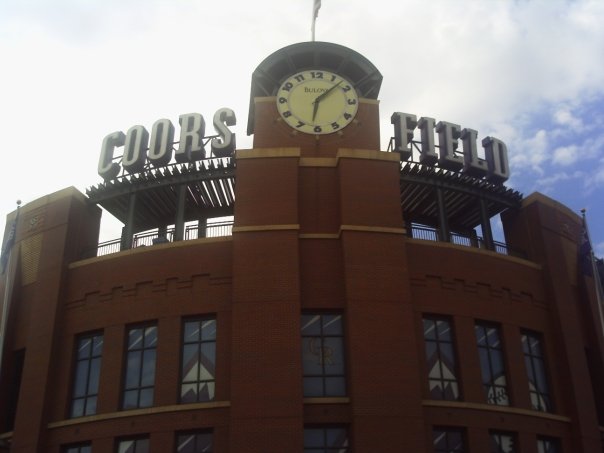
Once Colorado received a team in 1993, plus Arizona in 1998, it created a West Coast Opportunity to align Seattle, all 5 California Parks, with them to geographically drive to all of the MLB Parks in consecutive days. It is possible with a game in Seattle first, then a 800 Mile drive to the BAY Area, the Los Angeles teams, and San Diego are all within 110 Miles of each other – and can be reached from either San Francisco or Oakland. San Diego to Arizona is also a viable drive. Arizona to Colorado represents over 1000 Miles difference, but can also be done. Once you go East of this, the parks become narrower in time traveled.
The addition of the Colorado Rockies was critical in bridging the gap between the nearest MLB cities, making potential 28 stadiums in 28 days transcontinental odysseys possible.
Conversely, the addition of the Florida Marlins created a whole set of problems for potential 28-28 schedules.
Prior to the expansion, MLB did not include a team southeast of Atlanta, GA. The new franchise added 400 miles to this leg of the trip.
The most logical attempt traveling from west to east would have been: Astrodome to Fulton County Stadium to Joe Robbie Stadium to Camden Yards.
Joe Robbie Stadium to Camden Yards (15 hours 20 minutes and 1076 miles) was possible, but with little margin for error. To illustrate, on Saturday June 26, 1993, the first pitch was thrown at 7:06 pm ET in Florida.
The 2 hour 59 minute game between the Marlins and Expos ended at 10:05 pm ET.
Hypothetically, the ballpark chaser(s) would proceed to drive for the next fifteen hours with no sleep arriving at Camden Yards by a few minutes before the 1:37 pm first pitch.
Remember to factor in 2-3 gas/bathroom breaks cutting into the total amount of time between locations.
***From July 29-August 25, 1993, Mark Johns, Brent De Riszner, Chris Looney, and Mike Casagranda became the first people ever to attempt to watch all 28 MLB teams in 28 days. The four Ivy League students whirlwind tour began at the Seattle Kingdome and culminated at Candlestick Park in San Francisco.
However, like most trailblazing efforts, problems arise.
Despite the grueling pace, the 17,000-mile road trip did not encounter weather problems until Game 19 at Yankee Stadium was rained out. “We will see baseball in 28 parks,” De Riszner said in a telephone interview in 1993.
Luckily for the students, New York hosted a double header the following day.
After watching the first inning, the foursome continued their adventure and drove to Fenway Park in Boston.
There are several questions to the validity of the trip after researching the itinerary. One of the most important points is their failure to watch every game to completion. Game 19 was rained out, ending their consecutive games attended streak.
You also can’t return to a park (once you have viewed 1 pitch in a game) until you have seen all other parks first. In their instance of leaving the game after 1 inning, would cause for instant disqualification under the guidelines set forth by the Guinness folks.
Meanwhile, the quartet arrived in the third inning of Game 9 following their overnight drive from Camden Yards in Baltimore to Joe Robbie Stadium in Florida.
Their landmark quest should not be overshadowed despite the minor hiccups along the way.
The original 28-28 ballpark schedule is listed below and should be remembered as the first all land attempt in history.
In 1998, MLB expanded to the current thirty teams format by unveiling the Arizona Diamondbacks and Tampa Bay Devil Rays. These new franchises connected the MLB map like never before.
For the first time, two teams were located in the Mountain Time Zone (MST) and the second Florida team created optional routes in the southeast.
Thirty MLB teams would ensure ballpark chasers more time on the road with the chance to use a full calendar month to navigate the country.
Over the past fifteen years, numerous 30 in 30 (or less) attempts have garnered newspaper headlines.

Guinness World Records require the participant to present for every play of all games attended during someone’s record attempt. This is despite all weather related issues or other delays. To complicate matter more, you also have to go to all parks in a row without visiting one of the 30 parks twice. You must have validated signatures from team officials, saying you were present for each game. Also, you need to send away pictorial and video evidence that also registers that you were there for the game as part of your claim – once you have completed your quest. Before starting your Record Attempt – you must apply for the specific category with the fine people at Guinness.
The Guinness World Record website (slow to update because Chuck Booth has beaten this mark twice) lists the fastest time to visit and watch a complete game in every MLB ballpark at 29 days by Michael Wenz and Jacob Lindhorst from June 12-July 10, 2005.

Michael Wenz chased for the record to raise awareness towards “Habitat For Humanity”. He and his partner Jacob Lindholder became the record holders for the 30 parks.
***There is a small caveat to this record; the tandem did not attend a game on June 26 (two double headers) ending the consecutive games attended streak at fourteen.
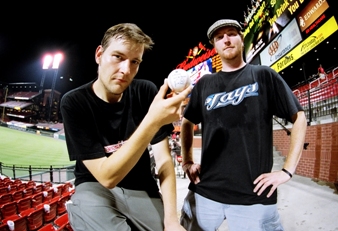
This Canadian brother tandem still made it to 30 MLB Parks in 28 days. Ironically, Chuck Booth was in attendance for the game they viewed in SKYDOME. Todd’s brother Brigham suffers from social anxiety disorder, and it was the goal of both of them to raise awareness through the trip.
Windsor Brothers (30-28), The Canadian Brothers duo (Todd and Brigham Shearon) attempted to break the record set two years earlier beginning August 7-September 3, 2007. However, the pair failed to watch every game in its entirety – experiencing a setback in Phoenix.

My journey included 4 doubleheader attempts (LAA – SD), (NYY – NYM). (PHI – WSH) and (CHC – MIL) to conclude my 30 park journey in 26 days. Ironically again, Chuck Booth was in attendance for his 1st 30 park tour for that very doubleheader attempt at Wrigley Field and Miller Park. I was able to raise a a lot of money for youth baseball in my attempt.
In 2008, my own quest began on June 16 in Seattle, Washington. Thirty26 proved to be the most physically and mentally demanding task of my life. With each passing day, it had become more of a personal obsession.
This was a grueling 14,000-mile journey (all land travel) beginning at Safeco Field. Over the next 25 days, I picked up friends and family in multiple cities across the country.
In fact, we completed four doubleheaders, dodged three potential rainouts, and battled all the hazards that can accompany any road trip while managing to attend games in all 30 MLB stadiums in 26 days.
To view the summary of my trip that was done as a This week in Baseball segment click here
There are other ballpark chasers with loftier goals. The foremost expert in the field of ballpark chasing is Chuck D. Booth, the only person ever to attend all 30 MLB stadiums in less than 30 days, THREE times.
Of course, you can view all of Chuck’s (This Website’s Owner) Attempts here
In 2008, Booth’s first attempt occurred almost simultaneously as Thirty26. Subsequently, the British Columbia native has set GWR of 30 MLB ballparks in 23 days utilizing air and land travel in 2012.
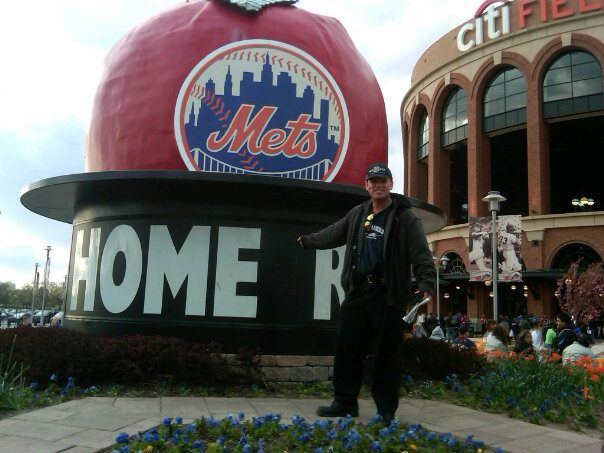
Chuck Booth attempted 10 doubleheaders for his latest World Record Attempt in 2012 – and connected on 7 of them. In 23 days of travel, he executed all of his travel plans – and was only stopped from his 30 in 20 bid by 3 separate plane delays. In the end, he broke his record of 30 – 24 set in 2009, with a 30 – 23 claim in 2012. Chuck has raised money for spinal cord research – and concussion awareness during his 3 trips.
The latest record pursuit will begin on September 1st in Washington, DC. Jake Beham will attempt to watch a game in all 30 MLB stadiums in 21 days. The website 30in21.com has all the information about the upcoming journey.

Jake Beham will be raising money for the Dawn Brancheau (Animal Trainer who died at Seaworld in 2010) Foundation during his quest for 30 in 21.
The odds are stacked against him for completing the record chase after analyzing the schedule. In the ballpark chaser community, he doesn’t have one person that believes he can logistically pull this off.
Baseball is a unique game handed down by generation. It is a perfect game unrestricted by time, played on a diamond pattern separated by ninety feet and the object is always to come home.
For many fans, baseball is an unparalleled sport played in diverse ballpark cathedrals on freshly manicured grass scattered across the continent.
Baseball is Americana and continues to serve as the national pastime. As long as there are games played, ballpark chasers will continue to expand the limits of what is possible.
This Sunday marks the 20th Anniversary of the first-of-its-kind MLB road trip. Let’s take a moment and remember the four college students in 1993 for being loony (pun intended) enough to attempt such an amazing feat.

The 30 MLB Park tour by travel or air is one of the most adrenaline filled chases one can endure. It is like the Amazing Race, meets Survivor, against Planes, Trains and Automobiles. You have truly done something unique if you have visited all 30 MLB Stadiums in under a month. There is less than 25 people in the world who have seen all of the MLB parks in that time frame (that we know of).
*** The views and opinions expressed in this report are those of the author and do not necessarily reflect the views of mlbreports.com or their partners.***
***Josh Robbins is a Video-Journalist and Baseball Historian living in Gilbert, Arizona. In 2010, he earned a Master’s Degree in Sport Management from CSU-Long Beach.
From June 16 to July 11, 2008, he watched a game in all 30 MLB stadiums in a world record 26 days by car. Please email Josh at robbinsjosh@hotmail.com or visit 60ft6in.com for more information about the Factor12 Rating.***

You can follow us on Twitter and become a fan on Facebook. To subscribe to our website and have the Daily Reports sent directly to your inbox, click here and follow the link at the top of our homepage.

Posted on August 22, 2013, in The Rest: Everything Baseball and tagged al central, AL East, AL West, All 30 MLB Teams, American league, Angel Stadium, arizona diamondbacks, at n t park, Atlanta Braves, baltimore orioles, boston red sox, brent de Riszner, brigham shearon, busch stadium, Camden Yards, chase field, chicago cubs, chicago white sox, chris looney, Chuck Booth, cincinnati reds, citi field, Citizens Bank Ball Park, cleveland indians, colorado rockies, comerica park, Coors Field, detroit tigers, dodger stadium, fenway park, fulton county stadium, guinness world records, habitat for humanity, houston astros, jake beham, Josh Robbins, kansas city royals, kauffman stadium, la angels, la dodgers, mark johns, marlins ballpark, miami marlins, michael casagranda, miller park, milwaukee brewers, minnesota twins, minute maid park, national league, nationals park, new york mets, new york yankees, NL Central, NL east, nl west, o.co coliseum, oakland athletics, petco park, philadelphia phillies, pittsburgh pirates, pnc park, progressive field, rogers center, safeco field, san diego padres, san francisco giants, seattle mariners, Shea Stadium, st louis cardinals, tampa bay rays, target field, texas rangers, the Astrodome, the ballpark in arlington, the metrodome, todd shearon, toronto blue jays, tropicana field, turner field, us cellular field, washington nationals, wrigley field, www.30in21.com, yankee stadium. Bookmark the permalink. Comments Off on The History Of Extreme Ballpark Chasing (1993 – 2013).


 MLB Reports
You must be logged in to post a comment.