Monday April 2nd, 2012
Josh Robbins (Guest Writer): The Factor12 Rating (F12) is an analytic measurement utilizing league average performance to compare the value of all MLB pitchers on 60ft6in.com.
F12 consists of the following twelve statistics incorporating every aspect of pitching:
Innings Pitched (IP); Strikeouts Minus Walks (SO-BB); Fielding Independent Pitching (FIP); Earned Run Average (ERA); Walks plus Hits per Innings Pitched (WHIP); Home Runs per 9 innings (HR/9); Walks per 9 innings (BB/9); Strikeouts per 9 innings (SO/9); Opponents Batting Average (OBA); Opponents On-Base Average (OOBA); Opponents Slugging Average (OSLG); Modified Base-Out Percentage (MBOP) has been adjusted to include wild pitches and balks.
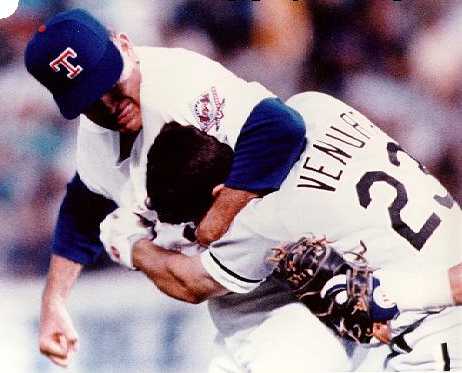
The traditional strikeout statistic places too much value on a pitcher’s ability to retire a hitter via strikes. In fact, strikeouts minus walks differential illustrates a clearer image of a pitcher’s true dominance over hitters and mastery of the strike zone. In 1974, Nolan Ryan recorded a whopping 367 strikeouts while issuing a staggering 202 walks producing a 165 SO-BB differential. Last season, Clayton Kershaw amassed 248 strikeouts and allowed only 54 walks equaling a 194 SO-BB differential. On first glance, Ryan appears to be more dominant. However, Kershaw was far superior in controlling the strike zone.
F12 produces a numeric total value using the percentage difference equation for the ten pre-defined ratio categories. Each pitcher is ranked according to league average performance using 2.000 as the baseline. Categories have a maximum value of 4.000 and a minimum of 0.001.
Percentage difference equals the absolute value of the change in value, divided by the average of the 2 numbers, all multiplied by 100. To illustrate, the average MLB pitcher compiled a 3.94 ERA in 2011. Clayton Kershaw finished his Cy Young campaign with a 2.28 ERA: =((3.94-2.28)/((2.28+3.94)/2))*100. The Factor12 Method adds: /100+2 to utilize an easy number less than, greater than, or equal to 2.000. As a result, Kershaw received a 2.536 F12 value for ERA last season.
The Innings Pitched (IP) and Strikeout Minus Walks (SO-BB) categories utilize a percentage change formula, which does not contain a fixed range. Percentage change represents the relative change between the old value and the new one. For example, the average MLB pitcher totaled 65.75 innings pitched in 2011. Clayton Kershaw compiled 233.33 innings pitched: =((233.33-65.75)/65.75)*100. The Factor12 Method adds: /100+2 and Kershaw earned a 4.549 value for IP last season.
A pitcher’s F12 is the sum of the percentage difference/change value of the twelve statistical categories. The league average performance is 24.000 and a minimum of 0.001. Pitchers recording zero innings pitched will receive a 0.000 F12 Rating. Elite pitchers will accumulate a 30.000+ seasonal rating.
Pitchers completing less than the average yearly innings (i.e. 65.75 in 2011) will have their F12 Rating weighed by the percentage of innings completed in relation to the league average (i.e. Sergio Romo 48 IP/65.75). This adjustment enables starting pitchers and relievers to be compared together based on different workloads for the season.
Factor12 rates yearly performance, with the potential for future projections. Weekly updates will be available during the 2012 season to quantify every pitcher in Major League Baseball using F12 on 60ft6in.com.

***Josh Robbins is a Video-Journalist and Baseball Historian living in Gilbert, Arizona. In 2010, he earned a Master’s Degree in Sport Management from CSU-Long Beach. From June 16 to July 11, 2008, he watched a game in all 30 MLB stadiums in a world record 26 days by car. Please email Josh at robbinsjosh@hotmail.com or visit 60ft6in.com for more information about the Factor12 Rating.***
Please e-mail us at: mlbreports@me.com with any questions and feedback. You can follow us on Twitter and become a fan on Facebook. To subscribe to our website and have the Daily Reports sent directly to your inbox, click here and follow the link at the top of our homepage.
Follow @mlbreports


 MLB Reports
Pingback: An Interview with Dodger Stadium ‘Expert’ Josh Robbins | The Fastest Thirty Ballgames
Pingback: An Interview with Dodger Stadium Expert Josh Robbins « MLB reports