Daily Archives: May 30, 2011

Buster Posey Out for the Season: Time for a Rule Change?
Monday May 30, 2011
On the Reports, we will be occasionally featuring an up-and-coming baseball writer that has come to our attention and share their work with you, the readers. Part of our mandate at MLB reports is to provide the best baseball coverage and analysis in the business. MLB reports ultimately is designed to expose our readers to the world of baseball and the stories, facts, insights and profiles behind it. In order to meet this goal, we would like to give exciting young writers the chance to showcase their talents and provide a fresh pool of ideas to our site. In today’s feature, we are excited to have Brian Lozier as our guest writer with his post on the Buster Posey injury. Brian’s topic was to look at the Posey injury and whether a rule change is required in baseball. Enjoy!
Brian Lozier (Guest Writer for MLB Reports): Injuries are another way of saying “Unfortunate event”. Things that are literally out of the hands of the people involved. There is nothing there to prevent injuries, slow them or make what unfolded heal any faster. Nothing can change an injury after it occurs, so people try to take measures into their own hands and prevent future occurences from happening. But at what cost to the game do we try to prevent injuries from taking place?
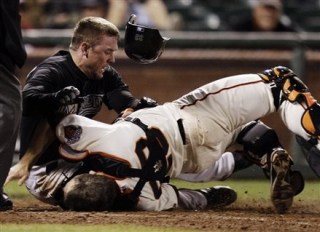
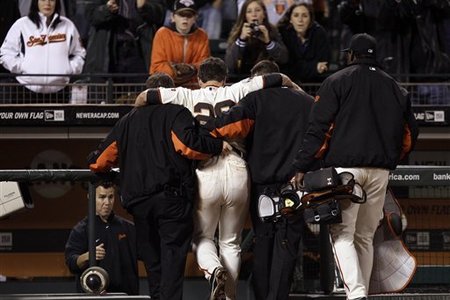
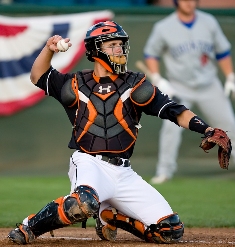 In the extra-inning thriller staged in AT&T Park in San Francisco this past Wednesday, former Rookie of the Year winning catcher Buster Posey suffered a broken leg and is out for the rest of the season and possibly the start of 2012 as well. A future All-Star candidate, Posey was run over by Scott Cousins of the Marlins, who scored the go-ahead run in the 12th inning. Posey, becoming an everyday catcher last season after being called up in May, played the role of protector of home plate on the play. Posey took his destiny and the future of his team in his hands by doing all that he could to fight for his team to pull out the win. The resulting cost though to the Giants organization was devastating.
After an MRI came back showing a broken fibula and three torn ligaments, Posey’s agent, Jeff Barry reached out to Joe Torre and the MLB head office with a plead for a change of the rules in order to stop collisions at the plate. Barry stated that “You leave players vulnerable. I can tell you MLB is less than it was before [Posey’s Injury]”. Barry went on to compare the incident to a helmet to helmet collision in the NFL. “If you go helmet to helmet in the NFL, it’s a $100,000 fine. In baseball, you have a situation in which baserunners are slamming into fielders. It’s brutal. Borderline shocking. It just stinks for baseball.”
I can understand an agent’s view to wanting to keep players safe. I can see the importance of Major League Baseball taking measure to stop “senseless” injuries and preventing side-liners and career-ending plays. However, I have to draw the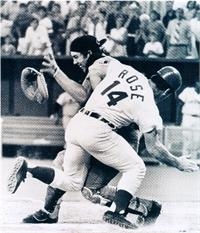 line when people ask to remove excitement from this great game. Train wrecks have been a part of baseball since the sport came into existence. The most famous of which might have been the 1970 All-Star Game and the Pete Rose collision at the plate. Or perhaps the collision to end game 6 of the 2003 World Series. I will let you be the judge.
Understanding one’s role and doing what it takes to win is a major part of being a Big-Leaguer. The speedster on each squad knows that it’s his job to steal bases. Consequence: Possible broken fingers. Outfielders on the other hand, are expected to catch balls on the fly. They might break a rib as a result, but it’s a part of their role. Pitchers go out knowing they could take a ball to the face or throw out an arm every time they step out onto a mound. But it’s what they do and is necessary for their respective teams to win. The above logic is no different when it is applied to the catcher. A catcher defensively at the end of the day must first and foremost, stop the baserunner. No question, no doubt.
What would happen if the rule changed and home plate collisions were a thing of the past? No one knows for certain, but it’s almost safe to say it would turn home plate into another first base. This would result in every close play into a force out situation. This would be a nightmare for teams when facing a contact pitcher. The result would be raising concern in places where most teams whole have a sigh of relief. Imagine stopping the notion of a deep sac fly to score a winning run. Or worse, stopping the suicide squeeze. Baseball would almost become a game without a soul.
I admire Jeff Barry for standing up for his client, I really do. In fact, more agents need to stand up for their players. I just wish it wasn’t at the expense of the game and the intensity of the sport that fans deserve. Why would anybody want to agree to this rule change? By abandoning home plate collisions, proponents of the rule change would be removing chance, excitement and thrill to the game of baseball. The clash of the titans at home plate during a game shows heart and guts to win a game which could possibly lead to a future World Series ring. Although not a perfect system which can result in the occasional injury, baseball needs to be played in the way it was meant to be. My baseball includes home plate collisions. It has been a part of the dynamic of baseball for all these years up to and including today and should continue to have a place in the sport for years to come.
***Thank you to Brian Lozier for preparing today’s article on Buster Posey and rule changes in baseball. You can follow Brian on Twitter.***
Please e-mail us at: MLBreports@gmail.com with any questions and feedback. You can follow us on Twitter and become a fan on Facebook . To subscribe to our website and have the daily Reports sent directly to your inbox , click here and follow the link at the top of our homepage.

Where Are They Now: From Retired MLB Players to Minor League Managers and Coaches
Sunday May 29, 2011
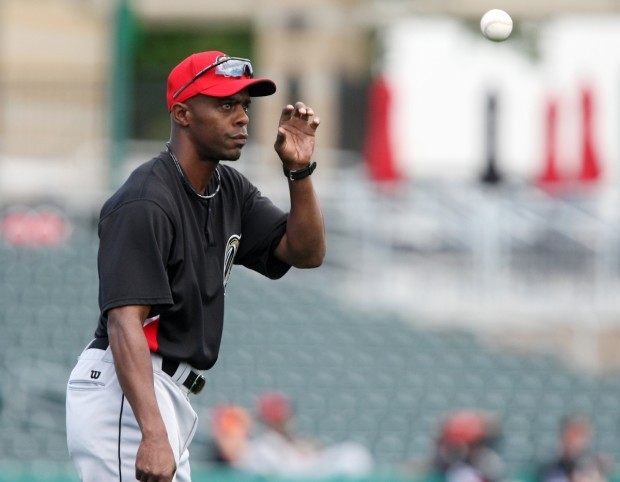
MLB reports: Having attended many baseball games in my lifetime, I was reflecting the other day on life after retirement for baseball players. Getting to watch players for upwards of 20 years, one day each and every one departs the game eventually. Once their playing careers are over and the players hang up their spikes for the last time, fans often ask: what happens to them? This is a question I find myself asking time and time again. Some players turn into broadcasters and scouts. Some retire and live on secluded islands, never to be seen again. Some are lucky enough to find jobs in the major league level, from front office positions to on-field coaching assignments. However, many that wish to stay in the game end up going back to the minors and starting over.
Looking at the list of minor league managers and coaches, familiar names from days gone by get triggered. What I did notice though was a reoccurring theme. With the exception of few, you are unlikely to find too many hall-of-famers and superstar players in the grass-roots levels. The best coaches and managers, occurring to many industry people that I have spoken with, are within the role players and grinders that studied the game well and fought for their playing careers. Ex-catchers are often labelled as strong future managers and coaches for their knowledge of the game. A superstar often gets by on talent and skill, but their results on the field do not always translate well in the dugout. To be a good manager or coach, you have to know the game inside and out and be able to teach, motivate and get the most results out of your players and team. Grinders, catchers, utility players, bottom-end starters and middle relievers are the ones that had to fight for every day, week, month and season to be kept on a major league roster. Being able to squeeze maximum results out of limited ability often as a player will lead to success as a future coach or manager. Or so the theory goes.
Take some of today’s active big league managers. From Mike Scoscia, to Bud Black, John Farrell, Joe Girardi, and Ozzie Guillen among others, we see a list of managers that had long-lasting playing careers but were never hall-of-fame material. The above list of managers got by as players on smarts, craftiness, effort and getting the most out of their abilities. The same characteristics these men had as players, they are now forging for their respective teams as big league managers. While superstar players turned into managers have and will continue to exist, like Pete Rose and Ryne Sandberg for example, they are the exception rather than the norm. Part of the reason could be that role type players just make better managers. Other reasons could be that superstars with their lifetime playing career incomes do not have the desire to take on manager and coaching roles with little financial reward. Superstars are also less likely to take the busses and go back to the minors to work their way back to the majors. The end result though is that in most cases, it will take a certain breed of ex-players to manage and coach in the minors after their playing careers are finished.
As of the 2011 season, I have prepared a list of ex-MLB players who can be found coaching and managing in the minors. I have based this list on the better known players for reference sake. Each person on the list has their organization, level and position noted. If nothing else, this list will serve as a wonderful walk down memory lane to remember some of our favorite players from the past and find where they are managing or coaching currently.
Our noted coaches and managers in the minors are as follows: (Note SS= Short Season, Rookie= Rookie level)
Paul Abbott – SS Pitching Coach (Red Sox)
Edgardo Alfonzo – Rookie Coach (Astros)
Wally Backman – AA Manager (Mets)
Damon Berryhill – Rookie Manager (Dodgers)
Willie Blair – Low A Pitching Coach (Padres)
Ricky Bones – AAA Pitching Coach (Mets)
D.J. Boston – Rookie Coach (Braves)
Jeff Branson – AAA Coach (Pirates)
Jerry Browne – AAA Coach (Nationals)
Tom Browning – Rookie Pitching Coach (Reds)
Tom Brunansky – AA Coach (Twins)
Steve Buechele – AA Manager (Rangers)
Dave Burba – SS Pitching Coach (Rockies)
Brett Butler – AAA Manager (Diamondbacks)
Frank Castillo – Rookie Pitching Coach (Cubs)
Phil Clark – High A Coach (Indians)
Gregg Colbrunn – Low A Coach (Yankees)
Scott Coolbaugh – AAA Coach (Rangers)
Brian Daubach – Low A Manager (Nationals)
Chili Davis – AAA Coach (Red Sox)
Storm Davis – Low A Pitching Coach (Rangers)
Steve Decker – AAA Manager (Giants)
Delino DeShields – Low A Manager (Reds)
Rich Donnelly – SS Manager (Mets)
Doug Drabek – High A Pitching Coach (Diamondbacks)
Mariano Duncan – AA Coach (Cubs)
Leon Durham – AAA Coach (Tigers)
Sal Fasano – AA Manager (Jays)
Jeff Fassero – Low A Pitching Coach (Cubs)
Tom Filer – AAA Pitching Coach (Pirates)
Tony Fossas – Low A Pitching Coach (Reds)
Rich Gedman – SS Coach (Red Sox)
Jim Gott – Rookie Pitching Coach (Angels)
Tommy Gregg – AAA Coach (Royals)
Ken Griffey Sr. – High A Manager (Reds)
Brian Harper – AA Manager (Cubs)
Jeff Harris – Low A Pitching Coach (Indians)
Lenny Harris – Low A Coach (Dodgers)
Ron Hassey – High A Manager (Marlins)
Greg Hibbard – SS Pitching Coach (Indians)
Bobby Jones – AAA Manager (Rangers)
Kevin Jordan – Rookie Coach (Phillies)
Pat Kelly – Rookie Manager (Reds)
Terry Kennedy – AAA Manager (Padres)
Steve Kline – Low A Pitching Coach (Giants)
Randy Knorr – AAA Manager (Nationals)
Tim Laker – AAA Coach (White Sox)
Les Lancaster – Rookie Pitching Coach (Phillies)
Tom Lawless – AA Manager (Astros)
Matt LeCroy – High A Manager (Nationals)
Craig Lefferts – High A Pitching Coach (Athletics)
Doug Linton- AAA Pitching Coach (Rockies)
Nelson Liriano – Rookie Manager (Royals)
Dennis Martinez – High A Pitching Coach (Cardinals)
Joe McEwing – AAA Manager (White Sox)
Bob Milacki – AA Pitching Coach (Phillies)
Mickey Morandini – SS Manager (Phillies)
Phil Nevin – AAA Manager (Tigers)
Greg Norton – AAA Manager (Marlins)
Lance Painter – AA Pitching Coach (Mariners)
Phil Plantier – High A Coach (Padres)
Ariel Prieto – Rookie Pitching Coach (Athletics)
Tom Prince – Rookie Manager (Pirates)
Mike Redmond – Low A Manager (Jays)
Jody Reed – Rookie Manager (Dodgers)
Pete Rose Jr. – Rookie Manager (White Sox)
Luis Salazar – High A Manager (Braves)
Ryne Sandberg – AAA Manager (Phillies)
Dick Schofield – Rookie Coach (Angels)
Kelly Stinnett – Rookie Manager (Diamondbacks)
Franklin Stubbs – AA Coach (Dodgers)
Tim Teufel – AAA Manager (Mets)
Bobby Thigpen – High A Pitching Coach (White Sox)
Randy Tomlin – AA Pitching Coach (Nationals)
John Valentin – AAA Coach (Dodgers)
Frank Viola – SS Pitching Coach (Mets)
Matt Walbeck – Low A Manager (Braves)
Pete Walker – AA Pitching Coach (Jays)
Turner Ward – AA Manager (Diamondbacks)
U.L. Washington – Rookie Coach (Red Sox)
Trevor Wilson – Low A Pitching Coach (Angels)
Vance Wilson – Low A Manager (Royals)
Shawn Wooten – Low A Manager (Padres)
From the above list, it will be interesting to see which of these ex-players end up graduating to the big leagues and in what capacity. Many will find that the road to the show as a player was actually easier than the path as a manager or coach. We fondly remember many of these individuals for their contributions to the game of baseball on the field. We look forward to finding out which of them will be able to find similar success in the dugout.

Please e-mail us at: MLBreports@gmail.com with any questions and feedback. You can follow us on Twitter and become a fan on Facebook . To subscribe to our website and have the daily Reports sent directly to your inbox , click here and follow the link at the top of our homepage.


 MLB Reports
You must be logged in to post a comment.