Blog Archives

Forget Strikeouts: Hit ’Em Where They Ain’t!
Monday January 23, 2012
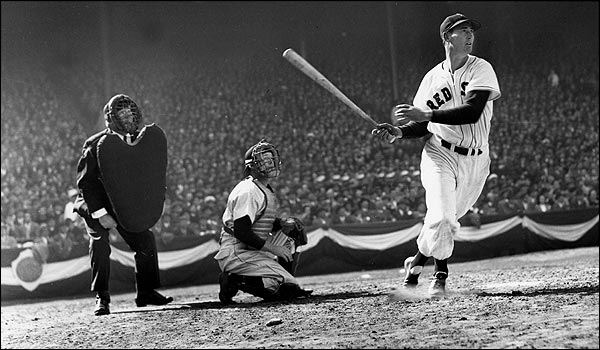
Douglas “Chuck” Booth- Baseball Writer: Back in the turn of the 20th century, baseball was a different game. Players had second jobs to supplement their baseball salaries, teams carried few pitchers and they used the same baseball for as much of the game as they could. There was a player named Willie Keeler who coined the phrase: “Hit ’em where they ain’t!” It was a slang term for hitting the baseball where outfielders were not located. This term would hold up for baseball players until Babe Ruth graced the baseball world with the retort, “I like to him them over the fence because the fielders are definitely not there.” Strikeouts were a different situation back then as opposed to the modern-day game.
Old time baseball players were ashamed of strikeouts. To them, you had done nothing to help your team in advancing the offence. While I never played baseball at a higher level than age 19, I came from this very philosophy and this was twenty years ago. My teammates and I all took turns throwing temper tantrums over striking out in Little League Baseball. Some kids even resorted to crying. The coaches of the teams all preached young men to cut down their strikeouts in favor of just making some contact. For the longest time I believed that the Major League Players thought along these lines. Media articles and sports broadcasters still interview retired players about striking out. All of them say that it bothered them a great deal. So what happened to change the philosophy? Was it Money Ball? How about Sabermetrics? I think that these both had a role in the ever rising strikeout totals the current players are experiencing each and every year. There are other factors like hard throwing relief pitchers and teams spending more money to keep aging veterans who have lost plate coverage, thus increasing their k rates.
 In the 1990’s we also experienced the steroid era, where the bandbox stadiums were built and MLB went with the advertising campaign, “chicks dig the long ball!” It all had led to the increased strikeout total. To see just how far the epidemic had come, let’s go back 85 years; in 1927 Babe Ruth led the Major Leagues with 89 strikeouts. Oh yeah, he also hit .356 with 60 HRs and drove in 164 RBIs in 540 ABs. Lou Gehrig finished in 2nd that year with 84 strikeouts- but he hit .373 with 47 HRs and a whopping 175 RBIs in 580 ABs. Both men walked over 100 times each and slugged over .750. Yes pitching was not as tough as it is today. But these guys played in the dead ball era with humongous baseball stadiums.
Fast forward to 1961. 10 players had over 100 strikeouts that year. Much like 1927, the New York Yankees had two players leading the charge in offense with Roger Maris and Mickey Mantle. Despite hitting a record 61 HRs that season, Roger Maris had a keen eye for the plate in only striking out 67 times. There was a shift starting with the other players in league. A player by the name of Jake Wood stuck out a league leading 141 times. Amongst the other players to top the 100 strikeouts mark were Hall of Famers Mickey Mantle and Harmon Killebrew. It was a change in contrast to the power hitters of the league striking out on a more frequent basis. Players like Joe Dimaggio (369 SO, 361 HRs), Ted Williams (760 SO and 521 HRs) and Stan Musial (696 SO and 475 HRs) were standing out on the pier as players who adopted the contact concept. But they were becoming a rare breed of player.
In 1986, the number of players with 100 strikeouts escalated to 40. Yes there were an increase in the number of teams due to expansion. However, the rate of the players striking out 100 times a year far outweighed those added teams. There were definitely a few exceptions to the rule. Don Mattingly only struck out 444 times in 7721 Plate Appearances during his career. Wade Boggs only struck out only 745 times in nearly 11000 Plate Appearances. It should be noted the Boggs walked 1412 times and routinely fouled off pitches with two strikes deliberately to wear down opposing pitchers; otherwise his whiffs would have been much lower. The best of this era was Tony Gwynn, who only struck out 434 times in 10200 Plate Appearances. All 3 of these players were part of a baseball decade in which the 1-2 hitters were purely average contact hitters who did not strikeout very much and stole bases, while playing hit and run ball. Your power hitters belonged in the 3-4-5 slots and that was the only place to have an acceptable amount of high strikeout totals. The 6-8 hitters were also average contact hitters with speed.
In 2011, 80 players finished with over 100 strikeouts. There is one thing though that has remained constant. The home runs are still up way higher from the rate of the 1980’s. Now steroid testing has slowed down the balls leaving the yard from 10-15 years back, but more players still hit 30 homers a year than in the 25 years before the steroid era. You might want to also throw in the decreasing strike zone the umpires seem to implement each progressive season. Do not count on the umpires calling more strikes either, as it easier to pinpoint the botched strike calls now more than ever with technology. Umpires are simply not willing for the most part to give much leniency to the pitchers. Higher counts in ABs as a result will reflect in both more strikeouts and walks.
The baseball world has come to this. It is now acceptable for players (including the management and front office backing of the idea), to carry high strikeout totals and low batting averages- if the on base percentage/power numbers are still there. Leadoff hitters are not even immune to striking out on a regular basis. It is a mentality that has changed the game forever. So the next time you are wondering why all of the baseball games seem to last forever now: remember that more strikeouts equals more pitches seen. Which means the length of time each game lasts will be affected.
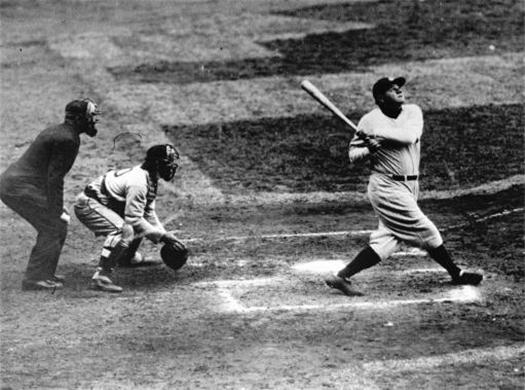
 *** Thank you to our Baseball Writer- Doug Booth for preparing today’s feature on MLB reports. To learn more about “The Fastest 30 Ballgames” and Doug Booth, you can follow Doug on Twitter (@ChuckBooth3024) and click here for Doug’s website, fastestthirtyballgames.com***
Please e-mail us at: MLBreports@gmail.com with any questions and feedback. You can follow us on Twitter and become a fan on Facebook . To subscribe to our website and have the daily Reports sent directly to your inbox , click here and follow the link at the top of our homepage.

Evaluating Strikeout Pitchers For Your 2012 Fantasy Baseball Team
Tuesday October 18, 2011

Peter Stein (Fantasy Baseball Analyst – MLB reports): Depending on the type of fantasy league, high strikeout pitchers hold varying degrees of value. In 5 X 5 Roto League’s, strikeouts are crucial as they represent one of the five pitching categories. Furthermore, strikeout ratios are indicative of a pitcher’s future success. Needless to say, the more a pitcher misses the bat of a hitter, the more primed he is to retire batters. As I touched upon this subject a few weeks ago in my piece about the value of setup men, today, I shift the focus to starting pitchers who look to finish atop the strikeout rankings in 2012.
 In 2011, the 25-year-old right-hander busted onto the scene with a 7-3 record, 3.68 ERA, and 1.21 WHIP in 141.2 innings. However, the real value he provided was the 169 strikeouts, a 10.74 K/9 ratio that ranked him first among starting pitchers. Undoubtedly, Beachy will be a highly valued player entering the 2012 season, yet I still think many owners still undervalue him. Many owners will be impressed, but not wowed by his ERA and WHIP numbers, which are right on par with Jamie Garcia’s 3.56 ERA and 1.32 WHIP. However, Garcia struck out just 156 batters in 194 innings. If pitchers are not contributing to the strikeout category, he needs to be VERY good in the others, and it will be difficult for a player to do so with out the ability to miss bats. This helps explains Garcia jump in ERA from 2.70 in 2010 to 3.56 in 2011.
Beachy’s strikeout ratio indicates that his rookie season was no fluke. He has the ability to miss bats and therefore should not see a regression in his numbers. He was consistent throughout the year and actually struck out more batters as the season progressed. Furthermore, his .300 BAPIP indicates that he was not a product of good fortune. He is the real deal and has potential to provide terrific value in all give pitching categories and looks to be among the elite in strikeouts. Beachy’s more well-known teammate, Tommy Hanson, it also a pitcher who is among the games best strikeout pitchers – improving his rate in each of his three seasons in the major leagues.
Here are some lesser-known players that had a strikeout ratio higher than that of C.C. Sabathia, Felix Hernandez and David Price:
Brandon Morrow (10.19 K/9)
Cory Luebke (9.92 K/9)
Anibal Sanchez 9.26 K/9)
Jonathan Sanchez (9.06 K/9)
Matt Garza (8.95 K/9)
Gio Gonzalez (8.78 K/9)
Although these pitchers are by no means fantasy aces, their fantasy value is often hidden and undiscovered by owners. They are often lumped into the same category as players with similar ERA and WHIP numbers (e.g. Mark Buehrle). However, their potential for strikeouts can give an owner valuable extra points. While no means must-start players, if you use the Garza, Gonzalez’s, Morrows, etc in favorable matchups, don’t be surprised to see them produce ‘five category’ Lincecum-like starts. Just don’t start them against the better half of the league’s top offensive teams. It is all about finding the edges, and strikeouts are a category that many owners are first to ignore. Therefore, I strongly suggest you fill your tougher innings with such players that can help you finish at the top of this category. If a player is putting up strong ERA and WHIP numbers without the strikes, it is more likely to be a fluke. Therefore, to be safe and to finish atop the K category, target the players who show the best ability to make major league hitters swing and miss.

***Today’s feature was prepared by our Fantasy Baseball Analyst, Peter Stein. We highly encourage you to leave your comments and feedback at the bottom of the page and share in the discussion with our readers. You can also follow Peter on Twitter (@peterWstein).***
Please e-mail us at: MLBreports@gmail.com with any questions and feedback. You can follow us on Twitter (@MLBreports) and become a fan on Facebook . To subscribe to our website and have the daily Reports sent directly to your inbox , click here and follow the link at the top of our homepage.


 MLB Reports

You must be logged in to post a comment.