Blog Archives

Interview with Steve Karsay: Reflections on a MLB Pitching Career
Friday November 4, 2011

Jonathan Hacohen: While I get to interview many current MLB prospects and stars on the Reports, it is rare that I have the opportunity to talk baseball with a former great that I watched growing up. As a personal bonus to me, that chance recently came up when I was able to connect with Steve Karsay, former major league pitcher. Steve was originally drafted by the Toronto Blue Jays in the 1st round (22nd overall in the 1990 draft). After being a part of the famed 1993 trade to Oakland for hall-of-famer Rickey Henderson, Steve played 11 major league seasons for 5 different squads. Steve played his final season in 1996.
I reflected with Steve Karsay on his career, from his time with the Blue Jays organization, through to his final season. Steve was very candid in his responses and certainly did not hold back. For all the readers that grew up idolizing Steve Karsay and wondering about his future baseball plans- today you will receive your answers.
Featured on MLB reports, I proudly present my interview with former Major League pitcher, Steve Karsay:
_________________________________________________________________________________________________________
MLB reports: Welcome to MLB reports Steve. Let’s start today’s interview from the beginning. A 1st round pick in 1990 with Toronto. What was the feeling when you got the call? Did you expect to be drafted by the Jays? Thoughts/feelings at the time?
Steve Karsay: Wow! Going back a few years. That is correct- I was the 22nd pick overall in the 1990 draft by the Blue Jays. What a great time and what a great organization I was drafted by. The Blue Jays and their organization taught me so much to make me the player I was over my 16 year career. I will always be grateful to the Blue Jays organization and the coaches for the years I spent there. I did not know I was drafted until late in the afternoon for the fact that I was playing for my high school championship at Yankee stadium at the time. The feeling when I did receive the call was shock. I was not sure I was going to get drafted in the first round and had my sights set on going to LSU in the fall. But when it sunk in and realized the opportunity that I had and the feeling of shock turned to joy and excitement made the decision to sign and start my career in St. Catharines.
MLB reports: You will forever be linked to hall of famer Rickey Henderson, being traded for him in July 1993. What was your reaction when you learned of the trade? Have you ever spoken to Rickey about it?
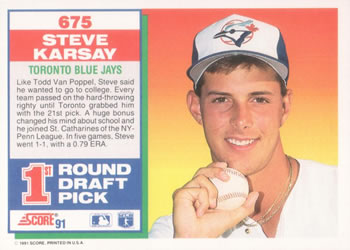 Steve Karsay: First being traded at the time for Rickey was a great honor. I was only 21 at the time in 93′ when the trade happened so learning I was traded I had a mix of feelings. I was disappointed because I wanted to reach the big leagues with the team that drafted me. But realizing that I may get my opportunity to pitch in the big leagues faster, I understood that these are the things that happen when the big club is trying to position itself to win a World Series. After the trade I ended up making my Major League debut two weeks later against the Brewers at the Oakland Coliseum. So that is what made the trade worth it. As far as talking with Rickey, we had a brief conversation when he returned to Oakland the very next year.
MLB reports: After being in the Toronto organization your whole life, what was it like joining the A’s and playing for them for three seasons?
Steve Karsay: Being with Toronto for three years and going to Oakland was an adjustment, but for me was an easy transition. I enjoyed the A’S organization very much. Working with Dave Duncan and having Tony La Russa as my first manager was great. They were both mentors and I credit them for helping me transition to pitching in the big leagues.
MLB reports: Injuries took a big toll on your career- especially your surgeries in 1995 and 1996. After undergoing Tommy John, did you think your career was finished? Give us an idea as to what the surgeries/rehabs were like and your road to continue playing baseball.
Steve Karsay: To be quite honest I wasn’t sure what to expect. I knew I had had to have Tommy John and back in 1995, it was not nearly as perfected as it is today. So I knew there was a chance that I may never play at the big league level again. The surgeries were lengthy and the rehab tedious, but I always had the drive to get healthy and pitch in the big leagues again. I was never one to give up. It was a long three years but in the end to resume my career and compete at the highest level was an accomplishment in itself.
MLB reports: Your career actually took off when you joined the Indians. Your four years in Cleveland represent some of your finest major league numbers. What was the secret of your success with the tribe?
Steve Karsay: I guess if there was any secret to my years in Cleveland, it was that I was finally healthy. I had gone through some tough years with injuries and rehab and when I finally got traded in 97′ to Cleveland, I felt like I turned the corner and it was just all coming together. In Cleveland they decided to put me in the bullpen and really got into a nice niche of what I was really capable of doing. But ultimately I would have to say that the four years in Cleveland I was as healthy as I have ever been throughout my career.
MLB reports: Aside from the occasional start, you became a full-time reliever in 1998. What was the process like to transition from starting to the pen? After coming up as a starter, how did you feel about becoming a reliever?
Steve Karsay: As a starter you have routines and you know what days you’re going to pitch and who you are going to pitch against. As a reliever you just have to be prepared every day. The transition was fairly easy for me because I had some great mentors when I did it in Cleveland. Mike Jackson, Paul Shuey, Paul Assenmacher, and a few others, so I got to learn from some guys who tough me well. I wasn’t excited at first to become a reliever but it definitely grew on me and felt after having success in the bullpen that is where I was supposed to be. It also gave me a new found respect of how hard the bullpen is.
MLB reports: You finished your career with 41 saves. Looking back, do you wish that you had more 9th inning opportunities- was the “closer” role something that you had in the back of your mind?
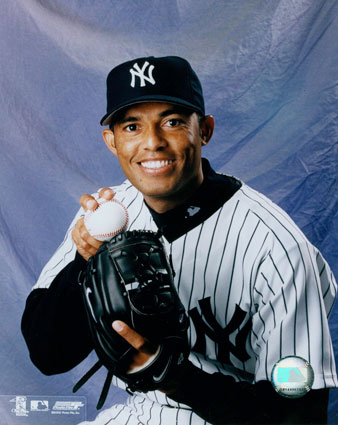 Steve Karsay: I was very fortunate to have the opportunity to be a closer for a bit in Cleveland and fill in New York when Mariano Rivera was injured. I always had the “closer” role in my mind but was never what drove me to play. I figured opportunities would present themselves if I pitched well enough. My saying was ”How well you are pitching will determine where you pitch in the game coming out of the pen”. When I signed as a free agent, I had the opportunity to go to a couple other clubs to compete for that job but chose to go to NY to set-up. At that point, winning was more important to me than closing. That was a tough choice I had to make.
MLB reports: Your career ended in 2006, after pitching 9 games with the A’s. Why the decision to hang up the glove at that point? Any regrets?
Steve Karsay: I have absolutely no regrets about my decision to retire in 06′. At that particular point, I was still having problems with my shoulder (after having surgery on my rotator cuff in 03′). I was pitching with pain and I felt personally like I couldn’t compete at that level with an injured shoulder. It was not fun any more coming to the ballpark, and I had always told myself that if I felt that I couldn’t compete at the highest level, I wanted to walk away from the game as a player on a respectable note. After retiring I had one last shoulder surgery to repair my rotator cuff for a final time. I came to realize that I was pitching with my rotator cuff torn the whole time in 2006. So looking back, I felt the choice I made was 100% correct.
MLB reports: You pitched for 5 major league teams (A’s, Indians, Braves, Yankees and Rangers). Favorite team(s) that you played for and why?
 Steve Karsay: All of the teams hold a special place in my heart. I had great memories with all of them. I had the opportunity to meet and play with some of the best players in the history of the game over my career. I will always be grateful for the Blue Jays for drafting me and giving me the chance to start my career in professional baseball. Then the A’s for giving me my first shot in the Major leagues. The Indians is where I had my most productive years and had the chance to experience playoff baseball for the first time. Atlanta and playing for the great Bobby Cox. He is a player’s manager and a great man. Also having the opportunity to have great teammates in every spot that I played. Too long of a list to compile, but to name a few of the greats I played with: Mark McGwire, Dennis Eckersley, Ron Darling, Rickey Henderson, Jim Thome, Sandy Alomar Jr., Robbie Alomar, Omar Vizquel, Greg Maddux, Tom Glavine, John Smoltz, Chipper Jones, Derek Jeter, Roger Clemens, Andy Pettitte, Bernie Williams, Mike Mussina. I know I am probably missing many other great ones I played with. Overall, the experiences were priceless. It was the most exciting time in my life with the exception of the birth of my son Kingston.
MLB reports: Do you still keep in touch with many of your ex-teammates- any ones in particular?
Steve Karsay: I don’t keep in touch per say with them, but whenever I get the opportunity to see them when they come into town I always like to stop by the ballpark and say hello.
MLB reports: Growing up so close to Shea Stadium, it must have been a dream come true to play in New York. Were you a Mets fan growing up- did you consider playing for them at one point?
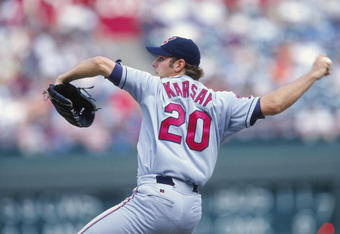 Steve Karsay: Growing up in NY and so close to Shea was great. I was a baseball fan growing up. I liked players more than I did teams. I watched both the Yankees and the Mets. I went to more Mets games as a kid because it was just a short train ride away. I never had the opportunity to play for the Mets over my career, but playing for the Yankees and the tradition of the Yankees was definitely a highlight of my playing days.
MLB reports: Since you left the game, what has been life been like for Steve Karsay? What are you up to these days Steve?
Steve Karsay: Life has been wonderful since retiring in 2006. After being able to have a 16 year career in baseball I wanted to step away from the game for a short time to pursue a few things that I was not able to do while I was playing- like travel and explore different countries. I also became involved in my friend’s company in Aerospace Manufacturing which has been exciting and to say the least interesting. And last but not least, the birth of my son which has been more work than all of the above. With that being said, baseball is my life and I am pursing opportunities to get back in the game in some capacity. The time off was great, but I want to be able to pass along the knowledge of baseball that I learned while I was playing and help young kids fulfill their dreams of hopefully getting to the big leagues.
MLB reports: If you could give one piece of advice to a young baseball player trying to make it to the show, what would it be?
Steve Karsay: My advice would be to work hard, be consistent, and do not take anything for granted because you never know when it will come to an end.
MLB reports: Will we be seeing you in the future in the major leagues in another capacity, perhaps a broadcaster or coach/manager?
Steve Karsay: I hope so. I am pursuing some things as we speak and would love to get back in the game in any capacity, either as a broadcaster, front office or on the field coach. Baseball is my passion and it what I love.
MLB reports: Final question Steve: everyone at the end of the day wants to leave a mark on the game. What do you most want to be remembered for as a professional baseball player?
Steve Karsay: Looking back I would want to be known for every time I stepped between the white lines I gave everything I had and I did not take anything for granted. I wanted to be the best player I could be when I stepped out on the mound. The fire for competition was always burning when I played. If I can be remembered for that, I would be very proud.
MLB reports: Thank you very much for taking your time out of your busy schedule so we can have you with us. Much appreciated!
Thank you again to Steve Karsay for taking the time to join us today on MLB reports. We highly encourage our readers to post at the bottom of the article any questions and/or comments that you may have for Steve. As well, please follow Steve on Twitter (@Steve_Karsay)
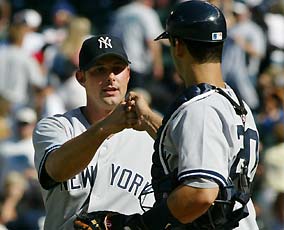
 Jonathan Hacohen is the Lead Baseball Columnist & Editor for MLB reports: You can follow Jonathan on Twitter (@JHacohen)
Please e-mail us at: MLBreports@gmail.com with any questions and feedback. You can follow us on Twitter and become a fan on Facebook . To subscribe to our website and have the daily Reports sent directly to your inbox , click here and follow the link at the top of our homepage.

Drew Taylor Interview: The Story of an Intercounty League Pitcher
Follow @mlbreports Wednesday September 21, 2011
MLB reports: We are proud today to feature on MLB reports: Drew Taylor, former Philadelphia Phillies and Toronto Blue Jays prospect pitcher, currently playing in the Intercounty Baseball League. Based in Ontario, Canada, the Intercounty League has produced several major league players including Rob Butler, Rich Butler and current Brewers closer, John Axford. Drew’s baseball blood lines run deep, as his father Ron Taylor is former MLB pitcher himself. Part of the 1969 Miracle Mets during his playing career, Dr. Taylor is a long time team doctor for the Toronto Blue Jays. From getting signed by the Jays, having a World Series champion pitcher as a father, recovering from injuries and life in the Intercounty League and working towards becoming a doctor, we covered many topics with Drew. For a great baseball tale from a different part of the game, we present our recent interview with Drew Taylor:
MLB reports: Welcome to the Reports Drew. Thank you for taking time out of your schedule for this interview. First question we always like to ask: who was your favorite baseball player growing up, that you most idolized and patterned your game after?
Drew Taylor: I always loved to watch David Wells pitch when I was younger. As a lefty I learned a lot about setting up hitters and how to use a curveball effectively against left- and right-handed batters. I also loved his approach. He went right after hitters no matter who they were and rarely fell behind in the count. A true lefty – he was a character on and off the mound. I had the chance to get to know him a little when he was playing in Toronto. When I was in high school, I threw a bullpen in Spring Training for the Jays. I didn’t know I would be throwing that day so I only had my first baseman mitt with me. He gave me a glove to use and watched me throw giving me some pointers after the pen, very generous; he is the kind of guy that would give you the shirt off his back. I also learned a great deal from watching him that day in the way he treated people and engaged with fans asking for his autograph. Down to earth.
MLB reports: Which current MLB star do you most admire and why?
 Drew Taylor: I would have to say Travis Snider. I played with Travis our first year in the Blue Jays minor leagues and actually lived with him for the first part of the season. He came into the Jays straight out of high school and was thrust into a system that was known for drafting mostly college athletes. Here he was living with Jeff Gilmore, who graduated early from Stanford and had already begun a Masters in History and myself, already with Undergraduate and Masters degrees from the University of Michigan. But in truth, Travis was probably the most mature of the group of us. As I got to know Snider I found out why. He had faced a great deal for a kid of his age. There have been a number of articles written him since he broke into a big leagues focusing on what he and his family went through while he was in high school. If you haven’t read them, I suggest you look them up. I won’t go into all the details here, but in short when his mother was dealing with serious health issues, he was placed in a difficult situation at a very young age. As the only son, he stepped up to be a rock for his family. There are a lot of talented athletes that get drafted and Snider is definitely one of them. Sometimes though it is experiences like these that separate the men from the boys and dictate who will have the resolve and discipline to make the jump to the big leagues.
MLB reports: Reflecting on your career to-date, what are your proudest accomplishments on the baseball field?
Drew Taylor: I transferred for my sophomore year to the University of Michigan from Georgia Tech in 2003. I came into a program that had a great history but had struggled in the past few seasons, finishing only 21-32 the previous year. Rich Maloney had moved from Ball State to the Michigan to take the helm as head coach. He called each player in one by one before the season, sat us down and laid out what he expected of us. It was the first time a coach had talked to me that way. He demanded excellence and explained how each one of us as individuals could contribute to the team’s success. I owe a great deal to Rich and would not have had the success I had that year without his ability to inspire his athletes and instill confidence in them. He turned that program around and we ended up 30-27 that year, climbing to 43-21 and winning the Big Ten by the time I graduated. “Those who stay will be champions.” I personally ended up 9-1 in 2003, making the All-Big Ten and All-Region Teams and was given the Geoff Zahn award for Michigan’s top pitcher. After pitching only 9.1 innings the previous year, this was a big turnaround for me. Rich knows how to get the most out of his players and I hope he remains a college coach so I can send my kids his way one day.
MLB reports: You were signed in 2006 by the Toronto Blue Jays after the draft. Were you scouted by certain teams before the draft and were you expecting to be drafted?
 Drew Taylor: The most amount of attention I received was probably in 2001. My velocity shot up during my final year of high school and while pitching for the Ontario Blue Jays the summer before starting university. I had a number of clubs call and make offers, including the Rockies, Blue Jays, and Braves, to see if I would forgo school to sign professionally. But I was dead set on getting my education. While at Michigan, I had a great sophomore year going 9-1 and followed it up with a good showing in the Cape League which drew some attention again. Then during my draft eligible Junior year I ended up injuring my shoulder in my first start of the year. I tried to come back and pitch a couple of times, but ended up having to shut it down for the season. That effectively ended any chance I had of getting picked up in the draft, so I focused on my rehab, knowing that I would be back at Michigan the next year and would have to prove I could compete all over again. In 2006, the Blue Jays called right after my final game and signed me to a free-agent contract. I reported to camp two days later.
MLB reports: Being signed by your hometown Jays must have been very special. What were your feelings after the draft and what was the process like up until the time you were signed?
Drew Taylor: Being signed by your hometown team is always special, but there were so many things on the go I didn’t get much of a chance to sit down and enjoy the feeling. When I got the call I was in Michigan right after we got back from the NCAA Regionals in Atlanta. It was a little bit of a whirlwind because I had just got back to my apartment when I was told I was leaving again in two days. In those two days, I quickly packed up my apartment and hit the road for Toronto. Kevin Briand and Sean McCann were the scouts that signed me and I went down to the then named SkyDome to meet them and sign my contract. With the papers in, Kevin walked me down onto the field and it finally sunk in.
MLB reports; As a 6′ 5″ left-handed pitcher and being the son of an ex-major league hurler, what were the expectations you set for yourself once you joined the Jays system? Did you envision yourself in the major leagues one day and what was your plan to get there?
 Drew Taylor: Everyone who signs a contract, or for that matter who has played baseball at any level has thought about what it would be like to play in the majors. For me, I had a father who had done it for 11 years, and because of that I had the opportunity to be exposed to the game at a high level from an early age. I fully expected to make the majors and as soon as I signed professionally, I set out to realize that goal. Competition increases as you move up in the system and ultimately I never reached my goal of reaching the majors. There are a lot of talented players in professional baseball, many of the guys in the minors have the talent and ability to play in the majors, but lack consistency. At the major league level you have to be able to make adjustments within the same game or within the same at-bat. Realizing how to make these adjustments takes time and experience, which is one of the reasons athletes in baseball require time to mature and develop above other sports. The mental side of baseball is much more important than the physical… as Yogi Berra said “Ninety percent of baseball is mental, the other half is physical.”
MLB reports: For all the fans that have never experienced minor league baseball before, give us an idea as to what life is like in the minor leagues as compared to what people see in major league stadiums. The level of competition, amenities and support from the major league team for its minor league system- what is it like?
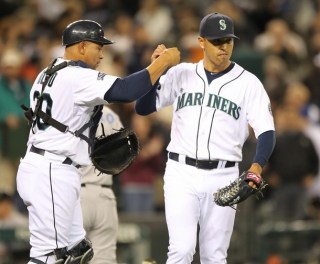 Drew Taylor: Night and day. Have you ever watched Bull Durham? Its bang on. The minors consist of a lot of long bus trips, fast food, and tiny locker rooms. The other big difference that people do not realize is how little money players are paid in the minors. Bonus Babies get a big cheque at the beginning, but the weekly salary is barely enough to live on. I would love to see the Major League Baseball Players Union fight for better pay in the minors, but once you make it to the majors I assume those guys try not to even think about the minors again. I don’t see it happening. Another problem is that players in the US and Canada are entered into the draft, while international players are all free agent signs. This means that home-grown talent can only negotiate with the team that drafted them, while international players have the ability to shop around different teams and drive up their signing bonuses. We need to move to a world-wide draft. One thing I will say is that players who make it to the big leagues know what it is like in the minors because they came up through it. Many guys are very good to the guys at lower levels. Especially if they are back down in the minors for rehab starts. One guy that sticks out in my mind that always looked after the guys at the lower levels was Brandon League. He was down for rehab for a while in Dunedin one year and went out of his way for us.
MLB reports: Injuries unfortunately played a huge part in your career, as it affects many young hurlers. Please tell us what happened to you health wise and your path through injuries, surgeries and how health affected your career.
Drew Taylor: I only threw twice in my junior year at Michigan before it was painfully evident that something was not right. I ended up having a small tear in my rotator cuff and a strained bicep. I rehabbed and came back strong enough to get picked up by the Jays. My velocity had never returned fully after my arm injury in University, so I had to find other ways of getting hitters out than just blowing it by them. Additionally, I moved primarily to the bullpen after being a starter my whole life. My mental approach to baseball improved greatly, learning how to set up hitters and get them out not just by beating them with a pitch, but beating them with a pitch they didn’t expect. Instead of facing the same hitters many times in one game as a starter, I was now coming in relief and mostly only had to face batters once. I had to develop the ability to strike out a batter when I came on with runners on base and I focused on improving out pitches. My first year was in Pulaski Virginia in the Appalachian league facing a lot of young free-swingers. I used this to my advantage and ended up striking out 37 in 27 innings. As you move up through the system, hitters have a much better approach and wait for you to throw a pitch they are looking for or for you to make a mistake. You have to improve with them, or you will get left behind.
MLB reports: For those fans that aren’t aware, your father is Dr. Ron Taylor. A team doctor for the Jays, your dad was a star pitcher in the big leagues and played on World Championship teams. What influence did your dad have on your career? What was your relationship like growing up?
 Drew Taylor: My dad was a huge influence on me. He never pushed me into baseball, or medicine for that matter, they were both my choices. Once I made the decisions to pursue being a professional pitcher and then a doctor, his support and guidance was bar none. He had a great career in the majors for 11 seasons, winning two World Series with the Cardinals in 1964 and the Amazin’ Mets in 1969. I had a big leaguer at my disposal and he taught me things about playing at a level that very few have made it to. Even when we would sit down and watch a game on TV, we would be talking about setting up hitters and he would always ask me what pitch I would throw next. The biggest thing he taught me is how to deal with pressure and maintain focus and confidence – something I can take with me in all aspects of life. In 6 appearances in Major League post season games he threw over 10 innings without giving up a run. In 1964 he threw 4 innings in the World Series without giving up a hit, allowing only one base runner on a walk to none other than Mickey Mantle. There definitely were some expectations, and it was very tough to deal with when I had my arm injury and my future in baseball was in question. When I was released by the Phillies in 2008, I came home and he said something that will always stick with me. He told me if he “could only choose one career between baseball and medicine, it would have been medicine.” He has been able to help countless more people as a physician than as a pitcher. If I had kept playing baseball, my window to return to school might have closed. My brother Matthew, has also been a great guy to have around. What he lacked in talent he made up for in knowledge. I still talk shop with him when we watch games and he often comes out to watch me throw, giving me some pointers after the game, whether I want to hear them or not. He works in film, but I always thought he would be great in the front office or as a GM. He knows baseball, better than me.
MLB reports: To go along with the Jays connection, you mentioned to me that you know Pat Gillick well. Please tell us your relationship with Pat and the Phillies organization.
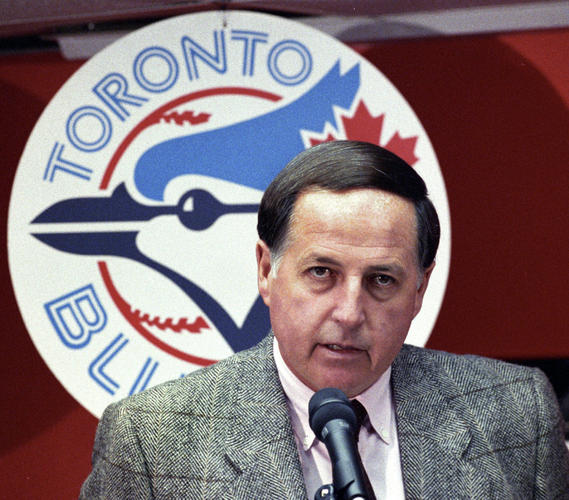 Drew Taylor: After my second season with the Blue Jays, they let me go and I immediately got a call from the Phillies asking me to attend spring training in Clearwater next year. Pat is one of the greatest minds in baseball and has been a mastermind behind winning teams and franchises since he started as a General Manager. He is always at ground level watching his players from rookie ball up to the majors and has a huge presence at camp. When he was with the Blue Jays, he became great friends with our family and recently invited us down to watch the induction ceremony at Cooperstown. It was my first time there and a tremendous experience to see the rich history the sport has and its influence and presence in North America and around the world. Bobby Cox, who was also formerly with the Blue Jays was down at the induction as well and they told me the story of how I ended up being named Drew. My parents were deciding between Forrest or Andrew and Bobby suggested they just call me Drew. I am glad he did. Forrest Gump came out when I was 11… that would have been a rough year…
MLB reports: You currently play for the Toronto Maple Leafs of the Intercounty Baseball League in Ontario, Canada. Many famous players came through the IBL, most notably John Axford of the Brewers. For fans that are not familiar with the league, please tell us more about playing baseball in the IBL and the Leafs’ organization.
 Drew Taylor: The Intercounty Baseball League started in 1919 and was founded as a minor baseball league feeding the majors. Now it remains as an independent league. It has a great deal of variety in players and level of experience. Many of the players have had professional experience in affiliated ball and are at the end stages of their career. The rest of the players are comprised of current or former university and college athletes trying to get signed to professional contracts or who want to maintain playing baseball at a high level of competition. Ferguson Jenkins, Paul Spoljaric, Jesse Orosco, John Axford, Pete Orr, Rob Ducey, Rich Butler and Rob Butler are some of the major leaguers that have played in the league either before their major league career or afterwards. I have actually had the chance to pitch head-to-head against Spoljaric on a few occasions and it is always exciting to face off against a former big leaguer. The league has a shorter schedule and we don’t play every day, so it allows guys to maintain full-time jobs while playing, which is rather unique. I have been playing for the Toronto Maple Leafs for the past three years while being a full-time student at the University of Toronto and Mount Sinai Hospital.
MLB reports: I have read that you have been involved with a number of charity groups surrounding baseball and sports, tell us about that?
Drew Taylor: I have been getting involved in some charities that are doing great work in Toronto and across Canada. I recently participated in Strike Out Cancer in support of Mount Sinai Hospital with an all-star list of actors and hall of famers including Kurt Russell, Roberto Alomar, David Justice, Gary Carter, Gary Sheffield, Bret Saberhagen, Devon White, and others. This past year the event raised over 1.4 million for research and treatment of women’s cancers. We also participated alongside local athletes, actors, musicians, and personalities in the Bulletproof campaign which sells apparel in support of the Special Olympics. Another fun group of people, Jays Days, get together when the Jays are on the road to watch the game together at Opera Bobs. Proceeds from sales of ball-park hotdogs, popcorn, and refreshments go to Horizons for Youth, a 35 bed youth-shelter dedicated to helping homeless and at-risk youth in Toronto.
MLB reports: Having attended Michigan and with your father a doctor, a little birdy told me that you were looking at a career in medicine yourself. True or False?
Drew Taylor: True. I ended up passing on professional baseball out of high school to attend university as I wanted to become a doctor. After finishing my undergraduate and Masters degrees at the University of Michigan, I was signed by the Blue Jays. At the same time I signed I had sent in my application to medical school. I was accepted and had to make a tough decision. I decided that I would have the chance to go to medical school after playing, but only had one opportunity to play professional baseball. Thus I continued to play ball. I didn’t want to lose any momentum in medicine, so I applied to the University of Toronto and continued graduate school in the off-seasons. While with the Phillies and now playing for the Toronto Maple Leafs in the Intercounty League, I have been completing my PhD. I will finish this year and will be applying to medical school again.
MLB reports: How many more years to you see yourself playing baseball? When your playing career is done, do you see yourself staying in the game and in what capacity?
Drew Taylor: I will continue to play as long as I enjoy the game and my arm holds up. I broke my elbow this past year and it was a long season of rehab before I was back pitching again. I finished the year strong so it rejuvenated my desire to keep pitching. Once it is over for good I would like to stay involved with baseball and sports in general. My PhD is in Biomedical Engineering and ultimately I want to pursue a career in Orthopedic Surgery, possibly even specialize in upper extremity to compliment my experience dealing my own injuries. My dad is the team Physician for the Toronto Blue Jays. I would love to follow in his footsteps and serve a professional team.
Thank you again to Drew Taylor for taking the time to join us today on MLB reports. We highly encourage our readers to post at the bottom of the article any questions and/or comments that you may have for Drew. As well, please follow Drew on Twitter (@DrewWTaylor).
**Some of the photographs in today’s feature are from the private collection of our guest, Drew Taylor. **
Please e-mail us at: MLBreports@gmail.com with any questions and feedback. You can follow us on Twitter and become a fan on Facebook . To subscribe to our website and have the daily Reports sent directly to your inbox , click here and follow the link at the top of our homepage.

Jair Jurrjens: Braves Ace of the Future or Trade Candidate?
Wednesday July 20, 2011
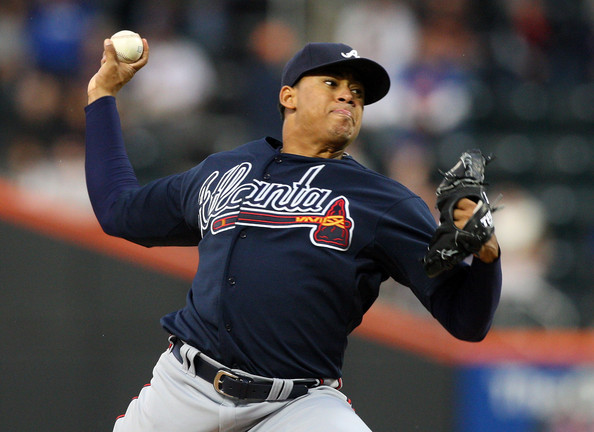
Rob Bland (Intern- MLB Reports): Now that the trade deadline is fast approaching, teams in contention are scrambling to find the pieces they desperately need to reach the playoffs. Teams that are out of contention are scouring other teams’ minor league affiliates in search of suitable trade partners. One man who is terribly busy fielding on calls on one of his biggest talents is the GM of the Atlanta Braves, Frank Wren. Opposing GMs have coveted his ace pitcher, Jair Jurrjens over the past few years. But now that Jurrjens has developed into a solid dependable pitcher who has exceeded his potential, Wren’s phone will be ringing right up until the July 31st non-waiver trade deadline.
Why Atlanta should hold on to their ace
Jair Jurrjens is young and controllable with an inexpensive contract. He is an inning eater, and a dependable arm that will give 6+ innings per game. Jurrjens is in his fourth full season, with the key variable that many people forget is that he is only 25 years old. At the halfway mark of this season, Jurrjens has a 12-3 record with a sparkling 2.26 ERA. Jair also induces a ton of ground balls, with a GB% of 48.2. When a guy can throw strikes consistently, it makes it much easier to be successful. Three walks per nine innings is a pretty good career mark, and he has seemingly improved almost every year, as Jurrjens currently sits at a 2.10 BB/9 for 2011. A young, controllable ace that is continually improving might be something that the Braves want to hold onto. Further, the Braves should even consider giving a long-term extension to Jurrjens given what he means to the ballclub.
Why Atlanta should trade Jurrjens
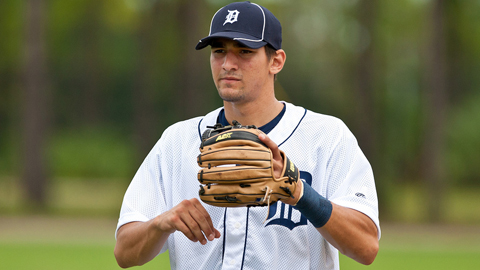 Why would a contending team trade their ace, you might ask? Well, a guy like Jurrjens might be overachieving for a few reasons. First of all, the velocity on his fastball has dipped every season since his rookie campaign. His average fastball was once 93 mph, whereas it sits at 89 now. Now this could mean a couple of things, such as he has learned how to pitch and doesn’t need the velocity. However, his extra reliance on his change-up and slider; each of them up in usage about 3% over previous years, tells me that he knows his fastball isn’t quite as effective. Jurrjens doesn’t strike many guys out, and there is almost no way that he can maintain a 4.1% homerun per fly ball rate. His xFIP is exactly a run and a half higher than his ERA at 3.76, so a measure of his performance has been attributed to luck. Numbers can be sometimes be deceiving and in Jurrjens case, he might not be as good as his statistics appear to show. Sometimes its good to maximize a return when the market is at its peak and Jurjjens may very well be sitting at the top of his ceiling of potential. Otherwise, if Jurrjens does regress, he value will never be higher than it is at the moment.
Which teams could trade for Jurrjens
If the Detroit Tigers are willing to give up a ton of prospects for Ubaldo Jimenez, I believe they would do the same for Jurrjens. Same goes with the Red Sox and Yankees. Detroit has at least kicked the tires on many starting pitchers, including Derek Lowe, Aaron Harang, and Jeremy Guthrie. I see Jurrjens as an upgrade over those pitchers, so it would take a decent package to steal him away. The Rockies covet four top prospects for Jimenez, so I don’t see why the Braves wouldn’t try to get at least three top prospects for Jurrjens. He may not have the electric stuff that Ubaldo has, but he certainly has a track record of success.
Another fit to trade for Jurrjens that may fly under the radar could be the Indians. Mitch Talbot and Fausto Carmona have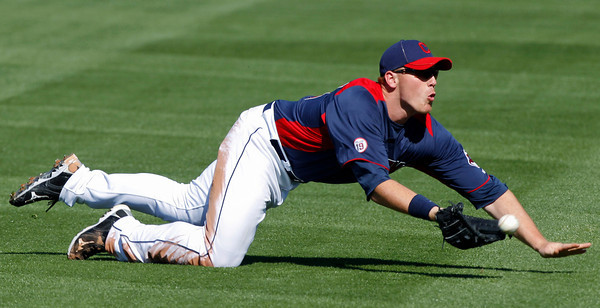 underperformed, and they desperately need an upgrade if they are to contend. This could cause a bidding war for Jurrjens. I can see righty Alex White, lefty Drew Pomeranz and outfielder Nick Weglarz being involved in such a deal. Prospects Jacob Turner (RHP), Andy Oliver (LHP) and Nick Castellanos (3B) may be included in a potential deal with Detroit.
In the NL, if the St. Louis Cardinals decide to make a push in the wide open Central Division, they may be looking at starting pitching help. Kyle McLellan and Jake Westbrook have both struggled, so it could be a possibility they get in the mix. Third baseman Zack Cox and starting pitcher Shelby Miller are possible candidates to be moved in such a scenario.
Verdict
Atlanta doesn’t appear to be actively shopping Jurrjens, but it would be in their best interest to at least gauge the interest of other teams. The Braves could get a return for Jurrjens that would be impossible to refuse. With some of the prospects named, the Braves could still contend, and restock their system for years to come. Until then, we expect Jurrjens to remain a Brave unless Frank Wren gets blown away a trade proposal. With the active trade winds blowing this year and numerous contending teams desperate for starting pitching help, anything is possible.
Editor’s Note: Today’s feature was prepared by our Intern, Rob Bland. Rob was selected from the many candidates who applied to write for MLB reports. Please feel free to leave comments and to welcome Rob aboard. You can also follow Rob on Twitter.***
Please e-mail us at: MLBreports@gmail.com with any questions and feedback. You can follow us on Twitter and become a fan on Facebook . To subscribe to our website and have the daily Reports sent directly to your inbox , click here and follow the link at the top of our homepage.


 MLB Reports

You must be logged in to post a comment.