Blog Archives

Scott Boras, Is He Good For Major League Baseball?
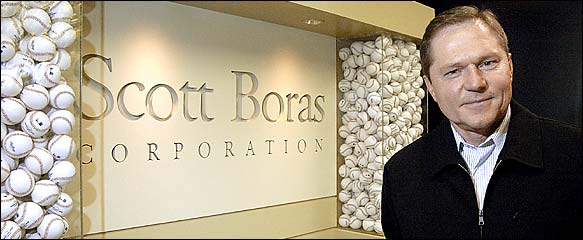
A man ahead of his time, Boras was one of the original moneyball players. For his career in the Minor League, Boras had 133 walks and only 76 strikeouts. Those numbers were for good for a lifetime .363 OBP, to go along with his .288 AVG in the Minor Leagues. Knee injuries unfortunately cut his career short and Boras only made it as high as AA ball. With the baseball experience under his belt, Boras went on to practice law and from there become a full-time baseball agent in the early 1980s. (Caption courtesy of Jonathan Hacohen).
By Patrick Languzzi (Cooperstown Correspondent) Follow @patricklanguzzi
Follow The MLB Reports On Twitter Follow @mlbreports
He has a billion dollar smile, a list of clients taller than Shaquille O’Neil and is considered Major League Baseball’s super agent.
In 2006 Baseball America named him the most influential non-player in 25 years, beating out Major League commissioner Bud Selig, yes, that Bud Selig!
Major League Baseball has had to change its rules in response to him on multiple occasions and he has a list of clients that include or have included Jayson Werth (126m), Matt Holliday (120m), Barry Zito (126m), Carlos Beltran (119m) and now the wealthier Jacoby Ellsbury (153m) – just to name a few, and the list goes on..
Fans, teams and general managers may despise him for fear that he is destroying Major League Baseball.
We’re talking about Scott Boras.
Boras Interview From 2009 (After being named the most influential non – player for last 25 years)

Time Has Come For the Royals to Trade Soria
Tuesday November 15, 2011
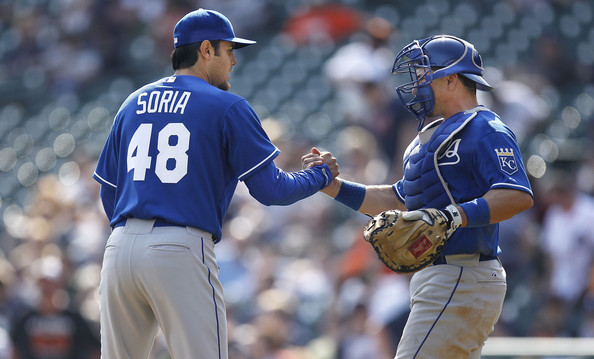
MLB reports – Jonathan Hacohen: With the free agency season in full swing, some teams may not be happy with the sticker prices on available players. Especially when it comes to pitching, including closers. Jonathan Papelbon recently grabbed $50 million from the Phillies and reports have Ryan Madson looking at a deal in the $40 million range. These figures make existing closers signed to reasonable deals an attractive trade commodity, despite the amount of available relief pitchers on the market. There may be a quantity of closers, but certainly not quality. Outside of Mariano Rivera and Papelbon, there are few sure-fire closers currently in baseball. Enter Joakim Soria of the Kansas City Royals.
A 2-time All-Star, Soria has put up some impressive numbers in his 5 seasons in Kansas City. Two seasons of 40+ saves, Soria has a career 2.40 ERA and 1.043 WHIP. Soria will only be 28 next year and could theoretically be a building block for the next few seasons in Kansas City. However, closers are generally considered to be foundational players. Soria is no exception. 2011 was his most difficult seasons in the majors, as he did save 28 games but put up a 4.03 ERA and 1.276 WHIP (all career worsts). Soria is signed for $6 million this coming season and has 2 more team options at roughly $8 million per season. The Royals are faced with a decision: hold onto their star closer, or cash in while his market is at its peak.
 The Royals are on the way up. No doubt about it. Mike Moustakas, Erik Hosmer, Wil Myers, John Lamb and company are expected to come together at the same time to make the Royals the next powerhouse squad. By my estimation, they should be World Series contenders by 2015. But with a couple of more seasons of growing pains ahead, can they afford the luxury of Soria? My argument is no. Soria’s salary in 2012 is still considered a “deal”, but from 2013 go-forward at $8 million, the Royals would be wise to spend their salary dollars in other areas. There are still holes to fill on the squad, including 1-2 more bats and starting pitching. The team will also need to lock up some of its young star players early to avoid unaffordable contract demands down the road. Joakim Soria can bring back a nice haul to fill needs and stock the team for a future championship. The team needs to be realistic of where it is today, where it is going in the future and the players it needs to get there.
The Royals also have options to replace Soria. Aaron Crow (if he is not moved into the rotation) and Tim Collins could all get a shot. Luke Hochevar, who has been hot/cold during his career in the rotation may eventually settle into the bullpen. Options are there. Heck, the Royals plunked Soria from the Rule-5 draft and transformed him from a Padres outcast into a star closer. With the risk of injury and ineffectiveness always hanging over closers, the Royals may be gambling if they hang onto Soria much longer. Another season like 2011 could severely damage his trade value, while he could bring in a nice crop of 2-3 prospects if traded this offseason. The Royals need to do some soul-searching and realize that Soria is worth more in a trade than on their roster.
Teams will surely line-up if Joakim Soria is made available. The Blue Jays, Red Sox, Yankees, Rays, Angels, Tigers, Rangers, Nationals and Cardinals would all surely inquire as to his availability. From all reports, the Yankees and Blue Jays are the strongest contenders to land the Royals closer. Don’t get me wrong- I am a Joakim Soria fan. I believe the kid is immensely talented and has the talent and determination to remain a top MLB closer for another decade (health permitting). But on a losing ballclub that is rebuilding, Joakim Soria is a luxury that the Royals simply cannot afford. If the team has to trade a Moustakas or Hosmer given their budget but retain Soria, that would be a big mistake in my estimation. The team needs to build for 2015- not 2012. This offseason represents a golden opportunity for the Royals to continue to replenish its roster and fill more holes. The Melky Cabrera for Jonathan Sanchez was that type of step in the right direction. If Melky was a Prince, it is time for the Royals to flip their King for a pair of Wild Cards. It could prove to be their ultimate winning hand.
 Jonathan Hacohen is the Lead Baseball Columnist & Editor for MLB reports: You can follow Jonathan on Twitter (@JHacohen)
Please e-mail us at: MLBreports@gmail.com with any questions and feedback. You can follow us on Twitter and become a fan on Facebook . To subscribe to our website and have the daily Reports sent directly to your inbox , click here and follow the link at the top of our homepage.

Phillies Sign Papelbon Over Madson: The Stare Arrives in Philadelphia
Saturday November 12, 2011

MLB reports – Jonathan Hacohen: The Philadelphia Phillies seemingly fooled everyone this week. Earlier in the week, reports indicated that the team had locked up its incumbent closer, Ryan Madson for a 4-year, $44 million contract which could climb all the way up to a $57 million deal with an additional option year. Reactions were for the most part negative, as the baseball world could not believe that the team would pay (overpay) for a reliever coming off his first season as a full-time closer by handing out one of the largest contracts ever to a non-starting pitcher. At that money, people began to wonder why the Phillies did not seek out the best closer on the market and one of the best overall in the game, Jonathan Papelbon. The Red Sox closer, after endless 1-year pacts with Boston was in his first free agency period in 2011. But then something interesting happened. The Madson deal, which required the approval of the team’s higher brass all of a sudden was delayed and then fell apart. A couple of days later, Papelbon became a Philly! At 4-years and $50 million, Jonathan Papelbon finally received the long-term deal he has craved all of these years and Philadelphia signed a lock-down closer. But what happened? How did the Phillies switch to Papelbon mid-stream after coming so far along in negotiations with Madson?
The marketing term for what the Phillies did is called a “bait and switch”, meant when a retailer will advertise a discounted product and will then offer you a higher priced replacement when you arrive at the location to find that the advertised good has mysteriously sold out. Often, that discounted good was never actually available, but was a merely a ploy to get the consumer to first get to the store and secondly, buy a more expensive product. In the case of the Philadelphia Phillies, I do not believe that the team ever planned on signing Ryan Madson to the reported high-end contract. While being groomed to be a future for many seasons, the team was never completely sold on his true sustainability at the position. While Madson received the occasional closing opportunities in his 8-year career leading up to 2011, he actually converted only 20 saves going into this season. But something funny happened this season. Madson became solid. So solid, that he saved 32 games with a 2.37 ERA and 1.154 WHIP. With Scott Boras as his agent, the Phillies knew that Madson would not come cheap. But the Phillies faithful for the most part loved Madson and would mourn his departure. The Phillies needed to secure themselves at the closer position while softening the blow of not signing Ryan Madson. The team’s actions this week were a stroke of genius and the team played its cards perfectly.
The plan for 2011 was to have Brad Lidge close for 1 more season, with Ryan Madson as the set-up man and fill-in closer. In the offseason, the Phillies were going to target Jonathan Papelbon and sign him to a large pact. But Lidge was injured and ineffective in 2011, forcing the Phillies to use Madson as their primary closer for most of the season. The reliever that they were hoping to sign for a reasonable 3-years, $21-$24 million deals was about to cost them almost double to retain. But how could the team sign another reliever and let their incumbent closer go? Simple. Propose a deal with Ryan Madson and float the scenario out to the public to record and evaluate the reaction of the public. The possibility existed that the fans, writers and analysts would applaud the deal, in which case the Phillies could consider actually proceeding with it. But in all likelihood, the team knew that the outcry would be against the deal. By then pulling the Madson deal and reaching out to sign Papelbon, the approval rating would be through the roof. It is almost the same as proposing a 20% tax hike and then only increasing taxes by 5%. Throw out a worst-case scenario and set expectations low- then substitute a better plan and watch people jumping for joy.
The Phillies in my estimation used Ryan Madson as a pawn. While Scott Boras has been the master for years at playing teams against one another to benefit the pocketbook of his clients, the Phillies in this case used Boras and Madson to get what they wanted. If the Phillies had gone out right away at the start of free agency to sign Jonathan Papelbon, fans and critics would have blasted the team for overpaying and proposing that the team should have kept Ryan Madson at a hometown discount. The Phillies were able to eliminate such sentiments by showing that Madson would have cost them top dollar to stay put. At an additional $1.5 million per season for the same 4-year contract, the Phillies replaced a closer with 1 full year of closing experience with a closer (Papelbon) who is the same age (31), has 6 full years of full-time closing experience in one of baseball’s biggest and highest pressure markets (Boston) of 30+ saves per season, to go along with an almost perfect postseason resume. The Phillies traded in a solid Buick for a Mercedes, with still plenty of mileage to be driven.
For those of you that may doubt the “conspiracy theory”, just take a close look at the Phillies rotation. Since Spring Training, I have been calling for the Phillies to sign Papelbon. The team has shown to seek out the best pitchers on the market and bring them on board. Roy Halladay. Cliff Lee. Now Jonathan Papelbon. When the Phillies go shopping for pitching, they do not shop in the bargain bin. Aside from obtaining Mariano Rivera, the team signed the best available closer for their staff. So while Ryan Madson would have been a nice luxury to keep on the staff for insurance and to set-up, the team knew it would be seeking Jonathan Papelbon all the way. The plan would have worked to have both Papelbon and Madson on the team, had Madson not closed out so many games this past season. As a middle reliever setting-up, his contract would have been affordable. But an outstanding closing record in 2011 along with Scott Boras as his agent, meant that Madson was priced out of the Phillies budget. With Papelbon set to come on board, there would be no room for Madson.
The Phillies faithful have to be pleased today. While they will miss Ryan Madson, most will know that there was no guarantees he could duplicate his numbers over the life of a 4-5 year contract. At the numbers that were tabled for him to stay in Philadelphia, the team by all accounts did the right thing to sign the superior Papelbon. While he will cost the team its 2012 first-round pick, a pick should be recovered, along with a supplemental pick, when Madson is signed by another team. The cost/benefit of this move was essentially a no-brainer. The Phillies went with more of a sure-thing by signing Papelbon. While there are no guarantees in baseball, especially with pitchers (arm problems) and especially closers (who can lose their jobs at a moment’s notice), Jonathan Papelbon is as money in the bank as they come.
A couple of last points that helped trigger the change of closers. By continually signing 1-year deals in Boston, many expected Papelbon to bolt once he was eligible for free agency. The team could not lock the player down to a long-term deal and with the max-exodus of players during this past offseason, it seemed that Papelbon was another candidate to seek a change of scenery. But some people may not remember that not too long ago that Ryan Madson’s wife, Sarah, making negative comments on Phillies fans. At the time, it seemed like a ticket out-of-town for Madson, but his success this season seemingly made the comments disappear. Except that the Phillies brass did not forget and the publicity that surrounded the event at the time was one that likely set a chain reaction for the plan for Madson to leave at the end of the season. Baseball is a game of short-term memories, but not for all.
When I floated the idea of a Jonathan Papelbon signing all season long, Phillies fans did not have one positive comment back to me. Their fans, as well as most in baseball, had very negative things to say about Papelbon. Outside of Boston it seems, many were unable to or refused to recognize his talent. But while Papelbon was beloved in Boston until now, those sentiments will transfer over to Philadelphia by next season. The stare, as it is known, will become one of the most famed times in Philadelphia Phillies history as the team and its fans get revved up watching Jonathan Papelbon close out games for the next 4-seasons. There is a changing of the guard in Philadelphia. The Phillies have Halladay, Lee and Hamels to start things off and now can rely on Papelbon to close them out. The stare now makes its residence in the city of brotherly love. Another World Series may not be far behind.

Jonathan Hacohen is the Lead Baseball Columnist & Editor for MLB reports: You can follow Jonathan on Twitter (@JHacohen)
Please e-mail us at: MLBreports@gmail.com with any questions and feedback. You can follow us on Twitter and become a fan on Facebook . To subscribe to our website and have the daily Reports sent directly to your inbox , click here and follow the link at the top of our homepage.

Robinson Cano, Scott Boras and the Yankees: Time to Renegotiate?
Thursday October 27, 2011

MLB reports – Jonathan Hacohen: An interesting news story caught my eye today. Scott Boras, agent to superstar second baseman Robinson Cano, contacted the New York Yankees to discuss renegotiating Cano’s contract. Cano signed a 4-year contract for $30 million, with a $14 million option in 2012 and $15 million in 2013. A fair chunk of change in my estimation. After successfully tweaking the Francisco Rodriguez contract upon his trade to Milwaukee, Boras is back at it again. This time, he would like for the Yankees to rip up the team options for Cano and negotiate a new contract.
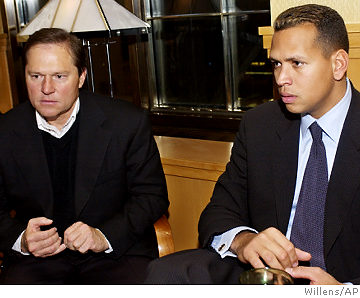 After a down year in 2008, Cano has been climbing since to upper-ranks of baseball stardom. This past season was one of Cano’s finest. Cano hit 28 home runs with 118 RBIs, 104 runs scored, batting .302 with a .349 OBP and .533 SLG. Fantastic numbers, without a doubt. The only blemish in my estimation is the continued knock on Robinson. He only walked 38 times while striking out a career high 96 times. For Cano to reach the next level, his BB/K ratio will need to reach the next level. But considering his overall numbers, the Yankees will live with Cano if he maintains his current levels. The secret for Cano is that he plays a premium position (2B) and is young (29). For an aging Yankees, Cano is a building block for the next 5 seasons. The question is whether he is worth locking up at this point.
I don’t fault Scott Boras for attempting to get Cano a bigger contract at this point. A down year could easily cost Cano tens of millions of dollars. Cano is also comfortable in New York and the Yankees fans love him. Boras is counting on the hometown team wanting to lock up its own rather than risk losing him to free agency down the road. Scott Boras making such a call is a smart move- he is doing his job. I am unsure if the timing is right though on this move. We are entering a tricky time in baseball. The Yankees were burnt by Alex Rodriguez in the past when he opted out of his contract and essentially forced the team to give him an exorbitant contract that has turned sour quickly. The Yankees are facing the same dilemma with staff ace, C.C. Sabathia. The big man can opt out of his Yankees deal soon and word is that he is looking for a bigger share of the pie from the Yankees to stay put. The Yankees, in making the decision on Sabathia, are thinking to the past decision they made on A-Rod. There are parallels to the scenarios and the team may not be so keen on pulling out the wallet this time around. With the uncertainty and bad feelings surrounding the upcoming Sabathia decision, the last thing the team wanted or needed was the Cano headache. The team knew that they could retain their player for 2 further seasons and delay contract talks for some time. Demanding a new contract at this juncture may not be seen as favorable by the team’s brass.
On the other hand, Boras may have picked the perfect time to talk turkey with the Yankees. Aside from the Sabathia decision, the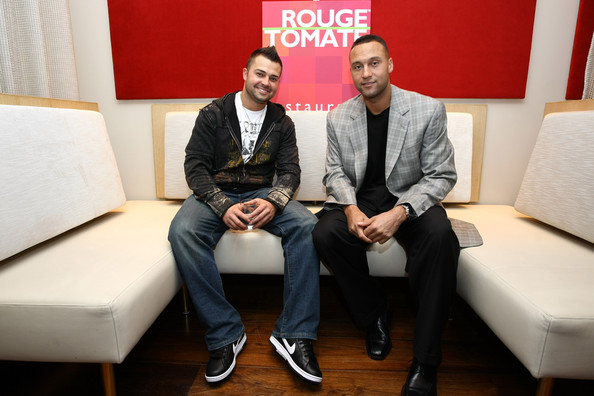 Yankees have to decide whether to pick up the option on Nick Swisher. Boras may have sensed that by waiting to bring up Cano’s contract, the Yankees may have proceeded to lock up Sabathia and retained Swisher, as well as signed a free agent or two. By then, the team’s budget (yes, they do have one contrary to reports) would be squeezed and Cano would have been put on hold. By raising the issue now, Boras may be trying to grab the wallet while the dollar bills are still warm. An interesting strategy and one that may not be unreasonable.
No matter where this saga leads, we now one thing is certain. Robinson Cano will be a New York Yankee for at least 2 more seasons- and likely longer. I would like to raise the point that when an athlete like Cano is playing well, the player and agent have no issue trying to renegotiate terms and grab more money. But when a player is playing poorly, he will usually have no problems to continuing collecting his paycheque no matter how large the contract with no refunds to the team. The only exception is Kenji Johjima, who left millions of dollars on the table in Seattle to return to Japan, as he felt his play did not justify his pay. A rare, honourable move by a classy individual, but definitely the exception to the rule. Instead, we are in a different age of baseball. Even general managers (see Theo Epstein and Jed Hoyer), are moving on to new teams and bigger contracts despite having existing contracts in place with their old teams. If management can break their commitments, surely players can as well.
As much as we all love baseball, it is first and foremost a business. Robinson Cano and Scott Boras are doing what is best for the player in this case. In other years, I could see how the Yankees could give in to such a request. But considering the blunder of the A-Rod deal and the issues surrounding Sabathia in his opt-out, my feeling has enough on its plate without worrying about Cano’s contract status. I expect Robinson Cano to have at least one of his option years picked him. Perhaps the Yankees will renegotiate with him in 2012 or wait until he becomes a free agent. The dollars will come to Robinson Cano. Just not in the timing that he and his agent hope. At some point I would like to see players honor their contracts and let their play do the talking. With solid numbers on the field, the contracts will inevitably follow. But in the “pay me now” age that we live in, news of Cano’s request should come as no surprise. But answer me this: what is the point of signing long-term contracts if they rarely work? One side will either want more money or the other side will end up regretting it. Rarely are there two happy parties by the time the big deals are all said and done. If Cano gets out of his deal because he deserves more money, can the Red Sox get out of their contract with John Lackey because they overpaid? Welcome to the strange economics that is Major League Baseball.

Jonathan Hacohen is the Lead Baseball Columnist & Editor for MLB reports
Please e-mail us at: MLBreports@gmail.com with any questions and feedback. You can follow us on Twitter and become a fan on Facebook . To subscribe to our website and have the daily Reports sent directly to your inbox , click here and follow the link at the top of our homepage.
Take the recent MLB reports Poll: We would love to hear your opinion and comments!
Carlos Beltran to the Giants: Mets Likely to Trade Slugger to San Fran
Tuesday July 19, 2011

MLB reports: The MLB rumor mill is working overtime as the non-waiver trade deadline of July 31st quickly approaches. With less than two weeks to go, the speculation is heating up as to which players will be changing uniforms. Francisco Rodriguez is already a Brewer and Jeff Keppinger was just traded to the Giants. But rumors persist that the Mets and Giants are not finished with their activity. With both superstars Jose Reyes and Carlos Beltran eligible for free agency at the end of the season, talk is that one or both players will be moved out of New York. With the possibility of the Mets trying to retain Reyes, the most likely scenario is Carlos Beltran changing addresses. At the center of the speculation is the San Francisco Giants. The defending World Series champions have been simply atrocious this year offensively. With their cleanup hitter Buster Posey out for the season, the team cannot afford to miss out on the Carlos Beltran sweepstakes.
The Giants were very fortunate to win the World Series last year. The playoffs are a tough road and requires the perseverance normally of a balanced team to make it to the end. The Giants, while solid in the pitching department, were essentially using smoke and mirrors to score runs last year. The team relied on the likes of Aubrey Huff, Cody Ross and Freddy Sanchez on offense. While useful role players, these players are not the big sluggers that are supposed to win championships. Now with Buster Posey out, the Giants are forced to rely on Eli Whiteside, Miguel Tejada, Aaron Rowand, Pat Burrell and company to score the team’s runs. Possessing one of the best, if not the best pitching staff in baseball, the Giants can ill-afford to limit itself offensively and essentially waste such strong pitching. To defend its championship, the Giants will have no choice but to beef up their offense.
Carlos Beltran has been one of the most consistent hitters in the game over the course of his career. Taking a look at his numbers, we see a consistently high level of production:
| Year | Tm | AB | R | H | HR | RBI | SB | BA |
|---|---|---|---|---|---|---|---|---|
| 1998 | KCR | 58 | 12 | 16 | 0 | 7 | 3 | .276 |
| 1999 | KCR | 663 | 112 | 194 | 22 | 108 | 27 | .293 |
| 2000 | KCR | 372 | 49 | 92 | 7 | 44 | 13 | .247 |
| 2001 | KCR | 617 | 106 | 189 | 24 | 101 | 31 | .306 |
| 2002 | KCR | 637 | 114 | 174 | 29 | 105 | 35 | .273 |
| 2003 | KCR | 521 | 102 | 160 | 26 | 100 | 41 | .307 |
| 2004 | TOT | 599 | 121 | 160 | 38 | 104 | 42 | .267 |
| 2004 | KCR | 266 | 51 | 74 | 15 | 51 | 14 | .278 |
| 2004 | HOU | 333 | 70 | 86 | 23 | 53 | 28 | .258 |
| 2005 | NYM | 582 | 83 | 155 | 16 | 78 | 17 | .266 |
| 2006 | NYM | 510 | 127 | 140 | 41 | 116 | 18 | .275 |
| 2007 | NYM | 554 | 93 | 153 | 33 | 112 | 23 | .276 |
| 2008 | NYM | 606 | 116 | 172 | 27 | 112 | 25 | .284 |
| 2009 | NYM | 308 | 50 | 100 | 10 | 48 | 11 | .325 |
| 2010 | NYM | 220 | 21 | 56 | 7 | 27 | 3 | .255 |
| 2011 | NYM | 328 | 54 | 94 | 14 | 59 | 3 | .287 |
| 14 Seasons | 6575 | 1160 | 1855 | 294 | 1121 | 292 | .282 | |
| 162 Game Avg. | 621 | 110 | 175 | 28 | 106 | 28 | .282 | |
| KCR (7 yrs) | 3134 | 546 | 899 | 123 | 516 | 164 | .287 | |
| NYM (7 yrs) | 3108 | 544 | 870 | 148 | 552 | 100 | .280 | |
| HOU (1 yr) | 333 | 70 | 86 | 23 | 53 | 28 | .258 | |
| NL (8 yrs) | 3441 | 614 | 956 | 171 | 605 | 128 | .278 | |
| AL (7 yrs) | 3134 | 546 | 899 | 123 | 516 | 164 | .287 | |
 His resume speaks for itself. Beltran is a 1999 AL Rookie of the Year. He has won four Gold Gloves for his defensive work in the outfield. He won two silver slugger awards. A lifetime .282 AVG, .360 OBP and .495 SLG. In 2004 he hit the magical 30/30 mark (30 home runs, 30 stolen bases), and was actually two home runs short of 40/40. For the most part, Beltran in his prime could do it all. Hit home runs, hit for average, steal bases, catch and throw the ball like few players could. One of the few true five-tool players in the game. The aberrations we find in Beltran’s statistics were the last two years. Due to various injuries, particularly knee woes, Carlos Beltran was forced to miss much of the last two seasons and saw his production sharply decline. Now healthy and extremely motivated, Beltran has come back in a big way.
Beltran played in his sixth All-Star game this year in Arizona. While he rarely steals bases these days, the rest of Beltran’s game has returned as shown by his numbers. The only issue surrounding Beltran is whether his knee will hold up for the rest of the season and into the playoffs. From there, a team will need to determine his long-term health and abilities in awarding him a free agent contract. But from all indications, Beltran is a player that can still play ball at the highest level when healthy. An ideal fit for the Giants that lineup that desperately needs run production.
How bad has the Giants offense been in 2011? Going into tonight, the Giants as a team are hitting .243, with a .309 OBP and .363 SLG. The team has collectively hit 63 home runs and scored 356 runs. Yet somehow the team continues to sit in first place in the NL West, 3.5 games ahead of the Diamondbacks. If not for Matt Cain, Tim Lincecum, Madison Bumgarner, Ryan Vogelsong, Brian Wilson and the rest of the Giants pitching staff, the Giants would be in the basement of the division. The run of the Giants over the past two seasons has been incredible, but clearly linked to its pitching. To support its pitchers and put runs on the board, the Giants have to step up and beef up its offense. While Jeff Keppinger is a useful player, he will not be enough to get the job done. Rather, the Giants need to acquire a bomber, the way the Cardinals acquired Matt Holliday a couple of years ago in their playoff run. Or closer to home, when the Astros acquired Carlos Beltran in 2004. Beltran hit an incredible 8 home runs during the Astros playoff drive that year. Coincidentally, Beltran was an impending free agent that year as well. Fast forward to 2011 and the very same Carlos Beltran is available. Having a fantastic campaign, Beltran in 2011 has hit .287 to-date, with 14 home runs, league leading 28 doubles, with a .381 OBP and .512 SLG. Again during a free agency year. Definite playoff calibre numbers and a perfect fit out west in San Francisco.
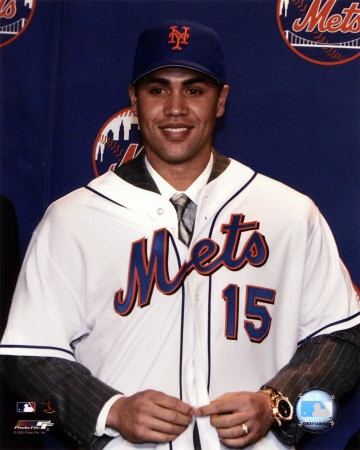
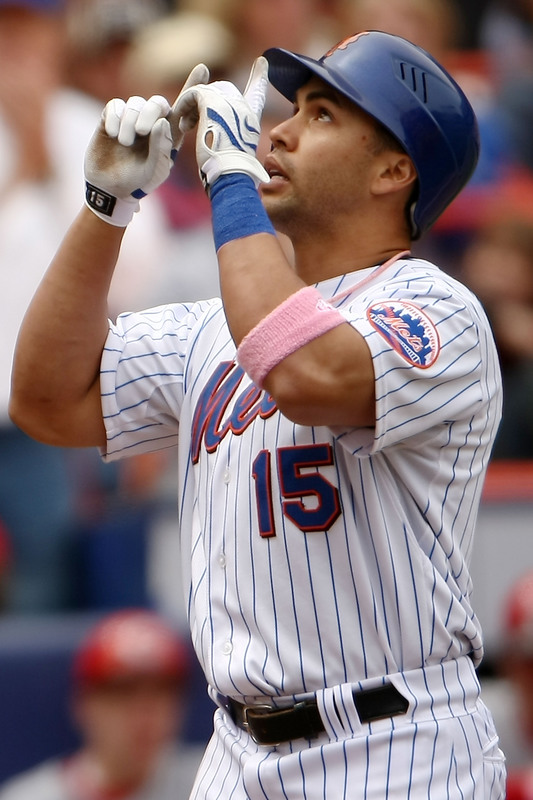 The Giants and Carlos Beltran are well suited for one another. San Francisco needs a strong cleanup hitter. Carlos Beltran wants to compete for a World Series championship and boost his free agency stock for one more prime contract. The odds of getting a ring don’t get any better than joining the defending world champions. Some experts have speculated that Beltran may not waive his no-trade protection to join the Giants. I am not buying that theory. The Giants are a terrific organization to play for, with highly regarded management, a fantastic ballpark in a beautiful city, and are one of baseball’s most historical and treasured teams. Beltran would look fantastic in a Giants uniform. What better way to showcase his abilities and earn his last free agency contract than by playing for a contender and fighting for a World Series championship.
Remember 1994, the year that Beltran was traded from Kansas City to Houston and played like a man possessed in nearly single-handedly leading the Astros to the World Series. That performance, combined with his numbers to-date, earned Beltran that off-season a 7-year, $119 million contract from the Mets. Now Beltran is on the cusp of free agency again and has the potential to “earn his pay” so to speak with the Giants in the same manner that he did with the Astros in 1994. With Scott Boras as his agent, Beltran will surely receive the advice that playoff performance equals free agency dollars.
The Giants will have a choice in making a pitch to the Mets for Carlos Beltran. They will either have to absorb the majority of the contract and provide fairly decent prospects, or have the Mets absorb a large chunk of money and offer 1-2 elite prospects in return. The Giants are well stocked in the minors and have excellent pitching at the major league level. The Mets may request Jonathan Sanchez off the major league roster or a combination of minor leaguers from the farm. Outfielder Thomas Neal and pitcher Zack Wheeler could be on the Mets wish-list. Or perhaps the Giants will be able to give up a package of lower level prospects and not lose their top prospects and major league level. The decision will boil down to the money involved and players offered by other teams in trade packages.
At the end of the day, much like the Yankees must acquire Ubaldo Jimenez from the Rockies (see our recent feature), the Giants have no choice but to trade for Carlos Beltran. The Yankees cannot afford to waste their superior offense without enough top-level pitching and the Giants in turn, need to surround their talented pitching staff with consistent run production. It is a lot of pressure to have a team win 2-1, 3-1 games night-in and night-out. Carlos Beltran has proven that he can carry a team on his back when he is on his game. Well, in 2011 he is definitely playing at his highest level in years. Beltran needs the Giants for his next contract and a chance for a ring, while the Giants need his bat and glove to increase their chances of a championship. The perfect marriage, expect Beltran to be a Giant by the end of July. This acquisition makes too much sense for the Giants and Brian Sabean will continue to stock his team on route to a possible back-to-back World Series run for the Giants. Carlos Beltran to the Giants. Not a question of if, just a question of when.
Please e-mail us at: MLBreports@gmail.com with any questions and feedback. You can follow us on Twitter and become a fan on Facebook . To subscribe to our website and have the daily Reports sent directly to your inbox , click here and follow the link at the top of our homepage.

Scott Boras: The Contracts. The Clients. Who’s to Blame?
Sunday July 3, 2011
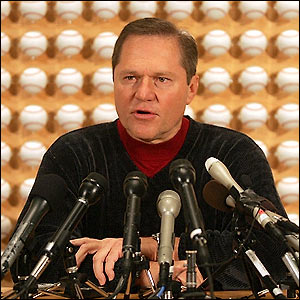
MLB reports: The man behind the billion dollar smile, Scott Boras is a big business. The Boras Corporation represents close to 200 MLB players. This is one of the most influential, if not important people in baseball today. But the man is categorized in many baseball circles as “the devil”, for “forcing” major league teams to dish out excessively large contracts to his clients. Is this really the case? Is Boras bad for baseball or simply a man who knows how to do his job and do it well? Let’s take an inside look at Scott Boras and search behind the contracts.
We took a look yesterday at Randy “Macho Man” Savage, an athlete that aside from being a wrestling superstar, was a baseball player. On the same token, Scott Boras the agent, was at one point Scott Boras the baseball player as well. Here are the numbers that Boras put up in four minor league seasons in the Cardinals and Cubs organizations:
| Year | Lev | AB | R | HR | RBI | BA | OBP | SLG |
|---|---|---|---|---|---|---|---|---|
| 1974 | Rk | 95 | 13 | 0 | 10 | .274 | .402 | .347 |
| 1975 | A | 300 | 39 | 2 | 36 | .277 | .402 | .373 |
| 1976 | A | 437 | 2 | .295 | .387 | |||
| 1977 | AA-A | 343 | 54 | 1 | 33 | .292 | .392 | .367 |
| 1977 | A | 78 | 17 | 0 | 7 | .346 | .440 | .423 |
| 1977 | AA | 265 | 37 | 1 | 26 | .275 | .377 | .351 |
| 1977 | AA | |||||||
| 1977 | AA | |||||||
| 4 Seasons | 1175 | 106 | 5 | 79 | .288 | .363 | .374 | |
| A (3 seasons) | A | 815 | 56 | 4 | 43 | .293 | .354 | .385 |
| AA (1 season) | AA | 265 | 37 | 1 | 26 | .275 | .377 | .351 |
| Rk (1 season) | Rk | 95 | 13 | 0 | 10 | .274 | .402 | .347 |
A man ahead of his time, Boras was one of the original moneyball players. For his career, Boras had 133 walks and only 76 strikeouts. Those numbers were for good for a lifetime .363 OBP, to go along with his .288 AVG. Knee injuries unfortunately cut his career short and Boras only made it as high as AA ball. With the baseball experience under his belt, Boras went on to practice law and from there become a full-time baseball agent in the early 1980s. Imagine if the 58-year old Scott Boras had made it to the majors and had played for 10+ years. He would have been playing well into the 1980s, when his agent career took off. But alas, Randy Poffo the wrestler became Randy Savage the baseball player. Scott Boras the baseball player became a player agent. Certain things are meant to be and some roles seem to be predestined. But it is still fun to think what could have been and had Boras been able to continue in for professional baseball as a player for many seasons, Scott Boras the agent might have never come into existence.
The exploits of Scott Boras as an agent are legendary. From the Bill Caudill contract with the Jays, Todd Van Poppel deal, J.D. Drew refusing to sign with the Phillies, the Alex Rodriguez contract, Darren Dreifort contract, negotiations for Stephen Strasburg and Daisuke Matsuzaka, Boras has done it all and seen it all. Let’s take a peak at 10 of the biggest contracts negotiated by Boras:
10. Adrian Beltre, Seattle Mariners: 5 years, $64 million
9. Daisuke Matsuzaka, Boston Red Sox: 6 years, $52 million
8. Kevin Millwood, Texas Rangers: 5 years, $60 million
7. Carlos Beltran, New York Mets: 7 years, $119 million
6. Kevin Brown, Los Angeles Dodgers: 7 years, $105 million
5.Matt White, Tampa Bay Devil Rays: $10.2 million bonus
4. Andruw Jones, Los Angeles Dodgers: 2 years, $36.2 million
3. Chan Ho Park, Texas Rangers: 5 years, $65 million
2. Barry Zito, San Francisco Giants: 7 years, $126 million
1. Alex Rodriguez, Texas Rangers: 10 years, $252 million
The list literally goes on and on. Boras Corporation has negotiated contracts well over a billion dollars in my estimation and the number keeps rising by the day. We can pick any contracts negotiated by Boras for review, but these ten deals are particularly interesting ones. What do these contracts all have in common? Firstly, they are for very large dollar amounts and very often far exceed what most experts predicted for each particular player. Secondly, none of the teams that signed their respective deal appeared to have benefited from the deal. In the sense that I would argue each team on this list had buyer’s remorse and would take back the contract if given the chance. Lastly, all of these contracts were negotiated and signed by Scott Boras and each respective major league team owner and general manager. It takes two to tango and in this case, sometimes three or four parties. For as much as teams and fans want to burn Scott Boras at the stake for destroying baseball, these contracts were signed by the free will of each team. Furthermore, each team pursued their respective players and courted them to accept a contract and join their team. At some point, MLB teams need to look at the mirror if they want to change the economic landscape of the game and stop blaming Scott Boras and the player agents of this world.
An agent’s job is to land the biggest contract for his or her client. A team’s job is to field the most competitive team at the most economical price. When a player turns out to be a bust or financial albatross, it is the team that did not do their job. The baseball world fell over when Jayson Werth signed his seven-year, $126 million contract. The blame fell to Scott Boras for the most part for extorting such a large figure out of the Washington Nationals. Why? Mike Rizzo and the Washington Nationals organization are all big boys that can make their own decisions. Without seemingly any strong bidders against them, the Nationals literally outbid themselves in handing Werth such a lucrative and absurd contract. Most analysts, myself included, felt that this contract could only end up failing the Nationals. Werth as an injury prone player without a proven track record was going to likely have a hard time justifying his deal. But don’t blame the player or agent. No, they did their job in the process. It is the team that needs to take responsibility for its actions. An important lesson in life is to learn from one’s mistakes. But teams keep making the same financial blunders, over and over when it comes to player contracts. That is not the fault of Scott Boras. It is the teams.
When free agency opens up each offseason, I compare the winter meetings to children being handed large wads of money and being thrown into a candy store. They cannot control themselves and have to buy more and more to satisfy their hungers. As it is not the children to blame when they are spoiled, it is really not the General Managers either when they have large spending budgets. As parents need to take responsibility for their children, team owners need to account for their General Managers. The large contracts that are handed out every year must be approved by each team owner beforehand. Thus the way a child comes to ask for a $500 remote control car, a General Manager will ask for a $126 million Werth. When the parent and team owner both say yes, they only have themselves to blame. The toy and player inevitably break down or are seen as too expensive in hindsight. But by then, the toy cannot be returned to the store and the player contract cannot be voided. The lesson is to learn from the experience and to avoid similar mistakes in the future. But teams refuse to listen and learn and as a result, player contracts in baseball are exploding with no end in sight.
 Let’s keep Scott Boras in perspective. The man does his job very well and pushes the limit of player contracts in baseball. He might be a very intelligent person and a great salesperson. But at the end of the day, he is simply doing his job. For myself as a consumer, if I buy a brand new car for $30,000 when I could have bought a similar model down the road for $10,000 less, I cannot blame the car dealer or its salesperson. It was up to me as the consumer to shop around and get the best deal I could. There would have been other cars, the same way for MLB teams there will always be other players. But teams don’t see it that way. They get caught up in the negotiations and the thrill of the hunt and get determined to land their “guy”. The Red Sox begged and pleaded to get Dice-K into a Red Sox uniform. The same Sox and Yankees battled it out to land Mark Teixeira. The Texas Rangers and then owner Tom Hicks literally handed Alex Rodriguez a blank cheque to land the marquee free agent. Again and again, MLB teams go out of their way to land the players they want and end up blaming the players and their agent when the contracts do not work out.
One man I will give credit to is Fred Wilpon. In criticizing the Carlos Beltran contract, he blamed the team for overpaying the outfielder based on one good playoff run. This is a man who at the very least took responsibility for his actions and knew where to lay the blame. Since the Beltran deal, the Mets, along with the Braves and Angels, are three teams that tend to stay away from dealing with Scott Boras and the players he represents. That is ultimately the best approach and the only way that any order can be established. If teams do not want to dish the money, all they have to say is no. But as long as the money is there and being handed out by the teams by the truck loads, Scott Boras will be there with open arms, negotiating the best contracts for his clients that he can.
Scott Boras has accomplished some amazing feats during his agent career. From changing the rules on arbitration and free agency, Boras pushes the boundaries and finds all the loopholes to change the economic system of the game. The sign of a great lawyer, negotiator and agent. Before fans are quick to condemn the man, lets step back and appreciate what he has accomplished. Scott Boras and the Boras Corporation are a billion dollar industry. They provide marketing services, training facilities for their clients and look after their clients every needs. Boras has a team of experts that are constantly studying and keeping track of the game. Scott Boras stays on top of the game and thus is able to stay competitive and negotiate the best contracts for his clients. While not everyone agrees with his methods, particularly the Alex Rodriguez opt-out with the Yankees which led A-Rod to leave Boras, he may have the ideas, but it is up to players to accept them and teams to listen. As long as players keep lining up to hire Scott Boras and teams await with open arms and wallets, the system will not change. Scott Boras may be a lot of things, but the devil he is certainly not. He is simply a smart, hard worker who does his job well at levels that few can attain. A baseball pioneer, Scott Boras has certainly left his mark on the game. While many fans and teams do not agree with his methods, at the end of the day he gets the job done. Scott Boras: Genius or madness? You decide.

Please see the list below of some of the clients in the Scott Boras stable. The list is growing by the day:
|
|
|
Please e-mail us at: MLBreports@gmail.com with any questions and feedback. You can follow us on Twitter and become a fan on Facebook . To subscribe to our website and have the daily Reports sent directly to your inbox , click here and follow the link at the top of our homepage.


 MLB Reports
You must be logged in to post a comment.