Blog Archives

Interview with Steve Karsay: Reflections on a MLB Pitching Career
Friday November 4, 2011

Jonathan Hacohen: While I get to interview many current MLB prospects and stars on the Reports, it is rare that I have the opportunity to talk baseball with a former great that I watched growing up. As a personal bonus to me, that chance recently came up when I was able to connect with Steve Karsay, former major league pitcher. Steve was originally drafted by the Toronto Blue Jays in the 1st round (22nd overall in the 1990 draft). After being a part of the famed 1993 trade to Oakland for hall-of-famer Rickey Henderson, Steve played 11 major league seasons for 5 different squads. Steve played his final season in 1996.
I reflected with Steve Karsay on his career, from his time with the Blue Jays organization, through to his final season. Steve was very candid in his responses and certainly did not hold back. For all the readers that grew up idolizing Steve Karsay and wondering about his future baseball plans- today you will receive your answers.
Featured on MLB reports, I proudly present my interview with former Major League pitcher, Steve Karsay:
_________________________________________________________________________________________________________
MLB reports: Welcome to MLB reports Steve. Let’s start today’s interview from the beginning. A 1st round pick in 1990 with Toronto. What was the feeling when you got the call? Did you expect to be drafted by the Jays? Thoughts/feelings at the time?
Steve Karsay: Wow! Going back a few years. That is correct- I was the 22nd pick overall in the 1990 draft by the Blue Jays. What a great time and what a great organization I was drafted by. The Blue Jays and their organization taught me so much to make me the player I was over my 16 year career. I will always be grateful to the Blue Jays organization and the coaches for the years I spent there. I did not know I was drafted until late in the afternoon for the fact that I was playing for my high school championship at Yankee stadium at the time. The feeling when I did receive the call was shock. I was not sure I was going to get drafted in the first round and had my sights set on going to LSU in the fall. But when it sunk in and realized the opportunity that I had and the feeling of shock turned to joy and excitement made the decision to sign and start my career in St. Catharines.
MLB reports: You will forever be linked to hall of famer Rickey Henderson, being traded for him in July 1993. What was your reaction when you learned of the trade? Have you ever spoken to Rickey about it?
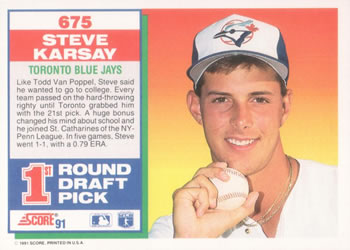 Steve Karsay: First being traded at the time for Rickey was a great honor. I was only 21 at the time in 93′ when the trade happened so learning I was traded I had a mix of feelings. I was disappointed because I wanted to reach the big leagues with the team that drafted me. But realizing that I may get my opportunity to pitch in the big leagues faster, I understood that these are the things that happen when the big club is trying to position itself to win a World Series. After the trade I ended up making my Major League debut two weeks later against the Brewers at the Oakland Coliseum. So that is what made the trade worth it. As far as talking with Rickey, we had a brief conversation when he returned to Oakland the very next year.
MLB reports: After being in the Toronto organization your whole life, what was it like joining the A’s and playing for them for three seasons?
Steve Karsay: Being with Toronto for three years and going to Oakland was an adjustment, but for me was an easy transition. I enjoyed the A’S organization very much. Working with Dave Duncan and having Tony La Russa as my first manager was great. They were both mentors and I credit them for helping me transition to pitching in the big leagues.
MLB reports: Injuries took a big toll on your career- especially your surgeries in 1995 and 1996. After undergoing Tommy John, did you think your career was finished? Give us an idea as to what the surgeries/rehabs were like and your road to continue playing baseball.
Steve Karsay: To be quite honest I wasn’t sure what to expect. I knew I had had to have Tommy John and back in 1995, it was not nearly as perfected as it is today. So I knew there was a chance that I may never play at the big league level again. The surgeries were lengthy and the rehab tedious, but I always had the drive to get healthy and pitch in the big leagues again. I was never one to give up. It was a long three years but in the end to resume my career and compete at the highest level was an accomplishment in itself.
MLB reports: Your career actually took off when you joined the Indians. Your four years in Cleveland represent some of your finest major league numbers. What was the secret of your success with the tribe?
Steve Karsay: I guess if there was any secret to my years in Cleveland, it was that I was finally healthy. I had gone through some tough years with injuries and rehab and when I finally got traded in 97′ to Cleveland, I felt like I turned the corner and it was just all coming together. In Cleveland they decided to put me in the bullpen and really got into a nice niche of what I was really capable of doing. But ultimately I would have to say that the four years in Cleveland I was as healthy as I have ever been throughout my career.
MLB reports: Aside from the occasional start, you became a full-time reliever in 1998. What was the process like to transition from starting to the pen? After coming up as a starter, how did you feel about becoming a reliever?
Steve Karsay: As a starter you have routines and you know what days you’re going to pitch and who you are going to pitch against. As a reliever you just have to be prepared every day. The transition was fairly easy for me because I had some great mentors when I did it in Cleveland. Mike Jackson, Paul Shuey, Paul Assenmacher, and a few others, so I got to learn from some guys who tough me well. I wasn’t excited at first to become a reliever but it definitely grew on me and felt after having success in the bullpen that is where I was supposed to be. It also gave me a new found respect of how hard the bullpen is.
MLB reports: You finished your career with 41 saves. Looking back, do you wish that you had more 9th inning opportunities- was the “closer” role something that you had in the back of your mind?
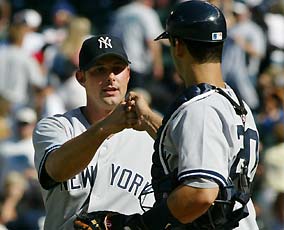
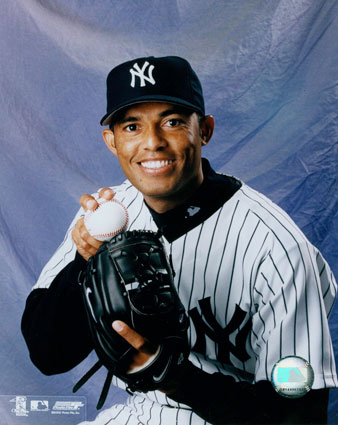 Steve Karsay: I was very fortunate to have the opportunity to be a closer for a bit in Cleveland and fill in New York when Mariano Rivera was injured. I always had the “closer” role in my mind but was never what drove me to play. I figured opportunities would present themselves if I pitched well enough. My saying was ”How well you are pitching will determine where you pitch in the game coming out of the pen”. When I signed as a free agent, I had the opportunity to go to a couple other clubs to compete for that job but chose to go to NY to set-up. At that point, winning was more important to me than closing. That was a tough choice I had to make.
MLB reports: Your career ended in 2006, after pitching 9 games with the A’s. Why the decision to hang up the glove at that point? Any regrets?
Steve Karsay: I have absolutely no regrets about my decision to retire in 06′. At that particular point, I was still having problems with my shoulder (after having surgery on my rotator cuff in 03′). I was pitching with pain and I felt personally like I couldn’t compete at that level with an injured shoulder. It was not fun any more coming to the ballpark, and I had always told myself that if I felt that I couldn’t compete at the highest level, I wanted to walk away from the game as a player on a respectable note. After retiring I had one last shoulder surgery to repair my rotator cuff for a final time. I came to realize that I was pitching with my rotator cuff torn the whole time in 2006. So looking back, I felt the choice I made was 100% correct.
MLB reports: You pitched for 5 major league teams (A’s, Indians, Braves, Yankees and Rangers). Favorite team(s) that you played for and why?
 Steve Karsay: All of the teams hold a special place in my heart. I had great memories with all of them. I had the opportunity to meet and play with some of the best players in the history of the game over my career. I will always be grateful for the Blue Jays for drafting me and giving me the chance to start my career in professional baseball. Then the A’s for giving me my first shot in the Major leagues. The Indians is where I had my most productive years and had the chance to experience playoff baseball for the first time. Atlanta and playing for the great Bobby Cox. He is a player’s manager and a great man. Also having the opportunity to have great teammates in every spot that I played. Too long of a list to compile, but to name a few of the greats I played with: Mark McGwire, Dennis Eckersley, Ron Darling, Rickey Henderson, Jim Thome, Sandy Alomar Jr., Robbie Alomar, Omar Vizquel, Greg Maddux, Tom Glavine, John Smoltz, Chipper Jones, Derek Jeter, Roger Clemens, Andy Pettitte, Bernie Williams, Mike Mussina. I know I am probably missing many other great ones I played with. Overall, the experiences were priceless. It was the most exciting time in my life with the exception of the birth of my son Kingston.
MLB reports: Do you still keep in touch with many of your ex-teammates- any ones in particular?
Steve Karsay: I don’t keep in touch per say with them, but whenever I get the opportunity to see them when they come into town I always like to stop by the ballpark and say hello.
MLB reports: Growing up so close to Shea Stadium, it must have been a dream come true to play in New York. Were you a Mets fan growing up- did you consider playing for them at one point?
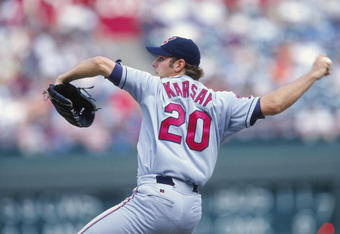 Steve Karsay: Growing up in NY and so close to Shea was great. I was a baseball fan growing up. I liked players more than I did teams. I watched both the Yankees and the Mets. I went to more Mets games as a kid because it was just a short train ride away. I never had the opportunity to play for the Mets over my career, but playing for the Yankees and the tradition of the Yankees was definitely a highlight of my playing days.
MLB reports: Since you left the game, what has been life been like for Steve Karsay? What are you up to these days Steve?
Steve Karsay: Life has been wonderful since retiring in 2006. After being able to have a 16 year career in baseball I wanted to step away from the game for a short time to pursue a few things that I was not able to do while I was playing- like travel and explore different countries. I also became involved in my friend’s company in Aerospace Manufacturing which has been exciting and to say the least interesting. And last but not least, the birth of my son which has been more work than all of the above. With that being said, baseball is my life and I am pursing opportunities to get back in the game in some capacity. The time off was great, but I want to be able to pass along the knowledge of baseball that I learned while I was playing and help young kids fulfill their dreams of hopefully getting to the big leagues.
MLB reports: If you could give one piece of advice to a young baseball player trying to make it to the show, what would it be?
Steve Karsay: My advice would be to work hard, be consistent, and do not take anything for granted because you never know when it will come to an end.
MLB reports: Will we be seeing you in the future in the major leagues in another capacity, perhaps a broadcaster or coach/manager?
Steve Karsay: I hope so. I am pursuing some things as we speak and would love to get back in the game in any capacity, either as a broadcaster, front office or on the field coach. Baseball is my passion and it what I love.
MLB reports: Final question Steve: everyone at the end of the day wants to leave a mark on the game. What do you most want to be remembered for as a professional baseball player?
Steve Karsay: Looking back I would want to be known for every time I stepped between the white lines I gave everything I had and I did not take anything for granted. I wanted to be the best player I could be when I stepped out on the mound. The fire for competition was always burning when I played. If I can be remembered for that, I would be very proud.
MLB reports: Thank you very much for taking your time out of your busy schedule so we can have you with us. Much appreciated!
Thank you again to Steve Karsay for taking the time to join us today on MLB reports. We highly encourage our readers to post at the bottom of the article any questions and/or comments that you may have for Steve. As well, please follow Steve on Twitter (@Steve_Karsay)
 Jonathan Hacohen is the Lead Baseball Columnist & Editor for MLB reports: You can follow Jonathan on Twitter (@JHacohen)
Please e-mail us at: MLBreports@gmail.com with any questions and feedback. You can follow us on Twitter and become a fan on Facebook . To subscribe to our website and have the daily Reports sent directly to your inbox , click here and follow the link at the top of our homepage.

Danny Espinosa,Washington Nationals: Hidden National Treasure
Monday June 27, 2011
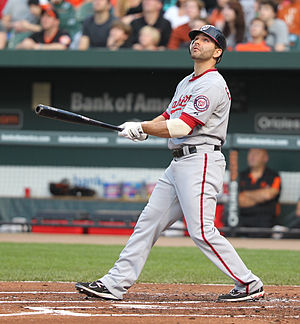
MLB reports: With the shortage of quality second basemen in baseball, teams are always on the prowl for the next Roberto Alomar or Ryan Sandberg. We often hear the names Dustin Ackley and Neil Walker thrown around. Sitting quietly in Washington though is one of the better all-around second basemen in the game. With each home run, the secret is starting to get out of the bag. The Nationals keep winning games and building towards the Bryce Harper and Stephen Strasburg era. But before the next can’t miss prospects make their mark, Washington already has a rookie assaulting the MLB record books. His name: Danny Espinosa.
The 24-year old Espinosa was born in California and selected by the Nationals in the 3rd round of the 2008 draft. He made his major league debut last year and retained rookie eligibility in 2011. The heir apparent to the shortstop position from once incumbent Christian Guzman, Espinosa moved to second for 2011, took a hold of the job and ran with it. Considering he had to learn a new position on the fly, Espinosa’s production is that much more impressive.
Here is a look at Espinosa’s numbers during his time in the minors:
| Year | Tm | Lev | AB | R | H | HR | RBI | SB | CS | BB | SO | BA | OBP | SLG |
|---|---|---|---|---|---|---|---|---|---|---|---|---|---|---|
| 2008 | Vermont | A- | 64 | 8 | 21 | 0 | 4 | 2 | 2 | 17 | 17 | .328 | .476 | .359 |
| 2009 | Potomac | A+ | 474 | 90 | 125 | 18 | 72 | 29 | 11 | 74 | 129 | .264 | .375 | .460 |
| 2010 | 2 Teams | AA-AAA | 481 | 80 | 129 | 22 | 69 | 25 | 11 | 41 | 116 | .268 | .337 | .464 |
| 2010 | Harrisburg | AA | 386 | 66 | 101 | 18 | 54 | 20 | 8 | 33 | 94 | .262 | .334 | .464 |
| 2010 | Syracuse | AAA | 95 | 14 | 28 | 4 | 15 | 5 | 3 | 8 | 22 | .295 | .349 | .463 |
| 3 Seasons | 1019 | 178 | 275 | 40 | 145 | 56 | 24 | 132 | 262 | .270 | .365 | .455 | ||
Now let’s take a look at what Danny Espinosa has produced in the majors:
| Year | AB | R | H | 2B | 3B | HR | RBI | SB | CS | BB | SO | BA | OBP | SLG |
|---|---|---|---|---|---|---|---|---|---|---|---|---|---|---|
| 2010 | 103 | 16 | 22 | 4 | 1 | 6 | 15 | 0 | 2 | 9 | 30 | .214 | .277 | .447 |
| 2011 | 277 | 39 | 67 | 12 | 4 | 14 | 47 | 9 | 2 | 22 | 70 | .242 | .323 | .466 |
| 2 Seasons | 380 | 55 | 89 | 16 | 5 | 20 | 62 | 9 | 4 | 31 | 100 | .234 | .311 | .461 |
| 162 Game Avg. | 581 | 84 | 136 | 24 | 8 | 31 | 95 | 14 | 6 | 47 | 153 | .234 | .311 | .461 |
In addition to have a top-rated glove defensively, Espinosa has produced quite well offensively in the majors. He is on pace for an outstanding 30+ home runs with close to 100 RBIs. Middle-of-the order type numbers are what we are projecting, not the standard second base type production. As with many rookies, Espinosa still has a difficult time making contact and his BB/K ratio will require substantial improvement for him to develop into a batting champion one day. But the numbers in the minors show a great deal of promise. The power has come at an early stage for Espinosa, it is the balance of his offensive game that needs to be rounded into form.
As with any young players, it is difficult and somewhat unfair to have comparisons to establish major league players, let alone ones of the Hall of Fame variety. But Danny Espinosa is showing some Ryan Sandberg type qualities at the plate at an early age with his strong power bat. Second basemen traditionally have strong gloves and any production offensively would be considered a bonus. Players of the Danny Espinosa variety do not come along very often. Washington currently sits with a 40-39 record, above .500 as we near the All-Star break. With the team playing explosive baseball (7-3 in last 10, 22-13 at home), the baseball world is starting to turn its attention to Washington. At the forefront is rookie Danny Espinosa. A possible All-Star come next month, expect to see Espinosa in many All-Star games to come. Come one October soon, we expect to see Espinosa, Harper and Strasburg competing for a World Series title. The word is out on Danny Espinosa, who will form a core for the next decade in building Washington into the next powerhouse team.

Please e-mail us at: MLBreports@gmail.com with any questions and feedback. You can follow us on Twitter and become a fan on Facebook . To subscribe to our website and have the daily Reports sent directly to your inbox , click here and follow the link at the top of our homepage.
Part II – Interview with Oney Guillen: Making My Mark in the Guillen World
(Welcome to part II of a III part profile and interview series with Oney Guillen)

MLB reports: In part II of my interview series with Oney Guillen, I jump right into my conversation with Oney. I tried to cover a broad spectrum of Oney’s life and career, but it was up to Oney, as the interviewee to provide the amount of detail he wanted for each of the selected topics. My goal at the end of the series was to give the baseball world an insight as to who Oney Guillen is and more background about him as a player, son, businessman and person. Without further adieu, I give you: Oney Guillen.
MLB reports: Hello Oney. Thank you for joining me and agreeing to this interview series.
Oney: My pleasure. Thank you for having me.
MLB reports: Let’s jump right into it Oney. You were born in Venezuela and moved to Chicago in 2004. You were a 36th round pick of the White Sox in 2007. What were your first reactions when you found out that the White Sox drafted you?
Oney: Well…it was an honor and very cool to be drafted. I felt like I had worked very hard to get to that point and deserved to be drafted by a major league team. Being drafted by the White Sox was a bonus. I very much wanted to get my career started and play minor league baseball. I felt that I earned it and was ready to play in the minor leagues. I remember being curious as to what would happen to me after being drafted. For the most part, I was just happy and grateful for the opportunity.
MLB reports: Did your thoughts on being drafted change over time? How did you find the minor league experience?
Oney: When I joined Bristol right after being drafted, I fit right in with my new teammates. When I met the guys right away we got along great and it was a very interesting journey for all of us. The truth is that playing in the minors is not as glamorous as some people think it would be.
MLB reports: Oh No? What was the minor league experience like for you?
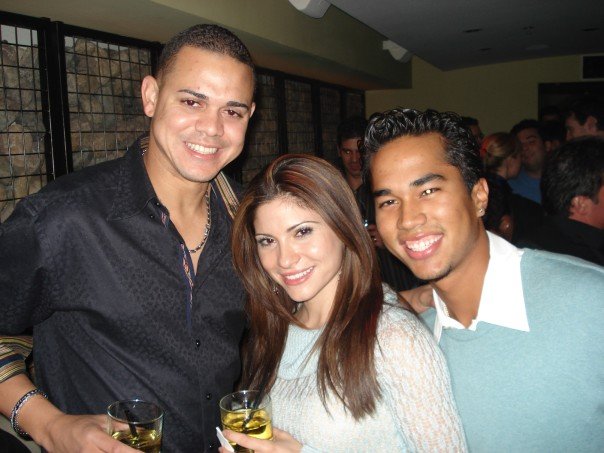 Oney: I always said that I grew up backwards as I went from being in a big league clubhouse every day as a youngster to riding the bus in the minors for many hours. The minor league experience was able to show me the amount of baseball knowledge that I had and I often compared myself to the coaches that I met in the minors. I realized in the minors that I had a special gift when it came to the game within the game.
MLB reports: That’s great Oney. It sounds like playing in the minors gave you a good idea of where your baseball future was headed.
Oney: I knew that I had the knowledge and the ability to succeed in the game. My challenge was to find my role in the game.
MLB reports: How would you describe Oney Guillen the baseball player? What do you consider your greatest baseball skills to have been?
Oney: I was a very good defensive player and that was always my favorite part of the game. For me it was making the great catches and making all the defensive plays, including turning two. As a second baseman, with Venezuelan heritage, defense was always preached to me to be the key part of the game. But aside from my defense on the field, as a player I relied heavily on my mind. My years of experience in major league clubhouses and all the knowledge passed to me by my family and father not only helped me on the field, but it was wisdom that I was able to pass along to some of my teammates.
MLB reports: Do you miss playing baseball?
 Oney: What I miss the most is being around the guys on the team. I made so many friends in my minor league career and I miss being around them in the clubhouse and going to war with those guys. I enjoyed teaching guys my age and even older players that baseball is a thinking game as much as it is physical. It is the mental side of baseball that is usually neglected and can destroy many players’ careers. I really enjoyed teaching my teammates how to be mentally tough and to train their brain as well as their bodies. I miss being on the road with my teammates…many stories come to mind…
MLB reports: Really? Do tell.
Oney: Let’s just say it was a really neat experience. My playing career was definitely the highlight of my baseball career thus far.
MLB reports: Reflecting on your playing career, what were your proudest accomplishments on the baseball field?
Oney: Well, truth be known, my career wasn’t that long (grin). I played for four teams over two seasons, for fifty-two total games in my career. My favorite memory as a professional that I am most proud of is playing exhibition games in Mexico with my father Ozzie as my manager. That was pretty cool. My last game also happened to be in AAA with many of the White Sox stars, which was a perfect ending to my playing career.
MLB reports: Who was your favorite player growing up, that you most idolized and patterned your game after?
Oney: I definitely admired the way my dad played the game. He was hardnosed and played the game the right way. But I most idolized Roberto Alomar growing up. Robbie was my all-time favorite. I admired him so much that I even tried to wear my uniform like him.
MLB reports: I guess it was no coincidence that you played second base.
Oney: Correct. Alomar definitely influenced my position choice.
MLB reports: Did you ever get to meet Roberto and if so, what was that like?
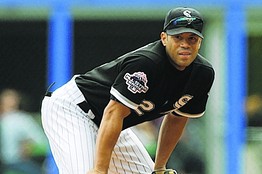 Oney: Roberto Alomar was a family friend, so it was great getting to spend time with him. I got to talk to him and hang out with him on many occasions. I will never forget my time with Robbie as he is an incredible baseball person and I had so much that I learned from my time with him.
MLB reports: On the flipside, which current MLB player do you most enjoy watching?
Oney: Right now, my favorite player has to be Robinson Cano on the Yankees. Cano makes all the plays look so smooth and effortless. In my opinion, Cano is the best player that the Yankees have right now, which says a lot since he plays on a team with so many stars.
MLB reports: Getting back to your father Ozzie for a moment., how much of an influence did he have on you as a baseball player and a person?
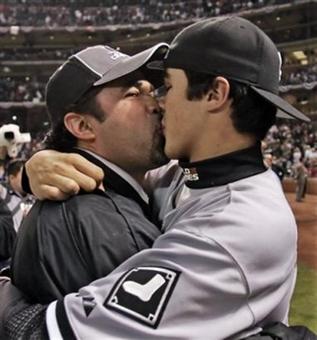 Oney: My father and I have a very unique and special relationship, as many fathers and sons do. Look, I got to grow up in a house with Ozzie Guillen, so it definitely was not dull. My dad was a great player and an even better manager- but by far, his most successful job has been his role as dad. He was always honest with his kids and never sugarcoated anything. He always treated me like a man and brought me up to act like one.
MLB reports: What did you most learn from Ozzie Guillen, the father?
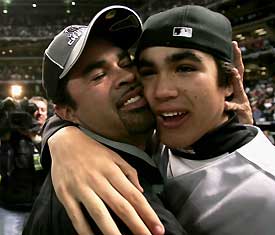 Oney: My dad always gave all of children love and education. Those were the two biggest things that he could ever give my brothers and I. My dad always told me to stand up for what I believe in and to never be afraid of anyone. At the end of the day, my father always insisted that I tell the truth and by telling the truth, I would never have regrets. The discipline that my father instilled within me carried me as a baseball player and into the man that I am today.
MLB reports: Not many people know that after your playing career, that you joined the White Sox head office in the scouting and video department. You resigned in 2010. Do you miss it?
Oney: Truthfully, I do not miss working in the front office. The part of the game that I miss somewhat is being around the game itself, on the field, in the dugout and clubhouse. Being around the game every day on the field is like a drug, it is something that I was addicted to and could never get enough of.
MLB reports: What did you like and not like so much about working in the White Sox front office?
Oney: From my experience, working in a major league front office really opens your eyes, as to what is really going on and how the day-to-day operations of a team works. It was great because I learned what it took to be a part of a front office and the experiences and lessons I learned will stay with me for a lifetime. However, what I also saw was how little some of the people that I worked with in the Sox front office knew about baseball. I observed people that had more of a say on the team due to the mere fact that they were older or had spent more years in the front office than me. Just because those people were older or had more years than me, when it came down to baseball knowledge some of those guys did not know very much. The politics of that side of the game really bothered me.
MLB reports: Did you dislike anything else about working in the Sox front office?
 Oney: I did not miss being away from home for long stretches at a time. I’m glad that in my current role that I can be home and continue to watch the Sox. It used to me kill me that I did not know what was going on in the front office decision-making. Looking back, I wish things could have been handled differently. I wish someone had had the courage to give me feedback and openly discuss my role in the head office rather than choosing to hide and not communicate with me. Truth be known, communication was poor on both sides I guess.
MLB reports: Any regrets of leaving the White Sox organization?
Oney: I do not regret anything. I do not live in the past and I feel that my life is better now as a result of my decision to leave the Sox organization and pursue other opportunities. What transpired between the White Sox and myself was going to happen one way or another. While I was employed with the White Sox, I was told that my father could not have his own website and twitter account as they did not fit in the team’s policies. After the team refused to allow me to create and operate a website for my father, I decided to resign. The ironic part is that since I departed, the team has allowed my father to have a twitter account and website. I operate the website with my brother through our company, Triple Crown Marketing.
MLB reports: Let’s touch upon Triple Crown shortly. If you would have been allowed to create and operate a website for Ozzie, do you think you still would have been with the White Sox front office today?
Oney: No, because what transpired was going to happen, one way or another. I feel like I was being made into a scapegoat for some team problems and I am fine with that. I am a man that takes accountability for his actions and knows what really happened between myself the team. But I do not regret anything that has happened. I truly feel that everyone involved is better off this way.
MLB reports: ………
Thank you for reading Part II of my Oney Guillen interview. Stay tuned for Part III, the final chapter of the interview as Oney discusses his future in baseball and working for the White Sox and any other major league team. He also comments on twitter, his brothers, his current career and what the future holds for Oney Guillen. All coming up next week. Subscribe to the MLB reports by following the link at the top of our site to be notified on this article and all daily baseball posts.
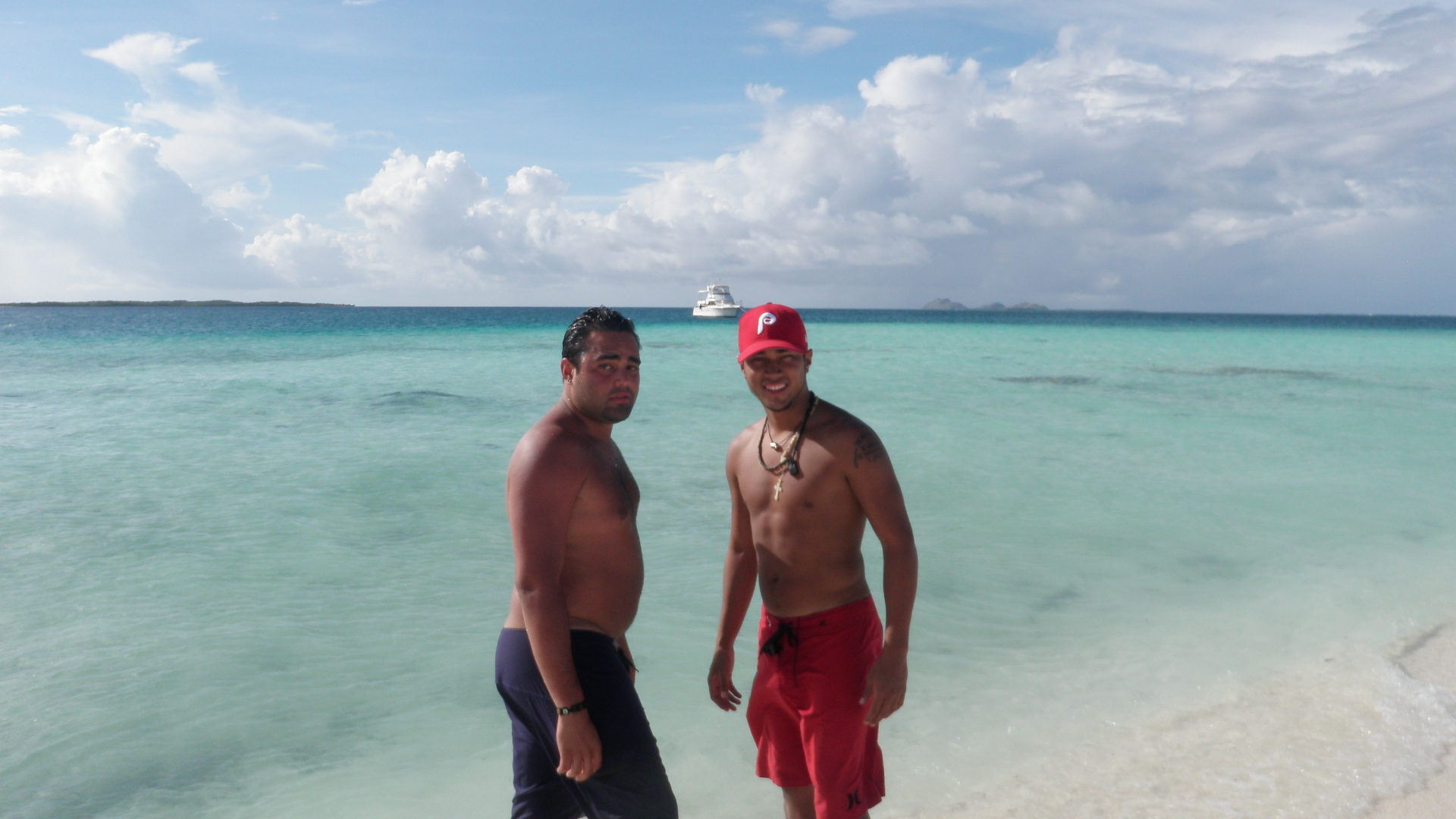
***A special thank you to Oney Guillen for his time and effort as part of being interviewed for this interview series. Oney agreed to share private photos from his family album as part of this series. A thank you as well to Peter Stein, my editor in helping to prepare this piece.***
Please e-mail us at: MLBreports@gmail.com with any questions and feedback. You can follow us on Twitter and become a fan on Facebook . To subscribe to our website and have the daily Reports sent directly to your inbox , click here and follow the link at the top of our homepage.


 MLB Reports

You must be logged in to post a comment.