Blog Archives

Final Results and Recap: 2011 MLB Home Run Derby and All-Star Futures Game
Tuesday July 12, 2011

Rob Bland (Intern Candidate for MLB Reports): The MLB Home Run Derby is one of the greatest events in comparison to the All-Star games of any sport. Fans flock in droves to watch the event, hoping to catch an amazing feat such as Josh Hamilton hitting 28 in the first round in 2008, only to come in 2nd place, and Bobby Abreu hitting 41 total home runs on his way to winning the title in 2005.
 When the teams were announced, the fans booed both Prince Fielder and Rickie Weeks. Fielder was chastised for his selection of Weeks, as most casual fans were not aware of the pure power that he possesses. Weeks was chosen over Justin Upton, who would have been great in front of his Arizona hometown crowd.
Early on this Derby lacked excitement, save for Robinson Cano’s first round, in which he had his father, former major leaguer, Jose Cano, pitching to him. Cano blasted a number of balls deep into the right center field bleachers, his longest being 472 ft. Jose Bautista was a bit of a disappointment, smashing only 4 home runs and ended up being eliminated in the first round of the derby. Other disappointments included the aforementioned Rickie Weeks and Matt Kemp, who hit 3 and 2 home runs, respectively.
There was some excitement at the end, as both David Ortiz and Fielder hit 5 home runs a piece to tie Matt Holliday, forcing a 3-player swing-off for 3rd and 4th place. In this swing-off, each player received 5 swings in which to hit as many home runs as possible. Holliday led off with 5, Ortiz hit 4, and Fielder hit a perfect 5, two of which were mammoth shots.
The second round started off with Ortiz, and he began to show his age. Ortiz was likely tired after the first round plus enduring the sudden death swing-off. Ortiz hit only 4 home runs in the second round, and his average distance was 426 ft. Then came the Robinson Cano Show again. Cano launched 12 home runs in the second round, averaging 436 ft. His swing was picture perfect, and it seemed as though any time he didn’t hit a home run, his dad would be upset with him. Robinson’s dad knows his son’s strengths, and was confident he could hit that many. That is likely why Cano was named Robinson by his father, after the late and great Jackie Robinson.
Gonzalez was also able to put on a show in the second round, consistently pounding the ball 430+ft. He put on a display, hitting the ball to the opposite field, and straightaway center field on his way to finishing with 11 in the round, and 20 total, tying him with Cano. Fielder was up next, and aside from his first swing, that he hit 474 ft, he was not able to do much else. He finished with 4 in the round, 9 in total. So, it came down to the Yankees and Red Sox again. Cano and Gonzalez square off in the finals.
Gonzalez immediately impressed, hitting 8 home runs in his first 3 outs. He cooled off and finished with 11 in the finals. With the most impressive rounds of the night, Cano hit 10 in his first 16 swings, needing only 1 more to tie Gonzalez. The crowd erupted as he hit a home run over 470 ft to tie it up. The very next swing was the one that did it, as he hit it out to right center field. Gonzalez had a record 11 home runs in the last round, and Cano was clutch in beating that.
What started off as a slow, uneventful night, wound up being a compelling night of watching the Yankees battle the Red Sox in a pure power slugfest. Robinson and his dad embracing by the mound. The American League beating the National League. All in all, this year’s edition of the Home Run Derby was nothing short of spectacular.

| Chase Field, Phoenix — AL 76 defeats NL 19 | ||||||
|---|---|---|---|---|---|---|
| Player | Team | Round 1 | Round 2 | Subtotal | Finals | Total |
| Robinson Cano | Yankees | 8 | 12 | 20 | 12 | 32 |
| Adrian Gonzalez | Red Sox | 9 | 11 | 20 | 11 | 31 |
| Prince Fielder | Brewers | 5 | 4 | 9 | – | 9 |
| David Ortiz | Red Sox | 5 | 4 | 9 | – | 9 |
| Matt Holliday | Cardinals | 5 | – | 5 | – | 5 |
| Jose Bautista | Blue Jays | 4 | – | 4 | – | 4 |
| Rickie Weeks | Brewers | 3 | – | 3 | – | 3 |
| Matt Kemp | Dodgers | 2 | – | 2 | – | 2 |

In a game showcasing most of baseball’s brightest shining up and coming stars, there were several players who stood out from the pack. Although Bryce Harper (WAS) stole the spotlight in both the pre-game and post-game festivities, he did not shine quite as bright during the game. He was 0 for 4 with 2 strikeouts and 2 ground outs to first. One of which was hit fairly hard but a nice play by Yonder Alonso got the out.
Aside from two big innings, a 4-run 6th inning by the World Team hitters off of Drew Pomeranz, and a 3-run 8th inning off of Kelvin Herrera by Team USA, this was a game largely dominated by flame-throwing pitchers.
 For the US Team, my standout hitters were Jason Kipnis, (CLE) who led off the bottom of the 1st with a home run over the right-centre field wall, and Grant Green (OAK). Green crushed a double off the top of the wall in straight-away center that I thought would have been gone in any other park. He also stroked another double, going 2 for 2 with 2 doubles, a run scored and RBI on his way to earning MVP of the game. On the mound, I was blown away by Matt Moore, Tampa Bay’s mega pitching prospect. He threw 11 pitches, 9 of which were strikes. His fastball was clocked consistently between 94 and 98 mph, and he was also throwing a devastating slider at 86 mph. Phillies prospect Jared Cosart was also very impressive. He racked up 2 strikeouts and a fly out on 10 pitches; 8 strikes. Sitting at 96 with the heater, he also displayed a plus change-up.
Jose Altuve (HOU) is a guy that doesn’t get much credit, because he stands at about 5’6”. However, the Venezuelan native has hit everywhere he has played. He was 2 for 3 with a single and a double, and I came away impressed with the diminutive infielder. Jurickson Profar (TEX) may have been the youngest player there, but he was not overmatched, as he stroked a triple off Drew Pomeranz and displayed his impressive speed. On the bump, Canadian James Paxton stood out to me. The University of Kentucky product threw 6 pitches; all fastballs, and induced 3 quick outs. He was between 94 and 96 and showed better control than I remember the last time I saw him. Henderson Alvarez (TOR) was also impressive, with a fastball that topped out at 98 mph, and getting Harper to ground out to first on a 95 mph sinker.
The US team jumped out to an early lead thanks to the leadoff home run by Kipnis in the first, and an RBI fielder’s choice by Wil Myers (KC) in the 2nd inning. Team USA then made it 3-0 in the 5th on Green’s first double, which scored Gary Brown after he singled and stole second. In the top of the 6th, Drew Pomeranz (CLE) struggled, and gave up 4 runs. Alfredo Silverio (LAD) homered to left, scoring Dayan Viciedo (CWS) who had singled 2 batters prior. A walk to Chih-Hisen Chiang (BOS) and a double to Sebastian Valle (PHI) spelled the end of the night for Pomeranz. With the score knotted at 3, Profar then hit his triple off Kyle Gibson (MIN), scoring Valle in the process.
Green led off the 8th with a double, and Tim Beckham (TB) drove him in with a double of his own to tie the game at 4. After an Austin Romine (NYY) single and a Nolan Arenado (COL) double to right field, the damage was done, and the US had a 6-4 lead. Jacob Turner (DET) and Matt Harvey (NYM) split duties to close out the game for the US Team.
The US has now taken a 7-6 lead in the all-time series. A good number of these players will be on Major League rosters by season’s end, so be sure to check in on the minor league squads of your favorite teams for updates.

| U.S. Futures 6, World Futures 4 | ||||||||||||
| July 10, 2011 | ||||||||||||
| 1 | 2 | 3 | 4 | 5 | 6 | 7 | 8 | 9 | R | H | E | |
| World Futures | 0 | 0 | 0 | 0 | 0 | 4 | 0 | 0 | 0 | 4 | 8 | 0 |
| U.S. Futures | 1 | 1 | 0 | 0 | 1 | 0 | 0 | 3 | x | 6 | 10 | 0 |
| World Futures | AB | R | H | RBI | BB | SO | LOB | AVG |
| Marte, CF | 3 | 0 | 1 | 0 | 0 | 0 | 0 | .333 |
| c-Fuentes, PH-CF | 2 | 0 | 0 | 0 | 0 | 0 | 1 | .000 |
| Altuve, 2B | 3 | 0 | 2 | 0 | 0 | 0 | 1 | .667 |
| Schoop, 2B | 1 | 0 | 1 | 0 | 0 | 0 | 0 | 1.000 |
| Alonso, 1B | 2 | 0 | 0 | 0 | 2 | 1 | 1 | .000 |
| Viciedo, DH | 3 | 1 | 1 | 0 | 0 | 1 | 4 | .333 |
| d-Martinez, F, PH-DH | 1 | 0 | 0 | 0 | 0 | 0 | 1 | .000 |
| Liddi, 3B | 3 | 0 | 0 | 0 | 0 | 1 | 3 | .000 |
| Marte, J, 3B | 1 | 0 | 0 | 0 | 0 | 1 | 0 | .000 |
| Silverio, RF | 4 | 1 | 1 | 2 | 0 | 1 | 0 | .250 |
| Chiang, LF | 3 | 1 | 0 | 0 | 1 | 1 | 0 | .000 |
| Rosario, W, C | 2 | 0 | 0 | 0 | 0 | 0 | 0 | .000 |
| a-Valle, PH-C | 2 | 1 | 1 | 1 | 0 | 0 | 0 | .500 |
| Lee, SS | 2 | 0 | 0 | 0 | 0 | 1 | 0 | .000 |
| b-Profar, PH-SS | 2 | 0 | 1 | 1 | 0 | 0 | 0 | .500 |
| Teheran, P | 0 | 0 | 0 | 0 | 0 | 0 | 0 | .000 |
| Hendriks, P | 0 | 0 | 0 | 0 | 0 | 0 | 0 | .000 |
| Paxton, P | 0 | 0 | 0 | 0 | 0 | 0 | 0 | .000 |
| Martinez, C, P | 0 | 0 | 0 | 0 | 0 | 0 | 0 | .000 |
| Perez, M, P | 0 | 0 | 0 | 0 | 0 | 0 | 0 | .000 |
| Alvarez, H, P | 0 | 0 | 0 | 0 | 0 | 0 | 0 | .000 |
| Vizcaino, P | 0 | 0 | 0 | 0 | 0 | 0 | 0 | .000 |
| Herrera, P | 0 | 0 | 0 | 0 | 0 | 0 | 0 | .000 |
| Marinez, P | 0 | 0 | 0 | 0 | 0 | 0 | 0 | .000 |
| Totals | 34 | 4 | 8 | 4 | 3 | 7 | 11 | .235 |
a-Doubled for Rosario, W in the 6th. b-Tripled for Lee in the 6th. c-Flied out for Marte in the 6th. d-Popped out for Viciedo in the 7th.
BATTING
2B: Altuve (1, Skaggs), Valle (1, Pomeranz).
3B: Profar (1, Gibson).
HR: Silverio (1, 6th inning off Pomeranz, 1 on, 2 out).
TB: Marte; Altuve 3; Schoop; Viciedo; Silverio 4; Valle 2; Profar 3.
RBI: Silverio 2 (2), Valle (1), Profar (1).
2-out RBI: Silverio 2; Valle; Profar.
Runners left in scoring position, 2 out: Liddi; Viciedo; Fuentes.
Team RISP: 1-for-5.
Team LOB: 6.
BASERUNNING
CS: Schoop (1, 2nd base by Gibson/Romine).
PO: Schoop (1st base by Gibson).
FIELDING
DP: 2 (Liddi-Altuve-Alonso, Lee-Altuve-Alonso).
| U.S. Futures | AB | R | H | RBI | BB | SO | LOB | AVG | |
| Kipnis, 2B | 2 | 1 | 1 | 1 | 0 | 0 | 0 | .500 | |
| a-Green, PH-2B | 2 | 1 | 2 | 1 | 0 | 0 | 0 | 1.000 | |
| Machado, SS | 2 | 0 | 0 | 0 | 0 | 0 | 0 | .000 | |
| b-Beckham, PH-SS | 2 | 1 | 1 | 1 | 0 | 1 | 1 | .500 | |
| Harper, LF | 4 | 0 | 0 | 0 | 0 | 2 | 1 | .000 | |
| Goldschmidt, 1B | 4 | 0 | 0 | 0 | 0 | 1 | 1 | .000 | |
| Mesoraco, C | 1 | 1 | 1 | 0 | 0 | 0 | 0 | 1.000 | |
| Romine, C | 2 | 1 | 2 | 1 | 0 | 0 | 0 | 1.000 | |
| Middlebrooks, 3B | 2 | 0 | 1 | 0 | 0 | 0 | 1 | .500 | |
| Arenado, 3B | 2 | 0 | 1 | 1 | 0 | 0 | 1 | .500 | |
| Darnell, DH | 3 | 0 | 0 | 0 | 1 | 1 | 3 | .000 | |
| Myers, RF | 3 | 0 | 0 | 1 | 0 | 1 | 2 | .000 | |
| Brown, G, CF | 2 | 1 | 1 | 0 | 0 | 0 | 1 | .500 | |
| Szczur, CF | 1 | 0 | 0 | 0 | 0 | 0 | 0 | .000 | |
| Skaggs, P | 0 | 0 | 0 | 0 | 0 | 0 | 0 | .000 | |
| Peacock, P | 0 | 0 | 0 | 0 | 0 | 0 | 0 | .000 | |
| Miller, S, P | 0 | 0 | 0 | 0 | 0 | 0 | 0 | .000 | |
| Moore, P | 0 | 0 | 0 | 0 | 0 | 0 | 0 | .000 | |
| Thornburg, P | 0 | 0 | 0 | 0 | 0 | 0 | 0 | .000 | |
| Pomeranz, P | 0 | 0 | 0 | 0 | 0 | 0 | 0 | .000 | |
| Gibson, P | 0 | 0 | 0 | 0 | 0 | 0 | 0 | .000 | |
| Cosart, P | 0 | 0 | 0 | 0 | 0 | 0 | 0 | .000 | |
| Turner, P | 0 | 0 | 0 | 0 | 0 | 0 | 0 | .000 | |
| Harvey, M, P | 0 | 0 | 0 | 0 | 0 | 0 | 0 | .000 | |
| Totals | 32 | 6 | 10 | 6 | 1 | 6 | 11 | .313 |
a-Doubled for Kipnis in the 5th. b-Struck out for Machado in the 5th.
BATTING
2B: Green 2 (2, Perez, M, Herrera), Beckham (1, Herrera), Arenado (1, Herrera).
HR: Kipnis (1, 1st inning off Teheran, 0 on, 0 out).
TB: Kipnis 4; Green 4; Beckham 2; Mesoraco; Romine 2; Middlebrooks; Arenado 2; Brown, G.
RBI: Kipnis (1), Myers (1), Green (1), Beckham (1), Romine (1), Arenado (1).
2-out RBI: Green; Romine; Arenado.
Runners left in scoring position, 2 out: Beckham; Darnell.
GIDP: Middlebrooks; Myers.
Team RISP: 4-for-10.
Team LOB: 4.
BASERUNNING
SB: Brown, G (1, 2nd base off Perez, M/Rosario, W).
FIELDING
Pickoffs: Gibson (Schoop at 1st base).
| World Futures | IP | H | R | ER | BB | SO | HR | ERA | |
| Teheran | 1.0 | 1 | 1 | 1 | 0 | 1 | 1 | 9.00 | |
| Hendriks | 1.0 | 2 | 1 | 1 | 0 | 0 | 0 | 9.00 | |
| Paxton | 1.0 | 0 | 0 | 0 | 0 | 0 | 0 | 0.00 | |
| Martinez, C | 1.0 | 0 | 0 | 0 | 0 | 1 | 0 | 0.00 | |
| Perez, M | 1.0 | 2 | 1 | 1 | 1 | 1 | 0 | 9.00 | |
| Alvarez, H (H, 1) | 1.0 | 1 | 0 | 0 | 0 | 0 | 0 | 0.00 | |
| Vizcaino (H, 1) | 1.0 | 0 | 0 | 0 | 0 | 1 | 0 | 0.00 | |
| Herrera (BS, 1)(L, 0-1) | 0.2 | 4 | 3 | 3 | 0 | 1 | 0 | 40.50 | |
| Marinez | 0.1 | 0 | 0 | 0 | 0 | 1 | 0 | 0.00 | |
| Totals | 8.0 | 10 | 6 | 6 | 1 | 6 | 1 | 6.75 |
| U.S. Futures | IP | H | R | ER | BB | SO | HR | ERA | |
| Skaggs | 1.0 | 1 | 0 | 0 | 1 | 1 | 0 | 0.00 | |
| Peacock (H, 1) | 1.0 | 0 | 0 | 0 | 0 | 1 | 0 | 0.00 | |
| Miller, S (H, 1) | 1.0 | 1 | 0 | 0 | 1 | 1 | 0 | 0.00 | |
| Moore (H, 1) | 1.0 | 0 | 0 | 0 | 0 | 1 | 0 | 0.00 | |
| Thornburg (H, 1) | 1.0 | 1 | 0 | 0 | 0 | 0 | 0 | 0.00 | |
| Pomeranz (BS, 1) | 0.2 | 3 | 4 | 4 | 1 | 1 | 1 | 54.00 | |
| Gibson | 1.1 | 2 | 0 | 0 | 0 | 0 | 0 | 0.00 | |
| Cosart (W, 1-0) | 1.0 | 0 | 0 | 0 | 0 | 2 | 0 | 0.00 | |
| Turner (H, 1) | 0.2 | 0 | 0 | 0 | 0 | 0 | 0 | 0.00 | |
| Harvey, M (S, 1) | 0.1 | 0 | 0 | 0 | 0 | 0 | 0 | 0.00 | |
| Totals | 9.0 | 8 | 4 | 4 | 3 | 7 | 1 | 4.00 |
Balk: Perez, M.
HBP: Mesoraco (by Martinez, C).
Pitches-strikes: Teheran 19-13, Hendriks 18-10, Paxton 6-4, Martinez, C 11-6, Perez, M 23-11, Alvarez, H 11-6, Vizcaino 6-5, Herrera 23-14, Marinez 11-8, Skaggs 17-11, Peacock 9-7, Miller, S 20-12, Moore 11-9, Thornburg 10-7, Pomeranz 23-14, Gibson 16-11, Cosart 10-8, Turner 9-6, Harvey, M 3-1.
Groundouts-flyouts: Teheran 1-1, Hendriks 2-1, Paxton 2-1, Martinez, C 1-0, Perez, M 1-0, Alvarez, H 2-1, Vizcaino 2-0, Herrera 0-1, Marinez 0-0, Skaggs 1-1, Peacock 1-0, Miller, S 2-0, Moore 2-0, Thornburg 2-1, Pomeranz 0-0, Gibson 0-2, Cosart 0-1, Turner 0-1, Harvey, M 1-0.
Batters faced: Teheran 4, Hendriks 5, Paxton 3, Martinez, C 3, Perez, M 5, Alvarez, H 4, Vizcaino 3, Herrera 6, Marinez 1, Skaggs 5, Peacock 3, Miller, S 5, Moore 3, Thornburg 4, Pomeranz 6, Gibson 5, Cosart 3, Turner 2, Harvey, M 1.
Inherited runners-scored: Marinez 1-0, Gibson 1-1.
Umpires: HP: Ben May. 1B: Will Little. 2B: Jimmy Volpi. 3B: Scott Mahoney.
Weather: 74 degrees, roof closed.
Wind: 1 mph, Varies.
T: 2:38.
***Thank you to Rob Bland for preparing today’s article on the 2011 Home Run Derby and All-Star Futures Game. You can follow Rob on Twitter.***
Please e-mail us at: MLBreports@gmail.com with any questions and feedback. You can follow us on Twitter and become a fan on Facebook . To subscribe to our website and have the daily Reports sent directly to your inbox, click here and follow the link at the top of our homepage.
E-MAILBAG: Ask the Reports, Wednesday July 6th All-Star Edition
Thank you for reading the E-mailbag. Please send all your questions to mlbreports@gmail.com and please include your first name and City/Country.
We will be compiling a list of your questions from our e-mailbag and posting the responses on Wednesdays.
Wednesday July 6, 2011
Q: I enjoyed your article on the Home Run Derby this week. Which players were selected to play in this year’s derby? From: Dave, Chicago.
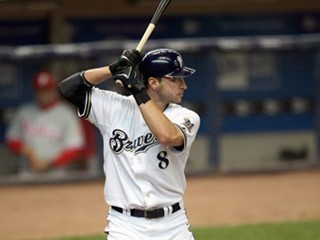 MLB reports: Thank you Dave. So glad that you enjoyed our feature on the Home Run Derby. As indicated in the article, captain David Ortiz has included Jose Bautista, Robinson Cano and Adrian Gonzalez on the AL squad. The NL team, which was announced yesterday by captain Prince Fielder, includes Matt Kemp of the Dodgers, Matt Holliday of the Cardinals and Rickie Weeks of the Brewers. For the most part we have a very solid derby lineup. The only criticism that I can offer each team is the choice of the respective second basemen. While Rickie Weeks and Robinson Cano are fine players, there are far more powerful bashers that I would have preferred to see this upcoming Monday in Arizona. Curtis Granderson in the AL and Ryan Braun in the NL are the first two names that come to mind. It should be an interesting Home Run Derby regardless. So enjoy it!
Q: I am boycotting the All-Star game this year. It is nothing but a glorified exhibition game. I suggest you do the same. From: Sam, Vancouver.
MLB reports: Ouch Sam, you really do not like the All-Star game! As much as the game itself receives negative press, the truth is that all our readers are writing about in the last two weeks is the All-Star game. They cannot get enough of all the All-Star game coverage on the Reports! While the game itself may frustrate us, with the length of time it takes to play, number of substitutes etc, the truth is that the game has much merit. The All-Star game does decide home field advantage for the World Series, which is a huge reward. The players are playing for pride and in my opinion, the last few games have been exceptionally entertaining for the most part. Lastly, most of us love debating which players should be included on the rosters and analyzing the exclusions. Baseball is a sport of non-stop analysis and the All-Star game is no exception. Rather than focusing on the flaws, take in what is good about the game. With the glass-half-full approach, maybe you will become a fan again.
Q: My fave part of All-Star week is the Prospects Game. The up and coming stars get to play and I get to see them live. Will we get reports on the Prospects Game? From: Jason, Los Angeles.
MLB reports: Funny you should bring up the Prospects Game Jason, you have read our mind. As part of our search for the MLB reports Intern, we have Rob- a candidate for the post, preparing his feature article on the Prospects Game as we speak. We agree that the Prospects Game is a very important game, if not the biggest game of the break for many baseball fans. For the diehards that subscribe to Baseball America and try to learn all the prospects, many do not have the opportunity to watch the prospects live. For those of you that subscribe to mlb.tv, you may not know that you can add the Milb package as well for only a few dollars. But otherwise, the top prospects in the game will be playing this weekend. While MLB reports will have the game covered this weekend, we will be featuring Rob’s preview of the game starting tomorrow. Stay tuned for this must read feature!
Q: Do you see MLB ever getting rid of the All-Star game? Perhaps replacing it with the WBC or Olympics some years? From: Bruno, Mexico City.
 MLB reports: Hello Bruno, great question. I can answer your question with one word: Never. The MLB All-Star game is a huge event for baseball that will continue until the end of time. The game itself is as much about pleasing the sponsors as it is the fans. The game is a showcase of Major League Baseball to the sponsors and baseball’s chance to wine and dine the greatest financial contributors the game. The All-Star game contributes a great deal of revenue and publicity for the home town sponsoring team and the battle to host the big event is fierce every year. The WBC, as featuring in our recent article, will be back as part of the 2013 edition. While experts have debated hosting the tournament during the middle of the season or at season’s end, the time and commitment required makes the logistics almost impossible. For now the WBC is remaining as a pre-season tournament, with qualifying taking place in the fall of 2012 and the WBC in March 2013. From the Olympics perspective, baseball is not even currently included as a sport. In 2013, the IOC will vote on whether to include baseball as an Olympic sport in the 2020 games. Baseball will be competing with karate, roller sports, softball, sports climbing, squash, wakeboard and wushu for one spot. The Olympics will be discussed on a different day, as the exclusion of baseball by the Olympics is unforgivable in my opinion and simply a harsh tactic to force Major League Baseball to send professionals to the Olympics. Baseball is strong in its stance though and even if baseball does rejoin the Olympics, it will not interfere with the All-Star game. The mid-season game is simply to valuable to baseball to let go. Ever.
Q: The National League won the All-Star game last year, its first win since 1996. Who will win this year? From: Tiffany, Miami.
MLB reports: I’m sorry to be the one to break this to you Tiffany, but the AL will win this year. Call it gut, call it bias. I just can’t see how the NL can control the bashers in the American League. Jose Bautista, David Ortiz, Adrian Gonzalez, Curtis Granderson are just some of the big names representing the American League. While the NL has Prince Fielder, Matt Kemp, Lance Berkman, Brian McCann etc, I think the AL has too strong of an offensive team. The AL pitching is also stacked, led by Justin Verlander, David Prince, James Shields, Jered Weaver and company. While the NL pitchers get much of the press, the AL has its share of star pitchers. The game should be an interesting one, with the run total likely to be very high. But when all is said and done, expect the AL to come out on top and giving the Rays home field advantage over the Phillies in the World Series (did I just make a prediction?)
Thanks for the e-mails and keep them coming! mlbreports@gmail.com

E-MAILBAG ARCHIVE: Click here for the Archives of Ask the Reports
Please e-mail us at: MLBreports@gmail.com with any questions and feedback. You can follow us on Twitter and become a fan on Facebook . To subscribe to our website and have the daily Reports sent directly to your inbox , click here and follow the link at the top of our homepage.

2011 MLB Home Run Derby: New Format, Ortiz and Fielder as Captains and Picks
Tuesday, July 5, 2011

MLB reports: Change is in the air as Major League Baseball has revised the format for the Home Run Derby, coming up on Monday, July 11th from Chase Field in Arizona. The biggest change is the appointment of captains. Former home run derby champions David Ortiz and Prince Fielder will serve as the leaders of the AL and NL squads respectively. Each captain is able to select three additional players of their choice to fill out their home run derby team, regardless of being selected as an all-star. The Home Run Derby team selections are due today, but David Ortiz has already jumped the gun to fill out his roster. Papi’s selections are about to be listed, but first the format change for the Home Run Derby this year.
According to Major League Baseball:
“While the format to determine the individual champion will remain unchanged, the total number of home runs hit by all players in all rounds will be tabulated for the AL and NL to determine the winning team, captain and charity recipient. Each player will get 10 outs per round, the four players with the highest total of home runs will advance to the second round, and the two players with the highest cumulative number of home runs in the first two rounds will advance to the Championship Round, where first and second round home runs do not carry over for individual scores.”
 Thus the derby now becomes a team effort right up until the final round, where an individual winner will be selected. Thus the 2011 Home Run Derby will have a winning team, as well as an individual champion. With the format of the Home Run Derby becoming somewhat stale and many players declining invitations, change was needed. There was also talk of the “Derby Curse”, where participants in the Home Run Derby would find their home run totals slip in the second half of the season. From Bobby Abreu in 2005 to Josh Hamilton in 2008, the curse has taken on a life of its own. With teams starting to put pressure on its players to avoid the home run contest, the new format is a breath of fresh air. Having the teams and captains brings fun and competitiveness back to the event and should rejuvenate a great brand for Major League Baseball. While this year’s format will likely require future tweaking, in my opinion at least, MLB has done a great job in building excitement to the upcoming derby.
As mentioned, today is the deadline for the team captains to submit their home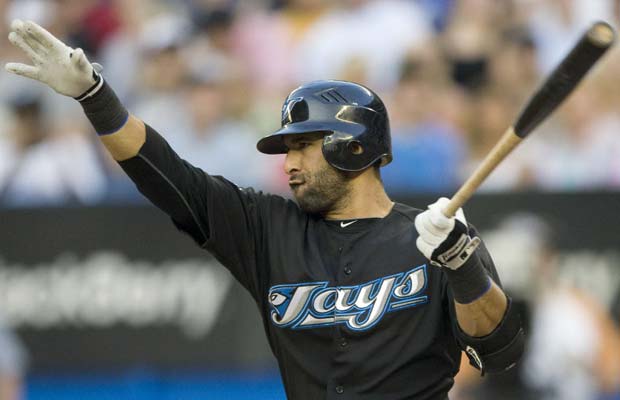 run team picks. For the American League, Captain David Ortiz has made his selections. Representing the AL in the 2011 Home Run Derby will be Adrian Gonzalez of the Boston Red Sox, Jose Bautista of the Toronto Blue Jays and Robinson Cano of the New York Yankees. Gonzalez and Bautista were the first two selections by Ortiz that accepted their invitations. Cano teammate, Mark Teixeira, was originally selected as the fourth member of the squad, but declined his invitation. Cano has since happily accepted and will be launching home runs for the AL next Monday.
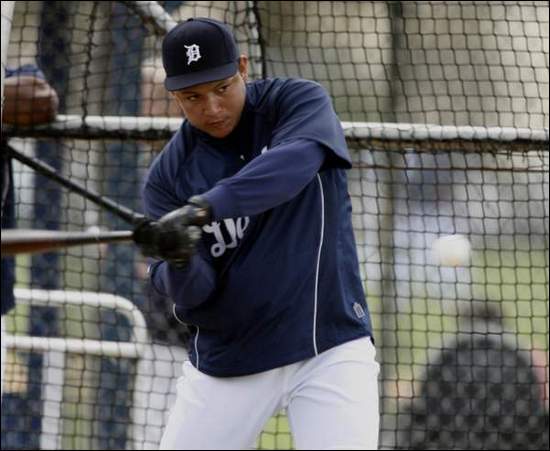 On the current MLB home run leader board, Bautista sits at #1 with 27 home runs, Ortiz at #11 with 17, Gonzalez at #18 with 16 and Cano at #27 with 14. Ortiz made some interesting choices, as Curtis Granderson, Nelson Cruz and Paul Konerko were not selected despite being in the top 10 home run hitters in the game as of today. I don’t believe that many people would argue with the selections of Bautista or Gonzalez. It is the selection of Cano that would likely have some tongues wagging. Most experts would have preferred Teixeira on the squad, but unfortunately he declined the invitation. Personally, I would have gone with Granderson or Miguel Cabrera for the position. But regardless of preference, the AL squad is a mighty one and should give the AL a strong chance to win this year’s Home Run Derby.
In the National League, Prince Fielder continues to ponder and calculate his selections, which should be announced later today. Prince, at #6 on the home run leader board with 21, has many candidates to choose from. One selection apparently confirmed is Matt Kemp of the Dodgers, who is #4 with 22 home runs. Other strong candidates are Fielder’s teammates Ryan Braun and Rickie Weeks (with rumors have Weeks likely to receive and accept an invitation). Other possibilities are Lance Berkman and Matt Holliday of the Cardinals, Jay Bruce of the Reds, Troy Tulowitzki of the Rockies and Mike Stanton of the Marlins. If you are handicapping at home, my predicted NL squad is Fielder, Weeks, Holliday and Bruce. We will find out later today if Prince and I are on the same page on this one.
No matter who ends up representing the AL and NL, Ortiz and Fielder will captain exciting and dynamic home run hitting squads that will electrify the Arizona crowd next Monday. I cannot recall a more anticipated Home Run Derby in recent history. Good luck Prince and Papi and don’t forget to eat your wheaties this week.
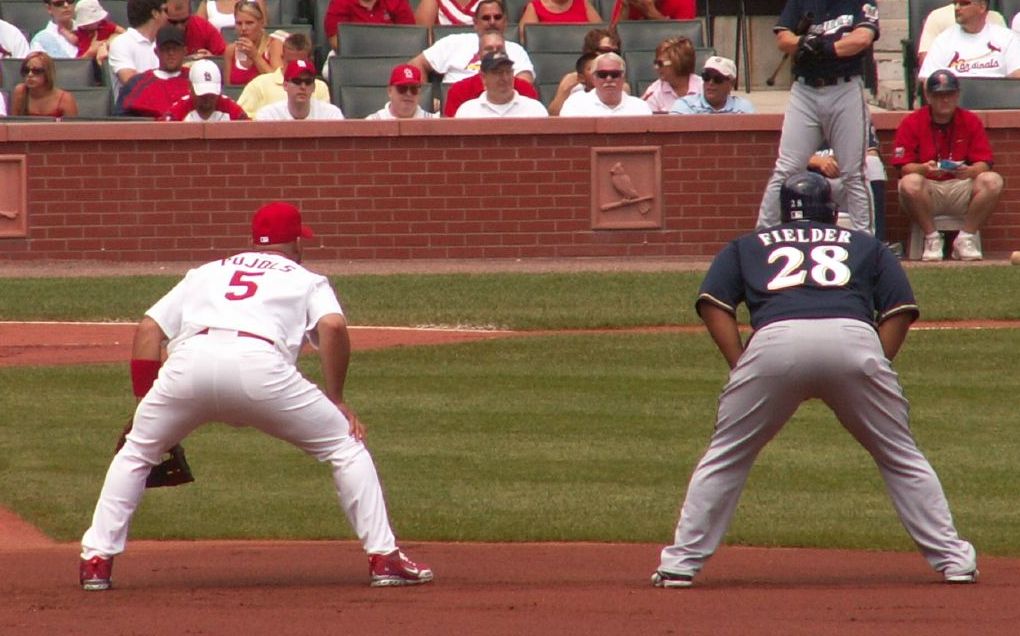
***Get ready for a week’s worth of All-Star reporting, as MLB reports has everything All-Star covered between now and the big game on Tuesday. We will be keeping an eye on the All-Star game itself, as well as the Futures Game, Home Run Derby and everything in between. The All-Star game is a little over a week away and we will bring you all the latest All-Star game news as it develops. To view the AL and NL All-Star Game rosters and Final Vote candidates, click here***
Please e-mail us at: MLBreports@gmail.com with any questions and feedback. You can follow us on Twitter and become a fan on Facebook . To subscribe to our website and have the daily Reports sent directly to your inbox, click here and follow the link at the top of our homepage.
2011 MLB ALL-STAR GAME FINAL VOTING RESULTS:
Here are the final numbers as voted by the fans for the starting lineups in the All-Star game:
American League
CATCHER — 1, Alex Avila, Tigers, 4,144,384. 2, Russell Martin, Yankees, 3,646,033. 3, Joe Mauer, Twins, 2,308,436. 4, Jarrod Saltalamacchia, Red Sox, 2,183,113. 5, Yorvit Torrealba, Rangers, 1,810,755. 6, Carlos Santana, Indians, 1,501,053. 7, J.P. Arencibia, Blue Jays, 1,024,020. 8, A.J. Pierzynski, White Sox, 963,463.
FIRST BASE — 1, Adrian Gonzalez, Red Sox, 6,034,533. 2, Mark Teixeira, Yankees, 4,174,690. 3, Miguel Cabrera, Tigers, 3,473,849. 4, Mitch Moreland, Rangers, 1,680,462. 5, Paul Konerko, White Sox, 1,323,853. 6, Adam Lind, Blue Jays, 860,203. 7, Justin Morneau, Twins, 781,717. 8, Matt LaPorta, Indians, 750,953.
SECOND BASE — 1, Robinson Cano, Yankees, 6,679,976. 2, Dustin Pedroia, Red Sox, 4,391,835. 3, Ian Kinsler, Rangers, 2,729,450. 4, Orlando Cabrera, Indians, 1,538,135. 5, Ben Zobrist, Rays, 1,245,709. 6, Howie Kendrick, Angels, 1,079,227. 7, Will Rhymes, Tigers, 671,674. 8, Aaron Hill, Blue Jays, 587,179.
THIRD BASE — 1, Alex Rodriguez, Yankees, 5,277,823. 2, Adrian Beltre, Rangers, 4,036,191. 3, Kevin Youkilis, Red Sox, 4,018,641. 4, Evan Longoria, Rays, 2,804,004. 5, Brandon Inge, Tigers, 1,113,787. 6, Maicer Izturis, Angels, 666,828. 7, Mike Aviles, Royals, 602,091. 8, Edwin Encarnacion, Blue Jays, 505,015.
SHORTSTOP — 1, Derek Jeter, Yankees, 4,536,386. 2, Asdrubal Cabrera, Indians, 4,073,992. 3, Elvis Andrus, Rangers, 2,698,902. 4, Jhonny Peralta, Tigers, 2,301,524. 5, Marco Scutaro, Red Sox, 1,642,606. 6, Yunel Escobar, Blue Jays, 1,104,761. 7, J.J. Hardy, Orioles, 956,073. 8, Alexei Ramirez, White Sox, 946,442.
DESIGNATED HITTER — 1, David Ortiz, Red Sox, 6,324,793. 2, Michael Young, Rangers, 3,072,467. 3, Victor Martinez, Tigers, 2,302,988. 4, Jorge Posada, Yankees, 1,998,551. 5, Johnny Damon, Rays, 1,303,471. 6, Travis Hafner, Indians, 1,206,971. 7, Vladimir Guerrero, Orioles, 1,136,364. 8, Billy Butler, Royals, 891,940.
OUTFIELD — 1, Jose Bautista, Blue Jays, 7,454,753. 2, Curtis Granderson, Yankees, 6,683,877. 3, Josh Hamilton, Rangers, 4,646,394. 4, Jacoby Ellsbury, Red Sox, 4,609,667. 5, Carl Crawford, Red Sox, 3,213,581. 6, Nelson Cruz, Rangers, 2,704,249. 7, Ichiro Suzuki, Mariners, 2,528,532. 8, Nick Swisher, Yankees, 2,277,856. 9, Brett Gardner, Yankees, 2,064,372. 10, J.D. Drew, Red Sox, 2,009,877. 11, Matt Joyce, Rays, 1,597,334. 12, Jeff Francoeur, Royals, 1,505,399. 13, David Murphy, Rangers, 1,458,420. 14, Grady Sizemore, Indians, 1,283,993. 15, Austin Jackson, Tigers, 1,254,267. 16, Carlos Quentin, White Sox, 1,218,968. 17, Melky Cabrera, Royals, 1,201,982. 18, Shin-Soo Choo, Indians, 1,158,749. 19, Alex Gordon, Royals, 1,120,683. 20, B.J, Upton, Rays, 1,081,270. 21, Magglio Ordonez, Tigers, 1,008,145. 22, Torii Hunter, Angels, 927,271. 23, Sam Fuld, Rays, 916,219. 24, Michael Brantley, Indians, 878,556.
National League
CATCHER — 1, Brian McCann, Braves, 4,698,838. 2, Yadier Molina, Cardinals, 2,972,786. 3, Buster Posey, Giants, 2,418,923. 4, Jonathan Lucroy, Brewers, 2,271,498. 5, Ramon Hernandez, Reds, 2,056,263. 6, Carlos Ruiz, Phillies, 1,864,675. 7, Ivan Rodriguez, Nationals, 1,225,342. 8, Miguel Montero, Diamondbacks, 1,149,461.
FIRST BASE — 1, Prince Fielder, Brewers, 4,864,523. 2, Joey Votto, Reds, 4,254,305. 3, Albert Pujols, Cardinals, 4,171,094. 4, Ryan Howard, Phillies, 2,563,736. 5, Freddie Freeman, Braves, 957,816. 6, Brandon Belt, Giants, 917,044. 7, Ike Davis, Mets, 824,681. 8, Todd Helton, Rockies, 761,928.
SECOND BASE — 1, Rickie Weeks, Brewers, 4,460,395. 2, Brandon Phillips, Reds, 4,273,079. 3, Chase Utley, Phillies, 3,345,845. 4, Freddy Sanchez, Giants, 1,627,733. 5, Dan Uggla, Braves, 1,583,903. 6, Neil Walker, Pirates, 993,369. 7, Kelly Johnson, Diamondbacks, 862,204. 8, Skip Schumaker, Cardinals, 856,658.
THIRD BASE — 1, Placido Polanco, Phillies, 4,410,701. 2, Chipper Jones, Braves, 2,849,578. 3, Scott Rolen, Reds, 2,251,425. 4, Pablo Sandoval, Giants, 2,213,057. 5, David Wright, Mets, 2,106,800. 6, Casey McGehee, Brewers, 1,877,744. 7, Aramis Ramirez, Cubs, 1,192,220. 8, Ryan Zimmerman, Nationals, 1,137,696.
SHORTSTOP — 1, Jose Reyes, Mets, 4,707,976. 2, Troy Tulowitzki, Rockies, 3,932,000. 3, Jimmy Rollins, Phillies, 2,311,689. 4, Yuniesky Betancourt, Brewers, 1,695,431. 5, Stephen Drew, Diamondbacks, 1,523,919. 6, Alex Gonzalez, Braves, 1,476,368. 7, Miguel Tejada, Giants, 1,265,544. 8, Paul Janish, Reds, 1,168,551.
OUTFIELD — 1, Ryan Braun, Brewers, 5,928,004. 2, Lance Berkman, Cardinals, 4,345,766. 3, Matt Kemp, Dodgers, 4,293,626. 4, Matt Holliday, Cardinals, 3,948,268. 5, Jay Bruce, Reds, 3,218,003. 6, Andre Ethier, Dodgers, 3,013,030. 7, Carlos Beltran, Mets, 2,631,991. 8, Shane Victorino, Phillies, 2,370,351. 9, Corey Hart, Brewers, 1,875,897. 10, Justin Upton, Diamondbacks, 1,845,385. 11, Carlos Gonzalez, Rockies, 1,733,281. 12, Jason Heyward, Braves, 1,715,925. 13, Raul Ibanez, Phillies, 1,641,389. 14, Drew Stubbs, Reds, 1,572,673. 15, Carlos Gomez, Brewers, 1,508,939. 16, Andrew McCutchen, Pirates, 1,343,144. 17, Hunter Pence, Astros, 1,315,276. 18, Jonny Gomes, Reds, 1,310,142. 19, Martin Prado, Braves, 1,296,763. 20, Alfonso Soriano, Cubs, 1,282,608. 21, Aubrey Huff, Giants, 1,240,980. 22, Chris Young, Diamondbacks, 1,151,443. 23, Ben Francisco, Phillies, 1,124,361. 24, Jason Bay, Mets, 1,114,574.

E-MAILBAG: Ask the Reports, Wednesday June 29th
Thank you for reading the E-mailbag. Please send all your questions to mlbreports@gmail.com and please include your first name and City/Country.
We will be compiling a list of your questions from our e-mailbag and posting the responses on Wednesdays.
Wednesday June 29, 2011
Q: Money aside, who do you sign Prince or Pujols? From: Barry, New York.
MLB reports: The debate that has been raging from the last off-season continues. Going into the year, most would have chosen Albert Pujols. Great track record, monster numbers to the point of being a cut above Prince Fielder. Now with the Pujols injury and Fielder strong season, many are starting to lean towards Prince. Regardless of money, if I had a crack at either superstar first baseman, I would go with Pujols. Despite being older and having to come back from injury, Pujols is still Pujols. He is this generation’s Babe Ruth in my estimation and at his peak, brings a higher level of play than Fielder. Both will get their money, no doubt. Based on historical performances, I expect Pujols to still receive the higher payday unless he cannot return successfully from injuries. The ironic part is that the Cardinals will most likely retain Pujols, while Fielder will depart Milwaukee as a free agent. But if I had to choose one, Pujols on my team please.
Q: Will my Orioles ever contend? You live in Toronto so you know what I mean. From: Gary, Baltimore.
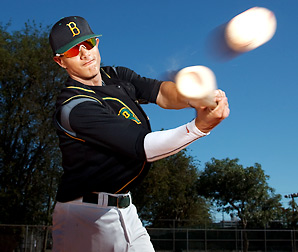 MLB reports: I hear ya Gary. I hear the moans and groans throughout the Rogers Centre on many nights about the inability of the Toronto Blue Jays to compete with the money of the Yankees and Red Sox. But often lost in the discussion is the Tampa Bay Rays. Last I checked, the Rays have been contenders for some time on a minimal budget. Yes, your Orioles can compete, even in the AL East. But the team will need to be built around strong homegrown prospects. With all the young Orioles players coming up and in place, the future is bright. Matt Wieters, Manny Machado and company will complement Adam Jones and Nick Markakis well. Plus you have young pitching coming up in every level. The future is bright in Baltimore and the team is being built the right way. Give it time, hope is there.
Q: When are the All-Star team rosters announced? I can’t wait! From Liz, Toronto.
 MLB reports: The All-Star game will be played in Arizona on Tuesday July 12th. The rosters for the AL and NL squads will be announced on Sunday July 3rd. Then from July 3-7, fans will be able to vote on-line for the final player for each squad. Ballots need to be in by tomorrow so make sure to vote for your favorite players soon!
Q: Are you a Phillies fans? You talk about the team ALOT on twitter! From: Mary, Florida.
 MLB reports: Hi Mary. Thanks for the question. I am a baseball fan in general (thus the “MLB reports” name). As far as favorite teams, as most of the readers know, I tend to lean towards the Tigers. I also show the Jays love as well. I talk about the Phillies quite a bit because they are very good. Look at their record. From there, I tend to focus on Roy Halladay and Cliff Lee. What the two of them could accomplish in the playoffs together is scary. I have never seen a 1-2 punch at the top of a rotation like this ever. Halladay may be the best pitcher of our time and Lee is unhittable when he is on. My heart may not be in Philadelphia, but my respect surely is.
Q: How do I join MLB Reports? I love baseball and writing. Please help! From Catherine, Seattle.
MLB reports: Thank you for the inquiry Catherine. We have people contributing to MLB reports in many ways. We are looking at taking on a couple of Interns. Click here to learn about the position and to apply. We also encourage readers to e-mail us about writing guest spots. As part of the MLB reports mandate, we look to help develop and assist young baseball writers in developing their craft. You can also “like” us on Facebook and contribute posts/pictures on our wall. We love our readers to get involved, as the Reports should be for the fans and by the fans. Let me know and we will get you involved! If any readers are also interested in applying for the Intern positions or contributing to MLB reports, please see our contact information below.
Thanks for the e-mails and keep them coming! mlbreports@gmail.com
E-MAILBAG ARCHIVE: Click here for the Archives of Ask the Reports
Please e-mail us at: MLBreports@gmail.com with any questions and feedback. You can follow us on Twitter and become a fan on Facebook . To subscribe to our website and have the daily Reports sent directly to your inbox , click here and follow the link at the top of our homepage.

Expanding and Changing the MLB Playoffs: Time to Add More Wild Card Teams
Thursday June 9, 2011

MLB reports: Ever since the players’ strike of 1994 and ensuing realignment of baseball and expanded playoff format (implemented as of 1995), continual debates have raged in baseball circles as to the next round of changes. With everyone still talking today on the topic of wild cards and expanding the MLB playoffs, MLB reports is ready to take this topic head on to find the solution.
 MLB realignment was already covered by us in a recent feature. After 16 seasons under the current format, clearly changes are needed. Our realignment post was just the beginning of the long process to reform and revitalize Major League Baseball. The next step is expanding the amount of wild card teams and changing parts of the MLB playoffs format which will be discussed today. From there, expansion is required to produce 32 total teams, 16 per division which will be covered on MLB reports on another day. Stay tuned.
The current MLB playoffs structure essentially looks like this:
-
Eight total teams make the playoffs
-
Four teams per league
-
One wild card team per league
-
The Division Series (ALCS and NLCS) is a best of five games format
-
The winners from the ALCS and NLCS advance to the League Championship Series (ALCS and NLCS)
-
The ALCS and NLCS are both a best of seven games series, winner of each advance to the World Series
-
World Series is a best of seven, home field based on winner of All Star Game
As part of revamping the system, it is apparent from whispers around baseball that two more wild card teams are about to be added to the mix. As a result there will now be ten total teams that make the playoffs, five per league. Taking the home field talk out of the equation, which is an article in itself, the issue today is the number of teams to make the playoffs and the best format for each playoff series.
I am writing today’s article from a realistic point of view. When I discussed realignment a couple of weeks back, it was from a hopeful and practical standpoint, but with the idea that baseball would be unlikely to accept most of my changes. For a game known for its long-standing traditions, the winds of change blow very slowly through baseball. I am presenting the revamped playoffs with the idea that Major League Baseball will not change too much. While it would be nice to have anywhere for 12-16 teams to make the playoffs according to some fans and analysts, the chances of that happening are close to nil. It was a big change to add the two wild card teams back in 1994 and only two more wild card teams will be added in the next year or so at most. Period. There are some that may want more, but it will not happen.
On the same token, the best of five vs. seven game series debating is raging as well. Some people do not agree with the short five games series in the opening round, as it creates a scenario whereby a top team can be bounced early without the ability to play a full seven games series. This topic will be addressed, but we will have to assume that likely the opening rounds will remain a best of five games series and only the League Championship and World Series would be a best of seven games series. Again this may not be the best option for all, but it is what it is and baseball is unlikely to bend on this as well.
 The last point to make before going through my playoff scenarios is the home field advantage debate, specifically awarding it based on the All Star game outcome. Most traditionalists, yours truly included, despise this format. The best team in baseball should be rewarded for a seasons worth of games played and not have home field determined based on the results of a high-profile exhibition game. After the All-Star game finished in a tie in Milwaukee during the 2002 season, baseball was left with egg on its face and scrambled to give the game more meaning. The decision to award the World Series home advantage based on the winner of the All Star game has been argued by many to have failed to give the All Star game more meaning. But assuming that this format stays in place, an injustice to the teams that finish with better records after season’s end will remain.
In adding two more wild card teams, an additional round of the playoffs will go into effect. The opening round, which we can call the wild card round for simplicity, will have the two wild card teams in each league face-off (most likely a best of five). The winner of the wild card round will advance to the Division Series. From there, the current playoff format would remain in place, with the best of five games Division Series leading to the League Championship and World Series. Part of me is inclined to allow the top seeded team in each league to have an automatic bye into the League Championship Series, with the wild card teams facing off in the Division Series and the 2nd and 3rd seeded teams in each league facing off as well in the Division Series. Allowing each top seed to have a bye directly into the League Championship would reward the highest winning team in each league. But issues would arise, including arguments that two byes for each top team would be too great of a reward and how to determine if there are ties for the top record in each league.
As a result, to keep things simple, baseball will simply have to institute a 4th round of playoffs. In my estimation, the Wild Card Round can be a best of five games, with every other round moving to a best of seven. While baseball unfortunately will likely keep the division series as a best of five games, a move to a best of seven would create more balance in making sure that the true “top” teams advance. Major League Baseball will still have to consider a way to reward the top winning team in each league eventually and that will likely be by creating a first-round bye in a further expanded playoff format, when more wild card teams are added. But until that time, the top winning teams will simply have to enjoy home field advantage. That advantage should continue right into the World Series and it is the hope of this analyst that baseball will realize that one day.
So as we head into another new world of baseball changes, I can’t foresee that the game as we know it today will get completely blown up and redone. Even though the game may need more fine tuning, most changes will come along very slowly. The expanding of the playoffs will be a good thing ultimately for the game, as each team plays a whopping 162 regular season games plus spring training and more teams deserve to be rewarded with playoff berths. An expanded playofs will give teams a better chance to make the playoffs and increase the number of cities and fans involved in the playoff races come September. Adding two more wild card teams is the next logical step and it looks like it will go into effect as soon as 2012. With so many of the other major sports in turmoil, it is good to see baseball alive and healthier than ever. It looks like Major League Baseball has learned its lessons after 1994. Hopefully the game will only continue to move forward and cement itself once again as the greatest sport in the world.

Please e-mail us at: MLBreports@gmail.com with any questions and feedback. You can follow us on Twitter and become a fan on Facebook . To subscribe to our website and have the daily Reports sent directly to your inbox , click here and follow the link at the top of our homepage.


 MLB Reports
You must be logged in to post a comment.