Blog Archives

Interview with Robbie Erlin: San Diego Padres Prospect
Monday October 31, 2011
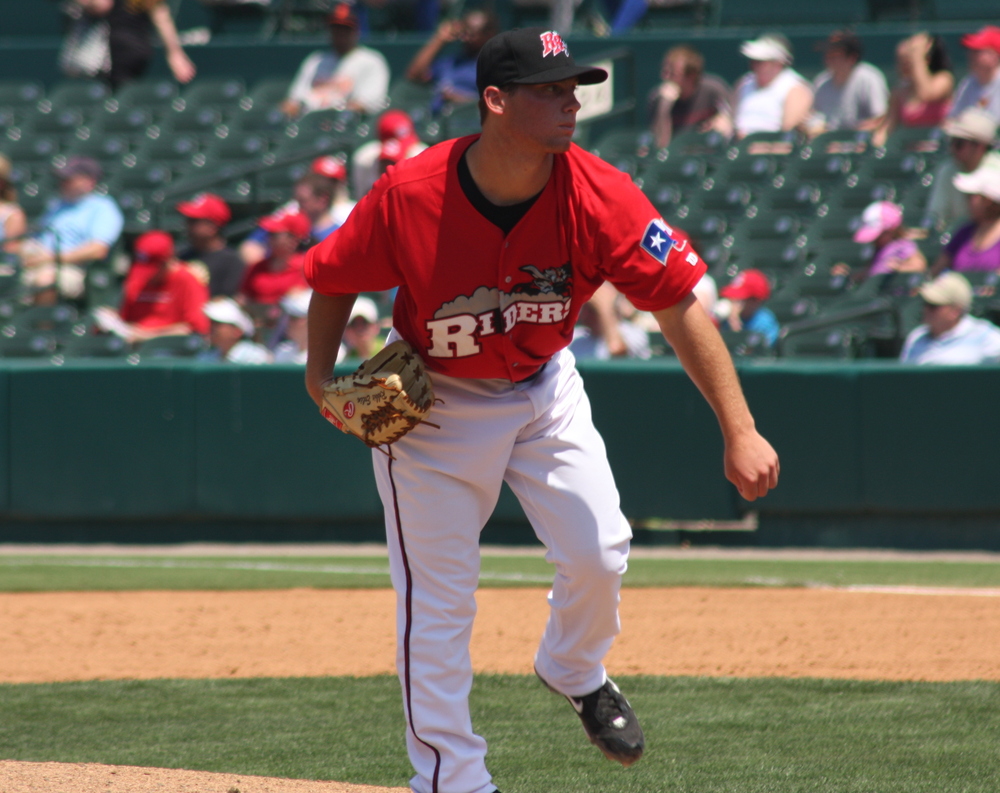
Jeff P (Guest Writer – MLB reports): I had the pleasure to recently interview one of the top prospects in the game, Robert Erlin of the San Diego Padres. The 21-year-old Erlin was drafted by the Texas Rangers in the 3rd round of the 2009 draft. After posting incredible numbers in his brief time in the Rangers organization, Erlin was traded in July 2011, with Joe Wieland for reliever Mike Adams. While Adams was a solid addition to the Rangers bullpen on the road to the World Series, Erlin exploded after the trade. In 6 starts with San Antonio in AA, Erlin had a 1.38 ERA, 1.154 WHIP and 31/4 SO/BB. On the fast track with the Padres, Erlin has a good chance of making his major league debut as early as 2012. Featured on MLB reports, I proudly present my interview with Padres Prospect, Robbie Erlin:
_________________________________________________________________________________________________________
MLB reports: Hey, Robbie. First of all, I want to thank you for being with us today, it really is an honor to have you with us. I’m sure you have a busy schedule so, let’s get this started. First off:
MLB reports: You have been outstanding to late, and even became a nominee of MLB.com‘s top 50 prospects, who can you thank for your success?
 Robbie Erlin: I would thank my dad who taught me how to pitch at a young age, Dave Salter, my pitching coach since I was 13 years old, all the coaches in the Texas Rangers organization who I have worked with during my first couple years of pro ball, and the coaches on the San Antonio Missions who I got to work with for a couple of months this season.
MLB reports: Was it hard to adjust from the Rangers to the Padres?
Robbie Erlin: It wasn’t too hard to make the adjustment. The Padres and Missions staff let me stick with my routines and throwing program and the players were very helpful with any questions that I had.
MLB reports: What do you think is unique about the San Diego Padres organization?
Robbie Erlin: The amount of young talent that they have in both the minor leagues and at the major league level.
MLB reports: What are your daily rituals, and hobbies off the field?
Robbie Erlin: I watch the TV show “Las Vegas” everyday before I go to the field. In the offseason I enjoy spending time with my family and visiting my friends who are in college.
MLB reports: You have been dominating lately. What changes have you made in order to succeed?
Robbie Erlin: I have really tried to concentrate on hitters’ tendencies and gaining information about offenses so I can apply it in my outings. Also, I have made small adjustments in my delivery so it looks the same on every pitch.
MLB reports: What were the reactions on you getting drafted, and the after party?
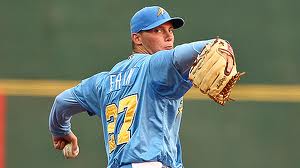 Robbie Erlin: My family, friends, and I were very excited about getting drafted. I wanted to play baseball after high school and the Rangers provided me with the opportunity.
MLB reports: Out of your fastball, curveball, and change-up, what would you say is your strongest pitch?
Robbie Erlin: Fastball.
MLB reports: Is it safe to say we can see you in MLB in late 2012, or 2013?
Robbie Erlin: That is a decision for the Padres to make. I am going to focus on pitching and improving as much as I can.
MLB reports: Who do you look up to in the MLB?
Robbie Erlin: There is not one specific player. I watch all of them and try to learn from how they play the game.
MLB reports: What kind of music can one find on your iPod?
Robbie Erlin: Country, Classic Rock, Pop, and Rap.
MLB reports: What’s your favorite sport besides baseball?
Robbie Erlin: Football.
MLB reports: Who was the hardest batter you’ve faced in your professional career?
Robbie Erlin: Cody Hinze from Houston has always been a tough out for me.
MLB reports: Let’s end it off here: If you weren’t a baseball player, where would you see yourself today?
Robbie Erlin: I would be in college working towards a degree.
MLB reports: Thank you very much for taking your time out of your busy schedule so we can have you with us. Much appreciated!
Robbie Erlin: No problem. Thank you very much for the interview!
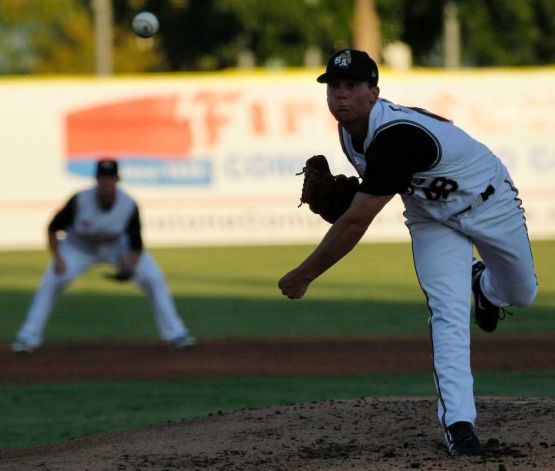
Thank you again to Robbie Erlin for taking the time to join us today on MLB reports. We highly encourage our readers to post at the bottom of the article any questions and/or comments that you may have for Robbie. As well, please follow Robbie on Twitter (@RobbieErlin11)
***Today’s feature was prepared by Jeff P, Guest Writer to MLB reports. We highly encourage you to leave your comments and feedback at the bottom of the page and share in the discussion with our readers. You can also follow Jeff on Twitter.***
Please e-mail us at: MLBreports@gmail.com with any questions and feedback. You can follow us on Twitter and become a fan on Facebook . To subscribe to our website and have the daily Reports sent directly to your inbox , click here and follow the link at the top of our homepage.

Fantasy Baseball Report: Value of Elite Setup Men: Romo, Alburquerque, Adams and More
Monday September 19, 2011

MLB reports: We welcome the newest member of the MLB reports team, Peter Stein. For all you fantasy baseball fanatics, Peter will be featuring weekly reports for you! In his debut, Peter discusses the value of elite setup men and how they can benefit your fantasy team:
Peter Stein (Fantasy Baseball Analyst – MLB reports): Playing in a standard 15-team, daily league, auction, 5 X 5 Roto league this year, I learned many valuable lessons in fantasy baseball. However, one strategy and way of thinking in particular proved to be the most valuable and has had my team in cruise control and on the way to first place since the middle of July. (Disclaimer: Although this article is most applicable to daily roto leagues, the basic concept can be extended to all formats of fantasy baseball).
While most relievers who do not contribute saves largely go unnoticed, the game’s top setup men can provide the highest of quality innings (ERA, WHIP, and K) and as a result are extremely undervalued by fantasy players across all boards.
 It is common for owners to spend half of their budget on two or three top of the line starting pitchers with the idea that they can rely on these aces to carry their team in the pitching categories. However, said owner will still have over 50% of their innings to relegate –often to a variety of run of the mill starters or high-risk high reward types of players. If you play your matchups right, it is true that there are many starters who can provide quality innings for you. For example, on my team, outside of Felix Hernandez, for starting pitchers, I relied heavily on starting pitchers ranked outside of the first tier, such as Colby Lewis (95 innings), Derek Lowe (63 innings), John Danks (54 innings), Javier Vazquez (61 innings), Gavin Floyd (41 innings) Erik Bedard (39 innings), and Ryan Dempster (37 innings) in my effort to reach the 1,250 innings limit.
I managed to get tremendous value out of these players based on matchups (a whole different discussion), but you have to be careful with guys like this. Each of these guy’s season totals are very unimpressive, and if used incorrectly can ruin your team. Danks, Lowe, Floyd and especially Vazquez and Dempster each had epically bad stretches this year. Personally, I have only used Vazquez for 61 innings, but it has come with a 1.45 ERA and 0.85 WHIP. If I threw Javy out there for every inning this year I would have to swallow an unimpressive 3.95 ERA and 1.25 WHIP.
But back to the topic at hand (Vazquez will actually be the focus of next week’s article), the point is that you simply cannot receive 200 quality innings from these guys. You need to look elsewhere and this is where the game’s elite setup men become so valuable. Three or four setup men, used in conjunction with each other, can contribute the same value as one ace – without having to deal with the stress of matchups!
To prove my examples, and draw from my team, lets take a look at Sergio Romo and Al Alburquerque, Mike Adams, three player s who cost me $1 each. For frame of reference, the game’s elite pitchers, such as Felix Hernandez and Tin Lincecum, went for $45 and $43 respectively.
In 40 innings pitched, Sergio Romo contributed an ERA of 1.40 a WHIP of 0.64, a whopping 62 strikeouts, and a useful 3 wins and 1 save. Although, he pitches approximately twenty percent of the innings of Felix or Lincecum, he provides value that is actually significantly better than both of these starters. Now lets add Alburquerque’s 39.2 innings, which come with a league best 14.1 k/9 ratio, a 2.04 ERA and 6 wins. Talk about some quality innings and a sure way to boost strikeouts. A guy like Al can allow you to use a low strikeout starter who contributes to ERA and WHIP – perhaps a Mark Buehrle. Albuquerque is owned in just 1.0% of ESPN fantasy leagues, but if started all year he provides 6 absurd starts that are really uncharacteristic of ANY starter in the league.
Do you see what I’m on to?
 Mike Adams, perhaps the most well-known of the trio entering 2011 (for save potential), in 68.2 innings has contributed 4 wins, 2 saves, and ridiculously low ERA (1.44) and WHIP (0.70 totals).
I morphed these three players into one. This three-headed monster (costing me $3 dollars), contributed 192 strikeouts in 150 innings, a WHIP of 0.87, an ERA of 1.63, 13 wins and 3 saves. Lets see how this imaginary player, lets call him Sergal Adamquerque, stands up to next to King Felix:
Felix Hernandez Romo/Alburquerque/Adams
IP 230 150
W 14 12
K’S 220 192
ERA 3.32 1.63
WHIP 1.19 0.87
Saves 0 3
Do you see the point here? The combination of these relievers, for $3, provides more value than Felix Hernandez who cost $45! I use Felix as an example is because is one of the elite pitcher’s in the game, and I myself spent $45 on him in my draft. However, this was not $45 poorly spent. It is impossible to rely solely on relievers to fill your league’s innings limits. You must have an anchor on your staff, such as King Felix. I also received great support from two other aces, Zack Greinke (88 innings) and Cliff Lee(45 innings), but was able to trade them for help in the hitting department. However, the point is, not even Felix, Lee, or Greinke can give you the value in strikeouts, WHIP, and ERA as these elite setup men. Used in combination with one another, these guys can create your very own “ace,” one that is inexpensive and allows you to budget your dollars to bolster your offense.
With that said, it is true that it is difficult to predict wins with reliever, but remember Felix Hernandez will likely end up with a total of 15 wins in 200 innings. These relievers only need three or four wins in 50 innings to provide similar value in that department. However, you could also get surplus value here. In 2010 Tyler Clippard won 11 games in 90 innings. There is always the chance that these studly setup men take the reign as closer. I drafted my Sergio Santos for $1, partly due to my lack of faith in Matt Thornton, but also because in 2010 he averaged over a strikeout per inning with good ERA and WHIP. Now as a closer in 2011, with a 12.86 k/9 ration, he figures to be a hot commodity in 2012 drafts.
You might think I am drawing form a small samples size. Although I have focused on a few players, the list truly goes on: David Robertson, Koji Uehara, Jonny Venters, Greg Holland, Chris Sale, Glen Perkins, Aaron Crow, Daniel Bard, Tyler Clippard, and Antonio Bastardo are all examples of players who provide just as much value (or more) per inning as the game’s elite starting pitchers.
It is true that the list of the very elite reliever sis short, but there a long list of players who are still extremely useful. To really prove my point, lets look at a reliever who is the third or fourth option on his own team, only owned in 1.5% of leagues, yet still provides tremendous value: Jesse Crain. The little known and used Crain could have provided your team (to date) with 63 strikeouts in 67 innings, 8 wins, and a stellar WHIP (1.19) and ERA (2.29). You really don’t need to dig that deep to find value from relief pitchers.
The Takeaways:
 Relievers do not need to get saves to provide value and as such do not overpay for closers who don’t contribute positively to the ERA, WHIP, and K categories. If you are going to splurge on a closer, it better be someone like Craig Kimbrel, but there is still risk when you pay big bucks for a top closer. Joakim Soria, usually a given to contribute in ERA and WHIP, actually provided negative value for fantasy owners this year in these categories. His 28 saves are not worth the $20 dollars I spent expecting his usual elite numbers.
Next year go ahead and spend the money on the elite pitcher or two to anchor your staff. However, do not waste the dollars and overpay for innings from unproven or middle of the road starting pitchers. These innings can be much more effectively filled with a plethora of setup men from around the league. Draft a sure closer or two, and if you invest wisely in the elite setup men, you will be sure to own another closer or two down the road. Investing in these types of relievers in the draft and on the waivers will save you money – money that can be used on your offense and s on elite starting pitching. You can now dedicate your bench spots to these relievers, shuffling them in and out of your lineup along side an ace or two, and you will get value per inning on the same scale as Felix, Lincecum and other elite starting pitchers. It will require you to not only to target such players in the draft, but you will also have to be a hawk on the waiver wire. Just think of a combination of three of four of these players as one Felix Hernandez, but for 10% of the price.
Clearly, this strategy is most effective in larger leagues and league that allow you to make daily roster changes. However, I hope this article demonstrates how setup relievers have potential to add value in all fantasy leagues, although they are largely ignored or overshadowed by closers.
***Today’s feature was prepared by our Fantasy Baseball Analyst, Peter Stein. We highly encourage you to leave your comments and feedback at the bottom of the page and share in the discussion with our readers. You can also follow Peter on Twitter (@peterWstein).***
Please e-mail us at: MLBreports@gmail.com with any questions and feedback. You can follow us on Twitter (@MLBreports) and become a fan on Facebook . To subscribe to our website and have the daily Reports sent directly to your inbox , click here and follow the link at the top of our homepage.
Summary of all Trades- 2011 MLB Trade Deadline Report and Analysis
Monday August 1, 2011
MLB reports: Another hectic MLB trade deadline is in the books. This year’s trade market was just as much about the trades that were not made as the ones that were. For all the speculation leading up to the deadline, star players like James Shields, B.J. Upton, Heath Bell and Carlos Quentin stay put. The trades that did go down included Ubaldo Jimenez, Mike Adams, Doug Fister, Colby Rasmus and much more. Here is a rundown of all the trades that took place in Major League Baseball as part of the non-waiver MLB Trade Deadline, which was 4:00p.m. on Sunday July 31st:
Michael Bourn and cash (Astros) for Jordan Schaefer, Brett Oberholtzer, Paul Clemens, Juan Abreu (Braves): The Braves get a solid leadoff hitter, center fielder and base stealer from the Astros for four average prospects. Without having to give up any of their top prospects and filled a huge hole in their lineup and outfield, top marks goes to the Braves.
Hunter Pence and cash (Astros) for Jonathan Singleton, Jarred Cosart, Josh Zeid and a player to be named later (Phillies): A win for the Phillies, as they get one of the top outfield bats in the game in Pence, who remains under team control going into next year. I like the return of Singleton, one of the top hitting prospects in the minors. But still, the Astros should have received a higher return for Pence who was the face of their franchise. A win for both squads but give the edge to the Phillies.
Mike Adams (Padres) for Joseph Wieland and Robert Erlin (Rangers): A win for both sides. The Rangers get one of the top relievers in baseball (Adams), who remains under team control after the season. For a team that is a World Series contender, Adams and Uehara give the Rangers a suddenly formidable pen. Wieland and Erlin were two top pitching prospects in the Rangers system and give the Padres much more depth. For a team that acquired what it needed most without giving up any of its top prospects, the Rangers can chalk this trade up to a huge win. The Padres did not do badly either, as Adams was a luxury they did not require and the Padres farm system all of a sudden became much stronger.
Brad Ziegler (A’s) for Brandon Allen and Jordan Norberto (Diamondbacks): A deal that works for both teams. Ziegler is a useful reliever that strengthens the Dbacks pen in a push for the NL West crown. Allen is a highly considered first base prospect who should slot well in Oakland plus Noberto is another arm in the A’s organization. It is too bad for the A’s that the Lars Anderson plus prospect for Rich Harden deal fell through with Boston, but Allen is a good runner-up prize.
Erik Bedard and Josh Fields (Mariners) for Trayvon Robinson (Dodgers) and Chih-Hsien Chiang, Tim Federowicz, Juan Rodriguez and Stephen Fife (Red Sox): Red Sox get Bedard and Fields (the reliever, not third baseman currently in Japan, Mariners get Robinson and Chiang, while Dodgers get Federowicz, Rodriguez and Fife. Confused? Good. This was one of those three-way deals that when all is said and done, you are left scratching your head. The key to this deal is Erik Bedard for the Red Sox. If he stays healthy, and that is a big if, the Red Sox might have a valuable addition to their starting rotation. Fields should also slot in well in the Red Sox pen. Both Robinson and Chiang are considered to be good prospects and should have a very good chance at cracking the Mariners’ outfield. The trade of Robinson came as somewhat of a surprise and the Dodgers have received a great deal of negative press on the deal. The team however was looking for a prospect catcher and believe they have found it in Federowicz and the additional parts in Rodriguez and Fife. The Mariners are the big winners in this deal, while the Red Sox play with fire and the Dodgers likely just got burnt.
Ubaldo Jimenez (Rockies) for Drew Pomeranz, Alex White, Joe Gardner and Matt McBride (Indians): What a difference a year makes. The Indians are going for it and have beefed up their rotation with the addition of Jimenez. When on his game, Ubaldo is one of the best in baseball. Further, Ubaldo continues to be under team control, so the Indians don’t simply acquire a summer rental here. The keys to this deal for the Rockies are Pomeranz and White. Considered to be the Indians two best pitching prospects, the Rockies add to their farm while losing their ace. While Pomeranz is considered highly in baseball circles, I would have expected to see the Rockies get more major league ready talent. Considering that they were supposed to get Jesus Montero and Ivan Nova from the Yankees or Yonder Alonso, Yasmani Grandal and/or Homer Bailey from the Reds, I give the Indians the edge on this deal. Ace pitchers do not grow on trees and the Indians got one without giving up any of their major league talent or some of their other finer prospects, including Nick Weglarz. Competing with the big boys, the Indians get the prize of the trade deadline and likely a division title as well.
Derek Lee (Orioles) for Aaron Baker (Pirates): The Pirates are going for it and while Lee is an aging first baseman, he is an upgrade offensively over incumbent Lyle Overbay. Baker is a Class A first baseman that is not considered a top prospect. This trade is a draw, as the Pirates beef up for their playoff run and the Orioles auction off an impending free agent to stock their system.
Orlando Cabrera (Indians) for Thomas Neal (Giants): This deal came out of left field, as the Indians are still contending and were expected to hold onto Cabrera. With many young infielders on their roster, the Indians were prepared to sacrifice their utility man for one of the Giants higher rated prospect bats. Speaking to Neal on several occasions, he is one of the nicer young men you will ever want to meet in the game. Considered a great tools player, both offensively and defensively, the Indians have added another piece to their offensive puzzle while sacrificing a veteran that was expandable. The Giants, with injury and offensive woes, took a chance on Cabrera, a good luck charm for each of his respective teams in the postseason. While Neal was a big price to pay, the Giants are in win-now mode. A draw, as both teams will away happy from this exchange.
Koji Uehara (Orioles) for Tommy Hunter and Chris Davis (Rangers): This is a good old-fashioned baseball trade. The Rangers pick up a veteran reliever, who is enjoying his finest campaign in the big leagues and could be a setup man or closer. The Orioles continue to stockpile prospects and add a starter and first baseman to their mix. Davis has one of the most explosive bats in the game when he gets hot and the Orioles could have their cleanup hitter for the next 5-7 years. Hunter should be a good #3 or #4 starter for the team. A draw as both teams achieve their respective goals in this deal.
Mike Cameron (Red Sox) for player to be named later or cash (Marlins): Cameron was not hitting in Boston but could be a valuable veteran presence in Florida. I like this move for the Marlins as Cameron is solid player and person, perfect for their clubhouse.
Felipe Lopez (Rays) for cash (Brewers): Lopez still has pop in his bat and could be useful for a playoff push. There was no room for the Rays on their roster and they will happily take the financial relief.
Jason Marquis (Nationals) for Zach Walters (Diamondbacks): I am a fan of what the Diamondbacks are doing in Arizona, but this trade doesn’t work for me. Marquis will pitch in Arizona, but I don’t see him being the effective starter the team needs to fight the Giants for a playoff berth. Walters is a prospect shortstop who could have been Stephen Drew‘s replacement one day when he left the team. Walters has a good offensive bat and was not worth the price of Marquis. Advantage Washington for adding another prospect to its growing farm while dumping a veteran pitcher that had no place on their roster.
Mike Aviles (Royals) for Yamaico Navarro and Kendal Volz (Red Sox): The Red Sox get some sort of infield insurance, which was unnecessary in my estimation with both Marco Scutaro and Jed Lowrie on the roster. If Lowrie is out beyond early August as projected, then this deal makes sense. Otherwise, to give up two decent prospects for a player who has struggled this season and is unlikely to hit much in Boston does not equate for me. Advantage Royals for dumping a player who did not fit on the team and continuing to stock their system.
Jerry Hairston Jr. (Nationals) for Erik Komatsu (Brewers): The Brewers get depth for their playoff run and the Nationals get a marginal prospect back. A draw.
Wil Nieves (Brewers) for cash (Braves): Yawn. An average catcher for cash.
Francisco Rodriguez and cash (Mets) for two players to be named later (Brewers): A good trade for both teams. The Brewers strengthen their pen with the addition of K-Rod, who could close or set up for the team and is a free agent at season’s end. The Mets get salary relief and likely two decent prospects back.
Colby Rasmus, P.J. Walters, Brian Tallet (Cardinals) for Edwin Jackson and Mark Teahen (White Sox) for Jason Frasor, Octavio Dotel, Marc Rzepczynski, Corey Patterson and Zach Stewart, three players to be named later or cash (Jays): The good news with this trade is that I will not have to struggle to spell Rzepczynski anymore. But in all seriousness, this was the first three-way deal of the deadline and probably the most interesting trade that went down. The White Sox shed the contract of Teahen (to the Jays) and acquire Frasor and Stewart. The Cardinals get Jackson for their rotation and Dotel/Rzepczynski for their bullpen, as well as three more PTBNL or cash from the Jays. The Jays get the biggest prize, Rasmus to play center and bat second, as well as Miller, Tallet and Walters for their pen. The Jays in our opinion win out, as they get a rare top prospect bat and only give up three middle relievers. The White Sox did well in getting salary relief, a prospect arm in Stewart and a useful bullpen arm in Frasor. The question marks surround the Cardinals, who give up the top player in the trade and might get left with very little more than adqueate playoff rentals as both Jackson and Dotel might not be with the team in 2012.
Nick Green and cash (Orioles) for Zach Phillips (Rangers): Marginal reliever for marginal shortstop. A push.
Ryan Langerhans (Mariners) for cash (Diamondbacks): A depth player at best, the Diamondbacks hope to get one or two big hits out of Langerhans in the push for a playoff berth. It looks like this was the best the Mariners could do in dumping another salary.
Doug Fister and David Pauley (Mariners) for Francisco Martinez, Casper Wells, Charlie Furbush and a PTBNL (Tigers): For a Tigers team that was considered early in the day to be in the hunt for Ubaldo Jimenez, this one is a bit of a let down. Fister will be a #4 or #5 starter for the Tigers, good but not great. Pauley was having an incredible season for the Mariners in their pen and should do well in Comerica. Wells will likely slot immediately into the Mariners outfield and the rest of the players are prospects to their stock their farm. While I’m not excited about what Detroit received, I am equally not impressed by what they gave up. Call this one a draw. Middle of the road players for players at this point.
Rafael Furcal (Dodgers) for Alex Castellanos and cash (Cardinals): With Dee Gordon in the minors and money woes being an issue, this trade for the Dodgers is about getting younger and saving money in the process. The Cardinals are pushing for a playoff spot and if healthy, Furcal should give the team a spark offensively. Personally, I would not trust Furcal based on his injury history. The Dodgers get back a marginal prospect in this swap. The fact that the Dodgers unloaded Furcal and got the Cardinals to pick up a large portion of his contract, I will label this trade a Dodgers win.
Juan Rivera (Jays) for player to be named later or cash (Dodgers): Considering the Dodgers just released Marcus Thames, I am not sure why they chose to acquire Rivera. They are very similar players, although I would give the edge to Thames for his better defense. A win for the Jays, dumping a player that had no role on their team and was not hitting very much.
Jonny Gomes and cash (Reds) for Bill Rhinehart and Christopher Manno (Nationals): Gomes should be a good bat for the Nationals but with the team out of the playoff picture, it is a little curious why the team would give up prospects at this point. Reds get the advantage as there was no room in their outfield for Gomes, they acquire two prospects and open up space for Yonder Alonso to play everyday.
Carlos Beltran (Mets) for Zack Wheeler (Giants): One of the best trades of the year that will benefit both teams. The Giants get the top bat they so badly needed after Buster Posey went down. Together with salary relief (the Mets will kick in about $4 million), the Mets get one of the top pitching prospects in the game. The Giants had to go for it and could not afford to waste their top pitching rotation without providing offense. With Beltran an impeding free agent, the Mets strengthen their rotation for years to come.
Jeff Keppinger (Astros) for Henry Sosa and Jason Stoffel (Giants): The Giants get more bench depth for the playoffs and the Astros get back decent prospects. Another boring but necessary trade for both. Consider a draw.
Ryan Ludwick (Padres) for a player to be named later (Pirates): The Pirates are looking to make a strong playoff run and former Indian Luckwick would fit well in their offense this year. It remains to be seen what the Pirates have to give up, but for a player in as strong demand as Ludwick, as long as it is not too much, give the edge to the Pirates. This one will hinge on the quality of the prospect going to the Padres.
Kosuke Fukudome and $3.9 million (Cubs) for Abner Abreu and Carlton Smith (Indians): This trade is all about the Indians going for it in a year when the AL Central is ripe for the taking. Fukudome, largely considered a disappointment in Chicago, is sent with cash to the Indians for their stretch run. Good to get on base with the occasional pop, the hope is that the change of scenery will do Fukudome good. The prospects the Cubs received back are marginal at best, as this trade was mostly about a salary dump. Credit to Chicago for ridding itself of one its huge mistake contracts, with more such contracts to go. The Indians hope they catch lightening in a bottle, but likely will get only decent production out of their latest Japanese import.
Wilson Betemit (Royals) for Antonio Cruz and Julio Rodriguez (Tigers): The first trade in the deadline dealings, the Tigers upgrade their third base situation over Brandon Inge. The Royals shed a contract and get two decent prospects. We will call this one a draw.
Please e-mail us at: MLBreports@gmail.com with any questions and feedback. You can follow us on Twitter and become a fan on Facebook . To subscribe to our website and have the daily Reports sent directly to your inbox , click here and follow the link at the top of our homepage.


 MLB Reports

You must be logged in to post a comment.