Category Archives: On the Verge: MLB Prospects
An Inside Look and Analysis of the top Baseball Prospects

On the Verge: Top MLB Prospect Jaff Decker
Sunday December 11, 2011

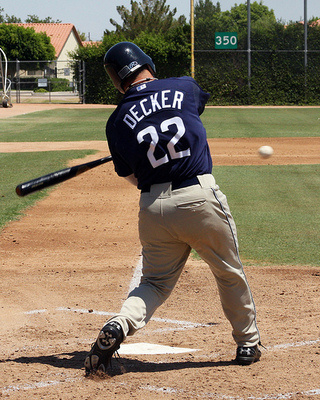
Jonathan Hacohen: In this edition of On the Verge, I take a look at one of the prospects in the game today: Jaff Decker of the San Diego Padres. Today’s feature is part one of our two-part series on Jaff. Coming up later this week, we will be bringing you my exclusive interview with Jaff Decker. As part of the interview, Jaff talks baseball, including growing up and learning the game and his future in San Diego. Keep an eye out, as I definitely enjoyed learning about Jaff and hearing about his story in his own words. A must read for every baseball fan!
So why the excitement and hype surrounding Jaff Decker? It is very simple. While there are many prospects that play the game every year, there are few “special” ones that will leave an impact in the game. Jaff Decker is one of those special players. Born February 23rd, Jaff will be 22-years-of-age come opening day. Drafted in the 1st round (42nd overall) by the Padres in 2008, San Diego uncovered a hidden gem in selecting Jaff. Just take a look at the his numbers and you will be blown away.
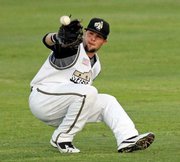 Jaff played across two levels in his first professional season. Playing between Rookie and Low-A Ball, Jaff put up an incredible .343 AVG, .513 OBP and .521 SLG. He walked more than he struck out (57 to 41), and even stole 9 bases in 10 tries. In 2009, Jaff moved to Fort Wayne (A-Ball) and continued his assault on minor league pitching. He put up a .299 AVG, with a .442 OBP, .514 SLG and 16 home runs in only 104 games. Jaff had close to a 1:1 walk-to-strikeout ratio (85/92). The sky was limit at this point as most major baseball publications and analysts began to view Jaff as a can’t miss prospect.
2010 unfortunately was a difficult season for Jaff. He moved to Lake Elsinore (High-A Ball). Between injuries and slumps, Jaff started off the year very slowly and had a difficult time getting untracked. He was able to salvage the year with a strong second half and still finished with 17 home runs in only 79 games. He hit .262 with a strong .374 OBP and .500 SLG. The walks and strikeouts though told a different story, as he walked only 47 times and struck out 80 times. It appeared to me that he was pressing that year and was moving away from his usual patience approach. I was looking forward to 2011 and to see what Jaff could do matched up against AA pitching. I certainly was not disappointed.
Last season turned out to be Jaff’s best year in professional baseball. The strong combination of power and patience displayed throughout his career continued to shine as he blossomed into one of the top slugging prospects in the game. Playing a full season in AA, Jaff hit a career high 19 home runs, drove in 92 RBIs and scored 90 runs. He stole 15 bases in 20 attempts, making him a viable 30/30 candidate in the future. While his average was down to .237, the OBP remained a steady .373 to go along with a .417 SLG. While Jaff has shown higher averages and OPS numbers in previous years, I feel that looking at his body of work as a whole, 2011 was the breakout year. Jaff took 103 walks, while striking out 145 times. So while his strikeouts should be cut down a bit, he was not pressing and went back to his patient ways. A great sign of things to come.
When I think of comparables to Jaff Decker, I think of Adam Dunn and Nick Swisher. Sluggers that hit a fair amount of home runs, take a ton of walks and get on base at high clip. If Jaff stays on his current path, that is very good company to be in. We should find out very soon, as I project Jaff Decker to likely make his major league debut sometime this year, with a full-time MLB job by 2013. As he progresses to San Diego, Jaff will have new challenges to face. A young developing team where he will be expected to become an offensive savior. Ballpark dimensions that are not conducive to hitters. A great deal of pressure on a young hitter. But Jaff Decker appears to not only have the talent, but the right attitude and approach for his future role. A smart young man who is well-mannered, he should fit in well in the laid back San Diego area. For a team that has been looking for its next franchise player since the departure of Tony Gwynn, they made have indeed found him in Jaff Decker.
Get to know Jaff Decker more intimately next week, as we feature my interview with the Padres prospect. Stay tuned for part-two of our Jaff Decker series, coming up on MLB reports!
 Jonathan Hacohen is the Lead Baseball Columnist & Editor for MLB reports: You can follow Jonathan on Twitter (@JHacohen)
Please e-mail us at: MLBreports@gmail.com with any questions and feedback. You can follow us on Twitter and become a fan on Facebook . To subscribe to our website and have the daily Reports sent directly to your inbox , click here and follow the link at the top of our homepage.

J.P. Arencibia vs. Travis d’Arnaud: Who is the Jays Catcher of the Future?
Saturday September 24, 2011
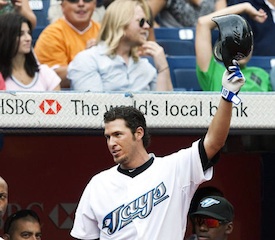
April Whitzman (Blue Jays Writer – MLB reports): Two weeks ago, I posted that the toughest question Blue Jays’ fans are dealing with right now is figuring out whose comeback, whether that of Dustin McGowan or Adam Loewen, is more impressive. Today I pose a question that some would say is equally hard to answer: who is the Toronto Blue Jays’ catcher of the future – J.P. Arencibia or Travis d’Arnaud?
What they have in common:
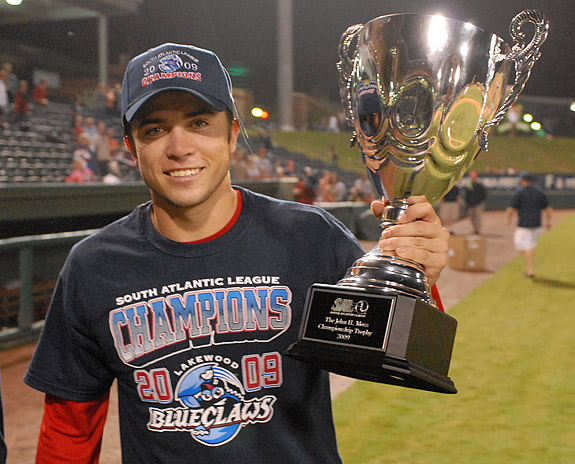
Interesting, while many people do not realize this, both catchers share their origin in common – the 2007 MLB first-year player draft. In fact, Arencibia was drafted 21st overall by the Blue Jays out of the University of Tennessee. As the 37th pick overall, the Philadelphia Phillies went with Travis d’Arnaud, out of Lakewood High School. At the time it was believed that the Jays were interested in d’Arnaud’s potential and would pick him with the 38th pick and move Arencibia to first base. Yet the Phillies chose the young star from Florida one slot before, forcing the Jays to choose left-handed pitcher, Brett Cecil. That said, a persistent GM, Alex Anthopoulos, would get his player; as the Blue Jays acquired Travis d’Arnaud two years later in the well-known Roy Halladay trade.
How they differ:
Defense
It is difficult to compare these players, as Arencibia has already made the jump to the majors while d’Arnaud just finished his season in AA New Hampshire. Arencibia has more professional experience having been drafted out of college, while d’Arnaud came out of high school. Here is a graph to compare how each player performed during their time at AA New Hampshire:

JP received the promotion from Dunedin to New Hampshire half-way through the season; his stats have been doubled to receive a more accurate comparison.
Both players are pretty evenly matched. Nevertheless, d’Arnaud has the slight advantage on errors committed, fielding percentage, and passed balls. Meanwhile, Arencibia has a higher caught-stealing percentage.
Despite one player being in the majors and the other in the minors in 2011, an interesting comparison can be depicted if we compare both catchers’ stats for this season:

With each player in their fourth year of professional baseball, these stats show how close their defensive game truly is. Having committed the same amount of errors, the same fielding percentage and only one passed ball being the difference between them, the biggest distinction is that d’Arnaud has the slight advantage throwing out base runners.
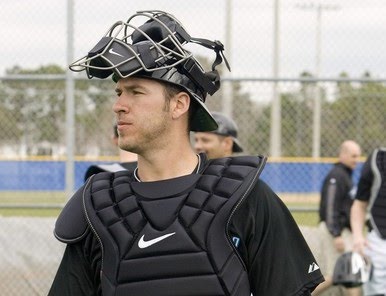 Don Wakamatsu, a former catcher himself, and now the Toronto Blue Jays bench coach has admitted that he has seen a drastic improvement in Arencibia’s defensive abilities. Wakamatsu credits the improvement to a significant amount of practice and hard work. He stated: “Arencibia has done a phenomenal job trying to understand how to get the most out of our pitching staff.”
Defensively, Arencibia has a good arm, but he struggles at times with blocking pitches in the dirt. In his minor league career, Arencibia threw out close to 30% of base stealers, though charged with 60 passed balls in 357 lifetime games.
In regards to his defense, Arencibia stated, “Defense is obviously first, and I know that, and whatever comes with the bat is secondary.” He continued: “I feel like my biggest thing is getting that pitcher through that game and I feel like I’m starting to get a real good understanding of my staff and giving us opportunities to win.” Since making these comments, Arencibia has improved his defense considerably in the second half of the season. For example, in the eighth inning of Friday night’s game against Tampa Bay, JP was able to throw out Rays outfielder B.J. Upton.
Comparatively, Travis d’Arnaud’s defensive skills are stronger. He has a great game-calling abilities and he has a strong arm. While his career caught-stealing rates have suffered due to inexperience, he has also improved his game by working on his footwork behind the plate. At 22 years old, d’Arnaud is already one of the better defensive catchers in the minors and he has plenty of time to develop into a premier defender in the big leagues. This was proven when he was named the Catcher’s Captain Award recipient for 2011 by Baseball America. The award is given to the catcher who displays strong defensive qualities, including leadership and dedication.
Offense
There is no denying that both players are also solid offensively. In 409 games in the minors, JP hit .275 with 121 doubles, 83 HR and 290 RBI. That said, he has also proven what he can do at the plate at the major league level as well. There is not a Blue Jays fan who does not remember J.P. Arencibia’s major league debut last year against the Tampa Bay Rays, as he launched the first pitch he saw over the left field wall for a home run. He later singled and doubled and capped the day with a home run to right field. That game showcased Arencebia’s talents and his ability to hit the ball for power.
Offense is where Arencibia and d’Arnaud differ most. Essentially, while JP hits for power but not average, d’Arnaud is a more complete player at the plate, as he hits for average and power. This year with the Fisher Cats, d’Arnaud was named the Eastern League MVP after hitting .313 with 20 homers and 77 RBIs. Here is how their 2011 numbers compare:

Prior to the 2011 campaign, many fans and analysts alike were not sold on d’Arnaud as anything more than a defense-first catcher.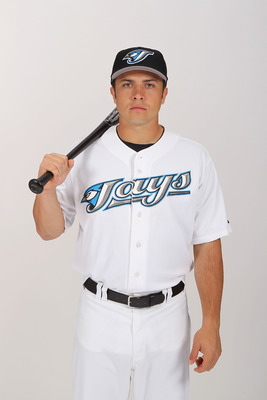 However, as his numbers this season have indicated, Travis experienced a bit of a learning curve early on in his career, as he made the jump from high school to the minor leagues. With his bat coming around this season, the offensive edge at this stage goes to d’Arnaud. It is evident that both players (as can be seen from the table above) need to work on the amount of times they strikeout, but other than that, both look solid at the plate and behind it.
Overall
Although both J.P. Arencibia and Travis d’Arnaud came from the same draft class in 2007, it appears that d’Arnaud has the greater upside. In essence, Arencibia has received the call to the majors quicker because he was able to develop in college before jumping to the professional ranks. As displayed through various charts, d’Arnaud appears to be more efficient both with his glove and bat. His numbers indicate that he could make the jump to the MLB as early as next year. In a recent interview with Fisher Cats beat reporter, Dave Gershman, d’Arnaud showed that he has the confidence to make it to the big leagues, as he stated: “Hopefully one day I can get up to Toronto, and play like I’m playing now. And who knows what will happen? Maybe I’ll be a good player.”
At the same time one cannot discredit J.P. Arencibia, as despite his quick progression to the MLB, he is still learning at the age of 25. Arencibia recently stated as much when he admitted, “On both sides of the plate I’ve been maturing and making adjustments in different things,” Arencibia says. “But it’s still a work in progress. You’re always trying to get better.” With catchers requiring the most seasoning from all the positions, Arencebia can still be considered to be at this stage ahead of the curve.
Whoever is chosen as the lead catcher, one thing is certain: the Blue Jays are blessed with two young catchers – both at the plate – and behind it! If the team’s worst problem is having two number one catchers on its roster within the next two years, then that is a great dilemma to have. It is very possible that one of the above (likely Arencibia) will be moved when both catchers have proven themselves at the major league level. Until then, with injuries and slumps being a reality of the game, the Jays will enjoy their abundance of talent behind the dish and lets the cards play themselves out.
As always, I look forward to hearing from you. Comment below, email MLBreports@gmail.com and follow me on Twitter at @Alleycat17.
Please e-mail us at: MLBreports@gmail.com with any questions and feedback. You can follow us on Twitter (@MLBreports) and become a fan on Facebook . To subscribe to our website and have the daily Reports sent directly to your inbox , click here and follow the link at the top of our homepage.

There He ‘Gose’ Again: The Future of Base-Stealing Blue Jays’ Prospect, Anthony Gose
Tuesday September 20, 2011

April Whitzman (Blue Jays Writer – MLB reports): A native of Paramount, California, outfielder Anthony Gose was the Philadelphia Phillies second round selection in the 2008 Draft. Although a top prospect with the Phillies organization, Gose found himself in Toronto by the end of the 2010 season after a three team deal also including the Houston Astros.
PRE-BLUE JAYS
Glancing at his numbers from 2009, Anthony Gose led all minor league players with 76 stolen bases while hitting .259 with 20 doubles, 13 triples, seven home runs and 27 RBI. His walk-to-strikeout ratio was a bit cumbersome, however, as he walked 45 times, but struck out 132 times. After the season, MLB prospect writer John Sickels rated Gose’s performance, stating the following: “[I] Love [his] speed, youth, and the athleticism. Don’t like the high strikeout rate for a guy without much power. Most advanced of the uber-tools players collected in this system in recent drafts.”
In 2010, at 19 years old, Gose appeared in 103 games with Clearwater and 27 games with the Dunedin Blue Jays (A+). The 6-1, 190 lb., left-handed hitter collected 20 doubles, 13 triples, and seven home runs with 27 RBI while adding 45 stolen bases. While 45 steals sounds impressive, it should be noted that he was thrown out 32 times that season. That’s only a 58% success rate.
BLUE JAYS
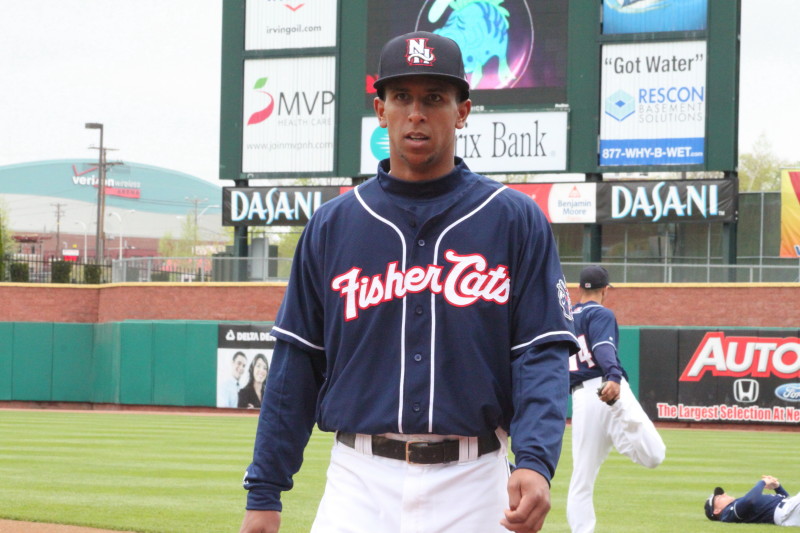 Joining the AA New Hampshire Fisher Cats in 2011, his first full season with the Blue Jays organization, Gose worked to improve his greatest asset – speed. This year he successfully stole 70 bases, only getting caught 15 times, going 23-for-24 in his last 24 attempts and increasing his stealing percentage to 82%. He then started to learn about when to steal, having the majority of his failed attempts coming at third base.
What’s more, along with base stealing, Gose saw improvement in the batters box, as he increased his power totals for the third straight year hitting 16 home runs, 20 doubles and seven triples. Unfortunately, his average has remained around the .250 mark (.253), comparable to the rest of his career in the minor leagues.
Another improvement for Anthony Gose this season was his patience at the plate. While only taking 41 walks in 2010, Gose took 62 walks in 2011 in a similar number of at-bats. He also saw though an increase in his strikeouts this season, as he had 154. Nevertheless when Gose doesn’t strike out and he does put the ball in play, he is batting .339, nearly 80 points higher than his regular average.
Not only has he improved at the plate, but Gose has also seen a rise in his game in the field. His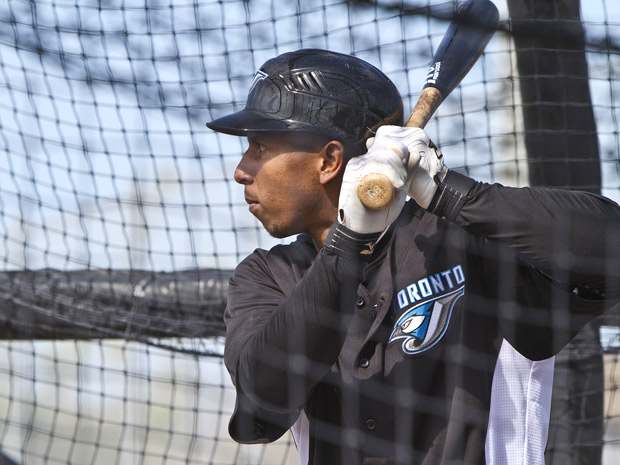 fielding was phenomenal in 2011, committing only three errors, giving him a .992 fielding percentage. Discussing his play in the field, Sal Fasano, the manager of the New Hampshire Fisher Cats, stated: “Gose has enough arm to play right or left in the majors. He caught a ball on the warning track in the right-centre, near the 375 sign, and threw out a guy at third — in the air.” Looking at the numbers, Gose had 15 outfield assists in 2010 and 14 assists this season. That can all be attributed due to his phenomenal range, as thanks to his speed, Gose is able to cover ground smoothly and regularly, making continual exciting plays in the field.
IN THE FUTURE
 In late July of this year, 24-year-old center fielder, Colby Rasmus was traded to the Toronto Blue Jays from the St. Louis Cardinals in a blockbuster deal that also involved the Chicago White Sox. The trade left many wondering if Gose still had a future with the Jays. Fasano’s response: “[Gose is] arrogant enough to think they will move players to make room for him.” However, many baseball analysts were not as optimistic and still wondered where he would fit.
There is no doubt that the Blue Jays have a deep farm system. Most would agree that the team has key players that they would be willing to move if the price was right. If nothing else, the Jays’ GM has shown a willingness to be aggressive in the trade market. With the addition of a strong and powerful first baseman, a dominating starting pitcher, and/or a ‘lights-out’ closer, the Blue Jays are likely to contend by 2013, the year that Gose will likely make the majors.
With Colby Rasmus at centre, Jose Bautista in right, and any one of Travis Snider, Eric Thames, Adam Loewen, and Rajai Davis to play left and/or be the fourth outfielder, it is anticipated that a trade will be coming during this off-season.
With the Blue Jays’ need for a first baseman, the Jays could consider a trade with the Cincinnati Reds who are in dire need of an outfielder. Could Yonder Alonso be the future first baseman for the team in blue and the speedy Gose the future Reds’ centerfielder? With the Astros also needing outfield depth, would it not be ironic if the Jays traded Gose for Brett Wallace? (While this is a very unlikely scenario, it would fill the needs for both teams). The Pittsburgh Pirates are another team in need of a solid outfielder. Thanks in part to a deep farm system, a trade with the Pirates could work. The Jays are also in need of a top starting pitcher and a closer, so any future trade could package off other prospects as well, including, but not limited to, Travis Snider and/or Eric Thames.
The future for Anthony Gose will surely become clear this off–season by recognizing what trades Alex Anthopoulos, deemed as the ‘Silent Assassin’, will make. Along with teammates Yan Gomez and Adeiny Hechavarria, Gose is also heading to the Arizona Fall League to work even more on his skills. Until a trade is consumated, it is evident with Gose, that the Blue Jays have a solid prospect that has a rare combination of top-notch speed, excellent fielding ability and top tools at the plate.
As always, I look forward to hearing from you. Comment below, email MLBreports@gmail.com and follow me on Twitter at @Alleycat17.

Please e-mail us at: MLBreports@gmail.com with any questions and feedback. You can follow us on Twitter (@MLBreports) and become a fan on Facebook . To subscribe to our website and have the daily Reports sent directly to your inbox , click here and follow the link at the top of our homepage.

On the Verge: Brett Lawrie Call Up by Jays is Imminent
Thursday August 4, 2011

Rob Bland (Intern- MLB Reports): The Brett Lawrie rollercoaster started December 6th, 2010. Lawrie was sent to Toronto in exchange for Toronto’s incumbent ace, Shaun Marcum. Toronto GM Alex Anthopoulos immediately said that Lawrie would be working out at third base, switching from second base. This would be Lawrie’s third major position change in 3 years. He was drafted out of Langley, BC by the Milwaukee Brewers in the 1st round (16th overall) of the 2008 MLB draft. That year, Toronto held the 17th pick, and it was said that they coveted him greatly. They instead had to settle for college first baseman and current AAA prospect, David Cooper.
 Lawrie hit .293 in spring training this year, while playing decent enough third base to warrant a discussion of keeping him on the roster. However, Anthopoulos deemed he was not ready to play in the Major Leagues, and the fans in Toronto grumbled as the Blue Jays consistently put Edwin Encarnacion at third base to start the year. Lawrie started off hot in AAA Las Vegas, and played good defense. This still wasn’t enough, as the Jays asked him to be more patient and change his approach. Lawrie did just that, and by May 31st, was hitting over .350 with power and walking more often than he had in the past. When the Jays were on the brink of calling him up (see our Report from June 2nd), Lawrie was hit by an errant pitch on the back of his left hand. Blue Jays fans collectively held their breath, and Lawrie declared it was a bruise. Two days later when swelling subsided, it was found out that Lawrie had a non-displaced fracture.
When he finally returned to Las Vegas in the middle of July, Lawrie came right back to where he left off. He is now hitting .352 with 18 home runs and 61 RBI. More importantly, he has 26 walks and is playing much improved defense. Now, the Jays’ faithful are continuing to call for him. Anthopoulos and manager John Farrell have repeatedly said “he’s close” and that they want to get him everyday at bats before rosters expand in September.
Now, when Lawrie gets the inevitable call (my guess being Friday, August 5th, before the beginning of a road series in Baltimore), where will he play? The Jays have Jose Bautista, one of the top three players in baseball at third base. Well, the plan that Anthopoulos has set out is that Bautista would shift back to his preferred right field, creating a logjam of young and talented outfielders. Travis Snider is 23 years old and he will play every day at one of the corner positions. Colby Rasmus is 24 years old and will be in center for the foreseeable future. That leaves Eric Thames, also 24, the corner outfielder who came out of seemingly nowhere to win the love and admiration of many fans, on the bench. You could say that Thames can just DH because he isn’t the best fielder of the bunch (although more than adequate and constantly improving), but where does Edwin Encarnacion play then? Encarnacion is one of the hottest hitters in all of baseball since the beginning of July. He has 9 doubles, 4 home runs, and 14 RBI with 12 walks in 25 games over that span. Thames most likely gets optioned to AAA to get every day at bats until rosters expand in September. Here is how that lineup stacks up.
Yunel Escobar – SS
Colby Rasmus – CF
Jose Bautista – RF
Adam Lind – 1B
Edwin Encarnacion – DH
Travis Snider – LF
Brett Lawrie – 3B
J.P. Arencibia – C
Aaron Hill – 2B
 If one of these players is traded, then there won’t be a problem. The only other option barring a trade, is something that Anthopoulos has stated adamantly will not happen. Moving Lawrie to second base and sitting former Silver Slugger Aaron Hill on the bench. This could possibly be the best option available for both the short-term and long-term. With Hill underperforming (ranked 20th out of 21 qualified 2nd baseman in WAR), and his $8M option for 2012 likely to be declined, Lawrie could slot into that spot for a very long time. Anthopoulos has preached having talent and skill “in the middle of the diamond” and second base is a spot that sorely needs some stability after Hill’s last two years. The only thing that could stop this movement is if Anthopoulos sees Hill, who is a good defender, as a guy who can turn his career back around. If Hill were placed in the 9 hole, and changed his approach, he could be a very serviceable player there. One idea that has been bandied around is that the Jays decline the option on Hill, and sign him to a much smaller deal to bring him back as the second baseman.
I honestly believe that Anthopoulos has the wheels turning, and with Encarnacion being so hot, many teams would love to take him on to make a push for the playoffs. If Encarnacion is not in the picture, there is a spot for Thames as a full-time player. He and Snider would probably split time between left field and DH, with Bautista in right, and Lawrie at third.
What gets lost in all of this, is that the Opening Day center fielder, might become a 5th outfielder. Rajai Davis has 33 stolen bases, and is playing better in a part-time role since Rasmus joined the team. He will be reserved to being a pinch runner, and possibly a late inning defensive replacement for Thames.
The odd man out for this year seems to be Thames, even though the Blue Jays see him as a valuable asset for the long-term. Whether that means for him to be on the field, or using him as a trade chip remains to be seen. Lawrie will likely end up playing third base every day, proving why the Jays gave up Marcum for an unproven “troubled” prospect.

***Today’s feature was prepared by our Intern, Rob Bland. We highly encourge you to leave your comments and feedback at the bottom of the page and share in the discussion with our readers. You can also follow Rob on Twitter.***
Please e-mail us at: MLBreports@gmail.com with any questions and feedback. You can follow us on Twitter and become a fan on Facebook . To subscribe to our website and have the daily Reports sent directly to your inbox , click here and follow the link at the top of our homepage.

Devin Mesoraco: Catcher Cincinnati Reds, On the Verge of Getting the Call
Saturday June 11, 2011

MLB reports: With catching at an all-time premium in baseball, few teams are lucky to have one, let alone two solid catchers in its system. The Cincinnati Reds have an abundance of riches at the position, with two serviceable catchers on its major league roster and two of the brightest catching prospects in its lower levels. For all the talk of the New York Yankees and Montero, Sanchez and all of its up-and-coming catching prospects, a look to the future catching superstars of Major League Baseball points to Cincinnati.
Top catching prospect Devin Mesoraco stands 6’1″ and weighs a very solid 220 lbs. Only 22-years of age, Mesoraco was drafted in the 1st round of the 2007 MLB draft (15th overall).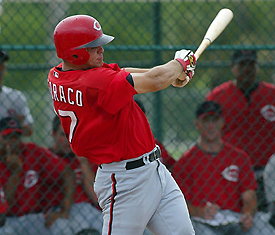 Catchers typically take longer to develop and Mesoraco has been slowed in his development by the injury bug. But despite missing many games over his short career, his bat has never slowed in the process. Last year at the tender age of 21, Mesoraco played through three levels and rose all the way to AAA. This year, in his first full turn at AAA, Mesoraco has been simply outstanding. With a .323 AVG, .407 OBP, .542 SLG, 8 home runs and 25/39 BB/K, Mesoraco has shown the MLB reports favorite hitting combination: power and patience. A lifetime .270 hitter in the minors with an .802 OPS, Mesoraco has only gotten stronger and better as he has risen through the Reds system. But not far behind him, there is another strong Reds catching prospect waiting in the wings by the name of Yasmani Grandal, as well as two existing roadblocks in Ramon Hernandez and Ryan Hanigan.
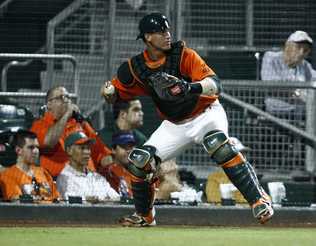 Grandal is also 22-years of age. Born in Havana Cuba, he was originally drafted by the Boston Red Sox in the 27th round of the 2007 draft. After failing to sign, Grandal became the next catching 1st round pick of the Reds, being drafted 12th overall in the 2010 draft. Missing out on three years compared to Mesoraco, Grandal played eight games last year in rookie ball and currently plays high A ball in Bakersfield. With 9 home runs this year in 50 games played, combined with a .279 AVG, .878 OPS and 37/50 BB/K ratio, Grandal is proving himself to be every bit the hitter that Mesoraco is. A promotion is due shortly to AA and very soon the Reds will face a dilemma in choosing their catcher of the future. A great problem to have if you are the Cincinnati Reds, who are the envy of Major League Baseball in their ability to draft and develop talent. Grandal is also a switch-hitter to boot, which will make the Reds catching choice even that much more difficult.
Given that Mesoraco has the most experience and has played at the higher levels, he will be given the first crack at the Reds catching job. His first roadblock is veteran Ramon Hernandez, the Reds incumbent starting catcher. Hernandez at 35 should be starting to near the end of his career, having played 13 seasons for 4 different major league teams. Hernandez suffered through injuries in both the ’09 and ’10 seasons, but still received a 1-year, $3 million contract for 2011 from the Reds. Hernandez has rewarded the Reds thus far with a strong season. Hernandez on the year has hit .310, with 7 home runs and an .898 OPS. But despite his strong play, Hernandez is injury prone and has otherwise started to show a declining bat over the last couple of seasons, despite playing in a hitter’s park in Cinci. Expect an injury or slump by Hernandez to open the door for Mesoraco to get his chance sometime this year.
 Ryan Hanigan, the Reds backup catcher, was signed in the offseason to a 3-year, $4 million contract. Some observers questioned the move, given the up-and-coming catchers in the Reds system. But the Reds were smart to lock-in a highly considered backup catcher to mentor their young prospects and help groom them to be possibly the next Johnny Bench. Hanigan at the age of 30, has played parts of 5 seasons for the Reds. Last year was by far his strongest campaign, with a .300 AVG and .834 OPS. For his major league career, Hanigan has a 98/77 BB/K- thus exhibiting one of the best batting eyes I have ever seen for a catcher. Despite his slow start this season, with a .248 AVG and .673 OPS, Hanigan plays strong defense and does enough offensively to ensure that he will remain as the Reds backup catcher for the foreseeable future.
With Hanigan as the backup and Hernandez playing out the string this season, we can expect to see Mesoraco make his major league debut this year. Given that he is only 22, the world should not be expected of him yet. As mentioned earlier, catchers take a lot longer to develop into complete major league players compared to other positional player. One only has to look to Baltimore, where Matt Wieters came slowly out of the gate until he started to find his way in the big leagues. While watching Buster Posey‘s run last year with the Giants was exciting, he is definitely the exception to the rule. Scouts and analysts that I have spoken to are divided on Mesoraco and Grandal. From the people that I have spoken to, there was nearly a 50/50 split on which prospect would become the future #1 catcher in Cincinnati.
A similar situation has already developed for the Reds with the blocked path for Yonder Alonso, one of the top Reds prospects still in the minors. Alonso, a first baseman by trade, has been attempting to shift to the outfield in the hopes of eventually joining the Reds. The reports that I have received are that his defense has been graded at far below average and the Reds are not comfortable calling him up as a result. With Joey Votto entrenched at first, Alonso will only make the big leagues at this point by injury or trade. With 8 home runs already on the season in AAA, to compliment his .327 AVG and .911 OPS, the 24-year old Cuban born Alonso has a major league bat. His fellow countryman Grandal may face a similar conflict in a couple of seasons. With such a strong farm system, the Reds are building themselves for a dynasty run for several years to come. The likely quarterback of the pitching staff in the near future will be Devin Mesoraco, who will also hit in the heart of a deep lineup in a great ballpark. The sky is the limit for this great prospect who is on the verge of joining the big leagues. We look forward to watching his debut very soon and hope that Mesoraco will have a long and productive career at the most demanding position in the game.

Please e-mail us at: MLBreports@gmail.com with any questions and feedback. You can follow us on Twitter and become a fan on Facebook . To subscribe to our website and have the daily Reports sent directly to your inbox , click here and follow the link at the top of our homepage.

Analyzing the 2011 MLB Draft: 1st Round Steals and Misses
Tuesday June 7, 2011
MLB reports: Day one of the 2011 MLB Draft is now in the books and we are moving on to Round 2. The most hyped draft in recent memory did not disappoint, as the results of Round 1 featured many surprises and shockers. With the amount of mock drafts and industry experts covering the big event, you would think that the first round results would have been more predictable. But many teams took diverse routes in making their selections in the first round and now the second-guessing begins. While the analysis may look very different in 1-5 years from now, the day after the draft- we take a look at the highlights of the first round and our most noted steals and misses.
STEALS
6. Washington Nationals: Anthony Rendon, 3B, Rice
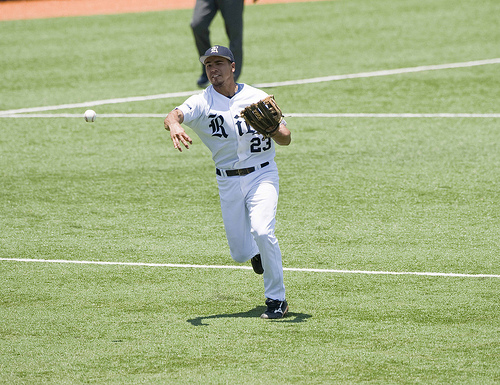
A team is simply not supposed to land the top hitter of the draft at the #6 slot but that is exactly what the Nationals did with Rendon. If not for injury concerns, Rendon would have gone as one of the first two picks. While Rendon does carry some risk, the Nationals loved his upside and had to make the selection. The best pick of the draft for the slot in my opinion.
12. Milwaukee Brewers: Taylor Jungmann, RHP, Texas
15. Milwaukee Brewers (for unsigned 2010 first rounder Dylan Covey): Jed Bradley, LHP, Georgia Tech
The Brewers really cleaned up by landing not one but two top-ten starting pitchers by drafting Jungmann and Bradley. Jungmann is the 6’6″ gunslinging Texas pitcher and Bradley is one of the top lefty pitchers. Just like that, in one round the Brewers began the process of restocking their farm system with top pitching prospects.
19. Boston Red Sox (from Tigers for Type-A Victor Martinez): Matt Barnes, RHP, UConn
26. Boston Red Sox (from Rangers for Type-A Adrian Beltre): Blake Swihart, C, Rio Rancho (N.M.) Cleveland HS
The mighty Red sox were at it again by landing a top-ten starting pitcher and the top catching prospect in the draft with the #19 and #26 picks. Barnes was considered to go high, considering his 6’4′, 205 lbs frame and fluid delivery. Then Swihart, whom the Red Sox were known to have targeted at #19, fell all the way to them at #26. A great day for a team that knows how to draft well, plain and simple.
24. Tampa Bay Rays (from Red Sox for Type-A Carl Crawford): Taylor Guerrieri, RHP, Columbia (S.C.) Spring Valley HS
31. Tampa Bay Rays (from Yankeesfor Type-A Rafael Soriano): Mikie Mahtook, OF, LSU
With ten top picks, the Rays were armed with the means to obtain prospects and they got two great ones in Guerrieri and Mahtook. Maturity issues dogged Guerrieri and based on talent alone, he should have gone in the top-12. Mahtook was seen as a possible Mets pick at #13, with a solid glove, bat and speed. Possibly the next Carl Crawford, the Rays showed that good scouting pays off even when you draft late. The Rays may have lost Crawford and Soriano to free agency but they will have the last laugh when both Guerrieri and Mahtook make the majors one day.
MISSES
13. New York Mets: Brandon Nimmo, OF Cheyenne East (Wyo.) HS
Nimmo was picked for the most part based on signability and cost. With the Mets in financial limbo, the team passed on many far superior talents to take Nimmo at #13. The kid is considered a project as he never played high school ball and should have been a 2nd round pick. For a team that desperately needs to rebuild its system, this pick will be a miss.
16. Los Angeles Dodgers: Chris Reed, LHP, Stanford
See Nimmo at #13. The Dodgers are in poor shape financially and like the Mets made their selection based on cost and signability. For another kid that was projected to be a 2nd round pick and also likely to be a reliever, this draft slot was too much of a reach. Overall a great opportunity for Reed, but a huge blow to the Dodgers farm system.
18. Oakland Athletics: Sonny Gray, RHP, Vanderbilt
Reports have Oakland viewing Gray as a starter, but I see the #18 pick likely as a future reliever. Based on his size (5’11”), there will be questions of durability and ability to succeed at the major league level. With so many quality prospects still available, the jury is definitely out on this pick.
29. San Francisco Giants: Joe Panik, SS, St. John’s
The media will have a field day with this pick as the Giants appear to have made a “Panik” move with the selection of Joe Panik in the first round. In desperate need of offense, the Giants opted to grab a shortstop late. With Josh Bell still on the board, a higher risk/reward pick may have been in order. Panik has a strong glove and decent bat, but does not project to have first round type talent.
30. Minnesota Twins: Levi Michael, SS, North Carolina
See Panik at #29. The Twins were in the same boat as the Giants when making their selection. However, the difference is that the Giants are open to spending on draft selections while the Twins tend to be more fiscally responsible (cheap). With the new ballpark in place, the Twins should have gone after a selection with higher upside. They played it safe with Michael, but the ceiling is not high enough to warrant the selection with Bell and Purke still available.
Previous Draft Articles by MLB reports:
The 2011 MLB Draft: Recap of the Results, 1st Round Picks and Future Stars
Updating the 2011 MLB Draft: Baseball Prospects and Draft Projections
The 2011 MLB Draft: The Report and Inside Scoops
Please e-mail us at: MLBreports@gmail.com with any questions and feedback. You can follow us on Twitter and become a fan on Facebook . To subscribe to our website and have the daily Reports sent directly to your inbox , click here and follow the link at the top of our homepage.

The 2011 MLB Draft: Recap of the Results, 1st Round Picks and Future Stars
Monday June 6, 2011
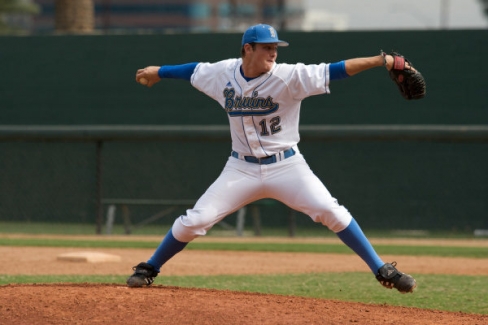
MLB reports: After months of speculation, the 2011 MLB Draft arrived. One of the most debated drafts in years, many of the players were known but where they would be drafted remained a mystery right up until today. After Washington drafted Stephen Strasburg and Bryce Harper the last two years with the top overall pick, who would go #1 this year was shrouded in secrecy. Rumors had the Pirates grabbing Gerrit Cole going #1 by most outlets. However, Rendon, Hultzen and even Bundy were getting a great deal of hype.
We have prepared below a list of the First Round picks in the 2011 MLB Draft. We have listed the players by position, school, draft position and team. We have also provided our analysis and opinions. Time will tell which players end up justifying their draft positions. Some players got drafted according to talent skills. Others according to team needs and even signability played a large part for many. This was definitely one of the most exciting drafts that I have ever covered. The amount of talent available played a huge part as did the buzz generated before the draft due to the explosion of the internet and social media. Compared to the pre-draft predictions and mock drafts, the final results ended up surprising and shocking many. We definitely look forward to revisiting this draft list over the next few years and analyze which picks worked out and the ones that bombed. Half of the fun is predicting the draft and the rest is second guessing it.
The Results of the First Round of the 2011 MLB Draft are as follows:
1. Pittsburgh Pirates: Gerrit Cole, RHP, UCLA
The consensus top choice of the draft ended up going in the top spot. The top arm of the draft, teams love drafting big power arms. With Jameson Taillon, Pittsburgh will have a scary 1-2 punch and will have their future all-star catcher Tony Sanchez to handle the staff. The Yankees loss in 2008 is the Pirates gain. Cole can hit 102 mph on the radar gun. It will be interesting to see who will end up being the better starter between Cole, Hultzen and Bundy. Cole has battled some command issues this season but the ceiling is very high on this future star. A solid pick overall. I would have gone with Rendon but this was a pick that the Pirates almost had to make.
2. Seattle Mariners: Danny Hultzen, LHP, Virginia
Widely expected Anthony Rendon starts his drop. After not going #1, many expected the Mariners to take Rendon. Hultzen goes up all the way to #2 as the Mariners continue to stock up on pitching. Hultzen has three strong pitches and had a huge season for Virginia this year. The kid will look for big bucks and the Mariners will open up their wallet. The surprises have already begun to start the draft and shows that mock drafts can simply be thrown out the window once the real show begins. If the goal of teams is to build strong rotations a la the Giants and Rays, then the Mariners are well on their way to building a contender. King Felix, Prince Pineda and Hultzen should give the Mariners one of the top rotations in the AL West, if not all of baseball one day. The irony is that the Diamondbacks were picking next and had taken Hultzen out of high school in 2008. Arizona lost out on him again.
3. Arizona Diamondbacks: Trevor Bauer, RHP, UCLA
Many mock drafts got this one correctly. Only 6’0″, Bauer is drawing Lincecum comparisons. He may be one of the quicker climbs to the majors and was part of the reason why he was drafted. Diamondbacks also wanted him and didn’t think he would last until the 7th pick. So far in the year of the pitcher, all top 3 picks are starters. As the Rendon drop continues, I see him going no later than #6 to Washington who would love to add another strong bat.
4. Baltimore Orioles: Dylan Bundy, RHP, Owasso (Okla.) HS
Four picks. Four starting pitchers. Orioles love their young pitchers and Bundy will be a big addition. Bundy was expected to possibly go as high as #2 and some had him pegged at #1. He throws 100+ mph and is looking for a big contract. Joe Bundy, the brother of Dylan is also an Oriole and we may see the brothers on the field together one day. Known to have a great work ethic and should be a great addition for the Orioles. Some reports had the Royals hoping that Bundy would fall next to #5 but his potential was too much for the Orioles to pass up on.
5. Kansas City Royals: Bubba Starling, OF, Gardner Edgerton (Kan.) HS
This is the case of the local boy who made good. Starling is considered one of the best athletes in the draft and will excel in his hometown for years to come. What a scary offense he will form with Myers, Moustakas and Hosmer. Another multi-sport star, Starling will have to choose between football and baseball. The hometown advantage should win out and we will see Starling patrolling the Royals outfield one day soon. A solid pick and even better for the Nationals, who grab the former lock #1 pick going into the season, Anthony Rendon at #6.
6. Washington Nationals: Anthony Rendon, 3B, Rice
My pick to go first overall, Rendon falls all the way to #6. Not that the Nationals will complain. With injury concerns including shoulder, Rendon was seen by many as the top bat of the draft. I cannot believe that 5 other teams could pass him up and Washington fans should be dancing in the streets. Washington in 3-4 years will be a huge powerhouse team with the Royals. Perhaps a World Series matchup one day?
7. Arizona Diamondbacks (for unsigned 2010 first rounder Barret Loux): Archie Bradley, RHP, Broken Arrow (Okla.) HS
The year of the pitcher continues. Another two-sport player, Bradley will also have to pick baseball over football. A huge price tag and expected to fall into the teens, the Diamondbacks targeted their player and grabbed him. On a rebuilding team, a solid pick with a high ceiling.
8. Cleveland Indians: Francisco Lindor, SS, Montverde (Fla.) Academy
A shortstop with pop, the Indians found the future replacement for Asdrubal Cabrera. A safe pick, many expected the Indians to go with a starting pitcher here.
9. Chicago Cubs: Javier Baez, SS, Jacksonville (Fla.) Arlington Country Day School
Another hugely talented player out of Florida. A-Rod comparisons anyone? Baez is seen to have a strong bat. He may not stay at shortstop but Baez should be a solid bat for a team in dire need of offense. With Castro entrenched at short, it will be interesting to see where Baez plays on the diamond.
10. San Diego Padres (for unsigned 2010 first rounder Karsten Whitson): Cory Spangenberg, 2B, Indian River (Fla.) JC
A versatile player, Spagenberg also plays shortstop and outfield. The next Chone Figgins or Ben Zobrist? One of the top athletes of the draft, signability issues had led to experts pegging him as a late first rounder. Despite failing to sign last year’s pick, the Padres were not afraid to go with another high-risk, high-reward player. This may be the future center fielder of the Padres, with great defense and plus speed to go along with a solid bat.
11. Houston Astros: George Springer, OF, UConn
Great bat speed and huge upside. There are doubts if the kid will be a superstar but the Astros like him and grabbed him early. Not sure how well his bat will translate to the majors but has drawn Grady Sizemore comparisons. A great outfielder who will likely stay in center field, the upside was too high for the Astros to pass up on him. He will be compared to fellow draftee Bubba Starling and who will become the better player. I can’t say that I am particularly happy with this selection as Taylor Jungmann should have gone to Houston at this slot.
12. Milwaukee Brewers: Taylor Jungmann, RHP, Texas
Jungmann is a 6’6″ pitcher and considered a very advanced pitcher. I thought he might go in the top-5 and would not fall past Houston. But the Brewers got lucky and grabbed one of the best pitchers still available at #12. As a local product, Jungmann was a great fit for Houston. But as a team that needs to restock its prospects cupboard, the Brewers got one of the “can’t miss” kids. We may be looking at the future Brewers ace.
13. New York Mets: Brandon Nimmo, OF Cheyenne East (Wyo.) HS
The Mets…the Mets….what are they thinking? He did not play high school ball and was projected by some as a 2nd rounder. Lots of talents, but the comparisons to Rocco Baldelli do not get me very excited. High reward and high risk player. If he does project into a future Andy Van Slyke, the Mets will be pleased. But for a team in dire need of talent in its system, I would have gone with more certainty. Playing its home game in a pitcher’s park, I expected a pitcher here. But as this draft is showing us, you never know what will happen. Mets fans tomorrow morning will probably be angry in what is shaping as the roughest season in team history.
14. Florida Marlins: Jose Fernandez, RHP, Tampa Alonso (Fla.) HS
A local product, Fernandez is 6’4″ and 220 pounds. The Marlins love their upside pitchers and Fernandez has one of the best arms in the draft. Concerns over legal issues may have led him to fall and some expected him to go later in the 1st round. But the Marlins took the best available arm and with the need to sell seats in their new ballpark, Fernandez could not be passed up. Questions on maturity also dog him and we may be seeing another Matt Garza scenario. But if Fernandez comes close to matching Garza’s numbers in the majors, the Marlins will be pleased. A good pick that makes sense.
15. Milwaukee Brewers (for unsigned 2010 first rounder Dylan Covey): Jed Bradley, LHP, Georgia Tech
Combined with Jungmann, the Brewers are the big winners thus far. A very advanced pitcher, Bradley was a top-10 pick for me going into the draft. The Brewers always have strong scouting and it doesn’t surprise me that they did not pass up on this kid. Congrats to Milwaukee, well done.
16. Los Angeles Dodgers: Chris Reed, LHP, Stanford
A closer at Stanford, Reed is a big boy at 6’4″, 195 lbs. Reports indicate that he may move to the rotation, although at this point I see him staying in the pen. A nice pick, I had him going in the 2nd round and not drafted early by the Dodgers. I suspect signability had a lot to do with this one as the Dodgers do not likely have the money available to go with a high-profile prospect. I have never approved a selection based on money considerations and thus would label this one as likely a failure in the making.
17. Los Angeles Angels of Anaheim: C.J. Cron, 1B, Utah
The Angels were smart with this pick, as they need bats in the system and Cron had one of the biggest bats in the country. Cron was projected to be a late first-rounder but the Angels did not let him slip. Cron comes from a baseball family, as his father is a manager at AA and his brother will likely be drafted this year as well. For a team that usually goes with pitching, I’m impressed that Anaheim broke away from its mold and went with a college bat. Kudos to the Angels on their choice.
18. Oakland Athletics: Sonny Gray, RHP, Vanderbilt
Projected by some as a top-10 selection, the A’s got Gray with the 18th pick. Great stuff and despite standing at only 5’11”, the Athletics could not pass on his potential. I think that Gray will end up in the bullpen and Oakland likely sees him as a future closer. The A’s do not do many things traditionally and they obviously saw enough in Gray to take him in the 1st round. I am sitting on the fence with this pick but my guts says a strong starter would have better served the team long-term.
19. Boston Red Sox (from Tigers for Type-A Victor Martinez): Matt Barnes, RHP, UConn
Another projected top-10 pick, the Red Sox nab Barnes at #19. At 6’4″ 205 lbs, the Red Sox get themselves a great arm. Lively stuff with a smooth delivery, Red Sox nation has to be pleased with this choice. This teams knows how to draft, plain and simple. Some mock drafts had Barnes as high as #5. Somehow the Red Sox always seem to walk away with winners from the draft, despite drafting late. Strong scouting and deep pockets always help.
20. Colorado Rockies: Tyler, Anderson, LHP, Oregon
The greatest pitcher in Oregon history, Anderson is seen very close to the majors. An advanced pitcher that should do really well in Colorado. After growing up in Vegas, Anderson will be ready for the weather conditions of Colorado. A relatively safe pick, Anderson went a little higher than I expected. But with Cron and Barnes off the board, the Rockies went with their next highest rated player.
21. Toronto Blue Jays: Tyler Beede, RHP, Groton (Mass.) Lawrence Academy
The Red Sox were hoping to land this kid at #26 but the Jays nabbed the Mass. product early. I would have gone with Bell or Purke with this pick, but the Jays clearly saw a lot in this kid to make this surprise pick. Beede is planning to go to Vanderbilt but with a strong offer, he will likely sign. Theo Epstein is likely not happy after losing out on him, but the Jays should be pleased with their choice. If they are able to sign him. With a debate on signability, the Jays went high-risk and high-reward with this pick.
22. St. Louis Cardinals: Kolten Wong, 2B, Hawaii
A strong hitter and seen as a good defender, the Cardinals did really well for themselves here. Kolten Wong was seen as a late first-rounder, with average speed and power. He will be more of a project, but the Cardinals are seen as getting a kid with good makeup. It is hard to get many superstars this late, but a good solid second baseman should be seen as a nice selection if he pans out. Guerrieri, Bell and Swihart are still on the board, as is Purke who would have been higher ceiling picks. The Cardinals went safe here, but a guaranteed return has value sometimes as well.
23. Washington Nationals (from White Sox for Type-A Adam Dunn): Alex Meyer, LHP, Kentucky
Standing 6’9″, the Nationals went for a big time pitcher, literally. There is a chance that Meyer could be a starter and might be the next Randy Johnson. Or he could become the next Andrew Brackman or maybe a future closer. These types of picks are hard to project and Meyer like many tall pitchers will need to find control if he is to succeed in the majors. Still many good players on the board but after going with the safe Rendon, the Nationals went with the high ceiling project here. Future hall-of-famer or bust? We won’t know on Meyer for a few years.
24. Tampa Bay Rays (from Red Sox for Type-A Carl Crawford): Taylor Guerrieri, RHP, Columbia (S.C.) Spring Valley HS
This was a top-12 pick on many boards, but maturity issues dogged Guerrieri to drop this low. One of the best arms in the draft, the Rays have done it again. On pure talent, Guerrieri can compete with almost any pitcher in the draft. He has a very strong fastball and pitching in the Rays system, he could develop in a hurry. Clearly makeup did not scare the team and the Rays made a strong selection. After losing Carl Crawford, the Rays got back a big piece today for their organization.
25. San Diego Padres: Joe Ross, RHP, Oakland (Calif.) Bishop O’Dowd HS
The younger brother of Oakland A’s pitcher Tyson Ross, the Padres get a 6’2″, 180 lbs pitcher. Ross was expected to perhaps go to the A’s or Giants, but he still stays local and goes to San Diego. Pitching in San Diego, Ross should do very well in a pitcher’s park. I have read good reports on the kid and he should be a solid middle-of-the-rotation starter. Nice pick for the Padres.
26. Boston Red Sox (from Rangers for Type-A Adrian Beltre): Blake Swihart, C, Rio Rancho (N.M.) Cleveland HS
The Red Sox continue to clean up as they draft the strongest hitting catcher of the draft. His bat compares to Chase Utley, which is a nice comparison. The Red Sox were supposed to take Swihart at #19 but were able to nab Barnes and still get their man at #26. A win-win night for the strong drafting Red Sox.
27. Cincinnati Reds: Robert Stephenson, RHP, Martinez CA, Alhambra HS
Stephenson had back-to-back no-hitters in high-school and was seen as going to the Giants possibly at #29. This kid has huge upside and for a team that drafts exceptionally every year, the Reds have likely found themselves another winner. Especially if the Giants were looking at him as a possible choice, Stephenson will be a prospect to keep an eye on.
28. Atlanta Braves: Sean Gilmartin, LHP, Florida State
The Braves grab a college lefty late in the draft and they have gone with a more ready arm in Gilmartin. Considered a safe pick, the Braves went with a winner with a good selection of pitches and fluid delivery. Gilmartin continues the trend of the “pitcher’s draft”.
29. San Francisco Giants: Joe Panik, SS, St. John’s
A New York native, Derek Jeter is his favorite player. Not on many boards, the Giants went a little high on Panik. Did they “Panik” with this pick? Yes. With such deep pitching, the Giants had to get some bats into their system. A player who is seen as very intense and playing the game the right way, Panik could be a decent bat, strong glove for the Giants. But since he would have likely been there for them in the 2nd round, I think they reached early. I would have gone for Bell or Purke and taken my chances with a risky signing with this pick and having a higher ceiling.
30. Minnesota Twins: Levi Michael, SS, North Carolina
A switch-hitting shortstop, not a bad pick for the Twins. Some experts had him in the early 20s, but playing hurt his numbers were average. Michael plays hard and is seen as a solid defender. A Twins-type player according to Gammons, we could be looked at the future shortstop of the Twins. While Michael does not have much power, he should hit for average and should be a good gritty ballplayer. Personally, I still like the higher upside players but with budgetary concerns, the Twins like safer type picks that are signable. Michael fits the bill.
31. Tampa Bay Rays (from Yankeesfor Type-A Rafael Soriano): Mikie Mahtook, OF, LSU
A top-15 pick who falls to #31, the Rays nab a fairly strong prospect. A really strong defender, Mahtook will be a great center fielder. He can hit for average, some power and will steal many bases. Many experts will be happy with this pick and with a strong scouting staff, the Rays grabbed themselves another good one. A hard worker with lots of talent, we could see the next Carl Crawford here. The Brewers, Red Sox, Nationals and Rays are my big winners thus far.
32. Tampa Bay Rays: Jake Hager, SS, Sierra Vista HS (NV)
The Rays go with a project here but with 3 picks in the 1st round, they could afford to take an easy sign with tools. As more of a late 2nd round type selection, this pick was financially driven and not my preference. With stronger players on the board, I would have liked to see the Rays to go for more of a proven commodity.
33. Texas Rangers (from Phillies for Type-A Cliff Lee): Kevin Matthews, LHP, Richmond Hill HS (GA)
The Rangers go with pitching with the last pick of the 1st round. He is apparently destined to go to Virginia but the Rangers went for the high-risk, high-reward pick. The Rangers have all of a sudden becoming a breeding ground for pitching and Matthews fits the mold of what Texas looks for in a pitcher. Signability aside, Matthews is an extremely talented pitcher and will be a huge success if signed by the team. Otherwise, with the last pick of the first round, the Rangers were not taking a huge chance but tried to score big.
Still sitting on the board at this point were expected first round picks Larry Greene, Daniel Norris, Josh Bell, Matt Purke and Henry Owens. It goes to show you that no matter how well we try to project these drafts, surprises will always result. For curiosity, check out our recent articles in the past few days on the draft and see how our inside scouts did. You might be surprised. While it takes skill and knowledge to try to predict these drafts, it is far from an exact science. But when projections do turn into reality, it is always a great feeling.
Updating the 2011 MLB Draft: Baseball Prospects and Draft Projections
The 2011 MLB Draft: The Report and Inside Scoops
Please e-mail us at: MLBreports@gmail.com with any questions and feedback. You can follow us on Twitter and become a fan on Facebook . To subscribe to our website and have the daily Reports sent directly to your inbox , click here and follow the link at the top of our homepage.
Updating the 2011 MLB Draft: Baseball Prospects and Draft Projections
Friday June 3, 2011
MLB reports: We are merely 72 hours or so away from one of the biggest baseball events of the year, the 2011 MLB Draft. As the draft slowly develops into a prime time event, the hype surrounding the draft is increasing year-by-year. 2011 has probably been the most promoted and talked about draft in my recent memory. With such a large pool of talented players available in the draft, people are started their countdowns to Monday night at 6:00p.m. when the fun begins.
Here at MLB reports, we posted a recent feature on the MLB draft, which you can view by clicking here. Given that we have received hundreds of e-mails per day requesting additional information, we went back to our insider scouts to get the last final tidbits of information before the draft. Our readers have been asking which players are rising and falling and where players are expected to land. For the inside scoops, here is the latest information from our scouts and what they had to say about key prospects and their draft projections. We have also included below the complete list of the order of selections for the first round of the draft and a top-100 prospects list.
RISING PROSPECTS
Gerrit Cole, UCLA RHP
“One scout said that Rendon and Starling are the best two players in the draft. However, Cole will hear his name when the Pirates are on the clock, just a hunch.”
Daniel Norris, Science Hill HS, TN LHP
“A once projected top-5 talent, Norris has every tool to be a special pitcher at the big league level. His commitment to Clemson may come with a price tag, but a LHP with a 92-95mph fastball will be worth every penny. Norris could go as high as #7 to the Diamondbacks, but I expect him to land somewhere in the top 15 selections.”
Robert Stephenson, Alhambra HS, CA RHP
“One scout told me that he might end up being the 3rd High School RHP off the boards with Bundy, Bradley and Howard ahead of him. If that’s the case, he may end up sneaking into the late teens. I can see a good fit with Oakland (18th) or Washington (23rd).”
Bubba Starling, Gardner-Edgerton HS, KS OF
“The best player in this draft. The only question is can the team that drafts him then sign him? With Scott Boras as his “advisor”, one would believe that this signing would go down to the wire. If Starling signs, you will be looking at a 5-tool star that an organization can build around. Another scout told me that there is “no chance” if Bubba is there that the Royals pass on him. But then again, if Dylan Bundy is available, he could be tempting as well.”
FALLING STARS
Taylor Guerrieri, Spring Valley HS, SC RHP
“Second week on the list, rumors are swirling about the gifted RHP. He has top- 10 talent and one team may gamble early (NY Mets). The newly rumored team to be considering Guerrieri could be the Blue Jays at #21. His potential is there but many teams are still concerned with the lack of communication from his camp and many of his questionable off-field decisions. Only reason why he made this list two weeks in a row is because for someone who has frontline starter written all over him, he should be going in the top 5-7 picks.”
Nick Delmonico, Farragut HS, TN C/3B
“I hate saying he will slip because I like everything about him. A weak catcher draft could have him being selected in the Supplemental 1st round. More likely thought, Delmonico is to be a 2nd round pick. He is athletic (can also play SS) and is good size for a High School senior (6’3”).”
Logan Verrett, Baylor RHP
“A projected top-100 talent by Baseball America. Multiple scouts have said that they wouldn’t expect to hear his name until the 4th or 5th round. Verrett had a good career at Baylor but is a bit undersized at 6’2” and 185 lbs. He may put wear and tear on his arm by the time it’s all said and done.”
What we are hearing: Players that Teams are Considering
Toronto Blue Jays
Levi Michael, Blake Swihart, Matt Skole, Trevor Gretzky, Nick Tropeano, Chris Marlowe
Minnesota Twins
PrestonTucker, Travis Harrison, Ronnie Richardson
San Diego Padres
Sonny Gray, George Springer, Dillon Maples, John Stilson, Dillion Peters
St. Louis Cardinals
Cory Spangenberg, Daniel Norris
Kansas City Royals
Grayson Geiner, Carlos Rodon
Milwaukee Brewers
Mikie Mahtook, John Stilson
Chicago Cubs
Bubba Starling, Chris Marlowe, Matt Maronde
Cincinnati Reds
Tyler Beede, Andrew Chafin, Zeke Devoss
Seattle Mariners
Anthony Rendon, Tyler Greene, Mason Robbins, Trevor Podratz
Please e-mail us at: MLBreports@gmail.com with any questions and feedback. You can follow us on Twitter and become a fan on Facebook . To subscribe to our website and have the daily Reports sent directly to your inbox , click here and follow the link at the top of our homepage.
Here is the Order for the 1st Round of the 2011 MLB Draft:
First Round
- Pirates
- Mariners
- Diamondbacks
- Orioles
- Royals
- Nationals
- Diamondbacks (for unsigned 2010 first rounder Barret Loux)
- Indians
- Cubs
- Padres (for unsigned 2010 first rounder Karsten Whitson)
- Astros
- Brewers
- Mets
- Marlins
- Brewers (for unsigned 2010 first rounder Dylan Covey)
- Dodgers
- Angels
- Athletics
- Red Sox (from Tigers for Type-A Victor Martinez)
- Rockies
- Blue Jays
- Cardinals
- Nationals (from White Sox for Type-A Adam Dunn)
- Rays (from Red Sox for Type-A Carl Crawford)
- Padres
- Red Sox (from Rangers for Type-A Adrian Beltre)
- Reds
- Braves
- Giants
- Twins
- Rays (from Yankees for Type-A Rafael Soriano)
- Rays
- Rangers (from Phillies for Type-A Cliff Lee)
Supplemental First Round
- Nationals (for Type-A Adam Dunn)
- Blue Jays (for Type-A Scott Downs)
- Red Sox (for Type-A Victor Martinez)
- Rangers (for Type-A Cliff Lee)
- Rays (for Type-A Carl Crawford)
- Phillies (for Type-A Jayson Werth)
- Red Sox (for Type-A Adrian Beltre)
- Rays (for Type-A Grant Balfour)
- Rays (for Type-A Rafael Soriano)
- Diamondbacks (for Type-B Adam LaRoche)
- Mets (for Type-B Pedro Feliciano)
- Rockies (for Type-B Octavio Dotel)
- Blue Jays (for Type-B John Buck)
- White Sox (for Type-B J.J. Putz)
- Padres (for Type-B Jon Garland)
- Giants (for Type-B Juan Uribe)
- Twins (for Type-B Jesse Crain)
- Yankees (for Type-B Javy Vazquez)
- Rays (for Type-B Joaquin Benoit)
- Blue Jays (for Type-B Miguel Olivo)
- Padres (for Type-B Yorvit Torrealba)
- Twins (for Type-B Orlando Hudson)
- Rays (for Type-B Randy Choate)
- Blue Jays (for Type-B Kevin Gregg)
- Padres (for Type-B Kevin Correia)
- Rays (for Type-B Brad Hawpe)
- Rays (for Type-B Chad Qualls)
Here is the top 100 Draft Prospects as presented by MLB Draft Guide:
| Rank | Player | Position | School |
|---|---|---|---|
| 1 | Dylan Bundy | RHP | Owasso HS, OK |
| 2 | Anthony Rendon | 3B | Rice |
| 3 | Trevor Bauer | RHP | UCLA |
| 4 | Gerrit Cole | RHP | UCLA |
| 5 | Bubba Starling | OF | Gardner-Edgerton HS, KS |
| 6 | Danny Hultzen | LHP | Virginia |
| 7 | Archie Bradley | RHP | Broken Arrow HS, OK |
| 8 | Matt Barnes | RHP | UConn |
| 9 | Sonny Gray | RHP | Vanderbilt |
| 10 | Taylor Jungmann | RHP | Texas |
| 11 | Francisco Lindor | SS | Montverde Academy, FL |
| 12 | Jed Bradley | LHP | Georgia Tech |
| 13 | Taylor Guerrieri | RHP | Spring Valley HS, SC |
| 14 | Josh Bell | OF | Dallas-Jesuit HS, TX |
| 15 | Matt Purke | LHP | TCU |
| 16 | George Springer | OF | UConn |
| 17 | Jose Fernandez | RHP | Alonso HS, FL |
| 18 | Daniel Norris | LHP | Science Hill HS, TN |
| 19 | Blake Swihart | C | Cleveland HS, NM |
| 20 | Mikie Mahtook | OF | LSU |
| 21 | Javier Baez | 3B/SS | Arlington Country Day School, FL |
| 22 | Alex Meyer | RHP | Kentucky |
| 23 | Tyler Beede | RHP | Lawrence Academy, MA |
| 24 | Austin Hedges | C | JSerra HS, CA |
| 25 | Henry Owens | LHP | Edison HS, CA |
| 26 | C.J. Cron | 1B | Utah |
| 27 | Kolten Wong | 2B | Hawaii |
| 28 | Robert Stephenson | RHP | Alhambra HS, CA |
| 29 | Derek Fisher | OF | Cedar Crest HS, PA |
| 30 | Trevor Story | SS | Irving HS, TX |
| 31 | Dillon Maples | RHP | Pinecrest HS, NC |
| 32 | Jackie Bradley Jr | OF | South Carolina |
| 33 | Daniel Vogelbach | 1B | Bishop Verot HS, FL |
| 34 | Levi Michael | SS/2B | North Carolina |
| 35 | Brian Goodwin | OF | Miami-Dade JC |
| 36 | Dillon Howard | RHP | Searcy HS, Ark |
| 37 | Tyler Anderson | LHP | Oregon |
| 38 | Dante Bichette Jr | 3B | Orangewood Christian HS, FL |
| 39 | John Stilson | RHP | Texas A&M |
| 40 | Joe Ross | RHP | Bishop O’Dowd HS, CA |
| 41 | Sean Gilmartin | LHP | Florida State |
| 42 | Cory Spangenberg | 3B | Indian River JC |
| 43 | Larry Greene | OF | Berrien County HS, GA |
| 44 | Dwight Smith Jr | OF | McIntosh HS, GA |
| 45 | Andrew Susac | C | Oregon State |
| 46 | Brandon Nimmo | OF | East HS, WY |
| 47 | Travis Harrison | 3B | Tustin HS, CA |
| 48 | Josh Osich | LHP | Oregon State |
| 49 | Matt Dean | 3B | The Colony HS, TX |
| 50 | Connor Barron | SS | Sumrall HS, MS |
| 51 | Aaron Westlake | 1B | Vanderbilt |
| 52 | Kyle Winkler | RHP | TCU |
| 53 | Anthony Meo | RHP | Coastal Carolina |
| 54 | Tyler Marlette | C | Hagerty HS, FL |
| 55 | Nicky Delmonico | C/3B | Farragut HS, TN |
| 56 | Andrew Chafin | LHP | Kent State |
| 57 | Tony Zych | RHP | Louisville |
| 58 | Brett Austin | C | Providence HS, NC |
| 59 | Grayson Garvin | LHP | Vanderbilt |
| 60 | Joe Panik | SS | St John’s |
| 61 | Bryan Brickhouse | RHP | The Woodlands HS, TX |
| 62 | hudson Boyd | RHP | Bishop Verot HS, FL |
| 63 | Kevin Cron | C/1B | Mountain Pointe HS, AZ |
| 64 | Chris Reed | LHP | Stanford |
| 65 | Michael Fullmer | RHP | Deer Creek HS, Ok |
| 66 | Alex Dickerson | OF | Indiana |
| 67 | Jason Esposito | 3B | Vanderbilt |
| 68 | Noe Ramirez | RHP | Cal State Fullerton |
| 69 | Brad Miller | SS | Clemson |
| 70 | Charlie Tilson | OF | New Trier HS, IL |
| 71 | Ricky Oropesa | 1B | USC |
| 72 | B.A. Vollmuth | 3B/SS | Southern Miss |
| 73 | Keenyn Walker | OF | Central Arizona JC |
| 74 | Logan Verrett | RHP | Baylor |
| 75 | Ryan Wright | 2B | Louisville |
| 76 | Jake Hager | SS | Sierra Vista HS, NV |
| 77 | Tyler Greene | SS | West Boca raton HS, FL |
| 78 | Kyle Crick | RHP | Sherman HS, TX |
| 79 | Johnny Eierman | OF | Warsaw HS, MO |
| 80 | Andrew Gagnon | RHP | Long Beach State |
| 81 | Tommy LaStella | 2B | Coastal Carolina |
| 82 | Williams Jerez | OF | Grand Street HS, NY |
| 83 | Tyler Gibson | OF | Stratford Academy, GA |
| 84 | Michael Kelly | RHP | West Boca Raton HS, FL |
| 85 | Cameron Gallagher | C | Manheim Township HS, PA |
| 86 | Roman Quinn | OF | Port St Joe HS, FL |
| 87 | Zach Cone | OF | Georgia |
| 88 | Burch Smith | RHP | Oklahoma |
| 89 | Phillip Evans | 2B/SS | La Costa Canyon HS, CA |
| 90 | Mark Pope | RHP | Georgia Tech |
| 91 | Grandon Goetzman | OF | Palmetto HS, FL |
| 92 | Peter O’Brien | C | Bethune-Cookman |
| 93 | Cody Kukuk | LHP | Free State HS, KS |
| 94 | Brandon Loy | SS | Texas |
| 95 | Jace Peterson | SS | McNeese St |
| 96 | Gerrett Buechele | 3B | Oklahoma |
| 97 | Kes Carter | OF | Western Kentucky |
| 98 | Daniel Camarena | LHP/OF | Cathedral Catholic HS, CA |
| 99 | James McCann | C | Arkansas |
| 100 | Cody Asche | 3B | Nebraska |

Brett Lawrie: On the Verge of Joining the Toronto Blue Jays
Thursday June 2, 2011
MLB reports: There is often a misconception in baseball that news and events from north of the border is often ignored. Around the Rogers Centre, there has been a strong buzz for weeks anticipating the arrival of the Blue Jays top prospect. At the tender age of 21, Brett Lawrie, the third baseman of the future for the Jays is about to arrive. But news of Lawrie’s impending promotion has spread beyond the media in Toronto and Las Vegas, the Jays AAA affiliate. The MLB community is talking, from Seattle to Washington, and Milwaukee to Florida. Everyone wants to know the same thing: When is Brett Lawrie getting the call?
Brett Lawrie was originally drafted by the Milwaukee Brewers of the first round of the 2008 draft, going 16th overall. The team picking next? Ironically enough, the Toronto Blue Jays. With the 17th pick, the Jays went with first baseman David Cooper. The Jays had their eye on Lawrie and were all set to draft the British Columbia native Lawrie. But with Milwaukee having Canadians Doug Melvin and Gord Ash in its front office, the Brewers with a strong scouting presence in Canada were all over Lawrie. Milwaukee in 2008 made Lawrie the highest drafted Canadian born position player in major league history and fourth overall, behind Jeff Francis, Adam Loewen and Philippe Aumont. But the Jays never lost their interest in Lawrie and on December 6, 2010, Lawrie was finally coming home.
Last winter, Lawrie was moved from Milwaukee to Toronto in a straight exchange for Jays ace hurler, Shaun Marcum. Coming off arm issues and a missed 2009 season, Marcum bounced back during the 2010 season with 13 wins and almost 200 innings pitched. Now due for arbitration, the Jays capitalized on Marcum’s success to land the player they coveted for some time. Lawrie immediately moved from 2nd to 3rd and became the Jays third baseman of the future. But at 21-years of age, Lawrie was still in need of more experience and seasoning. After a fairly solid AA campaign in Huntsville, Lawrie was expected to repeat AA with the Blue Jays and slowly move to AAA near the end of the year. But that all changed come spring training.
After a solid spring campaign, there was a buzz around baseball that Lawrie almost made the Blue Jays team in time for opening day. But with Edwin Encarnacion on the roster, the Jays decided that the major league roster had its stop-gap solution until Lawrie was ready. Given his strong spring though, the Jays organization reasoned that Lawrie was ready for increased competition and designated him to AAA Las Vegas to start the campaign. Looking at the numbers, Lawrie has flourished. Going into today, Lawrie has a .354 AVG, .415 OBP, .677 SLG, 15 home runs, 19 doubles, 49 RBIs, 51 runs, and has been successful on 11/12 stolen base chances. All of this accomplished in only 52 games played. Granted, Las Vegas is known as a hitters park and the 51s play in the Pacific Coast League, a notorious slugging league. Lawrie though has earned his shot and this was week was all set to get the call. Media outlets reported that Lawrie, together with Adam Lind would be joining the Jays on Friday. But this past Tuesday night, Lawrie was hit on the hand and everything changed.
The Blue Jays and the collective baseball world held its breath as Lawrie’s left hand was x-rayed. The results came back negative and fortunately only a bruise. However, with a deep hand bruise, Lawrie’s promotion has temporarily been placed on hold. As with all good things in life, the best things come to those that wait. While surely disappointed at his misfortune, at this point Lawrie just has to come back and prove health in order to make his long-awaited major league debut.
Fantasy baseball players especially have been contacting me to find out my predictions as to how Lawrie will fare when he finally joins the Jays. My response has been that he will play at third base when given the call and likely stay there for the next decade or so. But fans of the game have a way of getting excited about MLB prospects, which is great for the game but creates some unrealistic expectations some times on the players. Looking at Lawrie’s stats, I noticed that he had 47/118 BB/K in 2010 and this year sits at 18/40 BB/K. Lawrie with a career .294 AVG in the minors clearly has a strong bat. Now he just has to develop his batting eye. Coming to the majors, he might be a little slow out of the gate as he gets his feet wet. A .250-.260 AVG is a realistic prediction at this stage of his career, but may not be enough to satisfy the demands of his loyal followers. People may expect the world from Lawrie with all the hype surrounding him, but let’s remember that he is still only 21 and maturing as baseball player and person. Coupled together with his defensive shift from 2nd to 3rd, it has been a season of adjustments for him. But Lawrie has shown the superstar potential and earned the call to the big leagues.
We will follow this story for you as it develops and continue the Reports as Lawrie is likely to join the Blue Jays next week. After landing in Toronto, the future for Brett Lawrie is wide open. He could be here to stay or may need to bounce a little between Toronto and Las Vegas before he establishes himself. Look no farther than another one time can’t miss Toronto prospect, Travis Snider. For the last two seasons, Snider made the team out of spring training with high expectations, only to land back in Las Vegas to work on his game. The baseball world looks forward to the arrival of Brett Lawrie and the next “can’t miss” prospect. After all the talk and hype, the moment of truth is almost upon us.
Please e-mail us at: MLBreports@gmail.com with any questions and feedback. You can follow us on Twitter and become a fan on Facebook . To subscribe to our website and have the daily Reports sent directly to your inbox , click here and follow the link at the top of our homepage.

The 2011 MLB Draft: The Report and Inside Scoops
Saturday May 28, 2011
MLB reports: For all the baseball fans, observers and analysts, one of the happiest events in the year is almost upon us. The 2011 Major League Baseball Draft. All the standout players that we have all been tracking on-line and reading about in publications like Baseball America are about to be drafted by major league teams and hopefully signing their first professional contracts in hopes of one day making the big leagues. The draft is scheduled to run between June 6th – June 8th and will be broadcast live on mlb.com.
The talk around baseball is that changes could be in store for the MLB draft, as early as the 2012 draft year. With the expected potential of increased restrictions on entry player salaries, the word is that players will be more likely to sign this year under the current system. It will be interesting to see what percentage of drafted players sign with their teams and how many decide to re-enter the draft. With the MLB draft system in transition, the 2011 draft should turn out to be one of the most interesting baseball events in some time.
Once upon a time the MLB draft was conducted secretly over the telephone with little to no media coverage. But in our golden age of internet and instant media, the draft has become a featured event. After the Nationals recently drafted Stephen Strasburg and Bryce Harper in consecutive years, the topic of the top picks in the MLB draft has become a heated debated among baseball observers. With the high talent level this year, the discussions are raging louder than ever.
Considered to be a very deep draft pool, the 2011 class is heavy with pitching prospects. Names like Gerrit Cole, Dylan Bundy and Trevor Bauer are on the lips of all baseball analysts. Although not as strong in the hitting department, the media has worked overtime in profiling the likes of Anthony Rendon and Bubba Starling, among others. Looking at the early predictions of the “experts”, it appears that the expected draft results are literally all over the map. With the draft a little over a week away, the anxiety over the results of the draft continues to increase.
With so much talent in the 2011 draft, there appears to be a range of debate as to which team each players will be drafted by and in what draft position. Thanks to our inside scouts, MLB reports will shed some light for you today as to some of the expected results. We have compiled our list of rising and falling prospects and which teams have been linked to certain players. Are you ready for the inside scoops on the 2011 MLB draft? Let’s jump right into it and see what our scouts had to say about many of the players in the 2011 draft class (noted draft ranking by MLB.com beside each player and position):
RISING PROSPECTS
Dylan Bundy RHP (4) – Owassa HS (Okla.), Senior
“It’s not much of a rise when you are a top 5 pick, but with his strong on-field demeanor and stuff being among the best in the draft, he may end up with the best career of any 2011 draft member.”
Taylor Jungmann RHP (7) – Texas, Junior
“Looking like a great fit for #8 Indians. Cleveland has shown they have the bats in the system to compete and have stock piled arms lately. If they think they could compete in the next 3-4 years, then a college arm who could move quickly up their system is exactly what they will be looking for.”
Brandon Nimmo OF (30) – Cheyenne East HS (Wyo.), Sr.
“Big time bat that projects to move quick in nearly any system and the draft. This kid is loved by the New York Yankees but shouldn’t get past the Toronto Blue Jays or Milwaukee Brewers.”
Joshua Bell OF (23) – Jesuit College Prep (Texas), Senior
“One of the best true bats available. The Angels have outfielders spread throughout the organization, but the Angels must see a Trout/Bell outfield if he is available at #17.”
FALLING STARS
Taylor Guerrieri RHP (13) – Spring Valley HS (S.C.), Senior
“Multiple legal issues (had to switch high schools) and off-field issues could have Guerrieri slip. He is one of the top prep arms in the draft so someone will take a flyer high. If he gets by the #7 pick (Arizona), he could get into the teens.”
Kolten Wong 2B (25) – Hawaii, Junior
“Once a projected top 15 pick, many believe Wong may not go into the 1st round. The falling is for no-fault of his own. Texas Rangers, Atlanta Braves, Washington Nationals and Tampa Bay Rays amongst most interested.”
Anthony Meo RHP (26) – Coastal Carolina, Junior
“Threw a no-hitter in Big South opener. Big time success at college level and should have a nice pro career (think Blake Cooper with more upside) but there are some concerns with his delivery. Some teams see Meo as a future reliever which could see him slip. Meo was drafted previously in the 43rd round in 2008 out of High School by the Nationals.”
Jake Eliopoulos LHP (N/A)
“Once taken in the 2nd round by the Blue Jays in 2009 (higher than Jake Marisnick), he decided to turn down the Jays offer of $525,000+ to go to school. Eliopoulos then attended two schools and was drafted again, this time by the Dodgers. With an ERA above 10.00 at junior college, he is currently pitching for the Jet Box Baseball Club and went 2 IP with 10 BB and was hitting 85-86 mph as per Bob Elliot (Twitter). I would expect the Jays or even Seattle to draft him in the late 40’s with little to no signing bonus just because of his past.”
What we are hearing: Players that Teams are Considering
Oakland Athletics: Daniel Norris, Alex Meyer, George Springer
New York Mets: Brandon Nimmo, Matt Barnes, Cory Spangenberg, Jed Bradley
Toronto Blue Jays: Sean Gilmartin, Josh Bell, Daniel Norris
Kansas City Royals: Dylan Bundy, Gerrit Cole, Bubba Starling
Where the Players are Likely to Land
Nick Ahmed – SS – University of Connecticut – Oakland Athletics, St. Louis Cardinals
Peter O’Brien (40) – C – Bethune-Cookman – Florida Marlins, New York Mets
Aaron Brown – OF – Chatsworth HS – Seattle Mariners, San Diego Padres
Michael Reed – OF – Leander HS – Philadelphia Phillies, Houston Astros
Matthew Purke (27) – TCU – Toronto Blue Jays, Los Angeles Dodgers
Andrew Chafin (39) – Kent State – Boston Red Sox, Atlanta Braves
Tyler Beede (50) – Lawrence Academy HS – Boston Red Sox, Cincinnati Reds
Tom Robson – Lander, BC – Toronto Blue Jays, New York Mets
Kevin Matthews – Richmond Hill HS – Arizona Diamondbacks, Texas Rangers
Carter Capps – Mount Olive – Milwaukee Brewers
Mike Wright – East Carolina – Pittsburgh Pirates, Minnesota Twins
Steven Proscia – University of Virginia – Kansas City Royals, Philadelphia Phillies
Andrew Faulkner – South Aiken HS – Atlanta Braves, New York Mets
Carlos Rodon – Holly Springs HS – Kansas City Royals, Washington Nationals
Chuck Ghysels – University of Maryland – Toronto Blue Jays, Atlanta Braves
Justin Atkinson – North Surrey, BC – Seattle Mariners, Houston Astros
Trevor Gretzky (son of Wayne Gretzky) – Oaks Christen HS – Los Angeles Angels

Please e-mail us at: MLBreports@gmail.com with any questions and feedback. You can follow us on Twitter and become a fan on Facebook . To subscribe to our website and have the daily Reports sent directly to your inbox , click here and follow the link at the top of our homepage.

On the Verge: Moustakas, Hosmer and Myers, Kansas City Royals
MLB reports: The long-suffering fans of the Kansas City Royals have reason to celebrate. Their team has played fairly steady baseball this year, sitting above .500 at 15-13. The young bullpen has been lights out and Alex Gordon is reborn and hitting the cover off the ball with Billy Butler. But in the hope, continued promise exists. The Royals have one of the deepest farm systems in baseball and have been ranked number one on many experts lists. A big reason for the top mark is the three prized hitters looking to graduate to Kansas City in the near future: Mike Moustakas, Eric Hosmer and Wil Myers. With so much fanfare and excitement surrounding these top prospects, who are receiving press through MLB circles, let’s take a look at how each player has fared thus far this year: starting with the top prospect, Mike Moustakas.
MIKE MOUSTAKAS
| Team | League | AVG | G | AB | R | H | 2B | 3B | HR | RBI | TB | BB | SO | SB | CS | OBP | SLG | OPS |
| OMA | PCL | .227 | 22 | 88 | 16 | 20 | 1 | 1 | 4 | 20 | 35 | 9 | 15 | 0 | 0 | .299 | .398 | .69 |
 2011 has not been kind thus far to the third baseman of the future for the Royals. Moustakas has been walking at a decent clip but striking out far too much for AAA. His .227 average, to go along with four home runs says that the power is there, but the strike-zone discipline is still developing. After miscalculating on Alex Gordon, the Royals are by no means in a rush to promote Moustakas to the majors. Likely to finish below .500 on the season, the Royals are prepared to give Moustakas a full season at AAA with a possible September call-up depending on his progress. The talent is off the charts and we are looking at a possible forty home run caliber hitter in the future. But at 22 years old, the former #2 overall pick has time on his side. Based on his free swinging ways, Moustakas actually ranks third on my list of top Royals prospects. But he has the most potential for power and with the admiration for the long ball, we will see Moustakas arrive to great fanfare once he gets the call in the next year or so.
ERIC HOSMER
| Team | League | AVG | G | AB | R | H | 2B | 3B | HR | RBI | TB | BB | SO | SB | CS | OBP | SLG | OPS |
| OMA | PCL | .422 | 24 | 90 | 19 | 38 | 5 | 0 | 2 | 12 | 49 | 16 | 14 | 3 | 0 | .505 | .544 | 1.049 |
At 21 years of age, Hosmer is a year younger than Moustakas but playing at the same level in Omaha. Hosmer has been the strongest out of the game for the Royals and making the push for an early season call. With a 16/14 BB/K ratio, 1.049 OPS and .322 Average, the Royals will not be able to keep this future star in the minors for long. Kila Ka’aihue has not hit much going into May and is looking to wind down his Royals career. Kila is long considered a AAAA player, too good for AAA but never able to adjust to the majors. Hosmer is blessed with the same strong batting eye and sweet swing, but will make a stronger impression once he joins the Royals. The only knock on Hosmer is the two home runs thus far. But when he is hitting the ball otherwise at the rate that he is, the Royals will be patient in waiting for the power to develop. A mirror image of Logan Morrison in Florida, Eric Hosmer is my pick for the top Royals prospect, most likely to make the majors this year from this list and a future all-star and batting champion in the making.
WIL MYERS
| Team | League | AVG | G | AB | R | H | 2B | 3B | HR | RBI | TB | BB | SO | SB | CS | OBP | SLG | OPS |
| NWA | TEX | .261 | 12 | 46 | 6 | 12 | 2 | 0 | 2 | 8 | 20 | 3 | 12 | 2 | 1 | .300 | .435 | .735 |
 The youngest player on this list, Myers is playing in AA at the tender age of 20. Considering his age, the numbers thus far have been decent. A .261 average combined with two home runs for a teenager can be considered promising. His 3/12 BB/K ratio and .735 OPS suggests that he remains a work in progress. A converted catcher, the Royals moved to Myers to the outfield to allow his developing bat a chance to make it to the majors soon. The Bryce Harper express route as I call it. Myers, while not quite in the Harper mold, is as solid as they come. With time, Myers will challenge Moustakas and Hosmer for top spot on the Royals, as the batting eye and power are all within this kid. He will require time for seasoning and a year or two at AA is not out of the question. I do not expect the Royals to rush him, as 2013-2014 is the expected time frame for the top Royals prospects to reach the show and play together. I was hoping for bigger things from Myers this year, but it is early and there is still a lot of baseball to be played. The key with prospects is to be patient and give them time. By season’s end, the good ones usually end up rising to the top.
By 2014-2015, imagine a Royals lineup with Butler, Gordon, Moustakas, Hosmer and Myers. Kansas City is clearly on the rise and building their team in the right mold. The road to respectability has been a long and painful one for this one perennial successful franchise. But strong drafts and development has led to a farm that is producing top prospects at a rapid rate. While Hosmer is likely the first to make the leap, Moustakas and Myers will get there in their own time. The Royals have decided to manage their farm system in the right manner and not rush and burn out their future stars. The fans of Kansas City are grateful, as the promised land lies up ahead.
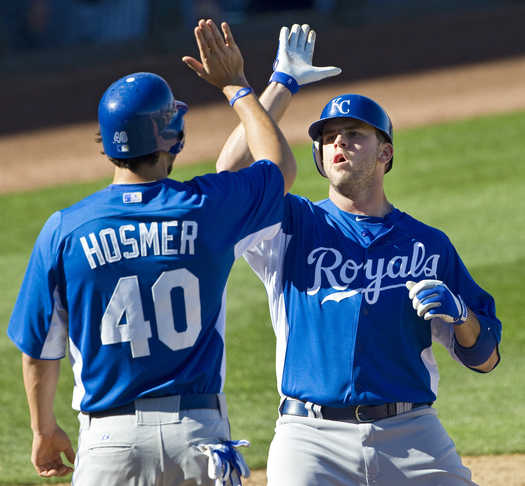
Please e-mail us at: MLBreports@gmail.com with any questions and feedback. You can follow us on Twitter and become a fan on Facebook . To subscribe to our website and have the daily Reports sent directly to your inbox , click here and follow the link at the top of our homepage.

Ryan Tatusko: MLB Guest Blog
The players speak: MLB reports devotes this page to the players who will be writing blogs in their own words to you, the readers.
The inaugural MLB Guest Blog comes from Ryan Tatusko of the Washington Nationals. Ryan currently pitches for the AA Harrisburg Senators of the Eastern League.
April 21, 2011
Ryan Tatusko: This year was a different year for me in preparation for many reasons. For one, I was starting out with a new team that I really know nothing about. Furthermore, I am going to be a full-time starter this year. In the past, when I was with the Texas Rangers, I was would routinely ping-pong between the bullpen and the starting rotation based on where they, the organization, would need me. I would then usually stick in the rotation around the all-star game, but this year was different. The Nationals have told me that at this time they envision me as helping the ball club as a starting pitcher and that’s where they wanted to keep me.
 Heading into the season as a starter, I did not necessarily change the way I went about my off-season preparation or conditioning, but I did tweak a few things here and there. For instance, as part of my bullpen sessions, I wouldn’t throw them as frequently as I would when I started the season as a reliever. Instead, I would do fewer sessions with more pitchers. I also made sure that I would do more long distance cardio work to build my stamina for the upcoming year. My preparation for camp has never changed in the 4+ years that I have been going. The team you are with gives you a pretty set schedule as to what to do in terms of running, lifting, and throwing and as long as you follow it, you will be just fine and will be ready to go when camp starts.
Getting to camp this year was fun and exciting for me as I got the feeling that I was a fresh face all over again, the same feelings I got when I was first drafted by the Rangers came back. I was excited, maybe too excited. The first few games I played in I probably tried to do too much. But once I settled down and starting getting back to my game, I felt like I had very good success during spring training. I really wanted to work on throwing my change-up for strikes more in camp, as it seems to be a pitch that has been less effective for me as compared to my other pitches. By the time that I left Viera,FL I felt that I made immense strides with it and I was extremely happy with the way I was throwing it and with the confidence I was displaying.
Not understanding where you are going to be assigned is one of those things that can consume you if you are not careful. When you start to think about the potential moves that the organization could and should make, you start to drive yourself crazy and you get distracted from what you do on the mound. It’s one of those things you just got to try your best to block out and not think about as you go through your process and getting ready for the season. There is always a rhyme and a reason that people do things and although it might not be evidently clear at the first get go as to why; you eventually find out.
 I have since been assigned to AA Harrisburg to begin the year. I have made a few starts and although one particularly has not gone the way I would have liked it too, it is still very early on in the season. I see these starts as an opportunity for me to learn from my mistakes and to grow as a pitcher. There are numerous quotes and clichés out there that talk about having a short memory if you want to succeed at this game and they are all absolutely true. There is a fine line between learning and obsessing over particular starts. There is always something positive and negative to get out of taking the mound, but as a player you have to be careful and not let it consume you and over-think about the process. The really good pitchers out there learn and move on the quickest so that they can devote all their time to their next outing.
I am eager to get back on the mound quickly and progress through the season. I have never felt stronger mentally and physically and I can’t wait to see what the season has in store for me.
Thanks for reading.
Ryan
***A special thank you to Ryan Tatusko for his time and effort in preparing his guest MLB blog entry for MLB reports. Please follow Ryan on Twitter. In addition to being a talented pitcher, Ryan is a tremendous person and loves interacting with his fans. A friend of MLB reports, we look forward to reporting on Ryan throughout the season as he continues his journey to Washington. Good luck Ryan!***
To learn more about Ryan, please view our February profile of Ryan Tatusko.
Please e-mail us at: MLBreports@gmail.com with any questions and feedback. You can follow us on Twitter and become a fan on Facebook . To subscribe to our website and have the daily Reports sent directly to your inbox , click here and follow the link at the top of our homepage.
ON THE VERGE- RYAN TATUSKO, WASHINGTON NATIONALS

MLB reports: At MLB reports we will be running an occasional series titled “On the Verge” where we profile a prospect about to hit the MLB scene. In today’s feature, we profile Ryan Tatusko of the Washington Nationals.
Ryan was born March 27, 1985. Standing 6’5” and weighing a solid 200 lbs, 2010 represented a breakout year for the right-handed pitching Tatusko. He was drafted in the 18th round of the 2007 draft by the Texas Rangers out of Indiana State University (hometown Merrillville, Indiana). After the 3 ½ seasons climbing up the Rangers system, Tatusko was traded on July 30, 2010 with fellow pitcher Tanner Roark for shortstop Christian Guzman. At the time of the trade, Tatusko was pitching for AA Frisco, both starting and relieving. After being acquired by the Nationals, Tatusko finished 2010 exclusively as a starter for AA Harrisburg.
From 2007-2009, Tatusko did not have numbers that jumped out. ERAs each year of 4.13, 4.46 and 4.64, records of 3-7, 3-11 and 7-6, in addition to WHIPs of 1.347, 1.372 and 1.338. A young developing pitcher, but not one on the “radar” so to speak. In the 1st half of 2010 with Frisco, Tatusko pitched in 24 games, 13 as a starter. His record was 9-2 with a 2.97 ERA and 1.340 WHIP. Definitely solid numbers, but a breakout was still in order. That breakout occurred in the 2nd half of his 2010 season with Harrisburg, where Tatusko pitched in 6 games entirely as a starter, to a sparkling 3-1 record, 1.72 ERA and 1.173 WHIP. His SO/BB ratio with Frisco was 1.45 and ballooned to 2.77 with Harrisburg. When I review these numbers, I see a Kyle Drabek type pitcher at the beginning of 2010 and a Stephen Strasburg clone at the end.
Looking at Ryan’s final 2010 numbers combined in AA, we see a 12-3 record, with a 2.63 ERA and 1.295 WHIP. From an 18th round pick with a microscopic chance of advancement in professional baseball, Ryan is a pitcher likely ticketed for AAA to start 2011 and could end up with the big club sometime between the all-star break and September.
I have had a pleasure to chat with Ryan on a couple of occasions by e-mail and did some research on him as well. Tatusko has a strong curveball as well as good command of 3 other pitches- fastball, changeup and slider. The debate early in his career was whether he would remain a starter or be moved permanently to the bullpen. Young pitchers in the minors are often eased through both roles in the hopes that they will excel in one given spot. As a 4-pitch pitcher and coming off a strong finish in 2010, Tatusko will likely be a full-time starter for the foreseeable future. A student of the game, Tatusko keeps journals of his work and watches video in working on and perfecting his mechanics. A tireless student of the game, Tatusko has the will and ambition to succeed at the pro-level, which is often described as “90% mental and 10% physical”.
Running into growing pains and adversity early in his career was likely a very good thing for Ryan. Too often in the MLB we see hotshot prospects rushed to the majors, only to have their careers cut short by injuries or failed confidence. By building his time up in the minors the right way, Tatusko has been able to prove himself and rise up the prospects ladder. The Nationals going into 2011 are in an interesting situation pitching wise. They have a young highly touted closer in Storen, that is expected to close for the club for the next decade. The starting rotation however, is filled with questions marks and landmines. Livian Hernandez is currently tabbed as the opening day starter. Enough said. From there we see the other potential starters being Marquis, Zimmerman, Lannan and Maya. In the mix we have injured starters Strasburg and Wang who are not certain as to the roles they could play in 2011. As soon as an opening arises, Tatusko will be one of the first to be called up this year. If Ryan is able to grow in 2011 the way he did in 2010, his first stay in Washington could be permanent.
Ryan Tatusko is a man who eats, breathes, sleeps and bleeds professional baseball. Talking to him, I got the sense that this was a ballplayer with no sense of entitlement that has worked hard and earned everything that he has accomplished. Good luck to Ryan on the 2011 campaign and we all look forward to watching you as you continue your baseball journey to the show.

Please e-mail us at: MLBreports@gmail.com with any questions and feedback. You can follow us on Twitter and become a fan on Facebook . To subscribe to our website and have the daily Reports sent directly to your inbox , click here and follow the link at the top of our homepage.
Meet Tony Sanchez – Future All- Star Catcher of the Pittsburgh Pirates

MLB reports: “With the 4th overall selection of the 1st round in the 2009 Major League Baseball Entry Draft, the Pittsburgh Pirates select, Tony Sanchez, Catcher, from Boston College.” With those words spoken, life would never be the same for Tony. Much publicity surrounded the most recent 1st round pick of the Pirates, centering around the reasons for his selection. To fully understand what was transpiring, one would need to look back briefly at the recent 1st round draft history of the Pittsburgh Pirates.
2008: Pedro Alvarez 3B – 2nd overall
2007: Daniel Moskos P – 4th overall
2006: Brad Lincoln P- 4th overall
2005: Andrew McCutchen OF – 11th overall
2004: Neil Walker C- 11th overall
2003: Paul Maholm P- 8th overall
2002: Bryan Bullington P – 1st overall
2001: John VanBenschoten 1B- 8th overall
2000: Sean Burnett P- 19th overall
With the Bryan Bullington pick still fresh in Pirates’ fans minds, the 2006 and 2007 drafting respectively of Lincoln and Moskos were difficult to swallow. The moves were seen largely as cost-sensitive selections, with the Pirates foregoing Morrow, Miller, Kershaw, Lincecum and Scherzer in 2006 and Wieters, LaPorta and Bumgarner in 2007 respectively. Some missed players could be pointed to poor scouting and drafting, but others were seen by many as being salary restrictive. The most notorious omission being Matt Wieters, a “can’t miss” catching prospect nabbed by the Baltimore Orioles in with the following 5th pick in the draft. After selecting Pedro Alvarez in 2008, the Pirates maintained their 1st round selection of position players by choosing Tony Sanchez with the 4th overall pick. Players left on the board were Mike Minor, Mike Leak and Drew Storen. 2009 was an interesting draft in the sense that Trout, the 25th overall pick of the Angels was just selection as MLB’s top prospect for 2011; proving that drafting is truly more of an art than a science. But the Sanchez pick was not hailed as a victory by the analysts. Reports seemed to indicate that the Pirates were attempting to make up for their Moskos/Wieters blunder by grabbing the best available catcher with the 4th pick, although Sanchez was considered by some to be a late 1st rounder. Money was also thrown into the equation as Sanchez was seen as an easy sign for Pittsburgh. But who is the aforementioned Tony Sanchez? Lets take a look at the man behind the pick.
Standing 6’1” and weighing a solid 213 pounds, Jorge Anthony (Tony) Sanchez was born on May 20, 1988. Tony attended Boston College and played the catcher position as a junior upon being drafted by the Pirates. Known for having taken the “Jared Subway” diet, Tony committed himself to training and exercise and excelled on the diamond in his last season at Boston College. In his 1st season of pro ball, Sanchez split his time between 3 minor league spots, finishing at a .309 average in 48 games, with 7 homeruns, 48 rbis, .408 obp and .539 slg. Building upon that season, Sanchez was enjoying a solid 2010 season in Bradenton which ended prematurely by suffering a broken jaw after a beaning. The final 2010 stat line for Sanchez was a .314 average in 59 games with 4 homeruns, 35 rbis, .416 obp and .454 slg. Solid numbers for any hitter, especially a catcher. Sanchez was named to the 2010 All-Star Futures Game and his future appeared to be very bright. Despite having his season ended early, Sanchez fought weight loss and rust by rehabilitating and joining the Mesa Solar Sox for the Arizona Fall League season. Despite subpar statistics, Sanchez did enjoy a 2-home run game on November 11th and was named a Rising Star in the AFL and most importantly, proved his health and commitment to playing to the Pittsburgh Pirates, its fans and the MLB community at large.
On February 13, 2011, Tony Sanchez will be reporting to spring training with the Pirates in Bradenton, Florida which ironically was his home field this past 2010 season. The only other catchers drafted in the 1st round by the Pirates were Neil Walker in 2004 and Jason Kendall in 1992. If the Pirates get a solid major leaguer like Kendall from Sanchez, the team and its fans will be overjoyed. Baseball America has rated Sanchez as having the potential to being the first Pittsburgh catcher gold glove winner since Mike “Spanky” LaValliere in 1987. It is time for the fans of Pittsburgh and baseball to let go of the ghosts of drafts past and live in the present and future. Tony Sanchez, in addition to Pedro Alvarez and 2010 1st round pick James Taillon represent solid Pirates building blocks for years to come. In his short time in baseball, Sanchez has shown that he has a potentially live bat and has received strong reviews for his work with the glove. With an MLB ETA of 2012, the Tony Sanchez era in Pittsburgh will soon be upon us. With a blue collar approach to the sport that will be well received in his new hometown, Tony Sanchez is starting to silence the critics and build upon the hype surrounding his play. Remember the name: Tony Sanchez, catcher, Pittsburgh Pirates.

Please e-mail us at: MLBreports@gmail.com with any questions and feedback. You can follow us on Twitter and become a fan on Facebook . To subscribe to our website and have the daily Reports sent directly to your inbox , click here and follow the link at the top of our homepage.


 MLB Reports
You must be logged in to post a comment.