Author Archives: pwstein87

Projecting MLB Sluggers: The Top 5 in 2012
Tuesday November 22, 2011

Peter Stein (Fantasy Baseball Analyst – MLB reports): Accompanied with my projections and analysis, I profile the top-five fantasy baseball sluggers to target for 2012. I encourage your thoughts and feedback!
1. Ryan Braun
2012 Projections: .321 38 HR 119 RBI 108 R 32 SB
Given that he is at the prime of his career having just turned 28 on November 17, Ryan Braun ranks at the top of the list. He is the complete package and enjoyed a 2011 season that had fantasy owners drooling and was named the 2011 NL MVP today! He was a machine in all five of the standard fantasy categories with a .332 average, 33 home runs, 111 RBI’s, 109 runs and 33 SB’s. The exciting thing is that the will only continue to get better. The home run total has the potential to reach 40 and I don’t see reason why Braun won’t steal 30 bases again. Braun is by no means one of the speediest players baseball, but he is truly one of the smartest base runners. He steals at a career success rate of 80% and was only caught 6 times in 2011. Some people wonder about the effect that Prince Fielder’s potential departure will have on Braun, but I am not overly concerned. Braun is truly a special and hall of fame caliber player because he not only possesses all of the physical tools, but also is one of the game’s smartest players. He continually makes adjustments and just has such an impressive knowledge of the game that allows him to better utilize his talents than others.
2012 Projections: .312 39 HR 120 RBI 117 R 12 SB
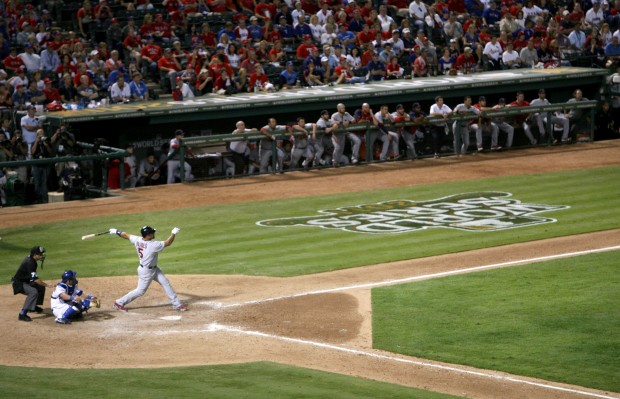 Albert Pujols has been the best fantasy player in baseball since he emerged onto scene in 2001. Ten Ruth-like seasons later, the slugger might find himself in a new uniform. Furthermore, his somewhat “down” season in 2011 has caused concern for many fantasy owners. But before we expect an A-rod-like decline, lets take a closer look at the numbers. Through the Cardinal’s first 54 games, Pujols batted .257 with 8 home runs and 28 RBI. That means in the team final 108 games, which included the time missed with the wrist injury, he batted .322 with 29 home runs and 71 RBI’s. That is the Pujols that we have all been accustomed to over the last decade. I will not go into detail explaining just how good Pujols has been throughout his career because you should already know by now. Last year was the first season he did not put up .300 30 HR and 100 RBI. He missed this feat by one RBI and one point of average, in a season that included an uncharacteristic 50 game stretch (contract issues?). I expect Pujols to be back in St. Louis next season, and all though he well on the back nine of his career, he is still too good and has a lot left in the tank. Expect the usual numbers, the type that he continued to put up despite his slow start to the season in 2011.
2012 Projections: .336 34 HR 122 RBI 109 R 2 SB
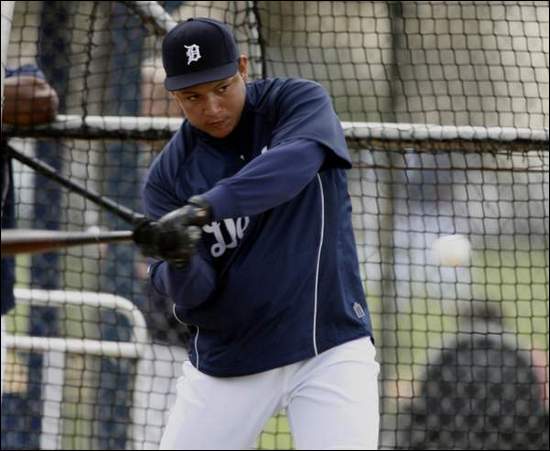 Did you know that Miguel Cabrera is only 28 years old? I sure didn’t. He has been an offensive force for almost a decade. In my mind, he is the game’s best pure hitter and will only continue to get better. He managed to have another elite season in 2011, despite all the controversy and off the field issues he had to deal with. He continues to improve at the plate and BB right is on the incline while his K rate declines. For these reasons, and his career .317 average, there is no reason to not expect his average to hover around .330. He is an average anchor for your lineup that will also exceed 30 HR and 100 RBI’s and runs. The only thing he does not do is steal bases. However, refer to my article last week, Cabrera is the type of average and power anchor that can allow your team roster a space for the one-trick ponies, i.e. Michael Bourn. Overall, just expect more of the same from Cabrera: which means elite production in four of the five standard fantasy categories, average, runs, home runs, and runs batted in.
4. Matt Kemp
2012 Projections: .296 33 HR 108 RBI 103 R 34 SB
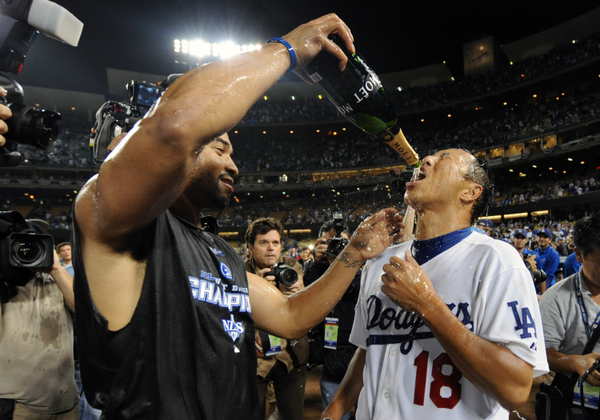 At 27 years of age, Matt Kemp is also just entering his prime. He missed a 40/40 season by just one home run and batted .326 and drove in 126 runs, which led to being the runner-up for the 2011 NL MVP award. However, he is easily the most difficult to predict on the list. If I expected him to improve upon or even just repeat his 2011 season, he would be at the top of the list. We simply cannot expect Kemp to be this fantasy-tastic again in 2012. Matt Kemp’s .380 BABIP lead all of major league baseball, however he does hold a career .352 clip, which is tops in baseball. Therefore, expect regression in his batting average in the .290-.300 range. Kemp also strikes out a lot, not like in 2010, but he still struck out in 23 percent of his at bats in 2011. When you are not putting the ball in play at a high rate, there is potential for a lot of volatility. Given his skill set, 2011 was essentially a best-case scenario for Kemp. The other four guys on the list make contact much more consistently and therefore have been more consistent throughout the career and are easier to project forward. Furthermore, I am not encouraged by the line up around built around Kemp. He is still elite, but it is unwise to expect him to repeat 2011. He will come down to earth but still provide across the board value for your team.
5. Joey Votto
2012 Projections: .316 32 HR 112 RBI 115 R 11SB
 At 28 years of age, Joey Votto is also in the prime of his career. His 2011 season, with heavy expectations after an MVP season, was a down season for Votto. A down season in which he batted .309 29 HR 103 RBI 8 SB. And if this type of season is Votto’s worst-case scenario, you can live with it! However, given his age and peripheral stats, all signs point to an improved season for Votto in 2012. Votto is a pure hitter who continues to gain better command over strike zone, as his walk rate his increased steadily in each of the four last seasons. The average will always be there for Votto, just a notch below Cabrera. The biggest concern for fantasy owners was the drop in power, form 37 to 29 home runs. However, Votto hit the ball in the air more often in the second half of the season and hit 16 post all-star HR’s in 260 at-bats, compared to just 13 in his 339 at-bats before the break. Furthermore, his .222 ISO was well below his 2010 season (.276) and career average of .237. Therefore, expect him to bounce back to the 35 HR territory with elite average. The true wildcard for Votto is what he does on the basepaths. He stole just 8 bases in 2011, but if he puts a greater emphasis on running like he did in 2010, with 16 stolen bases, then he has the potential to provide extreme five-category value to your roster.
Honorable Mention:
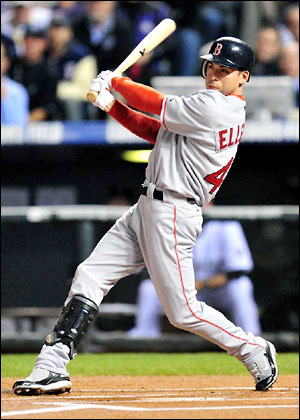
Jacoby Ellsbury: His .230 ISO in 2011 (career .152) explains his surprise 30-home run season. Ellsbury’s peripheral indicate he will be more of a .300 20 HR 80 RBI 40 SB type players, making him a notch below Braun and Kemp.
***Today’s feature was prepared by our Fantasy Baseball Analyst, Peter Stein. We highly encourage you to leave your comments and feedback at the bottom of the page and share in the discussion with our readers. You can also follow Peter on Twitter (@peterWstein).***
Please e-mail us at: MLBreports@gmail.com with any questions and feedback. You can follow us on Twitter (@MLBreports) and become a fan on Facebook . To subscribe to our website and have the daily Reports sent directly to your inbox , click here and follow the link at the top of our homepage.

Stolen Bases: Fantasy Baseball Strategies to Increasing Steals
Thursday November 17, 2011

Peter Stein (Fantasy Baseball Analyst – MLB reports): Of the five categories in standard 5X5 roto leagues, it is SB’s that fantasy owners most commonly have the incorrect approach. In this article I will highlight players to target and avoid in the stolen base department, as well as discuss basic fantasy strategy.
There are certainly several one trick ponies, such as Brett Gardner, Michael Bourn, and Coco Crisp, who provide elite production in this department. However, there are a couple of things you must consider. These types of players, who will hopefully hit for average and contribute to runs, will hurt your team’s HR and RBI performance. Therefore, be sure that you have excess value dispersed throughout the rest of your lineup to compensate. Secondly, you are heavily relying one on player for your production in this category, and as a result an injury can leave your team devastated. Thus, it is essential, particularly in the early rounds, that you find players who do everything, including steal bases. Even 5-10 steals that a player contributes above the position average will give you a significant edge.
 A player to target next year, Eric Hosmer, quietly stole 11 bases in 2011. The young left-hander batted .313 with 11 HR and 44 RBI’s in the second half last season. While his still progressing power production puts him the second tier of first baseman, his double-digit stolen base potential makes him intriguing and perhaps underrated. Still, this guy finished the season with 19 home runs and 78 RBI’s in 128 games played. Since there are a slew of first baseman that finished with 30 home runs and 100 RBI, they will likely be targeted before Homer. Therefore, I like Hosmer as a guy who might just as well approach these power numbers but also steal 15 bases. For this same reason, I like Joey Votto over any other first baseman not named Albert Pujols or Miguel Cabrera. While, Adrian and Gonzalez and Prince Fielder might put up higher power numbers and similar batting averages, Joey Votto’s 10 stolen bases will make him significantly more valuable. Albert Pujols is also good for ten stolen bases as well. Only Miguel Cabrera out produces Votto enough in the other four categories to excuse his lack of stolen bases.
Now extend this approach to each position. Dustin Pedroia and his 25-30 stolen bases is more valuable than Robinson Cano and his 5-10 stolen bases, despite the fact Cano finished with 7 more home runs and 25 RBI’s. A player I like at this position if you can afford to take the hit in HR’s and RBI’s is Jemile Weeks, who finished with 22 stolen bases in just 97 games. He will get to play full-time in Oakland, and as long as he is hitting above .290, can be valuable to your roster as a good source of steals. On the decline is Brandon Phillips who has dropped from 25 to 16 to 14 stolen bases the last three seasons. This makes him no longer elite, especially when Ian Kinsler is doing 30/30. An interesting group of players, Kelly Johnson, Danny Espinosa, and Ben Zobrist each his 20 home runs and stole over 15 bases. However, they each struggled with average. Again, take not of your team’s strengths. If you own Votto and a couple of other average anchors, these types of players can be good sources of power and stolen bases at the second base position.
Instead of continuing on and telling you the elite base stealers position by position (you can easily look this up), I will give you my 2012 sleepers and busts.
Stolen Base Sleepers:
Don’t forget that Brett Lawrie’s one-quarter of a season not only put him on pace to hit 36 home runs and 100 RBI’s, but also projected him to finish with 28 stolen bases.
Peter Bourjos made noise at the end of the season and once stole 50 bases in the minor leagues. For the speedy outfielder, it was al l about getting on base after a 2010 debut in which he batted .204 in 51 games. However, he greatly improved his contact ability, although still needs to improve walk rate, and batted .271 and stole 21 bases for the Angels. He also hit 12 home runs, and has the potential for a productive .280 15 HR 30 SB stat line in 2012.
After stealing 19 bases in 2011, I expect Shane Victorino to reach the 30 mark once again in 2012. It’s not that he didn’t run when he was on base, but his lower than usual BABIP and high than usual ISO (measures true power) simply meant he was not on first base as often as he normally is. With Rollins likely out of Philadelphia, I expect Victorino to ne at the top of the lineup and as aggressive as ever on the base paths.
Keep you eye Cameron Maybin, who stole 40 bases in 137 games for the Padres. As long as he has the chance to play semi-regularly, he is elite in the stolen base category. Furthermore, he appears to be approaching double-digit home run output as well, although he is only a career .255 hitter.
Monitor where Coco Crisp ends up in 2012. I loved him at Oakland in 2011 because he was one of the better hitters on the team (sadly) and at times batted third, but also batted lead off and in the second spot. In addition to leading the American League in steals, he had decent contributions in other categories (8 HR and 54 RBI) compared to some of the other stolen base leaders.
Dexter Fowler is a name to remember because he is simply one of the fastest players in baseball. However, he only stole 12 and 13 bases during the last two years, respectively. He was also caught an alarming 25 times. If he can learn to run on the base paths, he can be elite in this category. It is possible for major leaguers to learn the art of stealing bases. Look at Adam Jones, who was 12/16 on the base paths in 2011 after a 7/14 2010. I expect Jones, who is approaching a contract season, to come closer to 20 steals in 2012.
Speedsters to avoid? Juan Pierre. He really contributes in no other categories and is getting slower, getting caught 17 times in 44 chances in 2011. Furthermore, I do not expect any team to give him the 639 at bats that the White Sox foolishly provided him. Sadly, Ichiro Suzuki is clearly on the decline and appears to be a shell of his former elite self. The same is true with Bobby Abreu.

***Today’s feature was prepared by our Fantasy Baseball Analyst, Peter Stein. We highly encourage you to leave your comments and feedback at the bottom of the page and share in the discussion with our readers. You can also follow Peter on Twitter (@peterWstein).***
Please e-mail us at: MLBreports@gmail.com with any questions and feedback. You can follow us on Twitter (@MLBreports) and become a fan on Facebook . To subscribe to our website and have the daily Reports sent directly to your inbox , click here and follow the link at the top of our homepage.

Fantasy Baseball Report: Value of Elite Setup Men: Romo, Alburquerque, Adams and More
Monday September 19, 2011

MLB reports: We welcome the newest member of the MLB reports team, Peter Stein. For all you fantasy baseball fanatics, Peter will be featuring weekly reports for you! In his debut, Peter discusses the value of elite setup men and how they can benefit your fantasy team:
Peter Stein (Fantasy Baseball Analyst – MLB reports): Playing in a standard 15-team, daily league, auction, 5 X 5 Roto league this year, I learned many valuable lessons in fantasy baseball. However, one strategy and way of thinking in particular proved to be the most valuable and has had my team in cruise control and on the way to first place since the middle of July. (Disclaimer: Although this article is most applicable to daily roto leagues, the basic concept can be extended to all formats of fantasy baseball).
While most relievers who do not contribute saves largely go unnoticed, the game’s top setup men can provide the highest of quality innings (ERA, WHIP, and K) and as a result are extremely undervalued by fantasy players across all boards.
 It is common for owners to spend half of their budget on two or three top of the line starting pitchers with the idea that they can rely on these aces to carry their team in the pitching categories. However, said owner will still have over 50% of their innings to relegate –often to a variety of run of the mill starters or high-risk high reward types of players. If you play your matchups right, it is true that there are many starters who can provide quality innings for you. For example, on my team, outside of Felix Hernandez, for starting pitchers, I relied heavily on starting pitchers ranked outside of the first tier, such as Colby Lewis (95 innings), Derek Lowe (63 innings), John Danks (54 innings), Javier Vazquez (61 innings), Gavin Floyd (41 innings) Erik Bedard (39 innings), and Ryan Dempster (37 innings) in my effort to reach the 1,250 innings limit.
I managed to get tremendous value out of these players based on matchups (a whole different discussion), but you have to be careful with guys like this. Each of these guy’s season totals are very unimpressive, and if used incorrectly can ruin your team. Danks, Lowe, Floyd and especially Vazquez and Dempster each had epically bad stretches this year. Personally, I have only used Vazquez for 61 innings, but it has come with a 1.45 ERA and 0.85 WHIP. If I threw Javy out there for every inning this year I would have to swallow an unimpressive 3.95 ERA and 1.25 WHIP.
But back to the topic at hand (Vazquez will actually be the focus of next week’s article), the point is that you simply cannot receive 200 quality innings from these guys. You need to look elsewhere and this is where the game’s elite setup men become so valuable. Three or four setup men, used in conjunction with each other, can contribute the same value as one ace – without having to deal with the stress of matchups!
To prove my examples, and draw from my team, lets take a look at Sergio Romo and Al Alburquerque, Mike Adams, three player s who cost me $1 each. For frame of reference, the game’s elite pitchers, such as Felix Hernandez and Tin Lincecum, went for $45 and $43 respectively.
In 40 innings pitched, Sergio Romo contributed an ERA of 1.40 a WHIP of 0.64, a whopping 62 strikeouts, and a useful 3 wins and 1 save. Although, he pitches approximately twenty percent of the innings of Felix or Lincecum, he provides value that is actually significantly better than both of these starters. Now lets add Alburquerque’s 39.2 innings, which come with a league best 14.1 k/9 ratio, a 2.04 ERA and 6 wins. Talk about some quality innings and a sure way to boost strikeouts. A guy like Al can allow you to use a low strikeout starter who contributes to ERA and WHIP – perhaps a Mark Buehrle. Albuquerque is owned in just 1.0% of ESPN fantasy leagues, but if started all year he provides 6 absurd starts that are really uncharacteristic of ANY starter in the league.
Do you see what I’m on to?
 Mike Adams, perhaps the most well-known of the trio entering 2011 (for save potential), in 68.2 innings has contributed 4 wins, 2 saves, and ridiculously low ERA (1.44) and WHIP (0.70 totals).
I morphed these three players into one. This three-headed monster (costing me $3 dollars), contributed 192 strikeouts in 150 innings, a WHIP of 0.87, an ERA of 1.63, 13 wins and 3 saves. Lets see how this imaginary player, lets call him Sergal Adamquerque, stands up to next to King Felix:
Felix Hernandez Romo/Alburquerque/Adams
IP 230 150
W 14 12
K’S 220 192
ERA 3.32 1.63
WHIP 1.19 0.87
Saves 0 3
Do you see the point here? The combination of these relievers, for $3, provides more value than Felix Hernandez who cost $45! I use Felix as an example is because is one of the elite pitcher’s in the game, and I myself spent $45 on him in my draft. However, this was not $45 poorly spent. It is impossible to rely solely on relievers to fill your league’s innings limits. You must have an anchor on your staff, such as King Felix. I also received great support from two other aces, Zack Greinke (88 innings) and Cliff Lee(45 innings), but was able to trade them for help in the hitting department. However, the point is, not even Felix, Lee, or Greinke can give you the value in strikeouts, WHIP, and ERA as these elite setup men. Used in combination with one another, these guys can create your very own “ace,” one that is inexpensive and allows you to budget your dollars to bolster your offense.
With that said, it is true that it is difficult to predict wins with reliever, but remember Felix Hernandez will likely end up with a total of 15 wins in 200 innings. These relievers only need three or four wins in 50 innings to provide similar value in that department. However, you could also get surplus value here. In 2010 Tyler Clippard won 11 games in 90 innings. There is always the chance that these studly setup men take the reign as closer. I drafted my Sergio Santos for $1, partly due to my lack of faith in Matt Thornton, but also because in 2010 he averaged over a strikeout per inning with good ERA and WHIP. Now as a closer in 2011, with a 12.86 k/9 ration, he figures to be a hot commodity in 2012 drafts.
You might think I am drawing form a small samples size. Although I have focused on a few players, the list truly goes on: David Robertson, Koji Uehara, Jonny Venters, Greg Holland, Chris Sale, Glen Perkins, Aaron Crow, Daniel Bard, Tyler Clippard, and Antonio Bastardo are all examples of players who provide just as much value (or more) per inning as the game’s elite starting pitchers.
It is true that the list of the very elite reliever sis short, but there a long list of players who are still extremely useful. To really prove my point, lets look at a reliever who is the third or fourth option on his own team, only owned in 1.5% of leagues, yet still provides tremendous value: Jesse Crain. The little known and used Crain could have provided your team (to date) with 63 strikeouts in 67 innings, 8 wins, and a stellar WHIP (1.19) and ERA (2.29). You really don’t need to dig that deep to find value from relief pitchers.
The Takeaways:
 Relievers do not need to get saves to provide value and as such do not overpay for closers who don’t contribute positively to the ERA, WHIP, and K categories. If you are going to splurge on a closer, it better be someone like Craig Kimbrel, but there is still risk when you pay big bucks for a top closer. Joakim Soria, usually a given to contribute in ERA and WHIP, actually provided negative value for fantasy owners this year in these categories. His 28 saves are not worth the $20 dollars I spent expecting his usual elite numbers.
Next year go ahead and spend the money on the elite pitcher or two to anchor your staff. However, do not waste the dollars and overpay for innings from unproven or middle of the road starting pitchers. These innings can be much more effectively filled with a plethora of setup men from around the league. Draft a sure closer or two, and if you invest wisely in the elite setup men, you will be sure to own another closer or two down the road. Investing in these types of relievers in the draft and on the waivers will save you money – money that can be used on your offense and s on elite starting pitching. You can now dedicate your bench spots to these relievers, shuffling them in and out of your lineup along side an ace or two, and you will get value per inning on the same scale as Felix, Lincecum and other elite starting pitchers. It will require you to not only to target such players in the draft, but you will also have to be a hawk on the waiver wire. Just think of a combination of three of four of these players as one Felix Hernandez, but for 10% of the price.
Clearly, this strategy is most effective in larger leagues and league that allow you to make daily roster changes. However, I hope this article demonstrates how setup relievers have potential to add value in all fantasy leagues, although they are largely ignored or overshadowed by closers.
***Today’s feature was prepared by our Fantasy Baseball Analyst, Peter Stein. We highly encourage you to leave your comments and feedback at the bottom of the page and share in the discussion with our readers. You can also follow Peter on Twitter (@peterWstein).***
Please e-mail us at: MLBreports@gmail.com with any questions and feedback. You can follow us on Twitter (@MLBreports) and become a fan on Facebook . To subscribe to our website and have the daily Reports sent directly to your inbox , click here and follow the link at the top of our homepage.


 MLB Reports
You must be logged in to post a comment.