Blog Archives

Scott Boras, Is He Good For Major League Baseball?
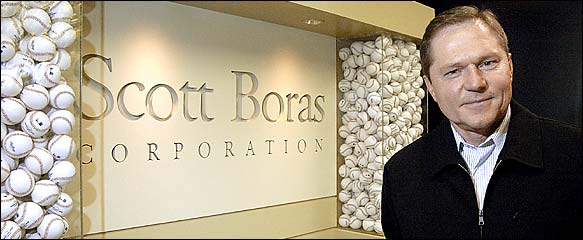
A man ahead of his time, Boras was one of the original moneyball players. For his career in the Minor League, Boras had 133 walks and only 76 strikeouts. Those numbers were for good for a lifetime .363 OBP, to go along with his .288 AVG in the Minor Leagues. Knee injuries unfortunately cut his career short and Boras only made it as high as AA ball. With the baseball experience under his belt, Boras went on to practice law and from there become a full-time baseball agent in the early 1980s. (Caption courtesy of Jonathan Hacohen).
By Patrick Languzzi (Cooperstown Correspondent) Follow @patricklanguzzi
Follow The MLB Reports On Twitter Follow @mlbreports
He has a billion dollar smile, a list of clients taller than Shaquille O’Neil and is considered Major League Baseball’s super agent.
In 2006 Baseball America named him the most influential non-player in 25 years, beating out Major League commissioner Bud Selig, yes, that Bud Selig!
Major League Baseball has had to change its rules in response to him on multiple occasions and he has a list of clients that include or have included Jayson Werth (126m), Matt Holliday (120m), Barry Zito (126m), Carlos Beltran (119m) and now the wealthier Jacoby Ellsbury (153m) – just to name a few, and the list goes on..
Fans, teams and general managers may despise him for fear that he is destroying Major League Baseball.
We’re talking about Scott Boras.
Boras Interview From 2009 (After being named the most influential non – player for last 25 years)

Adam Dunn: The Future of the White Sox Slugger
Wednesday August 31, 2011

MLB reports: Not every player can fit onto a particular MLB team. That is a baseball reality. In fact, there are very few, if any players that could produce the same statistics playing for any team. A player’s production is based on many factors, including home park, lineup, adaptability to particular cities and so on. When a team trades for a player or signs a free agent, the hope is that the new player will be able to meet or exceed previous production levels on a new team. Sometimes, the hope is that new environment will revitalize a stagnant player and breath new life into them. In the case of Adam Dunn, the Chicago White Sox signed him to a free agent contract last year. A large deal, 4 years for $56 million dollars. A fair deal in my estimation at the time. The White Sox by signing Dunn were hoping to land an established slugger to fit in the middle of their lineup. What they ended up with was quite different.
Take a look at Adam Dunn’s current production in comparison to his career numbers:
| BA | HR | RBI OBP | ||
|---|---|---|---|---|
| Regular Season | .163 | 11 | 40 .290 | |
| Career | .244 | 365 | 920 .374 |
 To say that Adam Dunn has been anything but a disaster since his arrival in Chicago would be an understatement. Prior to 2011, Dunn’s worst season produced an .819 OPS. That was in 2003, his 2nd full season in the majors that was cut short by injuries. Turn the clock and Adam Dunn sits with a .578 OPS this season with no likelihood of redemption. While some pointed to Dunn playing in a new league for the first time and starting off slow, a turnaround was expected at some point this season. Dunn has actually regressed to the point that he is benched by manager Ozzie Guillen at a frequent rate. A sad state of affairs for one of the game’s previously most consistent sluggers.
For a two-year stretch, from 2003-2008, Adam Dunn was a 40 home runs and 100 walks guy. In his last two seasons, Dunn played in a less than friendly hitters park in Washington and still hit 38 home runs per season. Moving to the White Sox, expectations were that playing in a hitter’s park with a deep lineup would produce possible MVP type numbers for the burly slugger. So what happened? Why the sharp regression?
Part of the issue has been the move to the American League. The adjustment has not worked for some hitters and we have seen NL hitters in the past that cannot play in the AL for whatever reason. Glenn Davis is one famous example that comes to mind, who moved from Houston to Baltimore and literally fell apart overnight. Dunn also is a full-time DH for the first time in his career. Some hitters never take as well to moving off the field and into a DH role, citing inactivity and removal from the full game experience as distractions from their hitting. Given though Dunn’s perceived weak fielding, at both first base and the outfield, a move to DH should have been a welcome change for him. Yet the move was another factor in his year-long slump.
The main culprit in my estimation is the fit, or lack of in Chicago. Perhaps it is the city, or the ballpark, teammates, media or his relationship with the manager. Whatever the reason, I ultimately believe that Adam Dunn and the White Sox simply do not mesh more than anything else. While a return to the field and/or the National League may help, first and foremost Dunn needs to get out of Chicago and start fresh.
 I think of Chone Figgins and his move from the Angels to the Mariners. Despite staying in the same division even, Figgins was never able to meet expectations in Seattle and regressed throughout his time with the Mariners. Had he stayed in Anaheim, the chances are higher that Figgins would have continued playing his game and not transformed into a shell of his former self. Carl Crawford in Boston and Jayson Werthin Washington are players that also signed big-ticket deals and also stayed in their respective divisions, yet faltered in the wake of big contract expectations. But the difference with Crawford and Werth is that they have shown some glimpses of life this season, while Dunn has shown none. I fully expect Crawford at least to be able to make the necessary adjustments and rebound by next season. In Dunn’s case, I do not see that happening without a trade.
Nick Swisher is a situation that I will point to as an example. From the moment Swisher was traded from the A’s to the White Sox, nothing went right. After suffering through the worst season of his career in Chicago, Swisher was traded to the Yankees for pennies on the dollar and blossomed in New York. The same will likely occur to Dunn. A move to the Yankees is a possibility, for a high-profile team that can afford to take on or part of most of Dunn’s salary. A trade for a bad contract is another one, with the Cubs for Zambrano or Giants for Zito as possibilities. Better yet, a move to the Angels could also be the answer. With Mike Trout ready to join an outfield of Peter Bourjos and Torii Hunter, the Angels may not have room for failed trade acquisition Vernon Wells. The White Sox could plug Wells into their outfield and Angels use Dunn to replace Bobby Abreu as DH. A long shot, but certainly a possibility.
No one can be sure if this season is an outlier or an indication of the beginning of the end for Adam Dunn. Based on his strong body of work until this year, I am willing to give him the benefit of the doubt that a rebound will occur. The White Sox might wait it out and give Dunn another shot next year. But then GM Kenny Williams has never been the patient type. After moving Swisher very quickly, I expect the White Sox to do the same with Dunn. This would be a classic buy-low situation for another MLB club. Expect many calls on Dunn in the offseason and a new team by 2012. Despite Dunn indications of having retirement thoughts due to his poor season, I cannot see him going down in this manner. Adam Dunn will be back. The only question is where.

Please e-mail us at: MLBreports@gmail.com with any questions and feedback. You can follow us on Twitter and become a fan on Facebook . To subscribe to our website and have the daily Reports sent directly to your inbox , click here and follow the link at the top of our homepage.

B.J. Upton: Rays’ OF Trade Destinations and Recap of Beltran Trade to the Giants
Thursday July 28, 2011
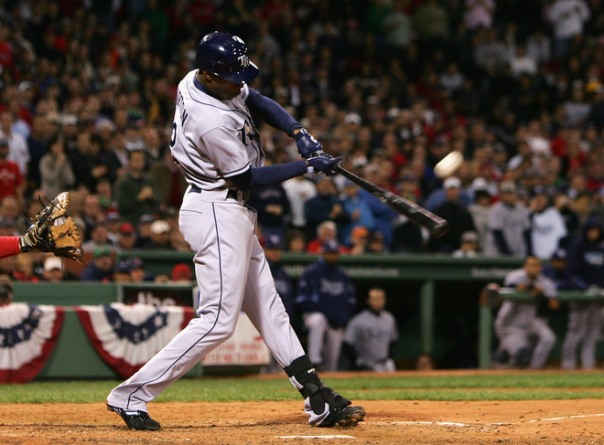
Rob Bland (Intern- MLB Reports): Trade Deadline. More speculation. Teams out of the playoff race sending their valuable veterans to contending teams for prospects. This is a time of year that baseball journalists make a living out of contemplating where there is a fit. The Tampa Bay Rays have quite a decision to make as to what to do with the frustrating yet ultra-talented Melvin “BJ” Upton. Upton was the 2ndoverall pick in the 2002 MLB draft, and quickly rose through the ranks with the Rays. In his first full season in 2007, he belted 24 home runs and stole 22 bases while maintaining an OPS of .894. Every season since that breakout year, his BABIP has dropped, and he has been unable to replicate the type of power he previously displayed. Upton is a good fielder in center field and a good base runner, with the ability to steal 30-40 bases a year. This year, Upton has struggled at the Trop, where he is hitting .171/.250/.312/.562. On the road, the numbers are much better at .284/.364/.481/.845.
The Rays would be wise to move B.J. Upton now as they could net a tremendous return from a team who may be desperate to make a push for the playoffs. There have been close to a dozen teams who have at least called to check in on GM Andrew Friedman’s asking price.
Here are five teams who would be wise to make a big push for the outfielder:
San Francisco Giants
The San Francisco Giants are looking to repeat as World Series Champs and look poised to make the postseason, even with one of the worst offenses in baseball. They do have RHP Zach Wheeler ranked as MLB.com’s preseason #33 prospect. The 2009 1st rounder has done very well this year in the California League, but does need to refine command. Offering Wheeler would probably force the Rays to make the deal, however, the Giants seem to be looking at Carlos Beltran and Colby Rasmus as their main targets.** (NOTE: Since preparing this article, Rasmus has been traded to the Jays and Beltran appears to be on the move to San Francisco. It is a likely safe bet that Upton is not headed anytime soon to San Francisco.)
Atlanta Braves
 With none of their regular outfielders hitting over .234, the Braves are getting pretty desperate for help. Even though they are currently three games up in the wild card race in the National League, they need to bolster their line-up in order to do some damage in the playoffs. The Braves have a ton of pitching prospects to get the deal done. Arodys Vizcaino is one of these top prospects, who has shot up to AAA from A-ball this season. With great command and a plus fastball and curve, Vizcaino could be used to bring Upton to Atlanta.
Philadelphia Phillies
 With the aging Raul Ibanez and youngster Dom Brown struggling to hit in the corner outfield spots, Upton could be ushered in to fill one of those spots. Incumbent Shane Victorino likely wouldn’t be moved from center, but could shift to left for Upton. I could actually see the Phillies going with a young athletic outfield of Victorino, Upton and Brown. Ibanez then becomes a decent weapon off the bench. Still only 19 years old, Jonathan Singleton has drawn a lot of interest from other teams. The Phillies have stated they will not move Singleton for Beltran, but I could see it happening with Upton. Singleton has an advanced approach at the plate, and as he matures, will surely hit for power.
Cleveland Indians
With Grady Sizemore seemingly always on the disabled list, Cleveland needs to shore up the center of their outfield. Michael Brantley has performed admirably, however if they really want to contend in the shaky AL Central, they need a difference maker. Shin Soo Choo has underperformed this year and with the addition of Upton, I can see him being able to turn his season around. Joe Gardner, a right-handed pitching prospect could be moved in this deal. Gardner is an extreme groundball pitcher that needs work on secondary pitches, but along with Cord Phelps, a 2B/3B who played 19 games with the Indians this year, a deal could be struck.
Pitsburgh Pirates
 The Pittsburgh Pirates’ string of losing seasons could soon be over, and they’re in the hunt for the NL Central crown. Only a game back, they may make a push for a complement to Andrew McCutchen in the outfield. With Jose Tabata struggling and spending time in AAA, Upton to play right field for the Pirates could be a great idea. Starling Marte, a speedy outfielder who may remind some a bit of Upton, could be dangled with an arm such as Colton Cain, a lefty who can throw in the mid 90s but needs work on his secondary stuff.
The most likely spot for Upton to land is Philadelphia. With the package that Philly could put together to obtain him, they are capable of pulling the trigger. If the Pirates do make a move, and don’t make the playoffs, they risk possibly setting the organization back again, as rushing their success could cause a tremendous fallout. Slow and steady usually wins the race. Hopefully the Pirates remember that.
***Today’s feature was prepared by our Intern, Rob Bland. Please feel free to leave comments and to welcome Rob aboard. You can also follow Rob on Twitter.***
Please e-mail us at: MLBreports@gmail.com with any questions and feedback. You can follow us on Twitter and become a fan on Facebook . To subscribe to our website and have the daily Reports sent directly to your inbox , click here and follow the link at the top of our homepage.
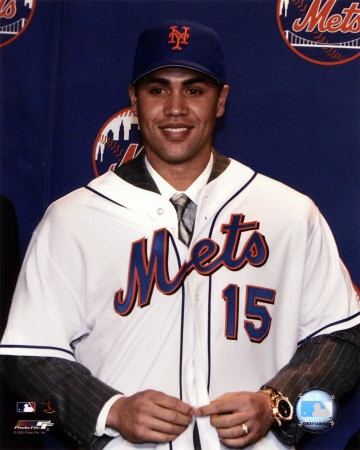
Editor’s Note: The Giants acquisition of Carlos Beltran looks to be complete. As proposed last week on the Reports, Carlos Beltran is on the move from the Mets to the Giants in exchange for top Giants pitching prospect Zack Wheeler. The trade simply needs a rubber stamp, as Beltran needs to go through the formality of waiving his no-trade clause. His agent, Scott Boras, worked diligently to land Beltran with a NL contending team and did not disappoint with the trade to San Francisco. The 21-year old Wheeler was the 6th overall pick in the 2009 draft. The Giants gave up the top pitcher in their system, no doubt. But with a major league rotation consisting of Matt Cain, Tim Lincecum, Madison Bumgarner, Barry Zito, Ryan Vogelsong and Jonathan Sanchez on the mend, the Giants could afford to part with pitching to acquire hitting. The Mets are also sending $4 million dollars of salary relief to the Giants as further consideration in obtaining a top prospect back. Expect Beltran to be the middle-of-the-order slugger the Giants so desperately crave, especially with top hitting catcher Buster Posey out for the year. I can see Beltran carrying the Giants into the playoffs and advancing quite far, given his previous playoffs heroics and incentive to land one more big free agency contract in the offseason. Beltran is also likely to re-sign with the Giants, so this is a win-win all around. The Giants get run production this year and in possible future years and the Mets add a much needed building block for their future which just got brighter.

Scott Boras: The Contracts. The Clients. Who’s to Blame?
Sunday July 3, 2011
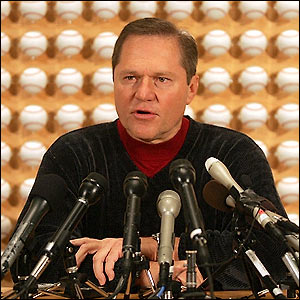
MLB reports: The man behind the billion dollar smile, Scott Boras is a big business. The Boras Corporation represents close to 200 MLB players. This is one of the most influential, if not important people in baseball today. But the man is categorized in many baseball circles as “the devil”, for “forcing” major league teams to dish out excessively large contracts to his clients. Is this really the case? Is Boras bad for baseball or simply a man who knows how to do his job and do it well? Let’s take an inside look at Scott Boras and search behind the contracts.
We took a look yesterday at Randy “Macho Man” Savage, an athlete that aside from being a wrestling superstar, was a baseball player. On the same token, Scott Boras the agent, was at one point Scott Boras the baseball player as well. Here are the numbers that Boras put up in four minor league seasons in the Cardinals and Cubs organizations:
| Year | Lev | AB | R | HR | RBI | BA | OBP | SLG |
|---|---|---|---|---|---|---|---|---|
| 1974 | Rk | 95 | 13 | 0 | 10 | .274 | .402 | .347 |
| 1975 | A | 300 | 39 | 2 | 36 | .277 | .402 | .373 |
| 1976 | A | 437 | 2 | .295 | .387 | |||
| 1977 | AA-A | 343 | 54 | 1 | 33 | .292 | .392 | .367 |
| 1977 | A | 78 | 17 | 0 | 7 | .346 | .440 | .423 |
| 1977 | AA | 265 | 37 | 1 | 26 | .275 | .377 | .351 |
| 1977 | AA | |||||||
| 1977 | AA | |||||||
| 4 Seasons | 1175 | 106 | 5 | 79 | .288 | .363 | .374 | |
| A (3 seasons) | A | 815 | 56 | 4 | 43 | .293 | .354 | .385 |
| AA (1 season) | AA | 265 | 37 | 1 | 26 | .275 | .377 | .351 |
| Rk (1 season) | Rk | 95 | 13 | 0 | 10 | .274 | .402 | .347 |
A man ahead of his time, Boras was one of the original moneyball players. For his career, Boras had 133 walks and only 76 strikeouts. Those numbers were for good for a lifetime .363 OBP, to go along with his .288 AVG. Knee injuries unfortunately cut his career short and Boras only made it as high as AA ball. With the baseball experience under his belt, Boras went on to practice law and from there become a full-time baseball agent in the early 1980s. Imagine if the 58-year old Scott Boras had made it to the majors and had played for 10+ years. He would have been playing well into the 1980s, when his agent career took off. But alas, Randy Poffo the wrestler became Randy Savage the baseball player. Scott Boras the baseball player became a player agent. Certain things are meant to be and some roles seem to be predestined. But it is still fun to think what could have been and had Boras been able to continue in for professional baseball as a player for many seasons, Scott Boras the agent might have never come into existence.
The exploits of Scott Boras as an agent are legendary. From the Bill Caudill contract with the Jays, Todd Van Poppel deal, J.D. Drew refusing to sign with the Phillies, the Alex Rodriguez contract, Darren Dreifort contract, negotiations for Stephen Strasburg and Daisuke Matsuzaka, Boras has done it all and seen it all. Let’s take a peak at 10 of the biggest contracts negotiated by Boras:
10. Adrian Beltre, Seattle Mariners: 5 years, $64 million
9. Daisuke Matsuzaka, Boston Red Sox: 6 years, $52 million
8. Kevin Millwood, Texas Rangers: 5 years, $60 million
7. Carlos Beltran, New York Mets: 7 years, $119 million
6. Kevin Brown, Los Angeles Dodgers: 7 years, $105 million
5.Matt White, Tampa Bay Devil Rays: $10.2 million bonus
4. Andruw Jones, Los Angeles Dodgers: 2 years, $36.2 million
3. Chan Ho Park, Texas Rangers: 5 years, $65 million
2. Barry Zito, San Francisco Giants: 7 years, $126 million
1. Alex Rodriguez, Texas Rangers: 10 years, $252 million
The list literally goes on and on. Boras Corporation has negotiated contracts well over a billion dollars in my estimation and the number keeps rising by the day. We can pick any contracts negotiated by Boras for review, but these ten deals are particularly interesting ones. What do these contracts all have in common? Firstly, they are for very large dollar amounts and very often far exceed what most experts predicted for each particular player. Secondly, none of the teams that signed their respective deal appeared to have benefited from the deal. In the sense that I would argue each team on this list had buyer’s remorse and would take back the contract if given the chance. Lastly, all of these contracts were negotiated and signed by Scott Boras and each respective major league team owner and general manager. It takes two to tango and in this case, sometimes three or four parties. For as much as teams and fans want to burn Scott Boras at the stake for destroying baseball, these contracts were signed by the free will of each team. Furthermore, each team pursued their respective players and courted them to accept a contract and join their team. At some point, MLB teams need to look at the mirror if they want to change the economic landscape of the game and stop blaming Scott Boras and the player agents of this world.
An agent’s job is to land the biggest contract for his or her client. A team’s job is to field the most competitive team at the most economical price. When a player turns out to be a bust or financial albatross, it is the team that did not do their job. The baseball world fell over when Jayson Werth signed his seven-year, $126 million contract. The blame fell to Scott Boras for the most part for extorting such a large figure out of the Washington Nationals. Why? Mike Rizzo and the Washington Nationals organization are all big boys that can make their own decisions. Without seemingly any strong bidders against them, the Nationals literally outbid themselves in handing Werth such a lucrative and absurd contract. Most analysts, myself included, felt that this contract could only end up failing the Nationals. Werth as an injury prone player without a proven track record was going to likely have a hard time justifying his deal. But don’t blame the player or agent. No, they did their job in the process. It is the team that needs to take responsibility for its actions. An important lesson in life is to learn from one’s mistakes. But teams keep making the same financial blunders, over and over when it comes to player contracts. That is not the fault of Scott Boras. It is the teams.
When free agency opens up each offseason, I compare the winter meetings to children being handed large wads of money and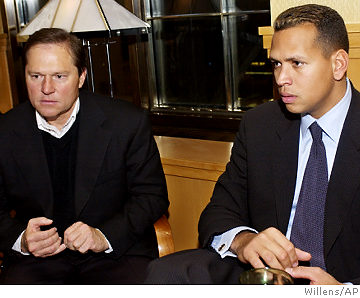 being thrown into a candy store. They cannot control themselves and have to buy more and more to satisfy their hungers. As it is not the children to blame when they are spoiled, it is really not the General Managers either when they have large spending budgets. As parents need to take responsibility for their children, team owners need to account for their General Managers. The large contracts that are handed out every year must be approved by each team owner beforehand. Thus the way a child comes to ask for a $500 remote control car, a General Manager will ask for a $126 million Werth. When the parent and team owner both say yes, they only have themselves to blame. The toy and player inevitably break down or are seen as too expensive in hindsight. But by then, the toy cannot be returned to the store and the player contract cannot be voided. The lesson is to learn from the experience and to avoid similar mistakes in the future. But teams refuse to listen and learn and as a result, player contracts in baseball are exploding with no end in sight.
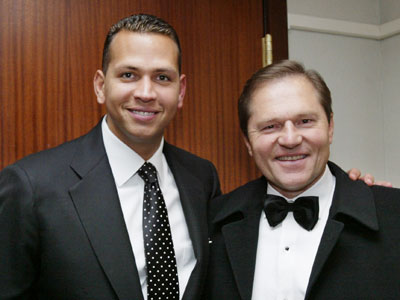 Let’s keep Scott Boras in perspective. The man does his job very well and pushes the limit of player contracts in baseball. He might be a very intelligent person and a great salesperson. But at the end of the day, he is simply doing his job. For myself as a consumer, if I buy a brand new car for $30,000 when I could have bought a similar model down the road for $10,000 less, I cannot blame the car dealer or its salesperson. It was up to me as the consumer to shop around and get the best deal I could. There would have been other cars, the same way for MLB teams there will always be other players. But teams don’t see it that way. They get caught up in the negotiations and the thrill of the hunt and get determined to land their “guy”. The Red Sox begged and pleaded to get Dice-K into a Red Sox uniform. The same Sox and Yankees battled it out to land Mark Teixeira. The Texas Rangers and then owner Tom Hicks literally handed Alex Rodriguez a blank cheque to land the marquee free agent. Again and again, MLB teams go out of their way to land the players they want and end up blaming the players and their agent when the contracts do not work out.
One man I will give credit to is Fred Wilpon. In criticizing the Carlos Beltran contract, he blamed the team for overpaying the outfielder based on one good playoff run. This is a man who at the very least took responsibility for his actions and knew where to lay the blame. Since the Beltran deal, the Mets, along with the Braves and Angels, are three teams that tend to stay away from dealing with Scott Boras and the players he represents. That is ultimately the best approach and the only way that any order can be established. If teams do not want to dish the money, all they have to say is no. But as long as the money is there and being handed out by the teams by the truck loads, Scott Boras will be there with open arms, negotiating the best contracts for his clients that he can.
Scott Boras has accomplished some amazing feats during his agent career. From changing the rules on arbitration and free agency, Boras pushes the boundaries and finds all the loopholes to change the economic system of the game. The sign of a great lawyer, negotiator and agent. Before fans are quick to condemn the man, lets step back and appreciate what he has accomplished. Scott Boras and the Boras Corporation are a billion dollar industry. They provide marketing services, training facilities for their clients and look after their clients every needs. Boras has a team of experts that are constantly studying and keeping track of the game. Scott Boras stays on top of the game and thus is able to stay competitive and negotiate the best contracts for his clients. While not everyone agrees with his methods, particularly the Alex Rodriguez opt-out with the Yankees which led A-Rod to leave Boras, he may have the ideas, but it is up to players to accept them and teams to listen. As long as players keep lining up to hire Scott Boras and teams await with open arms and wallets, the system will not change. Scott Boras may be a lot of things, but the devil he is certainly not. He is simply a smart, hard worker who does his job well at levels that few can attain. A baseball pioneer, Scott Boras has certainly left his mark on the game. While many fans and teams do not agree with his methods, at the end of the day he gets the job done. Scott Boras: Genius or madness? You decide.

Please see the list below of some of the clients in the Scott Boras stable. The list is growing by the day:
|
|
|
Please e-mail us at: MLBreports@gmail.com with any questions and feedback. You can follow us on Twitter and become a fan on Facebook . To subscribe to our website and have the daily Reports sent directly to your inbox , click here and follow the link at the top of our homepage.


 MLB Reports
You must be logged in to post a comment.