Blog Archives

Watch Out For the Oakland A’s: Top Pitching and Countless Walk-Offs
Wednesday July 25th, 2012

John Burns: Nobody would have told you prior to the season that the A’s would be 7 games over .500 in late July. With a 51-44 record the red-hot Oakland A’s have been one of the baseballs biggest surprises in baseball. Oakland is coming off a 4 game sweep of the AL East leading New York Yankees and that is when the A’s caught everyone’s attention. Oakland has a MLB-leading 11 walk-off victories this season. The A’s have the second lowest payroll in the league with $55 million and the New York Yankees who they just swept has a $200 million payroll. The A’s season so far has been basically a recap of the movie “Money ball”, how Oakland is having this success with virtually no superstar and such a low payroll is truly amazing. With the sweep of the Yankees the A’s are tied for a Wild Card spot. July has been a huge month for Oakland and they produced with a 15-2 record so far to show their GM Billy Beane they are serious. Add to that a 7-game winning streak. Still not convinced? Ask the Toronto Blue Jays and Ricky Romero. The A’s have taken 2-straight games in Toronto, including tonight’s 16-0 massacre. These A’s are a team to keep an eye on. Read the rest of this entry

MLB Playoffs: Improving and Revamping the System
Saturday October 15, 2011
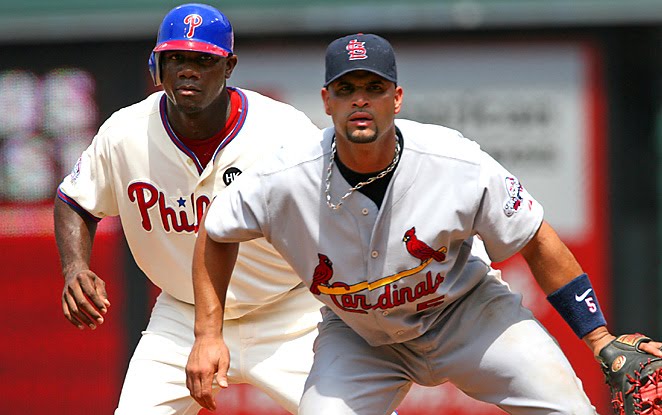
MLB reports – Jonathan Hacohen: I recently received a great e-mail from one of our readers. The e-mail was a well written commentary piece on improving the MLB Playoffs structure. So enthusiastic was I with the contents of the message, that I immediately suggested sharing the reader’s thoughts on our site. I got an enthusiastic thumbs back in response! Thus today on MLB reports, we are proud to present Guest Writer- Brian Corrigan, with his proposal to improve and revamp the MLB Playoffs:

Brian Corrigan (Guest Writer – MLB reports): The classic pennant chase prior to 1969 made sense. It rewarded the team that performed consistently over a schedule of between 154 and 162 games. In a given year, it is possible that one or two teams with the best records in Major League Baseball will win 60% of their games. However, a team that wins 60% of their games, will routinely lose 3 out of 5 games several times in a season. And the difference between a team that wins 55% of its games and 60% is almost unnoticeable in any given stretch of games, until you play out the full season.
As the two top seeds in each league have now just been eliminated from the championship games, does baseball really want to go the path of hockey, basketball and football- allowing wild card teams an ever-increasing role in the postseason? Remember that those are sports where the best teams commonly win 67%+ of their games. In football, the top teams win 75%+ of their games. Baseball is a totally different creature. It requires longer sifting for the really great baseball teams to emerge, although those teams are almost inevitably bewitched by periods of seasonal funks.
Does baseball really want to go in this direction? Will games in April, May and June really count? Will fans wait until postseason to tune in? Will General Managers develop strategies to play on the cheap in the first half of the season, and then make the key acquisitions that will give them the best short-term shot at the postseason? Do we really want baseball to degenerate in this direction?
I’m a pragmatic person. I understand that baseball is business. Given the fact that postseason play is more lucrative, I can understand wanting to expand the number of postseason games. Ultimately, I’m not going to succeed in rolling back the clock, but I would like to propose a system that is much better than a 10 or 12 team playoff system.
If I could deliver a postseason schedule that:
1) Produced more games, and therefore higher revenues than the current system;
2) Would produce a higher number of expected games, while taking less elapsed time, solving the World Series in November problem;
3) Would do this even with the existing 8 team playoff structure;
4) Would encourage the use of the top 3 starting pitching rotations, that fans prefer; and
5) Decreases the probability that the series will come down to luck or streakiness…
Would I at least have your attention?
What I am proposing does all of this, as well as produce higher revenues for MLB teams and more excitement for the fans.
What I am proposing is essentially a best of 9 games “round robin” pennant series, where each of the 4 playoff teams in each league would potentially play each other 3 times – possibly more or less, with up to two tie-breaker games. The pennant would not be won until one team had secured the best record in the pennant series, getting at least 6 wins. Until a team took its fifth loss, it would still be playing meaningful games, until one team secured its sixth win.
Each 3-game set would consist of a first game, with the team that does not have home field advantage taking a day off, and then playing on the 3rd and 4th day against the team with the home field advantage. The fifth day would be off; thus, the use of a 3 pitcher starting rotation would be encouraged. One league would start one day later than the other, so that baseball games would played on each day.
Home field advantage would go to the team with the best seed (best regular season record).
 But isn’t there a possibility that some of the games wouldn’t count? Yes, however by giving the postseason teams a share of postseason revenues, there is always a motivation to win. At the point where two teams have been mathematically eliminated from the pennant series (this should not happen until every team has had a chance to play at least five games, and most likely more), then the two surviving teams would play the balance of the remaining 9- game tournament against each other, even if that means they play more than three times against one another. For example, if two teams have won their first 5 games, and the remaining teams have lost 5 games each, then the teams that have won five in a row should play their last games against each other. Effectively, this would create a best of five series for the surviving two teams, until one team gets its eighth win (allowing for a tenth game tie breaker if needbe).
To increase the probability that the two best teams would play in the final 3 games, I would propose the following schedule:
First 3 games: #1 seed plays #4 seed; #2 seed plays #3 seed
Second 3 games: winner of #1 vs. #4 plays loser of #2 vs #3 series; winner of #2 vs. #3 plays loser of #1 vs. #4.
Of the two teams that won the first series, they will go into the last series with no more than 4 losses (no more than 1 from the first series and 3 from the last series), meaning that at least the first game between those two teams will count for both clubs, since elimination could not yet have occurred for either one.
Taking this year’s National League Division series as an example: the Phillies won the first two of three against the Cards, and so would have played their next three games against the D-Backs who lost 2 of 3 to the Brewers. The Brewers would have played their next three vs. the Cards. The final 3 games would have been Phils vs. Brewers, Cards vs. D-Backs, at least until two of the teams had been eliminated.
In the event that only one team is eliminated, until a second team is eliminated, it is possible that 1 or 2 games will be played for the honor of baseball, or for a share of the postseason revenue. But once two teams are eliminated, they would step aside and allow the two surviving teams to play up to the balance of the remaining 9 games head-to-head.
The following represents a hypothetical pennant season:
First 3 games:
Phils win 2 out of 3 against the Cards
Brewers win 2 out of 3 against the D-Backs
Second 3 games:
D-Backs win 2 out of 3 against Phils
Cards win 2 out of 3 against Brewers
Game 7 with Resulting records in parenthesis
Brewers (4-3) beat Phils (3-4)
Cards (4-3) best D-backs (3-4)
Game 8
Brewers (5-3) beat Phils (3-5)
Cards (5-3) beat D-backs (3-5)
Phils and D-backs are eliminated; Brewers and Cards play the final 9th game against each other to resolve the pennant. Since the home field goes to the best regular season record in the 2nd and 3rd games of a 3 game set, the Cards would visit the Brewers for the 9th game.
Let’s say that Game 8 had gone differently, let’s say D-backs (4-4) beat Cards (4-4)
The Phils would play game 9 against the Brewers for honor and bragging rights.
If the Brewers win their 6th game, they clinch; otherwise, there will be a two-way tie for the pennant to be resolved by a tie breaker game. This system produces lots of wonderful and exciting and meaningful games for fans.
 But isn’t there a chance of a tie in this system? Yes, and you could still get a 10th and 11th game tie-breaker in; and in less time than the current system. A three-way tie would pit the two worst regular season record teams against each other, and the winner would play the team with the best regular season record. This could happen if three teams went 5-4, and one team went 3-6 or if three teams went 6-3 and one team went 0-9. It should not happen that often, and if it does, it generates more games and more excitement for baseball.
Are you sure this will take less elapsed time? Yes, the current system must allow for a 5-game division series and a 7-game championship. That is 12 games in total. But you get fewer games because only two teams are playing in the last best of 7, and some teams may be eliminated after just 3 games. In this revised system, no one can get eliminated until after playing a minimum of 5 games. Even with a 3-way tie-breaker, you play less than 11 games in total vs. a schedule that must accommodate 12 games, as is the case in the current system (and 15 or more in the proposed new system). It works out that the 9th game would be scheduled for the day that the 5th league championship game is currently scheduled. Since it takes 3 more days to play out the 7 game LCS, there’s enough time to squeeze in up to two tie-breaker games, and still finish up at least 1 day before the current system. Given the rarity of the two game tie-breaker, the last tie-breaker game could be scheduled for a day before the World Series.
Can you really say that this series cuts down on the luck? It could come down to the tie breaker game? If you want to reduce the luck, use the regular season to determine the pennant winner. The more games played, the less luck involved. It will take some consistency to fight your way to that 10th game tie-breaker. The bottom line is really that baseball gets the increased revenue, without opening the door to more and more teams in the playoffs, the way the other sports have gone, thus diminishing the value of the regular season. In fact, with the suggested homefield advantage rules, the top seed gets 6 out of 9 games at home, and that makes the regular season count for more than the current system.
***Thank you to our Guest Writer, Brian Corrigan, for sharing his thoughts on the MLB playoffs today with us. Please feel free to leave any comments and/or questions that you have at the bottom of this article.***
 Jonathan Hacohen is the Lead Baseball Columnist & Editor for MLB reports
Please e-mail us at: MLBreports@gmail.com with any questions and feedback. You can follow us on Twitter and become a fan on Facebook . To subscribe to our website and have the daily Reports sent directly to your inbox , click here and follow the link at the top of our homepage.

The Hunt for Red Sox October
September 14, 2011

Rob Bland (Baseball Writer – MLB reports): Red Sox Nation is panicking. On September 1, the Boston Red Sox held a 9 game lead over the Tampa Bay Rays. Today, on September 13, they sit only 3 games ahead. Since then, the Red Sox have gone 2-9, while Tampa has gone 8-3. Many people believe that Tampa Bay has the pitching to get the job done. Led by “Big Game” James Shields and David Price, they have a rotation that has been one of the top in the league all season. As a team, they have given up the least amount of hits by 80 in the American League. Their team ERA is also tops in the American League at 3.56.
 Boston is limping into the end of the season, with 3 of their 5 opening week starters injured in some fashion in the last month. Jon Lester has been every bit of the ace the Red Sox need him to be, with a 15-7 record and 3.07 ERA. However, when the Sox leaned on him on September 11 against Tampa, he lasted only 4 innings, giving up 4 runs on 8 hits and 3 walks. John Lackey has been awful this year. I cringe when I look at his stats. 6.30 ERA, 180 hits in 144 innings, and 18 hit batsmen to lead the league. How has he won 12 games? Buchholz was solid before going on the disable list, giving up only 76 hits in 82 2/3 innings, but hasn’t pitched since June 16. It is believed he could be back as soon as next week, but in a limited bullpen role at best, so his impact won’t be felt much. Josh Beckett has been great this year as well, but rolled his ankle in the 4th inning of his last start. At one point, after throwing a complete game, 1 hit shutout on June 15, his ERA sat at 1.86. He is currently 12-5 with a 2.49 ERA, and a WHIP of 0.985. Daisuke Matsuzaka was a bust this year and required Tommy John Surgery in June. In his place is knuckleballer Tim Wakefield, who currently sits at 200 wins on his career. Wakefield hasn’t made it look pretty this year, but has put in 139 2/3 valuable innings to date.
Tampa Bay boasts one of the top rotations in baseball, with Opening Day starter David Price pitching very solid, without much run support. He has a 12-12 record but his ERA is 3.40 and has reached the 200 strikeout plateau for the first time in his young career. Big Game James doesn’t need much of an introduction, as his 11 complete games and 4 shutouts lead the MLB. He has already thrown 226 innings, a career high, with 210 strikeouts, also a career high. Wade Davis has thrown 165 soli d innings as a follow-up to being 4th in Rookie of the Year balloting last season. Jeff Niemann is really blossoming into a dependable middle of the rotation pitcher, going 10-7 with a 3.97 ERA in 129 innings. He doesn’t strike out a ton of hitters, but doesn’t walk many either, shown by his 3 K/BB ratio. One of the frontrunners for AL Rookie of the Year is Jeremy Hellickson, who has been pretty much lights out all year. With a 2.96 ERA and only giving up 135 hits in 170 innings, he will surely garner some votes. The one wild card that the Rays hold, however, is Matt Moore. Moore was just called up to fill a role similar to David Price in 2008. He will be electric out of the bullpen after a minor league season that will rank him in the top 5 of all prospects going into next season.
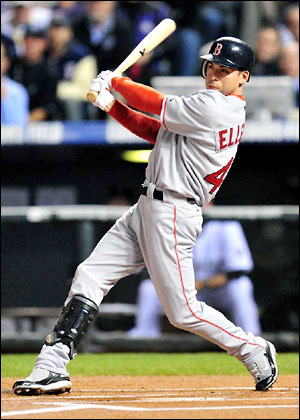 Boston’s offense is abound with potential MVP’s and great hitters. 1 through 9, the Red Sox boast one of the best lineups I can remember. Jacoby Ellsbury may win the MVP, but he will have to go through Dustin Pedroia and Adrian Gonzalez first. Also, David Ortiz is again proving the naysayers wrong, as he is hitting .313 with 29 home runs and 92 RBI. When a player of JD Drew’s caliber can go on the disabled list and be replaced with Josh Reddick, who is hitting .298 and slugging .491 in 250 plate appearances, it gives a lot of confidence to a pitching staff. Catcher Jarrod Saltalamacchia finally seems like the player who the Atlanta Braves envisioned when they drafted him in the 1st round in 2003. Jason Varitek is also enjoying a fine season as a backup to Saltalamacchia, hitting 11 home runs in only 234 plate appearances. This offense is one that no team will want to face in the final weeks of the season or the playoffs if they reach that far.
Tampa Bay may not have the “sexy” offensive players that the Red Sox do, but they have some players having mighty fine seasons. Ben Zobrist has overlooked his mediocre 2010 season, and has put up numbers closer to his breakout 2009. Although he probably won’t ever match that season, his 45 doubles lead the American League, and has a very good OPS of .820. Casey Kotchman is still an on-base machine with little pop from first base. He has hit at a .313 clip with a .382 on-base percentage, setting the table for the big run producers. Evan Longoria may be having a down year by his standards, but most teams would be happy with a third baseman hitting 25 home runs and slugging .818. Through May, Matt Joyce was an early favorite for AL MVP, but really tapered off in June and July, before turning it back up in the last month. His .843 OPS leads the team, and he also has 12 stolen bases. BJ Upton continues to be a low average, high power type of hitter, with 20 home runs and 27 stolen bases while hitting just .234. The worst position in terms of offensive production has been shortstop, where Reid Brignac and Sean Rodriguez have handled most of the duties. The Rays’ high-tempo style of offense has wreaked havoc on opposing batteries, as they have stolen 130 bases, good for third in the American League.
Both teams have completely different styles and techniques, but are successful in their own ways. With the Rays aggressive style, and the Red Sox more reliant on taking pitches and making pitchers work, getting deep into bullpens early, this could be a battle to the bitter end. The schedules they play the rest of the way will also dictate who is more likely to win the race for the Wild Card.
Boston:
1 vs Toronto
4 vs Tampa Bay
7 vs Baltimore
3 vs New York
Tampa Bay:
1 vs Baltimore
4 vs Boston
7 vs New York
3 vs Toronto
It is quite evident that Boston has a much easier schedule, and should win a fair number of them. The Red Sox have gone 11-4 against the Yankees this year also. Tampa has gone 5-6 against the Yankees, whom they see 7 more times. Boston gets Baltimore 7 more times, and have beaten them 8 out of 11 games so far. The pivotal series of all will be this weekend when the two teams square off against one another. The game of the weekend may be on Friday September 16, where James Shields faces off against Josh Beckett.
I believe that Tampa Bay will come within a game or two, but the schedule differences give Boston a HUGE advantage. The Red Sox 18-6 drubbing of the Blue Jays on Tuesday will be a catalyst for the team over the next two weeks, where they will produce runs and pitch just well enough to get into the postseason.

***Today’s feature was prepared by our Baseball Writer, Rob Bland. We highly encourage you to leave your comments and feedback at the bottom of the page and share in the discussion with our readers. You can also follow Rob on Twitter.***
Please e-mail us at: MLBreports@gmail.com with any questions and feedback. You can follow us on Twitter and become a fan onFacebook . To subscribe to our website and have the daily Reports sent directly to your inbox , click here and follow the link at the top of our homepage.

MLB Expansion: Baseball Discussions to Add Two More Teams
Friday July 1, 2011

MLB reports: When looking at the current state of baseball, some very important changes are on the horizon. MLB reports tackled in the past weeks the topics of MLB realignment, the future of the DH and expanding and changing the playoffs (click on links to view these posts). Whether you are a traditionalist or modern thinker, we can all agree that revisions to the baseball system are coming. To compliment many of the new developments that are coming, we have one last topic that we need to cover. This is a biggie so hold on to your hats: MLB Expansion. Major League Baseball, as slow as it is to adapt, has come to the time that it must acknowledge that the American League and National League need a balanced amount of teams. When contraction didn’t work (Minnesota stayed and Montreal moved to Washington), we were left with thirty MLB teams. To fix the discrepancy, we need sixteen teams per league. As a result, get ready for Major League Baseball to expand to two new cities.
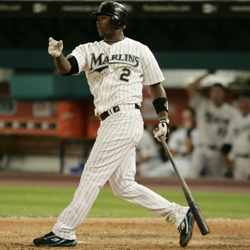 Before anyone stars howling, let me insert a disclaimer. There is no available information yet confirming that MLB will expand. But from all the signs of the state of the game, it appears that expansion is on the horizon. It must be. Expansion will lead to balanced leagues, which will be a must in the addition of more wild card teams. In 1993, MLB added the Colorado Rockies and Florida Marlins. In 1998, the Tampa Bay (Devil) Rays and Arizona Diamondbacks joined the mix. Since then, we have gone thirteen years without expansion. Baseball popularity is at an all time high, with the economy slowly starting to rebound. The demand and money are there and anytime the MLB owners can fill their wallets, they will take it. Expansion fees back in 1998 were $130 million. To contrast, the Texas Rangers sold last August for $593 million. Let’s ballpark it and say that each new expansion team could easily bring in $250 million each. That would be $500 million available to be shared by the existing 30 MLB owners. That is a minimum of $16 million per team and even that amount is conservative. Realistically, we could see $25-$30 million per team as the bonus. Money talks and the lure of the big payday will be too much for MLB owners to pass up much longer. By having a balanced schedule, leading to realignment and more wild card teams, together with the revenues that are generated, both teams and players should be happy. It is a win-win for all.
The biggest argument that I have heard against MLB expansion is the dilution of talent. There is a thin amount of pitching to go around as it is, and by adding more teams to the mix, the talent levels will supposedly be at an all-time low. I don’t buy it. Take a look at AA and AAA and how many major league ready players are wasting away due to a lack of opportunity. Some are there for financial considerations, by teams wishing to delay their arbitration and free agency years. I acknowledge that. But there is so much talent at those levels alone that an expansion draft could stock two competitive MLB teams. I truly believe that. Then we should take into account the globalization of the sport. The 2013 World Baseball Classic will feature twelve new countries into the mix. By creating and furthering the interest in baseball around the world, including Great Britain, Germany, France etc., Major League Baseball will create a deeper pool of talent as a result. It will take time and the benefits of adding more countries to the WBC in expanding the players that are generated may not be felt for a decade or longer. But baseball needs to think long-term, not short. Even if there is a dilution of the quality of players for a brief time, it is not unreasonable to think that the world as a whole with its population could stock 32 MLB teams. It currently stocks 30 teams quite well and the problem, if any, is that in the future we will actually have more quality players than available teams to play for.
The main benefit of expansion is the created interested in Major League Baseball in more cities and the added rivalries and intrigue to the game itself. There are baseball hungry fans in many cities that are denied the privilege of watching MLB games live, due to lack of proximity. Adding MLB teams will create more fans in the new cities and surrounding areas. Merchandising sales will increase, jobs will be added and economies will benefit in those cities. As long as each new team has a solid economic plan in creating a business model for itself, from the ballpark to the day-to-day operation of the team, new MLB teams will be cash cows and not drains on their respective cities. There is a reason why cities and potential owners campaign to be awarded a Major League Baseball team. Baseball is a lucrative business. By understanding why expansion is necessary and beneficial, it is time to jump into the candidates.
From everything that I have read and people that I have spoken with, the following is a list of ten potential MLB expansion destinations. From these ten cities, two may end up being the lucky winners. I have included a brief commentary beside each candidate for reference:
1) Las Vegas: There is money in Vegas and demand for the sport. The biggest hindrances are the gambling and economic issues for the area. I think Las Vegas should get a team and baseball may feel the same way.
2) Portland: One of the largest cities without a team, this would be a safe bet for Major League Baseball. This city has been thrown around in almost every discussion on expansion. This one will likely happen.
3) San Antonio: Similar to Portland, but there are already two teams based in Texas. If any area will get three MLB teams, it is New York (see Brooklyn discussion).
4) Sacramento: Is the California market getting saturated? With Oakland having issues and looking to a move to San Jose, there may be alarm bells that hinder Sacramento. There is also a chance the city will lose its NBA team which does not help from an image standpoint.
5) Orlando: More teams to Florida? The Rays aren’t exactly busting at the gate and the Marlins are moving to Miami next year. I could see the Rays moving if they do not get a new stadium, so expansion will likely be held off here for now.
6) Nashville/Memphis: Both are great cities but with other viable markets available, Nashville/Memphis are a long-shot.
7) Mexico City: This is the sexy pick if Major League Baseball truly wants to become international. The travel logistics could make this one very difficult. For a sport that is slow to evolve, this is too much change, too soon.
8) Vancouver or Montreal: Stop snickering as this could happen. Ok, not Montreal, but Vancouver is a possibility. After the loss of the Expos, I cannot see baseball ever going back to Quebec. Then when we account for the fact that Vancouver lost its NBA team, baseball may be scared off from these areas as being non-viable. The Toronto Blue Jays sit middle-in-the-pack for attendance and I think MLB is satisfied with one Canadian squad. Happy Canada Day to all the Canucks reading this article and enjoy the Jays this weekend. But as far as more Canadian teams in baseball, I am sorry but I do not see it happening. Ever.
9) Brooklyn: The talk of the Nets coming to Brooklyn soon has sparked renewed interest in the area for baseball. The Brooklyn Dodgers will never come back to existence, but a new expansion team might. Given baseball’s rich history and love of everything retro, I really like this selection. Don’t discount the power of New York, as it is one of the central hubs of sport. I only give this one a 25% chance of happening, but a very solid 25.
10) New Orleans: A feel-good pick, given the tragedy suffered by the city. But on an economic and rational basis, it is difficult to envision bringing a new baseball team coming to a rebuilding area that still is suffering major financial issues.
That concludes today’s discussion on MLB expansion. As a starting point for the topic, I am sure that this will not be the last we hear about it. Given that MLB works in secret ways often, don’t be surprised if an announcement on two new expansion teams comes out of left field one day. While it would be fun to hold a competition and have cities campaign for selection, MLB may not want to run the risk of alienating and upsetting teams that are not chosen. At the end of the day, the key for baseball will be to get the right cities and owners in place. This will happen in the next year or two and should be an interesting process. Will we see the Portland Sluggers, Las Vegas Aliens or Brooklyn Bombers? Time will tell on that one. What we can be sure is that the face of Major League Baseball over the next few years will change substantially. From the teams, to the playoffs and divisions. Change is in the air as baseball continues to evolve with the times.

Please e-mail us at: MLBreports@gmail.com with any questions and feedback. You can follow us on Twitter and become a fan on Facebook . To subscribe to our website and have the daily Reports sent directly to your inbox , click here and follow the link at the top of our homepage.

Expanding and Changing the MLB Playoffs: Time to Add More Wild Card Teams
Thursday June 9, 2011
MLB reports: Ever since the players’ strike of 1994 and ensuing realignment of baseball and expanded playoff format (implemented as of 1995), continual debates have raged in baseball circles as to the next round of changes. With everyone still talking today on the topic of wild cards and expanding the MLB playoffs, MLB reports is ready to take this topic head on to find the solution.
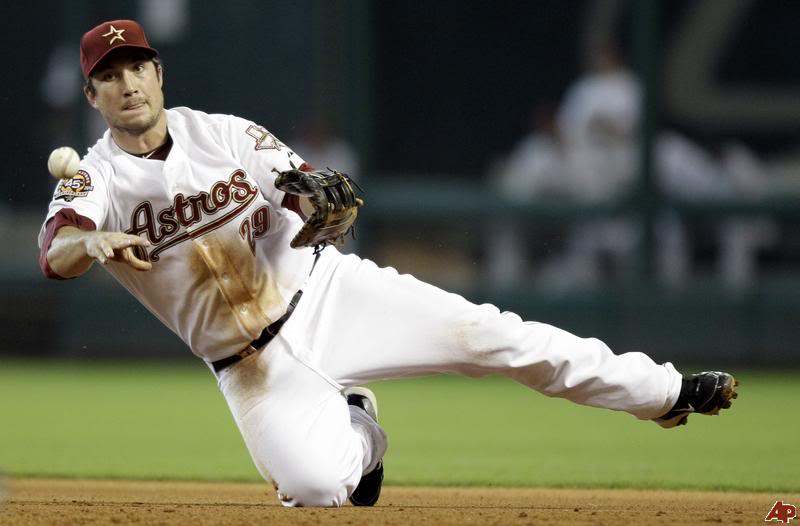 MLB realignment was already covered by us in a recent feature. After 16 seasons under the current format, clearly changes are needed. Our realignment post was just the beginning of the long process to reform and revitalize Major League Baseball. The next step is expanding the amount of wild card teams and changing parts of the MLB playoffs format which will be discussed today. From there, expansion is required to produce 32 total teams, 16 per division which will be covered on MLB reports on another day. Stay tuned.
The current MLB playoffs structure essentially looks like this:
-
Eight total teams make the playoffs
-
Four teams per league
-
One wild card team per league
-
The Division Series (ALCS and NLCS) is a best of five games format
-
The winners from the ALCS and NLCS advance to the League Championship Series (ALCS and NLCS)
-
The ALCS and NLCS are both a best of seven games series, winner of each advance to the World Series
-
World Series is a best of seven, home field based on winner of All Star Game
As part of revamping the system, it is apparent from whispers around baseball that two more wild card teams are about to be added to the mix. As a result there will now be ten total teams that make the playoffs, five per league. Taking the home field talk out of the equation, which is an article in itself, the issue today is the number of teams to make the playoffs and the best format for each playoff series.
I am writing today’s article from a realistic point of view. When I discussed realignment a couple of weeks back, it was from a hopeful and practical standpoint, but with the idea that baseball would be unlikely to accept most of my changes. For a game known for its long-standing traditions, the winds of change blow very slowly through baseball. I am presenting the revamped playoffs with the idea that Major League Baseball will not change too much. While it would be nice to have anywhere for 12-16 teams to make the playoffs according to some fans and analysts, the chances of that happening are close to nil. It was a big change to add the two wild card teams back in 1994 and only two more wild card teams will be added in the next year or so at most. Period. There are some that may want more, but it will not happen.
On the same token, the best of five vs. seven game series debating is raging as well. Some people do not agree with the short five games series in the opening round, as it creates a scenario whereby a top team can be bounced early without the ability to play a full seven games series. This topic will be addressed, but we will have to assume that likely the opening rounds will remain a best of five games series and only the League Championship and World Series would be a best of seven games series. Again this may not be the best option for all, but it is what it is and baseball is unlikely to bend on this as well.
 The last point to make before going through my playoff scenarios is the home field advantage debate, specifically awarding it based on the All Star game outcome. Most traditionalists, yours truly included, despise this format. The best team in baseball should be rewarded for a seasons worth of games played and not have home field determined based on the results of a high-profile exhibition game. After the All-Star game finished in a tie in Milwaukee during the 2002 season, baseball was left with egg on its face and scrambled to give the game more meaning. The decision to award the World Series home advantage based on the winner of the All Star game has been argued by many to have failed to give the All Star game more meaning. But assuming that this format stays in place, an injustice to the teams that finish with better records after season’s end will remain.
In adding two more wild card teams, an additional round of the playoffs will go into effect. The opening round, which we can call the wild card round for simplicity, will have the two wild card teams in each league face-off (most likely a best of five). The winner of the wild card round will advance to the Division Series. From there, the current playoff format would remain in place, with the best of five games Division Series leading to the League Championship and World Series. Part of me is inclined to allow the top seeded team in each league to have an automatic bye into the League Championship Series, with the wild card teams facing off in the Division Series and the 2nd and 3rd seeded teams in each league facing off as well in the Division Series. Allowing each top seed to have a bye directly into the League Championship would reward the highest winning team in each league. But issues would arise, including arguments that two byes for each top team would be too great of a reward and how to determine if there are ties for the top record in each league.
As a result, to keep things simple, baseball will simply have to institute a 4th round of playoffs. In my estimation, the Wild Card Round can be a best of five games, with every other round moving to a best of seven. While baseball unfortunately will likely keep the division series as a best of five games, a move to a best of seven would create more balance in making sure that the true “top” teams advance. Major League Baseball will still have to consider a way to reward the top winning team in each league eventually and that will likely be by creating a first-round bye in a further expanded playoff format, when more wild card teams are added. But until that time, the top winning teams will simply have to enjoy home field advantage. That advantage should continue right into the World Series and it is the hope of this analyst that baseball will realize that one day.
So as we head into another new world of baseball changes, I can’t foresee that the game as we know it today will get completely blown up and redone. Even though the game may need more fine tuning, most changes will come along very slowly. The expanding of the playoffs will be a good thing ultimately for the game, as each team plays a whopping 162 regular season games plus spring training and more teams deserve to be rewarded with playoff berths. An expanded playofs will give teams a better chance to make the playoffs and increase the number of cities and fans involved in the playoff races come September. Adding two more wild card teams is the next logical step and it looks like it will go into effect as soon as 2012. With so many of the other major sports in turmoil, it is good to see baseball alive and healthier than ever. It looks like Major League Baseball has learned its lessons after 1994. Hopefully the game will only continue to move forward and cement itself once again as the greatest sport in the world.
Please e-mail us at: MLBreports@gmail.com with any questions and feedback. You can follow us on Twitter and become a fan on Facebook . To subscribe to our website and have the daily Reports sent directly to your inbox , click here and follow the link at the top of our homepage.


 MLB Reports
You must be logged in to post a comment.