Blog Archives

2012 MLB Hitting Prospects to Target in Fantasy Baseball
Monday November 7, 2011
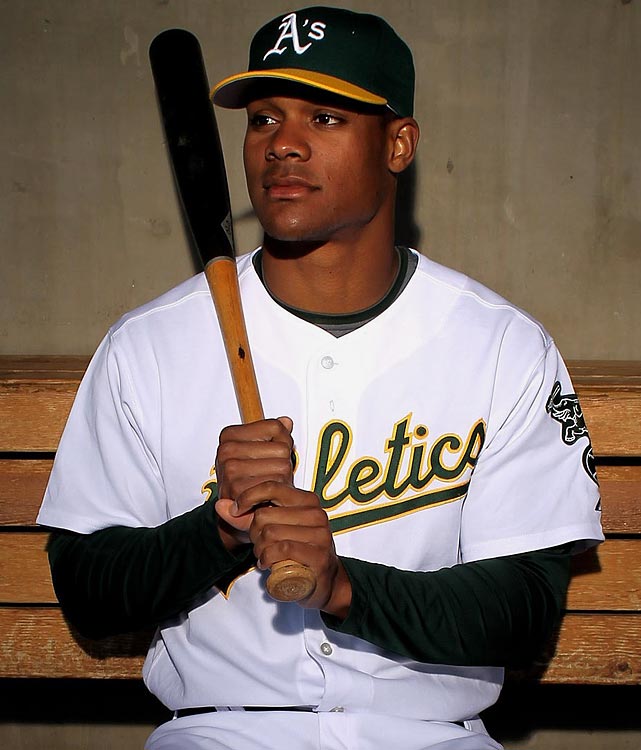
Peter Stein (Fantasy Baseball Analyst – MLB reports): Looking ahead to 2012, there are several potential rookies and young players that have the ability to provide value in your fantasy league, particularly as keepers.
A name to keep on your radar is Michael Taylor, an outfielder in the Oakland Athletics system. Not only do I like Taylor’s potential 5-category skill set, but with Coco Crisp, Hideki Matsui, Josh Willingham, and David DeJesus all entering free agency, he will likely be given the opportunity to play in 2012. Listed at 6’5” and 255 pounds, Taylor has displayed good, but not great, power in the minor leagues. However, he jumped from 6 home runs in 464 at bat during his 2010 AAA season to 16 home runs in 349 at bats in 2011. The 2011 season was cut short due to injury, but Taylor displayed the run producing ability he will need to be successful in the major leagues. Furthermore, he is a good base runner and has the potential to be a 20/20 player. With that said, the .816 OPS he posted in last year in AAA is a little worrisome, as he will face much more challenging pitching in the major leagues. All in all, he is an intriguing prospect due to the fact that he should have the opportunity to play in Oakland and has potential to perform in all five fantasy categories.
Taylor’s AAA teammate, Chris Carter, is another name to keep your eye on. Carter has potential to be an elite home run hitter. He has hit a total of 170 home runs in 754 minor league games. However, he will need to improve shorten his strike zone and make more contact to succeed in the major leagues. Despite mashing the home runs, he has not shown much progress in improving his plate discipline during his long minor league career. But in 2012, Carter will most likely be given a shot and could therefore be a cheap source of power in fantasy leagues. However, Carter’s high strike out totals and minor league track record likens him to the “Quadruple-A” type of players, a la Kila Ka’aihue.
A young player that excites me for 2012 is Dayan Viciedo, who garnered a little buzz after being called up in 2011. Although only 22 years old and still very raw, Viciedo has hit over 20 home runs in each of has past two years at AAA. He is also improved his plate discipline and is likely to be given the opportunity to play in 2012 with Juan Pierre unlikely to return.
Across town in Chicago, Brett Jackson is an intriguing player for the Chicago Cubs organization. Splitting time between AA and AA, he hit 20 home runs and stole 21 bases in 2012. Furthermore, he improved after his call up to AAA, where he his .297 in 67 games. He also showed improved plate discipline at the higher level with a 15.2% walk percentage, although he will need to cut down on his strikeout rate. He is still young and still has power to develop, but he is already skilled enough to join a weak Cubs outfield rotation.
The last name that I will discuss is one that you should already be familiar with, Mike Trout. There has been a lot of hype around Trout, who hit 11 home runs and stole bases in just 91 games for the Angels AA team in 2011. Trout was named the Minor League Players of the Year and even had success in limited time with the Angles in 2011. Although the Angels outfield is crowded, he is guaranteed to find his way into the rotation and should eventually play everyday. He has the potential to be elite in all five categories, starting in 2012. He is surely to be drafted in your league, and with all of the existing hype, he could perhaps be overvalued. Just remember that the hype is warranted and he is a future fantasy monster, although it remains to be seen how much of his potential he taps into in 2012.

***Today’s feature was prepared by our Fantasy Baseball Analyst, Peter Stein. We highly encourage you to leave your comments and feedback at the bottom of the page and share in the discussion with our readers. You can also follow Peter on Twitter (@peterWstein).***
Please e-mail us at: MLBreports@gmail.com with any questions and feedback. You can follow us on Twitter (@MLBreports) and become a fan on Facebook . To subscribe to our website and have the daily Reports sent directly to your inbox , click here and follow the link at the top of our homepage.

Oakland Athletics: What Went Wrong in 2011 and Looking to 2012
Friday September 23, 2011

Sam Evans (Intern – MLB reports): Going into this season, the Oakland Athletics were perceived by some as a dark horse AL West contender. They had one of the best starting pitching rotations in the American League and a lineup filled with role players. At the end of May, the A’s record sat at 27-29 and only 3.5 games out of first place. However, the team proceeded to go 9-17 in June and their season was pretty much over.
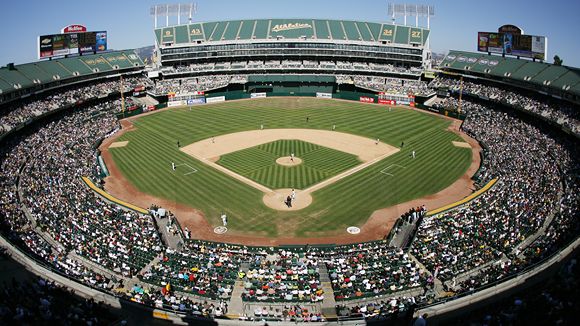 Confirmation for A’s fans that their team likely wouldn’t have a shot at the playoffs was when they learned Brett Anderson and Dallas Braden were going to be out for the year. These two lefties were key parts of the A’s rotation. To have them out for the year was a big blow to the team. To add insult to injury (literally), there is a chance that Anderson will not recover from his Tommy John surgery by the end of next year.
The A’s five starters next year most likely will be Gio Gonzalez, the aforementioned Braden, Brandon McCarthy, Trevor Cahill, and Rich Harden or Guillermo Moscoso. This is depending on what happens in free agency during the coming offseason, but I think Billy Beane will be aggressive in trying to keep his pitchers in Oakland. McCarthy and Gonzalez have had breakout years, and Cahill has been mediocre. Even with the injuries, the rotation is definitely far from the team’s biggest worry. Pitching at the Oakland Coliseum for half of the schedule unquestionably makes these pitchers look better than they are, but regardless at the end of the day, the A’s still have one of the best rotations in the American League.
The A’s bullpen is solid and reality is that major league bullpens are often easy built with minor league arms. Fautino De Los Santos has stood out to me as a great future cornerstone for their ‘pen. He is a hard-throwing righty, who missed parts of the 2008 and 2009 seasons due to Tommy John surgery. De Los Santos came from a mediocre Oakland minor league system. The A’s farm system is headed by Grant Green (1st round pick in 2009, shortstop), Chris Carter (huge power bat, first base), and Michael Choice (1st round pick in 2010, athletic outfielder).
The A’s infield situation is very complex. Since being called up, Jemile Weeks has hit .303 with 21 stolen bases to earn their second base job for next year (and likely next decade). Although, his power stroke hasn’t quite developed like his brother Rickie’s, he has been hitting the ball hard to all fields. Cliff Pennington has had the year everyone expected him to have. He is hitting .264 with 8 home runs, however he is .304 since the all-star break. My opinion though is that Pennington is a slightly below-average ML starting shortstop. If the A’s decide to keep Grant Green at shortstop, which they should, Green could be their starter as early as July. Even if they’re not sure if Green can play shortstop, the A’s should at least give him a chance.
Since coming over from the Tigers on May 27th, former top prospect Scott Sizemore has been a pleasant surprise for the A’s. He has hit 10 home runs, which is more than any of his seasons in the minors or majors. Despite a low batting average and a shaky glove, it’s not like the A’s have anywhere else to go for a new third baseman. Holding down first base (or trying to at least), is Brandon Allen. Chris Carter though will be battling Allen in spring training in an attempt to take over the job for next year. Hideki Matsui turned out to be an average signing at best for the A’s. They needed offense and he provided decent numbers at the cost of $4.25 million for the year. My guess is that Godzilla will probably return next year at a fraction of the cost.
In the outfield, the A’s got a career high 27 homers from Josh Willingham. What is even more impressive is that The Hammer did it with such a weak lineup around him, that he likely did not see many strikes during the season as in past years. Willingham will be a free agent this offseason and the A’s will have to decide if they are willing to pay to retain him. Willingham will likely qualify as a type “A” free agent as one of the best outfielders on the market. Coco Crisp as well had a pretty productive year, hitting .270 with 42 stolen bases. He also will be a free agent this offseason, but I believe that he is very likely to stay in Oakland. As for right field, David DeJesus, 32, will be a free agent this offseason as well. He had a pretty rough year, and I’d be surprised if the A’s still wanted him on their roster. Next year, Michael Taylor and Ryan Sweeney will probably come into camp to compete for a spot in the outfield. Overall, the A’s clearly have a lot of decisions to make regarding their outfield this offseason.
I think the A’s are going to make a huge splash this winter. I’d be surprised if they didn’t try to ship out some of their excess arms for bats. If they don’t make significant improves to their offense, the A’s will likely be the worst team in the AL West next year. What do the A’s have looking up for them, you might ask? Well, they have one of the best general managers in baseball and when need to improve a team quickly, that’s not a bad place to start.

***Today’s feature was prepared by our Intern, Sam Evans. We highly encourage you to leave your comments and feedback at the bottom of the page and share in the discussion with our readers. You can also follow Sam on Twitter.***
Please e-mail us at: MLBreports@gmail.com with any questions and feedback. You can follow us on Twitter and become a fan on Facebook . To subscribe to our website and have the daily Reports sent directly to your inbox , click here and follow the link at the top of our homepage.

Drew Taylor Interview: The Story of an Intercounty League Pitcher
Follow @mlbreports Wednesday September 21, 2011
MLB reports: We are proud today to feature on MLB reports: Drew Taylor, former Philadelphia Phillies and Toronto Blue Jays prospect pitcher, currently playing in the Intercounty Baseball League. Based in Ontario, Canada, the Intercounty League has produced several major league players including Rob Butler, Rich Butler and current Brewers closer, John Axford. Drew’s baseball blood lines run deep, as his father Ron Taylor is former MLB pitcher himself. Part of the 1969 Miracle Mets during his playing career, Dr. Taylor is a long time team doctor for the Toronto Blue Jays. From getting signed by the Jays, having a World Series champion pitcher as a father, recovering from injuries and life in the Intercounty League and working towards becoming a doctor, we covered many topics with Drew. For a great baseball tale from a different part of the game, we present our recent interview with Drew Taylor:
MLB reports: Welcome to the Reports Drew. Thank you for taking time out of your schedule for this interview. First question we always like to ask: who was your favorite baseball player growing up, that you most idolized and patterned your game after?
Drew Taylor: I always loved to watch David Wells pitch when I was younger. As a lefty I learned a lot about setting up hitters and how to use a curveball effectively against left- and right-handed batters. I also loved his approach. He went right after hitters no matter who they were and rarely fell behind in the count. A true lefty – he was a character on and off the mound. I had the chance to get to know him a little when he was playing in Toronto. When I was in high school, I threw a bullpen in Spring Training for the Jays. I didn’t know I would be throwing that day so I only had my first baseman mitt with me. He gave me a glove to use and watched me throw giving me some pointers after the pen, very generous; he is the kind of guy that would give you the shirt off his back. I also learned a great deal from watching him that day in the way he treated people and engaged with fans asking for his autograph. Down to earth.
MLB reports: Which current MLB star do you most admire and why?
 Drew Taylor: I would have to say Travis Snider. I played with Travis our first year in the Blue Jays minor leagues and actually lived with him for the first part of the season. He came into the Jays straight out of high school and was thrust into a system that was known for drafting mostly college athletes. Here he was living with Jeff Gilmore, who graduated early from Stanford and had already begun a Masters in History and myself, already with Undergraduate and Masters degrees from the University of Michigan. But in truth, Travis was probably the most mature of the group of us. As I got to know Snider I found out why. He had faced a great deal for a kid of his age. There have been a number of articles written him since he broke into a big leagues focusing on what he and his family went through while he was in high school. If you haven’t read them, I suggest you look them up. I won’t go into all the details here, but in short when his mother was dealing with serious health issues, he was placed in a difficult situation at a very young age. As the only son, he stepped up to be a rock for his family. There are a lot of talented athletes that get drafted and Snider is definitely one of them. Sometimes though it is experiences like these that separate the men from the boys and dictate who will have the resolve and discipline to make the jump to the big leagues.
MLB reports: Reflecting on your career to-date, what are your proudest accomplishments on the baseball field?
Drew Taylor: I transferred for my sophomore year to the University of Michigan from Georgia Tech in 2003. I came into a program that had a great history but had struggled in the past few seasons, finishing only 21-32 the previous year. Rich Maloney had moved from Ball State to the Michigan to take the helm as head coach. He called each player in one by one before the season, sat us down and laid out what he expected of us. It was the first time a coach had talked to me that way. He demanded excellence and explained how each one of us as individuals could contribute to the team’s success. I owe a great deal to Rich and would not have had the success I had that year without his ability to inspire his athletes and instill confidence in them. He turned that program around and we ended up 30-27 that year, climbing to 43-21 and winning the Big Ten by the time I graduated. “Those who stay will be champions.” I personally ended up 9-1 in 2003, making the All-Big Ten and All-Region Teams and was given the Geoff Zahn award for Michigan’s top pitcher. After pitching only 9.1 innings the previous year, this was a big turnaround for me. Rich knows how to get the most out of his players and I hope he remains a college coach so I can send my kids his way one day.
MLB reports: You were signed in 2006 by the Toronto Blue Jays after the draft. Were you scouted by certain teams before the draft and were you expecting to be drafted?
 Drew Taylor: The most amount of attention I received was probably in 2001. My velocity shot up during my final year of high school and while pitching for the Ontario Blue Jays the summer before starting university. I had a number of clubs call and make offers, including the Rockies, Blue Jays, and Braves, to see if I would forgo school to sign professionally. But I was dead set on getting my education. While at Michigan, I had a great sophomore year going 9-1 and followed it up with a good showing in the Cape League which drew some attention again. Then during my draft eligible Junior year I ended up injuring my shoulder in my first start of the year. I tried to come back and pitch a couple of times, but ended up having to shut it down for the season. That effectively ended any chance I had of getting picked up in the draft, so I focused on my rehab, knowing that I would be back at Michigan the next year and would have to prove I could compete all over again. In 2006, the Blue Jays called right after my final game and signed me to a free-agent contract. I reported to camp two days later.
MLB reports: Being signed by your hometown Jays must have been very special. What were your feelings after the draft and what was the process like up until the time you were signed?
Drew Taylor: Being signed by your hometown team is always special, but there were so many things on the go I didn’t get much of a chance to sit down and enjoy the feeling. When I got the call I was in Michigan right after we got back from the NCAA Regionals in Atlanta. It was a little bit of a whirlwind because I had just got back to my apartment when I was told I was leaving again in two days. In those two days, I quickly packed up my apartment and hit the road for Toronto. Kevin Briand and Sean McCann were the scouts that signed me and I went down to the then named SkyDome to meet them and sign my contract. With the papers in, Kevin walked me down onto the field and it finally sunk in.
MLB reports; As a 6′ 5″ left-handed pitcher and being the son of an ex-major league hurler, what were the expectations you set for yourself once you joined the Jays system? Did you envision yourself in the major leagues one day and what was your plan to get there?
 Drew Taylor: Everyone who signs a contract, or for that matter who has played baseball at any level has thought about what it would be like to play in the majors. For me, I had a father who had done it for 11 years, and because of that I had the opportunity to be exposed to the game at a high level from an early age. I fully expected to make the majors and as soon as I signed professionally, I set out to realize that goal. Competition increases as you move up in the system and ultimately I never reached my goal of reaching the majors. There are a lot of talented players in professional baseball, many of the guys in the minors have the talent and ability to play in the majors, but lack consistency. At the major league level you have to be able to make adjustments within the same game or within the same at-bat. Realizing how to make these adjustments takes time and experience, which is one of the reasons athletes in baseball require time to mature and develop above other sports. The mental side of baseball is much more important than the physical… as Yogi Berra said “Ninety percent of baseball is mental, the other half is physical.”
MLB reports: For all the fans that have never experienced minor league baseball before, give us an idea as to what life is like in the minor leagues as compared to what people see in major league stadiums. The level of competition, amenities and support from the major league team for its minor league system- what is it like?
 Drew Taylor: Night and day. Have you ever watched Bull Durham? Its bang on. The minors consist of a lot of long bus trips, fast food, and tiny locker rooms. The other big difference that people do not realize is how little money players are paid in the minors. Bonus Babies get a big cheque at the beginning, but the weekly salary is barely enough to live on. I would love to see the Major League Baseball Players Union fight for better pay in the minors, but once you make it to the majors I assume those guys try not to even think about the minors again. I don’t see it happening. Another problem is that players in the US and Canada are entered into the draft, while international players are all free agent signs. This means that home-grown talent can only negotiate with the team that drafted them, while international players have the ability to shop around different teams and drive up their signing bonuses. We need to move to a world-wide draft. One thing I will say is that players who make it to the big leagues know what it is like in the minors because they came up through it. Many guys are very good to the guys at lower levels. Especially if they are back down in the minors for rehab starts. One guy that sticks out in my mind that always looked after the guys at the lower levels was Brandon League. He was down for rehab for a while in Dunedin one year and went out of his way for us.
MLB reports: Injuries unfortunately played a huge part in your career, as it affects many young hurlers. Please tell us what happened to you health wise and your path through injuries, surgeries and how health affected your career.
Drew Taylor: I only threw twice in my junior year at Michigan before it was painfully evident that something was not right. I ended up having a small tear in my rotator cuff and a strained bicep. I rehabbed and came back strong enough to get picked up by the Jays. My velocity had never returned fully after my arm injury in University, so I had to find other ways of getting hitters out than just blowing it by them. Additionally, I moved primarily to the bullpen after being a starter my whole life. My mental approach to baseball improved greatly, learning how to set up hitters and get them out not just by beating them with a pitch, but beating them with a pitch they didn’t expect. Instead of facing the same hitters many times in one game as a starter, I was now coming in relief and mostly only had to face batters once. I had to develop the ability to strike out a batter when I came on with runners on base and I focused on improving out pitches. My first year was in Pulaski Virginia in the Appalachian league facing a lot of young free-swingers. I used this to my advantage and ended up striking out 37 in 27 innings. As you move up through the system, hitters have a much better approach and wait for you to throw a pitch they are looking for or for you to make a mistake. You have to improve with them, or you will get left behind.
MLB reports: For those fans that aren’t aware, your father is Dr. Ron Taylor. A team doctor for the Jays, your dad was a star pitcher in the big leagues and played on World Championship teams. What influence did your dad have on your career? What was your relationship like growing up?
 Drew Taylor: My dad was a huge influence on me. He never pushed me into baseball, or medicine for that matter, they were both my choices. Once I made the decisions to pursue being a professional pitcher and then a doctor, his support and guidance was bar none. He had a great career in the majors for 11 seasons, winning two World Series with the Cardinals in 1964 and the Amazin’ Mets in 1969. I had a big leaguer at my disposal and he taught me things about playing at a level that very few have made it to. Even when we would sit down and watch a game on TV, we would be talking about setting up hitters and he would always ask me what pitch I would throw next. The biggest thing he taught me is how to deal with pressure and maintain focus and confidence – something I can take with me in all aspects of life. In 6 appearances in Major League post season games he threw over 10 innings without giving up a run. In 1964 he threw 4 innings in the World Series without giving up a hit, allowing only one base runner on a walk to none other than Mickey Mantle. There definitely were some expectations, and it was very tough to deal with when I had my arm injury and my future in baseball was in question. When I was released by the Phillies in 2008, I came home and he said something that will always stick with me. He told me if he “could only choose one career between baseball and medicine, it would have been medicine.” He has been able to help countless more people as a physician than as a pitcher. If I had kept playing baseball, my window to return to school might have closed. My brother Matthew, has also been a great guy to have around. What he lacked in talent he made up for in knowledge. I still talk shop with him when we watch games and he often comes out to watch me throw, giving me some pointers after the game, whether I want to hear them or not. He works in film, but I always thought he would be great in the front office or as a GM. He knows baseball, better than me.
MLB reports: To go along with the Jays connection, you mentioned to me that you know Pat Gillick well. Please tell us your relationship with Pat and the Phillies organization.
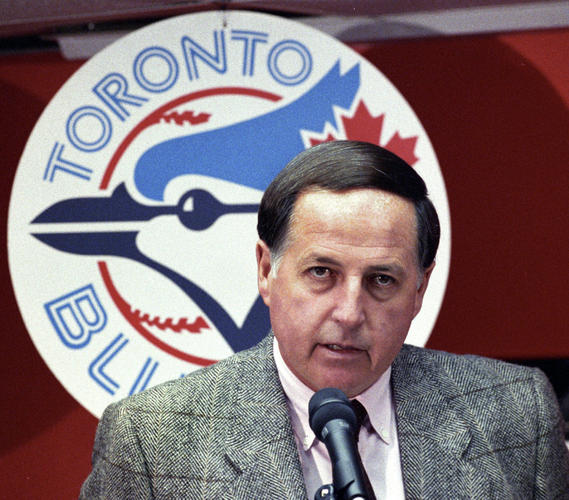 Drew Taylor: After my second season with the Blue Jays, they let me go and I immediately got a call from the Phillies asking me to attend spring training in Clearwater next year. Pat is one of the greatest minds in baseball and has been a mastermind behind winning teams and franchises since he started as a General Manager. He is always at ground level watching his players from rookie ball up to the majors and has a huge presence at camp. When he was with the Blue Jays, he became great friends with our family and recently invited us down to watch the induction ceremony at Cooperstown. It was my first time there and a tremendous experience to see the rich history the sport has and its influence and presence in North America and around the world. Bobby Cox, who was also formerly with the Blue Jays was down at the induction as well and they told me the story of how I ended up being named Drew. My parents were deciding between Forrest or Andrew and Bobby suggested they just call me Drew. I am glad he did. Forrest Gump came out when I was 11… that would have been a rough year…
MLB reports: You currently play for the Toronto Maple Leafs of the Intercounty Baseball League in Ontario, Canada. Many famous players came through the IBL, most notably John Axford of the Brewers. For fans that are not familiar with the league, please tell us more about playing baseball in the IBL and the Leafs’ organization.
 Drew Taylor: The Intercounty Baseball League started in 1919 and was founded as a minor baseball league feeding the majors. Now it remains as an independent league. It has a great deal of variety in players and level of experience. Many of the players have had professional experience in affiliated ball and are at the end stages of their career. The rest of the players are comprised of current or former university and college athletes trying to get signed to professional contracts or who want to maintain playing baseball at a high level of competition. Ferguson Jenkins, Paul Spoljaric, Jesse Orosco, John Axford, Pete Orr, Rob Ducey, Rich Butler and Rob Butler are some of the major leaguers that have played in the league either before their major league career or afterwards. I have actually had the chance to pitch head-to-head against Spoljaric on a few occasions and it is always exciting to face off against a former big leaguer. The league has a shorter schedule and we don’t play every day, so it allows guys to maintain full-time jobs while playing, which is rather unique. I have been playing for the Toronto Maple Leafs for the past three years while being a full-time student at the University of Toronto and Mount Sinai Hospital.
MLB reports: I have read that you have been involved with a number of charity groups surrounding baseball and sports, tell us about that?
Drew Taylor: I have been getting involved in some charities that are doing great work in Toronto and across Canada. I recently participated in Strike Out Cancer in support of Mount Sinai Hospital with an all-star list of actors and hall of famers including Kurt Russell, Roberto Alomar, David Justice, Gary Carter, Gary Sheffield, Bret Saberhagen, Devon White, and others. This past year the event raised over 1.4 million for research and treatment of women’s cancers. We also participated alongside local athletes, actors, musicians, and personalities in the Bulletproof campaign which sells apparel in support of the Special Olympics. Another fun group of people, Jays Days, get together when the Jays are on the road to watch the game together at Opera Bobs. Proceeds from sales of ball-park hotdogs, popcorn, and refreshments go to Horizons for Youth, a 35 bed youth-shelter dedicated to helping homeless and at-risk youth in Toronto.
MLB reports: Having attended Michigan and with your father a doctor, a little birdy told me that you were looking at a career in medicine yourself. True or False?
Drew Taylor: True. I ended up passing on professional baseball out of high school to attend university as I wanted to become a doctor. After finishing my undergraduate and Masters degrees at the University of Michigan, I was signed by the Blue Jays. At the same time I signed I had sent in my application to medical school. I was accepted and had to make a tough decision. I decided that I would have the chance to go to medical school after playing, but only had one opportunity to play professional baseball. Thus I continued to play ball. I didn’t want to lose any momentum in medicine, so I applied to the University of Toronto and continued graduate school in the off-seasons. While with the Phillies and now playing for the Toronto Maple Leafs in the Intercounty League, I have been completing my PhD. I will finish this year and will be applying to medical school again.
MLB reports: How many more years to you see yourself playing baseball? When your playing career is done, do you see yourself staying in the game and in what capacity?
Drew Taylor: I will continue to play as long as I enjoy the game and my arm holds up. I broke my elbow this past year and it was a long season of rehab before I was back pitching again. I finished the year strong so it rejuvenated my desire to keep pitching. Once it is over for good I would like to stay involved with baseball and sports in general. My PhD is in Biomedical Engineering and ultimately I want to pursue a career in Orthopedic Surgery, possibly even specialize in upper extremity to compliment my experience dealing my own injuries. My dad is the team Physician for the Toronto Blue Jays. I would love to follow in his footsteps and serve a professional team.
Thank you again to Drew Taylor for taking the time to join us today on MLB reports. We highly encourage our readers to post at the bottom of the article any questions and/or comments that you may have for Drew. As well, please follow Drew on Twitter (@DrewWTaylor).
**Some of the photographs in today’s feature are from the private collection of our guest, Drew Taylor. **
Please e-mail us at: MLBreports@gmail.com with any questions and feedback. You can follow us on Twitter and become a fan on Facebook . To subscribe to our website and have the daily Reports sent directly to your inbox , click here and follow the link at the top of our homepage.

Revisiting: Brett Wallace, Matt Holliday, Michael Taylor, Anthony Gose: 4 Players, 4 Teams, 3 Trades
Tuesday May 31, 2011
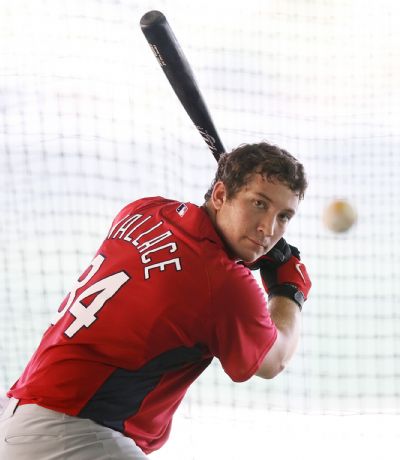
MLB reports: Brett Wallace has experienced a baseball odyssey like few others ever have. Drafted twice, traded three times and playing in 4 different baseball organizations before his 25th birthday. The man with the golden bat, Wallace has been coveted by many MLB teams yet somehow managed to move in three separate transactions over his short career. Usually in these scenarios, we would consider the player to be more of a role type player and not likely to be a superstar in the making. But considering the players and transactions involved, it is clear that Wallace has been in demand all along. Now finally entrenched in Houston and playing every day in the big leagues, Wallace is finally fulfilling his early promise and making a name for himself as a future All-Star and possibly batting champion in the National League.
Wallace first hit our radars in 2005 when the Toronto Blue Jays drafted him in the 42nd round. Unable to sign him, Wallace went on to start playing college ball for Arizona State University. From there, Wallace blossomed into a 1st round pick, 13th overall for the St. Louis Cardinals in 2008. Playing in the Cardinals minor league system at third base, Wallace was touted as the next Cards superstar hitter in the making. With Pujols entrenched at 1st base and up-and-coming slugger Colby Rasmus also in the picture, the Cardinals appeared to be set offensively for years to come.
The plan was changed on July 24, 2009, where the Cardinals making a playoff push, traded Wallace to the Oakland Athletics with Shane Peterson and Clayton Mortensen for slugging outfielder Matt Holliday. The plan worked as the Cardinals were able to make the playoffs and proceeded to sign Holliday to a long-term deal as protection in the lineup for their main superstar, Albert Pujols. Wallace, played out the season in the A’s organization and the debate started as to whether his long-term future was at third or first base.
Part of the mystery Wallace was solved as Toronto finally landed its prized target on December 15, 2009. As part of the Roy Halladay swap, the Jays acquired outfielder Michael Taylor from Philadelphia. One quick transaction later, Alex Anthopoulos and Billy Beane followed through on a Taylor for Wallace trade. Wallace was moved permanently to first base with an eye towards joining the Blue Jays as their new first baseman by 2011. Or so we all thought. As Alex Anthopoulos started to show the baseball world, he was not afraid to make multiple trades to get the players he wanted.
The Houston Astros in mid-2010 finally started their fire sale. Franchise player Lance Berkman was traded to the New York Yankees and ace pitcher Roy Oswalt was moved to Philadelphia. As part of the Oswalt trade, the Astros received young speedster outfielder Anthony Gose. The Gose acquisition actually led to two further moves. The Jays apparently were keen on Gose for sometime and were unsuccessful in originally prying him away from the Phillies in the Halladay deal. The Astros with this knowledge, were able to trade away Berkman knowing that his replacement would come from Toronto if Gose would be a part of the equation. Trade #3 was then consummated and Wallace found a home in Houston.
Sitting 1/3 of the way into the 2011 season, it is time to look at all four players involved in the three Wallace transactions and get a glimpse as to how each is performing. In the process, it is interesting to note which teams ended up benefitting from being a part of each Wallace trade. Let’s look deeper into the numbers of Brett Wallace and the Astros, Michael Taylor and the Athletics, Anthony Gose and the Jays, and Matt Holliday and the Cardinals.
Brett Wallace – Astros
So far, so good for the young Astros slugger. Having made the team out of spring training, Wallace currently has a .308 AVG, .379 OBP, .442 SLG, 19/39 BB/K, 3 home runs, 22 runs and 16 RBIs. For a young team in need of offense, the Astros could not ask more from Wallace. For a kid that always known to be able to hit, the numbers back up the hype. Having watched him play this year live, I can attest that he plays a fairly solid first base defensively as well. With the Astros now having their future cleanup hitter getting his feet wet in the majors, they look to have benefitted as a team by acquiring Wallace.
Matt Holliday – Cardinals
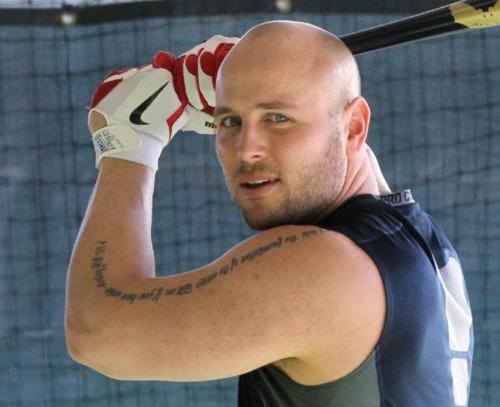 Despite paying a heavy price to acquire Holliday in the first place, one cannot argue with the results. A contending team that has made the playoffs with him on its roster, the Cardinals have been a better team with Matt Holliday. Since joining the Cardinals, Holliday has since 2009 had an OPS each year of 1.023, .922 and .981. Holliday hit 13 home runs in 63 games in 2009 and 28 home runs last year. As Pujols protection, the Cardinals were able to sign Holliday to a long-term contract and bring stability to its lineup and clubhouse. If the Cardinals had not traded for Holliday, he would have not as likely signed with the team as a free agent as his time playing in St. Louis played a large role in his decision to sign. The other components of the trade, Peterson and Mortensen turned into expandable spare parts, role players at best. While the Cardinals could have used Wallace’s bat, there was no room for him at first base and his glove did not project to allow him to stay at third. The trade turned into a good win for the Cardinals, as strong of a return as the team could have ever expected.
Anthony Gose- Blue Jays
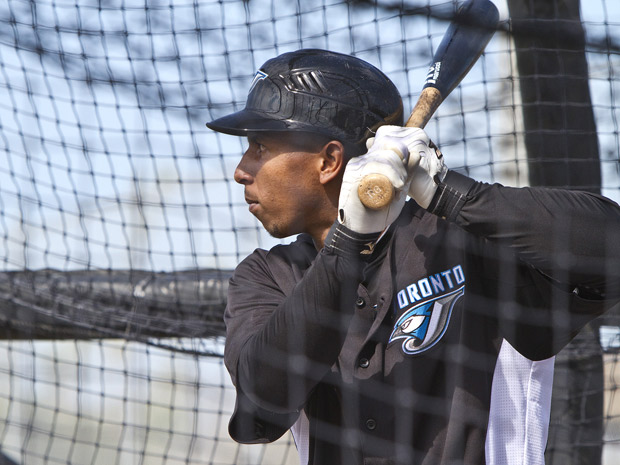 Once we get past Wallace and Holliday, the return on the last 2 Wallace trades still remain relatively unknown. We start with Anthony Gose of the Jays. Seen as a strong defensive player and future stolen base champion, the Jays acquired a player known more for tools over the refined and polished bat of Wallace. So far in 2011, the 20-year old Gose at the advanced AA level has held his own, with a .272 AVG, .375 OBP, .391 SLG, 4 home runs, 22 RBIs, 33 runs, 27/41 BB/K ratio. Having stolen 76 bases in 2009 in the minors, speed is clearly a big part of Gose’s game. On the season, Gose already been successful 22/27 times on stolen base attempts. With Adam Lind entrenched as the new first baseman for the Jays, the team appeared to have indicated by trading Wallace that there was no room for Wallace and that the potential of Gose had a higher value to the team. With the Jays offense being up and down all year, I think the bat of Wallace rotating through first and DH would have been very useful for the team. Time will tell on this swap, but at the moment all the Jays have is potential and hype in Anthony Gose while the Astros have defined production from Wallace. Until proven otherwise, the Astros have the advantage over the Jays in the last Wallace swap.
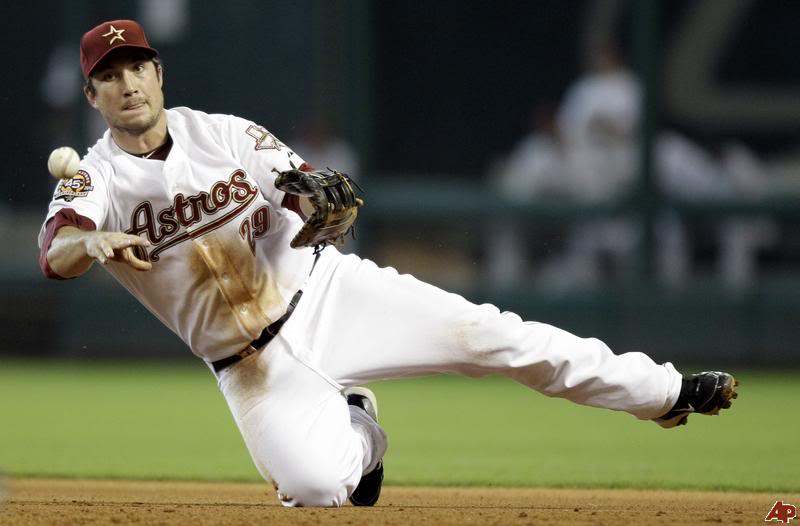
Michael Taylor- Athletics
The last player to be reviewed is Michael Taylor of the A’s. A highly considered outfielder once upon a time in the Phillies system, some analysts rated Taylor higher than current Phillies prospect Domonic Brown. Since joining the A’s organization, Taylor has been sidelined by injuries and has not been able to fully get himself on track. In 2010, Taylor hit .272 in AAA with 6 home runs and 16 stolen bases in 127 games played. This year, Taylor has only played 15 games with 1 home run, but has hit .333 with a .795 OPS. The potential is still there for Taylor but at 25 and in his second full season at AAA for Oakland, Taylor will have to produce to justify the A’s swap of Wallace for him. Considering that the Athletics have one of the worst offenses in baseball and could desperately use Wallace’s bat in their lineup, it is clear that the A’s came up with the shortest end of the stick, so to speak, among all the teams involved in the Wallace swaps. Considering the price that the A’s paid to get Holliday originally, including Carlos Gonzalez and Houston Street, losing Wallace and having Taylor stuck in AAA makes all of their trades look even worse. I still hold out h0pe for Taylor, but another lost year could result in a required change of scenery for him.
It will be interesting to catch up with Wallace, Gose, Holliday and Taylor in another year and then five years from now and see the stage of each player’s career at that time. Wallace and Holliday should still be proven commodities. It will be Gose and Taylor as the wild cards that will either blossom or fail as prospects. The future is bright and still unknown for both of these players. Until then, we will continue to enjoy watching Brett Wallace as he continues to develop as a player in Houston.
Please e-mail us at: MLBreports@gmail.com with any questions and feedback. You can follow us on Twitter and become a fan on Facebook . To subscribe to our website and have the daily Reports sent directly to your inbox , click here and follow the link at the top of our homepage.


 MLB Reports
You must be logged in to post a comment.