Blog Archives

Understanding the New MLB Collective Bargaining Agreement
Friday November 25, 2011

Rob Bland (Baseball Writer – MLB reports): With the new Collective Bargaining Agreement signed between Major League Baseball and the Major League Baseball Players Association, comes an opportunity to see where baseball has failed and succeeded. While many have said that the agreement hurts small market teams or is unfair to teams with bigger scouting departments, I believe it affects all teams in a grand way. By now, most of you have heard the details of the agreement, so I will only touch upon a few of the main points.
Houston Astros will move to the AL West in 2013. There will be 15 teams per league and interleague games played all year round.
Interleague all year round can be a tricky subject. Especially if an AL team is playing interleague games in the last week of a playoff race, and their pitcher has to hit. This may cause a major headache, where teams will want the designated hitter in both leagues.
A second wild card team will be added no later than 2013.
The two wild card teams of each league will play in a one game winner take all sudden death playoff. This can give a distinct disadvantage to the winning wild card team, as they will only be able to use their ace once in the LDS.
The Elias system of ranking free agents as Type A, Type B or Type C (unranked) will no longer be used to gauge compensation for the teams losing free agents.
The only way a team will receive compensation for losing a free agent is if they make a guaranteed qualifying one year contract equal to the average salary of the top 125 highest paid players. This is approximately $12.4M for this year.
The minimum salary will rise from $414,000 in 2011 to $480,000 in 2012. It will also rise to $490,000 in 2013 and $500,000 in 2014.
Major League Baseball Amateur Draft Signing Deadline will not be between July 12 and July 18, depending on when the All-Star Game is played.
This pushes the deadline for drafted players to sign up a month. Seeing as most players wouldn’t sign until the last minutes of the deadline in the past, this will make a huge difference. Signed players can be assigned to teams and get their professional careers started. Teams will be able to develop them for longer and put their stamp on them sooner.
Each team will be assigned an aggregate signing bonus pool for their first 10 rounds of the draft.
 The number of money available to be spent is dependent upon a team’s standing in the draft and how many picks they possess. Therefore, if a team picks 1st overall and has 14 picks in the first 10 rounds, they will have more available money to spend than a team that drafts 30th and has only 10 picks. After the first 10 rounds, teams may only sign players for no more than $100,000. If a player signs for more than that amount, the excess gets counted against the pool of money for the first 10 rounds. What this means is that if a player is drafted in the 18th round and signs for $125,000, the extra $25,000 goes against their spending pool.
It is possible to go over this threshold; however MLB has placed very large penalties for doing so. If a team goes over their allotted pool by 0-5%, a 75% tax is implemented.
- 5-10% over equals a 75% tax + loss of 1st round draft pick in the following draft
- 10-15% over equals 100% tax + loss of 1st and 2nd round draft pick in the following draft
- 15%+ equals 100% tax + loss of 1st round draft pick in the next two drafts
While this seems like it could be a recipe for disaster, the MLB recommended slots will be higher and more realistic than in the past. The top 10 picks in the draft will have slots of the following:
1 – $7.2M
2 – $6.2M
3 – $5.2M
4 – $4.2M
5 – $3.5M
6 – $3.25M
7 – $3M
8 – $2.9M
9 – $2.8M
10 – $2.7M
This represents approximately 1.5 times the slot from previous years, so the cap will not be as drastic as most would assume.
There will be a new Competitive Balance Lottery to award draft picks to small market and low revenue teams.
The 10 teams in the smallest markets with the lowest revenue will be entered into a lottery for 6 draft picks after the first round, with the teams with the lowest winning percentage the previous year having a higher chance of picking first.
Each club will be given a pool of money to spend on International free agents.
For 2012 and 2013 international free agent signing period, the soft cap will be $2.9M. After that, teams will be given more or less money dependent on record in the previous year. There will also be penalties for going over this limit, which are as follows:
- 0-5% – 75% tax
- 5-10% – 75% tax and will not be able to spend more than $500,000 on one player
- 10-15% – 100% tax and will not be able to spend more than $500,000 on one player
- 15%+ – 100% tax and will not be able to spend more than $250,000 on one player
Players, managers and coaches are prohibited from using smokeless tobacco anytime that fans are permitted into the ballpark. They also must not be visible in interviews or club interviews. They may not carry the product on them or in their uniforms.
Most see this as a deterrent for the players from using the products and giving less exposure to impressionable youth. While this may be true, players will still continue to use smokeless tobacco, they will just keep their wads out of sight. No more seeing guys like Nick Swisher with his lip stuck out halfway to the pitcher, that’s for sure.
HGH Blood testing will be implemented starting in Spring Training 2012.
 There are many arguments for and against this, and I agree with both. It eases the minds of millions of people that the “Steroid Era” is behind us, yet if testing is done during Spring Training, it gives ample time for someone to get off HGH and resume normal workouts before tested. Tests will also be administered with reasonable cause throughout the season, and random, unannounced testing could be done as early as next off-season.
New helmets designed by Rawlings will be used by 2013.
These helmets will protect up to speeds of 100mph, as opposed to the helmets used now, which protect a batter up to speeds of 90mph. Previous versions have been worn by players coming back from concussions such as David Wright, but players disapproved because they were too bulky and uncomfortable. This version will apparently be much sleeker and more comfortable.
If a player is selected to play in the All-Star Game, he must attend, unless excused by the Office of the Commissioner.
There will be a Social Media Policy in place for all players, coaches and executives.
 The policy is being drawn up, and there is a chance that you could see fan favorites on Twitter such as Logan Morrison of the Miami Marlins slightly more censored. His new manager, Ozzie Guillen, could also see censorship or face penalties. I think that part of the allure of the game is that players speak their minds. From Dirk Hayhurst opening up about life in the minor leagues, to Logan Morrison saying what he feels on Twitter, it is something that can bring more youth to the games. Censoring these players may not be in the best interest of the game, but I will reserve judgment until I find out the exact parameters of the policy.
Instant replay will be expanded.
Replay will be used on plays involving “trapped” catches, as well as fair or foul ball calls. While everyone loves the human element of the game, and most argue that more instant replay will slow the game down, I am of the ilk that it will speed the game up. Rather than a manager visiting the umpire to argue a call, yell for five minutes, kick dirt on him and get ejected, the umpire crew can simply go straight to replay, and the play is withheld or upturned in a matter of a minute.
This is basically a very condensed version of the whole CBA, but radical changes are certainly abound in the MLB. While some are seen as good changes, and some are seen as bad, I am fairly neutral on the matter. Whereas the MLB achieved close to its goal of having a hard slotting system, the MLBPA also received higher minimum salaries and less restrictions on free agents. It is a give and take system, and it will take a few years to really see how it affects teams. Expect teams and agents to find loopholes in the agreement and exploit them to their greatest benefit.

***Today’s feature was prepared by our Baseball Writer, Rob Bland. We highly encourage you to leave your comments and feedback at the bottom of the page and share in the discussion with our readers. You can also follow Rob on Twitter.***
Please e-mail us at: MLBreports@gmail.com with any questions and feedback. You can follow us on Twitter and become a fan onFacebook . To subscribe to our website and have the daily Reports sent directly to your inbox , click here and follow the link at the top of our homepage.

The Astros Move To The AL West
Sunday October 30, 2011

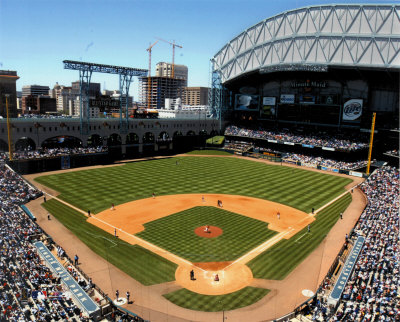
MLB reports – Sam Evans: As an amazing 2011 MLB postseason has come to a close, it’s time to look ahead to next year. The Houston Astros have been,” looking forward to the next year,” since the last time they made the playoffs in 2006. It’s time for a change in Houston and Bud Selig and Jim Crane are currently working on a plan to make a big-time change for baseball’s future in Houston.
Times have been hard recently for Astros fans. Widely considered the worst team in baseball, the Astros home attendance has steadily decreased every year since 2006. They haven’t had a winning season since 2008 and their minor league system shows only small glimmers of hope on the way.
In the middle of June, rumors began floating around that the Astros would move to the American League, as early as the 2013 season. This would provide each league with an even fifteen teams and six five team divisions. Also, you have to think that Major League Baseball wants to start a rivalry between the Astros and the Rangers. Well now in October, these rumors have become more serious and now it appears inevitable that the Astros will be realigned to the American League West.
Although we don’t know when exactly this move will take place,we have figured out that it will happen. It will be interesting to see if the Astros shop for a DH this or next offseason because if they do move by 2013, having nine Major League quality hitters in their lineup would be a big asset. It would make sense for them to bring back Carlos Lee if they were indeed moving to the AL, because he would be a much more productive DH than an outfielder.
I actually think that this would be a good move both for MLB and for the Astros. For MLB, they finally fix the glaring trivia answer which is, why there is an uneven number of teams in each league. Balanced divisions, until increased to 32 Major League teams by way of expansion, will lead to an unbalanced schedule. 15 teams per league means that there will need to be an interleague game scheduled every week. Some love the concept of interleague play, while other detest it. But for whatever people think of it, interleague is here to stay in the world of Major League Baseball. Having weekly interleague match-ups will actually help solve the unbalanced interleague issue. In current play, some fans have complained that the same interleague match-ups are in place every year- with not all teams from each of the different leagues matching up. Having weekly interleague games means that all AL and NL teams will face-off during the season at some point. Greater exposure for each of the teams in each MLB city should lead to greater enthusiasm for the fans and a more balanced approach to scheduling interleague games. It is not a perfect system- far from it. But until Major League Baseball brings in 2 more teams and creates a 16/16 league split, having the 15/15 split will at least allow for balanced divisions and equal chances to make the playoffs.
For the Astros, I seriously believe they could start one of the best rivalries in baseball with the Rangers. This would be beneficial not only for the Astros as an organization, but their fans and attendance as well. Let’s make one thing clear though in the interim: the current “rivalry” between the Astros and Rangers is a joke. The ony time they face off is in interleague games, and neither team has any more incentives in those games as compared to any other games. However, I think if they actually played each other as division rivals frequently, and the fans became passionate about those games, then they could actually start a strong rivalry for years to come.
Astros fans have been against this move for two main reasons. The first is that they would lose their history with the National League (and specifically, NL Central teams). The main reason however, is that they would play West Coast teams more, which would mean that games against Seattle, Oakland, and Anaheim would start at a later time. I can fully understand and appreciate the Astros fans feelings on the subject. The only counterexample I can offer is what Rangers fans already go through with this same dilemma and they same to have done just fine.
At the end of the day, I think the Astros should move to the American League West. It makes sense for the current MLB system. Furthermore, this franchise looks in need of a fresh start and maybe a new division could help provide that.
 Today’s feature was prepared by our Intern, Sam Evans. We highly encourage you to leave your comments and feedback at the bottom of the page and share in the discussion with our readers. You can also follow Sam on Twitter.
Please e-mail us at: MLBreports@gmail.com with any questions and feedback. You can follow us on Twitter and become a fan onFacebook . To subscribe to our website and have the daily Reports sent directly to your inbox , click here and follow the link at the top of our homepage.


 MLB Reports
You must be logged in to post a comment.