Blog Archives

Josh Hamilton: Big Stats = Big Dollars in Free Agency
Friday June 15th, 2012
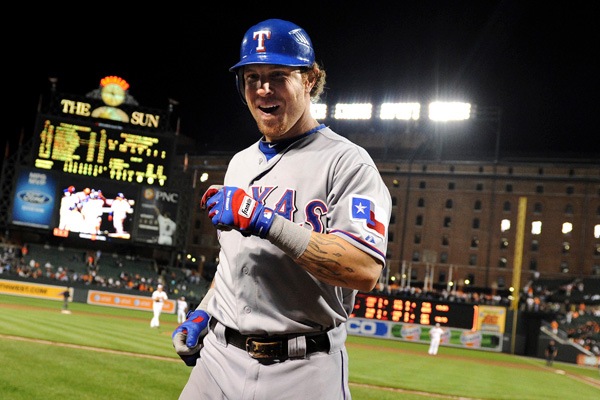
Bryan Sheehan (MLB Writer): For better or worse, Josh Hamilton has been one of the most talked about ballplayers in the past four seasons. He started out as an inspirational story for overcoming drug and alcohol addiction, returning to baseball after three years on the restricted list due to failed drug tests. His talent always peaked the interest of teams, going first overall to the Devil Rays in the 1999 draft and third overall in the 2006 Rule 5 draft to the Chicago Cubs, when he was “the biggest name in the Rule 5 in many years,” according to Baseball America. Immediately after he was traded to Cincinnati, where he spent most of the 2007 season in the Majors. Another team interested meant another trade, and Hamilton landed in Texas for the 2008 season. Since then, he has been an All Star every year, a Silver Slugger winner twice, and the American League MVP in 2010.
Hamilton will no doubt gain even more attention if he hits free agency after this season. Though he is eligible to file for free agency at the end of the year, there are rumors circulating that the Rangers may try to sign the tattooed center fielder to an extension. Age 31, Hamilton is in the prime of his career and he’s currently on pace to hit 60 home runs in 2012. That, along with a career .311 batting average that is only getting better, makes for a huge payoff in the near future. At the same time, Hamilton is in danger of relapsing, as he did when he was seen drinking at a Dallas bar in February, and some teams may not want to invest in a potential addict. Either way, this Fall and Winter will be very interesting for the star who has brought his team to the World Series twice in two years. Read the rest of this entry

Did Braun and Verlander Deserve Their MVP Awards?
Wednesday November 23, 2011

Sam Evans: Over the last two days, Major League Baseball announced their 2011 MVPs. Justin Verlander of the Detroit Tigers took home the award in the American League while Ryan Braun of the Milwaukee Brewers won the National League award. Now that the voting is over, we can look at who really deserved the awards.
American League MVP: In August, Buster Olney sparked discussion on the AL MVP, when he said on Twitter that if he had a vote it would go to Verlander. At the time, I thought that the award was Jose Bautista‘s to lose. However, after watching Verlander dominate team after team, it became clear to me that this was the most valuable player in the American League. He meant more to his team than any other player in the league. Verlander finished with a with a 2.40 ERA in 251 innings. Verlander threw more innings than any other pitcher in the majors, and to have that strong of numbers in those innings makes it even more impressive.
Verlander also threw his second career no-hitter this year, and led the majors in strikeouts. Jacoby Ellsbury and Jose Bautista are not shabby candidates either, but they didn’t have the effect Verlander did on his team. The Tigers expected to win every single time that Verlander was on the mound. Overall, even if the BBWAA made this decision based on Verlander’s twenty-four wins, it was the right choice. Verlander became the first pitcher to win the MVP since Dennis Eckersley in 1992.
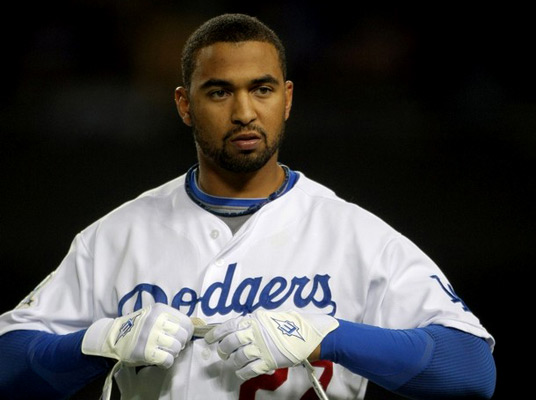
National League MVP: In somewhat of a surprising decision, Brewers outfielder Ryan Braun was awarded the NL MVP award, receiving 20 out of 32 first place votes, and a total of 388 points. Finishing a close second was Dodgers outfielder Matt Kemp, who received 10 first place votes, and a total of 332 points.
 First of all, these were obviously the top two candidates. They both had amazing years that should not go unnoticed despite who actually won the award. What I think it came down to was that Braun made the playoffs and Kemp didn’t. This is somewhat understandable because you can make the argument that if a certain player had such a big impact on their team then they should have made the playoffs. The real question is did Braun really make his team that much better, or did he just play on a much better team? Also, did the distractions surrounding the Dodgers and its ownership affect Kemp’s chances of winning the MVP? It definitely did not help his case.
To truly compare these players first you have to evaluate their defense. Kemp played a much harder position then Braun and he had to cover more ground. Kemp had a UZR (Ultimate Zone Rating, a stat used to show how much ground a player covers) of -4.6. Braun had a UZR of -3.8. Neither of these is very impressive, so I guess we can just call this comparison a draw.
As for offense, in my own opinion, Kemp had a stronger year. Both players were very similar in normal statistics. Braun hit .332 with 33 HR and 111 RBI. Kemp hit .324 with 39 HR and 126 RBI. What impresses me is that Kemp scored more runs than Braun despite not having Prince Fielder batting behind him. Also, Kemp had a harder ballpark to hit in, and plays in a stronger pitching division. Kemp was really the only dangerous hitter in the Dodgers lineup, so pitchers could avoid him more than Braun.
According to Baseball-Reference WAR, Kemp was by far the more valuable player. Kemp led the NL with 10.0 WAR, which make Braun’s 7.7 seem miniscule. Kemp also led the National League in total bases, with 353, and Adjusted OPS + with 171.
These two players had almost identical years. If I had a vote, it would have gone to Kemp. But I don’t think Braun winning is anything to get worked up about. A strong case could have been made for him, as shown by Braun being the winner of the 2012 NL MVP award.
 ***Today’s feature was prepared by our Baseball Writer, Sam Evans. We highly encourage you to leave your comments and feedback at the bottom of the page and share in the discussion with our readers. You can also follow Sam on Twitter.***
***Today’s feature was prepared by our Baseball Writer, Sam Evans. We highly encourage you to leave your comments and feedback at the bottom of the page and share in the discussion with our readers. You can also follow Sam on Twitter.***

Vernon Wells Trade Discussion: Midseason Winners and Loser
Sunday July 17, 2011

Rob Bland (Intern- MLB Reports): January 21, 2011 is seen as a bit of a turning point in the history of the Toronto Blue Jays. General Manager Alex Anthopolous traded away long-time face of the franchise, Vernon Wells. Wells had been with the Blue Jays since he was drafted in the first round, fifth overall by the Jays in the 1997 amateur draft. After making his debut in 1999, he played in a Toronto uniform through the 2010 season. His name is littered across franchise record books, and he was a beloved figure in the clubhouse. On December 15, 2006, Wells signed a seven-year, $126 million contract extension, which at the time was the 6th largest contract in MLB history. Over the next few years, Wells’ lack of production and time spent on the disabled list, made his contract “unmoveable”.
That was of course until Alex Anthopolous took the helm as Jays GM, and was able to find a taker for Wells and the four years and $86 million remaining on the contract. Into the picture came Tony Reagins, GM of the Los Angeles Angels of Anaheim. It has been said that Reagins approached Anthopolous about Wells. One would think that in order for a deal to work, the Blue Jays would have had to send a large sum of cash to the Angels in order for the deal to go through.
The deal that was finally consummated was to send Wells and approximately $5 million to the Angels in exchange for OF Juan Rivera, and C/1B Mike Napoli. Rivera was seen as a throw-in, as his $4M contract was more than the Angels wanted to pay. Napoli had fallen out of favour in manager Mike Scioscia’s eyes; despite hitting at least 20 home runs in each of the three previous seasons despite receiving limited playing time. Toronto then flipped Napoli to the Texas Rangers for standout reliever Frank Francisco. The Rangers received the powerful, right-handed versatile hitter they coveted, and the Blue Jays thought they received the closer they needed.
It is quite obvious that no matter how any of those players perform, the Blue Jays are the big winner because of the payroll space they have cleared and can use to extend their star players, see Jose Bautista. However, this deal has not been so cut and dry. While Napoli has swung the bat with authority, Juan Rivera has been traded to the LA Dodgers, and Francisco has been awful out of the Jays bullpen.
Let’s take a quick look at each player’s production and how their respective teams have fared so far.
Mike Napoli
 Again performing as a part-time player at three positions, Napoli has been very solid for the Rangers. He has hit 13 home runs and driven in 34 RBI in only 187 plate appearances. While his average leaves something to be desired, he makes up for it in his ability to take walks and hit the ball to the gaps. With his OPS at .906, he has proven that he is a tremendously underrated player. His WAR through half the season is at 1.7, and he is on pace to break his career high of 2.6.
Juan Rivera
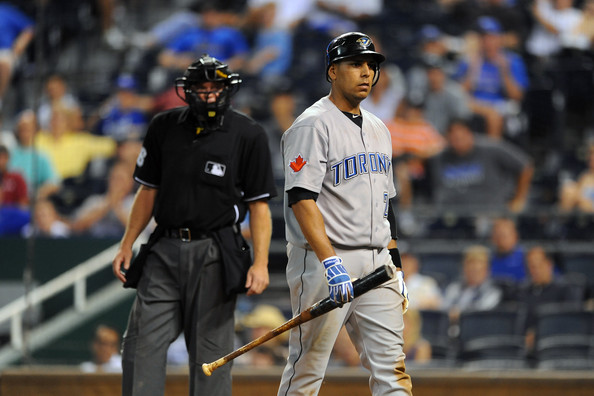 Because he was seen as a salary dump for the Angels, the Blue Jays took him on and saw him as the everyday left fielder and DH out of spring training. He was never able to get it going, and quickly fell out of favour in Toronto. His OPS sat at .666 when traded, with a limited ability to get on base and very little power. This on top of the fact that he played atrocious defense led to his -1.2 WAR. He was traded to the LA Dodgers for a player to be named later or cash considerations on July 12, 2011.
Frank Francisco
 Seen as a pretty successful power arm for the late innings, Francisco was picked up from the Texas Rangers along with cash. He continues to strike out a ton of batters, (10.1 K/9), but he is giving up more hits than he has in the past. However, part of this is due to a batting average on balls in play (BABIP) of .359. His xFIP is actually almost two runs lower than his ERA, 3.56 as opposed to 5.40. I think that Francisco has been unlucky, and when it all evens out, it will show that he is at least a competent late inning reliever.
Vernon Wells
 Wells was obviously the big fish in this trade. He has the ability to be an MVP-caliber player (see his 2003 and 2006 seasons). He has two gold gloves in center field, as well as three All-Star appearances in his career. He has hit 30 home runs three times and driven in 100 RBI three times. Wells’ production in 2011 has been nothing short of horrendous. He has 14 home runs so far, but other than that, hasn’t done anything particularly well. His OPS is .671 with an OBP of .254. Wells is striking out in over 20% of his plate appearances, and walking in less than 4%. Now, you could look at his BABIP (.228) and think he has been unlucky, but it is that low because of his awful 10% line drive rate. With a flyball rate of 47% and by hitting a ton of infield flies, his BABIP won’t likely rise much. It is unlikely that Wells will ever return to being the player he once was.
VERDICT:
Taking a look at these stats, we can see that the Rangers were an instant winner. They gave up an expendable reliever, and gained a valuable bat off the bench. The Angels are the big losers in the deal, as they owe Wells over $60M over the next 3.5 years. That kind of production out of a left fielder is unacceptable for a team trying to contend for the playoffs. Toronto knew that with the trades they made, they would not be as good of a team without Wells. They are in a rebuilding mode, and the money they save can be used on drafting and developing young talent. Francisco could be a Type B free agent at the end of the year, so another draft pick could be theirs.
**The grand winner in this series of moves is the Blue Jays, as with the departure of Wells, they have been able to extend Jose Bautista with a five-year, $65M contract. They have been aggressive in international signings this month as well, and look to pour more resources into the draft. ***

***Thank you to Rob Bland for preparing today’s article on the Vernon Wells trade. You can follow Rob on Twitter.***
Please e-mail us at: MLBreports@gmail.com with any questions and feedback. You can follow us on Twitter and become a fan on Facebook . To subscribe to our website and have the daily Reports sent directly to your inbox , click here and follow the link at the top of our homepage.


 MLB Reports
You must be logged in to post a comment.