Blog Archives

Part II: Wilpon, Mets, Madoff and Scandals
Tuesday May 24, 2011
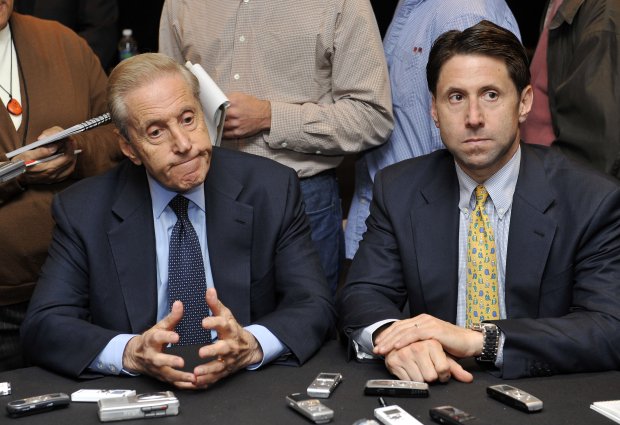
MLB reports: In yesterday’s report on the Mets, we took a look at the New Yorker interview that was just released with Mets owner Fred Wilpon. After making many comments on the state of his team and star players, Wilpon by not hold backing is now facing the wrath of theNew York fans and media. The best comparison that I can make is the John Rocker interview with SI, a no-holds barred discussion that left Rocker’s career in the dust and from which he never recovered. Please click here to view yesterday’s post if you missed it to read the quoted damaging words uttered by Wilpon that have tarnished himself and his team. It will give you as the readers a sense of the controversy in place and what has led to the continuing events surrounding the Mets on a now daily basis.
From the aftermath of yesterday’s media storm, some new comments and developments have emerged. Firstly, son Jeff Wilpon, the Chief Operating Officer of the Mets, has apparently sat down with some of the named players from his dad’s interview to help “clear the air.” Given that the elder Wilpon is responsible for the war of words, it is a shame and disappointing that his son was sent in to clean up his mess and attempt damage control. The offended players would likely have had more respect for Fred Wilpon if he had faced them personally and come clean with his errors. It seems that Fred Wilpon will never learn and he continues to dig a deeper hole for himself and one that he likely will not be able to escape at this point.
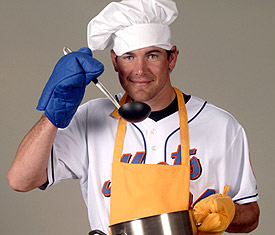 The first player response to the Wilpon interview came from Mike Pelfrey. The baseball world was unsure as to how the players on the team would react to their owner’s disparaging remarks. In true tongue-in-cheek fashion, Pelfrey became the darling of the media and Mets fans by having the following to say about Wilpon:
“I think guys will be upset,” pitcher Mike Pelfrey said. “But we’re all a family: ownership, coaches and players. Sometimes people say things they regret. It’s a mistake and you learn from it. Maybe next spring when we have our media workshop for the players, Fred can come and sit in on it.”
I do not expect Pelfrey to receive any reprimands from his team for his statements. While it would be fitting to hear how the other Mets players feel about Wilpon’s interview, most will likely remain neutral or keep their opinions to themselves. While most of the Mets players are likely insulted and hurt by Fred Wilpon’s statements, the players likely only want a resolution and the ability to play ball and have a winning team at the end of the day.
Another story emerging from the Mets is another Bernie Madoff side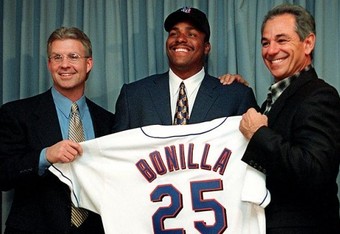 note. Last week, a story emerged that Bobby Bonilla, a former Mets player, is being paid by the Mets starting this year $1.2 million for the next 25 years. The story is that the Mets chose this delayed compensation plan over paying Bonilla a lump sum $5.9 million dollars for the 2000 season. By delaying the payment, the Mets in essence are paying Bonilla $29.8 million for a $5.9 million lump sum payment, abased on an 8% interest rate paid (a nice investment for Bonilla indeed). The math is mind-blowing and critics have been blasting the team for such poor financial decision making. Well, according to SI, the Mets at the time of making the decision turned to Bernie Madoff to help them plan how to get rid of the malcontent Bonilla after the 1999 season. Rather than releasing the player and paying the remaining money owed to him, the Mets created the delayed payment plan on the basis that Madoff would invest the Bonilla money with an expected rate of return between 10-12%. Now the Mets likely have lost the invested money due to Madoff’s actions and are on the hook for the Bonilla debt that will haunt the team financially for the next 25 years. Similar deals were struck with former pitchers Bret Saberhagen and Tom Glavine, which will hurt the team’s future payrolls as well.
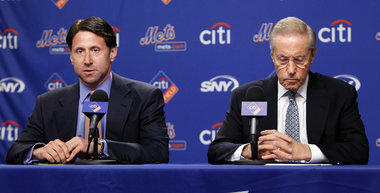
Wilpon Gate is far from over and after the Madoff financial scandal and the New Yorker interview, we will continue to hear about Fred Wilpon for the next few coming weeks and likely months. Wilpon is on record to trying to sell 49% of the stake in his team but based on his shaky financial and credibility standing, the state and ownership of the Mets will be in flux until a final resolution can be arrived at. Until then, expect rumors and stories to continue to circle the team in a circus-like atmosphere. With the both the Mets and Dodgers in crisis mode, it is up to Bud Selig and Major League Baseball to step in and stabilize two of the leagues historical and proudest franchises. Successful and productive teams in Los Angeles and New York is what baseball fans expect and deserve. The challenge is out to Major League Baseball: my hope is that they can hit a home run in both cases.
Please e-mail us at: MLBreports@gmail.com with any questions and feedback. You can follow us on Twitter and become a fan on Facebook . To subscribe to our website and have the daily Reports sent directly to your inbox , click here and follow the link at the top of our homepage.

Interview with Frank Gailey: Jays Prospect
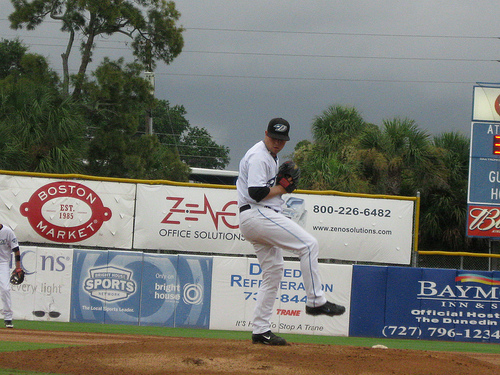
MLB reports: In our most recent interview, we sat down with Toronto Blue Jays prospect, Frank Gailey. The organization’s 2010 Reliever of the Year, Frank is one of the up-and-coming Jays prospects that should be on everyone’s radar. A 23rd round pick of the Jays back in 2007, Frank simply put has been dominant on the mound from the moment he put on a Jays uniform. As Gailey has steadily and methodically risen up the organizational ladder, baseball insiders feel that its time for the Jays to move Gaily aggressively up the ranks to see what he can do. Back for a second tour of duty with Dunedin High A, Gailey after 15 games this season has exploded, with a miniscule 1.21 ERA, 0.851 WHIP, 6/17 BB/K. Considering the man has a 2.07 ERA in 5 career seasons with a 1.005 WHIP, Frank deserves to be on the fast track. With nothing left to prove in Dunedin, Gailey will hopefully be seeing the bright lights of Las Vegas AAA this season. With left-handed relievers furiously in demand through major league baseball, expect to see Frank Gailey up in Toronto one day soon. Now, without further adieu, MLB reports presents: Frank Gailey.
MLB reports: Thank you for taking time out of your schedule to speak with us Frank. It is much appreciated.
Frank Gailey: Thank you for having me and for the opportunity.
MLB reports: Starting off Frank, to get some background on the type of player that you are- we need to ask who was your favorite baseball player growing up, that you most idolized and patterned your game after? Athletes tend to mirror the players that they looked up to growing up from my experiences.
 Frank Gailey: I would have to say that Tom Glavine was the one pitcher that I looked at most and enjoyed watching. He is the type of pitcher that uses all approaches when on the mound. I believe as a left-handed pitcher now in the minors, I now know that I can’t just throw a fastball anywhere and expect to be successful. I need to locate every pitch in and outside the plate. Change speeds and be smarter than the hitter.
MLB reports: Which current MLB star do you most admire and why?
Frank Gailey: To be honest I admire all of them that had a dream like mine and fought through any set backs in their careers and made it. One day, I wish I hope to be in their shoes.
MLB reports: Reflecting on your career to-date, what are your proudest accomplishments on the baseball field?
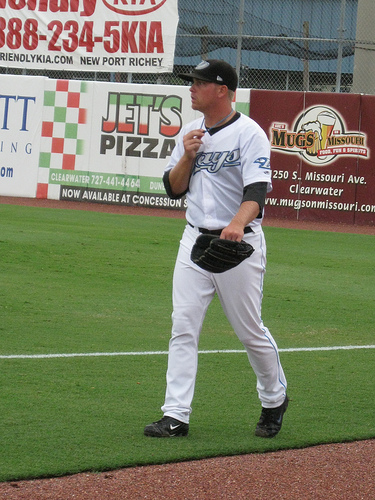 Frank Gailey: I would have to say that all the accomplishments in my career on the field are amazing and I will never forget the teammates and coaches that were there for me. However, the proudest moment was when I got the call that I was drafted by the Blue Jays. To me that showed that all my hard work and dedication to my dream of one day being a big leaguer is paying off.
MLB reports: What are your goals going into the 2011 season?
Frank Gailey: I would have to say that my goals for this season are to be stronger and stay healthy while having a good season. I believe if I do that, then I would be able to help my team be successful.
MLB reports: When you first found out you were drafted by the Jays, what were your first reactions? Did those reactions change over time? If you can comment on the team itself and your draft position in the 23rd round that would help.
Frank Gailey: To be honest, I heard I was drafted and I was pumped. I didn’t really care whom it was that drafted me, as I just wanted an opportunity to compete at a higher level. But now being with the Jays for some time, I enjoy everyone associated with the Jays organization because they are there to help make me grow better as a player and person.
MLB reports: What do you consider your greatest baseball skill(s)?
Frank Gailey: To me my greatest skills are my competitive nature and ability to stay calm and throw strikes with multiple pitches.
MLB reports: What facets of your game do you most wish to improve upon?
Frank Gailey: The part of my game that I wish to improve on the most is to be completely dominant against left-handed hitters.
MLB reports: How do strikeouts and walks/control figure into your game? Do you see any of these items changing over time and to what degree?
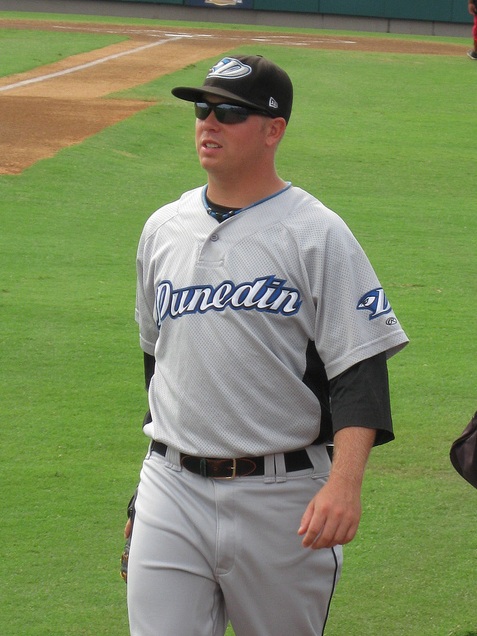 Frank Gailey: To me strikeouts will come if you just throw quality strikes. I don’t get on the mound to strike guys out, but rather to make one quality pitch at a time. Personally I hate walking guys because it a free pass. They did not have to do anything to get on base and I didn’t give my defense a chance to do their job. I don’t see this mind-set changing because it fits my game plan.
MLB reports: Long term do you see yourself staying in the bullpen? Do you envision yourself as a closer in the big leagues one day?
Frank Gailey: If I had to guess I would say yes to the fact that I would be staying in the bullpen. I don’t see myself as a closer but pretty much everything else. But I am ready for any role asked of me by the team.
MLB reports: If you had to look into a crystal ball, when do you see your expected time of arrival in the big leagues and what do you think you need to do most to get there?
Frank Gailey: There is no way I can even guess an answer to something like that. The only things I can do to help my chances are to compete and be the steady guy that the team can rely upon in the bullpen.
MLB reports: Thank you very much for your time and appearing on MLB reports. It has been a pleasure speaking with you and good luck on the season
Frank Gailey: Thank you for having me and thank you to the fans for all of their support.
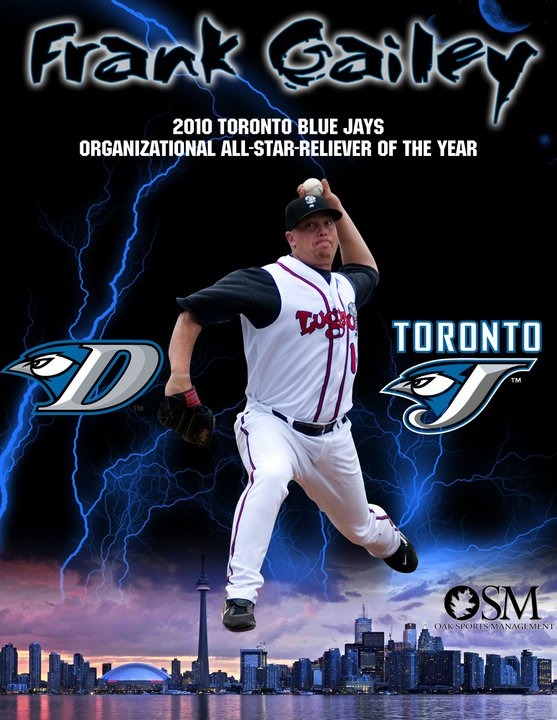
***A special thank you to Frank Gailey for his time and effort as part of being interviewed for this article. You can follow Frank on Twitter.***
Please e-mail us at: MLBreports@gmail.com with any questions and feedback. You can follow us on Twitter and become a fan on Facebook . To subscribe to our website and have the daily Reports sent directly to your inbox , click here and follow the link at the top of our homepage.

To Keep or Get Rid of the DH: The Future of the Designated Hitter in MLB
Monday May 16, 2011
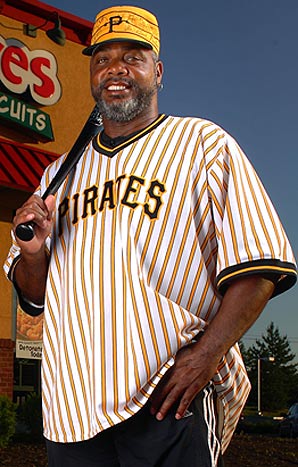
MLB reports: Growing up in an American League city (Toronto), my entire baseball life has existed with the designated hitter in baseball. Aside from the occasional national league games on television, I always accepted and loved the DH. Dave Parker was one of my favorite players and he epitomized everything good about the DH. A great hitter with a sweet home run stroke, I would have likely not been able to watch Dave Parker for most of the tail end of his career if not for the designated hitter. Parker, slowed by age, weight gain and lack of mobility saw his time in the outfield end fortunately by 1989 when he left the Reds and the National League forever and joined Oakland. I always thought of the DH as giving the American League the advantage of an additional strong bat in the lineup, with the National League being less exciting being based on pitching, defense and weak pitchers hitting. But as I grew in age, my opinion of the DH began to shift and I started to appreciate traditional baseball in its purest form.
If you give me today the choice of an American League or National League game, 9 out of 10 times I will choose the NL game. When you account for the game having a pitcher bat, the dynamics of the game itself changes drastically. The National League has more in-game moves by its manager, including pinch-hitting and double switches. The best example I give of a typical NL game scenario is going into the 7th inning of a game, with a 1-run differential, 1-2 base runners on and the pitcher coming up to bat. These types of scenarios and successful choices make or break NL managers. By leaving a pitcher in to bat, the manager risks a likely out and the loss of an opportunity at scoring a crucial run. But by pinch-hitting for the pitcher, the manager is forced to sometimes take out a pitcher who is pitching well and leaving the bullpen to possibly blow the game. The game within the game is truly found in the National League. But if the NL is so great and pitchers should be hitting, why is the DH still around? For many reasons I will show and which likely means the DH is not going anywhere for a long time still.
Many modern baseball experts advocate the DH as saving wear and tear on pitchers, who as inexperienced hitters run the risk of injuries by batting and running the bases. A classic example is Chien-Ming Wang, who injured his foot in Houston during running the bases and later proceeded to hurt his shoulder and never recover. It was argued that if Wang was not forced to bat in the NL during inter-league play, he would have never been injured. Further, aside from a few exceptions such as Carlos Zambrano and Micah Owings, pitchers usually cannot hit their weight. In many cases, pitchers are literally automatic outs. To create excitement for fans and better offensive baseball, the DH was born in the AL in 1973 and has lasted ever since. The DH also allows older hitters to keep playing even when their defensive games have abandoned them (see Guerrero, Matsui and Ortiz today). Finally, the DH allows positional players the occasional rest by not having to play in the field but still keeps their bats in the lineup for their respective teams.
The bottom line on the DH comes down to tradition vs. convenience in my estimation. I know in my brain that having a DH works best for the players, from the health and productivity of both pitchers and hitters. For example, none of us would want to watch Adam Dunn in the outfield anymore and having the DH in Chicago allows his superior bat to continue cranking home runs while not hurting his team defensively. But in my heart, I yearn for a Dodgers/Giants rivalry, where during a 2-1 game lineup changes run rampant in the later innings. That is the way baseball was truly meant to be played. I am not a full basebal purist, as I do advocate for an expanded playoffs and complete re-alignment in baseball. But when it comes to the designated hitter, my hope is that one day it is abolished completely and we can go back to “real” baseball.
If we lived in a baseball world with no DH, pitchers would just have to take more BP and if truth be known, many of them would love hitting and value the chance at getting their swings in. If you ask me truthfully though, I can’t see the American League getting rid of the DH and to go further, I actually can see the National League adopting the DH one day as well. As we grow and move forward in time, most traditions tend to fall by the side for improvements. In this case, this will be one of the instances where I hope that is not the case. Some traditions need to remain intact. I certainly hope the game of baseball as it is played in the National League continues until the end of time.
<img class="aligncenter size-full wp-image-881" title="
Please e-mail us at: MLBreports@gmail.com with any questions and feedback. You can follow us on Twitter and become a fan on Facebook . To subscribe to our website and have the daily Reports sent directly to your inbox , click here and follow the link at the top of our homepage.


 MLB Reports
You must be logged in to post a comment.