Category Archives: Interviews with MLB Stars
One-on-One Exclusive Interviews with MLB Stars, Prospects and Baseball Personalities

My Baseball Comeback: The Loren Deans Guest MLB Blog
Sunday December 4, 2011
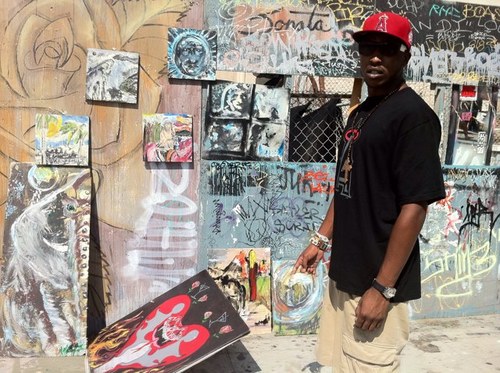
MLB reports: We welcome Loren Deans to MLB reports! Loren was originally drafted by the Texas Rangers in the 37th round of the 2003 draft. Unfortunately, Loren never ended up signing a contract with the Rangers and playing professional baseball. His baseball journey is a tale of fate and twists that led him off the diamond. Now Loren is back and hungrier than ever to jumpstart his career. Joining us today exclusively on MLB reports, we learn about Loren Deans and his journey back into baseball. This is the story of Loren Deans in his own words.
Name : Loren Deans
Height : 6’3″
Weight : 200 lbs
Position : Centerfield/OF/Closer
High School : Capistrano Valley
Loren Deans- Guest MLB Blog: After graduating Capo “Capistrano” Valley High School, I was drafted by the Texas Rangers in the 2003 Major League baseball draft. It was supposed to be a draft-and-follow deal (ended in 2007), which allowed me to play another year of college ball. I would then have the opportunity to be re-drafted in a higher round. Back then, based on the draft-and-follow, Texas kept full rights of me for that year in college ball. I was looking forward to having a great year in College and joining the Rangers quickly afterwards
So I went to Irvine Valley College. That ending up being probably one of the roughest years of my life. Looking back,if I could have done things differently, I would have rather signed the contract with the Rangers as a raw 17-year-old out of high school and just developed with Texas. Losing that year in professional baseball ended up setting me back much further then I could have ever imagined.
I definitely did not have the best college experience. I went to Irvine valley college not taking classes too seriously, which led to run-ins with the coach. Once I got my act together and was playing top-notch ball, of course the first injury of my entire life happens! A head-first slide ended my season on my throwing shoulder. Texas was then nowhere to be found that summer. I rehabbed that year (and am now 100% healthy by the way!)
So I moved on to play for Seminole State College in Oklahoma… talk about culture shock HA! Southern California guy going to Oklahoma on a limb was intense. I played my usual centerfield and batted lead off in Oklahoma. I don’t talk about this period in my life much, but truthfully there were many issues facing this team. The coach in Oklahoma had distractions at home and was not all there in the head mentally. So I had enough and left the team in the winter. I went back to California and played a winter at Saddleback College in Mission Viejo, where I was tearing it up. I batted cleanup for the first time since my sophomore year in high school. Driving the ball to all field with power playing and I was at the top of my game. Unfortunately, I was not able to play ball that spring due to car problems and living arrangements. Talk about living in the trenches! I was there. Struggling to survive and maintain work and place of home… it was extremely difficult. I found it hard to train and deal with all that was around me. But at the end of the day, I make no excuses.
I recently tried out in May 2011 for the Independent baseball league: NAL “North American (Baseball) League”, in Pasadena, CA. That is where it all currently lays in front of me. My life is in a 180° spin for the better. I have a great job and life at home, although the baseball game continues to burn strongly inside of me. I am 26-years young in my opinion, with plenty of time to succeed in baseball. The passion is inside me. It seems that once you fall out of the baseball loop, it is very hard to get back inside the system. I am currently training and preparing for the upcoming season in a big way. I will NEVER give up! It is my vision that an organization will find this diamond in the rough. A team will view me as a 5-tool utility player. All he needs is to be given a chance. I am training and working towards a comeback because my skill level I believe is high. The fire is there. It is my time!
Loren Deans
You can follow Loren on Twitter (@SwinGzLo) – Please feel free to contact Loren with any questions and comments that you may have!
Please e-mail us at: MLBreports@gmail.com with any questions and feedback. You can follow us on Twitter and become a fan on Facebook . To subscribe to our website and have the daily Reports sent directly to your inbox , click here and follow the link at the top of our homepage.

Playing Winter Ball in Panama: The Chris Swauger Guest MLB Blog
Friday December 2, 2011
MLB reports: We are proud to welcome Chris Swauger (aka Swags) back to the Reports! After our interview with the St. Louis Cardinals prospect, we are fortunate to have Swags return as a Guest MLB Blogger. Have you ever wondered what goes through a player’s mind playing winter ball in a foreign country? Swags is here to give you the scoop on the experience of playing ball in the offseason. A big thank you to Swags for his time in preparing this feature, as well as the photographs used which were supplied for from his personal collection.
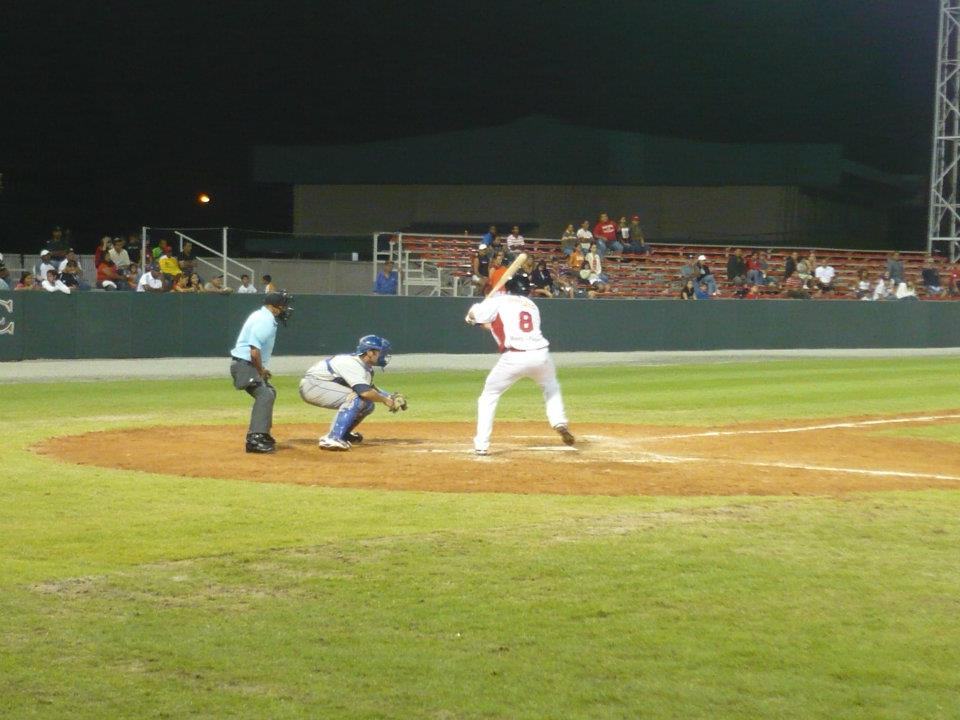
Chris Swauger- Guest MLB Blog: I was walking out of a LA Fitness in Tampa when I got the call to play winter ball in Panama. After an hour of being stared at like I was an alien by the juice-monkeys for actually using the squat rack and leg machines, I figured why not be a true alien in a foreign country again? Having played the last two years in Colombia, I was used to the funny looks and had become fluent in Spanish. It seemed like a great opportunity to see a new place and continue to improve my baseball skills. So a week later I said goodbye to my family and the motherland and got on a plane to the middle of nowhere.
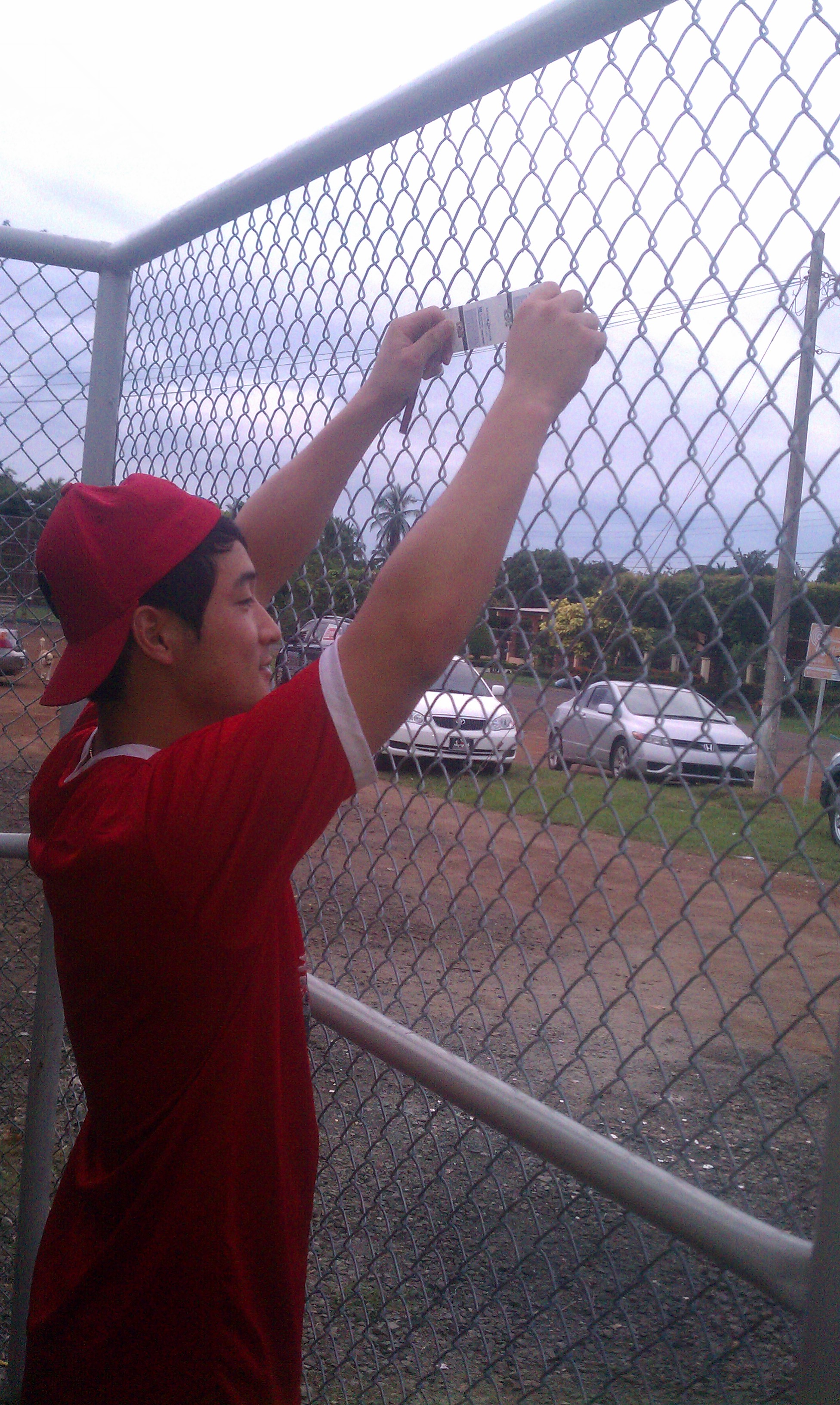 I didn’t see the sun for the first 5 days I was down here. I was a new member of the Caballos de Cocle, and I felt like I should have been playing in galoshes instead of cleats. Our practices started at 9 AM because it poured every afternoon. It felt a lot like Spring Training, with the heavy eyes and constant practicing of fundamentals. However, the practice field was slightly different. I had played on fields with pebbles and rocks sprinkled on the field, but this place had full-blown boulders laying around. The warning track consisted of grass as tall as me and was home to a family of iguanas. But I figured if we could play defense on this field, when we got on ours we would all be Gold-Glovers. We grinded it out for a week and went into opening night feeling invincible.
We were exactly that for two games. We pitched, hit, and played defense like seasoned veterans en route to two straight walk-off wins. I had both of the walk-off hits, but before we crown me a clutch performer, I must inform you that they were the only hits I had in either game. I would have probably been put on a plane home if I hadn’t come through in those at-bats. Going into the final game of our first series, we were pretty much fitting ourselves for championship rings. Then reality kicked in.
 We started blowing saves and our clutch hitting disappeared. Guys on the team, including myself, continued to put up good numbers but the wins did not come. As a team we could not get in sync. We would pitch well and not hit. Then we would put up four runs in the first and our pitchers struggled to hold the lead. It is one of those things that happens in this game. Rough patches are bound to happen, but they take the highway to panic mode when the season is only 36 games long. I sit here today writing this blog with our team sitting 5 games out of the playoff race with 3 games left to play. On paper our team should have not lost a game, but that’s why you play. The better teams are in the playoff hunt, and ours is sitting here like me trying to figure out where we went wrong.
When the game starts challenging you on the field you start to look for positives off of it. In a town as small as Aguadulce, Cocle, Panama, you have to look really hard. By my official head count the town has 50 people in it (I might be off by a few hundred). The biggest structure in the town is the church, and, outside of a few restaurants and dollar stores, there really isn’t much to do. My roommates and I began to find humor and entertainment in the smallest things. Such as:
The gym that has every piece of Tony Little endorsed equipment from the 80s and 90s…but has no free weights or squat rack.
The clubhouse that has TWO washing machines but no dryer. When I show up to the stadium early, right field looks like a Goodwill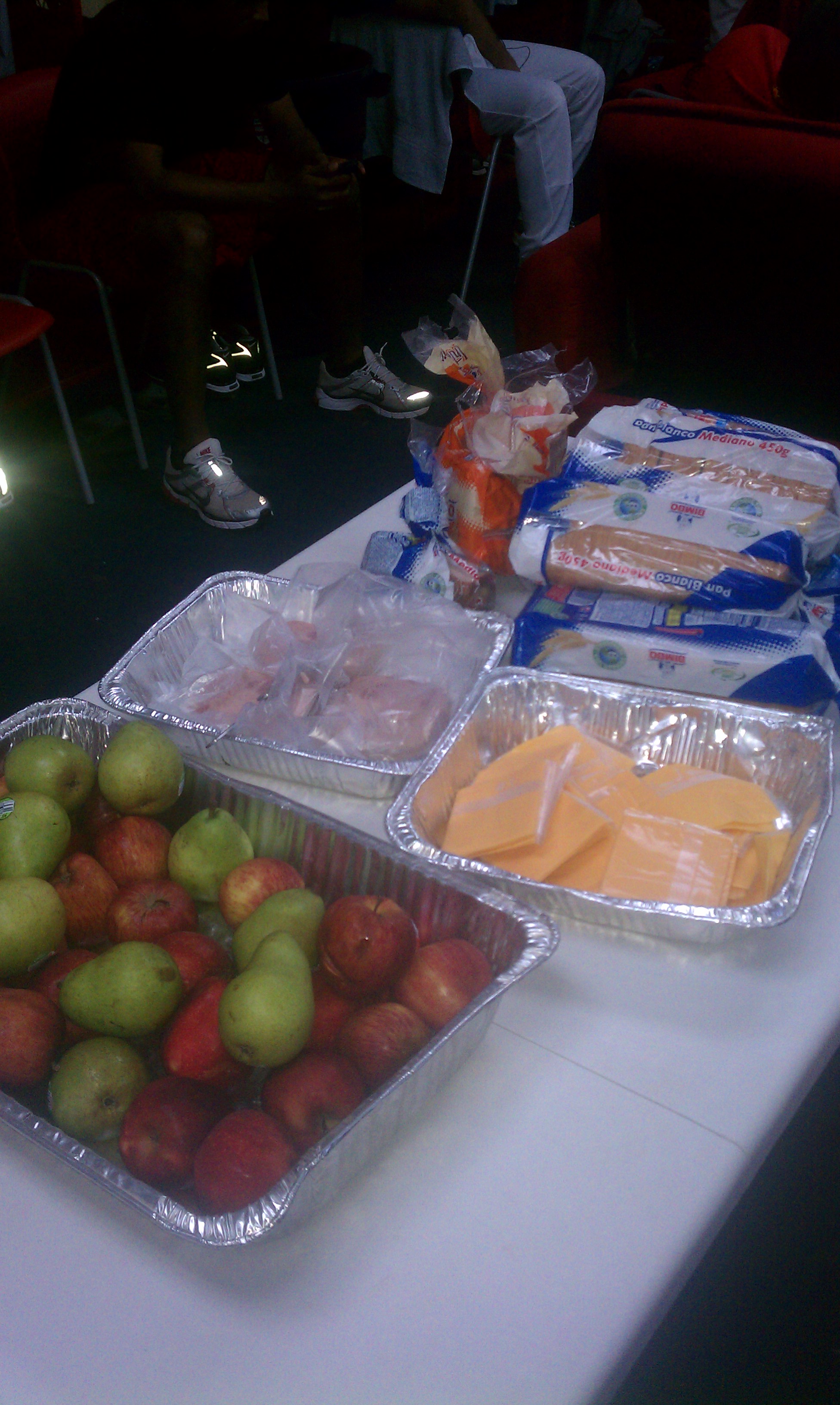 clothing yard sale.
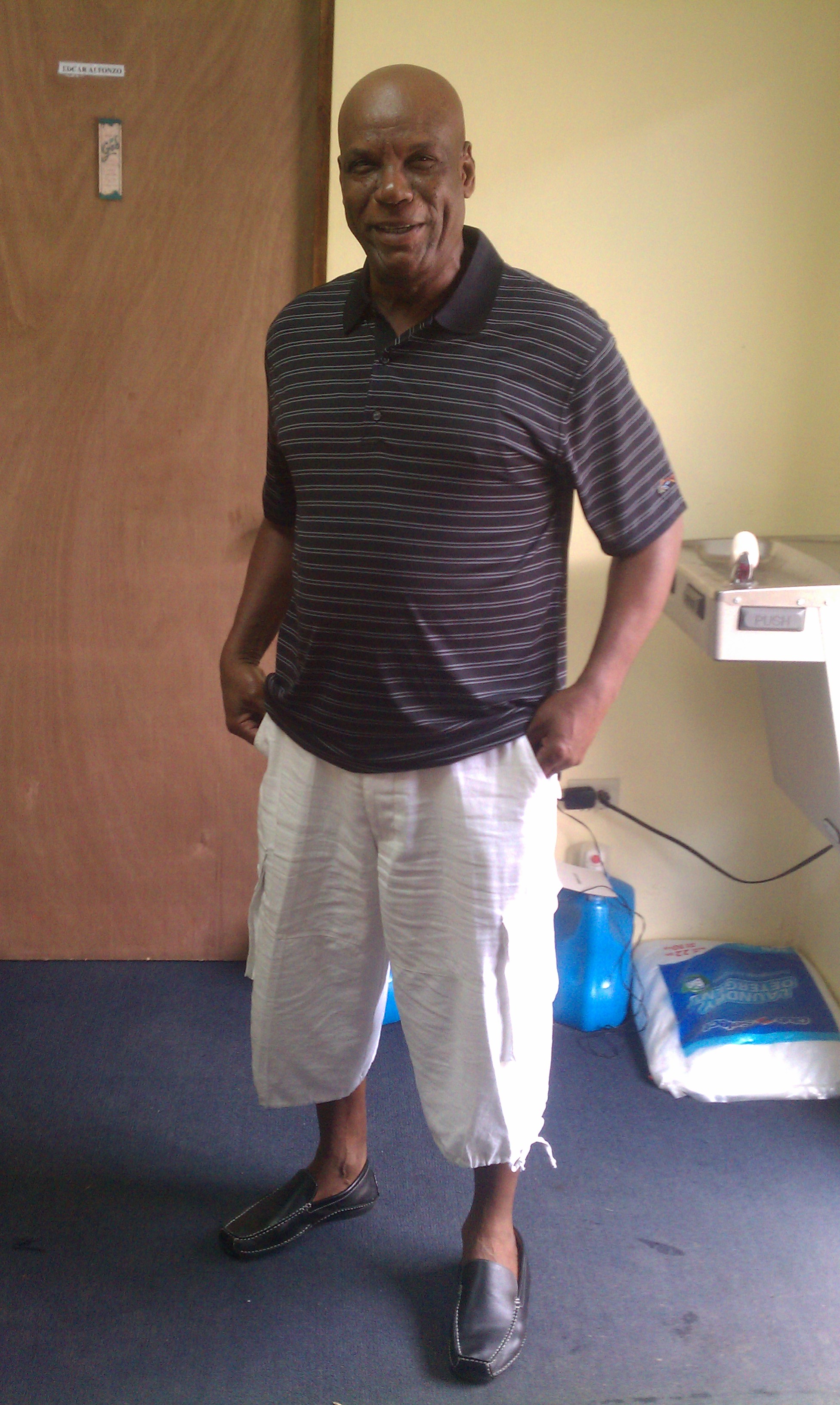
The ability for men to wear Capri pants and be considered stylish.
The maid that works diligently every day cleaning and scrubbing the entire 4 room two-story house every day…and also has a habit of turning off the A/C every morning so we wake up like we are in the middle of a Bikram yoga class.
The Korean player on our team who plays “light-field” and complains about the “blain fleeze” he gets when he eats ice cream.
The fact that one of my roommates thought a mothball was a Mentos.
The flocks of geese people have as pets.
 The chauffeur that honks at every female we passed regardless of age (extremely creepy).
The amount that the Latin guys on my team enjoy mayonnaise sandwiches.
The Thanksgiving meal of ham and cheese sandwiches.
The clubhouse attendant who scrubs down our lockers, shoes, uniforms, AND batting practice balls. No one has hit a home run in BP for 3 weeks because they are water-logged but they sure do shine like pearls.
The fact that I only eat at two restaurants because the others have made me do my best bus-driver impression on the toilet seat.
The team bus that is an Aladdin movie prop during the day, and the hottest club in town at night.
As you can tell it’s not the most glamorous of lives, however it is quite amusing. Paying dues in the Minor Leagues and foreign countries can be a bit of an adventure, but it has provided me with many life experiences. I hope to use this blog as a means to share those experiences. I would like people to see what players like myself go through to chase their dreams. Follow me on Twitter @cswag8 if you would like to get a daily perspective and interact with me.
Until next time,
Please e-mail us at: MLBreports@gmail.com with any questions and feedback. You can follow us on Twitter and become a fan on Facebook . To subscribe to our website and have the daily Reports sent directly to your inbox , click here and follow the link at the top of our homepage.

Interview with Robby Rowland: Arizona Diamondbacks Pitching Prospect
Thursday December 1, 2011

Jonathan Hacohen: We are proud to welcome to MLB reports: Robby Rowland, pitching prospect of the Arizona Diamondbacks. Robby was a 3rd round pick for the Dbacks in the 2010 draft. He recently completed his second season of Rookie Ball, playing for the Missoula Osprey of the Pioneer League. Standing an imposing 6’6″, the soon to be 20-year old Rowland has a bright future ahead with the Dbacks. I have enjoyed getting to know Robby over the past few days, as we talked our favorite subject…baseball. I got the sense speaking to Robby that he truly loves the game. His passion and commitment will carry him very far in my estimation, as he works towards joining the Dbacks one day in Arizona. There is definitely no attitude in the world of Robby Rowland. He understands where he came from and what he needs to do in order to one day become a successful major league pitcher. With spring training less than three months away, I had a chance to catch up with Robby Rowland and learn about his career. It was a fun interview to conduct and we are looking forward to having Robby return back soon on the Reports!
Featured on MLB reports, I proudly present my interview with Robby Rowland – Diamondbacks Pitching Prospect:
___________________________________________________________________________________________________________
MLB reports: Thank you for taking the time to join us today Robby. How has your offseason gone so far?
Robby Rowland: Thank you for having me! The offseason has been good. Just working out a lot and got a little part-time job. But I already want it to be over. I am just missing baseball too much right now!
MLB reports: You just completed your 2nd season in Rookie Ball. Plus you are still 19-years of age! How have you found the process of getting adjusted to playing professional baseball?
 Robby Rowland: It’s definitely a tough process. I used to think that pitching was very simple; that you just throw the ball and get outs. But I have found out that a lot goes into it. Coming from high school, the adjustment was a lot harder. It’s not just throwing the ball as hard as you can anymore. It’s about pitching to your strengths and trying to locate the ball down in the zone. The hitters in pro-ball will make you pay if you make a pitch up in the zone. I am no longer able to take any pitches off; I have to be zoned in the whole game. Aside from the pitching aspect of the game, I just love professional baseball! I get to live and breathe baseball without any interferences.
MLB reports: You were drafted by the Diamondbacks in the 3rd round of the 2010 draft. Did you expect to be drafted by Arizona and what round was supposed to be “your round”?
Robby Rowland: They were one of the teams that showed a lot of interest in me. It was tough to determine, just because I always had a lot of scouts at my high school games. But when it came down to it, I believe Arizona was in the top-4. Everyone told me the highest I would go was 2nd round and the lowest would be in the 4th round.
MLB reports: How did you first find out you were drafted: what was that like?
 Robby Rowland: Well I had a couple family members over and we hooked up the computer to the TV in our living room so we were able to watch it on a big screen. My agent would call me and let me know that I might be selected here or there so it was kind of a roller coaster day. The names on the screen seemed to be going so slow. After the second round was completed I grew very anxious. I started thinking about the worst possible scenarios. My agent called me and told me the Diamondbacks were 50/50 in taking me. Right after I hung up with him- my area scout, Dee Brown, called me and told me they selected me. I saw my name on the screen and some highlights. Definitely a surreal moment.
MLB reports: Ever have to pinch yourself: does it feel like a dream playing professional baseball?
Robby Rowland: Haha I had to pinch myself a couple of times during those first few playing days. It’s something that I was born to do. I grew up around this game. My dad played for 10 years, so I was always around the game of baseball. My mom has a couple pictures of me when I was real young holding a couple of my dad’s bats and playing with baseballs around the house. I am just blessed that I am able to be playing the game I love for a living.
MLB reports: What other sports did you playing growing up? Given your height, did you ever consider pursuing basketball instead?
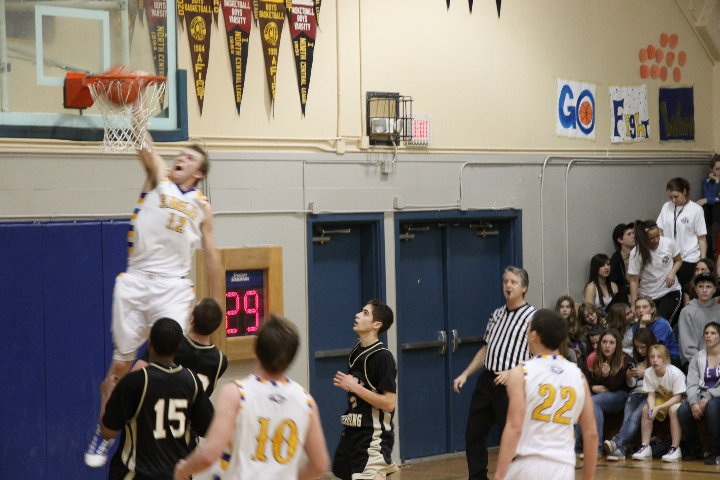 Robby Rowland: I played football when I was real young but it cut into my Fall Ball for baseball, so I only played one year. Yes actually I was always a basketball player. There were a couple of colleges that wanted me for a dual sport scholarship. It came down to my senior year until I decided to just focus on baseball. It was one of the toughest decisions I have ever made in my life. Still to this day, I miss basketball.
MLB reports: What are your most dominant pitches? Any new ones you are working on?
Robby Rowland: I like to say that all of my pitches are dominant. But if I had to throw my best pitch in a certain situation, I would go with my sinking fastball down at the knees. I am a firm believer in a fastball down in the zone with movement is the toughest pitch to hit. I am not necessarily working on new pitches, but when I was instructional league down in Arizona, the pitching coordinator got with me and really helped me to define my mechanics. Before I wasn’t using my lower half and my arm slot was too high, therefore my head was tilting to the left when I would throw. What he did was straighten my body out and helped me figure out how to use my lower half. I also dropped my arm slot a little bit getting some more sink on my ball. The key now is to try and figure out how to control all my pitches with this new delivery and arm slot.
MLB reports: How would you describe “your game”? What “type” of pitcher are you?
 Robby Rowland: I like to say I am a strike thrower. I guess you could say that I am a little old school in the fact that I am going to go right after hitters with my best stuff. Almost a “here you go hit it” type of guy. In high school, I was always a strikeout type of overpowering pitcher. But when I got to pro ball, I realized that I needed to start pitching to contact. Keeping the ball down and getting lots of ground balls. It’s like the Bull Durham quote, “Strikeouts are boring, besides that they’re fascist. Throw a ground ball- it’s more democratic.”
MLB reports: Looking into a crystal ball, when do you expect to make it to the Show?
Robby Rowland: I couldn’t tell you that. Of course that’s the goal. But right now it’s about figuring out how to pitch, keep getting better, and when all that comes into play- then hopefully I will make it.
MLB reports: Long term: do you expect to stay a starter or will you consider a move to the pen?
Robby Rowland: I would like to stay a starter my whole life. My dad has always told me that starters have the life! Pitch every fifth day… who wouldn’t want that? But whatever my team needs me to do I am willing.
MLB reports: What are your goals for 2012?
 Robby Rowland: I have a lot of goals for 2012. I feel like I have a lot to prove after a shaky 2011 season. My main goal is to get my mechanics dialed in and keep learning how to pitch. Of course I want to be on a full season roster and log a lot of innings. But I realize I am still young and it’s all about figuring out the concept of pitching. I am always just finding ways to get better.
MLB reports: If you weren’t playing baseball, you would be __________________
Robby Rowland: Oh man… I would have to say I would be playing basketball in college somewhere…
MLB reports: Favorite pre-game meal?
Robby Rowland: Gotta go with a Quiznos sandwich here. The Black Angus steak with extra sauce. Really gets me going.
MLB reports: What music are you currently listening to?
Robby Rowland: I have a wide variety.. I’ve always loved the classic rock.. Tom Petty, Boston, Lynyrd, Grand Funk Railroad- all those bands. I will also listen to a little bit of rap and hip hop. I currently just got into a little bit of country but I don’t really know any of the singers.
MLB reports: Funniest prank you ever saw in a clubhouse?
 Robby Rowland: Ohhhh… there’s been a lot of good ones. I would have to say the time when some guys took a player’s stuff out of his locker and saran wrapped it to one of the benches in the locker room.
MLB reports: Final question: What would you most want to be remembered for in baseball when you hang up your spikes?
Robby Rowland: I want to be remembered as someone who played the game the right way. Someone who every time he put a jersey on, he played the game with respect. I also want to be a game changer. The guy that you can throw out there in a must-win game and know that there is a great chance that the ball club is going to get a win. Oh and not to mention maybe one of the best hitting pitchers to ever play the game… just saying…
MLB reports: Thank you for your time today Robby. It has been a blast speaking to you. Thank you for sharing your thoughts with us. We look forward to having you back on soon!
Robby Rowland: Thanks for everything man. Let me know if there is anything else I could do for you. Sure was a fun interview!
Thank you again to Robby Rowland for taking the time to join us today on MLB reports. We highly encourage our readers to post at the bottom of the article any questions and/or comments that you may have for Robby. As well, please follow Robby on Twitter (@RobbyRow_12)

 Jonathan Hacohen is the Lead Baseball Columnist & Editor for MLB reports: You can follow Jonathan on Twitter (@JHacohen)
Please e-mail us at: MLBreports@gmail.com with any questions and feedback. You can follow us on Twitter and become a fan on Facebook . To subscribe to our website and have the daily Reports sent directly to your inbox , click here and follow the link at the top of our homepage.
Interview with the King of Swag: Cardinals Prospect Chris Swauger
Sunday November 27, 2011
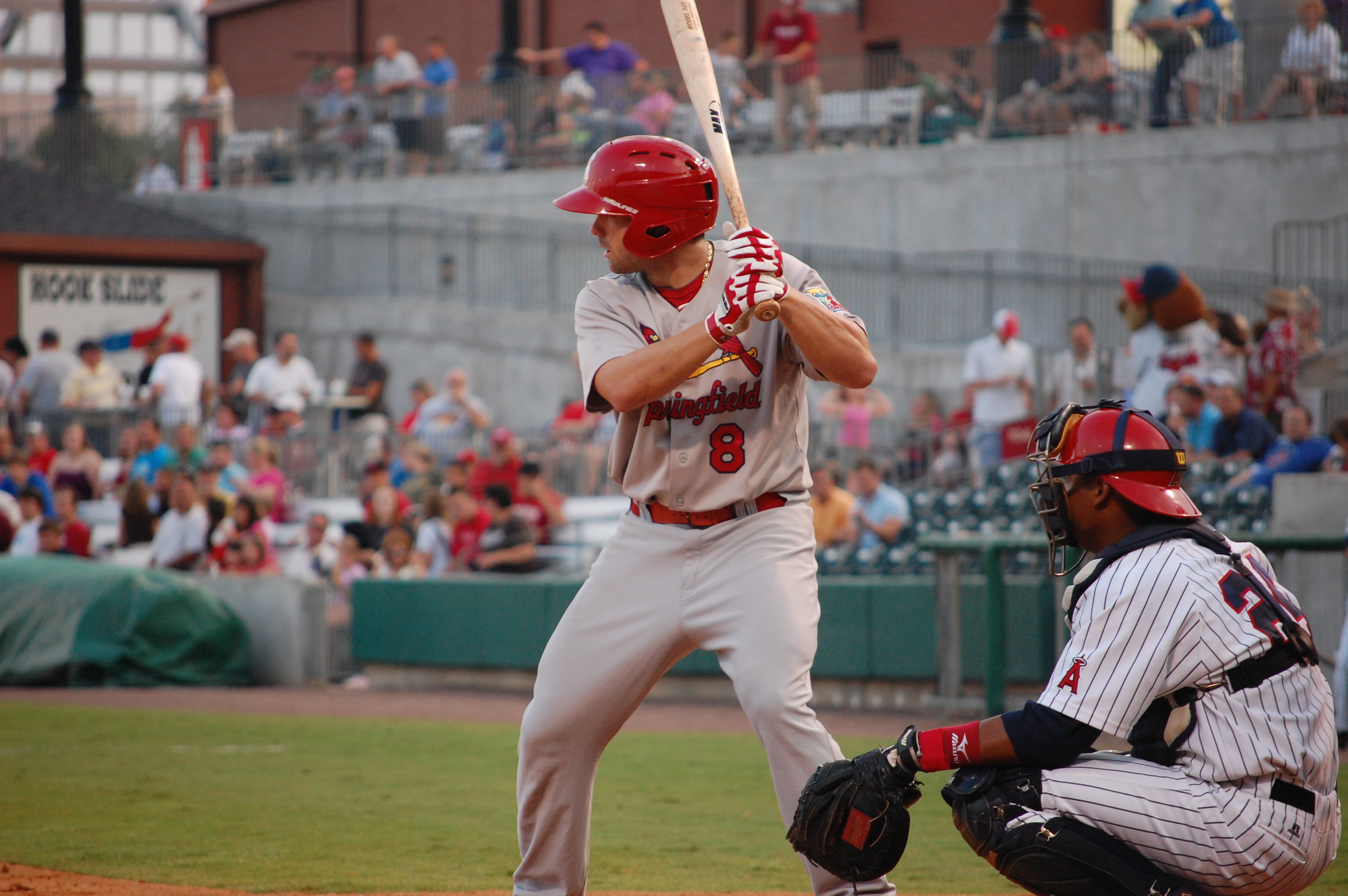
Jonathan Hacohen: We are proud to welcome to MLB reports: Chris Swauger, outfield prospect in the St. Louis Cardinals system. When your nickname is Swags and your parent team wins the World Series, life is very sweet. Swags was originally a 26th round pick for the Cardinals in the 2008 draft. A steal for the Cardinals, Swags recently completed his 4th professional season. 2011 was his first full season in AA ball and Swags definitely did not disappoint. Hitting .296 on the season, Swags popped 12 home runs in only 114 games, with 56 RBIs, 52 runs scored, .343 OBP and .442 SLG. Swags also showed a good eye at the plate by only striking out 67 times. The upcoming season represents a big one for Swags, as he looks to move up to AAA Memphis and eventually, the show. One of the most down to earth people that I have ever met, Swags had me in stitches every time we spoke. In my estimation, Swags represents everything that is good and real about the game of baseball. While he is 110% devoted and dedicated to the sport, he does not take himself too seriously and keeps the game fun and loose. Get ready for some great baseball talk- Swags is definitely one of a kind!
Featured on MLB reports, I proudly present my interview with Swags, aka Chris Swauger – Cardinals Prospect:
___________________________________________________________________________________________________________
Swags: Honestly, I was convinced it wasn’t going to happen. After a few months of every scout telling me I was one of the best seniors available and would go in the top 10 rounds, I sat at my computer for almost two days waiting. I nearly went blind tracking it into the 20th round and just walked away from the computer. After being told by my mother to get a real job, I happened to walk by the study where the online radio broadcast was being streamed and heard my name. I figured it was a mistake and checked the Draft Tracker. There was my name in the 26th Round by the St. Louis Cardinals. As upset as I was before, my emotions turned to pure elation that I would have a chance. They say senior-signs play for a plane ticket and a jockstrap. My jockstrap must have gotten lost in the mail.
Swags: Let me clarify that I PLAYED BASEBALL at The Citadel. That is completely different from being a regular cadet. I did get some mandatory ROTC Training and ran a few obstacle courses, but the only tanks and planes I can pilot are the GI Joe models stuffed in the attic with all my old baby toys. However, I can shine shoes, sweep floors, and make hospital corners on beds with the best of them (I may be qualified to open a retirement home with that type of training). Basically, I gained a great understanding of discipline and time management going to a military school and it has absolutely made me the man I am today.
Swags: I had gotten a letter from the area scout, but the first time I talked to him was when he called me to congratulate me on being selected. I honestly had no idea where I was headed I just wanted to play. I had no idea who wanted me or where I would go. And, for 784 picks, I was certain I was going to graduate school.
Swags: First of all, a Muckdog is a CHAMPION! One of the best experiences of my life was that championship season in Batavia. It was my first dose of professional baseball and I got the prescription strength. First day of practice our cleats were clicking on the rocks in the outfield that used to be a parking lot. I was fortunate enough to get a host family that provided me with transportation, a 1989 Huffy 5-speed mountain bike. The swiveling seat and rotating handlebars came standard on that model. A kickstand did not. The good news was that I could be anywhere I wanted in Batavia in 20 minutes on that hog. The lack of anything really fun to do made our team rely on itself for entertainment and with a group like ours that was not hard to find. In an attempt to keep this interview below an NC-17 rating, I will not go into detail but I will say the shenanigans involved a one-eyed dog, two broken chandeliers, swimmies, M-80s, Cinnamon Toast Crunch, and a clothes hamper being mistaken for a urinal. As far as on the field, we started the season with more errors than hits in our first 3 games, rattled off 12 wins in a row at one point, and rode solid pitching and clutch hitting to a championship celebration. We were rewarded with a trophy, banner, and a Venezuelan flag. Not sure how that snuck in there.
Swags: I appreciate the compliment but I don’t think i deserve to be mentioned with those names just yet. There is no doubt the key to my game is hard work. I will admit I am talented and would not be here if I were not, but work ethic that I learned at the Citadel and with the Cardinals is the only reason I am still around. I have no problem with that. I would not change one thing about my career path thus far. I would change about 20 things. I would have gone in the first round, signed for $4 million, would have been 6’5″…
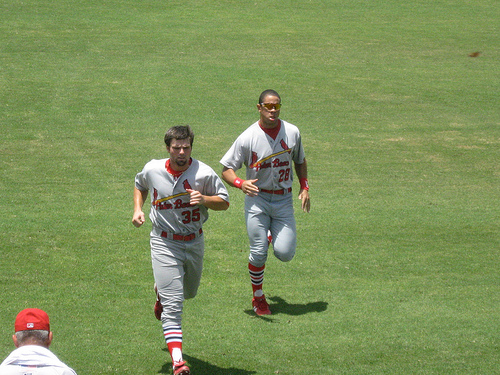 Swags: There really isn’t that much difference between the teams I have played for in my career. That is a testament to the consistency that exists within our system. We preach executing the fundamentals…and don’t be afraid to hit a 3-run homer. Each team has been my favorite at the time because each stop has its own new experiences and team personality. Looking back I would have to go with Palm Beach because I’m a native Floridian and I loved getting to play in front of my family and friends quite a bit. The weather wasn’t too bad either. I lobbied for shirtless BP a few times but our coaches had no concept of tan lines. I still cherish the memories of the other places as well. The atmosphere and the people in Quads and Springfield were unmatched. Batavia became like a home to me, if only because I was on a first name basis with all 50 residents. Everywhere I have gone I have enjoyed and will continue to do the same.
Swags: I see myself playing catcher if that’s what I have to do to get to the big leagues.
Swags: Rock-star is still my back-up plan. I only recently learned to drive a stick-shift, so I will require more education in order to get in a monster truck. “The Plan” with baseball started out with making my high school team. Then, it was try not to embarrass yourself in high school. Then, it changed to try to play in college. Then, it became try to get drafted my junior year. Then, it became well, there’s always senior year. Then, it was woohoo I got drafted. Then, I thought does this really count as a signing “bonus”? Then, it switched to wow I never knew how bad I was at this. Then, I got better. And THAT has been the key to the whole plan and why it is still in progress. I AM A WORK IN PROGRESS. There is an end game, but “the plan” keeps adjusting with every pitch, out, inning, game, and season.
Swags: I hope so because I certainly don’t want to gain Double A Veteran status. I think I have earned a spot in Memphis, but this game is fickle sometimes and our organization has a tremendous amount of talent. That being said, if my career turns into a NASCAR race (aka another lap around the Texas League) the only thing I can do is be thankful to still be playing and fighting for an opportunity.
 Swags: To play in a World Series is every 6-year-old’s dream. Conveniently, I still act like a 6-year-old so it’s still my dream. It was great getting to see some guys that I have played with get to experience that and I hope and pray I get that opportunity some day. It’s what gets me up in the morning; that and the rooster that lives next door to me right now.
Swags: Swag, Swags, Schwaugs, Schwaaaaaaaaugs, Swagga, and Swagness. The only name I’ve never heard on a baseball field is Chris. As far as the swagger goes, that must be a rhetorical question.
Swags: The entire starting outfield to get hurt.
Swags: That would have to be an old St. Louis farmhand who now plays in the Angels organization, Matt Meyer. In only a couple of at bats against him, he has effectively gotten me to swing at a pitch that hit me, shattered two of my bats, and is the reason I started wearing a shin guard.
Swags: In Batavia, I hit one on the basketball court behind right field. I was told later that it went through the hoop and gave someone an H in HORSE.
Swags: I remember the home run and the advice I was given prior to it. I was in Batavia, getting ready to face my first knuckleballer. My hitting coach said, “See the ball at your eyes and swing as hard as you can.” I was fresh out of the Citadel and pretty good at following orders, so I went up there and tomahawked the first pitch I saw out to center. I remember running around the bases with a huge grin knowing a career in beer league softball was waiting for me if the MLB didn’t work out.
Swags: “Here Comes The Hotstepper” by Ini Kamoze. My goal is to make everyone in the stadium’s head perk up and then immediately start bobbing. Done.
Swags: I try to stay away from superstitions and rituals because it always ends up being too much to keep up with. For some guys it becomes an obsession. I once had a summer ball coach question guys who wrote Bible verses on their shoes. He said “I guess everyone needs a crutch in life.” I think he has reserved his spot in hell.
Swags: I should be allowed to eject the umpire. Self-explanatory.
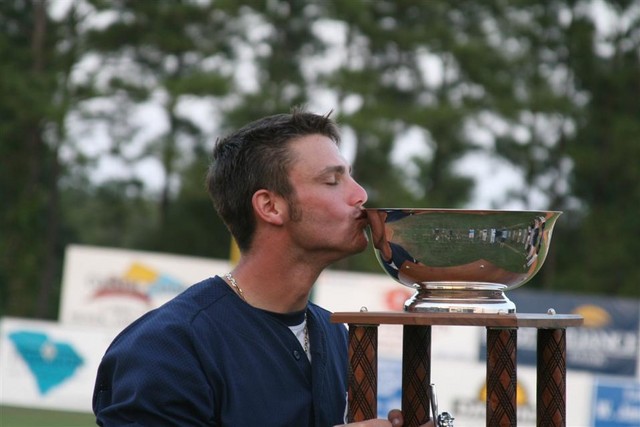
Thank you again to Chris Swauger for taking the time to join us today on MLB reports. We highly encourage our readers to post at the bottom of the article any questions and/or comments that you may have for Swags. As well, please follow Swags on Twitter (@CSwag8)
Jonathan Hacohen is the Lead Baseball Columnist & Editor for MLB reports: You can follow Jonathan on Twitter (@JHacohen)
Please e-mail us at: MLBreports@gmail.com with any questions and feedback. You can follow us on Twitter and become a fan on Facebook . To subscribe to our website and have the daily Reports sent directly to your inbox , click here and follow the link at the top of our homepage.

Interview with Bruce Spitzer: Author of Extra Innings
Friday November 25, 2011
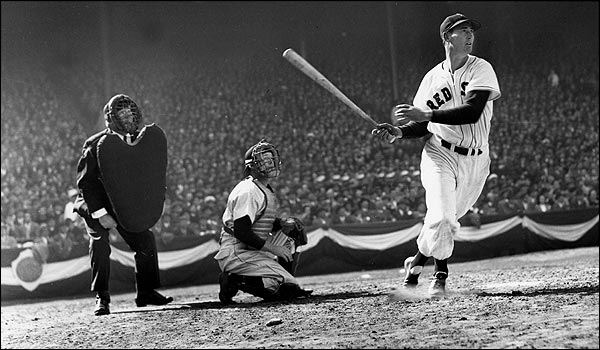
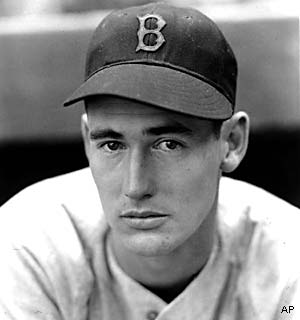
Jonathan Hacohen: Q&A with Bruce Spitzer, author of the novel Extra Innings about Ted Williams returning to life through cryonics, to be released this spring.
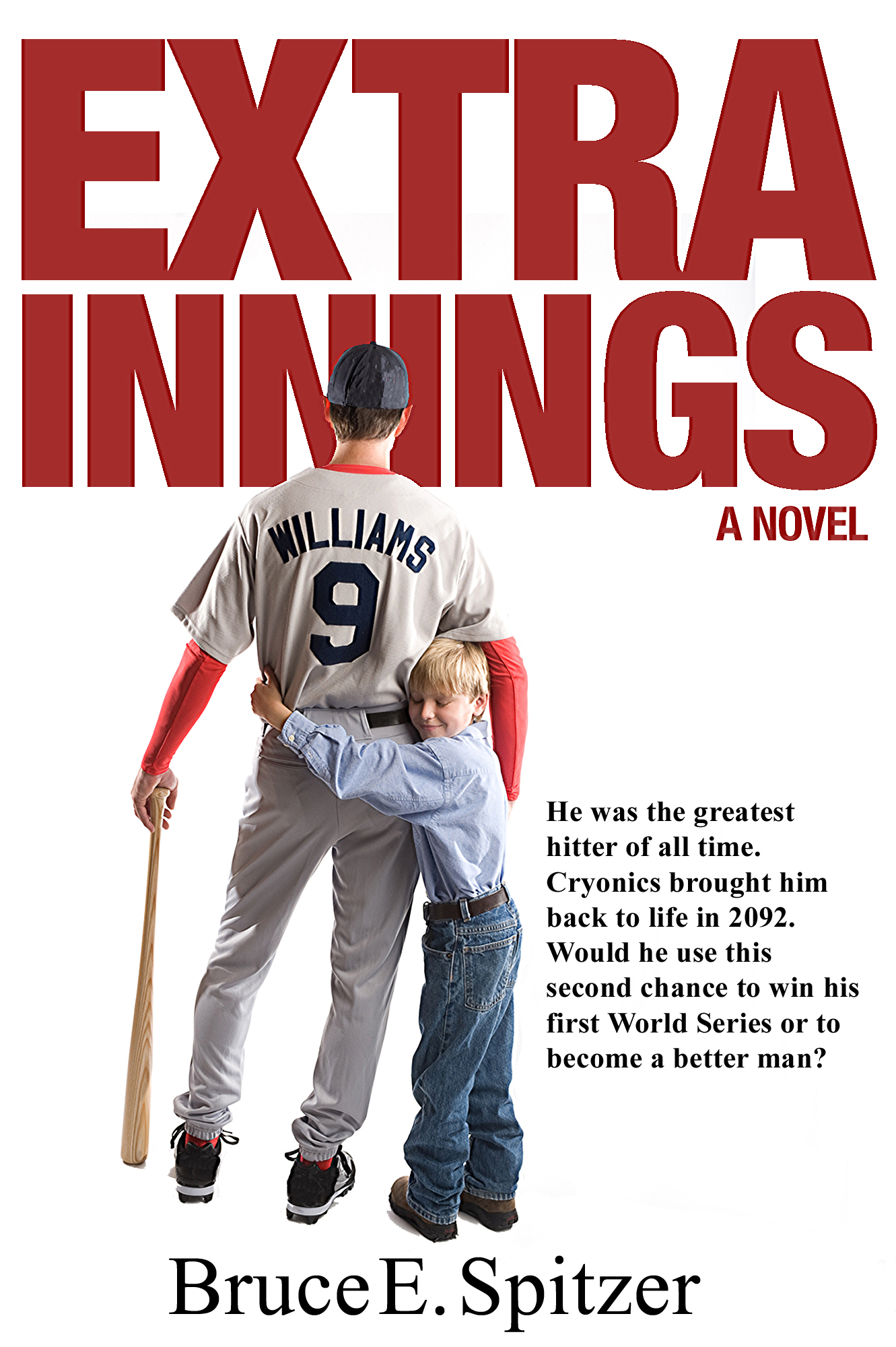
Q. In Extra Innings, cryonics and science bring Ted Williams back to life in 2092. What was your inspiration for the concept of the book?
A. I never saw him play but always admired the man. I have friends who knew him well and every one of them has a story about his larger-than-life persona—good fodder for a book. Then one night five years ago I was watching a Red Sox game on TV and Don Orsillo and Jerry Remy were talking about Ted Williams. In between innings I was channel surfing a bit (who doesn’t?) and landed on something like the Discovery Channel, maybe the History Channel. The program was about mummies and a belief in life after death. I connected the dots: the real-life cryonic preservation of the late Ted Williams and the human desire for life after death and began to imagine what it would be like if indeed Ted was successfully reanimated one day. Thus Extra Innings the novel was born.
Q: Why Ted Williams, and why the year 2092, any particular relevance?
A: If you’re going to fictionalize an account of a famous person I can’t think of many better than Ted Williams who in real life (or death), as most people know, was cryonically preserved when he passed away in 2002. For a novelist, he was a wellspring of source material. I did a lot of research so that when I placed him in a particular situation I would know how he would react—even his verbal patterns, in particular, his famous cussing. The year 2092 was chosen to set the novel in because it is far enough in the future to believe that science may make cryonic reanimation possible, but not too far out to make verisimilitude difficult.
Q: You chose to write about baseball as your first novel. Why baseball in particular? What is your baseball background?
 A: I played the game only as a boy but, obviously, you need to know something about it to write a baseball book. As an undergrad I did play-by-play on the radio and took a sports reporting track for a while. I’ve been a writer my entire professional life and have been published in newspapers, magazines and online. But Extra Innings is my first foray into fiction. So, after developing “the hook” for the story in my mind, it seemed like it was a mountain I was ready to climb. I have a journalism degree and use it every day. I’ve also been a PR executive for a long time. Quite a few novelists have worked in PR and advertising, which, historically, require good writing skills. The PR types include Danielle Steele and Kurt Vonnegut; and James Patterson is a former copywriter and ad exec. Far be it from me to compare myself to these authors, but as a writer and PR person, you must master the skill of quality research, which was invaluable in writing Extra Innings.
Q: Your novel has been five years in the making. Please describe the process of creating this book from beginning to end.
A: The first draft took a year to write and I rewrote and revised for another four years. I rise at 4 a.m. each day and write for 2 ½ hours before going off to work at the job I love in Boston where I write and edit other stuff. I also work on fiction for at least a few hours on one day each weekend. So, it is basically a six-day-a-week passion, but because I do it so early in the morning I still have time left for my family, career, friends and other interests.
Q: Would it be fair to say that this book falls mainly into the categories of baseball and science fiction. How would you describe the genre of the Extra Innings?
A: The novel is general fiction, and commercial fiction, but it has elements of speculative fiction (a subset of sci-fi), a sports novel (of course), and a military thriller (mirroring the “first life” of Ted Williams).
Q: Will a traditional baseball fan enjoy this book? Most baseball readers tend to enjoy reading about the history of the game, its players and statistics. For those baseball readers, how will they feel about this book?
A: I believe baseball fans (and not just Red Sox fans) will revel in it. As a baseball reader myself, it was a joy to research and write—what fun to re-imagine a new life for the greatest hitter of all time and see him play baseball again. However, EI is more that just a baseball book. It’s a story about second chances and redemption. For all of his success on the field in his real life, Williams was flawed in many ways off of the field. In his second life he is compelled to answer the question, what’s more important, a chance to win his first World Series or a chance to be a better man? In addition there are numerous subplots to draw-in a variety of readers. The narrative resonates with the consequences of the major issues we face in our world today—the steroids debate in sports, global warming and flooding, corporate greed, technology run rampant, and the moral ambiguity of war. One of my female beta readers even said, “This is a love story disguised as a baseball book.”
Q: Did you consult with any baseball officials in writing the Extra Innings?
A: There was a lot of research done at such disparate places as the Boston Athenaeum; the New England Sports Museum; the National Baseball Hall of Fame and Museum in Cooperstown (who put up with me traipsing in on the morning after induction weekend); The MIT Media Lab and its Personal Robots Group; and the Smithsonian National Air and Space Museum, Steven F. Udvar-Hazy Center (to check out the fighter plane Ted pilots). The authors who provided terrific background material included Leigh Montville (Ted Williams: The biography of an American Hero); Bill Nowlin (Ted Williams at War); the late David Halberstam (The Teammates); John Underwood (It’s Only Me: The Ted Williams We Hardly Knew); and, of course, Ted Williams the author (The Science of Hitting and My Turn at Bat—The Story of My Life), both with John Underwood.
Q: Can you tell us more about your research process studying Ted Williams? Did you have a focus on the player only or the game during his era?
 A: All of the above. There are situations I put him in that draw specifically on his baseball (and military) history. It was an important part of the plot and resulted in enjoyable twists in the story as he tries to harness some of his old skills and memory while trying to adapt to a new baseball paradigm and a dystopian future-world in general.
Q: With the book now at completion, looking back, would you have done anything different?
A: Not too much. I had an outline in my head and pretty much followed that map. I actually wrote the ending first, which, for some reason, many authors do, probably because it gives you a target to shoot for. There were a few surprises along the way—things that I hadn’t anticipated. For example, after starting the novel it dawned on me that the first person in the world brought back from the dead is going to know if there is life after death, having nothing at all to do with cryonics. That is, knowing if there is an afterlife and if God exists. People are going to want to know what you know!, particularly religious folks. As the only person who knows, Ted Williams is presented with numerous challenges in the novel.
Q: When is the book set for release? How did you pick the release date?
A: Extra Innings will be released to coincide with the beginning of baseball season this spring, which, in New England, should be interesting because we will be celebrating the 100th birthday of Fenway Park. Fenway plays a central role in the novel 80 years from today.
Q: What is your planned schedule in promoting the Extra Innings?
A: We’re working on that now. When the schedule is set you’ll see it announced at http://www.extrainningsthenovel.com/ and on Twitter@BruceSpitzer1.
Q: Where will the novel be available?
A: You will be able to order Extra Innings as a traditional book or an ebook at Amazon and Barnes & Noble online and other select distributors, and it will also be made available in select independent bookstores. Check out http://ExtraInningsTheNovel.com for a list sometime after the New Year.
Q: Can readers contact you?
A: Yes! That would be great. The email address is Bruce@BruceSpitzer.com.
Q: Will we see another baseball book in the future from Bruce Spitzer?
A: Never say never. But the next book is not about baseball. However, I can tell you that it is another high-concept novel.
Q: If Ted Williams were alive today, what would he think of the current game of baseball? Do you believe that he would want to play Major League Baseball in 2012?
A: Oh yeah, I think he’d want to play today. Any player would if he still had the skills. I’ve talked to enough ex-players to know that most everyone misses it. The question is, how would he like playing in the year 2092?
MLB reports: A big thank you to Bruce Spitzer for taking the time to speak with us today on Extra Innings. Personally, I can’t wait to read this baseball thriller! Extra Innings will be available this coming spring. Keep an eye out for our review of Extra Innings, coming soon.
About the author:  Bruce E. Spitzer has been a writer and editor his entire professional life. Spitzer’s writing has won awards from the New England Press Association, the International Association of Business Communicators, and the Publicity Club of Boston. His writing has appeared in newspapers, magazines and online. He is a public relations executive and writes the “Dollars and Sense” business column for the MetroWest Daily News, and is also the editor of a business trade journal, Massachusetts Banker Magazine. Spitzer is a graduate of Boston University and Rutgers and lives in the Boston area with his wife and young son. Extra Innings is his first novel.
Jonathan Hacohen is the Lead Baseball Columnist & Editor for MLB reports: You can follow Jonathan on Twitter (@JHacohen)
Please e-mail us at: MLBreports@gmail.com with any questions and feedback. You can follow us on Twitter and become a fan on Facebook . To subscribe to our website and have the daily Reports sent directly to your inbox , click here and follow the link at the top of our homepage.

Interview with Orioles Catching Prospect: Tanner Murphy
Thursday November 24, 2011
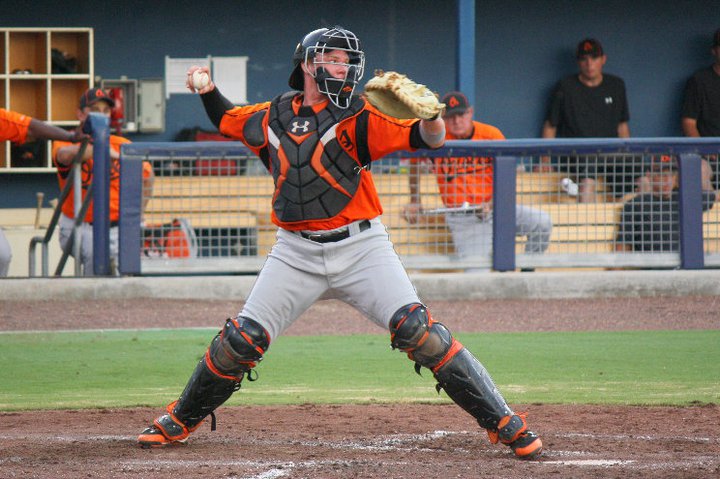
Jonathan Hacohen: We are proud to welcome to MLB reports: Tanner Murphy, catching prospect for the Baltimore Orioles. Tanner was a 22nd round selection for the Orioles in the 2010 draft. At 19-years of age, Tanner recently completed his 2nd season with the Orioles organization, playing in the Gulf Cost League. Coming off elbow surgery, Tanner looks to be healed and ready for the start of spring training. 2012 represents a big year for Tanner as continues to work his way up the Orioles ladder and one day join the big club in Baltimore.
Featured on MLB reports, I proudly present my interview with baseball prospect, Tanner Murphy:
_______________________________________________________________________________________________________
MLB reports: Welcome to MLR reports Tanner and thank you for taking the time today for us. Who was your favorite baseball player growing up, that you most idolized and patterned your game after?
Tanner Murphy: Growing up, I idolized Ken Griffey Jr. And Paul Lo Duca.
MLB reports: Which current MLB star do you most admire and why?
Tanner Murphy: The current MLB player would be Matt Wieters because he smart and smooth behind the plate.
MLB reports: Reflecting on your career to-date, what are your proudest accomplishments on the baseball field?
Tanner Murphy: I would have to say every game that our team wins and all games when our pitchers feel comfortable no matter what happens on the mound.
MLB reports: What are your goals going into the 2012 season?
Tanner Murphy: I have many many goals going into this next season. A couple main goals are to stay healthy the whole season and to become a better catcher and hitter than I was the year before and learn.
MLB reports: When you first found out you were drafted, what was going through your mind?
Tanner Murphy: Honestly, the first thing that what went through my mind was: Wow! It was almost surreal. I worked so hard towards that day growing up.
MLB reports: What round did you expect to be drafted and what was the process like signing with the Orioles?
Tanner Murphy: I really wasn’t thinking an exact round, just was going with the flow. The process was a lot of phone calls and thinking and guessing. It was a very busy process.
MLB reports: What do you consider your greatest baseball skill(s)?
 Tanner Murphy: I feel that I am pretty skilled in all aspects of the game, but everyday I can learn and get better to become the best that I can be.
MLB reports: What facets of your game do you most wish to improve upon?
Tanner Murphy: I feel every part of my game. There is always room for improvement. It is a game of failure and you can’t be perfect in this game.
MLB reports: How do strikeouts and walks figure into your game?
Tanner Murphy: Strikeouts actually tell you a lot about your next at-bats and can help me become a better hitter. Walks are the same way- just reading the pitchers.
MLB reports: Do you see any of these items changing over time and to what degree?
Tanner Murphy: Yes. I see that from strikeouts and walks I will continue to get better learning which pitches that I can handle and can’t handle during each of my at-bats.
MLB reports: Long term do you see yourself staying behind the plate considering Matt Wieters is the current starting catcher? How do you view your role in the organization?
Tanner Murphy: As for now, I do see myself still behind the plate. Given my age, I have some time. I feel that my role is to get better and do everything I can do to help the big league club win.
MLB reports: How do you see defense as part of your overall game?
Tanner Murphy: Defense is the most important part of my game. Being a catcher, I see everything and handle the pitchers. My job consists of making the pitchers get through the game, no matter the situation and to know the other hitters.
MLB reports: If you had to look into a crystal ball, when do you see your expected time of arrival in the big leagues and what do you think you need to do most to get there?
Tanner Murphy: I can’t really put a time on getting there. I just need to do everything and work hard to get myself there. No matter how long it takes.
MLB reports: Has pro ball been everything you expected it to be thus far?
Tanner Murphy: For the most part yes. There have been some things I wasn’t expecting, but that is the case in everyday life as well.
MLB reports: What do you do for fun when you are not playing baseball? Best friend(s) on the team that you most hang out with and what do you guys like to do to chill?
Tanner Murphy: When baseball is done for the season, I just hang out, travel, visit family, watch some football and basketball (when there is not a lockout). But doing that can only last for a couple of months, until the end of November. At the start of December, I usually start training again getting ready for the season.
MLB reports: Tell us more about your recent elbow surgery: what was the nature of the injury leading up to the surgery and how is your recovery going?
Tanner Murphy: I had surgery on my right elbow- my throwing arm. I had an ulnar nerve transposition. The nerve when I was throwing was so loose that when throwing, it would move. When I was throwing then moving back every time it became loose to the point that I could feel it. I had numbing in my ring and pinky fingers. As for my recovery, I am ahead of schedule. I have no more numbing and have a full range of motion. I should be all ready for spring training come February/March.
MLB reports: Do you have a favorite pre-game meal?
Tanner Murphy: I never really had a favorite pre-game meal. But I always do the exact same thing before every game.
MLB reports: Final Thoughts?
Tanner Murphy: Glad to help out. For the readers: hope you enjoy! Thanks MLB reports.
Thank you again to Tanner Murphy for taking the time to join us today on MLB reports. We highly encourage our readers to post at the bottom of the article any questions and/or comments that you may have for Tanner. As well, please follow Tanner onTwitter (@TMurphy20)
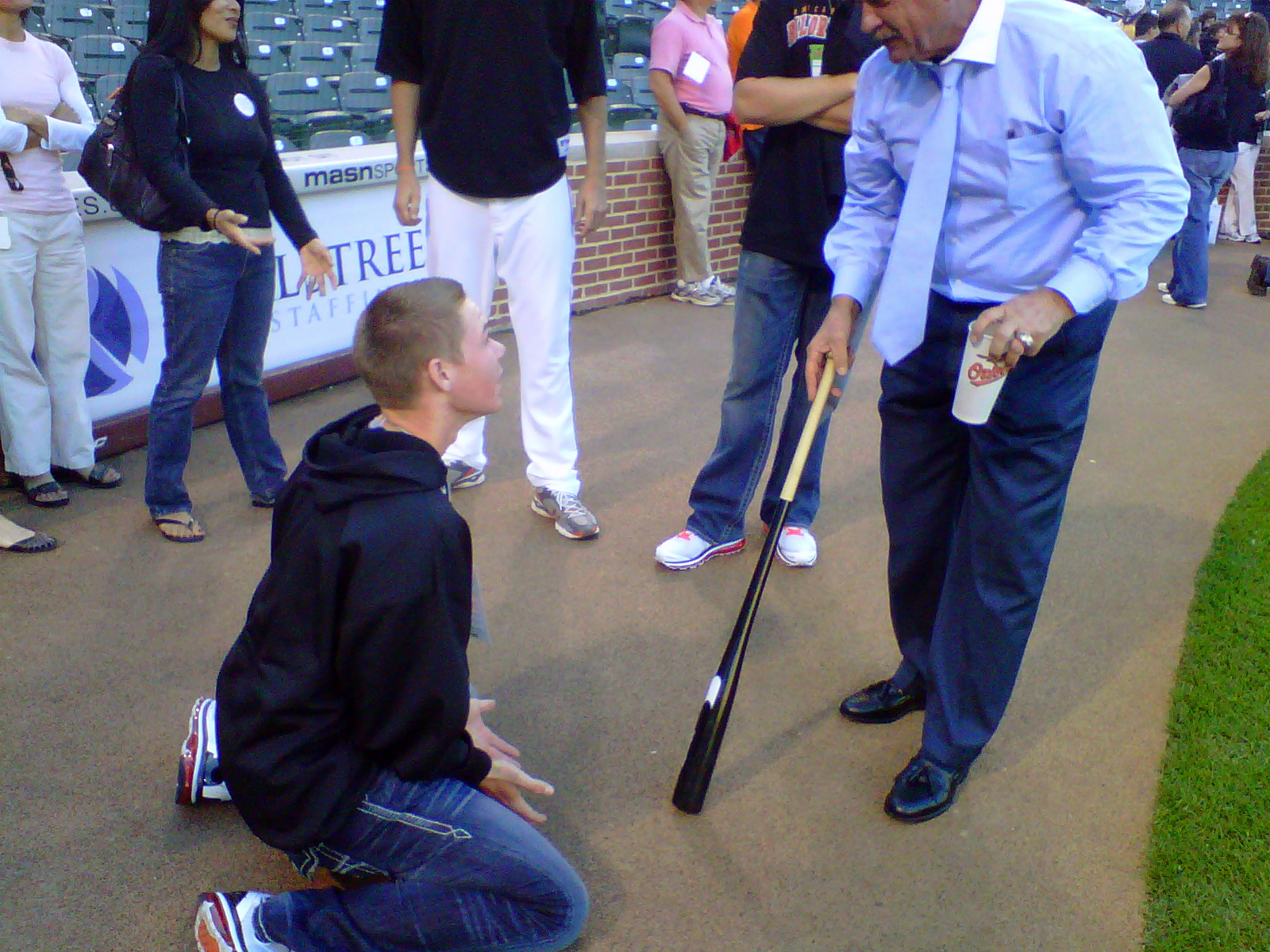
Jonathan Hacohen is the Lead Baseball Columnist & Editor for MLB reports: You can follow Jonathan on Twitter (@JHacohen)
Please e-mail us at: MLBreports@gmail.com with any questions and feedback. You can follow us on Twitter and become a fan on Facebook . To subscribe to our website and have the daily Reports sent directly to your inbox , click here and follow the link at the top of our homepage.

Interview with MLB Prospect Lance Durham: Talking Baseball with “The Bull”
Sunday November 20, 2011

Jonathan Hacohen: We are proud to welcome to MLB reports: Lance Durham, first base prospect and 2nd generation baseball player. His father, Leon Durham, played 10 seasons in the show. Best known as an outfielder/first baseman for the Cubs, Leon had pop in his bat and a strong ability to get on base. Following in his dad’s footsteps, Lance looks to make his own mark on the game. Originally signed by the Detroit Tigers in 2006, Lance opted to attend college and was drafted again in 2009, this time by the Toronto Blue Jays. Lance has just completed his third season in the Jays’ organization. I have enjoyed the opportunity to talk baseball with Lance on several occasions. He is an extremely intelligent bright man, with a strong sense of his roots and his path in the game. An extremely motivated and hard-working player, Lance has the fundamental tools to succeed in the game. At 23-years of age, the future looks bright for “The Bull”.
Featured on MLB reports, I proudly present my interview with baseball prospect and future superstar, Lance Durham:
__________________________________________________________________________________________________________
MLB reports: Who was your favorite baseball player growing up, that you most idolized and patterned your game after?
Lance Durham: My favorite baseball player growing up was my father. I know it sounds cliché but it’s the truth. I didn’t get to see him play in person but we have tapes all over the house of him when he was with the Cubs and I loved the intensity he played with. His demeanor, swagger and confidence were never lacking out on the playing field and that’s something I try to carry out on the field.
MLB reports: Which current MLB star do you most admire and why?
Lance Durham: I admire Prince Fielder the most. First, he was the only player to play all 162 games in 2011 and 160 games in 2010. That’s something to admire a lot because he brings it to the table everyday and doesn’t ask for days off.
MLB reports: Reflecting on your career to-date, what are your proudest accomplishments on the baseball field?
Lance Durham: Having the opportunity to follow in my father’s footsteps.
MLB reports: What are your goals going into the 2012 season?
Lance Durham: Stay healthy and set no limitations for the season. Sky’s the limit.
MLB reports: When you first found out you were drafted, what were your reactions? Did those reactions change over time? What was the process like being drafted originally by the Tigers in 2006 and Blue Jays in 2009 and not signing with the Tigers originally? What made you decide to finally sign with the Jays in 2009?
 Lance Durham: When I first got drafted out of high school, I thanked God and was happy to know that my name was already out there. But I thought it was best for me to go to college at that point. In 2009, it was just like “well, its time to start the grind” because I wasn’t a first rounder like my father and he told me it was time to out perform the competition. I didn’t sign with the Tigers originally because I was drafted in the 45th round and I figured going to college and getting smarter about the game of baseball and physically stronger (was in my best interests). Not to mention mom (Angela Durham) always wanted me to go college and I promised her I would one time in my life. So I did it (went to college) fresh out of high school.
MLB reports: What facets of your game do you most wish to improve upon?
Lance Durham: I just hope to improve on all areas of the game, whether it’s hitting, base running, defense, and having a great baseball IQ- which I think is the best advantage. The more you know about the game, the better you will do. My baseball IQ includes knowing what to do with the ball once you get it, thinking before the play even happens, so that the game slows down for you.
MLB reports: How do home runs and walks figure into your game? Do you see any of these three items changing over time and to what degree?
Lance Durham: Well home runs are awesome. There is no better feeling for me, except winning a ball game. Walks are also great because it shows your patience at the plate. Those are two statistics that you want to be pretty high.
MLB reports: How much of an influence was your dad on you growing up? What did you learn from your dad that has shaped you as a baseball player?
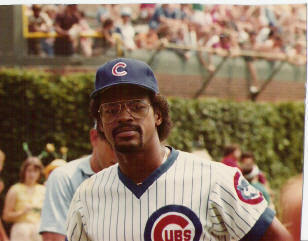 Lance Durham: Dad was a great influence on my baseball career. He has been involved in baseball his whole life, so to learn stuff from him about the game is great. The thing I learned from my dad the most is the mental part of the game. You are going to strike out. You are going to make errors. But it is how you learn from them and not make the same mistakes twice. He always preaches adjustments. If we are in the batting cage and I keep making the same mistake over and over, he won’t say anything until I make the adjustment on my own. Then he will say “what took you so long,” and we just laugh. But the quicker you pick up on the adjustments, the better ball player you will become.
MLB reports: If you had to look into a crystal ball, when do you see your expected time of arrival in the big leagues and what do you think you need to do most to get there?
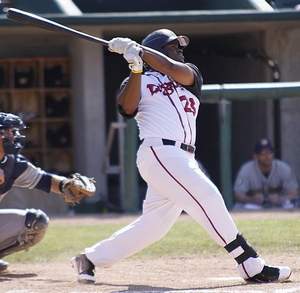 Lance Durham: Hopefully as soon as possible. That is what all of minor leaguers strive for. I am just going to take it one day at a time. Even in the offseason: with the workouts and the cage work and everything, you just have to have it on your mind and want it bad.
MLB reports: If you were not playing professional baseball, you would be ____
Lance Durham: A video game creator.
MLB reports: What do you do for fun away from the ballpark?
Lance Durham: Hanging out with friends, go to the movies and spending time with the family.
MLB reports: Which of your teammates are you closest with – any good stories?
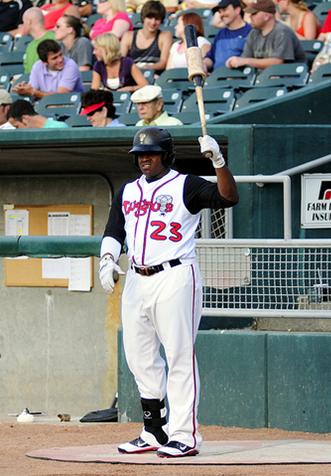 Lance Durham: This past year on the Lansing Lugnuts team, I got really close with a lot of guys. Michael Crouse, Jake Marisnick, Jack Murphy, Markus Brisker, Matt Nuzzo. The stories could go on for days. Let’s just say that they are a great group of guys and I thank God I got to play with them.
MLB reports: Your father Leon was known as “The Bull”. Do you go by the same nickname? What is the origin of the nickname and how did you adopt it?
Lance Durham: Well my dad’s nickname just stuck with me because of him. When he would bring me into the locker rooms as a kid, everyone would already call me “Little Bull” when I was like 10. So it has stuck with me even until today, so I just roll with it. Won’t be long until they just start calling me BULL!!!
MLB reports: Final thought: When fans think of the name Lance Durham, what images do you want them to associate you with?
Lance Durham: He was a student of the game. He played the game right and he played the game hard. He was also a great teammate.
Thank you again to Lance Durham for taking the time to join us today on MLB reports. We highly encourage our readers to post at the bottom of the article any questions and/or comments that you may have for Lance. As well, please follow Lance on Twitter (@LanceBullDurham)
Jonathan Hacohen is the Lead Baseball Columnist & Editor for MLB reports: You can follow Jonathan on Twitter (@JHacohen)
Please e-mail us at: MLBreports@gmail.com with any questions and feedback. You can follow us on Twitter and become a fan on Facebook . To subscribe to our website and have the daily Reports sent directly to your inbox , click here and follow the link at the top of our homepage.

Interview with Shawon Dunston Jr.: Future Cubs Superstar
Sunday November 6, 2011
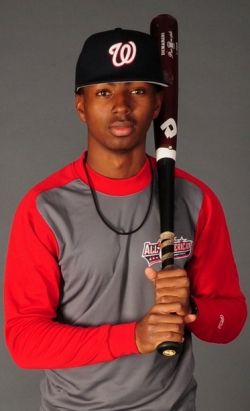
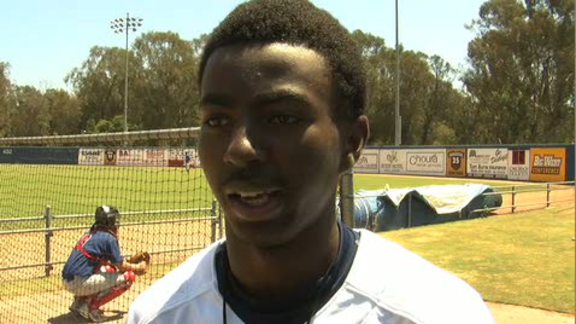
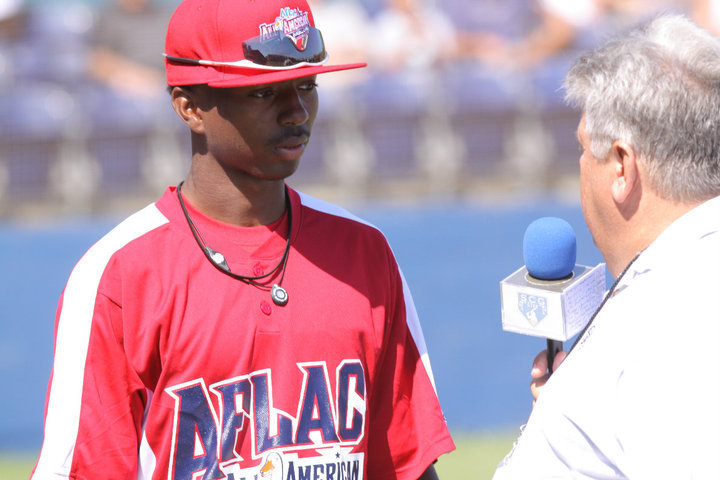
Jonathan Hacohen: We are proud to welcome to MLB reports: Shawon Dunston Jr., outfield prospect for the Chicago Cubs. Shawon was an 11th round pick for the Cubs this past year. While he was expected to go as high as the 1st round, signability issues centering on his commitment to Vanderbilt allowed him to drop to Chicago. The Cubs were able to get Dunston Jr. to sign on the dotted line before the signing deadline and just like that, Shawon Dunston Jr. was a Chicago Cub. Expected to be the team’s center fielder of the future, Chicago is happy to have yet another Dunston in its system. While Dunston Sr. played shortstop for 18 seasons, Dunston Jr. is starting his own career and legacy in professional baseball. A player with strong tools and reputation in the game, we look forward to watching Shawon Dunston Jr. patrolling the outfield of Wrigley Field in the near future.
Featured on MLB reports, I proudly present my interview with Cubs prospect and 2nd generation Major League Baseball player, Shawon Dunston Jr.:
_________________________________________________________________________________________________________
MLB reports: Who was your favorite baseball player growing up, that you most idolized and patterned your game after?
Dunston Jr.: Growing up, I wanted to be just like Ken Griffey Jr. I loved watching him play. I was also a fan of Barry Bonds.
MLB reports: Which current MLB star do you most admire and why?
Dunston Jr.: I look up to B.J. Upton. He makes everything look effortless. I want to be a Jacoby Ellsbury type player. Dexter Fowler as well has speed and pop at the CF position.
MLB reports: Reflecting on your career to-date, what are your proudest accomplishments on the baseball field?
Dunston Jr.: Playing in the Aflac All-American Baseball Classic during the summer of my junior year.
MLB reports: Did you fully expect from the start of the draft to sign with the Cubs? When was the final decision made in the process to sign with Chicago? Any disappointment with being drafted in the 11th round or did have to do more with your signability status than anything else?
 Dunston Jr.: I was actually surprised they chose me. I thought three teams were going to get me earlier; I talked to the Cubs’ area guys, but didn’t think they were going to choose me. I was going to Vanderbilt right up until the last day of the deadline. It was a tough decision, but my decision came down to the Cubs getting close to my (final dollar) number, getting into the system early and developing now (by playing everyday). On draft day I was mad and no, I don’t think that I am an 11th round type player. My bonus I got says it all (got back-end, 1st round money). My signablity hurt me and also being very committed to Vandy, where I intended to attend. But that is the past and I am ready to get going.
MLB reports: When you first found out you were drafted, what were your reactions? Did those reactions change over time?
Dunston Jr.: It was more of a relief, like: “Finally- I got drafted!” I was still upset though that I did not go higher. Over time my reactions did not change, as looking back I still expected that I should have been drafted higher. But I use my feelings as a motivator go-forward.
MLB reports: What do you consider your greatest baseball skill(s)?
Dunston Jr.: My athleticism. I am very athletic.
MLB reports: What facets of your game do you most wish to improve upon?
Dunston Jr.: All part of my game can be improved. I am just trying to be a better player overall.
MLB reports: How do strikeouts and walks figure into your game? Do you see any of these items changing over time and to what degree?
Dunston Jr.: Yes, I am going to need to take a better approach at the plate. I am confident that will happen. I am young and have time to develop.
MLB reports: Long term what position do you see yourself playing? How do you see defense as part of your overall game?
 Dunston Jr.: Center field. That is the position that I am playing now and that will be (the position) I will be playing down the road as well. I play good defense.
MLB reports: If you had to look into a crystal ball, when do you see your expected time of arrival in the big leagues and what do you think you need to do most to get there?
Dunston Jr.: I just need to work hard. Through development and time, I will get there soon. I just need some time.
MLB reports: What are your offseason plans? Have the Cubs indicated to you at what level you will likely start 2012 and at which position?
Dunston Jr.: I plan to get bigger, stronger and faster. I am excited to be getting ready for spring training and my first professional season!
MLB reports: What do you do for fun when you are not playing baseball?
Dunston Jr.: I enjoy hanging out with friends and family.
MLB reports: Have you visited Chicago often in your life? Any impressions?
Dunston Jr.: I don’t really remember much from it when my dad played there. The last time I was there was in the 2003 playoffs at the NLDS with my dad.
MLB reports: If you could send out a message to the Cubs fans, what would it be?
Dunston Jr.: I am glad to be a part of this great organization and cannot wait to be playing in Wrigley Field soon!
Thank you again to Shawon Dunston Jr. for taking the time to join us today on MLB reports. We highly encourage our readers to post at the bottom of the article any questions and/or comments that you may have for Shawon. As well, please follow Shawon on Twitter (@SDUNSTONJR)
Jonathan Hacohen is the Lead Baseball Columnist & Editor for MLB reports: You can follow Jonathan on Twitter (@JHacohen)
Please e-mail us at: MLBreports@gmail.com with any questions and feedback. You can follow us on Twitter and become a fan on Facebook . To subscribe to our website and have the daily Reports sent directly to your inbox , click here and follow the link at the top of our homepage.

Interview with Steve Karsay: Reflections on a MLB Pitching Career
Friday November 4, 2011

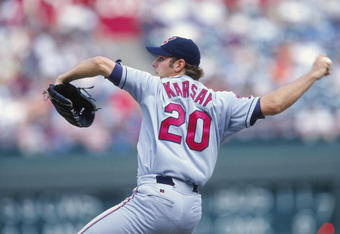
Jonathan Hacohen: While I get to interview many current MLB prospects and stars on the Reports, it is rare that I have the opportunity to talk baseball with a former great that I watched growing up. As a personal bonus to me, that chance recently came up when I was able to connect with Steve Karsay, former major league pitcher. Steve was originally drafted by the Toronto Blue Jays in the 1st round (22nd overall in the 1990 draft). After being a part of the famed 1993 trade to Oakland for hall-of-famer Rickey Henderson, Steve played 11 major league seasons for 5 different squads. Steve played his final season in 1996.
I reflected with Steve Karsay on his career, from his time with the Blue Jays organization, through to his final season. Steve was very candid in his responses and certainly did not hold back. For all the readers that grew up idolizing Steve Karsay and wondering about his future baseball plans- today you will receive your answers.
Featured on MLB reports, I proudly present my interview with former Major League pitcher, Steve Karsay:
_________________________________________________________________________________________________________
MLB reports: Welcome to MLB reports Steve. Let’s start today’s interview from the beginning. A 1st round pick in 1990 with Toronto. What was the feeling when you got the call? Did you expect to be drafted by the Jays? Thoughts/feelings at the time?
Steve Karsay: Wow! Going back a few years. That is correct- I was the 22nd pick overall in the 1990 draft by the Blue Jays. What a great time and what a great organization I was drafted by. The Blue Jays and their organization taught me so much to make me the player I was over my 16 year career. I will always be grateful to the Blue Jays organization and the coaches for the years I spent there. I did not know I was drafted until late in the afternoon for the fact that I was playing for my high school championship at Yankee stadium at the time. The feeling when I did receive the call was shock. I was not sure I was going to get drafted in the first round and had my sights set on going to LSU in the fall. But when it sunk in and realized the opportunity that I had and the feeling of shock turned to joy and excitement made the decision to sign and start my career in St. Catharines.
MLB reports: You will forever be linked to hall of famer Rickey Henderson, being traded for him in July 1993. What was your reaction when you learned of the trade? Have you ever spoken to Rickey about it?
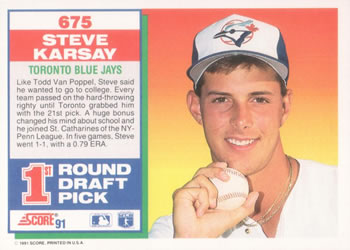 Steve Karsay: First being traded at the time for Rickey was a great honor. I was only 21 at the time in 93′ when the trade happened so learning I was traded I had a mix of feelings. I was disappointed because I wanted to reach the big leagues with the team that drafted me. But realizing that I may get my opportunity to pitch in the big leagues faster, I understood that these are the things that happen when the big club is trying to position itself to win a World Series. After the trade I ended up making my Major League debut two weeks later against the Brewers at the Oakland Coliseum. So that is what made the trade worth it. As far as talking with Rickey, we had a brief conversation when he returned to Oakland the very next year.
MLB reports: After being in the Toronto organization your whole life, what was it like joining the A’s and playing for them for three seasons?
Steve Karsay: Being with Toronto for three years and going to Oakland was an adjustment, but for me was an easy transition. I enjoyed the A’S organization very much. Working with Dave Duncan and having Tony La Russa as my first manager was great. They were both mentors and I credit them for helping me transition to pitching in the big leagues.
MLB reports: Injuries took a big toll on your career- especially your surgeries in 1995 and 1996. After undergoing Tommy John, did you think your career was finished? Give us an idea as to what the surgeries/rehabs were like and your road to continue playing baseball.
Steve Karsay: To be quite honest I wasn’t sure what to expect. I knew I had had to have Tommy John and back in 1995, it was not nearly as perfected as it is today. So I knew there was a chance that I may never play at the big league level again. The surgeries were lengthy and the rehab tedious, but I always had the drive to get healthy and pitch in the big leagues again. I was never one to give up. It was a long three years but in the end to resume my career and compete at the highest level was an accomplishment in itself.
MLB reports: Your career actually took off when you joined the Indians. Your four years in Cleveland represent some of your finest major league numbers. What was the secret of your success with the tribe?
Steve Karsay: I guess if there was any secret to my years in Cleveland, it was that I was finally healthy. I had gone through some tough years with injuries and rehab and when I finally got traded in 97′ to Cleveland, I felt like I turned the corner and it was just all coming together. In Cleveland they decided to put me in the bullpen and really got into a nice niche of what I was really capable of doing. But ultimately I would have to say that the four years in Cleveland I was as healthy as I have ever been throughout my career.
MLB reports: Aside from the occasional start, you became a full-time reliever in 1998. What was the process like to transition from starting to the pen? After coming up as a starter, how did you feel about becoming a reliever?
Steve Karsay: As a starter you have routines and you know what days you’re going to pitch and who you are going to pitch against. As a reliever you just have to be prepared every day. The transition was fairly easy for me because I had some great mentors when I did it in Cleveland. Mike Jackson, Paul Shuey, Paul Assenmacher, and a few others, so I got to learn from some guys who tough me well. I wasn’t excited at first to become a reliever but it definitely grew on me and felt after having success in the bullpen that is where I was supposed to be. It also gave me a new found respect of how hard the bullpen is.
MLB reports: You finished your career with 41 saves. Looking back, do you wish that you had more 9th inning opportunities- was the “closer” role something that you had in the back of your mind?
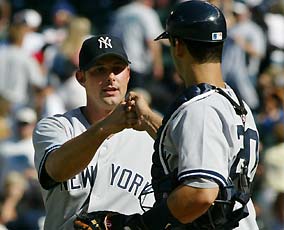
 Steve Karsay: I was very fortunate to have the opportunity to be a closer for a bit in Cleveland and fill in New York when Mariano Rivera was injured. I always had the “closer” role in my mind but was never what drove me to play. I figured opportunities would present themselves if I pitched well enough. My saying was ”How well you are pitching will determine where you pitch in the game coming out of the pen”. When I signed as a free agent, I had the opportunity to go to a couple other clubs to compete for that job but chose to go to NY to set-up. At that point, winning was more important to me than closing. That was a tough choice I had to make.
MLB reports: Your career ended in 2006, after pitching 9 games with the A’s. Why the decision to hang up the glove at that point? Any regrets?
Steve Karsay: I have absolutely no regrets about my decision to retire in 06′. At that particular point, I was still having problems with my shoulder (after having surgery on my rotator cuff in 03′). I was pitching with pain and I felt personally like I couldn’t compete at that level with an injured shoulder. It was not fun any more coming to the ballpark, and I had always told myself that if I felt that I couldn’t compete at the highest level, I wanted to walk away from the game as a player on a respectable note. After retiring I had one last shoulder surgery to repair my rotator cuff for a final time. I came to realize that I was pitching with my rotator cuff torn the whole time in 2006. So looking back, I felt the choice I made was 100% correct.
MLB reports: You pitched for 5 major league teams (A’s, Indians, Braves, Yankees and Rangers). Favorite team(s) that you played for and why?
 Steve Karsay: All of the teams hold a special place in my heart. I had great memories with all of them. I had the opportunity to meet and play with some of the best players in the history of the game over my career. I will always be grateful for the Blue Jays for drafting me and giving me the chance to start my career in professional baseball. Then the A’s for giving me my first shot in the Major leagues. The Indians is where I had my most productive years and had the chance to experience playoff baseball for the first time. Atlanta and playing for the great Bobby Cox. He is a player’s manager and a great man. Also having the opportunity to have great teammates in every spot that I played. Too long of a list to compile, but to name a few of the greats I played with: Mark McGwire, Dennis Eckersley, Ron Darling, Rickey Henderson, Jim Thome, Sandy Alomar Jr., Robbie Alomar, Omar Vizquel, Greg Maddux, Tom Glavine, John Smoltz, Chipper Jones, Derek Jeter, Roger Clemens, Andy Pettitte, Bernie Williams, Mike Mussina. I know I am probably missing many other great ones I played with. Overall, the experiences were priceless. It was the most exciting time in my life with the exception of the birth of my son Kingston.
MLB reports: Do you still keep in touch with many of your ex-teammates- any ones in particular?
Steve Karsay: I don’t keep in touch per say with them, but whenever I get the opportunity to see them when they come into town I always like to stop by the ballpark and say hello.
MLB reports: Growing up so close to Shea Stadium, it must have been a dream come true to play in New York. Were you a Mets fan growing up- did you consider playing for them at one point?
 Steve Karsay: Growing up in NY and so close to Shea was great. I was a baseball fan growing up. I liked players more than I did teams. I watched both the Yankees and the Mets. I went to more Mets games as a kid because it was just a short train ride away. I never had the opportunity to play for the Mets over my career, but playing for the Yankees and the tradition of the Yankees was definitely a highlight of my playing days.
MLB reports: Since you left the game, what has been life been like for Steve Karsay? What are you up to these days Steve?
Steve Karsay: Life has been wonderful since retiring in 2006. After being able to have a 16 year career in baseball I wanted to step away from the game for a short time to pursue a few things that I was not able to do while I was playing- like travel and explore different countries. I also became involved in my friend’s company in Aerospace Manufacturing which has been exciting and to say the least interesting. And last but not least, the birth of my son which has been more work than all of the above. With that being said, baseball is my life and I am pursing opportunities to get back in the game in some capacity. The time off was great, but I want to be able to pass along the knowledge of baseball that I learned while I was playing and help young kids fulfill their dreams of hopefully getting to the big leagues.
MLB reports: If you could give one piece of advice to a young baseball player trying to make it to the show, what would it be?
Steve Karsay: My advice would be to work hard, be consistent, and do not take anything for granted because you never know when it will come to an end.
MLB reports: Will we be seeing you in the future in the major leagues in another capacity, perhaps a broadcaster or coach/manager?
Steve Karsay: I hope so. I am pursuing some things as we speak and would love to get back in the game in any capacity, either as a broadcaster, front office or on the field coach. Baseball is my passion and it what I love.
MLB reports: Final question Steve: everyone at the end of the day wants to leave a mark on the game. What do you most want to be remembered for as a professional baseball player?
Steve Karsay: Looking back I would want to be known for every time I stepped between the white lines I gave everything I had and I did not take anything for granted. I wanted to be the best player I could be when I stepped out on the mound. The fire for competition was always burning when I played. If I can be remembered for that, I would be very proud.
MLB reports: Thank you very much for taking your time out of your busy schedule so we can have you with us. Much appreciated!
Thank you again to Steve Karsay for taking the time to join us today on MLB reports. We highly encourage our readers to post at the bottom of the article any questions and/or comments that you may have for Steve. As well, please follow Steve on Twitter (@Steve_Karsay)
Jonathan Hacohen is the Lead Baseball Columnist & Editor for MLB reports: You can follow Jonathan on Twitter (@JHacohen)
Please e-mail us at: MLBreports@gmail.com with any questions and feedback. You can follow us on Twitter and become a fan on Facebook . To subscribe to our website and have the daily Reports sent directly to your inbox , click here and follow the link at the top of our homepage.

Interview with Robbie Erlin: San Diego Padres Prospect
Monday October 31, 2011
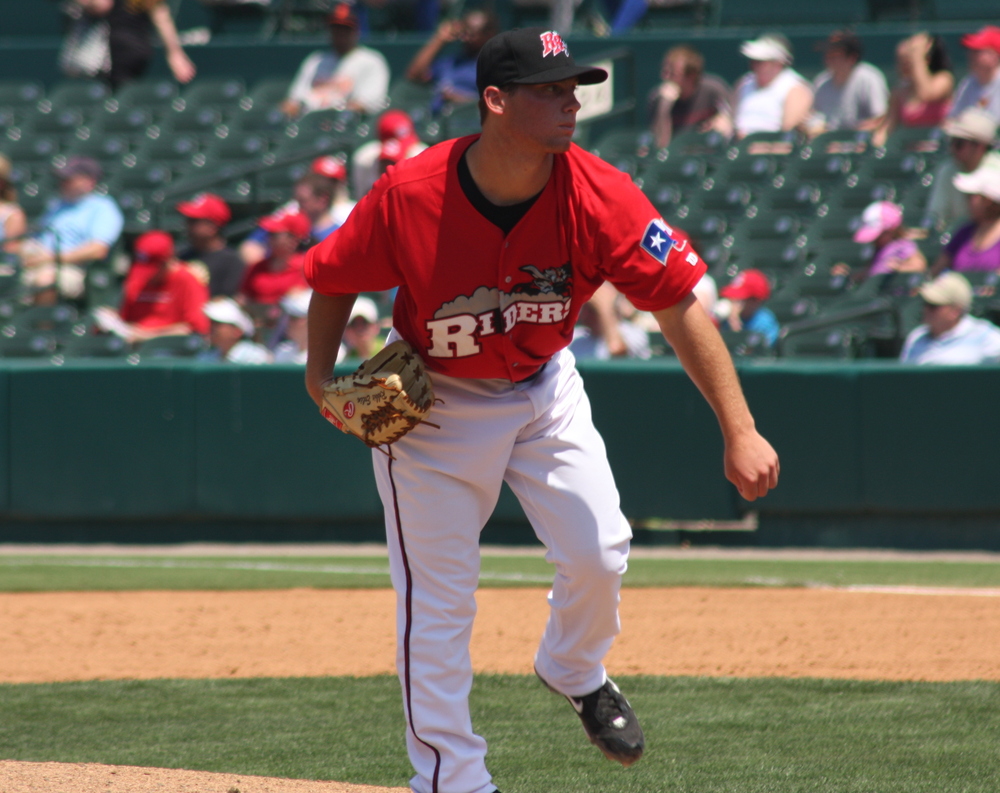
Jeff P (Guest Writer – MLB reports): I had the pleasure to recently interview one of the top prospects in the game, Robert Erlin of the San Diego Padres. The 21-year-old Erlin was drafted by the Texas Rangers in the 3rd round of the 2009 draft. After posting incredible numbers in his brief time in the Rangers organization, Erlin was traded in July 2011, with Joe Wieland for reliever Mike Adams. While Adams was a solid addition to the Rangers bullpen on the road to the World Series, Erlin exploded after the trade. In 6 starts with San Antonio in AA, Erlin had a 1.38 ERA, 1.154 WHIP and 31/4 SO/BB. On the fast track with the Padres, Erlin has a good chance of making his major league debut as early as 2012. Featured on MLB reports, I proudly present my interview with Padres Prospect, Robbie Erlin:
_________________________________________________________________________________________________________
MLB reports: Hey, Robbie. First of all, I want to thank you for being with us today, it really is an honor to have you with us. I’m sure you have a busy schedule so, let’s get this started. First off:
MLB reports: You have been outstanding to late, and even became a nominee of MLB.com‘s top 50 prospects, who can you thank for your success?
 Robbie Erlin: I would thank my dad who taught me how to pitch at a young age, Dave Salter, my pitching coach since I was 13 years old, all the coaches in the Texas Rangers organization who I have worked with during my first couple years of pro ball, and the coaches on the San Antonio Missions who I got to work with for a couple of months this season.
MLB reports: Was it hard to adjust from the Rangers to the Padres?
Robbie Erlin: It wasn’t too hard to make the adjustment. The Padres and Missions staff let me stick with my routines and throwing program and the players were very helpful with any questions that I had.
MLB reports: What do you think is unique about the San Diego Padres organization?
Robbie Erlin: The amount of young talent that they have in both the minor leagues and at the major league level.
MLB reports: What are your daily rituals, and hobbies off the field?
Robbie Erlin: I watch the TV show “Las Vegas” everyday before I go to the field. In the offseason I enjoy spending time with my family and visiting my friends who are in college.
MLB reports: You have been dominating lately. What changes have you made in order to succeed?
Robbie Erlin: I have really tried to concentrate on hitters’ tendencies and gaining information about offenses so I can apply it in my outings. Also, I have made small adjustments in my delivery so it looks the same on every pitch.
MLB reports: What were the reactions on you getting drafted, and the after party?
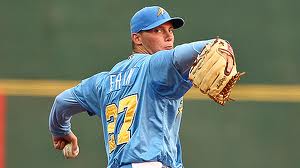 Robbie Erlin: My family, friends, and I were very excited about getting drafted. I wanted to play baseball after high school and the Rangers provided me with the opportunity.
MLB reports: Out of your fastball, curveball, and change-up, what would you say is your strongest pitch?
Robbie Erlin: Fastball.
MLB reports: Is it safe to say we can see you in MLB in late 2012, or 2013?
Robbie Erlin: That is a decision for the Padres to make. I am going to focus on pitching and improving as much as I can.
MLB reports: Who do you look up to in the MLB?
Robbie Erlin: There is not one specific player. I watch all of them and try to learn from how they play the game.
MLB reports: What kind of music can one find on your iPod?
Robbie Erlin: Country, Classic Rock, Pop, and Rap.
MLB reports: What’s your favorite sport besides baseball?
Robbie Erlin: Football.
MLB reports: Who was the hardest batter you’ve faced in your professional career?
Robbie Erlin: Cody Hinze from Houston has always been a tough out for me.
MLB reports: Let’s end it off here: If you weren’t a baseball player, where would you see yourself today?
Robbie Erlin: I would be in college working towards a degree.
MLB reports: Thank you very much for taking your time out of your busy schedule so we can have you with us. Much appreciated!
Robbie Erlin: No problem. Thank you very much for the interview!
Thank you again to Robbie Erlin for taking the time to join us today on MLB reports. We highly encourage our readers to post at the bottom of the article any questions and/or comments that you may have for Robbie. As well, please follow Robbie on Twitter (@RobbieErlin11)
***Today’s feature was prepared by Jeff P, Guest Writer to MLB reports. We highly encourage you to leave your comments and feedback at the bottom of the page and share in the discussion with our readers. You can also follow Jeff on Twitter.***
Please e-mail us at: MLBreports@gmail.com with any questions and feedback. You can follow us on Twitter and become a fan on Facebook . To subscribe to our website and have the daily Reports sent directly to your inbox , click here and follow the link at the top of our homepage.

Interview with Christian Friedrich: Colorado Rockies Prospect
Friday October 14, 2011

Jeff P (Guest Writer – MLB reports): Recently I had the honor of interviewing Christian Friedrich, top MLB pitching prospect. Speaking to Friedrich, I had the sense that he has the same key goal as many other baseball players: working hard to achieve his dream. Friedrich is a great guy and it was a pleasure interviewing him.
Firstly, I would like to relay some information on Chris, courtesy of Wikipedia:
“Christ Louis Friedrich (July 8, 1987 in Evanston, Illinois) is a left-handed starting pitcher in the Colorado Rockies organization. He currently plays for the Class AA Tulsa Drillers. He was drafted in the first round (25th overall) in the 2008 Amateur Draft out of Eastern Kentucky University.”
Considering that he was a prestigious first round selection, Chris is one of the most interesting guys you will ever meet in baseball. Chris has tremendous talent, to go along with his strong reputation in the game. Featured on MLB reports, I proudly present my interview with Rockies Prospect, Chris Friedrich:
_________________________________________________________________________________________________________
MLB reports: Welcome to MLB reports, Chris. I am starting you off with a tough question: you have struggled throughout your time in double-A ball. What do you feel has been the most difficult part of moving from A+ to AA?
 Friedrich: The hardest part about AA is being consistent. At the lower levels you can still get by on some of your bad days. In AA you have to be in it every day. The days you’re not pitching are just as important as the 5th day. Your routine has to be perfect and the same, your mental and physical preparation can’t skip a beat. All those things sum up in my mind to confidence. If you forget a certain lift, change your running routine, mental prep, or even your warm up before the game, it leaves doubt in your mind that doesn’t need to be lingering with you when you toe the rubber.
MLB reports: A few months ago, did you worry about the trade speculation around the clubhouse that you might be traded?
Friedrich: When the trade deadline comes around every year, you can’t help to listen in on what some of the guys or reporters are saying. For the most part though it’s something I can’t control and would deal with it if it happened. In all honesty though I didn’t and don’t think there’s a whole lot of teams looking for a guy like me after the season I put up and no one is more disappointed with that than myself. I had a good three months but couldn’t put it all together. I understand what I have to do, and that’s why this offseason is so important. There was a bit of a smile when that time passes because I love being a Rockie.
MLB reports: Daily rituals and hobbies, outside of the clubhouse?
Friedrich: For daily rituals as of now it’s a wonderful routine. Wake up and breakfast might be my favorite part of the day. Two eggs, two sausages, two toasts, and my beloved coffee from the Keurig. I’ll get my workout done in the mornings and then go for a swim. After that I usually go on the course or the range. I’m really roughing it (ha ha). It’s nice to be in one place for and extended period of time and develop the consistent routines. In the evening my other favorite hobby as many around me know is video games. I turned a closet into a video gamer’s paradise. My favorite part about video games is playing competitive games online with friends. It allows me to connect with buddies from back home, college teammates, guys I’ve played against, and even guys in our organization. It’s a lot easier than just sitting talking on the phone. I get to catch up with them and involve teamwork. I’m really excited for Modern Warfare 3 to come out.
MLB reports: What kind of music can one find on your iPod?
Friedrich: I have all genres of music on my apple products. My favorite would definitely be rock and roll. Led Zeppelin, The Doors, Steely Dan, Doobie Brothers, Grand Funk Railroad, and a lot of Fall out Boy. Home town band I really like. No Beatles!
MLB reports: You have suffered from injuries during your career. What effects did your health have on your baseball activities?
Friedrich: Injuries have plagued me through my career but I’m thankful they weren’t and major ones. You learn to deal with them and do everything you can to prevent them. When they first happen it’s hard to accept and deal with them. It’s a great way to train yourself mentally but that’s my only positive. All you can do is work your behind off to get back out there and help out the club. The past three years I’ve dealt with some tendonitis in my elbow. It’s a nagging injury that doesn’t sit you down always but prohibits you from keep up your routine. For example it doesn’t bother you much the day you pitch because you are usually amped up. But on those important days in-between, it makes it harder to work on the things you normally do. Certain lifts bother it, and most of all, certain pitches. I noticed this year my breaking pitches during that time weren’t as sharp and I was getting ahead, but not putting guys away. This comes from not practicing with them as much through your five-day routine. Now I have time to strengthen my body and smaller muscle groups to make sure I can prevent these (injuries) as much as possible.
MLB reports: Do you think we will see you in the big leagues sometime next year?
Friedrich: I’m hoping to shock some people come spring training and reach the expectations I’ve set for myself. I’m doing everything I can to get there but that’s not under my control. But I will try to make the decision very easy for them.
MLB reports: What do you think is unique about the Rockies organization?
Friedrich: The Rockies organization is unlike any other. Our staff is made up of the best around with great knowledge and experience. I feel like we’re taken in, like it’s a family. This is a very classy organization the prides itself on homegrown talent. I couldn’t be happier with where I’m at. From my experience, players who have left our organization and players that come to it, say it’s the best they’ve been a part of.
MLB reports: What was the worst moment of your baseball career thus far?
Friedrich: The worst moment of my career would probably be the collapse at the end of my season this year. Last year our big league club lost a lot of starting pitching to injuries and Ubaldo Jimenez to the trade. It would have been a prime opportunity for me to shine and I went in the opposite direction. I’m looking to fix that.
MLB reports: What are you planning to work on in the offseason to improve your pitching status?
 Friedrich: This offseason is again all about my routine and keeping good habits. I took about a week off and got straight to work. I’m using dry work everyday to solidify my mechanics so come February it’s an after thought. I’m incorporating swimming into my workouts to strengthen my shoulders and lats. I have dropped the bad weight and adding the good weight. My eating routine is helping with my energy and muscle-building. I am currently living in Florida by myself, so I don’t have distractions and have loved every minute of it. I started just a month ago and can’t wait come February.
MLB reports: You were drafted 25th, in the 2008 draft. What was the after party and the phone call like?
Friedrich: The draft day was a day I’ll never forget. I was blessed to have friends and family there to celebrate with me. It was hard to think while talking to reporters and answer questions, when I was still trying to wrap my head around it!
MLB reports: Who do you look up to in the big leagues?
Friedrich: I look up to a lot of our own players even at some of our levels. What I’m most impressed with, with majority of the big leaguers I have been around is their work ethic. Guys like Tulo, Helton, Blackmon, Belisle and EY all are workhorses in their own way. And there isn’t one way they all go about doing things. They have all learned for themselves what works best for them. They each have become machines of routine and excellence. My favorite pitcher by far though, like many others is Cliff Lee. He masters the strike zone and his command for all of his pitches is superb. My favorite thing is to watch his sequences and see how he sets up all his opponents. You watch highlights and can’t believe guys miss a pitch, but it’s how he has set them up.
MLB reports: I’ll end off here, if you were not currently a baseball player, what do you think you would be doing right now?
Friedrich: If I wasn’t in baseball? Tough one. If I never played in college, I would have like to go into dentistry or design. Since I am in baseball, I can’t get out. I love it. I would stay in the game whether it would be coaching or scouting.
MLB reports: Thank you very much for taking your time out of your busy schedule so we can have you with us. Much appreciated!
Thank you again to Chris Friedrich for taking the time to join us today on MLB reports. We highly encourage our readers to post at the bottom of the article any questions and/or comments that you may have for Chris. As well, please follow Chris on Twitter (@CFRIED12)

***Today’s feature was prepared by Jeff P, Guest Writer to MLB reports. We highly encourage you to leave your comments and feedback at the bottom of the page and share in the discussion with our readers. You can also follow Jeff on Twitter.***
Please e-mail us at: MLBreports@gmail.com with any questions and feedback. You can follow us on Twitter and become a fan on Facebook . To subscribe to our website and have the daily Reports sent directly to your inbox , click here and follow the link at the top of our homepage.

Interview with Doug Booth: Author of “The Fastest 30 Ballgames”
Sunday October 9, 2011

Jonathan Hacohen (Lead Baseball Columnist – MLB reports): I recently had the pleasure to share my book review of “The Fastest 30 Ballgames” on MLB reports. Following my review, I had a chance to correspond with one of the authors of the book, Doug Booth. We discussed the book, the life and times of Doug Booth, ballpark chasing and much more. Sit back and enjoy my interview with a man who epitomes baseball fandom- Author Doug Booth, in discussing his recently published book, “The Fastest 30 Ballgames: A Ballpark Chasers World Record Story”.
______________________________________________________________________________________________
MLB reports: It is a pleasure to have you on the Reports Doug. Thank you for joining us today. Tell us a little more about who is Doug Booth. How did you get involved with the great game of baseball?
Booth: I am a 35-year-old courier from Vancouver B.C Canada. When I was 18 years old I had a chance to play NCAA Baseball Division 1 for Liberty University, but had suffered 7 concussions and multiple knee injuries from playing various sports-so I retired from baseball prematurely. While I still followed MLB on TV and radio for the next decade, a little piece of me lost the zest for the game because I couldn’t play it anymore. To this day, I still can’t even play the game as the symptoms from my previous concussions come back with too much exertion. In 2005, I attended my first MLB Park in the USA at Safeco Field in Seattle. I had only been to Olympic Stadium in Montreal-and The Rogers Center previously as a teenager, so it was nice to find my love for the game re-invigorated. ‘It all escalated into the extreme chaser I am now.’
MLB reports: I very much enjoyed reading “The Fastest 30”, as our readers could tell from my recent book review. Considering the work and effort involved, how does it feel seeing the book as a final product- published book?
Booth: I have to tell you, there were moments where this whole book concept really frustrated me to no end. It was a lot harder to write this baseball book than it was to write my first two books that I have in circulation. It was hard trying to write a novel based on a true story. Having said that, I am very happy that I completed this journey and have all of the memories of the trip chronicled and categorized, but most importantly that there are pictures of journey with my family and friends that will be forever cemented in literature.
MLB reports: The first part of “The Fastest 30” chronicles your two attempts to set the Guinness World Record for attending all 30 MLB parks in the shortest amount of time. Why this record Doug? Why did you want to reach this particular goal so badly?
 Booth: The trip originally was going to be 48 states and 30 ballparks in 45 days, but once I had enough money stored for the trip I heard my inspirational ‘hero’ Jim Maclaren had been sidelined with a devastating injury-and his foundation was raising money for him. For those that have not read the book. I heard Jim interview on the ‘Jim Rome Show’ back in 2004. Jim was a quadripeligic motivational speaker who inspired others by his ‘choose life’ motto. It took Jim hours each day to do menial tasks, but he was at a place in his life where he was happiest because he made peace with himself. Each day he would defy the odds of doctors testing his own physical and mental fortitude. But his spirits had been dampened by an accident, and I wanted to do something. I investigated about the world record for this given category and found out the record at that time was 29 days. With some quick re-tooling, and armed with a drive to raise money for the Head North Foundation, (A charity championing the cause for spinal research) I was able to put a streak chase together that would use this charity as my motivation to break the World Record. Much like Jim, I would have to tests the limits of my physical and mental capabilities to pull this off.
MLB reports: After your first unsuccessful attempt at the record in 2008, was there a thought to taking a break or perhaps giving up? What motivated you try again so quickly- no burn out?
 Booth: I chased the record for 41 days in the summer of 2008. I used up every ounce of my physical being, and tapped every resource of the money I had saved up in order to break the record. I had put forth a 30-29 record attempt-only to find out the record had been newly set that summer by a man Josh Robbins. The new streak record was 30 games in 26 days. I did not have to submit the record to Guinness because I was not even tied as the record holder anymore. It was all because I had a 3 day break for the All-Star Break that was unavoidable 2 weeks into my trip. I had booked off the time from work, and had bought countless plane fares, baseball tickets and hotels stays-so I was stuck with the 3 day break. That 3 day penalty, plus another day penalty I had received when I met my mother in Toronto, (instead of carrying onto Cleveland from Chicago for a game) when a plane was delayed to Toronto-thus killing my chance for to make it to the Rogers Center for first pitch. If you took those games off-I could have put a 30-25 streak submission up in the 1st year. I did complete 5 doubleheaders in the 29 day trip. It ate at me for 2 months until the schedule for 2009 came out. I saw a perfect schedule looming if it all worked out. When I put together the finances by April of 2009, I knew I had a shot at breaking the record. When an early season rainout added a 7th doubleheader attempt at Yankees Stadium for a 30-23 attempt, I knew I had an opportunity at history.
MLB reports: Please describe your feelings after you set your goal. Did you achieve fulfillment? Any other emotions kick-in post-record?
Booth: In contrast to 2008, when I felt empty and had a downward spiral for about 2-3 months, I was elated beyond control for setting the record on Aug.14/2009 at Comerica Park in Detroit. It was a 1-0 walk off homer by the hometown Tigers in the bottom of the ninth. In somewhat fitting circumstances to the journey’s end, fireworks were shot off at the park for what seemed like an eternity. I had a 10 hour drive back to my brother’s house in New Jersey the next day, during this time I contemplated what had taken place. For me, and this is what people could not understand because they could not fathom a trip of this magnitude-was that this was not the hardest part of the journey. It was the 308 days I had worked in a row in order to secure the money I needed, the rigorous schedule of 90 hour work weeks in which I battled the physical and mental fatigue-and all the times it looked bleak moving towards this , that was the hard part. Once I was out at the ballparks, I was in my world.
MLB reports: Looking back now, if you could do anything different from the second world record-setting journey, what would it be?
Booth: Not much, although I will always wonder what would have happened in Pittsburgh had I received a fluid sedan pick-up? I would have liked to have had the opportunity to make that 5:15 PM flight from the Pittsburgh Airport, leaving downtown at about 3:40 PM instead of 4:15 PM. I will tell you from that point on all of my transportation drivers were probably sick of me going over the game-plans of the pick-up/drop-off strategies.
MLB reports: The second part of the book is the Ballpark Chasers guide to all 30 MLB parks, with ratings. From your own experiences, what was your top five favorite MLB parks and why?
 Booth: My top 5 parks in order are: 1. AT&T Park-because it is a beautiful park in the best city, and has the best food, climate and value out of all of the parks; 2. Yankee Stadium-I am a Yankees fan and nothing beats a game in the ‘Bronx’ with the fans. The steak sandwiches and Nathan’s hotdogs do a considerable amount for the park-while New York is also an awesome city to visit; 3. Wrigley Field-It is the best place to watch a game for just the game period. The Ivy, the scoreboard and the history and a little known fact, I spent more time there during the streaks than anywhere else; 4. Fenway Park-Even as a Yanks fan you have to marvel at the history of this Park. ‘The Green Monster’ is the best iconic visual of a Park anywhere in the majors; and 5. Busch Stadium-I enjoy the backdrop of the ‘Arch,’ the baseball fans in St. Louis are the classiest in the majors-and it was the only field I was interviewed on.
MLB reports: To let readers know, you had two other authors assist you with “The Fastest 30”. Why these two particular individuals? How did they get involved in the project?
Booth: My co-authors (Craig Landgren and Kenneth Lee) and I met online at http://www.ballparkchasers.com/ after the 1st streak chase in 2008. Over the course of the next year I would make my way onto the ballpark chaser scene in writing blogs, being involved in major discussions and talking about baseball. At first everyone did not know what to think of me because they had all followed Josh Robbins’30-26 trip. I had joined way after Josh at the site. Soon it would be that I gained some respect from Craig and Ken. Like me, Ken Lee has been to all 30 ballparks-and was most active with the other members. I asked him to help me chronicle my streak by writing blogs-and help post pictures/verify that I was legitimately at all of the parks for evidence reasons. We hit it off right away. It was nice to have a friend keep you motivated on this kind of record. When I decided to write the book I asked for Ken’s write-ups of the 2009 streak to be part of the novel. Craig Landgren is the founder of Ballpark Chasers. He has spent much time and devotion plying his craft of being a website master. The kind of information on all of the 30 parks come directly from all of the diligent work Craig has done in interacting with all of the members-and his own personal research. I knew the novel would be too short with just my streak attempts, and since I never spend too much time in one particular city, it was only natural that we enter this book as a partnership. I was able to add some of my own expertise to each ‘ballpark chaser guide’, so it made the work so much more rewarding. If you added all of our write-ups of expertise it made for a ‘super’ guide.
MLB reports: For readers that starting their own baseball trips, what advice would you give in “how to become a Ballpark Chaser?”
 Booth: The first thing I recommend any potential chaser to do is sign up at www.ballparkchasers.com , we have some of the best traveling experts in North America offering free advice and information in a friendly manner. Ballpark Chasers also had a Facebook Group to sign up for. Also buy my book. I hope that is not too direct here, but honestly this book represents all of its members and people that have contributed to these guides via Thousands of games attended. Other than that, always budget $250-350 per road game, book your plane fares in advance, sign up for all of the MLB’ teams newsletters-that automatically send out ticket deals, learn your rewards programs for all of your car rentals, hotels and other travel partners. In addition to this, have a full schedule itinerary 24/7/168 time planner set out for your trip. Have backup plans for each city when it comes to weather, travel delays and fatigue. Doing a little bit of research goes a long way.
MLB reports: Doug, if you could do this all over again: would you? Was achieving the World Record worth the time, money, blood, sweat the tears that you invested in your journey?
Booth: Absolutely it was worth it. There is not a day that goes by when I don’t thank the game of baseball for molding me as a man in this journey-and also for the newly found friends I found. Baseball is truly the game that defines ‘pastime.’ I can’t think of another sport that can unify generations of families to be at the same place and same time. It is ageless and timeless. I have seen infant babies to a 100-year-old men and women at the game. Each of one of them at the game represents something different, but they all come for the experience. This journey has challenged me to rise up to the occasion and fight for what I believe in. I have a focus like I have never had ever before in my life.
MLB reports: What does the future hold for Doug Booth? Will we see any follow-ups to “The Fastest 30” and what are your goals professionally in the world of baseball?
Booth: I am putting together another ‘ultimate road concept’ in 2012-that will make my other baseball journeys seem like a kindergarten class for longevity. I implore anybody to follow my future journeys at my website www.fastestthirtyballgames.com. I also plan on asking MLB for a job, in firing up people in some kind of motivational capacity. I will be attending Broadcasting School in the near future and I will always continue to write about the game of baseball in some manner. My life as a ‘ballpark chaser’ has just started!
**The photographs in today’s feature are courtesy of Douglas ‘Chuck’ Booth**
*** Thank you to Doug Booth for joining us today on MLB reports. To learn more about “The Fastest 30 Ballgames” and Doug Booth, you can follow Doug on Twitter (@ChuckBooth3024) and click here for Doug’s website, fastestthirtyballgames.com***
Please e-mail us at: MLBreports@gmail.com with any questions and feedback. You can follow us on Twitter and become a fan on Facebook . To subscribe to our website and have the daily Reports sent directly to your inbox , click here and follow the link at the top of our homepage.

Johnny Monell Interview: San Francisco Giants Catching Prospect
Thursday October 6, 2011
Jonathan Hacohen (Lead Baseball Columnist – MLB reports): We are proud today to feature on MLB reports: Johnny Monell, catching prospect for the San Francisco Giants. The 25-year old Monell has the distinction of being drafted on three separate occasions: by the Giants in the 27th round in 2005; Mets in the 49th round in 2006; and again by the Giants, in the 30th round of 2007. Johnny from the Bronx- as I like to call him, finished off the 2011 campaign playing for Richmond in AA. In his five professional seasons, Monell has a .349 OBP and .447 SLG, good for a .796 OPS. Considered strong with the bat as well as the glove, Monell’s future looks bright as he works towards joining the big club soon. With his season coming to an end, I had the opportunity to catch up with Johnny Monell and talk some baseball. Here is our interview with Johnny Monell:
MLB reports: Welcome to the Reports Johnny. Thank you for taking the time out of your schedule for us today. Let’s start with some background on you: Who was your favorite baseball player growing up?
Johnny Monell: My favorite baseball players growing up would have to be Ivan Rodriguez (Pudge) and Ken Griffey Jr.
MLB reports: I would have to say that 90% of players we have interviewed all selected Griffey. Popular choice! Looking at active rosters, which current MLB star do you most admire and why?
Johnny Monell: Derek Jeter by far is my favorite player- just because of the way he carries himself on and off the baseball field!! He has accomplished so much in that Yankee uniform…He is just great!
MLB reports: Reflecting on your career to-date, what are your proudest accomplishments on the baseball field?
Johnny Monell: I would have to say in 2010, I was invited to major league camp. Just being in camp was an unbelievable experience. I learned so much that year. That year, I actually went on and played for San Jose and ended up having a very good year… You watch how these experienced major leaguers go about their business and how to get ready for a season. We ended winning a championship and the Giants won the World Series at the same time, which is pretty awesome in itself!!
MLB reports: What were your goals going into the 2011 season?
Johnny Monell: Goals coming into this season were to play hard and just be ready to play everyday!! Being in Double “A” for the first time, you realize a lot and see the best of the best! There are many guys you come across that are ready to make that jump to the majors. I’m happy with where I’m at and just ready to build on it every year to get where I wanna be!
MLB reports: When you first found out you were drafted, what were your reactions? Did those reactions change over time? What was the process like being drafted originally by the Giants in 2005 and Mets in 2006 and not signing with either team? What made you decide to finally sign with the Giants in 2007?
 Johnny Monell: The story of how I found out that I was drafted was pretty funny! I was in a McDonald’s with some friends from high school and my college coach from Seminole Community College calls me saying “congratulations you’ve been selected by the SF Giants!” I was definitely excited by the call. I called my family to give them the news. Not too many kids from the Bronx, let alone the inner city, get an opportunity like this. So it was a big deal for myself, as well my family. Reactions kind of changed with time to make a decision- because I wanted to sign! But I knew in my heart that I wasn’t ready. I was fortunate to have my dad on my side, who played pro ball over the course of 17 years, with the Mets especially. Part of me did want to sign with the Mets based on that connection. But at the end of the day, I knew I wasn’t ready and getting advice from my dad helped me to make my decision. After my second year of Jr college, I knew that I was ready to play. As a result, I am now where I belong.
MLB reports: What do you consider your greatest baseball skill(s)?
Johnny Monell: I think I bring a lot to the table. Whether it’s behind the plate or hitting! I’m a left-handed hitting catcher. I think that is one of my main traits. There are not to many players out there that can hit and play this position.
MLB reports: What facets of your game do you most wish to improve upon?
Johnny Monell: At this point of my career, I think I would have to say being consistent and continue to get better. I work every season towards retaining all of my experiences of being a catcher in the minors. I want to take those experiences with me hopefully to the major league level.
MLB reports: How do strikeouts and walks figure into your game? Do you see any of these items changing over time and to what degree?
Johnny Monell: I think they play a huge part! I always strive to being able to see a lot of pitches in the course of every at-bat. This also shows the maturity of a hitter being able to stay back and hit the pitch you want to hit! Walks also can help the batting average. Big time!! This year I wanted to cut down on strikeouts. I did just that by laying off the pitchers’ pitches. I also found that this helps when you come up to bat with runners in scoring position.
MLB reports: Long term what position do you see yourself playing?
Johnny Monell: I see myself behind the plate! I just feel that with every year that goes by, I keep getting better behind the plate. It’s just a matter of putting it all together and going out there and gaining that experience.
MLB reports: If you had to look into a crystal ball, when do you see your expected time of arrival in the big leagues?
Johnny Monell: That is out of my control. I wish it was now, but all I can control is how I play on the field. Knowing the type of player I am, if I keep going about my business as I always have- hopefully one day I can get an opportunity. Someday, God willing of course!
MLB reports: Has pro ball been everything you expected it to be thus far?
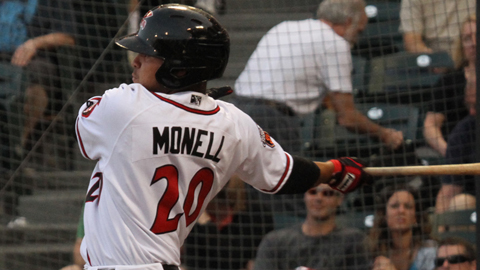 Johnny Monell: Pro ball has been an amazing experience! By being with the Giants, I have been able to meet many legends of the game of baseball, such as Willie Mays, Willie McCovey and Orlando Cepeda. I was just grateful to have the opportunity to be in their presence. Words can’t express how much that means to me. Also, it has been incredible to have roving coaches that have so many years of major league experience! I think we are spoiled with the amount of knowledge that is given to us on a daily basis.
MLB reports: What do you do for fun when you are not playing baseball?
Johnny Monell: For fun, I usually like to hang out with friends, family and teammates. I would say that I am a big movie guy during the season. Also I was fortunate enough to play on the east coast this year, so I was able to spend time with many of my family members. Being able to see them throughout the season was something that I cherished greatly. Being able to play in front of family and friends was a nice treat! I would say that I am a good teammate, because I try to hang out with everyone. Team chemistry is a definite priority for me. This is the only organization that I have ever been with. Coming up with the same guys, I would say that our relationship only gets stronger. Throughout each season and especially the last couple of years.
MLB reports: As a catcher in the Giants organization, what was your reaction to the Buster Posey injury?
Johnny Monell: The Buster Posey injury was devastating.
MLB reports: Have your visited San Francisco the city yet? How have you found the city thus far?
Johnny Monell: After playing in San Jose last year, we had a few opportunities to visit San Francisco. I visited as much as I could. The city is great. Food is awesome on the wharf. Visited Alcatraz and took a lot of pictures. Definitely a city I could live in!
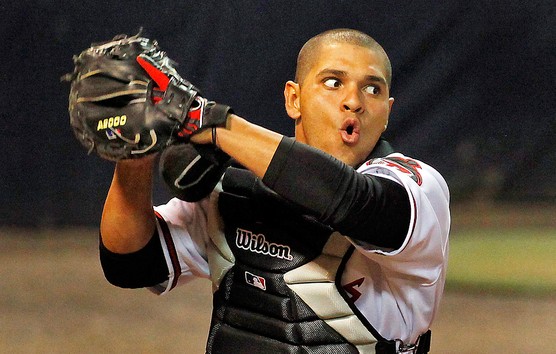
Thank you again to Johnny Monell for taking the time to join us today on MLB reports. We highly encourage our readers to post at the bottom of the article any questions and/or comments that you may have for Johnny. As well, please feel free to contact Johnny directly by Twitter (@JMoE220). He is very active on social media and welcomes your feedback!
Please e-mail us at: MLBreports@gmail.com with any questions and feedback. You can follow us on Twitter and become a fan on Facebook . To subscribe to our website and have the daily Reports sent directly to your inbox , click here and follow the link at the top of our homepage.
Interview with Deck McGuire: Toronto Blue Jays Prospect and 2010 1st Round Pick
Wednesday September 28, 2011
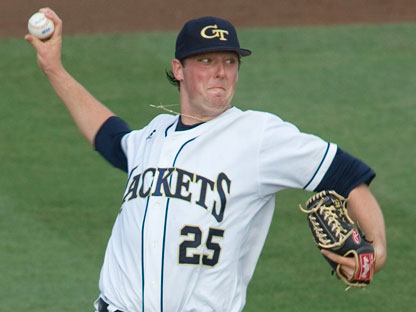
Jeff P (Guest Writer – MLB reports): Recently I had the honor to interview Deck McGuire, top MLB pitching prospect. Speaking to McGuire, I had the sense that he has the same goal as many other baseball players: working to prove that he the real deal. McGuire is a great guy and it was a pleasure interviewing him.
Firstly, I would like to relay some information on Deck, courtesy of Wikipedia:
“William Deck McGuire (born June 23, 1989 in Greensboro, North Carolina) is a professional baseball pitcher currently in the Toronto Blue Jays organization. McGuire who spent three years at Georgia Tech was drafted by the Toronto Blue Jays in the first round of the 2010 MLB Draft and is currently assigned to the Blue Jays’ Double-A affiliate, the New Hampshire Fisher Cats.”
Considering that he was a first round selection, Deck is one of the nicest guys you will ever meet in baseball. Plus he has one of the best baseball names in the game. Featured on MLB reports, I proudly present my interview with Deck McGuire:
Jeff P: Hey, Deck. First of all, I want to thank you for being with us today, it really is an honor to have you with us. I’m sure you have a busy schedule so, let’s get this started. First off, what was your reactions to being drafted, your thoughts, and the party post-phone call?
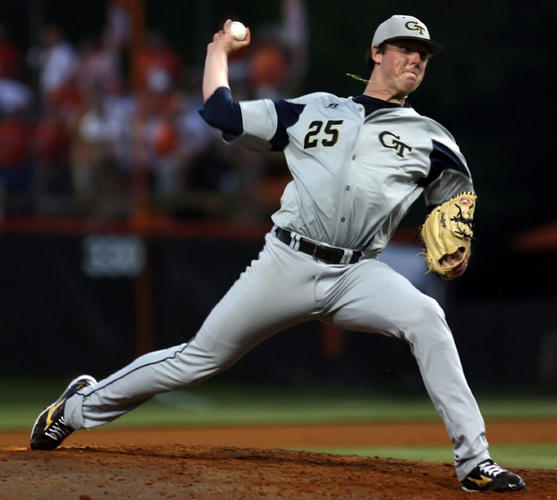 Deck McGuire: I actually didn’t get the true draft experience. We were playing against Alabama in the Regional Championship game, so I was actually in the dugout while we were playing to go to the Super Regionals. I found out in about the 5th inning but I was way more concerned with the game at that moment. Definitely the most bittersweet moment of my life because we lost, ending our season, and my time with the Jackets.
Jeff P: You recently had minor struggles going into Double-A, was it a difficult adjustment?
Deck McGuire: I don’t think it was really the adjustment but more that I never let myself get into a rhythm. I got away from some of the stuff that got me there and then I got a little banged up. I take it as a great experience and a chance to get better heading into next year.
Jeff P: Can you give us some information on your daily rituals? What do you do in the clubhouse, and what are your hobbies off the field?
Deck McGuire: I seem to get there pretty early and I love to play cards, I have a slight competitive streak! I love video games and golf off the field, probably the competitiveness again!
Jeff P: How does your height of 6’6″ affect your play on the baseball field?
 Deck McGuire: Besides being really intimidating!? Just kidding! It really helps when I’m on top of the mound because I can get the ball going down hill, so it is tougher for the hitter to pick up.
Jeff P: What do you find is the most special about playing for the different Blue Jays affiliates?
Deck McGuire: The diversity of locations! I got to play in Florida in the cold months and New Hampshire during most of the hot ones!
Jeff P: What kind of music can you find on your iPod?
Deck McGuire: Lots of country, a little rock, and even less rap.
Jeff P: Who was the most difficult hitter you have faced so far in professional, or college baseball?
Deck McGuire: Gordon Beckham. I faced him when he was at UGA and I was at Georgia Tech. His approach is unbelievable. In pro-ball it was Matt den Dekker from the Mets, same reason really, his approach changes pitch to pitch so he is really difficult to fool.
Jeff P: What baseball player would you most like to be compared to once you get to the big leagues?
Deck McGuire: I’d love to be compared to John Smoltz. He was one of my heroes growing up because he is really the player who can define a winner and a team guy wrapped into one. Starting or closing, he always got it done and did what his team needed to win.
Jeff P: As a minor leaguer, you already have several different pitches that you throw. Do you feel that your pitching arsenal will help you in your path to the big leagues?
Deck McGuire: Without a doubt! Something I have always prided myself on is my ability to throw a fastball, curveball, slider, and a change-up for strikes to any hitter and in any count.
Jeff P: I read recently that you have been compared to Jonathan Papelbon. Do you agree with this comparison?
Deck McGuire: Well the guy is a winner so that’s good, other than that I don’t think I see it. I mean he is a closer and throws fuel. I am a starter and rely more on my array of pitches to get the job done.
Jeff P: Do you think it’s fair to say that sometime next year, we will see you up in the MLB?
Deck McGuire: That would be awesome, but my goal is just to keep getting better. Whenever the Jays think I’m ready to help the big club win, then I am happy to give it my best shot.
Jeff P: You are proud to be a former Yellow Jacket. What were the big adjustments that you’ve gone through from college baseball to adjusting to professional baseball?
Deck McGuire: The 5-day rotation vs. having a week off in college.
Jeff P: I’m going to end off with this last thought. If you weren’t a baseball player, where do you think you would be right now in your life?
Deck McGuire: Gosh I’d like to think I would be in baseball somehow, but I might have played football at a smaller school or maybe gone to med school to try to be an orthopedic surgeon. I really don’t know. I know it is cliché, but being a pro baseball player has pretty much been my dream my whole life!
Jeff P: Thank you for taking your time out of your busy schedule for us today Deck. Much appreciated!
Deck McGuire: Thanks y’all!
Thank you again to Deck McGuire for taking the time to join us today on MLB reports. We highly encourage our readers to post at the bottom of the article any questions and/or comments that you may have for Deck. As well, please follow Deck on Twitter (@DeckMcGuire).
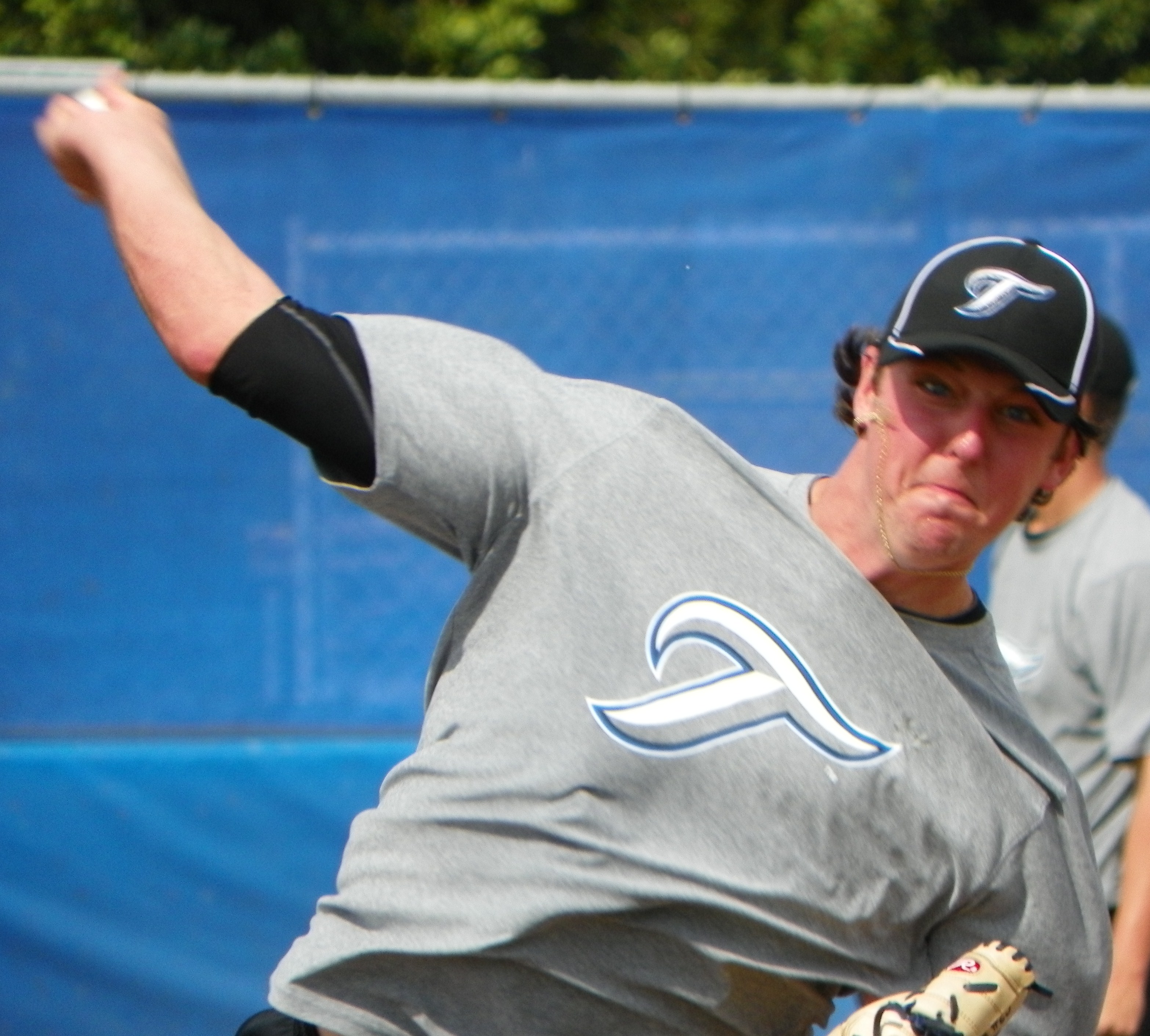
***Today’s feature was prepared by Jeff P, Guest Writer to MLB reports. We highly encourage you to leave your comments and feedback at the bottom of the page and share in the discussion with our readers. You can also follow Jeff on Twitter.***
Please e-mail us at: MLBreports@gmail.com with any questions and feedback. You can follow us on Twitter and become a fan on Facebook . To subscribe to our website and have the daily Reports sent directly to your inbox , click here and follow the link at the top of our homepage.

Drew Taylor Interview: The Story of an Intercounty League Pitcher
Follow @mlbreports Wednesday September 21, 2011
MLB reports: We are proud today to feature on MLB reports: Drew Taylor, former Philadelphia Phillies and Toronto Blue Jays prospect pitcher, currently playing in the Intercounty Baseball League. Based in Ontario, Canada, the Intercounty League has produced several major league players including Rob Butler, Rich Butler and current Brewers closer, John Axford. Drew’s baseball blood lines run deep, as his father Ron Taylor is former MLB pitcher himself. Part of the 1969 Miracle Mets during his playing career, Dr. Taylor is a long time team doctor for the Toronto Blue Jays. From getting signed by the Jays, having a World Series champion pitcher as a father, recovering from injuries and life in the Intercounty League and working towards becoming a doctor, we covered many topics with Drew. For a great baseball tale from a different part of the game, we present our recent interview with Drew Taylor:
MLB reports: Welcome to the Reports Drew. Thank you for taking time out of your schedule for this interview. First question we always like to ask: who was your favorite baseball player growing up, that you most idolized and patterned your game after?
Drew Taylor: I always loved to watch David Wells pitch when I was younger. As a lefty I learned a lot about setting up hitters and how to use a curveball effectively against left- and right-handed batters. I also loved his approach. He went right after hitters no matter who they were and rarely fell behind in the count. A true lefty – he was a character on and off the mound. I had the chance to get to know him a little when he was playing in Toronto. When I was in high school, I threw a bullpen in Spring Training for the Jays. I didn’t know I would be throwing that day so I only had my first baseman mitt with me. He gave me a glove to use and watched me throw giving me some pointers after the pen, very generous; he is the kind of guy that would give you the shirt off his back. I also learned a great deal from watching him that day in the way he treated people and engaged with fans asking for his autograph. Down to earth.
MLB reports: Which current MLB star do you most admire and why?
 Drew Taylor: I would have to say Travis Snider. I played with Travis our first year in the Blue Jays minor leagues and actually lived with him for the first part of the season. He came into the Jays straight out of high school and was thrust into a system that was known for drafting mostly college athletes. Here he was living with Jeff Gilmore, who graduated early from Stanford and had already begun a Masters in History and myself, already with Undergraduate and Masters degrees from the University of Michigan. But in truth, Travis was probably the most mature of the group of us. As I got to know Snider I found out why. He had faced a great deal for a kid of his age. There have been a number of articles written him since he broke into a big leagues focusing on what he and his family went through while he was in high school. If you haven’t read them, I suggest you look them up. I won’t go into all the details here, but in short when his mother was dealing with serious health issues, he was placed in a difficult situation at a very young age. As the only son, he stepped up to be a rock for his family. There are a lot of talented athletes that get drafted and Snider is definitely one of them. Sometimes though it is experiences like these that separate the men from the boys and dictate who will have the resolve and discipline to make the jump to the big leagues.
MLB reports: Reflecting on your career to-date, what are your proudest accomplishments on the baseball field?
Drew Taylor: I transferred for my sophomore year to the University of Michigan from Georgia Tech in 2003. I came into a program that had a great history but had struggled in the past few seasons, finishing only 21-32 the previous year. Rich Maloney had moved from Ball State to the Michigan to take the helm as head coach. He called each player in one by one before the season, sat us down and laid out what he expected of us. It was the first time a coach had talked to me that way. He demanded excellence and explained how each one of us as individuals could contribute to the team’s success. I owe a great deal to Rich and would not have had the success I had that year without his ability to inspire his athletes and instill confidence in them. He turned that program around and we ended up 30-27 that year, climbing to 43-21 and winning the Big Ten by the time I graduated. “Those who stay will be champions.” I personally ended up 9-1 in 2003, making the All-Big Ten and All-Region Teams and was given the Geoff Zahn award for Michigan’s top pitcher. After pitching only 9.1 innings the previous year, this was a big turnaround for me. Rich knows how to get the most out of his players and I hope he remains a college coach so I can send my kids his way one day.
MLB reports: You were signed in 2006 by the Toronto Blue Jays after the draft. Were you scouted by certain teams before the draft and were you expecting to be drafted?
 Drew Taylor: The most amount of attention I received was probably in 2001. My velocity shot up during my final year of high school and while pitching for the Ontario Blue Jays the summer before starting university. I had a number of clubs call and make offers, including the Rockies, Blue Jays, and Braves, to see if I would forgo school to sign professionally. But I was dead set on getting my education. While at Michigan, I had a great sophomore year going 9-1 and followed it up with a good showing in the Cape League which drew some attention again. Then during my draft eligible Junior year I ended up injuring my shoulder in my first start of the year. I tried to come back and pitch a couple of times, but ended up having to shut it down for the season. That effectively ended any chance I had of getting picked up in the draft, so I focused on my rehab, knowing that I would be back at Michigan the next year and would have to prove I could compete all over again. In 2006, the Blue Jays called right after my final game and signed me to a free-agent contract. I reported to camp two days later.
MLB reports: Being signed by your hometown Jays must have been very special. What were your feelings after the draft and what was the process like up until the time you were signed?
Drew Taylor: Being signed by your hometown team is always special, but there were so many things on the go I didn’t get much of a chance to sit down and enjoy the feeling. When I got the call I was in Michigan right after we got back from the NCAA Regionals in Atlanta. It was a little bit of a whirlwind because I had just got back to my apartment when I was told I was leaving again in two days. In those two days, I quickly packed up my apartment and hit the road for Toronto. Kevin Briand and Sean McCann were the scouts that signed me and I went down to the then named SkyDome to meet them and sign my contract. With the papers in, Kevin walked me down onto the field and it finally sunk in.
MLB reports; As a 6′ 5″ left-handed pitcher and being the son of an ex-major league hurler, what were the expectations you set for yourself once you joined the Jays system? Did you envision yourself in the major leagues one day and what was your plan to get there?
 Drew Taylor: Everyone who signs a contract, or for that matter who has played baseball at any level has thought about what it would be like to play in the majors. For me, I had a father who had done it for 11 years, and because of that I had the opportunity to be exposed to the game at a high level from an early age. I fully expected to make the majors and as soon as I signed professionally, I set out to realize that goal. Competition increases as you move up in the system and ultimately I never reached my goal of reaching the majors. There are a lot of talented players in professional baseball, many of the guys in the minors have the talent and ability to play in the majors, but lack consistency. At the major league level you have to be able to make adjustments within the same game or within the same at-bat. Realizing how to make these adjustments takes time and experience, which is one of the reasons athletes in baseball require time to mature and develop above other sports. The mental side of baseball is much more important than the physical… as Yogi Berra said “Ninety percent of baseball is mental, the other half is physical.”
MLB reports: For all the fans that have never experienced minor league baseball before, give us an idea as to what life is like in the minor leagues as compared to what people see in major league stadiums. The level of competition, amenities and support from the major league team for its minor league system- what is it like?
 Drew Taylor: Night and day. Have you ever watched Bull Durham? Its bang on. The minors consist of a lot of long bus trips, fast food, and tiny locker rooms. The other big difference that people do not realize is how little money players are paid in the minors. Bonus Babies get a big cheque at the beginning, but the weekly salary is barely enough to live on. I would love to see the Major League Baseball Players Union fight for better pay in the minors, but once you make it to the majors I assume those guys try not to even think about the minors again. I don’t see it happening. Another problem is that players in the US and Canada are entered into the draft, while international players are all free agent signs. This means that home-grown talent can only negotiate with the team that drafted them, while international players have the ability to shop around different teams and drive up their signing bonuses. We need to move to a world-wide draft. One thing I will say is that players who make it to the big leagues know what it is like in the minors because they came up through it. Many guys are very good to the guys at lower levels. Especially if they are back down in the minors for rehab starts. One guy that sticks out in my mind that always looked after the guys at the lower levels was Brandon League. He was down for rehab for a while in Dunedin one year and went out of his way for us.
MLB reports: Injuries unfortunately played a huge part in your career, as it affects many young hurlers. Please tell us what happened to you health wise and your path through injuries, surgeries and how health affected your career.
Drew Taylor: I only threw twice in my junior year at Michigan before it was painfully evident that something was not right. I ended up having a small tear in my rotator cuff and a strained bicep. I rehabbed and came back strong enough to get picked up by the Jays. My velocity had never returned fully after my arm injury in University, so I had to find other ways of getting hitters out than just blowing it by them. Additionally, I moved primarily to the bullpen after being a starter my whole life. My mental approach to baseball improved greatly, learning how to set up hitters and get them out not just by beating them with a pitch, but beating them with a pitch they didn’t expect. Instead of facing the same hitters many times in one game as a starter, I was now coming in relief and mostly only had to face batters once. I had to develop the ability to strike out a batter when I came on with runners on base and I focused on improving out pitches. My first year was in Pulaski Virginia in the Appalachian league facing a lot of young free-swingers. I used this to my advantage and ended up striking out 37 in 27 innings. As you move up through the system, hitters have a much better approach and wait for you to throw a pitch they are looking for or for you to make a mistake. You have to improve with them, or you will get left behind.
MLB reports: For those fans that aren’t aware, your father is Dr. Ron Taylor. A team doctor for the Jays, your dad was a star pitcher in the big leagues and played on World Championship teams. What influence did your dad have on your career? What was your relationship like growing up?
 Drew Taylor: My dad was a huge influence on me. He never pushed me into baseball, or medicine for that matter, they were both my choices. Once I made the decisions to pursue being a professional pitcher and then a doctor, his support and guidance was bar none. He had a great career in the majors for 11 seasons, winning two World Series with the Cardinals in 1964 and the Amazin’ Mets in 1969. I had a big leaguer at my disposal and he taught me things about playing at a level that very few have made it to. Even when we would sit down and watch a game on TV, we would be talking about setting up hitters and he would always ask me what pitch I would throw next. The biggest thing he taught me is how to deal with pressure and maintain focus and confidence – something I can take with me in all aspects of life. In 6 appearances in Major League post season games he threw over 10 innings without giving up a run. In 1964 he threw 4 innings in the World Series without giving up a hit, allowing only one base runner on a walk to none other than Mickey Mantle. There definitely were some expectations, and it was very tough to deal with when I had my arm injury and my future in baseball was in question. When I was released by the Phillies in 2008, I came home and he said something that will always stick with me. He told me if he “could only choose one career between baseball and medicine, it would have been medicine.” He has been able to help countless more people as a physician than as a pitcher. If I had kept playing baseball, my window to return to school might have closed. My brother Matthew, has also been a great guy to have around. What he lacked in talent he made up for in knowledge. I still talk shop with him when we watch games and he often comes out to watch me throw, giving me some pointers after the game, whether I want to hear them or not. He works in film, but I always thought he would be great in the front office or as a GM. He knows baseball, better than me.
MLB reports: To go along with the Jays connection, you mentioned to me that you know Pat Gillick well. Please tell us your relationship with Pat and the Phillies organization.
 Drew Taylor: After my second season with the Blue Jays, they let me go and I immediately got a call from the Phillies asking me to attend spring training in Clearwater next year. Pat is one of the greatest minds in baseball and has been a mastermind behind winning teams and franchises since he started as a General Manager. He is always at ground level watching his players from rookie ball up to the majors and has a huge presence at camp. When he was with the Blue Jays, he became great friends with our family and recently invited us down to watch the induction ceremony at Cooperstown. It was my first time there and a tremendous experience to see the rich history the sport has and its influence and presence in North America and around the world. Bobby Cox, who was also formerly with the Blue Jays was down at the induction as well and they told me the story of how I ended up being named Drew. My parents were deciding between Forrest or Andrew and Bobby suggested they just call me Drew. I am glad he did. Forrest Gump came out when I was 11… that would have been a rough year…
MLB reports: You currently play for the Toronto Maple Leafs of the Intercounty Baseball League in Ontario, Canada. Many famous players came through the IBL, most notably John Axford of the Brewers. For fans that are not familiar with the league, please tell us more about playing baseball in the IBL and the Leafs’ organization.
 Drew Taylor: The Intercounty Baseball League started in 1919 and was founded as a minor baseball league feeding the majors. Now it remains as an independent league. It has a great deal of variety in players and level of experience. Many of the players have had professional experience in affiliated ball and are at the end stages of their career. The rest of the players are comprised of current or former university and college athletes trying to get signed to professional contracts or who want to maintain playing baseball at a high level of competition. Ferguson Jenkins, Paul Spoljaric, Jesse Orosco, John Axford, Pete Orr, Rob Ducey, Rich Butler and Rob Butler are some of the major leaguers that have played in the league either before their major league career or afterwards. I have actually had the chance to pitch head-to-head against Spoljaric on a few occasions and it is always exciting to face off against a former big leaguer. The league has a shorter schedule and we don’t play every day, so it allows guys to maintain full-time jobs while playing, which is rather unique. I have been playing for the Toronto Maple Leafs for the past three years while being a full-time student at the University of Toronto and Mount Sinai Hospital.
MLB reports: I have read that you have been involved with a number of charity groups surrounding baseball and sports, tell us about that?
Drew Taylor: I have been getting involved in some charities that are doing great work in Toronto and across Canada. I recently participated in Strike Out Cancer in support of Mount Sinai Hospital with an all-star list of actors and hall of famers including Kurt Russell, Roberto Alomar, David Justice, Gary Carter, Gary Sheffield, Bret Saberhagen, Devon White, and others. This past year the event raised over 1.4 million for research and treatment of women’s cancers. We also participated alongside local athletes, actors, musicians, and personalities in the Bulletproof campaign which sells apparel in support of the Special Olympics. Another fun group of people, Jays Days, get together when the Jays are on the road to watch the game together at Opera Bobs. Proceeds from sales of ball-park hotdogs, popcorn, and refreshments go to Horizons for Youth, a 35 bed youth-shelter dedicated to helping homeless and at-risk youth in Toronto.
MLB reports: Having attended Michigan and with your father a doctor, a little birdy told me that you were looking at a career in medicine yourself. True or False?
Drew Taylor: True. I ended up passing on professional baseball out of high school to attend university as I wanted to become a doctor. After finishing my undergraduate and Masters degrees at the University of Michigan, I was signed by the Blue Jays. At the same time I signed I had sent in my application to medical school. I was accepted and had to make a tough decision. I decided that I would have the chance to go to medical school after playing, but only had one opportunity to play professional baseball. Thus I continued to play ball. I didn’t want to lose any momentum in medicine, so I applied to the University of Toronto and continued graduate school in the off-seasons. While with the Phillies and now playing for the Toronto Maple Leafs in the Intercounty League, I have been completing my PhD. I will finish this year and will be applying to medical school again.
MLB reports: How many more years to you see yourself playing baseball? When your playing career is done, do you see yourself staying in the game and in what capacity?
Drew Taylor: I will continue to play as long as I enjoy the game and my arm holds up. I broke my elbow this past year and it was a long season of rehab before I was back pitching again. I finished the year strong so it rejuvenated my desire to keep pitching. Once it is over for good I would like to stay involved with baseball and sports in general. My PhD is in Biomedical Engineering and ultimately I want to pursue a career in Orthopedic Surgery, possibly even specialize in upper extremity to compliment my experience dealing my own injuries. My dad is the team Physician for the Toronto Blue Jays. I would love to follow in his footsteps and serve a professional team.
Thank you again to Drew Taylor for taking the time to join us today on MLB reports. We highly encourage our readers to post at the bottom of the article any questions and/or comments that you may have for Drew. As well, please follow Drew on Twitter (@DrewWTaylor).
**Some of the photographs in today’s feature are from the private collection of our guest, Drew Taylor. **
Please e-mail us at: MLBreports@gmail.com with any questions and feedback. You can follow us on Twitter and become a fan on Facebook . To subscribe to our website and have the daily Reports sent directly to your inbox , click here and follow the link at the top of our homepage.

Albert Cartwright Interview: Phillies Prospect Returns to Baseball
Sunday September 18, 2011

MLB reports: We are proud today to feature on MLB reports: Albert Cartwright, Philadelphia Phillies prospect. Albert was originally drafted by the Houston Astros in the 2007 MLB draft. After four seasons playing in the Astros organization, Albert was traded in January of this year to the Phillies for reliever Sergio Escalona. 2011 tuned out to be a difficult season for Albert, as he was injured during spring training and unable to return to action. Fresh off his season-long rehabilitation, Albert is now heading to the instructional league and to resume baseball activity. Before his return, we had a chance to catch up with Albert and discuss many topics, including the trade, injury, growing up in the Bahamas and his career thus far in the world of professional baseball. Here is our interview with the second base prospect from the Philadelphia Phillies, Albert Cartwright:
MLB reports: Welcome to MLB reports Albert. It is a pleasure to have you on today. First question: growing up, who was your favorite baseball player, that you most idolized and patterned your game after?
Cartwright: Without a doubt Rafael Furcal. Growing up in the Bahamas, we never had the MLB network broadcasted and so watching baseball was limited to the few games that were shown on major networks. Of those games, I saw the Atlanta Braves the most. So I grew up watching Furcal and just loved the energy he brought to every game. He incorporated his speed into the game and I idolized his style as a young boy.
MLB reports: Which current MLB star do you most admire and why?
Cartwright: Jimmy Rollins. The excitement and spark that he brings every night to the Phillies is definitely worth admiration. Hopefully I will get the opportunity to meet and play with the great shortstop in the near future.
MLB reports: Reflecting on your career to-date, what are your proudest accomplishments on the baseball field?
Cartwright: Being able to play this great game of baseball every day as a career is an accomplishment on its own. I’m just blessed to be given the opportunity. But if I had to single out one proud accomplishment, I would have to say that I will never forget the night that I hit three triples in a single game.
MLB reports: What were your goals going into the 2011 season? You missed the 2011 season due to injuries. What happened to you after getting traded to the Phillies in the offseason and the extent of your injuries that led to your lost season in 2011?
Cartwright: The goal for the big picture is always to make it to the top. Coming into each season though, my goal is to win a championship, regardless which league I’m playing in. I believe that with a winning mindset, your numbers will always be where you want them to be at the end of the year.
Getting traded to the Phillies in the offseason was shocking; it definitely was a wonderful surprise. After I calmed down from the excitement, I knew that I had a job to do and so I tried to prepare myself for the season even harder than ever before. A week into spring training, I tore my Achilles. As I pivoted into a turn during a conditioning exercise, I felt a pop and my ankle gave out. I went into surgery a day later and have been rehabbing ever since. I’ve never had any complications with my legs before, so the injury was definitely unexpected. But everything happens for a reason. So I just have to stay positive and keep on pushing.
MLB reports: When you first found out you were drafted, what were your reactions? Did those reactions change over time? What was the process like being drafted originally by the Mets in 2006 and not signing with either team? What made you decide to finally sign with the Astros in 2007?
Cartwright: Getting drafted by the Mets was exhilarating because I felt that my hard work was finally paying off and that someone was seeing something special in me. My reaction though was not hugely different a year later when I was picked up by the Astros, although I must admit it was slightly more rewarding since the Mets told me they were not going to sign me after the draft-and-follow. I didn’t think that I was going to be drafted that following year but thankfully the Astros took me.
Deciding to sign with Houston was fairly easy since they presented me with a fantastic offer and I saw it as a great opportunity for me.
MLB reports: What do you consider your greatest baseball skill(s)?
Cartwright: Speed. Speed. Speed.
MLB reports: What facets of your game do you most wish to improve upon?
Cartwright: Definitely defense. There’s always room for improvement when it comes to playing defensively.
MLB reports: How do strikeouts and walks figure into your game? Do you see any of these items changing over time and to what degree?
Cartwright: Strikeouts and walks play a major role in my game. If I strikeout too much, then I am pretty much rendered useless because I can’t use my speed. If I’m walking and getting on base, I can take advantage of my speed and the manager can have some fun shuffling around plays that would work best with me.
I feel that as time progresses and the more experience I get as a player, the number of walks I have should increase and strikeouts decrease. I should be able to see the ball better and in turn, make better decisions as a hitter.
MLB reports: Long term what position do you see yourself playing? How do you see defense as part of your overall game? With Chase Utley entrenched at second, any plans to change positions?
Cartwright: Hopefully I’ll stay at second but with Chase Utley there, as you mentioned, breaking out may be a little harder. That said, I’m open to anything that comes my way that can land me into the big leagues. I’m a converted infielder and so going back to the outfield isn’t anything major. Anything I can do to help the team win is fine by me.
Teams that are good defensively, who can catch and throw the ball, are usually the ones in first place because they can minimize the other team’s scoring opportunity. Defense is equally important to my game as being great at the plate.
MLB reports: If you had to look into a crystal ball, when do you see your expected time of arrival in the big leagues and what do you think you need to do most to get there?
Cartwright: I would say 2012. Once I show that I can handle the stick, bunting, completing hit-and-runs, moving runners, stealing bases and going from first to third, I think that can get me there. I Just have to play the game the right way. I am anxious to get back into the game.
MLB reports: Has pro ball been everything you expected it to be thus far? What are some of the highs and lows you have experienced?
Cartwright: Pro ball has been everything I was expecting: long bus rides, always eating late, living out of a suitcase and always being on the move. But I love it. Getting back to the hotel room to find a freshly made bed is always nice too.
My first career walk-off hit was definitely one of the highs. I always dreamt of getting a walk-off hit. Low moments would include sustaining injuries including tearing my Achilles which led to missing the entire 2011 season. Also, breaking my wrist in 2009. Basically anytime that I wasn’t playing could be regarded as a low moment.
MLB reports: What do you do for fun when you are not playing baseball?
Cartwright: When I’m not playing baseball, I like to go to the beach, play video games, and hang around with friends. I guess you can say I’m a little boring in the offseason, but I welcome the relaxation after a season full of hard work.
In the locker room, you can really get to know your teammates and so far, everyone has been really cool. Since we spend so many hours of the day together, everyone kind of hangs out with everyone else. I can name though a few teammates who I still talk to on a regular basis, like Jay Austin, Marques Williams, Kody Hinze, Edwin Walker, and Chris Turner. We are all jokesters so most of the time we’re clowning around and making fun of each other. Other times we will get back to the hotel and play video games, usually MLB or Madden (although I have to admit that I can’t play Call of Duty to save my life).
MLB reports: Have your visited Philadelphia the city yet? How have you found the city thus far?
Cartwright: Unfortunately not. I would’ve definitely visited had I went to Reading at the start of the season. I am looking forward to exploring the city though next year.
MLB reports: Were you surprised to be traded from the Astros in the offseason? What was your reaction and feelings moving from the Astros to the Phillies? How has it been thus far being a member of the Phillies organization?
Cartwright: I was overwhelmed and excited yet very nervous because I knew that it meant new people and a new system to get familiar with. The trade came as a shock to me; I didn’t know what to expect. But it has been smooth sailing so far, minus the injury. We have a great facility and everyone I’ve met so far has been extremely welcoming.
MLB reports: If you could send one message to the Philadelphia Phillies fans, what would it be?
Cartwright: See you soon.
MLB reports: Born in Winter Haven, Bahamas, at what age did you come to North America and start playing baseball? What is the state of baseball in the Bahamas and can we expect to see many prospects come from there in the future?
Cartwright: I’m glad you asked. This has been a mistake on my profile from the day I started playing pro ball. I was born and raised in Nassau, Bahamas and moved to Delray Beach, FL in my sophomore year of high school to play baseball at American Heritage. From there, I went to Polk Community College in Winter Haven, FL. Now that I think about it, I’m not sure you can find any town by the name of ‘Winter’ in The Bahamas.
Baseball in The Bahamas is on the rise. There are a lot of young talents and I think we will have some more guys in the near future playing minor and major league baseball. As a matter of fact, a close friend from my hometown just made his breakthrough in the majors, Antoan Richardson with the Braves. He sets a great example, both for me and for all the young players back home: if you keep pushing, you will make it to the top someday. I am very happy for him!

Thank you again to Albert Cartwright for taking the time to join us today on MLB reports. We highly encourage our readers to post at the bottom of the article any questions and/or comments that you may have for Albert. As well, please feel free to contact Albert directly by Twitter (@acartwright12). He is very active on social media and welcomes your feedback!
**The photographs in today’s feature were provided by our guest, Albert Cartwright**
Please e-mail us at: MLBreports@gmail.com with any questions and feedback. You can follow us on Twitter and become a fan on Facebook . To subscribe to our website and have the daily Reports sent directly to your inbox , click here and follow the link at the top of our homepage.

Bob Kendrick Interview: President Negro Leagues Baseball Museum
Tuesday September 13, 2011
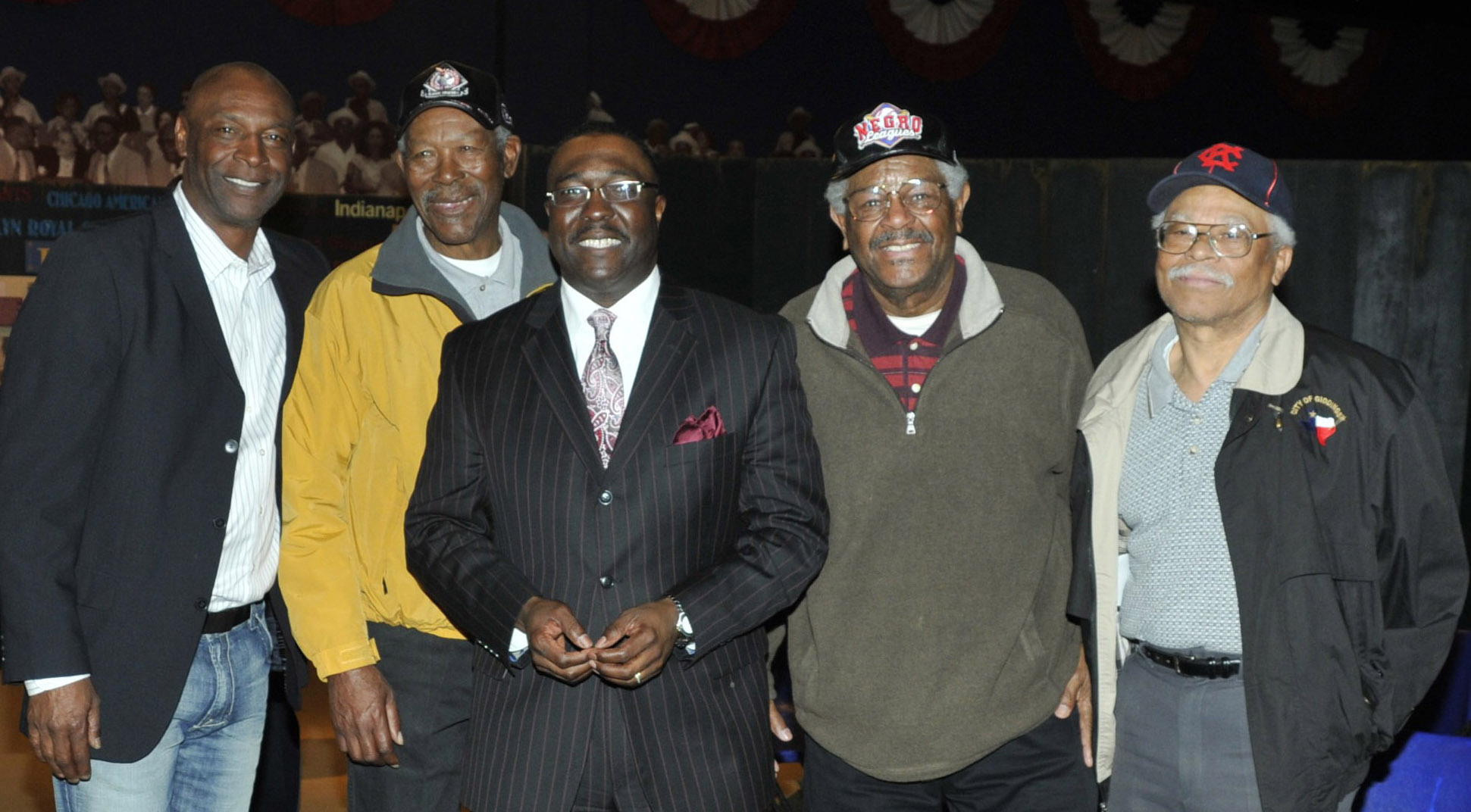
MLB reports: We are proud today to feature on MLB reports: the President of the Negro Leagues Baseball Museum, Bob Kendrick. It was an honor and privilege to get to know one of the finest and most important executives in the world of baseball. The Negro Leagues represents a key time period in baseball history. The NLBM is essentially the Cooperstown of the Negro Leagues, in Kansas City. Mr. Kendrick is responsible for overseeing the entire NLBM and has one of the most demanding and rewarding jobs that we have ever seen. His story is a fascinating one and we were glad to have Mr. Kendrick with us today to share it. For all fans of baseball and American history, the Negro Leagues Baseball Museum is a vital institution to visit. We present today our interview with the President of the NLBM, Mr. Bob Kendrick:
MLB reports: Hello Mr. Kendrick. It is a pleasure to have you on the Reports. Thank you for taking time out of your schedule to speaking with us.
You are President of the Negro Leagues Baseball Museum in Kansas City, Missouri. Please give our readers an idea as to what your job entails and the responsibilities of the President of such a fine baseball institute.
 Bob Kendrick: My primary responsibilities are to provide effective leadership, management and operations of the Negro Baseball Leagues Museum and the development of the future John “Buck” O’Neil Education and Research Center. This includes managing a staff of seven; planning strategies to advance the mission and financial stability of the organization and develop and communicate goals and planning strategies with a local board and a national governing board for implementation. In addition, I’m also responsible for developing and managing community and corporate partnerships, programs, marketing, special events along with media, public and community relations.
MLB reports: What is the significance of having the museum in Kansas City? Was there ever a thought to build it beside Cooperstown?
 Bob Kendrick: Kansas City is the birthplace of the Negro Leagues and thus the rightful home of the Negro Leagues Baseball Museum (NLBM). In 1920, Andrew “Rube” Foster established the Negro National League in a meeting that took place in at the Paseo YMCA in Kansas City. Today, the NLBM operates two blocks from the historic Paseo YMCA and has designated the building as the future home of the Buck O’Neil Education and Research Center. There were never any intentions to build or move the NLBM to Cooperstown.
MLB reports: What does Buck O’Neil mean to the Negro Leagues Baseball Museum? How did the museum fare when he was alive and what has been the state of the museum since his passing?
 Bob Kendrick: Buck, along with the late Horace Peterson, were the co-founders of the NLBM in 1990. He served as the museum’s chairman for 16 years until his death in 2006 at age 94. Buck was the face of the NLBM and the museum’s inspirational leader and the person that is single-most responsible for its rise to prominence.
Buck’s death coupled with a down economy have definitely had an impact on the growth of the NLBM. To use a bad baseball analogy, Buck was our power hitter. When you take your power hitter out of the lineup you can’t expect that your offense is going to be as potent as it was with him in the lineup. The NLBM, like a lot of museums and particularly cultural institutions, have had its challenges but I feel strongly that we are poised to carry out Buck’s dream to sustain and grow this great institution.
MLB reports: Do you feel that there is pressure in your role to meet the expectations set by Buck O’Neil?
 Bob Kendrick: No. There will never be another Buck O’Neil! What I’ve tried to do is embrace Buck’s legacy and use it as additional motivation to see that his museum continues to be successful. If there is any pressure, it comes from the understanding that you are responsible for an institution that we want to see stand the test of time. Ultimately, no one will have greater expectations of me than I have of myself.
MLB reports: What are your favorite exhibits at the museum?
Bob Kendrick: The Field of Legends is an amazing and awe-inspiring display. It is the centerpiece of the NLBM and features 10 life-size bronze statues of Negro League greats cast in position as if they were playing a game. The players were chosen because they represent 10 of the first group of Negro Leaguers to be inducted into the National Baseball Hall of Fame in Cooperstown.
A 1952 photo of a young Hank Aaron standing at the train station in mobile getting ready to leave to join the Indianapolis Clowns of the Negro Leagues is one of my favorites. I believe that photo is the validating point in the exhibit that visitors start to grasp how special the Negro Leagues were and the incredible level of talent the leagues featured. All of sudden, the stories that we’ve shared about the exploits of Josh Gibson, Cool Papa Bell, Satchel Paige, and the other legends become more real because Hank is a name that everyone knows and understands how impactful his career was.
MLB reports: Are there new exhibits this year that are in place?
Bob Kendrick: We’re developing a new exhibit on the life and times of Buck O’Neil in recognition of his 100th birthday (Nov. 13). The exhibit, entitled “Right on Time” is adapted from Buck’s critically acclaimed biography “I Was Right On Time,” and will be a chronology of his life featuring rare family and baseball photos, videos and works of art from a team of professional artists that interpret the meaning and impact of Buck’s illustrious life. The exhibit is scheduled to open at the NLBM on Oct. 6 which would mark the fifth anniversary of Buck’s death. It will be on display until January 2012. The NLBM is developing plans for a national tour of the exhibit.
MLB reports: Why should a baseball fan take the trip to visit the Negro Leagues Baseball Museum?
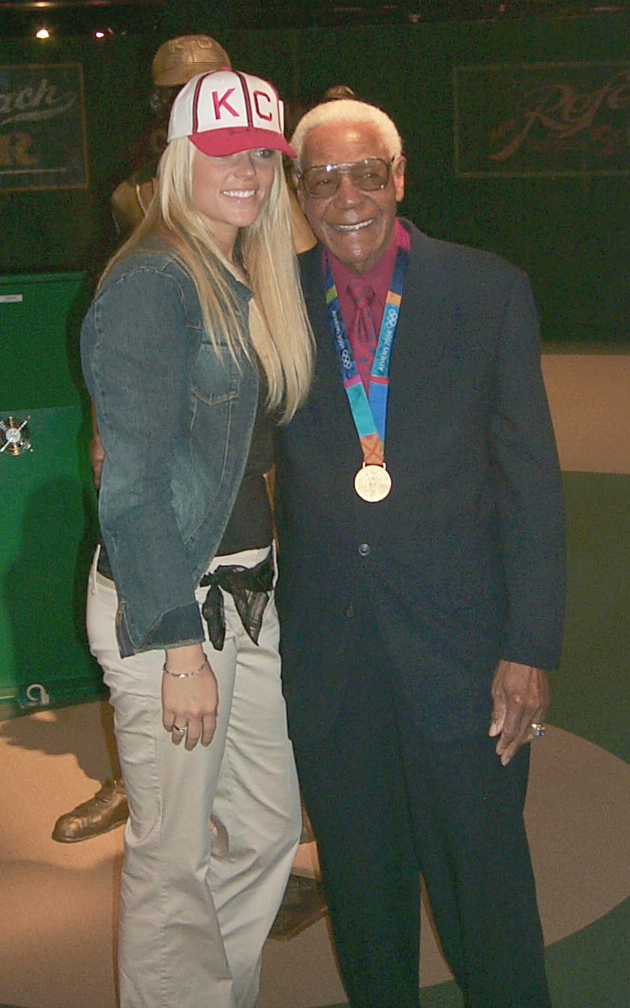 Bob Kendrick: I often said that there is no greater example of “love of the game” than there is when you bear witness to what the courageous athletes of the Negro Leagues endured to play baseball in America. Love of the game is something that every fan shares.
In some respect, as baseball fans, we’ve all been cheated by not having an opportunity to learn about America’s unsung baseball heroes prior to the rise of the NLBM. When you visit you going to meet some of the greatest baseball players to ever play the game. But more importantly, you are going to gain a perspective on how their determination, courage, passion and perseverance not only changed the game but America too.
MLB reports: You have rejoined the museum after a leave of absence. How did you find out you were offered the position of President and what was your decision-making process in deciding to accept the role?
Bob Kendrick: I left the NLBM in February of 2010 to accept the post as Executive Director of the KC office of the National Sports Center for the Disabled after being a part of the NLBM team for 12 years departing as VP of Marketing. I began having serious discussions with the museum’s board in March of this year. Betty Brown, chair of the museum’s board of directors, called on behalf of the board to offer me the job. On April 11, 2011 I began my tenure as President of the NLBM.
Like any major life-changing decision, I did a lot of soul-searching and had many discussions with my wife, Vanessa, and other members of my family. This was with the realization that sometimes the most difficult thing you can do is go back home. The NLBM had been home for me for 12 wonderful years and I was tremendously proud of what we had accomplished, but I honestly thought that chapter of my life was over. When this opportunity came about I didn’t want to make a decision with my heart and not my head, but I’d be lying if I said that my heart didn’t lead me back to the NLBM. It’s a tremendous honor to work with a great team and serve as leader of what I believe is one of the most important cultural institutions in the world.
MLB reports: It has been less than a year at the helm of the museum. What changes have you instituted since taking over?
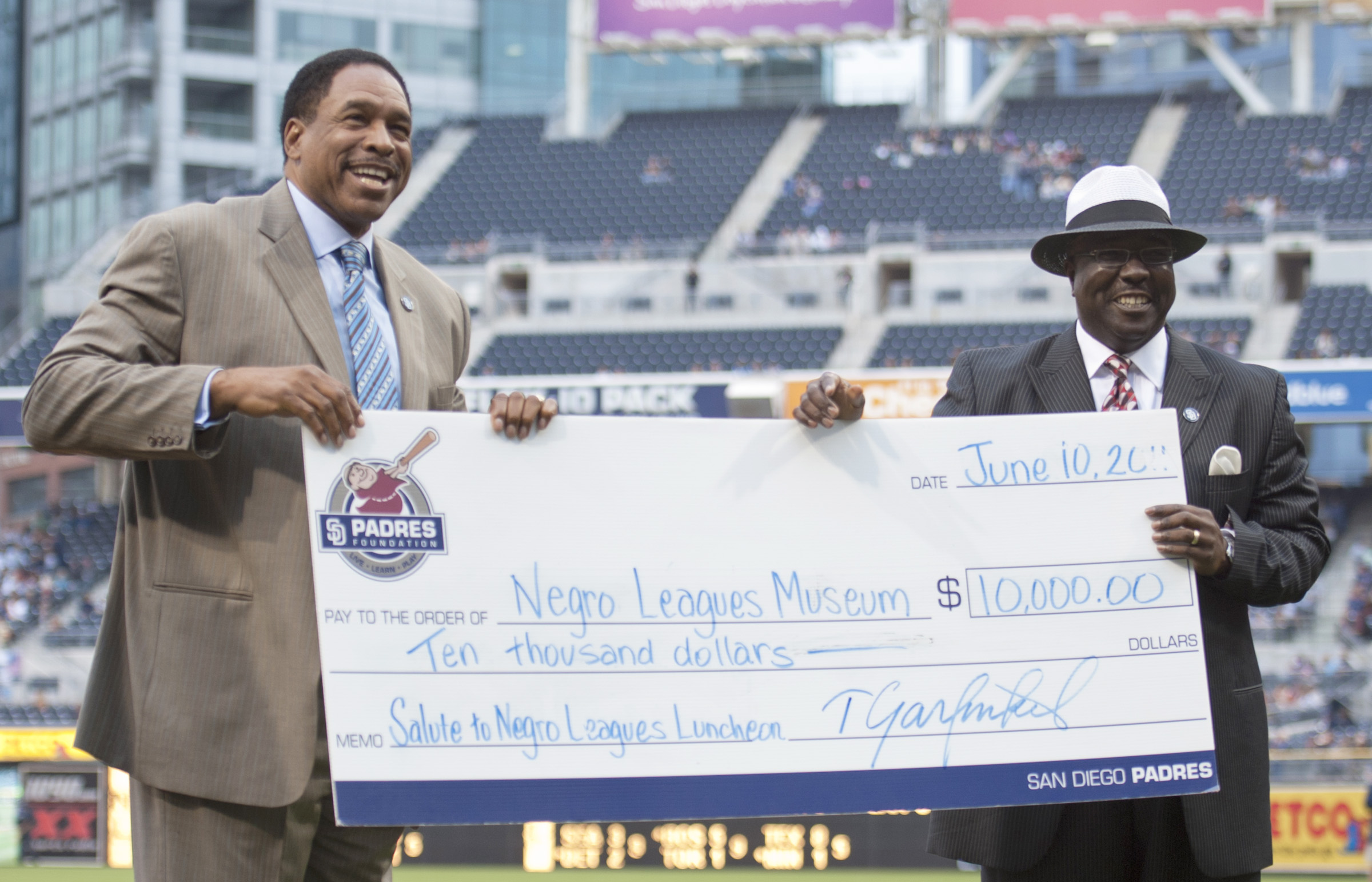 Bob Kendrick: My familiarity with the organization, staff and board has made for a pretty smooth transition. The staff, especially, have been great. For all of us, working at the NLBM is a labor of love and I’ve got a great team that has allowed me to move rather seamlessly into this new role.
My first few months on the job hasn’t been as much about implementing change as it has been about assessing all aspects of museum operations and the development of a tactical strategy to energize and generate operating revenue. We have a goal of balancing the budget by the end of this fiscal year which ends June 30 of 2012. I have every belief that we’ll be successful in attaining that goal.
Any initial change has come from a programmatic standpoint. In June, we brought back our popular Legends Luncheon series. In October, we will introduce the Rube Foster luncheon and will honor former Kansas City Chiefs football great Deron Cherry for his career and leadership on-and-off the field. The Legacy Awards will return on January 14, 2012. The event honors the best Major League Baseball players, managers and executives with awards named for Negro League legends.
MLB reports: I read that C.C. Sabathia recently visited the museum. Who are some other current and former players that have visited the museum? Any stories?
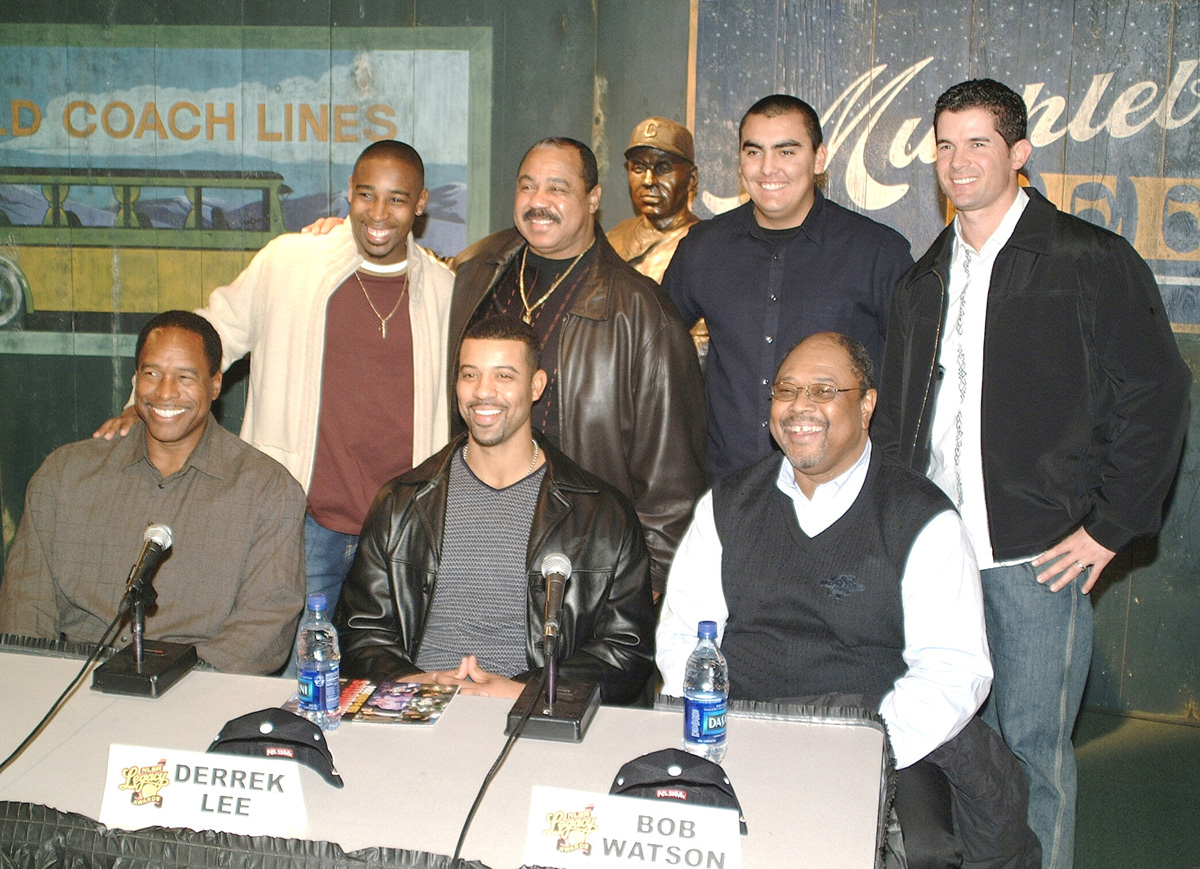 Bob Kendrick: CC has been a friend of the museum going back to his days with the Cleveland Indians. He always makes a point to visit when the Yankees are in town to play the Royals. While a member of the Indians, CC brought Cliff Lee to the museum. List of current current players includes: Derek Jeter, Albert Pujols, Ryan Howard, Prince Fielder, Torii Hunter, Justin Upton, Howie Kendrick, Chone Figgins, Derrek Lee, Jim Thome, Vladimir Guerrero, Jimmy Rollins, Juan Pierre and Jerry Hairston to name a few. Former Major Leaguers include: Hank Aaron, Willie Mays, Monte Irvin, Joe Morgan, Dave Winfield, Lou Brock, Ernie Banks, Ozzie Smith, Fergie Jenkins, Minnie Minoso, Jim “Mudcat” Grant, Ken Griffey, Sr., Jerry Manuel, Willie Randolph, John Smoltz, Buck Showalter, Roger Clemens, Barry Bonds, Bob Watson, Dusty Baker, Ozzie Guillen, Don Newcombe, Robin Roberts, Brooks Robinson, Maury Wills, Cecil Fielder, Rick Sutcliffe, Harold Reynolds, Frank White, John Mayberry, George Brett, Willie Wilson, Bo Jackson, Amos Otis and others.
Ryan Howard started visiting the NLBM before we knew who he was. At that time, Ryan was still in the Phillies’ minor league system. He’s never stopped visiting. He’s often said that he would visit as part of his ritual to prepare for Spring Training. He said he drew inspiration from their strength and dedication to the game that helped him deal with the difficulties he would encounter in the game.
MLB reports: What role do current and former players play in building and maintaining the museum? I personally think that current African-American players need to play a big part in attracting attention to the museum and inviting fans to learn and respect the past of the negro leagues. How has the process been to get players involved?
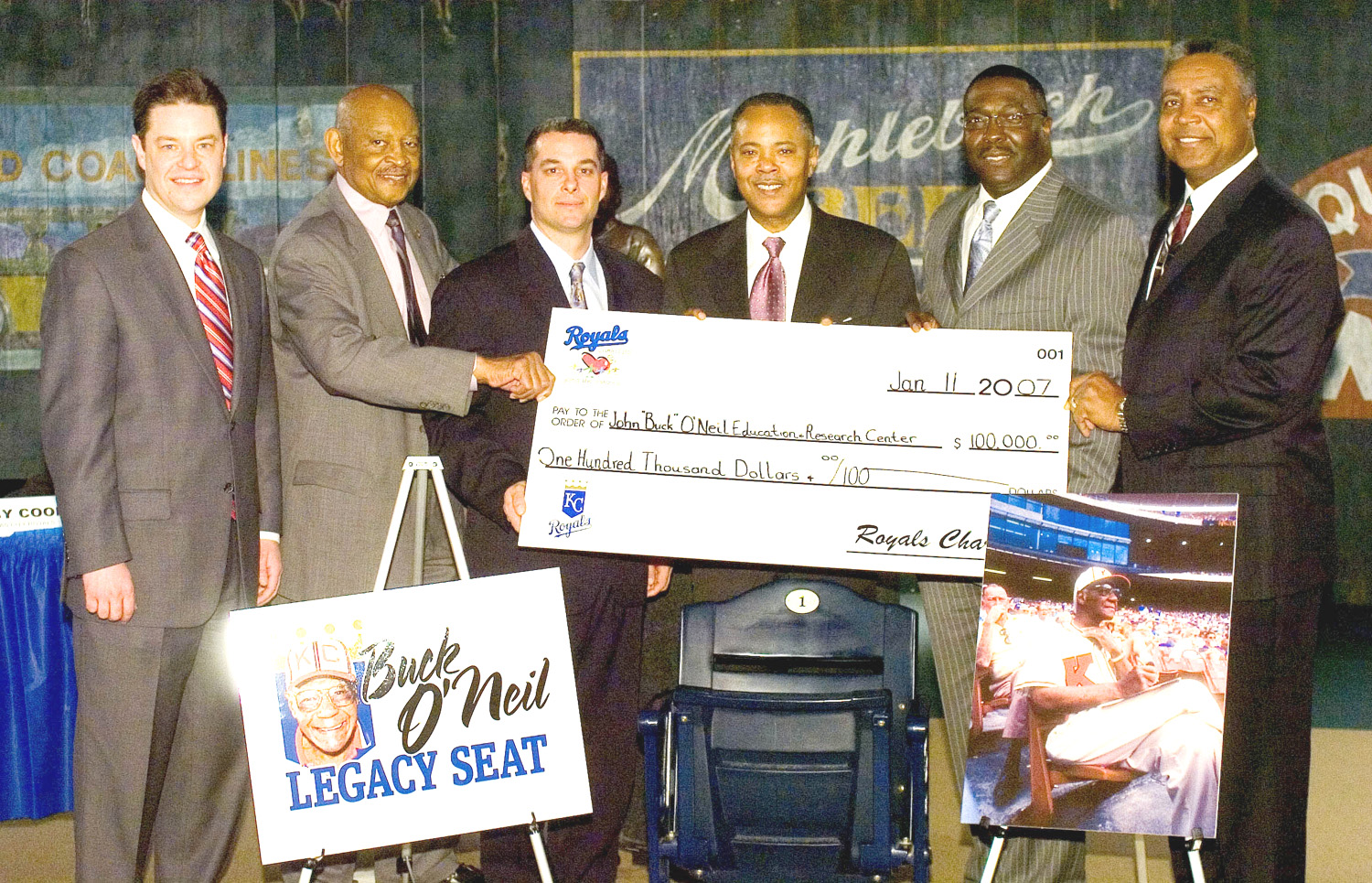 Bob Kendrick: We’ve made great strides in cultivating relationships with both current and former Major Leaguers. This takes on an even greater level of importance for the NLBM since the passing of Buck O’Neil. We’d like all baseball players to take more ownership in the NLBM and help us preserve this once forgotten chapter of baseball and American history. It obviously takes on an even great magnitude when we talk about the African-American and Hispanic baseball player. This is their story. Simply put, they would not have the opportunity to play the game they love had it not been for the sacrifice of those who played in the Negro Leagues.
MLB reports: Major League Baseball has teams play games yearly in Negro Leagues jerseys, which is a great way for fans to learn about the Negro Leagues. What other initiatives has MLB taken to assist in the education of the Negro Leagues? Does MLB and/or Cooperstown support the museum? If Major League Baseball sat down with you and asked what they could do to assist the museum, what would your answer be?
 Bob Kendrick: Major League Baseball and its teams have played an important role in the success of the NLBM and helping educate fans about the history of the Negro Leagues. From the in-stadium salutes held by a number of teams, to celebrating Jackie Robinson, it’s all part of baseball’s embracing of the heritage of the game.
The museum has had (and continues to have) a meaningful and valued relationship with the National Baseball Hall of Fame.
In addition to funding, I asked MLB to create a national day of recognition for the Negro Leagues; partner with the NLBM on a national promotional campaign and provide leadership to serve on the museum’s board.
MLB reports: I have read many articles discussing the lack of interest in African-American boys in playing baseball, particular in inner-cities. With the lack of fields and the attraction of other sports, including football and baseball, it seems that baseball is having a hard time attracting African-American youth to the game. MLB is trying to encourage more participation through its programs. Is enough being done to get African-American children to play baseball?
Bob Kendrick: We want kids of all colors to play and enjoy the great game of baseball. The NLBM believes it has a social responsibility to make sure urban kids have the opportunity to play baseball.We want to use the history of the Negro Leagues as a tool to inspire kids to play. Progress is being made, but it is going to take a long and sustain collective effort. Major League Baseball has done a wonderful job, through its creation and support of initiatives like RBI and the various Urban Youth Baseball Academies, of creating opportunities for African-American kids to play the sport. But this is not Major League Baseball’s responsibility solely. If we are to reverse the trend, then baseball has to become important again to the African-American community.
MLB reports: Do you think that there is a correlation between the interest of today’s African-American youth in baseball and the interest in learning about the Negro Leagues Baseball Museum? I would be interested to hear your thoughts on the subject.
 Bob Kendrick: We certainly believe the NLBM can serve not only as a resource to educate young people about the history of this country, but also inspire them by introducing them to men and women who overcame tremendous social adversity to play the game they loved. Urban kids who experience the NLBM can see people who looked just like them who were extremely successful playing, managing and owning baseball teams. The messages that stem from this powerful story transcends time, age, gender and race. Essentially, what the Negro Leagues teaches us is if you believe in yourself and you dare to dream then you can achieve anything you set your heart and mind to. That’s a universal message.
MLB reports: With the All-Star game coming to Kansas City, what events does the museum have planned as part of the festivities?
 Bob Kendrick: First, I can tell you that no one is more excited about the All-Star game coming to Kansas City! There’s no doubt that the Kansas City Royals our great city will host one of the most memorable All-Star games ever. I’m confident that the NLBM will play a great role in helping make the event special.
We’ve already had great conversations with Major League Baseball and their event planning team about partnership opportunities for the 2012 All-Star game. Look for activities ranging from parties to player appearances to take place at the NLBM. Also, expect to see a new exhibition that will open in June of 2012 that will celebrate the players from the Negro Leagues who became Major League All-Stars. A planning committee is being developed to make sure we maximize the opportunities associated with the 2012 All-Star Game.
MLB reports: In five to ten years from now, what will be the future of the Negro Leagues Baseball Museum? What is your vision?
Bob Kendrick: Collectively, we are working to ensure the long-term sustainability of the NLBM. As we begin the next two decades of operation, we are dedicated to building a thriving, vibrant, cutting-edge institution that will not only celebrate and educate the public to the rich history of the Negro Leagues, but will continually challenge itself to make history relevant to an ever-changing society. Much of this will be solidified by the completion of the Buck O’Neil Education and Research Center which will provide an international headquarters for Negro Leagues history and social commentary on issues relative to race and sports.
MLB reports: If people would like to learn more about the Negro Leagues Baseball Museum and to visit, how do they go about getting more information? Also how can fans contact you with questions and comments?
Bob Kendrick: You can get more information about the museum at http://nlbm.com. Or, call the museum at (816) 221-1920. I can be contacted at bkendrick@nlbm.com or please follow me on Twitter @nlbmprez.
BUCK O’NEIL CENTENNIAL CELEBRATION: As part of our revenue generation plan, we’ve just launched a national individual fundraising campaign in remembrance of Buck O’Neil’s 100th birthday through the introduction of the BUCK O’NEIL ALL-CENTURY TEAM campaign. The effort is asking fans and friends to donate at least $100 in memory of Buck and in support of his museum. Every person who makes the $100 gift (or more) between now and Nov. 13, will have their name, family name or person they designate permanently recognized at the NLBM as part of a new display created to mark Buck’s milestone anniversary.
To sign-up for the BUCK O’NEIL ALL-CENTURY TEAM, visit http://nlbm.com or call the NLBM at (816) 221-1920.
Thank you again to Bob Kendrick for taking the time out of his very busy schedule to joining us today on MLB reports. We highly encourage our readers to post at the bottom of the article any questions and/or comments that you have on the Negro Leagues Baseball Museum. As well, please feel free to contact Mr. Kendrick directly by e-mail or Twitter. He is very active on social media and welcomes your feedback!
**The photographs in today’s feature were provided by our guest, Bob Kendrick**
Please e-mail us at: MLBreports@gmail.com with any questions and feedback. You can follow us on Twitter and become a fan on Facebook . To subscribe to our website and have the daily Reports sent directly to your inbox , click here and follow the link at the top of our homepage.

Tyler LaTorre: Interview with San Francisco Giants Catcher
Thursday August 18, 2011
MLB reports: Today on the Reports we are proud to feature Tyler LaTorre, a catcher with the San Francisco Giants.
The 28-year old LaTorre is a true example of perseverance. LaTorre bypassed the MLB draft and signed with the Giants in 2006, his favorite team as a youngster. After playing four seasons at UC Davis, LaTorre began his professional career in the Arizona Rookie League in 2006. This season LaTorre worked his way up the ranks to AAA Fresno and looks to be banging on the Giants door. With Buster Posey entrenched as the Giants starting catcher, the California native LaTorre continues to strive towards a future position with the big league club.
We are pleased to present Tyler LaTorre of the San Francisco Giants:
MLB reports: Welcome to the Reports Tyler. It is a pleasure to be speaking with you today. Growing up, who was your favorite baseball player? Which player did you most idolize and pattern your game after?
Tyler LaTorre: My all time favorite player is Ken Griffey, Jr. I was always number #24 when playing in little league and on up. Being a left-handed hitter myself, I idolized and mimicked his sweet swing and tried to play the game with has much fun as he did. In the end, baseball is still a game and is meant to be fun. Junior played the game with so much fun and made the game fun to watch.
MLB reports: Griffey is a very popular choice among current athletes we have spoken to. On the flip side, which current MLB star do you most admire and why?
 Tyler LaTorre: I am a huge fan of all major league players and I admire them all. I love watching big league swings and big league closers throwing hard with dirty off speed pitches. The MLB At Bat app for the iPhone is amazing. Multiple times a day I find myself watching big league swings and seeing what it takes to be a big leaguer. I want nothing more than to someday have people watching my swing on the MLB At Bat app.
MLB reports: Reflecting on your career to-date, what are your proudest accomplishments on the baseball field?
Tyler LaTorre: I have won two league championship rings. My proudest moment individually though, was getting a call to the big league spring camp this past year. I was only there for a couple of weeks, but it was a dream come true to be a part of the World Series Champion Giants Spring Training. I learned as much in those two weeks as I have learned in my four years in the minor leagues. I was truly blessed to have been given that opportunity.
MLB reports: What are your goals going into the 2011 season?
Tyler LaTorre: My goals for 2011 are like years past. When I get my opportunities, I have to take advantage of them. I am no longer a prospect and I have never been a player that gets 500-600 AB’s in a season. So when I get my plate appearances, I have to make the most out of them. So far in 2011, I feel like I have done that and I am trying to stay sharp even though the next opportunity might not be today or tomorrow, but a week down the road. Another goal of mine is to help my team win in any way possible. I hate losing and I’ll do whatever it takes to win. I would also like to stay healthy and play winter ball somewhere in the offseason.
MLB reports: When you first found out you were signed by the Giants, what was going through your mind? Why did you choose to bypass the draft and what was the process like choosing to sign with the Giants in 2006?
Tyler LaTorre: It was very surreal to me when I signed my professional contract with the Giants. It didn’t set in until I was sent to Arizona before being sent to Salem, Oregon for short season. I was a fifth year senior at UC Davis in 2006, and I put together a career changing season that got me a chance to play at the next level. Since I had already graduated and got my degree when my college season was over, I had up to one week before the draft to sign with a team or I would have had to wait on the draft. After my last college game I was offered contracts from some MLB organization, including the Giants. I could have waited for the draft to see where that might take me, but I had the ball in my court and I got to choose where I felt would be the best opportunity for my future. That choice was the San Francisco Giants.
MLB reports: What do you consider your greatest baseball skill(s)?
Tyler LaTorre: I feel like I am a great leader and that I have the ability to make my teammates better. I handle a pitching staff very well and pitchers trust me to make the right decision on the field to help the team. I take pride in pitch calling and controlling the other teams’ running game. I also like to think that I can handle the bat pretty well and I hit from the left side, so that’s a strong skill that I possess.
MLB reports: What facets of your game do you most wish to improve upon?
Tyler LaTorre: I am always looking for ways to get better in all facets of my game. I want to quicken my foot work when catching and hit for more pull side power. I also want to try to get some more leg strength to last a full season behind the plate if that opportunity ever arises. In 2010, I caught the majority of the final two months of AA and I figured out what it was like to catch everyday. That season took a toll on my body and I want to be prepared so that I never feel like that again. I would like to be strong and able to perform at the highest levels.
MLB reports: How do strikeouts and walks figure into your game? Do you see any of these items changing over time and to what degree?
Tyler LaTorre: To me, striking out is the worst thing that I can do when I have a plate appearance. Walking back to the dugout after a strikeout is a terrible feeling for me and I can’t stand letting my team down. I have always had a pretty good eye in the box and I feel I know the strike zone very well. Drawing a walk and getting on base for my team is a victory in itself, and I have always prided myself on having even strikeout to walk ratios in my career. Strikeouts are going to happen, they are a part of baseball. But I strive to make the pitcher work to get me out. I look to walk or put the ball in play to make something happen, and to battle and compete during every one of my at bats.
MLB reports: Long term do you see yourself staying behind the plate? How do you see defense as part of your overall game?
 Tyler LaTorre: Catching is one of the funniest things I have ever done in my life. I love catching, blocking, calling a game, and winning baseball games. Nothing more satisfying than working as hard as I can for nine innings and getting that 27th out and walking out to the mound and shaking my teammates’ hands. However, I know the reality that there is only one catcher on the field at one time and there are prospects in this game that have to play. So ultimately whatever can get me in the lineup to help the team win is what I want.
MLB reports: If you had to look into a crystal ball, when do you see your expected time of arrival in the big leagues and what do you think you need to do most to get there?
Tyler LaTorre: I need a chance. I need someone or some team to take a chance on me and I need to show them they have made the right choice. I don’t have a timetable on when I will join the Giants. I wish it was tomorrow, but whenever that time may come or not come, I will always be ready to play and compete to the best of my abilities.
MLB reports: Has pro ball been everything you expected it to be thus far? What are some of the highs and lows you have experienced?
Tyler LaTorre: I didn’t really have many expectations. I am the type of person that takes things day by day and even pitch to pitch. I don’t worry about the past or future, I live in the right now and it has helped me stay focused my whole career. On the high side has to be my short season team in 2007 when we had the best winning percentage in all of baseball and won the Northwest League Championship. Also being a non-draftee, non-prospect in AAA right now competing at the level right below the big leagues is a pretty big high for me. On the low side, in 2007 I didn’t make a team out of my first spring training and was sent to extended spring staining in 110 degree Arizona. I honestly thought I wouldn’t make it out of there and was going to be released before I even had the opportunity to show my abilities. But I stay focused and dedicated to baseball and four years later I am in AAA and looking forward to each day and an opportunity to make the big league roster.
MLB reports: What do you do for fun when you are not playing baseball? Best friend(s) on the team that you most hang out with and what do you guys like to do to chill?
Tyler LaTorre: I love having a good time and laughing. Whether it is on the field, the plane/bus, or at our apartment in Fresno, I try to stay positive and have fun. I mostly hang out with Brett Pill, Jackson Williams, Brock Bond, and Brandon Crawford. We all have a great time together and play video games, go to the mall, Golf, whatever we can do to take our minds off playing this tough and grueling game called baseball. I would have retired from baseball a long time ago if I didn’t have such a fun group of friends in this game.
MLB reports: How has the Buster Posey injury affected the organization? Did it have a direct influence on your playing time in your opinion?
Tyler LaTorre: The injury hit me pretty hard. To see a friend in so much pain, made me sick to my stomach. I had to stop watching replays. Buster’s injury was tragic and put our minor league organization in a bit of chaos. We started moving catchers around, looking for trades, and signing free agent catchers. But it never got me more playing time, which was frustrating. The truth is that I haven’t really played that much this year. It doesn’t affect my drive though. I come to the field everyday expecting to be in the lineup and ready to help the team win.
MLB reports: A big thank you to Tyler LaTorre for joining us today on the Reports. We wish you the best of luck on your baseball journey and hope to see you playing for the Giants very soon. You have competed very hard to make it to this point in your baseball career and look for you to take the final step to the big leagues. We definitely encourage all our readers to feel free to contact Tyler with your comments and questions on his Twitter handle. Tyler is a must follow!

Please e-mail us at: MLBreports@gmail.com with any questions and feedback. You can follow us on Twitter and become a fan on Facebook . To subscribe to our website and have the daily Reports sent directly to your inbox , click here and follow the link at the top of our homepage.

Interview with Toronto Blue Jays Prospect and 2010 Draftee: Art Charles
Thursday August 11, 2011
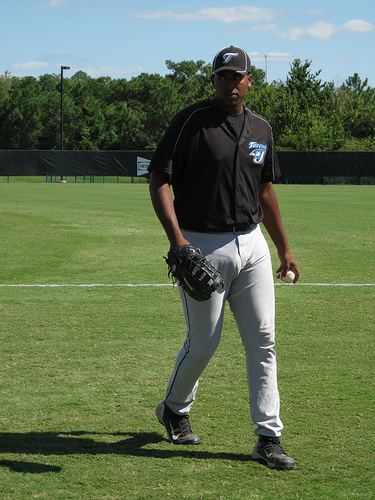
MLB reports: Today on the Reports we are proud to feature Blue Jays prospect first baseman, Arthur Charles. The 20-year old Charles was drafted by the Jays in the 20th round of the 2010 draft. After being selected by the Orioles in 2008 and the Royals in 2009, Charles signed with Toronto and started his baseball journey last year.
At 6’6″ and weighing a solid 221 lbs, Charles projects to flash a great deal of power at the first base position for the Jays. Currently playing for Bluefield in the Appalachian League, Charles has hit 10 home runs in 49 games, with an impressive .813 OPS. Art is one of the most charistmatic players that we have interviewed on the Reports. We can see him quickly becoming a fan favorite one day in Toronto. A name to keep an eye on in the Blue Jays organization, the Reports is proud to present our interview with Arthur (Art) Charles:
MLB reports: Welcome to the Reports Art. Looking to the past, who was your favorite baseball player growing up, that you most idolized and patterned your game after?
 Art Charles: My favorite baseball players growing up would have to be Ken Griffey Jr. and Barry Bonds. These two sluggers were my idols and in whom I modified my game after. Griffey instantly stood out to me because I liked his swing and tried to modify mine to look like his. His swing was just so pure, smooth, and simple. Barry Bonds was the same way I loved his swing and how he hit so many home runs. I used to tell my friends that I would break his home run record and that one day I would be “that guy” in the big leagues hitting bombs and lasers everywhere in front of the world.
MLB reports: Great choices in Bonds and Griffey. We have seen Griffey in particular as a popular choice amond players. On the flipside, which current MLB star do you most admire and why?
 Art Charles: The current MLB player that I admire the most right now is Adrian Gonzalez. I enjoy watching Adrian Gonzalez a lot because he is not only a very good hitter for the Red Sox, but he is a great defensive player as well. His game is something that I now watch very closely for that reason. I would like to be that kind of player, an all around player. I want to be known as a threat and someone who will not only hit for power and average, but someone who has a golden glove at first base making plays and helping his team win on both sides, offensively and defensively.
MLB reports: Reflecting on your career to-date, what are your proudest accomplishments on the baseball field?
Art Charles: My proudest accomplishment of my professional career would have to be hitting a walk-off home run to against the Bristol White Sox this year. This moment isn’t just big for me because I hit the game winning home run ,but because there was a lesson to learn from it. In the top of that inning we were tied and one of the Sox’s players hit a ground ball to me that I made an error on, to give them the go ahead run. I was VERY disappointed, but I knew there was a chance that I would be up in the bottom half of the inning. Although I was heated, I told myself I was going to get up when my team needed me and I was not going to let them down again. I was going to win the game for us. Staying focused and visualizing my at bat, mixed with a little anger, had gotten me mentally prepared for the moment. It was a full count with two runners on and two outs, the kind of moment that you imagine when you are young. I then saw a good pitch and didn’t miss it. Instantly I knew I had just hit the game winning home run and met with my teammates at home plate to celebrate. I even had the shaving cream pie treatment and that made it one of, if not the most, memorable moments of my life.
MLB reports: A great experience Art. Thank you for sharing it with us! Reflecting back, what were your goals going into the 2011 season?
 Art Charles: My goals going into this season were to have quality at bats, hit balls hard where ever they might go, make plays on defense, do my part to help my team win, improve my game for the next level (offensively and defensively), get a promotion to one of our other teams, be a threat every time I step to the plate, work hard at everything I do, and be consistent on a daily basis. I knew that if I did all of those things, that the rest would take care of itself. Meaning home runs, RBI’s, doubles, and making plays in the field would come. I just wanted to make sure I took care of my business and controlled what I could control and let the rest fall into place.
MLB reports: When you first found out you were drafted, what were your reactions? Did those reactions change over time? What was the process like being drafted originally by the Orioles in 2008 and Royals in 2009 and not signing with either team? What made you decide to finally sign with the Jays in 2010?
Art Charles: When being drafted I was beyond excited. Being drafted three times by three different teams is not only an honor and an accomplishment, but also a very exciting and blessed process. Every time I was drafted I was very happy. The process of these drafts was very similar. When I was first drafted in 2008 to the Orioles I was still young, at 17, and needed to mature more and really prepare myself; not ready to make that move. In 2009 I was taken again to the Royals, but still the timing and things didn’t work out. Going into the 2010 season I knew this was the year that I was ready to become a professional ball player and in the 2010 draft the Jays picked me up. I felt this was a good fit for me and I was very comfortable with the scouts and staff I had met in the pre-draft workouts so I knew this was home.
MLB reports: What do you consider your greatest baseball skill(s)?
Art Charles: I consider my greatest baseball skill to be hitting the baseball with power to all parts of the field. I feel that hitting baseballs for power to all fields is what separates me from lots of other players, and its something that I will continue to do and get better at doing.
MLB reports: What facets of your game do you most wish to improve upon?
Art Charles: The parts of my game that I wish to improve on are every part of my game. I feel I need to get better offensively and defensively if I am going to be the all around player that I wish to become. Nothing in life comes easy and I learned that at a young age. So I will continually work hard to better myself and separate myself from others. To be the best I have to be, in fact better than the best. So my speed, agility, offense, and defense all have to improve.
MLB reports: How do strikeouts and walks figure into your game? Do you see any of these items changing over time and to what degree?
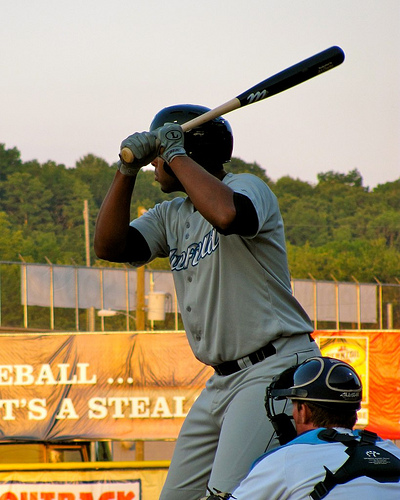 Art Charles: Strikeouts and walks are going to come. They are both part of the game. So far this season I have struck out more than I would have liked to, but that’s part of my learning process as a player. With those strike outs I have learned about how I might be pitched in counts, to be patient and get good pitches to drive, to see pitches up, and much more. It’s all part of the process that everyone goes through to get to the big leagues. Walks are also going to occur and that will be because I’m not chasing pitches, I’m being patient, and seeing the ball up. It’s easier said than done, but like I said it’s part of the process.
MLB reports: Long term what position do you see yourself playing? How do you see defense as part of your overall game?
Art Charles: Long term I see myself in the big leagues as a power hitting first baseman. I feel defense is just as important as hitting. I work on the both of them a lot because I know that if I want to become the player I envision myself becoming, I need to be good around the bag, pick up my teammates, and make plays. I feel that I am still improving defensively and will continue to get better. Defense is definitely part of my game I want polish.
MLB reports: If you had to look into a crystal ball, when do you see your expected time of arrival in the big leagues and what do you think you need to do most to get there?
Art Charles: If I could look into a crystal ball and see my expected time in the big leagues, I don’t know yet what I would see. I would like to be there within three years, but I am young and have a lot to work on and lots of improving to do. So I do not know at this moment what my expected time would be. There isn’t really one thing in particular to say I would need most to get there because to get to the highest level, you need it all.
MLB reports: Has pro ball been everything you expected it to be thus far? What are some of the highs and lows you have experienced thus far?
Art Charles: Pro ball has been everything I expected it to be and more. I can’t say there are any lows because I love what I do and I haven’t had any really long bus rides yet. But there are plenty of highs. One being which seeing myself improve as a player. There are many experiences playing that I have now, such as walk off wins, playoff pushes, fans, signing balls and playing for great skippers. Did I say the fans? I would have to say that one of my favorite things was having a little boy write me a letter thanking me for a handshake and telling me I was his favorite player. The fans are what make this game that much more fun and signing balls, bats, cards, and shirts was a great experience for me.
MLB reports: What do you do for fun when you are not playing baseball? Best friend(s) on the team that you most hang out with and what do you guys like to do to chill?
Art Charles: On a day off or after the game I like to lay down and relax to recharge my batteries a bit, listen to music, vibe out, stay up on my tweet game (@SirArthurC), talk to my family, and play Call of Duty (a favorite among players). Sometimes the guys will come to my room and we play video games or go to the mall. I have tons of movies so we watch movies, or play cards. The guys that you will probably catch me with the most are Aaron Sanchez, Christopher Hawkins, Cody Bartlett, Myles Jaye, Les Williams, or Noah Syndergaard.
MLB reports: Have you visited Toronto the city yet? How have you found the city thus far?
Art Charles: I have been to Toronto for a pre-draft workout in the Rogers Centre last year and it was a lovely place. I really enjoyed my brief stay, very nice city and even better people. The Rogers Centre was great and an unbelievable stadium.
MLB reports: If you could send one message to the Toronto Blue Jays fans, what would it be?
Art Charles: My message to the fans would be thank you for the love and support. It is very much appreciated and not forgotten. You guys are the best!
MLB reports: A big thank you to Art Charles for joining us today on the Reports. We wish you the best of luck on your baseball journey towards joining the Jays in Toronto one day. We definitely encourage all our readers to feel free to contact Art with your comments and questions on his Twitter handle. Art is very active on Twitter and is a must follow!

Please e-mail us at: MLBreports@gmail.com with any questions and feedback. You can follow us on Twitter and become a fan on Facebook . To subscribe to our website and have the daily Reports sent directly to your inbox , click here and follow the link at the top of our homepage.

Interview with Houston Astros Prospect and 2011 Draftee: Brandon Meredith
Friday August 5, 2011
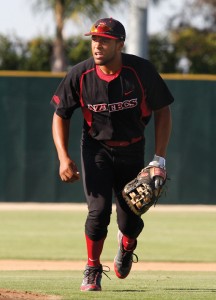
MLB reports: On the Reports we love discussing baseball prospects and looking towards the next up-and-coming MLB stars. We especially enjoy talking to the players directly and bringing them to you on the Reports. Today, we are very fortunate to be c0nversing with Brandon Meredith of the Houston Astros. A 6th round selection in this year’s MLB draft, Brandon is in A-ball, currently playing outfield for the Tri-City ValleyCats of the New York-Penn League. With a .379 OBP and 6 stolen bases in only 34 games played, Brandon has certainly hit the ground running. A native of California, Brandon attended San Diego State and played under hall-of-famer Tony Gwynn before getting drafted. One of the nicest young men you will ever meet, Brandon’s future is very bright as a top prospect that will be playing one day for the Houston Astros. Playing in his first professional baseball season, MLB reports is proud to present Brandon Meredith, outfielder for the Houston Astros:
MLB reports: Welcome to MLB reports Brandon. We are very glad that you have been able to join us today. Let’s the hit ground running. Firstly, as a youngster, who was your favorite baseball player growing up, that you most idolized and patterned your game after?
 Brandon Meredith: I idolized guys like my coach Tony Gwynn at SDSU (San Diego State) and I loved watching Frank Thomas play the game growing up. But I most pattern my game and like to play like Charlie Hustle (Pete Rose). All hustle, all the time.
MLB reports: You certainly were lucky to learn from Tony Gwynn, considered one of the best hitters that the game has ever seen. From the the current crop of players, which MLB star do you most admire and why?
Brandon Meredith: I like a number of guys, I can’t say that I can pick just one. The players that I most look up to have the same qualities. They bring it every night. They hustle and play the game to win. Those are the guys that I work hard to play like and mold my game around.
MLB reports: What are your proudest accomplishments in baseball thus far Brandon?
Brandon Meredith: My proudest accomplishment is getting drafted and having the chance to play professional baseball. To get to this point and be a part of a major league baseball organization, I have made it much farther already than many players. I truly feel blessed to be able to have this opportunity.
MLB reports: What were your goals going into the 2011 season?
Brandon Meredith: I was excited to get on the field and get into games fairly quickly. I want to learn and grow as an individual, as well as a baseball player. I want to learn the pro-style game of baseball and become strong in every facet of the game. At the end of the day, I want to be able to look back on this season and my career and know that I always gave everything I had and to have no regrets.
MLB reports: When you first found out you were drafted, what were your reactions? Did those reactions change over time? What was the process like being drafted originally by the Rays in 2008 and what were the factors in not signing with Tampa Bay and Houston originally?
Brandon Meredith: When I was drafted this year, my first reaction was to reflect on the time I had at San Diego State. It felt weird to know I was going to sign and not be a part of SDSU any longer. The process was a good one in high school. I learned a lot from being drafted at a young age and being a part of the draft process so early in my life. I learned that a person should not expect too much from the draft process. Let it come from you. The factors that led to me not signing was partially the amount of money involved, but also the fact that I felt that I was not physically and mentally prepared to take on pro-ball before. I wanted to develop as a player and person at the college level and become a professional baseball when the time was right. 2011 turned out to be the right time for me.
MLB reports: What do you consider your greatest baseball skill(s)?
Brandon Meredith: I feel like I am a good and patient hitter. I know the strike zone and have a strong understanding of my swing. Overall, I feel that my biggest skill is my knowledge of the game and the fact that I love to play the game hard, every inning of every game that I am on the field.
MLB reports: What facets of your game do you most wish to improve upon?
Brandon Meredith: No matter how long I play this game, there will always be areas of improvement to bring my game to the next level. I need to improve on arm strength and quickness. I want to be an all-around baseball player, as both defense and offense are important to me. I also work hard on the ability to hit for power, without sacrificing getting on base and stealing bases.
MLB reports: How do strikeouts and walks figure into your game?
Brandon Meredith: I hate striking out first of all. I love to walk more than strikeout and walks will always be a very important part of my game. I like getting on base and making things happen. I am working hard on pitch recognition and knowing my strike zone so that I can cut down on strikeouts, which I look to improving upon as much as I can as I continue to play the game.
MLB reports: Long term what position do you see yourself playing? How do you see defense as part of your overall game?
Brandon Meredith: I can see myself staying in the outfield and playing left field. Defense is a big part of my game. I feel that I am a good outfielder. While I recognize that there are areas that I have to work on, overall I pride myself on being solid defensively. I put a great deal of work on the defensive part of my game and while I can’t promise that a gold glove is in my future, I am definitely working towards being the best outfielder that I can be.
MLB reports: Has pro ball been everything you expected it to be thus far? Tell us about your experiences thus far Brandon.
Brandon Meredith: I truly love being a part of professional baseball. It is the most fun that I have had in my life. Interestingly, it feels so much easier than the college game. I feel more relaxed, both mentally and physically. Now I only have baseball to focus on. The best part is that I have baseball and that’s it. I get to play everyday and love my job. The only downside so far is the cities that we are traveling to are new to me and experiences that take time to get used to. But overall it has been a great experience and ride so far.
MLB reports: With working so hard on the field, chill and down time off the field is very important I’m sure. Who do you most hang out with on the ValleyCats Brandon and what do you do for fun?
Brandon Meredith: I love to be competitive with my teammates. We play everything from call of duty to ping-pong. I hang out with Neiko Johnson, Zachary Johnson, Jacke Healey, Nicholas Tropeano, John Hinson, and Andrew Muren the most.
MLB reports: If you had to look into a crystal ball, when do you see your expected time of arrival in the big leagues and what do you think you need to do most to get there?
Brandon Meredith: I feel that I could potentially be there in three to five years. Playing in Houston for the Astros is what I am working towards and will do everything that I can to make my dream come true. For that to happen long-term, I will to need to hit for more power and work hard on my defense and quickness.
MLB reports: A big thank you to Brandon Meredith on joining us today on the Reports. We wish you the best of luck on your baseball journey to the big leagues. We definitely encourage all our readers to feel free to contact Brandon with your comments and questions on his twitter handle. Brandon loves interacting with the fans and is a must follow!
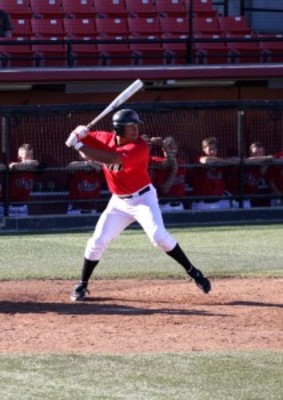
Please e-mail us at: MLBreports@gmail.com with any questions and feedback. You can follow us on Twitter and become a fan on Facebook . To subscribe to our website and have the daily Reports sent directly to your inbox , click here and follow the link at the top of our homepage.

Interview with Baseball Columnist Danny Knobler: CBSSports.com
Monday June 20, 2011
MLB reports: We introduce today on the Reports Danny Knobler, Baseball Columnist for CBSSports.com. While we all enjoy Danny’s work, today’s feature allows everyone to learn about the man behind the columns. Danny’s bio from CBSSports.com is as follows:
“After 18-plus seasons of watching the Detroit Tigers lose, Danny Knobler joined CBSSports.com in May 2008 as a national baseball writer, thankful that he can finally write about winners as well as losers. He’s teaming with Scott Miller, who once covered the Minnesota Twins through six consecutive losing seasons.
The Tigers went 1,285-1,598 in Knobler’s time on the beat, although to be fair they did make it to the 2006 World Series. It’s not like they were the Royals.
Before moving to Michigan, Knobler worked for 5½ years at Baseball America, and later covered baseball for Sport magazine, which isn’t around anymore. He also wrote for the Los Angeles Herald-Examiner and the Santa Monica Evening Outlook, neither of which is around anymore, either.
Knobler graduated from UCLA, and just to prove that he likes some winners, he still follows UCLA basketball.”
We now present Danny Knobler: Baseball Columnist for CBSSports.com:
MLB reports: Thank you for your time as part of this interview. You currently cover Major League Baseball for CBSSports.com. How long have you been with CBS and how did you originally come to work in baseball?
Knobler: I joined CBSSports.com in May 2008, after 18-plus years covering the Detroit Tigers for Booth Newspapers. Before that, I worked at Baseball America, a job I got right out of college at UCLA. At UCLA, I worked in the Sports Information Office, handling baseball PR. While I’d followed all sports, I always gravitated towards baseball, and since I’ve been in the business, I’ve always told people that baseball is the most fascinating game to write about, because of the nature of the game, because it is played every day, and because of the characters involved.
MLB reports: Being a part of the media must be very exciting. Please give our readers a glimpse as to what your job entails and the highlights of working in media.
Knobler: I love my job. I enjoy being at the ballpark, and I enjoy talking about baseball. There’s no doubt that there are times when it is a grind, but the game keeps drawing you in.
MLB reports: What teams have you found have the greatest buzz surrounding them this season? Have any particular “popular” teams seen a drop in publicity and media attention this season in your attention?
Knobler: The Yankees and Red Sox always are going to generate the biggest buzz, because they have the biggest followings. The Phillies have moved up in recent years, but they still fall slightly behind the other two in national buzz. I’m not saying I want this to be true, just that it is true. When you write about the Yankees or Red Sox, more people read it. That doesn’t mean people don’t care about other teams, not at all. All you need to do is look at the number of All-Star votes that Jose Bautista is getting to see that’s not true. As for the team that has seen its profile drop the most, it has to be the Mets. That could change in the next few weeks, depending on how serious they are about trading Jose Reyes, but the interest in the Mets now is really down.
MLB reports: How much interaction do you have with the players on a given team? Do you keep in contact with many even after they leave the team by trade, retirement, release etc.? Are there particular teams that you cover specifically or do you report on all of baseball?
Knobler: I report on all of baseball. Obviously, by spending 18-plus years covering the Tigers, I’m closer to more ex-Tigers than to other players, but I know players on every team. And yes, I keep in touch with some players after they retire. Many of them I don’t see as often, but sometimes I’ll run into a player I covered years ago. It happened last year during the playoffs, when I saw Tony Phillips at a Reds-Phillies game (Halladay’s no-hitter, as it turned out). I saw Eric Davis just last week at the draft.
MLB reports: Where did you work and study before you joined CBS Sports? How did education and previous experiences help you to your current role?
Knobler: I went to school at UCLA, and that gave me my first real inside look at baseball. And some of the players who were classmates at UCLA went on to play in the big leagues, including Mike Gallego, who still works in the big leagues as Oakland’s third-base coach. Later, at Baseball America, I covered Team USA through the 1987 Pan Am Games and the 1988 Olympics. The relationships built there with players like Robin Ventura, Tino Martinez and Jim Abbott carried on through their big-league careers and beyond.
MLB reports: What are the main departments of CBS Sports that you work with on a day-to-day basis? Do you have much interaction with the rest of the CBS squad and do you travel much as part of your role?
Knobler: At CBSSports.com, I work with a great team, the best I’ve ever been around. I work most closely with Scott Miller, our other Senior Baseball Writer, who does a great job and is maybe the nicest guy in the business. We also have a great staff in the office. I travel some, but not nearly as much as I did when I was on the beat. Living in New York helps, because with teams in both leagues, every team in baseball plays here at least one time a year.
MLB reports: What is your job like comparing the baseball season and off-season? Does the role change much and can you give our readers the insight as to what the two different times of the year are like in reporting.
 Knobler: The job does change some. People always ask, “What do you do in the offseason?” Baseball isn’t played year-round, but baseball goes on year-round. There is news basically every day of the year. The big difference is that during the season, a significant amount (but not nearly all) of the news is at the ballpark. In the winter, most of the news is gathered by phone, email and text. You spend a lot more time sitting around, but you work just as hard.
MLB reports: If you could have your future dream job, what would it be? Would it be in baseball? Where do you see yourself in 5 years from now?
Knobler: I have my dream job. I don’t want to work for a team. I love doing what I do right now, and hope to do it for a lot longer.
MLB reports: In the situation where a college graduate comes to you and asks you to give them advice on how to “work in baseball”, what would be your response? Any tips that you can give our readers would be appreciated.
Knobler: If by “work in baseball,” you mean work for a team, I would say be prepared to work long hours for very low pay, especially at the start, and in some not-so-glamorous jobs. I know people who went on to be general managers in the big leagues who talk about the time they spent in the minors, and about the days they had to go pull the tarp when it rained. Ask yourself if you’re that dedicated. If you are, then get in touch with anyone you know in the game. Baseball also sets up a job-seekers event every year at the winter meetings.
MLB reports: How has your life changed since working in baseball? Looking back, is there anything that you would have done differently? What have been the best parts of the job?
Knobler: I don’t really think of myself as working “in baseball.” But any job involved with the game, be it writer, broadcaster, team executive, coach or player has huge pluses and also some minuses. Baseball can consume your life, whether you play it, talk about it for a living or write about it. The games are at night, and on weekends. I remember Travis Fryman telling me once that a friend in Pensacola asked him, “When you’re in Detroit, what do you do on weekends?” It was a normal question you might ask any friend who moved somewhere for work, but of course, in the case of a baseball player, the answer was, “We play on weekends.” Well, we write on weekends, too, although not as often as I did as a beat writer.
MLB reports: Do you have favorite interviews that you can share and some that were more regrettable? Details Danny, details!
Knobler: Too many good ones to name. Bad ones, sure. Jason Johnson once told me, “I feel sorry for your paper.” And no, it didn’t bother me that he felt that way.
MLB reports: Who are your picks to meet in the World Series this year and why?
Knobler: When the season began, I picked the Red Sox and Braves. I’ll stick with that, although for obvious reasons I’m a little more confident about the Red Sox than the Braves right now. I never worry about picks that don’t turn out. I’m not putting money on any of my picks, and I would hope no one else would put any money down based on who I pick.
MLB reports: Thank you again for your time Danny and joining us today on MLB reports. It has been a pleasure speaking with you and we look forward to continuing to enjoy your fine work on CBSSports.com.

***A special thank you to Danny Knobler for his time and effort as part of being interviewed for this article. You can follow Danny on Twitter and click here to read Danny on CBSSports.com. To view the man in action, click on this YouTube link of Danny speaking with Reds Manager, Dusty Baker***
Please e-mail us at: MLBreports@gmail.com with any questions and feedback. You can follow us on Twitter and become a fan on Facebook . To subscribe to our website and have the daily Reports sent directly to your inbox , click here and follow the link at the top of our homepage.

Interview with Author Howard Megdal: “Taking the Field: A Fan’s Quest to Run the Team He Loves”
Sunday June 5, 2011
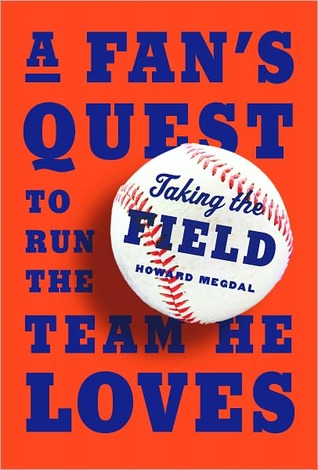
MLB reports: We are pleased to feature today our interview with baseball author Howard Megdal. After the success of his first baseball literary work “The Baseball Talmud”, Howard has followed up with his just recently published book: “Taking the Field: A Fan’s Quest to Run the Team He Loves.” The press release for the book by Bloomsbury USA describes it as “the true-life story of a baseball fan brave enough to try what all fans wish they could: take over his team and turn it around.” Howard is first and foremost a Mets fan, but loves the game of baseball as a whole. A talented writer, Howard’s books have received great acclaim. For all our baseball fans and aspiring writers, MLB reports is proud to present Howard Megdal.
MLB reports: Howard, thank you for taking the time to speak with us today. Taking a look at your resume, you have quite the extensive baseball writing background. From two published books and articles for many major publications, including the New York Times, ESPN.com, New York Baseball Digest and mlbtraderumors.com. How did you get your start in writing Howard? What led you to writing and specifically, baseball writing?
MEGDAL: Well, I’ve always loved to write. When I got to college, I found that the on-campus publication only published once every 1-2 months, so I started my own. From there, I used that experience to land a job at a daily right nearby, eventually rising to sports editor. And whenever I had the chance to cover baseball, at any level, I just loved it.
MLB reports: What was your first “big break” in your writing career? Please provide details as to how you landed your first big role and the doors that it opened for you.
 MEGDAL: I’d have to point to a pair of moments. One is, Mark Healey over at Gotham Baseball gave me the opportunity to cover the Mets and Yankees. It was my first credential at each stadium, and I remember the feeling of standing on the dirt at Yankee Stadium, just awestruck. From there, getting the chance to write for the New York Observer was critical, not only for the wider exposure, but because I work with my editor from there to this day, though now at Capital New York.
MLB reports: It is the dream of all sports writers to be a published author. Your first book was the “Baseball Talmud- The definitive position-by-position ranking of baseball’s chosen players.” How did you score the book deal? In addition to getting signed, how was the topic of the “Baseball Talmud” born? Was this an original creation that you shopped around, or did you get signed first and then came up with the topic?
MEGDAL: Regarding the deal, that was just persistence. I had wanted to write that book since college, and so I wrote up a sample chapter and proposal, and sent it to around 200 literary agents. That was harder even a few years ago; most required a hard copy. But my wife helped me put together the envelopes. And I remember getting a call when I was sick with a fever, and not quite believing it.
MLB reports: How long did it take you to write your first book? Please give us an idea as to how the book writing process worked for you, from finding the topic to polishing off the final draft of the book for publishing.
MEGDAL: Like I said, I knew what I wanted to write a Jewish Bill James-style book. The process of writing it took around 14 months, and the process was pretty straightforward. I made my days about writing the book, so once I ate breakfast, a cat jumped in my lap- we have two, so they took shifts and I went to work.
MLB reports: How did your life change after the “Baseball Talmud” was published? We are curious as to the work and promotions that went into effect after the book hit stores. Did you tour much for signings and give interviews promoting the book? How did your career change post-Baseball Talmud?
 MEGDAL: Well, I was fortunate to find a wide audience for the book, and had the pleasure of traveling all over the country to give talks and signings. What changed, I guess, was getting to meet people who were familiar with the work and discussing it with them- instead of just sending my pieces into the void and seeing stray comments for or against them. It was gratifying.
MLB reports: What were your goals when you entered the business and how have they evolved since?
MEGDAL: My goals have always been to figure out who I wanted to write for, and make a point of doing so. That hasn’t really changed- I still love that I get to write what I want when I want. It seems kind of ridiculous, actually.
MLB reports: The title of your new book is absolutely captivating: “Taking the Field- A fan’s quest to run the team that he loves.” Please describe how you came up with the title to the book and if you can give the readers a little teaser about what the book is about in your own words.
 MEGDAL: The title came from extended brainstorming from my fantastic editor at Bloomsbury, Ben Adams. The book itself is the story of my run to become General Manager of the New York Mets, which I treated like a political campaign, and simultaneously introduced baseball to my newborn daughter, Mirabelle. I spend time in the book dissecting how the Mets should have been run, and the effect their mismanagement through the years had on my family.
MLB reports: Book #2: Was it different to obtain a publishing deal for it in comparison to your first work? How was the idea born and how did you go about writing such an interesting topic?
MEGDAL: The process was a bit different this time; I met with several publishers, and we finally settled on Bloomsbury as the best fit this time around. I knew I wanted to write something more personal this time, and I also believed the time for this idea had come. I’d batted it around in my own mind for years, simply because I wanted to find a way to make the larger points about how the New York Mets should be run. This struck me as the perfect marriage of opportunity and timing.
MLB reports: “Taking the Field” was just published and is available for orders. Where is the book available for purchase? What forms are you selling the book (i.e. hard copy, digital and on tape?) Is there a book signing tour planned?
MEGDAL: The book is available everywhere- Amazon, Barnes and Noble, the Borders shops that haven’t yet closed… also the Kindle and Nook. I’ll be appearing in a number of places- HowardMegdal.com is probably your best bet to find out tour dates/times.
MLB reports: In comparing your two books, was it easier to write a book the second time around? How did the process and time lines for the books compare?
MEGDAL: Totally different. Second time around, I was writing to a much shorter deadline, and writing about myself. It was far more intense.
MLB reports: With your second book published, what are the goals for Howard Megdal from here? Are more books planned down the road and will they only be focused on baseball?
 MEGDAL: Ah, great question. Still trying to figure that out with my agent. I would be surprised if I only wrote baseball books from here, though I have so many baseball ideas alone that it could sustain me for the duration. I love not knowing, though.
MLB reports: Being an obvious baseball fan and supporter of the game, how would you best sum up the state of the sport as it stands today? What do you love about the game and are there things you would change about it?
MEGDAL: The game has never been better. What I would change is simple: I’d eliminate the DH, move the Dodgers back to Brooklyn, keep the playoffs small and mandate scheduled double-headers.
MLB reports: For the future baseball writer reading this interview, what recommendations can you give for them to crack this industry? How does a person become the next Howard Megdal and write baseball columns and become a published baseball author one day? What is the secret of your success?
MEGDAL: Persistence. Write as often as you can, and for anyone who will publish you. Keep sending out pitches to editors, and gradually you will develop a following. Really, that’s all it is; keep knocking on doors.
MLB reports: Thank you for speaking with us today Howard. We wish you the best of luck with “Taking the Field”. It was a pleasure getting to know you and we look forward to publishing our own review of the book. It sounds like a great read and we encourage our readers to check it out.
***A special thank you to Howard Megdal for his time and effort as part of being interviewed for this article. You can follow Howard on Twitter and click here for Howard’s website.***
Please e-mail us at: MLBreports@gmail.com with any questions and feedback. You can follow us on Twitter and become a fan on Facebook . To subscribe to our website and have the daily Reports sent directly to your inbox , click here and follow the link at the top of our homepage.

Interview with Frank Gailey: Jays Prospect
MLB reports: In our most recent interview, we sat down with Toronto Blue Jays prospect, Frank Gailey. The organization’s 2010 Reliever of the Year, Frank is one of the up-and-coming Jays prospects that should be on everyone’s radar. A 23rd round pick of the Jays back in 2007, Frank simply put has been dominant on the mound from the moment he put on a Jays uniform. As Gailey has steadily and methodically risen up the organizational ladder, baseball insiders feel that its time for the Jays to move Gaily aggressively up the ranks to see what he can do. Back for a second tour of duty with Dunedin High A, Gailey after 15 games this season has exploded, with a miniscule 1.21 ERA, 0.851 WHIP, 6/17 BB/K. Considering the man has a 2.07 ERA in 5 career seasons with a 1.005 WHIP, Frank deserves to be on the fast track. With nothing left to prove in Dunedin, Gailey will hopefully be seeing the bright lights of Las Vegas AAA this season. With left-handed relievers furiously in demand through major league baseball, expect to see Frank Gailey up in Toronto one day soon. Now, without further adieu, MLB reports presents: Frank Gailey.
MLB reports: Thank you for taking time out of your schedule to speak with us Frank. It is much appreciated.
Frank Gailey: Thank you for having me and for the opportunity.
MLB reports: Starting off Frank, to get some background on the type of player that you are- we need to ask who was your favorite baseball player growing up, that you most idolized and patterned your game after? Athletes tend to mirror the players that they looked up to growing up from my experiences.
 Frank Gailey: I would have to say that Tom Glavine was the one pitcher that I looked at most and enjoyed watching. He is the type of pitcher that uses all approaches when on the mound. I believe as a left-handed pitcher now in the minors, I now know that I can’t just throw a fastball anywhere and expect to be successful. I need to locate every pitch in and outside the plate. Change speeds and be smarter than the hitter.
MLB reports: Which current MLB star do you most admire and why?
Frank Gailey: To be honest I admire all of them that had a dream like mine and fought through any set backs in their careers and made it. One day, I wish I hope to be in their shoes.
MLB reports: Reflecting on your career to-date, what are your proudest accomplishments on the baseball field?
 Frank Gailey: I would have to say that all the accomplishments in my career on the field are amazing and I will never forget the teammates and coaches that were there for me. However, the proudest moment was when I got the call that I was drafted by the Blue Jays. To me that showed that all my hard work and dedication to my dream of one day being a big leaguer is paying off.
MLB reports: What are your goals going into the 2011 season?
Frank Gailey: I would have to say that my goals for this season are to be stronger and stay healthy while having a good season. I believe if I do that, then I would be able to help my team be successful.
MLB reports: When you first found out you were drafted by the Jays, what were your first reactions? Did those reactions change over time? If you can comment on the team itself and your draft position in the 23rd round that would help.
Frank Gailey: To be honest, I heard I was drafted and I was pumped. I didn’t really care whom it was that drafted me, as I just wanted an opportunity to compete at a higher level. But now being with the Jays for some time, I enjoy everyone associated with the Jays organization because they are there to help make me grow better as a player and person.
MLB reports: What do you consider your greatest baseball skill(s)?
Frank Gailey: To me my greatest skills are my competitive nature and ability to stay calm and throw strikes with multiple pitches.
MLB reports: What facets of your game do you most wish to improve upon?
Frank Gailey: The part of my game that I wish to improve on the most is to be completely dominant against left-handed hitters.
MLB reports: How do strikeouts and walks/control figure into your game? Do you see any of these items changing over time and to what degree?
 Frank Gailey: To me strikeouts will come if you just throw quality strikes. I don’t get on the mound to strike guys out, but rather to make one quality pitch at a time. Personally I hate walking guys because it a free pass. They did not have to do anything to get on base and I didn’t give my defense a chance to do their job. I don’t see this mind-set changing because it fits my game plan.
MLB reports: Long term do you see yourself staying in the bullpen? Do you envision yourself as a closer in the big leagues one day?
Frank Gailey: If I had to guess I would say yes to the fact that I would be staying in the bullpen. I don’t see myself as a closer but pretty much everything else. But I am ready for any role asked of me by the team.
MLB reports: If you had to look into a crystal ball, when do you see your expected time of arrival in the big leagues and what do you think you need to do most to get there?
Frank Gailey: There is no way I can even guess an answer to something like that. The only things I can do to help my chances are to compete and be the steady guy that the team can rely upon in the bullpen.
MLB reports: Thank you very much for your time and appearing on MLB reports. It has been a pleasure speaking with you and good luck on the season
Frank Gailey: Thank you for having me and thank you to the fans for all of their support.
***A special thank you to Frank Gailey for his time and effort as part of being interviewed for this article. You can follow Frank on Twitter.***
Please e-mail us at: MLBreports@gmail.com with any questions and feedback. You can follow us on Twitter and become a fan on Facebook . To subscribe to our website and have the daily Reports sent directly to your inbox , click here and follow the link at the top of our homepage.

Interview with Yusuf Carter: Oakland A’s Prospect

MLB reports: In our latest interview feature, we meet Oakland Athletics catching prospect, Yusuf Carter. Yusuf is 26-years-of-age and currently playing AA ball with the Midland RockHounds. Carter has the distinction of being drafted by three different major league teams, the Mariners, A’s and Cubs. Carter ultimately signed with the Cubs and played in their farm system before joining Oakland. The nephew of former major leaguer Joe Carter, Yusuf has graciously agreed to this interview with MLB reports. After speaking with him, I can fully say that you would be hard pressed to find a nicer, more down to earth player than Carter. A terrific human being and baseball player, Yusuf Carter is one of the lucky ones to play professional baseball and appreciates every minute. He is a hard worker, does not take anything for granted and is giving it his all to make it the major leagues. We proudly present: Yusuf Carter, of the Oakland Athletics.
MLB reports: Welcome to MLB reports Yusuf. It is a pleasure to have you join us.
Carter: The pleasure is all mine. Thank you for contacting me and having me on board.
MLB reports: Let’s start off with learning who was your favorite baseball player growing up. Which player did you most idolize and pattern your game after?
Carter: My favorite player growing up was definitely the kid, Ken Griffey Jr. I loved the way he brought style and swagger to the game of baseball! He was the best at hitting long home runs (and pimping them) and making highlight catches seemingly every night! Griffey probably had the most pure talent of any player I have ever seen and I hope that he makes the hall of fame one day.
MLB reports: To flip it around, which current MLB star do you most admire and why?
Carter: The player I most admire now is definitely Derek Jeter of the New York Yankees. I admire the way he goes about his business and plays the game. Jeter works very hard and plays the right way, every day. I am also impressed that Jeter has not let stardom get to his head and has remained humble despite his vast successes in baseball.
MLB reports: Reflecting on your career to-date, what are your proudest accomplishments on the baseball field?
Carter: Well looking at my career so far, I would have to say winning the Florida State League Championship in 2008 with the Daytona Cubs. It was the best feeling I ever had playing baseball. I hit a game-tying home run in a crucial game during the series and that was a pretty awesome feeling.
MLB reports: What are your goals going into the 2011 season?
Carter: My goals are to hit .400 with 50 home runs and 150 RBI’s! They say it is important to dream big, right?! (laughing) Realistically though, I am just going to go out and play hard  every day and give it my all! I want to look back after every game and know that I never took a night off and never gave away any at bats. As long as I play like that, I am sure that I can achieve at least half of my expected goals. That would be pretty good!
MLB reports: When you first found out you were drafted by three different teams in three years, what were your reactions? Did those reactions change over time? If you can comment on each team and why you chose to re-enter the draft that would be great. Please also tell the story of final signing with the Cubs and how you came to the A’s.
Carter: To be drafted at all is a pretty big deal. After it happened 3 years in a row, I was very happy that different organizations thought I was good enough to play for them and wanted me. That definitely gave me the confidence that I can make it all the way to the big leagues one day and made me work that much harder on every aspect of my game. But each situation was different for me. After considering all the factors, even when I got drafted early, I decided that I didn’t want to rush into signing and starting my career if the situation wasn’t the best fit for me at that particular stage. The best situation was when the Chicago Cubs drafted me in 2005, so I signed with the Cubs and started my baseball career. I played with the Cubs from 2005 -2008. I was picked up by the Oakland A’s in the winter of 2008 in the rule 5 draft and have been with the organization ever since.
MLB reports: Can you give an insight as to why you originally chose not to sign in the 2 previous times you were drafted before signing with the Cubs? Did you have any fear that you may not be drafted again or not have interest if you did not sign each time you chose not to sign?
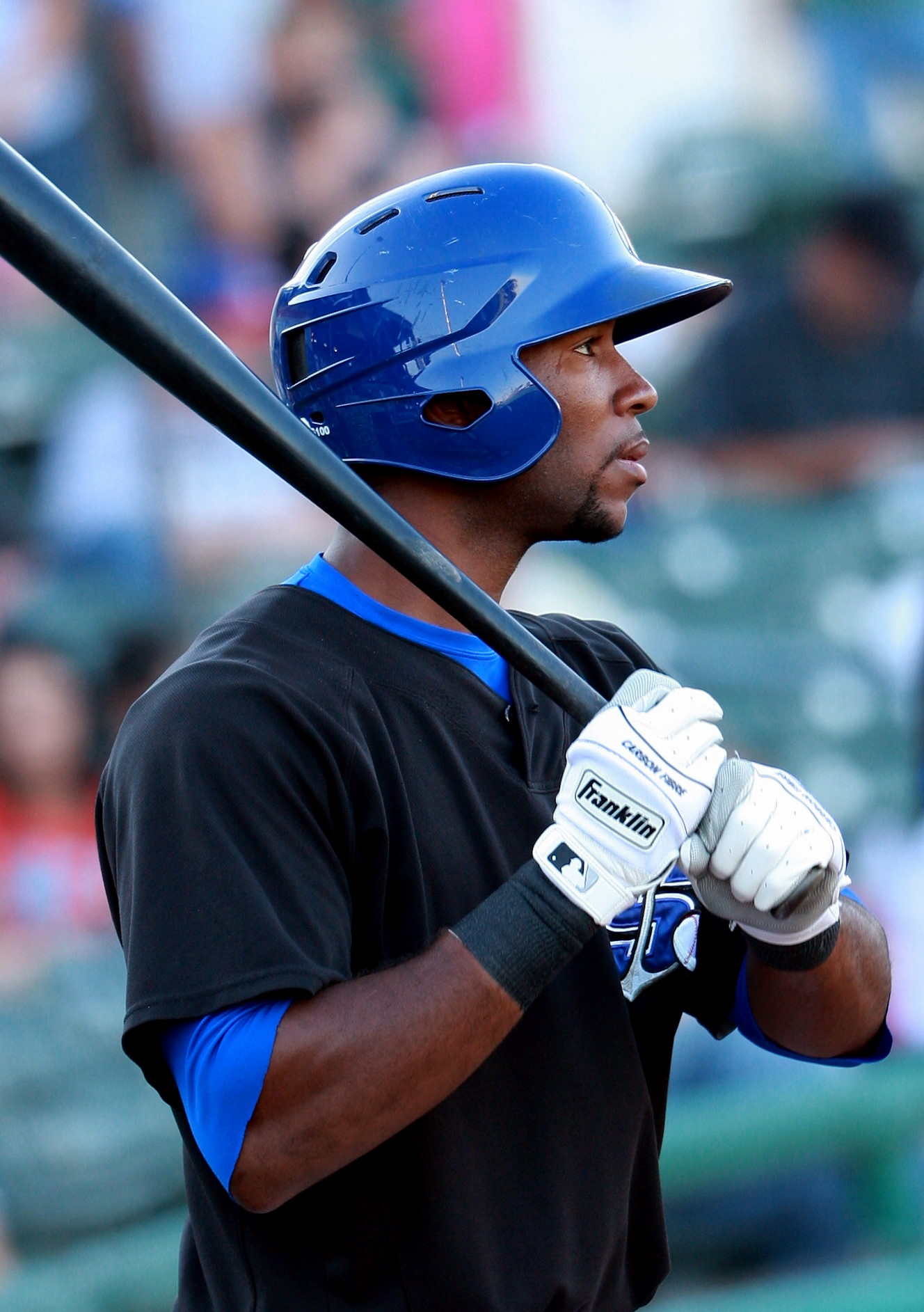 Carter: I was first drafted out of high school by the Mariners and the offer wasn’t very much. I knew it would be best for my career if I went to college and played more. That way I could gain more experience playing at a higher level, with the chance of increasing my value if I played well. The second time around, I was ironically drafted by the Oakland A’s. I was a draft-and-follow (before they got changed the system and got rid of it). The A’s wanted me to play another year of college ball and come to a decision once the year was over. I decided not to sign with them because they had just drafted a catcher in the 1st round that year and another catcher in the 2nd round. Kurt Suzuki and Landon Powell were both catchers that I knew of and as it turns out, are now the starting and #2 catchers for the A’s today. With such a backlog at the position, I thought I would have a better chance at advancing with a different organization. That’s when the Cubs drafted me and I felt it was a good situation for me and I signed. I definitely had a slight fear each time that I may not be drafted again by not signing. But I was also confident in my abilities and didn’t want to sell myself short just out of fear. I just wanted to play hard and do well and I felt everything would work itself out. Which it did.
MLB reports: What do you consider your greatest baseball skill(s)?
Carter: I would have to say that in my opinion and based on what most people say as well, my best skill would have to be my arm. I like throwing guys out anyway I can. Defense behind the plate attracted me to the position and throwing out would- e based runners is the best part of being a catcher.
MLB reports: What facets of your game do you most wish to improve upon?
Carter: I honestly need to improve on all areas! But I think as a catcher, I need to focus on improving my receiving skills so that I can handle all the different pitchers I work with on a daily basis much better. I have made already strong improvements from this spring to now in that area of my game. As a result, I am feeling a lot more confident as I work towards being a major league catcher one day. But my mindset is that I can always get better!
MLB reports: How do strikeouts and walks figure into your game? Do you see any of these items changing over time and to what degree?
Carter: They play a huge part in my game. When I feel good and comfortable in the box, I see the ball a lot better and I don’t chase many pitches out of the zone. That inevitably leads to more walks and better overall results at the plate. I don’t end up getting myself out as much. But if I’m not seeing the ball as well or I’m in a little funk, like most batters I tend to chase out of the zone and swing at pitches that I should have resisted! That ends up leading to fewer opportunities for success. My approach at the plate is something that I definitely see changing and an aspect of my game that I have to constantly stay on top of.
MLB reports: Long term what position do you see yourself playing? How do you see defense as part of your overall game?
Carter: I have always been a guy that can play multiple positions, which I consider a strength for me. By being versatile, I have more ways to stay in the line-up and gain experience in the field But I think that if I had a choice, I would choose catching at this point. I know that many people will call me crazy for choosing the most demanding position in the game! But in my view, I see catchers as an important part of the game. I have always thought that if I could master that position and be able to catch at the highest level, I would be very important to my team and organization. As a catcher, defense is the main part of my game which always needs to be sharp! I have to be able to do it all, including stopping easy runs from scoring by base runners advancing on balls thrown in the dirt or stealing, for example. So yes, defense is huge.
MLB reports: A little birdy told us that your uncle happens to be no other than…former MLB star and World Series hero Joe Carter. Is this true?
Carter: Yes, indeed (chuckle). You are correct. Joe is my father’s brother and my uncle. I definitely get my athletic genes from that side of the family. Just to look in comparison, I am probably the “smallest” guy in the bunch at 6’3″ when I am around my dad’s family, including my father, uncles and brothers. My dad is 6’7″ so I got some of his height luckily (chuckle).
MLB reports: What is your relationship like with Joe Carter? Must have been pretty amazing. What kind of influence was Uncle Joe on your baseball career and life?
Carter: Joe and I always have enjoyed a great relationship. He was one of the best uncles a nephew could ever asked for. He has helped me and been there for me in so many ways since I started playing baseball. Joe always gives me hitting advice if I needed it and just to talk baseball sometimes. He always helped get me back on track and improve my game. I had an advantage with Joe Carter as my uncle, as he always gave me good advice at each stage when I was trying to decide when and where to sign professionally. My agent happens to be also his agent that he has been with for 25 years, so I knew that he would have my best interests in mind.
MLB reports: What was it like growing up with Joe Carter as your uncle? I can only imagine the stories that you must have.
 Carter: Growing up with everyone knowing that Joe was my uncle was a good thing and a bad thing at times. It was cool because I had a famous uncle to brag about if I wanted! (chuckling) Although I usually didn’t tell people about Joe often. Having such a famous uncle got me a great deal of exposure and extra looks from scouts and teams. The only thing was that I just did not want to be known solely as his nephew though. I wanted to stand on my own and have people see that I could play and had talent as well. But it was always cool going to watch him play whenever he played in New York (my hometown) against the Mets or Yankees! I got to meet a lot of my favorite players after games waiting for him to come out. That was always a treat.
MLB reports: Any memories of your uncle that stick out?
Carter: A cool time that I remember is when Joe was a commentator for the Cubs back in 2003. That was my senior year in high school. He set it up so that I could take batting practice on the field with the Cubs! The team gave me a uniform and everything. I got the chance that day to meet Sosa, Alomar and a lot of guys from both teams . I didn’t hit any out of the park that day, but it was fun! Later, to top it off Joe brought me up to the press box with him and put me on tv with him for a bit! I’m just lucky to have someone of his stature in the game, that has been there and to look out for me. Joe knows what it takes to succeed in life and baseball and has always been there to give me advice and to help me out.
MLB reports: What have you most taken away from Joe Carter the baseball player?
Carter: One thing that I always noticed about him when he played is that he had a constant smile on his face and looked happy to be playing the game. I definitely try to do the same when I’m out there on the field. After all, let’s all never forget that it is still just a game! The more fun that you have out there, the better you will play overall.
MLB reports: I know that you must get this all the time, but we can’t talk about Joe Carter without me asking you: what are your memories from his famous walk-off home run in the World Series?
Carter: A lot of people ask me what I thought about his walk-off home run to win the World Series for the Blue Jays back in the 1990s. The truth is that I respond that I did not know anything about it until I was 12-years-old and started playing organized baseball! So I actually learned about “the home run” 4 years after it happened. Boy, I got a late start! (chuckle)
MLB reports: What were your experiences like growing up as a baseball late bloomer? Please give us an insight as to what your childhood was like and how that affected your playing career.
Carter: I would say my culture or childhood affected me the most as far as playing goes. I grew up in Brooklyn, New York, in a neighborhood where I was fortunate to have many friends of the same age. We were always involved in some type of sports every day. We would literally play all different sports throughout the day, every day. My childhood is definitely where my competitiveness on the field comes from. You never want to lose to another neighborhood at all, so I learned at a young age that you always have to give it your all in sports. That is how I continue to play the game to this day. I joined my first organized baseball team when I was 12 years old. That is a late start for most people but I was lucky to have the raw skills from playing in the streets. From there, I had to learn the game of baseball and the fundamentals that go with it. But I think growing up that way taught me to work hard and always play the game the right way.
MLB reports: How has your general interaction with fans been? As far as autograph requests, cheering, heckling etc. please share insights.
Carter: I always try to interact with the fans any chance I get. I have never been a guy that takes himself too seriously, so I don’t mind small talk or signing autographs for fans if I have time. I especially like to talk to the young kids at the game if I can. It is important to me to make sure that the kids get the most out of their time at the ballpark. In terms of fans cheering, I can take a joke that comes across as a good heckling. I’ll usually laugh in those situations and not get upset. As long as it is nothing personal or disrespectful, it doesn’t get to me.
MLB reports: If you were not playing baseball today, what do you think that you would be doing? When you aren’t playing baseball Yusuf, what do you do for downtime?
Carter: If I wasn’t playing baseball, I would try my luck in acting or something. I would be a bad guy or villain in my movies or the super cool hero! (chuckle) Either an actor or a music producer. I Love music, so that would be a fun role for me. On my free time when I am not playing baseball, I usually try to kick back and relax. Watch tv or catch a new movie that came out. I enjoy my downtime and try to let my mind and body relax and focus. Nothing that involves baseball! (laughing)
MLB reports: On a side note, have you ever met Billy Beane before? If you can give any scoops as to how interactions with Billy were and/or other members of the Oakland management that would be great to give fans the inside feel.
 Carter: I don’t have much to share, sorry guys. I have seen him before but haven’t actually met him and interacted with him. But I would say it would be like any interaction with any management or boss. My rule is to always do the right things. Smile, don’t talk too much and laugh at their jokes! (laughing) If you do that, you should be fine!
MLB reports: If you had to look into a crystal ball, when do you see your expected time of arrival in the big leagues and what do you think you need to do most to get there?
Carter: If I had a crystal ball I would definitely try to speed up that process as much as possible! (grin) In my estimation, if I continue to sharpen my receiving skills and work hard on the other parts of my game as well, I think I can be there in the next 1-2 years. Until then, I will continue to work hard and bust my behind to make it happen!
MLB reports: Keep up the great work Yusuf. It was a pleasure meeting and speaking with you. We hope that we can do this again soon and good luck on the rest of the season.
Carter: Thank you for featuring me, you guys are awesome. I read MLB reports all the time and love your articles. This was fun!
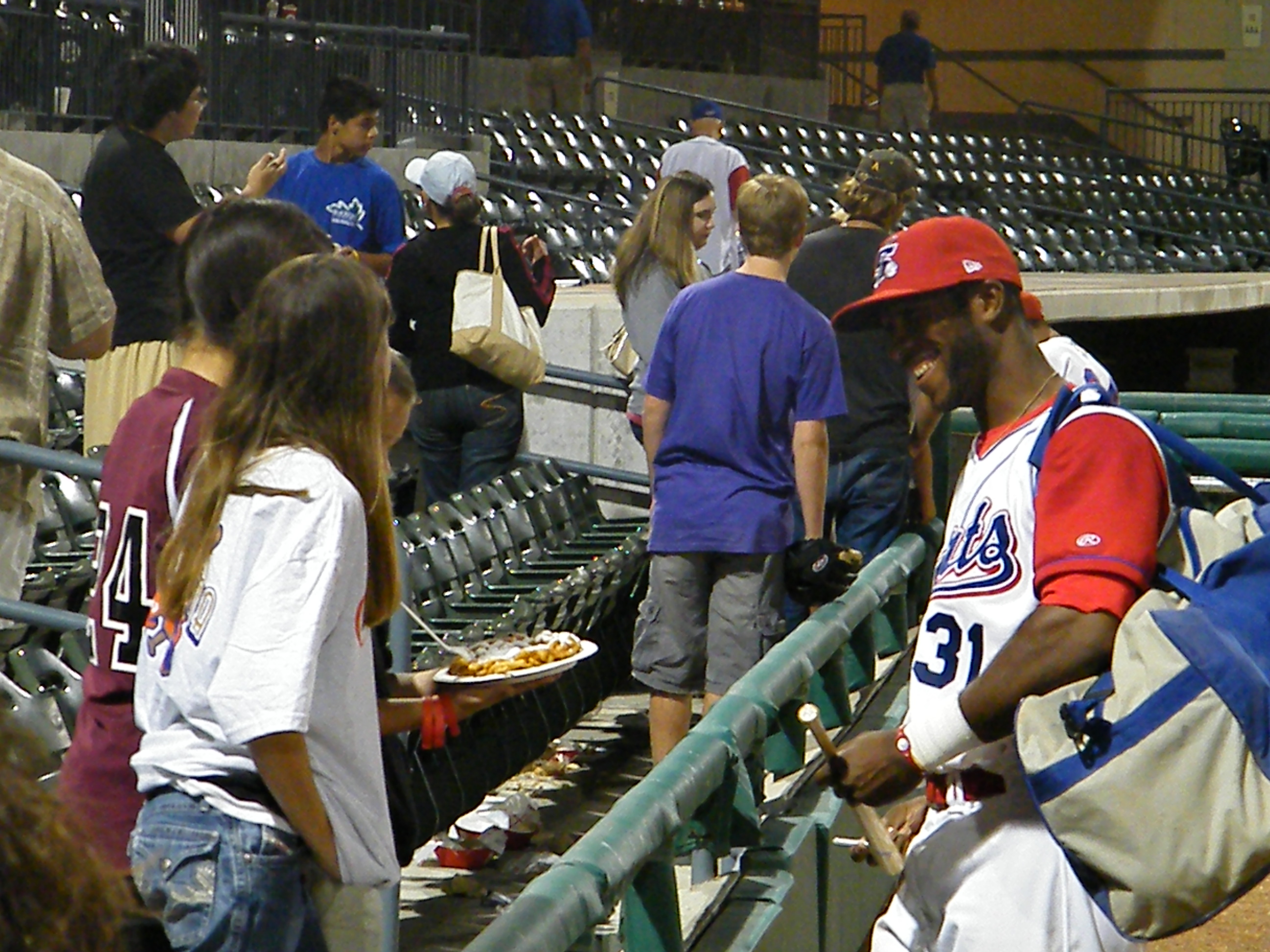
***A special thank you to Yusuf Carter for his time in speaking with MLB reports as part of this interview and providing several personal photos. We look forward to Yusuf writing a blog entry for our MLB Guest Blog this season, exclusively on MLB reports. You can also follow Yusuf Carter on twitter***
Please e-mail us at: MLBreports@gmail.com with any questions and feedback. You can follow us on Twitter and become a fan on Facebook . To subscribe to our website and have the daily Reports sent directly to your inbox , click here and follow the link at the top of our homepage.

Ryan Tatusko: MLB Guest Blog
The players speak: MLB reports devotes this page to the players who will be writing blogs in their own words to you, the readers.
The inaugural MLB Guest Blog comes from Ryan Tatusko of the Washington Nationals. Ryan currently pitches for the AA Harrisburg Senators of the Eastern League.
April 21, 2011
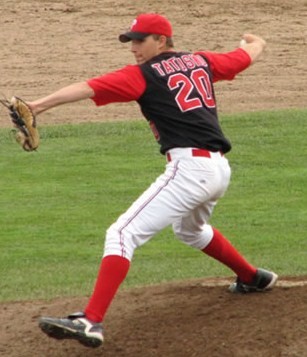
Ryan Tatusko: This year was a different year for me in preparation for many reasons. For one, I was starting out with a new team that I really know nothing about. Furthermore, I am going to be a full-time starter this year. In the past, when I was with the Texas Rangers, I was would routinely ping-pong between the bullpen and the starting rotation based on where they, the organization, would need me. I would then usually stick in the rotation around the all-star game, but this year was different. The Nationals have told me that at this time they envision me as helping the ball club as a starting pitcher and that’s where they wanted to keep me.
 Heading into the season as a starter, I did not necessarily change the way I went about my off-season preparation or conditioning, but I did tweak a few things here and there. For instance, as part of my bullpen sessions, I wouldn’t throw them as frequently as I would when I started the season as a reliever. Instead, I would do fewer sessions with more pitchers. I also made sure that I would do more long distance cardio work to build my stamina for the upcoming year. My preparation for camp has never changed in the 4+ years that I have been going. The team you are with gives you a pretty set schedule as to what to do in terms of running, lifting, and throwing and as long as you follow it, you will be just fine and will be ready to go when camp starts.
Getting to camp this year was fun and exciting for me as I got the feeling that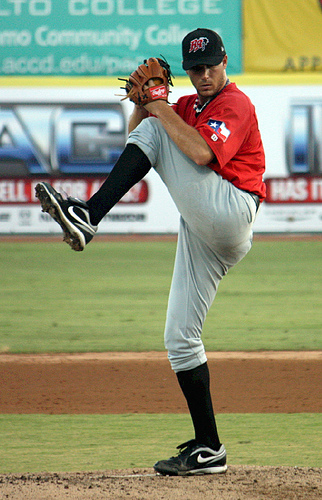 I was a fresh face all over again, the same feelings I got when I was first drafted by the Rangers came back. I was excited, maybe too excited. The first few games I played in I probably tried to do too much. But once I settled down and starting getting back to my game, I felt like I had very good success during spring training. I really wanted to work on throwing my change-up for strikes more in camp, as it seems to be a pitch that has been less effective for me as compared to my other pitches. By the time that I left Viera,FL I felt that I made immense strides with it and I was extremely happy with the way I was throwing it and with the confidence I was displaying.
Not understanding where you are going to be assigned is one of those things that can consume you if you are not careful. When you start to think about the potential moves that the organization could and should make, you start to drive yourself crazy and you get distracted from what you do on the mound. It’s one of those things you just got to try your best to block out and not think about as you go through your process and getting ready for the season. There is always a rhyme and a reason that people do things and although it might not be evidently clear at the first get go as to why; you eventually find out.
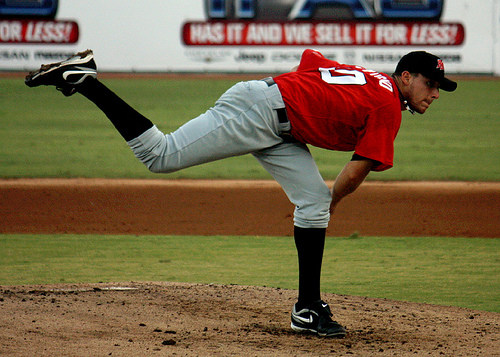 I have since been assigned to AA Harrisburg to begin the year. I have made a few starts and although one particularly has not gone the way I would have liked it too, it is still very early on in the season. I see these starts as an opportunity for me to learn from my mistakes and to grow as a pitcher. There are numerous quotes and clichés out there that talk about having a short memory if you want to succeed at this game and they are all absolutely true. There is a fine line between learning and obsessing over particular starts. There is always something positive and negative to get out of taking the mound, but as a player you have to be careful and not let it consume you and over-think about the process. The really good pitchers out there learn and move on the quickest so that they can devote all their time to their next outing.
I am eager to get back on the mound quickly and progress through the season. I have never felt stronger mentally and physically and I can’t wait to see what the season has in store for me.
Thanks for reading.
Ryan
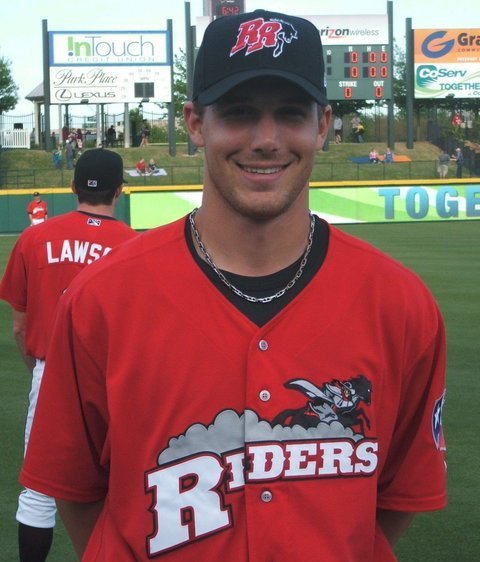
***A special thank you to Ryan Tatusko for his time and effort in preparing his guest MLB blog entry for MLB reports. Please follow Ryan on Twitter. In addition to being a talented pitcher, Ryan is a tremendous person and loves interacting with his fans. A friend of MLB reports, we look forward to reporting on Ryan throughout the season as he continues his journey to Washington. Good luck Ryan!***
To learn more about Ryan, please view our February profile of Ryan Tatusko.
Please e-mail us at: MLBreports@gmail.com with any questions and feedback. You can follow us on Twitter and become a fan on Facebook . To subscribe to our website and have the daily Reports sent directly to your inbox , click here and follow the link at the top of our homepage.
Part III – My Name is Oney: Making My Name in the Guillen World

(Welcome to part III of a III part profile and interview series with Oney Guillen)
In part III of my interview series with Oney Guillen, I explore the future of Oney. From his current career plans, to future opportunities, to even the possibility of rejoining the White Sox organization, Oney shared many insights to his fascinating life. I also learned about Oney’s brothers, Ozzie Jr. and Ozney and discussed their careers as well. Without further adieu, I present to you the final section, Part III, as I give you: Oney Guillen.
MLB reports: After having worked in the White Sox front office previously, would you take a job with a major league team if the opportunity presented itself?
Oney: Absolutely I would definitely join another major league team.
MLB reports: Could you envision yourself working for an organization other than the White Sox?
Oney: I could only see myself working for another team.
MLB reports: Why not the White Sox?
Oney: After everything that has happened between myself and the Sox and considering the hard feeling, I definitely don’t think that the Sox and I will ever be the same. It saddens me because my father is the manager of the team and I still cheer for the team. But this is how things have worked out and that is ok.
MLB reports: What role(s) could you see yourself taking on for a major league team?
 Oney: I know that I would be a great coach or manager one day. Perhaps I could take a job in scouting, even scouting oversees. I would also consider just being in the front office, which in the right situation would be great because I would actually have a say in the operations of the team. There are so many things that you can do in baseball which makes the game so great.
MLB reports: Describe briefly your relationship with your other brothers, Ozzie Jr. and Ozney. Do you spend much time with each of them?
Oney: Well, my dad told us that we should always be best friends. My dad also made sure that his boys were very close and always took care of one another. All my brothers were very close growing up and still remain close today. I actually live with Ozzie Jr., so we see each other and spend time together all the time.
MLB reports: What do the Guillen boys do for fun?
Oney: We like to go out and just do normal guys things. We play video games, sports…you name it. All three of us have a great dynamic together. For example, we can get into heated arguments but it doesn’t reach a level where we insult one another personally. As our father taught us, we hold each other accountable for our actions.
MLB reports: Do you spend more time with one particular brother?
Oney: I spend more time with Ozzie Jr. because we live together and Ozney is in Miami. I have a great relationship with Ozney though and talk to him on the phone all the time and see him as often as I can. I have always talked to Ozney like he was a man, even when he was little…maybe that’s why I felt like he was already man a couple of years ago. Plus Ozney is as tall as sh*t… he is huge!
MLB reports: Getting to another subject, you have become well known for your voice on the internet, including Twitter. After your Bobby Jenks tweets in December, did you feel that you needed to change your approach or what you could say on Twitter?
 Oney: As far as I know, the reason for Twitter is for people to be able to give their opinions. If the truth be known, I would have never said anything on Twitter if Jenks had not spoken out about the White Sox organization or my father. But Jenks did speak out and I felt the need to respond, to defend both my dad and the Sox.
MLB reports: Any regrets?
Oney: I was heated when I wrote those tweets and maybe shouldn’t have said a couple of the things I said, sure. But I can’t take them back now. I don’t live in the past; I learn from my experiences and just look to the future.
MLB reports: Have you spoken with Jenks since the tweets?
Oney: We have spoken and everything is ok. Let’s just say that everyone has moved on.
MLB reports: Were you approached by anyone, including the White Sox organization or your dad with regards to your tweets, including limiting or changing them?
Oney: No. I was not approached by anyone.
MLB reports: Following your career in baseball, you have taken on several new roles, from Triple Crown Productions to hosting/producing on 670 The Score. Please describe for our readers what is Triple Crown Productions and please provide background on your current projects.
 Oney: Well, Triple Crown Productions is a marketing and branding company that my brother Ozzie Jr., friend Eddie and I started about a year ago. We started it because we know so many people in the game and we really wanted to maximize our skills the most productive way. So far, I can report that things have been really great with our company.
MLB reports: What are some current projects of Triple Crown? What is http://www.ozzieguillen.com?
Oney: We handle all of the marketing for Ozzie Guillen and look after all his activities off the field, as well as for Joey Cora and a couple of other players so far. We put together recently the “Ozzie Roast” which was a very successful event and other projects as well, including the official website for Ozzie Guillen, which we work with Major League Baseball on. The site is great and we will continue to grow it. We truly feel that http://www.ozzieguillen.com will be the best athlete website ever when it is completed.
MLB reports: Why the delays on the website?
Oney: We have been working on the website for over two years because the process was delayed in approvals from MLB. I am just glad that it is finally up and running. As far I see it, better to be late than never.
MLB reports: I understand that Ozzie Jr. is currently broadcasting White Sox games on the radio and Oney is playing baseball for the University of South Florida. Any updates on your brothers and how they are doing?
Oney: Oz Jr. is broadcasting both Bulls game and Sox games and he absolutely loves it. Oz Jr. and I have a radio show on the Score 670 that broadcasts once per week. It’s always fun when you get to talk about sports for a couple of hours every week. We are in the process of getting another radio show with another company as well…stay tuned…
MLB reports: What about Ozney? How is your little brother doing?
Oney: Ozney is currently studying and playing baseball at Miami Dade College. He loves living on his own in Miami and absolutely loves living life. If Ozney stays healthy, he should do just fine on the ball field. If you want to know the truth, I have seen many players get a chance at playing in the minors and they were horrible. With his ability, I don’t see why Ozney with his talent should struggle. My brother will be alright.
MLB reports: Where do you see Oney Guillen being in five years from now? What do you see yourself doing and how will you be connected to baseball?
Oney: In five years, I expect Triple Crown Productions to already be established and respected in the marketing and branding arenas. Our client list is definitely growing. I would love to still be doing radio and stay connected to the game of baseball in that way. But really, no one knows what the future will hold. All I know is that I want to be healthy. As long as that happens, I’m going to be just fine. For my family to be healthy and happy as well…all the chips will fall where they have to.
MLB reports: Oney, thank you again for joining MLB reports. It has been a pleasure speaking with you and learning about you. Thank you for giving us the inside scoop and on behalf of baseball fans everywhere, we wish you well on your future endeavors. Please keep us up to-date so that we can give your fans the Oney reports.
Oney: Absolutely. Thank you as well. It was great meeting you and thank you for sharing my story. We will definitely keep in touch. Thank you as well to all my fans and supporters of the Chicago White Sox and Ozzie Guillen. To the greatest baseball fans, I say: Go Sox!

***A special thank you to Oney Guillen for his time and effort as part of being interviewed for this interview series. Oney agreed to share private photos from his family album as part of this series. A thank you as well to Peter Stein, my editor in helping to prepare this piece.***
Please click here to read Part II of Oney Guillen.
Please click here to read Part I of Oney Guillen.
Please e-mail us at: MLBreports@gmail.com with any questions and feedback. You can follow us on Twitter and become a fan on Facebook . To subscribe to our website and have the daily Reports sent directly to your inbox , click here and follow the link at the top of our homepage.
Part II – Interview with Oney Guillen: Making My Mark in the Guillen World
(Welcome to part II of a III part profile and interview series with Oney Guillen)

MLB reports: In part II of my interview series with Oney Guillen, I jump right into my conversation with Oney. I tried to cover a broad spectrum of Oney’s life and career, but it was up to Oney, as the interviewee to provide the amount of detail he wanted for each of the selected topics. My goal at the end of the series was to give the baseball world an insight as to who Oney Guillen is and more background about him as a player, son, businessman and person. Without further adieu, I give you: Oney Guillen.
MLB reports: Hello Oney. Thank you for joining me and agreeing to this interview series.
Oney: My pleasure. Thank you for having me.
MLB reports: Let’s jump right into it Oney. You were born in Venezuela and moved to Chicago in 2004. You were a 36th round pick of the White Sox in 2007. What were your first reactions when you found out that the White Sox drafted you?
Oney: Well…it was an honor and very cool to be drafted. I felt like I had worked very hard to get to that point and deserved to be drafted by a major league team. Being drafted by the White Sox was a bonus. I very much wanted to get my career started and play minor league baseball. I felt that I earned it and was ready to play in the minor leagues. I remember being curious as to what would happen to me after being drafted. For the most part, I was just happy and grateful for the opportunity.
MLB reports: Did your thoughts on being drafted change over time? How did you find the minor league experience?
Oney: When I joined Bristol right after being drafted, I fit right in with my new teammates. When I met the guys right away we got along great and it was a very interesting journey for all of us. The truth is that playing in the minors is not as glamorous as some people think it would be.
MLB reports: Oh No? What was the minor league experience like for you?
 Oney: I always said that I grew up backwards as I went from being in a big league clubhouse every day as a youngster to riding the bus in the minors for many hours. The minor league experience was able to show me the amount of baseball knowledge that I had and I often compared myself to the coaches that I met in the minors. I realized in the minors that I had a special gift when it came to the game within the game.
MLB reports: That’s great Oney. It sounds like playing in the minors gave you a good idea of where your baseball future was headed.
Oney: I knew that I had the knowledge and the ability to succeed in the game. My challenge was to find my role in the game.
MLB reports: How would you describe Oney Guillen the baseball player? What do you consider your greatest baseball skills to have been?
Oney: I was a very good defensive player and that was always my favorite part of the game. For me it was making the great catches and making all the defensive plays, including turning two. As a second baseman, with Venezuelan heritage, defense was always preached to me to be the key part of the game. But aside from my defense on the field, as a player I relied heavily on my mind. My years of experience in major league clubhouses and all the knowledge passed to me by my family and father not only helped me on the field, but it was wisdom that I was able to pass along to some of my teammates.
MLB reports: Do you miss playing baseball?
 Oney: What I miss the most is being around the guys on the team. I made so many friends in my minor league career and I miss being around them in the clubhouse and going to war with those guys. I enjoyed teaching guys my age and even older players that baseball is a thinking game as much as it is physical. It is the mental side of baseball that is usually neglected and can destroy many players’ careers. I really enjoyed teaching my teammates how to be mentally tough and to train their brain as well as their bodies. I miss being on the road with my teammates…many stories come to mind…
MLB reports: Really? Do tell.
Oney: Let’s just say it was a really neat experience. My playing career was definitely the highlight of my baseball career thus far.
MLB reports: Reflecting on your playing career, what were your proudest accomplishments on the baseball field?
Oney: Well, truth be known, my career wasn’t that long (grin). I played for four teams over two seasons, for fifty-two total games in my career. My favorite memory as a professional that I am most proud of is playing exhibition games in Mexico with my father Ozzie as my manager. That was pretty cool. My last game also happened to be in AAA with many of the White Sox stars, which was a perfect ending to my playing career.
MLB reports: Who was your favorite player growing up, that you most idolized and patterned your game after?
Oney: I definitely admired the way my dad played the game. He was hardnosed and played the game the right way. But I most idolized Roberto Alomar growing up. Robbie was my all-time favorite. I admired him so much that I even tried to wear my uniform like him.
MLB reports: I guess it was no coincidence that you played second base.
Oney: Correct. Alomar definitely influenced my position choice.
MLB reports: Did you ever get to meet Roberto and if so, what was that like?
 Oney: Roberto Alomar was a family friend, so it was great getting to spend time with him. I got to talk to him and hang out with him on many occasions. I will never forget my time with Robbie as he is an incredible baseball person and I had so much that I learned from my time with him.
MLB reports: On the flipside, which current MLB player do you most enjoy watching?
Oney: Right now, my favorite player has to be Robinson Cano on the Yankees. Cano makes all the plays look so smooth and effortless. In my opinion, Cano is the best player that the Yankees have right now, which says a lot since he plays on a team with so many stars.
MLB reports: Getting back to your father Ozzie for a moment., how much of an influence did he have on you as a baseball player and a person?
 Oney: My father and I have a very unique and special relationship, as many fathers and sons do. Look, I got to grow up in a house with Ozzie Guillen, so it definitely was not dull. My dad was a great player and an even better manager- but by far, his most successful job has been his role as dad. He was always honest with his kids and never sugarcoated anything. He always treated me like a man and brought me up to act like one.
MLB reports: What did you most learn from Ozzie Guillen, the father?
 Oney: My dad always gave all of children love and education. Those were the two biggest things that he could ever give my brothers and I. My dad always told me to stand up for what I believe in and to never be afraid of anyone. At the end of the day, my father always insisted that I tell the truth and by telling the truth, I would never have regrets. The discipline that my father instilled within me carried me as a baseball player and into the man that I am today.
MLB reports: Not many people know that after your playing career, that you joined the White Sox head office in the scouting and video department. You resigned in 2010. Do you miss it?
Oney: Truthfully, I do not miss working in the front office. The part of the game that I miss somewhat is being around the game itself, on the field, in the dugout and clubhouse. Being around the game every day on the field is like a drug, it is something that I was addicted to and could never get enough of.
MLB reports: What did you like and not like so much about working in the White Sox front office?
Oney: From my experience, working in a major league front office really opens your eyes, as to what is really going on and how the day-to-day operations of a team works. It was great because I learned what it took to be a part of a front office and the experiences and lessons I learned will stay with me for a lifetime. However, what I also saw was how little some of the people that I worked with in the Sox front office knew about baseball. I observed people that had more of a say on the team due to the mere fact that they were older or had spent more years in the front office than me. Just because those people were older or had more years than me, when it came down to baseball knowledge some of those guys did not know very much. The politics of that side of the game really bothered me.
MLB reports: Did you dislike anything else about working in the Sox front office?
 Oney: I did not miss being away from home for long stretches at a time. I’m glad that in my current role that I can be home and continue to watch the Sox. It used to me kill me that I did not know what was going on in the front office decision-making. Looking back, I wish things could have been handled differently. I wish someone had had the courage to give me feedback and openly discuss my role in the head office rather than choosing to hide and not communicate with me. Truth be known, communication was poor on both sides I guess.
MLB reports: Any regrets of leaving the White Sox organization?
Oney: I do not regret anything. I do not live in the past and I feel that my life is better now as a result of my decision to leave the Sox organization and pursue other opportunities. What transpired between the White Sox and myself was going to happen one way or another. While I was employed with the White Sox, I was told that my father could not have his own website and twitter account as they did not fit in the team’s policies. After the team refused to allow me to create and operate a website for my father, I decided to resign. The ironic part is that since I departed, the team has allowed my father to have a twitter account and website. I operate the website with my brother through our company, Triple Crown Marketing.
MLB reports: Let’s touch upon Triple Crown shortly. If you would have been allowed to create and operate a website for Ozzie, do you think you still would have been with the White Sox front office today?
Oney: No, because what transpired was going to happen, one way or another. I feel like I was being made into a scapegoat for some team problems and I am fine with that. I am a man that takes accountability for his actions and knows what really happened between myself the team. But I do not regret anything that has happened. I truly feel that everyone involved is better off this way.
MLB reports: ………
Thank you for reading Part II of my Oney Guillen interview. Stay tuned for Part III, the final chapter of the interview as Oney discusses his future in baseball and working for the White Sox and any other major league team. He also comments on twitter, his brothers, his current career and what the future holds for Oney Guillen. All coming up next week. Subscribe to the MLB reports by following the link at the top of our site to be notified on this article and all daily baseball posts.

***A special thank you to Oney Guillen for his time and effort as part of being interviewed for this interview series. Oney agreed to share private photos from his family album as part of this series. A thank you as well to Peter Stein, my editor in helping to prepare this piece.***
Please e-mail us at: MLBreports@gmail.com with any questions and feedback. You can follow us on Twitter and become a fan on Facebook . To subscribe to our website and have the daily Reports sent directly to your inbox , click here and follow the link at the top of our homepage.
My Name is Oney: Making My Mark in the Guillen World
(Welcome to part I of a III part profile and interview series with Oney Guillen)

MLBreports: Here is the scenario: Put 10 baseball fans in a room. The degrees of knowledge and experience in the group vary. It’s irrelevant. State to these fans one singular word: “Guillen”. Ask the focus group to indicate their first reaction and response. The Likely result, 10 out of 10 times will be “Ozzie”. Go ahead and try it. Use any scale of testing group that you like. 100. 1000. It doesn’t matter. Ozzie will win out every time. Now imagine your name is Oney and your father is Ozzie. You have two brothers, Ozzie Jr. and Ozney. Your last name is Guillen. As one of the sons to the great Ozzie Guillen, imagine trying to come out from under that shadow, especially with the two brothers trying to do the same thing as you. I would imagine this is pretty difficult, perhaps impossible. But then again, you don’t know Oney Guillen. Some of you might think that you do, but the truth is that “unless you walk in the shoes of a man” as the old adage goes, you will never truly know him. So, let’s take a walk in the shoes of the aforementioned Oney Guillen. While Ozzie may have left big shoes to fill in baseball, Oney has taken the non-traditional route and chosen a completely different pair to walk his journey in the game of life. The imprints are already there and the roads in his career remain limitless. This is the story of Oney Guillen as he makes his mark in the Guillen world.
 I initially corresponded with Oney one evening via twitter. I replied as a follower to a comment that Oney had tweeted and he replied. We conversed on twitter for some time on baseball. A few minutes later Oney followed me. Ozzie Jr. followed a couple of minutes later. Oney and I struck up a friendship that has continued to evolve ever since. I commented on a child in one of Oney’s pictures that I mistook as his daughter and turned out to be his niece. She turned out to be similar in age to my own son. We discussed our mutual love of children, life and most of all, baseball. I was instantly drawn to Oney’s charisma and zest for life. A regular chip off the old block I thought. I admittedly did not know Oney well yet at this point. But as I got to know him and later interview him for this article, I was left in awe of the man that he was and the amount of baseball life that he had already lived at such a tender, young age. As our discussions continued and grew, so did my interest in his story.
I was exposed to Ozzie and Oney at different stages of my life. Ozzie, in fact, I have met in person on a couple of different occasions, both as s a player in the early 1990’s with the Chicago White Sox and later as a manager with the same South Siders in 2006. Our first encounter was at a local hotel lobby when Ozzie was a young player signing autographs. I found him to be young, polite and friendly to the fans. As a manager, Ozzie and I met briefly at an MLB sponsored party after the home run derby in Pittsburgh. Ozzie was the center of attention at his table, hanging out with family and friends including Miguel Cabrera, then of the Florida Marlins. We spoke several words that night, but, again, Ozzie was nothing but polite and courteous. A strong character and often rough image is portrayed to MLB fans by the media when it comes to Ozzie Guillen. But without knowing contexts and scenarios, how many of us really know Ozzie Guillen- the man behind the sound bites we hear on television and read in our local newspapers? Having met him personally on different occasions over the years, I can firmly say that the Ozzie Guillen I have met and know is not the same one that is often characterized by baseball fans. For those fans that think that Ozzie is a loose cannon or angry person, think again. How do you know this person? What basis exists for such conclusions? These were the same questions that I wish I had originally asked myself the night of December 28th last year.
I try to always acquire as much baseball knowledge as I can and stay on top of all baseball news and facts. If you had quizzed me several months ago, I would have told you that Ozzie Guillen has three sons. I would have guessed that two, maybe all were drafted at some point by the Chicago White Sox. Call it one of my crazy baseball quirks, but I love following baseball drafts and prospects and learn the stories behind the players. How Tommy Lasorda had pulled in some favors to have the Dodgers draft Mike Piazza in the late rounds of his draft year. Gregg Zaun’s uncle is Rick Dempsey. Brady Anderson’s father is not Sparky. Mariano and Ruben Rivera are cousins. Jose Canseco has a twin brother who also played professional ball, Ozzie…who allegedly posed this past weekend as Jose in a celebrity boxing fight…well; let’s leave those details for another day.
From there the influx of next generation players is overwhelming- Patrick Leyland, Cale Iorg, Dee Gordon, Delino Deshields Jr., Nick Swisher, Shelley and Chris Duncan, just to name a few. The list literally goes on and on. But to name the Guillen boys, I truthfully would have said at the time Ozzie, Ozzie and Ozzie. Much in the way of George Foreman and his 10 children, with five boys all named George. Ozzie Jr., Oney and Ozney are not far off in essence. Each named as a direct or indirect variation of their father’s name. This is a great honor on one hand, but somewhat of a curse on the other. A curse in the sense that establishing a name for themselves would be that much more difficult. Exposure is one arena, solidification is quite another. The aforementioned night in December last year, I like much of the baseball world, got my first exposure to Oney through twitter. My perceptions from that day have long been altered. By sharing my conversations with Oney in this article, I am betting your opinion will change as well.
 The story behind Oney’s tweets are well chronicled and do not require elaboration at this juncture. Needless to say, references were made by Oney with respect to ex-White Sox pitcher Bobby Jenks and the twitter world was abuzz. I will admit on record that the tweets were my first true exposure to Oney. But tweets on a singular evening do not define a man, a body of work in totality does. Over the course of the weeks after my friendship was struck with Oney, I prepared notes and went through an extensive interview with him. I have to admit, I could not put the papers down. Reading them again and again, I was mesmerized by his story. The tale of Oney Guillen begins as many of a baseball story does: getting drafted and playing major league ball.
Thank you for reading Part I of my feature article on Oney Guillen. In part II of this feature, I will present the first portion of my interview with Oney Guillen and share his thoughts, feelings and dreams in his own words. From his experiences growing up to his start in professional baseball as a player and working in the head office of the Chicago White Sox, to an in-depth look into his relationship with his dad and brothers. In part III you will hear from Oney as to his current roles in baseball as well as those of his brothers, and learn about his future goals and dreams. Stay tuned, the story of Oney Guillen in baseball is one not to be missed.

***A special thank you to Oney Guillen for his time and effort as part of being interviewed for this interview series. Oney agreed to share private photos from his family album as part of this series. A thank you as well to Peter Stein, my editor in helping to prepare this piece.***
Please e-mail us at: MLBreports@gmail.com with any questions and feedback. You can follow us on Twitter and become a fan on Facebook . To subscribe to our website and have the daily Reports sent directly to your inbox , click here and follow the link at the top of our homepage.
The Man Behind the #10 Jersey – Adam Jones, Baltimore Orioles

MLB reports: It is not every day that I have the opportunity to correspond with a Gold Glove winning major league all-star, but over the last couple of weeks I got to do just that with Adam Jones of the Baltimore Orioles. Getting to know Adam and hearing his thoughts on the game, his career, and team was fascinating to say the least. The story begins as follows.
Adam, one of the most fan friendly MLB stars on twitter, started to converse with me on my usual favorite topic, baseball. I was instantly drawn to his easy going personality and zest for life and the game. After some messages back and forth, I brought up my blog and the interview articles I prepare on MLB reports. Being the cool cat that he is, Adam suggested he would love to help out a young writer and agreed to be interviewed for this profile piece. After some research, back and forth emails, and analysis, here we are today.
We covered a range of topics on the career of #10, which I am about to jump into further. Discussing topics ranging from the baseball influences on his career, his greatest accomplishments, goals, and areas of improvement, Adam did not hold back in his answers. Considering Adam was both an All-Star and Gold Glove recipient in 2009, it was astounding to find that he did not have an ounce of attitude in his answers. This is a player that is still humble at the age of 25 and works towards improving every facet of his game. The combination of baseball skills, work ethic and positive outlook, I believe will translate into a limitless future for one of baseball’s young bright stars.
One of the first questions that I asked Adam was to name the baseball player he most idolized growing up and patterned his game after. Born and raised in San Diego, California, to no surprise Adam named Tony Gwynn. However, the reasons behind his response did perk my curiosity. Baseball was not a sport that Adam “followed too strongly until approximately the age of 12” and only then, Gwynn was more a player that Jones had heard of than followed. When asked to expand, Adam explained that “I’ve hit with TG [Gwynn] for a few off-seasons now since I’ve been drafted. We have a tight group that hits together at San Diego State University.” As far as the influence Gwynn had on his game, Adam indicated that “what I’ve learned is myself. I’m not the hitter that he [Gwynn] was and that’s not my mentality. We’ve just had discussions of thought processes and having the ability to take a step back and let the ball come to you.” When breaking down the comparisons between Jones and Gwynn as players, his response becomes even clearer.
Tony Gwynn, a 2007 Hall of Fame inductee, played in 15 All-Star games, was the recipient of 5 Gold Gloves and 7 Silver Slugger Awards. Gwynn also ended his career with a .338 lifetime average. Jones, at the age of 25, brings a different game to the table. Gwynn is a difficult, if not impossible, player to emulate and Jones is realistic in this regard. The Gold Glove and All-Star appearance are already there with the promise of more to come. Adam’s batting average has slowly risen every year of his career to a high of .284 in 2010. With the right approach and discipline, .300 + is well within his reach. Like Gwynn, Jones does a bit of everything, including hitting for power and stealing the occasional base. Similar to Gwynn, Jones’ on-base percentage is dependent more on base hits than walks. The more I compare the players, the standard that Gwynn set for his career is one that I feel that Adam can strive towards. The bottom line on Gwynn is that the man could just plain hit. Jones, working his way up the major league ladder, could follow in the Gwynn’s footsteps, even if Adam does not implicitly try to do so.
My follow-up question asked Adam to name the current MLB star that he most admired. Based on Adam’s statistics and game style, I would have bet the answer was going to be Torii Hunter. Guess what? I was right. But again, the reasons behind his answer threw me. According to Adam, “there aren’t enough good things to say about him [Hunter]. But my favorite attribute about him has nothing to do with baseball. That what he does for a living. It’s his character. He [Hunter] is a true leader on and off the field and is highly respected.” My correlation between Adam and Hunter centered on their similar statistics and abilities on the field, in contrast to Adams’ vision of Hunter as a person and leader. Hunter, a 4-time All-Star, 9-time Gold Glove winner and a Silver Slugger recipient, as a youngster in many ways mirrored the player that we see in Jones today. In his breakout year in 2001, Hunter had a batting line of 27 home runs, .261 average, 82 runs, 92 rbis, .306 obp and .479 slg. Jones, in his 2009 campaign had a line of 19 home runs, .277 average, 83 runs, 70 rbis, .335 obp and .442 slg. Although not entirely the same, as hitters Jones and Hunter showcased several similarities in those respective years. The following is Hunter’s average season in the major leagues: .275 batting average, 25 home runs, 89 runs, 95 rbis and 17 stolen bases. Considering what Adam has accomplished to-date, these numbers are surely attainable and possible for him to exceed.

Adam indicated that he knew Torii very well and some of his favorite characteristics of Hunter was that “he plays the game the way it’s supposed to be played”, “not a guy that makes any excuses.” Adam mentioned Hunters’ upbeat attitude, and that his’ “favorite thing is that he smiles all the time. He shows he is happy doing what he loves to do.” Hunter’s personality has definitely rubbed off on Adam in a positive manner and reflects in his attitude and demeanor on and off the field. If I had to include a caveat, however, it is the holes that Hunter has in his game that Adam would be well served to avoid in his own play. Although Hunter is a strong home run hitter and has the ability to score and drive in runs, he has traditionally not hit for a high average or been able to get on-base at a consistent clip. By working with Tony Gwynn, Jones should focus on raising his own level of base hits and batting average to compensate for a lack of walks. At this stage of his career, it will be interesting to see if Adam becomes a high average and/or home run hitter as he progresses.
With the above comparisons in mind, I asked Adam what he considered to be his greatest baseball skill(s) and aspects of his game he most wished to improve. Rather than name a specific on-field capacity, Adam named his “lack of fear” as his greatest trait. Adam believes that, “others should be a better evaluator of my skills. I just play.” This answer fit well within his stated areas of improvement, whereby Adam indicates, “I really want to improve on everything. I need to steal more bases or be more aggressive. I need to play better defense. To get better judgment at the plate. The best part about baseball is that there is always something to improve on.” A star player that believes he can improve in every area of the game. How refreshing. When I pinpointed particular areas in his game, Adam responds by mentioning that he’s, “never been a high home run guy or walks or stolen bases. I’ve always played my game and that’s got me to where I’m at now. Adjustments are needed to be made in order to stay at this level so I am constantly trying to improve on something.” Whereas Gwynn, known as “Mr. Padre” and “Captain Video” for dedicating enormous amounts of time to studying video and his approach at the plate, Adam indicates the danger in thinking too much. While he does video, it can often lead into over-thinking and therefore Adam tries to avoid “thinking about hitting when in the batter’s box.” Let the instincts take over. An interesting and old-school mentality as a player, rather than trying to work on specific components, Adam works hard at improving all aspects of his game.

I was curious as to what Jones considers his greatest accomplishment to-date in baseball and what goals he had for the 2011 season. His 2009 Gold Glove ranks as the top accomplishment, because as Adam says, “it was decided by my peers.” For the upcoming season, Adam is focusing on, “playing harder than I have. For me in sports, I feel that if I play every day, the numbers take care of themselves.” I didn’t get the sense that Adam is the type that checks the box score every day to break down and categorize his own statistics. This is a player that is driven to play as hard as he can every day and simply focuses on helping his team win. Plain and simple.
Playing under Buck Showalter should only serve to further Adam’s approach to the game and lead to big things for him and the Orioles as the year approaches. Showalter, a 2-time MLB Manager of the Year, has a career 916-856 record in 12 seasons. Dissecting the numbers even further, in his 2nd year as a manager at each of his three stops, Showalter attained 88 wins with the Yankees, 100 wins with the Diamondbacks and 89 wins with the Rangers. Going into year two with the Orioles, Showalter will work to bring the same strong attitude and success to Baltimore as he has achieved in each of his previous stops.

As far as what Showalter brings as a manager, Adam indicated that, “accountability was number one. We held ourselves responsible for how we played. I believe what he (Showalter) wants is for you to give your best effort and play the game.” By having a similar mentality with his manager, I envision Jones growing into a leader on this young Orioles team. In his humble response, Adam considers that, “when it comes to the young guys, I’m still a young guy myself. But I always try and associate myself with my teammates in the clubhouse or the field. I want them to know that I got their backs.” That being said, Adam throws in a caution. “I want to be a leader, of course. But I’m not going to force the issue with that. You never want to cross the veterans on the teams and I try and show it (my leadership) with my play. This season we have added veterans that have won and been leaders of their respective squads. I think we have the possibility to have multiple leaders.” A very healthy attitude for a budding superstar growing as both a player and leader on his team. The Orioles bolstered their lineup for the 2011 season with the additions of Vlad Guerrero, Derrek Lee, J.J. Hardy and Mark Reynolds, in addition to Justin Duchscherer and Kevin Gregg joining the pitching staff. A veteran team almost overnight, Jones will have many experienced players to learn from in Baltimore as he continues his rise to the top of the MLB ladder.
Reflecting on the 2010 season, Jones felt that the Orioles as a team, “all tried to do everything possible and we couldn’t do it. We have to play as a team and have the faith in the guy behind you to get the job done.” With all the additions to the team and a new season ahead, Jones states, “I want to play baseball with them all. I am excited to get in the locker room and see my (new) team.” Considering the Orioles teams of the past that Jones has played for, it has been quite the journey for the 37th overall pick in the 2003 draft. Originally drafted as a shortstop by the Seattle Mariners, Adam was traded on February 8, 2008 to Baltimore as part of a package for then top of the rotation starting pitcher Erik Bedard. “My first reaction when I found out I was traded to Baltimore was ‘dang,’ I’m going east.” But then I thought to myself that I was going to have the opportunity to go and show that I can play this game at a high level.” For a team and player on the rise, the marriage between the Baltimore Orioles and Adam Jones couldn’t be a better fit.
With many bright years ahead of him, Adam took the time to reflect on what he would most want to be remembered for when it was time to hang up his spikes. “When its over and done, I want people to know that I played my behind off and loved the game that has treated myself and so many people well.” When you think of Adam Jones, do not look for the next “Tony Gwynn” or “Torii Hunter”. Consider Adam Jones as himself, the player that he his and the player that he is striving to become. Adam works hard and has a strong understanding of his strengths and areas he needs to improve. Behind the #10 jersey there is no hype, attitude or ego – just the baseball player we will always know as “Adam Jones”.

***A special thank you to Adam Jones of the Baltimore Orioles for his time and effort as part of being interviewed for this article. A thank you as well to Peter Stein, my editor in helping to prepare this piece.***
Please e-mail us at: MLBreports@gmail.com with any questions and feedback. You can follow us on Twitter and become a fan on Facebook . To subscribe to our website and have the daily Reports sent directly to your inbox , click here and follow the link at the top of our homepage.
CONQUERING MOTOWN: BRAD PENNY, DETROIT TIGERS

MLB reports: On January 11, 2011, after weeks of speculation in the media the news became official: Brad Penny was officially a Detroit Tiger. The deal was announced as a 1 year, $3 million dollar base salary with an additional $3 million in incentives. The overall reaction was positive- a low risk and high reward situation for both the team and player. With Penny in Motown and spring training a mere days away, let’s review the factors behind this signing and how Brad Penny in 2011 will become the “King of Comerica”.
After the 2010 season came to an end, one of my first projections on the free agent market was that Brad Penny and the Detroit Tigers would be a perfect match. I had the pleasure of corresponding with Brad Penny in early December and asked him directly whether he was considering Detroit for his new home. Brad’s response was, “wearing the blue and orange would be sweet.” Taking a look at the team that he is joining, it is easy to see why Penny could not contain his excitement.
The Tigers enjoyed a relatively strong 2010 campaign and as their roster became molded during the offseason, the future of the Tigers appears to be very bright. The team has a potent offense led by Cabrera, Ordonez, Jackson and newly acquired V-Mart, combined with a rotation led by Verlander, Scherzer and Porcello and a deep bullpen including Valverde, Benoit, Zumaya and Perry. Dombrowski in constructing the team covered off the key components and contention in the AL Central appears to be a lock. Penny as a veteran starter however brings many intangibles to the Tigers that could be the difference maker in a playoff spot.
With young starters Scherzer, Porcello and Coke, Penny serves as a mentor and role model for the young hurlers in learning the finer points of the game. The experiences and successes that Penny has enjoyed in his 11 seasons in the bigs will rub off on the rest of the Tigers’ pitching staff and hopefully take each of them to the next level. As well, Verlander and Penny as potentially #1 and #2 potentially on the staff will bring up the game of the other in competing every 5th day to be the best possible starters that they can be. Lets not kid ourselves, bragging rights in the clubhouse counts and Penny is one of the most focused and intense warriors that you will find in baseball. Comerica, known as a pitching friendly venue, will also prove to benefit Penny as his home field. Brad Penny will bring out the best in his Tigers’ mates and having a solid core of talent on the team will take his own game to the highest levels.
Standing 6’4” and weighing a solid 230 lbs, the 32 year old Oklahoma born Penny has an outstanding baseball resume. 16 win campaigns and All-Star game appearances in 2006 and 2007, a 3rd place Cy Young finish in the NL in 2007 and near perfection in the 2003 World Series title run with the Marlins, with 2 wins in 2 starts with a 2.19 ERA. Penny has played for a total of 5 teams in his career. Penny started off very strong in 2010 for the Cardinals, with a 3-1 record in April and 1.56 ERA. A strained lat muscle ended Penny’s season on May 21st with the pitcher not returning for the rest of the year despite intense rehab and attempts to return. Now healthy and raring to go, the Tigers represent a fresh start and promise for the right-handed pitcher.
Offseason reports have been positive on Brad Penny. He recently got engaged to Karina Smirnoff of “Dancing with the Stars” fame. As well, Brad mentioned to me on several occasions that he was working out hard at the gym and the impression that I got was that Penny is in the best shape of his life coming into the season. Secure in his personal life with the hunger to win, Penny is focused on doing all the right things to make himself successful. His commitment to training and evolution as a pitcher means that at the still young age of 32, Penny has many quality years ahead of him. Observers need to remember that coming off a strain is much different than arm troubles and/or surgery. The bonus from last year’s experience is that Penny will come into camp with a fresh arm and more motivation than ever to reclaim his position as one of the top pitchers in baseball.
The Tigers in signing Brad Penny could very well have secured themselves the #2 pitcher in their rotation as part of the drive to return to the playoffs. Penny’s goal in coming to Detroit is to win and to surely get another World Series title under his belt. At this stage of his career, Brad Penny does not focus on the past and any impressions that people have of him. As my projected 2011 American League comeback player of the year, Brad Penny will simply let his pitching do the talking and the ranking of the Tigers as a team being his only statistical goal.
Good luck on the season Brad Penny and welcome to Motown. Tiger Nation awaits your arrival.

Please e-mail us at: MLBreports@gmail.com with any questions and feedback. You can follow us on Twitter and become a fan on Facebook . To subscribe to our website and have the daily Reports sent directly to your inbox , click here and follow the link at the top of our homepage.


 MLB Reports
You must be logged in to post a comment.