Daily Archives: September 22, 2011

The Curious Case of Carl Crawford
Thursday September 23, 2011
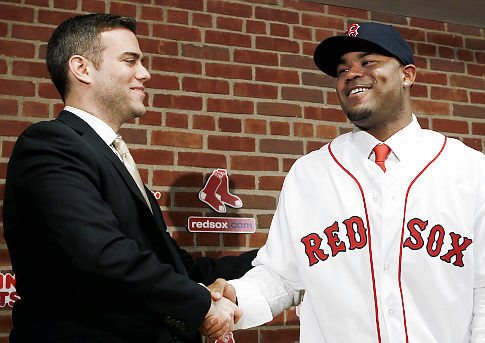
Rob Bland (Baseball Writer – MLB reports): When the 2010 season concluded, many people looked at the trio of Cliff Lee, Carl Crawford and Jayson Werth as easily the most sought after players. Lee has not disappointed in Philadelphia, where he will garner serious attention for the NL Cy Young Award. Werth and Crawford, however, have been pretty big disappointments after signing extremely lucrative contracts over 7 years. Werth received $126M, while Crawford made the biggest splash, inking a deal worth $142M. While Werth has been lucky to play in front of smaller crowds playing in Washington DC, Crawford has had to endure the masses of critics in Boston. This is on top of playing in the AL East, battling for the division title, while the team is in a free-fall where the Tampa Bay Rays are gaining ground in the AL Wild Card race.
 Crawford came to the Red Sox with HUGE expectations. Fans of the Red Sox expected him to not only repeat his career season from 2010, but exceed his statistics. In 2010 with the Rays, Crawford surpassed most of his best seasons in almost every statistical category. He hit .307 with 19 home runs and 90 RBI, while scoring 110 runs and stealing 47 bases. His on-base percentage was .356 and he slugged at a .495 clip, giving him an OPS of .851. In 2011, surrounded by all-star and MVP caliber players, he has struggled to gain any kind of consistency. He has limped into the end of September with a .255/.292/.401 slash line.
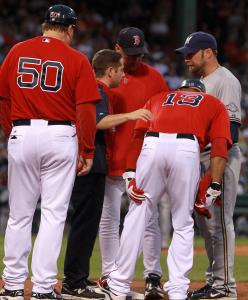
Crawford has only been able to steal 18 bases, which is by far his worst full season total in the MLB. On June 17th, Crawford sustained a grade 1 strain of his hamstring, and did not return to the lineup until July 18th. At the time, Crawford’s OBP of .275 and slugging percentage of .384 were near the bottom of the league. If Crawford had been hot until the injury, and simply fizzled out after he came back, we would have a simple answer.
Crawford has actually fared better since the injury, but I believe he has lost a step. Crawford relies on speed, and hamstrings often take a very long time to heal. His game is based on slapping balls through the infield and driving balls to the gaps, turning singles into doubles and doubles into triples. Many people thought that the Green Monster would be peppered with line drives off Crawford’s bat, as well as triples going into the deep right-center field gap. With Crawford’s hamstring issues, he doesn’t seem to be able to drive the ball as well as in recent years.
Another issue with Crawford seems to be that he has been slightly unlucky compared to other years. His BABIP over the course of his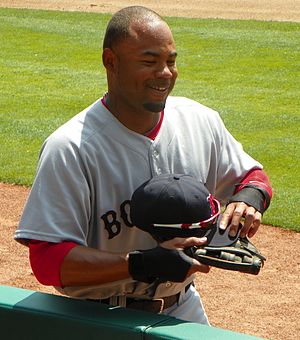 career is .329, while 2009 and 2010 it had been .342. This year, the stat sits at .300. Often, when seeing a dip in BABIP, you can look at a player’s line drive rate and see that the player is not hitting as many line drives. Crawford’s line drive rate is 17.8%, which is actually up from last year’s 16.5%. His fly ball and ground ball rates have also mostly gone unchanged. One thing I did notice was that his percentage of bunts for base hits is 0. Early in his career, Crawford would attempt to bunt upwards of 15 to 18 times per season. This year, Crawford has only attempted three bunts. This could be due to his hamstring not being 100% also.
Crawford’s dWAR, (or defensive Wins Above Replacement), which is a defensive stat that shows how a player is able to field balls inside and outside the zone of his position, has always been one of his strong points. For outfielders, he has been near the top of the league regularly over the last five years. This season, however, his dWAR is at -0.5, which negates entirely his limited offensive production.
With such close similarities in his batted ball rates, one would expect a slight drop in production due to his lower BABIP. However, with such a large gap in last year’s production to this year’s, despite a better overall line-up batting around him, one has to really think about what has happened to Crawford.
Crawford may be a multi, multi-millionaire that most of us would give up anything to be, but what most of us forget is that these MLB superstars are human. Hitting in front of 40,000 screaming, raving Red Sox lunatic fans surely cannot be an easy task. When playing in Tampa for the first 6 years of his career, he rarely faced hostility or scrutiny at home. The media has scrutinized every little move he has made this season, because he is under a microscope now. All this pressure and expectations after signing such a huge contract can take a toll on a player both psychologically and physically.
Here is a radical thought: Fenway’s odd dimensions have actually hurt Crawford offensively. Left fielders play shallower in Boston than in any other park, due to the Green Monster. This means that shallow flares, bloop pop ups and even live drive singles are taken out of the equation. While you can argue that this would then alter every other hitter’s stats, I think that the style of offense that Crawford plays, combined with bad luck, and a slight drop off in actual performance have been the main contributors to his poor statistics.
Look for Crawford to settle into the Boston atmosphere and return to his career averages in statistics in 2012. If he doesn’t, there will be many Sox fans clamouring to get rid of him at any cost.
***Today’s feature was prepared by Rob Bland. We highly encourage you to leave your comments and feedback at the bottom of the page and share in the discussion with our readers. You can also follow Rob on Twitter.***
Please e-mail us at: MLBreports@gmail.com with any questions and feedback. You can follow us on Twitter and become a fan onFacebook . To subscribe to our website and have the daily Reports sent directly to your inbox , click here and follow the link at the top of our homepage.

Drew Taylor Interview: The Story of an Intercounty League Pitcher
Follow @mlbreports Wednesday September 21, 2011
MLB reports: We are proud today to feature on MLB reports: Drew Taylor, former Philadelphia Phillies and Toronto Blue Jays prospect pitcher, currently playing in the Intercounty Baseball League. Based in Ontario, Canada, the Intercounty League has produced several major league players including Rob Butler, Rich Butler and current Brewers closer, John Axford. Drew’s baseball blood lines run deep, as his father Ron Taylor is former MLB pitcher himself. Part of the 1969 Miracle Mets during his playing career, Dr. Taylor is a long time team doctor for the Toronto Blue Jays. From getting signed by the Jays, having a World Series champion pitcher as a father, recovering from injuries and life in the Intercounty League and working towards becoming a doctor, we covered many topics with Drew. For a great baseball tale from a different part of the game, we present our recent interview with Drew Taylor:
MLB reports: Welcome to the Reports Drew. Thank you for taking time out of your schedule for this interview. First question we always like to ask: who was your favorite baseball player growing up, that you most idolized and patterned your game after?
Drew Taylor: I always loved to watch David Wells pitch when I was younger. As a lefty I learned a lot about setting up hitters and how to use a curveball effectively against left- and right-handed batters. I also loved his approach. He went right after hitters no matter who they were and rarely fell behind in the count. A true lefty – he was a character on and off the mound. I had the chance to get to know him a little when he was playing in Toronto. When I was in high school, I threw a bullpen in Spring Training for the Jays. I didn’t know I would be throwing that day so I only had my first baseman mitt with me. He gave me a glove to use and watched me throw giving me some pointers after the pen, very generous; he is the kind of guy that would give you the shirt off his back. I also learned a great deal from watching him that day in the way he treated people and engaged with fans asking for his autograph. Down to earth.
MLB reports: Which current MLB star do you most admire and why?
 Drew Taylor: I would have to say Travis Snider. I played with Travis our first year in the Blue Jays minor leagues and actually lived with him for the first part of the season. He came into the Jays straight out of high school and was thrust into a system that was known for drafting mostly college athletes. Here he was living with Jeff Gilmore, who graduated early from Stanford and had already begun a Masters in History and myself, already with Undergraduate and Masters degrees from the University of Michigan. But in truth, Travis was probably the most mature of the group of us. As I got to know Snider I found out why. He had faced a great deal for a kid of his age. There have been a number of articles written him since he broke into a big leagues focusing on what he and his family went through while he was in high school. If you haven’t read them, I suggest you look them up. I won’t go into all the details here, but in short when his mother was dealing with serious health issues, he was placed in a difficult situation at a very young age. As the only son, he stepped up to be a rock for his family. There are a lot of talented athletes that get drafted and Snider is definitely one of them. Sometimes though it is experiences like these that separate the men from the boys and dictate who will have the resolve and discipline to make the jump to the big leagues.
MLB reports: Reflecting on your career to-date, what are your proudest accomplishments on the baseball field?
Drew Taylor: I transferred for my sophomore year to the University of Michigan from Georgia Tech in 2003. I came into a program that had a great history but had struggled in the past few seasons, finishing only 21-32 the previous year. Rich Maloney had moved from Ball State to the Michigan to take the helm as head coach. He called each player in one by one before the season, sat us down and laid out what he expected of us. It was the first time a coach had talked to me that way. He demanded excellence and explained how each one of us as individuals could contribute to the team’s success. I owe a great deal to Rich and would not have had the success I had that year without his ability to inspire his athletes and instill confidence in them. He turned that program around and we ended up 30-27 that year, climbing to 43-21 and winning the Big Ten by the time I graduated. “Those who stay will be champions.” I personally ended up 9-1 in 2003, making the All-Big Ten and All-Region Teams and was given the Geoff Zahn award for Michigan’s top pitcher. After pitching only 9.1 innings the previous year, this was a big turnaround for me. Rich knows how to get the most out of his players and I hope he remains a college coach so I can send my kids his way one day.
MLB reports: You were signed in 2006 by the Toronto Blue Jays after the draft. Were you scouted by certain teams before the draft and were you expecting to be drafted?
 Drew Taylor: The most amount of attention I received was probably in 2001. My velocity shot up during my final year of high school and while pitching for the Ontario Blue Jays the summer before starting university. I had a number of clubs call and make offers, including the Rockies, Blue Jays, and Braves, to see if I would forgo school to sign professionally. But I was dead set on getting my education. While at Michigan, I had a great sophomore year going 9-1 and followed it up with a good showing in the Cape League which drew some attention again. Then during my draft eligible Junior year I ended up injuring my shoulder in my first start of the year. I tried to come back and pitch a couple of times, but ended up having to shut it down for the season. That effectively ended any chance I had of getting picked up in the draft, so I focused on my rehab, knowing that I would be back at Michigan the next year and would have to prove I could compete all over again. In 2006, the Blue Jays called right after my final game and signed me to a free-agent contract. I reported to camp two days later.
MLB reports: Being signed by your hometown Jays must have been very special. What were your feelings after the draft and what was the process like up until the time you were signed?
Drew Taylor: Being signed by your hometown team is always special, but there were so many things on the go I didn’t get much of a chance to sit down and enjoy the feeling. When I got the call I was in Michigan right after we got back from the NCAA Regionals in Atlanta. It was a little bit of a whirlwind because I had just got back to my apartment when I was told I was leaving again in two days. In those two days, I quickly packed up my apartment and hit the road for Toronto. Kevin Briand and Sean McCann were the scouts that signed me and I went down to the then named SkyDome to meet them and sign my contract. With the papers in, Kevin walked me down onto the field and it finally sunk in.
MLB reports; As a 6′ 5″ left-handed pitcher and being the son of an ex-major league hurler, what were the expectations you set for yourself once you joined the Jays system? Did you envision yourself in the major leagues one day and what was your plan to get there?
 Drew Taylor: Everyone who signs a contract, or for that matter who has played baseball at any level has thought about what it would be like to play in the majors. For me, I had a father who had done it for 11 years, and because of that I had the opportunity to be exposed to the game at a high level from an early age. I fully expected to make the majors and as soon as I signed professionally, I set out to realize that goal. Competition increases as you move up in the system and ultimately I never reached my goal of reaching the majors. There are a lot of talented players in professional baseball, many of the guys in the minors have the talent and ability to play in the majors, but lack consistency. At the major league level you have to be able to make adjustments within the same game or within the same at-bat. Realizing how to make these adjustments takes time and experience, which is one of the reasons athletes in baseball require time to mature and develop above other sports. The mental side of baseball is much more important than the physical… as Yogi Berra said “Ninety percent of baseball is mental, the other half is physical.”
MLB reports: For all the fans that have never experienced minor league baseball before, give us an idea as to what life is like in the minor leagues as compared to what people see in major league stadiums. The level of competition, amenities and support from the major league team for its minor league system- what is it like?
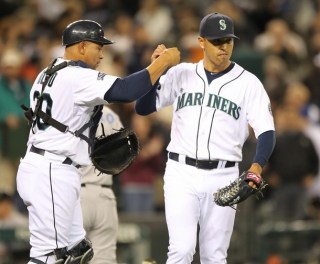 Drew Taylor: Night and day. Have you ever watched Bull Durham? Its bang on. The minors consist of a lot of long bus trips, fast food, and tiny locker rooms. The other big difference that people do not realize is how little money players are paid in the minors. Bonus Babies get a big cheque at the beginning, but the weekly salary is barely enough to live on. I would love to see the Major League Baseball Players Union fight for better pay in the minors, but once you make it to the majors I assume those guys try not to even think about the minors again. I don’t see it happening. Another problem is that players in the US and Canada are entered into the draft, while international players are all free agent signs. This means that home-grown talent can only negotiate with the team that drafted them, while international players have the ability to shop around different teams and drive up their signing bonuses. We need to move to a world-wide draft. One thing I will say is that players who make it to the big leagues know what it is like in the minors because they came up through it. Many guys are very good to the guys at lower levels. Especially if they are back down in the minors for rehab starts. One guy that sticks out in my mind that always looked after the guys at the lower levels was Brandon League. He was down for rehab for a while in Dunedin one year and went out of his way for us.
MLB reports: Injuries unfortunately played a huge part in your career, as it affects many young hurlers. Please tell us what happened to you health wise and your path through injuries, surgeries and how health affected your career.
Drew Taylor: I only threw twice in my junior year at Michigan before it was painfully evident that something was not right. I ended up having a small tear in my rotator cuff and a strained bicep. I rehabbed and came back strong enough to get picked up by the Jays. My velocity had never returned fully after my arm injury in University, so I had to find other ways of getting hitters out than just blowing it by them. Additionally, I moved primarily to the bullpen after being a starter my whole life. My mental approach to baseball improved greatly, learning how to set up hitters and get them out not just by beating them with a pitch, but beating them with a pitch they didn’t expect. Instead of facing the same hitters many times in one game as a starter, I was now coming in relief and mostly only had to face batters once. I had to develop the ability to strike out a batter when I came on with runners on base and I focused on improving out pitches. My first year was in Pulaski Virginia in the Appalachian league facing a lot of young free-swingers. I used this to my advantage and ended up striking out 37 in 27 innings. As you move up through the system, hitters have a much better approach and wait for you to throw a pitch they are looking for or for you to make a mistake. You have to improve with them, or you will get left behind.
MLB reports: For those fans that aren’t aware, your father is Dr. Ron Taylor. A team doctor for the Jays, your dad was a star pitcher in the big leagues and played on World Championship teams. What influence did your dad have on your career? What was your relationship like growing up?
 Drew Taylor: My dad was a huge influence on me. He never pushed me into baseball, or medicine for that matter, they were both my choices. Once I made the decisions to pursue being a professional pitcher and then a doctor, his support and guidance was bar none. He had a great career in the majors for 11 seasons, winning two World Series with the Cardinals in 1964 and the Amazin’ Mets in 1969. I had a big leaguer at my disposal and he taught me things about playing at a level that very few have made it to. Even when we would sit down and watch a game on TV, we would be talking about setting up hitters and he would always ask me what pitch I would throw next. The biggest thing he taught me is how to deal with pressure and maintain focus and confidence – something I can take with me in all aspects of life. In 6 appearances in Major League post season games he threw over 10 innings without giving up a run. In 1964 he threw 4 innings in the World Series without giving up a hit, allowing only one base runner on a walk to none other than Mickey Mantle. There definitely were some expectations, and it was very tough to deal with when I had my arm injury and my future in baseball was in question. When I was released by the Phillies in 2008, I came home and he said something that will always stick with me. He told me if he “could only choose one career between baseball and medicine, it would have been medicine.” He has been able to help countless more people as a physician than as a pitcher. If I had kept playing baseball, my window to return to school might have closed. My brother Matthew, has also been a great guy to have around. What he lacked in talent he made up for in knowledge. I still talk shop with him when we watch games and he often comes out to watch me throw, giving me some pointers after the game, whether I want to hear them or not. He works in film, but I always thought he would be great in the front office or as a GM. He knows baseball, better than me.
MLB reports: To go along with the Jays connection, you mentioned to me that you know Pat Gillick well. Please tell us your relationship with Pat and the Phillies organization.
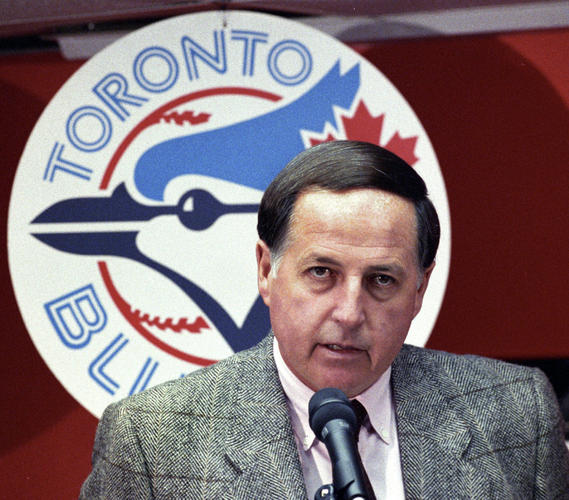 Drew Taylor: After my second season with the Blue Jays, they let me go and I immediately got a call from the Phillies asking me to attend spring training in Clearwater next year. Pat is one of the greatest minds in baseball and has been a mastermind behind winning teams and franchises since he started as a General Manager. He is always at ground level watching his players from rookie ball up to the majors and has a huge presence at camp. When he was with the Blue Jays, he became great friends with our family and recently invited us down to watch the induction ceremony at Cooperstown. It was my first time there and a tremendous experience to see the rich history the sport has and its influence and presence in North America and around the world. Bobby Cox, who was also formerly with the Blue Jays was down at the induction as well and they told me the story of how I ended up being named Drew. My parents were deciding between Forrest or Andrew and Bobby suggested they just call me Drew. I am glad he did. Forrest Gump came out when I was 11… that would have been a rough year…
MLB reports: You currently play for the Toronto Maple Leafs of the Intercounty Baseball League in Ontario, Canada. Many famous players came through the IBL, most notably John Axford of the Brewers. For fans that are not familiar with the league, please tell us more about playing baseball in the IBL and the Leafs’ organization.
 Drew Taylor: The Intercounty Baseball League started in 1919 and was founded as a minor baseball league feeding the majors. Now it remains as an independent league. It has a great deal of variety in players and level of experience. Many of the players have had professional experience in affiliated ball and are at the end stages of their career. The rest of the players are comprised of current or former university and college athletes trying to get signed to professional contracts or who want to maintain playing baseball at a high level of competition. Ferguson Jenkins, Paul Spoljaric, Jesse Orosco, John Axford, Pete Orr, Rob Ducey, Rich Butler and Rob Butler are some of the major leaguers that have played in the league either before their major league career or afterwards. I have actually had the chance to pitch head-to-head against Spoljaric on a few occasions and it is always exciting to face off against a former big leaguer. The league has a shorter schedule and we don’t play every day, so it allows guys to maintain full-time jobs while playing, which is rather unique. I have been playing for the Toronto Maple Leafs for the past three years while being a full-time student at the University of Toronto and Mount Sinai Hospital.
MLB reports: I have read that you have been involved with a number of charity groups surrounding baseball and sports, tell us about that?
Drew Taylor: I have been getting involved in some charities that are doing great work in Toronto and across Canada. I recently participated in Strike Out Cancer in support of Mount Sinai Hospital with an all-star list of actors and hall of famers including Kurt Russell, Roberto Alomar, David Justice, Gary Carter, Gary Sheffield, Bret Saberhagen, Devon White, and others. This past year the event raised over 1.4 million for research and treatment of women’s cancers. We also participated alongside local athletes, actors, musicians, and personalities in the Bulletproof campaign which sells apparel in support of the Special Olympics. Another fun group of people, Jays Days, get together when the Jays are on the road to watch the game together at Opera Bobs. Proceeds from sales of ball-park hotdogs, popcorn, and refreshments go to Horizons for Youth, a 35 bed youth-shelter dedicated to helping homeless and at-risk youth in Toronto.
MLB reports: Having attended Michigan and with your father a doctor, a little birdy told me that you were looking at a career in medicine yourself. True or False?
Drew Taylor: True. I ended up passing on professional baseball out of high school to attend university as I wanted to become a doctor. After finishing my undergraduate and Masters degrees at the University of Michigan, I was signed by the Blue Jays. At the same time I signed I had sent in my application to medical school. I was accepted and had to make a tough decision. I decided that I would have the chance to go to medical school after playing, but only had one opportunity to play professional baseball. Thus I continued to play ball. I didn’t want to lose any momentum in medicine, so I applied to the University of Toronto and continued graduate school in the off-seasons. While with the Phillies and now playing for the Toronto Maple Leafs in the Intercounty League, I have been completing my PhD. I will finish this year and will be applying to medical school again.
MLB reports: How many more years to you see yourself playing baseball? When your playing career is done, do you see yourself staying in the game and in what capacity?
Drew Taylor: I will continue to play as long as I enjoy the game and my arm holds up. I broke my elbow this past year and it was a long season of rehab before I was back pitching again. I finished the year strong so it rejuvenated my desire to keep pitching. Once it is over for good I would like to stay involved with baseball and sports in general. My PhD is in Biomedical Engineering and ultimately I want to pursue a career in Orthopedic Surgery, possibly even specialize in upper extremity to compliment my experience dealing my own injuries. My dad is the team Physician for the Toronto Blue Jays. I would love to follow in his footsteps and serve a professional team.
Thank you again to Drew Taylor for taking the time to join us today on MLB reports. We highly encourage our readers to post at the bottom of the article any questions and/or comments that you may have for Drew. As well, please follow Drew on Twitter (@DrewWTaylor).
**Some of the photographs in today’s feature are from the private collection of our guest, Drew Taylor. **
Please e-mail us at: MLBreports@gmail.com with any questions and feedback. You can follow us on Twitter and become a fan on Facebook . To subscribe to our website and have the daily Reports sent directly to your inbox , click here and follow the link at the top of our homepage.


 MLB Reports
You must be logged in to post a comment.